INTERNACIONAL
Bolivia: Evo Morales le pidió al gobierno de Rodrigo Paz que llame a elecciones “para que no haya muertos”

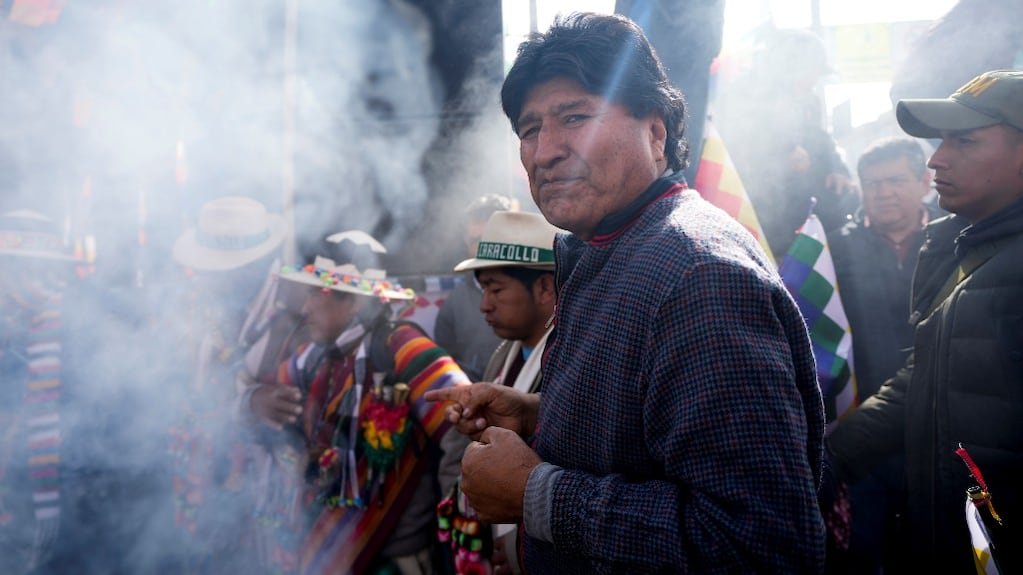
El expresidente de Bolivia Evo Morales pidió este domingo al gobierno de Rodrigo Paz que llame a nuevas elecciones en 90 días tras fracasar un operativo oficial para desalojar los decenas de bloqueos en rutas de todo el país.
“Tiene dos caminos: una decisión suicida, militarizar, o (…) la pacificación, transición, elección en 90 días”, dijo Morales durante su programa semanal en la radio del movimiento cocalero Kawsachun Coca.
El presidente, que asumió hace seis meses el poder, enfrenta la peor crisis económica del país en 40 años derivada de una escasez de dólares.
Los manifestantes se resisten a las reformas que busca su gobierno y lo acusan de no escuchar sus reclamos. Paz asegura que Morales está detrás de las protestas.
“Para que no haya muertos, para que no haya heridos, la pacificación pasa” por su renuncia y que un “presidente de transición” convoque a comicios en ese plazo, precisó Morales.
Hay 59 bloqueos activos en Bolivia
Desde hace tres semanas, decenas de carreteras de acceso a La Paz, sede de gobierno, son bloqueadas por manifestantes, lo que provocó escasez de alimentos, medicinas y combustibles en la ciudad y agudizó los efectos de la inflación, que en abril fue del 14% interanual.
El gobierno boliviano denunció ante la OEA que estas movilizaciones tienen el objetivo de “alterar el orden democrático” y acusó a Morales, prófugo por un caso de presunta trata de una menor, de instigarlas. Una manifestante contraria al gobierno sostiene un cartel con la frase «Renuncia del presidente», en La Paz, Bolivia, el 18 de mayo de 2026. (AP Foto/Juan Karita)
Las carreteras de Bolivia amanecieron este domingo con 59 bloqueos instalados en seis de las nueve regiones del país, principalmente en la zona andina, tras el fracaso del segundo operativo policial y militar que intentó el sábado despejar una vía troncal tomada desde hace 19 días por campesinos que exigen la renuncia del presidente Rodrigo Paz.
La Administradora Boliviana de Carreteras (ABC) publicó un mapa que reporta los cortes de ruta en las regiones andinas de La Paz, Oruro y Potosí, en las centrales de Chuquisaca y Cochabamba y en la oriental de Santa Cruz, aunque las mayores protestas están en las dos primeras.
Leé también: María Corina Machado anunció que será candidata a presidenta de Venezuela
Los únicos departamentos sin cortes de ruta son los amazónicos de Beni y Pando y el sureño de Tarija.
El operativo denominado ‘Corredor humanitario con banderas blancas’ intentó abrir el paso en la carretera de 227 kilómetros entre las ciudades de La Paz y Oruro, pero fue resistido por manifestantes que se enfrentaron a los agentes con cargas de dinamita y piedras lanzadas con hondas.
Tras el paso de la caravana que despejó varios tramos de la ruta con ayuda de tractores, los campesinos volvieron a llenar la vía de piedras, tierras y troncos, según la prensa local.
Esta es la segunda vez que un operativo integrado por militares y policías fracasa en su intento de despejar esa vía troncal tras no haberlo logrado ya pasado sábado 16.
Esta vez, el ministro de Obras Públicas, Mauricio Zamora, informó que el operativo se detuvo a mitad de camino cuando los manifestantes emboscaron la caravana tirando dinamita y piedras a la ruta.
La comitiva oficial sufrió tres “emboscadas”
La propia comitiva del ministro tuvo que usar caminos alternos para volver a La Paz, donde llegó en la madrugada de este domingo tras sufrir tres “emboscadas”, en una de las cuales su vehículo fue atacado por piedras que destrozaron el vidrio trasero, según un comunicado de su despacho.
“Ya me encuentro en La Paz, después de esta tercera emboscada en mi contra. Logramos pasar y llegamos como a las 2 de la mañana a la ciudad”, dijo Zamora, quien el sábado encabezó la caravana y anunció su disposición a dialogar personalmente con los manifestantes en todos los puntos de bloqueo.
Zamora confiaba en lograr el paso de los centenares camiones varados en las rutas del altiplano y facilitar el transporte de alimentos, combustible e insumos médicos para hospitales estatales de La Paz. El Alto y Oruro, donde los precios de todos los productos se dispararon por la escasez.
El presidente Paz, que asumió hace seis meses el cargo, dijo el sábado que “extremará” todos los esfuerzos para lograr una solución mediante el diálogo, pero también advirtió que “todo tiene un límite”, tras explicar que la Constitución respalda posibles medidas como un estado de excepción.
Las protestas contra Paz están alentadas por campesinos aimaras del altiplano, la Central Obrera Boliviana (COB) y seguidores de Morales que exigen la renuncia del gobernante.
(Con información de AFP y EFE)
Bolivia, Evo Morales, Rodrigo Paz












INTERNACIONAL
Italia: insólita guerra de guerrillas por las obras de un tren de alta velocidad en Turín


NEWYou can now listen to Fox News articles!
The race to become America’s next economic heavyweight may already have a frontrunner.
The latest Internal Revenue Service (IRS) migration data show billions of dollars in taxpayer wealth flowing into Texas, while Census figures show the state’s largest metropolitan areas continue to outpace much of the country in population growth, strengthening a decades-long shift in America’s economic center of gravity.
What’s more, Texas isn’t relying on a single boomtown. Dallas-Fort Worth added more residents than any metropolitan area in the country over the past year, while Houston, Austin and San Antonio also ranked among the nation’s fastest-growing metros.
That unusual breadth gives Texas multiple engines of economic growth, providing businesses with larger labor pools, diversified industries and a broader customer base than states anchored by a single dominant city.
Critics have argued that Texas’ economic success is mostly a numbers game. But the latest federal data suggest there’s more to it. (Mike Lawrie/WireImage/GettyImages)
BILLIONS IN TAXPAYER INCOME ARE LEAVING TWO ICONIC STATES — AS A NEW ECONOMIC MAP EMERGES
The population boom has been accompanied by an influx of wealth. IRS migration data analyzed by the Tax Foundation show the Lone Star State gained more than $5 billion in adjusted gross income from interstate movers, while California and New York recorded multibillion-dollar losses.
«Capital follows where there is confidence,» Texas Association of Business Chief Policy Officer Gabriela von zur Muehlen previously told Fox News Digital. «And right now there is a tremendous amount of confidence in Texas.»
Von zur Muehlen said Texas’ tax structure and predictable regulatory environment continue to attract businesses and investment from other states, helping reinforce the state’s economic momentum.
While Florida attracted the nation’s largest influx of taxpayer wealth and South Carolina posted the strongest inbound migration rate, Texas stood out by combining billions in new taxable income with rapid growth across Dallas-Fort Worth, Houston, Austin and San Antonio.
Economists say that combination matters because higher-income households bring spending, investment, entrepreneurship and tax revenue that can accelerate job creation, fuel commercial development and attract even more businesses. Over time, those forces can transform fast-growing metros into some of the nation’s most influential economic hubs.
ONE SOUTHERN CITY YOU’VE NEVER HEARD OF IS GROWING FASTER THAN ANYWHERE ELSE IN AMERICA
Unlike simple population counts, adjusted gross income offers a glimpse into the economic resources newcomers bring with them. Higher-income households can contribute disproportionately to consumer spending, investment and local tax collections, making income migration an important measure of a region’s long-term economic strength.
The migration data are only part of the story.
Earlier federal estimates showed Texas wasn’t just adding residents — it was becoming wealthier on a per-person basis. Despite adding roughly 419,000 residents in 2025, more than any other state, Texas’ economic output climbed to about $2.9 trillion, while per-capita GDP continued to rise, suggesting the state’s economy was becoming more productive rather than simply larger.
THE RED STATES RACING AHEAD IN AMERICA’S POWERFUL WEALTH BOOM — AND THE STATES FALLING BEHIND

As businesses leave high-cost states, Texas has become the undisputed top destination. (Tom Fox/The Dallas Morning News/Getty Images)
Business leaders say those trends are creating a self-reinforcing cycle. As more workers and higher-income households relocate to Texas, companies gain access to a larger labor pool and customer base, encouraging additional hiring, investment and expansion. That growth, in turn, creates more jobs and opportunities that can attract even more residents.
The migration has coincided with years of corporate relocations and business investment across the state, particularly in technology, finance, manufacturing and energy. The influx has also fueled new housing developments, logistics hubs, manufacturing projects and expanding commercial corridors across many of Texas’ fastest-growing metropolitan areas.
Supporters of Texas’ economic model argue its lack of a state income tax, relatively affordable cost of living and business-friendly climate continue attracting both employers and workers, reinforcing the state’s long-term growth.
CLICK HERE TO DOWNLOAD THE FOX NEWS APP
California and New York remain among the nation’s largest and most influential economies.
But the latest Census, IRS and federal economic data suggest Texas continues gaining ground by attracting people, taxpayer wealth and economic output simultaneously, an uncommon combination that could reshape where businesses invest, jobs are created, and economic influence grows over the coming decade.
texas, economy, growth, politics, taxes, demographics
INTERNACIONAL
Incendios en el sur de Europa: hay más de 330.000 personas evacuadas en España, Italia y Francia
España comenzó este domingo a contener los grandes incendios que afectan al centro del país, mientras Francia mantiene su principal preocupación en el fuego de la Gironda, que sigue fuera de control y amenaza con agravarse por la llegada de una nueva ola de calor.
Los fuegos arrasaron 77.000 hectáreas en España y otras 42.000 en el departamento francés de la Gironda. En conjunto, los incendios obligaron a evacuar o desalojar a cerca de 330.000 personas entre ambos países.
Mientras tanto, más de 400 personas fueron evacuadas por mar en el sur de Italia y otras más serán transportadas próximamente a causa de un incendio forestal en la costa adriática, informó la guardia costera.
“Más de 400 turistas y bañistas han sido evacuados por mar, la única ruta de evacuación viable”, informó la institución en su canal de WhatsApp.
Los evacuados fueron rescatados de la zona cercana a la ciudad de Peschici, en la región de Puglia.
Qué está pasando en España
En España, más de 100.000 personas se vieron afectadas por las llamas entre evacuados, desalojados y confinados, mientras que en Francia el incendio de la Gironda mantiene evacuadas a 220.000 personas, que no podrán regresar a sus hogares hasta que el fuego quede completamente perimetrado.
La evolución de los incendios españoles fue favorable tras varios días de intensa propagación de las llamas. Las llamas amenazan a San Martin de Valdeiglesias,en Avila (Foto: REUTERS/Ana Beltran)
El incendio de Ávila, con unas 50.000 hectáreas calcinadas, se convertió en el mayor registrado en el país desde que existen registros, mientras que otras 25.000 hectáreas corresponden a la Comunidad de Madrid y unas 2000 a la provincia de Toledo.
Pese a esa mejoría, las autoridades mantienen que aún quedan focos activos y no descartan nuevas evacuaciones, especialmente en el oeste de la Comunidad de Madrid, mientras el operativo continúa centrado en estabilizar los incendios y evitar reactivaciones.
Leé también: Atentado en una marcha del Orgullo en Berlín: el presunto autor del ataque murió durante un operativo policial
En las labores de extinción trabajan miles de efectivos, apoyados por la Unidad Militar de Emergencias (UME), cuyo jefe, Javier Marcos Arribas, señaló que quedan pocas cabezas activas, aunque los equipos siguen actuando sobre un perímetro de unos 280 kilómetros.
El Gobierno mantiene el nivel de emergencia nacional en los incendios del centro del país y reforzó el dispositivo con seis aviones de extinción enviados por Grecia, Italia y Turquía, además de un contingente portugués integrado por 129 efectivos y 41 vehículos.
El presidente del Gobierno, Pedro Sánchez, anunció además que el próximo martes declarará zonas gravemente afectadas por una emergencia de protección civil los territorios castigados por las llamas.
Sánchez recordó también que los incendios calcinaron unas 150.000 hectáreas en España desde comienzos de año.
La campaña dejó episodios especialmente graves, como el de Almería, donde murieron 13 personas y ardieron 7000 hectáreas, o el de la Sierra Norte de Guadalajara, donde el fuego devoró 32.000 hectáreas en el segundo mayor incendio registrado en el país desde que existen datos.
Francia mantiene la alerta por la Gironda
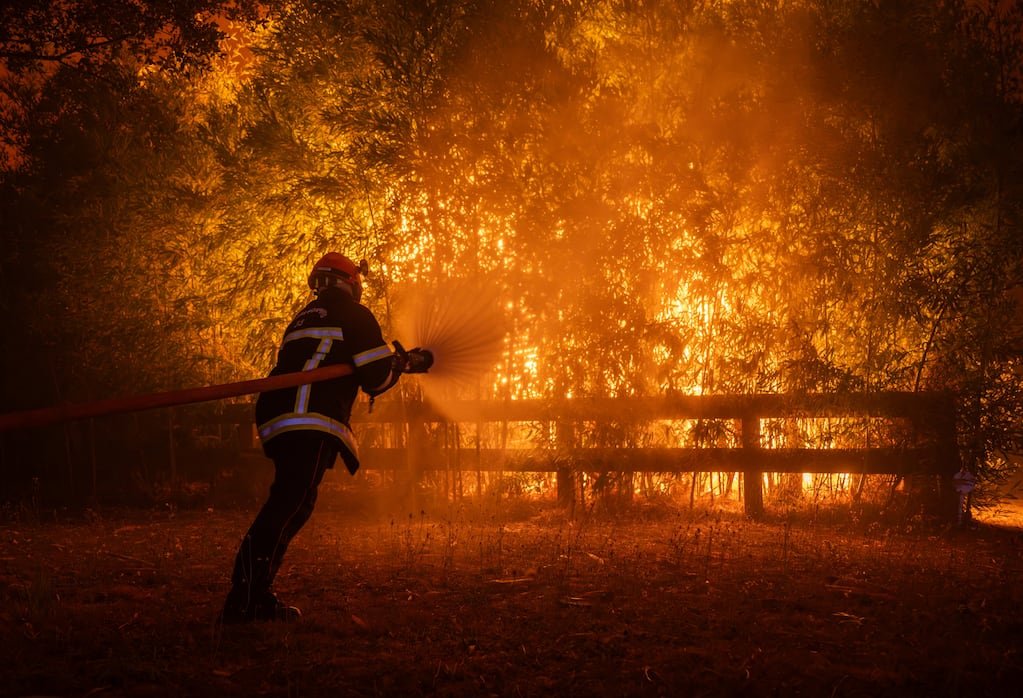
En Francia, el incendio originado el miércoles en la bahía de Arcachón, en el departamento de la Gironda, continúa siendo el principal foco de preocupación tras arrasar 42.000 hectáreas y obligar a evacuar a 220.000 personas.
Las autoridades descartaron por ahora el regreso de los vecinos y advirtieron que la llegada de temperaturas próximas a los 40 grados a partir del martes podría complicar aún más las labores de extinción.
Ante esta situación, el presidente Emmanuel Macron presidirá este lunes una célula de crisis interministerial para coordinar la respuesta al mayor episodio de incendios registrado este año en el país. Bomberos combaten las llamas en el área de Gironda, en Francia (Foto: REUTERS/Stephane Mahe)
Uno de los factores que más preocupa a los servicios de emergencia es la aparición de pirocumulonimbos, un fenómeno que genera tormentas de fuego impredecibles y que, según las autoridades, nunca antes se había observado en Francia.
En la Gironda trabajan unos 2500 bomberos, 1500 militares y 1200 policías y gendarmes, apoyados por 18 aeronaves y un avión militar A400M adaptado para combatir incendios.
Leé también: El gobierno de Brasil llamó a consultas a su embajador en la Argentina por los dichos de Milei contra Lula
El balance provisional asciende a 75 bomberos heridos y unas 240 viviendas destruidas.
El incendio mantiene además importantes alteraciones en las comunicaciones, con cierres parciales de la autopista A63, que conecta Burdeos con España, e interrupciones del tráfico ferroviario, mientras las autoridades distribuyeron mascarillas por la elevada concentración de partículas de humo.
Francia mantiene también activos otros grandes incendios en Las Landas (igualmente en el sudoeste), donde la situación mejora progresivamente, y en el departamento de Var, además de otros focos en los de Córcega y Altos Alpes.
(Con información de EFE y AFP)
Incendios, Europa

Neymar negó haber retado a dos compañeros

El plan de Milei para cambiar el BCRA y prohibir que vuelva a financiar al Estado con la maquinita

Antes de que cierren las tiendas de PlayStation 3 y Vita, estos son los 20 videojuegos que os recomendamos conservar en físico

Hilda Lizarazu se suma a los festejos por los 20 años de Juan Rosasco en Banda con el tema “Astronauta”

Italia: insólita guerra de guerrillas por las obras de un tren de alta velocidad en Turín

Javier Milei endureció su postura contra Lula da Silva y acusó al gobierno de Brasil de financiar una campaña contra la Argentina

Jorge Berredo, general retirado de las FFAA, asumió como Secretario de Seguridad en San Isidro

Sin la anestesia mundialista, aflora la crisis del conurbano y Milei necesita reconectar con lo popular

Senado: Bullrich y Sturzenegger cierran filas para tratar de avanzar con la extranjerización de tierras
Marc Stanley destacó el potencial de Vaca Muerta para “estabilizar la economía” y evitó hablar de política interna

 POLITICA3 días ago
Senado: Bullrich y Sturzenegger cierran filas para tratar de avanzar con la extranjerización de tierras
- POLITICA3 días ago
Mientras espera la vuelta de Macri, el PRO ya activó contactos con LLA: cómo sería la estrategia electoral en la Provincia
- POLITICA3 días ago
El Gobierno restituyó en Plaza de Mayo las piedras en homenaje a las víctimas del Covid-19