INTERNACIONAL
Israeli ambassador compares France’s far-left leader’s rhetoric to Hitler as antisemitism surges


NEWYou can now listen to Fox News articles!
PARIS, France — Israel’s ambassador to France says far-left leader Jean-Luc Mélenchon’s rhetoric against Jews «reminds me of Hitler,» warning that foreign influence is fueling a surge in antisemitism that has some French Jews hiding their identities to survive daily life.
France recorded 1,320 antisemitic acts in 2025 — triple the 436 incidents in 2022 — but a senior member of the Jewish community leaders told Fox News Digital they refuse to retreat, even as the attacks and incidents keep coming.
Israeli Ambassador to France, Joshua Zarka, says France is home to Europe’s largest Muslim community and is contributing to a high volume of antisemitic incidents reported across the country each day. France also has Europe’s largest Jewish community.
GLOBAL RISE IN ANTISEMITISM LEAVES JEWISH COMMUNITY ISOLATED, RABBI SAYS WORLD AT ‘A TIPPING POINT’
Leader of French left-wing La France Insoumise (LFI) party Jean-Luc Melenchon delivers a speech during an electoral campaign meeting of the local LFI candidate for French municipal elections in Marseille, southern France, on March 7, 2026. (Miguel Medina / AFP via Getty Images)
«The number of events is extremely high — not because the French government does not fight it, but because there is this base in which antisemitism is growing,» he said, due to foreign influence, which he claimed comes from Iran, Russia, Turkey and Qatar.
While he says those state actors are fueling the fire of Jew-hatred from the outside, certain French political actors exploit antisemitism for the purpose of getting more votes. According to Zarka, foremost among them is the far-left party La France Insoumise (LFI).
«The way [LFI leader] Jean-Luc Mélenchon speaks in front of a crowd reminds me of Hitler. The way he uses the idea of uniting against one enemy by speaking of Israel is similar to the way Hitler used to speak about the Jews,» Zarka said.
In February, the Human Rights League criticized Mélenchon after he mocked the pronunciation of Jewish names, including that of MEP Raphaël Glucksmann.

Palestinian protestors wave flags with some seemingly making Nazi-like salutes during a soccer game between Israel and Paraguay during the Paris 2024 Olympic Games at the Parc des Princes in Paris on July 27, 2024. (GEOFFROY VAN DER HASSELT/AFP via Getty Images)
Mélenchon previously wrote on his blog that «antisemitism remains residual in France,» remarks critics said downplayed a surge in Jew-hatred following Hamas’s Oct. 7 massacre in Israel.
Fox News Digital repeatedly contacted Mélenchon’s media adviser for comment but did not receive a response.
Zarka added that over the past three years there has been a shift in the Jewish community’s perception of what was once considered the extreme right, with many no longer viewing the National Rally, formerly led by Marine Le Pen, as such.
CALLS FOR US TO DO MORE AS ANTISEMITIC ACTS SKYROCKET IN EUROPE: ‘ENORMOUSLY PAINFUL’
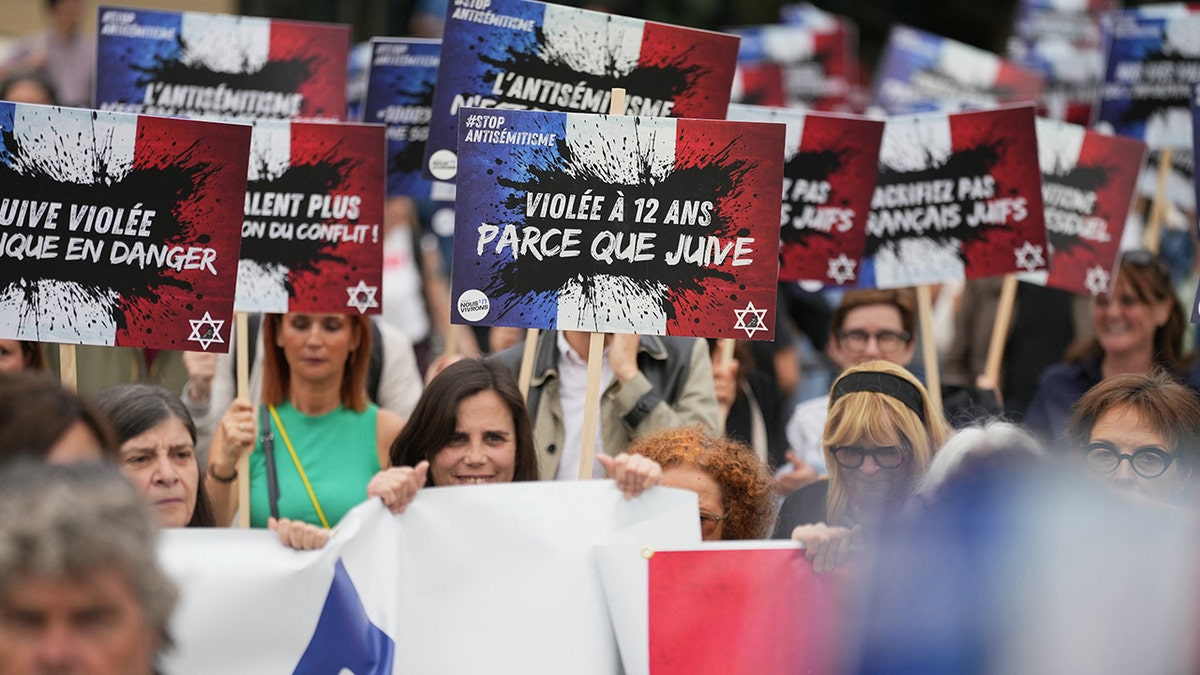
Protesters hold signs reading «raped at 12 because Jewish» during a demonstration called by associations including SOS Racisme and the Women’s Foundation to denounce antisemitism, in Paris on June 20, 2024, after the alleged antisemetic gang rape of a 12-year-old girl in Paris’ suburb of Courbevoie. (ZAKARIA ABDELKAFI/AFP via Getty Images)
«Let’s not forget that [National Rally president] Jordan Bardella went to Israel and, at Yad Vashem, made a formal commitment to fight antisemitism, be it from the right or the left, and that is significant… that is sinking into the mind of the Jewish community,» Zarka said.»
Recent incidents include the partial cutting down on Jan. 12 in Lyon of a tree planted in memory of Ilan Halimi, who was abducted and murdered in a 2006 antisemitic attack. On Feb. 9, a young boy wearing a kippah was assaulted by a group of five individuals, one of whom allegedly held a knife to his throat. Ten days later, acid was sprayed in two dining rooms of a kosher restaurant in Paris’s 17th arrondissement. On Apr. 15, racist and antisemitic graffiti targeted three high schools in the Montpellier metropolitan area.
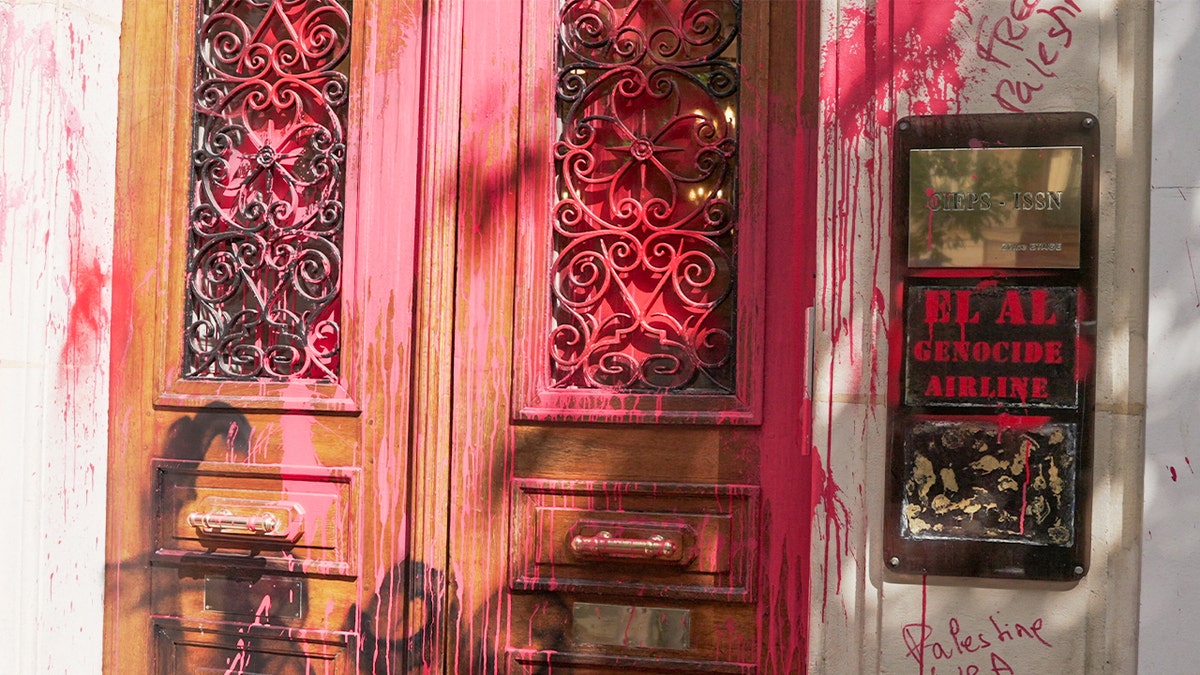
El Al’s offices in Paris were vandalized, showing graffiti on the building’s exterior. (Noemie Olive/Reuters)
In March, two brothers were arrested in connection with what authorities described as a «deadly and antisemitic» plot after police discovered a semi-automatic weapon, a bottle of hydrochloric acid and an Islamic State flag in their vehicle.
Rabbi Elie Lemmel was targeted in two antisemitic attacks, including last June in Deauville, where he was punched in the stomach. Days later, he was attacked again in Neuilly-sur-Seine while sitting at a café terrace, when a Palestinian from Gaza struck him with a chair.
Lemmel told Fox News Digital he had almost never faced aggression before, but believes the post-Oct. 7 conflict has intensified tensions. He said he understands those who choose to be more discreet and would never judge them.
«You have to be vigilant,» he said. «Unfortunately, some people see a kippah and it bothers them. Those who want to do harm will always find reasons.
«If we start hiding, it is the beginning of the end,» he added. «I have always worn a kippah, and that is why I continue to wear it.»
AIR TRAFFIC CONTROLLER SUSPENDED AFTER ‘FREE PALESTINE’ BROADCAST TO ISRAELI PILOTS
Yonathan Arfi, president of the Conseil Représentatif des Institutions juives de France (CRIF), said some Jewish families now forgo displaying mezuzahs or use different names on mobile apps to avoid being identified.
«On the one hand, there is a rise in antisemitism that leads to precautionary behavior,» Arfi told Fox News Digital. «On the other hand, Jewish life remains more vibrant than ever, with synagogues full and more kosher restaurants than ever before.»
«We must not offer antisemitic terrorists and those driven by hatred our fear and withdrawal as a trophy,» said Arfi. «Wherever possible, Jewish life must continue openly and proudly.»
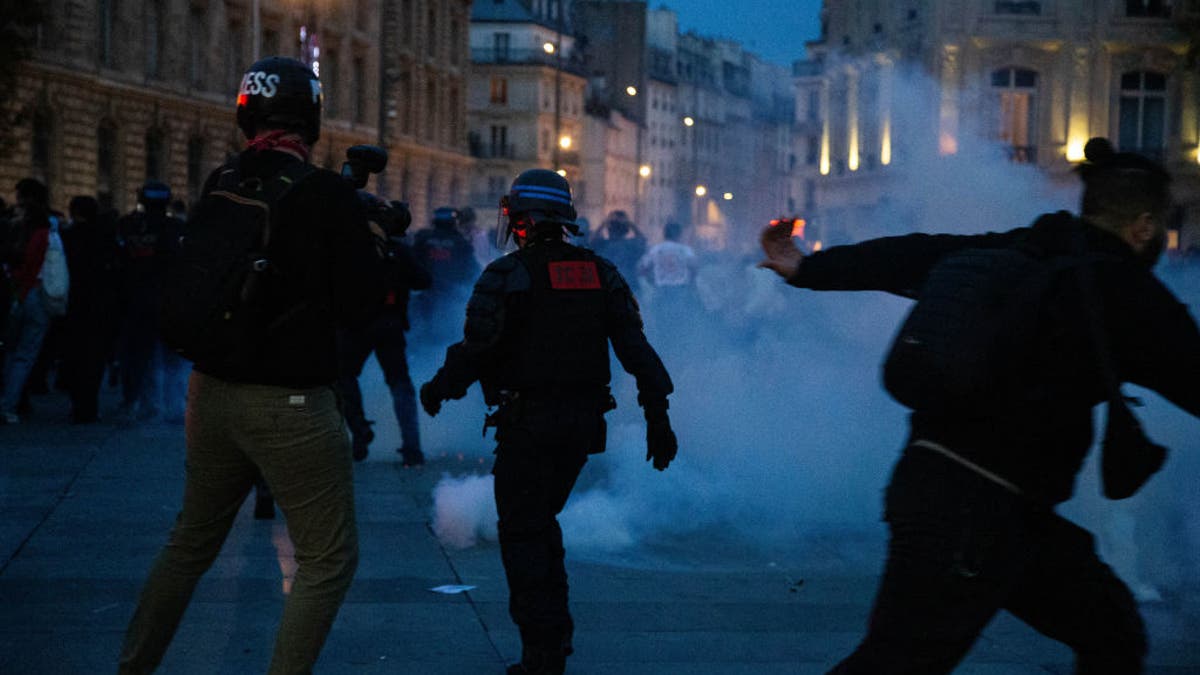
French riot police use tear gas to disperse demonstrators during a pro-Palestinian rally at Republique Square in Paris on Oct. 12, 2023. (Ibrahim Ezzat/Anadolu)
Immigration to Israel, he said, should nevertheless be seen as a warning sign that some Jews no longer see a future in France.
Historically, French immigration to Israel averaged between 1,500 and 2,000 people annually after the Six-Day War. The figure peaked at around 8,000 annually between 2012 and 2015, fell to about 1,000 in 2023, then rose again to more than 2,000 in 2024 and 3,500 in 2025. The Jewish Agency for Israel estimates roughly 4,000 immigrants from France in 2026.
The Israeli ambassador to Paris noted that French authorities take combating antisemitism seriously, and therefore the country remains «a relatively safe place,» while urging Israelis to exercise caution when traveling to other European countries such as Spain, Belgium and even the Netherlands, «where antisemitism flourishes.»
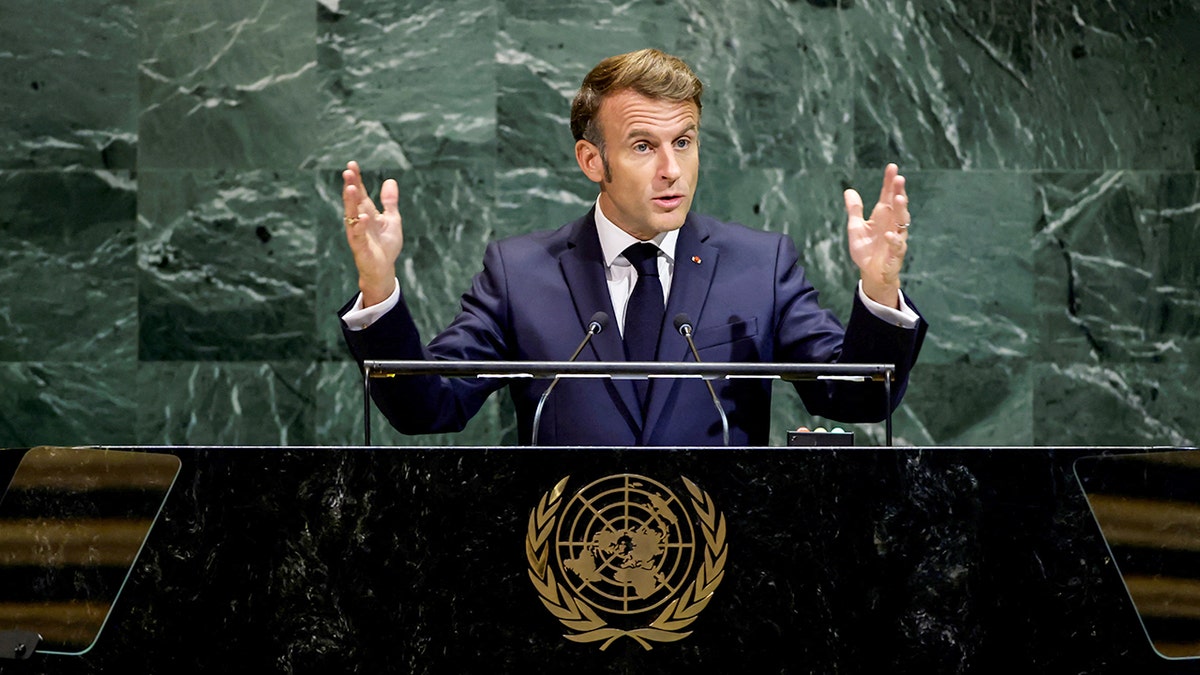
French President Emmanuel Macron addresses the 80th United Nations General Assembly at U.N. headquarters in New York on Sept. 23, 2025. (Eduardo Munoz/Reuters)
In February, President Emmanuel Macron denounced the «antisemitic hydra» that had crept into «every crack» of French society during a ceremony commemorating Ilan Halimi, a Jewish man kidnapped and tortured to death by the Gang of Barbarians in 2006.
«In 20 years, and despite the resolute efforts of our police officers, gendarmes, judges, teachers and elected officials, the antisemitic hydra has kept advancing,» Macron said, according to Le Monde.
«Constantly assuming new faces, it has insinuated itself into the heart of our societies, into every crevice, too often accompanied by that same pact of cowardice: to keep silent, to refuse to see,» he continued.
Macron also condemned the «Islamist antisemitism» behind the Oct. 7 Hamas-led massacre, as well as «far-left antisemitism,» which he said «rivals that of the far right.»
He added that antisemitism increasingly «uses the mask of anti-Zionism to advance quietly.»
CLICK HERE TO DOWNLOAD THE FOX NEWS APP
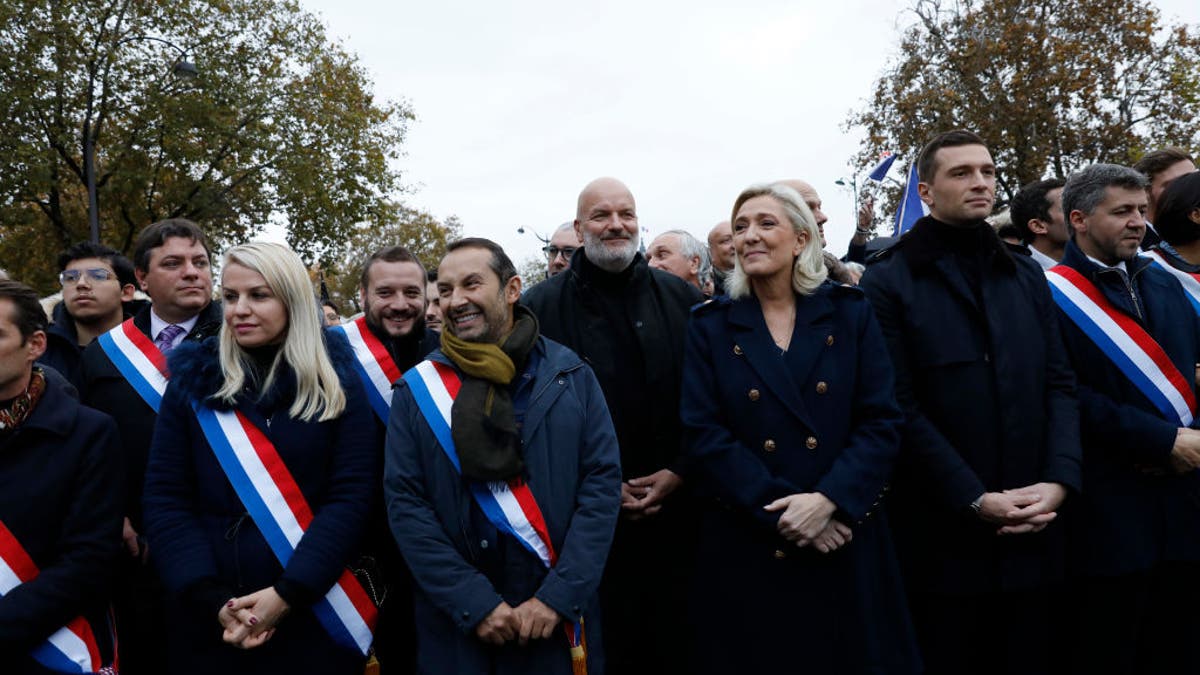
Marine Le Pen and deputies Sebastien Chenu and Jordan Bardella participate in a march against antisemitism from the Esplanade des Invalides to the Senate in Paris on Nov. 12, 2023. (Antoine Gyori/Corbis via Getty Images)
Even so, bilateral ties with Israel are not without friction, with Zarka disclosing that the government of French President Emmanuel Macron refused to allow U.S. military overflights carrying weapons to Israel during the war against Iran.
«The French made the decision not to provide us with an aerial bridge for American weapon shipments to fly over during the war against Iran,» he said.
It was the second time France had denied such a request, the first occurring during the 1973 Yom Kippur War, the envoy noted.
anti semitism, france, israel, europe











INTERNACIONAL
Francia: uno de los peores incendios desde la II Guerra «no prospera» pero sigue fuera de control

El frente de batalla en Marcheprime
Reunión de crisis del gobierno
La postura de Burdeos

Solidaridad nacional
Empresas afectadas y respuesta de los seguros
Solidaridad y alojamiento para las víctimas
NEWYou can now listen to Fox News articles!
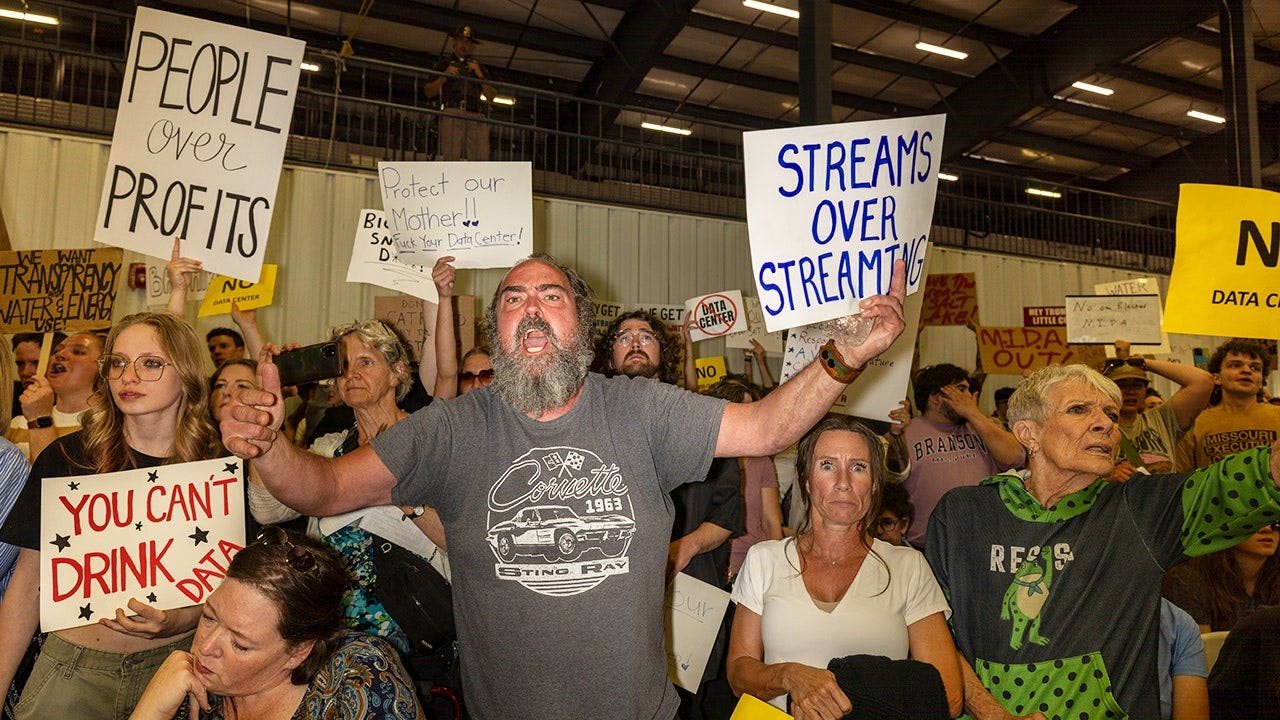
While U.S. tech companies race for AI dominance, the latest Fox News nationwide survey finds voters hitting the brakes on data centers, as more prefer taking time to address local concerns than rushing expansion to maintain a competitive global edge.
By a 40-point margin, voters oppose building data centers in their area to support artificial intelligence (30% favor, 70% oppose).
MAGA supporters (46% favor) and Republican men (45%) are the groups most likely to favor data centers, while White women with a college degree (84% oppose) and liberal voters (80%) are the most opposed.
FOX NEWS POLL: VOTERS WANT MAJOR CHANGE AMID ECONOMIC AND POLITICAL DISCONTENT
Among those favoring data centers, 60% cite economic benefits, including jobs, economic growth, community investment, and tax revenue as the reason for their support. Another 21% point to technological benefits, saying the centers are useful, necessary, or important for future progress. Just 2% say staying ahead of competitors is the primary reason for their support.
Those opposing data centers emphasize a different set of considerations. Half (50%) say environmental issues are their main concern, including energy and water use, pollution, noise, and overall environmental impact, while far fewer mention quality-of-life concerns (14%), economic effects (11%), or simply having a negative view of AI (11%).
FOX NEWS POLL: SIGNIFICANT SUPPORT FOR BOTH VOTER ID LAWS AND MAIL-IN BALLOTS
While data centers are broadly unpopular, views of artificial intelligence technology itself are somewhat less negative. Overall, 45% view AI favorably versus 54% unfavorably, underwater by 9 points. In April, it was -11 points.
Positive views of AI are higher among MAGA Republicans (55% favorable), voters with graduate degrees (52%), conservatives (50%), and men (49%) than among Democrats (41%), those without a college degree (43%), liberals (37%), and women (40%).
Nearly 8 in 10 voters prefer slower data center construction to address environmental and community concerns, while 2 in 10 favor building them as quickly as possible to maintain a competitive advantage over China and other countries.
While majorities across the board prefer the slow adoption of the centers, MAGA Republicans (36%) and very conservatives (35%) are the most likely to prioritize rapid expansion to maintain international competitiveness.
AI won’t find an ally in the under 30 crowd
Although younger voters are often viewed as more tech-savvy, that does not translate into warm views of artificial intelligence.
Voters under age 30 are the least likely to view AI favorably, at 38%, compared with 48% of those ages 30-44 and 44% of those 45 and over.
CLICK HERE FOR CROSSTABS AND TOPLINE
Regardless of differences in views of AI, attitudes toward data centers are pretty consistent across generations. Roughly 7 in 10 in every age group oppose building data centers, and about 8 in 10 prefer slowing construction to address environmental and local concerns.
Conducted July 17–20, 2026, under the direction of Beacon Research (D) and Shaw & Company Research (R), this Fox News survey includes interviews with a sample of 1,003 registered voters randomly selected from a national voter file. Respondents spoke with live interviewers on landlines (70) and cellphones (681) or completed the survey online after receiving a text (252). Results based on the full sample have a margin of sampling error of ±3 percentage points. The survey includes an oversample of 200 voters aged 18–29, bringing the sample size for that subgroup to 350 (±5). Sampling error for results among subgroups is higher. In addition to sampling errors, question wording and order can influence results. Weights are generally applied to age, race, education, and area variables to ensure the demographics are representative of the registered voter population. Sources for developing weight targets include the most recent American Community Survey, Fox News Voter Analysis, and voter file data.
fox news poll, politics, artificial intelligence, donald trump, china, economy, technologies
INTERNACIONAL
Brote de infecciones respiratorias cobra la vida de seis personas en la comarca indígena Ngäbe Buglé, en Panamá
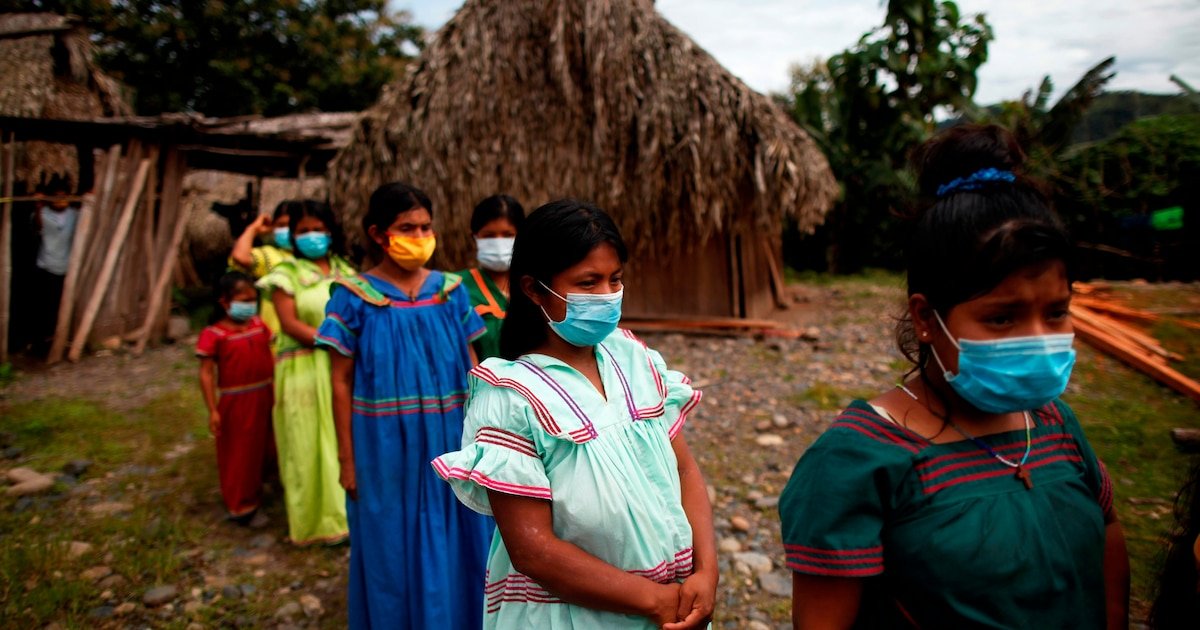
Seis personas, entre niños y adultos, fallecieron recientemente en la comarca Ngäbe Buglé a raíz de un brote de infecciones respiratorias bajas graves.
Las autoridades sanitarias movilizaron un equipo de respuesta rápida para investigar la situación y reforzar las acciones de atención médica en las comunidades afectadas.
Desde el sábado pasado, el Ministerio de Salud desplegó personal especializado en las zonas de Valle Bonito, Palmira y Guayacán.
El equipo permanecerá en el área hasta el viernes, realizando investigaciones de campo y vigilando de cerca la evolución de los casos.
El objetivo principal es identificar el origen del brote y contener su propagación, mientras se mantienen medidas de respuesta sanitaria.

La intervención permitió ofrecer atención médica a 178 personas, administrar 391 dosis de vacunas —incluidas 184 contra la influenza— y distribuir 394 medicamentos en las comunidades afectadas. Las acciones forman parte de un plan integral que busca limitar los riesgos asociados a la enfermedad respiratoria.
El Ministerio de Salud señaló que tres de los fallecidos no buscaron atención médica o recurrieron únicamente a medicina botánica.
Los contactos cercanos de estos casos permanecen asintomáticos, según los reportes iniciales de la investigación epidemiológica.
Hasta el momento, la vigilancia epidemiológica continúa activa en la comarca. Las autoridades insisten en que toda persona con fiebre, dificultad para respirar o tos persistente debe acudir al centro de salud más cercano y evitar la automedicación.
El llamado busca garantizar el diagnóstico y tratamiento oportunos, y así prevenir nuevas complicaciones en la población.

Por otra parte, el ministerio informó que más de 14 mil pacientes han recibido atención médica en todo el país gracias a la iniciativa “Juntos por la Salud”, que opera en 27 instalaciones de salud y busca reforzar la atención especializada en diferentes regiones de Panamá.
El programa se ha desplegado en hospitales como San Miguel Arcángel, Santo Tomás y Nicolás A. Solano, donde profesionales panameños y estadounidenses colaboran en la atención a la población.
Durante la última semana, cerca de 100 pacientes de cardiología y fonoaudiología en Panamá Oeste recibieron atención como parte de este esfuerzo conjunto.
El ministro de Salud, Fernando Boyd Galindo, y el embajador de Estados Unidos en Panamá, Kevin Marino Cabrera, recorrieron el Hospital Nicolás A. Solano para supervisar la labor de los nueve especialistas del Comando Sur que actualmente prestan servicios en el lugar.
El ministro Boyd Galindo subrayó el respaldo del personal médico militar, quienes aportan experiencia en áreas como cardiología, fisioterapia, pediatría y ginecología.

Destacó que el apoyo llega en un momento clave, ya que el Estado se encuentra en proceso de licitación para construir el nuevo Hospital Nicolás A. Solano, proyecto que contempla una inversión de $78 millones. Posteriormente, se prevé la construcción de un hospital materno infantil, infraestructura considerada necesaria para la zona.
La iniciativa nació con el objetivo de fortalecer la respuesta sanitaria nacional. Para ello, el Comando Sur de Estados Unidos aporta servicios médicos especializados y entrega insumos, equipos y medicamentos valorados en decenas de miles de dólares, según la información oficial.
Las misiones de “Juntos por la Salud” se desarrollan de manera simultánea en 27 centros de atención, cubriendo las diez provincias del país y la comarca Ngäbe Buglé. Esta estrategia busca ampliar el acceso a servicios médicos de calidad en comunidades que requieren apoyo adicional, reforzando la cooperación internacional en materia de salud pública.
“Estamos muy contentos con los resultados de la iniciativa ‘Juntos por la Salud’, que iniciamos este año con la meta de beneficiar a más de 10 mil panameños”, dijo el embajador estadounidense Kevin Marino Cabrera.

Cuánto cobra un encargado de edificio en agosto y cuánto pesa su sueldo en las expensas

La formación de San Lorenzo ante Gimnasia de Mendoza por la fecha 2 del Torneo Clausura

ATE convocó a un paro nacional con movilización para el lunes 3 de agosto

El horóscopo de hoy: martes 28 de julio

La industria no repunta: la producción volvió a caer en junio, según la UIA

Desmantelaron una organización narco en Córdoba tras varios allanamientos y hay ocho detenidos

Vocero de Milei dijo que un dólar a $1.800 es «posible» y la City alerta por fin de la paz cambiaria

Polémica por el proyecto que busca desregular los planes de ahorro de autos 0 km: qué podría cambiar

Convivencia pacífica o tensión administrada: el PRO define cómo pararse frente al gobierno de Milei rumbo a 2027

Panorama internacional: Brasil, una batalla electoral no solo de los brasileños

 POLITICA18 horas ago
Crisis entre Milei y Lula: la trama política, personal y geopolítica detrás del mayor choque diplomático entre Argentina y Brasil
- POLITICA2 días ago
Cuentapropismo emocional en lo profundo del conurbano
- SOCIEDAD1 día ago
San Isidro: la ballena que quedó varada en un banco de arena murió pese al operativo de rescate