
INTERNACIONAL
Congress barrels toward deadline pile-up as GOP divisions threaten Trump agenda


NEWYou can now listen to Fox News articles!
Congress returns facing looming deadlines, unfinished business and internal Republican divisions as the midterm elections draw closer.
Lawmakers left Washington ahead of Memorial Day on the cusp of passing a massive immigration enforcement funding package. Doing so would have allowed Republicans to tackle other outstanding priorities.
Instead, the budget reconciliation process — which Republicans planned to use to funnel roughly $72 billion to Immigration and Customs Enforcement (ICE) and Border Patrol — stalled after a surprise move by the Trump administration exposed deep divisions within the GOP.
SENATE GOP ERUPTS OVER TRUMP DOJ ‘ANTI-WEAPONIZATION’ FUND, PUNTS ICE, BORDER PATROL FUNDING
Senate Majority Leader John Thune, R-S.D., and House Speaker Mike Johnson, R-La., are pitching rival housing bills as President Donald Trump looks for a legislative win on affordability. (Anna Moneymaker/Getty Images; Kent Nishimura/Getty Images; Kevin Dietsch/Getty Images)
Now, the setback in the reconciliation process threatens to further push back other key agenda items, including the fast-approaching deadline to reauthorize a critical spy law, a colossal defense policy bill and a potential affordability-focused legislative package.
The Senate is currently stuck on the reconciliation package after the Department of Justice unveiled its nearly $2 billion «anti-weaponization» fund geared to provide payouts to those who feel wronged by the government.
Senate Republicans erupted over the fund during a closed-door meeting with acting Attorney General Todd Blanche, demanding answers on whether people convicted of assaulting police officers during the riots of Jan. 6, 2021, would be allowed to get access to the taxpayer-funded money.
Little has changed between the Senate GOP and administration since then, with Republicans putting the onus of dealing with the issue onto the White House.
«The administration appreciated last week’s conversation and feedback,» a White House official told Fox News Digital. «We look forward to additional conversations as needed.»
TRUMP DOUBLES DOWN ON $1.8 BILLION ‘SLUSH FUND’ THAT KILLED HIS AGENDA, SPURRED REPUBLICAN REBELLION
The House is expected to take up the budget reconciliation bill upon Senate passage.
But with no clear path forward, other pressing issues are beginning to crowd the congressional calendar.
Congress will soon have to address the looming June 12 deadline to reauthorize Section 702 of the Foreign Intelligence Surveillance Act (FISA). It’s a fight that lawmakers have punted on twice now over bipartisan demands for reforms to the program, despite the Trump administration pushing for a clean reauthorization.
The spy law fight is one of the few horseshoe issues in Congress that blends Democrats and conservatives in a push for stronger privacy protections. While Section 702 allows the government to spy on foreign nationals abroad, there’s nothing in the law to prevent it from collecting data on Americans if they’re ensnared in those communications.
House conservatives are seeking reforms that would require warrants to surveil Americans’ communications, close loopholes allowing the government to buy sensitive data from brokers without a warrant, and curb overly broad authorities permitting the incidental collection of information, according to a source familiar with the discussions.
REPORTER’S NOTEBOOK: CONGRESS PASSES SHORT-TERM FISA 702 FIX, DELAYS LONG-TERM RENEWAL
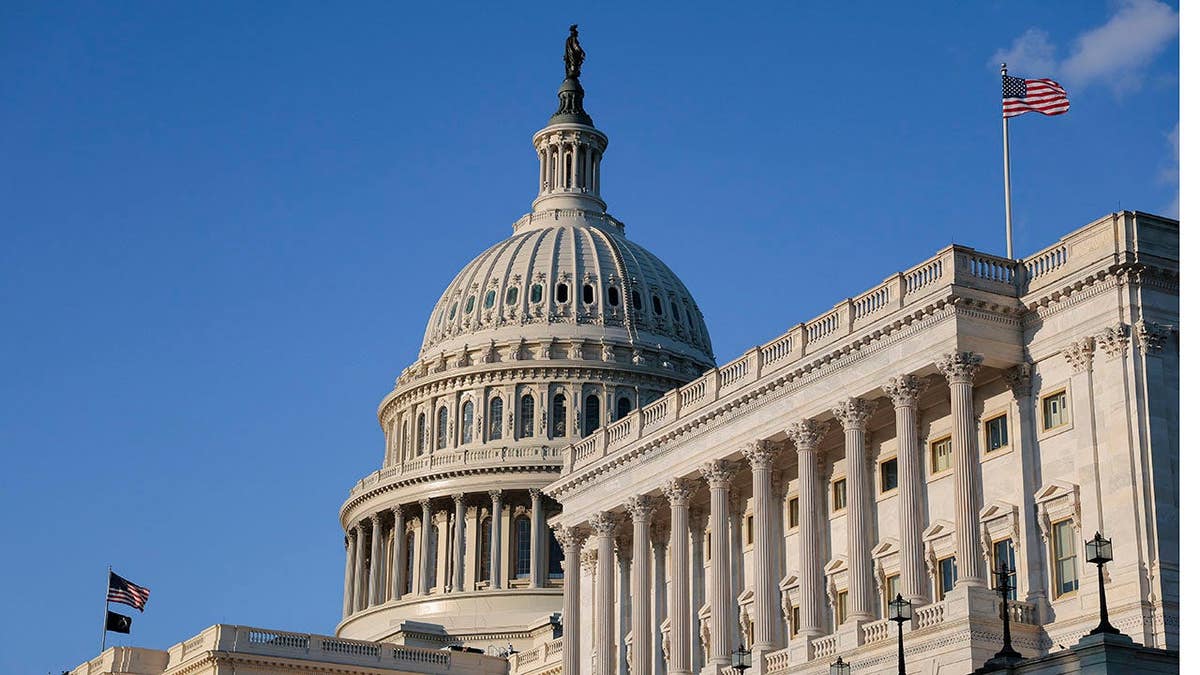
Congress returns facing looming deadlines, unfinished business and internal Republican divisions as the midterm elections draw closer. (Heather Diehl/Getty Images)
GOP privacy hawks in the Senate, including Sens. Mike Lee, R-Utah, and Rick Scott, R-Fla., are expected to push for similar priorities in the upper chamber.
Meanwhile, in the House, Democrats are likely to force a vote to rein in the president’s Iran war powers that could pass with modest GOP support. House GOP leadership shelved a war powers vote last week amid poor attendance from Republicans.
Democrats are also expected to trigger a vote on legislation authorizing $1.3 billion in military aid to Ukraine and levy new sanctions on the Russian war effort. The measure faces an uphill battle to become law due to expected opposition from Republican leadership and the Trump administration.
House Speaker Mike Johnson, R-La., is also facing pressure from a swath of House Republicans to get the ball rolling on a third budget reconciliation package ahead of the midterm elections.
Rep. August Pfluger, R-Texas, told Fox News Digital that GOP lawmakers are having «great meetings» and he expects the conference to pass another budget reconciliation package by the end of July.
Pfluger’s Republican Study Committee has consistently advocated for a package focused on affordability issues across the housing, energy and healthcare sectors. Enthusiasm for a third reconciliation bill has been less pronounced in the Senate.
CLICK HERE TO DOWNLOAD THE FOX NEWS APP
Congress is also beginning to make moves with the National Defense Authorization Act (NDAA), the colossal package that would open up $1.15 trillion to fund the Pentagon. It’s an annual must-pass piece of legislation that could be slowed by the more pressing fights on the Hill.
Several lingering issues facing Congress come as time is dwindling to complete work before the midterm elections. Lawmakers will be gone for their typical August recess, but will also have almost the entirety of October off to campaign.
That means that the next few weeks will be crucial, particularly for Republicans, who are trying to pass any outstanding parts of President Donald Trump’s agenda.
politics, immigration, congress, republicans, spending, senate elections













INTERNACIONAL
Moscow bombing exposes potential security gaps around Putin’s military elite, expert says

NEWYou can now listen to Fox News articles!
Russian President Vladimir Putin’s drive to project «normalcy» in Moscow may have created a dangerous security blind spot, giving adversaries like Ukraine greater opportunities to target the Kremlin’s military elite, an analyst said Monday.
The assessment came after a deadly explosion ripped through an upscale Moscow restaurant on Aug. 1, where a senior Russian general was reportedly attending a private celebration. Several Russian media outlets claimed the bombing targeted Col. Gen. Alexander Chaiko, who led the troops that made a botched attempt to storm the Ukrainian capital in 2022 and recently was appointed the chief of Russia’s aerospace forces. The claims could not be independently verified.
If Chaiko was indeed at the restaurant, «that would establish a compelling motive for Ukraine,» Dr. Mark Episkopos, a Eurasia research fellow at the Quincy Institute for Responsible Statecraft, told Fox News Digital. «But there has been an ongoing discourse inside Russia that, despite numerous such attacks, Russian elites and even military figures continue to flout [operational security] best practices by holding parties like this in the first place.»
The Russian Embassy in Rome accused Kyiv of carrying out the attack and said in a statement Aug. 2 that the attack was «evidence that the Ukrainian terrorist contagion is already beginning to spread.»
MAYOR CALLS UPSCALE RESTAURANT BOMBING A ‘BRUTAL TERRORIST ACT’
Law enforcement officers and emergency services personnel stand near the site of an explosion at a restaurant in central Moscow, Russia, on Aug. 1, 2026. (REUTERS)
«The other factor here is that Putin has done his best to preserve a sense of ‘normalcy’ in Moscow and St. Petersburg, cultivating a facade of stability that Ukraine has been able to exploit,» Episkopos added.
Russia’s National Anti-Terrorism Committee said an unidentified woman carried an improvised explosive device to the Balzi Rossi restaurant. The committee said the woman was stopped by security before the bomb was detonated near the restaurant’s entrance. The Russian Embassy in Rome on Monday said five people were killed and 19 were injured in the attack.
UKRAINE LAUNCHES WHAT APPEARS TO BE ONE OF ITS LARGEST DRONE ATTACKS AGAINST RUSSIA: REPORT

Police block an area near a deadly explosion at a restaurant in Moscow, Saturday, Aug. 1, 2026. (Sergei Vedyashkin/Moscow News Agency via AP)
«This particular event did seem to have a substantial level of security, which is why the person carrying the explosive was reportedly stopped and questioned at the entrance,» Episkopos noted.
Russian investigators suggested the courier may not have known she was transporting explosives and said the device was detonated remotely.
Moscow Mayor Sergei Sobyanin condemned the «brutal terrorist attack,» vowing that those responsible would be punished, according to Deutsche Welle.
‘A NEW KIND OF WAR’: INSIDE UKRAINE’S HIDDEN FACTORIES MASS-PRODUCING COMBAT DRONES

Russian President Vladimir Putin crosses himself during the Orthodox Easter service at the Cathedral of Christ the Saviour in Moscow on April 12, 2026. (Alexander Zemlianichenko/AP)
«The means by which this attack was executed — a remotely detonated explosive device delivered on-site by a civilian — are also consistent with other assassinations deep inside Russian territory previously attributed to Ukraine,» Episkopos said.
«These include those of Lt. Gen. Igor Kirillov, Lt. Gen. Yaroslav Moskalik, Lt. Gen. Fanil Sarvarov, pro-Kremlin blogger Vladlen Tatarsky and others,» he said.
Ukraine had not publicly commented on the restaurant bombing as of Monday afternoon, and no group had claimed responsibility.
Since Russia’s full-scale invasion of Ukraine in 2022, Moscow has repeatedly accused Kyiv of targeting senior military officers, pro-war figures and Russian-installed officials.
MOSCOW, TALIBAN FORGE MILITARY ALLIANCE IN POWER GRAB AFTER US AFGHANISTAN EXIT: REPORTS

Smoke rises from a Russian tank destroyed by Ukrainian forces, on the side of a road in Lugansk region on February 26, 2022. (ANATOLII STEPANOV/AFP via Getty Images)
Episkopos noted that Kyiv has increasingly used unconventional tactics to offset Russia’s superiority in conventional manpower and firepower.
«Ukraine has pioneered a new style of asymmetric warfare that plays to its strengths and Russia’s weaknesses — relatively porous borders and vast territory that’s difficult to monitor, let alone defend,» he said. «Ukraine’s interior is smaller and comparatively better controlled, and the intelligence it receives from Western partners plays a role here.»
NATO MEMBER SCRAMBLES FIGHTER JETS AS RUSSIAN ATTACK ON UKRAINE KILLS 8
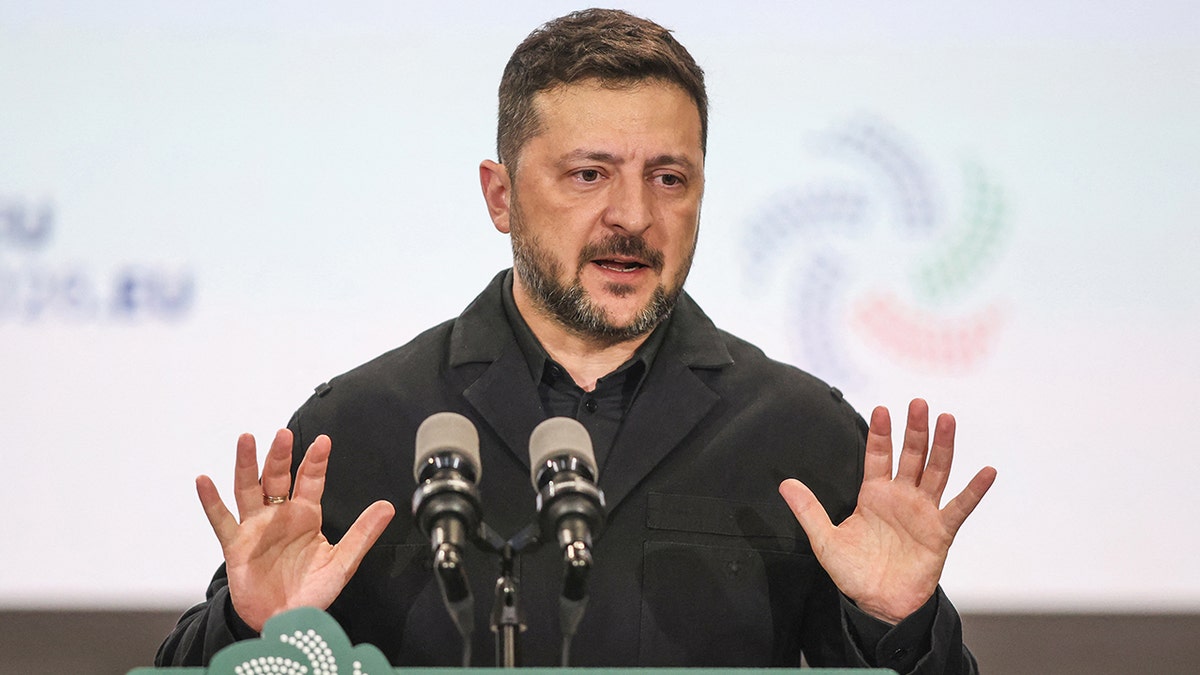
Ukraine’s President Volodymyr Zelensky speaks at a press conference after meetings with the heads of the EU and Ireland, following a formal ceremony to mark the launch of Ireland’s eighth EU presidency, at Dublin Castle in Dublin on July 1, 2026. (Paul Faith / AFP via Getty Images)
Episkopos added: «This makes operations like this more difficult to pull off. Russia has generally relied on its advantage in raw firepower to conduct airstrikes, as opposed to covert assassinations, against high-value Ukrainian targets.»
The Associated Press contributed to this report.
russia, vladimir putin, volodymyr zelenskyy, bombings, assassinations murders, ukraine
INTERNACIONAL
El Gobierno de Panamá ratificó la declaratoria del estado regional de alerta preventiva por el fenómeno atmosférico de El Niño

Panamá ratificó la declaratoria del estado regional de alerta preventiva para el sector agrícola de los países frente a los posibles efectos del fenómeno El Niño 2026-2027.
La decisión, dijeron las autoridades agropecuarias, responde a la necesidad de fortalecer las capacidades regionales para anticipar posibles impactos sobre la producción agropecuaria, la disponibilidad de alimentos y los medios de vida de las personas productoras, mediante una respuesta articulada entre los países miembros.
El pronunciamiento se realizó durante un diálogo regional organizado junto con la Secretaría Ejecutiva del Consejo Agropecuario Centroamericano (SECAC), en el que participaron autoridades, especialistas y representantes de los países del Sistema de la Integración Centroamericana (SICA), para analizar el impacto previsto de El Niño y compartir experiencias sobre mecanismos de preparación y respuesta.
La perspectiva climática de agosto-octubre de 2026, presentada recientemente por el Foro del Clima y el Foro Hidrológico de América Central, reitera que la región enfrentará un escenario de El Niño fuerte, con una intensificación prevista a la categoría de El Niño muy fuerte entre octubre y diciembre de 2026.
Estas condiciones incrementan el riesgo de afectaciones sobre la producción agropecuaria y constituyen la base técnica que motivó a los ministros y ministras de Agricultura de los países del SICA a fortalecer las acciones de preparación y coordinación regional mediante la ratificación de la declaratoria del estado regional de alerta preventiva para el sector agropecuario.

En la mayor parte de Centroamérica, según se informó, se esperan precipitaciones por debajo de lo normal y que, con excepción de Panamá, el período se presentó de forma anticipada y se prolongaría hasta finales de agosto.
“La evidencia científica nos permite anticipar escenarios y prepararnos mejor para actuar frente a fenómenos climáticos cada vez más intensos. En este contexto, las reservas estratégicas de alimentos representan una herramienta fundamental para fortalecer la resiliencia de los sistemas agroalimentarios y reducir el impacto sobre las poblaciones más vulnerables”, destacó el subdirector general y representante regional de la Organización de las Naciones Unidas para la Alimentación y la Agricultura (FAO) para América Latina y el Caribe, Rene Orellana Halkyer.
El subdirector general de la FAO recordó que los eventos climáticos extremos están modificando los patrones de temperatura y precipitación, incrementando las sequías, inundaciones, olas de calor e incendios forestales que afectan directamente la producción agrícola y los medios de vida rurales.
De acuerdo con la FAO, América Latina y el Caribe concentra el 22 % de las pérdidas mundiales ocasionadas por desastres climáticos en la agricultura, equivalentes a aproximadamente $713 mil millones entre 1991 y 2023, lo que evidencia la necesidad de fortalecer medidas preventivas y de gestión del riesgo.
Durante el encuentro se destacó que las reservas estratégicas de alimentos, particularmente de granos básicos, permiten anticiparse a escenarios de escasez, responder oportunamente durante emergencias, estabilizar los mercados en períodos de alta volatilidad de precios y garantizar la continuidad de programas de protección social y asistencia alimentaria.

Asimismo, se compartieron experiencias exitosas de la región, como el caso de las agroferias del Instituto de Mercadeo Agropecuario (IMA) de Panamá, que según se dijo benefician cada año a cientos de miles de familias mediante alimentos a precios accesibles.
No obstante, en un documento la propia institución señala que enfrenta una serie de debilidades que, de no ser corregidas, podrían dificultar el cumplimiento de sus metas.
Estas debilidades se centran en las infraestructuras obsoletas, actualización de los sistemas de manejo, control y certificación, la subutilización de recursos, la limitación presupuestaria, la falta de personal operativo y agroindustrial, regionales. y agroindustrial, regionales.
Las instalaciones no están operando a su capacidad máxima, lo que representa una pérdida de potencial operativo y un uso ineficiente de los recursos disponibles.
Esta subutilización, señala la entidad, se ve agravada por la falta de almacenamiento bodegas modernas de con tecnología de punta, lo que dificulta el manejo adecuado de los productos y control de plagas; con el consiguiente aumento de pérdidas postcosecha.

Además, estas instalaciones no están diseñadas ni equipadas para un manejo y conservación óptimo de los productos almacenados, lo que afecta su calidad y vida útil, sostiene la institución.
tractor,agricultura,sequía,campo,labranza,tierra agrietada
INTERNACIONAL
‘Doctor’ El-Sayed’s bizarre health hustle raises campaign headache: ‘Moon Juice Brain Dust’
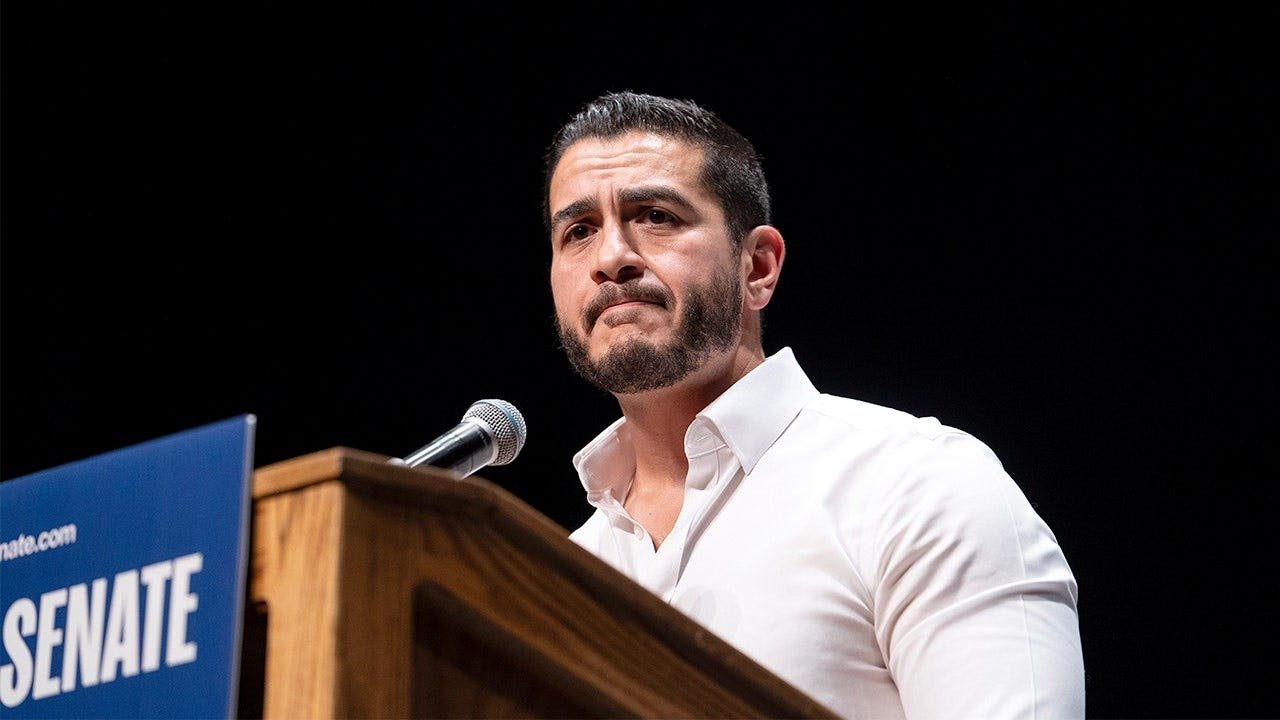
Joe Concha slams Michigan candidate Abdul El-Sayed over alleged medical credential claims
Fox News contributor Joe Concha vehemently criticizes Michigan Senate candidate Abdul El-Sayed for allegedly misrepresenting his medical credentials. Concha highlights the rigorous path and sacrifice of real doctors, contrasting it with El-Sayed’s claims. He argues El-Sayed, lacking a medical license, has not saved lives, branding his claims as deceitful and a disservice to the profession. Concha argues voters should be wary of such misrepresentations.
NEWYou can now listen to Fox News articles!
Michigan Democratic Senate candidate Abdul El-Sayed made money promoting health products, including while invoking his medical credentials, despite saying he broadly rejected advertisements for products making health claims and criticizing others for doing the same.
Before running for Senate, El-Sayed hosted a podcast that provided him with a six-figure income partially through ad reads. Among the companies El-Sayed promoted for cash, often citing his purported experience as a doctor, were firms selling supplements, peptides, and an Israeli metabolism-tracking device that has been scrutinized by health experts.
The ad reads came despite an assurance from El-Sayed that he would not use his platform to sell health products to people who listen to him.
SOCIALISM’S WAR ON SUCCESS HAS A NEW CHAMPION — AND HE’S RUNNING FOR SENATE IN MICHIGAN
Michigan Senate candidate Abdul El-Sayed poses for a portrait in Grand Rapids, Michigan, on Saturday, Feb. 21, 2026. (Evan Cobb for The Washington Post via Getty Images)
«I broadly reject any advertisements that are for products making claims about health,» he wrote in a now-deleted social media post from March 2022.
El-Sayed also accused Mehmet Oz during his 2022 Pennsylvania Senate run of being part of the «medical industrial complex that exists to sell you things that you don’t need that are not actually based in any level of science.»
«Yet he can … say, ‘Well, I’m a doctor, so you should trust what I have to say,’» El-Sayed added.
DR OZ REVEALS THE HEALTHY RETIREMENT HABIT THAT COULD MAKE AMERICA $1 TRILLION RICHER

Rep. Alexandria Ocasio-Cortez (D-NY), Michigan Democratic candidate for Senate Abdul El-Sayed and Sen. Bernie Sanders (I-VT) greet the crowd after El-Sayed spoke at The People V. The Powerful rally at the Detroit Opera House on July 18, 2026, in Detroit, Michigan. (Sarah Rice/Getty Images)
After assuring his audience that he wouldn’t hawk health products, and criticizing Oz for using his medical credentials for doing so, El-Sayed used his medical credentials to sell health products.
«Even as a doctor and epidemiologist, nutrition labels are obnoxiously hard to process,» El-Sayed said during a March 2025 ad read. «That’s where Thrive Market comes in. See, I love Thrive Market, my go to online grocery store for getting all of my healthy essentials delivered. And I don’t even have to leave my couch.»
Thrive Market has sold a wide selection of supplements, including items such as «Moon Juice Brain Dust» and «Royal Jelly Brain Fuel» that claim to improve the cognitive function of those who use them. Health experts have cast doubt on whether or not such supplements can actually improve brain function.
Moon Juice Brain Dust describes itself as a «nootropic blend of adaptogens and herbs that target stress to support mental stamina, alertness, and concentration» that is «informed by Traditional Chinese Medicine and Ayurveda.» Royal jelly, meanwhile, is a thick, milky substance produced by bees to feed their queen. Proponents argue it can be helpful in treating menopause symptoms or addressing low energy, though scientific evidence for such claims is limited.
Thrive did not respond to a request for comment when reached by Fox News Digital on Monday.
IV THERAPY AND SUPPLEMENTS UNDER SCRUTINY AS EXPERTS WARN OF POTENTIAL SIDE EFFECTS
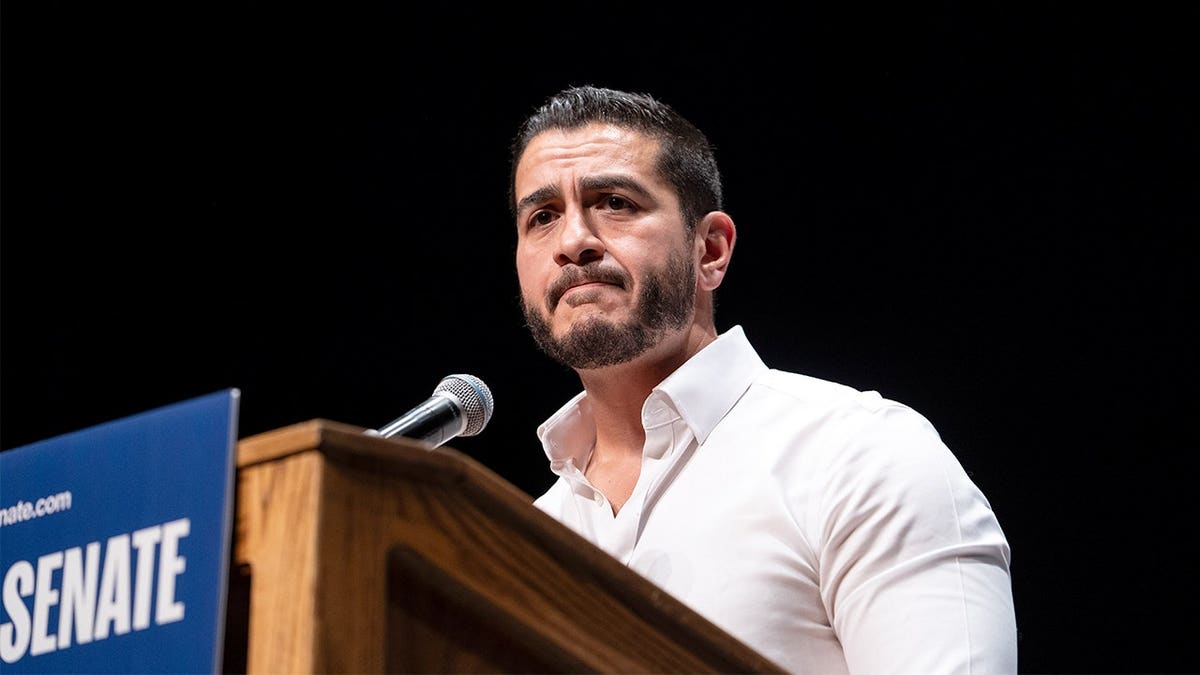
Michigan Democratic candidate for Senate Abdul El-Sayed speaks at The People V. The Powerful rally at the Detroit Opera House on July 18, 2026, in Detroit, Michigan. (Sarah Rice/Getty Images)
While El-Sayed has leaned heavily on his identity as a doctor both in doing ad reads and on the campaign trail, public records indicate that he never held a medical license or completed a residency. He does, however, hold a medical degree and a doctorate degree in public health.
The New York Post was the first to report on El-Sayed’s advertisement for health goods.
A company making moon dust and brain jelly wasn’t El-Sayed’s only customer.
On July 23, 2024, El-Sayed read an ad promoting a medical device created by an Israel-based startup.
«Lumen is the world’s first handheld metabolic coach. It’s a device that measures your metabolism through your breath and on the app. It lets you know if you’re burning fat or carbs and gives you tailored guidance to improve your nutrition, workout, sleep, and even manage your stress,» he said. «All you’ve got to do is breathe into your Lumen first thing in the morning, and it’ll give you an inside look into what’s going on with your metabolism, whether you’re burning mostly fats or carbs.»
Years before El-Sayed took Lumen’s advertising money, experts were raising concerns about its medical claims.
«I just don’t see a practical use for the product in helping people achieve their weight-loss goals,» Harbor-UCLA Medical Center senior researcher Nicholas Tiller told Outside Magazine in 2022. «The use of metabolic flexibility and other science-sounding terms lend the product a false scientific legitimacy.»
«It’s quintessential marketing over science,» he added.
El-Sayed also advertised for a company offering a peptide that allegedly improves skin health.
The El-Sayed campaign did not respond to a request for comment when reached by Fox News Digital on Monday.
health, health care executive, politics, michigan, senate

Vélez iguala con Independiente en Liniers por la fecha 3 del Torneo Clausura

El acuerdo de pareja de Sabrina Rojas y José Chatruc, su novio: «Cada uno…»

Moscow bombing exposes potential security gaps around Putin’s military elite, expert says

Pro y La Libertad Avanza convergen en la Legislatura porteña y exploran un posible acuerdo electoral

El Gobierno de Panamá ratificó la declaratoria del estado regional de alerta preventiva por el fenómeno atmosférico de El Niño

Jornada financiera: cayó con fuerza el riesgo país, las acciones argentinas operaron dispares y subió el dólar

“Vamos a acelerar con todo”: el objetivo del Gobierno por las reformas y la agenda electoral de cara al 2027

Reelecciones indefinidas: el oficialismo bonaerense niega que busque ampliar la Legislatura como parte de una reforma política para beneficiar a los intendentes

“Casta”, “parásito” y “sea democrático”: fuerte respuesta de Victoria Villarruel a Diego Santilli

¡Chau Luck Ra! La salida de soltera de La Joaqui, muy bien acompañada, a días de su separación
-
 POLITICA1 día ago
“Vamos a acelerar con todo”: el objetivo del Gobierno por las reformas y la agenda electoral de cara al 2027
-
 POLITICA24 horas ago
Reelecciones indefinidas: el oficialismo bonaerense niega que busque ampliar la Legislatura como parte de una reforma política para beneficiar a los intendentes
-
 POLITICA3 días ago
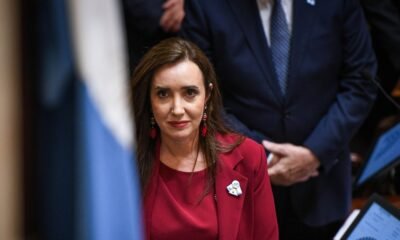
“Casta”, “parásito” y “sea democrático”: fuerte respuesta de Victoria Villarruel a Diego Santilli