
INTERNACIONAL
Residencia legal y permisos laborales para migrantes de Nicaragua, Venezuela, Cuba y Colombia en Costa Rica bajo nueva disposición nacional

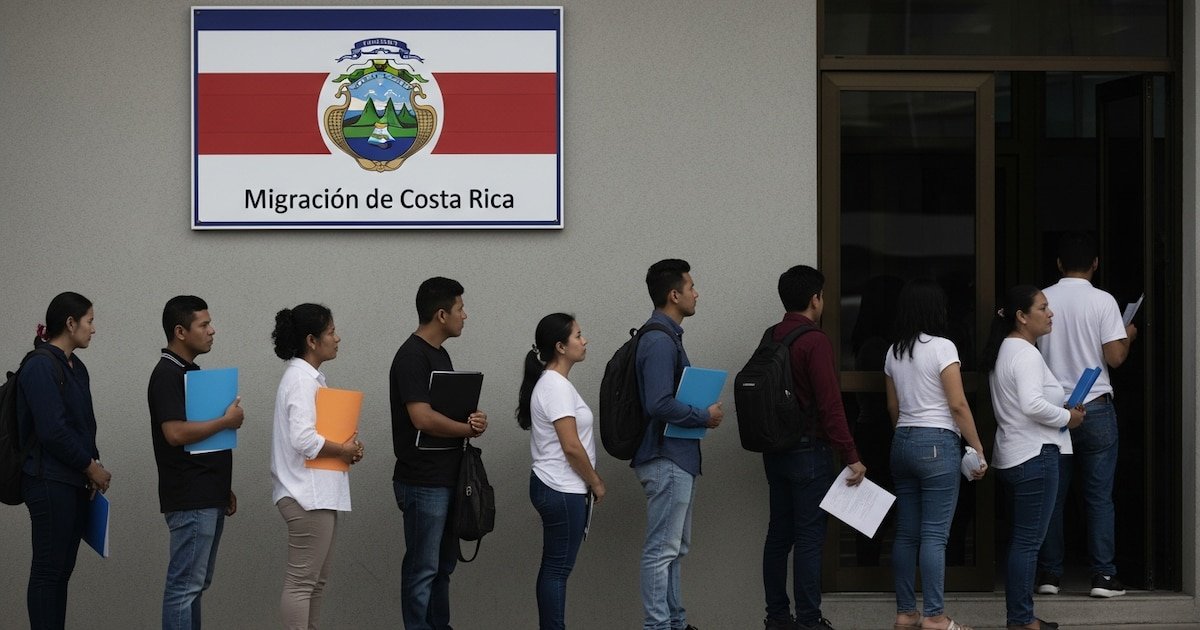
Miles de nicaragüenses, venezolanos, cubanos y colombianos en Costa Rica podrán acceder a la residencia legal y al mercado laboral desde septiembre por la nueva “Categoría Especial Temporal” anunciada por la Dirección General de Migración y Extranjería y divulgada por el periódico 100% Noticias.
De acuerdo con la nota, la medida alcanza a quienes pidieron refugio entre el uno de junio de 2014 y el siete de mayo de 2026.
El mecanismo ampara a quienes presentaron su solicitud de refugio en ese período y cuya resolución sigue pendiente o fue rechazada. La condición será verificada de oficio por la autoridad migratoria, sin que los interesados deban iniciar trámites adicionales para demostrar su situación.
A partir de la entrada en vigencia de la resolución, las personas beneficiarias podrán trabajar sin restricciones en cualquier sector económico, ya sea por cuenta propia o en relación de dependencia.
“La persona beneficiaria de esta categoría especial contará con libre condición para poder desempeñarse en cualquier actividad laboral remunerada”, se lee en el artículo que regula la medida.
La publicación indica que la nueva categoría será otorgada por un período de dos años y podrá ser renovada por plazos iguales. Al momento de la renovación, las autoridades revisarán los movimientos migratorios de cada beneficiario, incluidos posibles ingresos o salidas irregulares tras la obtención del beneficio.
Quienes hayan salido o ingresado al país sin los controles habituales deberán presentar pruebas documentales que justifiquen la falta de registros migratorios. Si las razones no son aceptadas, la autoridad podrá denegar la renovación.

La disposición establece que los solicitantes no deben tener otra categoría migratoria vigente ni estar involucrados en otros procesos de regularización distintos al trámite de refugio.
Además, el beneficio será cancelado para quienes representen una amenaza a la seguridad pública, hayan sido condenados por delitos dolosos en los últimos 10 años o incumplan los requisitos de renovación.
Los beneficiarios podrán salir y regresar a Costa Rica sin necesidad de permisos adicionales, siempre que cumplan con los controles migratorios ordinarios.
La resolución aclara que la pérdida del beneficio será automática para quienes no renueven el documento dentro de los tres meses posteriores a su vencimiento, sin requerir un procedimiento administrativo especial.

La “Categoría Especial Temporal” ofrece una vía de regularización para miles de personas que hasta ahora no contaban con alternativas legales para permanecer y trabajar en el país.
El mecanismo será renovable de manera indefinida mientras no exista una normativa superior que disponga lo contrario.
Costa Rica concentra una migración diversa de nicaragüenses, venezolanos, cubanos y colombianos, impulsada por su estabilidad política y sus oportunidades económicas, pero ese atractivo convive con un sistema de refugio bajo presión y con miles de casos sin resolver, según los datos recopilados por Statista, Artículo 66, Nicaragua Investiga, ElMundo.cr y Divergentes.

El mayor volumen corresponde a Nicaragua: entre enero y septiembre de 2024 se registraron 414,123 movimientos regulares de nicaragüenses en las fronteras costarricenses, un alza de 9% frente al mismo período de 2023, según Nicaragua Investiga. Ese flujo se sumó a una presencia ya consolidada en el país y a una demanda sostenida de protección internacional.
En términos de residencia, más de 296,000 nicaragüenses vivían en Costa Rica en 2020, lo que los convirtió en la comunidad extranjera más numerosa del país, según Statista. En ese mismo año, también había más de 25,000 venezolanos y más de 25,000 colombianos con residencia legal, de acuerdo con Statista.
Desde 2014 hasta abril de 2025, los nicaragüenses presentaron 195,512 solicitudes de refugio en Costa Rica y solo el 5% obtuvo una resolución, según Artículo 66.
Los nicaragüenses son la principal población extranjera residente y también el grupo con más solicitudes de refugio, según Statista y Artículo 66. Su peso se refleja tanto en la vida cotidiana del país como en la demanda sobre sus instituciones migratorias.
Además, hasta abril de 2025, Costa Rica había recibido 10,895 solicitudes de refugio de venezolanos, 7,292 de cubanos y 4,685 de colombianos, según Artículo 66. En el caso venezolano, Artículo 66 también indicó que la tasa de aprobación ha sido baja.
El cuadro no se limita al asilo. Los migrantes, en especial los nicaragüenses, ocupan espacios laborales en sectores como la agricultura y la construcción, según Divergentes. Esa inserción económica explica parte de la relevancia estructural de esta población dentro de Costa Rica.
Costa Rica,migración,extranjería,trámites,fila,solicitantes,oficina,documentos,personas,gobierno














NEWYou can now listen to Fox News articles!
Ukrainian President Volodymyr Zelenskyy renewed his appeal for U.S.-made Patriot missile interceptors after an overnight Russian missile and drone barrage on Kyiv killed at least 10 people and injured dozens more, Ukrainian officials said Aug. 1.
«The world has Patriot missiles. What matters now is for our partners to make the political decision to provide the necessary packages. The United States knows what we need. Europe knows what we need,» Zelenskyy said in a video message shared on X.
«Anti-ballistic missiles must protect people – not sit in stockpiles,» he added.
Zelenskyy’s appeal came as a former Ukrainian government official told Fox News Digital that Ukraine’s civilian protection crisis extends far beyond air defenses, describing «scandalous situations» amid a widening bomb shelter probe that has allegedly exposed deficiencies despite billions spent on construction and repairs.
RUSSIA LAUNCHES BALLISTIC MISSILE ATTACK ON KYIV HOURS AFTER ZELENSKYY WARNS OF MAJOR STRIKE
A Patriot system received by Ukraine is seen on the Day of Ukrainian Air Force on August 4, 2024. (Vitalii Nosach/Global Images Ukraine via Getty Images)
Ukraine’s capital, Kyiv, is also auditing its shelter spending, according to local reports.
«It’s not possible to keep begging for missiles all the time. This is not how one protects the population,» ex-Ukrainian government spokesperson Luliia Mendel said. «Zelenskyy is shifting responsibility onto the United States and Western partners for the lack of protection inside Ukraine.»
Mendel went on to describe how Ukrainians have been saying they are drawing their «anti-drone curtains» and closing their «anti-missile windows» simply to illustrate that their survival depends more on luck than on systematic protection from the state.
«Scandalous situations keep arising,» she said, «where people have no chance to take cover.»
«Many still lack shelters close enough to reach quickly every time danger strikes,» Mendel added.
Ukraine and Finland launched the Civil Protection Shelter Coalition in May 2025 to help implement Ukraine’s civil defense strategy through 2034.
At the coalition’s inaugural meeting on Nov. 27, members pledged more than 22 million euros (about $25 million at the time) to support bomb shelter construction and modernization.
RUSSIA UNLEASHES NEARLY 600 MISSILES AND DRONES ON KYIV IN DEADLIEST STRIKE SINCE MAY
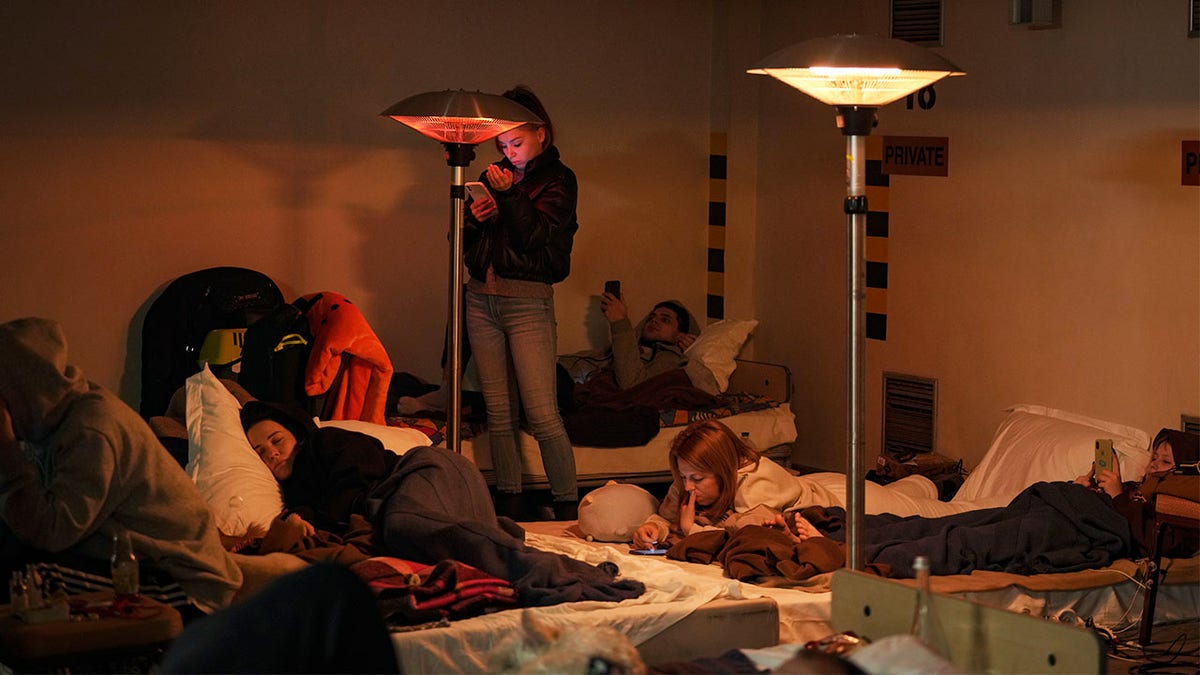
People lie on mattresses in the underground parking lot of a hotel that has been turned into a bomb shelter during an air raid alert in Kyiv, Ukraine, Sunday, Feb. 27, 2022. (Vadim Ghirda/AP Photo)
Ukraine’s Human Rights Commissioner, Dmytro Lubinets, said in June that his office inspected 1,066 bomb shelters nationwide and found deficiencies in 93% of them, according to The Ukrainian Week.
Some were locked, flooded or otherwise unusable, while others were inaccessible to people with disabilities, the outlet reported.
Prime Minister Sergii Koretskyi ordered a nationwide inspection of civil defense shelters on July 30 after a major Russian missile attack, following reports that some civilians were unable to access shelters during the assault.
According to Reuters, Kyiv has spent billions of hryvnias on bomb shelters since Russia’s full-scale invasion in 2022.
Mayor Vitali Klitschko said the city allocated more than 1.1 billion hryvnias (about $26 million) for shelter repairs in 2026, after spending roughly 7 billion hryvnias from 2022 through 2025.
On July 10, he ordered an audit of how district administrations used those funds.
Some people have been sheltering in bathrooms or corridors, offering little to no protection from a direct hit. Others relocate to basements, risking being buried under rubble, Reuters reported.
One woman said she was denied entry to a shelter because of her dog, while another said she has to rent a hotel room to access its shelter. Many others resort to sleeping in underground parking garages, the outlet reported.
HOUSE REPUBLICAN DON BACON SAYS HE WANTS ‘PARIAH STATE’ RUSSIA BOOTED FROM UN SECURITY COUNCIL
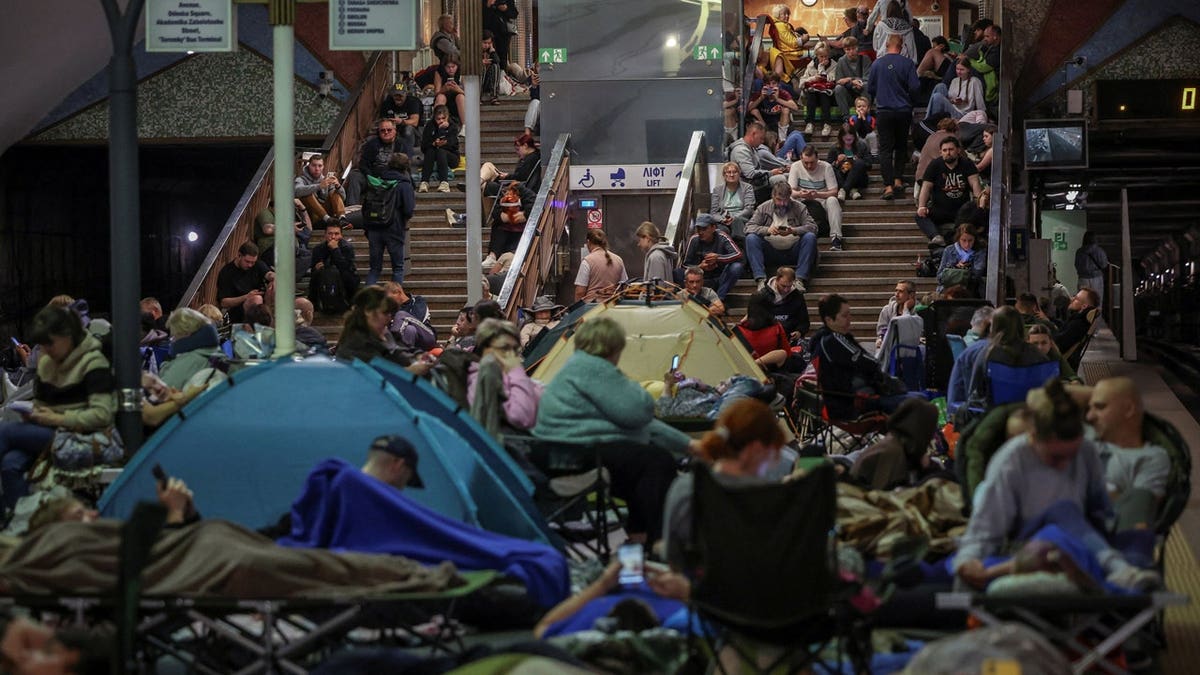
People take shelter inside an overcrowded metro station during a Russian missile and drone strike, amid Russia’s attack on Ukraine, in Kyiv, Ukraine July 30, 2026. (Alina Smutko/REUTERS)
«Thousands of shelters fail to meet basic standards, and mandatory evacuations from dozens of villages and towns in the front-line regions are being announced on a regular basis as Russia expands its fire control,» Mendel explained.
«Ukraine’s civilian population is largely unprotected, not solely because of shortages of missiles, but because of the absence of any comprehensive system that would give people reliable places to shelter and the means to survive.»
Zelenskyy told Axios on July 29 that he had asked Trump for an emergency shipment of about 300 Patriot interceptors ahead of winter, saying Ukraine «needed the Patriots yesterday» and warning that producing them domestically could take one to five years.
«I’m not sure that 300 Patriot missiles would be helpful,» Mendel said. «Russia has also intensified its use of guided aerial bombs across the front-line regions, from northern Sumy to southern Kherson, expanding its fire control. No missile system can stop that.»
ZELENSKYY SAYS PUTIN ‘LOST THE INITIATIVE’ AS UKRAINE’S TECH INDUSTRY RESHAPES THE WAR
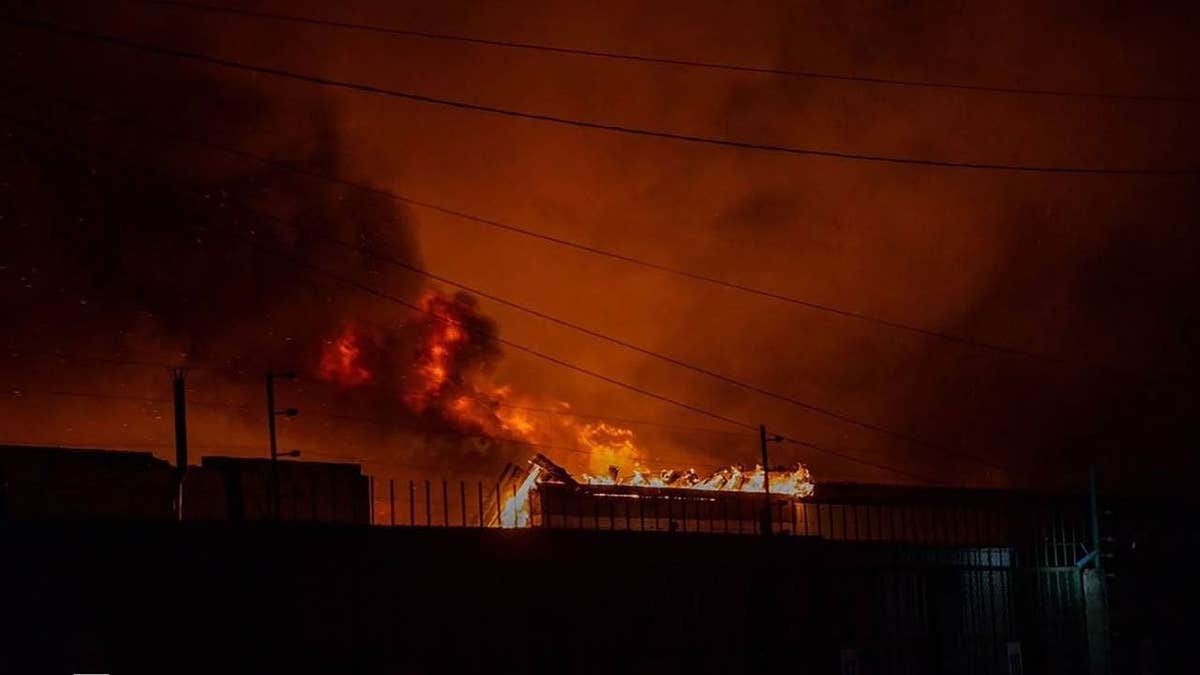
Smoke rises over Kyiv following a Russian missile and drone attack that struck multiple districts of the Ukrainian capital on July 8, 2026. (East2West news)
Mendel warned that without a comprehensive overhaul of Ukraine’s civilian defense system, the country faces an increasingly dire humanitarian situation.
«Zelenskyy and his government are already warning that the winter will be even harsher than the last one, preparing the public for a humanitarian catastrophe,» Mendel said. «But Ukraine has not designed a system that would be able to protect its population. Zelenskyy will continue demanding more support and missiles while shifting responsibility.»
During a recent appearance on Fox News’ «Hannity,» Zelenskyy said Trump had «accepted that he will give us licenses» to produce the interceptors in Ukraine.
Trump later said no agreement had been reached and that the administration was still discussing the proposal.
«I don’t think this would ever happen, but, you know, there’s people that, you give that technology, they can someday turn on you,» Trump told reporters at Camp David on July 31.
«So we have to be very careful,» he warned.
aid, volodymyr zelenskyy, russia, world, ukraine
NEWYou can now listen to Fox News articles!
A bitter family feud has spilled into Congress after Sen. Bernie Moreno, R-Ohio, called on his former son-in-law, Rep. Max Miller, to resign, accusing the fellow Ohio Republican of abusive behavior and saying he poses a danger to Moreno’s daughter and granddaughter.
Moreno’s extraordinary statement on X Sunday marked the latest escalation in a years-long family clash that has spilled from a contentious divorce into national Republican politics. Miller, a Republican congressman endorsed by President Donald Trump, was married to Moreno’s daughter, Emily.
Their divorce and ongoing custody battle have increasingly played out in public, culminating Sunday with Moreno’s call for Miller to leave Congress just days before Ohio’s Aug. 5 deadline to replace congressional candidates on the ballot.
FOX NEWS POLL: DEMOCRATIC UNITY, REPUBLICAN CROSSOVERS SHAPE OHIO SENATE RACE
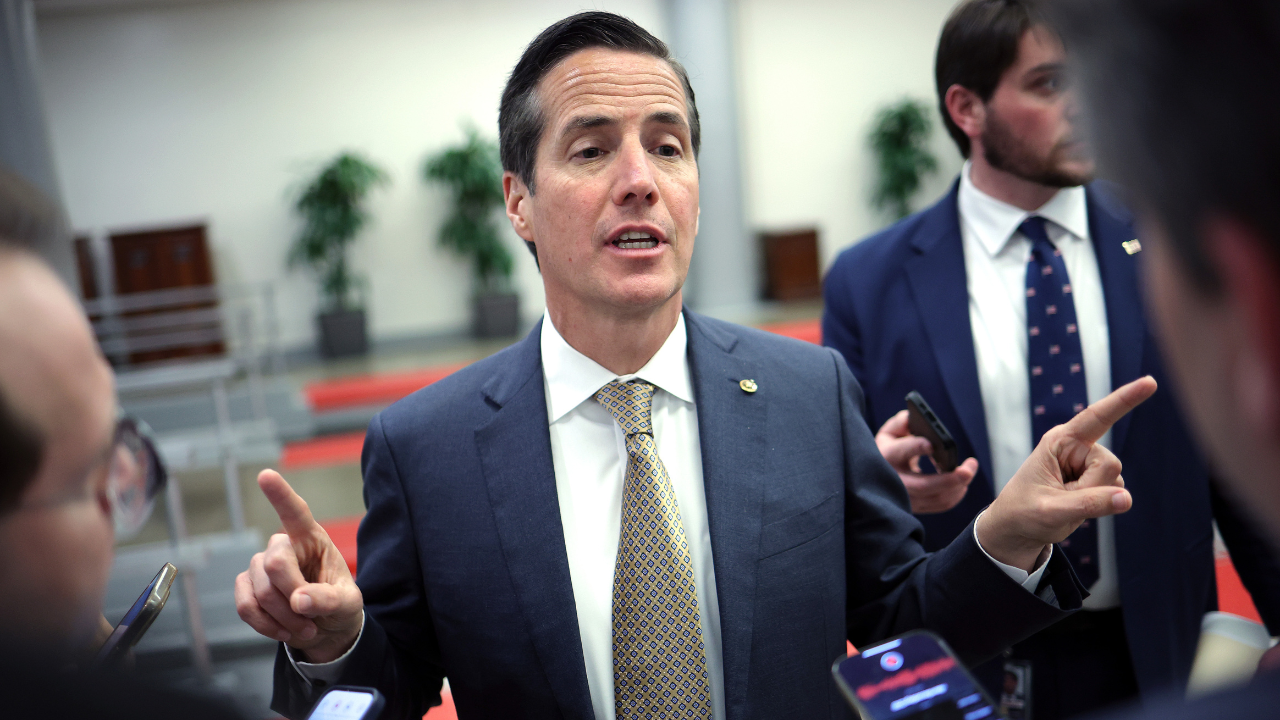
Sen. Bernie Moreno, R-Ohio, issued a public statement Sunday calling on his former son-in-law, Rep. Max Miller, to resign from Congress. (Kevin Dietsch/Getty Images)
On Sunday, hours after Miller publicly denied allegations stemming from the divorce, Moreno broke his public silence in a lengthy statement posted to X, saying his family had endured «pure hell» over the past two years and accusing Miller of increasingly «erratic and dangerous behavior.»
«Out of concern for the safety of my family, I hoped to keep this matter private but Max Miller’s increasingly erratic and dangerous behavior has made that impossible,» Moreno wrote.
Moreno went on to call Miller unfit for office, writing: «If there are any basic standards of character required to hold elected office, Max Miller fails them. He should not serve in the House of Representatives.»
The Ohio senator also alleged that Miller «needs serious psychological help» and wrote that he fears for the safety of his granddaughter while she is in Miller’s custody. Miller has denied the allegations and has not been charged with any crime related to the dispute.
Sunday’s post marked a dramatic shift for Moreno, who had previously avoided publicly commenting on Miller or the family’s legal dispute. The statement came just days before Ohio’s Aug. 5 deadline to replace a congressional candidate on the ballot.
Still, Moreno has been criticized online for not speaking up about the situation sooner. When asked by Notus last week, Moreno said he didn’t «know» if Miller should stay in office.
A source close to the Moreno family told Fox News Digital that the senator had wanted to break his silence for months, and has paid hundreds of thousands of dollars in out-of-pocket expenses as the legal battle between his daughter and Miller continues on.
But his daughter, the source said, didn’t want the lawmaker’s granddaughter to «eventually read about her grandfather attacking her dad.»
That changed after Miller’s livestream, which the source characterized as an «unhinged meltdown.»
SEN BERNIE MORENO CALLS FOR EX-SON-IN-LAW TO RESIGN FROM HOUSE, GET ‘SERIOUS PSYCHOLOGICAL HELP’
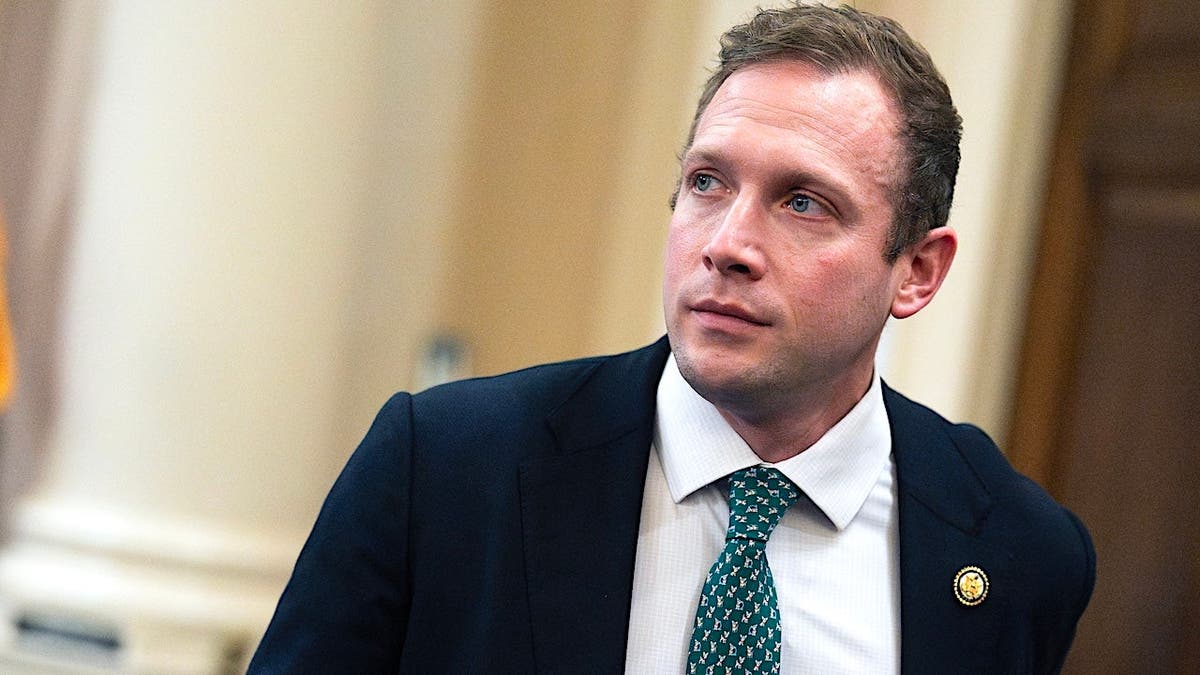
Rep. Max Miller, R-Ohio, vowed to stay in the race Sunday, but the Republican Party might still pressure him to resign before Wednesday’s deadline so they can replace him before the November general election ballot deadline. (CQ-Roll Call, Inc via Getty Images)
Earlier Sunday, Miller posted a livestream denying allegations of domestic and child abuse related to the divorce.
During the livestream, Miller also alleged that his ex-wife has struggled with mental health issues and shared a Dropbox link containing court filings and other documents that he said support his version of events.
«Just want to be clear: no court, no agency has ever substantiated any allegation of abuse against me. No criminal charge has ever been filed against me,» Miller said. «Every single one of these allegations were already investigated, and I cooperated fully every single time because I had nothing to hide and I have nothing to hide now.»
GOP REP. MAX MILLER PUSHES BACK AGAINST ABUSE ALLEGATIONS: ‘I HAVE NOTHING TO HIDE’
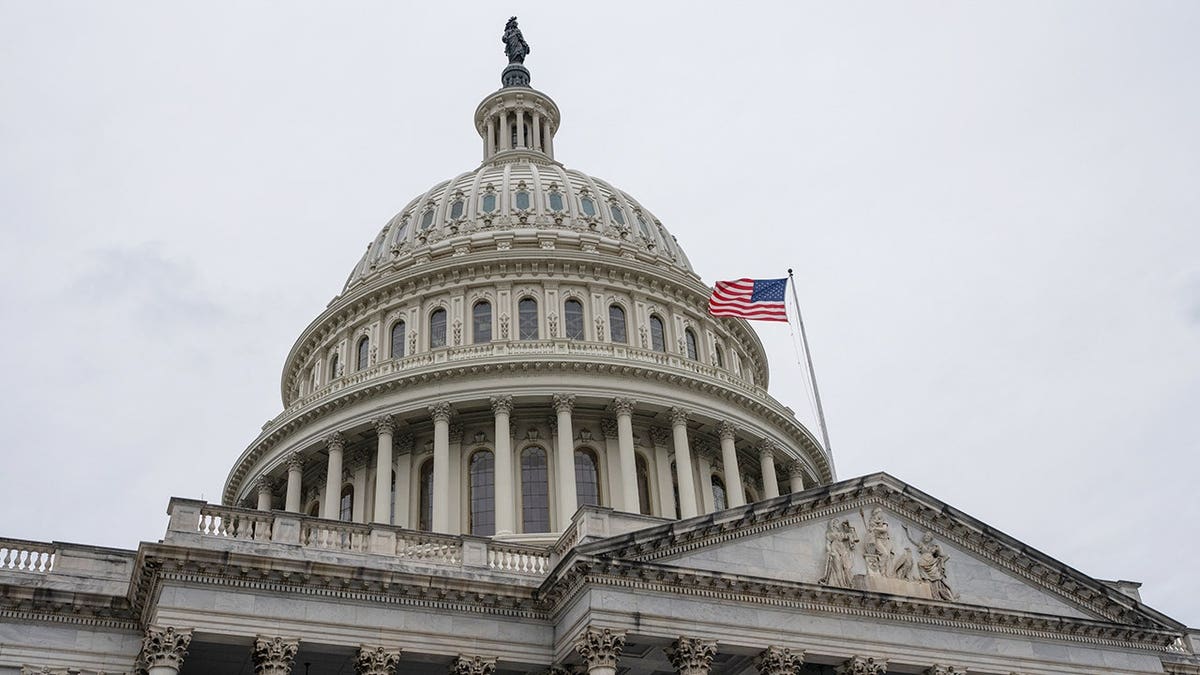
Moreno’s call for Miller to step down brought a years-long family dispute into the national political spotlight on Capitol Hill. (Aaron Schwartz/Bloomberg via Getty Images)
Days before Sunday’s public clash, Emily Moreno’s attorneys sought restraining orders against Miller that would prohibit him from contacting or harassing members of her legal team.
Emily Moreno’s spokesman, Stefan Mychajliw, accused Miller of trying to «save his political career» and rejected the congressman’s characterization of the dispute.
«It is shameful that Max Miller decided to go on a bizarre and lie-filled rant about his ex-wife to desperately try to save his political career,» Mychajliw said in a statement.
«There is a documented trove of evidence that Miller has a history of violent and dangerous behavior and no amount of victim shaming will change that,» Mychajliw continued. «Miller can lie and spin on X, but he cannot do so under oath in a court of law. We are confident that justice will prevail in court.»
Asked about the senator’s public comments, Emily Moreno’s attorney, Subodh Chandra, declined to engage with the allegations. «When adverse parties in litigation are setting themselves on fire, I do not provide them with a fire extinguisher,» he told Fox News Digital.
With neither side backing down, the bitter family feud appears far from over, setting the stage for more courtroom battles and political fallout in the weeks ahead.
Fox News Digital reached out to the offices of Miller and Moreno for additional comment.
politics, republicans, senate, ohio, congress
INTERNACIONAL
¿Halcones y palomas?: Los líderes de Irán muestran unidad, pero se enfrentan sobre el objetivo final de la guerra

Irán está decidido a mostrar fortaleza
El bando más duro presiona a los iraníes


Los pragmáticos dicen que hay que escuchar a la población
Ambos bandos miran a lo que ocurra después de la guerra

La frase de La Joaqui que expuso toda la verdad sobre cómo quedó tras romper con Luck Ra: «Eso me ofendió»

¿Dónde ver en VIVO y ONLINE el Lanús vs Instituto por el Torneo Clausura 2026?

Ukraine seeks more US Patriot interceptors as bomb shelter probe deepens

“Conmigo no”: Milei descartó un “plan platita” para el año electoral

Javier Milei redobló sus críticas contra Lula: “Es un ladrón, un corrupto, no es inocente”

El jugador de la Selección que fue el primero en meter un gol post Mundial y habló sobre el subcampeonato

“Vamos a acelerar con todo”: el objetivo del Gobierno por las reformas y la agenda electoral de cara al 2027

Trump admin invokes 30-year dormant terror court as it seeks to deport Afghan woman tied to Election Day plot

“Casta”, “parásito” y “sea democrático”: fuerte respuesta de Victoria Villarruel a Diego Santilli

Dem senator swipes credit for bill he opposed amid heated reelection bid: ‘Disturbing pattern’
-
 POLITICA13 horas ago
“Vamos a acelerar con todo”: el objetivo del Gobierno por las reformas y la agenda electoral de cara al 2027
-
 POLITICA2 días ago
“Casta”, “parásito” y “sea democrático”: fuerte respuesta de Victoria Villarruel a Diego Santilli
-

 CHIMENTOS11 horas ago
¡Chau Luck Ra! La salida de soltera de La Joaqui, muy bien acompañada, a días de su separación