INTERNACIONAL
READ IT: The full text of the US-Iran Memorandum of Understanding

NEWYou can now listen to Fox News articles!
The memorandum of understanding (MOU) with Iran was released Wednesday detailing the terms of the deal hashed out by the Trump administration.
President Donald Trump signed the deal after the G7 wrapped up at the Palace of Versailles on Wednesday with a formal signing ceremony set for Friday. His signature put the 60-day ceasefire and negotiation framework into effect.
Read the full text below.
TRUMP ANNOUNCES PEACE DEAL WITH IRAN, DECLARES STRAIT OF HORMUZ WILL REOPEN: ‘LET THE OIL FLOW!’
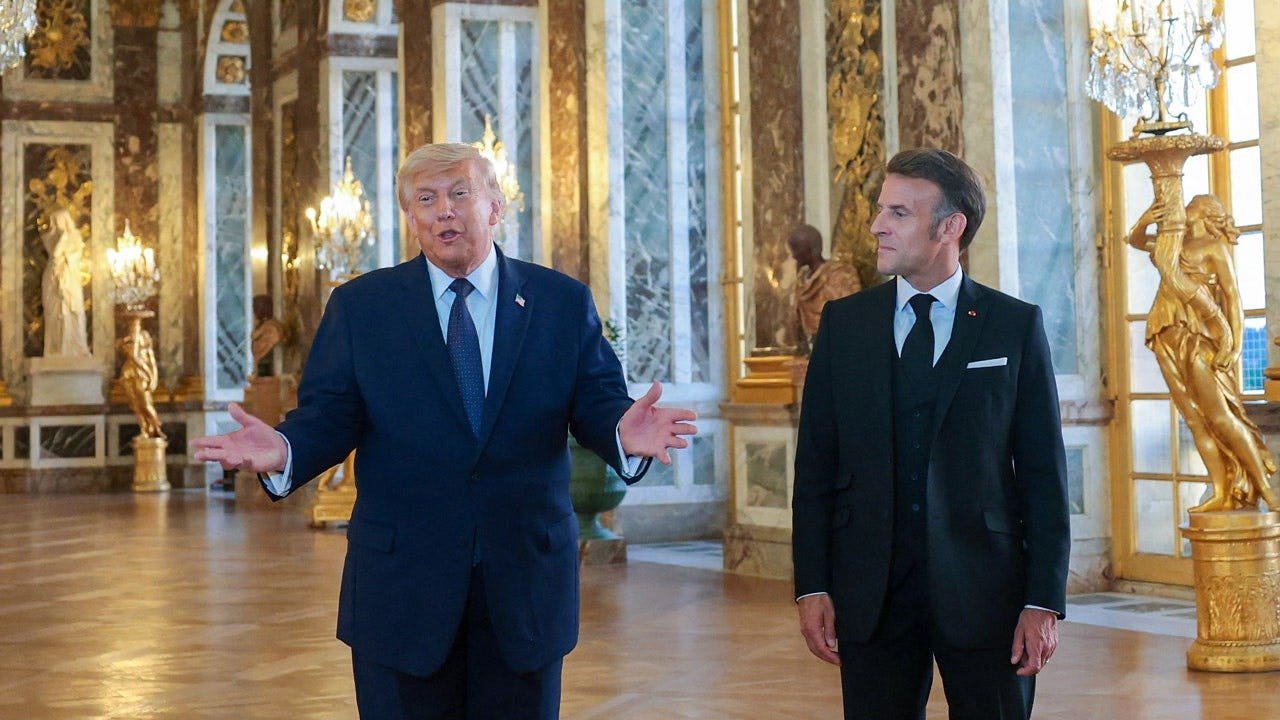
President Donald Trump receives a tour of the Chateau de Versailles from French President Emmanuel Macron. (Anna Moneymaker / POOL / AFP via Getty Image)
1. The United States of America and the Islamic Republic of Iran and their allies in the current war by signing this MOU declare the immediate and permanent termination of military operations on all fronts, including in Lebanon, and undertake from now on not to initiate any war or any military operation against each other and to refrain from the threat or use of force against each other and ensuring the territorial integrity and sovereignty of Lebanon. The final deal will confirm the permanent termination of the war on all fronts including in Lebanon and other provisions of this paragraph.
2. The United States of America and the Islamic Republic of Iran undertake to respect each other’s sovereignty and territorial integrity and to refrain from interfering in each other’s internal affairs.
3. The United States of America and the Islamic Republic of Iran commit to negotiating and achieving the final deal in maximum 60 days extendable with mutual consent.
VANCE SAYS TRUMP ADMINISTRATION’S KEY OBJECTIVES HAVE BEEN REACHED IN US-IRAN DEAL
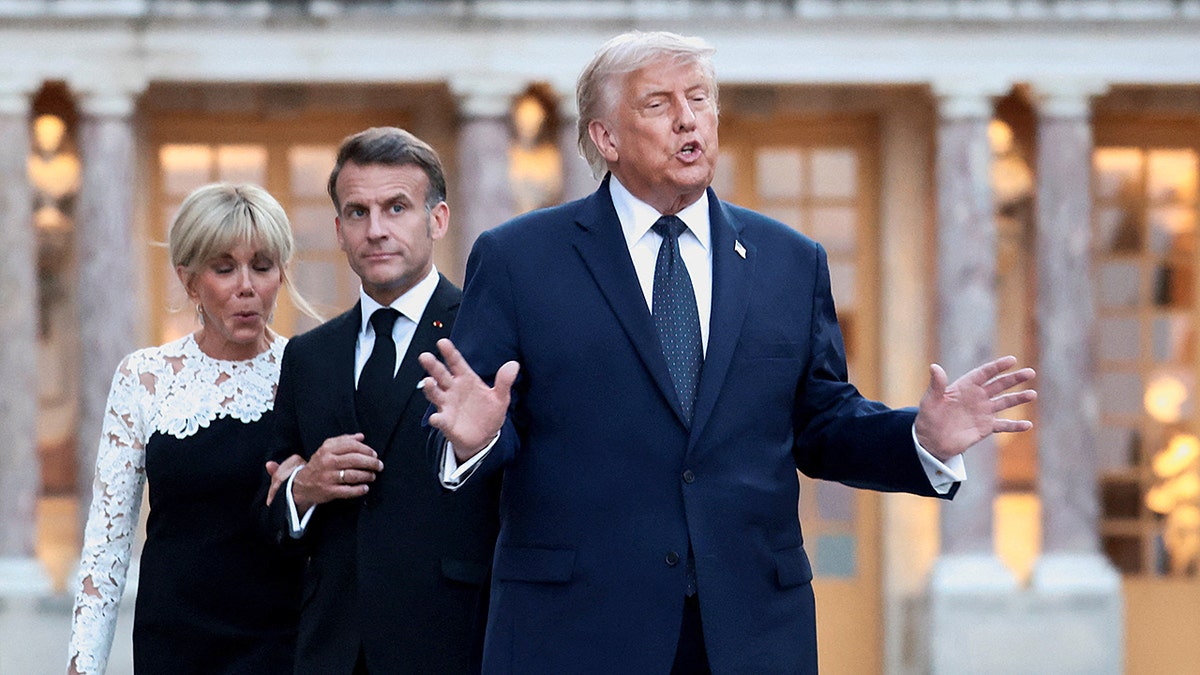
French President Emmanuel Macron and his wife Brigitte Macron welcome U.S. President Donald Trump for a dinner commemorating the 250th anniversary of the United States’ independence, at the Palace of Versailles, near Paris, France, June 17, 2026. (REUTERS/Evelyn Hockstein)
4. Immediately upon the signing of this MOU, the United States of America will begin the removal of its naval blockade and any disturbances or impediments against the Islamic Republic of Iran and will fully end the naval blockade within 30 days. During this period, the traffic of vessels will be in proportion to the numbers of prewar traffic being restored by the Islamic Republic of Iran. The United States of America further undertakes to remove its forces from the proximity of the Islamic Republic of Iran within 30 days after the final deal.
5. Upon the signing of this MOU, the Islamic Republic of Iran will make arrangements using its best efforts for the safe passage of commercial vessels with no charge for 60 days only from the Persian Gulf to the Sea of Oman and vice versa. The traffic of commercial vessels will immediately start and, considering the needs for removing the technical and military obstacles and demining by the Islamic Republic of Iran, will be instated within 30 days. The Islamic Republic of Iran will conduct dialogue with the Sultanate of Oman to define the future administration and maritime services in the Strait of Hormuz in discussion with other Persian Gulf littoral states in line with the applicable international law and the sovereign rights of coastal states of the Strait of Hormuz.
6. The United States of America undertakes with regional partners to develop a definitive mutually agreed plan with at least USD 300 billion for the reconstruction and economic development of the Islamic Republic of Iran. The mechanism for the implementation of this plan will be finalized as part of a final deal within 60 days. All required licenses, waivers and permissions needed for the relevant financial transactions will be granted by the United States of America.
TRUMP MAY HAVE WON A STRATEGIC PAUSE IN IRAN. NOW COMES THE HARD PART
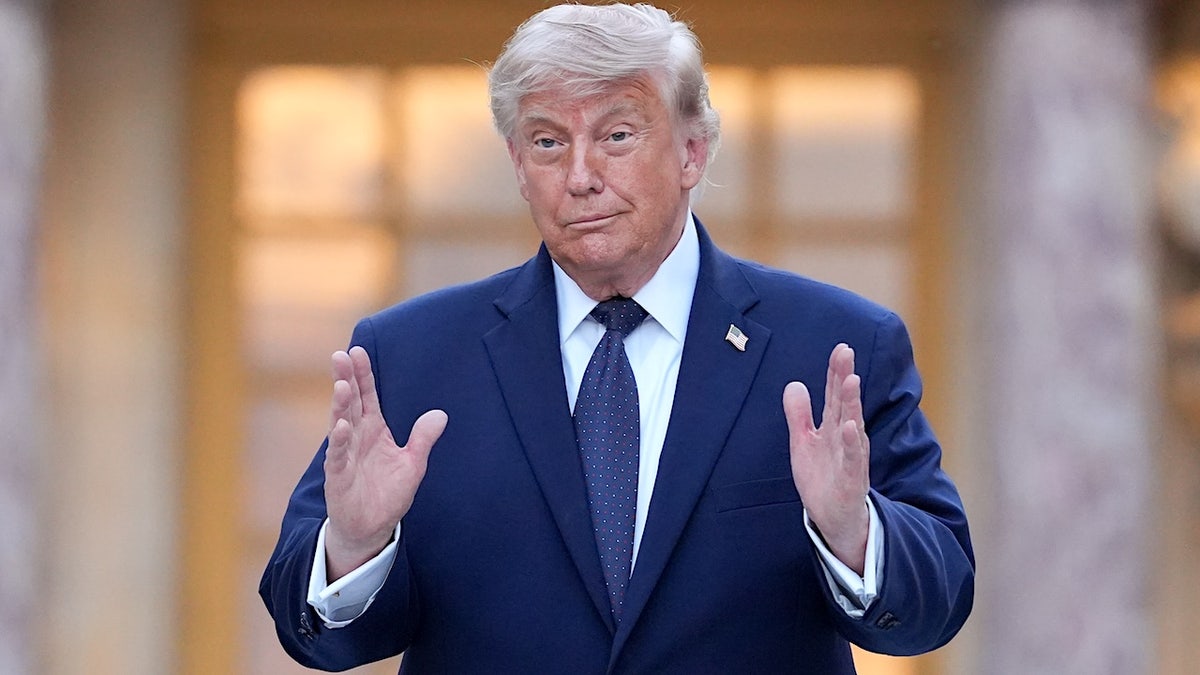
President Donald Trump signed the memorandum of understanding (MOU) with Iran at the historic Palace of Versailles in Paris, France, on Wednesday. (Nathan Laine/Bloomberg)
7. The United States of America undertakes to terminate all types of sanctions against the Islamic Republic of Iran, including the United Nations Security Council resolutions, IAEA Board of Governors resolutions and all unilateral U.S. sanctions, primary and secondary, in an agreed upon schedule as part of the final deal. The Islamic Republic of Iran and the United States of America acknowledge the critical importance of the sanctions termination issue above mentioned and express their intentions to immediately address these issues in the negotiations in order to achieve mutual agreement on them.
8. The Islamic Republic of Iran reaffirms that it shall not procure or develop nuclear weapons. United States of America and the Islamic Republic of Iran have agreed to resolve the disposition of stockpile enriched material pursuant to a mechanism that will be mutually agreed upon in accordance with the schedule mentioned in Paragraph 7 with the minimum methodology to be downblending on site under the supervision of the IAEA. The two parties also agreed to discuss the issue of enrichment and other mutually agreed matters related to the Islamic Republic of Iran’s nuclear needs, based on a satisfactory framework being agreed upon in the final deal. The final deal will confirm the provisions of this paragraph. The United States of America and the Islamic Republic of Iran acknowledge the critical importance of the nuclear issues above mentioned and express their intention to immediately address these issues in the negotiations in order to achieve mutual agreement on them.
9. Pending the final deal, the United States of America and the Islamic Republic of Iran agree to maintain the status quo. The Islamic Republic will maintain the current status quo of its nuclear program and the United States of America will not impose any new sanctions and will not deploy additional forces in the region.
JD VANCE REVEALS DETAILS OF US-IRAN DEAL, ADDRESSES WHETHER TAXPAYER MONEY WILL GO TO TEHRAN
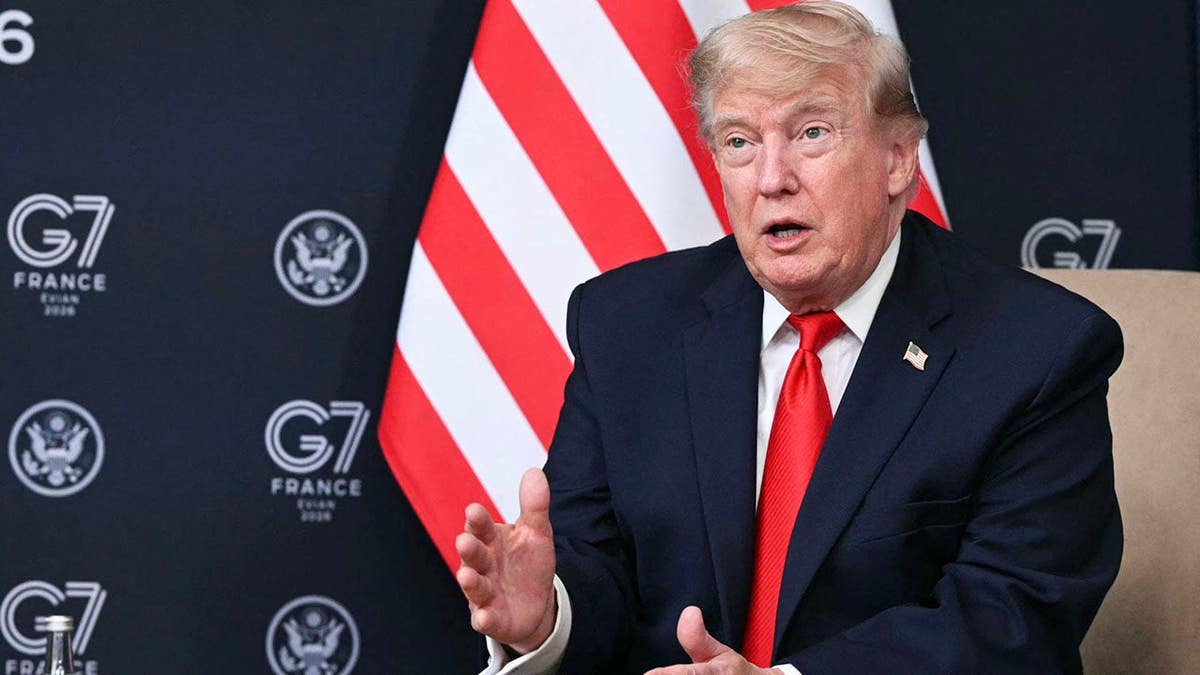
President Donald Trump delivers remarks during a bilateral meeting with the United Arab Emirates’ president at the G7 summit in Evian, France, on June 16, 2026. (Mandel Ngan/AFP via Getty Images)
10. The United States of America undertakes that immediately upon the signing of this MOU and until the termination of sanctions the U.S. Department of Treasury will issue waivers for the export of Iranian crude oil, petroleum products and derivatives and all associated services including banking transactions, insurances, transportation, etc.
11. The United States of America undertakes to make fully available for use the frozen or restricted funds and assets of the Islamic Republic of Iran upon the implementation of this MOU. The United States of America and the Islamic Republic of Iran will mutually agree on the procedures related to the release of these funds during the negotiations. Such funds, whether retained in the original account or transferred shall be made fully usable for payment to any ultimate beneficiary designated by the Central Bank of the Islamic Republic of Iran. The United States of America undertakes to issue all necessary licenses and authorizations accordingly.
12. The United States of America and the Islamic Republic of Iran agree that an executive mechanism will be established to monitor the successful implementation of this MOU and the future compliance of the final deal.
CLICK HERE TO DOWNLOAD THE FOX NEWS APP
13. After signing this MOU and subject to the beginning of the implementation of paragraphs 1, 4, 5, 10 and 11 of this MOU, and the continuing implementation of these measures, the United States of America and the Islamic Republic of Iran will start negotiations regarding the final deal exclusively on the other paragraphs.
14. The final deal will be endorsed by binding UNSC resolution.
The Associated Press contributed to this report.
treaties, nuclear proliferation, united nations, iran, sanctions







INTERNACIONAL
‘Pure hell’ in Moscow as Ukrainian drones strike major refinery supplying capital’s fuel market
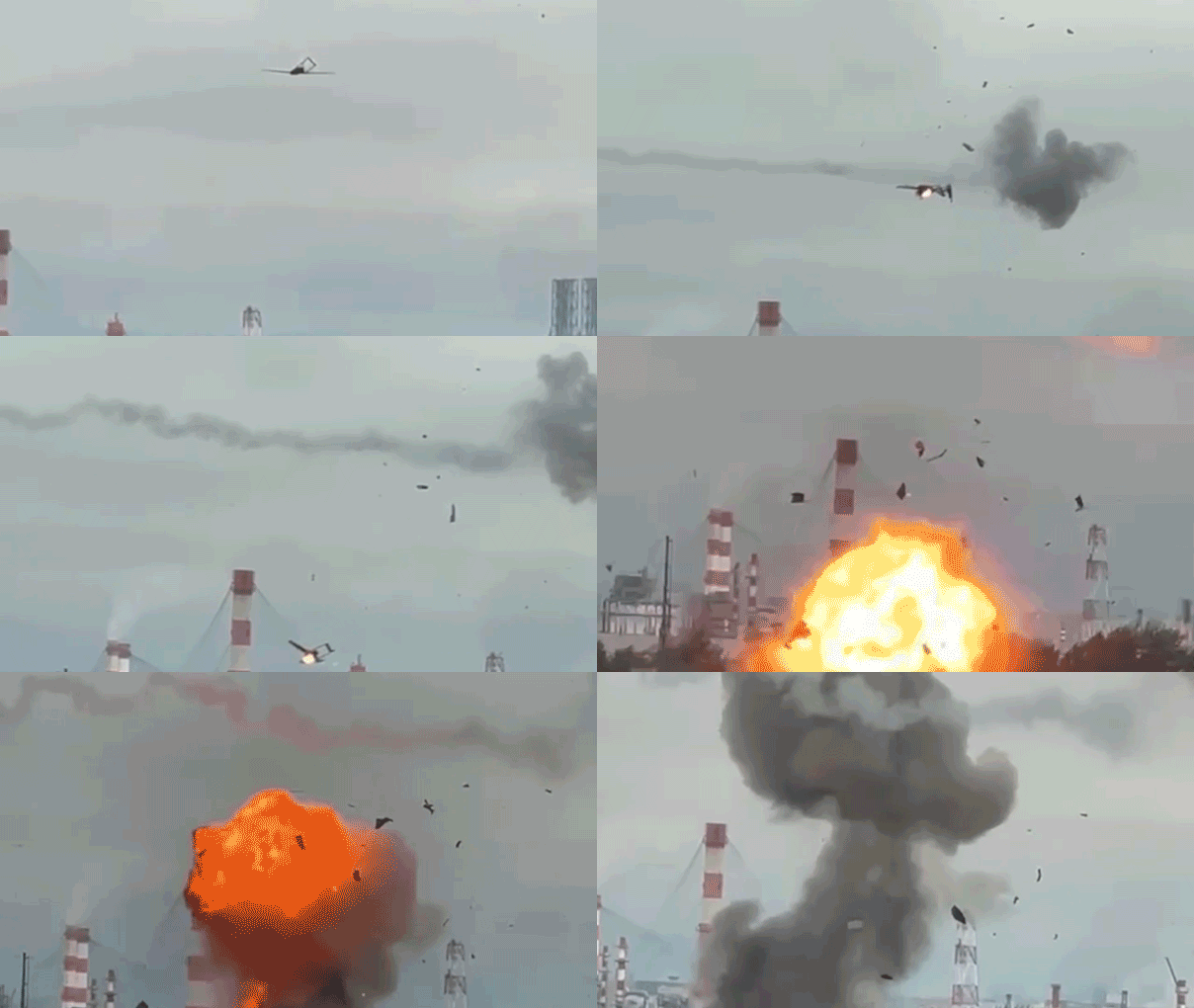
NEWYou can now listen to Fox News articles!
Ukraine launched one of its largest drone attacks on Moscow since the start of Russia’s full-scale invasion, striking a major oil refinery in the Russian capital and sending thick black smoke over parts of the city, according to Russian officials and multiple reports.
The Moscow Oil Refinery in the Kapotnya district — one of the capital region’s key fuel facilities — was hit overnight Thursday, marking the second reported strike on the site in three days. Videos circulating online showed large flames and black smoke rising from the facility, while Russian officials said air defenses intercepted waves of incoming drones.
Kyiv says its strikes deep inside Russia are evidence that it is turning the tide of the war — a message President Volodymyr Zelenskyy took this week to President Donald Trump and other G7 leaders at a summit in France.
The latest strikes underscore a new phase of the war, with Ukraine increasingly able to hit high-value targets deep inside Russia while Moscow struggles to prevent drones from reaching politically sensitive and economically important sites near the capital.
‘A NEW KIND OF WAR’: INSIDE UKRAINE’S HIDDEN FACTORIES MASS-PRODUCING COMBAT DRONES
Smoke and flames rise over Moscow on June 18, 2026, following a Ukrainian drone attack that hit the Kapotnya oil refinery and other targets in the Russian capital. (East2West)
«This is pure hell, I’ve never felt such terror,» one Moscow resident said after the attack, according to East2West News.
Another resident, according to the outlet, asked: «Why won’t this madman stop his crazy and pointless war and end the death and destruction?»
East2West news agency also reported that a heavy security presence was deployed around the Kremlin, with Red Square sealed off and machine-gunners positioned on towers, ramparts and near Bolsheviks’ founder Vladimir Lenin’s Mausoleum.
Moscow Mayor Sergey Sobyanin said air defenses shot down more than 130 drones approaching the city. Russia’s Defense Ministry claimed more than 550 Ukrainian drones were intercepted overnight across several regions, though battlefield claims from either side could not be independently verified.
PUTIN RESIDENCE ATTACK VIDEO SLAMMED AS US OFFICIALS SAY UKRAINE DID NOT TARGET LEADER
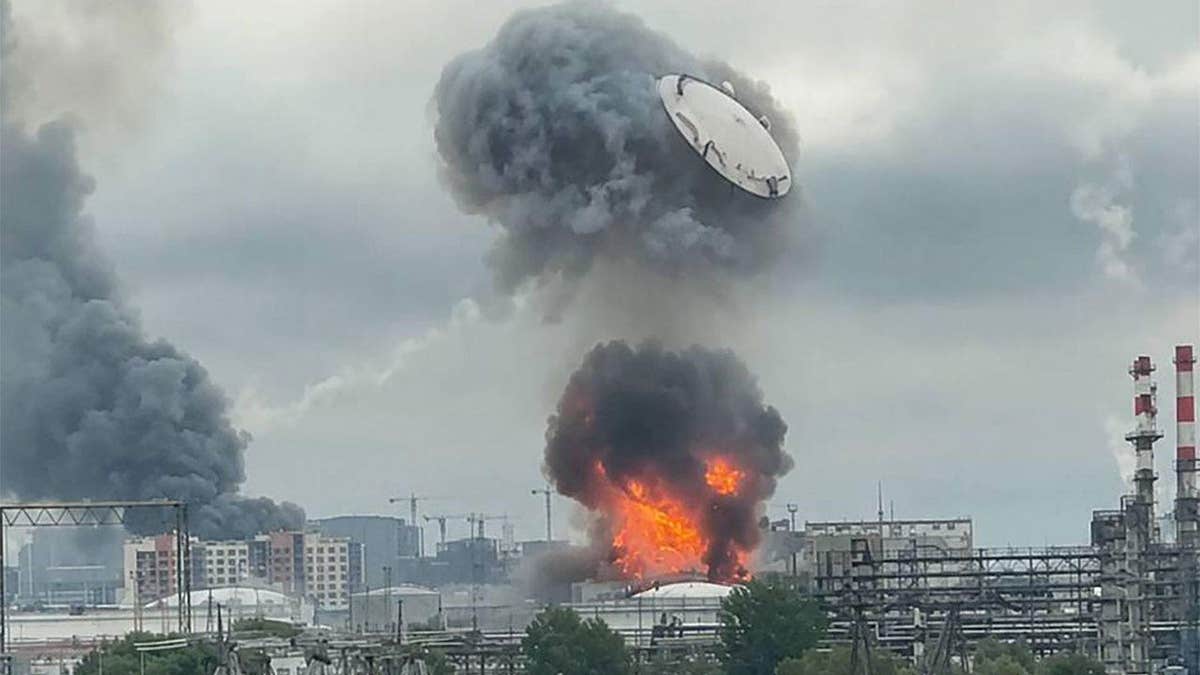
The Moscow Oil Refinery in Kapotnya burns after being hit during Ukraine’s June 18, 2026, drone attack on the Russian capital. (East2West)
The attack disrupted daily life across Moscow, forcing temporary flight suspensions at major airports and traffic restrictions near the refinery. Russian officials said debris also fell near the Sadovod shopping center, damaging a building. The Moscow region governor said 16 people were injured in the broader attack.
Ukraine’s Foreign Minister Andrii Sybiha mocked the confusion in Moscow, writing on X: «One of the most popular questions asked by Muscovites this morning is ‘What is going on?’ I can answer. Your country started a war of aggression against ours. For years, it has been killing our people. Now that you know what’s going on, ask Putin when he is planning to end it.»
The strike appeared to expose vulnerabilities in Moscow’s heavily promoted air defense network, bringing the war deeper into the Russian capital even as the Kremlin continues its long-range missile and drone attacks on Ukrainian cities.
RUSSIA SAYS UKRAINIAN DRONES HIT NUCLEAR POWER PLANT DURING INDEPENDENCE DAY STRIKES
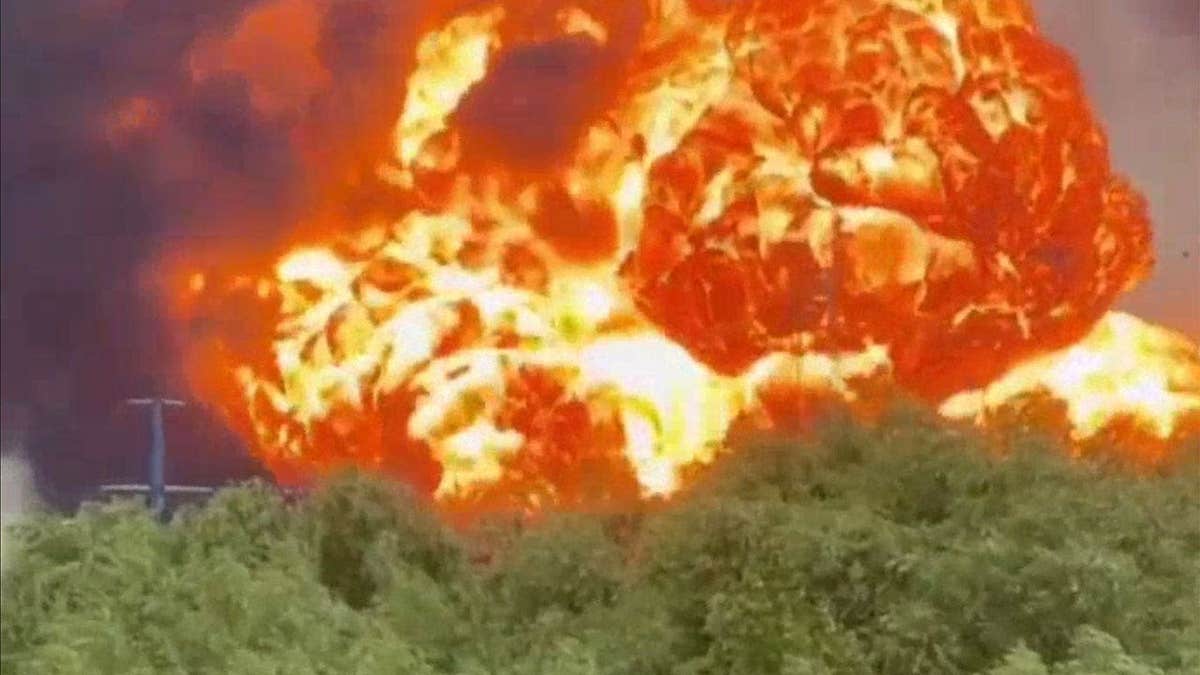
Explosion seen over Moscow after Ukrainian drones struck the Russian capital, including the Kapotnya oil refinery, June 18, 2026. (East2West)
The Kapotnya refinery is a strategically significant target. A prior Ukrainian drone strike damaged part of the refinery in recent days, according to Reuters, and forced a halt in some operations.
East2West reported that the refinery supplies 40% of Moscow’s fuel market and 70% of the surrounding region’s gasoline and aviation fuel needs.
Ukraine increasingly has targeted Russian energy infrastructure in an effort to undermine Moscow’s war machine and increase the domestic cost of the war inside Russia. Kyiv has described such strikes as part of its campaign of «long-range sanctions» against Russia’s oil and military infrastructure.
The Moscow attack came as President Vladimir Putin hosted leaders from the 10-member Association of Southeast Asian Nations bloc in Kazan, Russia. Ukraine also reportedly struck targets linked to Russia’s supply routes to occupied Crimea, including road and rail infrastructure. Ukrainian officials have repeatedly said isolating Crimea is a key military objective as Kyiv seeks to weaken Russia’s hold on the peninsula, which Moscow illegally annexed in 2014.
Russia, meanwhile, continued its own strikes on Ukraine. Ukrainian officials reported Russian attacks on energy and oil facilities in the Poltava region and near Kyiv.
East2West reported that Russia was moving Tu-95MS strategic bombers across the country, raising concerns that Moscow could be preparing another major strike on Ukraine in the coming days.
CLICK HERE TO DOWNLOAD THE FOX NEWS APP
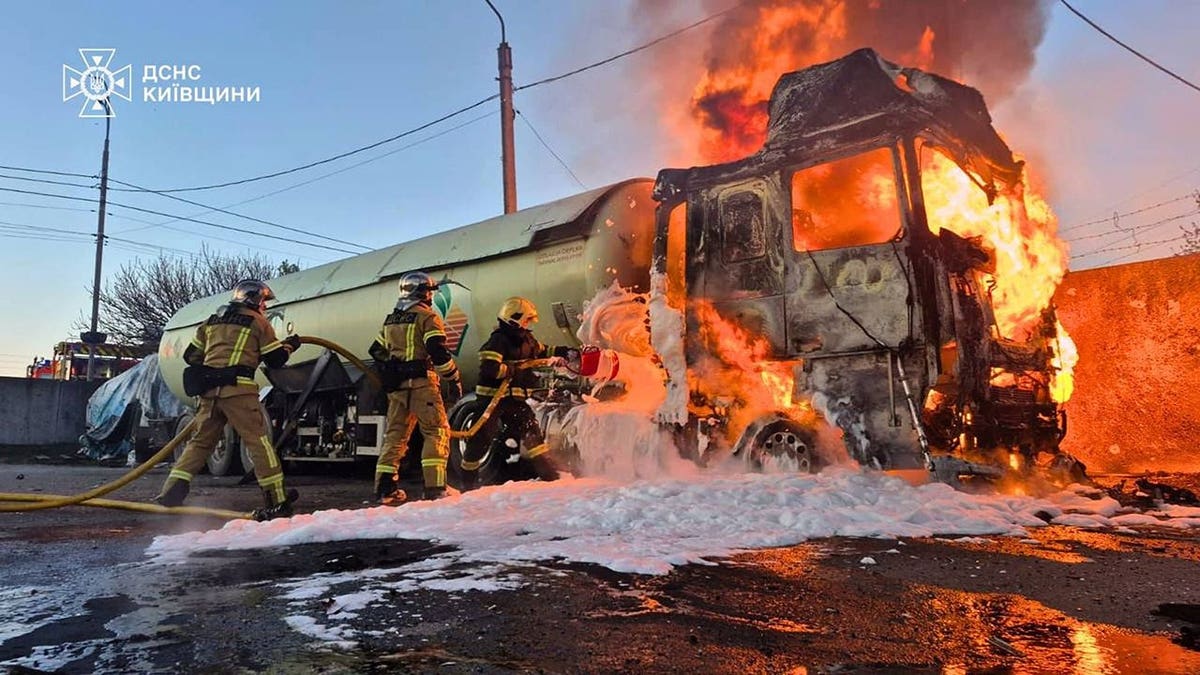
Emergency services personnel work to extinguish a vehicle fire following a Russian drone attack in the Kyiv region, Ukraine, on May 5, 2026. (Ukrainian Emergency Service/AP)
Zelenskyy has said the war could end if Putin agrees to genuine peace talks, while accusing Moscow of prolonging the conflict and using negotiations as cover for continued attacks.
Reuters contributed to this report.
volodymyr zelenskyy, ukraine, vladimir putin, drones, bombings
INTERNACIONAL
El jefe del Pentágono avisa a la OTAN que Estados Unidos reexaminará su despliegue militar en Europa
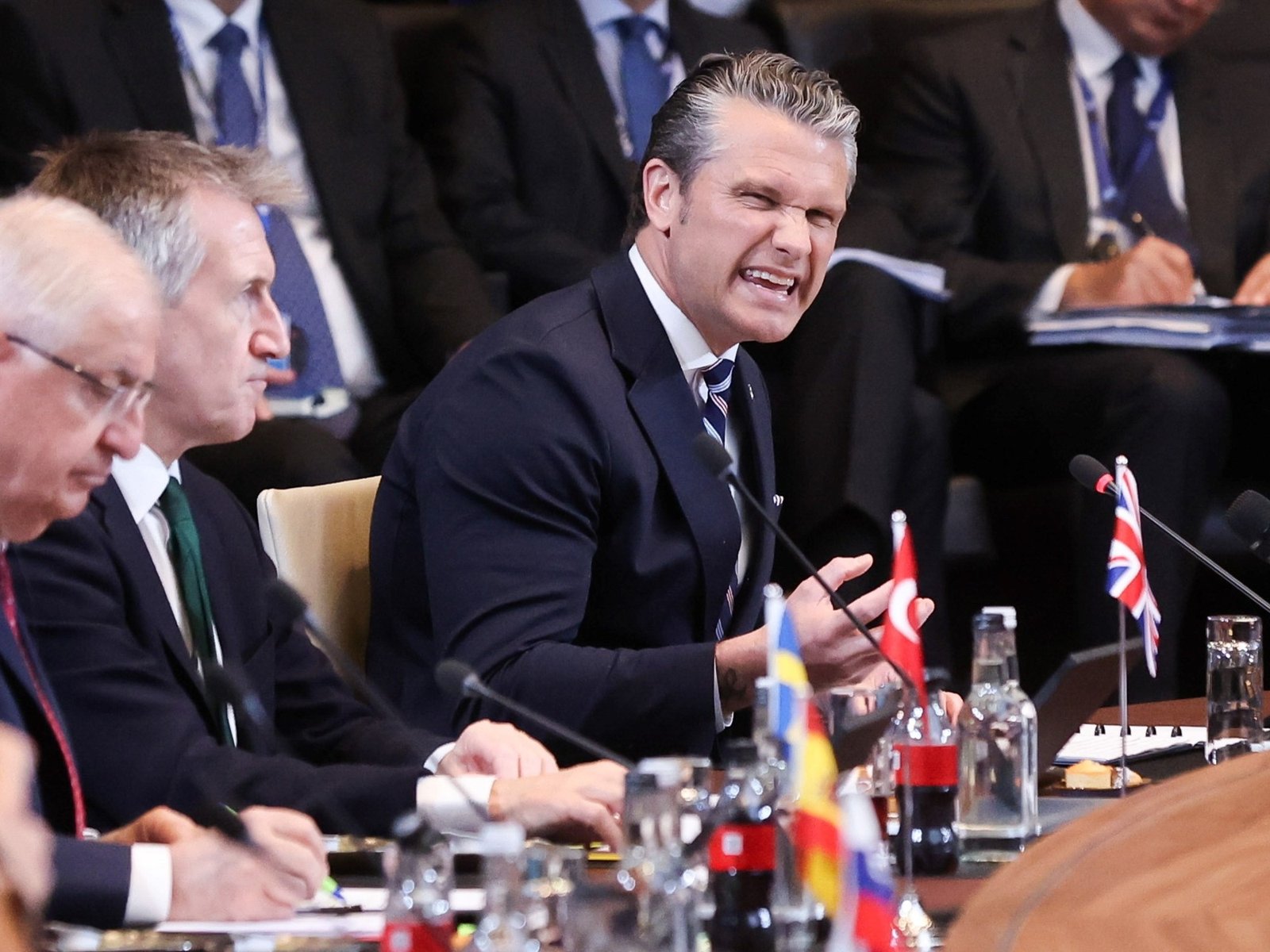
Estados Unidos lanza un proceso de seis meses para evaluar su presencia militar en Europa y decidir si la reduce, como el presidente Donald Trump ha dicho en varias ocasiones. El anuncio lo hizo este jueves en la sede de la OTAN en Bruselas el secretario de Guerra estadounidense, Pete Hegseth, quien dijo que no se trata de vaciar Europa de tropas estadounidenses.
“Será una evaluación real. Estará diseñada para garantizar que la OTAN avance con rapidez e irreversiblemente hacia un liderazgo europeo, asumiendo la responsabilidad principal en la defensa de Europa”, dijo Hegseth según un cable de agencia citado por Radio France International. El anuncio llega justo después de que a principios de mayo Estados Unidos oficializara la retirada de 5.000 hombres de sus bases alemanas.
La idea es la misma que repiten muchos gobiernos europeos desde hace meses. Europa debe asumir la responsabilidad de la seguridad en el continente europeo, y Estados Unidos será únicamente un garante lejano, más pendiente de otras regiones del mundo, sobre todo del área Asia-Pacífico, donde su rivalidad con China, creen los diplomáticos y analistas estadounidenses, marcará el planeta en lo que resta de siglo.
El papel de Estados Unidos en la seguridad europea se limitará, advierte Washington en la OTAN desde hace meses, a servir como único garante gracias al paraguas nuclear.
Si ese es el objetivo a largo plazo, los europeos esperan ahora ver hasta dónde está dispuesto a retirarse Estados Unidos, porque en Europa tiene más 40 instalaciones de diferente tamaño (una decena de bases grandes) y unos 65.000 soldados, que pueden llegar a ser cerca de 80.000 en función de las rotaciones.
Al final de la Guerra Fría llegó a tener más de 250.000 hombres estacionados en Europa. Ahora mismo más de 30.000, aproximadamente la mitad, está en Alemania. Italia, Reino Unido y España son los otros países con presencia considerable y varias bases.
Hegseth dijo a sus homólogos en Bruselas que la evaluación también se hace para garantizar que “el acceso, las bases y el sobrevuelo de Estados Unidos estén claramente definidos y asegurados”. Ya lo están, pero lo están de tal forma que los gobiernos europeos pueden, como hicieron en esta guerra contra Irán algunos como el italiano y el español, negar el uso de esas bases, que legalmente son bases conjuntas, no estadounidenses.
Trump, el propio Hegseth y sobre todo el secretario de Estado Marco Rubio se preguntaron en público en varias ocasiones para qué servía la OTAN si cuando Estados Unidos necesitaba sus bases en Europa no podía usarlas.
La OTAN, según sus documentos fundacionales, está para proteger el espacio europeo y norteamericano de ataques externos, no para aventuras militares de sus Estados miembros en otras partes del mundo.
El uso de las bases en Europa se regula a partir de acuerdos bilaterales entre Estados Unidos y cada país involucrado, no hay un marco común en la OTAN. A pesar de eso, Hegseth dijo en la OTAN, ante la mirada de los ministros de Defensa de gobiernos que negaron el uso de las bases, que esa decisión fue un acto “vergonzoso. Estos aliados pusieron en riesgo a los hijos e hijas de Estados Unidos, a nuestros hijos e hijas. No hay excusa para eso”.
Cuando España e Italia anunciaron que negaban el uso de las bases conjuntas para los ataques en Irán, Trump amenazó con cerrar las bases en esos países para moverlas hacia otros como Polonia o Rumanía, supuestamente más amables con las decisiones de Washington. Analistas estadounidenses aseguraron poco después que reubicar la base naval de Rota, en el sur de España, era estratégicamente inviable.
La reunión de este jueves también sirvió para hablar de dinero. Estados Unidos está empeñado en que los 31 otros estados miembros de la OTAN cumplan lo que prometieron hace casi un año en una cumbre en La Haya: gastar en 2035 el 5% de su PBI en Defensa. España no aceptó ese número y asegura desde entonces que el 2,0% que ya gastó en 2025 es suficiente.
Fuentes diplomáticas españolas contaron a Clarín que hace un año, cuando se negociaba esa cumbre, el Gobierno español habló con el italiano a sabiendas de que Italia no podía llegar al 5,0% por su situación fiscal y podrían hacer frente común. Los italianos, como muchos otros, dijeron entonces que prometerían el 5,0% sabiendo que no lo cumplirían.
Los últimos datos oficiales de la OTAN, del pasado abril, colocan a España en el 2,0%, a Alemania en el 2,0%, a Italia en el 2,01% y a Francia en el 2,05%. El Reino Unido en el 2,40%. Todos lejos del 5,0%. Ese objetivo sólo parece políticamente viable en países que ya estaban aumentando el gasto militar antes de la presión de Donald Trump. Son los más cercanos a Rusia, como las tres repúblicas bálticas, Finlandia o Polonia.
Hegseth dijo en Bruselas que a partir de ahora el gasto de la cuota estadounidense para los costos de funcionamiento de la OTAN (básicamente administrativos porque como entidad no tiene armamento), unos 790 millones de dólares este año, estará “condicionado” a que los aliados gasten más en defensa.
INTERNACIONAL
WATCH: Cruz sounds alarm on Trump Iran deal, warns against handing billions to ‘theocratic lunatics’
NEWYou can now listen to Fox News articles!
A bipartisan group of lawmakers voiced strong skepticism about President Donald Trump’s newly signed Iran peace deal, arguing the agreement leaves Iran in a stronger position while questioning whether the United States secured enough in return.
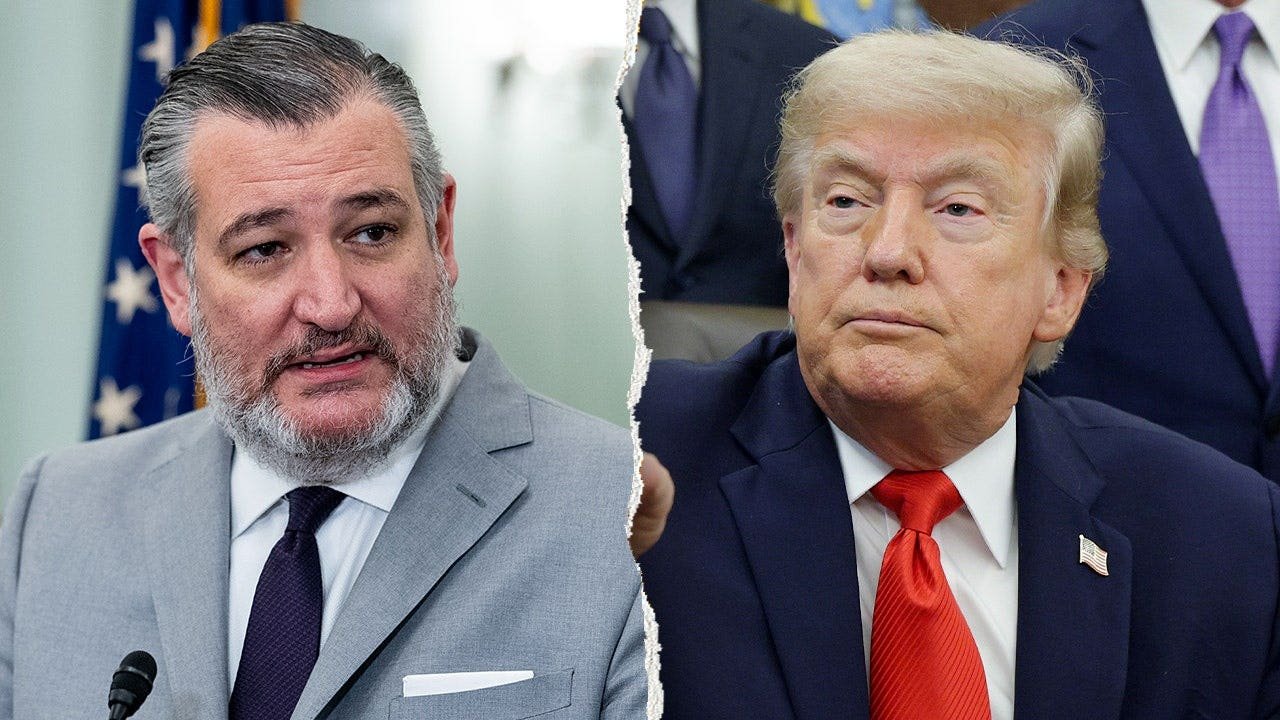
Prior to Trump signing the memorandum of understanding (MOU) on Thursday, Sen. Ted Cruz, R-Texas, offered some of the sharpest criticism among lawmakers, arguing the deal rewards «theocratic lunatics» of a hostile regime.
«Giving billions of dollars to theocratic lunatics who want to murder us is not a good idea,» Cruz told Fox News Digital. «I think the president, unfortunately, is receiving bad advice on this deal.»
Other Republicans stormed off when confronted about the new terms.
TRUMP ADMINISTRATION UNVEILS SWEEPING TERMS OF PROPOSED IRAN AGREEMENT
Sen. Ted Cruz, R-Texas, criticized the Trump administration’s Iran memorandum of understanding, arguing the agreement would provide billions of dollars in economic benefits to Tehran while several lawmakers questioned what the United States would gain in return. (Eric Lee/Bloomberg via Getty Images; Alex Wong/Getty Images)
The MOU provides immediate sanctions relief, including waivers on Iranian oil exports and access to frozen funds, while establishing a framework for more than $300 billion in reconstruction and economic development. It also sets a 60-day negotiation period aimed at reaching a final accord on Iran’s nuclear program — provisions critics like Cruz argue would provide Tehran with billions in economic benefits.
Democrats were even more brazen in their criticism of the Republican president.
«Iran is now going to be able to export their oil and gas, rake in billions more. It’s going to get access to its frozen assets,» Sen. Adam Schiff, D-Calif., said. «And what is Iran giving up for this? Nothing.»
«This is a great deal for Iran,» he told Fox News Digital. «I just don’t understand the thinking at all.»
NUCLEAR EXPERTS WARN IRAN’S URANIUM ‘RIGHT’ IS A MYTH, SAY TRUMP IS RIGHT TO HOLD FIRM
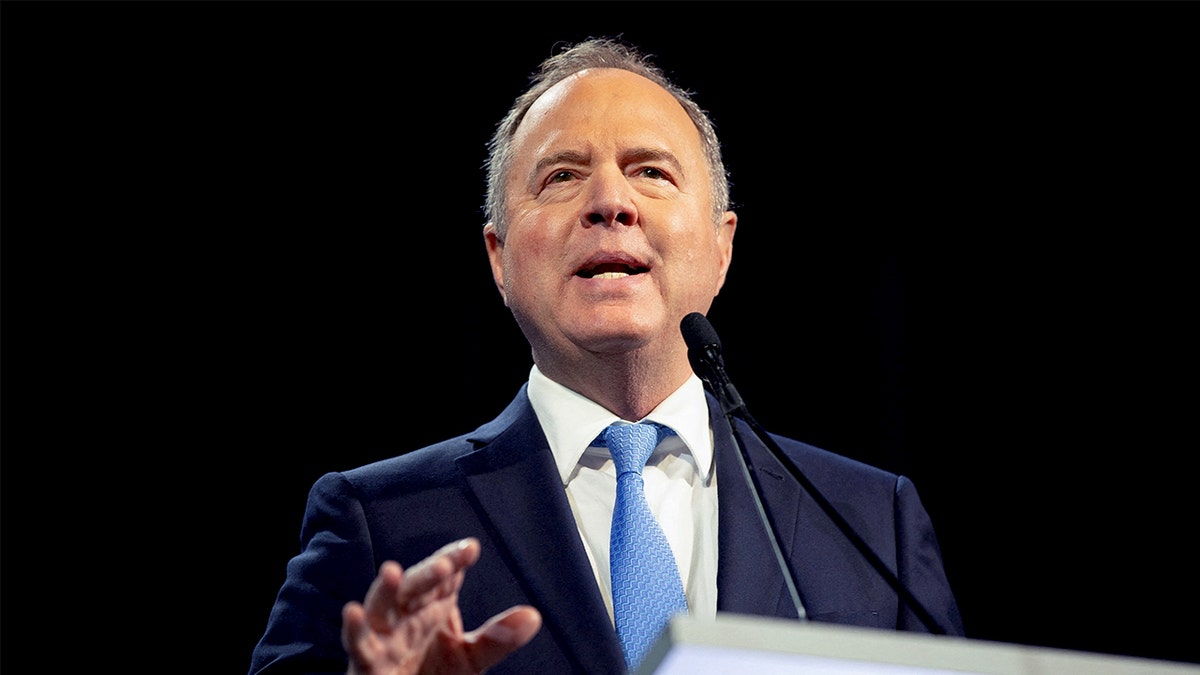
Senator Adam Schiff speaks during the California Democratic Convention in San Francisco, Calif., on Feb. 21, 2026. (Manuel Orbegozo/Reuters)
Several lawmakers also questioned whether the agreement secures meaningful concessions on Iran’s nuclear program, the issue that drove the conflict in the first place.
«I think when it comes to the development of nuclear weapons, the language is the same,» Sen. Dick Durbin, D-Ill., said. «We went to war for what?»
«Are you kidding?» Sen. Elizabeth Warren, D-Mass., shot-back when asked about the quality of the deal. «Look, everything about this says that Iran is better off now than it was before this war started.»
Other lawmakers questioned whether the agreement could credibly be viewed as a win for the U.S. after months of war.
«My biggest fear is I don’t know how anyone, even as good a salesman as Donald Trump can be, can sell this as a win for the United States,» Sen. Mark Warner, D-Va., said.
Not every lawmaker opposed the agreement.
Sen. Rand Paul, R-Ky., shared a brief but supportive stance, saying: «Peace is better than war.»
TRUMP AGAIN SAYS DEAL IS CLOSE, THEN CONFIRMS A LAST-MINUTE AGREEMENT WITH IRAN, BUT DETAILS STILL SECRET
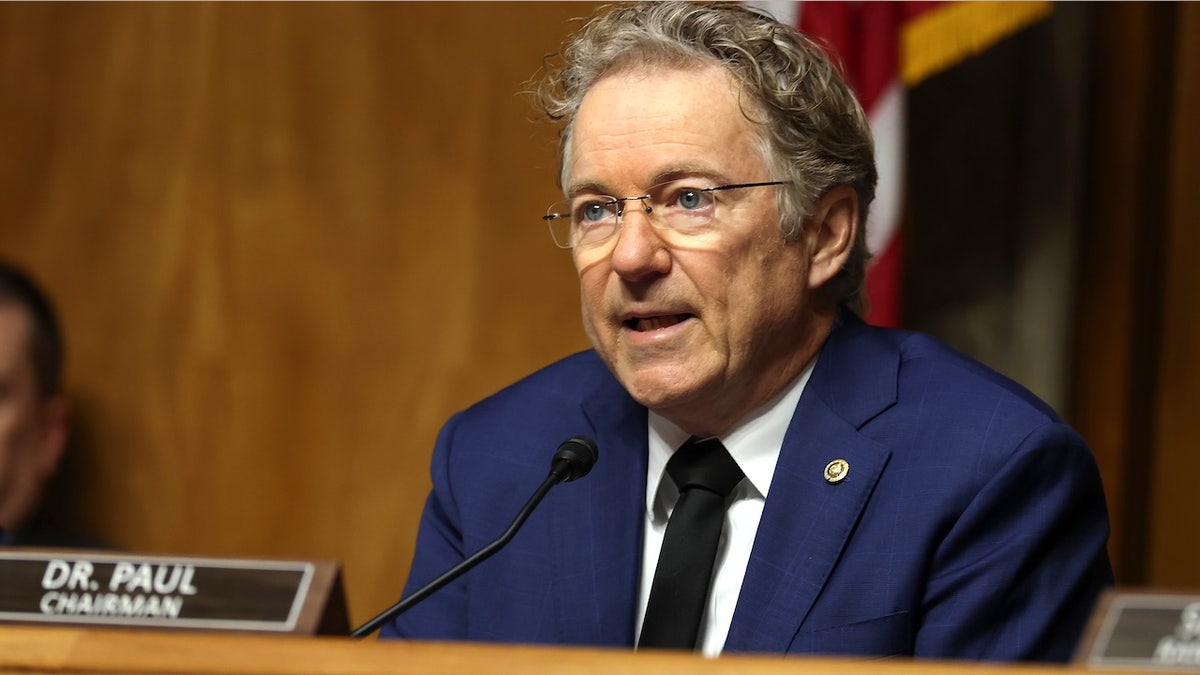
Sen. Rand Paul, R-Ky., delivers an opening statement during a Senate Homeland Security Committee hearing for Sen. Markwayne Mullin’s confirmation as DHS secretary in Washington, D.C., on March 18, 2026. (Anna Moneymaker/Getty Images)
Several lawmakers also compared the agreement to the Obama-era Joint Comprehensive Plan of Action (JCPOA), the 2015 nuclear deal Trump withdrew from during his first term.
«The public reporting to me suggests we’re giving up an awful lot more to get a lot less than the JCPOA,» Sen. Tim Kaine, D-Va., said.
Warren argued the outcome of the conflict had effectively brought the administration back to a deal similar to the one Trump once rejected.
CLICK HERE TO DOWNLOAD THE FOX NEWS APP
«Remember this whole nuclear deal now?» Warren asked. «No better than what we had back in 2015, back when Barack Obama cut the deal.
«And that’s where Donald Trump winds us up after all of this?» she continued. «What an embarrassment.»
iran, nuclear proliferation, treaties, foreign policy senate, sanctions, politics

Independiente Rivadavia rechazó la oferta de Boca Juniors y por ahora Sebastián Villa no jugaría en el Xeneize

Un concejal le pegó una trompada en la cara a un intendente tras una discusión por la organización de una jineteada en Entre Ríos

‘Pure hell’ in Moscow as Ukrainian drones strike major refinery supplying capital’s fuel market

El jefe del Pentágono avisa a la OTAN que Estados Unidos reexaminará su despliegue militar en Europa

La charla que tuvieron Messi y Rodrigo de Paul, su gran amigo que lo acompaña en este durísimo momento: «No sé cómo hace»

La minería y la energía duplicaron su capacidad para generar dólares en sólo dos años, según un informe privado

Patricia Bullrich: “El Presidente considera que Adorni dio una explicación razonable”

El Gobierno envía señales de que Adorni tiene las horas contadas para evitar que sesione el Senado

La secuencia del golazo de Messi para Argentina ante Argelia en el debut en el Mundial 2026 y los récords que rompió

Gaspi, reconocido streamer argentino, falleció en un accidente aéreo en Brasil

 POLITICA16 horas ago
Patricia Bullrich: “El Presidente considera que Adorni dio una explicación razonable”
- POLITICA1 día ago
El Gobierno envía señales de que Adorni tiene las horas contadas para evitar que sesione el Senado
- DEPORTE2 días ago
La secuencia del golazo de Messi para Argentina ante Argelia en el debut en el Mundial 2026 y los récords que rompió