INTERNACIONAL
Finland’s parliament votes to lift decades-old ban on nuclear weapons in historic NATO defense shift


Finland pushes to join NATO quickly
Finnish ambassador to the US Mikko Hautala speaks on the push to join NATO and the state of tensions on the border with Russia on ‘Your World.’
NEWYou can now listen to Fox News articles!
Finland’s parliament on Wednesday voted to lift a decades-old ban on nuclear weapons, approving a major defense policy shift aimed at aligning the country more closely with North Atlantic Treaty Organization (NATO) deterrence strategy.
Defense Minister Antti Häkkänen said a strong majority backed the amendment to the Nuclear Energy Act, calling it a «historic reform» that strengthens Finland’s security and that of the alliance.
«The Parliament approved the amendment to the Nuclear Energy Act with a strong 2/3 majority,» Häkkänen said in a post on X. «This historic reform strengthens the security of Finland and of NATO as a whole.
In April 2023, Finland joined NATO in response to Russia’s full-scale invasion of Ukraine, ending decades of military non-alignment. The move, aimed at securing Finland’s collective defense, roughly doubled NATO’s border with Russia.
ANOTHER NATO ALLY SIGNS ONTO EUROPEAN NUCLEAR UMBRELLA AS CONTINENT BOOSTS SELF-DEFENSE
EU Commissioner for Defence and Space, Lithuanian Andrius Kubilius (R) and Finnish Defence Minister Antti Haekkaenen (L) attend a press conference at the Ministry of Defence in Helsinki, Finland, on Sept. 26, 2025. (MARKKU ULANDER/Lehtikuva/AFP via Getty Images)
«The overall nuclear weapons policy has been one of the most challenging issues in the Ministry of Defence during this parliamentary term. Years of study, discussions with nuclear-weapon states and other allies, and assessments of how Finland’s security can best be strengthened in NATO,» Häkkänen said.
The measure repeals provisions in Finland’s 1987 Nuclear Energy Act that banned the import, production, possession and detonation of nuclear explosives.
If enacted, the legislation would allow nuclear weapons to be transported, supplied or possessed in Finland where the country’s military defense requires it.
FINLAND’S FOREIGN MINISTER SAYS UKRAINE ‘IS NOW HOLDING THE CARDS’ AS RUSSIA SIGNALS TALKS

The NATO emblem is displayed during the NATO Summit held in Vilnius, Lithuania, on July 12, 2023. (Jakub Porzycki/NurPhoto)
According to Euro News, 125 deputies backed the government proposal, 61 voted against it and 13 abstained.
The bill now moves to the president for final approval.
«I thank all the Members of Parliament who supported our legislative proposal for their strong backing,» Häkkänen said. «Thank you to the defense administration professionals at home and abroad for their high expertise also in this project.»
Despite the bill passing, the proposal has drawn criticism from opposition lawmakers, who warned it could escalate tensions, make Finland a potential primary target, and break from regional norms, noting that several neighboring countries have rejected hosting or permitting nuclear weapons.

Commander of the Finnish Army Lieutenant General Pasi Valimaki addresses Finnish conscript soldiers after a military exercise at Pori Brigade in Niinisalo, Finland, Dec. 9, 2025. (Anne Kauranen/Reuters)
CLICK HERE TO DOWNLOAD THE FOX NEWS APP
The introduction of the proposed law also provoked a strong reaction from Russia last March, according to Reuters.
«This is a statement that leads to an escalation of tensions on the European continent,» Kremlin spokesman Dmitry Peskov said.
«This statement adds to Finland’s vulnerability, a vulnerability provoked by the actions of the Finnish authorities. The fact is that by deploying nuclear weapons on its territory, Finland is beginning to threaten us. And if Finland threatens us, we take appropriate measures.»
Reuters contributed to this report.
nato, legislation, national security, nuclear proliferation, reform, europe












NEWYou can now listen to Fox News articles!
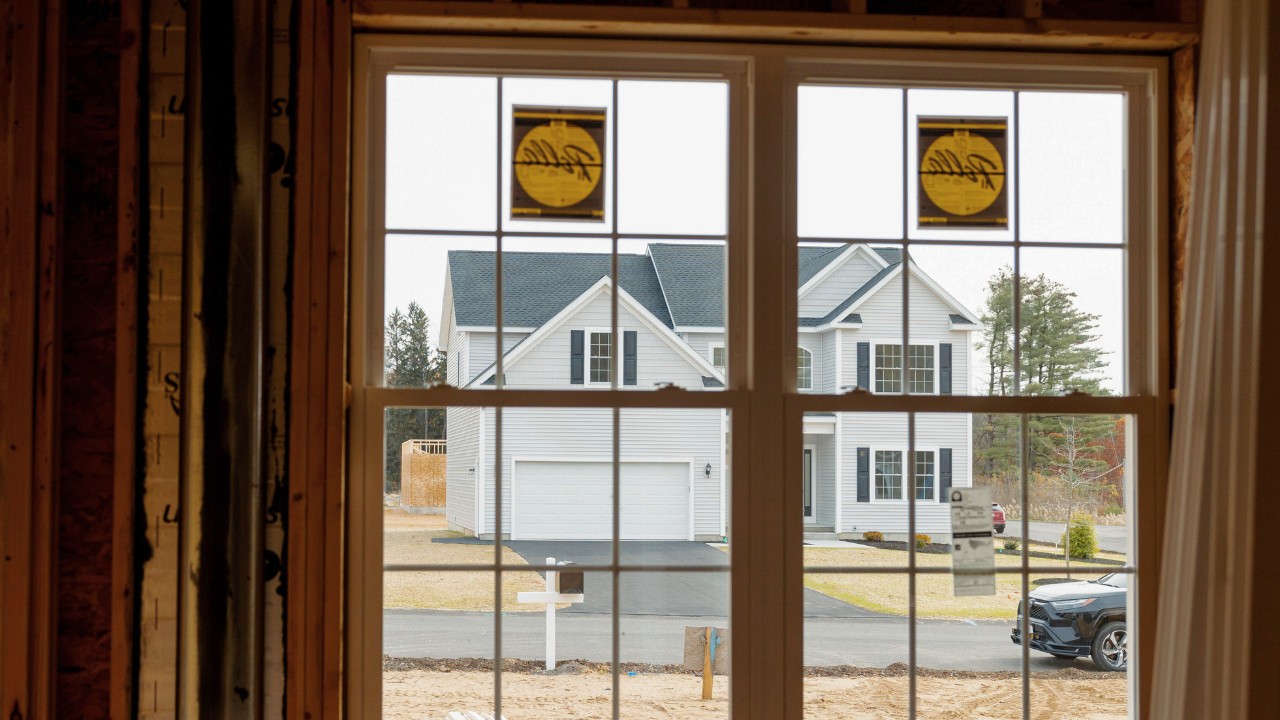
Government regulations are adding nearly $132,000 to the cost of newly built houses, according to a new report released as Americans struggle to become homeowners.
The findings show that more than one-quarter of the final prices of newly constructed homes come as housing affordability remains a top concern nationwide, with elevated mortgage rates and limited inventory putting homeownership out of reach for many families.
The issue is also expected to be a key focus heading into the 2026 midterm elections, as lawmakers face growing pressure to address high housing costs and the affordability crisis overall.
AMERICA’S HOUSING MARKET COULD RUN OUT OF SOMETHING MORE IMPORTANT THAN HOMES
Housing industry leaders say states that have prioritized homebuilding have been better positioned to accommodate population growth and economic expansion. (Joshua Lott/Bloomberg/Getty Images)
The National Association of Home Builders (NAHB), which commissioned the report, argues that regulations imposed by federal, state and local governments have become a major driver of the nation’s housing shortage and affordability challenges.
The study found regulations add an average of $131,734 to the cost of a newly built home, representing 26.4% of the final sale price. The estimate, based on the average new-home price of $499,500, marks the largest increase between consecutive NAHB surveys since the organization began tracking the data in 2011.
Regulatory costs have climbed a whopping 40% since 2021.
«We update our study every five years and this reinforces what we have been saying all along — that the cost to build a single-family home in this country continues to escalate and exacerbate the housing affordability crisis,» NAHB President and CEO Jim Tobin told Fox News Digital. «We’re up 40% over the last five years, and now regulatory burdens at every level of government are totaling more than $130,000 for the cost of a new home.»
NAHB estimates the U.S. faces a structural housing shortage of 1.2 million homes, arguing rising regulatory costs make it more difficult to increase supply.
Tobin said regulatory costs vary across the country, with states in the Southeast, including Texas, Florida and the Carolinas, generally maintaining a lower-cost regulatory environment than states such as California, New York, New Jersey and Illinois.
AMERICANS KEEP MOVING TO TEXAS AND FLORIDA — BUT ONE OTHER RED STATE IS GROWING EVEN FASTER
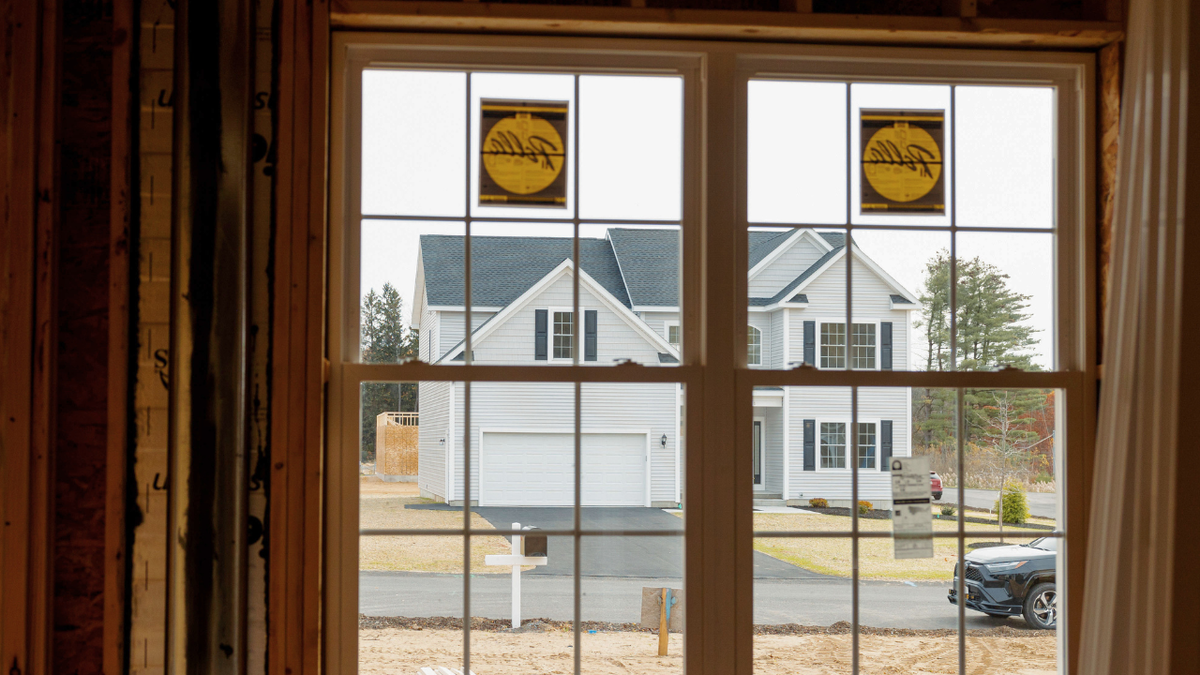
The NAHB report comes as housing affordability remains a top concern nationwide, with elevated mortgage rates and limited inventory putting homeownership out of reach for many families. (Angus Mordant/Bloomberg/Getty Images)
He also said he expects regulatory costs to continue rising, but believes policymakers can help slow the pace through reforms.
«Anything we can do to lower that cost, I think would be really important,» Tobin said.
He pointed to the bipartisan 21st Century ROAD to Housing Act, which would streamline permitting, reduce barriers to new construction and expand financing tools intended to increase the nation’s housing supply.
The White House and the Department of Housing and Urban Development did not immediately respond to Fox News Digital’s request for comment on the report’s findings.
CLICK HERE TO DOWNLOAD THE FOX NEWS APP
NAHB said the study is not intended to argue that all regulations should be eliminated but to quantify their cumulative effect on housing affordability.
«While regulations are important, they can go too far,» Tobin told Fox News Digital. «We need to make sure health and safety are protected while getting rid of the more onerous and costly regulations that do nothing more than drive up costs and keep Americans out of homeownership.»
The analysis is based on surveys of 54 land developers and 337 single-family builders conducted in March 2026.
housing, economy, regulation, politics, midterm elections, costs
INTERNACIONAL
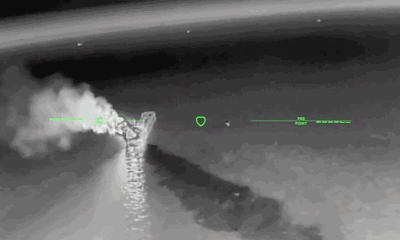
With US unleashing attacks, Iranian official threatens that the Islamic Republic will deliver a ‘hard slap’
NEWYou can now listen to Fox News articles!
An Iranian official warned that the Islamic Republic will deliver a «hard slap» while another blatantly threatened the U.S. that «if you strike, you’ll get hit,» according to automatic translations from the two men’s Persian-language posts on X.
Ebrahim Rezaei, whose profile on the social media platform indicates that he is a representative in Iran’s Parliament and the spokesperson for the National Security and Foreign Policy Commission, wrote in a post on X, «The martyred Khamenei taught us not to fear America and showed that ‘falsehood will perish.’ Await the hard slap from the Iranians.»
The speaker of Iran’s Parliament, Mohammad Bagher Ghalibaf, warned, «America still hasn’t learned that bullying and breaking promises are no longer cost-free. Let me put it plainly: if you strike, you’ll get hit. Don’t flail around pointlessly, or you’ll sink even deeper: the Strait of Hormuz will only open with ‘Iranian arrangements,’ not American threats.»
Both of the men issued their posts on Wednesday after U.S. Central Command (CENTCOM) announced more strikes against Iran.
«At the direction of the Commander in Chief, U.S. Central Command forces have started conducting additional strikes against Iran to further degrade their ability to threaten freedom of navigation in the Strait of Hormuz. The United States is holding Iran accountable for recent unjustified aggression against commercial shipping and civilian crews freely navigating a vital international waterway,» CENTCOM had noted in a post on X.
TRUMP SAYS IRAN CEASEFIRE DEAL IS ‘OVER’ AFTER NEW ROUND OF STRIKES
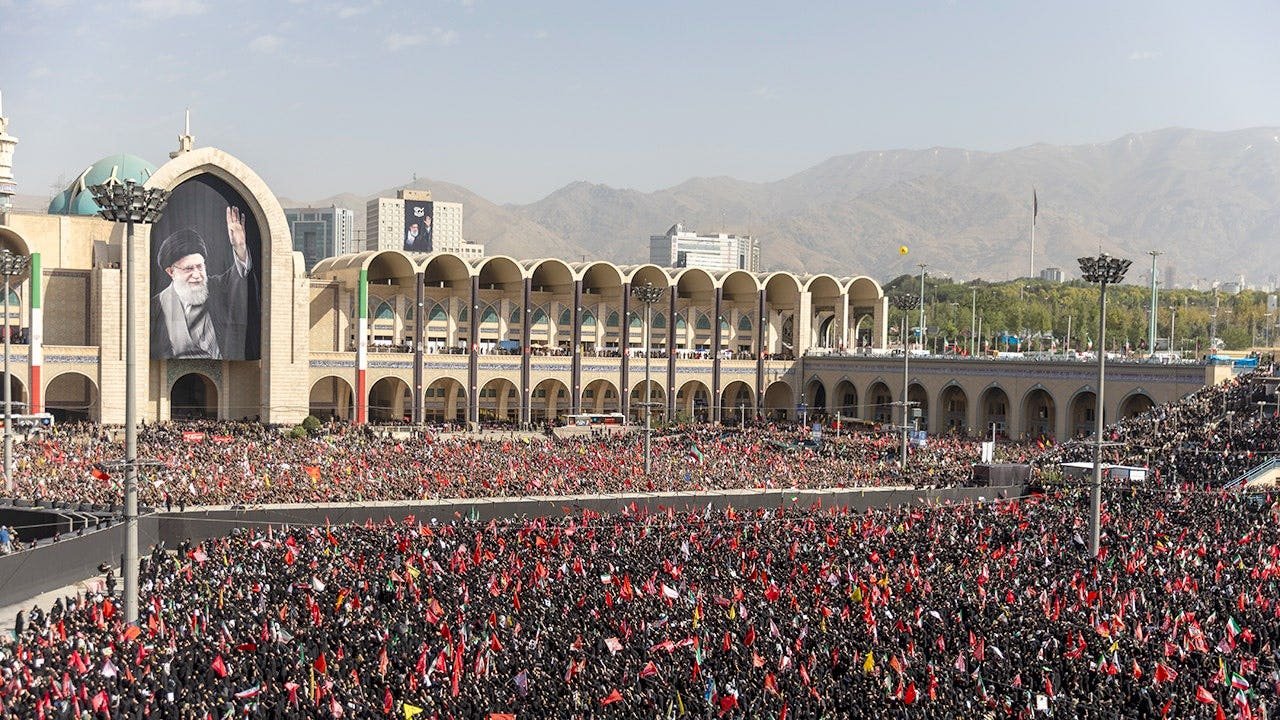
People gather at the Imam Khomeini Grand Mosalla for a farewell ceremony for Iran’s late Ayatollah Ali Khamenei on July 4, 2026, in Tehran, Iran. (Majid Saeedi/Getty Images)
The U.S. military later provided more information about the attacks.
«U.S. Central Command (CENTCOM) forces completed an additional round of strikes against Iran, July 8, to further degrade Iran’s ability to attack commercial shipping and innocent civilian mariners in the Strait of Hormuz,» CENTCOM noted on Wednesday night.
«U.S. forces struck approximately 90 Iranian military targets including air defense systems, coastal surveillance assets, missile and drone storage sites, naval capabilities, and military logistics infrastructure along Iran’s coastline. The latest strikes follow successful execution of offensive strikes in Iran the night before,» the announcement noted. «CENTCOM forces hit approximately 80 Iranian military targets July 7, including more than 60 Islamic Revolutionary Guard Corps small boats, to impose heavy costs for Iran violating the ceasefire by attacking three commercial vessels navigating the Strait of Hormuz.»
TRUMP DEMANDS END TO TRADE WITH KEY US ALLY, CALLS IT A ‘WASTED CAUSE’
President Donald Trump indicated on Wednesday that, as far as he was concerned, the U.S.-Iran Memorandum of Understanding ceasefire was «over.»
Kuwait and Bahrain have both reported coming under attack.
The Kuwait Army noted in a Thursday post on X, which was written in Arabic, «The Official Spokesman for the Ministry of Defense, Major General Saud Abdulaziz Al-Otaibi, stated that the armed forces detected, at dawn today, (3) ballistic missiles, (1) cruise missile, and (10) hostile drones within Kuwaiti airspace, which were successfully intercepted and dealt with.»
TRUMP SAYS ‘IRAN LIES AND CHEATS’ AS IRGC EMERGES AS DOMINANT FORCE IN NEGOTIATIONS WITH US
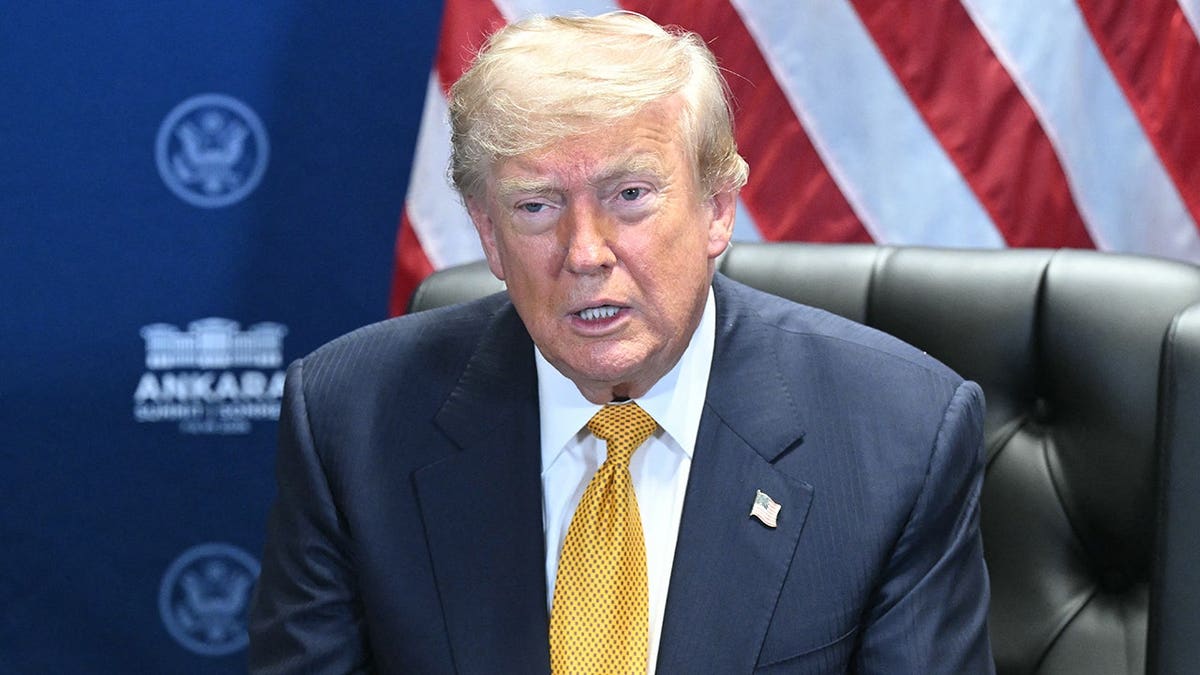
President Donald Trump speaks as he meets with NATO Secretary General Mark Rutte on the sidelines of the NATO summit in Ankara, on July 8, 2026. (SAUL LOEB / AFP via Getty Images)
CLICK HERE TO DOWNLOAD THE FOX NEWS APP
The Bahrain Defense Force noted in a post that was in Arabic, «The General Command clarifies that, with firm resolve and high combat readiness, the Bahrain Defense Force’s air defense systems confronted, intercepted, and destroyed several treacherous Iranian aerial attacks this morning, Thursday, July 9, 2026 CE.»
politics, war with iran, iran, military, world

Aumento salarial y bonos para jerárquicos mineros: a cuánto se fue el salario promedio

“¿A vos quién te conoce?”, “vende humo”: tensa discusión entre Caruso Lombardi y el diputado Leiva

La nueva querella pidió apartar al juez Lijo del caso YPF por las demoras en la investigación

Detuvieron a otros dos sospechosos por la muerte de Franco Depauli, el hombre que recibió un piedrazo en los festejos por la Selección

Los cinco factores que arruinan a la selección de Brasil: el análisis de un periodista desde Río de Janeiro

The surprising hidden cost quietly adding nearly $132K to new home prices revealed

La producción textil aceleró su caída y la capacidad instalada siguió entre las más bajas de la industria

Ojo con las multas de tránsito: las más caras llegan a $3.8 millones

Portugal vs España: formaciones, hora y dónde ver por tv