INTERNACIONAL
How Graham Platner’s campaign unraveled: From Reddit posts to rape allegation

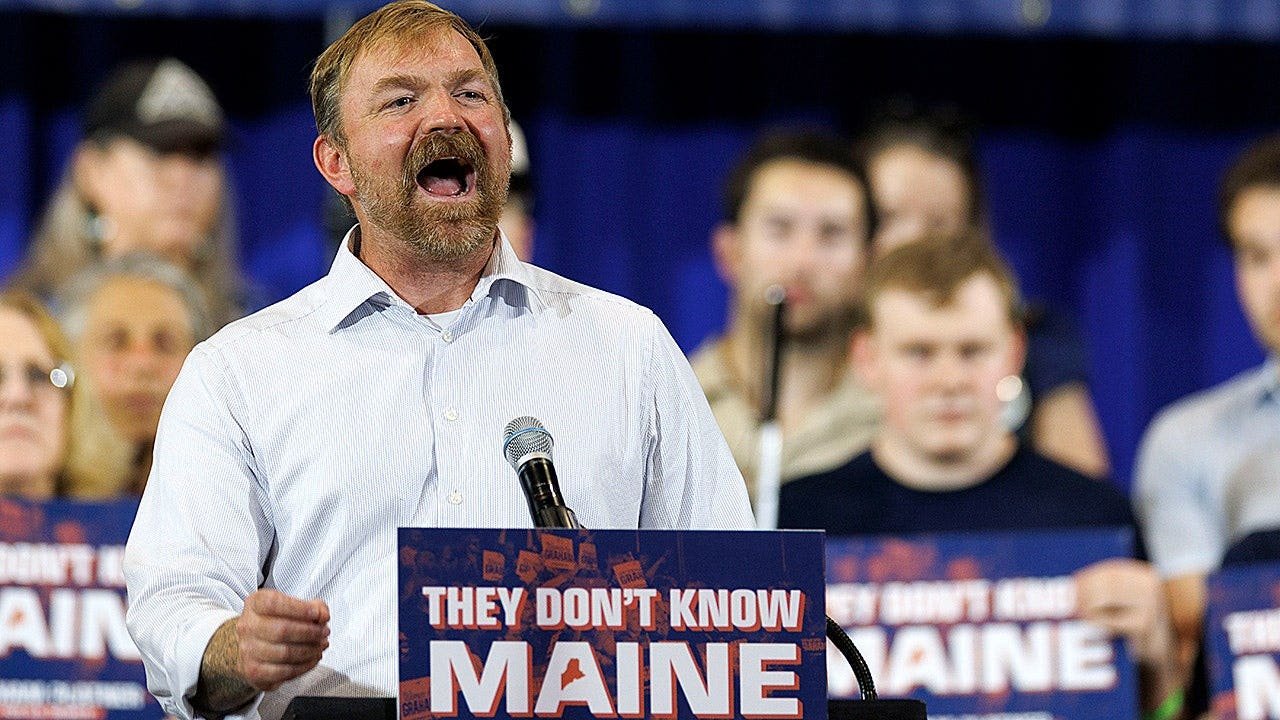
Bill McGurn discusses Maine Democrat Graham Platner’s mounting controversies
Fox News contributor Bill McGurn discusses Maine Democratic Senate candidate Graham Platner’s mounting controversies, including resurfaced Reddit posts, a Nazi symbol tattoo and sexually explicit messages. Democrats are now pushing Platner to exit the race following recent sexual assault allegations, raising questions about prior endorsements despite his problematic history.
NEWYou can now listen to Fox News articles!
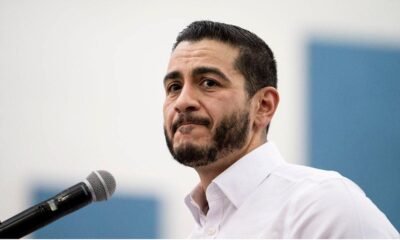
U.S. Senate Democratic nominee Graham Platner’s campaign is hanging by a thread following a rape allegation from a woman he previously dated, leading his political allies to call for his exit from the race.
Jenny Racicot’s rape allegations against Platner are just the latest scandal to rock his campaign, which has been riddled with controversy since October. From sporting a Nazi-linked tattoo on his chest to being accused by ex-girlfriends of being physically abusive, Platner’s campaign has survived, with many of his supporters doubling down in support.
But Racicot recounted to both Politico and CNN how, in 2021, Platner, with whom she had an on-again, off-again relationship, barged into her home uninvited and intoxicated. Racicot alleged that, despite her protests, Platner had raped her. The allegations surfaced less than a week before the deadline for Platner to withdraw from the race, after which the Democratic Party would be able to replace him with another nominee.
TOP DEMOCRATIC SENATE HOPEFULS TURN ON PLATNER AFTER BOMBSHELL RAPE ALLEGATION
Democratic U.S. Senate candidate Graham Platner participated in a television interview on May 1, 2026, in Portland, Maine, following a campaign event with the Maine AFL-CIO. (Graeme Sloan/Getty Images)
Sen. Elizabeth Warren, D-Mass. Senate Minority Leader Chuck Schumer, D-N.Y., and Rep. Ro Khanna, D-Calif., have all pulled their support for Platner. Sen. Bernie Sanders, I-Vt., who endorsed Platner just 11 days after he launched his campaign and has stood by him through every major controversy, also called on Platner to end his candidacy Tuesday.
But Republicans have questioned why Democratic leadership took so long to revoke that support despite all the controversies surrounding him.
Here’s a timeline of the allegations and controversies surrounding Graham Platner’s Senate campaign.
Platner’s Reddit Posts
Platner’s first major controversy erupted on Oct. 16, 2025, after CNN uncovered years of deleted Reddit posts he made between 2009 and 2021.
The posts revealed the Democratic Senate candidate once described himself as a «communist,» wrote that «all» police were bastards, and argued that many rural white Americans «actually are» racist and unintelligent. Other posts reflected how his combat experience in Iraq and Afghanistan had reshaped his politics, with Platner writing that America’s wars had left him disillusioned and «significantly more left» than when he enlisted.
Days later, additional reporting drew scrutiny to other deleted posts, including one in which Platner appeared to downplay concerns about sexual assault. In one post, Platner wrote that people should «take some responsibility for themselves» and avoid becoming so intoxicated that they end up in compromising situations.
PLATNER IN THE HOT SEAT AS MAINE VOTERS RIP HIS ‘HORRIBLE’ COMMENTS AMID REDDIT SCANDAL
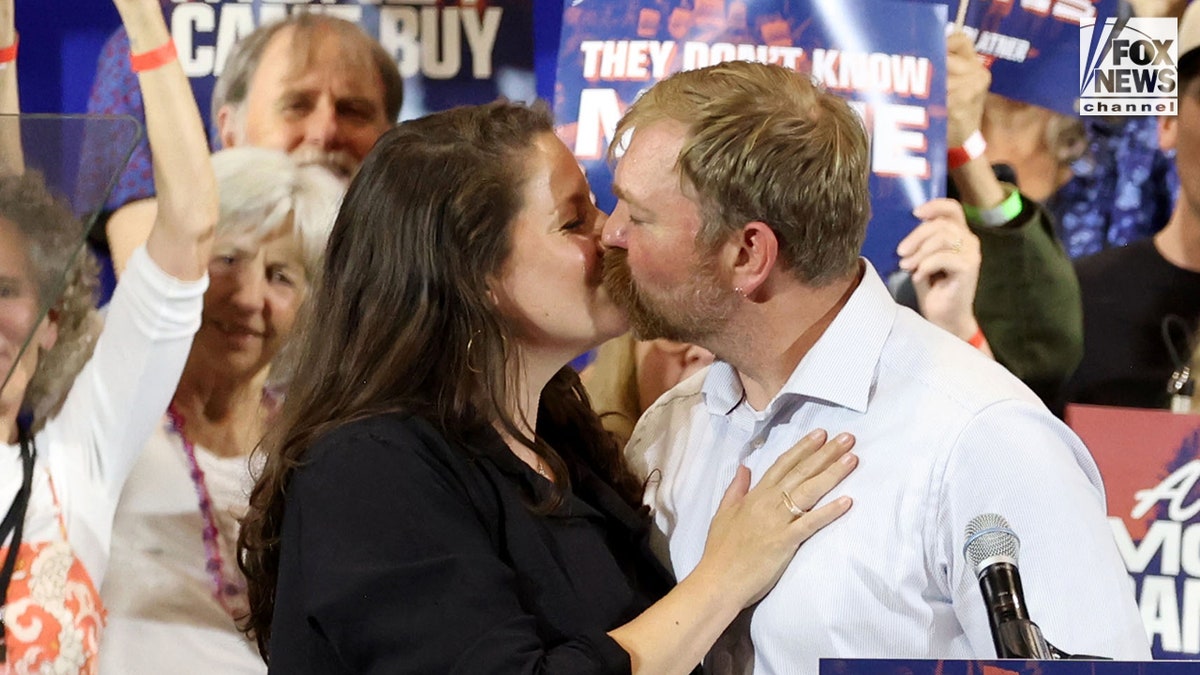
Graham Platner and his wife, Amy Gertner acknowledge the crowd at his watch party after wining the Democratic nomination for U.S. Senate at a YMCA in Blue Hill, Maine, June 9th 2026. Platner, who has drawn critcism for his history of having an Nazi tattoo among other transgressions, will face Republican Senator Susan Collins in the election for the seat. (Matthew Symons for Fox News Digital)
There are more than 2,000 posts by Platner on Reddit, which The Maine Monitor later compiled into a database.
Platner distanced himself from those posts, telling CNN at the time that he was «f—— around the internet» and that he was struggling in his return to civilian life after serving overseas in the Iraq and Afghanistan wars.
«I don’t want people to see me for who I was in my worst Internet comment—or even frankly who I was in my best Internet comment,» Platner told CNN. «I don’t think any of that is indicative of who I am today, really.»
At the time the Reddit posts resurfaced, Sanders, and Sen. Ruben Gallego, D-Ariz., stood by Platner. Gallego said Platner had «the right to grow out of his stupidity.»
«There’s a young man who served his country in Afghanistan and Iraq, and he went through some really difficult experiences seeing friends of his killed or whatever, and in spite of all of that he had the courage to run,» Sanders said of Platner, who Sanders endorsed just eleven days after launching his campaign.
The Totenkopf tattoo
Platner faced another controversy after his campaign, seeking to get ahead of opposition research, released a video on Oct. 21 during an appearance on Pod Save America showing him dancing shirtless at his brother’s wedding. The footage revealed a chest tattoo that critics said resembled the Nazi SS Totenkopf, or «Death’s Head,» symbol, prompting widespread condemnation and renewed questions about his judgment.
The image prompted widespread condemnation and renewed questions about his judgment. Platner said he got the tattoo while drinking with fellow Marines in Croatia in 2007 and believed it was simply a skull-and-crossbones design commemorating surviving combat. He said he was unaware of its association with Nazi Germany until the issue surfaced during his Senate campaign, apologized, and initially pledged to have it removed before instead covering it with a Celtic knot tattoo.
SEE IT: MAINE VOTERS SOUND OFF ON PLATNER’S DIVISIVE CAMPAIGN AS CRUCIAL PRIMARY NEARS: ‘HE’S A DISGRACE’
The controversy intensified after subsequent reporting questioned Platner’s claim that he had been unaware of the symbol’s meaning, citing former acquaintances and past online activity suggesting he may have known its meaning years earlier, a claim Platner rejected.
In the aftermath, Sanders brushed off concerns over Platner’s tattoo, arguing there were more important issues.
«I’m not overly impressed by a squad of media running around saying, ‘What do you think about the tattoo on Graham Platner’s chest?’» Sanders told Axios.
Platner’s sexting scandal
The New York Times reported on May 30 that Platner’s wife, Amy Gertner, had privately informed senior campaign officials that he exchanged sexually explicit messages with other women during the early years of their marriage, raising concerns about the political fallout.
Platner was using the app Kik to send messages and photos to women.
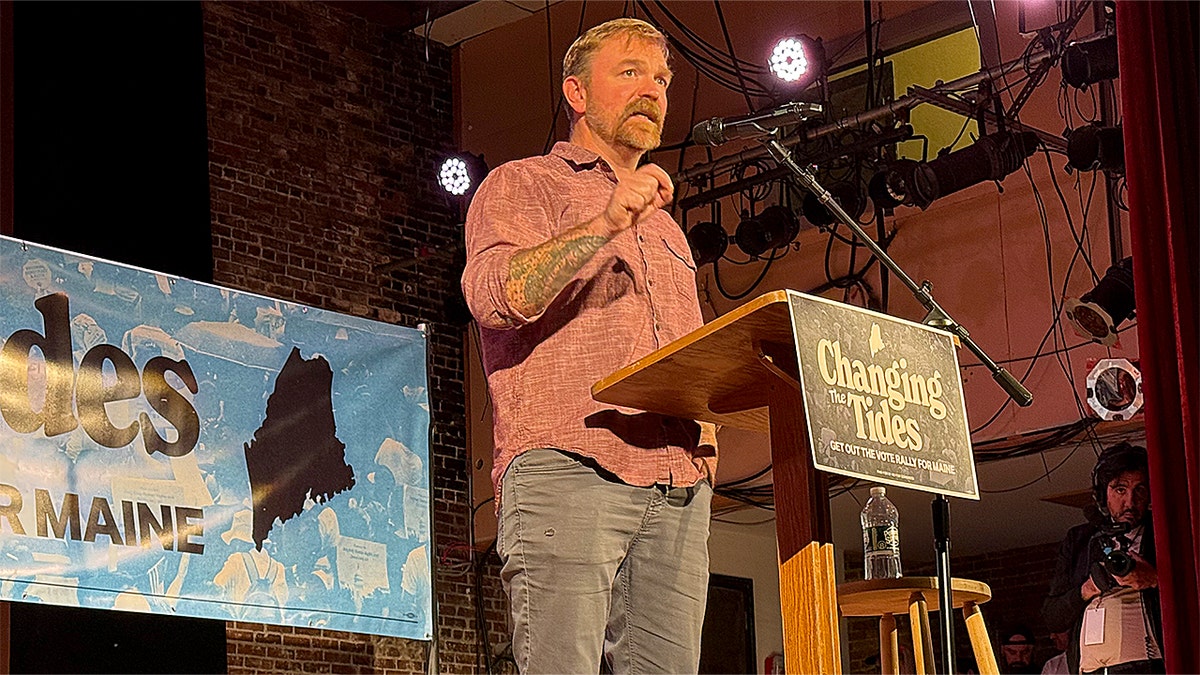
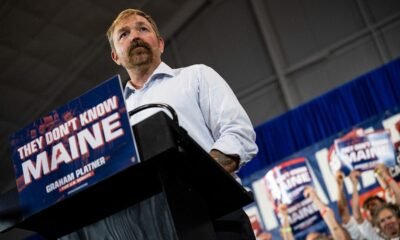
Democratic Senate candidate Graham Platner headlines a rally in Bar Harbor, Maine on June 5, 2026 (Paul Steinhauser/Fox News)
Former campaign political director Genevieve McDonald said Gertner told her that her husband had been exchanging sexual messages with as many as a dozen women, while another campaign official said the number was lower and that the conduct had ended before the campaign launched.
The issue surfaced during an internal vetting process ahead of a high-profile Labor Day rally with Sanders.
The discovery prompted outcry from Sen. John Fetterman, D-Pa., who called Platner a «creeper.»
However, Sanders and Schumer doubled down on their support for Platner, saying they believed he could defeat incumbent Sen. Susan Collins, R-Maine.
Abusive Partner allegations
Days after reports about sexually explicit messages surfaced, The New York Times published on June 4, 2026, interviews with six of Platner’s former romantic partners, offering sharply different accounts of their relationships with the Democratic Senate candidate.
Three women described him as kind, supportive and someone who never made them feel unsafe, but three others painted a far more troubling picture, alleging volatile relationships marked by heavy drinking, infidelity and behavior they found emotionally damaging.
Former girlfriend Lyndsey Fifield said Platner sometimes grabbed her hard enough to leave marks and, during one argument, twisted her arm behind her back, pushed her into a bedroom and held the door shut until she «calmed down.» Platner denied allegations of physical intimidation, and the Times wrote that it could not corroborate her allegations.
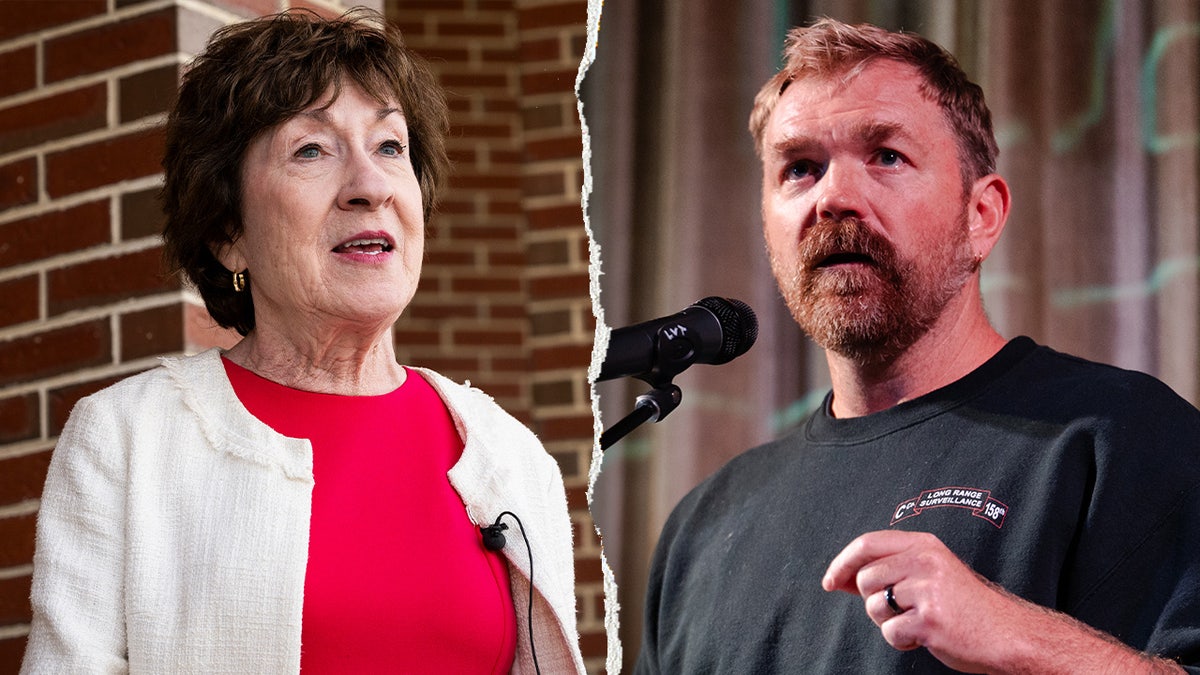
Susan Collins and Graham Platner. (Graeme Sloan/Getty Images ; Sophie Park/Getty Images)
In a lengthy X post, Fifield took fire at the New York Times for not adequately verifying her story. She claimed that she gave the reporters five phone numbers, but the Times reported they only reached out to two people.
«I actually understand why Democrat leaders didn’t take our stories seriously when the Times reported them in June but are taking them seriously now,» Fifield wrote on X. «It was by design.»
«They called the two who I clarified would not know about the abuse but would be able to affirm our relationship timeline, events, etc,» Fifield continued. «They simply did not call the other three.»
Fifield, a longtime GOP operative who dated Platner on and off from 2013 to 2015, faced scrutiny after coming forward with allegations that Platner was abusive. Platner’s campaign and Platner himself argued her claims were politically motivated, pointing to her long history of working for Republican causes.
Racicot was also interviewed by the Times, and she alluded to the alleged sexual assault that she said occurred in 2021.
Racicot said it was the attacks on Fifield which compelled her to step forward and tell Politico the full story of her sexual assault by Graham.
CLICK HERE TO DOWNLOAD THE FOX NEWS APP
When asked about the allegations against Platner, Sanders said at the National Press Club on June 8 that it’s a «political smokescreen.»
«Republican super PACS want to defeat him,» said Sanders of Platner, adding, «He is going to be a strong voice against oligarchy.»
Pressure mounts on Platner to withdraw
Platner has now lost the support of Democratic Party leaders, who continued to back him despite controversies over his Reddit posts, a sexting scandal and allegations from former partners. But the latest allegation of rape proved to be a breaking point.
Platner said on Monday that his campaign is «taking the time to reflect on the best path forward.»
Fox News Digital reached out to Platner’s campaign for further comment.
graham platner, john fetterman, controversies state and local, bernie sanders, chuck schumer, elections, midterm elections










NEWYou can now listen to Fox News articles!
With Graham Platner facing mounting pressure to end his Senate campaign after rape allegations surfaced Monday, longtime Maine Democrat Troy Jackson filed paperwork Tuesday positioning himself to enter the U.S. Senate race should the Democratic nomination become available.
Prominent Democratic leaders, including Senate Minority Leader Chuck Schumer, D-N.Y., have withdrawn their support for Platner and urged him to end his campaign. Platner has denied the allegations as «categorically false» and has remained in the race.
Under Maine law, Platner has until Monday, July 13, 2026, to withdraw if Democrats hope to replace him on the November ballot. If he steps aside before the deadline, the state Democratic Party will have until July 27, 2026, to choose a new nominee.
Jackson, who lost the Democratic gubernatorial primary just weeks ago, signaled his interest in the Senate race by filing a Statement of Candidacy with the Federal Election Commission. He later took to social media to condemn the allegations against Platner while emphasizing that he has not yet decided whether to seek the nomination.
PLATNER CAMPAIGN PUTTING ‘THUMB ON SCALE’ TO INFLUENCE POSSIBLE REPLACEMENT, MAINE DEM ALLEGES
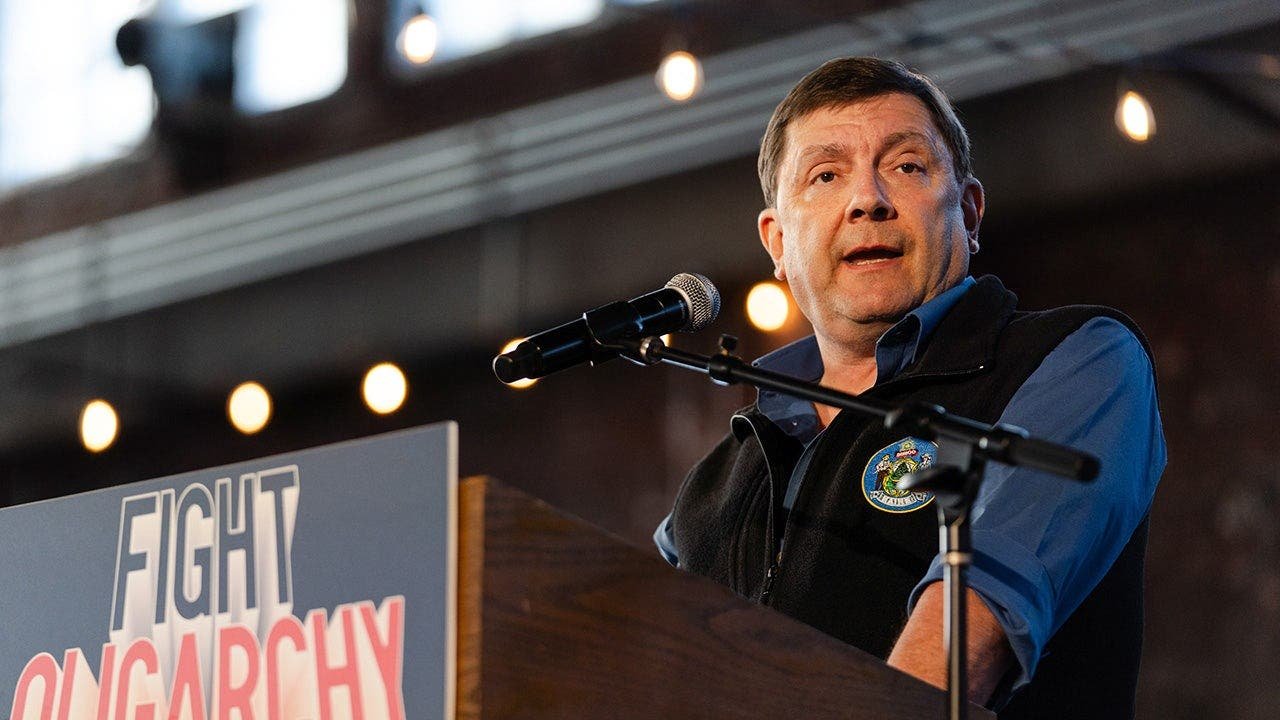
Former State Senator Troy Jackson, a Democrat from Maine and gubernatorial candidate, speaks during a Fighting Oligarchy event with Graham Platner (Sophie Park / Bloomberg via Getty Images)
«While I haven’t made any final decisions yet, I’m deeply humbled by the outpouring of support and encouragement I’ve received,» Jackson wrote. «I’m currently weighing the best path forward to support our progressive movement and the working class political revolution Mainers are fighting for.»
Jackson and Platner ran closely aligned progressive campaigns and appeared together at campaign events throughout the 2026 election cycle. Both embraced a progressive platform and earned the backing of Sen. Bernie Sanders, I-Vt.
KINGMAKER MAMDANI CALLS ON PLATNER TO ‘DROP OUT OF THE RACE’ AFTER RAPE ALLEGATION
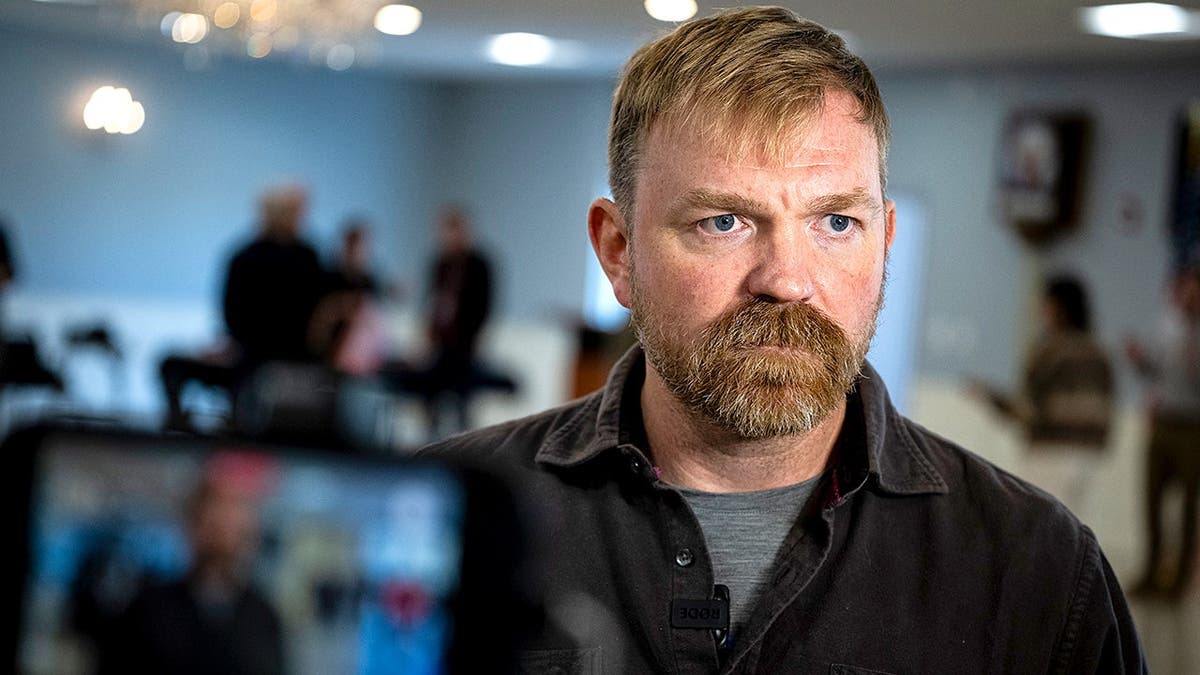
Democratic U.S. Senate candidate Graham Platner participated in a television interview on May 1, 2026, in Portland, Maine, following a campaign event with the Maine AFL-CIO. (Graeme Sloan/Getty Images)
Following the allegations against Platner, however, Our Revolution — the progressive political organization Sanders founded after his 2016 presidential campaign — withdrew its endorsement of Platner and instead backed Jackson, whom it had also endorsed during his gubernatorial campaign.
«We have days, not weeks, to make sure a real progressive is on this ballot,» Our Revolution Executive Director Joseph Geevarghese said in a statement. «If we do not organize now, we risk watching the Democratic establishment handing Maine a corporate placeholder while the party that just got outvoted decides it knows better. We refuse to let that happen.»
Jackson’s ties to Sanders stretch back more than a decade. He was one of the few Democratic National Committee superdelegates to endorse Sanders over Hillary Clinton during the 2016 Democratic presidential primary and later served as Sanders’ Maine political director, introducing him at campaign rallies across the state. Sanders later returned the favor, endorsing Jackson’s gubernatorial campaign and appearing alongside him on the campaign trail.
FOX NEWS POLL: MAINE SENATE RACE IS TIGHT, WITH CONCERNS ABOUT BOTH CANDIDATES
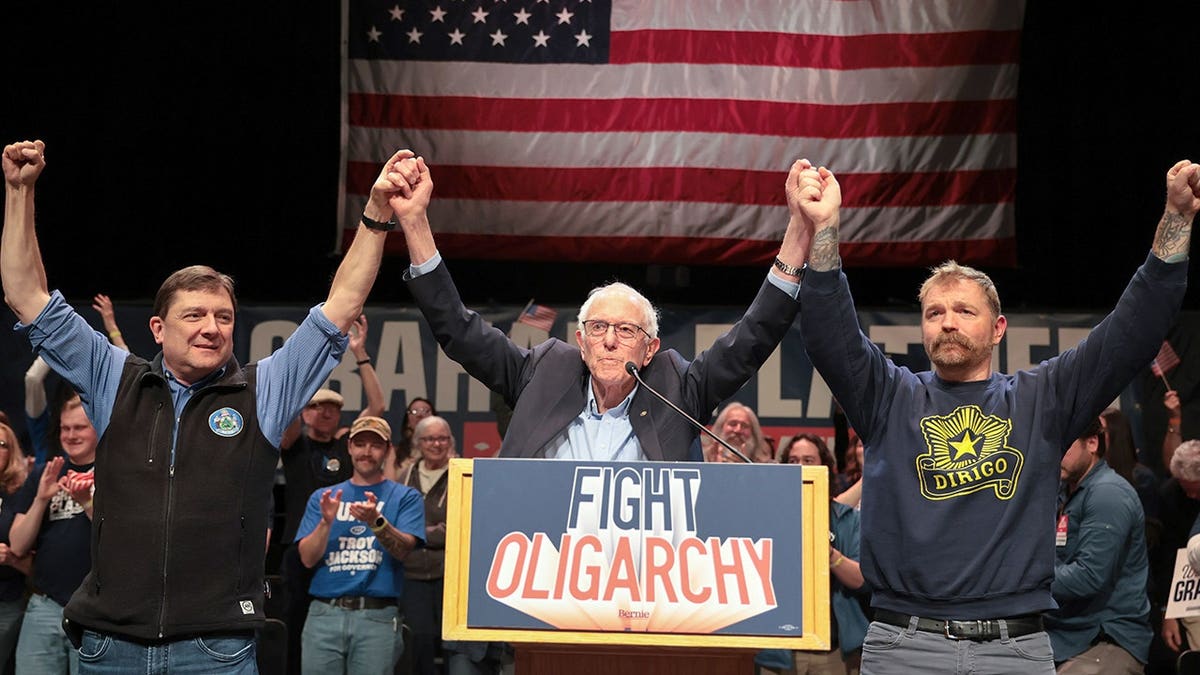
Sen. Bernie Sanders, I-Vt., stands with Maine gubernatorial candidate Troy Jackson, left, and Democratic U.S. Senate candidate Graham Platner during a «Fighting Oligarchy» tour stop at the Collins Center for the Arts at the University of Maine on May 24, 2026, in Orono, Maine. Sanders backed both candidates during the 2026 election cycle. (Joe Raedle / Getty Images)
«Fighting for the working class of Maine is not something new for Troy,» Sanders said during a campaign rally. «That’s what he has done for his entire life as a logger and as a member of the Maine state legislature. Troy knows what’s going on with the working class of Maine because he’s part of that working class.»
SIGN UP TO GET THE POLITICS NEWSLETTER
A fifth-generation logger and one of Maine’s best-known labor Democrats, Jackson spent more than two decades in the state Legislature, including six years as president of the Maine Senate before leaving the post in 2024.
During his gubernatorial campaign, he ran on a platform that included universal child care, Medicare for All and the creation of a Department of Affordable Housing. He also secured endorsements from more than 20 labor unions, cementing his reputation as a working-class progressive.
CLICK HERE TO DOWNLOAD THE FOX NEWS APP
Despite his progressive politics, Jackson has repeatedly won elections in one of Maine’s most Republican regions. He represented northern Aroostook County, a largely rural district that has consistently supported President Donald Trump by double-digit margins in recent presidential elections. Jackson has argued that his success stems from focusing on working-class economic issues rather than partisan labels.
Fox News Digital reached out to Jackson for comment.
graham platner, bernie sanders, maine, elections, chuck schumer
INTERNACIONAL
El Líbano exigió la retirada israelí de dos “zonas piloto” como condición para negociar en Roma

El gobierno libanés ha planteado una exigencia formal a Israel antes de acudir a la próxima ronda de negociaciones: que sus fuerzas se retiren de las dos “zonas piloto” contempladas en el acuerdo marco firmado el 26 de junio en Washington. La condición, comunicada al Departamento de Estado según una fuente diplomática libanesa citada por AFP, convierte lo que debía ser el punto de partida de la implementación en una disputa previa que amenaza con bloquear el proceso diplomático.
La elección de Roma como sede generó fricciones desde el primer momento. Israel anunció el martes el cambio sin notificar a la delegación libanesa, lo que provocó el rechazo inicial de Beirut. El presidente Joseph Aoun aceptó finalmente tras recibir garantías de Washington de que mantendría “el mismo nivel de implicación en las negociaciones y la misma política en la gestión de los contactos” que en las cinco rondas anteriores. La fuente señaló que Israel accedió al traslado para “reducir la presión” ejercida por Washington durante las negociaciones previas.
El acuerdo marco suscrito el 26 de junio por Estados Unidos, Israel y el Líbano establece el desarme de Hezbollah y la retirada progresiva de las fuerzas israelíes a medida que el ejército regular libanés se despliega en zonas designadas. Sin embargo, el texto no fija ningún calendario de retirada, y funcionarios israelíes han reiterado que sus fuerzas permanecerán en una “zona de seguridad” de diez kilómetros mientras Hezbollah siga armado. Esa asimetría —presión inmediata sobre Beirut para desarmar al grupo, plazo indefinido para el repliegue israelí— concentra las principales críticas al acuerdo.

REUTERS/Zohra Bensemra
Israel continúa realizando ataques en el sur del Líbano pese al marco acordado. El miércoles dos personas murieron en un bombardeo en la zona, según AFP. El presidente Aoun denunció que los ataques sostenidos socavan los esfuerzos por alcanzar una solución duradera y pidió a Washington que presione a Tel Aviv para que respete el alto el fuego. Su visita a la Casa Blanca, prevista para antes de fin de mes —los medios apuntan al 21 de julio—, será el momento de mayor presión diplomática sobre el compromiso estadounidense con la retirada israelí.
Hezbollah, que no participó en las negociaciones, rechaza el acuerdo en su totalidad. Su secretario general, Naim Qassem, reiteró ese rechazo el miércoles durante los actos previos al entierro del líder supremo iraní Ali Khamenei, fallecido el 28 de febrero en ataques conjuntos de Estados Unidos e Israel sobre Irán. “Ni una sola cláusula del acuerdo pasará”, afirmó Qassem. El proceso de duelo en Teherán añade una dimensión simbólica al momento: Khamenei fue el principal respaldo externo de Hezbollah, y su muerte coincide con un período en que Irán había exigido que el Líbano quedara incluido en su propio acuerdo con Washington, algo que Beirut rechazó al optar por una vía bilateral.
El antecedente histórico más citado por analistas es el acuerdo del 17 de mayo de 1983, que fijó un calendario de retirada israelí del Líbano pero lo supeditó a la salida de las tropas sirias, condición que Damasco nunca cumplió. Israel permaneció en el sur dieciséis años más. El acuerdo marco de 2026 replica esa lógica al vincular el repliegue israelí al desarme de Hezbollah, una condición que Beirut no puede garantizar por sí solo. Si Roma no produce avances concretos sobre plazos, ese precedente pesará sobre cada ronda que venga después.
Middle East,Civil Unrest
INTERNACIONAL
Trump says ‘Iran lies and cheats’ as IRGC emerges as dominant force in negotiations with US

Trump threatens more strikes on Iran at NATO summit
Fox News senior strategic analyst retired Gen. Jack Keane analyzes the latest U.S. strikes on Iran, the Strait of Hormuz’s strategic importance and breaks down Ukraine’s request for more aid on ‘America’s Newsroom.’
NEWYou can now listen to Fox News articles!
As President Donald Trump voiced growing frustration Wednesday with Iranian negotiators, accusing them of lying and cheating, the latest escalation has exposed an even more fundamental problem for Washington: whether the officials at the negotiating table have the power to deliver an agreement — or whether anyone in Tehran does.
«I don’t know if we’re going to have a deal. We may just do it without a deal,» Trump said at the NATO summit in Ankara. «These people, they lie and they cheat.»
But Trump’s frustration with Iran’s negotiators is only part of the problem. Since the death of Ayatollah Ali Khamenei, it has become increasingly unclear who in Tehran has the authority to make — and enforce — an agreement.
TRUMP SAYS IRAN CEASEFIRE IS ‘OVER’ AFTER IRANIAN ATTACKS TRIGGER MASSIVE US RESPONSE
Tehran has deployed a new front on social media including an influence campaign to sway Americans and undermine President Donald Trump’s push for a nuclear deal. (Hamed Malekpour / Middle East Images / AFP via Getty Images)
Mojtaba Khamenei succeeded his father as supreme leader after the elder Khamenei was killed in the opening U.S.-Israeli attacks on Feb. 28. But Mojtaba has not appeared publicly since the attack, and U.S. assessments cited by Reuters have described authority as dispersed among senior Revolutionary Guard commanders and powerful civilian officials.
Parliament Speaker Mohammad Bagher Ghalibaf, a former IRGC commander who led Iran’s negotiating delegation, has emerged as one of the country’s most powerful surviving political figures.
Banafsheh Zand, an Iranian-American journalist and editor of the Iran So Far Away Substack, said power inside the Islamic Republic has fractured since the death of Ayatollah Ali Khamenei, leaving the Islamic Revolutionary Guard Corps as the country’s dominant force.
«The person who is negotiating with the U.S. is not necessarily someone who is endorsed by the others,» Zand told Fox News Digital.
She described Ghalibaf as one power center competing with figures including IRGC commander-in-chief Ahmad Vahidi, Quds Force commander Esmail Qaani and former Foreign Minister Mohammad Javad Zarif.
Vahidi controls the IRGC’s overall military structure, while Qaani oversees its external operations and relationships with Iran-aligned armed groups across the region. Zarif, by contrast, remains closely identified with the more accommodationist political camp that previously championed negotiations and sanctions relief.
«The hardliners, in terms of their political presence, have also been pushed aside,» Zand said. «So really, it’s the IRGC. And within the IRGC, whoever signs the deal is not necessarily signing on behalf of everybody else. They’re signing on behalf of themselves.»
Her assessment reflects a central problem facing Washington: Iran’s negotiators, political institutions and military commanders may not share the same interpretation of what was agreed — or the same willingness to implement it.
US CLAWS BACK KEY CONCESSION TO IRAN AFTER FRESH ATTACKS ON COMMERCIAL SHIPS IN STRAIT OF HORMUZ
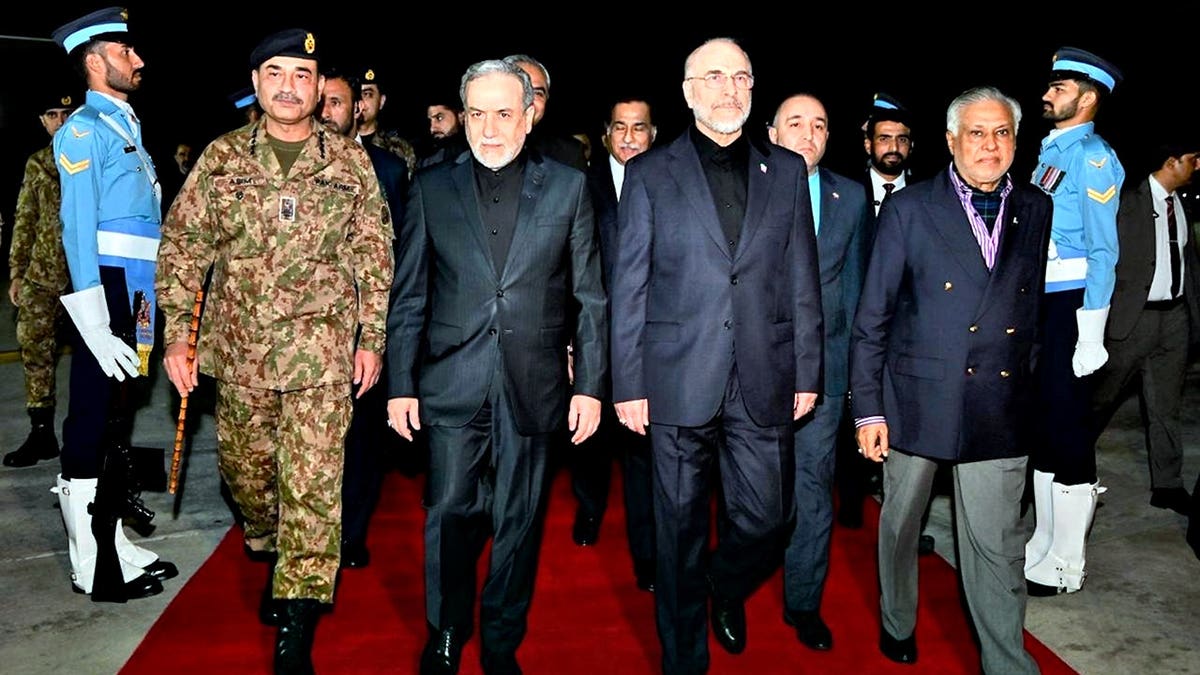
Iran’s Parliament Speaker Mohammad Bagher Qalibaf and Foreign Minister Abbas Araghchi were greeted by Pakistan Foreign Minister Ishaq Dar and Army Chief Field Marshal Gen. Asim Munir upon their arrival at Nur Khan airbase in Rawalpindi, Pakistan, on April 11, 2026. (Pakistan Ministry of Foreign Affairs/AP)
Yet Trump’s declaration does not necessarily mean diplomacy has been permanently abandoned.
Behnam Ben Taleblu, senior director of the Iran program at the Foundation for Defense of Democracies, told Fox News Digital that the clearest evidence would be the restoration of the U.S. blockade, the introduction of additional military forces or a new round of major economic sanctions.
Otherwise, he said, Trump may continue operating in the «gray zone» between negotiations and open war while keeping his options available.
The more difficult question is why Tehran would jeopardize sanctions relief and risk overwhelming American firepower when its military has already been severely degraded.
Ben Taleblu said Iran’s leaders appear to believe escalation is essential to the survival of the Islamic Republic.
«This is a regime that is weaker, but lethal, and less capable, but more confident,» he said. Iran’s leadership believes its adversaries have vulnerable economic and military interests throughout the Gulf, he added, while the regime itself is more willing to accept destruction.
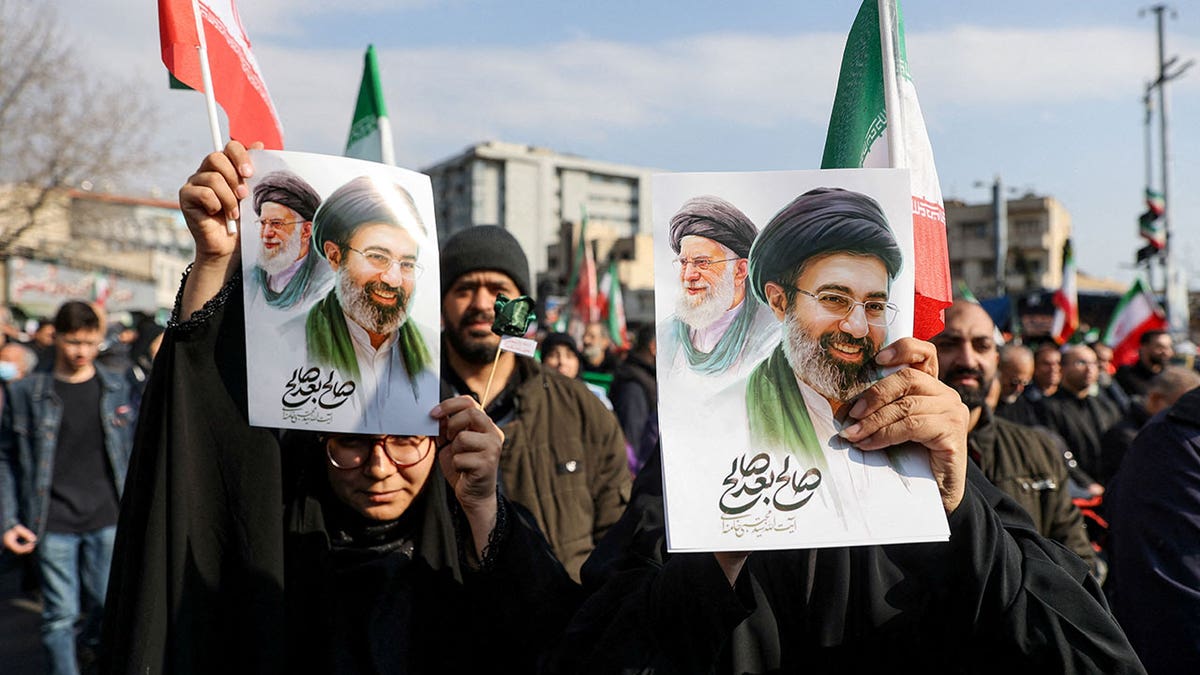
People hold placards with an image of Iran’s new supreme leader Mojtaba Khamenei with late Iranian Supreme Leader Ayatollah Ali Khamenei, during a gathering to support Mojtaba Khamenei, amid the U.S.-Israeli conflict with Iran, in Tehran, Iran, March 9, 2026. (Majid Asgaripour/WANA (West Asia News Agency) Via Reuters)
«Their survival and their military success and their political success runs through more, not less, escalation,» he said.
Lisa Daftari, foreign policy analyst and the editor-in-chief of The Foreign Desk, agrees the escalation is deliberate, aimed at turning regional instability into leverage.
«By targeting commercial shipping and Arab states, the regime is signaling that it can hold global energy flows and America’s regional partners hostage to extract leverage, distract from its domestic crisis, and test U.S. red lines,» Daftari told Fox News Digital.
She said Tehran is betting that Washington and its Arab partners will be unwilling to sustain another war and will ultimately back down first.
«The regime’s core weapon is time,» Daftari said. «By escalating in the Persian Gulf and attacking ships and Arab states, they are creating rolling crises that raise the cost of confronting them while they consolidate power at home.»
Daftari argued that the strategy reflects the Islamic Republic’s longstanding character rather than a temporary response to pressure.
TRUMP ENTERS FINAL NATO SUMMIT DAY AS UKRAINE, DEFENSE SPENDING TAKE CENTER STAGE
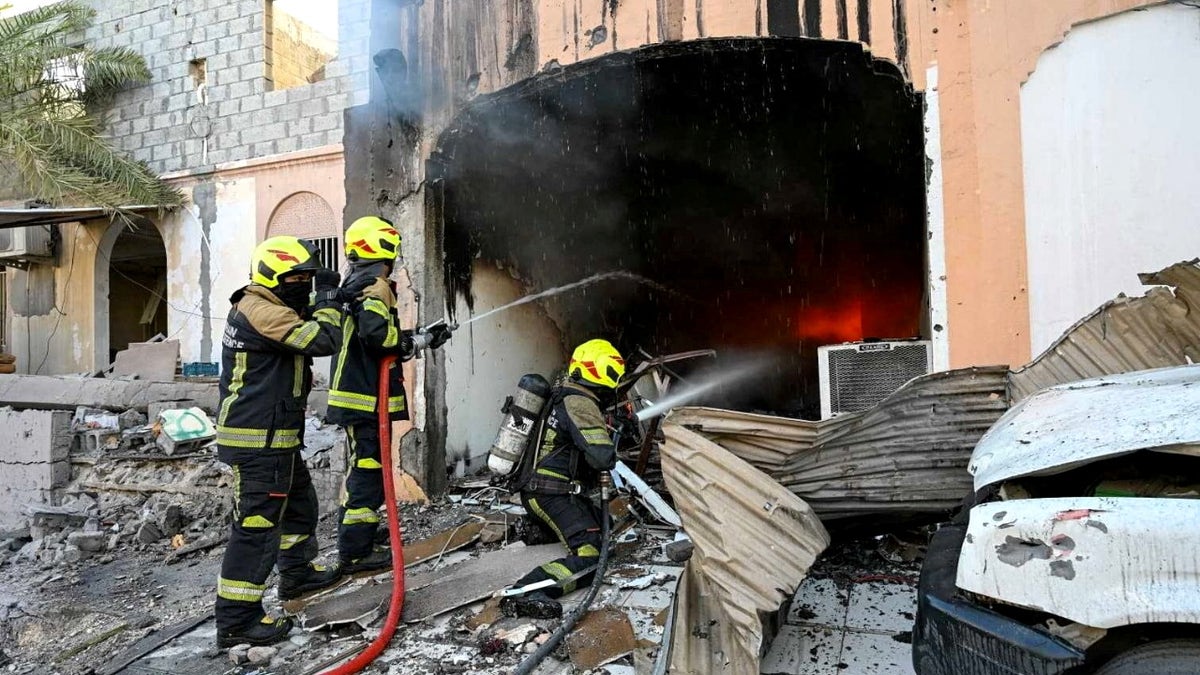
Firefighters work in the aftermath of Iranian drone attacks, at a location given as Bahrain (Reuters)
«This regime was never designed to be reformed or softened,» she said. «What they are showing us now is exactly who they intend to remain: a hardline, revolutionary regime determined to stay in power.»
But determining how that strategy is translated into action is more complicated. Authority in Tehran appears divided, raising questions about who is directing the escalation and whether the officials negotiating with Washington can commit the broader security establishment.
That division is already visible in the dispute over the Strait of Hormuz.
A Middle Eastern source familiar with the issue told Fox News Digital that Tehran and Washington are operating from fundamentally different readings of Clause five of the memorandum. The publicly released text says Iran will use its «best efforts» to arrange safe commercial passage through the strait without charge for 60 days, while removing military and technical obstacles and conducting demining operations. It does not expressly state that foreign vessels must obtain Iran’s approval or use routes designated by Tehran.
According to the source, Iran interprets that language as giving it responsibility — and therefore authority — to coordinate shipping and determine the routes vessels use during the interim period. Washington’s interpretation is that Iran agreed to lift its maritime blockade and fully reopen the international waterway.
When the two sides have different interpretations of a single page, how do they intend to write a treaty, the source said.
Iran views control over passage through the Strait of Hormuz as one of its last major sources of leverage over the United States, Gulf governments and the global economy, the source said, «That is the heart of the matter.»
CLICK HERE TO DOWNLOAD THE FOX NEWS APP
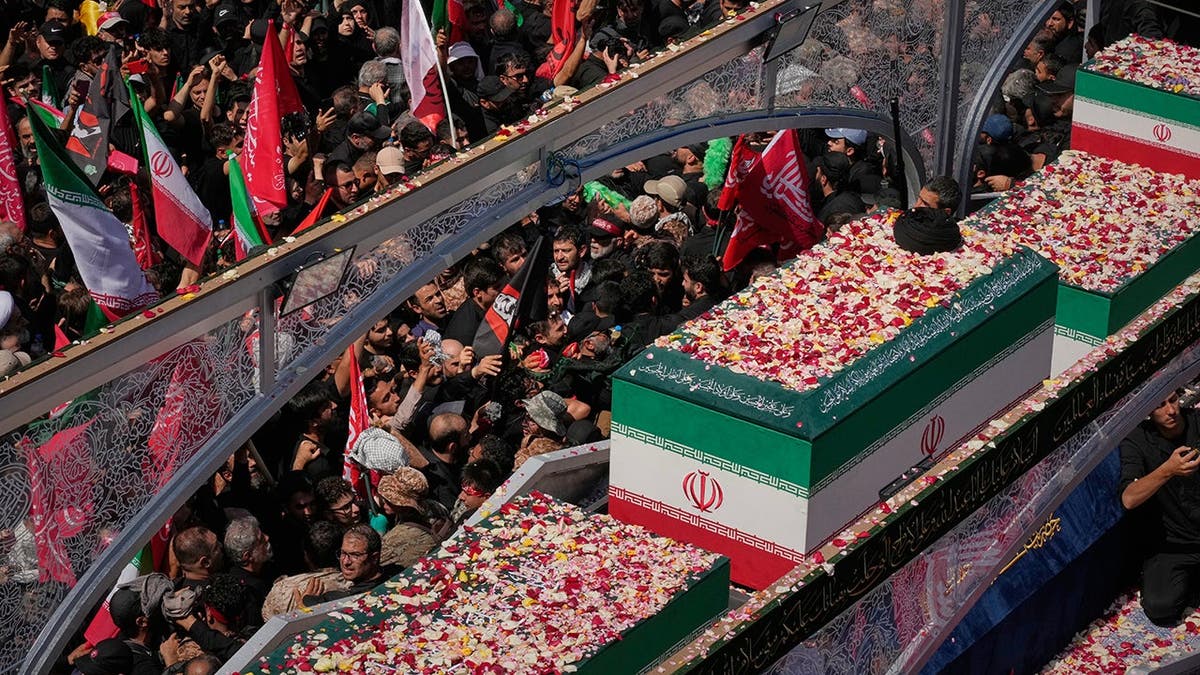
The truck carrying the coffins of the slain Iranian Supreme Leader Ayatollah Ali Khamenei and members of his family makes its way through mourners during the funeral procession toward Azadi Tower in Tehran, Iran, on Monday, July 6, 2026. (Vahid Salemi/AP)
Taken together, the experts’ assessments suggest Tehran is unlikely to face a simple choice between surrendering to Trump’s pressure and returning to negotiations. Ben Taleblu said the regime believes its survival depends on «more, not less, escalation,» while Daftari said it is deliberately «playing out the clock» by creating repeated regional crises. That raises the prospect that, even if Iranian officials return to the table, the IRGC could continue targeting commercial shipping, U.S. interests and American allies to preserve its leverage and strengthen its position inside Iran.
war with iran, donald trump, nato, iran, mojtaba khamenei

Murió Sol Varacalli, la fan de María Becerra que recibió ayuda de la cantante para costear su tratamiento

El Banco Nación colocó nuevos títulos en pesos y en dólares por USD 270 millones: cómo son y qué tasa pagan

La Cámpora volvió a cargar contra Axel Kicillof y un dirigente dejó una frase que profundiza la pelea con el gobernador

Milei viaja a Tucumán: espera una foto de Santilli con gobernadores afines y no tener que cruzarse con Victoria Villarruel

¿Dónde ver EN VIVO el Boca Juniors vs. Athletico Paranaense?

Bernie-backed socialist who allied with Platner could supplant him on ballot

La producción textil aceleró su caída y la capacidad instalada siguió entre las más bajas de la industria

Portugal vs España: formaciones, hora y dónde ver por tv

Ojo con las multas de tránsito: las más caras llegan a $3.8 millones