INTERNACIONAL
Estados Unidos extendió sus ataques en el norte de Irán y Teherán respondió con misiles y drones


La escalada entre Estados Unidos e Irán alcanzó un nuevo pico de tensión en la madrugada del jueves, cuando las fuerzas estadounidenses intensificaron sus ataques y golpearon objetivos más al norte, incluso en las inmediaciones de Teherán.
Además, la Marina de EE.UU. disparó contra un barco que, según Washington, intentó romper el bloqueo naval impuesto sobre la República Islámica.
La respuesta iraní no tardó en llegar: el régimen lanzó misiles y drones contra Bahréin, Jordania y Kuwait antes del amanecer, en una serie de ataques que involucraron a países que albergan bases estadounidenses.
Las autoridades de esos Estados confirmaron la ofensiva, aunque no reportaron daños ni víctimas de inmediato.
Amenazas cruzadas y advertencias sobre una guerra total
El mando militar conjunto de Irán endureció su postura y advirtió que, si el presidente estadounidense Donald Trump cumple su amenaza de atacar plantas de energía y puentes en territorio iraní, la respuesta será devastadora.
“Toda la infraestructura en la región será aplastada bajo los golpes de acero de las poderosas fuerzas armadas de la República Islámica de Irán”, aseguró el coronel Ebrahim Zolfaghari, vocero del Cuartel General Central Khatam Al-Anbiya. Un buque en el estrecho de Ormuz. (Foto: REUTERS).
Zolfaghari también remarcó que Irán no permitirá bajo ningún concepto la injerencia de Estados Unidos en el estrecho de Ormuz, al que definió como “la invencible línea roja de Irán”.
La tensión en la región se disparó tras días de ataques cruzados, que hicieron añicos el acuerdo para poner fin a la guerra y reavivaron el temor a un conflicto a gran escala.
Funcionarios iraníes denunciaron que los bombardeos estadounidenses causaron más de 35 muertos y 300 heridos, y que por primera vez los ataques alcanzaron zonas cercanas a la capital.
El bloqueo naval y el impacto en el precio del petróleo
El conflicto se agravó cuando, tras el inicio de la guerra el 28 de febrero, Irán cerró de facto el estrecho de Ormuz al tráfico marítimo, lo que disparó el precio del petróleo y fertilizantes a nivel global.
Estados Unidos, que busca reabrir la vía marítima, reimpuso el bloqueo naval el miércoles, pero hasta ahora no logró restablecer el flujo normal de barcos.
El presidente del Parlamento iraní, Mohammad Bagher Qalibaf, advirtió que Irán está listo para una confrontación militar más amplia si Washington no respeta los términos del acuerdo.
Por su parte, la Guardia Revolucionaria amenazó con detener todas las exportaciones de energía desde Oriente Medio: “La exportación de petróleo y gas de la región será o para todos o para nadie”, sentenció.
Mientras tanto, el precio del crudo Brent superó los 85 dólares por barril, un 15% más que antes del conflicto, aunque lejos del pico de 120 dólares.
Nuevos ataques y liberación de una ciudadana estadounidense
En la última oleada de violencia, los bombardeos estadounidenses alcanzaron zonas de la provincia de Semnan, donde Irán desarrolla misiles balísticos y su programa espacial, y también la isla Gran Tunb, un punto estratégico en el estrecho de Ormuz. Además, un ataque contra la 388ª Brigada de Infantería Mecanizada en Sistán y Baluchistán dejó al menos siete muertos y varios heridos, según la televisión estatal iraní. Washington bombardeó objetivos cerca de Teherán. (Foto: US CENTCOM).
En paralelo, la Marina de EE.UU. abrió fuego contra el petrolero Belma, con bandera de Curazao, que se dirigía a la isla de Kharg, principal terminal de exportación de Irán. Tras ignorar las advertencias, una aeronave estadounidense inutilizó el buque disparando un misil a la chimenea.
En medio de la escalada, el presidente Trump afirmó que Irán hizo un gesto de buena voluntad al liberar a una ciudadana estadounidense detenida desde 2024, identificada como Dena Karari por su abogado Jared Genser. Irán no confirmó la liberación y el caso no era público hasta el momento.
El estrecho de Ormuz, epicentro de la disputa
La reapertura del estrecho de Ormuz se convirtió en el principal desafío para Estados Unidos desde que Irán impuso restricciones al inicio de la guerra. Durante la vigencia del acuerdo provisional, algunos barcos lograron cruzar por una ruta cercana a Omán, bajo supervisión militar estadounidense y fuera del control de Teherán.
Sin embargo, en los últimos días, Irán atacó embarcaciones que utilizaban esa vía, lo que derivó en nuevos enfrentamientos.
Washington amenazó con reabrir el paso por la fuerza, aunque expertos advierten que eso requeriría una operación militar de gran escala.
Mientras tanto, la región sigue en vilo y el precio del petróleo continúa en alza, en medio de amenazas cruzadas y sin señales de una solución diplomática cercana.
Estados Unidos, Irán, Medio Oriente












Senate resumes Todd Blanche confirmation hearing amid fiery testimony
Acting Attorney General Todd Blanche faces renewed scrutiny during his Senate confirmation hearing on Capitol Hill. Missouri Attorney General Catherine Hanaway provides expert analysis on Blanche’s performance, highlighting his focus on law enforcement priorities and crime reduction. Senators question Blanche’s independence and prior actions in the Justice Department.
NEWYou can now listen to Fox News articles!
The Trump administration took the fight over who controls U.S. attorney appointments to a whole new level, firing a Seattle-based prosecutor less than an hour after he was picked for the job without the blessing of the administration.
«District court judges can appoint a temporary U.S. Attorney, and POTUS can fire them,» acting Attorney General Todd Blanche wrote Wednesday on X as he was testifying before the Senate in his confirmation hearing, calling out a U.S. District Court for the Western District of Washington state panel for elevating Judge Roger Rogoff to be the top federal prosecutor in Seattle.
«WDWA judges abandoned the time-honored process of consultation with the administration so that the selected U.S. Attorney is qualified to serve in the administration,» Blanche said. «Roger Rogoff has been fired by the President.»
That post came after Rogoff, 57, a former King County Superior Court judge and longtime state and federal prosecutor, was sworn in before 8 a.m. local time at the federal courthouse in downtown Seattle as U.S. attorney for the Western District of Washington.
TRUMP’S AG NOMINEE RACKS UP MASSIVE SUPPORT AHEAD OF CONFIRMATION HEARING: ‘REAL RESULTS’
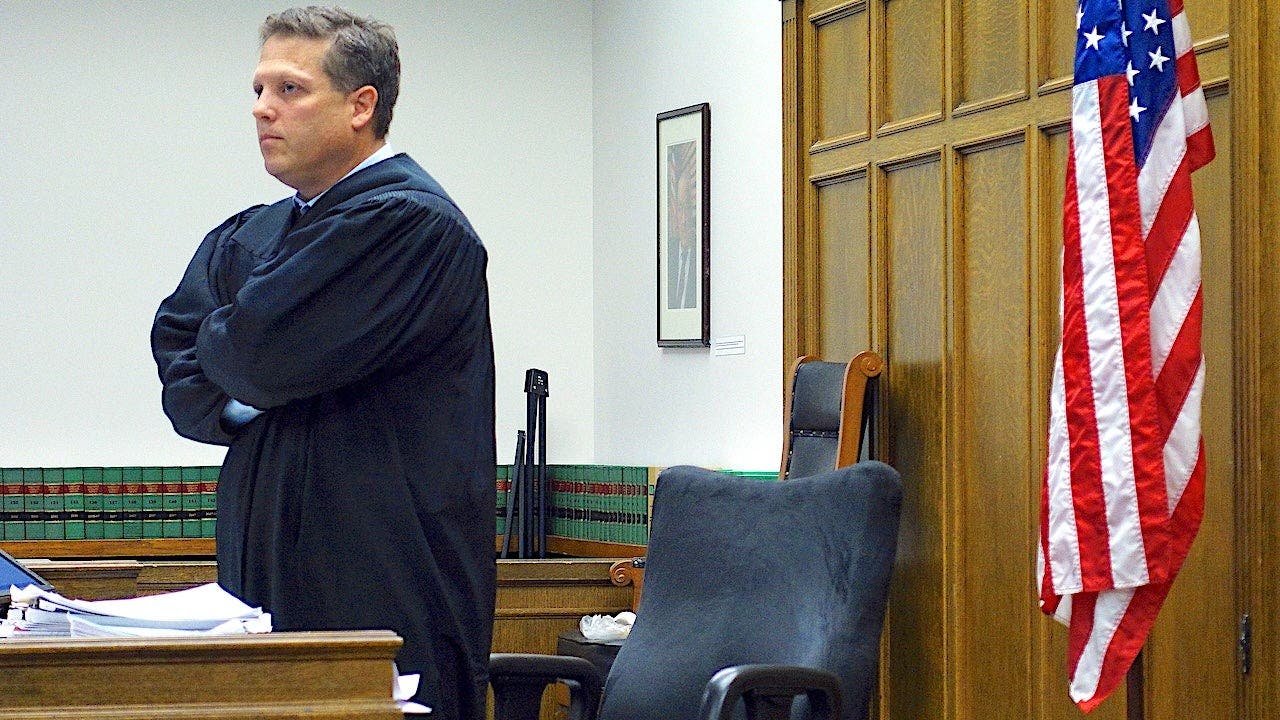
Judge Roger Rogoff spent 20 years as a state prosecutor and six as a federal prosecutor before becoming a state judge, and admitted he knew the administration might fire him immediately but did not reject taking on «the best job there is.» (Ted S. Warren/AP)
He then went to the U.S. Attorney’s Office and asked to meet with Charles Neil Floyd, the Trump administration’s preferred choice for the job, whose 120-day interim term expired in February.
While Rogoff waited in the lobby, he received an email notifying him that Trump had removed him from office.
Rogoff’s situation was not mentioned in Blanche’s Senate confirmation hearing Wednesday, but Blanche is back before the Senate again Thursday and Rogoff now might be a notable topic of discussion during his confirmation process.
BIDEN JUDGE REJECTS TRUMP’S SANCTUARY CITIES LAWSUIT, SAYS EVEN A WIN WOULDN’T SOLVE DOJ’S PROBLEM
The quick dismissal came after all 17 active and senior federal judges in the deep-blue district appointed Rogoff to the vacancy. The judges, appointed by five presidents (10 by Democrats and seven by Republicans), had opened an application process after the administration did not send Floyd’s nomination to the Senate and instead kept him in place by making him first assistant U.S. attorney while leaving the top job vacant.
U.S. attorneys, who serve as the Justice Department’s chief federal prosecutors in each district, are normally nominated by the president and confirmed by the Senate. Federal law allows the attorney general to name an interim U.S. attorney for 120 days. If that period expires without a confirmed nominee, district judges may appoint someone to serve until the vacancy is filled.
Because of obstruction by Democrats in the narrowly held Senate, the Trump administration has resorted to using acting titles and other personnel moves to keep its prosecutors in place. Courts have pushed back in several Democrat-heavy districts like Seattle and New Jersey, issuing legal challenges to the Justice Department and White House authority.
«I don’t think it’s the way to run the Department of Justice,» Rogoff told The New York Times. «When you have this sort of made up way of putting people in these positions, the process breaks down.»
Sen. Patty Murray, D-Wash., opposed Floyd for the U.S. attorney job and blasted Rogoff’s quick firing.
«Throughout his career, he has demonstrated an outstanding commitment to public service, and he was appointed legally by the federal judges in the Western District of Washington,» Murray wrote in a statement. «This administration doesn’t want to deal with advice and consent — they just want to install cronies to carry out a corrupt political agenda.»
LEGAL WAR ON TRUMP’S AGENDA GAINS FIREPOWER AS FEDERAL LAWYERS DEFECT TO DEMOCRATS
Trump administration officials have long noted that the «advise and consent» role of the Senate does not grant Democrats against Trump’s administrative priorities to be a hard block on his agenda and nominees, though.
Rogoff has retained an employment law firm and is considering a legal challenge to his firing.
Fox News Digital reached out to Rogoff for comment.
The Seattle clash follows similar disputes elsewhere. In New Jersey, Alina Habba resigned as the top federal prosecutor after an appeals court said she had been serving unlawfully. In Virginia, Lindsey Halligan left an acting U.S. attorney post after a judge found her appointment unlawful and dismissed indictments she had brought against New York Attorney General Letitia James and former FBI Director James Comey.
The administration has also fired court-appointed U.S. attorneys in other districts.
Rogoff, who spent 20 years as a state prosecutor and six as a federal prosecutor before becoming a state judge, said he knew the administration might fire him immediately. Despite this, he said he had no qualms about the potential conflict he was walking into, because being U.S. attorney is «the best job there is.»
CLICK HERE TO DOWNLOAD THE FOX NEWS APP
«I’m really proud of my career,» Rogoff said. «The fact that the judges of this district — most of whom I’ve spent my career appearing in front of, or trying cases against, or working with — believed that I was the right person to do this work is just really humbling and amazing.»
The Associated Press contributed to this report.
justice department, todd blanche, politics, federal judges, white house

INTERNACIONAL
Billions in taxpayer income are leaving two iconic states — as a new economic map emerges

NEWYou can now listen to Fox News articles!
As Americans continue relocating across state lines, California and New York remain at the center of the nation’s migration story.
The latest IRS data show the top 10 counties with the largest net losses of taxpayers to other states were all located in California and New York. Compiled from federal tax returns, the figures offer one of the clearest snapshots of where Americans are relocating — and where their income is moving with them. Economists say those migration patterns help explain broader shifts in state economies, tax bases and housing markets as families weigh affordability, taxes and job opportunities when considering where they want to put down roots.
The movement of taxpayers and their income can also affect state and local tax collections, which help fund schools, public safety and infrastructure.
Los Angeles County, home to Hollywood and one of the nation’s largest economic engines, led the nation with a net loss of 17,496 tax filers. Those departing taxpayers took nearly $1.9 billion in income with them as they moved to other states.
THE RED STATES RACING AHEAD IN AMERICA’S POWERFUL WEALTH BOOM — AND THE STATES FALLING BEHIND
Other major counties in California and New York saw similar outflows. The next-largest taxpayer losses were recorded in Queens County, New York (-17,109), the Bronx (-16,319), Orange County, California (-11,618) and Suffolk County, New York (-10,434).
One New York county stood out for a different reason.
Manhattan gained more interstate tax filers than any other county in the nation while simultaneously losing nearly $1 billion in adjusted gross income, suggesting many of the newcomers earned less than those who left.
The latest data continue to point to a shift away from many of the nation’s largest coastal counties toward fast-growing destinations in the Sun Belt and Mountain West.
«It’s very, very clear that people ultimately vote with their feet and when they feel like they’re getting taxed too much, they go somewhere else where they will be taxed less,» Heritage Foundation chief economist E.J. Antoni told Fox News Digital.
«If you look at where these people are going, they’re not going to Massachusetts or Illinois or California,» Antoni said. «They’re going to Texas. They’re going to Tennessee. They’re going to Florida — places with low or no income taxes and low overall levels of taxation.»
AMERICANS KEEP MOVING TO TEXAS AND FLORIDA — BUT ONE OTHER RED STATE IS GROWING EVEN FASTER
Americans continue moving across state lines as migration patterns reshape local economies. (Lindsey Nicholson/UCG/Universal Images Group via Getty Images)
The remaining counties rounding out the top 10 for taxpayer losses were San Diego County, California (-9,401); Nassau County, New York (-9,130); Riverside County, California (-8,968); San Bernardino County, California (-8,462); and Kings County, New York (-6,924).
While those two states dominated the counties with the largest taxpayer losses, other parts of the country continued attracting new residents. The counties with the largest net gains in interstate tax filers were Maricopa County, Arizona (+9,353); Harris County, Texas (+8,955); King County, Washington (+8,297); and Clark County, Nevada (+7,524).
«The ‘vote with your feet’ movement, is real,» Paul Teller, a conservative strategist who previously served in the Trump-Pence White House, told Fox News Digital.
THESE STATES ARE ‘AHEAD OF THE GAME’ IN BRINGING DOWN HOME PRICES, TRUMP’S HOUSING CHIEF SAYS
Teller said Americans continue leaving high-tax, highly regulated states for places where they can keep more of what they earn and face lower costs of living, arguing the migration patterns should serve as a warning for policymakers in states that continue losing residents.
«What baffles me, especially as a former New Yorker, is that there doesn’t seem to be a lot of concern in the states that are losing people,» Teller told Fox News Digital.
CLICK HERE TO DOWNLOAD THE FOX NEWS APP

Manhattan attracted the nation’s most new tax filers between 2022 and 2023, yet still saw a sharp decline in reported income as wealthy residents left. (Spencer Platt/Getty Images)
Teller argued the trend could carry long-term fiscal consequences if affluent taxpayers continue leaving. He said the debate has taken on renewed attention as New York City Mayor Zohran Mamdani advances an agenda that includes higher taxes on top earners, rent freezes for stabilized apartments, free city buses and city-owned grocery stores.
California has likewise remained at the center of debates over taxes on high-income earners, maintaining one of the nation’s highest top marginal income tax rates.
«Let’s see what happens when the wealthy keep moving out of big blue states like California and New York,» Teller said. «We’ll see what happens to tax revenue. We’re already seeing it. It’s going down significantly.»
economy, taxes, politics, new york, california, texas

El trasfondo de la vuelta de la selección argentina al país: la posibilidad del saludo en Casa Rosada y los operativos que se diseñan

Se vienen las lluvias y el “calorcito”: así estará el clima en el AMBA durante el fin de semana de la final del Mundial

El Gobierno británico pidió a la FIFA que investigue a la Selección por la bandera de Malvinas

El gobierno de Trump llamó a “terminar para siempre con el terror violento” de la izquierda y recordó a Montoneros

Trump admin fires US attorney in Seattle minutes after he was appointed

El divertido video del supuesto diálogo entre los jugadores argentinos que encontraron la botella del arquero inglés con el “machete” de los penales

El álbum de las vacaciones soñadas de Darío Barassi con su familia: “Ibiza, nos vas enamorando”

El petróleo sube más de 3% tras la reanudación de los ataques de EEUU contra Irán y la amenaza de cierre del estrecho de Ormuz

Cámara de Comercio panameña cierra filas y llama a fortalecer la Zona Libre de Colón

Operativo Reelección 2027: Los 8 Cambios Urgentes que Javier Milei Debe Implementar para Asegurar su Continuidad

 POLITICA3 días ago
Operativo Reelección 2027: Los 8 Cambios Urgentes que Javier Milei Debe Implementar para Asegurar su Continuidad
- ECONOMIA3 días ago
Aumentó 900% la cantidad de repartidores de plataforma en los últimos 6 años
- ECONOMIA3 días ago
Mercados: caen los bonos soberanos y las acciones argentinas no definen un rumbo tras el recrudecimiento del conflicto en Ormuz