INTERNACIONAL
US allies need to shoot down Russian aircraft testing NATO boundaries, Czech president warns

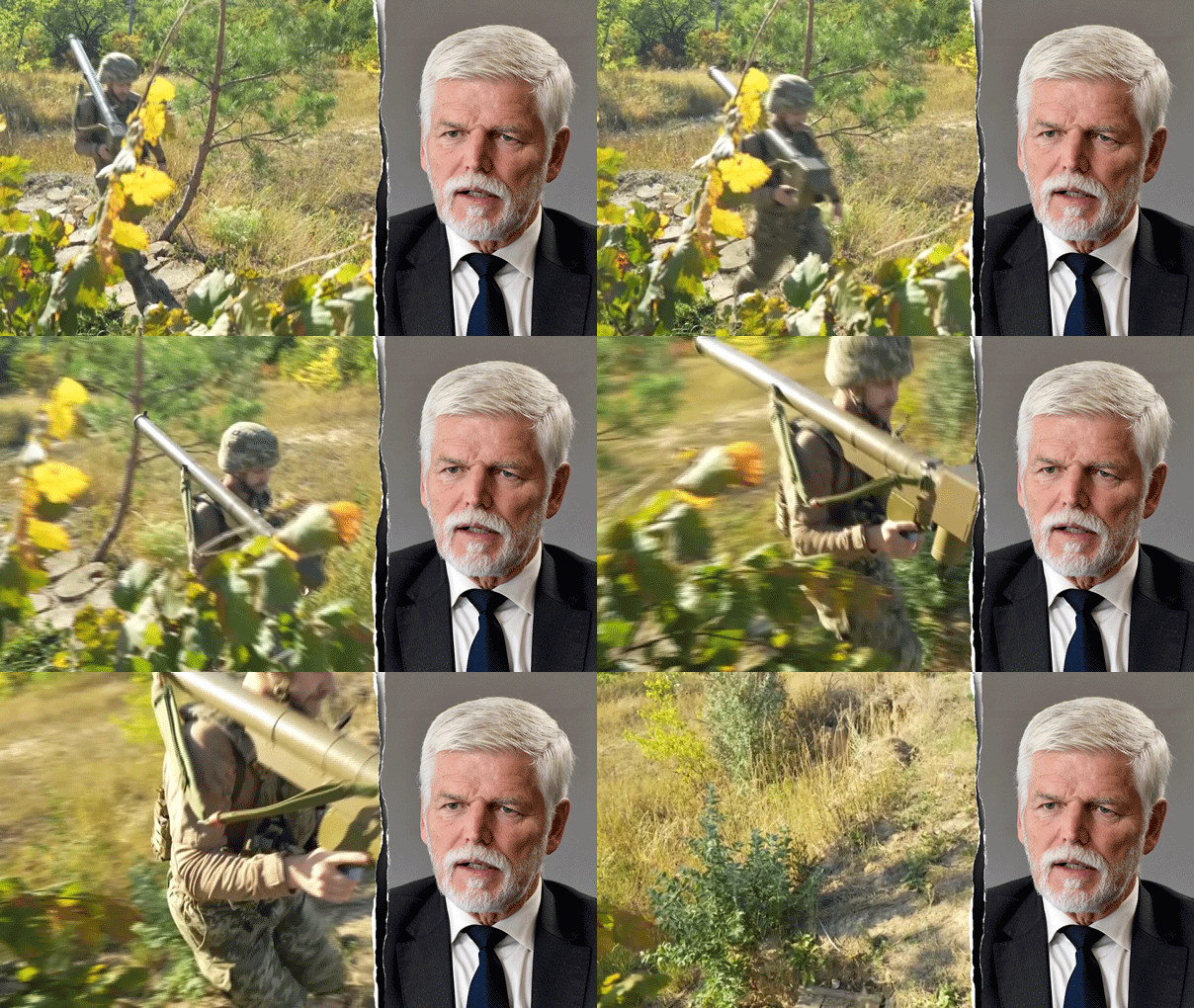
NEW YORK — Czech President Petr Pavel insists that NATO needs to outright demonstrate its willingness to respond to Russian aggression or else Moscow will continue to push the alliance and its European boundaries.
«There might be the time when we will have to shoot down some of these planes or unmanned vehicles that are testing our readiness,» Pavel, a retired general and former chair of NATO’s Military Committee, predicted in a conversation with Digital on the sidelines of the U.N. General Assembly in New York City this week.
Pavel said alliance members understandably want to avoid escalation, but risk sending the wrong signal as he warned Moscow views restraint as weakness and is testing allied defenses with its continued aggression.
«What I am afraid of is that they see a lack of will on our side to take decisive action,» Pavel said. «Within Russian perceptions it demonstrates weakness. And they respect power.»
The warning followed fresh incidents along NATO’s eastern flank, where a Russian Mi-8 military helicopter crossed from Kaliningrad into Polish airspace Wednesday, prompting Poland to scramble fighter jets. Romania scrambled F-16s Thursday after another unidentified aerial target crossed its border from Ukraine.
Denmark’s military intelligence service also warned Thursday that Russia is likely to intensify hybrid attacks against NATO in the coming months and assessed a «low but growing» risk of a limited Russian military attack against one or more NATO countries bordering Russia.
ROMANIAN F-16 SHOOTS DOWN DRONE AFTER AIRSPACE BREACH, MARKING FIRST FOR NATO ALLY
Pavel said in a speech before the U.N. General Assembly Wednesday that Russia’s «aggressive posture poses a direct threat to European security» and warned that the risk is growing.
He told Digital that the pattern of recent escalation was familiar from his years at NATO, recalling Russian aircraft testing U.S. pilots over Syria and repeatedly violating Turkish airspace before Turkey shot down a Russian warplane in 2015.
«They are, on one hand, provoking. On the other, testing what will our reaction be,» Pavel detailed.
NATO already has procedures for accidental airspace violations, Pavel said, including warning aircraft and attempting to establish contact. But he drew a distinction between mistakes and aircraft that deliberately enter allied airspace and refuse to respond.
«If it is deliberate and the violator doesn’t respond to our measures, then we will have to act, because otherwise Russia simply would push further on,» the Czech president added.
RUSSIA’S NEIGHBOR REVEALS PERSONAL APPEALS TO TRUMP AS US WEIGHS NATO TROOP PULLBACK IN EUROPE
The comments come amid recent drone incursions involving NATO members along the alliance’s eastern flank, including incidents in Poland, Romania and Lithuania.
Pavel was similarly skeptical that President Vladimir Putin is serious about talks to end the war in Ukraine, saying he has seen no significant Russian effort to negotiate. He argued that while Moscow publicly expresses willingness to hold talks, the conditions it has attached would effectively strip Ukraine of sovereignty.
He said a genuine negotiating process would require Russia to agree to a ceasefire first and then enter talks without preconditions.
RUSSIA PREPARING HYBRID ATTACKS ON NATO’S EASTERN FLANK, INTELLIGENCE WARNS
The Czech president also warned that the wars in Ukraine and the Middle East have exposed another vulnerability across the NATO alliance: depleted weapons stockpiles and defense-production systems struggling to keep pace with demand.
«With the amount of ammunition, especially intelligent ammunition, consumed over a short period of time, we all understand on both sides of the Atlantic how short we are when it comes to stocks of these kinds of equipment,» Pavel said.
He said the lesson for both Europe and the United States is to accelerate weapons production and overhaul procurement systems he described as «extremely long and rigid.»
Pavel’s warning underscores a broader challenge facing NATO as it weighs how forcefully to respond to Russian activity without triggering a wider confrontation, while simultaneously replenishing the military stockpiles needed to sustain deterrence over the longer term.
nato, national security, russia, ukraine, foreign policy










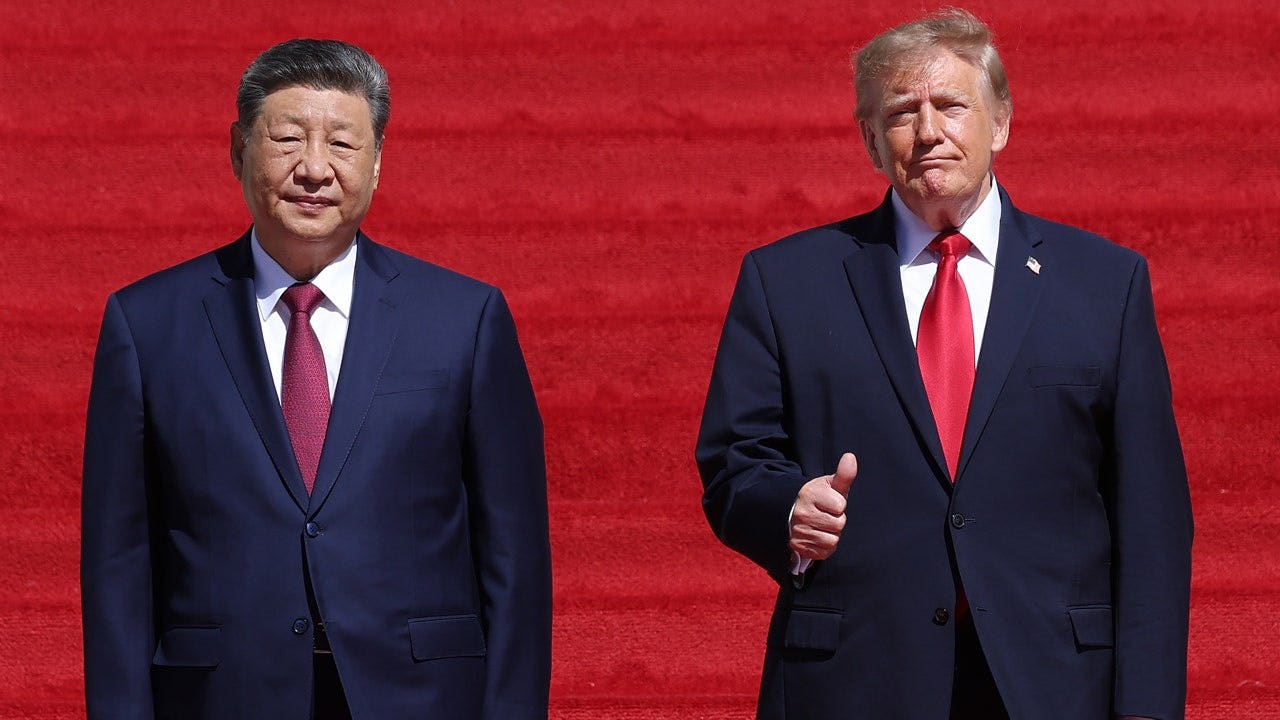
President Donald Trump welcomed Chinese President Xi Jinping to Washington this week, one day after signing a Greenland security agreement that, once in force, would bar non-NATO states such as China from establishing a military presence there, sharpening the Arctic-security backdrop to their face-to-face talks.
Xi’s three-day state visit unfolded against that backdrop, with Trump hosting a formal White House arrival ceremony, holding high-stakes talks, joining Xi for a tour of the National Archives and presiding over a state dinner attended by some of America’s most prominent technology executives.
A senior U.S. official told Digital that Trump and Xi discussed the economy, trade, «Super Intelligence» and cooperation on a range of shared priorities, though it remained unclear what concrete agreements emerged from behind closed doors.
TRUMP-XI REUNION COMES WITH UNFINISHED BUSINESS — AND A BIGGER BATTLE LOOMING
Trump has so far stopped short of announcing a concrete agreement from Xi’s Washington visit, a contrast to his May trip to Beijing.
Trump was already telling reporters before leaving China that the two countries had made «some fantastic trade deals,» even though the White House did not release its full economic deal package until two days after the summit.
Thursday’s state dinner drew 134 guests, including the two leaders and prominent technology figures such as Jensen Huang of Nvidia, Mark Zuckerberg of Meta, Lisa Su of AMD, Tim Cook of Apple, Sam Altman of OpenAI, Elon Musk of Tesla and SpaceX, Jeff Bezos of Amazon, Satya Nadella of Microsoft and Sundar Pichai of Google.
Christine Balling, senior vice president for professional affiliations at The Institute of World Politics, told Digital that inviting America’s top AI tycoons to Thursday night’s state dinner was a strategic move to show Xi that the United States is the world’s top dog in the AI race.
‘RED CARPET FOR A DESPOT’: TRUMP’S LAVISH XI WELCOME COLLIDES WITH GOP ANTI-COMMUNISM MESSAGE
«I think the significance of the timing of this meeting, whether it’s intentional or not, shows that the Trump administration is taking The future of AI and the world very, very seriously,» she said. «I think that is the most significant takeaway. But the bottom line is, I think the most important images were those of all of the AI techs who were invited to that state dinner.»
Greenland has emerged as a backdrop to Trump’s two meetings with Xi this year. Negotiations over an expanded U.S. security role there began months before Trump traveled to Beijing in May, while Trump renewed his public pressure over Greenland during the summer as his administration continued negotiations aimed in part at limiting Russian and Chinese influence in the Arctic.
Five days before Xi arrived in Washington, Trump announced a Greenland security agreement that was formally signed Sept. 22 and, once in force, would expand the U.S. military position while restricting Chinese military presence and certain sensitive investments in the territory.
China has had its eye on Greenland for years, especially as it looks to expand its role in the Arctic. Beijing has shown interest in Greenland’s infrastructure and natural resources, including its valuable rare earth and critical mineral deposits. U.S. officials have also pointed to past Chinese efforts involving a former U.S. naval base and airport projects as signs of Beijing’s broader ambitions in the region.
Balling is an expert in foreign policy, particularly in the Western hemisphere, and says Trump’s historic deal with Greenland struck a massive blow to China.
TRUMP DECLARES VICTORY IN HISTORIC DEAL WITH GREENLAND AS HE SECURES ‘PERMANENT’ US MILITARY RIGHTS
«Number one, that is a tremendous victory for the United States and frankly, the free world,» she said. «It means that the United States has the ability to establish two more bases at present. So we have a Space Force base … and now secured land, air, and sea rights across Greenland. We have the ability to screen out any other country who expresses interest in either establishing any sort of military presence and or investment.»
«That means that the United States and NATO allies are going to have first right of refusal when it comes to mining, and not only for rare elements, but also oil and gas and data centers.»
SECURITY EXPERT HAILS TRUMP’S GREENLAND PACT AS A ‘BIG DEAL’ ON PAR WITH ALASKA PURCHASE
China has long sought a larger Arctic role, declaring itself a «near-Arctic state» and promoting a «Polar Silk Road» encompassing commerce, research and resource development.
Balling argued that Beijing had reason to oppose the U.S.-Denmark-Greenland agreement because the United States remains heavily reliant on China for several critical-mineral supply chains.
«I also have to say for all of those who were mocking the Trump administration and President Trump’s talk about buying or invading Greenland, they have an egg on their faces now,» she said. «I never for a moment thought that President Trump was serious about this. I think that what he was serious about, was exactly what was achieved in the agreement that was just signed.»
white house, xi jinping, greenland, geopolitics, china
INTERNACIONAL
WATCH: Black bishop calls voter ID argument ‘deeply insulting’ after explosive noncitizen registration report
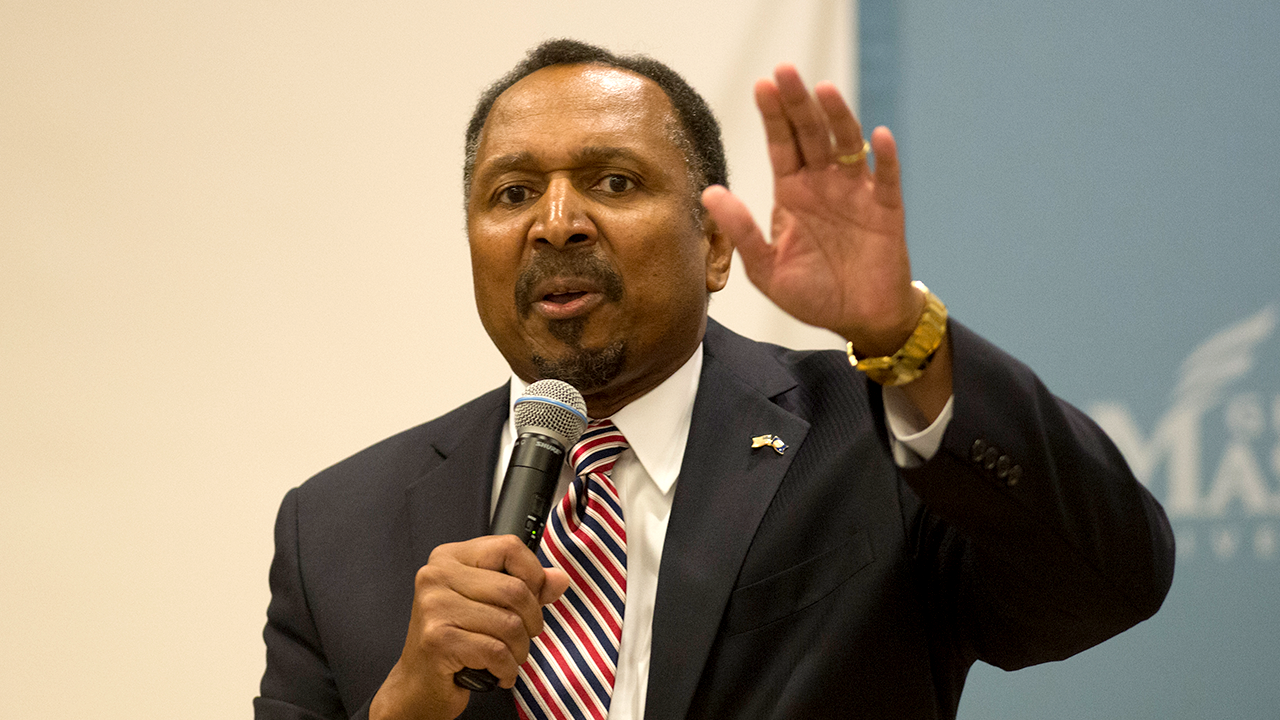
EXCLUSIVE: Black bishop and author Earl Walker Jackson blasted Democrats and the left over what he called the «deeply insulting» and «deeply offensive» claim that minorities and African Americans cannot get I.D.s to vote.
Debate erupted this week over voter I.D. requirements after Reuters reported that an investigation found 30,000 noncitizens were «erroneously» registered to vote in 11 states. Jackson, a nondenominational Christian leader and descendant of enslaved ancestors, said the findings underscored what he described as a growing problem of noncitizen voting that disenfranchises American citizens.
In an interview with Digital, Jackson charged, «Why the Democrats are so committed to this can only be explained one way: they think it empowers people who shouldn’t vote to vote, and they believe those people are going to vote for them.»
«This is nothing but a power grab,» he posited, emphasizing that «every vote by a noncitizen does in fact cancel out the vote of an American citizen, or it amplifies it in a way that’s illegal or inappropriate.»
BOMBSHELL VOTING SCANDAL ADDS TO PATTERN OF NONCITIZEN VOTERS AS TRUMP WARNS OF THREAT TO ‘HEART’ OF DEMOCRACY
Reuters reported on Wednesday that more than 30,000 self-declared noncitizens were added to U.S. voter rolls since 2000.
The outlet attributed the erroneous registrations to «software glitches and clerical errors» and said its review suggested «inadvertent bureaucratic failures, rather than organized efforts to register immigrants illegally.» Reuters said it was unable to determine how many noncitizens actually cast ballots.
The errors occurred in California, Illinois, Iowa, Nevada, Ohio, Oregon, Pennsylvania, South Dakota, Texas, Utah and Virginia.
Don Palmer, the senior legal fellow for election integrity with the Heritage Foundation, told Digital that due to legal loopholes and loose reporting requirements, he believes the 30,000 number «is actually quite low.»
«I think it’s undercounting it. I think those are the identified non-citizens that have been accidentally or erroneously placed on the voter rolls through the mistake of the driver’s license agency. I think it’s much more because we don’t know in a lot of states, either they have not conducted the audits or they’re not using tools to find noncitizens that may have accidentally been placed on the rolls,» he said.
Palmer said «the answer really is that there needs to be more care taken to developing a system of verifying citizenship and you just don’t see that in most states.»
BIDEN ADMINISTRATION GRANTED WOMAN GREEN CARD MONTHS BEFORE SHE ILLEGALLY VOTED IN 2024 ELECTION: DHS
«If they’re going to do voter registration, they need to make sure that there’s a verification in place for identity and for citizenship, just as if you come into an agency and you’re getting a driver’s license or identification card, you’ve got to show that I.D., you’ve got to make sure that your identity is confirmed, similarly, if you’re going to register someone to vote at the driver’s license agency, there needs to be a verification process or a documentation process to ensure that you are a citizen,» he said.
Meanwhile, after hearing the 30,000 figure, Jackson told Digital that «the sad reality is I’m not shocked.»
«I wonder if it’s more,» he said, adding, «We’ve been told, particularly by Democrats, that that’s not happening, that there’s nothing to see here, and yet we hear again and again documentation that it is happening.»
With this in mind, he decried efforts to resist more stringent voter eligibility verification and identification. He took particular issue with those equating voter I.D. requirements as anti-Black and a new form of Jim Crow.
«Forgive me for being personal about this for a moment, but I just find this deeply insulting and deeply offensive because the implication is that somehow if you are black, no matter how wealthy, educated, well-to-do, somehow getting an ID is a problem for you,» he said.
«But on the other hand, if you’re white, no matter how poor, no matter how uneducated, no matter what your circumstances are, somehow you can get an I.D., that’s not a problem, I mean, it’s preposterous.»
DESCENDANT OF SLAVES SHAMES SMITHSONIAN’S WOKE ‘INDOCTRINATION’ AGAINST THE ‘GREATEST NATION ON EARTH’
He pointed to the hotel where he was staying as an example.
SIGN UP TO GET THE POLITICS NEWSLETTER
«Look, I’m in a hotel right now … What was the first thing they asked me for when I walked up to the counter? May we see your I.D., please? Should I say, ‘Wait a minute, oh, you’re discriminating against me. You know Black people can’t get I.D.s; how dare you ask?’ he said. «I mean, it’s ridiculous.»
«I don’t hate illegal aliens, I don’t want to see them harmed or hurt, but they don’t have a right to vote in our elections, and they shouldn’t be permitted to do so,» he concluded. «Anybody who wants to say, well, ‘You’re a bigot, you are a hater,’ I mean, they’re going to say that. But I think most Americans are people of goodwill and don’t feel that way at all; we’re simply trying to preserve the integrity of our electoral system.»
voter fraud concerns, voting, illegal immigrants, immigration, elections, democratic party

El visitante interestelar no aporta pruebas de organismos extraterrestres, pero su composición ofrece una muestra poco frecuente de los ingredientes químicos que circulan en otros sistemas planetarios y de la historia temprana de la galaxia
Un cometa que cruzó el sistema solar desde una estrella desconocida no resolvió la pregunta sobre la vida extraterrestre, pero sí dejó una pista relevante para responderla.
El análisis de 3I/ATLAS confirmó la presencia de moléculas orgánicas y compuestos ligados a la química prebiótica en un objeto nacido fuera del entorno del Sol.
Ese resultado no prueba la existencia de seres vivos en otros mundos ni convierte al cometa en una señal de tecnología alienígena. Sin embargo, permite examinar de cerca materiales que podrían haber participado en el origen de la vida dentro de otro sistema planetario.
3I/ATLAS es el tercer objeto interestelar conocido, después de 1I/ʻOumuamua y 2I/Borisov. La letra I en su nombre indica su origen interestelar, mientras que ATLAS alude al sistema de vigilancia Asteroid Terrestrial-impact Last Alert System, financiado por la NASA. El observatorio de Río Hurtado, en Chile, informó las primeras observaciones del cuerpo el 1 de julio de 2025, aunque los archivos de otros telescopios permitieron localizar imágenes desde el 14 de junio de ese año.
Su órbita resolvió pronto una duda fundamental. A diferencia de los planetas, asteroides y cometas que pertenecen al sistema solar, 3I/ATLAS siguió una trayectoria hiperbólica. Es decir, el Sol alteró su recorrido durante el paso, pero no puede retenerlo en una órbita cerrada. Si se prolonga ese movimiento hacia atrás en el tiempo, el objeto llega desde fuera del sistema solar; si se proyecta hacia adelante, continuará su viaje por el espacio interestelar.
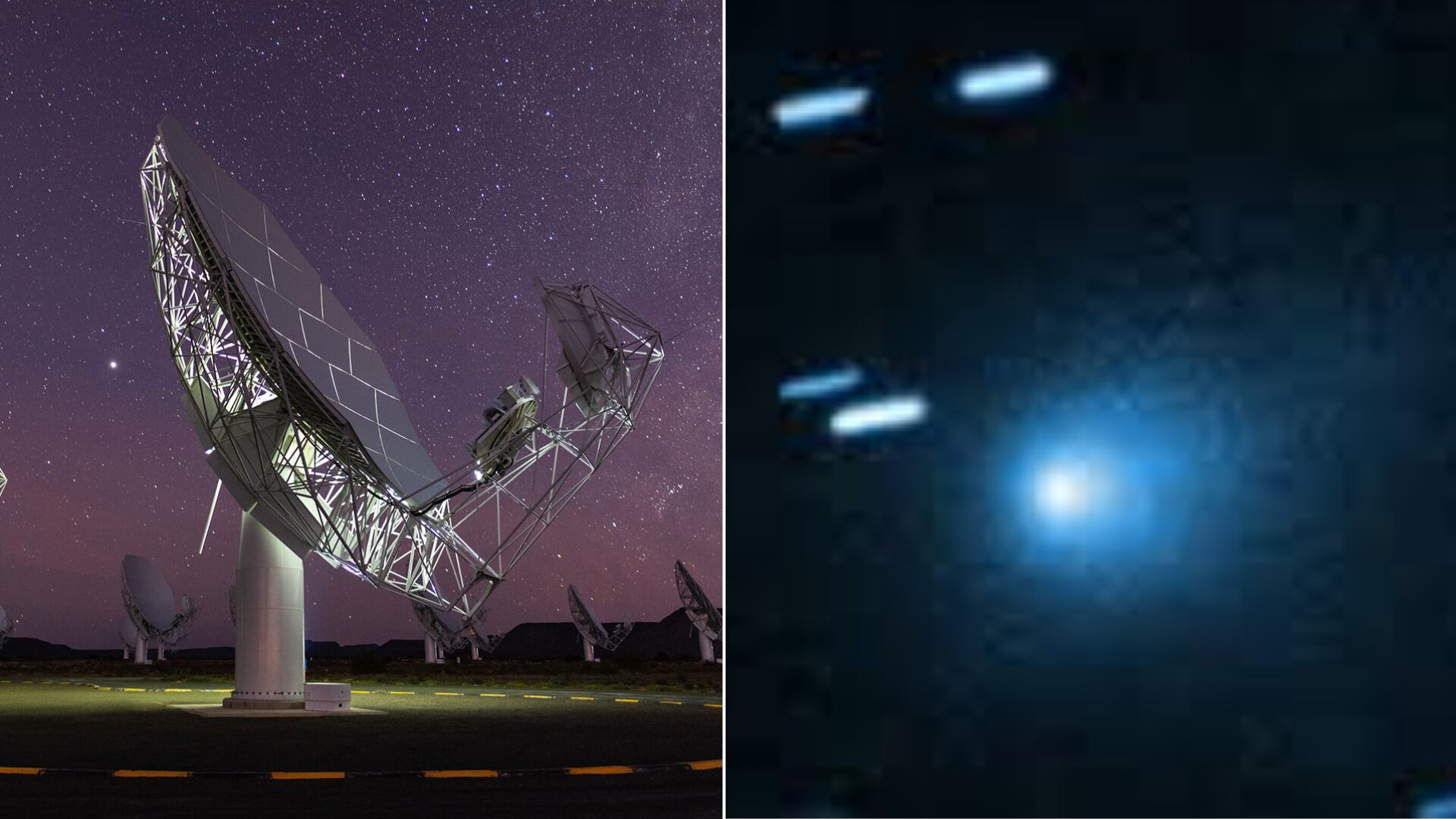
El visitante tampoco supuso un riesgo para la Tierra. Su máxima aproximación al planeta fue de 1,8 unidades astronómicas, equivalentes a unos 270 millones de kilómetros. Alcanzó el punto más cercano al Sol cerca del 30 de octubre de 2025, a unos 210 millones de kilómetros, apenas dentro de la órbita de Marte. Esa distancia frustró cualquier posibilidad de obtener muestras directas, aunque varios telescopios terrestres y espaciales siguieron su actividad durante meses.
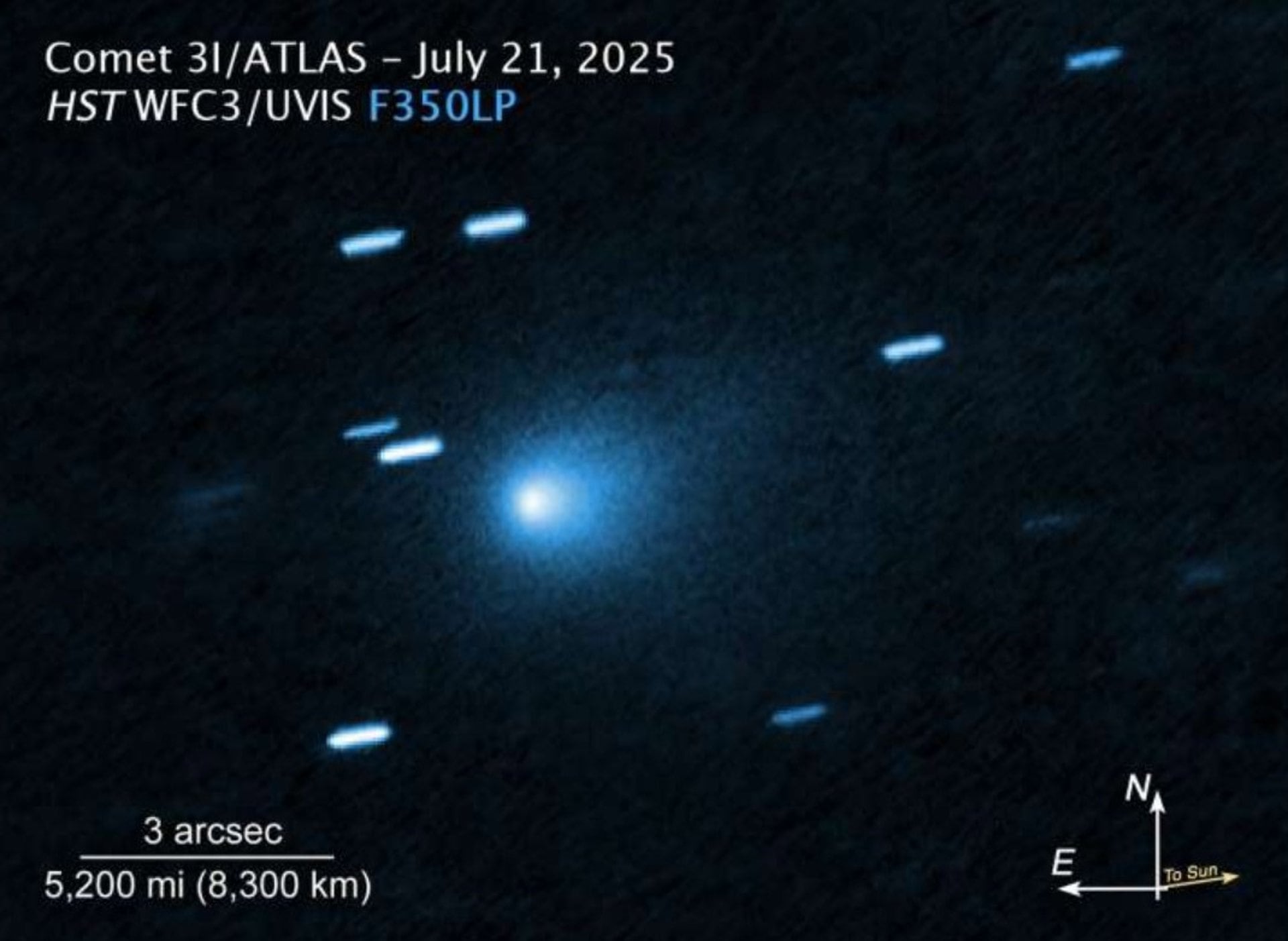
El paso por las cercanías solares calentó el hielo del núcleo y liberó gas y polvo. Así se formó la coma, la nube difusa que rodea al cometa y que funciona como una ventana hacia sus materiales. El telescopio espacial Hubble observó el 21 de julio de 2025 una envoltura de polvo con forma de lágrima. Las mediciones fijaron un límite superior de 5,6 kilómetros para el diámetro del núcleo, aunque este podría medir apenas 440 metros.
La atención pública alrededor de 3I/ATLAS también creció por conjeturas sobre un posible origen artificial. Los datos disponibles no respaldan esa hipótesis. La emisión de polvo y gas, la evolución de la coma y la trayectoria del objeto corresponden al comportamiento esperado de un cometa natural. Su relevancia científica no depende de una explicación extraordinaria: reside en la posibilidad de estudiar un fragmento de materia preservada fuera del sistema solar.
Las moléculas del cometa muestran que los ingredientes de la vida no son exclusivos del Sistema Solar

La vida, tal como se conoce en la Tierra, requiere una cadena larga de procesos químicos. El primer eslabón no son los organismos, sino moléculas capaces de aportar elementos como carbono, hidrógeno, oxígeno y nitrógeno.
A esos componentes se los denomina precursores prebióticos porque intervienen en reacciones que pueden producir sustancias más complejas, entre ellas aminoácidos, azúcares, bases nitrogenadas y, en ciertas condiciones, estructuras relacionadas con proteínas y ácidos nucleicos.
Las observaciones de 3I/ATLAS detectaron varias de esas materias primas. El radiotelescopio ALMA identificó cianuro de hidrógeno, formaldehído y grandes cantidades de metanol en la coma. El telescopio espacial James Webb registró metano, mientras que el observatorio SPHEREx de la NASA detectó una abundancia de compuestos orgánicos a comienzos de 2026.

El inventario reúne carbono y nitrógeno en formas que la química considera relevantes para la síntesis de moléculas prebióticas.
El cianuro de hidrógeno resulta un caso ilustrativo. Se trata de un gas tóxico, pero los experimentos de laboratorio muestran desde la década de 1950 que, bajo determinadas condiciones, puede participar en reacciones que dan lugar a aminoácidos y otros compuestos de mayor complejidad.
El hallazgo dentro de un cometa interestelar no implica que ese proceso haya ocurrido en su sistema de origen. Sí indica que los reactivos básicos existieron allí y pudieron quedar atrapados en hielo durante miles de millones de años.
El metanol y el formaldehído también interesan por su papel dentro de la química del carbono. Ambos aparecen en nubes interestelares, discos de gas y polvo alrededor de estrellas jóvenes y cuerpos helados del sistema solar. Cuando reciben radiación o experimentan cambios de temperatura, pueden participar en reacciones que forman compuestos orgánicos más elaborados. El metano, por su parte, puede influir en la retención de calor dentro de una atmósfera planetaria, una condición que favorece la estabilidad del agua líquida.
La relevancia del cometa se entiende mejor al comparar esos resultados con lo que ya se conoce cerca de la Tierra. La misión OSIRIS-REx recuperó muestras del asteroide Bennu y encontró las cinco bases nitrogenadas presentes en los ácidos nucleicos, además de 14 de los 20 aminoácidos que se producen de forma natural en nuestro planeta.
Esos resultados refuerzan la idea de que los cuerpos pequeños pudieron transportar compuestos orgánicos a mundos jóvenes durante la formación de los sistemas planetarios.

Los cometas y asteroides funcionan como archivos químicos porque nacen dentro del mismo disco de gas y polvo que origina planetas, lunas y otros cuerpos. Sus zonas interiores pueden conservar material con pocas modificaciones desde sus primeras etapas. En ese sentido, un cometa interestelar permite observar una muestra de otro sistema sin enviar una nave a una estrella distante.
La astrónoma Cyrielle Opitom, de la Universidad de Edimburgo, definió el valor de estos objetos de esta manera: “una especie de fósiles de un proceso de formación planetaria que tuvo lugar muy lejos, pero que tenemos la oportunidad de estudiar desde mucho más cerca”.
La metáfora resume una ventaja excepcional: 3I/ATLAS llegó hasta el vecindario solar con una parte de su historia física y química todavía accesible para los instrumentos actuales.

Aun así, el alcance de los resultados tiene límites claros. Las moléculas detectadas en la coma son relativamente simples. Los telescopios no identificaron aminoácidos, ácidos nucleicos ni una firma química que pueda asociarse de manera directa con actividad biológica.
Además, la materia expulsada procede sobre todo de las capas externas del cometa, expuestas a radiación cósmica e interestelar durante períodos muy extensos. Esa superficie puede no reflejar con precisión la composición original de las regiones más profundas.
Por eso, 3I/ATLAS no permite afirmar que exista vida en el sistema estelar del que procede. La conclusión más prudente es otra: los compuestos que podrían alimentar una química prebiótica no parecen exclusivos del sistema solar. Esa constatación amplía el mapa de lugares donde los ingredientes básicos estuvieron disponibles, aunque no resuelve cuántos de ellos reunieron las condiciones necesarias para que surgieran organismos.
Sus isótopos apuntan a un sistema estelar más antiguo que el Sol

Además de las moléculas, 3I/ATLAS conservó otra clase de información: la proporción entre isótopos. Los isótopos son versiones de un mismo elemento con igual número de protones y diferente cantidad de neutrones. Sus proporciones relativas se modifican según la temperatura, la radiación y el ambiente químico donde se forman los compuestos. Por esa razón, actúan como una suerte de registro de origen.
Un equipo encabezado por Opitom, Jean Manfroid y Damien Hutsemékers analizó el gas del cometa con el instrumento UVES del Very Large Telescope, del Observatorio Europeo Austral. El estudio midió isótopos de carbono y nitrógeno en moléculas de cianuro. Aravind Krishnakumar, investigador de la Universidad de Lieja y coautor del trabajo, señaló: “A diferencia de los cometas de nuestro sistema solar, este visitante interestelar presenta proporciones isotópicas de carbono y nitrógeno inusualmente altas”.
Otro trabajo, dirigido por Martin Cordiner, del Centro de Vuelos Espaciales Goddard de la NASA, llegó a una señal compatible por medio de observaciones del James Webb. Además de una proporción particular de isótopos de carbono, detectó niveles elevados de deuterio, una forma pesada del hidrógeno. La combinación de carbono, nitrógeno y deuterio apunta a un origen en las regiones exteriores de una estrella antigua y con baja metalicidad.
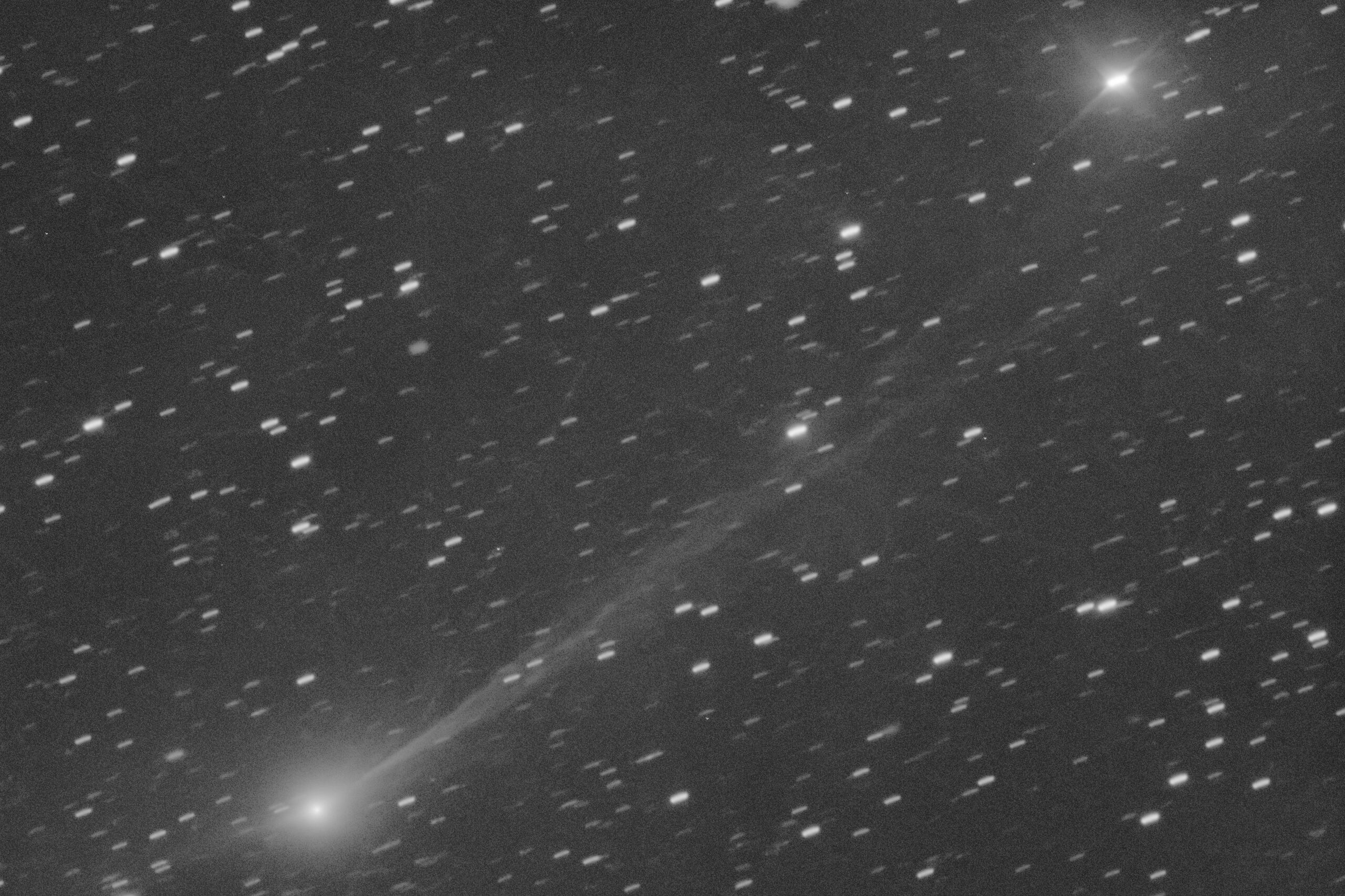
El contraste con los dos visitantes anteriores también explica el interés de los astrónomos. ʻOumuamua solo estuvo disponible durante unas semanas y no presentó una emisión gaseosa detectable. Borisov ofreció más información y mostró cianuro de hidrógeno, pero su menor brillo limitó los análisis.
3I/ATLAS permaneció al alcance de los instrumentos durante un período mayor, salvo entre septiembre y comienzos de diciembre de 2025, cuando pasó demasiado cerca del Sol para observaciones desde la Tierra.
El cometa ya pierde brillo mientras se aleja, por lo que la ventana para obtener nuevas mediciones se reduce. Sin embargo, los datos reunidos seguirán bajo análisis y servirán de referencia para futuros objetos interestelares.
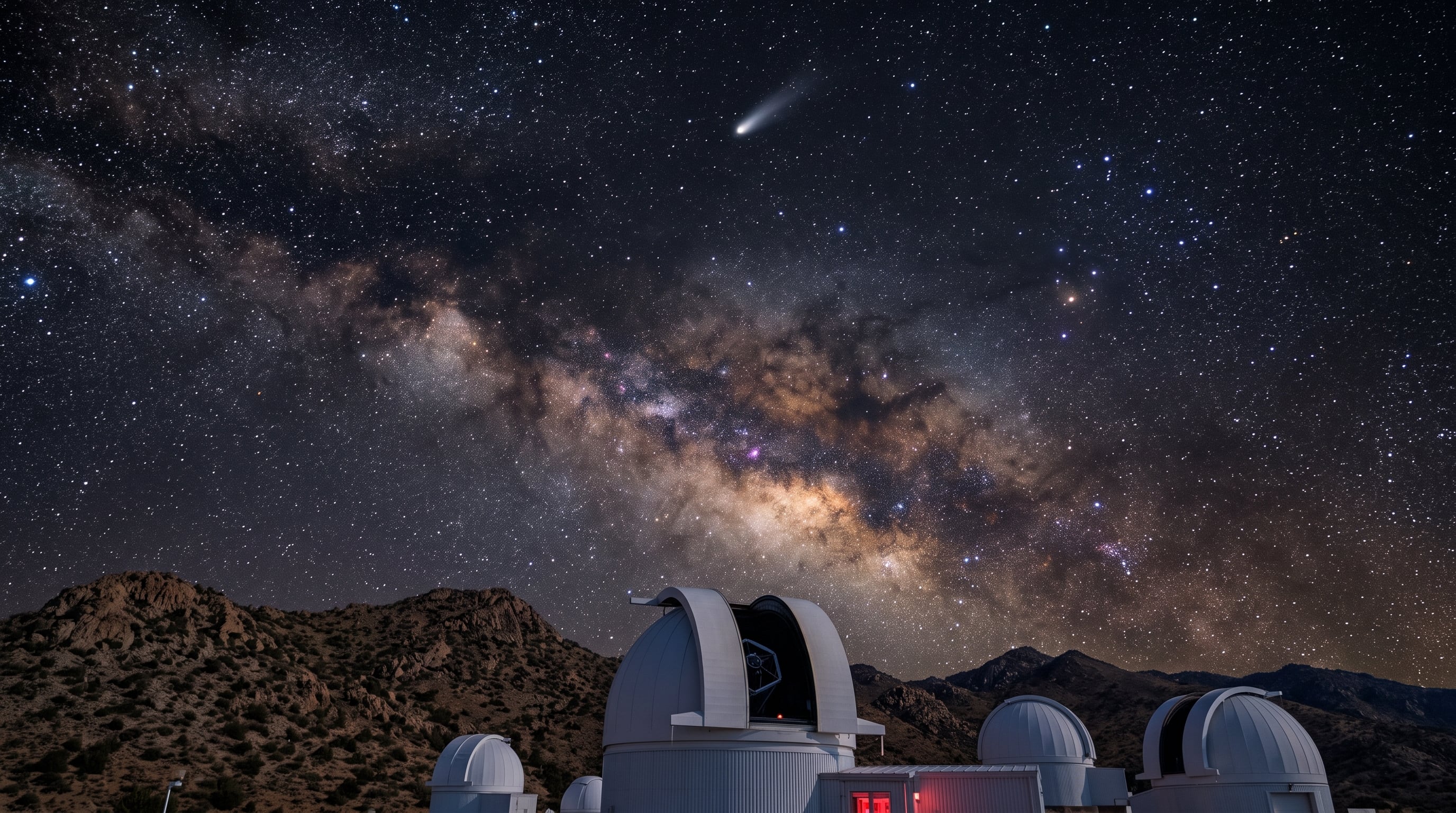
El Observatorio Vera C. Rubin, en Chile, y el Telescopio Extremadamente Grande del Observatorio Europeo Austral podrían ampliar de forma marcada el número de detecciones y la precisión de los estudios químicos.
Opitom advirtió que la disciplina todavía cuenta con muy pocos casos: “El campo de los objetos interestelares es todavía muy reciente y realmente no sabemos qué esperar. Cada vez que se descubre uno nuevo, nos llevamos nuevas sorpresas”. Las próximas visitas permitirán comparar composiciones, isótopos y edades para determinar si 3I/ATLAS representa una rareza o una muestra de procesos comunes en la galaxia.
3I/ATLAS,cometa interestelar,Telescopio William Herschel,formación planetaria,Infobae

Mauro Icardi confirmó su infidelidad con la China Suárez a Wanda Nara, mientras estaban casados y recordó detalles muy íntimos: «Qué hijo de p…»

Trump’s Greenland deal shadows Xi visit after years of Beijing eyeing Arctic influence

La CGT se reunirá para definir nuevas medidas y evalúa una movilización antes de la visita del papa León XIV

Tras los aumentos, cuánto cobrará un empleado de comercio en octubre 2026

“Misión París”: el Gobierno apuesta a la Argentina Week para destrabar el debate por las PASO en el Senado

José Cicala vuelve con un thriller de terror psicológico: «Toda mi niñez estuvo plagada de historias oscuras»

El emotivo álbum de Marina Borensztein para su hija en su cumpleaños: «Te felicito por vivir la vida que querés»

Trump presionó a Irán ante la Asamblea de la ONU: “Hacemos un trato o los llevo al infierno”

Presupuesto 2027: la Casa Rosada aseguró que Patricia Bullrich respalda la reelección de Milei y negó que existan internas

Mercados: el petróleo profundiza la caída y vuelve a subir el riesgo país argentino

 ECONOMIA2 días ago
La pobreza subió al 32,3% en el primer semestre del año y afectó a 15,5 millones de personas
- CHIMENTOS2 días ago
El gesto de Moria Casán con el embajador de Noruega tras viralizarse el video con sus icónicas frases
- POLITICA2 días ago
Gira por New York: Milei se reunirá con Netanyahu y disertará en el Club Económico antes de regresar a Buenos Aires