INTERNACIONAL
She grew up under Soviet rule; now the EU’s top diplomat, she warns Europe against giving Russia what it wants


NEW YORK — Russia is trying to scare Europe into backing off its defense in the region, European Union’s top diplomat, Kaja Kallas, claims, warning it will only lead to Moscow becoming more aggressive if it succeeds.
«Their goal is to intimidate us from not supporting Ukraine, from refraining to support them and pressuring Russia,» Kallas told Digital in an interview on the sidelines of the U.N. General Assembly.
«What is important for us is that we are not afraid,» she continued. «Because, otherwise, this kind of intimidation actually pays off, and then we will see more of it across the world.»
For Kallas, Russia’s attempts to intimidate its European neighbors carry a history that reaches well beyond the war in Ukraine.
FRONTLINE NATO ALLY SHARES SHOCKING TAKE ON RUSSIAN INVASION THREAT
Her mother, Kristi, was just six months old in 1949 when Soviet authorities deported her — along with her mother and her grandmother — to Siberia during Stalin’s mass deportations from the Baltic States. Kallas’ maternal grandfather was separately sent to a Siberian prison camp.
Kallas has recounted how her mother was transported east in a cattle car with fellow deportees drying the infant’s diapers against their own bodies during the freezing journey. The family spent roughly a decade in Siberia before being allowed to return to Soviet-occupied Estonia in 1959.
Kallas was born in Tallinn in 1977 and spent the first 14 years of her life under Soviet rule. Estonia restored its independence in 1991 as the Soviet Union collapsed.
Her family would go on to become deeply entwined with the new democratic Estonia. Her father, Siim Kallas, became the first president of the Bank of Estonia after gaining its independence, later serving as foreign minister and prime minister before moving to Brussels as a European commissioner.
Kaja Kallas followed her own path from lawyer to member of Estonia’s parliament and then the European Parliament.
In 2021, she became Estonia’s first female prime minister and three years later was chosen as the European Union’s high representative for foreign affairs and security policy. It was a historic moment putting a politician who grew up under Soviet occupation at the center of Europe’s response to Russian aggression on the continent.
That history has made Kallas one of Europe’s most prominent voices on Moscow even as officials in her native Estonia and elsewhere along NATO’s eastern flank now caution against interpreting Russia’s recent provocations as preparations for a conventional invasion.
Russia invaded Ukraine more than 4½ years ago and shows no signs of backing off despite repeated promises that negotiations for an end to the war are ongoing.
Asked whether she agreed with Estonian and other Baltic officials who say they do not see Russia preparing for such an attack, Kallas instead pointed to Moscow’s growing use of sabotage and the importance of deterrence.
«We see that Russia is actually increasing their sabotage acts in Europe,» Kallas said. «But, of course, how far they will go depends very much on us and whether we are investing enough in defense so that it acts as a deterrent.»
The debate comes as NATO countries confront a string of Russian aircraft and drone incursions, along with suspected sabotage and other hybrid activity across Europe. The incidents have fueled warnings in some European capitals that Moscow is probing the alliance for weaknesses, while officials closer to Russia have cautioned against equating those provocations with preparations for an invasion.
US ALLIES NEED TO SHOOT DOWN RUSSIAN AIRCRAFT TESTING NATO BOUNDARIES, CZECH PRESIDENT WARNS
Estonian Foreign Minister Margus Tsahkna told Digital in a separate interview this week that his country’s intelligence services see no indication Russia is preparing for a full-scale attack on NATO.
«We have more and more this kind of panic in Europe that Russia will invade and will be full-scale aggressive against NATO and Europe and the Baltic States, Poland, but we don’t see it,» Tsahkna said. «Our intelligence, we see very, very deep into Russia. We don’t see any change.»
Kallas, however, argued that Moscow’s actions are designed to weaken Western support for Ukraine rather than simply test NATO’s defenses.
«Their goal is to intimidate us from not supporting Ukraine, from refraining to support them and pressuring Russia,» she said.
The pressure campaign comes as Washington continues its push for a negotiated end to the war. Kallas said Moscow has yet to demonstrate that it is serious about reaching one.
«They should start with stopping bombing the civilians,» she said, pointing to recent Russian attacks on Kyiv. «If they are serious about this, they should agree to a ceasefire, sit down at the negotiation table and talk to the Ukrainians.»
Kallas said Ukraine has already agreed to an unconditional ceasefire while «Russia is just playing games,» arguing that coordinated pressure from Washington and its European allies could change Moscow’s calculations.
«If America, Europe, U.K. (and) other strong players are all acting together in the same way to put in the sanctions, then actually we could have the effect that Russia understands that this is serious, and they will sit down and negotiate,» she said.
europe, russia, ukraine, foreign affairs, nato, politics











INTERNACIONAL
How a six-pack of beer and the Magna Carta could finally fix a problem plaguing Americans for decades

The Supreme Court will soon hear oral arguments in a case out of Alaska that centers around an airplane, a six-pack of beer and an amendment to the Constitution that traces its history back centuries as a legal expert lays out the potential impact of the ruling to Digital.
«Excessive bail shall not be required, nor excessive fines imposed, nor cruel and unusual punishments inflicted,» the Eighth Amendment to the U.S. Constitution states.
That amendment is at the heart of a case that will be heard by the Supreme Court in December, and Cully Stimson, a senior legal fellow at Heritage Foundation, described it as «the case that libertarians and freedom-minded people have been hoping for years.»
SUPREME COURT REJECTS MICHIGAN FAMILY’S CLAIM THAT COUNTY COMMITTED ‘HOME EQUITY THEFT’ OVER $2,200 TAX DEBT
Kenneth Jouppi, now 82, was operating a one-man air taxi service using his personally owned 1969 Cessna plane in 2012 when Alaska state troopers executed a search warrant on his plane and found alcohol on board, including one six-pack they said was plainly visible.
At the time, Jouppi was on a runway in Fairbanks preparing to take a customer and her groceries to the remote village of Beaver near the center of the state.
Having beer on board wasn’t illegal on its own, and Jouppi says he was not aware the woman had the beer with her. However, since Beaver had banned the possession or sale of alcohol within its limits, Jouppi was convicted of alcohol importation, a misdemeanor. The Alaska Supreme Court held that, under the alcohol importation ban, the state was required to confiscate Jouppi’s Cessna.
Jouppi has since argued in court that the state’s seizure of his plane, valued at $95,000, runs afoul of the Eighth Amendment’s ban on excessive fines. Now, the Supreme Court will weigh in on whether he’s right.
«Taking a guy’s airplane, livelihood because he tried to take a six-pack of beer into a dry village, I mean, can there be a more outrageous abuse of the excessive fines clause?» Stimson said. «I don’t think so. So, honestly, in a perfect world, it should be 9-0 for Mr. Jouppi.»
Stimson says the idea that governments should not be able to devastate citizens with fines dates back centuries to the Magna Carta, the 1215 English charter that limited the king’s power and established the principle that rulers are subject to the law. He explained in a recent Daily Signal article that prohibition on excessive fines is backed by «eight centuries of proportionality.»
THE FBI TOOK A WOMAN’S LIFE SAVINGS, BUT A NEW BILL WOULD END THE ‘LAWLESS’ SEIZURE OF AMERICANS’ PROPERTY
At the center of the case, Stimson explained, is whether Alaska’s forfeiture of Jouppi’s roughly $95,000 airplane was proportionate to his misdemeanor conviction for bringing a six-pack of beer into a dry village.
Alaska argues the plane was worth less than 10 times the maximum possible fine of $10,000, while Jouppi’s attorneys point to the sentence he actually received: the minimum $1,500 fine and three days in jail. The Supreme Court will consider whether proportionality should be measured against the maximum penalty allowed by law or the specific punishment imposed in Jouppi’s case.
«Alaska’s brief spends a lot of ink on the purpose of these local rules that create dry cities,» Stimson said. «They spend a lot of ink on alcoholism in Alaska and all the rest of it. All of that’s irrelevant. If it was that important, they would have made it a felony, and they would have made it a really serious felony with a lot of jail time and a huge forfeiture. They made it a misdemeanor. He was convicted of a misdemeanor, and he got three days in jail.»
Stimson pointed to the trial judge in the case who refused to take Jouppi’s plane in the first place and said that was the correct decision.
LIBERAL JUSTICE HAMMERS SUPREME COURT FOR FAST-TRACKING EMERGENCY DOCKET CASES
«The state appealed that, it came back to the judge on remand from the Court of Appeals and the judge said, ‘I find that the request by the state is a violation of the Eighth Amendment’s excessive fines clause,’» Stimson said.
«The state appealed again. It went to the Court of Appeals and then went to the Alaska Supreme Court,» Stimson explained. «So, even the trial judge, when he had two bites of the apple, refused to take the plane. And I think you really have to give credit to that trial judge, who was in the courtroom, who understood that this was almost a 90-year-old man, who was an Air Force veteran, whose only job and means of income besides Social Security was flying this plane to villages as a taxi cab driver, essentially.
«And, so, if the government can do that, the state or federal government can take your means of livelihood away from you for a misdemeanor, we’re in deep, deep trouble as a country.»
When ruling on Jouppi’s case, the court will have the opportunity to rein in the ability of state and local governments to impose asset forfeiture, a longtime goal of civil libertarians, which has been an issue for decades in the United States as Americans have pushed back on excessive fines and seizures from government agencies.
Stimson told Digital the Supreme Court has only ruled on the excessive fines clause five times and has «never really laid out exactly what constitutes an excessive fine.» He touted the significance this ruling could have and pointed to the amicus brief in the case filed by the Buckeye Institute in Ohio as something that «really stood out to me»
«They talk about all the incentives built into the system that can be and are abused by law enforcement when they arrest you for this crime, and they take all of this of yours over here, or they arrest you for this little tiny crime and then they take this,» Stimson said.
«And, of course, when they take it, the proceeds of that benefit the law enforcement agency and pay for their extra weapons, their cars, their new buildings, their uniforms and the rest of it. So, the incentives are misaligned. And, so, I think the court hopefully will, No. 1, just for legal nerds like me, answer what the parameters are of evaluating excessive fines claims under the Eighth Amendment.
«But two, write it in a way that disincentivizes law enforcement. From overreaching and abusing their authority that they currently enjoy.»
Robert Schmad contributed to this report
politics, supreme court oral arguments, constitution, alaska, law, judiciary, bill of rights
INTERNACIONAL
La NASA busca anticipar el clima de mundos lejanos: los tres patrones atmosféricos que ya detectó el telescopio espacial James Webb
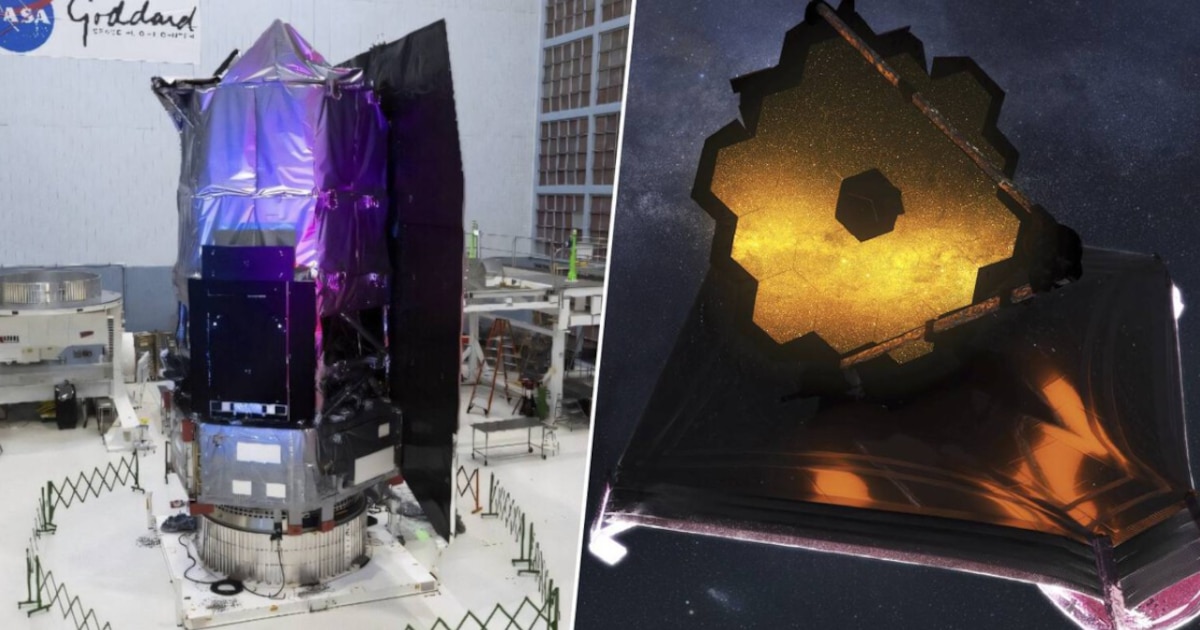
La posibilidad de anticipar el estado de la atmósfera de un mundo lejano todavía parece propia de la ciencia ficción, pero los telescopios espaciales de la NASA empiezan a dar herramientas para convertirla en una meta científica.
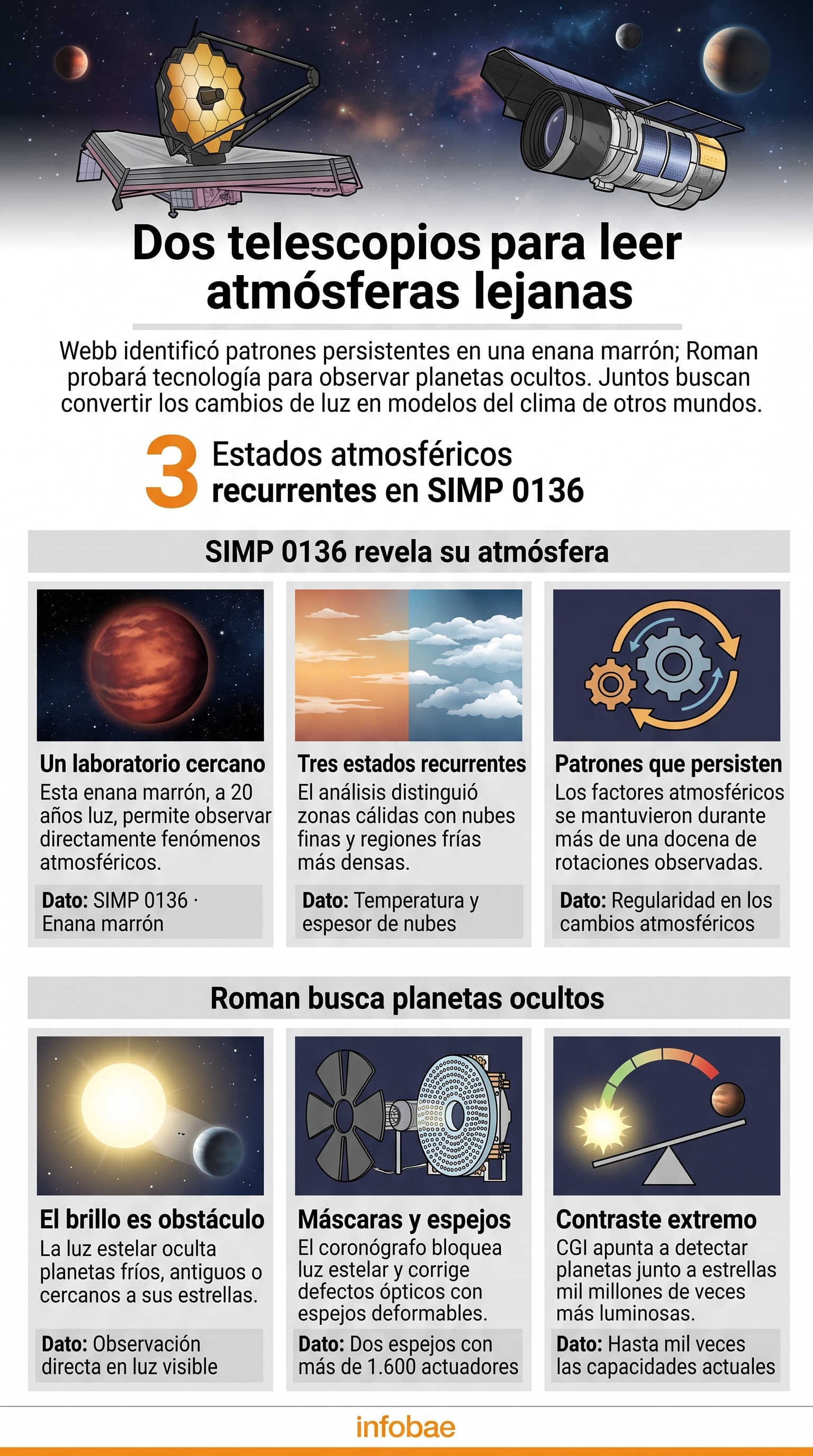
El Telescopio Espacial James Webb ya detectó patrones de temperatura y nubes en una enana marrón situada a 20 años luz de la Tierra. El próximo paso recae en el Nancy Grace Roman, que probará un instrumento diseñado para aislar la luz de planetas que hoy quedan ocultos por el brillo de sus estrellas.
La comparación con la meteorología terrestre ayuda a entender el desafío. Un pronóstico del tiempo no surge de una única imagen del cielo: requiere observaciones repetidas, mediciones de temperatura, humedad, presión, vientos y nubes, además de modelos físicos capaces de integrar esos datos.
En planetas situados fuera del Sistema Solar, los astrónomos aún carecen de la mayor parte de esa información. Sin embargo, ya pueden medir cómo cambia la luz de algunos objetos a medida que rotan, una señal que revela transformaciones en sus atmósferas.
El objetivo no consiste en saber si lloverá mañana sobre un exoplaneta, sino en identificar qué mecanismos ordenan su clima y con qué estabilidad actúan. Si las mismas condiciones físicas producen patrones similares durante varios ciclos, los investigadores pueden construir modelos más fiables. Esa base permitiría, en el futuro, anticipar la evolución de nubes, temperaturas y circulación atmosférica en mundos distantes.
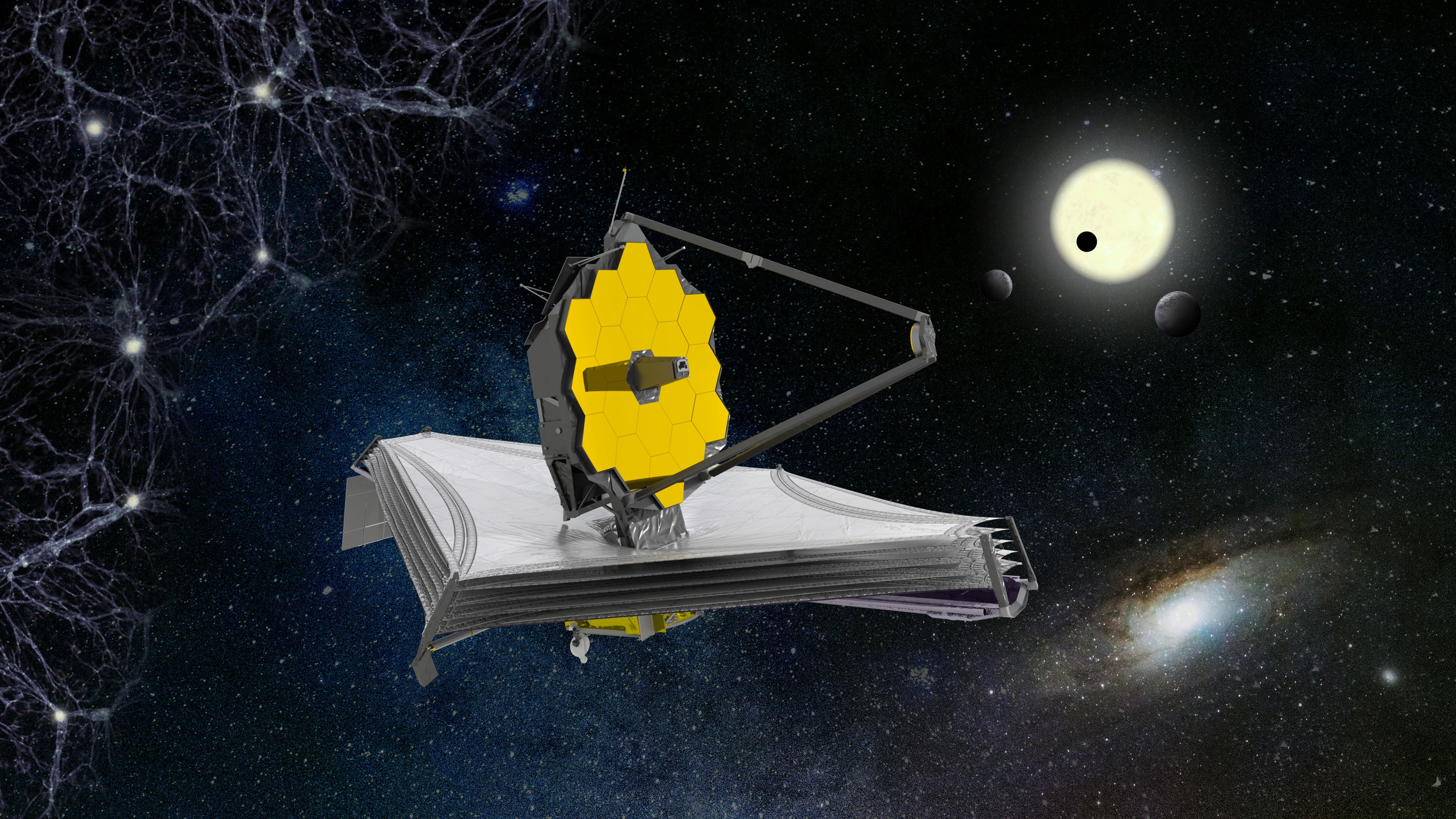
El Webb aporta una ventaja decisiva porque observa el universo en infrarrojo, una franja de luz que permite analizar el calor y la composición de atmósferas lejanas. El Roman, por su parte, buscará demostrar hasta dónde puede llegar la observación directa en luz visible. Sus aportes responden a preguntas diferentes, aunque complementarias: el primero estudia la dinámica de atmósferas accesibles; el segundo intenta ampliar la lista de planetas que los científicos pueden observar de forma directa.
El James Webb detectó tres estados atmosféricos recurrentes en SIMP 0136
El caso que acercó la astronomía al pronóstico meteorológico extraterrestre se ubica en SIMP 0136, un objeto a unos 20 años luz. No se trata de un exoplaneta en sentido estricto, sino de una enana marrón, una clase de cuerpo celeste que ocupa una posición intermedia entre planetas y estrellas. Tiene más masa que un planeta gigante, pero no alcanza las condiciones necesarias para sostener la fusión de hidrógeno que alimenta a las estrellas.
Esa particularidad no reduce su valor científico. Las enanas marrones resultan útiles como laboratorios naturales porque los astrónomos pueden observarlas de manera directa. Además, sus atmósferas comparten rasgos con las de planetas gigantes que orbitan otras estrellas. Esto permite estudiar fenómenos climáticos sin depender de la tenue señal que llega desde un planeta perdido en el resplandor de su estrella anfitriona.
El equipo que analizó los datos del Webb examinó cambios mínimos en el brillo de SIMP 0136 durante sus rotaciones. Cada variación funcionó como una pista sobre una región distinta de la atmósfera. A través de un método llamado análisis de componentes principales, los científicos redujeron un conjunto complejo de mediciones a un número acotado de patrones que explican la mayor parte de los cambios observados.
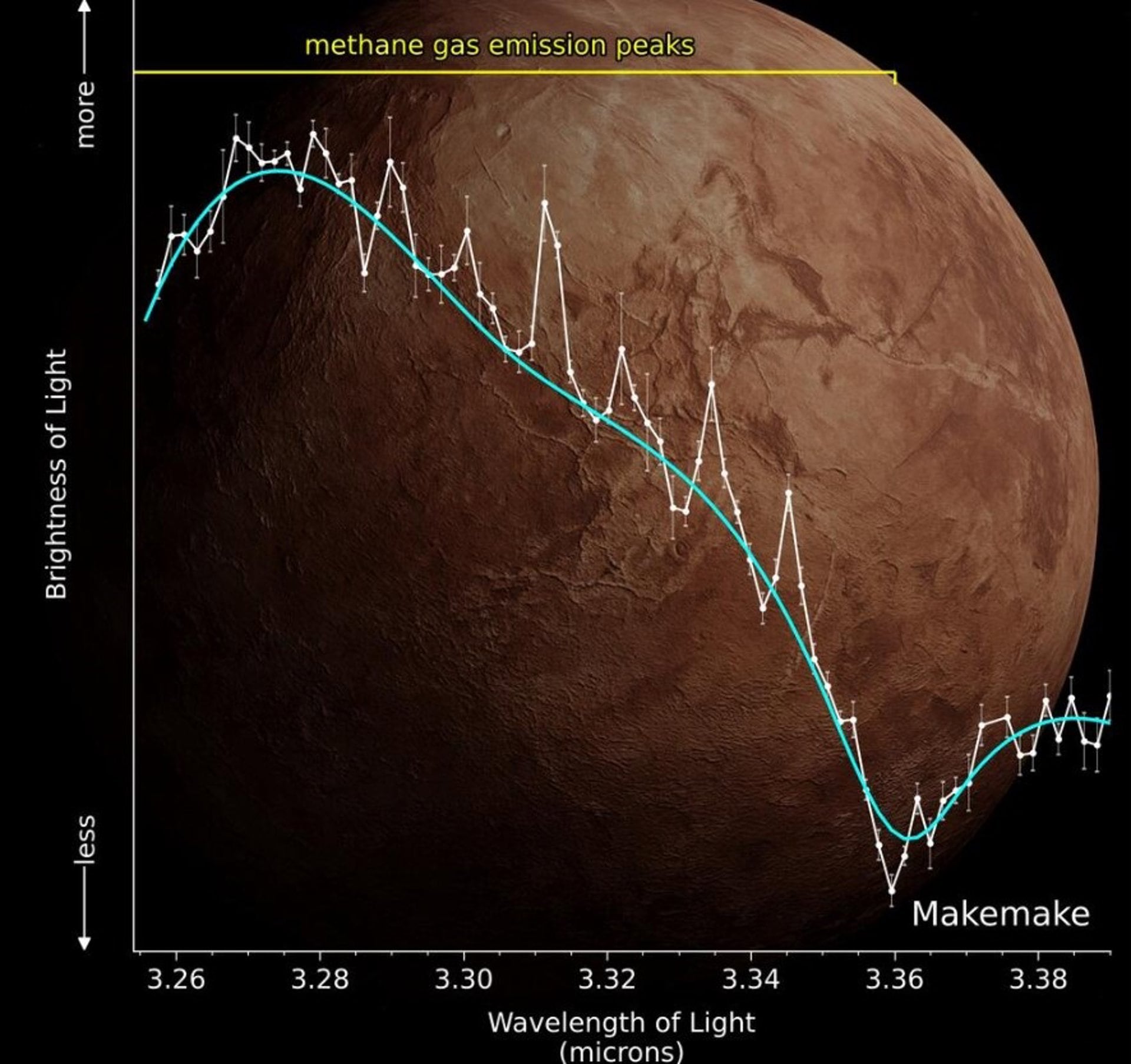
El resultado apuntó a tres estados meteorológicos que reaparecen. Algunas zonas presentaron temperaturas más altas y nubes finas. Otras regiones mostraron temperaturas inferiores y capas de nubes más densas, con una extensión mayor hacia las zonas elevadas de la atmósfera. La luz registrada por el telescopio cambia cuando una de esas áreas entra o sale del campo de visión, igual que una fotografía de la Tierra desde el espacio revelaría el paso de sistemas nubosos sobre continentes y océanos.
La clave estuvo en distinguir entre los detalles cambiantes y las reglas que gobiernan esos cambios. Una atmósfera puede modificar su aspecto de una hora a otra y, aun así, obedecer mecanismos persistentes. En la Tierra, las nubes se desplazan y se desarman, pero la energía solar, la rotación planetaria, los océanos y la dinámica del aire sostienen un marco físico reconocible. En SIMP 0136, los investigadores encontraron indicios de una regularidad comparable.
“También descubrimos que estos factores que influyen en los patrones meteorológicos de SIMP-0136 persisten en el tiempo, incluso a medida que la apariencia detallada de la atmósfera evoluciona a lo largo de más de una docena de rotaciones”, declaró en un comunicado Merle Schrader, autora principal del estudio y candidata a doctora en el Trinity College de Dublín.
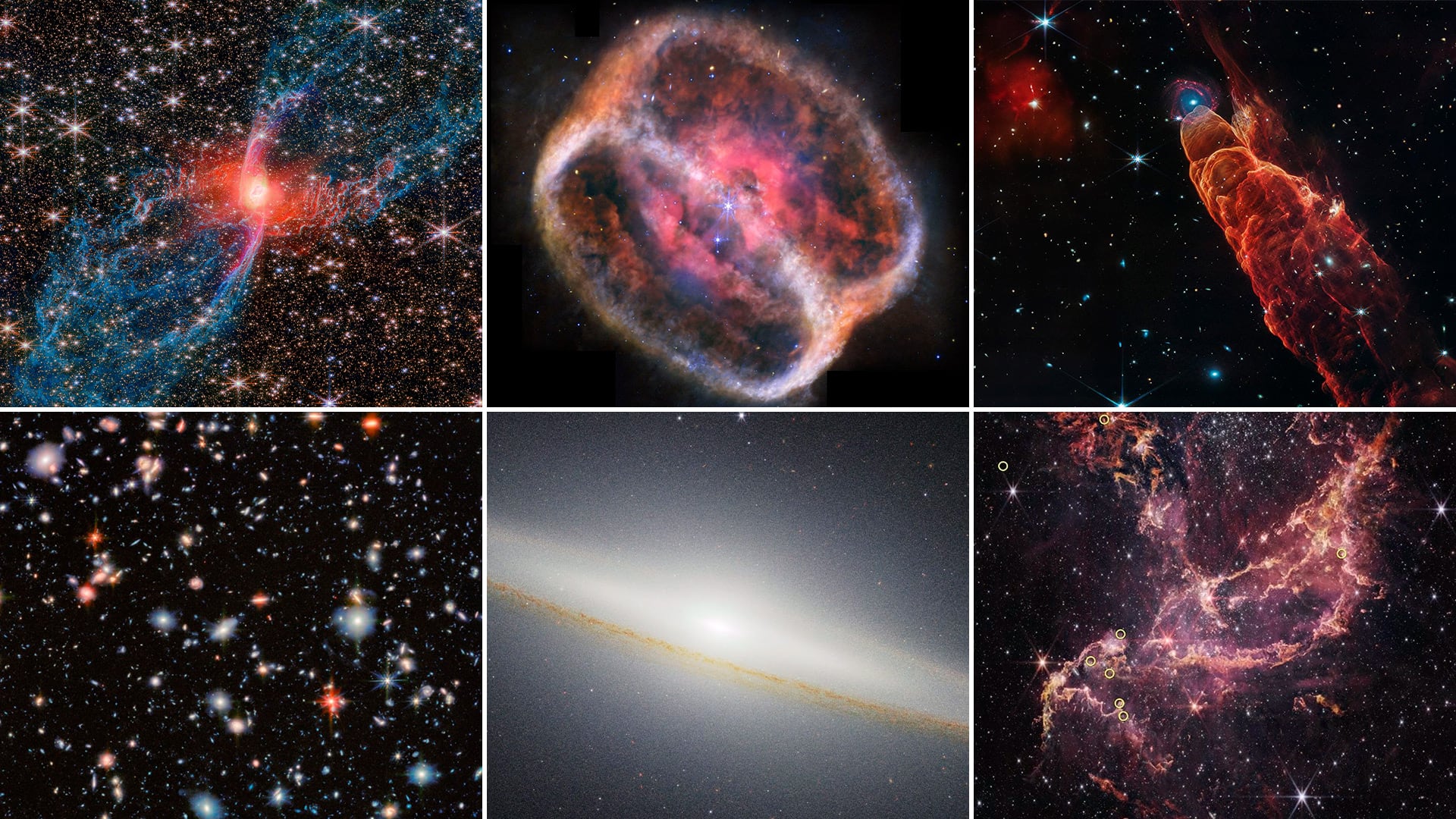
La afirmación marca una diferencia importante entre describir un paisaje atmosférico y comenzar a entender su funcionamiento. Un registro aislado puede mostrar nubes o contrastes de temperatura, pero una secuencia de observaciones permite establecer si esas condiciones responden a procesos repetibles. Los astrónomos todavía no pueden elaborar un parte meteorológico para el día siguiente en este tipo de mundos, aunque el estudio acota qué variables merecen mayor atención.
El método también ofrece una ventaja práctica. Los modelos climáticos detallados demandan grandes recursos informáticos porque deben calcular interacciones entre radiación, química, nubes y flujos de energía. El análisis de los cambios de brillo permite seleccionar primero los elementos que explican la mayor parte de la variabilidad. Con esa información, los modelos pueden concentrarse en los procesos más relevantes.
“Aplicar esta técnica a una amplia gama de enanas marrones y exoplanetas gigantes nos ayudará a comprender mejor los diversos sistemas meteorológicos que dan forma a mundos mucho más allá de nuestro sistema solar”, dijo en el comunicado Johanna Vos, coautora del estudio y profesora asociada del Trinity College de Dublín.
El telescopio Roman buscará separar la luz de un planeta del resplandor de su estrella

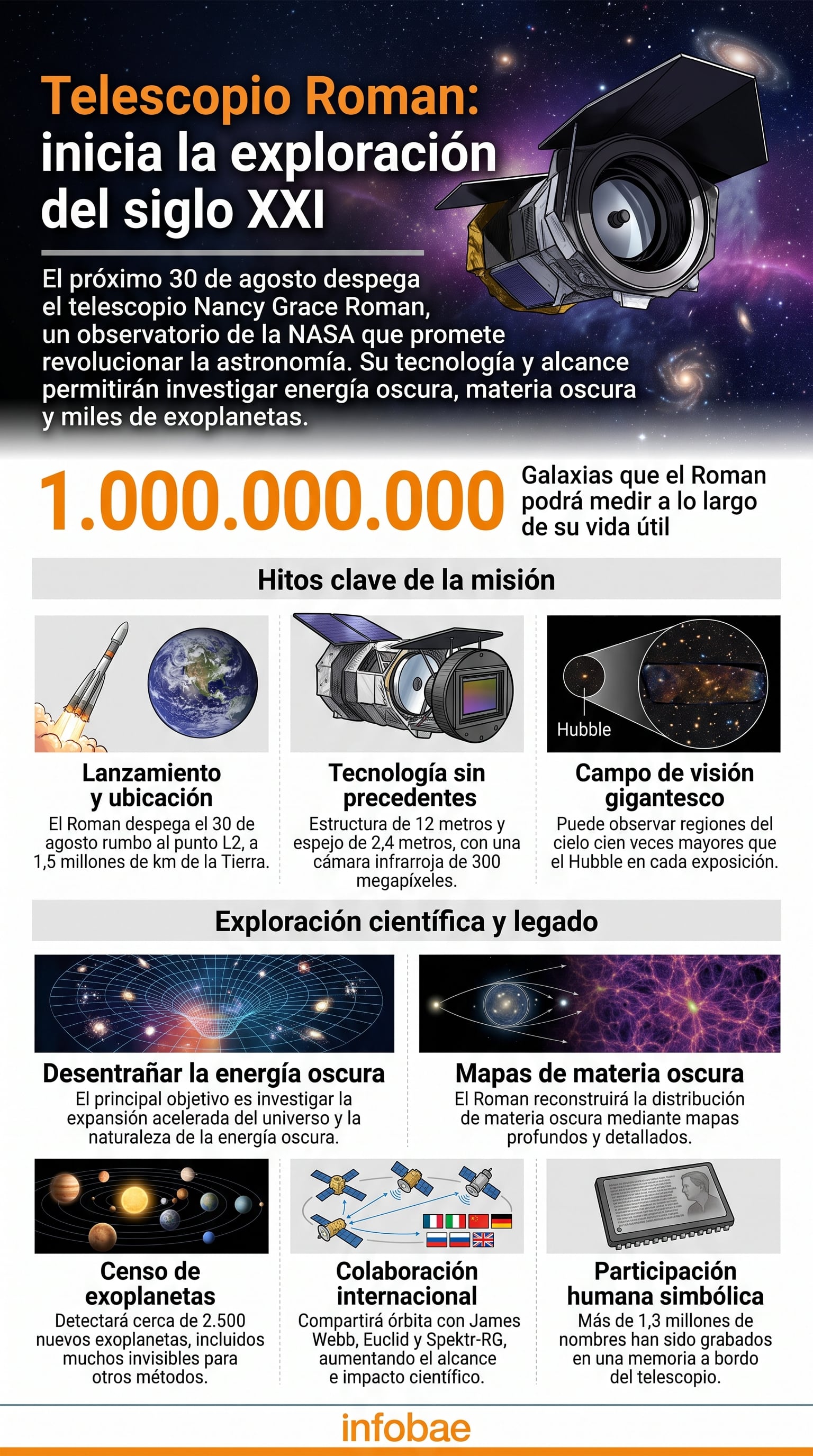
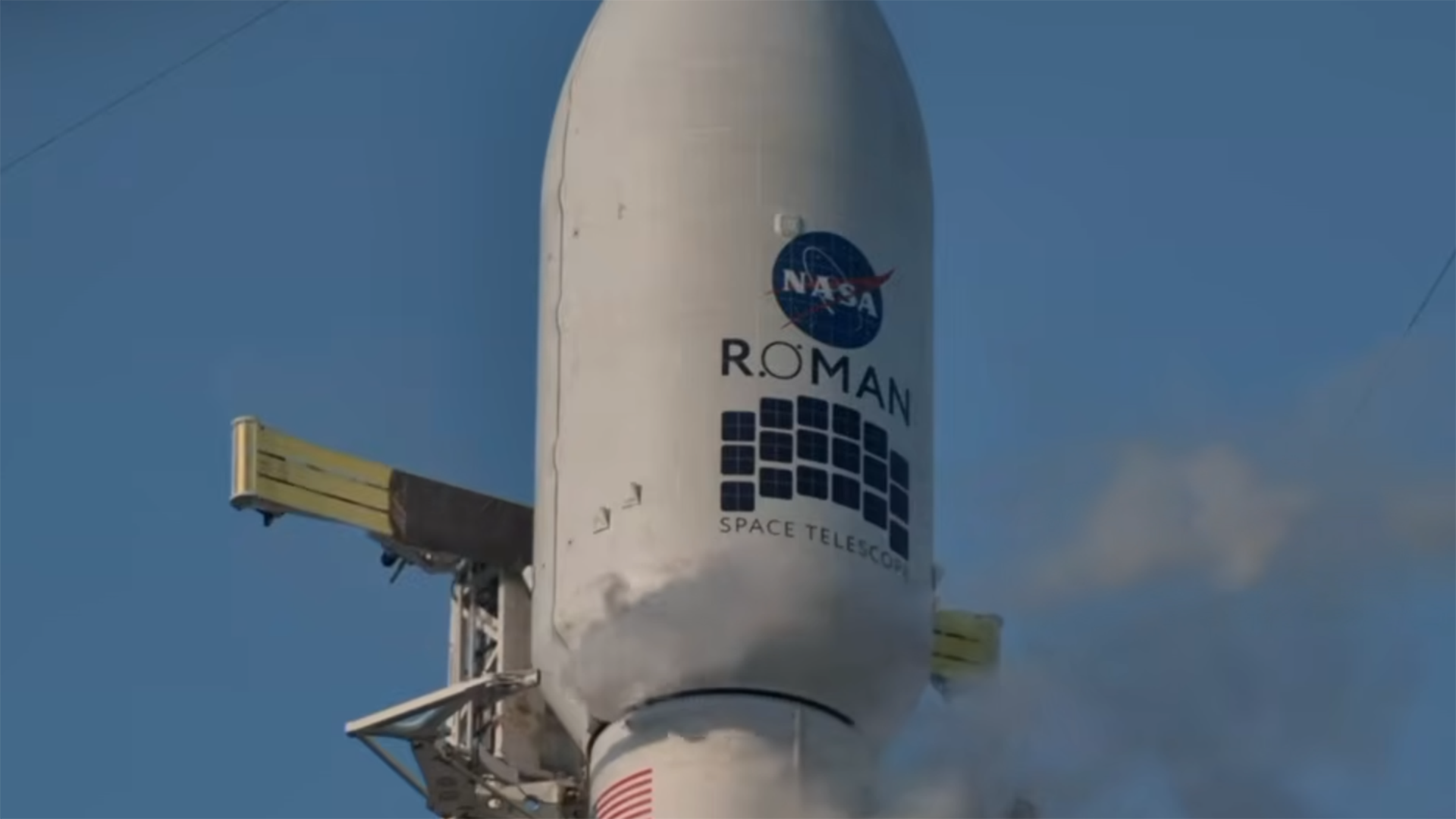
El telescopio espacial Nancy Grace Roman, que la NASA lanzó el pasado 30 de agosto desde el Centro Espacial Kennedy a bordo de un cohete SpaceX Falcon Heavy, incorporará una herramienta orientada a otro obstáculo central: la dificultad de ver un planeta junto a su estrella. El observatorio se dirige al punto de Lagrange L2 entre el Sol y la Tierra, a unos 1,5 millones de kilómetros de nuestro planeta, con llegada prevista para principios de diciembre.
La luz de una estrella puede superar por un margen enorme el débil resplandor que refleja un planeta cercano. Por ese motivo, las imágenes directas de exoplanetas suelen concentrarse en gigantes jóvenes, calientes y muy alejados de sus astros. Esos objetos emiten más radiación y quedan separados de la zona donde el brillo estelar domina la imagen. Los planetas más fríos, más antiguos o con órbitas cercanas resultan mucho más difíciles de detectar.
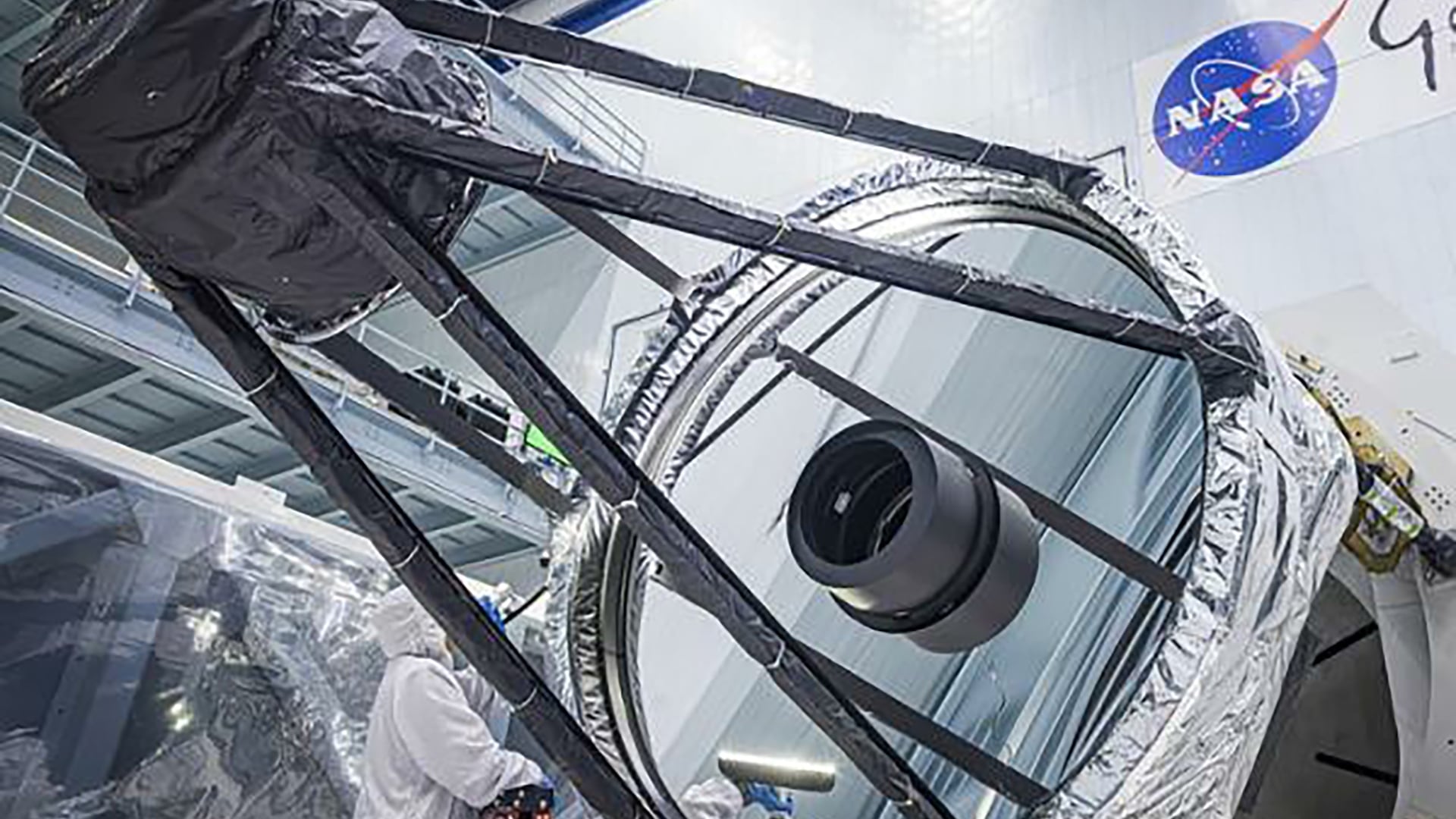
El instrumento coronográfico de Roman, conocido como CGI, pondrá a prueba una solución basada en dos recursos. Por un lado, un coronógrafo usa máscaras que bloquean la luz de una estrella. Por otro, un sistema de control activo del frente de onda corrige imperfecciones minúsculas de la óptica, que de otro modo dispersan luz estelar y contaminan la imagen.
“El instrumento CGI a bordo del Telescopio Espacial Roman es el dispositivo técnicamente más sofisticado para observaciones ópticas que se haya utilizado jamás en el espacio para la investigación científica”, afirma Oliver Krause, jefe del Grupo de Investigación de Astronomía Espacial Infrarroja del Instituto Max Planck de Astronomía, en Heidelberg.
El CGI incluye dos espejos deformables, cada uno con más de 1.600 actuadores. Estos componentes alteran su forma de manera casi imperceptible para compensar defectos ópticos y conservar el alineamiento del sistema. El objetivo es detectar la señal de un planeta al lado de una estrella hasta mil millones de veces más luminosa, una diferencia comparable con el contraste entre Júpiter y el Sol. Si alcanza ese rendimiento, Roman superaría hasta mil veces las capacidades actuales de observación directa.
La precisión necesaria resulta extrema. Los Mecanismos de Alineación de Precisión, desarrollados con participación del Instituto Max Planck de Astronomía, no pueden inclinarse más de 40 milisegundos de arco durante ocho horas de funcionamiento. Un grado equivale a 3,6 millones de milisegundos de arco. Según la comparación planteada por el equipo, esa estabilidad equivale al tamaño aparente de una persona de pie en Los Ángeles vista desde Heidelberg.
La misión principal de Roman tendrá una duración prevista de cinco años, con posibilidad de otros cinco adicionales. La NASA estima que el ahorro de combustible asociado con la precisión del lanzamiento y la corrección inicial de trayectoria puede extender su vida científica potencial hasta al menos 22 años. El telescopio estudiará la expansión cósmica, la materia oscura y la energía oscura, además de buscar numerosos exoplanetas.
En ese programa, el CGI tendrá una función tecnológica y científica. Un espectrógrafo integrado permitirá analizar la composición de las atmósferas de los planetas que logre observar. También podrá obtener imágenes de discos circunestelares, las estructuras de polvo y material que rodean estrellas próximas. Esos discos contienen información sobre los entornos donde nacen y evolucionan los sistemas planetarios.
El instrumento ya superó verificaciones iniciales de software, cámaras, mecanismos y controles térmicos. Ahora atraviesa meses de calibración y pruebas antes de iniciar sus operaciones científicas. La NASA prevé la difusión de las primeras imágenes científicas de Roman a comienzos de 2027.
“Sin embargo, gracias a la distribución global del Community Participation Program (Programa de Participación Comunitaria), con miembros en EE. UU., Japón y Europa, nuestros analistas de datos pueden realizar sus tareas en horario laboral”, afirma Wolfgang Brandner, responsable de observaciones orientadas a la detección de gigantes gaseosos en luz visible.
Si el CGI cumple sus objetivos, su tecnología podría servir de base para futuros observatorios, entre ellos el propuesto Observatorio de Mundos Habitables. Ese tipo de misión buscaría imágenes directas de planetas comparables con la Tierra alrededor de otras estrellas. Antes de llegar a esa etapa, el Webb y Roman pueden aportar una pieza esencial: datos para comprender qué atmósferas existen, cómo cambian y bajo qué reglas físicas mantienen sus patrones.
Telescopio Espacial James Webb,Telescopio Espacial Nancy Grace Roman,SIMP 0136,NASA,enana marrón
INTERNACIONAL
El secretario de Defensa británico dijo que el Reino Unido está preparado para defender militarmente las Malvinas

El secretario de Defensa del Reino Unido, Wes Streeting, afirmó que su país está preparado para defender militarmente las Islas Malvinas en caso de un ataque y sostuvo que la Argentina no cuenta con la capacidad necesaria para tomar el archipiélago.
En una entrevista con el diario británico The Sun, Streeting fue consultado específicamente sobre la posibilidad de que el Reino Unido tuviera que enviar tropas para defender las Malvinas ante un eventual ataque argentino. El funcionario respondió de manera afirmativa.
“Esto no es 1982. Los argentinos no tienen la capacidad de tomar las Islas Malvinas. Nosotros tenemos la capacidad de defender las Islas Malvinas”, dijo.
Consultado directamente sobre si el Reino Unido podría proteger militarmente las islas en caso de que la Argentina enviara buques de guerra, Streeting respondió: “Sí”.
El funcionario también cuestionó al presidente Javier Milei por sus reclamos de soberanía sobre el archipiélago y acusó al mandatario de repetir una “misma propaganda falsa”.
“Lo que hemos visto del presidente de la Argentina es lo mismo que escuchamos de los argentinos año tras año: quejarse por las Malvinas, decir que son suyas”, afirmó.
Streeting sostuvo además que la disputa quedó resuelta tras la guerra de 1982 y defendió la posición británica sobre los habitantes de las islas.
“Esta cuestión se resolvió en 1982 y sigue siendo la voluntad de los habitantes de las Malvinas, la abrumadora mayoría de los cuales, como saben, elige ser británica”, afirmó. Y agregó: “Nosotros apoyamos a las Malvinas”.
La Argentina, en cambio, sostiene que las Islas Malvinas, Georgias del Sur y Sandwich del Sur y los espacios marítimos circundantes forman parte de su territorio y reclama al Reino Unido la reanudación de las negociaciones para resolver la disputa de soberanía.
Buenos Aires también considera que la guerra de 1982 no modificó la naturaleza de la disputa y mantiene su reclamo por la soberanía de las islas. En las últimas semanas, además, ambos países volvieron a cruzarse por las actividades vinculadas con la explotación de recursos naturales en las aguas circundantes.
malvinas

La Ciudad de Buenos Aires eximirá del pago del ABL a hoteles, restaurantes y librerías en el primer semestre de 2027

How a six-pack of beer and the Magna Carta could finally fix a problem plaguing Americans for decades

Qué hacía Wanda Nara cuando Mauro Icardi y la China Suárez se encontraron en París: las fotos

Gabriel Rolón: “Podemos alcanzar la faltacidad, la mezcla de falta y felicidad, que es una felicidad en falta”

Bullrich volvió a diferenciarse de Milei y se solidarizó con los periodistas que fueron perseguidos por la justicia de Insfrán

El Presupuesto 2027 prevé un gasto de casi $6 millones mensuales por empleado del Congreso

Ex-Democrat shares abortion pill experience that left her ‘hemorrhaging in the bath’

La pobreza subió al 32,3% en el primer semestre del año y afectó a 15,5 millones de personas

Fue un polémico participante de Gran Hermano, tuvo varios escándalos con una ex y se separó de su nueva novia a 2 años en medio de rumores de infidelidad

Luck Ra apuntó contra Tiago PZK por su romance con La Joaqui: “Fuimos muy amigos y obviamente duele”

 ECONOMIA2 días ago
La pobreza subió al 32,3% en el primer semestre del año y afectó a 15,5 millones de personas
- POLITICA3 días ago
Gira por New York: Milei se reunirá con Netanyahu y disertará en el Club Económico antes de regresar a Buenos Aires
- CHIMENTOS2 días ago
El gesto de Moria Casán con el embajador de Noruega tras viralizarse el video con sus icónicas frases