INTERNACIONAL
How an Uzbek truck driver’s fatal crash exposed troubling fraud trend in Middle America: ‘Chameleon carriers’

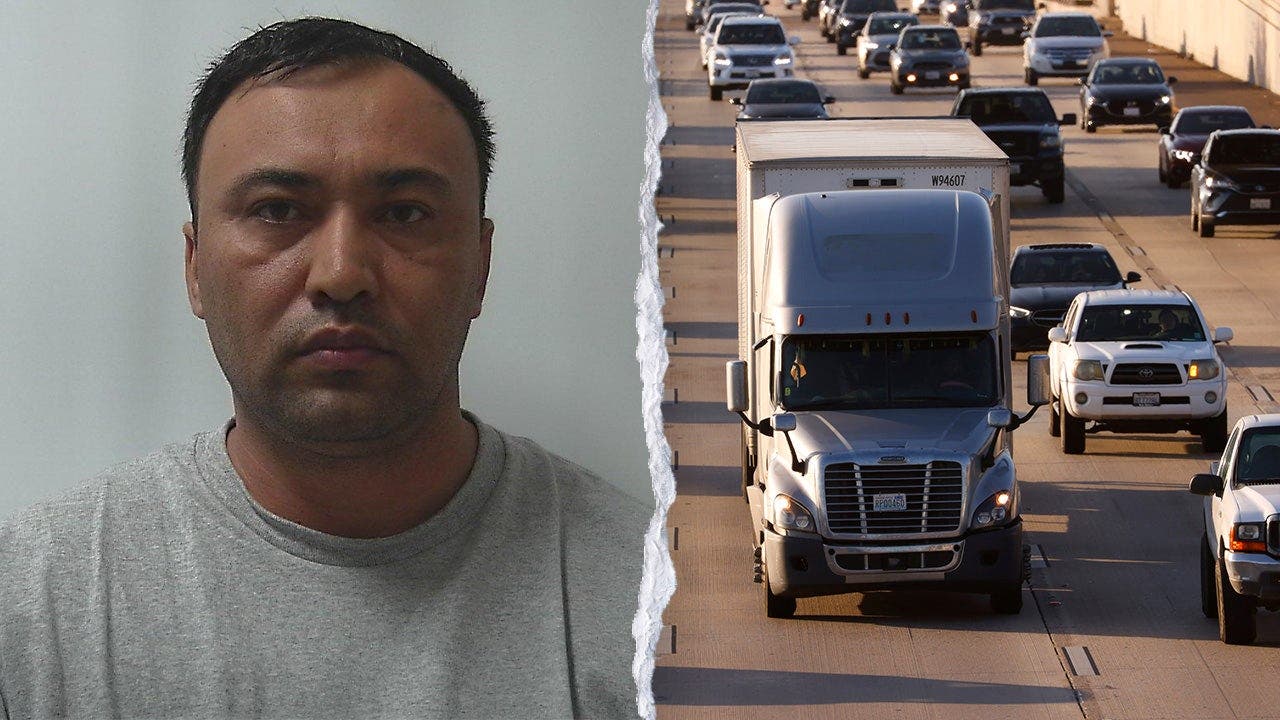
CINCINNATI, OH – A young man killed by an Uzbek truck driver earlier this year in Ohio, along with several instances of illegal immigrant truck drivers involved in fatal crashes, has sparked a larger conversation in southwest Ohio about fraud, crime, immigration and how gaps in trucking industry oversight are putting Americans at risk.
Tobias «Toby» Forsythe, a 21-year-old goalkeeper from Ohio on the University of Massachusetts Lowell men’s soccer team, was killed July 5 when authorities say a semi-truck driven by 42-year-old Uzbek national Bekhzod Asrarov, who entered the country under the Biden administration’s diversity visa lottery program, rear-ended Forsythe’s Honda Accord on Interstate 71 in Madison County, Ohio.
It was later determined, according to court documents, that Asrarov could not speak or understand English well enough to communicate with responding state troopers without the use of Google Translate, despite holding an Ohio commercial driver’s license, and that he allegedly removed a dashboard camera from his truck after the fatal crash in an effort to conceal or destroy evidence.
«We cannot let truckers like Asrarov, who can’t read our road signs or speak to law enforcement, drive 80,000-pound rigs on America’s highways,» Transportation Secretary Sean posted on X after the crash.
IMMIGRANT TRUCK DRIVER ADMITTED TO US UNDER BIDEN ALLEGEDLY KILLS UMASS SOCCER STAR, SPOKE NO ENGLISH
In southwest Ohio, a researcher known as Nodawolf has been sounding the alarm to his growing follower count about a vast network of trucking companies, many of them owned or operated by Uzbek nationals, that have popped up in communities like Loveland, Middletown, and Maineville, where Asrarov resides, in recent years and could be contributing to the unsafe practices that took the life of Forsythe, and many others across the country.
Nodawolf, who Digital granted anonymity due to the death threats he’s received from his online reporting, said his research has focused on what he describes as an interconnected network of Uzbek-linked trucking companies in southwest Ohio, including companies that have donated money toward construction of a local Islamic center, according to the center’s own website.
«All of them have English violations and have manipulated ELDs,» Nodawolf said, referring to electronic logging devices that track a trucker’s driving hours and are intended to enforce federal limits on how long drivers can stay behind the wheel.
The Islamic Center, located in Maineville, told Digital that a «charitable contribution or participation in a community fundraising activity, by itself, should not be interpreted as evidence of an ownership, employment, contractual, commercial, or other business relationship with the Islamic Center or its leadership.»
A Digital review identified hundreds of trucking companies and other trucking entities registered in Maineville and surrounding southwest Ohio communities, including dozens that were registered in recent years. A separate review of companies identified as connected to the local Uzbek community found serious FMCSA safety violations, including drivers cited for failing English-proficiency requirements and other federal trucking violations.
TRUMP ADMIN TRUCKING CRACKDOWN LANDS 51 IMMIGRATION DETENTIONS, 36 ENGLISH LANGUAGE PROFICIENCY VIOLATIONS
«This really concerns me, you know, as a father,» Nodawolf told Digital. «I mean, it’s clearly obvious that they either don’t understand our laws, they don’t care about our laws, or they know our laws and they’re taking advantage of it.»
Nodawolf has reported on Uzbek trucking networks communicating on the social media platform Telegram. One of those Telegram channels, named «UzbegimAmerica,» has routinely mentioned the Uzbek community in Maineville. Court documents show the owner of that channel, Farkhod Faiziev, is a suspected illegal immigrant from Uzbekistan.
The Trump administration has made significant progress on the issue of removing foreign truck drivers who pose a danger being removed from the road – including a recent multi-agency operation in Arizona’s Yuma Sector, which led to the arrest of 95 illegal alien truck drivers earlier this month – striking at the heart of human and drug smuggling operations at the U.S. southern border.
The Departments of Homeland Security, Transportation and Justice recently announced a coordinated crackdown on trucking and CDL fraud targeting fraudulent licensing, unauthorized employment, identity-document fraud, shell companies and other criminal activity. The effort includes inspections at more than 200 driving schools across 23 states, investigations based on more than 1,000 leads, enforcement operations targeting illegal immigrants with commercial licenses and a new multi-state DOJ task force focused on trucking-related fraud and roadway safety.
A trucking-industry veteran with decades of experience who spoke to Digital under the condition of anonymity for his safety described a developing fraud scheme popular with immigrant communities known as «chameleon carriers», a network of trucking companies that appear separate on paper but, he said, share the same drivers, trucks and operations. The arrangement starts when operators establish one company that is «quote-unquote legitimate,» he said, then create additional carriers and authorities while using the same underlying assets across them.
ILLEGAL TRUCKER CASES FUEL GOP PUSH TO CRACK DOWN ON CDL MILLS AS DEMS LARGELY SILENT
The point, the industry expert said, is to «spread out their safety liability across multiple companies.» Rather than allowing inspections and violations to pile up under one carrier, he said, the operation can distribute them among multiple motor-carrier authorities.
«If they have 10 inspections and 10 violations across 10 different companies, that doesn’t hurt the safety rating as much,» he said. «But if it was one company that had 10 inspections and 10 violations, that one company is going to get hammered.»
The separate companies can also serve as a contingency plan, he said. If one carrier is shut down, loses insurance or becomes too damaged by safety problems, «they’re able to immediately move all of the equipment and drivers and everything under one of the different companies,» the industry veteran said. «Their operation never stops. There’s no way to shut them down.»
He further alleged the structure can facilitate cargo theft, with a company disappearing after obtaining a high-value shipment while the broader network continues operating through its remaining entities. «They lost one of their shell companies, basically, but they just got $5 million in iPads,» he said.
The industry expert said the model can be particularly dangerous, in his view, because it allows companies to keep operating despite safety problems while allegedly using drivers who may not be legally authorized to work in the United States. He said operators can make that harder to detect by classifying drivers as independent contractors rather than employees, potentially avoiding the ordinary employee I-9 verification process.
«If you’re using a bunch of people from a third-world country that just showed up in the United States as drivers, whether they’re here legally or not, how well do you think they’re going to maintain their equipment and be able to follow the laws?» he said.
Seven of the trucking schools targeted by the Department of Transportation last month are located in Ohio, DOT told last month.
A Notice of Proposed Removal was recently issued by the Federal Motor Carrier Safety Administration for Turan CDL School, a Middletown-based company that has advertised CDL training to Uzbek speakers, including advertisements suggesting students could obtain a CDL without first learning English, as well as Google reviews from customers claiming they earned their licenses in as little as one week.
ILLEGAL ALIEN’S ‘INEXCUSABLE’ CRIME SPARKS INTERSTATE CLASH BETWEEN GOP SEN, DEM GOV: ‘YOU SHOULD BE ASHAMED’
«There’s ‘what do the rules say’ and then ‘what’s happening on the ground,» Andrew Poliakoff, vice president of the Commercial Vehicle Training Association, told Fox 28 Columbus shortly after the crash that killed Forsythe. «We’re seeing now is that there are a lot of people committing fraud, and engaging in a variety of bad actions issuing commercial driver’s licenses.»
Victor Louis, whose Cincinnati based company Load Secure verifies the identities of drivers entering its network, told Digital that he has seen local advertisements promising prospective truckers a CDL in as little as a week immediately raise red flags.
«Trucking is such an inherently dangerous activity. Essentially, you’re driving a 40-ton missile down the road,» Louis said. «To think that someone is going to be certified to do that within a week, that may or may not speak English, like that doesn’t make any sense.»
Louis said his company is also seeing a significant number of non-domiciled drivers, foreign drivers who hold commercial licenses issued by a U.S. state despite not having their permanent residence in that state. He said roughly 15% to 20% of drivers entering Load Secure’s network fall into that category and estimated the figure could be around 20% among long-haul truckers nationwide.
«Whether they’re here legally or not, I don’t know, but they are essentially foreign nationals,» Louis said. He argued that long-haul trucking can be particularly attractive to migrants because drivers can spend weeks at a time living on the road rather than maintaining a permanent home near their workplace.
Louis said cargo theft and the security of the broader supply chain are among his biggest concerns.
«What we see with that market of non-domiciled drivers is a high propensity of cargo theft, an extremely high propensity,» he said. «It’s wreaking havoc on our supply chain. Number one, it’s extremely dangerous and number two, it is very unsecure. We don’t know if things are being tampered with. This exposes our supply chains.»
The Ohio Bureau of Motor Vehicles told Digital that it is reviewing the state’s nondomiciled commercial driver’s license holders in coordination with the Federal Motor Carrier Safety Administration. Of the roughly 5,000 nondomiciled credentials originally issued, about 3,500 remain active, meaning approximately 1,500 are no longer active as the review continues.
On Sept. 16, reported that ICE arrested two Uzbek illegal alien truck drivers in New Jersey as part of nationwide crackdown on fraudulent CDLs.
«We are starting to go into those thousand leads of fraud, waste and abuse into our trucking industry,» Mullin said in a press conference last month. «We’re going to prioritize going after employees that are suspected of accepting payments to help illegals bypass driver’s license and CDL requirements.»
In Brown County, Ohio, on Sept. 2, an Indian national with a CDL out of California crashed his semi-truck head-on into the car of 50-year-old Brenda Watson, who died at the scene. The driver, Manjit Singh , was later determined to be an illegal immigrant and ICE announced in a press release that a detainer was placed along with a charge of aggravated vehicular homicide.
«One state’s regulatory failure becomes every state’s highway threat,» Ohio attorney Mehek Cooke told News Digital. «Republican governors cannot assume their states were insulated from Biden’s border crisis simply because they opposed his policies.»
Digital reached out to Ohio Governor Mike DeWine’s office for comment.
Last month, ICE launched a tip-line for reporting fraudulent CDL licenses.
«Too many American lives have been lost or permanently changed because illegal aliens who have no business being on our roads have been granted CDLs,» Mullin said in a press release. «ICE and our federal partners, including the Department of Transportation, will be cracking down on CDL fraud so that not one more American life is lost to a reckless illegal alien behind the wheel of a semi-truck.»
politics, migrant crime, illegal immigrants, ohio, trucks, fox news investigates, investigations, enforcement









INTERNACIONAL
Iran could move shadow war in a dangerous direction, experts warn on back of two possible terror attacks
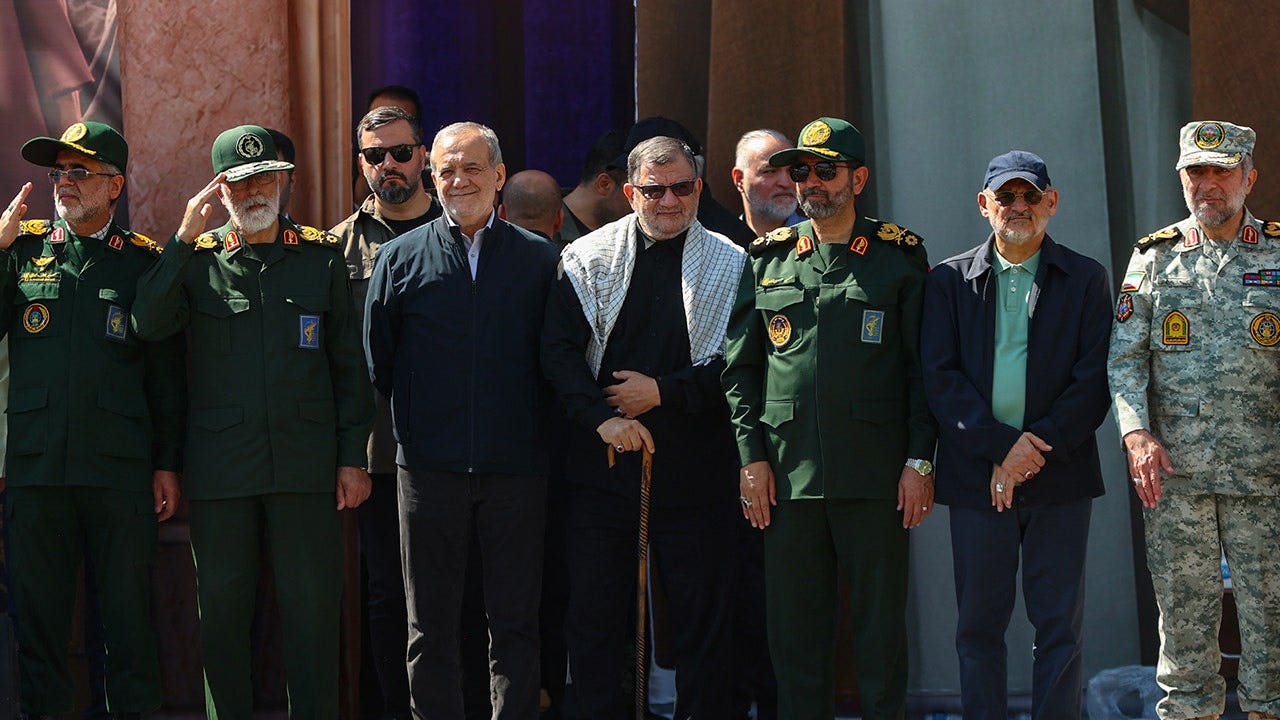
The FlyDubai stabbing is contributing to concerns that Iran could increase covert and deniable attacks as the conflict with the United States and Israel drags on.
British Prime Minister Andy Burnham, meanwhile, said there are «strong indications» Iran played a role in a suspected terror plot near RAF Fairford, the British air base used by U.S. forces during operations against Iran. Counterterrorism police have since arrested a dual UK-Iranian national on suspicion of preparing terrorist acts.
The two suspected attacks are raising questions over whether Iran’s war strategy is shifting, but experts caution not to treat the incidents as equally indicative of Iranian involvement — or evidence yet that Tehran has changed its tactics.
FLYDUBAI PILOT SHOWED WORLD ‘THE HIGHEST FORM OF COURAGE,’ INDIA’S PM SAYS
President Donald Trump said early information he has received points to a possible Iranian connection to the attack aboard an Israel-bound FlyDubai flight, where a co-pilot allegedly stabbed the captain and attempted to crash the aircraft with more than 180 people aboard.
The United Arab Emirates and Israeli Prime Minister Benjamin Netanyahu have described the FlyDubai incident as terrorism, but UAE authorities have not publicly attributed the attack to Iran. Neither investigation has publicly established that the Iranian government directed the attacks, and Iran has denied involvement in the Fairford case.
Daniel Byman, director of the Warfare, Irregular Threats and Terrorism Program at the Center for Strategic and International Studies, said the Fairford case fits more closely with Iran’s recent use of hired operatives and other intermediaries.
«The attack on the airbase in the United Kingdom does fit more recent patterns,» Byman told Digital, while stressing how much remains unknown about the investigation.
RUBIO CONFIRMS ‘FOREIGN ACTOR’ INVOLVED IN UK TERROR PLOT
The FlyDubai attack would be a more significant departure.
«That is quite different, and that is something that Iran in the past, at least we haven’t seen Iran do,» Byman said. «It is plausible to me that Iran is involved, but that seems like much more of a stretch based on Iran’s traditional way of operating.»
But the uncertainty surrounding the attacks also illustrates part of the appeal of the broader strategy Iran has spent decades developing: using proxies, covert operatives, criminal networks and other intermediaries to threaten adversaries far beyond its borders while making Tehran’s own role more difficult to establish.
Matthew Levitt, a former Treasury and FBI counterterrorism official who now directs the Reinhard Program on Counterterrorism and Intelligence at the Washington Institute, said Iran has increasingly sought to put more distance between itself and the people carrying out overseas operations.
«Typically Iran does not admit that it’s involved in these types of attacks because it wants reasonable deniability,» Levitt said.
«There are several advantages for Iran to using terrorism,» Byman said. «One is that there is often a degree of deniability.»
«Terrorism gives Iran a lot more reach,» he added. Levitt, however, put the distinction with conventional warfare more bluntly.
«If Iran shoots a drone or a missile at you, you know where it came from and you know where to shoot back,» he said. «But if Iran uses proxies, and recruits people and does things in a covert manner, it might not be so easy to point a finger back at Iran or to know exactly who did it.»
That capability matters in part because Iran does not have the conventional military strength to match the United States and its allies directly, Levitt said.
«They just don’t have the capability to fight soldier to soldier, airplane to airplane in an all-out kinetic war, but they’re extremely effective at asymmetric warfare, at covert terrorist activity, if that’s what this proves to be,» he said.
UK AIRBASE TERROR SUSPECTS BEING RELEASED ON BAIL AS IRAN DENIES CONNECTION
Recent U.S. prosecutions have shown how far that playbook can extend. Federal cases have accused Iranian operatives of seeking to recruit hitmen to kill U.S. officials and using Eastern European organized crime figures in a murder-for-hire plot targeting Iranian-American journalist and dissident Masih Alinejad in New York.
Those operations relied on the same basic advantage: Tehran could pursue targets overseas without launching a conventional attack that immediately identified Iran as the aggressor.
The question now is whether the current conflict gives Iran reason to push that strategy further.
Levitt said Tehran could pursue overseas plots in an effort to pressure Western governments to end the conflict by demonstrating that Iran can impose costs far beyond the conventional battlefield.
And if Fairford and FlyDubai are ultimately tied to Tehran, he said, they would stand out because they involve harder targets and potentially more ambitious tactics than the assassinations, kidnappings, shootings and smaller-scale bombings Iran has more commonly pursued overseas.
«Perhaps this is the new normal, and Iran wants to demonstrate that it can exact a higher cost,» Levitt said.
Byman, however, pointed to several reasons Tehran could exercise restraint.
Iran already has other ways to pressure Washington and its allies, while a terrorist attack against Americans could backfire by uniting U.S. public opinion behind further escalation against Tehran, he said. U.S. and Israeli strikes against senior Iranian intelligence and security officials may also have disrupted some of the networks Tehran would need for overseas operations.
«If Iran wants to go further, then terrorism does become more of an option,» Byman said.
iran, terrorism, counter terrorism, national security, politics, geopolitics, foreign affairs, war with iran
INTERNACIONAL
Cómo una exestudiante de la Universidad de Cornell en EE.UU. pasó de la vergüenza a la acción: “Me violaron”

En octubre de 2024, aproximadamente una semana después de una fiesta de la fraternidad Chi Phi en la Universidad de Cornell, la estudiante de segundo año que llegaría a ser conocida como Jane Doe leía un foro en línea sobre la vida griega cuando se encontró con una publicación que la dejó pasmada.
“¿Los hermanos de Chi Phi son Crips o Bloods? Porque escuché que han estado haciendo mucho ‘gang banging’”, había escrito alguien. (“Gang bang” es un término que se usa para describir tanto las actividades violentas de una pandilla como una violación en grupo).
“Se drogan y vi*laron en grupo a una estudiante de segundo año”, dijo otro usuario. “Denúncienlos”.
Desde la noche que comenzó el 19 de octubre de 2024, Jane Doe había contado los eventos de esa noche a sus compañeras de dormitorio sin identificarse como víctima de una violación. Había intercambiado mensajes de texto amistosos con hombres a los que más tarde acusaría de agresión. Había escuchado comentarios poco halagadores sobre sí misma por parte de los chismes de estudiantes universitarios.
Luego leyó esas palabras.
“Esa fue la primera vez que escuché que el relato cambiaba, que yo no era una ramera y que fui agredida”, dijo Jane Doe a los investigadores, según documentos de una revisión de la universidad de las acusaciones obtenidos por The New York Times.
Esos registros, sobre los cuales no se había informado anteriormente, ayudan a iluminar un caso que ha horrorizado al país y ha sumido en crisis a una de sus instituciones de élite. Arrojan luz sobre el periodo crucial de tres semanas entre la fiesta de fraternidad y la decisión de Jane Doe de llevar su historia a la policía del campus, con lo que acusó a diversos miembros de la fraternidad de agresión sexual y alegó que fue coaccionada para tomar ketamina.
Los hechos concretos de lo que pasó después de que presentara sus acusaciones ya son bien conocidos: el fiscal de distrito del condado de Tompkins, Nueva York, Matthew Van Houten, revisó su denuncia y se negó a presentar cargos penales al decir que no había pruebas suficientes para hacerlo. Jane Doe presentó una queja que dio lugar a al menos una decena de audiencias por parte del comité del Título IX de la escuela, cuya función es garantizar el cumplimiento de las leyes federales de derechos civiles.
El 16 de septiembre, Jane Doe también presentó una demanda contra siete hombres, y los acusó de agresión sexual. Los abogados de al menos tres de los hombres acusados han negado en gran medida cualquier delito penal; otros aún no han hecho declaraciones públicas.
Lo que no se sabía de manera pública, hasta ahora, eran los expedientes detallados que se recopilaron durante los procedimientos privados del Título IX: cientos de páginas de correos electrónicos, mensajes de texto, fotografías y entrevistas con Jane Doe, sus amigos y aquellos a quienes acusó.
Tomados en conjunto, los documentos originales esbozan el paso de Jane Doe de ser una estudiante de segundo año desconocida a convertirse en la encarnación de otro intenso y doloroso diálogo sobre la agresión sexual y el consentimiento en Estados Unidos. (Aunque Jane Doe está identificada en los documentos, el Times omitirá su nombre).
Algunas mujeres a su alrededor, muestran los documentos, se apresuraron a decir que veían los eventos de la noche del 19 de octubre como una agresión sexual. Pero Jane Doe, revelan las entrevistas y los mensajes de texto, al principio pareció lidiar con la vergüenza, la humillación y las preocupaciones sobre su reputación antes de comenzar a considerarse una víctima de agresión.
“Realmente no recuerdo que ella mencionara en algún momento que hubiera dicho que sí a cualquier cosa de lo que ocurrió”, dijo una de sus compañeras de cuarto sobre las primeras horas después de que Jane Doe regresara a casa la mañana del 20 de octubre, según los archivos del Título IX, que se recopilaron como parte del proceso formal de la escuela para investigar acusaciones de acoso y agresión sexual.
Página tras página, los documentos resultan en una lectura difícil, que vacila entre el alegre lenguaje abreviado de los estudiantes universitarios –comentarios sobre el gimnasio, Snapchat, la vida en las fraternidades y hermandades– y los duros detalles de una posible agresión en grupo que la víctima parecía estar procesando en tiempo real.
Desde el inicio, el caso ha parecido funcionar como un referéndum sobre muchas preguntas desconcertantes acerca de lo que significa ser una mujer joven en un campus universitario, incluso en un campus tan prestigioso como el de Cornell: ¿A quién se le cree y a quién se le protege? ¿Qué tan efectivo es el Título IX? ¿Ha cambiado algo realmente?
Para Jane Doe, sugieren los registros, la primera tarea fue darle sentido a lo que le había pasado.
‘De forma traumática’
A las 3:05 a. m. del 20 de octubre de 2024, una de las compañeras de cuarto de Jane Doe le envió un mensaje de texto.
“¿Vienes a casa esta noche?”, preguntó.
Cuatro minutos después, Jane Doe le respondió por mensaje de texto que no sabía.
La compañera de cuarto se fue a dormir, le diría a los investigadores. Cuando se despertó a las 11 a. m., subió una foto de su habitación vacía a Snapchat. “Solo yo regresé a casa”, escribió en la publicación.
Alrededor de las 11:15 a. m., dijo, Jane Doe llegó a casa, todavía con sus “botas grandes y vestido pequeño” de la noche anterior, según la compañera de cuarto. Había consumido ketamina y había tenido relaciones sexuales con varios hombres, les dijo a sus dos compañeras de cuarto. Una compañera de cuarto dijo a los investigadores que Jane Doe aún no usaba la palabra “violación” o “agresión”.
Parecía que estaba “en estado de shock”, dijo su otra compañera de cuarto más tarde a los investigadores, “sin entender realmente la gravedad de lo que decía”.
Al día siguiente, el 21 de octubre, Jane Doe consultó a su “hermana mayor” –una mujer designada como mentora– en la hermandad Tri-Delta de Cornell, y le dijo que circulaban rumores de que era una “zorra”. La hermana mayor, estudiante de tercer año en Cornell, dijo a los investigadores que Jane Doe agregó con una risa que “lamentablemente son ciertos”.
“Solo por experiencias personales, me di cuenta de que lo que le pasaba era que aún no había procesado lo sucedido “, dijo la hermana mayor a los investigadores.
Ese mismo día, Jane Doe recibió un mensaje de texto de Jonathan Newell, uno de los hombres a los que más tarde acusaría de agresión sexual.
“Solo quería disculparme por cómo sucedieron las cosas la otra noche”, escribió Newell. Luego dijo que tanto él como Matthew Ingalls, otro de los hombres a los que luego acusaría de agresión, se sentían muy mal por haber estado demasiado bajo los efectos de las drogas y el alcohol como para “detenerlo y echar a la gente antes de que se saliera de control”.
Jane Doe respondió y lo tranquilizó.
“Al fin y al cabo, nada de lo sexual fue ilegal y honestamente me gustó mucho estar contigo y matt”, escribió.
Un abogado de Newell no respondió a las solicitudes de comentarios. Un abogado de Ingalls se negó a hacer comentarios.
Al día siguiente, el 22 de octubre, Jane Doe programó una cita en Cornell Health para ver a un médico porque había contraído una infección del tracto urinario y quería que le hicieran pruebas de enfermedades de transmisión sexual. Le dijo a la doctora que contrajo la infección urinaria “de una forma traumática”, según una transcripción de su conversación con los investigadores.
“En realidad no le dio seguimiento a eso”, dijo Jane Doe sobre la doctora. “Solo sugirió que fuera a terapia”.
‘Di que no pasó’
El 23 de octubre, Jane Doe le envió un mensaje de texto a Ingalls.
“Bro”, escribió, “todo el mundo lo sabe”.
Dijo que el episodio estaba “ARRUINANDO mi vida temporalmente” y que su reputación había sido destruida. Dijo que lo único que podía hacer era “dormir y llorar todo el día”.
Según los documentos, Ingalls le aseguró que todo pasaría pronto, y señaló “lo rápido que se propagan las tonterías en esta escuela”, y dijo que ella no tenía “nada de qué avergonzarse”.
“Tienes razón”, escribió Jane Doe. “Mejorará”.
La hermana mayor de la hermandad de Jane Doe recibió un mensaje de texto esa semana: “¿Has escuchado el rumor sobre tu hermana menor?”.
Mientras tanto, Jane Doe le había dado instrucciones estrictas a una de sus compañeras de cuarto: “Si alguien pregunta sobre esto”, dijo, según el testimonio de la compañera de cuarto, “di que no pasó”.
La compañera de cuarto estaba claramente preocupada. Al principio, dijo, Jane Doe “medio lo relataba como si fuera una locura que había hecho”.
“A medida que pasaron los días”, continuó la compañera de cuarto, “creo que de algún modo se dio cuenta de que era algo malo. Y de que realmente no disfrutó su tiempo allí”.
El 25 de octubre, Ingalls le envió un mensaje de texto a Jane Doe: “¿Estás bien?”.
Jane Doe respondió que Newell “definitivamente le había contado a la gente”.
Días después, le envió a Ingalls una imagen de la publicación del foro que acusaba a Chi Phi de violación en grupo.
“???”, escribió.
“Ridículo”, escribió Ingalls. “Voy a denunciar eso”.
Desinvitada de la fiesta
A medida que se acercaba Halloween, dijeron a los investigadores las compañeras de cuarto de Jane Doe, su comprensión de lo que le había sucedido parecía haber cambiado.
Alrededor del 28 de octubre, Ingalls hablaba por teléfono con Jane Doe y, según una de sus compañeras de dormitorio que dijo que escuchó por casualidad la conversación, él se disculpó con ella. Pero en lugar de asegurarle que todo estaba bien, Jane Doe adoptó un tono diferente.
“¿Cómo pudiste dejar que esto pasara?”, recordó la compañera de cuarto que ella dijo.
“Creo que ella quería que fuera consensuado”, dijo la compañera de dormitorio a los investigadores, al recordar cómo Jane Doe había procesado la presunta agresión. La compañera dijo a los investigadores que Jane Doe había sido agredida sexualmente antes, lo cual hacía que fuera particularmente difícil para ella hablar abiertamente sobre lo que había sucedido.
“Tenía conversaciones y ella describía una parte de lo que pasó y yo le decía que eso es lo que podría clasificarse como violación”, dijo la compañera de cuarto.
En Chi Phi, la fraternidad se preparaba para una fiesta de Halloween y Jane Doe estaba ansiosa por asistir. Los mensajes de texto incluidos en la investigación muestran que Ingalls le aseguró a Jane Doe que él y otros miembros de la fraternidad querían que ella estuviera allí.
“chi phi es tu casa y eres bienvenida aquí”, escribió, transmitiendo la opinión del presidente de la fraternidad, quien no estaba entre los acusados de agresión sexual.
“gracias realmente lo aprecio”, respondió Jane Doe. “<3 llevaré mis cigarros mañana”.
Pero entonces Jane Doe recibió una llamada telefónica del presidente de la fraternidad, según los mensajes de texto.
Le retiraron la invitación a la fiesta. Era por su propio bien, dijo.
Jane Doe le envió un mensaje de texto mordaz a Ingalls.
“Sabía que esto iba a pasar”, escribió. “La mujer siempre se llevará la peor parte. Ustedes no son mis amigos. Se están cubriendo el trasero”.
Para el 3 de noviembre, Jane Doe parece haber concluido que fue agredida en la fiesta de octubre. Le envió un mensaje de texto a Newell.
“seamos claros que el 90 por ciento de lo que pasó esa noche no fue consensuado. me dieron más keta de la que puedo recordar”, dijo, usando una abreviatura para ketamina, “y sé que te dije que me sentía incómoda y que no conocía a nadie en la habitación”.
El texto continuaba con ella diciéndole que uno de sus únicos recuerdos era consumir ketamina de su pene “delante de todos como una muñeca sexual/trabajadora sexual”.
Cuatro días después, el 7 de noviembre, según los documentos, Jane Doe fue a una sala de emergencias en Ithaca y solicitó un kit de violación.
Hurubie Meko y Claire Fahy colaboraron con reportería
Debra Kamin es una periodista de investigación del Times. Cubre la riqueza y el poder en Nueva York.
Matt Flegenheimer es un corresponsal del Times que se enfoca en escribir perfiles pormenorizados de figuras poderosas.
Amy Julia Harris ha sido reportera de investigación durante más de una década y se unió al Times en 2019. Cubre Nueva York.
Sharon Otterman es una reportera del Times que cubre temas relacionados con la educación superior, la salud pública y otros asuntos que afectan a la ciudad de Nueva York.
Hurubie Meko y Claire Fahy colaboraron con reportería
The New York Times, data-cc, data-cc-nyt
INTERNACIONAL
Elecciones en Brasil: Lula y Flávio Bolsonaro se disputan la Presidencia en uno de los comicios más reñidos de la historia
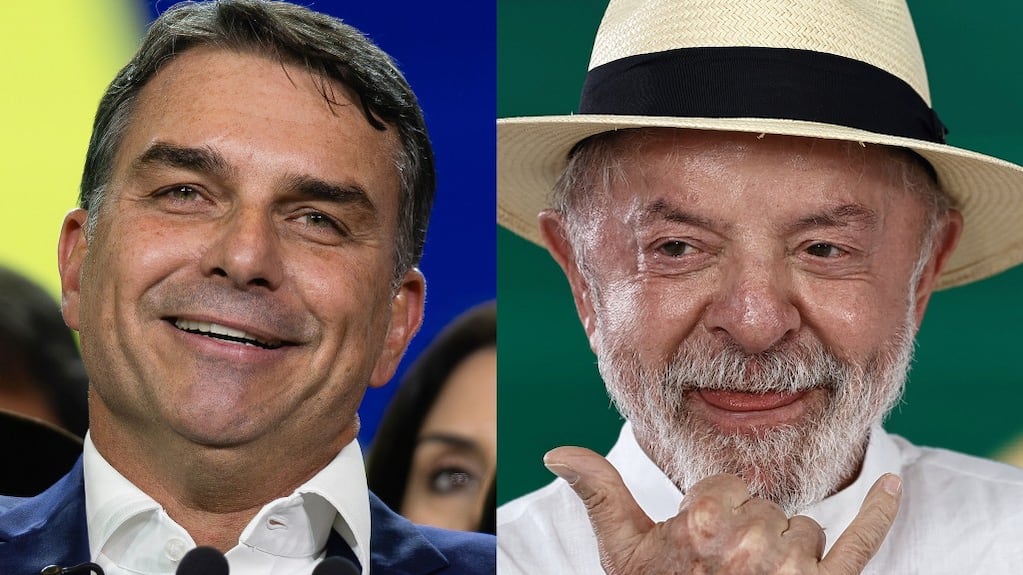
Por un lado, el último gran líder de la izquierda sudamericana. Por el otro, el primogénito de Jair Bolsonaro que busca teñir de azul el mapa de la región para alinearlo con Donald Trump y la derecha dura regional.
Un total de 158.745.463 brasileños están habilitados para elegir este domingo a un nuevo presidente entre el actual mandatario, Luiz Inácio Lula da Silva, que busca su reelección y su cuarto mandato a los 80 años, y el senador Flávio Bolsonaro, de 45, representante de la ultraderecha local, pero con un perfil más moderado que el de su padre y exmandatario.
No serán los únicos postulantes. En total competirán 12 fórmulas, pero la extrema polarización reduce la lucha a solo dos candidatos de agrupaciones políticas e ideológicas opuestas: el izquierdista Partido de los Trabajadores (PT) y el derechista Partido Liberal (PL).
Los últimos sondeos le dan una leve ventaja a Lula, pero lejos del 50% más uno de los votos necesarios para ser electo en primera vuelta.
“La posibilidad de que las elecciones se resuelvan en el primer turno es irrisoria. Hay un 90% de probabilidad de que haya un balotaje”, dijo a TN el analista brasileño Antonio Lavareda, presidente honorario de la Asociación Brasileña de Investigadores Electorales.
La segunda vuelta está prevista para el 25 de octubre. Las encuestas vaticinan una paridad absoluta en ese escenario. El resultado de esta elección es de una gran incógnita.
Qué se elige y qué está en juego
Este domingo los brasileños están convocados para elegir al presidente y su vice, y renovar la Cámara de los Diputados y dos tercios del Senado. También se elegirán a los 27 gobernadores regionales.
Los comicios se desarrollarán en un clima enrarecido con acusaciones cruzadas, fake news y una grieta ideológica que ha dividido al país virtualmente en dos.
Esta polarización ha dejado fuera de juego a las restantes 10 diez fórmulas presidenciales que en conjunto solo llegarían a sumar alrededor del 20% de los votos, según sondeos coincidentes.
En ese segmento, se destacan los candidatos Romeu Zema, del Partido Novo (centroderecha); Ronaldo Caiado, del Partido Social Democrático (PSD, centroderecha); Renan Santos, del Movimiento Missão (con un discurso antisistema) y el reconocido psiquiatra Augusto Cury, de Avante (centro).
Sumario

Iran could move shadow war in a dangerous direction, experts warn on back of two possible terror attacks

Ella tiene 40 años y su marido 59, pero se enamoró de un joven de 27 y se acaba de separar tras ser descubierta por su esposo siendo infiel: «Comenzó a…»

EEUU pidió “desescalar” la tensión entre Argentina y Reino Unido por Malvinas

Voto en el exterior para las elecciones en Brasil: ¿cómo votan los brasileños residentes en la Argentina?

Nuevo mensaje de García Cuerva para Milei en la misa de cierre de la peregrinación a Luján: pidió terminar con “las heridas de la descalificación”

Cómo una exestudiante de la Universidad de Cornell en EE.UU. pasó de la vergüenza a la acción: “Me violaron”

Ley de Tierras: la CGT repudió el fallo de la Corte Suprema y le exigió a Diputados que rechace el DNU de Milei

Milei volvió a dar un discurso en la Argentina Week de París y se emocionó en el cierre

Luto en el periodismo: murió a los 58 años una de las conductoras más famosas y reconocidas de la TV, luchando contra un cáncer cerebral

“Soy de Boca, ¿cuál es el delito?”: Mayra Mendoza respondió las críticas y apuntó contra la Corte por el fallo que habilitó la venta de tierras

 POLITICA2 días ago
Milei volvió a dar un discurso en la Argentina Week de París y se emocionó en el cierre
- INTERNACIONAL3 días ago
Caso Mariaca: un ministro paraguayo acusó a funcionarios bolivianos de proteger al narco Sebastián Marset
- ECONOMIA3 días ago
Argentina Week: la francesa Total Energies anunció inversiones por cerca de USD 10.000 millones