INTERNACIONAL
Liberal haven festival-goers weigh government seizure of their homes: ‘I’d be so game’

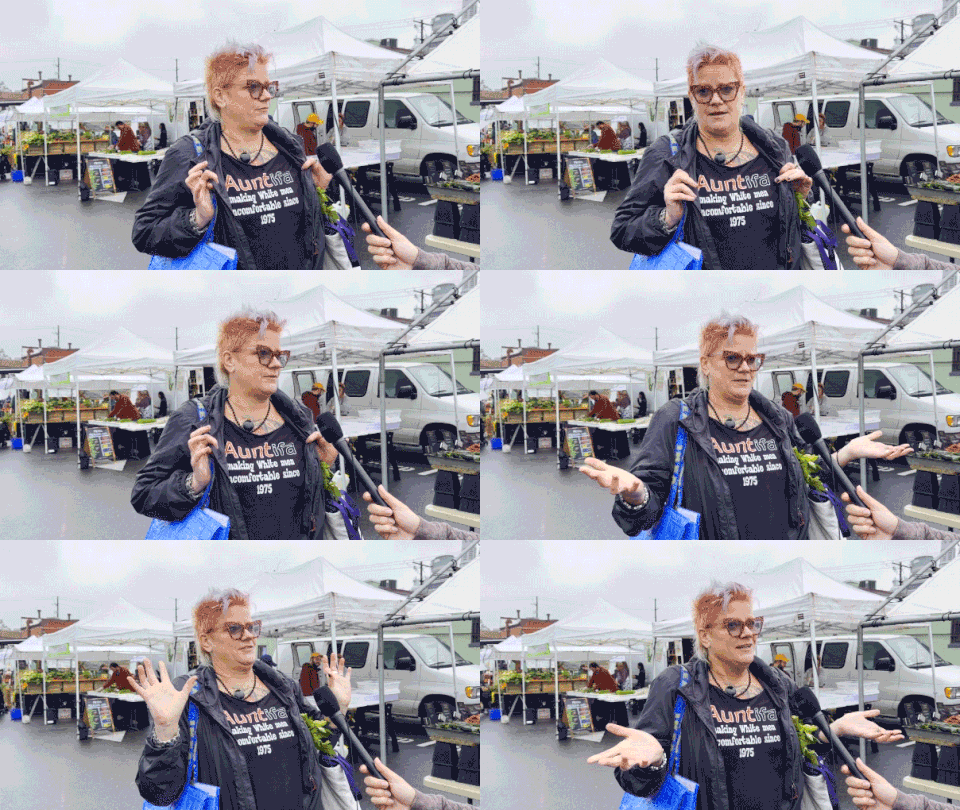
During a Sunday street festival in a notoriously liberal Maryland hotspot just across the Washington, D.C. border, some attendees told Digital they wouldn’t mind if the government seized their property, including their homes.
«Yeah, I mean broadly,» said Maryland resident Matt Volk when asked if he would support the government taking his home. «It’s highly situational, but I definitely think that there’s a lot of privately owned land and property that would be better put to use for public use, for resources and housing and things like that for people who are in need of things like that.»
Digital took to the streets during a rainy Sunday at the Takoma Park Street Festival to interview area residents about just how much power they would be willing to cede to the government as socialism becomes increasingly popular, especially among younger Americans.
Takoma Park is a liberal bastion just outside the nation’s capital, where homes and businesses are adorned with LGBT pride paraphernalia, along with decorations marking their support for other leftist causes like the Black Lives Matter movement.
YOUNG SWING-STATE VOTERS COZY UP TO DEMOCRATIC SOCIALISTS, SAY PARTY ESTABLISHMENT MUST ‘LEARN’ FROM DSA WINS
One attendee, Karen Irwin, sported a t-shirt that said «Auntifa: Making White men uncomfortable since 1975.» She agreed with Volk’s sentiment.
«I mean, if we were all doing it, I’d be so game,» she said. «Do you know what I mean? And who’s coming to me? Is this a decision I’m making through democratic means? Then yes, yes, I would be so game. If I voted for it, sure.»
«You want to be able to keep your property. From what time are we talking? From what in the history of this country? Is it just right now, from right now moving forward, whatever it is you have?» Irwin asked. «Or, you know, 100 years ago, when someone else had it. But the government might have taken it away for whatever reason.»
A poll from March found that 38% of those asked said it was a good idea to move away from capitalism and towards socialism.
SHOCKING PERCENTAGE OF DEMOCRATS IDENTIFY AS ‘DEMOCRATIC SOCIALISTS’ ACCORDING TO NEW POLL: ‘TOXIC POLICIES’
Very liberal voters (66%) and Democrats under age 45 (66%) are those most likely to think moving to socialism would be good. More than half of all Democrats (55%), Black voters (55%) and those under age 30 (53%) also favor moving away from capitalism.
While the majority of Americans, especially Republicans and conservatives, still reject socialism, only 51% say capitalism is working well. The other 49% say it isn’t.
A third person at the Takoma Park street fair on Sunday said the government seizure of his home was a possibility.
«I don’t know that I would necessarily love it, but I mean, if it was something that was beneficial I’d at least consider it,» said Jaw Blake, a Maryland resident.
«Nobody wants what they have to be taken away from them, but there is something we said about like you can set up things so that they’re available for everybody.»
THE NUMBERS DON’T LIE. YOUNG AMERICANS ARE FALLING IN LOVE … WITH SOCIALISM
Not everyone interviewed by Digital was entirely convinced of the idea of government seizure and redistribution of private property.
Jenny Sniderman said she doesn’t want to give up her property to the government, but that it wasn’t out of the question if she was paid to do so.
«Of course I don’t want to give up my private property,» she said. «Are they going to reimburse me fairly? That would be helpful in making my choice.»
Steve Ney isn’t in favor of his home being seized by the government, but he advocated for another socialist policy that recently was implemented in New York City by Mayor Zohran Mamdani.
NEW YORK CITY LANDLORDS WARN AMERICAN DREAM IS SLIPPING AWAY UNDER SOCIALIST RENT POLICIES
«I think the idea of rent stabilization, for example, is an excellent idea where you limit the rate of increase in rent in order to help people stay in their homes,» he said.
New York City’s Rent Guidelines Board voted 7-1 in July to halt increases in rent for one and two year leases on rent-stabilized apartments, enacting a core promise from socialist Mamdani’s agenda. The policy has faced legal challenges and backlash from property owners in the Big Apple.
Real Estate Board of New York (REBNY) President James Whelan blasted Mamdani’s effort.
«The mayor’s report focuses on symptoms, not causes,» he told Digital in August. «New Yorkers are paying record-high rents because there is not enough housing, and many of the reported conditions are concentrated in heavily rent-stabilized buildings that are facing significant operational and financial challenges.»
MAMDANI RIPPED OVER RECORD-HIGH NYC RENTS WITH CRITICS POINTING TO POLICY THEY SAY IS FUELING CRISIS
One Takoma Park Street Festival attendee, Nina Gilden Seavy, a self-identified historian, outrightly rejected the idea that the government should be involved of distributing resources.
«I think that’s a ridiculous idea. I mean, that’s, it’s a fool’s errand,» she said.
«The idea that somehow we’re gonna be better off if the government is in charge of allocating all resources that sounds not in any way desirable.»
Fox News’ Victoria Balara and Alexander Hall contributed to this report.
politics, socialism, maryland, democratic party










INTERNACIONAL
El posible hallazgo médico que un grupo de especialistas detectó en tres cuadros de Rubens conservados en el Prado
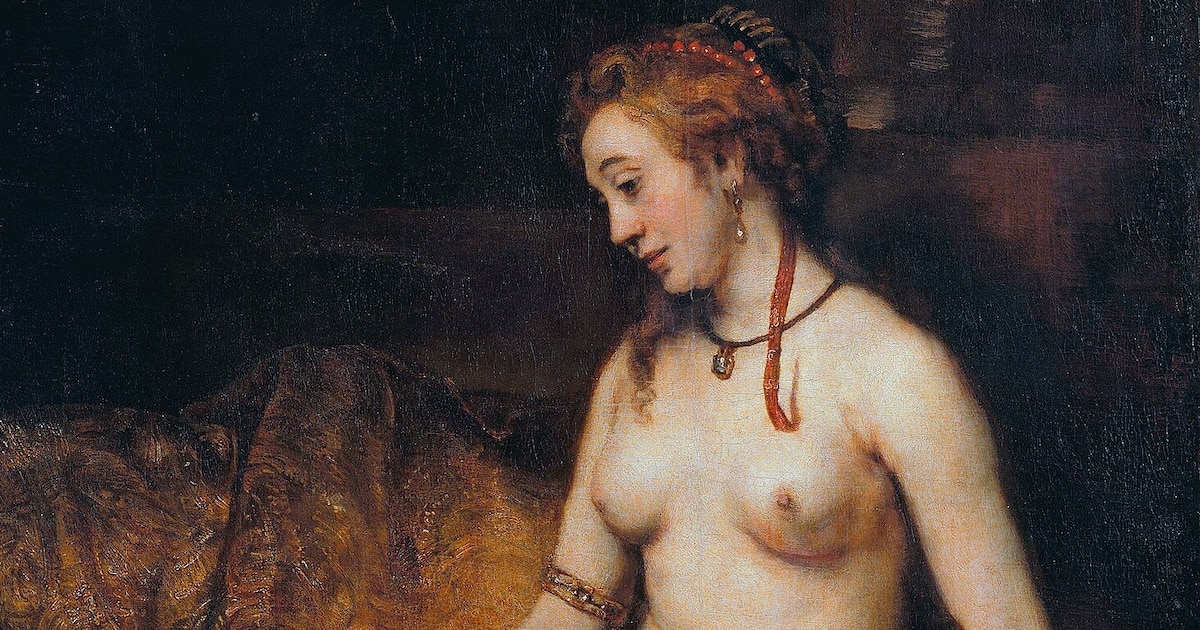
Una simulación por computadora descartó que la marca azul en el pecho izquierdo de Betsabé, en el famoso cuadro de Rembrandt, sea producto de un cáncer de mama, aunque el debate médico sobre la obra lleva más de cuatro décadas abierto y otras hipótesis todavía compiten por explicar la anomalía.
En 1983, los cirujanos P. A. Braithwaite y D. Shugg analizaron Betsabé con la carta del rey David —terminada por Rembrandt Harmenszoon van Rijn en 1654 y conservada en el Museo del Louvre de París— y publicaron una hipótesis que cruzó el arte con la medicina: las alteraciones visibles en el pecho izquierdo de la figura femenina podrían ser compatibles con un cáncer de mama. La coloración azulada en la parte inferior del seno y una hinchazón perceptible bajo la axila izquierda fueron los elementos que sustentaron su lectura clínica.
Desde entonces, el cuadro se convirtió en un símbolo recurrente de la enfermedad y fue citado en publicaciones oncológicas de todo el mundo. La hipótesis ganó peso adicional por la identidad probable de la modelo: Hendrickje Stoffels, compañera del pintor, cuya representación corporal el artista habría tomado del natural con la minuciosidad característica del realismo barroco neerlandés.
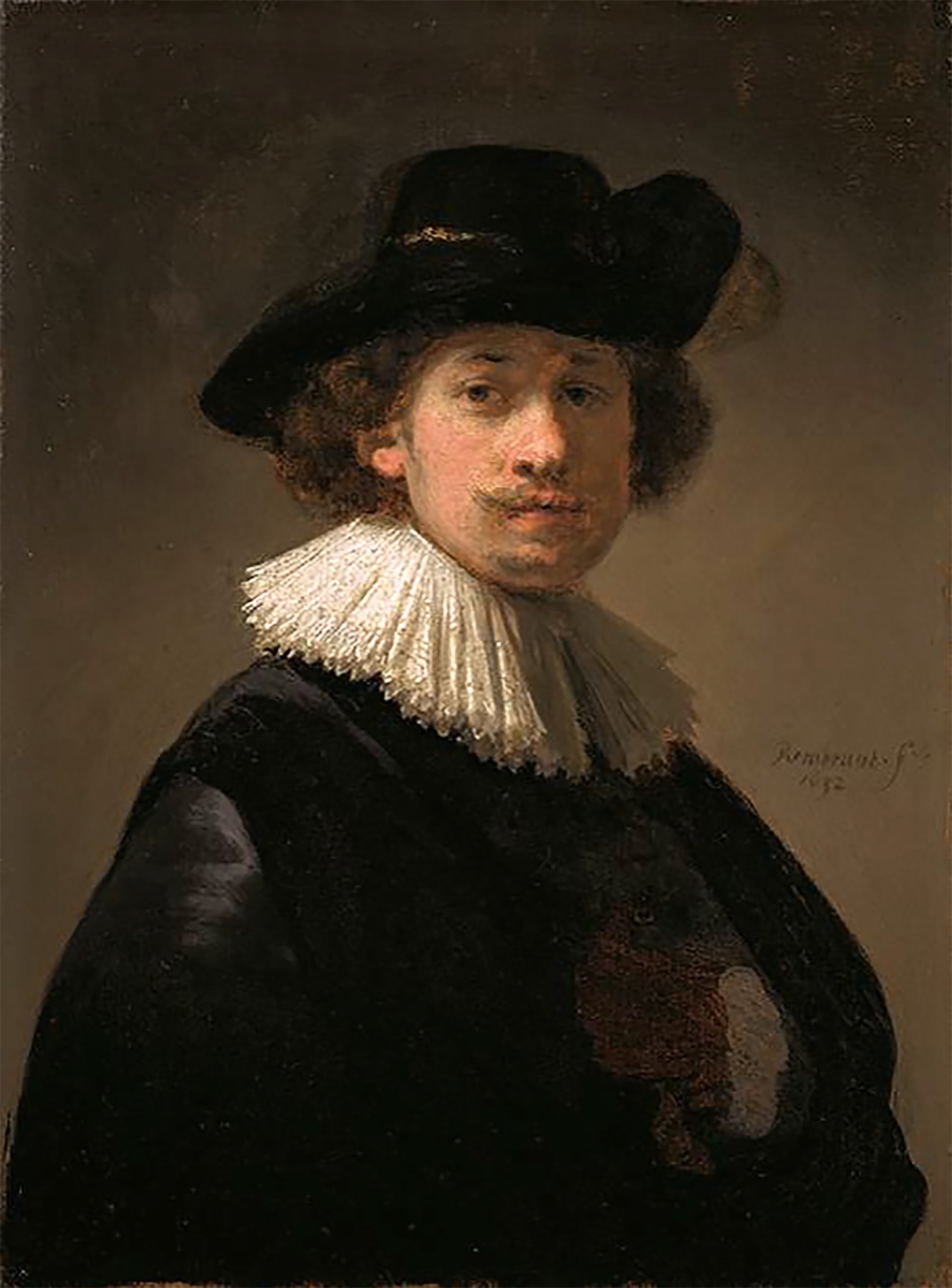
Las simulaciones de la Universidad de Twente pusieron en duda la teoría del tumor
Investigadores del instituto MIRA de la Universidad de Twente decidieron someter la hipótesis a una prueba computacional. Simularon millones de fotones con distintas longitudes de onda que incidían sobre un pecho con tumor y analizaron cuántos regresaban y qué color percibiría el cerebro humano a partir de esa luz.
El proceso de cálculo demandó 700 horas de analisis mediante computadoras. El resultado fue concluyente: una coloración azul de esas características solo podría producirse si el tumor estuviera ubicado entre uno y tres milímetros bajo la superficie de la piel. En la práctica, los tumores mamarios se desarrollan a una profundidad considerablemente mayor, y a esas profundidades no generan alteración alguna del color superficial. Los investigadores concluyeron que era “muy improbable” que la pigmentación registrada por Rembrandt tuviera su origen en un carcinoma.
Otras enfermedades también fueron propuestas para explicar la anomalía
Antes de que la Universidad de Twente publicara sus simulaciones, otros especialistas ya habían cuestionado el diagnóstico de cáncer por razones clínicas. Hendrickje Stoffels sobrevivió casi diez años después de que se pintara el cuadro, una trayectoria difícil de conciliar con un cáncer avanzado sin ningún tipo de tratamiento eficaz disponible en el siglo XVII.
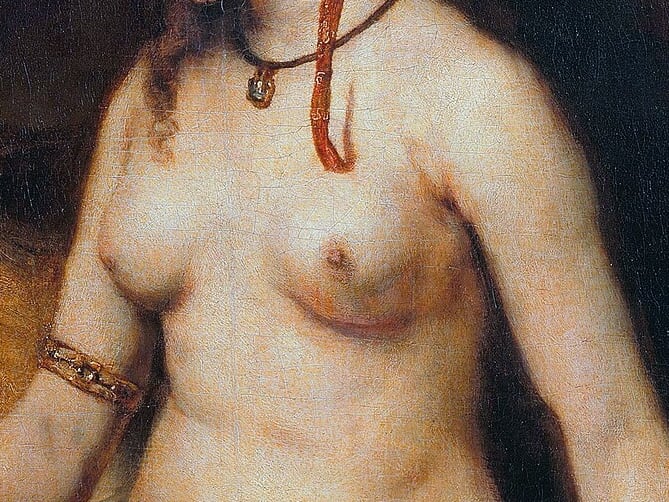
En 2000, el oncólogo R. G. Bourne propuso como alternativa una mastitis tuberculosa o un absceso asociado a la lactancia. Otros investigadores señalaron una mastitis vinculada al embarazo. Y en 2020, el especialista vascular Paolo Zamboni planteó en su estudio la enfermedad de Mondor, una tromboflebitis superficial que afecta los vasos linfáticos y venosos de la mama y que sí podría generar una coloración visible en la superficie de la piel.
Rubens también plasmó signos similares en tres cuadros del Prado
El caso de Betsabé no es el único en la pintura barroca en el que los médicos han identificado posibles indicios de patología mamaria. Un artículo publicado en 2001 en Medicina Clínica por los investigadores Juan J. Grau, Miguel Prats y Matías Díaz-Padrón —este último del Museo del Prado de Madrid— analizó tres obras de Peter Paul Rubens conservadas en ese museo: Las tres Gracias, Orfeo y Eurídice y Diana y sus ninfas perseguidas por sátiros.
En Las tres Gracias, pintada hacia 1636, los autores describieron en la figura de la derecha una tumoración en el cuadrante superior externo del pecho izquierdo, con extensión hacia el hueco axilar, retracción del pezón y signos inflamatorios, elementos que consideraron compatibles con un cáncer localmente avanzado, estadio T4b o IIIb según la clasificación actual. Los investigadores destacaron que esa zona del cuadro, pintada sobre tabla, se conservaba en perfecto estado y que los restauradores no habían introducido cambios en el aspecto de la axila de la modelo.
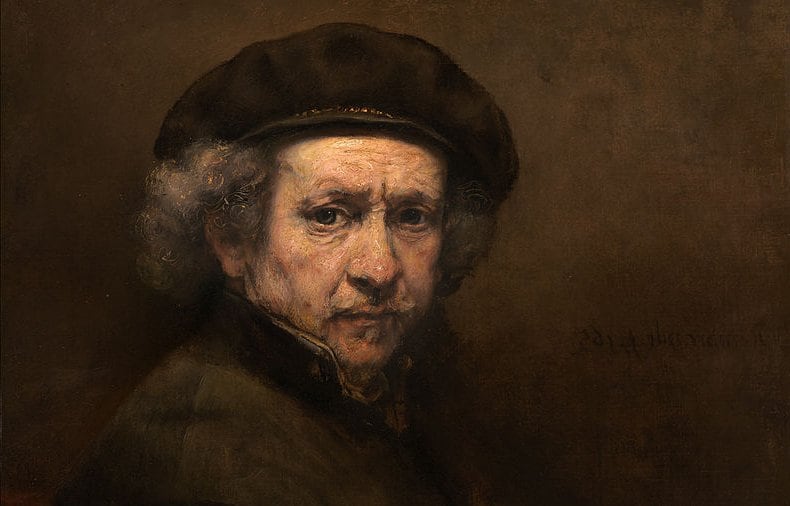
El realismo barroco hace difícil separar el arte del testimonio
La polémica médica alrededor de estas obras está alimentada, en parte, por las propias convenciones estéticas del Barroco. Tanto Rubens como Rembrandt practicaban el realismo pictórico, una tradición en la que el artista buscaba reproducir con fidelidad lo que tenía ante sus ojos. Sus modelos eran personas reales, y sus cuerpos —con sus particularidades y asimetrías— quedaban registrados con una precisión que, siglos después, permite a los médicos especular sobre diagnósticos retroactivos.
Que Hendrickje Stoffels fuera realmente la modelo de Betsabé tampoco está confirmado con certeza absoluta, lo que introduce una variable adicional de incertidumbre. Lo que sí permanece es el debate: cuatro décadas después de que dos cirujanos australianos fijaran su mirada clínica sobre un lienzo del siglo XVII, la ciencia sigue sin cerrar el expediente.
auction,vertical
INTERNACIONAL
Lula prepara su estrategia para enfrentar a Flávio Bolsonaro en el balotaje y apunta a aumentar la participación electoral
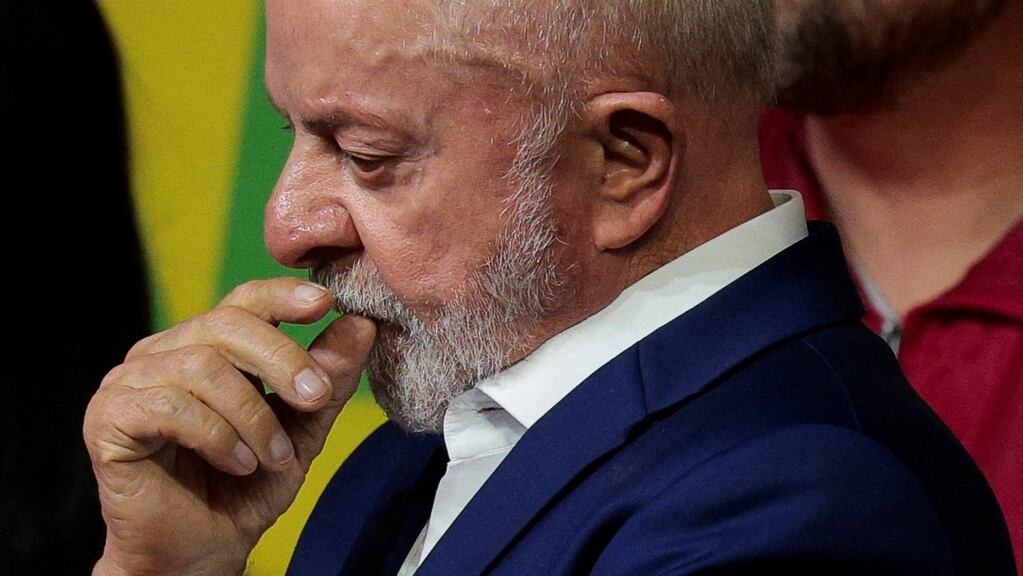
El presidente de Brasil, Luiz Inácio Lula da Silva, se enfrenta a un escenario adverso de cara a la segunda vuelta electoral, después de quedar detrás de Flávio Bolsonaro en los comicios de este domingo.
El mandatario se reunía este lunes en Brasilia con su equipo de campaña para empezar a diagramar una nueva estrategia, distinta de la que se implementó durante los últimos meses.
Lula ya anticipó el cambio de etapa frente a sus seguidores y allegados el domingo por la noche, en el hotel de San Pablo donde la dirigencia esperó los resultados. Allí reconoció que desde hoy comenzaba “una nueva campaña”.
Flávio Bolsonaro ganó la primera vuelta con 47,03% de los votos válidos, mientras que Lula obtuvo 45,16%. El balotaje está prevista para el próximo 25 de octubre.
“Las claves son dos: disputar la segunda vuelta con la premisa de cambiar para mejor y negativizar a Flávio, con foco en los cambios que hizo en el pasado su padre, Jair Bolsonaro, y la idea de un cambio para peor”, dijo a TN el analista brasileño Antonio Lavareda, presidente honorario de la Asociación Brasileña de Investigadores Electorales.
Elecciones en Brasil: la nueva estrategia de Lula para el balotaje
La nueva estrategia de Lula tendrá tres ejes centrales. En primer lugar, la campaña buscará confrontar de manera directa con Flávio Bolsonaro y establecer comparaciones entre los dos espacios políticos.
El discurso del vicepresidente brasileño, Geraldo Alckmin, luego de conocerse los resultados, dio una muestra de la estrategia que podría desplegar el oficialismo durante las próximas semanas.
La intención será contrastar al lulismo con el bolsonarismo, incluso recuperando temas de la gestión del expresidente Jair Bolsonaro, como el manejo de la pandemia de coronavirus, y enfrentar esos antecedentes con las políticas implementadas por el actual Gobierno.
Bolsonaro
NEWYou can now listen to Fox News articles!
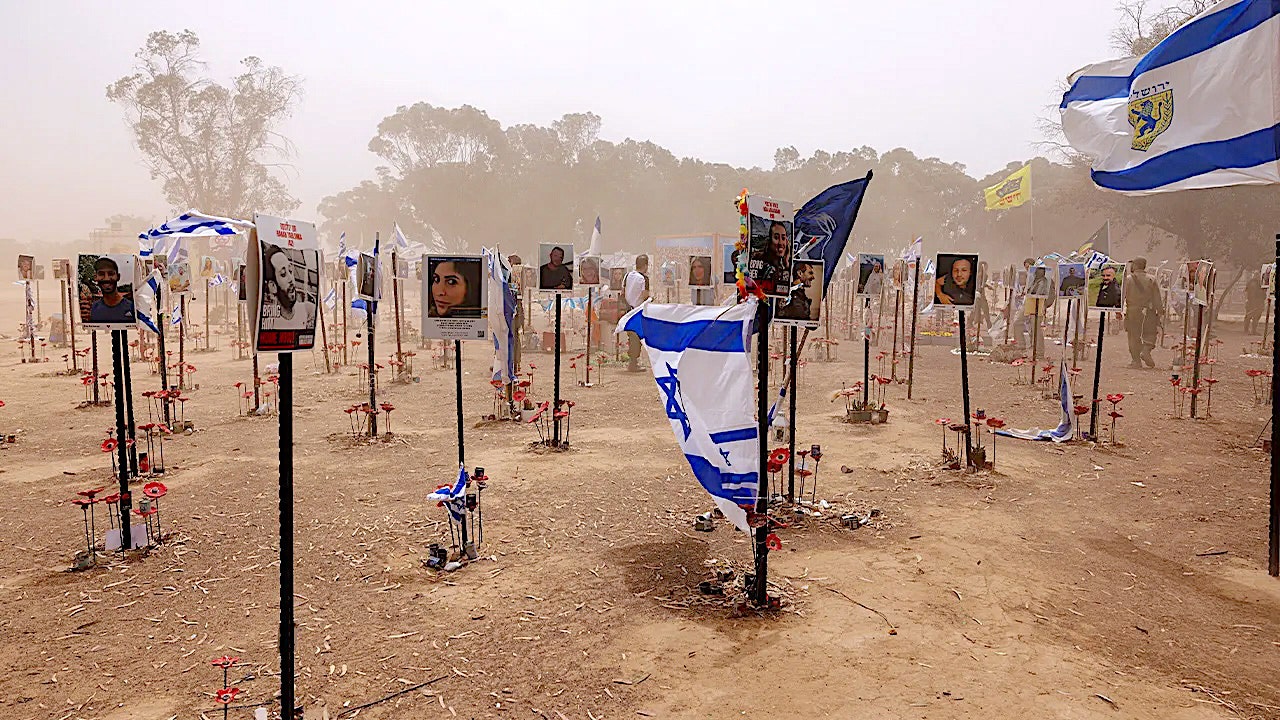
As Israel marks three years since the Oct. 7, 2023 terrorist attacks, stories of bravery and self-sacrifice continue to emerge from within a nation grappling with recovery and rehabilitation.
For Nil Kirsht-Levi, the three years since the Hamas-led Oct. 7, 2023, massacre have been defined by devastating personal loss, an agonizing wait for her sister who was taken hostage and brought to Gaza and an unwavering commitment to caring for fellow survivors of the cross-border terror attack.
Kirsht-Levi, a nurse with Israel’s largest healthcare provider, Clalit Southern District, who lives in Kibbutz Magen, spent the morning of Oct. 7 treating patients remotely from her safe room while trying to protect her three children as terrorists invaded the community and went from house to house. At the same time, she desperately texted her sister, Rimon Buchshtab-Kirsht, who lived with her husband in nearby Kibbutz Nirim.
FREED HOSTAGE ROM BRASLAVSKI DETAILS ABUSE, STARVATION DURING 738 DAYS IN GAZA CAPTIVITY
IDF forces outside Nil Kirscht’s home on the morning of Oct 8, 2023. Credit: Courtesy of the family. (Kirscht family)
«I lost more than 30 patients that day, more than 200 people I knew, and around 100 people I knew were kidnapped,» Kirsht-Levi told Fox News Digital. «I’m lucky to have a job that saves me, healthy children, a healthy husband. We work every day to recover and rehabilitate ourselves. Every day, we fall and get back up, but we are here — for ourselves, for others and we have won,» she continued.
«We should never forget, but we must move forward, live every moment and keep going. It’s a privilege to be alive,» she added.
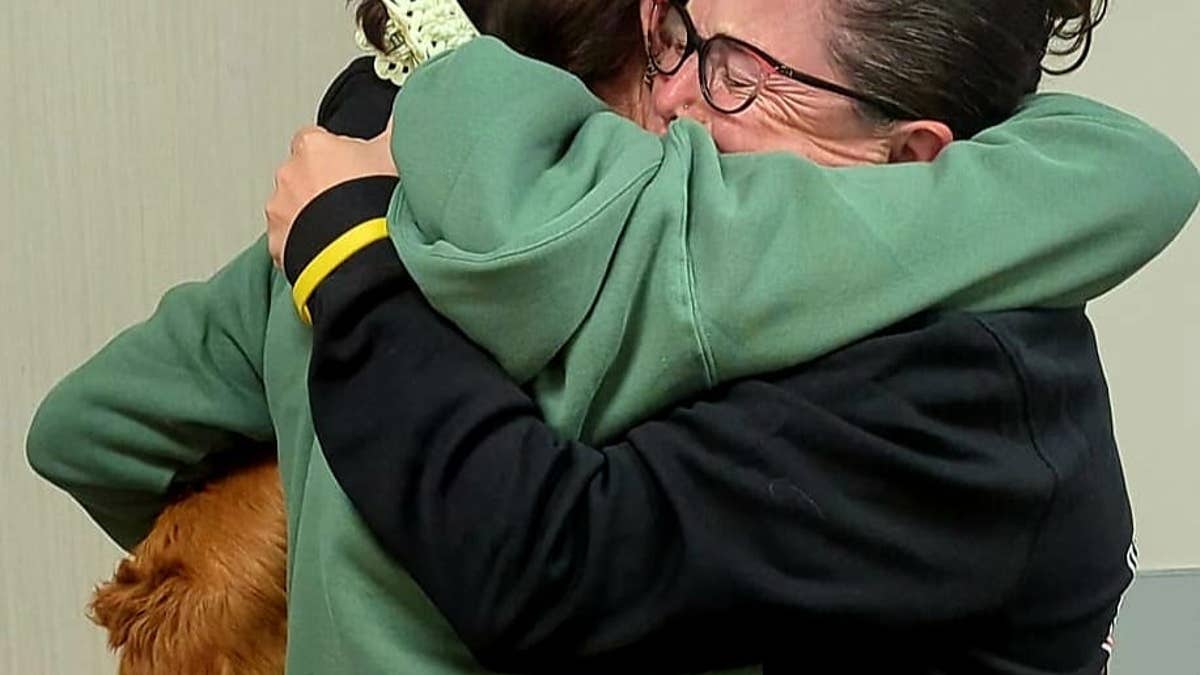
Nil reunites with her sister Rimon upon her return from captivity, December 4, 2023. (Nil Kirsht-Levi)
On Oct. 7, Kirsht-Levi’s sister sent a message saying she could hear Arabic and that terrorists had entered her home. Weeks of agonizing uncertainty followed before Kirsht-Levi saw her sister alive in a Hamas video. She had campaigned for her release and ultimately welcomed her home 53 days later, emaciated and covered in scars, as part of a ceasefire deal in November 2023.
Her sister’s husband, her brother-in-law, Yagev Buchshtab however, had been murdered by the terrorists.
During the 2023 Palestinian terror assault, launched on the Jewish holiday of Simchat Torah, Michaela Koretsky, a midwife with Clalit’s Southern District, improvised lifesaving treatments for wounded members of Kibbutz Alumim.
Like so many others, Koretsky was jolted awake by air raid sirens at 6:29 a.m. that fateful day, as Hamas launched thousands of rockets at Israel, providing cover for terrorists as they crossed the border in the ensuing invasion. She rushed with her husband and children to the shelter, where she received a message from Eran, a member of the kibbutz’s civil defense squad, asking if she was home. Eran then began bringing wounded kibbutz members to her for first aid.
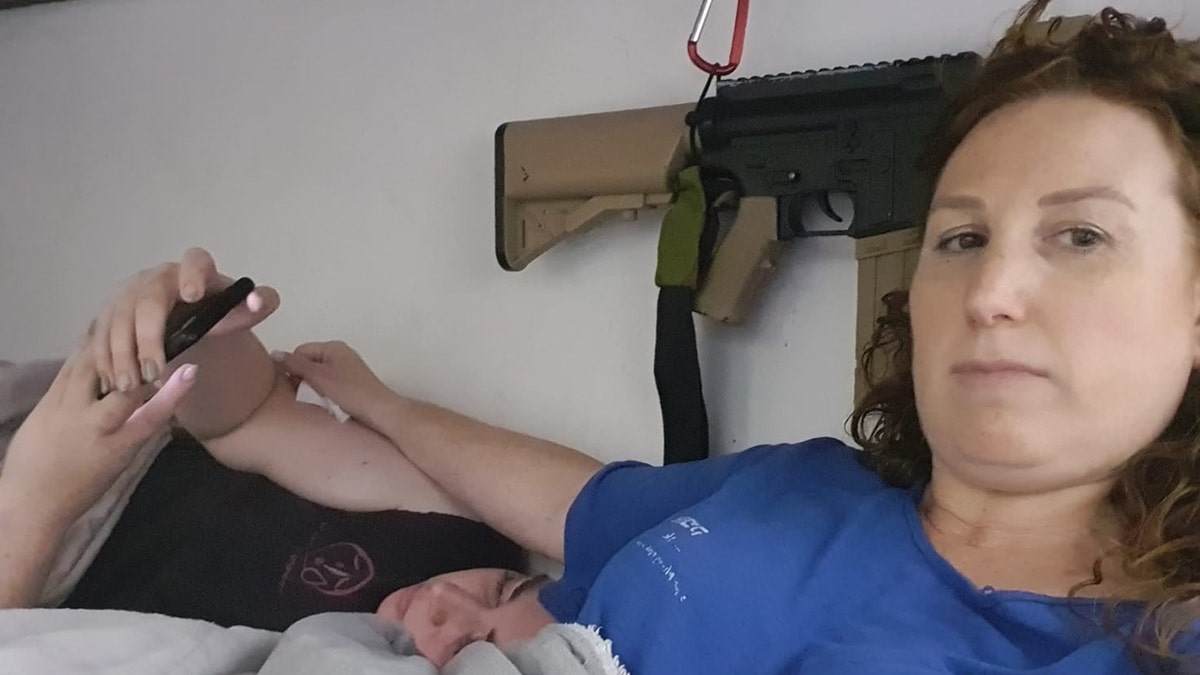
Michaela and her daughter hide in the safe room for hours on the morning of October 7, while she was tending to the wounded in her living room—and even saving one who was in critical condition. (Courtesy of the Koretsky family)
ISRAELI OCTOBER 7 SURVIVORS CONQUER TRAUMA ALONGSIDE LEGENDARY ROCK ICONS IN POWERFUL NEW DOCUMENTARY
«When they entered the house carrying Amichai, he was covered in blood… I switched into nurse mode,» she said.
Koretsky had Amichai placed on the floor as they continued to hear gunfire outside the kitchen window. She improvised bandages and prepared an IV while staying in contact with an emergency room doctor from Soroka Medical Center who was also in the kibbutz. He confirmed that Amichai was stable.
Then Eyal was brought in. He had been shot, with one of the bullets lodged in his lung. After Koretsky placed him on an IV and administered additional oxygen, it became clear that he needed to be evacuated.
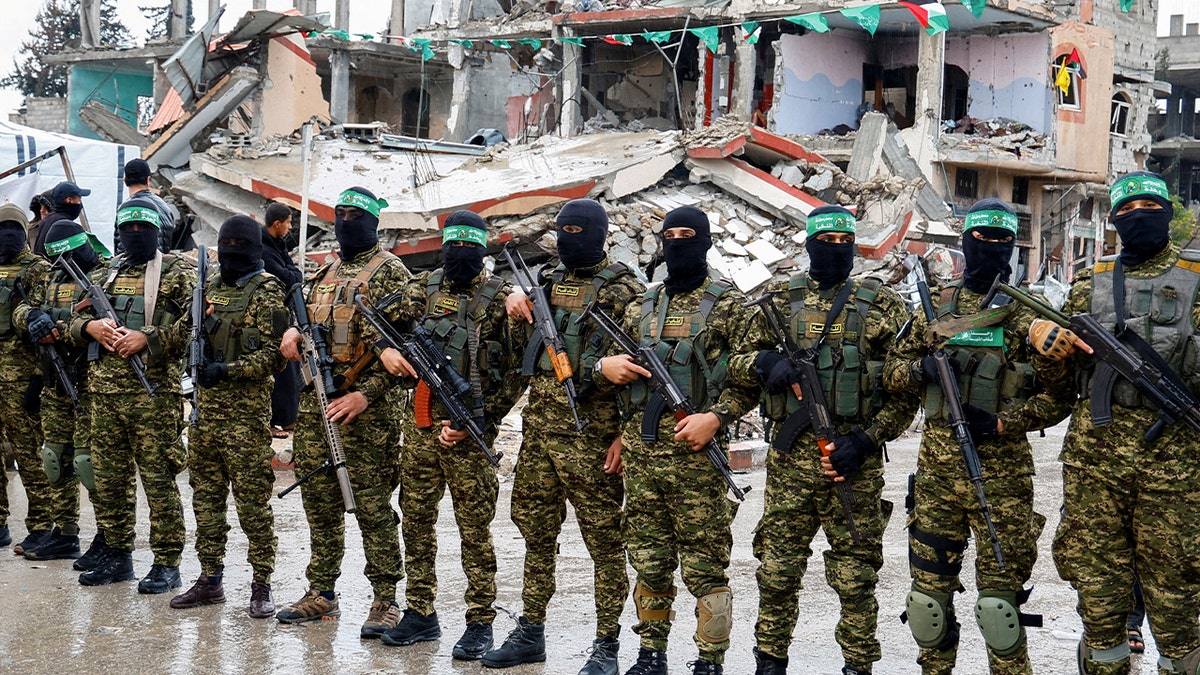
Palestinian Hamas terrorists stand guard on the day of the handover of hostages held in Gaza since the deadly Oct. 7, 2023, attack, as part of a ceasefire and a hostages-prisoners swap deal between Hamas and Israel, in Rafah in the southern Gaza Strip, Feb. 22, 2025. (Hatem Khaled/File Photo/Reuters)
«We needed to save lives, so I switched my brain into action mode and did what needed to be done. The whole time I did not think that the terrorists would enter my house. I knew one of my children was afraid they would figure out where the wounded were being taken and come after us, but I told myself, ‘I am protected. It will not happen,’» she told Fox News Digital.
Her husband, Tzviki, accompanied by members of the kibbutz’s civil defense squad, reached his car and alone he evacuated the wounded under fire to Netivot, where they were transferred to waiting ambulances. From there, both Amichai and Eyal were taken to Soroka Medical Center for further treatment.
Prof. Shlomi Codish, director of the hospital in Beersheba, said he made three lifesaving decisions early on Oct. 7 that shaped the response throughout the day.
HAMAS USED SEXUAL VIOLENCE ‘DELIBERATELY AND SYSTEMATICALLY’ ON OCT 7, COMMISSION REPORT FINDS
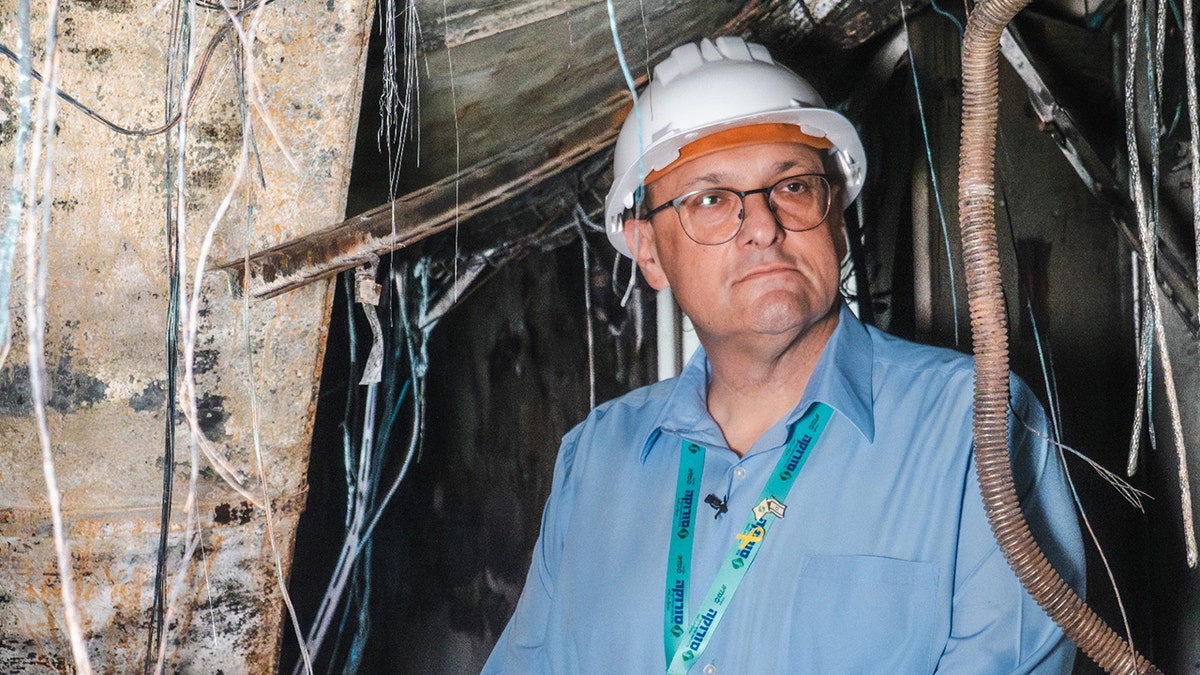
Prof. Shlomi Codish, the Director of Clalit-Soroka Medical Center on the day of the Iranian missile strike, June 2025. (Clalit-Soroka Medical Center)
First, he and his team decided not to send the night shift home, allowing the hospital to begin the day with twice its normal staffing level. At 7:45 a.m., they declared a mass-casualty incident, despite not yet knowing how many wounded would arrive and alerted all available staff to report to the hospital. Finally, they ordered additional blood supplies in anticipation of the surge of casualties.
«We usually start the shift with 50 units of blood in our blood bank. By the end of the day, we had given 250 units. If we hadn’t ordered additional blood early that morning, we might have run out and people may have died,» Codish told Fox News Digital.
Codish said the hospital faced several overwhelming challenges throughout the day, beginning with the sheer number of wounded being brought to the hospital.
«In the first 24 hours, we received 674 wounded people. At the peak, we received more than 80 in a single hour, with an average of just 40 seconds between wounded people arriving,» he said.
«This was one of the largest mass-casualty events resulting from terror in human history. The hospital itself was also under fire, with dozens of incoming missile warnings from the Gaza Strip, while attacks were taking place simultaneously at a very large number of sites,» he added.
SIGN UP FOR ANTISEMITISM EXPOSED NEWSLETTER
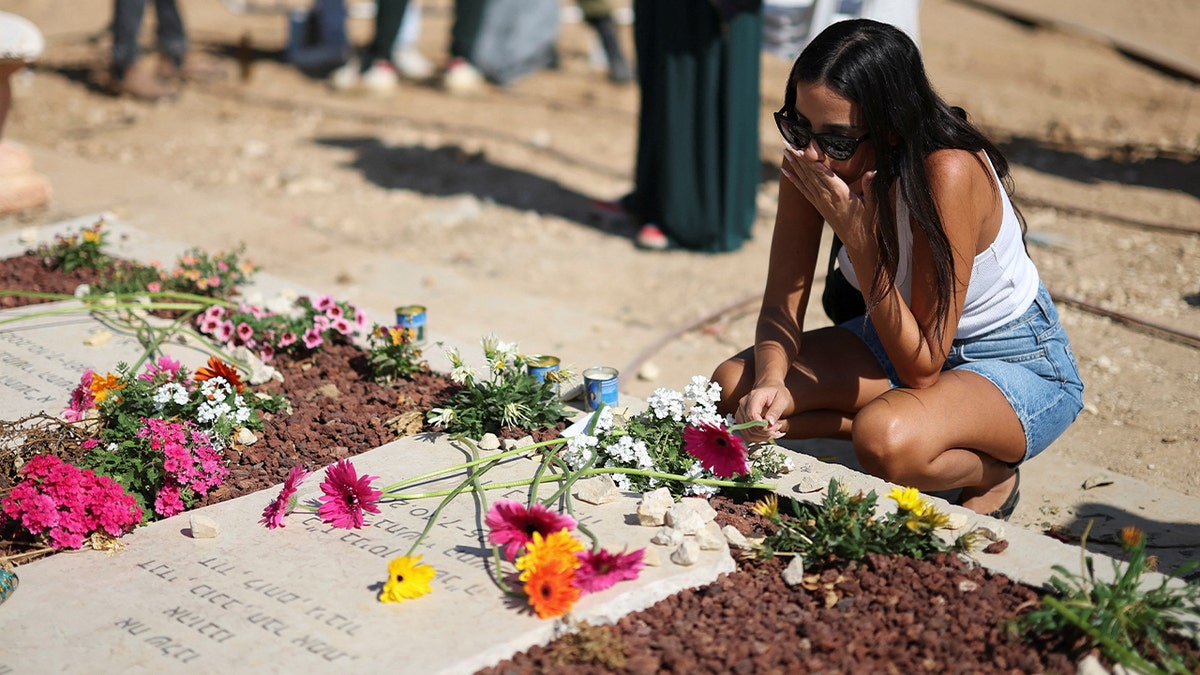
A woman reacts as the community of Kibbutz Kfar Aza commemorates their members who were killed, taken hostage and who died in captivity, following the deadly Oct. 7, 2023, attack by Hamas terrorists, in Kibbutz Kfar Aza, southern Israel, Oct. 16, 2025. (Hannah McKay/Reuters)
The second challenge was the immediate impact of the invasion on hospital staff themselves. «Everyone who came in left a family at home that was potentially under attack. They got into their cars and drove through air-raid sirens in areas that weren’t protected, at significant personal risk, to come in and save lives,» he said.
Another major challenge was maintaining care inside the hospital as the number of casualties surged. The hospital began the day at full capacity, forcing staff to quickly free up intensive care beds and operating rooms for incoming patients. With roads around the hospital unsafe, transferring patients to other facilities was not an option in the first hours of the attack, while sending ambulances into the field risked exposing them to Hamas ambushes.
«When you see babies or children with direct injuries, that is not something you typically see on a battlefield. We saw elderly people with severe wounds inflicted directly, with no protection,» Codish said, reflecting on the brutality he witnessed that day.
«As a medical professional, what we saw was beyond words. Two babies suffering from dehydration after their parents were killed, simply waiting to be rescued — I defy anyone to find a word other than ‘evil’ to describe it,» he added.
anti semitism, israel, terrorism, hamas, conflicts

El posible hallazgo médico que un grupo de especialistas detectó en tres cuadros de Rubens conservados en el Prado

Murió Zulema Galperín, actriz de Chiquititas, Gasoleros y recordada por el sketch “Abuela cocainómana”

Abogados reclaman sancionar el mal desempeño de los jueces y eliminar los “acomodos políticos” en el próximo Consejo de la Magistratura

Jornada financiera: impulsado por el optimismo en Brasil, el riesgo país cayó debajo de los 600 puntos básicos

Gobernadores del norte presionan para que en noviembre esté operativo el subsidio eléctrico a zonas cálidas

La Cámara de Casación analiza si reabre la causa contra Mauricio Macri y Luis Caputo por la toma del crédito con el FMI en 2018

Milei volvió a dar un discurso en la Argentina Week de París y se emocionó en el cierre

Poll: Turek, Hinson in close Iowa Senate race

Javier Milei y sus medidas, en vivo: el mandatario cargó contra la prensa y la calificó de “sicarios de la pluma”

EEUU refuerza su presencia militar en Medio Oriente con miles de soldados mientras Trump evalúa una nueva ofensiva contra Irán

 INTERNACIONAL2 días ago
DHS exposes dilemma behind SCOTUS deportation fight: ‘We have two choices’
- POLITICA10 horas ago
¡Precios de Manhattan con sueldos de Argentina! Cómo los créditos hipotecarios inflaron las propiedades y congelaron el sueño de la casa propia
- POLITICA2 días ago
El Reino Unido anunció que las nuevas licencias de hidrocarburos en las Islas Malvinas requerirán su autorización final