INTERNACIONAL
‘Honored’: Talarico endorsed by group that bailed out violent criminal later accused of mass murder

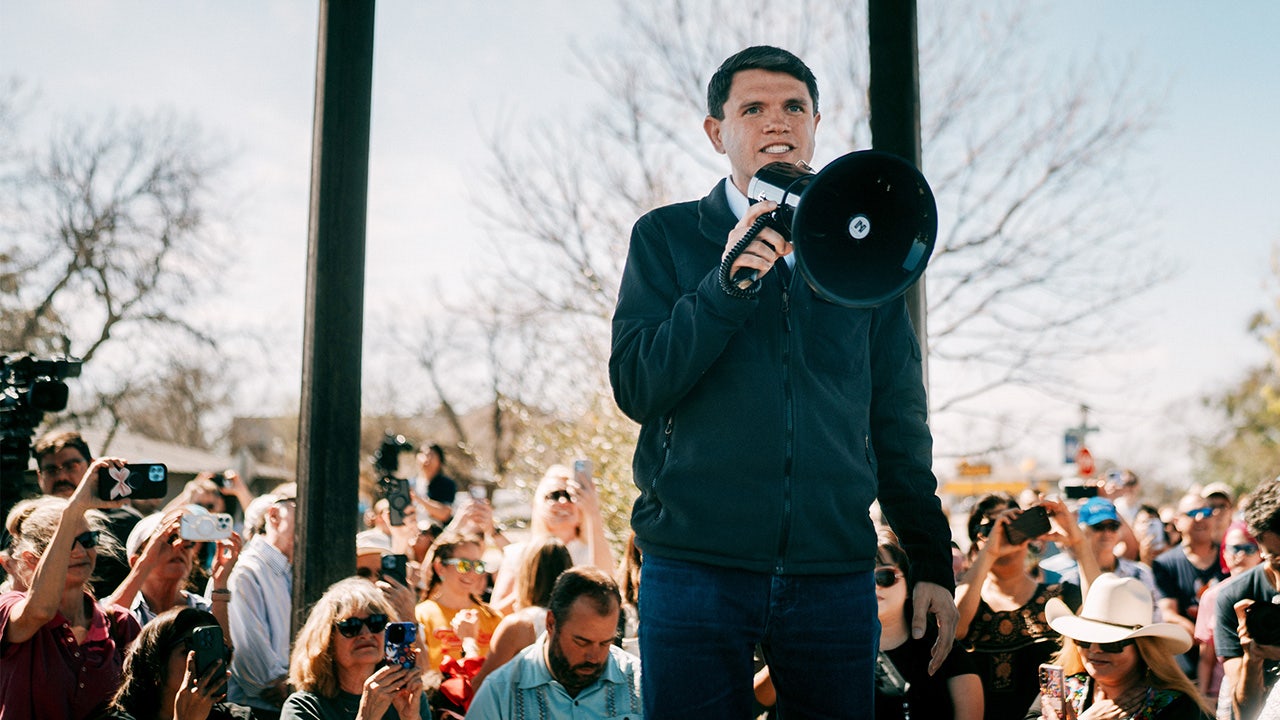
Democratic U.S. Senate nominee James Talarico said he was «honored» to receive the endorsement of the Texas Organizing Project, whose work he described as «irreplaceable» after the organization previously operated a charitable bail fund that helped secure the release of Shane James — later accused of carrying out a six-person killing spree.
The Texas Organizing Project (TOP), a progressive activist organization that endorsed Talarico’s Senate campaign in May, previously operated a charitable bail program that, by September 2021, had distributed more than $1 million to secure the release of more than 675 defendants across Texas.
The program drew intense scrutiny in late 2023 after authorities accused James of killing six people and records revealed that TOP had posted his bail nearly two years earlier while he faced three misdemeanor family-assault charges involving his parents and a sibling.
UNEARTHED INTERVIEW EXPOSES WHAT TALARICO THOUGHT ABOUT ‘TOUGH-ON-CRIME’ TACTICS
James cut off his court-ordered GPS monitor the day after his March 2022 release, prompting a court to issue three warrants for his re-arrest. Despite the outstanding warrants, James remained free for 21 months before authorities say he carried out a series of attacks across San Antonio and Austin that left six people dead, including his parents.
TOP acknowledged after the killings that it had bailed James out in coordination with the Bexar County public defender’s office after his bond was reduced to a combined $300. The organization said James had passed its screening process based on the misdemeanor charges he faced at the time and stressed that bail organizations cannot predict defendants’ future behavior.
«We acknowledge that our assessments cannot anticipate the future actions of individuals,» TOP said following the killings, announcing that it would conduct an internal review of the program.
Talarico nevertheless enthusiastically welcomed TOP’s endorsement earlier this year.
«I am honored to earn this endorsement,» Talarico said when the group announced its backing, praising TOP for spending more than 15 years developing relationships in Black and Latino communities across Texas.
«That infrastructure is irreplaceable,» he said.
PROGRESSIVE TALARICO KNIFES BIDEN’S OPEN BORDER, TRIES MODERATING STANCE ON KEY ISSUES IN TEXAS SENATE RACE
The endorsement announcement said TOP members had met with Talarico before backing him, while the organization’s leadership said the Senate candidate had demonstrated familiarity with its work.
Talarico is challenging Republican Texas Attorney General Ken Paxton in one of the nation’s most closely watched Senate races, as Democrats seek to break a decades-long losing streak in statewide Texas elections.
Shane James was not the only defendant released through TOP’s program who subsequently encountered additional legal trouble.
A 2024 KSAT investigation found TOP had bonded defendants out in at least 196 Bexar County cases since jail officials began specifically tracking the organization’s activity in October 2022. Warrants were later issued for defendants’ re-arrest in 58 of those cases, or nearly 30%. While failure to appear in court was the most common reason for those warrants, records showed some defendants also faced new criminal charges after TOP secured their release.
Among them was Benjamin Sanchez Jr., a convicted felon with two prior burglary convictions who TOP bonded out 11 days after his arrest in connection with the burglary of a San Antonio souvenir store. A warrant for Sanchez’s re-arrest was later issued after pretrial violations that included his arrest on new burglary charges, according to KSAT. He ultimately pleaded guilty in the two newer burglary cases and was sentenced to six years in prison.
TOP has defended its bail work as an effort to prevent low-income defendants from remaining incarcerated simply because they cannot afford bond. The organization said in 2021 that its Right2Justice campaign had spent more than $1 million to bail out more than 675 people, with the vast majority of the money distributed in Bexar County.
TALARICO HIT WITH ‘BLATANT CORRUPTION’ ALLEGATION OVER HEFTY SALARY FROM CONSULTING FIRM, CAMPAIGN PUSHES BACK
The organization’s bail advocacy also intersected with Talarico’s legislative record.
TOP opposed HB 20 during the 2021 Texas legislative session, describing efforts to restrict community bail funds as part of a «right-wing assault» on the organizations. Talarico voted against a House version of HB 20 in May 2021, according to the Texas House Journal.
Talarico’s campaign pushed back on the significance of that vote in a statement to Digital, arguing that the version he opposed differed substantially from the legislation ultimately considered later in the process, and pointing to his more recent support for tougher bail restrictions.
«James will always work to keep Texans safe. That’s why he voted to deny bail for violent criminals, supports prosecuting violent felons, and backed Governor Abbott’s bill that was called the ‘strongest bail reform package in Texas history,’» Talarico campaign spokesperson JT Ennis told Digital.
«The only candidate in this race endangering women and children is Ken Paxton, who cut an Epstein-style sweetheart deal that let a pedophile back on our streets after just 29 days in jail,» Ennis added.
The campaign pointed Digital to Talarico’s 2025 vote for part of a bail reform package championed by Republican Gov. Greg Abbott. The package included a constitutional amendment expanding the circumstances under which judges could deny bail to defendants accused of certain serious violent crimes.
The campaign also argued that the 2021 House version of HB 20 that Talarico opposed contained broader provisions unrelated to charitable bail organizations, and noted criticism at the time that the proposal would continue allowing potentially dangerous defendants with sufficient money to secure their own release.
texas, politics, greg abbott, crime world, elections, midterm elections









NEWYou can now listen to Fox News articles!
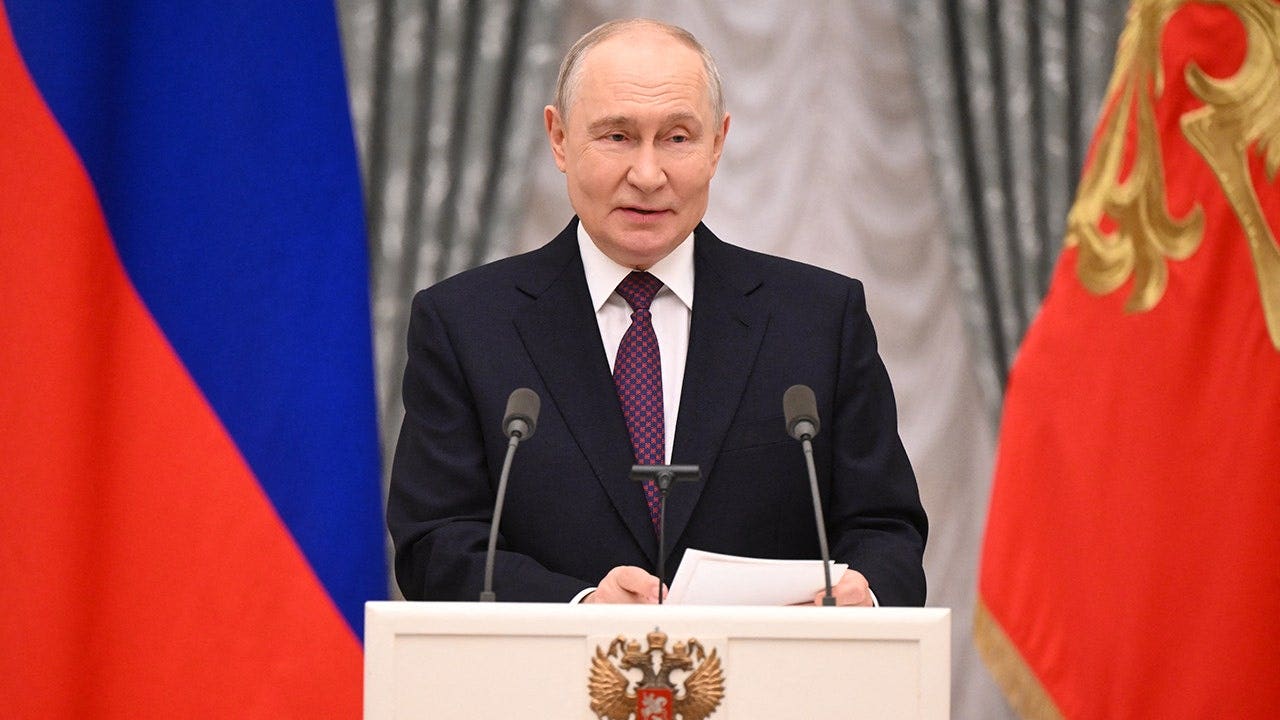
Fears of a pneumonic plague outbreak following the death of a Siberian plague research institute employee don’t bode well for Russian President Vladimir Putin, who is facing a faltering economy and a stalled war in Ukraine that has claimed estimated hundreds of thousands of Russian lives, experts say.
Putin has for years maintained a tight grip on power, and while a single lab death isn’t an immediate regime-killer, suppressed biological incidents—much like the 1986 Chernobyl nuclear disaster or the Soviet-Afghan War—add to the compounding list of systemic failures in Moscow, retired CIA officer Dan Hoffman told Fox News Digital.
«The longer-term strategic question is, does this have an impact on Vladimir Putin and his hold on the Kremlin until his own people realize: ‘This just isn’t right for us. We don’t like this. We don’t like the war in Ukraine. This is just another thing,’» Hoffman told Fox News Digital.
RUSSIAN STATE ECONOMIST FIRED AFTER STARK WARNING ABOUT MOSCOW’S ECONOMIC FUTURE
Russia’s President Vladimir Putin seen Monday at a ceremony to present state awards to mentors and teachers of participants in Russia’s war in Ukraine at the Kremlin in Moscow. Putin has tightly suppressed the flow of information to the outside world, observers have said. (POOL/AFP via Getty Images)
«The reason why the Soviet Union collapsed wasn’t because of Chernobyl, but that was a part of it,» he added. «It was it a failed economy? Well, they kind of got that going too. The failed war in Afghanistan? Well, that war in Ukraine doesn’t look too good. So all these things just pile up on Putin.»
The researcher who died has been identified as 28-year-old Darya Shipilova, who worked at the Irkutsk Anti-Plague Research Institute of Siberia and the Far East.
There was no evidence that her illness was caused by pathogens linked to her work, Russian health authorities said. Shipilova died after being diagnosed with a pneumonia of «unknown» origin, authorities have said.
GABBARD SAYS DECLASSIFIED BIOLAB RECORDS VALIDATE CONCERNS PREVIOUSLY DISMISSED AS MISINFORMATION

Darya Shipilova, 28, an employee of the Irkutsk Anti-Plague Research Institute of Siberia and the Far East, died after developing pneumonia of an unknown cause, prompting quarantines and heightened health precautions in the region. Russian authorities say testing has found no evidence her illness was linked to pathogens she worked with. (East2West news)
On Monday, Secretary of State Marco Rubio said the United States was «watching and monitoring» the situation closely.
Anna Popova, the head of Russia’s Federal Service for the Oversight of Consumer Protection and Welfare, or the Rospotrebnadzor, which handles infectious disease, arrived at the research lab.
«No micro-organisms associated with the employee’s professional duties were detected in samples taken from the patient,» the agency said.
Even if Shipilova’s death is an isolated incident, Russia’s history of hiding information related to sensitive matters could leave many outside observers with doubts, Hoffman said.
AMB. GORDON SONDLAND: THE GODFATHER TEST — HOW PUTIN TURNS EVERY ATTACK INTO A MYSTERY—AND GETS AWAY WITH IT
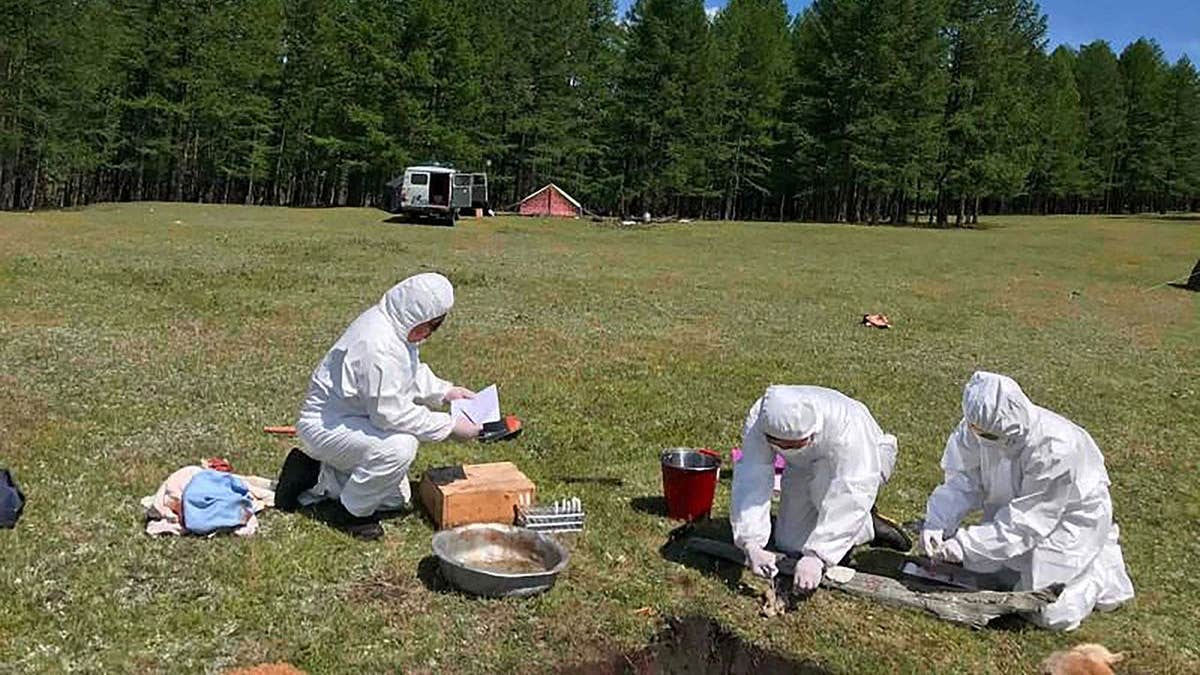
Workers in protective uniforms conduct testing in Russia amid heightened precautions following the death of an employee at a Siberian anti-plague research institute. (Khuvsguliinungu.mn/e2w)
«Putin, you know, is a dictator and he’s got pretty strict control over information, so they’re obviously not going to release any truth to the public, and that means we have to rely on intelligence to understand what’s going on behind the scenes,» he said.
The Soviet Union tightly controlled news of its invasion of Afghanistan amid global condemnation and enforced a total media blackout when the Chernobyl nuclear reactor exploded on April 26, 1986, suppressing information both domestically and internationally.
‘VOTERS GET TO CHOOSE — JUST NOT THE RESULT’: RUSSIA’S PARLIAMENTARY ELECTION REACHES OCCUPIED UKRAINE

A view of the Medical Assistance and Rescue Centre, an infectious diseases hospital, in the town of Shelekhov in the Irkutsk region, Russia, October 5, 2026. (Reuters)
«Whatever Russia is saying publicly, that has nothing to do with the reality on the ground,» said Hoffman. «What that is, is an influence operation for their own people.»
Hoffman noted that China, one of Moscow’s closest allies, also controls what information is disseminated to the outside world.
«China does the same thing. How much useful information did we get out of them with COVID?» Hoffman said. «That’s the way dictatorships work.»
vladimir putin, russia, science
INTERNACIONAL
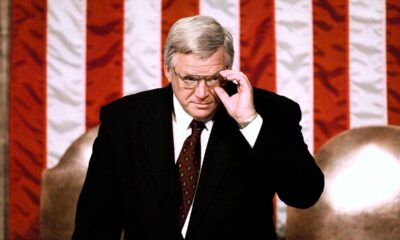
Dennis Hastert, longest-serving Republican House Speaker and convicted child molester, dies at 84
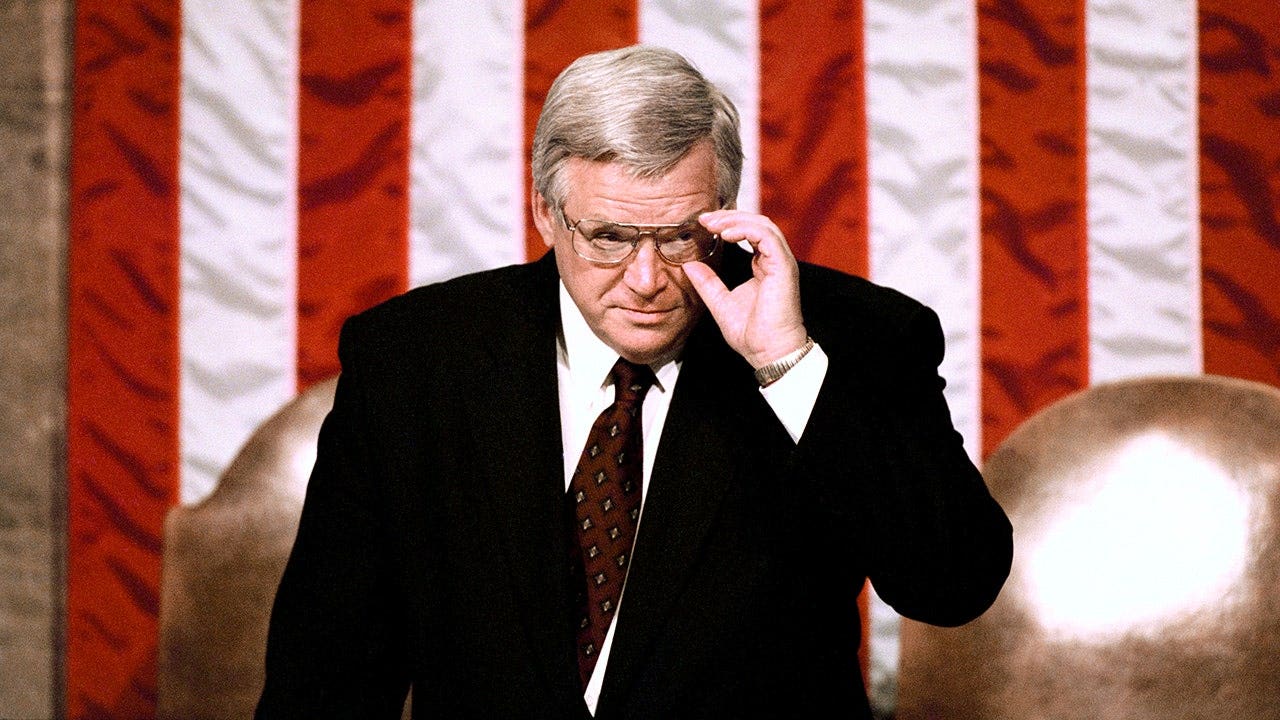
The late House Speaker Dennis Hastert (R-IL) was an accidental speaker.
And it was a sheer accident that the world learned a dark secret about Hastert, years after he left Capitol Hill.
It was twenty years ago, almost to the date. House Republicans were on the verge of losing their majority in the 2006 midterms. And their Speaker, Dennis Hastert, was in meltdown.
HIGHEST-RANKING US OFFICIAL TO EVER SERVE JAIL TIME, FORMER HOUSE SPEAKER DENNIS HASTERT DEAD AT 84
Word had just broken that then-Rep. Mark Foley (R-FL) had sent inappropriate messages to high school-age male teens, serving as House pages. The Republican-led House was meeting on September 29, 2006, trying to escape town so the GOP could defend their majority. But nothing was going right for Republicans. The public was growing weary of President George W. Bush and the war in Iraq. Democrats were poised to retake the House in November.
Yours truly and Deirdre Walsh — then of CNN — spotted the portly Hastert lumbering across Statuary Hall toward the Speaker’s office.
«Did he call you?» Walsh asked Hastert about Foley.
«What are you going to do about it?» I inquired.
«We’ll talk about that shortly,» mumbled Hastert under his breath, his wide glasses nearly tumbling over the bridge of his nose as he huffed into the Speaker’s suite.
An hour later, Hastert, outgoing Senate Majority Leader
Bill Frist (R-TN) and other top Republicans convened a brief press conference to tout a national security bill they just passed. The legislation was designed as the GOP sendoff as lawmakers went home to campaign.
«Ok, we’ll take questions. Only on the bill,» instructed Frist. «Only on the bill.»
No one even squeaked.
Finally, I piped up.
«We have questions about other subjects,» I announced, determined to ask about Foley.
«Alright,» said Frist, shoving back from the table.
The Tennessee Republican knew what was coming. Frist was happy he wouldn’t have to address Foley. That was something for Hastert. Especially since Frist planned to run for President in 2008.
I inquired about Foley. Hastert muttered a non-answer which was barely usable for broadcast. He mumbled something about him not being «very happy» about Foley. But it was a soundbite from the Speaker of the House on the scandal, right as a bloodied GOP hit the exits for the midterm campaign.
Someone then quickly adjourned the press conference. And that was it.
FORMER REPUBLICAN HOUSE SPEAKER DENNIS HASTERT DEAD AT 84
A few days later, local reporters in Illinois pressed Hastert about how he handled the Foley matter. Back in Washington, asked one of the Speaker’s aides why Hastert – as a former teacher and coach – wasn’t more aggressive protecting the teen pages.
We may have found out why years later.
Eighty-four year-old Dennis Hastert died of natural causes over the weekend. The late Speaker is one of the most ignominious figures in American politics.
He was the longest-serving Republican Speaker in history, wielding the gavel from 1999 to 2007. Hastert stumbled into the Speakership, rising thanks to the missteps of others. Yet despite his years in Congress, what we learned about Hastert nearly a decade after he left office revealed him to be one of the most grotesque persons to ever serve in Congress. In fact, Hastert is the highest-serving U.S. official to ever serve jail time.
Virtually no one knew it, but Hastert was an unbridled sexual predator. Known as «Coach» rather than «Mr. Speaker» to his Capitol colleagues, Hastert preyed on teenage boys when he taught high school in the 1960s and 1970s.
Hastert was never implicated in the page scandal. The House nixed the program soon afterwards, even though it was nearly as old as the republic. But in retrospect, how Hastert fumbled what was going on with the House pages shockingly added up later.
Democrats won the House handily in the 2006 midterms. Hastert didn’t run – and probably wouldn’t have won – a leadership race in the new Congress. He stuck around as rank-and-file member for a few months and resigned in late 2007.
Few heard much from Hastert after he departed Congress. Such was his style. He shunned interviews as Speaker and was rarely even spotted in the Capitol corridors. To defend his reticence with the press corps, the Speaker proclaimed that he was more of a «listener.»
And then Hastert’s otherwise bland, nearly forgotten Speakership took a dark turn in 2015.
Federal banking regulators flagged Hastert’s curious withdrawals of staggering amounts of cash. They suspected the transactions signaled that someone could be blackmailing the former Speaker. So they investigated. But that’s how it came to light that Hastert was actually paying hush money to conceal his sexual transgressions with minors.
The feds indicted Hastert on charges of lying to investigators and evading banking laws. He later pleaded guilty to the bank crimes. Prosecutors dropped the charge of making false statements. Federal Judge Thomas Durkin declared that the former Speaker was «a serial child molester.» In court, Hastert admitted that he «mistreated athletes» and «took advantage» of those he was supposed to mentor.
Prosecutors never charged Hastert in connection with sex crimes. He served 13 months of a 15-month sentence at a federal facility in Rochester, MN.
It’s remarkable that someone who operated at this level of American government obscured such a hideous secret for so long.
And as instructive as the day nearly 20 years ago when the Foley scandal broke and Republicans were on the verge of losing the House, unceremoniously terminating Hastert’s Speakership — the day that propelled him into the leadership is even more illuminating.
Republicans nearly lost the House in the 1998 midterms. House Speaker Newt Gingrich (R-GA) was toxic and Republicans showed him the door. In late 1998, Republicans tapped then-Rep. Bob Livingston (R-LA), chairmanof the Appropriations Committee, to become Speaker in 1999. But then came December 19, 1998. The Saturday before Christmas.
I was on the job on 9/11. I was on the job on January 6. I’ve covered Congress for a litany of big hearings, the removal of House Speaker Kevin McCarthy (R-CA). Even the day they banished Pete Rose from Major League Baseball as a kid reporter back in Cincinnati. You name it, I’ve seen it.
But from a sheer news perspective, December 19, 1998 rivals many of those.
The House met on that Saturday before Christmas to approve articles of impeachment against President Clinton for the Monica Lewinsky scandal. This would mark only the second time in American history that the House impeached an American President.
President Clinton also ordered airstrikes against Iraq for violating no-fly zones following the first Gulf War that day. So that story was in full force. But the night before, there was news that Livingston – the GOP’s Speaker in waiting – had an affair with a lobbyist.
Juxtapose that with what the House was trying to do with Clinton because of his sexual exploits.
On the morning of December 19, 1998, Livingston took to the House floor to demand that the president resign for his transgressions.
«No! You resign! You resign!» came a cacophony of catcalls from Democrats in unison in the House chamber.
Livingston paused and held up his hand to quiet the din.
The Louisiana Republican then announced he would not stand as the GOP’s nominee for Speaker when the new Congress convened in January 1999. He promised to resign from the House a few months later.
FOLLOW US ON X
Bedlam tore through the Capitol.
House Republicans scrambled. They needed a new Speaker-designee.
By nightfall, they conscripted J. Dennis Hastert for the job. The Chief Deputy Whip in the Republican Conference. Hastert was a part of the GOP leadership team. But he was a backbencher. His obscure leadership slot was to help count votes on the floor.
Many reporters who covered Congress didn’t even know who Hastert was.
Hastert was barely vetted by the press corps.
But there was other big news. Airstrikes against Iraq. The Livingston scandal. That’s to say nothing of only the second impeachment trial of a President in American history.
GOT A TIP?
Hastert seized the Speaker’s gavel in January 1999. He remained on the job for another eight years. Longer than any other Republican. His odious past obscured.
But ultimately, Dennis Hastert did not take to the grave the loathsome secrets he hid for so long.
politics, house of representatives politics, congress, fox news media, us
INTERNACIONAL
Una victoria de Bolsonaro completaría casi por completo el mapa de Trump en América Latina

En los últimos 18 meses, los candidatos de derecha en América Latina han ganado las últimas siete elecciones presidenciales. Ahora, la nación más grande de la región podría estar a pocas semanas de hacer lo mismo.
El domingo, Flávio Bolsonaro, hijo del expresidente de extrema derecha Jair Bolsonaro, obtuvo la mayor cantidad de votos en la primera vuelta, lo que lo convierte en el claro favorito para la presidencia cuando se enfrente al presidente Luiz Inácio Lula da Silva a finales de este mes.
Los brasileños también otorgaron a políticos de derecha el control del Congreso y las gobernaciones en todo el país, incluyendo a cuatro nuevos legisladores federales con el apellido Bolsonaro. (Son la esposa del expresidente, dos de sus hijos y su hermano).
La racha ganadora de la derecha ya había facilitado el objetivo del presidente Trump de imponer una mayor influencia estadounidense en América Latina. Pero Brasil, la nación más grande de América Latina en población, superficie y economía, ha sido la pieza clave que le faltaba en su creciente lista de aliados en la región. Eso cambiará si Bolsonaro gana la segunda vuelta el 25 de octubre.
La administración Trump está empeñada en ejercer un control cada vez mayor sobre la región mediante aranceles, sanciones, ataques aéreos, revocación de visas, injerencias electorales, un bloqueo petrolero a Cuba y la captura del líder venezolano.

Se trata de la versión más agresiva del presidente Trump de la Doctrina Monroe, la reivindicación de la primacía estadounidense en América Latina que data de 1823. Y la combinación de la política del Trump con el ascenso de la derecha está generando un cambio fundamental en la región, particularmente en materia de seguridad.
La administración Trump ha convertido en su máxima prioridad en América Latina una nueva guerra contra las drogas. Ha comparado la lucha contra los poderosos cárteles de la región con la guerra contra el terrorismo en Oriente Medio y ha actuado en consecuencia.
El Departamento de Estado ha catalogado a 21 grupos criminales en América Latina como organizaciones terroristas. El Pentágono ha llevado a cabo 71 ataques contra embarcaciones en aguas que rodean Latinoamérica, causando la muerte de casi 240 personas que, según afirmó, eran narcotraficantes. (Muchos expertos legales consideran estos ataques ilegales). El mes pasado, soldados estadounidenses se unieron a una operación policial en Ecuador contra un cártel.
Este es el tipo de cooperación que la administración Trump desea ampliar. Dieciocho naciones latinoamericanas se han sumado a una nueva coalición liderada por Estados Unidos contra los cárteles, y al menos cuatro de ellas —Colombia, Guatemala, Honduras y Ecuador— ya han acordado realizar operaciones militares conjuntas con el Pentágono.

Bolsonaro ha sido un ferviente partidario de Trump durante años, ya que su padre fue uno de sus principales aliados durante su primer mandato. Bolsonaro ya ha declarado que incorporaría a Brasil a la coalición anticárteles, denominada Escudo de las Américas, y que colaboraría con Estados Unidos para combatir a las bandas brasileñas.
El año pasado, en publicaciones en redes sociales, sugirió que vería con buenos ojos la intervención militar estadounidense en Brasil, aunque lo negó en entrevistas recientes, afirmando que la cooperación se limitaría a la inteligencia. Sin embargo, fue Bolsonaro quien logró que Trump designara a dos cárteles brasileños como grupos terroristas.
No es la primera vez que Estados Unidos y Latinoamérica intentan combatir juntos a los cárteles de la droga. Pero el grado de alineación ideológica en la región, así como la disposición del gobierno de Trump a intervenir militarmente, ha convertido este momento en excepcional.
Los expertos en seguridad afirman que la coordinación podría facilitar la labor de inteligencia, especialmente en el rastreo de redes financieras criminales, que han sido un problema persistente para Latinoamérica.
En agosto, el Pentágono anunció un nuevo grupo de trabajo para el hemisferio occidental, diseñado para funcionar como centro de inteligencia y operaciones entre los países aliados. Y el mes pasado, 14 naciones siguieron el ejemplo de Washington y designaron a varios cárteles como organizaciones terroristas.

Los cárteles más grandes son, en la práctica, corporaciones multinacionales que trafican drogas y lavan dinero a través de las fronteras, por lo que estas designaciones podrían permitir a los gobiernos atacar mejor sus finanzas con sanciones.
“Estaban solos”, les dijo Trump a sus aliados latinoamericanos en las Naciones Unidas el mes pasado. “Ya no están solos”.
Al mismo tiempo, la administración Trump ha dado señales de estar menos dispuesta a ayudar a los gobiernos de izquierda. Ese fue el caso en Colombia antes de que los votantes eligieran a Abelardo De La Espriella, un abogado que ha prometido una postura especialmente dura contra los cárteles. Y como parte de una disputa diplomática más amplia con el gobierno de izquierda de Lula en Brasil, la Casa Blanca ha retenido visas para agentes de la policía federal provenientes de ese país.
México, la otra gran democracia latinoamericana aún gobernada por un gobierno de izquierda, ha ampliado de hecho su cooperación en materia de seguridad con la administración estadounidense, pero la relación entre ambos países es única en la región. (Uruguay, con una población de 3,5 millones de habitantes, es la tercera democracia de izquierda que queda en la región).
Persisten las dudas sobre si la coalición contra los cárteles logrará marcar la diferencia. Los expertos señalan que las operaciones del Pentágono para interceptar embarcaciones apenas han frenado el flujo de cocaína. Además, hay pocos detalles concretos sobre cómo colaborarán realmente los países y qué sucederá con esta iniciativa una vez que Trump deje el poder.
También surgen interrogantes sobre las implicaciones para la soberanía y la ciudadanía de América Latina. El desequilibrio de poder político, económico y militar entre Estados Unidos y cualquier nación latinoamericana es considerable, incluso en el caso de Brasil.
Trump, por ejemplo, intentó intervenir en el proceso penal contra el padre de Bolsonaro —acusado de intentar un golpe de Estado— imponiendo aranceles del 50 % a los productos brasileños. Aunque dicho intento fracasó y Jair Bolsonaro fue condenado, Lula ha advertido desde entonces que América Latina debe preservar su capacidad de autogobierno frente a las presiones de Washington.
Bolsonaro, no obstante, ha sostenido que la amenaza a la soberanía no proviene de Trump, sino de los cárteles. Para combatirlos en Brasil, Bolsonaro ha prometido seguir el ejemplo de Nayib Bukele, el presidente de El Salvador, cuyas tácticas autoritarias han reducido drásticamente las tasas de criminalidad, aunque también han suscitado denuncias por violaciones de los derechos humanos.
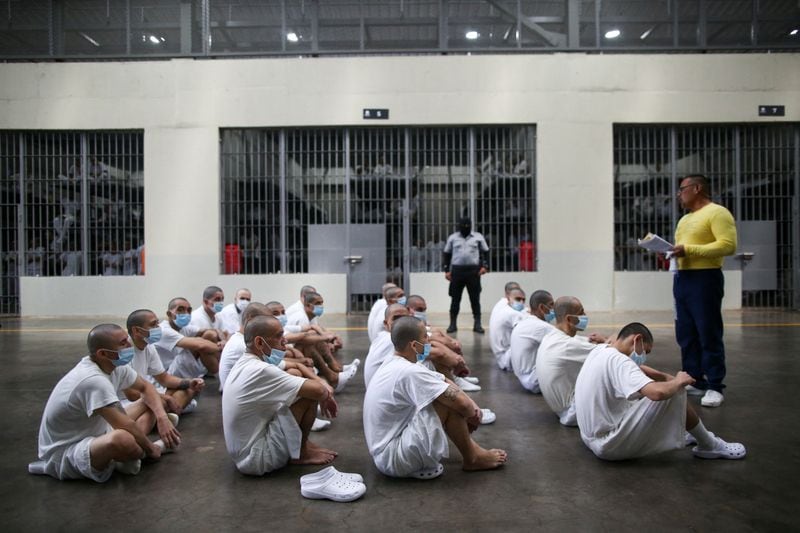
En su país de seis millones de habitantes, Bukele ha encarcelado a decenas de miles de jóvenes sin apenas garantías procesales, recluyendo a muchos de ellos en lo que denomina “megaprisiones”. Bolsonaro, quien afirma haber estudiado el enfoque de Bukele, ha propuesto construir cinco cárceles similares; asimismo, ha abogado por reducir la edad de responsabilidad penal a los 16 años y por aplicar la castración química a violadores y agresores de menores.
Cada vez más líderes latinoamericanos elogian el enfoque del señor Bukele y los resultados obtenidos, los cuales han convertido a El Salvador en una de las naciones más seguras de la región. Bukele, quien se ha autodenominado el dictador más “genial” del mundo, es también, según las encuestas, uno de los presidentes más populares del mundo.
© The New York Times 2026.
South America / Central America

Russian bio-leak secrecy follows Chernobyl playbook, ex-CIA officer warns

Dennis Hastert, longest-serving Republican House Speaker and convicted child molester, dies at 84

Higiene urbana: el gobierno porteño propuso que parte del pago a las empresas esté sujeto a la evaluación de los vecinos

Se confirmó la escandalosa verdad de la separación de Zaira Nara y Diego Forlán por un contrato prenupcial: “3 millones de dólares”

Vacunatorio VIP: comenzaron las indagatorias y las audiencias se extenderán hasta diciembre

Una victoria de Bolsonaro completaría casi por completo el mapa de Trump en América Latina

Milei volvió a dar un discurso en la Argentina Week de París y se emocionó en el cierre

Poll: Turek, Hinson in close Iowa Senate race

Javier Milei y sus medidas, en vivo: el mandatario cargó contra la prensa y la calificó de “sicarios de la pluma”

EEUU refuerza su presencia militar en Medio Oriente con miles de soldados mientras Trump evalúa una nueva ofensiva contra Irán

 INTERNACIONAL2 días ago
DHS exposes dilemma behind SCOTUS deportation fight: ‘We have two choices’
- POLITICA14 horas ago
¡Precios de Manhattan con sueldos de Argentina! Cómo los créditos hipotecarios inflaron las propiedades y congelaron el sueño de la casa propia
- POLITICA2 días ago
El Reino Unido anunció que las nuevas licencias de hidrocarburos en las Islas Malvinas requerirán su autorización final