INTERNACIONAL
Alterar la radiación solar para combatir el cambio climático: cómo funciona y qué impacto tendría en la salud


La posibilidad de modificar deliberadamente el clima para reducir las temperaturas globales y frenar el cambio climático gana cada vez más atención entre científicos.
Esta estrategia es conocida como modificación de la radiación solar (SRM, por sus siglas en inglés) y recibe financiamiento para su investigación. Existe un consenso general de que su aplicación sería prematura: la investigación avanza, pero la incertidumbre sigue siendo elevada.
Un equipo internacional integrado por especialistas de Argentina, Brasil, Reino Unido, Estados Unidos y Francia analizó los debates éticos actuales vinculados a la SRM y publicó los resultados en Zenodo.

El grupo, liderado por investigadores de CONICET, FLACSO Argentina, la Universidad de Buenos Aires y la Universidad Nacional de Entre Ríos, junto con la Alianza para una Deliberación Justa sobre la Geoingeniería Solar (ONG de Estados Unidos), examinó quiénes deberían tomar decisiones sobre su desarrollo y cuáles podrían ser los impactos en la salud humana.
El proyecto fue financiado por la Organización Mundial de la Salud (OMS) y el Wellcome Trust.

La SRM es un término paraguas que abarca tecnologías experimentales diseñadas para enfriar el planeta. Las más estudiadas en los modelos climáticos exploran cómo reflejar parte de la luz solar antes de que alcance la superficie terrestre o aumentar la emisión de radiación térmica saliente.
El objetivo es reducir el ingreso de luz o facilitar la salida de calor para compensar el calentamiento causado por los gases de efecto invernadero.
Esta idea ganó relevancia en 2006, cuando el Premio Nobel Paul Crutzen propuso en la revista Climatic Change la inyección de dióxido de azufre en la estratósfera como medida de emergencia.
En 2009, la Royal Society reforzó el debate científico y el Grupo Intergubernamental de Expertos sobre el Cambio Climático (IPCC) incluyó por primera vez esta tecnología en 2007.

La naturaleza ofrece un análogo: grandes erupciones volcánicas, como la del Pinatubo en 1991, demostraron que las partículas en la atmósfera pueden bajar la temperatura global temporalmente.
Las acciones más estudiadas incluyen inyectar aerosoles de azufre en la estratósfera, aclarar nubes marinas con sal para reflejar más luz o adelgazar nubes altas para liberar más calor al espacio.
Estas intervenciones tendrían alcance planetario y serían continuas, aunque sus efectos variarían según la región.
Esa diversidad de impactos plantea interrogantes sobre las consecuencias reales que podría tener la alteración del equilibrio solar de la Tierra.

Modificar la cantidad de luz solar no es un ajuste uniforme: la distribución de lluvias cambiaría, con aumentos en algunas regiones y descensos en otras, y la reducción de temperatura global sería desigual.
Los patrones climáticos que sostienen la agricultura y el agua potable de millones de personas podrían modificarse, y se generan preguntas sobre el impacto en la salud.
Las partículas inyectadas llegarían a la superficie y serían inhaladas por la población; algunas sustancias propuestas están asociadas a enfermedades respiratorias, cardiovasculares y neurológicas.
Además, disminuir la luz solar podría influir en el estado de ánimo y la salud mental, un riesgo que la ciencia apenas empieza a explorar.

Uno de los objetivos del informe, publicado en Zenodo, fue mapear el estado actual del debate científico y ético sobre la SRM desde una perspectiva de salud pública, con énfasis en los países del Sur Global.
“La pregunta central resultó incómoda pero necesaria: ¿qué efectos tendría esta tecnología en la salud de las personas y quién asumiría los riesgos?“, detalló en diálogo con Infobae una de las coautoras del trabajo, la doctora en filosofía María Florencia De Santi, magíster y especialista en Ciencia Política y Sociología (FLACSO) e investigadora en bioética del CONICET en el Centro de Investigación en Salud y Ambiente (CISA) de la Universidad Nacional de Entre Ríos.
Para responder, los investigadores combinaron una revisión bibliográfica narrativa y rápida en bases como PubMed y Google Scholar, al emplear decenas de combinaciones de términos en inglés y español. Entre miles de publicaciones, solo 17 estudios cumplieron los criterios para un análisis profundo, lo que revela una brecha crítica de evidencia sobre los impactos en la salud.
Esos 17 estudios no alcanzan para confirmar ni descartar los riesgos: los efectos identificados son inferencias basadas en las propiedades de las sustancias propuestas o en modelos climáticos, no en evidencia directa sobre el impacto de la SRM en poblaciones humanas.
Por eso, el principal hallazgo del trabajo fue la escasez de literatura sobre el vínculo entre la SRM y la salud humana, especialmente desde la perspectiva del Sur Global.
La mayoría de las investigaciones se desarrollan en países del Norte Global, en particular Estados Unidos y Europa, aunque comienza a crecer la participación de países latinoamericanos.
Las conclusiones apuntan a que los efectos de las tecnologías serían desiguales, según la región, el nivel socioeconómico y la capacidad de los sistemas de salud.

“Los marcos éticos y de gobernanza existentes abordan la salud solo de forma indirecta, y los países del Sur Global están prácticamente ausentes tanto en la investigación como en la toma de decisiones”, señaló la investigadora superior del Conicet y primera autora del informe, la doctora Florencia Luna, quien es una de las ganadoras del Premio Konex Diploma al Mérito 2026 en la categoría “Ética”.
Mientras tanto, la modificación de la radiación solar aparece como posible alternativa ante la dificultad de reducir la temperatura global solo con las medidas actuales.
Así surgió una pregunta adicional, de acuerdo con los investigadores: “Si no se consigue frenar el calentamiento ahora, ¿cómo se podrá evitar sus consecuencias más graves sobre la salud humana?“.
Como coeditores y autores del reporte, también estuvieron Timothy Daly e Ignacio Mastroleo. El equipo contó con la colaboración de Marco Agustoni, Paola Buedo, Inés Camilloni, María Inés Carabajal, Francisco Garcia-Gibson, Julia Guivant, Gian Franco Lisanti, Julieta Nasi, Hassaan Sipra y Shuchi Talati.
Tierra,espacio,amanecer,sol,órbita,planeta,nubes,atmósfera,cosmos,vista













INTERNACIONAL
Francia: uno de los peores incendios desde la II Guerra «no prospera» pero sigue fuera de control

El frente de batalla en Marcheprime
Reunión de crisis del gobierno
La postura de Burdeos

Solidaridad nacional
Empresas afectadas y respuesta de los seguros
Solidaridad y alojamiento para las víctimas

NEWYou can now listen to Fox News articles!
While U.S. tech companies race for AI dominance, the latest Fox News nationwide survey finds voters hitting the brakes on data centers, as more prefer taking time to address local concerns than rushing expansion to maintain a competitive global edge.
By a 40-point margin, voters oppose building data centers in their area to support artificial intelligence (30% favor, 70% oppose).
MAGA supporters (46% favor) and Republican men (45%) are the groups most likely to favor data centers, while White women with a college degree (84% oppose) and liberal voters (80%) are the most opposed.
FOX NEWS POLL: VOTERS WANT MAJOR CHANGE AMID ECONOMIC AND POLITICAL DISCONTENT
Among those favoring data centers, 60% cite economic benefits, including jobs, economic growth, community investment, and tax revenue as the reason for their support. Another 21% point to technological benefits, saying the centers are useful, necessary, or important for future progress. Just 2% say staying ahead of competitors is the primary reason for their support.
Those opposing data centers emphasize a different set of considerations. Half (50%) say environmental issues are their main concern, including energy and water use, pollution, noise, and overall environmental impact, while far fewer mention quality-of-life concerns (14%), economic effects (11%), or simply having a negative view of AI (11%).
FOX NEWS POLL: SIGNIFICANT SUPPORT FOR BOTH VOTER ID LAWS AND MAIL-IN BALLOTS
While data centers are broadly unpopular, views of artificial intelligence technology itself are somewhat less negative. Overall, 45% view AI favorably versus 54% unfavorably, underwater by 9 points. In April, it was -11 points.
Positive views of AI are higher among MAGA Republicans (55% favorable), voters with graduate degrees (52%), conservatives (50%), and men (49%) than among Democrats (41%), those without a college degree (43%), liberals (37%), and women (40%).
Nearly 8 in 10 voters prefer slower data center construction to address environmental and community concerns, while 2 in 10 favor building them as quickly as possible to maintain a competitive advantage over China and other countries.
While majorities across the board prefer the slow adoption of the centers, MAGA Republicans (36%) and very conservatives (35%) are the most likely to prioritize rapid expansion to maintain international competitiveness.
AI won’t find an ally in the under 30 crowd
Although younger voters are often viewed as more tech-savvy, that does not translate into warm views of artificial intelligence.
Voters under age 30 are the least likely to view AI favorably, at 38%, compared with 48% of those ages 30-44 and 44% of those 45 and over.
CLICK HERE FOR CROSSTABS AND TOPLINE
Regardless of differences in views of AI, attitudes toward data centers are pretty consistent across generations. Roughly 7 in 10 in every age group oppose building data centers, and about 8 in 10 prefer slowing construction to address environmental and local concerns.
Conducted July 17–20, 2026, under the direction of Beacon Research (D) and Shaw & Company Research (R), this Fox News survey includes interviews with a sample of 1,003 registered voters randomly selected from a national voter file. Respondents spoke with live interviewers on landlines (70) and cellphones (681) or completed the survey online after receiving a text (252). Results based on the full sample have a margin of sampling error of ±3 percentage points. The survey includes an oversample of 200 voters aged 18–29, bringing the sample size for that subgroup to 350 (±5). Sampling error for results among subgroups is higher. In addition to sampling errors, question wording and order can influence results. Weights are generally applied to age, race, education, and area variables to ensure the demographics are representative of the registered voter population. Sources for developing weight targets include the most recent American Community Survey, Fox News Voter Analysis, and voter file data.
fox news poll, politics, artificial intelligence, donald trump, china, economy, technologies
INTERNACIONAL
Brote de infecciones respiratorias cobra la vida de seis personas en la comarca indígena Ngäbe Buglé, en Panamá
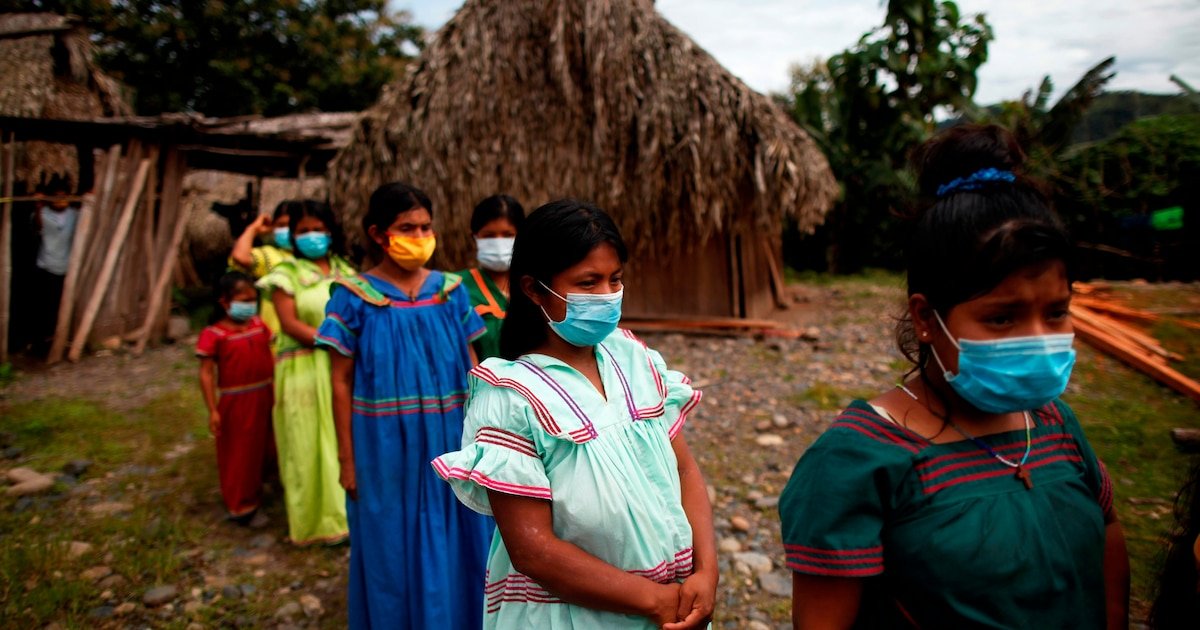
Seis personas, entre niños y adultos, fallecieron recientemente en la comarca Ngäbe Buglé a raíz de un brote de infecciones respiratorias bajas graves.
Las autoridades sanitarias movilizaron un equipo de respuesta rápida para investigar la situación y reforzar las acciones de atención médica en las comunidades afectadas.
Desde el sábado pasado, el Ministerio de Salud desplegó personal especializado en las zonas de Valle Bonito, Palmira y Guayacán.
El equipo permanecerá en el área hasta el viernes, realizando investigaciones de campo y vigilando de cerca la evolución de los casos.
El objetivo principal es identificar el origen del brote y contener su propagación, mientras se mantienen medidas de respuesta sanitaria.

La intervención permitió ofrecer atención médica a 178 personas, administrar 391 dosis de vacunas —incluidas 184 contra la influenza— y distribuir 394 medicamentos en las comunidades afectadas. Las acciones forman parte de un plan integral que busca limitar los riesgos asociados a la enfermedad respiratoria.
El Ministerio de Salud señaló que tres de los fallecidos no buscaron atención médica o recurrieron únicamente a medicina botánica.
Los contactos cercanos de estos casos permanecen asintomáticos, según los reportes iniciales de la investigación epidemiológica.
Hasta el momento, la vigilancia epidemiológica continúa activa en la comarca. Las autoridades insisten en que toda persona con fiebre, dificultad para respirar o tos persistente debe acudir al centro de salud más cercano y evitar la automedicación.
El llamado busca garantizar el diagnóstico y tratamiento oportunos, y así prevenir nuevas complicaciones en la población.

Por otra parte, el ministerio informó que más de 14 mil pacientes han recibido atención médica en todo el país gracias a la iniciativa “Juntos por la Salud”, que opera en 27 instalaciones de salud y busca reforzar la atención especializada en diferentes regiones de Panamá.
El programa se ha desplegado en hospitales como San Miguel Arcángel, Santo Tomás y Nicolás A. Solano, donde profesionales panameños y estadounidenses colaboran en la atención a la población.
Durante la última semana, cerca de 100 pacientes de cardiología y fonoaudiología en Panamá Oeste recibieron atención como parte de este esfuerzo conjunto.
El ministro de Salud, Fernando Boyd Galindo, y el embajador de Estados Unidos en Panamá, Kevin Marino Cabrera, recorrieron el Hospital Nicolás A. Solano para supervisar la labor de los nueve especialistas del Comando Sur que actualmente prestan servicios en el lugar.
El ministro Boyd Galindo subrayó el respaldo del personal médico militar, quienes aportan experiencia en áreas como cardiología, fisioterapia, pediatría y ginecología.

Destacó que el apoyo llega en un momento clave, ya que el Estado se encuentra en proceso de licitación para construir el nuevo Hospital Nicolás A. Solano, proyecto que contempla una inversión de $78 millones. Posteriormente, se prevé la construcción de un hospital materno infantil, infraestructura considerada necesaria para la zona.
La iniciativa nació con el objetivo de fortalecer la respuesta sanitaria nacional. Para ello, el Comando Sur de Estados Unidos aporta servicios médicos especializados y entrega insumos, equipos y medicamentos valorados en decenas de miles de dólares, según la información oficial.
Las misiones de “Juntos por la Salud” se desarrollan de manera simultánea en 27 centros de atención, cubriendo las diez provincias del país y la comarca Ngäbe Buglé. Esta estrategia busca ampliar el acceso a servicios médicos de calidad en comunidades que requieren apoyo adicional, reforzando la cooperación internacional en materia de salud pública.
“Estamos muy contentos con los resultados de la iniciativa ‘Juntos por la Salud’, que iniciamos este año con la meta de beneficiar a más de 10 mil panameños”, dijo el embajador estadounidense Kevin Marino Cabrera.

La industria no repunta: la producción volvió a caer en junio, según la UIA

Desmantelaron una organización narco en Córdoba tras varios allanamientos y hay ocho detenidos

Luciano Acosta quedó bajo la lupa por una amonestación

Larreta cruzó a Jorge Macri por cobrar la entrada al Ecoparque a quienes no residan en la ciudad de Buenos Aires

Francia: uno de los peores incendios desde la II Guerra «no prospera» pero sigue fuera de control

Neymar desmiente haber faltado el respeto a sus compañeros: ‘No hagan eso, no mientan’

Vocero de Milei dijo que un dólar a $1.800 es «posible» y la City alerta por fin de la paz cambiaria

Polémica por el proyecto que busca desregular los planes de ahorro de autos 0 km: qué podría cambiar

Panorama internacional: Brasil, una batalla electoral no solo de los brasileños

Convivencia pacífica o tensión administrada: el PRO define cómo pararse frente al gobierno de Milei rumbo a 2027

 POLITICA17 horas ago
Crisis entre Milei y Lula: la trama política, personal y geopolítica detrás del mayor choque diplomático entre Argentina y Brasil
- POLITICA2 días ago
Cuentapropismo emocional en lo profundo del conurbano
- SOCIEDAD1 día ago
San Isidro: la ballena que quedó varada en un banco de arena murió pese al operativo de rescate