INTERNACIONAL
Bessent says Trump tariffs could return by July after Supreme Court setback

NEWYou can now listen to Fox News articles!
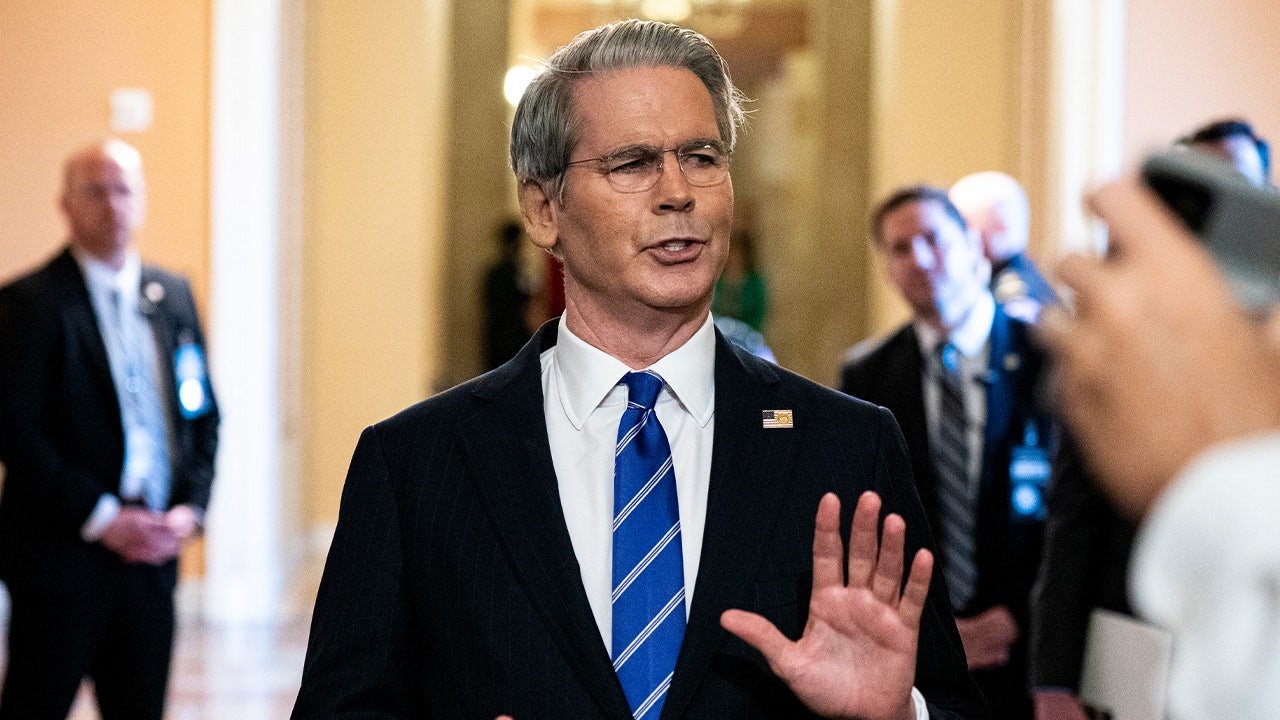
Treasury Secretary Scott Bessent suggested Tuesday that President Donald Trump’s tariffs could be restored as early as July, signaling a rapid pivot by the Trump administration after the Supreme Court struck down Trump’s IEEPA-based tariffs earlier this year, forcing the administration to turn to other trade authorities.
«We had a setback at the Supreme Court in terms of the tariff policy,» Bessent said Tuesday at an event hosted by the Wall Street Journal. «But we will be implementing or conducting Section 301 studies — so the tariffs could be back in place at the previous level by [the] beginning of July.»
His remarks come after the Supreme Court ruled in February that the International Emergency Economic Powers Act, or IEEPA, does not authorize tariffs.
Trump has billed tariffs as «life or death» for the U.S. economy — underscoring the outsize importance the administration has placed on the issue.
TRUMP TARIFF PLAN FACES UNCERTAIN FUTURE AS COURT BATTLES INTENSIFY
A protester holds a sign as the U.S. Supreme Court hears arguments on President Trump’s tariffs on Nov. 5, 2025. (Bill Clark/CQ-Roll Call, Inc via Getty Images)
Bessent’s comments also come as the U.S. collected more than $133 billion in IEEPA tariff duties as of mid-December, according to data published by the U.S. Customs and Border Protection agency, a figure that later grew to roughly $166 billion by early March 2026.
The administration moved to preserve tariffs in the weeks since the Supreme Court’s ruling to find new ways to implement the import fees, invoking several provisions of the U.S. Trade Act of 1974 in order to do so.
Bessent’s remarks, first reported by Bloomberg, are a sign that the Trump administration plans to enact a combination of statutes under the trade law as it looks to move past the high court’s ruling and find new ways to sustain U.S. tariff pressure.
The strategy, long-term, appears to focus largely on Section 301 of the Trade Act of 1974, which allows the president and the U.S. Trade Representative’s office (USTR) to implement «retaliatory import restrictions» against a country that is found to have engaged in unfair or «discriminatory» trade policies or practices towards U.S. businesses.
Section 301 allows the U.S. Trade Representative to investigate and respond to «unfair» foreign trade practices flagged by the president, though they require a formal period of notice and public comment, delaying enforcement.
Since the Supreme Court’s ruling, the Trump administration has initiated a flurry of more than 75 investigations under Section 301, according to a report from Alan Wm. Wolff, a senior fellow for the Peterson Institute for International Economics — far outpacing the average annual number of Section 301 investigations initiated during the past five decades.
TRUMP WARNS SUPREME COURT TARIFF SHOWDOWN IS ‘LIFE OR DEATH’ FOR AMERICA
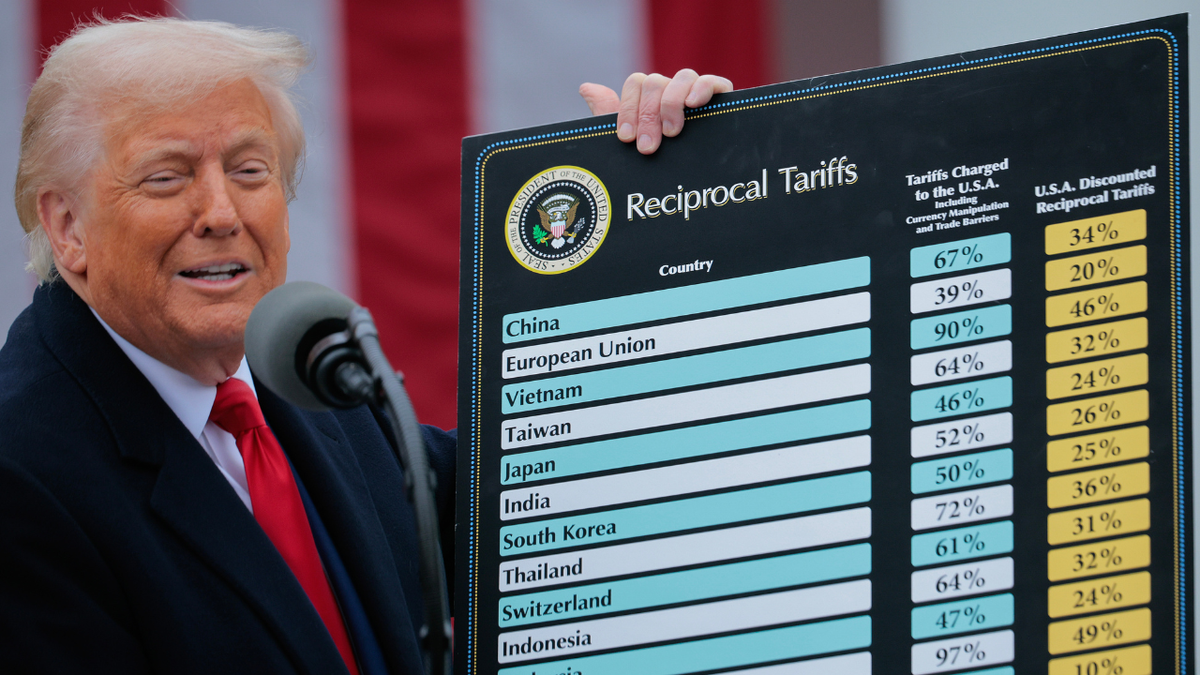
President Donald Trump speaks during a trade announcement event in the Rose Garden at the White House on April 2, 2025. (Chip Somodevilla/Getty Images)
That’s not the only lever administration officials have pulled in an effort to keep Trump’s tariffs in place, however.
Trump last month announced new 10% global tariffs — an emergency provision under the trade law that allows a president to unilaterally impose import fees of up to 15% on U.S. trading partners for a period of 150 days, to respond to large and serious «balance of payments deficits,» or instances that risk immediately depreciating the power of the dollar.
The Section 122 announcement prompted a lawsuit from 24 attorneys general, who argued the move was an illegal attempt to «sidestep» the Supreme Court’s ruling. It also prompted another lengthy hearing before the U.S. Court of International Trade in Manhattan Friday, as judges on the three-member panel weighed the legality of Trump’s effort.
Lawyers for the challenges told the court Friday that upholding the administration’s broader view of the law would effectively turn Section 122 into an all-purpose trade weapon.
US COURT OF INTERNATIONAL TRADE SIDES WITH TRUMP IN TARIFF CASE
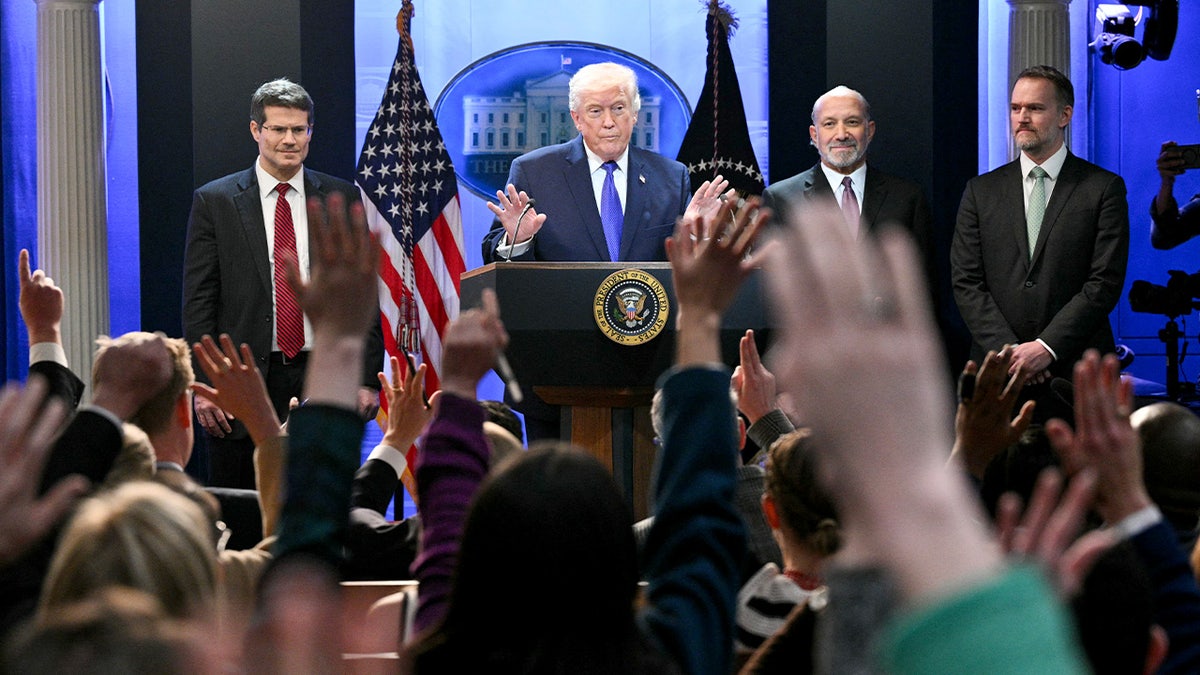
President Donald Trump during a press conference at the White House on Feb. 20, 2026. (Mandel Ngan/Getty Images)
But Justice Department lawyer Brett Shumate argued that Congress had provided presidents with broad discretion to assess economic conditions.
«A trade deficit was a large driver of a balance of payments deficit in 1974 as it is today,» Shumate said.
CLICK HERE TO GET THE FOX NEWS APP
«We’re not on the gold standard anymore,» he said. «We don’t have a fixed currency, but we can still have balance-of-payment problems.»
donald trump, politics, supreme court, federal courts, global economy, economy








INTERNACIONAL
AOC’s ‘modern-day lynchings’ claim torn to shreds online as Black hanging case findings tell a different story
‘Not exactly Alexandria from the Bronx’: ‘The Five’ ridicules AOC’s fake southern accent
The Five panel criticizes Alexandria Ocasio-Cortez’s use of a «fake Southern accent» at a Memphis rally for Justin Pearson, sparking debate about her political authenticity and policy prowess. Commentators question her ability to handle unscripted debates, highlighting past instances where her policy proposals lacked substance, like the Amazon HQ2 controversy in Long Island City.
NEWYou can now listen to Fox News articles!
This story discusses suicide. If you or someone you know is having thoughts of suicide, please contact the National Suicide Prevention Lifeline at 988 or 1-800-273-TALK (8255).
Rep. Alexandria Ocasio-Cortez, D-N.Y., warned Friday of «racial terror» and «widespread modern-day lynchings» in the U.S. as she joined dozens of Democrats demanding that the DOJ and FBI investigate hanging deaths of Black Americans.
Multiple official findings in several recent cases show that law enforcement or medical examiners ruled the deaths suicides, while at least one very recent death remains under a homicide investigation.
AOC alleges there is systemic racial bias at the agencies, while fellow progressive lawmaker Rep. Ayanna Pressley, D-Mass., called the hangings a «national crisis» in a letter to the agencies that she spearheaded.
MS RACHEL SPEAKS OUT ON BLACK HANGING CASES AS RALEIGH DEATH IS DECLARED SUICIDE
«This year, there have already been 10 reported hangings of Black people in the U.S. I’m proud to have signed onto Rep. Pressley’s letter to address these widespread modern-day lynchings and put a stop to this racial terror,» Ocasio-Cortez wrote on X in support of the call.
Pressley warned in her letter that «Black folks are being found hanged in America» and insisted: «We cannot stand by while strange fruit hangs from trees across the country.»
The letter, addressed to Attorney General Todd Blanche and FBI Director Kash Patel, was signed by Pressley, Ocasio-Cortez and about 50 Democrats. They demanded a «thorough, transparent, and comprehensive federal investigation into every hanging death of a Black individual across the United States,» arguing that federal agencies have failed for decades to adequately investigate such deaths.
FAMILY IDENTIFIES YOUNG WOMAN FOUND FATALLY SHOT IN HOME OWNED BY REP AYANNA PRESSLEY’S HUSBAND
One 2026 case involved the death of a 21-year-old Atlanta man who had gone missing. He was later found hanging from a tree in a Cobb County park, where officials ruled out foul play and deemed the death a suicide, according to Atlanta’s NBC affiliate.
Another 2026 case involved Delta State University student Demartravion Reed in Mississippi. Officials «determined the cause of death to be a hanging and the manner of death as suicide.»
At the time, the case reopened old memories of the murder of Emmett Till, according to reports. Till was a Black teen kidnapped and murdered by White men not far from the site after he was falsely accused of flirting with a White woman in 1955.
15-YEAR-OLD BLACK TEEN’S MURDER REVEALS THE UGLY TRUTH ABOUT WHITE GUILT IN AMERICA
A Grio report on Pressley’s letter also referenced the hanging deaths of a 58-year-old man in Albany, N.Y., and a 39-year-old man in Brookfield, Wisconsin.
The Albany Police Department said Earl Smith’s death was «ruled a suicide» and investigators found «no evidence» of criminal activity.
«The Albany Police Department is aware of concerns posted on social media suggesting that criminal activity was involved with this incident, which has understandably caused public concern,» the department said.
A preliminary investigation of the Wisconsin man’s death also indicated suicide, according to Brookfield’s police chief cited by the Waukesha County Freeman.
At least one case remains under homicide investigation, according to reports.
Tasia Fortune was found hanging outside an abandoned house in Jackson, Mississippi, CNN reported Thursday. Authorities later questioned Terence Bernard Anderson, the father of one of her children, and arrested him on unrelated weapons charges, according to several reports.
AOC SLAMS ‘OPPRESSED’ TRUMP STATES WHILE TOUTING NYC SERVICES DESPITE $5B DEFICIT AND TRANSIT CRIME SPIKE
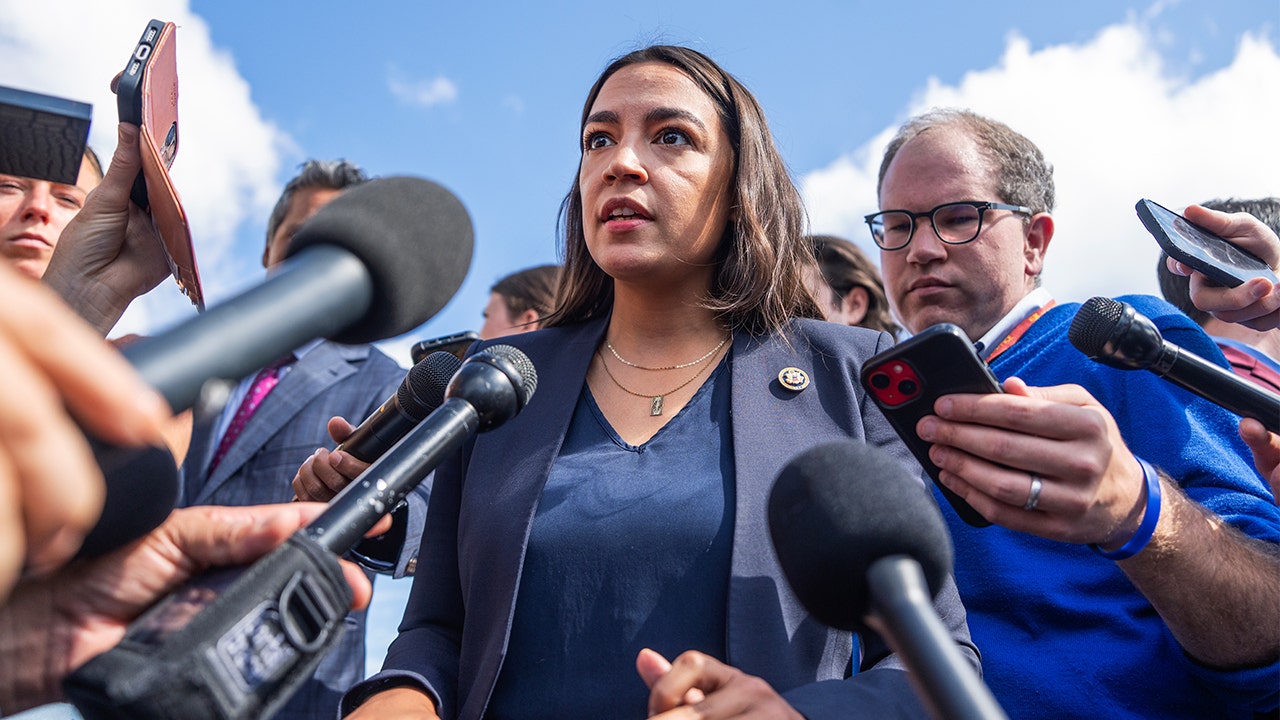
Rep. Alexandria Ocasio-Cortez, D-N.Y., talks with reporters outside the U.S. Capitol on Sept. 11, 2025. (Tom Williams/CQ-Roll Call, Inc via Getty Images)
The lawmakers’ characterization also drew criticism on social media.
«Those community notes are stacking up,» one critic said, as X’s crowdsourced correction indicator included several wire reports and media links disputing Ocasio-Cortez’ claims.
«There should be some sort of penalty for willfully lying on social media, especially for a politician,» another claimed.
Former Energy Department official Matt Van Swol posted to X, «In the last ‘lynching’ of a Black woman, the media conveniently left out the prime suspect in the case was her Black boyfriend. Zero White people are lynching Black people in America today.»
WATCH: SQUAD DEMOCRAT SPEAKS OUT AFTER TEEN FOUND SHOT DEAD AT HUSBAND’S BOSTON PROPERTY
Former Senate staffer Matt Whitlock added that «every death is a tragedy, but what do you think ‘widespread’ means if only one of these was actually a homicide. Not sure you’ve landed the point about ‘racial terror’ with this.»
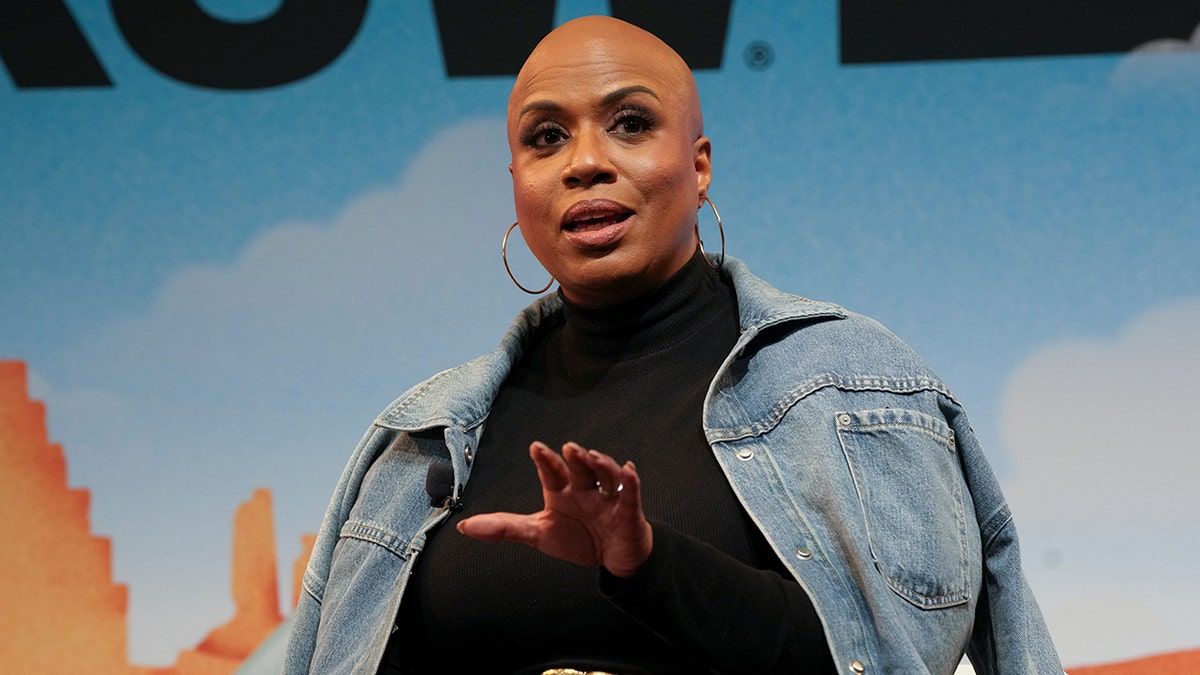
Ayanna Pressley at the Featured Session «Repro Revolution: A Conversation with Rep. Ayanna Pressley» during the SXSW Conference & Festivals held at the Austin Convention Center on March 9, 2025, in Austin, Texas. (Amy E. Price/SXSW Conference & Festivals via Getty Images)
X’s crowdsourced Community Notes feature also pointed readers to law-enforcement and medical-examiner findings in several of the cases, stating that most high-profile hanging deaths it identified in 2025 and 2026 had been ruled suicides and that one remained under homicide investigation.
When reached for comment, Pressley spokesperson Ricardo Sanchez directed Fox News Digital back to the lawmakers’ letter to Blanche and Patel, specifically a line reminding them that «Congress enacted the Emmett Till Antilynching Act in 2022 to ensure the DOJ and FBI are empowered to fully investigate suspicious deaths and hold individuals accountable.»
Fox News Digital reached out to Ocasio-Cortez, the DOJ and the FBI for comment.
alexandria ocasio cortez, hate crime, homicide, controversies state and local, politics, the squad, democrats
INTERNACIONAL
Guatemala declara alerta roja en el Trifinio por crisis de sequía: vicepresidenta Karin Herrera ordena medidas urgentes

Guatemala declaró alerta roja en la región del Trifinio por los efectos agroclimáticos de El Niño, mientras la vicepresidenta Karin Herrera ordenó medidas urgentes para contener la escasez de agua y alimentos en municipios de Chiquimula y Jutiapa. La decisión, tomada el 11 de septiembre de 2026, busca reforzar la atención sanitaria, sostener el abastecimiento alimentario y proteger a las familias expuestas a la sequía en el corredor seco ampliado.
La alerta roja se activó después de que el Consejo Nacional de Seguridad Alimentaria y Nutricional declarara alerta naranja en todo el país ante el riesgo de afectaciones en la disponibilidad de agua y alimentos. La medida nacional antecedió a la elevación de la emergencia en la zona fronteriza del Trifinio.
La instrucción fue dirigida a la Coordinadora Nacional para la Reducción de Desastres durante dos reuniones extraordinarias encabezadas por Herrera. La Vicepresidencia informó que los encuentros buscaron coordinar a las instituciones responsables de atender las consecuencias de la sequía.
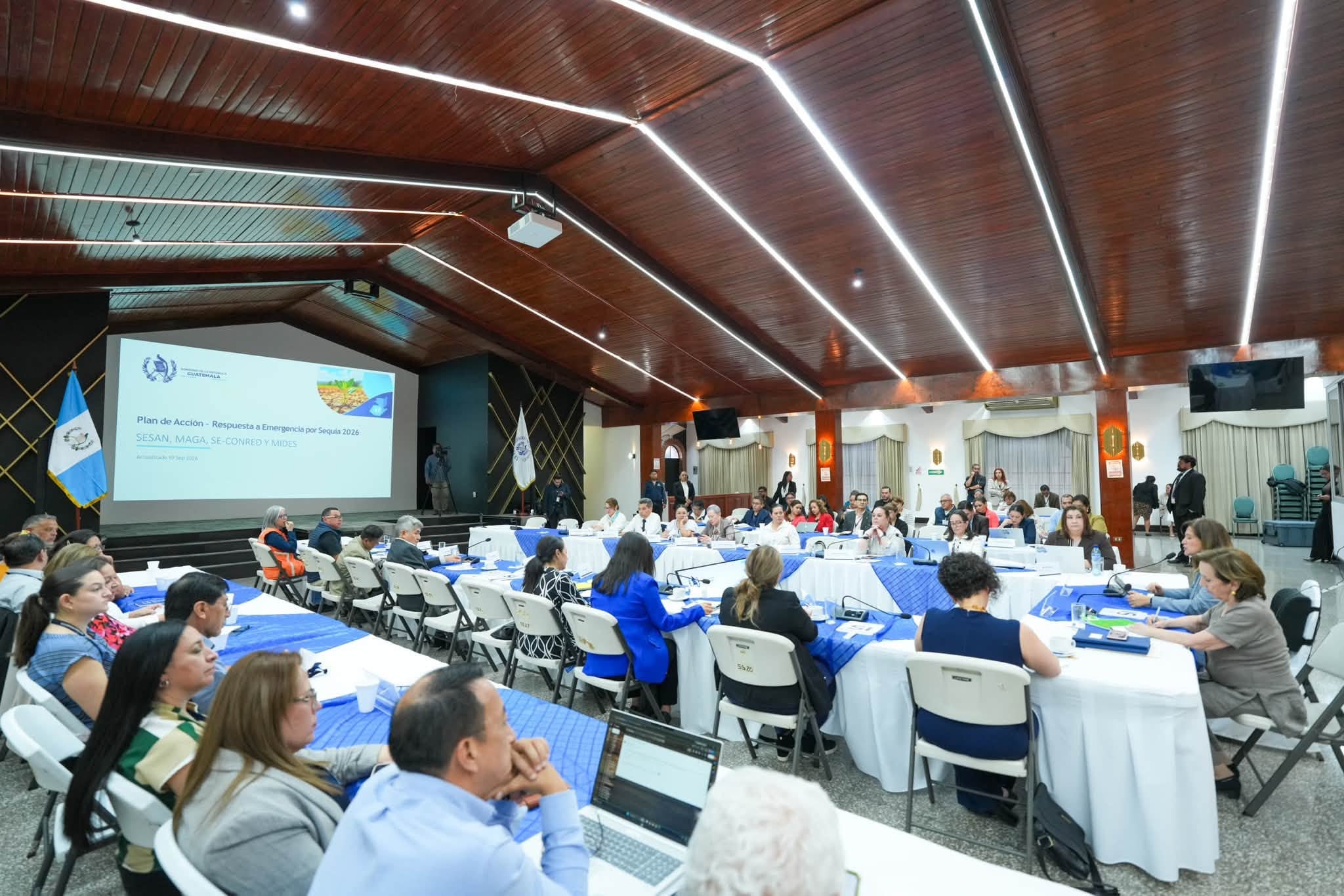
Un plan para el Trifinio y el corredor seco ampliado
La primera reunión correspondió al Gabinete Específico de Desarrollo Social, que revisó los acuerdos alcanzados con el Gabinete Específico de Desarrollo Económico. Allí se presentó el Plan de Acción–Respuesta a Emergencia por Sequía 2026, diseñado para la Región Trifinio y el corredor seco ampliado, donde se concentra una parte de la vulnerabilidad alimentaria guatemalteca.
Cinco ministerios recibieron tareas específicas. El Ministerio de Economía deberá fijar precios de referencia y actuar frente a aumentos injustificados en productos de la canasta básica y combustibles.
El Ministerio de Salud Pública y Asistencia Social deberá sumar medidas de vigilancia y respuesta ante enfermedades relacionadas con la falta de agua o su mala calidad. También deberá incorporar al Consejo Nacional de la Juventud en las brigadas sanitarias.
El plan dispone el despliegue de 124 brigadas de salud y nutrición con equipos multidisciplinarios. Su labor incluirá suplementación, desparasitación y vacunación de niñas, niños y mujeres embarazadas, además del monitoreo comunitario de la calidad del agua, de acuerdo con el Consejo Nacional de Seguridad Alimentaria y Nutricional.
El Ministerio de Desarrollo Social tendrá que asegurar que los bonos conserven su carácter condicionado y alcancen a todos los beneficiarios prioritarios. A su vez, el Ministerio de Finanzas Públicas deberá identificar recursos disponibles y analizar medidas legislativas que permitan acelerar la ejecución presupuestaria.
Las autoridades asignaron al Ministerio de Agricultura, Ganadería y Alimentación la reducción de los plazos de entrega de alimentos. La cartera también deberá definir acciones para asegurar agua y alimentación al ganado afectado por la ausencia de pastos.
Reservas de alimentos, pozos y asistencia para productores
La emergencia contempla reservas estratégicas de alimentos y la activación del seguro agrícola como compensación ante la pérdida de cosechas. También prevé reservorios artesanales para captar agua de lluvia, raciones destinadas a la ganadería y la rehabilitación de pozos comunitarios.
Los productores rurales podrán acceder a crédito con tasas nulas mediante inversión de capital en cajas rurales. La medida busca evitar que los campesinos abandonen sus tierras por la pérdida de cultivos y la falta de recursos para sostener su actividad.
La Secretaría de Seguridad Alimentaria y Nutricional, Sesan, deberá mantener el seguimiento de las familias que atraviesan inseguridad alimentaria y actualizar la estimación de población afectada. Desde el Conasan también continuará la verificación del estado nutricional de la niñez y de la evolución de la crisis en los hogares más expuestos.
Herrera convocó a alcaldes y gobernadores del Trifinio y del corredor seco ampliado para que eleven las alertas necesarias ante los Coordinadores de Emergencia municipales y departamentales. El objetivo es garantizar el acceso al agua y la asistencia para las familias alcanzadas por la sequía.
Los gobiernos locales deberán utilizar recursos de los Consejos de Desarrollo en cocinas escolares y centros de recuperación nutricional, conforme a la tipología de seguridad alimentaria aprobada por el Consejo Nacional de Desarrollo Urbano y Rural. La instrucción busca dirigir fondos hacia los espacios donde se atiende a población con mayor riesgo nutricional.
“Cada día cuenta; tenemos que proteger la salud y la vida de la población guatemalteca”, afirmó Herrera durante la reunión del Gabinete Específico de Desarrollo Social. La vicepresidenta sostuvo que la respuesta debe situarse por encima de las banderas políticas y concentrarse en las familias vulnerables.
La producción nacional de granos resulta insuficiente, por lo que Guatemala deberá recurrir a importaciones para garantizar el abastecimiento oportuno. Herrera ordenó anticipar y agilizar esos procedimientos, además de fortalecer el monitoreo de caudales, embalses y generación hidroeléctrica con escenarios que permitan activar medidas preventivas.
“Es indispensable garantizar transparencia y trazabilidad en la entrega de la asistencia, verificando que llegue efectivamente a las familias que la necesitan”, señaló la vicepresidenta, según la Vicepresidencia. Las instituciones convocadas deberán presentar en 15 días calendario un informe escrito sobre los avances en la aplicación de las medidas.
Guatemala,reunión gubernamental,ministerios
NEWYou can now listen to Fox News articles!
President Donald Trump said Saturday during a trip to Ireland that he would love to see the country unified.
The Republic of Ireland gained independence from the United Kingdom in 1922, while Northern Ireland, established in 1921, has remained part of the U.K.
«I don’t want to cause any problems, but I will tell you, I’d love to see it unified. I have friends on both sides, great people. They’re Irish people. How can they be bad, right?» Trump said in Dublin while on stage with Ireland’s prime minister, Micheál Martin. «I’d like to see a unified country. I think it would be a great feather in everybody’s cap if that happened. It’s going to happen eventually.»
He added that the U.K. «will have something to say about it obviously,» but reiterated that unification would be a «great thing.»
TRUMP SAYS IRAN CONFLICT COULD END AFTER MIDTERMS
President Donald Trump meets with Ireland’s Prime Minister Micheál Martin at Farmleigh House in Phoenix Park in Dublin on Sept. 12, 2026. (Brendan Smialowski/AFP via Getty Images)
In response to Trump’s comments, British Prime Minister Andy Burnham said in a statement that the U.K. government’s stance on reunification remains unchanged.
«I am not aware that there is majority public support for another referendum, and until that changes, there will not be one,» Burnham told reporters in Parliament, according to Reuters.
Later Saturday, Trump addressed a crowd at the Deerfield Residence, the official home of the U.S. ambassador to Ireland.
U.S. Ambassador Edward S. Walsh introduced the president, who took the stage to the sound of Lee Greenwood’s «God Bless the USA.»
Early in his remarks, Trump revisited the question a reporter had asked during his meeting with Martin about the prospect of Irish reunification.
«That’s one of those questions where no matter what you say, no matter how well you say it, there’s no good answer, right?» he said, before saying reunification would be a «cool thing.»
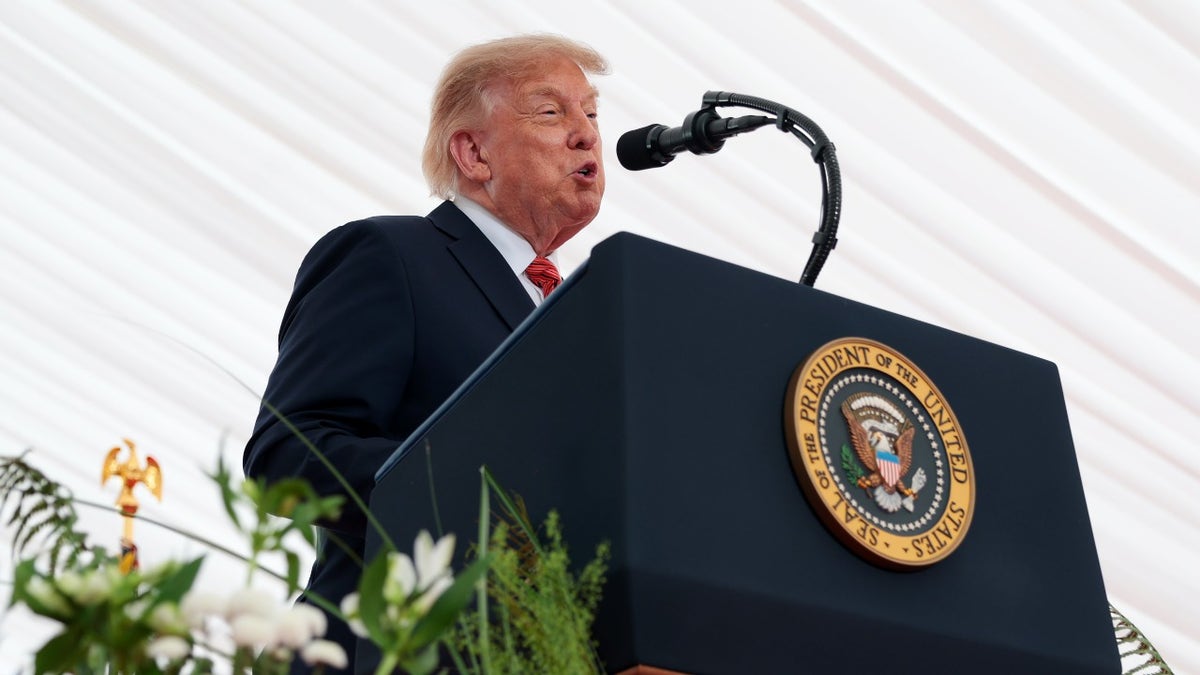
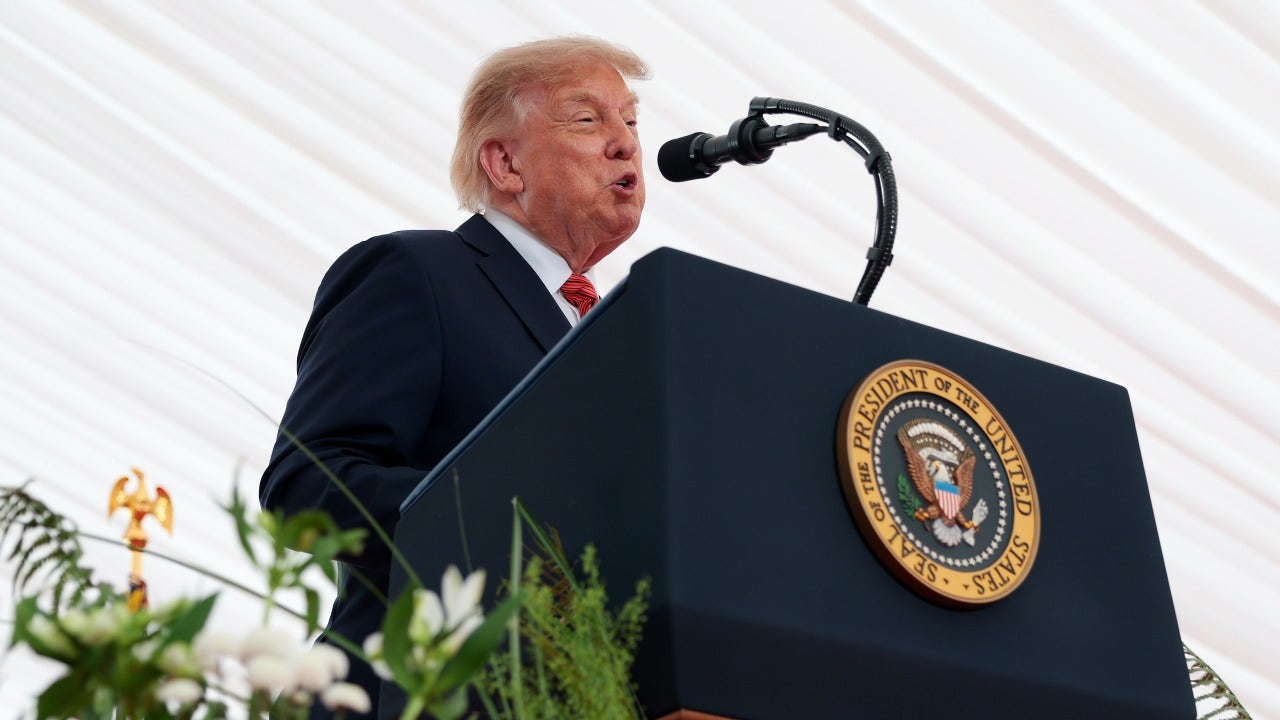
President Donald Trump delivers remarks to U.S. Embassy personnel and business leaders at Deerfield Residence on Sept. 12, 2026, in Dublin, Ireland. (Anna Moneymaker/Getty Images)
IRISH AUTHORITIES SEEK EXTRADITION WARRANT FOR SUSPECT IN MURDER OF AMERICAN MOM JAMEY CARNEY: REPORT
The debate over whether Ireland should be one country has been one of the island’s most divisive political issues for decades.
At times, it was far more than a war of words. From the late 1960s through the late 1990s, Northern Ireland was gripped by decades of sectarian violence known as «the Troubles.»
Irish nationalists and republicans — drawn largely from Northern Ireland’s Catholic minority — sought to reunite the island under a single Irish state.
Unionists and loyalists, who mostly belonged to the Protestant majority, wanted Northern Ireland to remain part of the U.K.
Throughout the conflict, more than 3,500 people were killed in violence involving Irish republican and loyalist paramilitary groups, as well as British security forces.

A photographer captures a scene of soldiers in front of a building in May 1981 in Northern Ireland. (Joe McNally/Getty Images)
The fighting largely ceased with a peace deal in 1998, but in the decades since, tensions remain between Protestants and Catholics in Northern Ireland.
A 2024 U.K. Parliament report found that 90% of students in Northern Ireland attend schools that «are effectively segregated along religious lines.»
The peace deal signed in 1998 — known as the Good Friday Agreement or the Belfast Agreement — set up a new government that had representation for both nationalists and unionists.
It also established that Northern Ireland will remain part of the U.K. unless a majority of citizens vote to leave through a referendum.
Brexit reignited debate over Ireland’s future, with Northern Ireland voting to remain in the European Union even as the U.K. as a whole voted to leave. Still, no referendum has been proposed or scheduled on whether Northern Ireland should leave the United Kingdom.
Reuters contributed to this report.
ireland, donald trump, uk politics, united kingdom

Martita Fort publicó una foto con su novio tras oficializar su romance y las redes estallaron: «Qué bien que come…»

El Congreso de la Comunidad reunió a más de 6.000 vecinos en Lomas de Zamora

Pese a tasas de interés levemente positivas, en agosto volvieron a caer los depósitos en pesos

La brutal patada voladora a Martínez Quarta a los 12 minutos que terminó con la expulsión de Nicola en Atlético Tucumán-River Plate

El Ejecutivo sumará obras de gobernadores aliados al Presupuesto 2027 para acercar posiciones en el Congreso

AOC’s ‘modern-day lynchings’ claim torn to shreds online as Black hanging case findings tell a different story

El día que Owen Wilson se emocionó por el abrazo que le dio Lionel Messi tras un partido

Berni se diferenció de Kicillof en la aplicación de la baja de la edad de imputabilidad

La desafiante aventura de Carolina Baldini en moto por Europa: desde Edinburgo a Liverpool en dos ruedas

Cuánto cuesta comprar una pick up en la Argentina y cuáles son los modelos más baratos en septiembre

 POLITICA1 día ago
“¿Dónde está Kicillof?”: Patricia Bullrich cruzó al gobernador por la inseguridad en la Provincia
- ECONOMIA2 días ago
Así es la primera pickup compacta nacional: diseño, cuándo empezará a venderse y el novedoso sistema híbrido que tendrá
- DEPORTE2 días ago
Alarmante frase de Pierre Gasly antes del estreno del circuito de Fórmula 1 en Madrid