
INTERNACIONAL
Newsom taunts Trump with multiple jabs as Florida redistricting fight ramps up: ‘Beat at his own game’

NEWYou can now listen to Fox News articles!
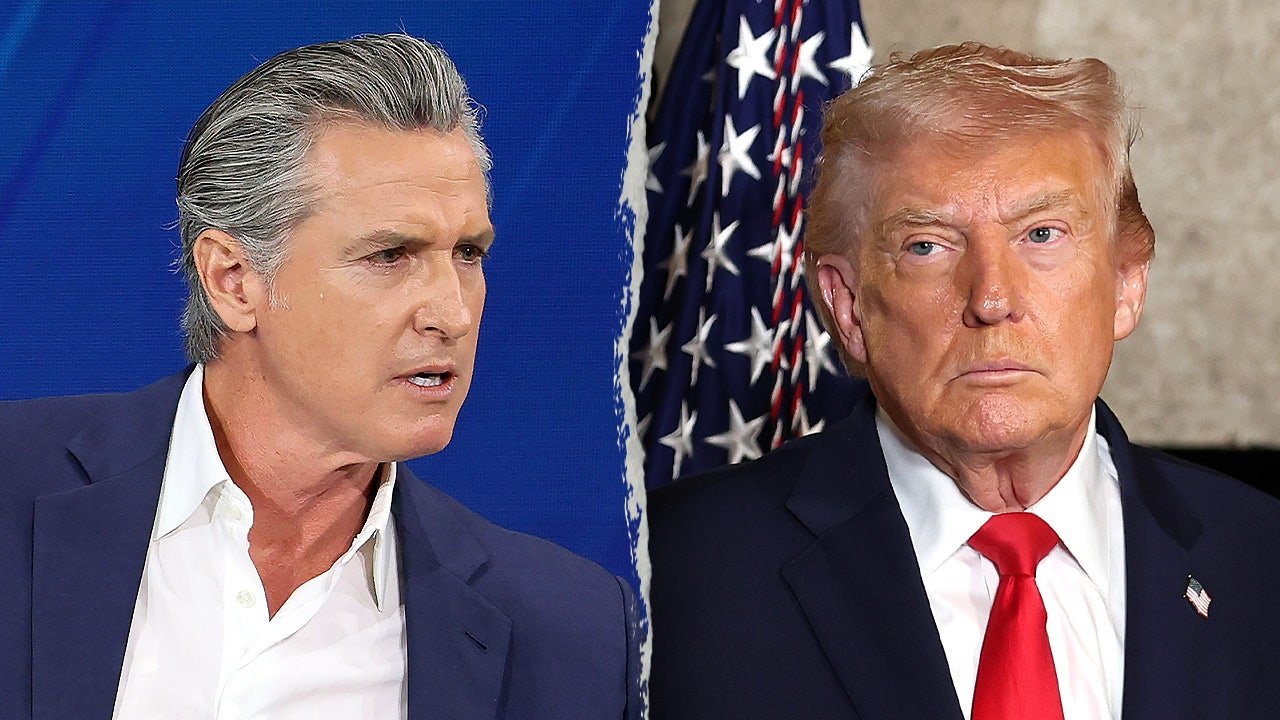
California Gov. Gavin Newsom hopes that Florida’s redistricting plan brings with it the end of the «saga» that has led states across the country to try to find untapped partisan advantages in redrawn congressional boundries.
«It’s a predictable outcome, but hopefully it’ll be the end of this era and this saga,» Newsom told Fox News Digital.
«Trump got beat at his own game. It was a terrible mistake he made for the Republican Party. A lot of good Republicans are going to be districted out,» Newsom continued. «They’re going to serve as collateral damage.»
His comments underscore confidence from Democrats that the redistricting push will play into their hands come the November midterms — despite a numbers game that would tip the scales towards Republicans if Florida carries out proposed changes of its own.
TRUMP HAILS TEXAS REDISTRICTING APPROVAL THAT COULD ADD FIVE GOP CONGRESSIONAL SEATS NATIONWIDE
Gov. Gavin Newsom speaks during the Wallis Annenberg Wildlife Crossing Groundbreaking Celebration in Agoura Hills, Calif., on April 22, 2022. (Jon Kopaloff/Getty Images)
A Republican National Committee spokesperson fired back at Newsom’s comments, telling Fox News Digital that «Gavin Newsom is attempting to spin fantasies about a ‘blue wave’ after Democrats dumped tens of millions into a gerrymandering scheme to barely crawl across the finish line with a three-point margin in a state Abigail Spanberger won by 15.»
«Meanwhile, California voters are fed up and fleeing in droves due to Gavin Newsom’s deranged quest to drive his state into the ground by sending taxpayer dollars to give sex change surgeries to illegal aliens,» RNC National Press Secretary, Kiersten Pels, continued.
Newsom’s confidence was echoed by Democratic National Committee Chairman Ken Martin.
«Republicans decided to start this and we’re going to finish this for them, right?» Martin said, referring to the first redistricting effort in 2025, spearheaded by Republicans in Texas.
«We’re going to meet them every step of the way. We’re not bringing a pencil to a knife fight anymore,» Martin said.
So far, California, Missouri, North Carolina, Texas, Utah, Ohio and Virginia have adopted new congressional maps, electing to re-shuffle districts ahead of the 2030 census — the time at which state lawmakers would normally reevaluate areas of representation.
REPUBLICAN GOVERNOR SIGNS INTO LAW TRUMP-BACKED CONGRESSIONAL REDISTRICTING MAP
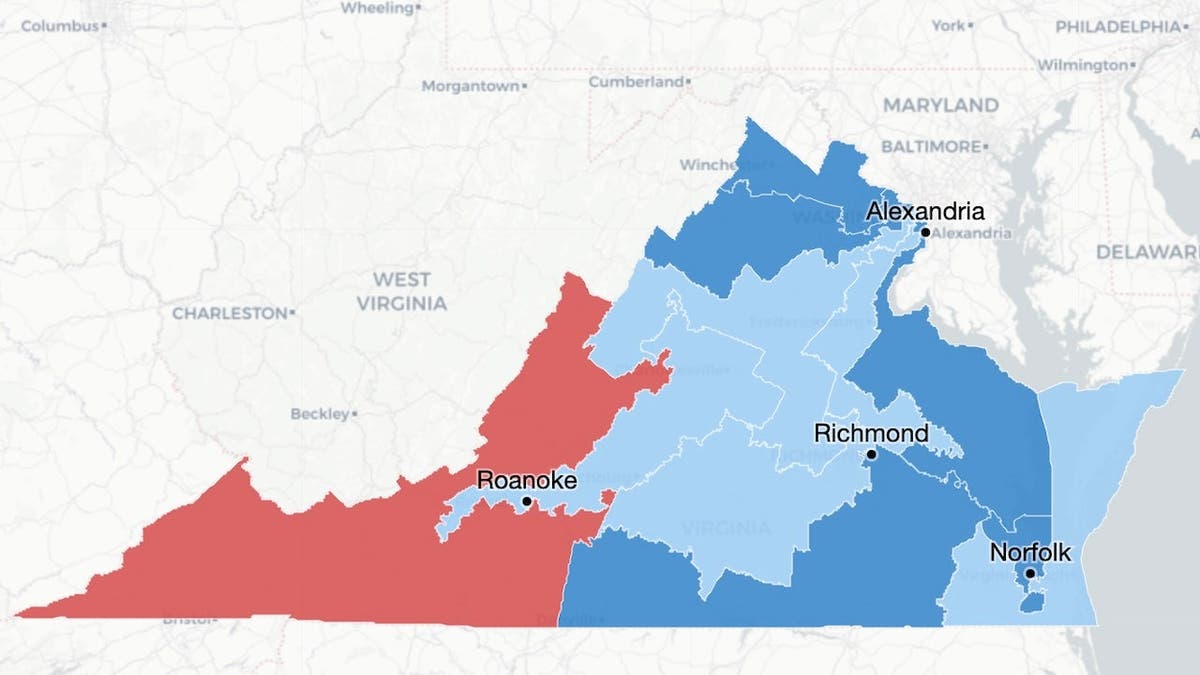
The Virginia redistricting map was approved narrowly by voters late week in a special election that the Virginia Supreme Court allowed to be held amid a legal fight over the ‘ramming’ through of mid-decade redistricting. (Virginia Legislative Information System)
Republicans expect to gain up to nine seats across redistricting efforts in Ohio, North Carolina, Missouri and Texas.
Democrats hope to net nine of their own from changes in California, Virginia and Utah.
Florida is looking to change the calculus by creating as many as four additional Republican-leaning districts by stretching historically Democratic areas over Republican strongholds.
The change would require the support of Florida’s state legislature, which currently holds a Republican majority in the state House and Senate.
Newsom believes Republicans are creating a liability for themselves by stretching their support too thin in some areas.
VIRGINIA DEM ADMITS REDISTRICTING PUSH AIMS TO ‘STOP TRUMP’, NOT ABOUT ‘FAIRNESS’
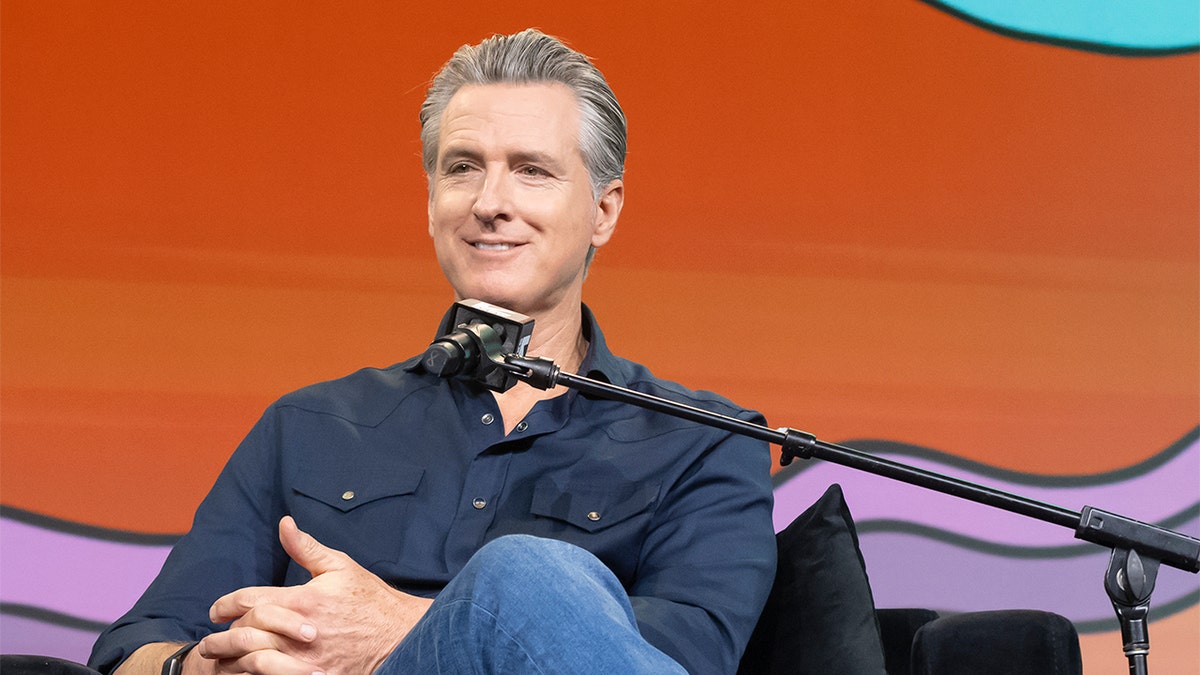
Gov. Gavin Newsom speaks during the «Networth And Chill With Guest Governor Gavin Newsom Featured Session» at the 2026 SXSW Conference and Festival in Austin, Texas, on March 15, 2026. (Astrida Valigorsky/Getty Images)
CLICK HERE TO DOWNLOAD THE FOX NEWS APP
«They’re going to put a lot at risk, and I think it’s going to be a big blue wave election,» Newsom said. «So, you know, this thing could be — I’m not here to give DeSantis advice on this — it could be a bad mistake.»
Lawmakers are expected to consider the maps in a special session that begins on Tuesday.
ron desantis, gavin newsom, democrats elections, republicans elections, california












NEWYou can now listen to Fox News articles!
Pro-Israel college students who have watched socialism and anti-Israel activism gain ground on campus say the same political currents are now colliding with the Democratic Party — and the backlash is pushing some young Jewish voters to the right.
«Even before the craziness of the post-October 7 campus climate, it was already an underlying sense of, ‘America is bad and we’re gonna learn about that,’» University of Michigan rising senior Addison Stone told Fox News Digital.
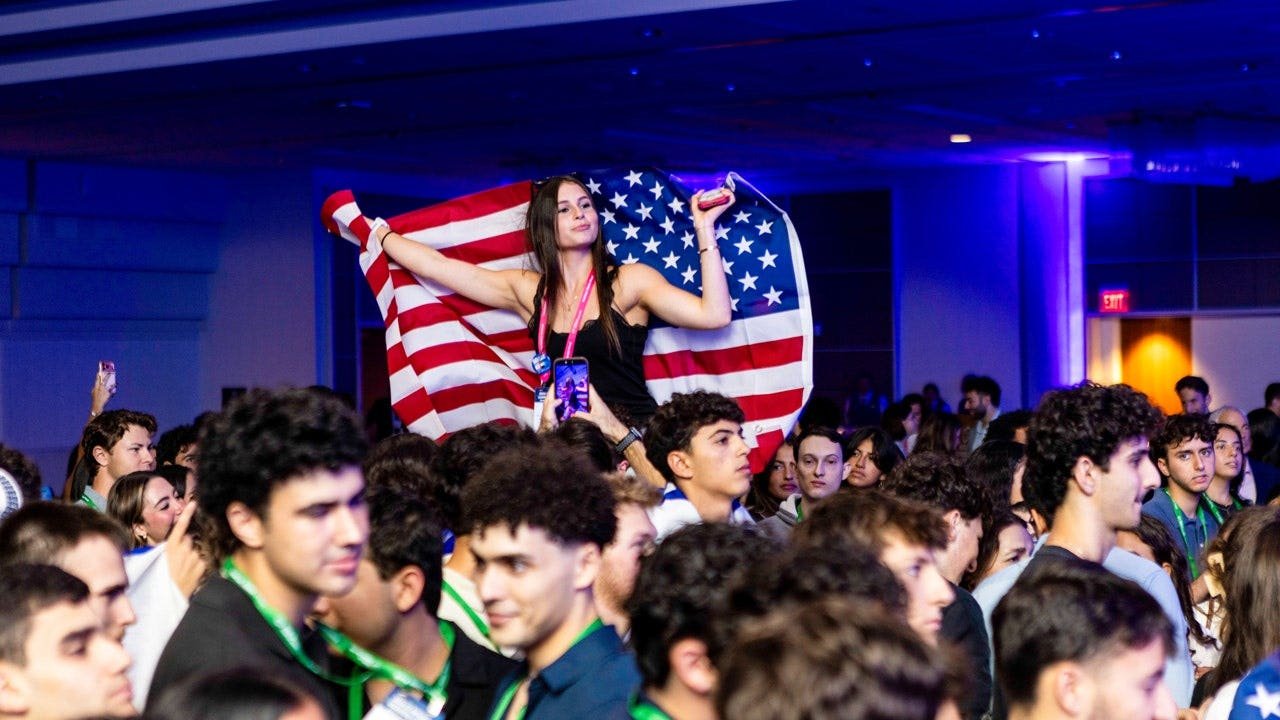
Speaking at the Israel on Campus Coalition’s national summit in Washington this week, students said political currents they have watched spread on college campuses are increasingly surfacing in Democratic politics, particularly as the party’s progressive wing gains ground and clashes deepen over Israel.
Dylan Goldman, a rising senior at UC Berkeley, identified himself as «left leaning» and told Fox News Digital that Democratic lawmakers welcoming the popular socialist candidates – who overwhelmingly hold hostile postures toward Israel – are making a «really poor move.»
DEMOCRATS LURE ‘POLITICALLY HOMELESS’ GEN Z TOWARD SOCIALISM — A COUNTERATTACK IS TAKING SHAPE
Israeli pop star Harel Skaat performs for students at the 2026 ICC National Leadership Summit in Washington, D.C. (Fox News Digital)
«Jewish Democrats who are not single-issue voters… now feel so alienated by our own party that it’s pushing us conservative. It’s pushing to go further right,» said Goldman.
Abdul El-Sayed, a progressive whose campaign drew support from the democratic socialist movement, won Michigan’s Democratic Senate primary Tuesday, adding to a string of victories for left-wing candidates challenging the Democratic establishment as the party battles for control of Congress in November’s midterm elections.
The conference brought hundreds of pro-Israel students to Washington for advocacy training, networking and discussions on supporting Israel, combating antisemitism and strengthening the U.S.-Israel relationship on college campuses.
«The academics don’t help, but they’re sort of helping indoctrinate the next generation and the next generation with the combination of learning about that in classes and going on social media and seeing it and the DSA trying to make everything cool with communism,» Stone said. «You’re really seeing the outcome of that on college campuses where they’re burning both American and Israeli flags.»
JEWISH MICHIGAN DEMOCRATS ADMIT THEY WILL VOTE REPUBLICAN IF ABDUL EL-SAYED BECOMES NOMINEE
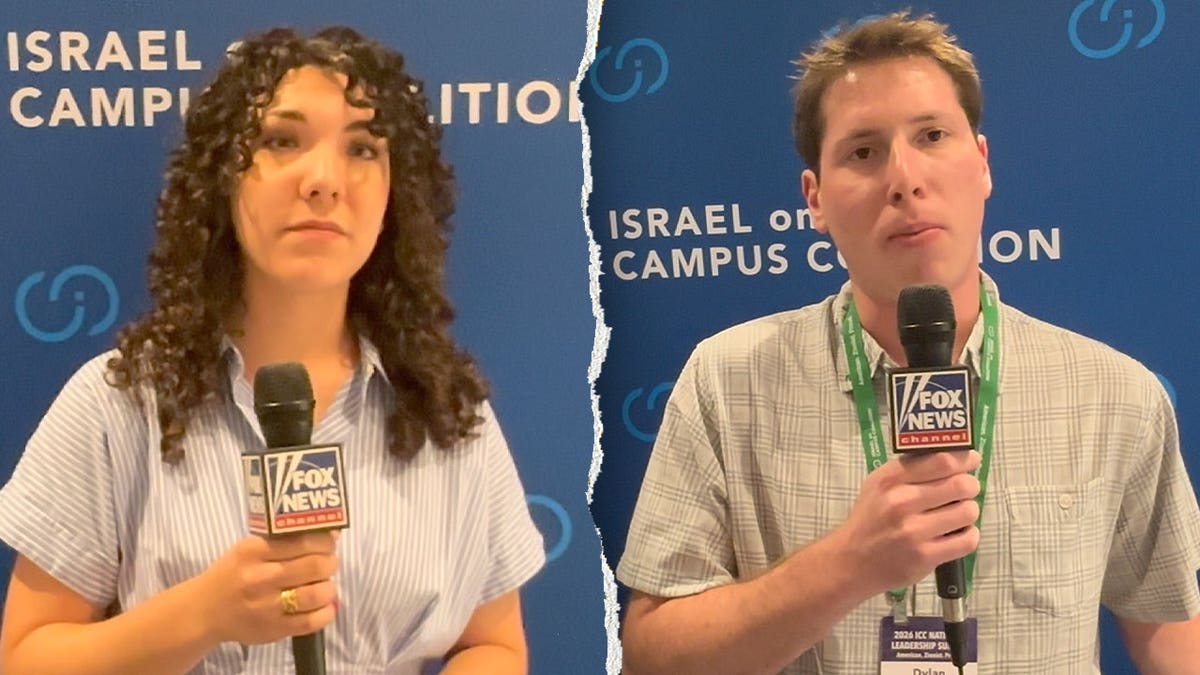
Student at a pro-Israel conference spoke with Fox News Digital about the ideologies finding support on college campuses. (Ashley DiMella/Fox News Digital)
As those political divisions play out nationally, organizers at the summit said Jewish students are still confronting the campus hostility that helped bring many of them to Washington.
«What’s happening to Jewish students on American campuses should alarm every American,» Israel on Campus Coalition CEO Jacob Baime told Fox News Digital. «The hostility is out in the open now: mobs on the quad, intimidation in the classroom, and harassment online. But here’s what the mob didn’t count on: this generation isn’t backing down.»
«These students are the proudest, toughest, most organized pro-Israel cohort we have ever seen. This week we brought more than 1000 campus leaders to Washington to train and equip them with the skills they need to go back to campus ready to fight for what they believe in,» he added.
FETTERMAN WINS PRAISE FOR ‘GUTS’ AFTER GOING TOE-TO-TOE WITH JON STEWART OVER ISRAEL SUPPORT
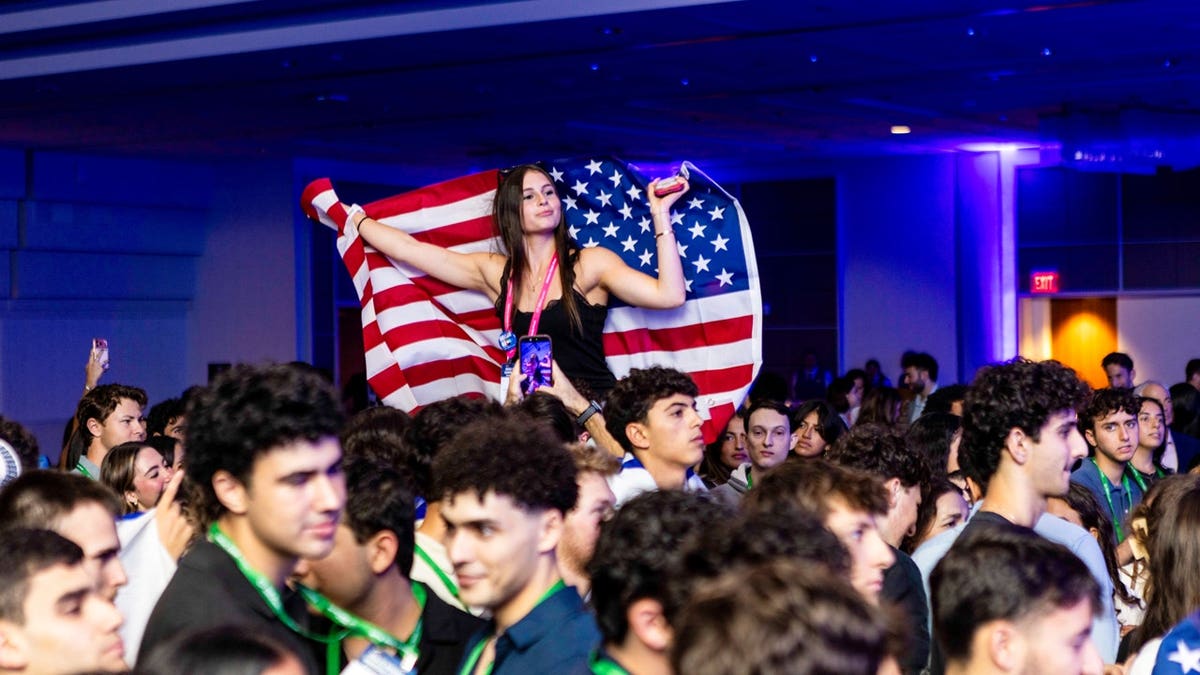
Israeli pop star Harel Skaat performs for students at the 2026 ICC National Leadership Summit in Washington, D.C. (Fox News Digital)
Fetterman, who spoke at the Israel on Campus Coalition’s flagship event, said the Democratic Party’s shifting posture toward Israel and the Jewish community is becoming increasingly consequential.
His support for Israel has repeatedly put him at odds with members of his own party, including over the broader conflict in the Middle East and his backing of President Donald Trump’s strikes on Iranian nuclear facilities.
«I think I was the only Democrat to support the Trump administration to bomb the Iranian nuclear facilities,» Fetterman told Fox News Digital. «If you don’t want them to acquire a nuclear bomb, it’s pretty reasonable to bomb their nuclear facilities.»
Fetterman argued the threat extends beyond Israel, casting the confrontation with Iran as a larger battle over American values and the West’s role in the region.
«The problem is Iran. That’s the problem,» he said, later adding, «I’m proud to stand for America, civilization, democracy, and Israel is our special ally that represents all of that in that region.»
campus radicals, socialism, gen z, campus controversy, democratic party, culture opinion, israel
INTERNACIONAL
Fiscalía pide 396 años de prisión para extesorero del Banco Nacional de Costa Rica acusado de sustraer ₡3,293 millones (USD 7.3 millones)
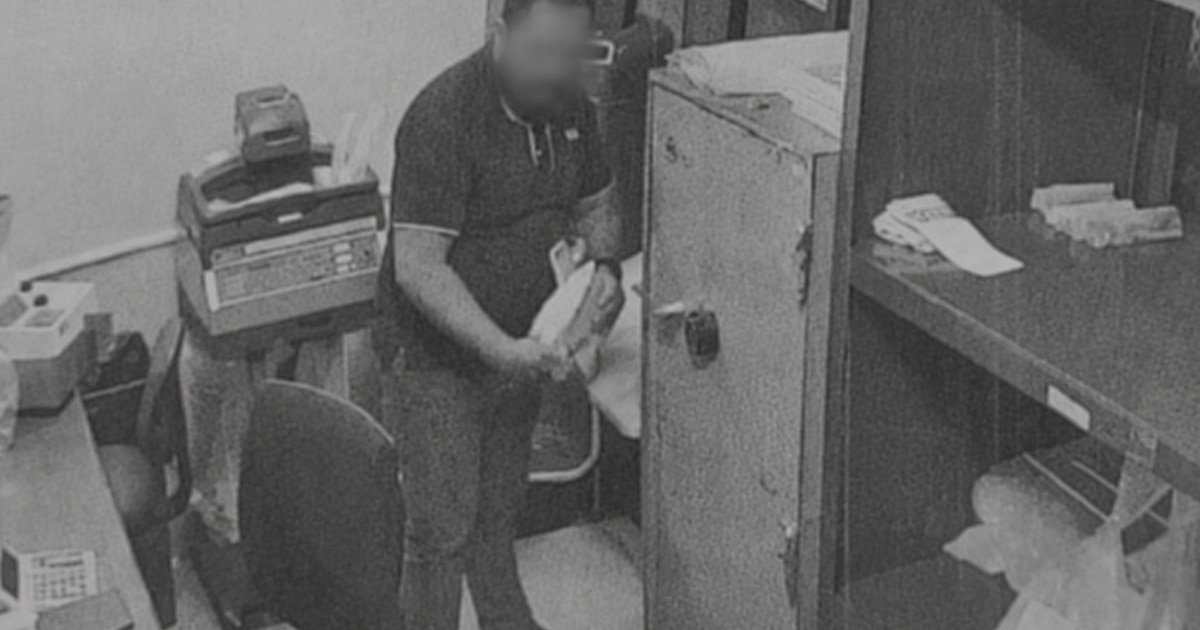
El juicio contra Ricardo Olivas Valle, extesorero del Banco Nacional de Costa Rica (BNCR), entró en su etapa final con la solicitud de la Fiscalía de una condena que suma 396 años de prisión por el supuesto desfalco de ₡3,293 millones (USD 7.3 millones) sustraídos de las bóvedas de la sede central de la entidad, en San José.
La Fiscalía Adjunta de Probidad, Transparencia y Anticorrupción (Fapta) inició la presentación de sus conclusiones ante el Tribunal Penal, donde expondrá por qué considera que el exfuncionario es responsable de los hechos que se le atribuyen y solicitará formalmente la pena de cárcel.
Olivas Valle enfrenta una acusación por 33 delitos de peculado, uno por cada extracción de dinero que, según el Ministerio Público, habría realizado entre 2021 y 2023 aprovechando los últimos minutos de la jornada laboral y los momentos de menor vigilancia dentro de la institución.
De acuerdo con la investigación, las sustracciones ocurrían principalmente entre las 4:16 p. m. y las 5:29 p. m., cuando el movimiento dentro de las instalaciones disminuía. La Fiscalía sostiene que el extesorero aprovechaba supuestos fallos en los controles internos para retirar millones de colones de las bóvedas.
Durante el juicio fueron analizadas decenas de grabaciones de seguridad que, según la acusación, muestran al exfuncionario colocando fajos de billetes en sobres de manila amarillos para luego salir de la entidad pasando por los controles de seguridad.

El caso fue denominado “Gallo Tapado” por el Organismo de Investigación Judicial (OIJ) y la Fiscalía debido al presunto mecanismo utilizado para ocultar el origen del dinero.
Según la tesis acusatoria, Olivas habría utilizado parte de los fondos sustraídos para comprar diariamente grandes cantidades de fracciones y billetes de lotería de la Junta de Protección Social (JPS). Cuando resultaba ganador, el dinero era depositado en sus cuentas bancarias, lo que habría permitido introducir los recursos al sistema financiero aparentando que provenían de una fuente legítima.
Durante los allanamientos realizados en su vivienda, las autoridades encontraron cerca de 3,000 fracciones de lotería, como parte de las evidencias incorporadas al expediente judicial.
El Ministerio Público sostiene que la prueba presentada durante el debate demuestra la participación del exfuncionario en las extracciones de dinero y solicitó una condena acumulada de 396 años.
Sin embargo, aunque la sumatoria de penas supera ampliamente la normativa nacional, la eventual sentencia deberá ajustarse al límite máximo establecido por la legislación costarricense, que actualmente es de 36 años de prisión.
Además de la Fiscalía, en el proceso participan como partes acusadoras la Procuraduría General de la República y el Banco Nacional, institución que reclama los recursos supuestamente sustraídos.
Durante su declaración ante el Tribunal, Olivas Valle reconoció que tuvo problemas relacionados con los juegos de azar, aunque afirmó que su adicción estaba limitada a la compra de lotería.
“Tuve adicción a los juegos, en algún momento, a la lotería solamente”, declaró el exfuncionario, quien aseguró que tras ingresar a prisión en 2023 su problema estaba relacionado únicamente con “ganas de jugar”.
El extesorero negó que su conducta estuviera vinculada con otros tipos de apuestas y afirmó que compraba principalmente tiempos y monazos, mientras que la lotería la adquiría en menor cantidad.

La investigación también reveló presuntas debilidades en los mecanismos de supervisión interna del Banco Nacional.
Según la acusación, desde 2019 no se realizaban arqueos físicos exhaustivos en las bóvedas, situación que habría permitido que las supuestas sustracciones continuaran durante varios años sin ser detectadas.
Además de Olivas Valle, otras personas fueron incluidas en investigaciones separadas por posibles omisiones, incumplimiento de deberes o encubrimiento. Entre ellas figuran supervisores, contadores, personal de seguridad y exdirectivos jurídicos de la entidad.
El juicio continuará con la etapa de conclusiones de las partes y posteriormente el Tribunal Penal deberá definir la responsabilidad del exfuncionario y la eventual sentencia.

Cacace defendió la reforma sobre propiedad privada y aseguró que el límite para la compra de tierras “desalienta proyectos productivos”

“Macri me alentó a que lo hiciera”: Hernán Lacunza dijo que consensuó su candidatura presidencial con colegas del Pro

Pánico en la ruta 19 de Córdoba: un micro se prendió fuego en pleno viaje con 22 pasajeros a bordo

Doblete del Taty Castellanos en la clasificación del West Ham por EFL Cup

Reforma por falsas denuncias: una especialista advirtió que el proyecto “castiga denunciar” la violencia de género

Fernanda Iglesias arremetió contra Yanina Latorre y contó todo sobre el engaño de su marido Diego con otra mujer: «Le fue infiel con una mucama y la…»

La oposición cuestionó a Benegas Lynch por su empresa para vender campos a extranjeros y el senador libertario se defendió

Dólar hoy en vivo: a cuánto se negocian todas las cotizaciones minuto a minuto este miércoles 5 de agosto

Brasil retira a su embajador en la Argentina: qué consecuencias tiene la medida diplomática

Las centrales obreras y los movimientos sociales anunciaron dos días de conflicto callejero
-
 POLITICA2 días ago
La oposición cuestionó a Benegas Lynch por su empresa para vender campos a extranjeros y el senador libertario se defendió
-
 DEPORTE2 horas ago
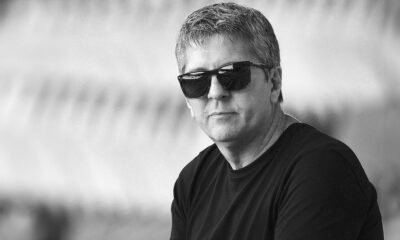
Murió Jorge Messi, en vivo: la resolución de la AFA para los partidos de todas las categorías del fútbol argentino
-

 POLITICA3 días ago
El mapa de cortes por la movilización al Congreso contra la modificación a la "Ley de Tierras"