INTERNACIONAL
President Trump’s negotiating team praised by nuclear experts for walking away from Pakistan talks

NEWYou can now listen to Fox News articles!
With a second round of talks likely to take place between the U.S. and Iran’s regime this week over its illicit nuclear weapons programs, leading experts on Tehran’s program say the Trump administration was right to walk away.
After nearly a day of talks, Vice President JD Vance’s team pulled the plug on the negotiations taking place in Pakistan, something welcomed by experts in the field.
«The U.S. team was wise to walk away once it became clear the Iranians would not agree to Washington’s core nuclear demands. Tehran maintaining enriched uranium stocks and uranium enrichment capabilities provides it with a pathway to nuclear weapons, plain and simple,» Andrea Stricker, deputy director of the Foundation for Defense of Democracies’ nonproliferation program, told Fox News Digital.
A core dispute between the U.S. and Iran is over Tehran’s desire to enrich uranium — the material used to build nuclear weapons.
WITKOFF WARNS IRAN IS ‘A WEEK AWAY’ FROM ‘BOMB-MAKING MATERIAL’ AS TRUMP WEIGHS ACTION
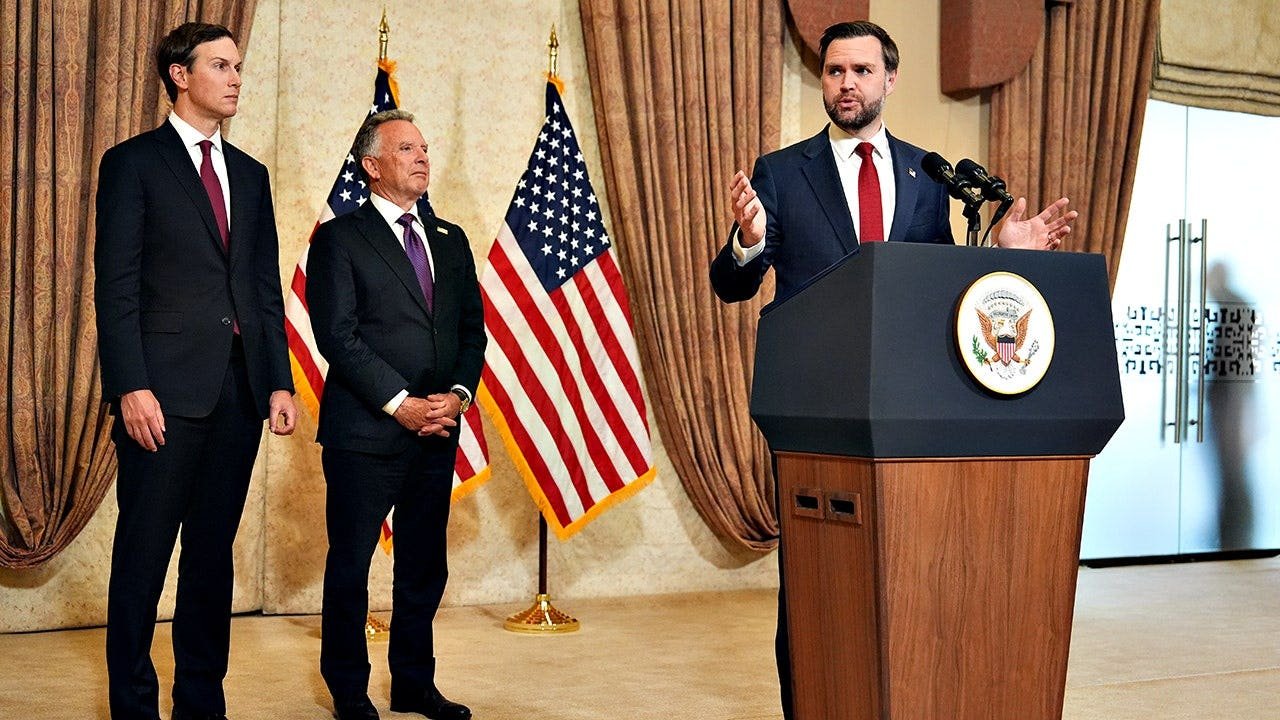
Vice President JD Vance spoke during a news conference in Islamabad, Pakistan, on April 12, 2026, after meeting with representatives from Pakistan and Iran. Jared Kushner and Steve Witkoff, special envoy for peace missions, listened during the event. (Jacquelyn Martin/AP)
In 2018, President Donald Trump withdrew from President Barack Obama’s nuclear weapons deal with Iran because his administration argued that the Joint Comprehensive Plan of Action, the formal name of the deal, permitted Iran to build an atomic bomb.
When asked what a good nuclear agreement would look like, Stricker said, «A good deal requires the regime to not only turn over its nuclear fuel, dismantle key facilities, and commit to a permanent ban on enrichment, but to cooperate with an IAEA investigation that fully and completely accounts for and dismantles Iran’s nuclear weapons-relevant facilities, equipment, documentation, centrifuges and related production capabilities.»
Stricker acknowledged that the process could take several years, but noted that «the IAEA is well-equipped for this mission and has experience dismantling nuclear weapons programs in Iraq, Libya and South Africa. Anything less and Iran will likely cheat on its commitments and reconstitute a breakout pathway.»
TRUMP REVEALS IRAN MADE ‘SIGNIFICANT PROPOSAL’ AFTER ULTIMATUM, BUT ‘NOT GOOD ENOUGH’
Sen. Lindsey Graham said Monday he opposes a reported proposal by the U.S. for a 20-year ban on Iran’s uranium enrichment under a potential deal.
«I appreciate President Donald Trump’s resolve to end the Iranian conflict peacefully and through diplomacy. However, we have to remember who we’re dealing with in Iran: terrorists, liars, and cheaters,» Graham posted on X.
«If this reporting is accurate, the idea that we would agree to a moratorium on enrichment rather than a ban on enrichment would be a mistake in my view,» he said.
«Would we agree to a moratorium for al Qaeda to enrich? No.»
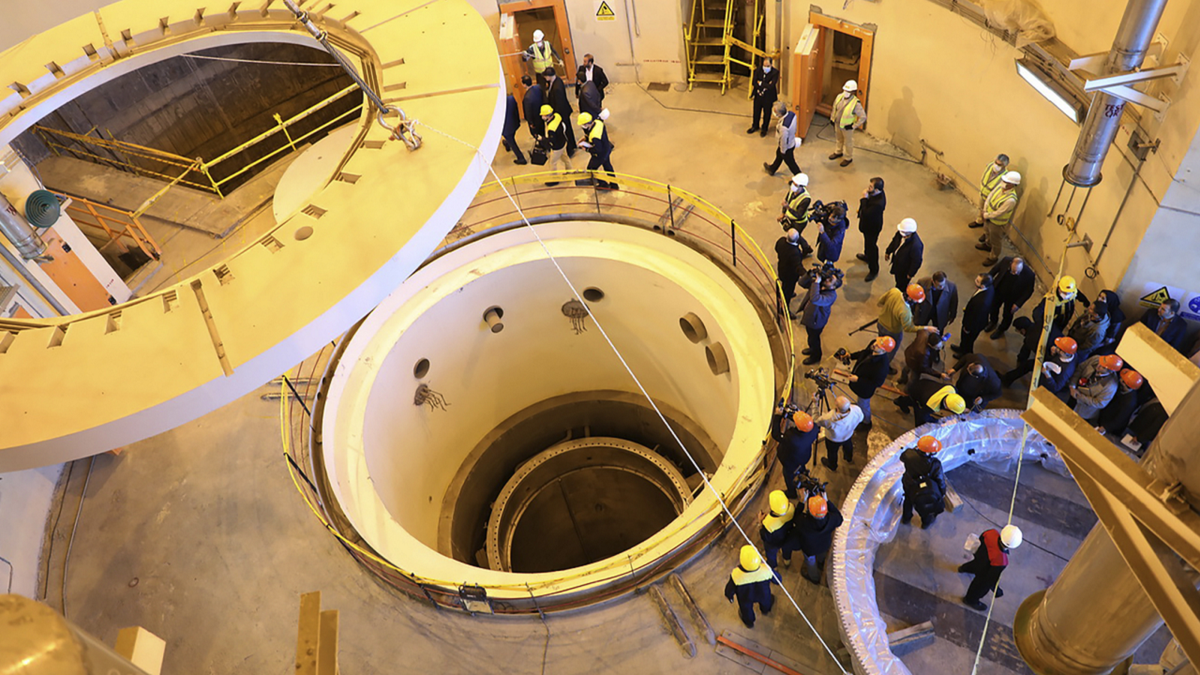
In this photo released by the Atomic Energy Organization of Iran, technicians work at the Arak heavy water reactor’s secondary circuit, as officials and media visit the site, near Arak, 150 miles southwest of the capital of Tehran, in December 2019. (Atomic Energy Organization of Iran/AP)
A regional official from the Mideast confirmed to Fox News Digital that a 20-year moratorium on enriched uranium was made by the U.S. and rejected by the Islamic Republic.
David Albright, a physicist who is the founder and president of the Institute for Science and International Security in Washington, D.C., praised the U.S. decision to end the talks in Pakistan. Writing on his X account, which is closely followed by Iran watchers, he stated: «The U.S. was Right to Walk Away in Islamabad.»
Albright told Fox News Digital the move by the U.S. negotiators «makes it clear that this is not negotiating for negotiating’s sake. And leaving threw Iran on the defensive, signaling it as the losing state in the war. Moreover, the Iranians would not have shifted their positions in any significant way. They usually have no flexibility. But Iran wanted to have negotiations continue in order to try to tie the hands of the U.S. and Israel, while trying to portray themselves as victors. Now, Iran has to decide whether to accept the U.S. offer or risk war resuming.»
He added that a good nuclear deal for the U.S. would mean «no enrichment and no stocks of HEU [Highly Enriched Uranium] and LEU [Low Enriched Uranium]; Iran cooperating with the inspectors and verifiably ending its nuclear weapons program and providing a complete nuclear declaration, something it has never done.»
CLICK HERE TO DOWNLOAD THE FOX NEWS APP
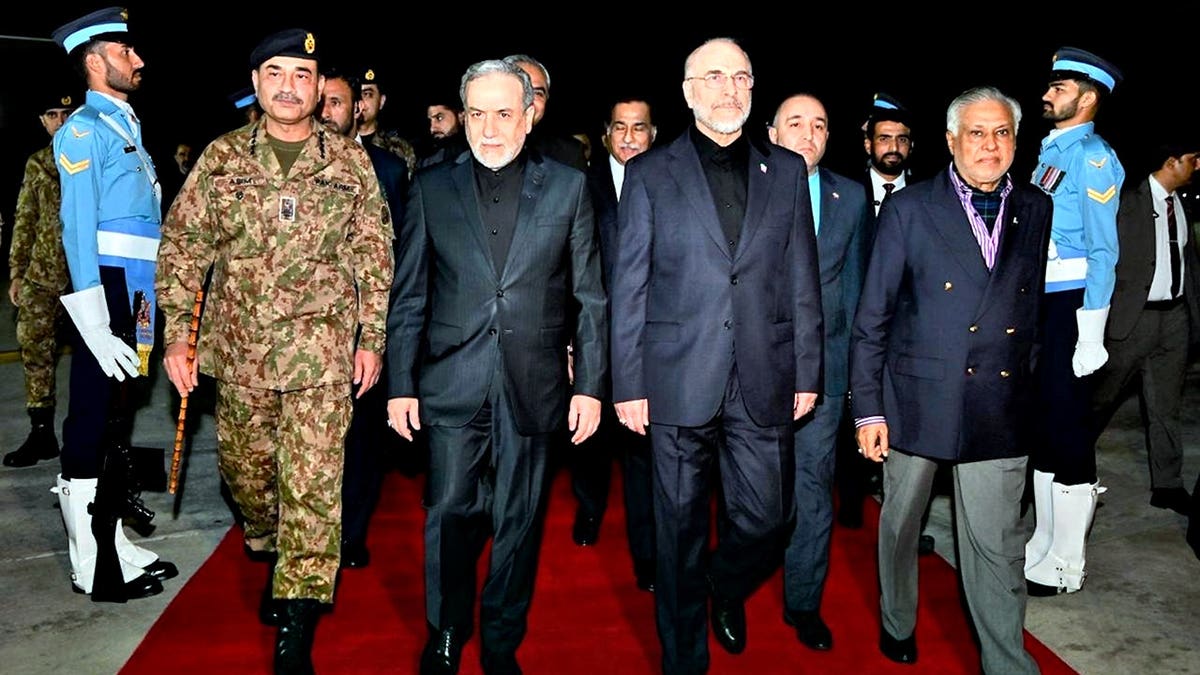
Iran’s Parliament Speaker Mohammad Bagher Qalibaf and Foreign Minister Abbas Araghchi were greeted by Pakistan Foreign Minister Ishaq Dar and Army Chief Field Marshal Gen. Asim Munir upon their arrival at Nur Khan airbase in Rawalpindi, Pakistan, on April 11, 2026. (Pakistan Ministry of Foreign Affairs/AP)
Albright continued that «If Iran signals willingness to accept the U.S. position, meeting again makes sense.
«Iran has absolutely no need to enrich. Its only civil need is for a small amount of 20% enriched for its small research reactor, the Tehran Research Reactor, and it has enough 20% enriched uranium in fuel or nearly made into fuel stored in Iran and in Russia under JCPOA [Joint Comprehensive Plan of Action] arrangements for 20 years.»
He concluded, «To be flip, and paraphrase Abbie Hoffman, I have the right to yell theater in a crowded fire, but I don’t. Iran’s emphasis on its right to enrich is as irrelevant and beside the point.»
nuclear terror, al qaeda terror, nuclear proliferation, war with iran, iran









INTERNACIONAL
Cargamento de cocaína en el Caribe hondureño asciende a 1,661 kilos y deja cuatro detenidos

El cargamento de droga decomisado en una embarcación pesquera interceptada en el Caribe hondureño ya tiene una dimensión confirmada: el Ministerio Público contabilizó 1,661 kilos de cocaína, distribuidos en 30 paquetes que eran transportados dentro de 55 fardos.
La cifra fue establecida después de que las autoridades realizaran el pesaje y procesamiento del cargamento, como parte de las diligencias posteriores al operativo desarrollado a unas 135 millas náuticas al noroeste del departamento de Gracias a Dios. La operación permitió además la detención de cuatro ciudadanos hondureños, quienes ahora son objeto de investigación por su presunta vinculación con el traslado de la droga.
La embarcación involucrada fue identificada como “First in Line”, un barco de características pesqueras que fue asegurado mediante una operación conjunta en la que participaron efectivos de la Fuerza Naval de Honduras (FNH), la Fuerza Aérea de Honduras (FAH) y agentes de la Dirección de Lucha contra el Narcotráfico (DLCN).
Los cuatro detenidos fueron identificados como Tatum Hyde, Gerson Javier Green Rodríguez, Bellie Noland Tatum Andrade y Lincoln Matthew Tatum Rivas. Las autoridades deberán establecer ahora cuál era la participación específica de cada uno dentro de la operación y determinar quién estaría detrás de la coordinación del traslado del cargamento.
La embarcación fue localizada en las cercanías de los bancos de pesca Rosalinda, una zona marítima ubicada frente al departamento de Gracias a Dios que concentra actividad pesquera, pero que también ha sido escenario de diferentes operaciones de interdicción contra el narcotráfico.
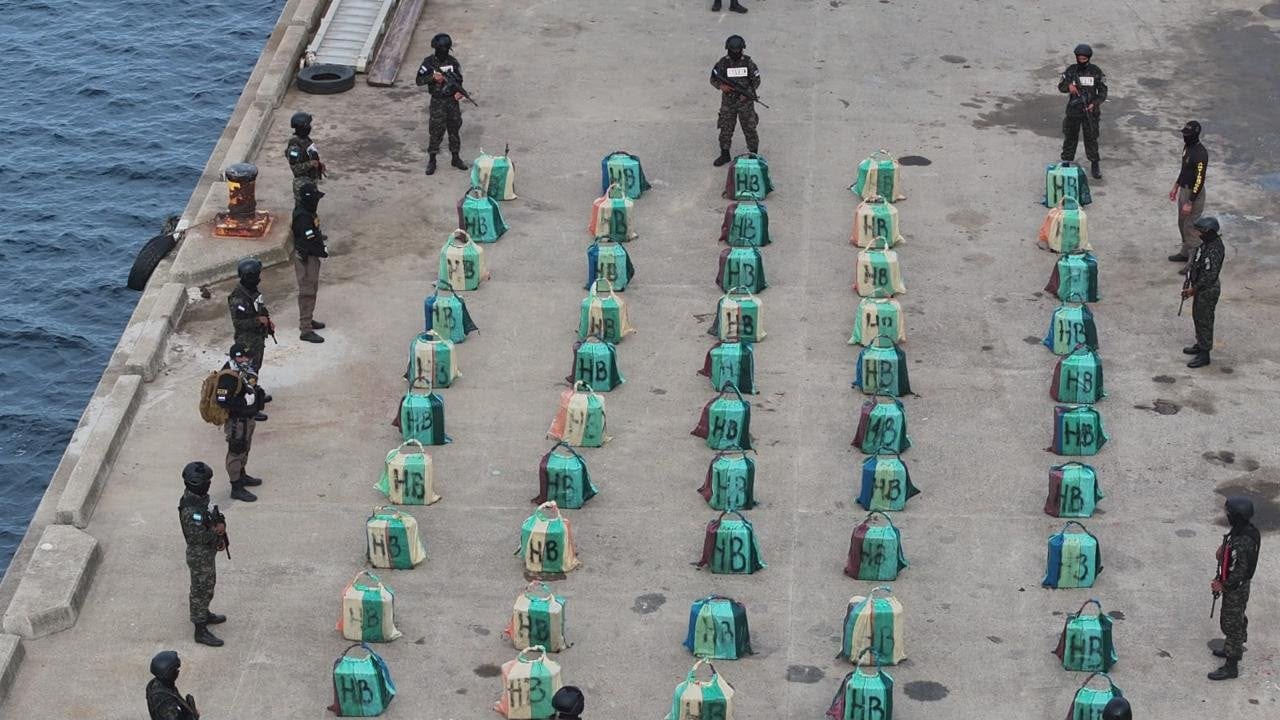
La distancia a la que se produjo el decomiso refleja la dimensión de los operativos que deben realizar las fuerzas de seguridad hondureñas para detectar embarcaciones sospechosas antes de que puedan acercarse a las costas nacionales. En este caso, el procedimiento ocurrió a unas 135 millas náuticas de Gracias a Dios.
La confirmación del peso cambia la dimensión del decomiso reportado inicialmente, cuando las autoridades informaron sobre la localización de 55 paquetes con una sustancia que sería sometida a análisis. El procedimiento posterior permitió determinar que se trataba de cocaína y establecer un peso total de 1,661 kilos.
La cantidad equivale a más de 1.6 toneladas de droga, convirtiendo el operativo en uno de los decomisos marítimos de mayor volumen registrados recientemente en aguas hondureñas. El hallazgo vuelve a poner el foco sobre las rutas utilizadas por organizaciones dedicadas al tráfico de estupefacientes a través del Caribe.
La investigación también deberá establecer la procedencia exacta de la droga, el destino final del cargamento y las personas o estructuras que habrían financiado y coordinado el traslado. Estos elementos serán fundamentales para determinar si los cuatro detenidos tenían una participación directa en el transporte o cumplían otras funciones dentro de una organización.
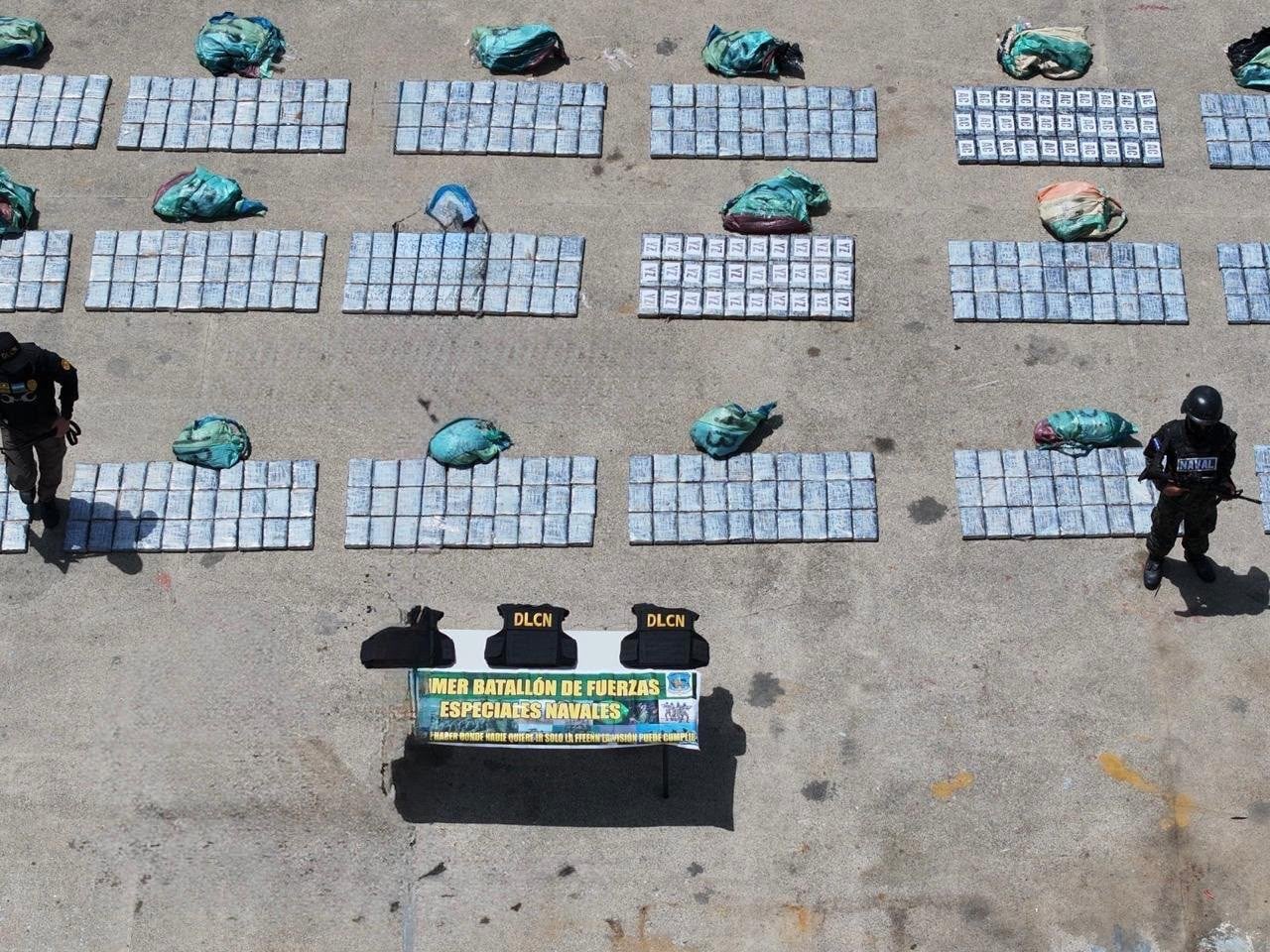
En una operación anterior relacionada con el narcotráfico marítimo, la Agencia Técnica de Investigación Criminal (ATIC) informó que una lancha interceptada en aguas del Caribe hondureño procedía de Colombia y tenía como destino Estados Unidos.
Honduras ocupa una posición geográfica estratégica para las organizaciones que trasladan droga desde Sudamérica hacia Norteamérica, debido a su extensa costa caribeña y a la conexión marítima con diferentes puntos utilizados por las redes de narcotráfico.
Las zonas alejadas de la costa representan un desafío para las autoridades, debido a la amplitud del territorio marítimo que debe ser vigilado. Por ello, los operativos requieren coordinación entre diferentes cuerpos de seguridad, sistemas de vigilancia y aeronaves o embarcaciones capaces de desplazarse durante largos recorridos.
El decomiso de 1,661 kilos ocurre pocos días después de otra operación marítima en la que las autoridades hondureñas incautaron 899 kilos de cocaína en una pequeña lancha en las costas de Gracias a Dios.
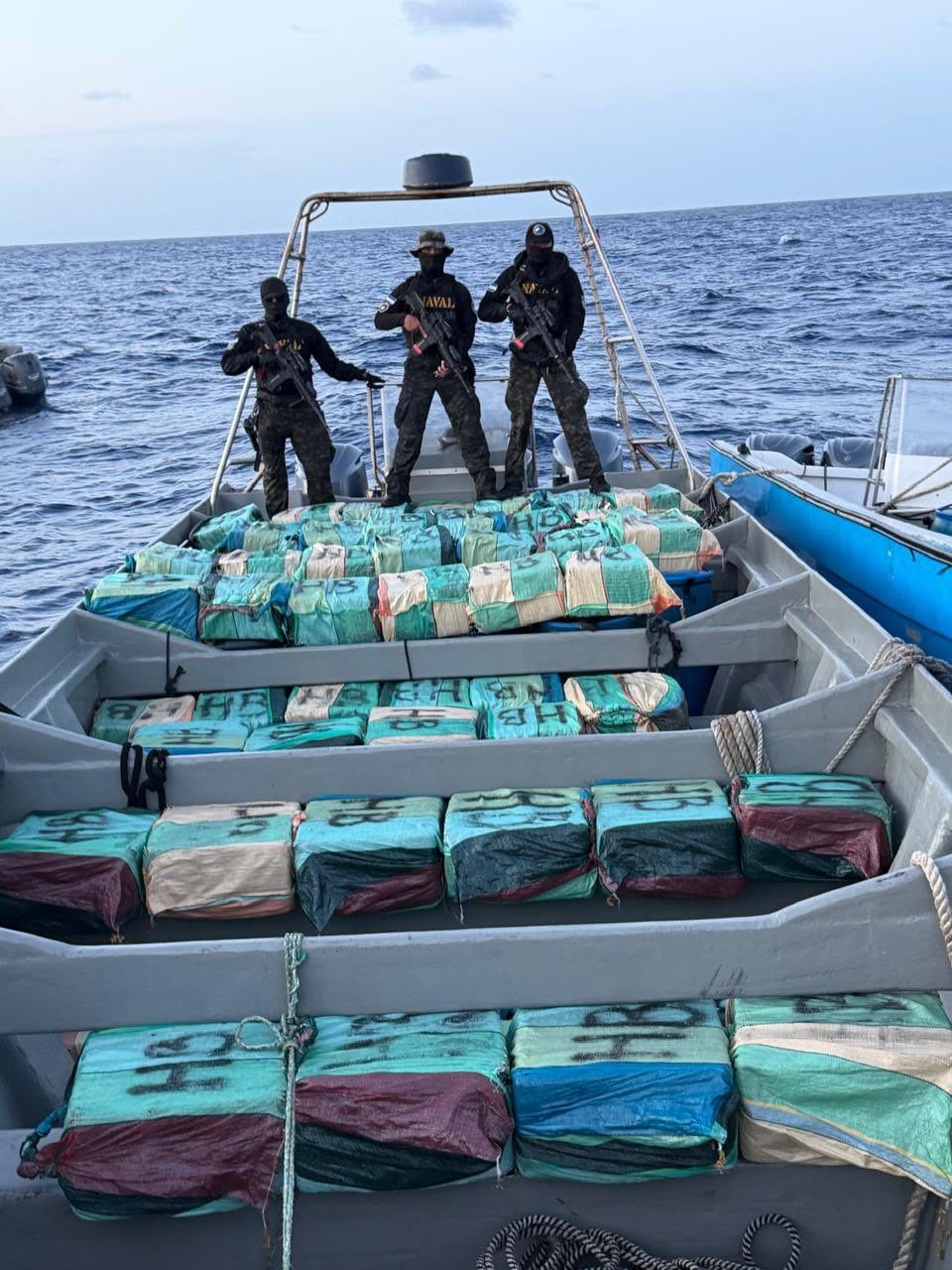
Con ambos procedimientos, el volumen de droga decomisado en estas dos operaciones marítimas asciende a 2,560 kilos, es decir, más de 2.5 toneladas de cocaína, en un periodo inferior a cinco días.
La sucesión de ambos operativos vuelve a colocar al Caribe hondureño en el centro de la lucha contra el narcotráfico. Las autoridades han intensificado las acciones de interdicción en una zona que, por sus características geográficas, puede ser utilizada para movilizar cargamentos hacia otros puntos del continente.
El primer decomiso y el más reciente tienen además como punto de referencia el departamento de Gracias a Dios, una de las zonas del país con mayor extensión territorial marítima y con una ubicación estratégica frente al Caribe.
Aunque la incautación representa un golpe al tráfico de cocaína, el Ministerio Público y los cuerpos de investigación deberán avanzar en las diligencias para establecer quiénes se encontraban detrás del traslado de los 1,661 kilos.
La investigación podría incluir el análisis de comunicaciones, movimientos de la embarcación, registros de navegación y cualquier otro indicio que permita reconstruir la ruta seguida por el barco “First in Line” antes de ser interceptado.
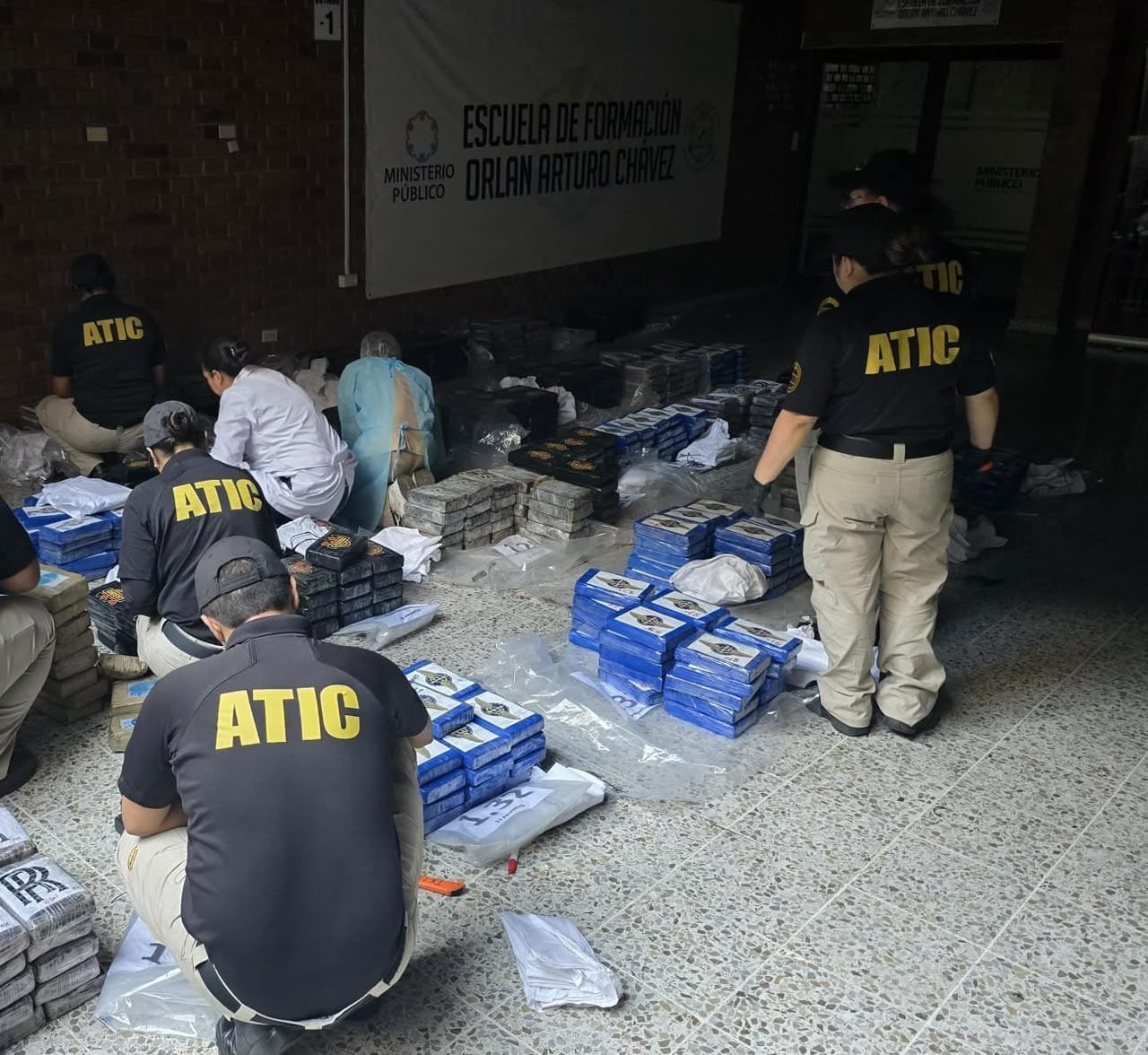
También deberá determinarse si los cuatro hondureños detenidos actuaban por cuenta propia o si formaban parte de una estructura criminal dedicada al narcotráfico internacional. Para ello, las autoridades tendrán que establecer la relación entre los sospechosos, la embarcación y el cargamento.
El nuevo decomiso demuestra además la importancia de las operaciones coordinadas entre la Fuerza Naval, Fuerza Aérea y organismos de investigación criminal, debido a que el seguimiento de embarcaciones sospechosas puede requerir vigilancia desde diferentes puntos y durante largos desplazamientos.
Mientras las autoridades continúan con las diligencias, el dato confirmado de 1,661 kilos de cocaína convierte este caso en uno de los principales golpes recientes al narcotráfico en las aguas del Caribe hondureño y se suma a los 899 kilos incautados pocos días antes.
En menos de cinco días, los dos operativos marítimos representan más de 2.5 toneladas de cocaína decomisadas, una cifra que vuelve a evidenciar la magnitud de los cargamentos que intentan utilizar las rutas marítimas hondureñas como corredor hacia otros destinos de la región.
corresponsal:Desde Tegucigalpa, Honduras
INTERNACIONAL
Trump gives Smithsonian days to replace ‘strange modernist sculpture’ with Founding Father
Smithsonian Museum faces backlash over activism shift
‘The Ingraham Angle’ host Laura Ingraham exposes how progressive curators inside the Smithsonian are rewriting American history through radical exhibitions. Historian Dr. Jody Edward Ginn analyzes the systemic exclusion of conservative perspectives, noting that a new exhibit features three times more liberal items than conservative ones. Ginn discusses how the progressive shift raises concerns about the political neutralization of America’s national museums.
NEWYou can now listen to Fox News articles!
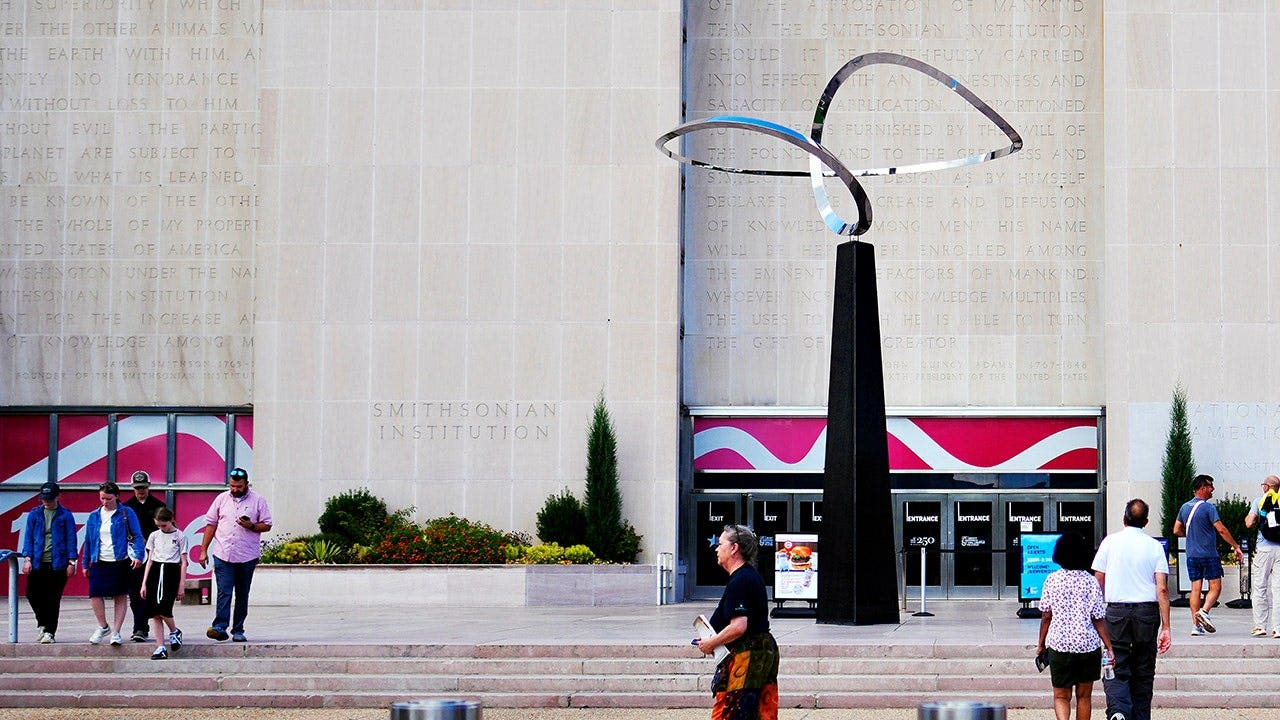
President Donald Trump is calling on the Smithsonian to replace a decades-old modernist sculpture outside the National Museum of American History with a towering, 30-foot statue of George Washington.
In social media posts late Friday, Trump said the «Infinity» sculpture that has stood outside the museum since 1967 «says nothing about America,» while Washington, he argued, «more than anyone else, says everything about America.»
Trump also called for the museum to open a five-year exhibition honoring Washington that would run through Feb. 22, 2032, the 300th anniversary of the first president’s birth.
INSIDE THE BEHEMOTH SMITHSONIAN MUSEUM NETWORK DRAWING FIRE FROM THE TRUMP ADMINISTRATION
People walking past the «Infinity» sculpture outside the Smithsonian National Museum of American History on the National Mall in Washington, Tuesday, Sept. 8, 2026. (AP Photo/Pablo Martinez Monsivais)
Trump also wants the Smithsonian to install an 11-foot statue of Washington in the museum’s Flag Hall by Constitution Day on Sept. 17. The statue was featured at the recent Freedom 250 Grand Prix race.
«Immediately design and display a five-year exhibition worthy of the Life, Sacrifice, and Contributions of George Washington,» Trump wrote.
«Then, as soon as it is ready, install a 30-foot Washington Colossus where ‘Infinity’ stands today,» he added.
«Infinity,» created by New York artist José de Rivera, was commissioned by the federal government and installed outside the museum in 1967.
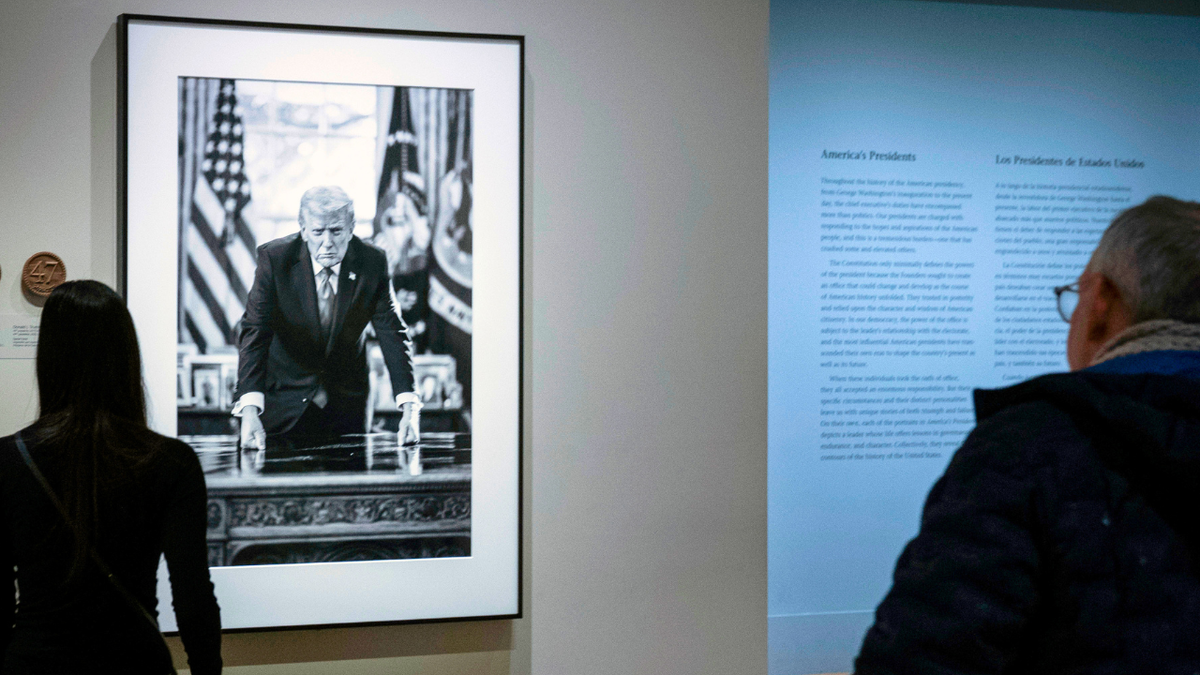
President Donald Trump has argued the Smithsonian should place greater emphasis on America’s founding principles, national achievements and patriotic history. (Maxine Wallace/The Washington Post/Getty Images)
It is unclear whether Trump can order the Smithsonian to make the changes. The institution is outside the executive branch and is overseen by a Board of Regents that includes Vice President JD Vance, Chief Justice John Roberts, lawmakers from both parties and citizen members.
Fox News Digital reached out to the Smithsonian for comment but did not immediately receive a response.
Trump has repeatedly criticized how the Smithsonian presents American history, particularly as the country celebrates its 250th anniversary.
EXCAVATION SET TO BEGIN ON TRUMP ADMINISTRATION’S 250-FOOT TRIUMPHAL ARCH AMID LEGAL BATTLE
In his posts Friday, he accused the National Museum of American History of giving too little attention to Washington and other Founding Fathers.
Trump singled out Washington’s crossing of the Delaware River on Christmas night in 1776 and the American victory at Trenton, saying the museum does not give those events the attention they deserve.
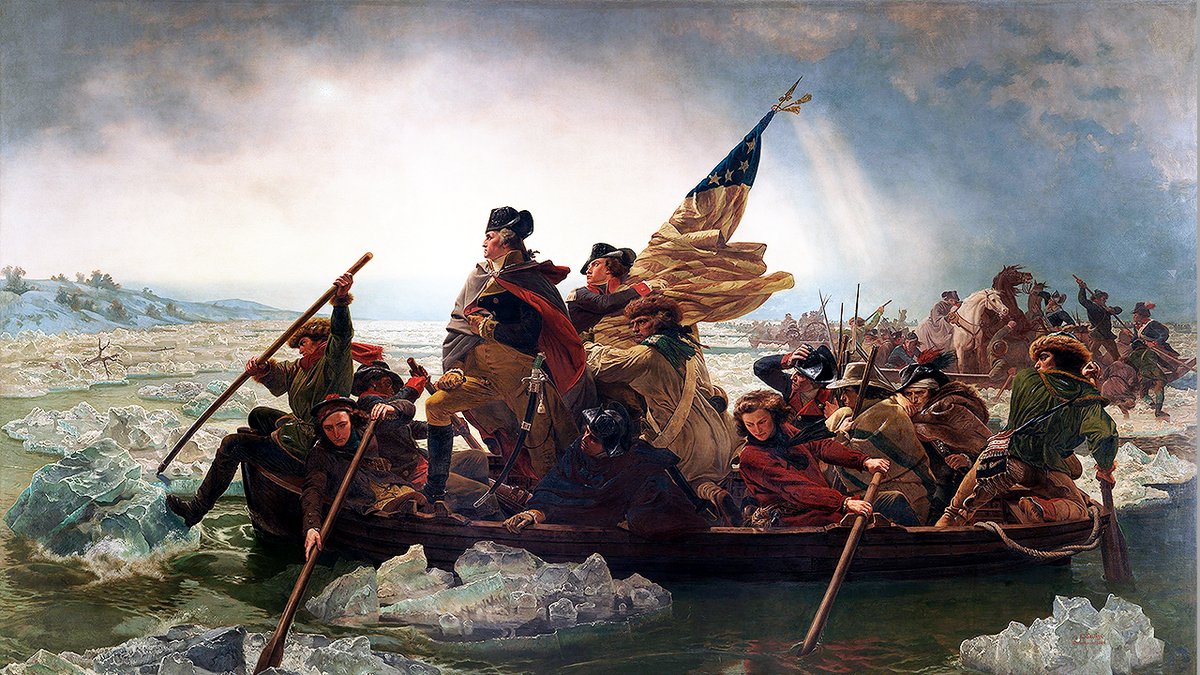
This painting, Washington Crossing the Delaware (by Emanuel Leutze, American, 1816 – 1868), 1851, shows George Washington’s crossing of the Delaware River on the night of December 25-26, 1776, as part of a surprise sneak attack on the British Army during the American Revolutionary War. (GraphicaArtis via Getty Images)
«He is easily America’s Greatest Hero,» Trump wrote of Washington. «Without him, our Country and our Freedoms wouldn’t exist.»
Trump also criticized the Smithsonian’s recently ended Center for Restorative History, an initiative created to spotlight stories that have been excluded from the national historical narrative.
Trump said the museum should instead create a «Center for American Heroes.»
«Tell the stories of Americans who faced great challenges, overcame them, built great things, defended our Country, made America better, and helped our Nation more fully live up to our Founding Ideals,» he wrote.
SUPREME COURT CHIEF JUSTICE PRAISES OUTGOING SMITHSONIAN LEADER WHO WAS UNDER PRESSURE FROM TRUMP ADMIN
Those criticisms have also led to action by the White House.
In March 2025, Trump signed an executive order aimed at eliminating what the White House called «divisive narratives» and «improper ideology» at the Smithsonian.
The White House followed this year with a report criticizing the Smithsonian, including what it said was a lack of attention to Washington and other Founding Fathers.
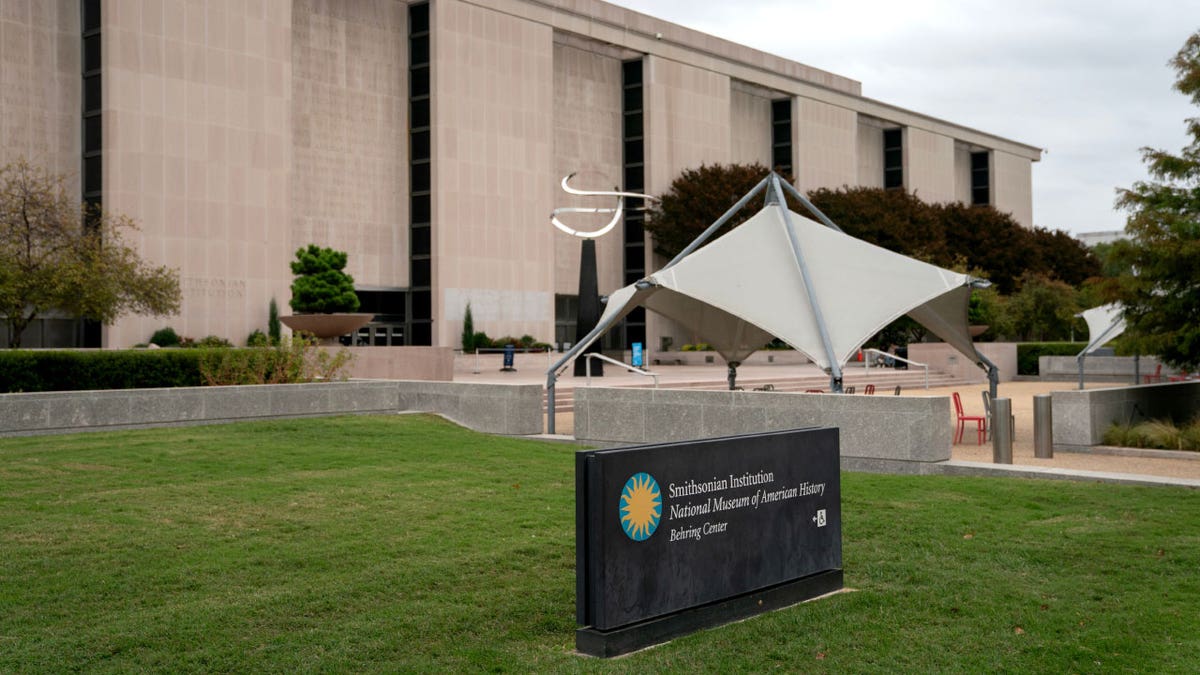
The Smithsonian National Museum of American History in Washington, D.C., on Sunday, Oct. 12, 2025. (Stefani Reynolds/Bloomberg via Getty Images)
In July, Trump ordered his administration to place signs outside the National Museum of American History telling visitors that some exhibits are inaccurate.
In a statement last year, the Smithsonian’s Board of Regents said it was committed to keeping the institution nonpartisan and its scholarship free from political or partisan influence.
The board also acknowledged that the Smithsonian «can and must do more» and directed its leadership to ensure museum content is unbiased.
Smithsonian secretary Lonnie Bunch announced last week that he will step down at the end of the year.
The Associated Press contributed to this report.
smithsonian, donald trump, white house, politics, heritage
NEWYou can now listen to Fox News articles!
FIRST ON FOX: Africa could become the next major frontier for data centers and Artificial Intelligence, experts say.
The Trump administration is backing and promoting American companies to make AI development, in their words, ‘the gold standard’. The U.S. is trying increasingly to grab business opportunities in Africa, as backlash and environmental restrictions hit data center development in the U.S. and Africa.
«Africa is emerging as a significant potential location for building AI infrastructure, especially as many mature markets face increasing environmental and power constraints,» Abhishek Goyal, Consultant at specialist research group Arizton Advisory & Intelligence, told Fox News Digital.
US COMPANIES WIN BILLIONS IN AFRICAN DATA CENTER DEALS IN DIRECT COMPETITION WITH CHINA
Rendering of U.S. company Cybastion’s projected data center in the Ivory Coast, West Africa. The U.S. Embassy in Abidjan helped facilitate a $170m contract with the government of the Ivory Coast which includes the provision of the data center. Image credit: (Cybastion)
He added, «The continent could become the next major frontier for AI infrastructure development. As the U.S. and Europe encounter challenges such as power scarcity, grid congestion, permitting issues and environmental regulations, Africa’s underdeveloped infrastructure presents an opportunity rather than a disadvantage.»
A State Department spokesperson told Fox News Digital, «We are committed to ensuring that American AI – including enabling infrastructure like data centers – continues to be the gold standard worldwide, and that we remain the partner of choice for foreign governments and businesses who are seeking to upgrade their telecommunications networks and AI capabilities.»
Amongst other deals, this year with U.S. help, an American company has won a $6.2 billion deal in Lesotho in Southern Africa for a data center and hydropower plant.
In the central African country of Gabon, the U.S. Embassy helped win $600 million in business for American companies in 2025. And this year, the embassy in this central African country has assisted in securing a $100 million contract to supply two data centers and a gas-to-power plant, in the face of strong competition from China.
TRUMP GETS MAJOR WIN AGAINST CHINA IN AFRICAN RARE EARTH MINERALS RACE
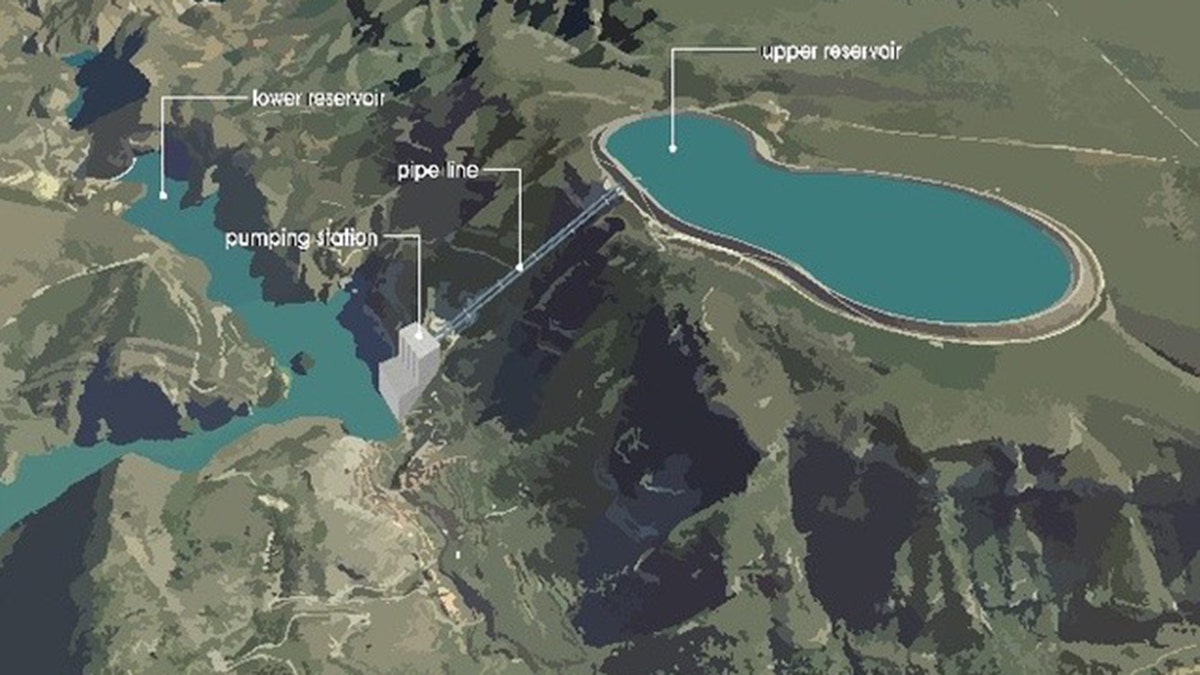
Rendering of the Kobong, Lesotho Pumped Hydro project, which is to be constructed in Lesotho by U.S. company Convalt Energy as part of a $6.2 billion deal with the government of Lesotho facilitated with the assistance of the U.S. government. (Convalt Energy)
Assistant Secretary of State for African Affairs Frank Garcia previously told Fox News Digital, «Under President Trump’s leadership, the United States is assisting U.S. companies to find new markets and flourish in Africa.»
«Africa is experiencing a data center boom, but it begins from a very small base,» Arthur Goldstuck told Fox News Digital. Goldstuck is CEO of South African technology research group World Wide Worx, and author of «The Hitchhiker’s Guide to AI – The African Edge.»
MASSIVE AI BOOM PUTS ONE OF AMERICA’S OLDEST MANUFACTURERS ON PATH TO DOUBLE IN SIZE, CEO SAYS
Goldstuck said that because of a lack of capacity currently, «Africa will not replace either market as any kind of center of global computing. Rather, its attraction lies in serving a rapidly growing African cloud market, and processing African data closer to the people and businesses that generate it.
He continued, «Africa also gives U.S. companies access to a cloud and AI market that remains severely under-served. The opportunities extend from operating data centers to supplying AI chips, cooling systems, cybersecurity and power infrastructure. In some countries, a data center can also become the guaranteed customer that makes a new renewable-energy project financially viable. American companies can therefore develop computing capacity and electricity generation together, in partnership with African companies and governments.»
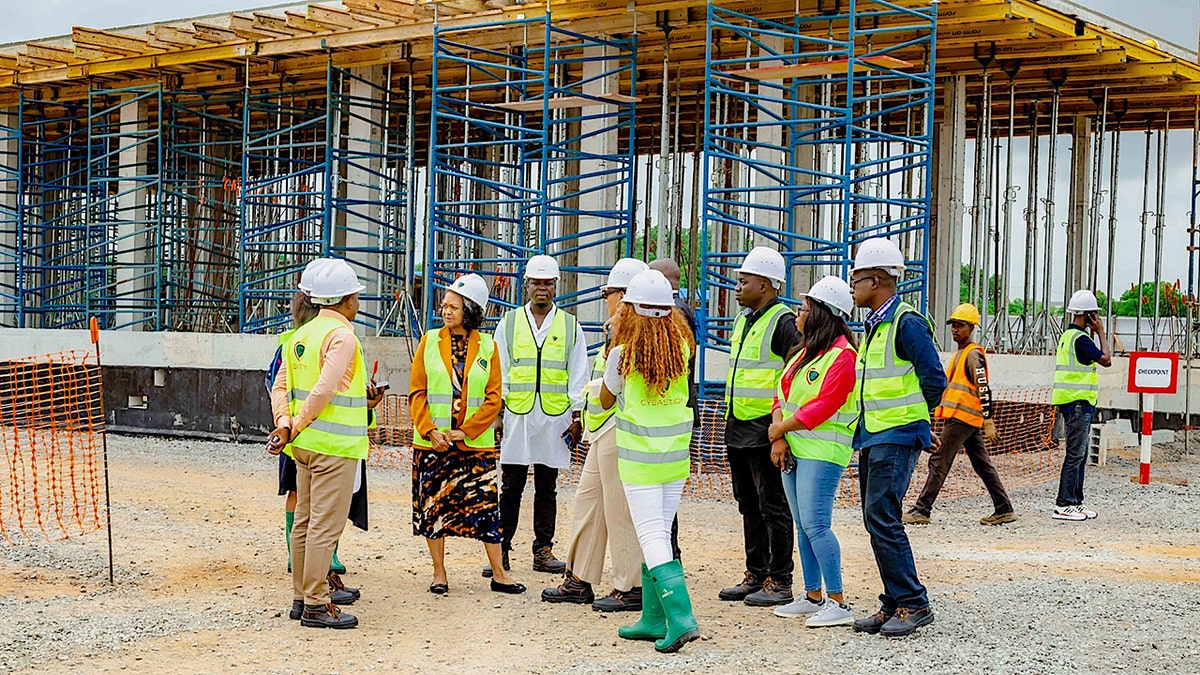
A recent site visit to the construction zone for a new data center in the Ivory Coast, which is part of a $170m contract facilitated by the U.S. Embassy for development by the U.S. company Cybastion. Photo credit Clement Djakey, Djakey Picture, for Cybastion. (Clement Djakey for Cybastion)
But Goldstuck said that data center growth is fueled by local needs on the continent. «It is a boom by African standards. Africa remains far behind the U.S. and Europe in installed capacity, and weak electricity grids make construction and operation more difficult. Demand is growing rapidly as governments, banks and other large companies seek local cloud and AI services. They increasingly want sensitive information stored within their own countries, which adds momentum to the expansion.»
Arizton’s Goyal added that «countries such as South Africa, Kenya, Nigeria, Morocco and Egypt are attracting large-scale (AI) projects.
«The U.S. Government aims,» a State Department spokesperson said, «to offer credible solutions that leverage public and private financing in priority areas, such as emerging technology, which demand that global telecoms networks remain secure for U.S. citizens and business. For example, undersea cables networks are being constructed across the Atlantic, providing more opportunity and connectivity to Africa than ever before.»
THE BIGGEST THREAT IN AMERICA’S RACE WITH CHINA ISN’T BEIJING, TECH EXECUTIVE WARNS
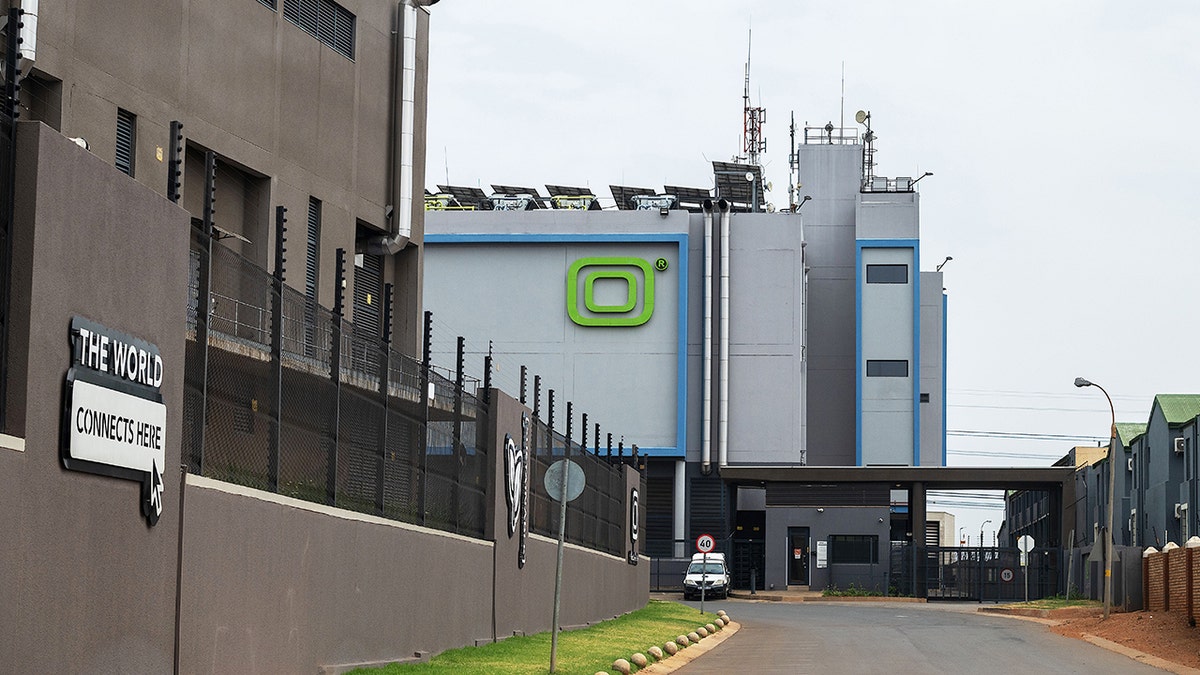
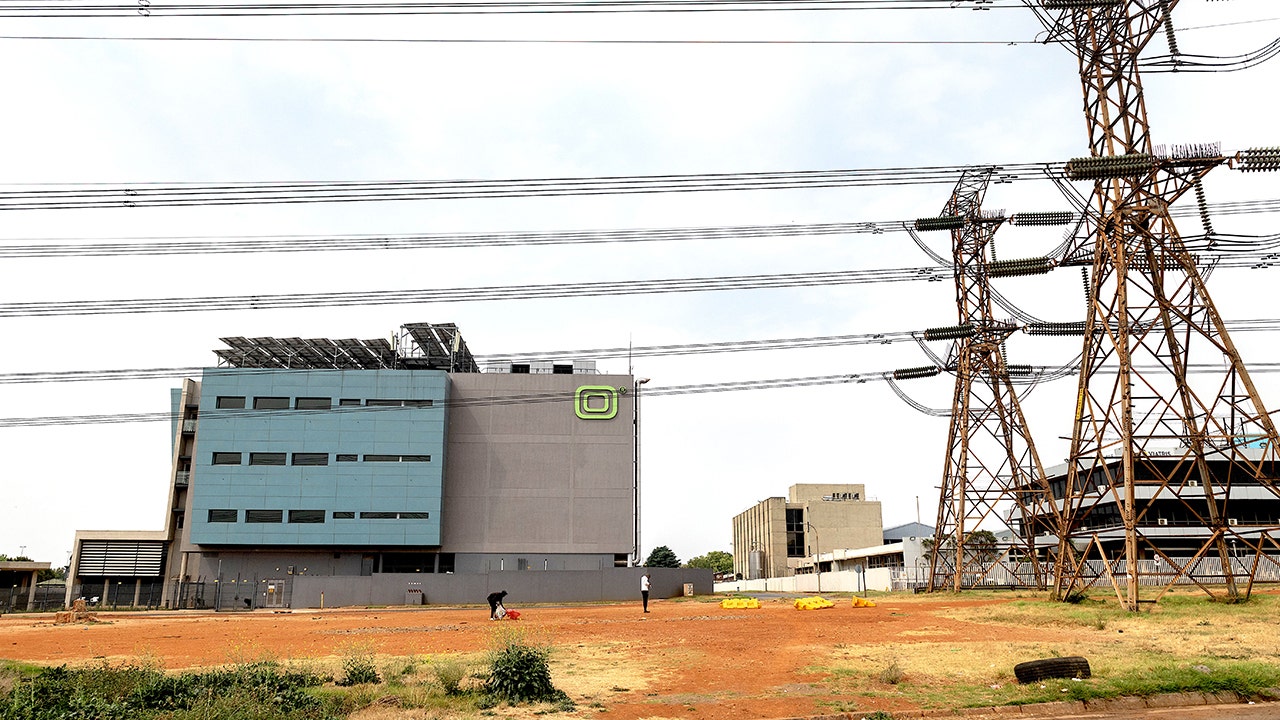
The Isando Campus, home to the Teraco Data Environments JB1 East & West, JB3 and JB5 data centers, in Johannesburg, South Africa, on Sunday, Sept. 28, 2025. Outside of South Africa, computing resources on the continent are often expensive and scarce. Photographer: (Leon Sadiki/Bloomberg via Getty Images)
U.S. companies using undersea AI cables to connect with African data centers is a possibility, Goldstuck said, but there are limitations. «Distance creates a slight delay, so African facilities would be less attractive for U.S. services requiring an instant response from American users. They could work well for backups, disaster recovery and some intensive AI processing, provided that the cost, security and legal jurisdiction made sense.»
Analysts say presently, much of Africa lacks regulation and is creating the risk of a wild west approach to business. The South African government recently claimed the country hosts 70% of the continent’s total data center capacity.
But Pitso Tsibolane, senior lecturer in information systems at the University of Cape Town, told Fox News Digital that in South Africa «there is currently no public register of data center facilities, no requirement that operators disclose how much water, electricity and land they will use and no binding commitments against which performance can be measured.»
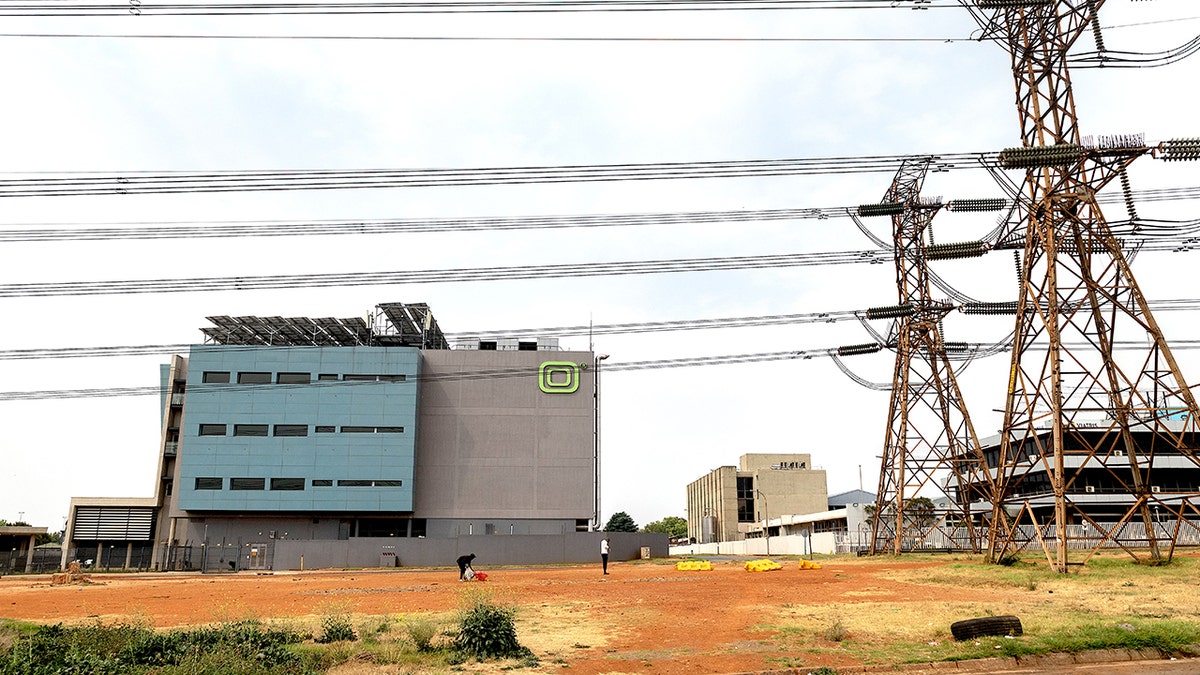
The Isando Campus, home to the Teraco Data Environments JB1 East & West, JB3 and JB5 data centers, in Johannesburg, South Africa, on Sunday, Sept. 28, 2025. ( Leon Sadiki/Bloomberg via Getty Images)
Tsibolane added, «That gap serves nobody. Communities cannot see what is being traded on their behalf, and responsible operators cannot distinguish themselves from the rest, because nobody’s numbers are on the table. South Africa hosts the majority of Africa’s data center capacity and has a real opportunity to become the jurisdiction that gets this right early: transparent disclosure, an independent factual baseline and predictable approvals. That combination is good for households, good for the grid and good for every investor who intends to be here for the long term.»
Arizton’s Goyal says the future for Africa could be bright. «Several African countries present a unique opportunity due to their abundant renewable energy potential — such as solar, wind, hydro and geothermal sources — as well as available land, lower development costs and fast-growing digital economies.»
africa, emerging economies, tech, energy planet earth, artificial intelligence

Con ventas débiles, costos en alza y menos pedidos, las pymes ajustan turnos para intentar sostener el empleo

Cargamento de cocaína en el Caribe hondureño asciende a 1,661 kilos y deja cuatro detenidos

Jaime Durán Barba advirtió por la caída de las inversiones extranjeras en Argentina y pidió un liderazgo “que convoque a un diálogo amplio”

Por qué levantamos los brazos al ganar: la ciencia detrás del lenguaje corporal de la victoria

¡Es un montón! El polémico video de Gimena Accardi sobre su amistad con Cande Vetrano y en plena infidelidad con Andrés Gil

Trump gives Smithsonian days to replace ‘strange modernist sculpture’ with Founding Father

El día que Owen Wilson se emocionó por el abrazo que le dio Lionel Messi tras un partido

Berni se diferenció de Kicillof en la aplicación de la baja de la edad de imputabilidad

Cuánto cuesta comprar una pick up en la Argentina y cuáles son los modelos más baratos en septiembre

La desafiante aventura de Carolina Baldini en moto por Europa: desde Edinburgo a Liverpool en dos ruedas

 POLITICA2 días ago
“¿Dónde está Kicillof?”: Patricia Bullrich cruzó al gobernador por la inseguridad en la Provincia
- INTERNACIONAL2 días ago
Atraviesan dos pipas y paralizan el tránsito en ruta clave de la Ciudad de Guatemala en protesta por el alza a los combustibles
- DEPORTE2 días ago
La cima de la Zona A del Torneo Clausura se pondrá en juego con dos compromisos: hora, TV y formaciones