
INTERNACIONAL
Swalwell friend Gallego defends campaign-funded Super Bowl, Miami trips: ‘Go where the money is’

NEWYou can now listen to Fox News articles!
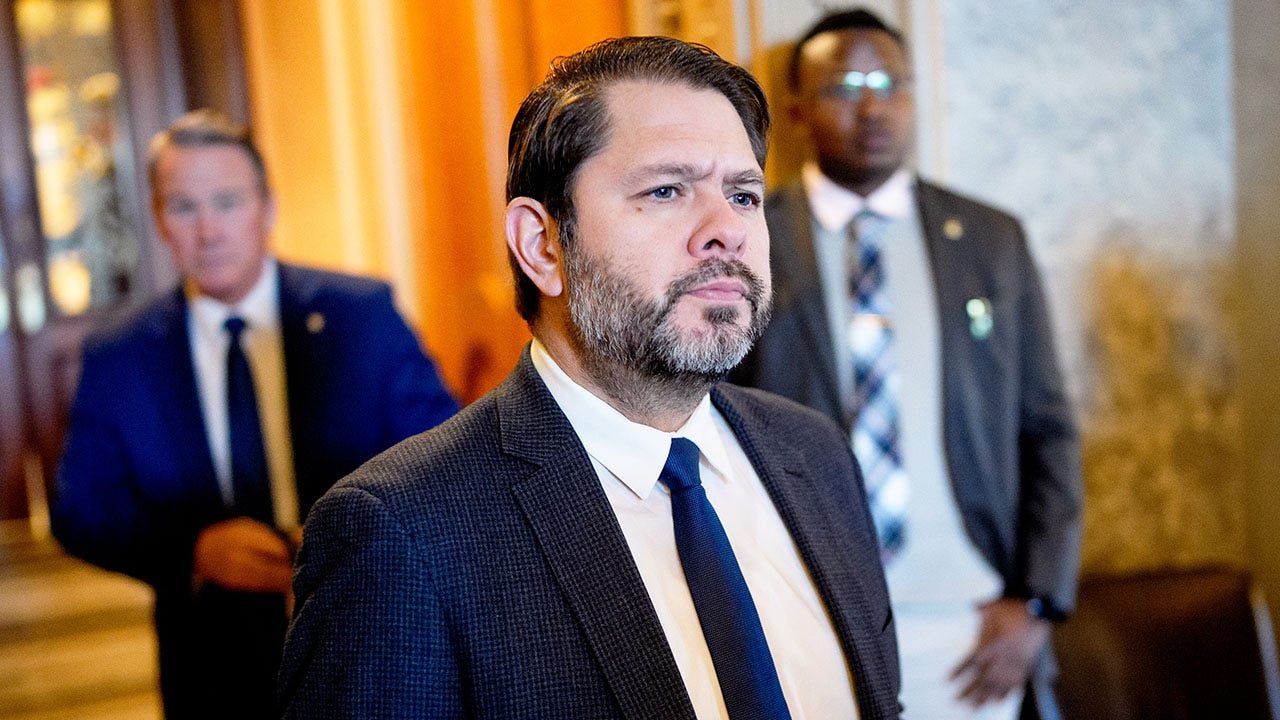
Sen. Ruben Gallego, D-Ariz., defended his campaign-funded travel and fundraising events after recent reporting detailed luxury travel, childcare and event expenses paid through his political committees, arguing that trips to the Super Bowl and Miami were legitimate efforts to raise money for his political operation.
«You have to go where the money is to raise money,» Gallego told Fox News Digital when asked about criticism surrounding the expenditures.
It was recently reported that Gallego used his leadership PAC to pay for a variety of luxurious trips, including trips to Miami, Saint Barthélemy, Disneyland, Disney World and Chicago, according to financial filings. A source familiar with Gallego’s spending said the senator often used campaign cash to bring his family on these vacations and used donor cash to fund babysitting services for his children, as reported by Politico.
Sen. Ruben Gallego, D-Ariz., walks out of the Senate Chamber in Washington, D.C., on Dec. 11, 2025, after two opposing health care bills intended to curb rising premiums failed. (Andrew Harnik/Getty Images)
Federal Election Commission records also show Gallego using a joint fundraising committee with former Rep. Eric Swalwell, who recently resigned from Congress after multiple women accused the California Democrat of sexual assault, that was used to fund tickets for him and his wife to attend the 2023 Super Bowl.
When asked about his recent financial controversies, Gallego claimed the Super Bowl endeavor to be a fundraiser event, the «Swallego Victory Fund,» which he hosted with Swalwell.
«The Super Bowl was in Arizona, I represent Arizona,» Gallego said. «We threw a Super Bowl fundraiser in Arizona where we raised money for my election in 2023. That’s what you do.»
SWALWELL’S ‘BEST FRIEND’ IN CONGRESS TURNS ON HIM AFTER BOMBSHELL ALLEGATIONS TORPEDO HIS POLITICAL CAREER

Then-Rep. Ruben Gallego, D-Ariz., and Rep. Eric Swalwell, D-Calif., are pictured with their wives riding camels shirtless during a 2021 trip to Qatar funded by the U.S.-Qatar Business Council. (FOX NEWS/Tucker Carlson Tonight)
The event was held with donors at State Farm Stadium in Glendale, Arizona, just 20 days after Gallego launched his Arizona Senate bid. A copy of the invitation obtained by Politico shows tickets costing $5,000, including a brunch that could be attended before the game for an additional $1,000.
The event cost over $37,000, with both lawmakers each receiving roughly $8,000 and halting the joint committee after the game.
A Gallego spokesperson told Politico that the «tickets were purchased at fair market value» and that «hosting donors and supporters at sporting events in their areas is a common, bipartisan practice.»
«There’s a lot of people that do fundraisers at golf tournaments, at NASCAR, at IndyCar,» Gallego told Fox News Digital. «So this is just the very same thing.»
The Arizona Democrat also used PAC money for a trip to Miami that coincided with his wife, Sydney Gallego’s, birthday. The couple retreated to the Loews hotel on Miami Beach and charged over $9,000 in expenses.
«We raised about $50,000 in our nine events in Miami,» Gallego said.
FAR-LEFT FIREBRAND SPENDS EYE-POPPING AMOUNT OF CAMPAIGN CASH ON LUXURY HOTELS, ‘TOP-TIER’ LIMO SERVICES
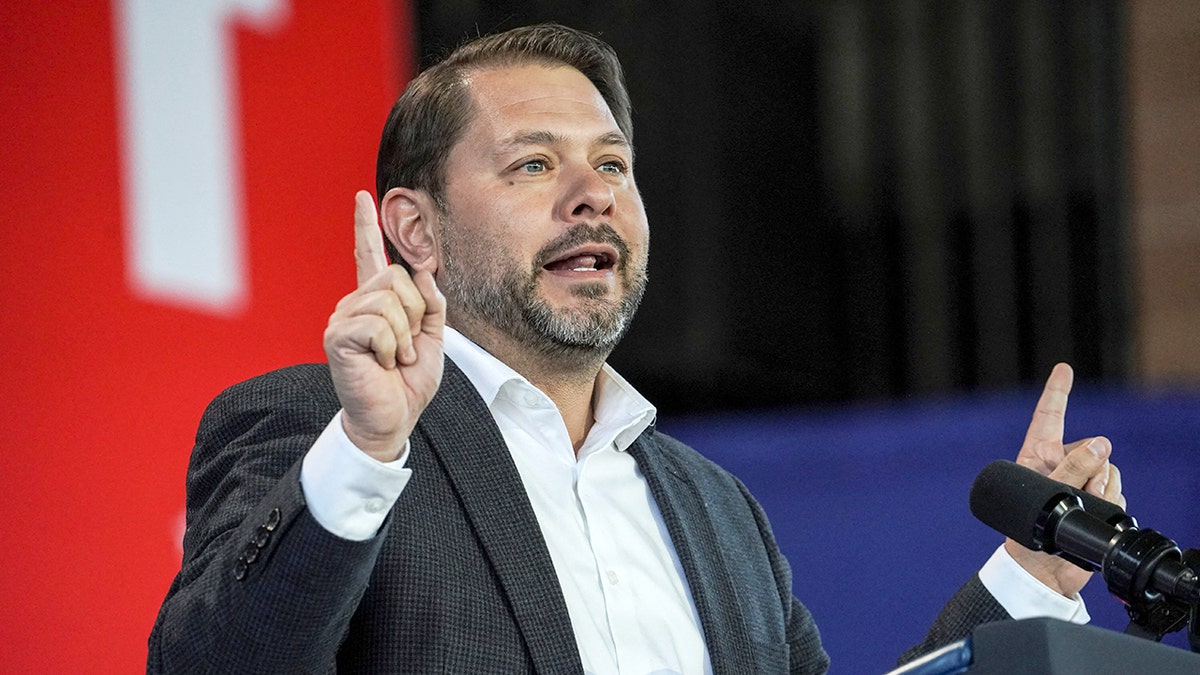
Arizona Sen. Ruben Gallego defended Democrats’ efforts to extend Obamacare subsidies. (Go Nakamura/Reuters)
A Gallego spokesperson told Politico that the Gallegos «attended several widely attended political events and fundraisers» on their trip to Miami, but did not specify any specific numbers nor address the birthday aspect of the trip.
Federal campaign funds generally cannot be converted to personal use, but FEC guidance allows campaign-related travel, meals at fundraising events and childcare expenses incurred as a direct result of campaign activity. Mixed personal and campaign travel can require reimbursement for the personal portion.
CLICK HERE TO DOWNLOAD THE FOX NEWS APP
Fox News Digital has not cited any FEC finding that the expenses violated campaign finance law.
Fox News Digital’s Robert Schmad contributed to this report.
eric swalwell, arizona, investigations, fund raising, campaigning










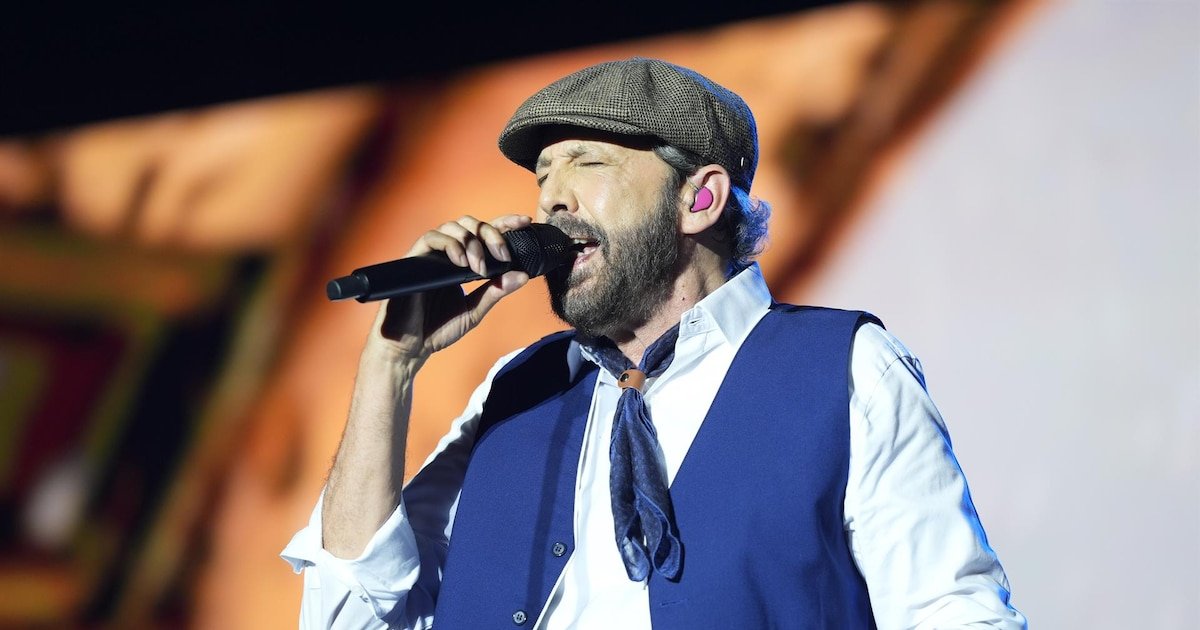
Juan Luis Guerra cerrará el 8 de agosto los Juegos Centroamericanos y del Caribe Santo Domingo 2026 con Canto a la Patria, obra que compuso y donó al Estado dominicano en 2006. La clausura será a las 18:00 hora horas en la Arena Banreservas Virgilio Travieso Soto, tras 16 días de competencia.
El acto de cierre pondrá fin a los XXV Juegos Centroamericanos y del Caribe y servirá como despedida formal de Santo Domingo 2026. La organización indicó, citada por el medio dominicano El Día, que la noche evocará la gesta deportiva vivida en el país y recordará la participación de atletas de distintas naciones que compitieron por las medallas.
El coro Más que Vencedores formará parte de esa presentación, en un segmento concebido como tributo tanto a la nación como a quienes sostuvieron la producción de las ceremonias. La publicación señaló que el homenaje alcanzará al personal que trabajó en esos actos conmemorativos.
Alberto Zayas, productor general y director creativo de las ceremonias, definió la presencia del artista como un gesto nacional. “Recibir este regalo del maestro es un honor para todo el país. Cerrar el centenario de los Juegos con su voz será un momento inolvidable”.

José P. Monegro, presidente del Comité Organizador de Santo Domingo 2026, sostuvo que la participación del cantante refuerza el sentido que la organización quiso darle al evento desde su apertura. “Que el maestro Juan Luis Guerra esté en el cierre de estos Juegos confirma lo que han sido desde el primer día: una causa de país”.
Monegro añadió que la organización asumió esa confirmación como una muestra de respaldo institucional y simbólico. “El Comité Organizador recibe su gesto con profunda gratitud, y lo devuelve con el compromiso de una clausura a la altura de estos dieciséis días inolvidables”.
De acuerdo con el medio dominicano Listín Diario, Juan Luis Guerra llegará a esta clausura con una trayectoria de más de 4 décadas y decenas de premios internacionales. El medio subrayó que su carrera lo ha convertido en una de las figuras que más han proyectado el nombre de la República Dominicana en el exterior.

Juan Luis Guerra nació en Santo Domingo el 7 de junio de 1957 y construyó una carrera que, según la biografía publicada en su sitio oficial, convirtió al merengue y la bachata en repertorios de alcance internacional, con discos de alto impacto comercial, premios Grammy y Latin Grammy, giras mundiales y reconocimientos académicos y culturales.
Entre los datos más contundentes de ese recorrido figuran ventas de más de nueve millones de copias para Bachata Rosa, más de siete millones para la compilación Grandes Éxitos y una convocatoria superior a 400,000 personas en el cierre del Festival de Tenerife, en España. La publicación también ubica entre sus hitos un concierto agotado para más de 60,000 personas en el Estadio Olímpico Félix Sánchez de Santo Domingo.
El músico dominicano estudió Filosofía y Letras en la Universidad Autónoma de Santo Domingo y luego ingresó al Conservatorio Nacional de Música de la capital dominicana. Más tarde se trasladó a Boston para formarse en Berklee College of Music, donde obtuvo una licenciatura en Composición de Jazz y años después recibió un doctorado honoris causa.
De regreso en República Dominicana, grabó en 1984 su primer álbum, Soplando, junto a un grupo de músicos y vocalistas locales que después sería conocido como Juan Luis Guerra y 4.40.
Citado por la biografía oficial, el artista definió ese debut como “una fusión de merengue tradicional con jazz unido a una vocalización al estilo del grupo vocal estadounidense Manhattan Transfer”.
INTERNACIONAL
Israeli President Herzog calls antisemitism a ‘contamination of societies’ as hate crimes surge

NEWYou can now listen to Fox News articles!
Israeli President Isaac Herzog issued a stern warning about the global spread of antisemitism in an exclusive interview with Fox News Digital at his Jerusalem residence.
«Antisemitism is an age-old plague which should be dealt with by everybody, by all societies. It’s not an Israeli issue or only a Jewish issue,» he said.
«It’s a contamination of societies that starts with the Jews — never ends with them. It’s the most dangerous phenomena that has to be dealt with aggressively, with no mercy, with full adjudication, and most importantly, with education,» he added.
EXCLUSIVE: ISRAELI PRESIDENT HERZOG BLASTS MAMDANI, PRAISES TRUMP, SOUNDS ALARM ON IRAN
Growing antisemitism and other issues led President Isaac Herzog to launch Voice of the People in April 2023. (Yoav Dudkevitch/TPS-IL for Fox News Digital)
Herzog’s warning comes as newly released New York City Police Department (NYPD) data show anti-Jewish incidents accounted for 56.9% of all confirmed hate crimes since the start of 2026, even though Jewish New Yorkers make up only about 10% of the city’s population.
Herzog pointed to New York City Mayor Zohran Mamdani, whom he accused of spreading hate and compromising the lives of New Yorkers.
«Mamdani does not respect my nation’s right for self-determination — the Jewish people’s inherent right to have a nation of their own. And he’s basically spreading blasphemy, hate, antisemitic rhetoric. He should understand that he’s risking his own citizens, he’s risking their safety, well-being and life,» Herzog told Fox News Digital.
In a video posted on social media on July 21, Mamdani called Israeli Prime Minister Benjamin Netanyahu «a war criminal» and «the architect of a horrific genocide against the Palestinian people.»
Days later, Raul Morales, 51, allegedly yelled «Allahu Akbar» while stabbing two men on Manhattan’s Upper West Side, including one who was visibly identifiable as Jewish.
SUSPECT ARRESTED AFTER ALLEGEDLY YELLING ‘ALLAHU AKBAR,’ STABBING 2 MEN IN NYC ATTACK
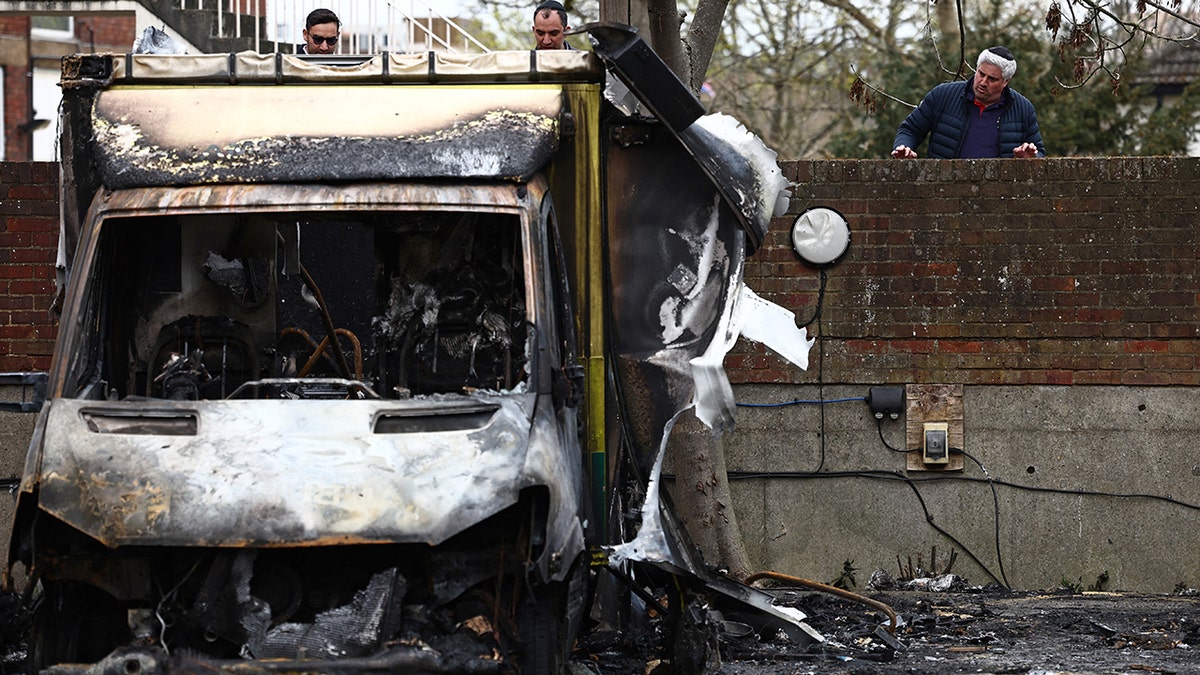
Members of the Jewish community view the scene of an antisemitic arson attack in the Golders Green neighborhood of north London, on March 24, 2026. (Henry Nicholls/AFP via Getty Images)
«We’ve seen the stabbing just a few days ago… just because somebody was dressed as an Orthodox Jew. This cannot be accepted in New York, which is a city that is dear to our heart, dear to Israelis, and dear to me personally,» Herzog said.
More broadly, a report released last month by the J7 Large Communities’ Task Force Against Antisemitism found that 20 people were killed in antisemitic attacks across seven countries outside Israel in 2025, marking the deadliest year for such violence in the Jewish diaspora since 1994.
The J7 comprises Jewish communities in the United States, Australia, Canada, Argentina, the United Kingdom, Germany and France.

People walk through Times Square during an anti-Israel rally on Oct. 4, 2025, in New York City. (Stephanie Keith/Getty Images)
According to the report, more than 23,000 antisemitic incidents were recorded across the J7 countries last year, representing a 97% increase in violent attacks and a 136% rise in overall incidents compared with 2022.
«Of course, Israel is doing its best, but it has to be an effort with governments all over the world, law enforcement agencies, educational systems and Jewish communities, which we care about a lot,» Herzog said, in reference to confronting Jew-hatred.
Referencing a recent article by professor Niall Ferguson titled «The Death of History,» he said, «How much TikTok or the social networks distort the facts of history? They negate the worst and greatest horror of humankind, the Holocaust. And that’s why we have to stand up together and combat it,» he told Fox News Digital.
Herzog stressed that misinformation spread through distorted and superficial channels makes it easy to smear Israel on social media, but that such narratives do not reflect reality.
GERMAN OFFICIALS WARN ISLAMIST, FAR-LEFT RHETORIC DRIVING SPIKE IN ANTISEMITIC ATTACKS

Aerial view of Israel’s Mediterranean coastal city Tel Aviv. (Menahem Kahana/AFP via Getty Images)
SIGN UP FOR ANTISEMITISM EXPOSED NEWSLETTER
«[Israel] is the place where the Startup Nation flourishes. This is the place where great ideas are given to the world and contribute enormously to the world in so many great fields, from health to energy, to science, to agriculture, to food security, to what not. There’s a reason why Americans who visit our country, young Americans, fall in love with this country,» he said.
Growing antisemitism, coupled with polarization within and between Jewish communities and a weakening sense of Jewish identity in some places, led Herzog to launch Voice of the People in April 2023. The initiative brings together a council of 150 emerging leaders — one-third from Israel, one-third from the United States and the remainder from around the world.
Leaders are selected through an algorithm from thousands of candidates and serve rotating terms of roughly two years, developing ideas to address challenges facing the Jewish world.
The initiative held an in-person kickoff summit in March 2025 in Haifa, featuring Herzog and bringing together all council members, reflecting his belief in building the next generation of Jewish leadership, which he described as one of his main tasks.
«I’m overjoyed by the great ideas I see and feel, and I hope that around November we will have a new registration starting for the next slot, the next cohort, and I invite as many Jewish friends to register,» he said.
anti semitism, israel, zohran mamdani, new york city, middle east
NEWYou can now listen to Fox News articles!
House GOP divisions are erupting on the midterm campaign trail as Republicans fight an uphill battle to keep control of Congress for the latter half of President Donald Trump’s term.
The infighting touched down in Florida on Wednesday, where two House Republicans are endorsing a primary opponent to incumbent Rep. Cory Mills, R-Fla., who is facing multiple investigations into his finances and allegations of domestic abuse, among other claims. Mills has denied any wrongdoing.
Reps. Mike Haridopolos, R-Fla., and Anna Paulina Luna, R-Fla., announced they’re backing former local TV anchor Ryan Elijah for Mills’ seat and said they «urge our fellow Republicans to join us in supporting him.»
«Ryan Elijah is an excellent candidate and will ensure victory for us in Florida 7,» Haridopolos told Fox News Digital. The Florida congressman will be in attendance at Mills’ debate against Elijah on Wednesday night and plans to sit next to the candidate’s wife.
GOP PARTY FISSURES EXPOSED IN BATTLE FOR S.C. SENATE SEAT TO REPLACE GRAHAM: ‘I DON’T LIKE HEARING THAT’
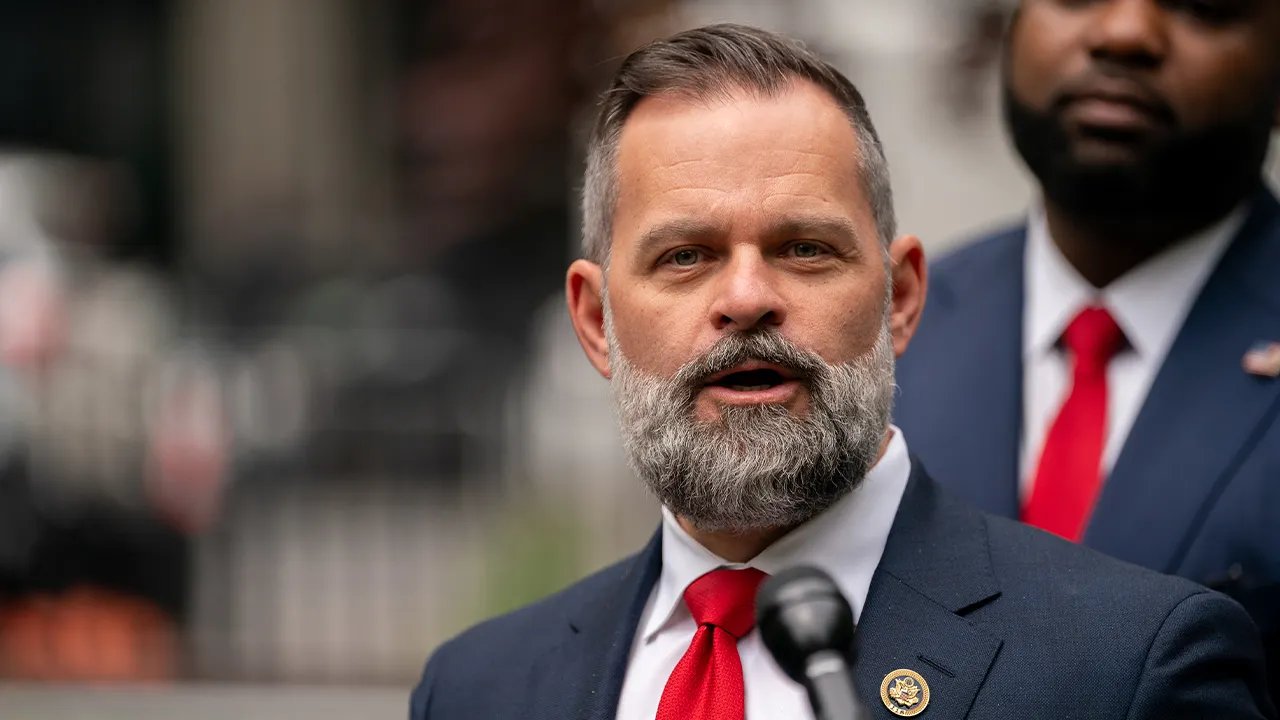
Representative Cory Mills, R-Fla., addresses the media outside of Manhattan Criminal Court on behalf of former President Donald Trump on May 14, 2024 in New York City. (David Dee Delgado/Getty Images)
Notably, President Donald Trump has endorsed Haridopolos, Luna and Mills for re-election — a fact Mills brought up in his response to Fox News Digital.
«I’m the only candidate in this race endorsed by President Donald Trump. Not once, not twice, but three times. I’m proud to have earned his trust because he knows I’ll continue fighting to advance the America First agenda and deliver results,» Mills said. «The fact is, my office has returned more than $107 million to the people of Florida’s 7th District, led Florida in constituent services, built one of the strongest conservative voting records in Congress, and flipped this district from blue to red,and kept it red. My record speaks for itself.»
It comes after another GOP source told Fox News Digital that some Florida Republicans were worried about the chances of keeping Mills’ seat if he won the primary on Tuesday, Aug. 18.
The nonpartisan Cook Political Report downgraded its projection for Republicans from «Solid R» to «Likely R» earlier this year. And with a Cook rating of R+5, Democrats could be within striking distance if Republicans see a tough enough cycle in November.
Mills is under investigation by the House Ethics Committee and the Department of Justice (DOJ), according to a source, though he has consistently insisted that he has not done anything wrong.
WATCH: CORY MILLS BLASTS DOJ PROBE AS ‘POLITICAL OP’ AHEAD OF FLORIDA PRIMARY
The Republican military veteran dismissed reports of a DOJ investigation as a «desperate lie» by his opponents and said on X late last month, «We are not aware of any DOJ investigation, nor has there been any confirmation of such investigation by DOJ or FBI, and would fully cooperate if there was one.»
Fox News Digital reached out to Mills for a response to Haridopolos and Luna’s endorsement.
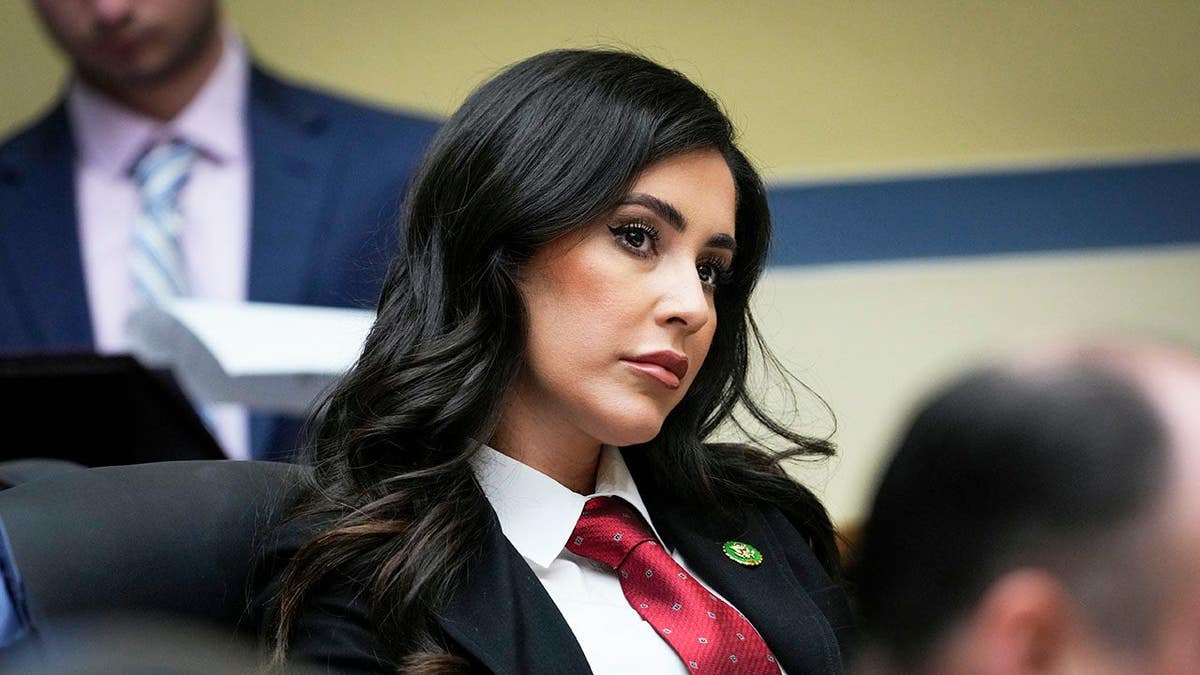
Rep. Anna Paulina Luna speaks during the House Committee on Oversight and Accountability hearing on border and immigration issues in Washington, D.C., on Feb. 7, 2023. (Jack Gruber/USA TODAY)
Mills is one of several House Republicans whose allegations of misconduct are posing a headache for the GOP on the campaign trail.
Rep. Chuck Edwards, R-N.C., announced overnight that he would drop his re-election bid after an explosive report detailed sexual harassment accusations by two young female staffers. Edwards has denied those accusations but has admitted to at times making staff feel uncomfortable.
GOP LAWMAKER’S GIFTS, ‘EFFUSIVE AFFECTION’ TOWARD YOUNG STAFFERS DETAILED IN EXPLOSIVE ETHICS REPORT
And Rep. Max Miller, R-Ohio, has been accused of domestic abuse by his ex-wife and former father-in-law, Sen. Bernie Moreno, R-Ohio, and is facing pressure from congressional Republicans to drop out of his race as well. One House GOP source called the situation a «f—ing trainwreck» in comments to Fox News Digital.
Miller has denied any wrongdoing and asked the House Ethics Committee to initiate an investigation in order to clear his name. The former Trump aide has resisted calls to exit the race, insisting he will win in November and that the public accusations from his ex-wife are a bid to derail his political career.
All three House seats are on the Democratic Congressional Campaign Committee (DCCC) target list, meaning Democrats are pouring money and resources into those races.
One House Republican, who was granted anonymity to speak freely, told Fox News Digital that all three should drop out of their races, stating, «We must lead by example.»
politics, house of representatives politics, florida, republicans

Pokémon GO detalla sus planes para el Campeonato Mundial Pokémon 2026 – Nintenderos

Juan Luis Guerra pondrá el broche final a los juegos en Santo Domingo 2026

Infantino le habría ofrecido la final del Mundial 2030 a Marruecos a cambio de apoyo

Kicillof celebró la visita del papa León XIV y lanzó una indirecta contra Milei: “Su mensaje es muy necesario en estos tiempos de crueldad”

Las centrales obreras y los movimientos sociales anunciaron dos días de conflicto callejero

Israeli President Herzog calls antisemitism a ‘contamination of societies’ as hate crimes surge

“Vamos a acelerar con todo”: el objetivo del Gobierno por las reformas y la agenda electoral de cara al 2027

Javier Milei cruzó a Victoria Villarruel y elevó la tensión: “Es una opositora, replica los argumentos kirchneristas”

Reelecciones indefinidas: el oficialismo bonaerense niega que busque ampliar la Legislatura como parte de una reforma política para beneficiar a los intendentes

¡Chau Luck Ra! La salida de soltera de La Joaqui, muy bien acompañada, a días de su separación
-
 POLITICA2 días ago
Javier Milei cruzó a Victoria Villarruel y elevó la tensión: “Es una opositora, replica los argumentos kirchneristas”
-
 POLITICA3 días ago
Reelecciones indefinidas: el oficialismo bonaerense niega que busque ampliar la Legislatura como parte de una reforma política para beneficiar a los intendentes
-

 CHIMENTOS3 días ago
Zaira Nara realizó un topless en Formentera y un comentario de un seguidor generó debate: “¿Nunca vestida?»