INTERNACIONAL
Vance says US-Iran talks end without deal after 21 hours of negotiations

NEWYou can now listen to Fox News articles!
Vice President JD Vance said Sunday that high-stakes talks between the U.S. and Iran ended without a deal after Iranian officials refused to accept American terms.
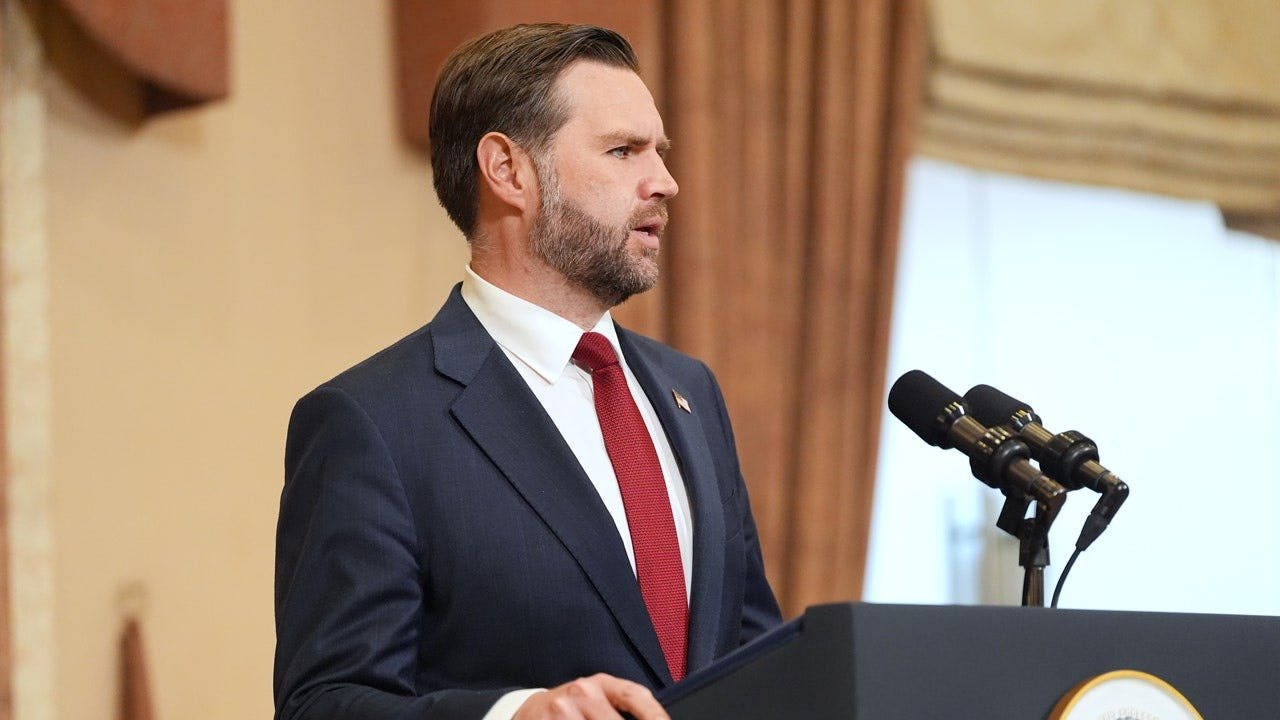
Speaking during a press conference from the Serena Hotel in Islamabad, Pakistan, Vance said Iran has «chosen not to accept our terms.»
«The bad news is that we have not reached an agreement,» Vance said. «And I think that’s bad news for Iran much more than it’s bad news for the United States of America.»
The vice president said talks with Iranian officials lasted 21 hours, describing them as «substantive discussions,» but adding the U.S. was unwilling to compromise on its «red lines.»
VANCE WARNS IRAN WILL ‘FIND OUT’ TRUMP IS ‘NOT ONE TO MESS AROUND’ IF CEASEFIRE DEAL FALLS APART
Vice President JD Vance speaks during a news conference after meeting with representatives from Pakistan and Iran, Sunday, April 12, 2026, in Islamabad, Pakistan. (AP Photo/Jacquelyn Martin, Pool)
«So we go back to the United States, having not come to an agreement. We’ve made very clear what our red lines are, what things we’re willing to accommodate them on and what things we’re not willing to accommodate them on,» Vance added. «And we’ve made that as clear as we possibly could, and they have chosen not to accept our terms.»
Fox News Digital’s Preston Mizell asked Vance if he had been in contact with President Donald Trump during the talks, and the vice president said he had been «consistently.»
«I don’t know how many times we talked to him — a half dozen times, a dozen times over the past 21 hours,» Vance said, adding that the U.S. team was also communicating with other members of the Trump administration, including Secretary of State Marco Rubio and Secretary of War Pete Hegseth.
GEN JACK KEANE ‘SKEPTICAL’ THAT IRAN CEASEFIRE WILL HOLD, WARNS TEHRAN WILL ‘DELAY AND OBFUSCATE’
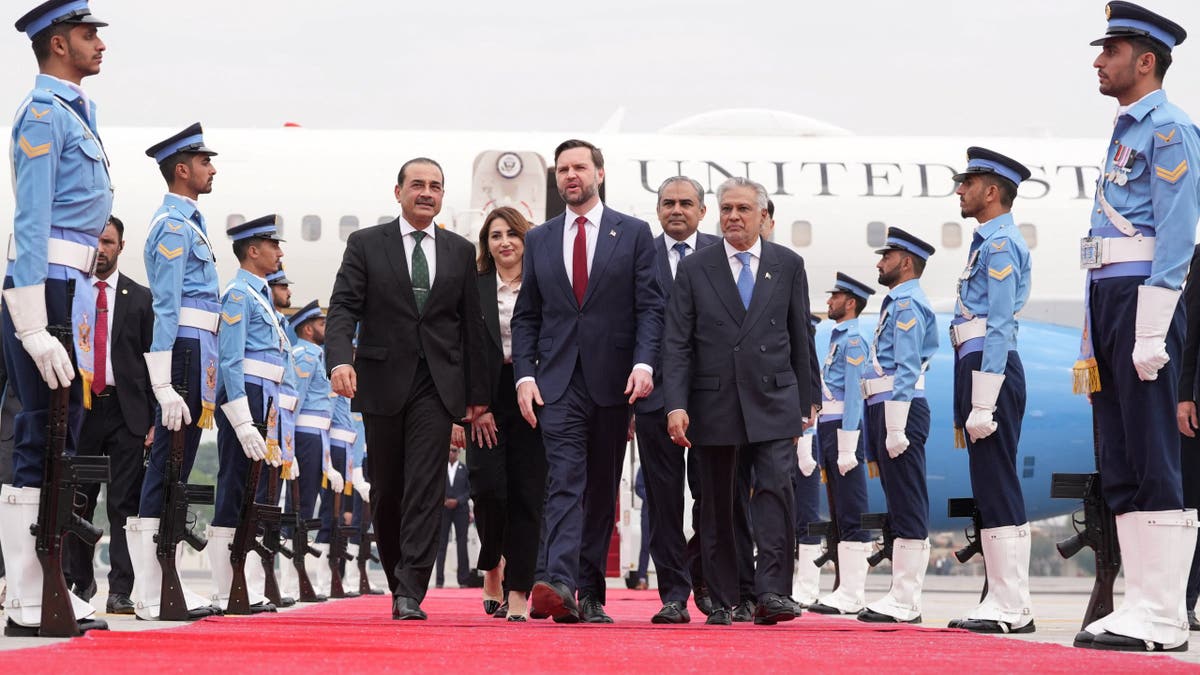
Vice President JD Vance walks with Pakistan’s Chief of Defense Forces Field Marshal Asim Munir, Deputy Prime Minister Mohammad Ishaq Dar, U.S. Embassy Charge d’Affaires Natalie A. Baker, and Interior Minister Mohsin Raza Naqvi after arriving for talks with Iranian officials in Islamabad, Pakistan, on April 11, 2026. (Jacquelyn Martin/Reuters)
«So, look, we were constantly in communication with the team because we were negotiating in good faith,» Vance said. «And we leave here with a very simple proposal, a method of understanding that is our final and best offer. We’ll see if the Iranians accept it.»
Vance arrived in Pakistan early Saturday to lead high-stakes negotiations with Iran aimed at preserving a fragile ceasefire announced by Trump earlier this week and preventing a broader regional war.
Vance was joined by U.S. Special Envoy Steve Witkoff and Jared Kushner, Trump’s son-in-law, as part of a senior delegation engaging Iranian officials in Islamabad.
TRUMP AGREES TO 2-WEEK CEASEFIRE IF IRAN OPENS STRAIT OF HORMUZ
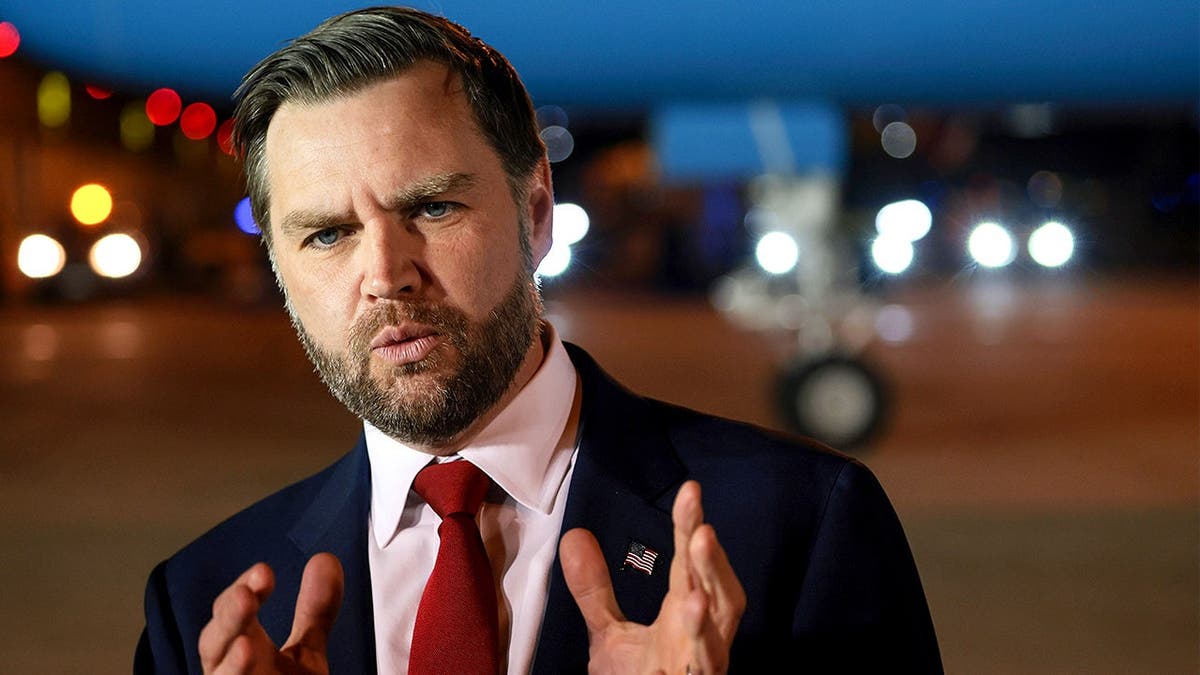
Vice President JD Vance spoke to reporters before boarding Air Force Two at Budapest Ferenc Liszt International Airport on April 8, 2026, in Budapest, Hungary. The White House said Vance would lead the U.S. delegation in upcoming peace talks with Iran and was in Hungary supporting Prime Minister Viktor Orbán ahead of parliamentary elections scheduled for April 12. (Jonathan Ernst-Pool/Getty Images)
Iranian Foreign Minister Abbas Araghchi and Speaker of Parliament Mohammad Bagher Ghalibaf were negotiating for Iran.
While Vance declined to elaborate on which terms Iran rejected, he said the U.S. sought assurances that Iran would not develop a nuclear weapon.
«The simple fact is that we need to see an affirmative commitment that they will not seek a nuclear weapon, and they will not seek the tools that would enable them to quickly achieve a nuclear weapon,» Vance said. «That is the core goal of the president of the United States. And that’s what we’ve tried to achieve through these negotiations.»
CLICK HERE TO DOWNLOAD THE FOX NEWS APP
The talks came over a month after the U.S. launched Operation Epic Fury on Feb. 28.
Fox News Digital’s Preston Mizell and Morgan Phillips contributed to this report.
pete hegseth, nuclear proliferation, iran, jd vance









INTERNACIONAL
Dem senator accused of being ‘nowhere to be found’ on crucial issue impacting kids in swing state
NEWYou can now listen to Fox News articles!
Sen. Jon Ossoff, D-Ga., is being accused by Georgia’s top child welfare official of using vulnerable children and the state’s embattled foster care system for campaign credit after releasing a new ad touting his work on the state’s troubled system.
Georgia Division of Family & Children Services (DFCS) Director Candice Broce criticized the new foster care-focused ad released last week as the Georgia Democrat seeks re-election in one of the nation’s most closely watched races. In the ad, titled «Our Kids,» Ossoff highlights «a scathing report» and «yearlong bipartisan investigation» alongside Sen. Marsha Blackburn, R-Tenn., into the Georgia foster care system.
Ossoff presents his probe and new legislation as part of his record protecting children and holding the system accountable. However, Broce says the Democrat is overstating his role and turning a serious child welfare issue into a political victory lap.
«For five years, I’ve been in the trenches fighting for vulnerable children and foster care reform alongside thousands of DFCS workers. Trust us when we say Jon Ossoff is nowhere to be found,» Broce said in a post on X. «Ossoff didn’t get more funding for DFCS after calling us incompetent and resource-strapped. He didn’t secure more federal support for child advocacy centers despite the State’s requests.»
FOX NEWS POLL: AN EARLY LOOK AT THE GEORGIA SENATE RACE
Sen. Jon Ossoff, D-Ga., recently released an ad titled «Our Kids» touting his work reforming mismanagement and neglect in his state’s foster care system. (Getty Images)
«He didn’t fix federal law putting group homes out of business,» she continued. «He hasn’t streamlined adoptions for kids placed with loving families. Jon’s ad sounds great, but his words are meaningless to the men and women in the arena.»
Ossoff’s team fired back, however, calling Broce an «unqualified partisan political hack» and accusing her of «dangerous incompetence.» They pointed to Ossoff’s oversight work highlighted in the advertisement that Broce criticizes, which the spokesperson said found children in Georgia’s foster care system were likely sex trafficked while in state care, among other issues.
«The Office of the Child Advocate, juvenile court judges, former foster children, nonpartisan advocates, investigative reporting, and Senator Ossoff’s yearlong investigation have laid bare the deep and dangerous dysfunction at DFCS,» an Ossoff campaign spokesperson told Fox News Digital.
The campaign also cited testimony from juvenile court judges who accused Broce of suggesting that children with special needs be held in juvenile detention while DFCS searched for placements. Broce has denied the allegations, describing them as politically motivated and arguing they distort a broader discussion about how to keep foster youth with complex behavioral issues, runaway histories and trafficking risks safe amid placement shortages.
ONE OF NATION’S LARGEST CHRISTIAN FOSTER AGENCIES WILL NOT ALLOW LGBTQ COUPLES TO ADOPT CHILDREN
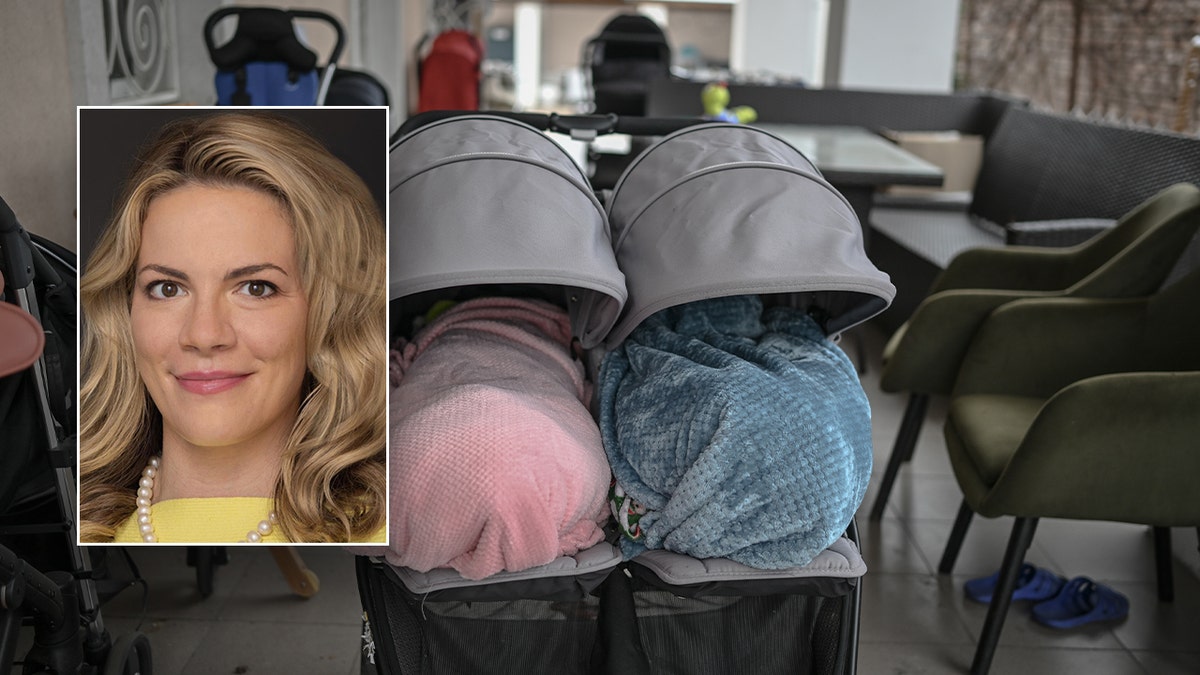
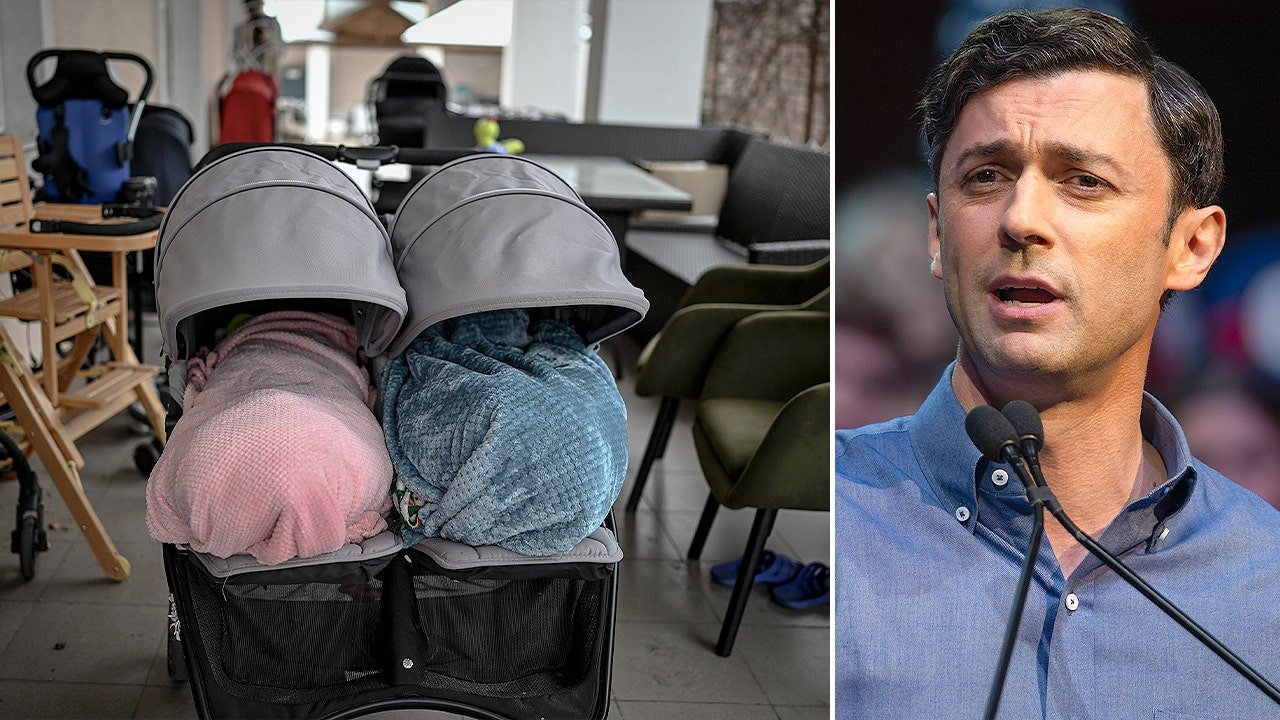
Candice L. Broce (left) is the Director of the Georgia Division of Family & Children Services (DFCS). She is pictured next to an image of baby strollers in an office. (Georgia DFCS/Getty Images)
«Candice Broce is a partisan political hack irresponsibly placed in charge of care for the state’s most vulnerable kids,» the Ossoff spokesperson said. «Instead of whining that her dangerous incompetence was made public, she should fix her broken agency.»
Broce rejected the attacks on her qualifications, pointing to her background as a health care attorney, former chief deputy executive counsel and chief operating officer to Gov. Brian Kemp and saying roughly 40 state agencies, including DFCS, reported to her in that role.
At the same time, she did not dispute that Georgia’s foster care system has faced serious challenges, but argued Ossoff used those problems for hearings, reports and campaign messaging without delivering meaningful help to fix them.
«If you’re going to beat us down, show up with something to make it better,» Broce said. «He didn’t do that.»
16 CHILDREN FOUND LIVING IN ‘DEPLORABLE’ OHIO HOME CONDITIONS, 4 ARRESTED: ‘PURE EVIL’
Broce said Ossoff could have used his federal role to pursue resources on Medicaid, behavioral health access and placement capacity, rather than simply spotlighting DFCS failures.
«What’s actually bipartisan is the over $100 million in state funds we’ve gotten from Republican and Democrat legislators who support the issues we’re tackling and believe we deserve more resources,» Broce said. «If he decides today that he actually wants to help us and vulnerable Georgia kids, we’d welcome him with open arms.»
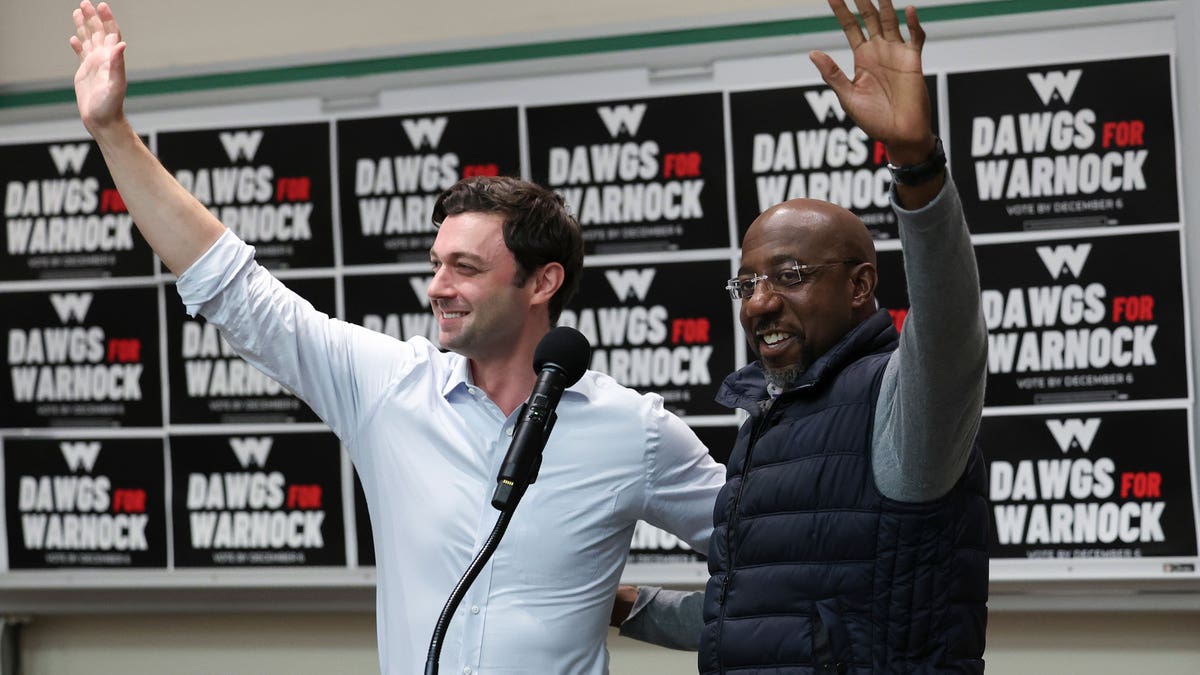
U.S. Sen. Raphael Warnock, D-Ga., (right) and Sen. Jon Ossoff, D-Ga., (left) wave to students before speaking at a Dawgs for Warnock rally at the University of Georgia December 4, 2022, in Athens, Georgia. (Win McNamee/Getty Images)
However, Ossoff’s team contests it is not even «Senator Ossoff’s job to fix the state agency [Broce] leads» in the first place, and said Broce was whining that «it’s Senator Ossoff’s job to fix the state agency she leads.»
«While Sen. Ossoff led oversight, passed an anti-trafficking law, and helped save foster care funding President Trump cut, unqualified partisan hack Broce whines it’s Senator Ossoff’s job to fix the state agency she leads,» Ossoff’s representatives told Fox News Digital.
CLICK HERE TO DOWNLOAD THE FOX NEWS APP
Broce’s criticism of Ossoff included a contrast between his record and that of Georgia’s other U.S. Senator, Democrat Raphael Warnock. Broce called the difference «stark,» pointing to Warnock’s community events for vulnerable mothers and children and adoption-related measures as examples of practical support she says Ossoff has not delivered.
«Compare his child welfare record to Warnock’s. It’s crystal clear which U.S. Senator from Georgia cares about vulnerable families and kids, and it’s not Jon,» Broce said in her X post.
Ossoff, who ran unopposed for the Democratic nomination, is seeking a second term in November against Rep. Mike Collins, R-Ga., who won the Republican nomination after defeating former football coach Derek Dooley in a mid-June GOP runoff election. Warnock will not face reelection again until 2028.
democrats elections, democrats senate, midterm elections, georgia, senate elections
INTERNACIONAL
Conmoción en Damasco: explotaron dos bombas frente al hotel de Macron durante su visita a Siria

Cómo fueron las explosiones
Ayuda a Siria para su reinserción
Qué contaron los testigos

Tensión y atentados
INTERNACIONAL
Cuba restablece parcialmente la electricidad tras el tercer apagón nacional en seis meses
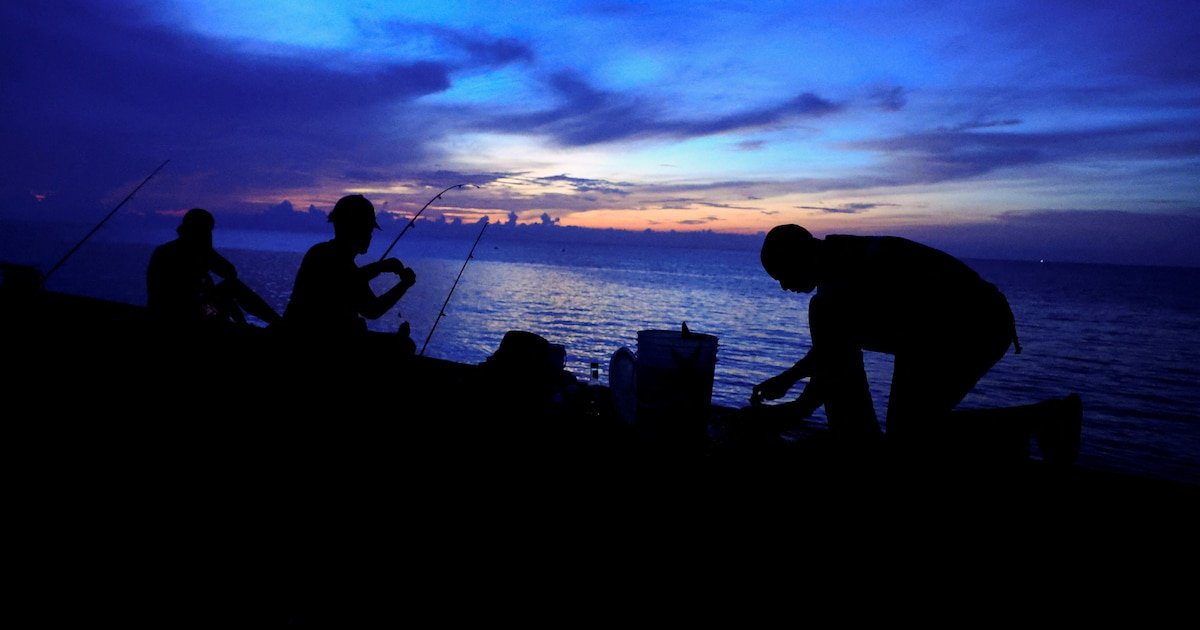
Cuba afirmó este martes haber restablecido más del 30% del suministro eléctrico en La Habana tras un nuevo apagón nacional, en un contexto de crisis energética agudizada por el bloqueo petrolero de Estados Unidos. Es el tercer apagón en los últimos seis meses y el octavo desde finales de 2024.
Según el último parte de la Empresa Eléctrica de La Habana, se han restablecido los “circuitos de distribución que benefician a 262.369 clientes (…) para el 30,4% en la ciudad”.
“El restablecimiento se realiza de forma gradual en la medida que lo permitan las condiciones”, añade la empresa, según la cual ya funcionan los servicios “vitales de salud” de 43 centros de atención médica de la capital.
La falta de combustible “complejiza indiscutiblemente el proceso de restauración” de la red eléctrica, había declarado el lunes por la noche en la televisión estatal Lázaro Guerra, director de Electricidad del Ministerio de Energía y Minas.
Miguel Díaz-Canel responsabilizó directamente a la política estadounidense de sanciones contra la isla. “Mientras EEUU trata de inducir un estallido social por asfixia, al bloquear los accesos de combustible a Cuba, la UNE (Unión Eléctrica de Cuba) se moviliza”, dijo en X.
“Es heroico lo que hacen los trabajadores eléctricos en medio de un bloqueo energético genocida”, añadió.

A mediodía del lunes, la compañía eléctrica anunció “desconexión total” del sistema que afecta a toda la isla, donde viven 9,6 millones de personas. No se precisaron las causas.
El envejecimiento del sistema eléctrico sumado al bloqueo petrolero desde enero hace que los cubanos enfrenten apagones de hasta 30 horas en la capital, y de varios días en el interior de la isla.
“Al final, teníamos tres o cuatro horas de luz al día, así que el mayor impacto ahora es que no sabes cuándo volverás a tener ese poquito de luz”, declaró a la AFP Meybol Font, una trabajadora independiente, de 51 años.
“Es agónico vivir así”, acotó la mujer.
La producción de electricidad en el país depende principalmente de siete centrales térmicas obsoletas, algunas de las cuales llevan más de 40 años en explotación y sufren averías frecuentes o deben parar para mantenimiento, así como de una red de generadores de respaldo alimentados con diésel importado.
La central eléctrica Antonio Guiteras, ubicada en el oeste de la isla y la principal del país, se encuentra paralizada desde hace varios días por una falla.
Esta central ha registrado más de 15 paralizaciones sucesivas por averías desde principios de año. Esta situación provoca cortes y racionamientos constantes, pese a un amplio programa de construcción de parques solares lanzado hace dos años.

Cuba se encuentra sumida en una fuerte crisis económica con escasez de alimentos, medicinas y una inflación galopante.
Los apagones se han intensificado desde que la administración estadounidense de Donald Trump cortó los envíos de petróleo desde Venezuela, principal proveedor de la isla, y amenazó con sanciones a otros países que le vendan combustible.
Un joven programador de 24 años que trabaja para una empresa privada de desarrollo de software en La Habana Vieja regresaba frustrado a su casa.
“No hay wifi, no hay electricidad, no podemos trabajar”, explicó a la AFP el joven, que prefirió no revelar su identidad.
Cuba solicitó para el martes una sesión especial de la Asamblea General, el principal órgano representativo de las Naciones Unidas, para abordar el tema de las sanciones estadounidenses.
En ese contexto, el canciller cubano, Bruno Rodríguez, afirmó el lunes que Washington busca impedir que la Asamblea se pronuncie sobre el impacto del bloqueo petrolero y otras sanciones impuestas a la isla.
“El gobierno de EEUU intenta impedir que la Asamblea General de la ONU se pronuncie. Presiona a gobiernos y busca coaccionar la voluntad soberana de los Estados miembros”, señaló en X Rodríguez, quien participará de la sesión del martes en la sede de la ONU en Nueva York.
Se requiere una votación de los Estados miembros para la apertura de un debate de este tipo ante la Asamblea General.
(AFP)
General Society,Human Interest,South America / Central America,Human Interest / Brights / Odd News

Dólar hoy en vivo: a cuánto se operan todas las cotizaciones minuto a minuto este martes 7 de julio

El especial mensaje que publicó Mario Massaccesi, cargado de mucho cariño: «Gracias Walter por tu incondicionalidad conmigo»

Juico por Loan Peña, en vivo: declaran tres familiares del niño desaparecido en Corrientes

De no creer: en pleno Mundial, arranca la Champions League

El detrás de escena de la conferencia. Una charla en el ascensor y una carcajada fuera de cámara

Del “solos podemos” a la Realpolitik: el oficialismo cambia de libreto

El Salvador, segundo país más dependiente de importaciones alimentarias, según la Mesa por la Soberanía Alimentaria

Javier Milei y sus medidas, EN VIVO: denunciaron al Presidente por los ejercicios militares conjuntos de Argentina y EE.UU.

Guido Rodríguez renovó con Valencia: firmó hasta 2028 y algo más

La Justicia ordenó revisar la causa contra Guillermo Moreno por la manipulación de los datos del INDEC

 ECONOMIA1 día ago
La producción textil aceleró su caída y la capacidad instalada siguió entre las más bajas de la industria
- DEPORTE21 horas ago
Portugal vs España: formaciones, hora y dónde ver por tv
- POLITICA2 días ago
Fin al presidente antisistema: Milei ya tiene su “casta” y se aferra al dogma económico