INTERNACIONAL
Con 35 candidatos y el desafío de la gobernabilidad, Perú elige a su noveno presidente en diez años

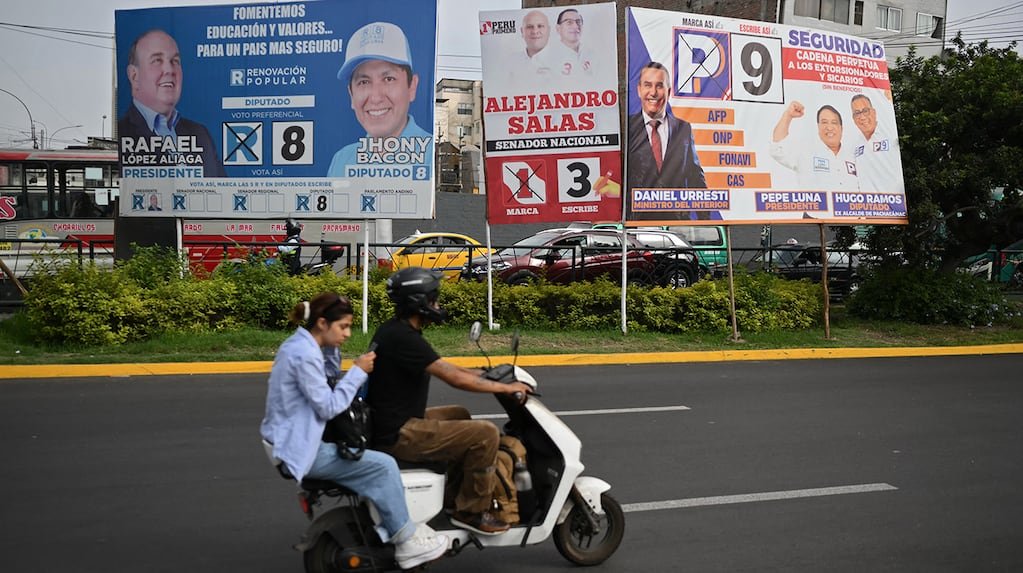
En un clima de enorme incertidumbre y con el desafío prioritario de lograr gobernabilidad, Perú elegirá este domingo a su noveno presidente de la última década en unas elecciones generales marcadas por una inédita dispersión que se traduce en la postulación de 35 candidatos.
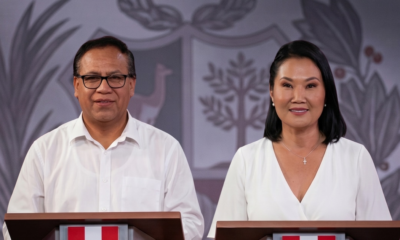
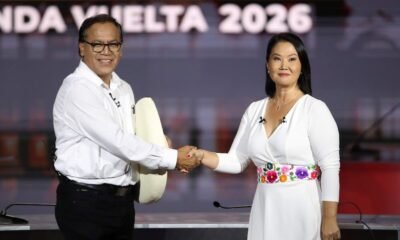
La eterna Keiko Fujimori (Fuerza Popular, derecha tradicional), hija del fallecido dictador Alberto Fujimori, lideró los últimos sondeos con un respaldo que apenas ronda el 15%. Será su cuarto intento de llegar al gobierno después de perder en los balotajes de 2011, 2016 y 2021.
Detrás hay al menos cinco aspirantes que buscan llegar a una segunda vuelta prevista para el 7 de junio con apoyos que no llegan al 10%.
Ellos son el exalcalde de Lima Rafael López Aliaga (Revolución Popular, ultraconservador); el comediante Carlos Álvarez (País para Todos, derecha populista); el dirigente Ricardo Belmont (Partido Cívico Obras, centro); el psicólogo Roberto Sánchez (Juntos por el Perú, izquierda) y Alfonso López Chau (Ahora Nación, centroizquierda).
Para ser electo presidente en primera vuelta, el candidato ganador debe obtener al menos el 50% más uno de los votos.
En estas elecciones se elegirá por primera vez un Parlamento bicameral (Senado y Cámara de Diputados) tras una reforma constitucional.
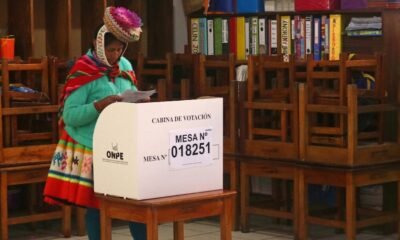
Un total de 27 millones de peruanos están habilitados para elegir un presidente y dos vicepresidentes de la República, que gobernarán por cinco años; 60 senadores y 130 diputados que conformarán el nuevo Congreso bicameral, y cinco representantes ante el Parlamento Andino.
Lucha contra la criminalidad y gobernabilidad
La creciente inseguridad y el aumento del sicariato en el país obligó a los candidatos a enfocarse en propuestas de “mano dura” contra la criminalidad que incluyen propuestas de “pena de muerte” (López Aliaga) y la creación de la figura de “jueces encapuchados” (Fujimori). Ambos proyectos prevén el retiro del país de la Corte Interamericana de Derechos Humanos.
La economía, más allá de las enormes desigualdades sociales, está en un segundo plano. El PBI creció 3,4% en 2025, una de los índices más altos de la región. Se espera que este año crezca entre 2,7 y 3,2%. En tanto, la inflación cerró el año pasado en apenas 1,5%.
En las calles todos hablan de inseguridad. El país enfrenta una ola inédita de homicidios con 10,7 asesinatos por cada 100.000 habitantes (frente a 3,7 de la Argentina). El índice aumenta año a año. Pero no es solo eso: también hay un gran incremento de las extorsiones a transportistas y pequeños negocios, que viene de la mano del surgimiento de la figura del sicario.
Por eso todos los candidatos hablan de políticas de seguridad de “mano dura” y compiten por parecer más implacables en sus propuestas.
La candidata presidencial Keiko Fujimori (Foto: REUTERS/Angela Ponce)
Ahora, la gran incógnita será saber quién podría acompañar a Keiko Fujimori al balotaje. Paradójicamente la dirigente derechista es la que menos posibilidades tendría de ser electa entre los postulantes mejor posicionados. Los analistas concuerdan en que la hija del exdictador tiene un enorme rechazo en el electorado.
“Aquí no solo puede ser electo presidente un candidato que saque poco más de 10/15% de los votos en primera vuelta. Existe la sensación de que cualquiera que llegue al balotaje le ganará a Keiko por su altísima imagen negativa”, dijo a TN la analista Giovanna Peñaflor, directora de la consultora Imasen.
Leé también: Zanjas, drones e inspecciones laborales: cómo es el “Plan Escudo Fronterizo” que lanzó Kast en Chile
Pero Perú ha sido un generador de sorpresas en materia política. De hecho, en las últimas elecciones presidenciales, en 2021, resultó electo Pedro Castillo (izquierda), a quien las encuestas lo ubicaban en el séptimo lugar hasta pocos días antes de los comicios. Hoy Castillo cumple una condena a 11 años y medio de cárcel por un fallido intento de Golpe cuando estaba en el gobierno.
Qué está en juego en estas elecciones
Pedro Cateriano, ex expremier peruano durante el gobierno de Martin Vizcarra (2018/20), dijo a TN que la responsabilidad de que en las elecciones compitan 35 candidatos es del Parlamento.
“Eliminó las internas”, indicó.
Este domingo competirán postulantes ignotos que no llegan a obtener 1% de intención de voto en los sondeos. Entre ellos hay hasta un prófugo de la justicia, Vladimir Cerrón, del marxista Perú Libre, buscado por organización criminal y lavado de activos; puede postularse porque no está condenado.
Además, Cateriano remarcó que hay una gran desconfianza del electorado en los partidos. “Perú es un país donde los partidos tradicionales han desaparecido. El histórico APRA (Alianza Popular Revolucionaria Americana) no tiene presencia nacional y Acción Popular no ha podido participar en los comicios”, dijo.

De izquierda a derecha, los candidatos presidenciales Álvaro Paz de la Barra, Enrique Valderrama, Alex Gonzales, George Forsyth, Carlos Álvarez, Walter Chirinos, Carlos Espa, Carlos Jaico, Ronald Atencio y Fiorella Molinelli saludan a los periodistas a su llegada a un debate presidencial previo a las elecciones del 12 de abril en Lima, Perú, el lunes 30 de marzo de 2026. (AP Foto/Guadalupe Pardo)
Para el también exministro de Defensa, en estas elecciones “está en juego la institucionalidad democrática”.
“Perú vive una anomalía democrática e institucional. Este es el período de mayor inestabilidad política de nuestra historia. La altísima rotación de presidentes y de ministros hace imposible la gobernabilidad. La institucionalidad democrática está en riesgo”, advirtió.
Un total de siete presidentes tuvo el país desde 2016. El actual, José María Balcázar (izquierda), es el octavo y fue elegido en febrero por el Parlamento tras la destitución de José Jeri.
El 28 de julio asumirá el noveno mandatario de los últimos 10 años.
Perú, Keiko Fujimori







INTERNACIONAL
Israel–Hezbollah ceasefire becomes first test of Trump Iran framework after talks delay
NEWYou can now listen to Fox News articles!
A U.S.-backed ceasefire between Israel and Iran-backed terror group Hezbollah was set to take effect Friday afternoon, as Washington tried to salvage a broader regional framework with Iran after talks scheduled for Switzerland were abruptly postponed.
The Israel–Hezbollah ceasefire was set to take effect 9 a.m. Eastern Time/4 p.m. local time, both a senior U.S. and an Israeli official told Fox News Digital, but whether the ceasefire formally took effect remains disputed.
The White House has not publicly commented on whether the ceasefire has formally taken effect.
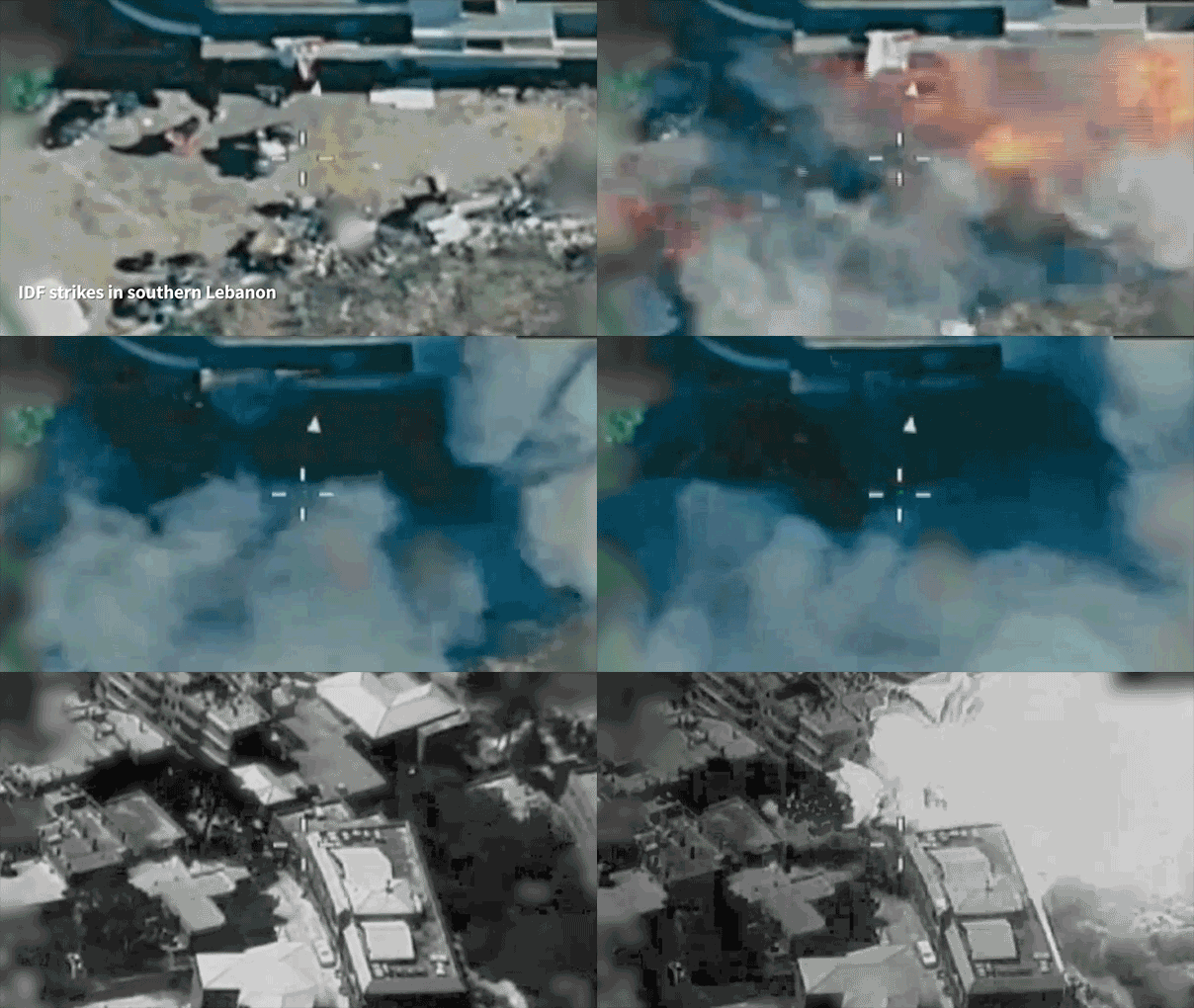
A Hezbollah spokesperson told Fox News Digital that the group would abide by the ceasefire if Israel does, but «reserves the right to respond» to any violation. The spokesperson said Hezbollah did not yet view the ceasefire as having taken effect, claiming Israel was still carrying out strikes in southern Lebanon more than an hour after it was supposed to begin.
ISRAEL MOVES TOWARDS CEASEFIRE DEAL WITH HEZBOLLAH: REPORTS
Prime Minister Benjamin Netanyahu posted a video after the 4 p.m. local start time that he said showed Israel Defense Forces striking Hezbollah targets in Lebanon. It is unclear when those reported strikes took place, and Fox News Digital could not independently verify their timing.
«As I instructed – the IDF struck powerfully 150 Hezbollah targets in Lebanon and eliminated dozens of terrorists,» he wrote on X.
IDF spokesperson Effie Defrin said Hezbollah had killed four Israeli soldiers in overnight strikes early Friday.
An airplane flies as smoke rises after an Israeli strike on Beirut’s southern suburbs amid escalating tensions between Hezbollah and Israel on March 6, 2026. (Khalil Ashawi/Reuters)
Still, an Israeli official said Israel intends to honor the ceasefire agreement.
«If Hezbollah doesn’t shoot, we won’t shoot. If they shoot — we will respond,» the official told Fox News Digital.
The agreement came after negotiations between the U.S. and Iran scheduled to take place this weekend in Switzerland were abruptly postponed. The White House has not publicly provided a reason for the delay.
Trump has expressed increasing frustration with Netanyahu over the conflict with Hezbollah in Lebanon.
«Bibi has to be more responsible with respect to Lebanon,» Trump said to reporters Tuesday at the G7 conference in France. «Too many people are being killed, and you don’t have to knock down an apartment house every time you’re looking for somebody, because there are a lot of people in those apartment houses, and they’re not all Hezbollah, that I can tell you.»
«I’m not saying they shouldn’t protect themselves,» he added Wednesday during separate remarks to reporters. «I’m saying when two drones are shot into the desert and drop harmlessly, you don’t have to knock down buildings in Beirut. They could behave better, and frankly, they could do a better job.»
Hezbollah is an Iran-backed Shiite militant group and political movement based in Lebanon that the U.S. has designated as a foreign terrorist organization. Its conflict with Israel dates back decades, but the latest fighting has centered on Hezbollah rocket and drone attacks from Lebanon and Israeli strikes aimed at pushing the group back from the border and protecting northern Israeli communities.
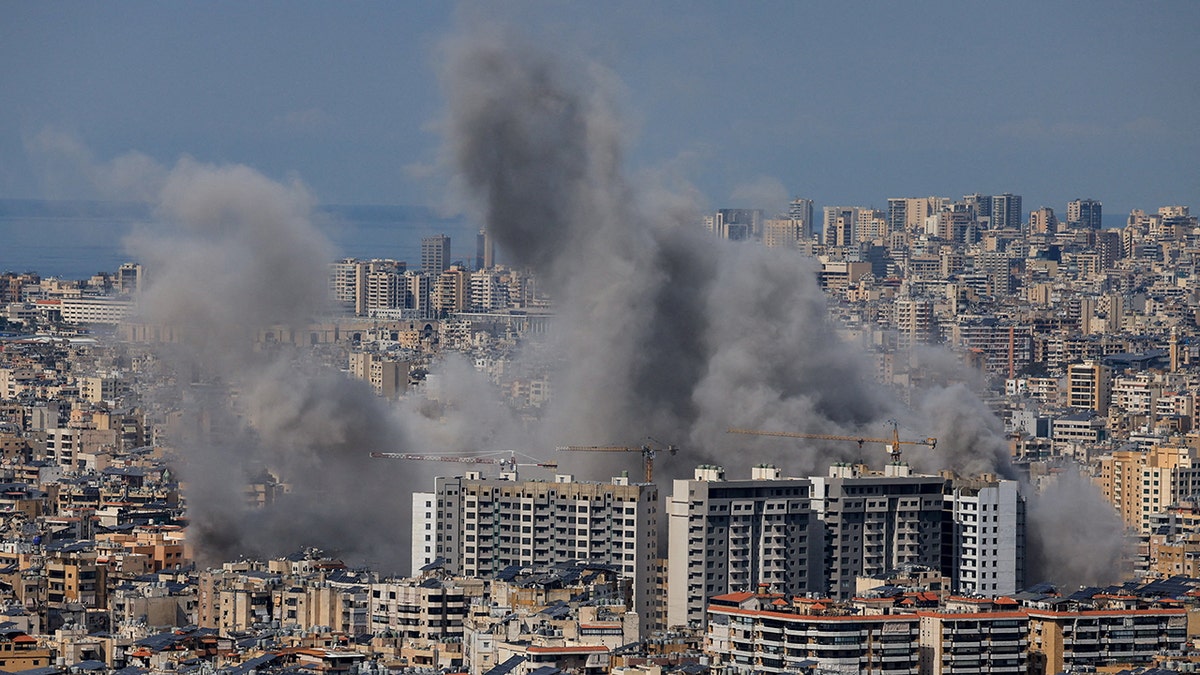
Smoke billows over Beirut’s southern suburbs following reported strikes amid escalating conflict involving Hezbollah and Israel, as seen from Baabda, Lebanon, on March 6, 2026. (Mohamed Azakir/Reuters)
«As the Vice President said at his press conference, the plans for the upcoming technical talks have not been finalized, and the U.S. delegation has been prepared to depart at the first available opportunity,» a White House spokesperson told Fox News Digital. «But the logistics of these negotiations have never been simple or predictable. As of now the Vice President is not departing tonight. We will let you know as soon as we have a concrete update about next steps.»
The Iranian foreign ministry on Friday denied reports claiming Iran had once again closed the Strait of Hormuz.
«The Armed Forces of the Islamic Republic of Iran have taken the necessary measures to ensure the safe passage of commercial ships through the Strait of Hormuz, in accordance with the Memorandum of Understanding on the End of the War dated 18 June 1405, and shipping is underway in this route,» foreign ministry spokesperson Esmail Baghaei said in a statement posted to Telegram.
A separate Iranian official told Fox News Digital Friday that traffic was moving «slowly» through the strait due to mine-clearing operations.
HORMUZ CHOKE POINT PERSISTS AS IRAN HALTS OIL TRAFFIC DESPITE TRUMP CEASEFIRE
U.S. officials have described the memorandum signed Wednesday as a 60-day framework for negotiations toward a final agreement largely focused on Iran’s nuclear program.
They have said any U.S. force withdrawal from areas near Iran would be tied to a final deal, not required immediately under the initial agreement.
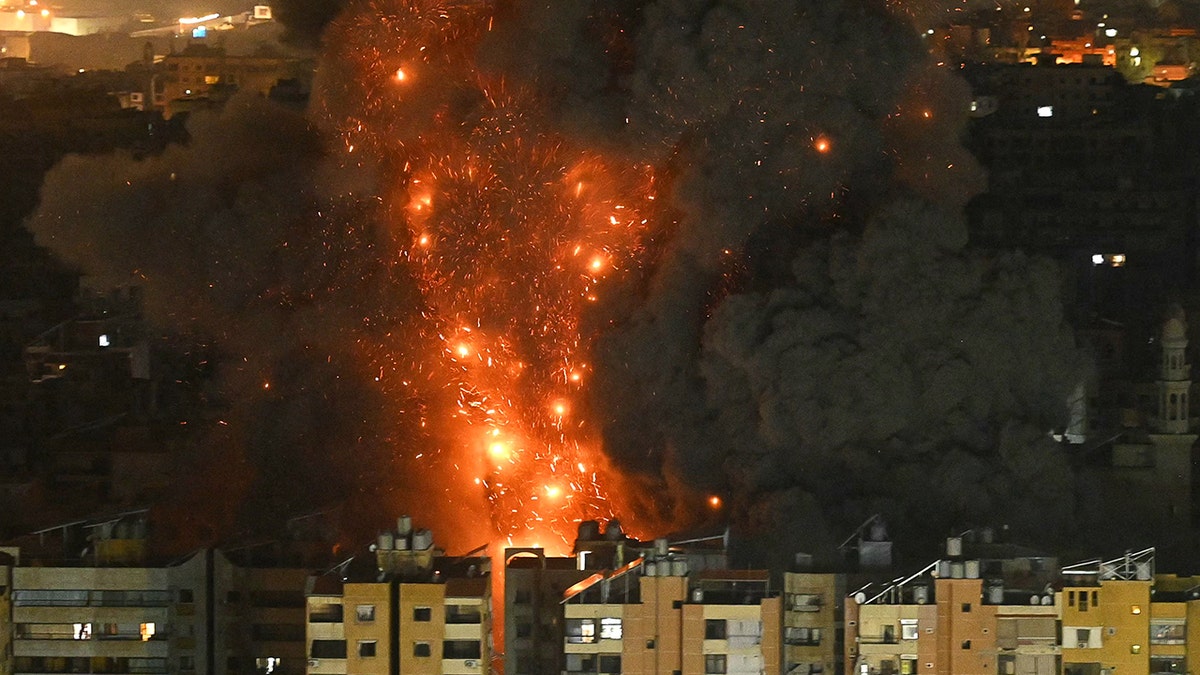
A fireball rises from the site of an Israeli airstrike targeting an area in Beirut’s southern suburbs overnight on March 10 to 11, 2026. (Fadel itani / AFP via Getty Images)
The agreement also declared the «immediate and permanent termination of military operations on all fronts, including in Lebanon,» according to U.S. officials.
CLICK HERE TO DOWNLOAD THE FOX NEWS APP
U.S. officials have said the memorandum also includes immediate oil sanctions waivers for Iran, an end to Iranian threats to the Strait of Hormuz and a process for lifting the U.S. blockade, and future talks over Iran’s nuclear program, including the fate of its enriched uranium stockpile.
Fox News Digital reached out to the Pentagon, Israeli Prime Minister’s Office and Iranian Foreign Ministry for additional comment and had not received responses by publication.
middle east, lebanon, treaties, iran, israel
INTERNACIONAL
Cuba abre la economía, pero depende del respaldo de Estados Unidos para que el cambio funcione

Los cubanos recibieron la reforma con sensaciones ambiguas

La crisis eléctrica, una de las caras de la crisis


INTERNACIONAL
Una astronauta de la ESA visitó Buenos Aires: “Me impresiona el fanatismo por el espacio en Argentina”
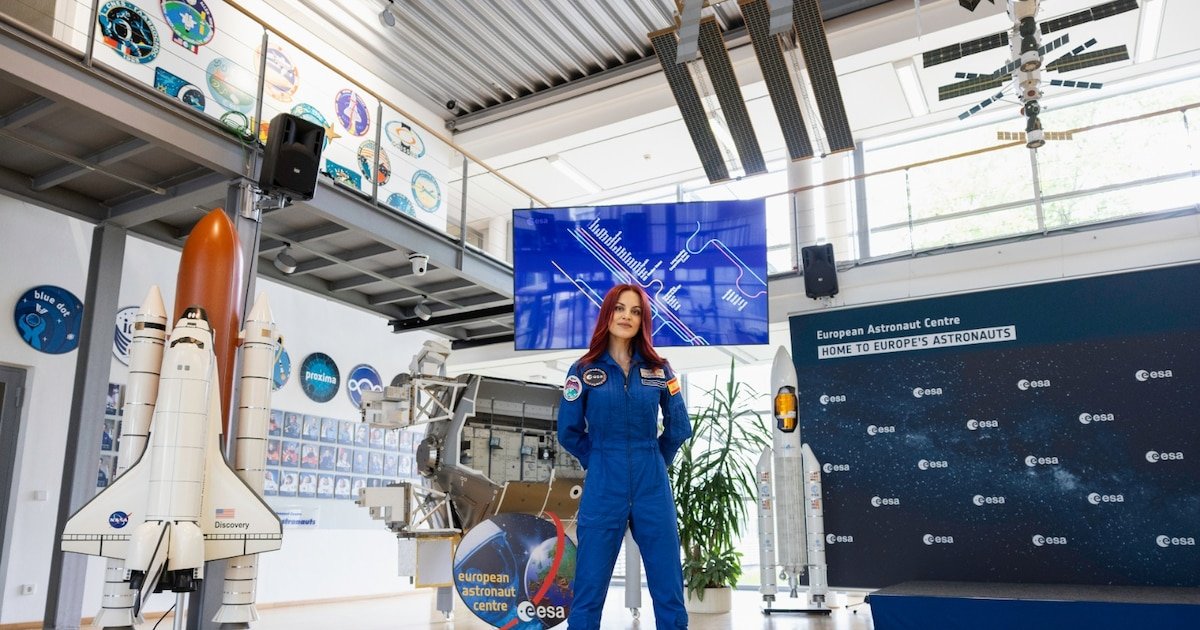
La visita de Sara García Alonso a la Argentina fue mucho más que una serie de charlas sobre exploración espacial. La bióloga molecular y astronauta de reserva de la Agencia Espacial Europea (ESA) trajo consigo un mensaje claro: la ciencia, la innovación y los sueños no reconocen fronteras ni techos para las nuevas generaciones.
Invitada por el Centro Cultural de España en Buenos Aires (CCEBA) y el Planetario Galileo Galilei, García Alonso desplegó una agenda intensa en Buenos Aires y Rosario, donde compartió su recorrido profesional y vital con adolescentes, científicas, docentes y profesionales del sector tecnológico y aeroespacial.
Nacida en León, España, Sara García Alonso fue la primera universitaria de su familia y la primera mujer española seleccionada como astronauta de reserva de la ESA. Su carrera es el resultado de una combinación singular de excelencia académica, empuje personal y pasión por la biomedicina y el espacio.

Tras obtener la licenciatura en Biotecnología y un máster en investigación biomédica y biológica por la Universidad de León, y doctorarse en Biología Molecular del cáncer y Medicina Traslacional en la Universidad de Salamanca, García Alonso orientó su trabajo a la búsqueda de nuevos tratamientos para el cáncer de pulmón y páncreas en el Centro Nacional de Investigaciones Oncológicas (CNIO) de España.
Sus logros la posicionaron entre las 100 mujeres más influyentes de España, según la revista Forbes, y le valieron distinciones como el Premio Ada Byron Joven 2023, la Medalla de Plata de la Comunidad de Madrid y el Premio Castilla y León. En 2025, publicó su primer libro, Órbitas. Apuntes de una vida en continua exploración, donde narra con honestidad el trayecto que la llevó de los laboratorios a los entrenamientos de astronauta en Colonia, Alemania.
Durante su estadía en Argentina, García Alonso encabezó jornadas de intercambio científico y divulgación para estudiantes y profesionales, con énfasis en acercar el universo STEM (ciencia, tecnología, ingeniería y matemáticas) a adolescentes y mujeres. El objetivo fue claro: motivar a quienes buscan referentes, demostrar que la vocación científica es un camino posible y necesario, y subrayar que el talento y la pasión abren puertas inesperadas.

La trayectoria de Sara García Alonso es un ejemplo de cómo la formación científica puede trascender disciplinas y fronteras. Tras años de investigación en medicina personalizada contra el cáncer, la científica decidió postularse a la convocatoria de la ESA en 2021.
“Llevo desde 2012 estudiando para ser astronauta. Las misiones espaciales son científicas y muchas de ellas nos enseñan a explorar y empujar los límites”, compartió ante el público argentino. Su postulación fue excepcional: de 23.000 candidatos de toda Europa, solo el 25% eran mujeres, pero entre los 17 seleccionados hubo 8 mujeres y 9 hombres.
Para García Alonso, este resultado demuestra que el talento “está distribuido de forma equitativa y que la profesión de astronauta depende exclusivamente de méritos psicológicos y cognitivos”.

La selección y el entrenamiento en la ESA no solo demandan excelencia técnica y física, sino también la capacidad de absorber y aplicar nuevos conocimientos en condiciones extremas.
“No existe una ‘carrera de astronauta’, sino que se buscan profesionales con capacidad de absorber nuevos conceptos para aplicarlos en laboratorios avanzados que orbitan nuestro planeta”, explicó. En su caso, la formación incluyó anatomía, fisiología, robótica, realidad aumentada y supervivencia, así como el desarrollo de habilidades blandas como el trabajo en equipo y la gestión del estrés.
En 2022, García Alonso fue incorporada como astronauta de reserva de la ESA, lo que la convirtió en la primera mujer española con esa distinción. Desde entonces, completó tres bloques de entrenamiento intensivo en el Centro Europeo de Astronautas en Colonia y se sumó a la élite internacional preparada para futuras misiones espaciales tripuladas. “He terminado la formación básica. Dura un año desde que te seleccionan. Mucha información teórica: Anatomía, fisiología, robótica, realidad aumentada”, resume.

Su mayor ambición, en palabras propias, es participar en una misión en la Estación Espacial Internacional para fusionar sus dos pasiones: la biomedicina y la exploración espacial. Para ella, realizar experimentos sobre nuevos tratamientos oncológicos en el entorno único de la microgravedad no solo sería un sueño personal, sino “una declaración de intenciones inspiradora para las futuras generaciones de científicas”.
En paralelo a su entrenamiento como astronauta, García Alonso mantiene su labor en el CNIO, donde lidera proyectos pioneros en oncología molecular.
Su carrera demuestra que la ciencia aplicada en la Tierra y en el espacio tienen más puntos en común de lo que suele pensarse: “Vi el nexo común entre los estudios biológicos que siempre hice y la pasión del espacio. Decidí intentarlo y ser astronauta y llevar la ciencia y los estudios científicos, como los oncológicos, fuera de la Tierra”.

La gira de Sara García Alonso por Buenos Aires y Rosario tuvo un eje prioritario: inspirar a jóvenes y mujeres a sumarse a la ciencia y a los desafíos de la tecnología y la exploración espacial.
“Estoy encantada por lo que estoy visitando en Rosario y Buenos Aires. He visto mucho interés por la ciencia en el público argentino. Me hablaban los chicos y jóvenes sobre el futuro. Veo mucha pasión, tanto en mis charlas en Rosario, como en el Complejo Astronómico de Rosario, en la Facultad de Ciencias Exactas de la Universidad Nacional de Rosario (UNR) y en el Planetario Galileo Galilei de Buenos Aires”.
La científica subrayó la riqueza de la oferta académica nacional y la articulación con instituciones como la CONAE, con la que la ESA firmó acuerdos para compartir datos satelitales y potenciar la cooperación internacional.

En el Planetario, García Alonso participó en el programa “Apasionadas por el Universo”, dirigido a adolescentes de entre 14 y 20 años. Compartió panel con referentes como Josefina Peres, líder del proyecto Saocom, y Susana Landau, doctora en astronomía. La actividad fue interactiva y cultural, y permitió poner en diálogo la experiencia europea con el talento argentino.
“Soy la primera de muchas que están por llegar”, alienta García Alonso, destacando que la inclusión de mujeres en la ciencia no solo responde a una cuestión de justicia, sino que amplía el rango de soluciones y enfoques. Durante la charla “Romper la gravedad” en Rosario, reivindicó el rol femenino en la tecnología y denunció la invisibilización histórica de las mujeres en disciplinas STEM. Según su mirada, el acceso igualitario a la ciencia es esencial para construir un futuro más innovador y equitativo.
Su mensaje principal estuvo dirigido a quienes enfrentan dudas e incertidumbres sobre su vocación: “Quiero transmitir a los jóvenes que no se pongan límites, que vayan por la buena dirección. Que apuesten a las carreras de ciencia y tecnología si les gustan y que persigan aquello que los motive. La vida y las circunstancias, la situación política o económica va a ponernos trabas. No podemos ponerles la curita antes de la herida. Debemos intentarlo. Hay que atreverse y no rendirse de antemano. El camino no está cerrado desde el principio. Es importante perseguir aquello que te motive porque de lo contrario estarás estancado”.

La experiencia de García Alonso también demuestra la importancia de la cooperación internacional, tanto para la investigación médica como para la exploración del espacio. “Los proyectos espaciales son ambiciosos. Salen adelante gracias a la cooperación internacional y espacial de distintos países y distintas agencias espaciales”.
Su dominio de varios idiomas, la pasión por el deporte y la divulgación científica complementan un perfil que desafía estereotipos y ofrece alternativas de futuro a quienes buscan inspiración en la ciencia. Las numerosas distinciones recibidas y su participación activa en conferencias y eventos STEM la consolidan como referente y mentora para jóvenes de todo el mundo.
En definitiva, la visita de Sara García Alonso a la Argentina dejó un mensaje potente: la ciencia no reconoce fronteras, y el espacio, lejos de ser un destino inalcanzable, es un campo abierto para quienes se atreven a explorar, aprender y transformar el conocimiento en motor de cambio.

50 años del genial ‘penalti de Panenka’… y del calvario de Maier

Mora récord: una por una, todas las provincias que lanzaron programas para desendeudar a las familias

En medio de la tensión con La Libertad Avanza, Mauricio Macri vuelve a encabezar un acto en la provincia de Buenos Aires

Israel–Hezbollah ceasefire becomes first test of Trump Iran framework after talks delay

Qué ver en Netflix: la nueva serie española que acaban de estrenar y es ideal para el fin de semana

Cuba abre la economía, pero depende del respaldo de Estados Unidos para que el cambio funcione

Patricia Bullrich: “El Presidente considera que Adorni dio una explicación razonable”

El Gobierno envía señales de que Adorni tiene las horas contadas para evitar que sesione el Senado

La secuencia del golazo de Messi para Argentina ante Argelia en el debut en el Mundial 2026 y los récords que rompió

GOP Gov DeWine urges Ohio to abolish the death penalty, says it is no longer a deterrent

 POLITICA2 días ago
Patricia Bullrich: “El Presidente considera que Adorni dio una explicación razonable”
- POLITICA3 días ago
El Gobierno envía señales de que Adorni tiene las horas contadas para evitar que sesione el Senado
- INTERNACIONAL3 días ago
GOP Gov DeWine urges Ohio to abolish the death penalty, says it is no longer a deterrent