INTERNACIONAL
Iran eyes revenge for Soleimani as WHCA Dinner shooting exposes security ‘vulnerability,’ expert warns

NEWYou can now listen to Fox News articles!
The shooting at the White House Correspondents’ Association Dinner has exposed a serious security vulnerability surrounding President Donald Trump and other senior U.S. officials, a former Defense Department intelligence officer has warned.
And with tensions between Washington and Tehran rising and ceasefire talks stalled, Andrew Badger told Fox News Digital the April 25 breach could further increase Iran’s «motivation» to target Trump and others in the administration.
«This could show that there is a vulnerability in terms of potentially accessing President Trump or senior officials,» Badger said before warning of «significant vulnerabilities.»
TRUMP PRAISED FOR ‘STRENGTH’ IN MOMENTS AFTER SHOTS RANG OUT AS EYEWITNESS DESCRIBES ‘TERRIBLE’ SCENE
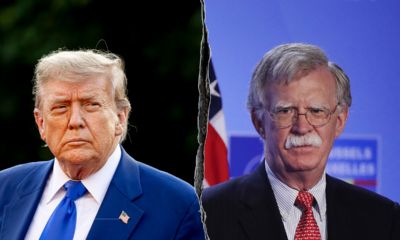
A split image showing the alleged White House Correspondents’ Association Dinner shooter, Cole Allen, and President Donald Trump. (Getty Images)
«When you’re looking at your adversary, and you’re seeing weakness, it also fuels motivation,» he said before claiming that «Iran has the motive to strike at senior Trump officials, including President Trump.»
«Iran, which has a demonstrated history of using criminals and proxy individuals, could certainly look at this as an opportunity.»
Chaos broke out at the Washington Hilton Hotel when a suspected gunman, identified as 31-year-old Cole Thomas Allen of Torrance, California, stormed a security checkpoint and opened fire.
Trump and other administration officials were rushed out of the ballroom as law enforcement responded. Allen is currently in custody and made an initial court appearance on Monday.
AMERICANS MUST HAVE ‘HIGHER DEGREE OF VIGILANCE’ AMID IRAN TERROR THREAT, HOUSE INTEL CHAIR WARNS
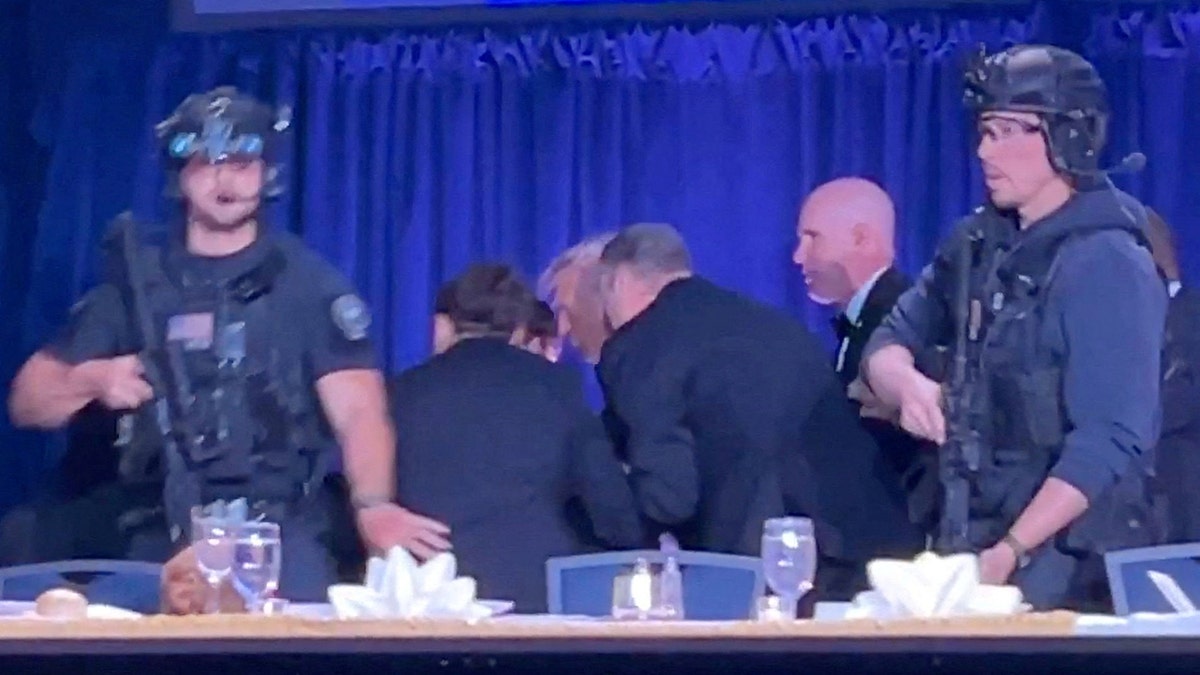
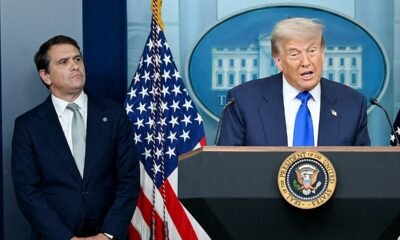
President Donald Trump is escorted out during the White House Correspondents’ Association Dinner in Washington, D.C., on April 25, 2026. (Bo Erickson /Reuters)
The gathering included Trump, first lady Melania Trump, Vice President JD Vance, Speaker of the House Mike Johnson, journalists and senior administration officials — a concentration of leadership that Badger said presented significant risk.
«The top three of the line of succession were at this single event,» Badger noted.
He added that «eight of the nine line-of-succession officials were at this single event,» warning of a worst-case scenario: «If this individual would have somehow worn a suicide vest, you could have eliminated all three of those individuals.»
HOSPITALS IN SANCTUARY CITIES COULD BE MOST VULNERABLE TO IRAN TERROR ATTACKS, WARNS EXPERT
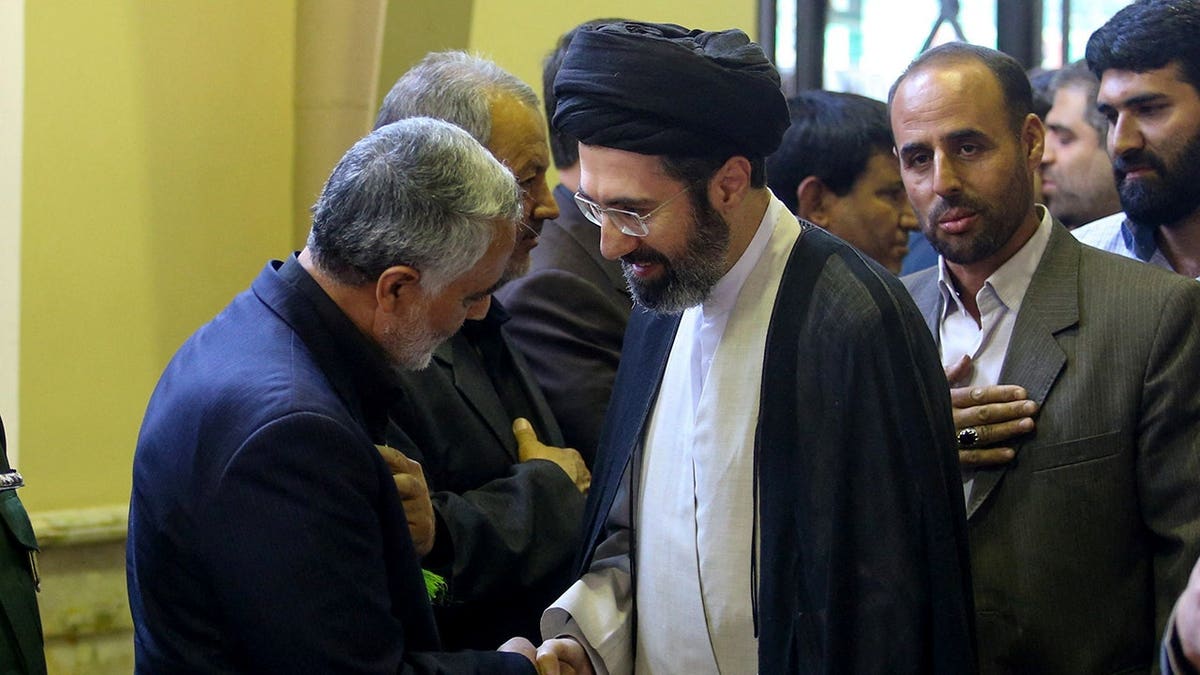
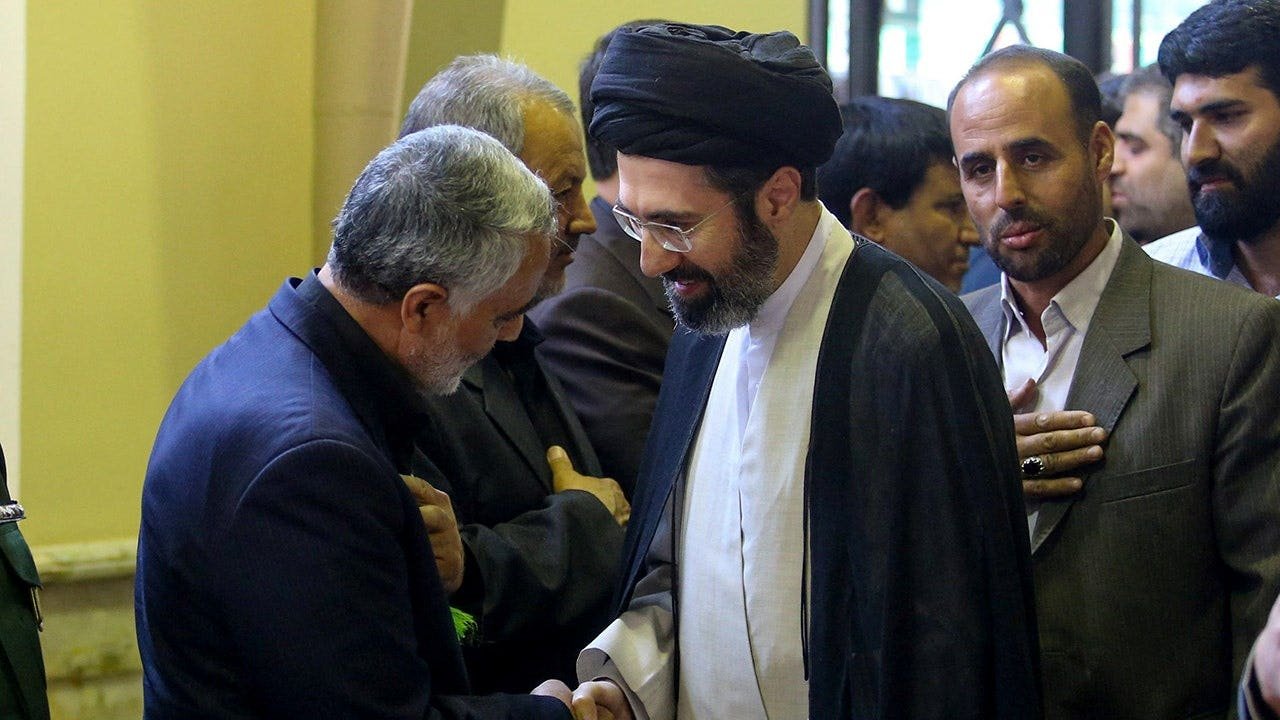
IRGC Cmdr. Qassem Soleimani shakes hands with Mojtaba Khamenei. (Mehdi Ghasemi/West Asia News Agency via Reuters)
«Imagine if there were multiple people. Imagine if he was wearing suicide vests. Imagine if he used some type of drone,» Badger said, emphasizing the scale of potential exposure at a nonsecure venue.
The incident, he said, unfolds against the backdrop of ongoing tensions with Iran, which have escalated amid U.S. and Israeli targeting of Iranian officials and leadership.
Badger pointed to longstanding Iranian hostility tied to the 2020 killing of Qassem Soleimani, the commander of Iran’s Quds Force, who was killed in a U.S. drone strike near Baghdad International Airport ordered by Trump.
TRUMP FACES UNPRECEDENTED THIRD ASSASSINATION ATTEMPT
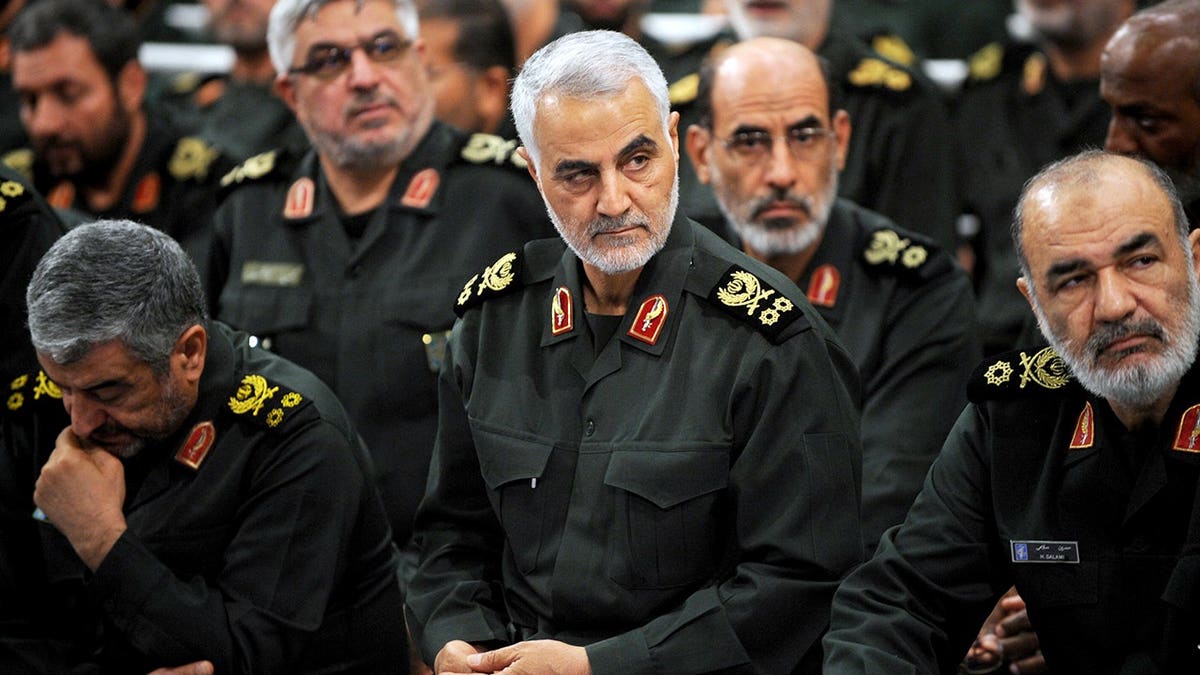
IRGC Commander Qassem Soleimani meets with officers and Supreme Leader staff in 2016. (Press Office of Supreme Leader Ali Khamenei/Getty Images)
«There has been a driving animus, a driving motivation in the Iranian regime — which they’ve stated publicly — to get revenge for that killing of Soleimani,» said Badger, who served on the front lines of human intelligence operations, including a 2014 deployment to Afghanistan.
After Soleimani was killed, Ayatollah Khamenei warned that those responsible for the attack would face «severe revenge,» adding that the death would strengthen and intensify resistance against the United States and Israel.
Badger warned that Iran and other adversaries have increasingly relied on unconventional tactics. «Iran and other state actors such as Russia have increasingly reverted to contracting criminals, or gangsters, to conduct hybrid warfare,» he said.
CLICK HERE TO DOWNLOAD THE FOX NEWS APP
Following the incident, Trump underscored the need for more secure venues, advocating for a dedicated White House ballroom.
«It’s got every single bell and whistle you can possibly have for security and safety… It’s really what you need,» Trump said on Fox News’ «The Sunday Briefing.»
national security, donald trump, white house, war with iran, terrorism








NEWYou can now listen to Fox News articles!
FIRST ON FOX: Young Americans are far less likely than older generations to see China as a major threat to the United States, according to a new poll, revealing one of the sharpest generational divides in U.S. foreign policy.
Some 93% of Americans age 65 and older said they are concerned about China’s ability to spy on the United States, compared with just 62% of those ages 18 to 29, according to the Ronald Reagan Institute Summer Survey.
Younger Americans also were consistently less likely than seniors to express concern about China’s potential use of force against Taiwan (56% versus 86%), technology theft (61% versus 91%), purchases of U.S. land (68% versus 93%) and China’s role in the flow of fentanyl into the United States (68% versus 92%).
Despite the generational divide, concern about China remained high nationally. More than 80% of Americans said they were concerned about China’s role in the flow of fentanyl into the United States, its ability to spy on Americans and its purchases of U.S. land. Sixty-six percent also said Taiwan’s security matters to the United States.
FOX NEWS POLL: VOTERS DOUBT NEW AGREEMENT WILL STOP IRAN FROM DEVELOPING NUKES
The findings come as Washington and Beijing are trying to stabilize one of the world’s most consequential relationships after years of escalating economic and military tensions.
After imposing triple-digit tariffs on China at the start of his administration, President Donald Trump met with Chinese President Xi Jinping in China in May and announced a series of trade and investment agreements and pledged to continue dialogue.
While concern about China remains widespread across the country, the survey suggests younger Americans view the U.S.’s chief geopolitical rival through a markedly different lens than older generations, raising questions about how public attitudes could evolve as younger voters make up a larger share of the electorate.
The findings stand out because they diverge from the prevailing view among many national security experts, who continue to characterize China as America’s principal long-term neer-pear competitor and adversary, even as Washington and Beijing seek to stabilize their relationship through diplomacy.
«There is rightful alarm regarding China’s historic military buildup and the expansion of its military activities in the region and beyond,» War Secretary Pete Hegseth at the Shangri-La Dialogue in Singapore in May.
But, he added, U.S.–China relations are «better than they’ve been in many years.»
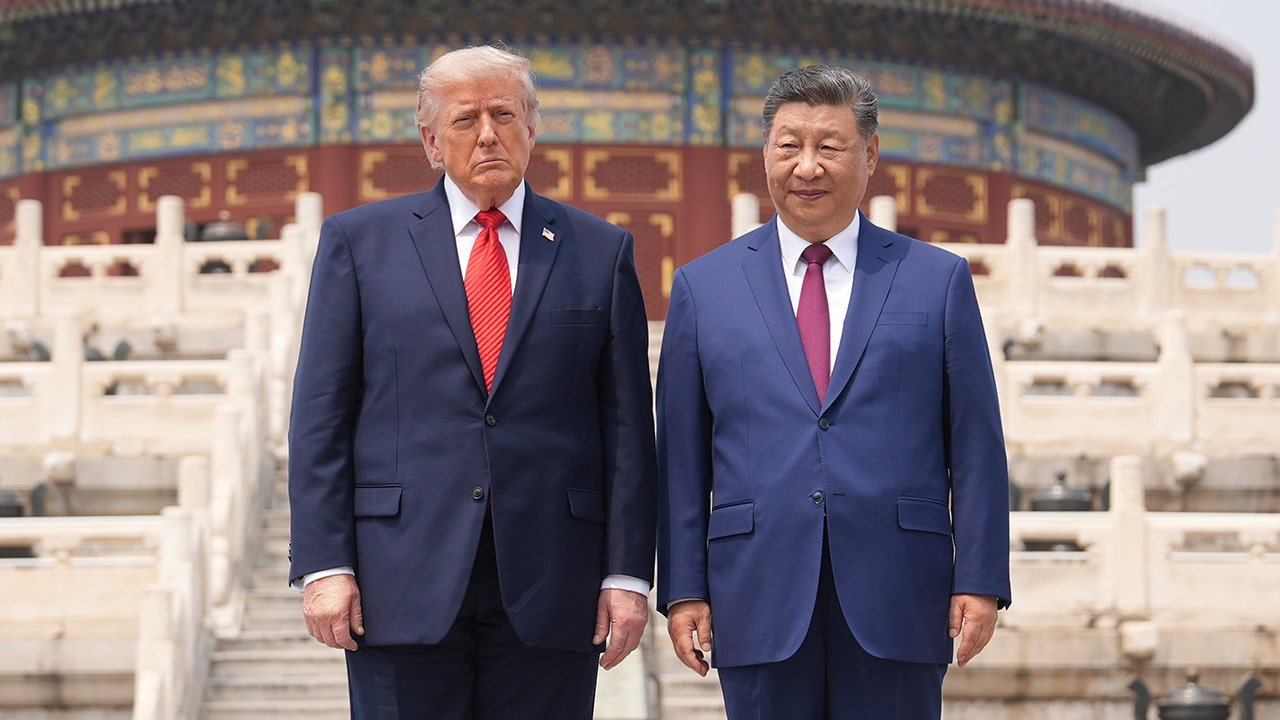
Chinese President Xi Jinping and President Donald Trump visited the Temple of Heaven on May 14, 2026, in Beijing, China, during a high-level summit between the two leaders. (Brendan Smialowski – Pool/Getty Images)
After the May summit between Trump and Xi, the U.S. president told reporters: «We settled a lot of different problems that other people wouldn’t have been able to solve.»
He called Xi a «great leader» and China a «great country.»
Other recent research points to broader differences in how Gen Z views U.S. foreign policy.
A 2025 Carnegie Endowment survey found younger Americans were less likely than older generations to prioritize maintaining U.S. technological dominance over China and generally favored a less expansive American leadership role abroad.
The Reagan Institute Summer Survey is the organization’s annual public opinion poll on foreign policy and national security, designed to gauge Americans’ views on issues ranging from global engagement and military strength to China, NATO, the Middle East and democratic values.
The poll also found broad shifts by party on what America’s role in the world should look like: Republicans were more likely than Democrats to say the United States should be more engaged and take the lead in world affairs.
Seventy-one percent of Republicans said the U.S. should take a leading role internationally, compared with 55% of Democrats. Overall, 61% of Americans said the U.S. should be more engaged in global affairs, while 27% preferred a less engaged approach.
MOST TRUMP SUPPORTERS STILL BACK NATO DESPITE YEARS OF TRUMP’S CRITICISM, NEW POLL FINDS
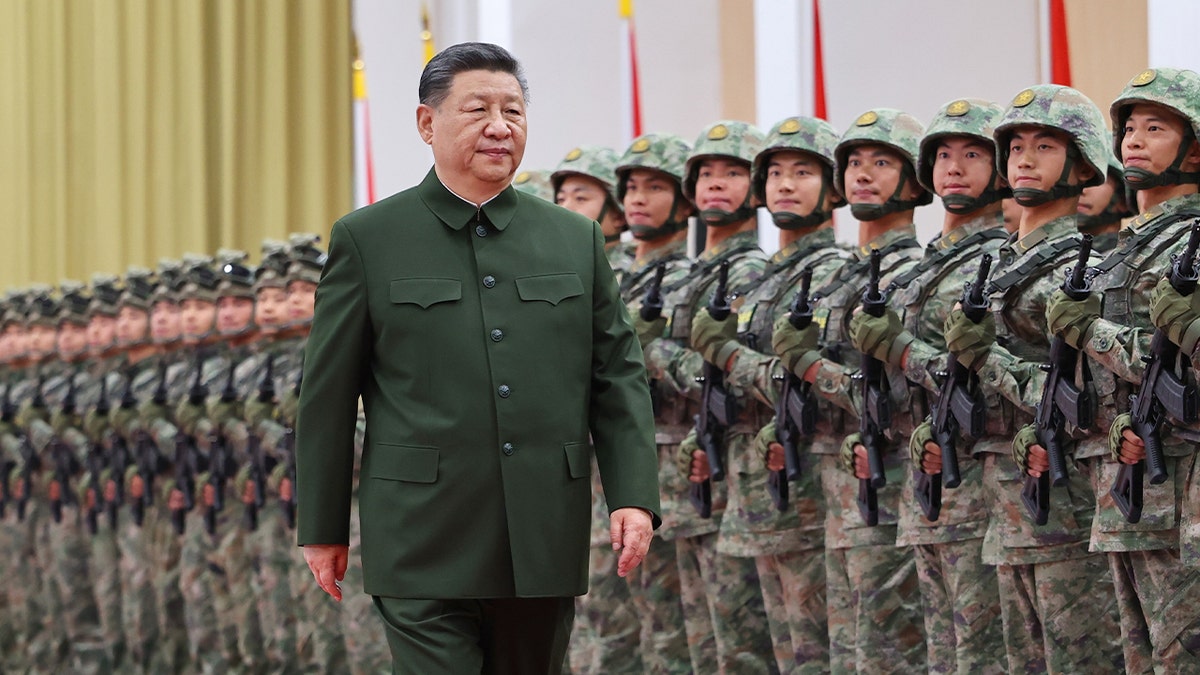
Young Americans are far less likely than older generations to see China as a major threat to the United States, according to a new poll, revealing one of the sharpest generational divides in U.S. foreign policy. (Li Gang/Xinhua via Getty Images)
The findings represent a notable shift from recent years.
Democratic support for greater U.S. engagement fell from 65% to 55% over the past year, while Republican support increased from 69% to 71%, widening the partisan gap from four percentage points to 16. The survey also found 43% of Democrats now say U.S. involvement in the world is harmful, up from 22% a year ago.
The survey was conducted May 26 through June 3 among 1,555 U.S. adults and carries a margin of error of plus or minus 2.5 percentage points. Researchers used a mixed-mode methodology that included live telephone interviews, an online panel and text-to-web responses.

CENTCOM shared footage of strikes against airplanes amid Iran war. (U.S. Central Command on X)
CLICK HERE TO DOWNLOAD THE FOX NEWS APP
To better reflect the U.S. population, the results were weighted using demographic benchmarks from the U.S. Census Bureau’s 2023 American Community Survey, including age, gender, race, region and education. The survey also included an oversample of 338 self-identified MAGA Republicans under age 30, which carries a margin of error of plus or minus 5 percentage points.
The findings also come after a year in which the Trump administration has taken a more assertive posture overseas than some expected.
In addition to ordering strikes on Iran, the administration has expanded military operations against cartel-linked targets in the Western Hemisphere and intervened to capture former President Nicolas Maduro Venezuela, moves that have put questions of American power and global leadership back at the center of public debate.
china, taiwan, foreign policy senate, republicans, demographics
INTERNACIONAL
Honduras: Poder judicial otorga amparo a exjuez Marco Vallecillo y ordena nueva resolución en caso de extorsión
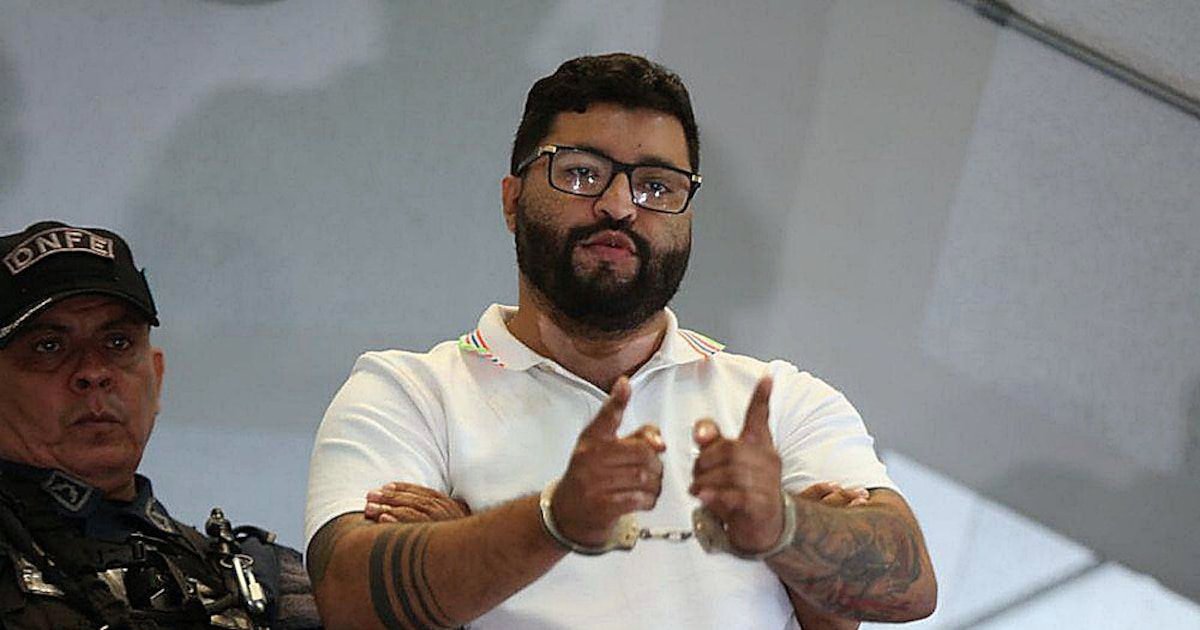
La Sala de lo Constitucional de la Corte Suprema de Justicia (CSJ) resolvió por unanimidad otorgar un recurso de amparo penal a favor de Marco Antonio Vallecillo Banegas, quien enfrenta un proceso por la presunta comisión del delito de extorsión en perjuicio de un testigo protegido, al concluir que existieron deficiencias en la resolución emitida por la Corte de Apelaciones Penal.
El portavoz del Poder Judicial, Melvin Duarte, informó que la decisión del máximo órgano constitucional ordena al tribunal de segunda instancia emitir una nueva resolución debidamente motivada, conforme a los parámetros establecidos por la Constitución y sin pronunciarse sobre la responsabilidad penal del imputado.
“La Sala de lo Constitucional de la Corte Suprema de Justicia resolvió por unanimidad otorgar el recurso de amparo penal interpuesto a favor del señor Marco Antonio Vallecillo Banegas dentro del proceso que se le sigue por la presunta comisión del delito de extorsión en perjuicio de testigo protegido”, declaró Duarte.
El funcionario explicó que el recurso fue presentado por la defensa de Vallecillo contra la sentencia emitida el 8 de octubre de 2024 por la Corte de Apelaciones Penal con competencia nacional en materia de criminalidad organizada y medioambiente, la cual confirmó el auto de formal procesamiento y la medida de prisión preventivadictada en su contra.

Según Duarte, la Sala Constitucional determinó que el tribunal de alzada incurrió en una vulneración al debido proceso y a la tutela judicial efectiva, al no realizar un análisis suficiente sobre la procedencia del antejuicio, uno de los argumentos expuestos por la defensa durante la apelación.
Asimismo, el portavoz señaló que los magistrados advirtieron que la Corte de Apelaciones omitió pronunciarse sobre el agravio relacionado con el ofrecimiento de una caución económica como medida sustitutiva a la prisión preventiva, aspecto que, a criterio de la Sala, representa un defecto de motivación que afecta el derecho a la libertad personal del procesado.
“La Sala Constitucional señaló que la Corte de Apelaciones omitió pronunciarse sobre el agravio relativo al ofrecimiento de una caución económica como medida sustitutiva a la prisión preventiva, lo que constituyó un defecto de motivación que afectó el derecho a la libertad personal”, detalló Duarte.
En consecuencia, la resolución establece que la Corte de Apelaciones deberá emitir un nuevo fallo debidamente fundamentado, atendiendo los aspectos que fueron omitidos en la resolución anterior y respetando las garantías constitucionales invocadas por la defensa.
No obstante, la Sala dejó claro que la concesión del amparo no implica un pronunciamiento sobre la procedencia de la fianza ofrecida ni sobre el fondo del proceso penal, por lo que la investigación contra Vallecillo continúa su curso conforme al procedimiento establecido por la ley.

La Corte de Apelaciones deberá emitir una nueva resolución debidamente motivada. (Foto: Cortesía/Archivo)
La decisión se limita a corregir los vicios de motivación identificados en la resolución apelada y obliga al tribunal competente a emitir un nuevo análisis que responda a todos los planteamientos formulados por las partes dentro del proceso judicial.
La resolución de la Sala de lo Constitucional no modifica de manera automática las medidas cautelares impuestas a Marco Antonio Vallecillo, sino que obliga a la Corte de Apelaciones a revisar nuevamente el caso y emitir un fallo que responda de forma expresa a todos los argumentos planteados por la defensa, conforme a los estándares de motivación exigidos por la Constitución.
El amparo constitucional constituye un mecanismo jurídico destinado a proteger los derechos fundamentales cuando estos han sido vulnerados durante un proceso judicial.
En este caso, la Sala concluyó que la decisión impugnada presentaba deficiencias en su fundamentación, razón por la cual consideró procedente ordenar la emisión de una nueva resolución por parte del tribunal competente.
corresponsal:Desde Tegucigalpa, Honduras
INTERNACIONAL
As America turns 250, a rare 1790 exchange between Washington and Bishop Carroll takes on new relevance
NEWYou can now listen to Fox News articles!
As the United States prepares to celebrate its 250th anniversary, historians are looking back at the founding-era documents that helped define the nation’s earliest ideals.
Among them is a little-known 1790 exchange between John Carroll, the first Catholic bishop in the United States, and President George Washington — a correspondence that helped answer a fundamental question facing the young republic: Could Catholics, long viewed with suspicion under British rule, truly become equal American citizens?
The answer still rests today inside the Library of Congress.
RARE, HISTORIC US DOCUMENTS TRAVELING COUNTRY ON ‘FREEDOM PLANE’ AHEAD OF AMERICA’S 250TH ANNIVERSARY
About 50 feet from Dr. Kevin Butterfield’s office in the Library’s Manuscript Division sits the original letter Carroll sent to Washington, preserved among the George Washington Papers.
Washington «was spending the entire year of 1790, more or less, connecting with the entire nation,» said Butterfield, acting chief of the Library of Congress Manuscript Division. «He connected with the people because he believed that it was important as the new president that they interact directly with him and have a chance to see the new government in action.»
As Washington traveled through the states during his first year in office, letters poured in from religious congregations, civic organizations and local communities seeking reassurance about their place in the new federal government. Among them was a March 1790 address from John Carroll, who became the first Catholic bishop in the United States after the Vatican established the nation’s first diocese in Baltimore in 1789, and other Catholic leaders asking whether Catholics — long viewed with suspicion under British rule — would be fully included in the new republic.
A portrait painting of George Washington by Constable-Hamilton from 1794 is held by the New York Public Library. (Smith Collection/Gado/Getty Images)
Michael Breidenbach, dean of the Honors College at Ave Maria University, said the exchange also reminds Americans that Catholics were not merely beneficiaries of the nation’s founding — they helped shape it.
«As America approaches its 250th anniversary, there is a heated debate about whether the nation’s foundation had Protestant, secular or other roots,» he said. «Often missing from these conversations are the Catholic contributions to the American founding.»
Carroll’s letter, Butterfield said, stood out because it sought reassurance that Catholics would be fully included in the new republic.
«They were sharing their thoughts about religious liberty and the importance of having a nation where they were included as full citizens,» he said.
Catholic priests had ministered in the American colonies for generations, but until the Vatican established the Diocese of Baltimore in 1789, there had been no Catholic bishop in the United States. Carroll was consecrated the following year, becoming the country’s first bishop.
FINAL RESPECTS PAID TO FORGOTTEN CATHOLICS OF 300 YEARS AGO WHO VALUED RELIGIOUS LIBERTY: SEE THE PHOTOS
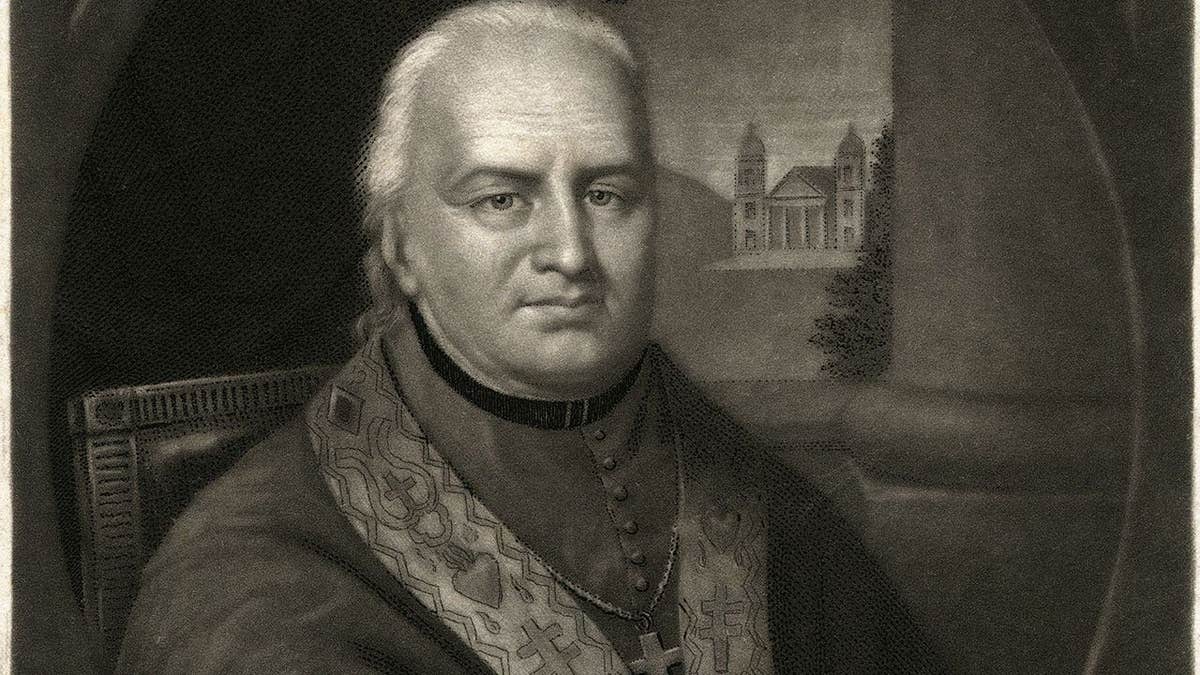
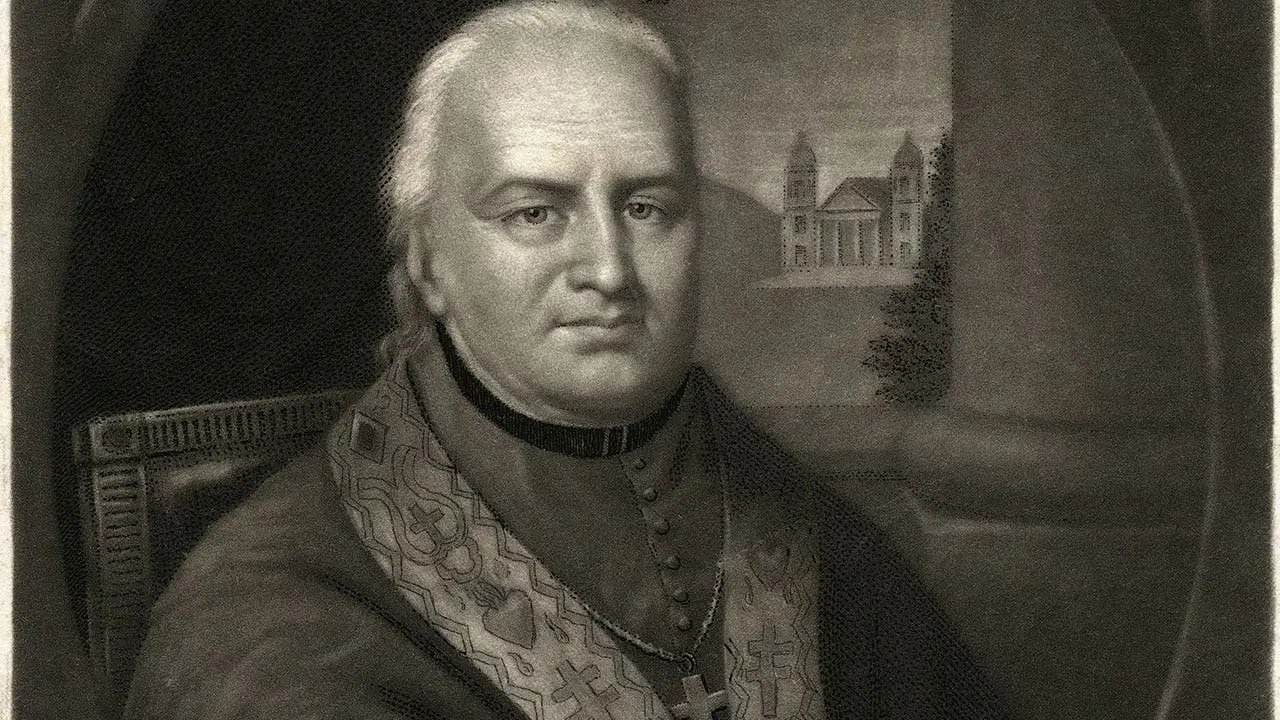
Engraving of Bishop John Carroll, the Archbishop of Baltimore. (Getty Images)
Reading from the original manuscript, Butterfield pointed to the passage that captured the Catholics’ appeal:
«Whilst our country preserves her freedom and independence, we shall have a well-founded title to claim from her justice equal rights of citizenship as the price of our blood spilt under your eyes and of our common exertions for her defense.»
The words reminded Washington that Catholics had fought beside him throughout the Revolutionary War.
«Carroll’s remembering eight years of George Washington’s service as commander in chief through the bloody war for independence and saying, as Washington fully knew, Catholics were a part of that battle from the start and served under his leadership to win independence,» Butterfield said.
For centuries before the American Revolution, Catholics in England and many of its colonies faced sweeping restrictions.
«It’s important to understand that many English people and colonists mistrusted Catholics,» said Catherine O’Donnell, a historian at Arizona State University. «They were thought to be loyal to Rome rather than to their countrymen, and to lack independence of mind.»
HISTORIC MARYLAND CHURCH OPENS DOORS TO VISITORS 320 YEARS AFTER CLOSING DOWN
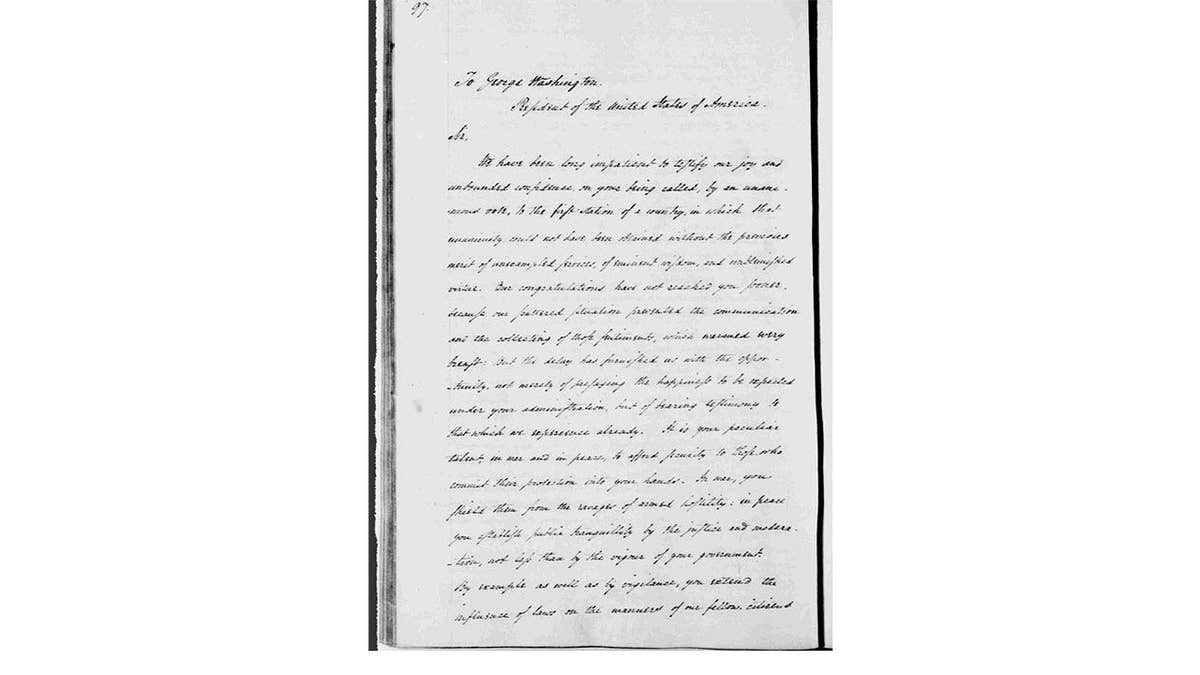
The March 15, 1790, letter from Bishop John Carroll and other Catholic leaders to President George Washington, preserved in the Library of Congress’s George Washington Papers, appealed for «equal rights of citizenship» for Catholics in the new American republic. Washington’s reply affirmed their place as full citizens. (Library of Congress)
Catholics were barred from holding office in many places, prevented from voting, required to swear oaths rejecting papal authority and, in some colonies, prohibited from openly practicing their faith.
Carroll experienced that discrimination firsthand. As a child, he was sent to Europe for a Catholic education because such schooling was unavailable to him in Maryland. He later joined the Jesuits, a Catholic religious order known for education, missionary work and scholarship. While Jesuits later became deeply rooted in American Catholic life, Carroll’s formation had to take place overseas because Catholic institutions in the colonies were still sharply limited.
Yet rather than seeking a return to an established Catholic state, Carroll believed the new American republic offered something better.
«He thought the separation of church and state was a good thing,» O’Donnell said.
The letter to Washington was sincere, she said, but also carefully calculated.
«Carroll admired Washington throughout Washington’s life,» O’Donnell said. «This letter was sincere and also in a way strategic: Carroll wanted Washington to publicly affirm Catholics’ welcome place in the new nation.»
BISHOP ROBERT BARRON: MY YEAR WITH DOJ’S RELIGIOUS LIBERTY COMMISSION: WHY I SAID YES
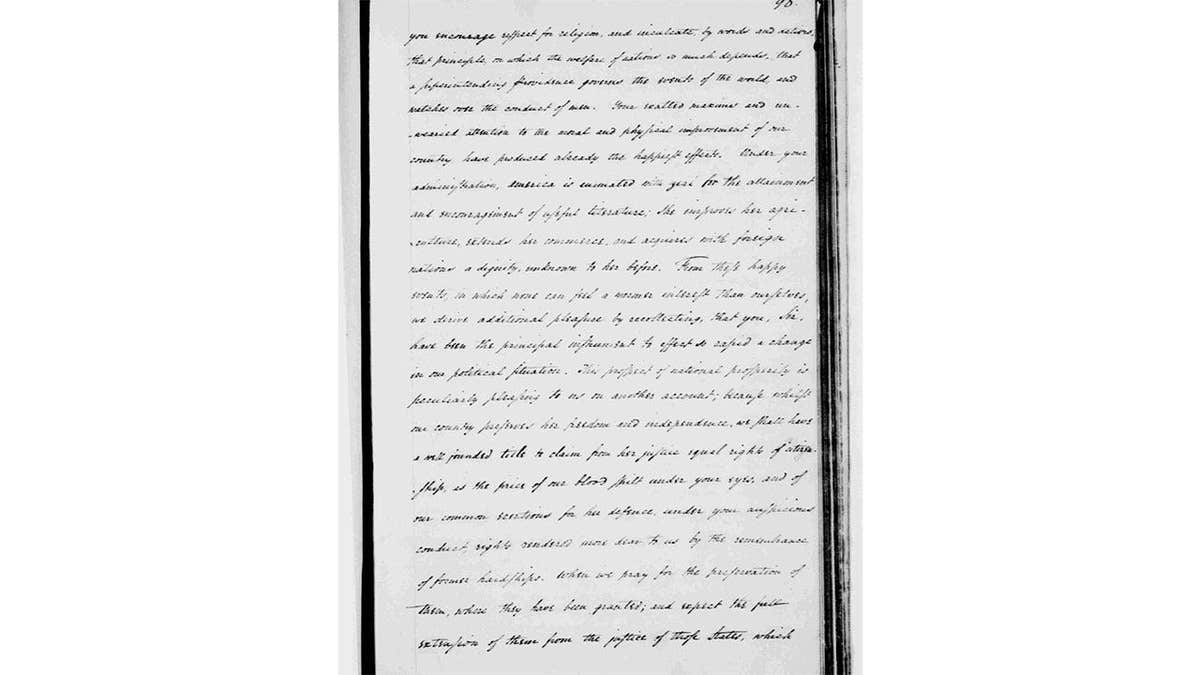
Page two of John Carroll’s March 15, 1790 letter to President George Washington, in which American Catholics appealed for «equal rights of citizenship» in the new republic. Courtesy of the Library of Congress. (The Library of Congress)
If the letter was a test, she added, it was one Carroll expected Washington to pass.
Carroll was joined by several of the young nation’s most prominent Catholic leaders. The address was signed by his cousin Charles Carroll of Carrollton — the only Catholic signer of the Declaration of Independence — as well as his relative Daniel Carroll, a signer of the U.S. Constitution, and Congressman Thomas FitzSimons of Pennsylvania. Together, they argued that American Catholics had earned the same rights of citizenship through their contributions to the Revolutionary War and the nation’s founding.
«American Catholics’ remarkable transformation — from being suspected subjects of a king to being trusted citizens of a new republic — is wonderfully illustrated in Bishop John Carroll’s 1790 letter to George Washington,» said Breidenbach, who is also the author of the book «Our Dear-Bought Liberty: Catholics and Religious Toleration in Early America».
Washington’s reply left little doubt where he stood.
He thanked Catholics for the «patriotic part» they had played during the Revolution and wrote that they were already «realizing, instead of anticipating, the benefits of the general Government.»
Butterfield said the response reflected Washington’s broader vision for the country.
«As long as you demean yourself as a good citizen and follow the laws, it doesn’t matter what your religious beliefs are,» Butterfield said, summarizing Washington’s message. «You’re fully a part of the nation.»
Washington, Butterfield said, recognized that every public word he spoke helped define the new republic.
«He is fully aware that he is a symbol of the nation, that the words that he speaks have consequences, that every word that he says matters.»
Washington expressed the same principle in his correspondence with other minority religious communities, including the Hebrew Congregation in Newport, Rhode Island.
«Washington makes clear that he’s not asserting ‘toleration,’ which would imply that a group of people are being given some kind of special permission to exist and worship,» she said. «Rather, all good citizens have the same rights regardless of religion.»
Although several states continued to maintain religious restrictions for decades, the new federal government charted a different course.
COLONIAL WILLIAMSBURG GEARS UP FOR AMERICA 250 BIRTHDAY TO REMEMBER
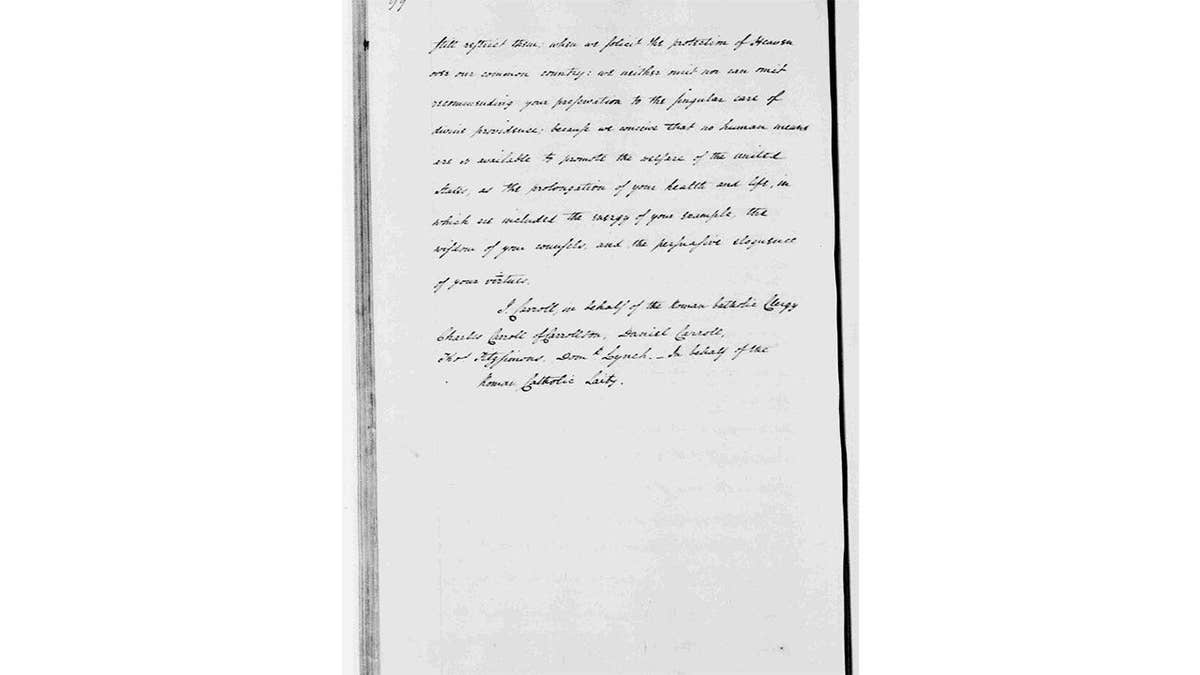
The closing page of John Carroll’s 1790 address to President George Washington includes the signatures of the Catholic leaders who appealed for equal rights of citizenship in the new American republic. Courtesy of the Library of Congress. (The Library of Congress.)
Even before the First Amendment was ratified, Article VI of the Constitution prohibited religious tests for federal office. Washington, who had presided over the Constitutional Convention, consistently defended that principle throughout his presidency.
«At the national level from day one, this was an experiment in religious freedom,» Butterfield said.
The correspondence itself survived because Washington understood that his papers would matter to future generations.
According to Butterfield, Washington preserved the collection, leaving it to his nephew, Supreme Court Justice Bushrod Washington. Congress purchased the papers in 1834, and they were later transferred from the State Department to the Library of Congress, where they remain today.
The Carroll letter is now one of roughly 77,000 items in the George Washington Papers. While researchers around the world can consult digitized versions, the original manuscript is only brought out in rare circumstances to preserve it.
O’Donnell believes the lesson extends beyond Catholic history.
«I think that it’s valuable for Americans to understand that the history of the founding period contains just about everything: ideals such as religious liberty and prejudices, such as those against Catholics,» she said.
She also believes the correspondence demonstrates the importance of public leadership.
CLICK HERE TO DOWNLOAD THE FOX NEWS APP
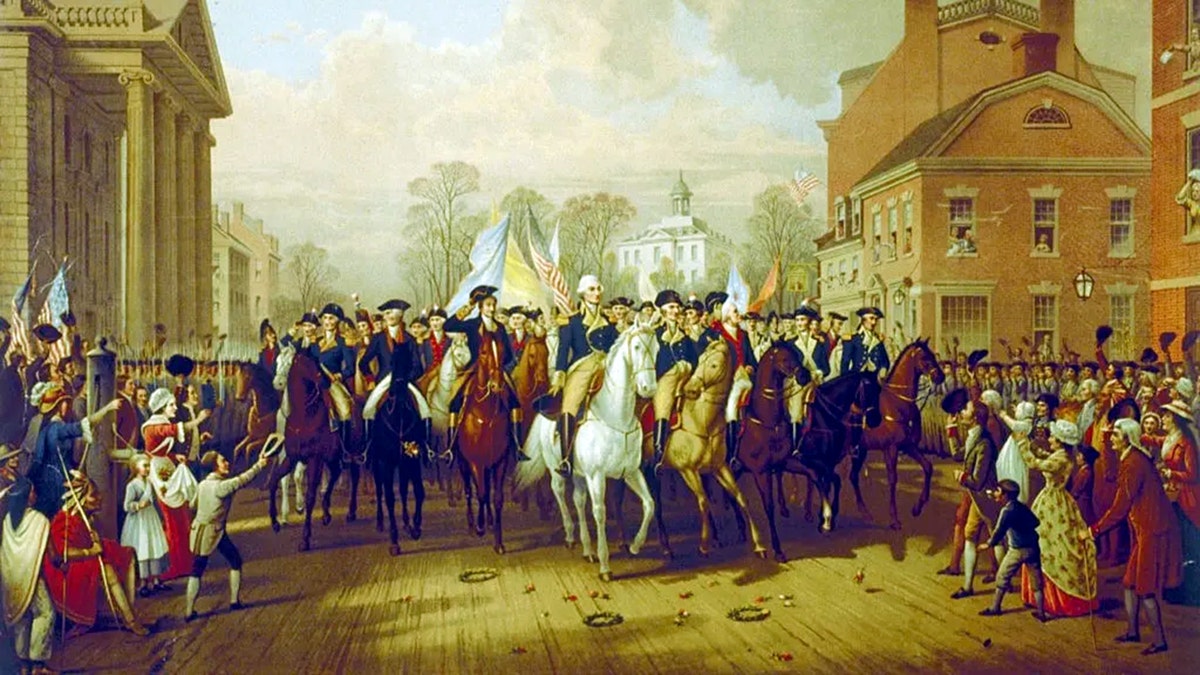
Gen. George Washington parades through Lower Manhattan on Evacuation Day, Nov. 25, 1783. (Library of Congress/Getty Images)
Washington’s belief that good citizenship did not require any particular religious views «seems timely,» O’Donnell said, as does Carroll’s belief that «public exchanges about important matters can help make ideals part of people’s sense of their community, rather than just a theoretical set of rights.»
More than two centuries later, the exchange remains more than a forgotten piece of correspondence. It captures an early moment when one of America’s smallest religious minorities asked whether the promises of the Revolution truly applied to them — and when the nation’s first president answered that they did.
america 250, roman catholic, first amendment, constitution, washington, faith values

¿Cuál es la historia y el origen del aguinaldo?

Young Americans break sharply from older Americans on China threat, new poll finds

Por qué se celebra hoy el Día del Orgullo LGBTIQ+ en todo el mundo

La conmovedora despedida a Ernestina Pais: el dolor de familiares, colegas y amigos

Honduras: Poder judicial otorga amparo a exjuez Marco Vallecillo y ordena nueva resolución en caso de extorsión

Santilli espera el llamado de Milei para reemplazar a Adorni: buscará profesionalizar la política en la Casa Rosada y mantener el vínculo con los gobernadores

Líderes mundiales ofrecieron ayuda humanitaria y equipos de rescate a Venezuela tras los devastadores terremotos

La bomba de Nico Occhiato tras el escándalo de Florencia Peña con Messi: “Lo más groso que pudimos haber logrado”

El punto de quiebre que sentó la suerte de Manuel Adorni y los preparativos que hace el Gobierno ante su inminente salida

Lo vimos en Gladiator y Sons of Anarchy, ahora llega a Juego de Tronos y yo aprovecho para hablaros de la cara más cruel e ignorada del Norte

 CHIMENTOS17 horas ago
La bomba de Nico Occhiato tras el escándalo de Florencia Peña con Messi: “Lo más groso que pudimos haber logrado”
- POLITICA21 horas ago
El punto de quiebre que sentó la suerte de Manuel Adorni y los preparativos que hace el Gobierno ante su inminente salida
- SOCIEDAD1 día ago
Lo vimos en Gladiator y Sons of Anarchy, ahora llega a Juego de Tronos y yo aprovecho para hablaros de la cara más cruel e ignorada del Norte