INTERNACIONAL
US condemns Iran’s leadership role at UN nuclear conference as ‘beyond shameful’

NEWYou can now listen to Fox News articles!
The United States, joined by the United Arab Emirates and backed by concerns from key European powers, sharply condemned the United Nations’ decision Monday to grant Iran a leadership post at a major nuclear treaty conference.
Iran’s selection as one of dozens of vice presidents at the monthlong review conference for the Nuclear Non-Proliferation Treaty reignited scrutiny over what critics say is a recurring pattern of Iran gaining procedural legitimacy inside international institutions despite longstanding concerns over its nuclear conduct.
The clash erupted as the 11th Review Conference of the Nuclear Non-Proliferation Treaty opened at U.N. headquarters in New York, where Iran was selected as one of 34 vice presidents through the Non-Aligned Movement bloc.
The conference includes 191 treaty parties and convenes every five years to review implementation of the pact aimed at preventing the spread of nuclear weapons.
IRAN SECURES UN ROLE WITH BACKING FROM UK, FRANCE, CANADA, AUSTRALIA AS US STANDS ALONE
U.S. Ambassador to the United Nations Mike Waltz speaks during a United Nations Security Council meeting, after the U.S. and Israel launched strikes on Iran, at U.N. headquarters in New York City, Feb. 28, 2026. (Heather Khalifa/Reuters)
For the administration, the symbolism was immediate and explosive.
«Rather than choosing to use this review conference to defend the integrity of the NPT and call Iran to account, we instead elect Iran a vice president,» Christopher Yeaw, U.S. assistant secretary for arms control and nonproliferation, told delegates. «It is beyond shameful and an embarrassment to the credibility of this conference.»
The UAE and Australia publicly backed the American objection, while Britain, France and Germany also expressed concern, marking a broader coalition than in earlier U.N. disputes where the U.S. often stood largely alone in challenging Iran’s procedural elevation.
The diplomatic uproar follows a pattern previously highlighted by Fox News Digital. On April 13, the United Nations Economic and Social Council (ECOSOC), a 54-member body that plays a central role in shaping U.N. policy and staffing key committees, nominated the Islamic Republic of Iran to the U.N.’s Committee for Program and Coordination, which helps shape policy on human rights, women’s rights, disarmament and counterterrorism, with the United States the only country to formally object.
IRAN VASTLY INCREASED NUCLEAR FUEL STOCKPILE AHEAD OF TRUMP RETURN, UN AGENCY FINDS
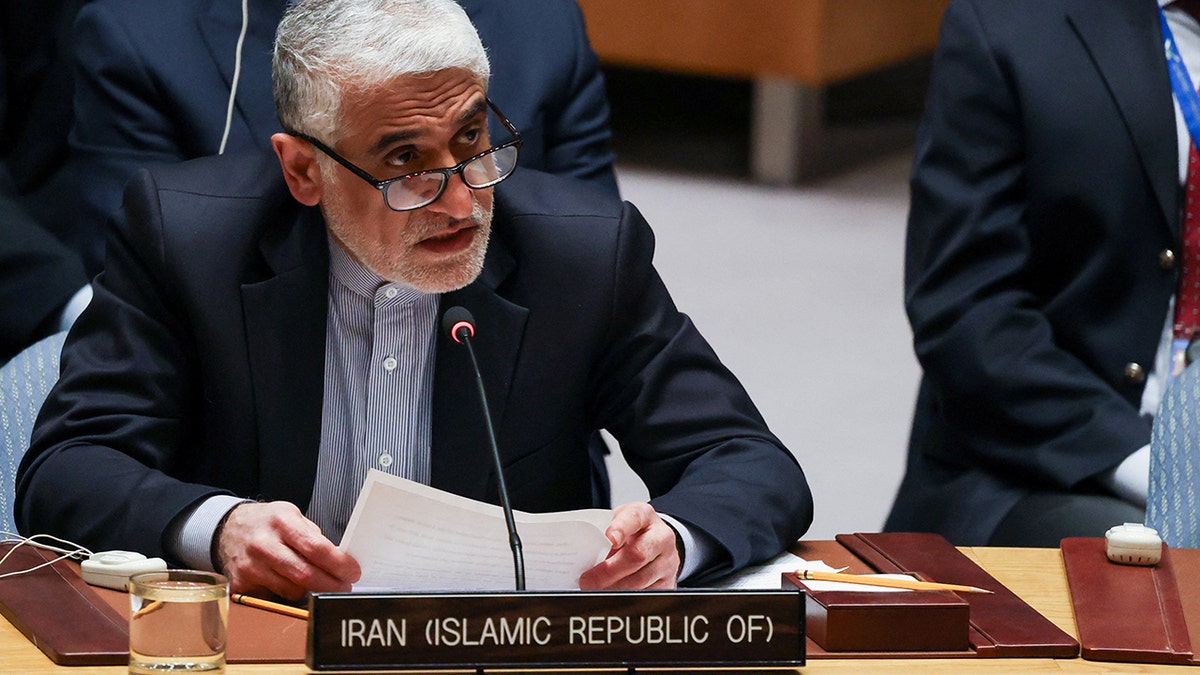
Iran’s Ambassador to the United Nations, Amir-Saeid Iravani, attends a United Nations Security Council meeting at U.N. headquarters in New York City on Feb. 28, 2026, following U.S. and Israeli strikes on Iran. (Heather Khalifa/Reuters)
During Monday’s debate, Iranian envoy Reza Najafi rejected the criticism as «baseless and politically motivated,» accusing the U.S. of hypocrisy and pointing to America’s nuclear history while defending Tehran’s right to peaceful nuclear development. Russia also defended Iran, with Ambassador-at-Large Andrey Belousov objecting to what he called the politicization of the conference.
The Iranian mission to the United Nations declined to comment to Fox News Digital.
U.N. spokesperson Stéphane Dujarric told Fox News Digital that the secretary-general «is not involved in any way in the election of Member States to leadership roles in various conferences or legislative bodies.»
«Member States are responsible for electing other Member States, and they must be accountable for the results of these elections,» Dujarric said.
He added that the U.N.’s focus remains on the broader nuclear threat rather than the procedural controversy surrounding Iran’s appointment.
«We strongly encourage all Member States participating in the Nuclear Non-Proliferation Treaty Review Conference to focus on what is most important: stopping the spread and threat of nuclear weapons, which remains a global threat,» he said.
Iran’s appointment comes amid heightened international concern over Iran’s nuclear trajectory. Western governments and the International Atomic Energy Agency have raised alarms over Iran’s enrichment of uranium to near weapons-grade levels and disputes over inspections, while Tehran insists its program is strictly civilian.
Critics say the controversy exposes a structural contradiction at the heart of the U.N. system: geopolitical blocs can elevate states under scrutiny into positions of procedural authority, even at conferences dedicated to the very norms those states are accused of violating.
CLICK HERE TO DOWNLOAD THE FOX NEWS APP
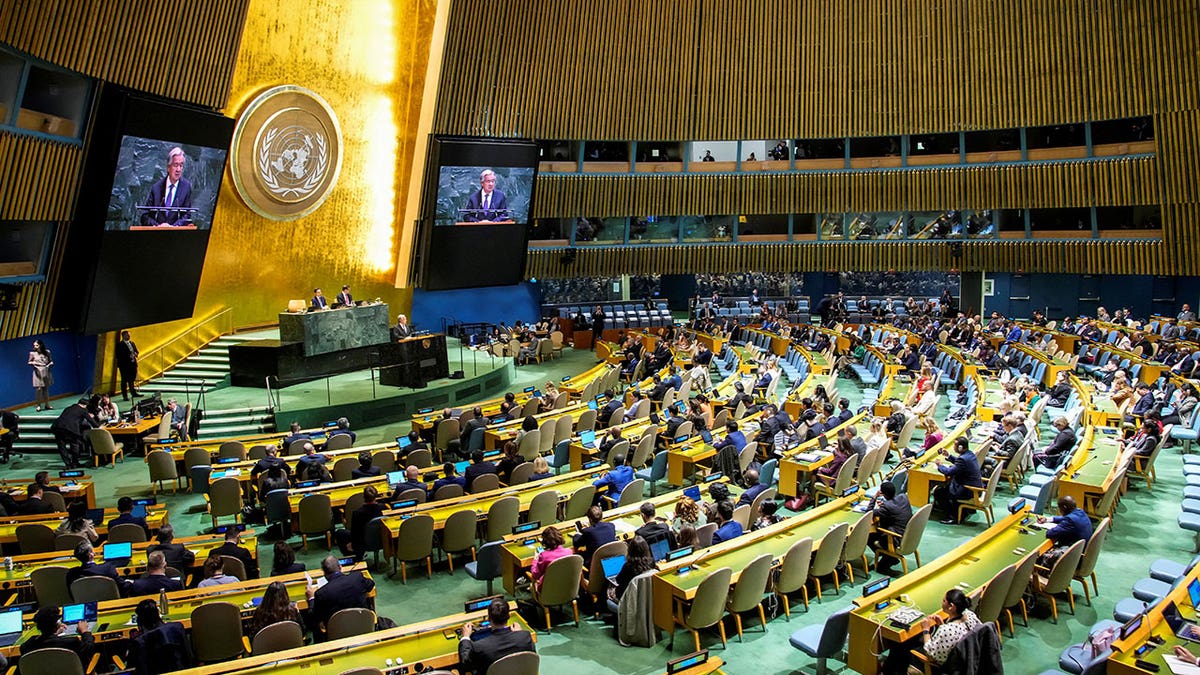
United Nations Secretary-General Antonio Guterres speaks to delegates during a meeting on Nuclear Non-Proliferation Treaty at U.N. headquarters in New York City, U.S., April 27, 2026. (Eduardo Munoz/Reuters)
The last NPT review conference in 2022 failed to produce a consensus document after Russia blocked the agreement, underscoring how great power divisions have increasingly paralyzed the treaty’s review process, according to The Associated Press.
Hillel Neuer, executive director of UN Watch, told Fox News Digital the vote reflects what he described as a broader erosion of institutional credibility at the United Nations.
«This is part of a disturbing trend,» Neuer said. «Iran has been accumulating senior roles across the U.N. system, from human rights bodies to key committees. Each appointment chips away at the credibility of international institutions, reinforcing the perception that political deal-making outweighs basic standards of conduct.»
Reuters and the Associated Press contributed to this report.
united nations, national security, nuclear proliferation, treaties, iran











Supreme Court upholds Mississippi mail-in ballot law, legal experts analyze implications
The Supreme Court issues a 5-4 decision upholding Mississippi’s law allowing mail-in ballots to be counted post-election day if postmarked by the deadline. ‘Fox News Sunday’ anchor Shannon Bream and former Deputy Assistant Attorney General John Yoo dissect the ruling, highlighting it as a setback for Republicans challenging such state laws. They explain states retain significant discretionary power over election procedures, with potential for congressional oversight.
NEWYou can now listen to Fox News articles!
Justice Samuel Alito cautioned on Monday that the Supreme Court’s decision to allow ballots received after Election Day to be counted could lead large sections of the public to view elections as illegitimate.
While Alito had legal concerns with the majority’s ruling, arguing that they misinterpreted when the «electorate’s choice» occurs, he closed his dissent by issuing a practical warning. Allowing late-arriving ballots to determine the outcomes of elections long after Election Day will, according to Alito, severely damage the trust Americans place in their electoral system.
«Not only is today’s decision inconsistent with statutory text, legal context, historical practice, and precedent; it also threatens to produce lamentable consequences,» he wrote. «The majority’s holding spawns a slurry of troubling election-law questions and risks further undermining Americans’ confidence in election integrity.»
SUPREME COURT RULES ON MAIL-IN BALLOTS RECEIVED AFTER ELECTION DAY
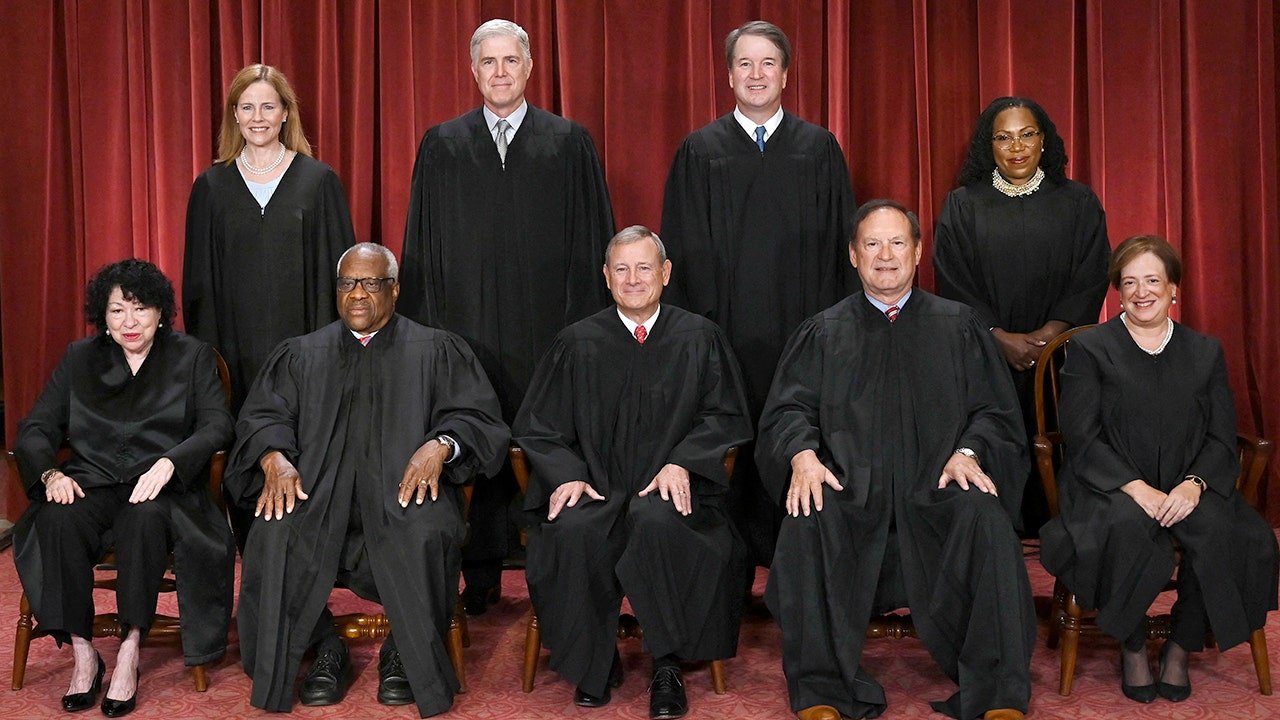
Justices of the US Supreme Court pose for their official photo at the Supreme Court in Washington, DC on October 7, 2022 (Olivier Douliery/AFP via Getty Images)
Alito went on to describe a hypothetical scenario where the outcome of a presidential election hinges on a single state that allows late-arriving mail ballots to be counted. In the scenario described by the justice, one candidate leads by 15,000 votes on election night only for the opposing candidate to slowly gain votes and, a few days before electors are scheduled to vote, pull ahead by just under 100 votes.
«If the apparent winner the morning after the election ends up losing due to late arriving ballots, charges of a rigged election could explode,» Justice Brett Kavanaugh also noted during the case’s oral arguments.
Alito didn’t simply claim that the ruling could affect how people view elections; he argued that it could open the door for fraud.
SUPREME COURT RULES ON MAIL-IN BALLOTS RECEIVED AFTER ELECTION DAY
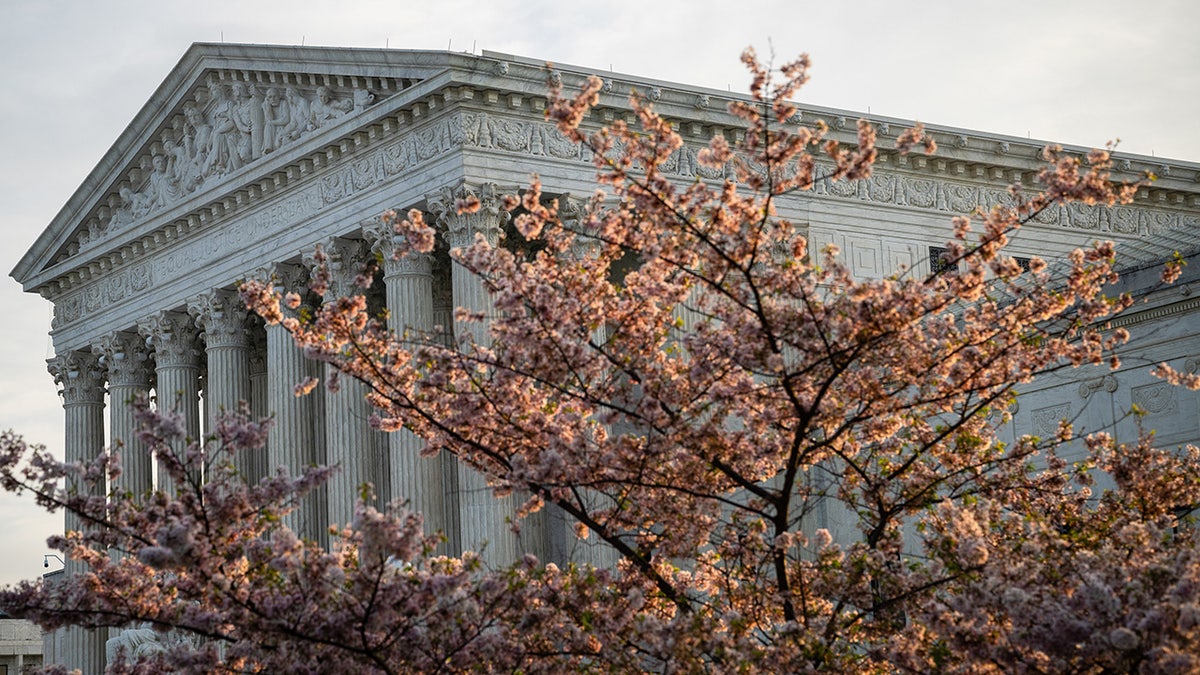
The US Supreme Court in Washington, D.C., on, April 1, 2026. President Donald Trump is fighting to end automatic citizenship for children born to parents who are in the country unlawfully or on temporary visas, part of his broader crackdown on undocumented immigrants and a change that could overturn more than a century of legal precedent. (Graeme Sloan/Bloomberg via Getty Images)
«Today’s decision leaves open opportunities for voter fraud that may further undermine Americans’ faith in the integrity of this country’s elections. Diverse sources have recognized that mail-in ballots increase the potential for fraud,» Alito continued. «In 2005, a committee chaired by former President Jimmy Carter and former Secretary of State James Baker found that absentee voting was ‘the largest source of potential voter fraud’ in American elections.»
While instances of voter fraud carried out using mail-in ballots have been recorded, there is no evidence that widespread fraud occurred in the 2020 or 2024 presidential elections.
Democrats, meanwhile, argue that allowing states to process ballots that are postmarked by Election Day but arrive afterward, is essential to ensuring that all eligible voters have a say in who governs them.
SUPREME COURT RULES ON MAIL-IN BALLOTS RECEIVED AFTER ELECTION DAY
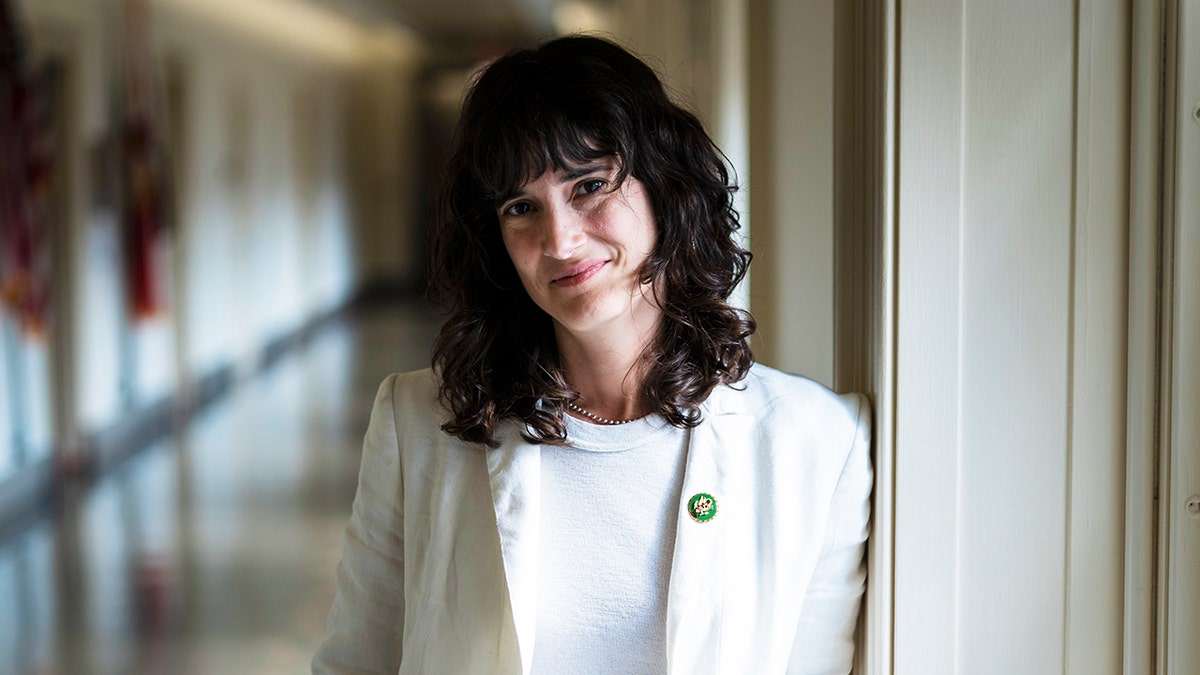
Washington, DC – July 27 : Rep. Marie Gluesenkamp Perez (D-Wash.) poses for portraits on Capitol Hill on Thursday, July 27, 2023, in Washington, DC. (Photo by Jabin Botsford/The Washington Post via Getty Images) (Jabin Botsford/The Washington Post via Getty Images)
«I’m relieved the Supreme Court is not interfering with Washington’s mail-in ballot system,» Rep. Marie Gluesenkamp Perez, D-Wash., wrote on X. «If you work a shift job, have young kids, or live out in the woods, you can’t just knock off for the day to go stand in line at a polling place. For decades, Washington’s secure vote by mail system has made it easy for these folks to participate in democracy and make their voice heard.»
The majority, however, did not address whether or not allowing late ballots to be counted was good policy, stating that such a consideration is outside the scope of what the court has authority to rule on.
«Finally, plaintiffs assert that requiring ballots to be received by Election Day protects election integrity and increases voter confidence in election results,» Justice Amy Coney Barrett wrote. «As we have said time and again, however, policy arguments are properly directed to legislatures, not courts.»
voter fraud concerns, politics, elections disputes, voting, supreme court
INTERNACIONAL
La lectura potencia el cerebro más que el ejercicio, el sueño o la cafeína, afirma una nueva investigación

Un nuevo estudio sobre lectura y actividad cognitiva sostiene que la alfabetización no se limita a descifrar textos, sino que reconfigura funciones mentales como la memoria, la atención, el procesamiento del lenguaje, el razonamiento e incluso el reconocimiento de rostros, según plantea Falk Huettig, investigador principal del Instituto Max Planck de Psicolingüística.
De acuerdo con la investigación, la lectura actúa como uno de los potenciadores cognitivos más poderosos y con efectos cada vez mejor documentados. La alfabetización transforma la manera en que las personas procesan el lenguaje, organizan la atención, usan la memoria, razonan e incluso reconocen rostros.
Huettig sostiene que la lectura recibe menos atención que otros factores asociados al rendimiento mental, como el sueño, el ejercicio, la nutrición, el manejo del estrés, la cafeína o la neuroestimulación.
El estudio reúne trabajos de psicología, lingüística, neurociencia y educación para ordenar esa investigación en una sola explicación. Su tesis central es que leer y escribir no son herramientas neutrales, sino prácticas que transforman de forma profunda la mente.

Uno de los hallazgos más llamativos del estudio aborda el reconocimiento de rostros. Una idea extendida en neurociencia planteaba que, como la lectura es una adquisición cultural reciente, su aprendizaje podría ocupar parte de redes visuales más antiguas, incluidas las dedicadas a identificar caras.
Huettig rebate esa hipótesis. Sostiene que aprender a leer puede afinar esas redes, en vez de restarles capacidad, al aumentar la sensibilidad ante rostros y otras categorías de objetos visuales.
Esa propuesta se apoyó en estudios con adultos alfabetizados y analfabetos en India. Según el investigador, esas pruebas confirmaron que las personas alfabetizadas reconocían mejor los rostros que las analfabetas.
El estudio también rechaza la idea de que la alfabetización sea una meta que se alcanza de una vez y para siempre. Huettig afirma que la competencia lectora sigue desarrollándose después de que una persona aprende a leer con fluidez.

A su juicio, la práctica continuada automatiza y refina esos subprocesos y su coordinación. Esa evolución, añade, hace que las personas alfabetizadas miren el mundo con un filtro distinto al de quienes no leen o lo hacen menos.
Huettig añade que solo una minoría alcanza los niveles más altos de lectura crítica en evaluaciones internacionales como las pruebas PISA. También subraya que el tipo de textos importa, porque llegar a esa lectura avanzada exige contacto regular con materiales complejos y habilidades sólidas de pensamiento crítico y razonamiento.
En el debate sobre formatos, Huettig describe un panorama menos tajante. Señala que metaanálisis previos detectaron una comprensión lectora inferior en pantallas, aunque atribuye parte de esa diferencia a la autorregulación del lector.
Su explicación es que muchas personas consideran el papel un soporte más apropiado para la lectura seria y, por eso, ajustan su conducta y su esfuerzo mental de otra manera. Aun así, advierte que la investigación disponible no respalda la conclusión simplificada de que el papel siempre ofrece mejores resultados que lo digital.
Sobre los audiolibros, el investigador reconoce beneficios parciales. Explica que pueden exponer a vocabulario poco frecuente, construcciones gramaticales complejas y estructuras narrativas elaboradas, pero remarca que el conjunto completo de ventajas de la lectura solo se obtiene con el texto escrito.

De cara a padres y educadores, Huettig cuestiona la tendencia a simplificar en exceso los textos para adaptarlos a un vocabulario más reducido o a una menor destreza gramatical entre los jóvenes. También alerta sobre una dependencia excesiva de puntuaciones de legibilidad generadas por personas o por inteligencia artificial, así como del autocorrector para buscar palabras o gramática “mejores”.
Su propuesta apunta en sentido contrario: dar prioridad a la buena escritura, a una prosa memorable y a un lenguaje complejo y poco común para sostener y fortalecer la alfabetización. El trasfondo, según plantea, es que está en juego mucho más que una destreza escolar.
El estudio cierra con una advertencia sobre el lugar de la escritura en los próximos años, en un contexto marcado por teléfonos inteligentes, aprendizaje en línea e inteligencia artificial generativa. Huettig compara el posible destino del texto escrito con medios que pasaron de uso general a interés de nicho.
Si la alfabetización sigue cayendo a escala global, el investigador prevé que también podrían deteriorarse las habilidades que hoy miden las pruebas de inteligencia. Aunque futuras tecnologías lleguen a aliviar parte de esa pérdida, considera poco probable que compensen por sí solas ese retroceso.
Alfabetización,Georgia,Educación,Escuela primaria,Tercer grado,Estudiantes,Niñez,Lectura,Docente,Crisis educativa
INTERNACIONAL
Huida de película: escapó de China en un gomón y con un celular casi sin batería y llegó a Canadá

Dong dice que superó el miedo a la muerte
Del centro de refugiados a Canadá
Dong promete seguir adelante con su activismo

Las tiernas imágenes de Gemma, la hijita del Colo Barco, jugando en la concentración argentina

La Justicia les prohibió salir del país a Insaurralde y Cirio, mientras allana una casa de Picirillo en Nordelta

Karina Milei aumenta su participación en los bloques y busca marcar el ritmo parlamentario de LLA

Alito blasts latest SCOTUS ballot ruling as invitation to ‘voter fraud’ risks

La desgarradora reacción de los jugadores de Japón tras el gol de Brasil que los eliminó del Mundial

Exportadores y el sindicato de aceiteros acordaron un aumento de sueldo para todo 2026

El punto de quiebre que sentó la suerte de Manuel Adorni y los preparativos que hace el Gobierno ante su inminente salida

La bomba de Nico Occhiato tras el escándalo de Florencia Peña con Messi: “Lo más groso que pudimos haber logrado”

Una escena estremecedora: el dato más doloroso de los minutos posteriores a la muerte de Ernestina Pais

Cómo ganar $20 millones con Mercado Pago: el paso a paso para quienes cobran ANSES

 POLITICA2 días ago
El punto de quiebre que sentó la suerte de Manuel Adorni y los preparativos que hace el Gobierno ante su inminente salida
- CHIMENTOS2 días ago
La bomba de Nico Occhiato tras el escándalo de Florencia Peña con Messi: “Lo más groso que pudimos haber logrado”
- CHIMENTOS3 días ago
Una escena estremecedora: el dato más doloroso de los minutos posteriores a la muerte de Ernestina Pais