INTERNACIONAL
Borís Nemtsov, el ‘playboy’ liberal que casi le ganó la presidencia a Vladímir Putin


La pregunta latente detrás de esta biografía intensa y dinámica de 778 páginas sobre un político ruso poco conocido internacionalmente es la siguiente: ¿Qué tipo de mundo existiría hoy si el cosmopolita demócrata liberal Borís Nemtsov, y no Vladímir Putin, hubiera sucedido a Borís Yeltsin al mando del país? Más específicamente, ¿la democracia liberal habría continuado su avance imparable hacia el siglo XXI, libre de la nostalgia soviética y del atractivo del neoimperialismo?
Estas son las cuestiones que plantea el veterano periodista ruso Mijaíl Fishman en El Sucesor. “¿Cuándo fue el momento en que Rusia perdió su libertad?”, escribe. “¿Era inevitable la atroz guerra que Putin comenzó? ¿Era el desastre al que llevó a Rusia algo predestinado?”
Para Fishman, Nemtsov representa la promesa de una Rusia libre y democrática que comenzaba a surgir a principios de la década de 1990. Si hubiera cumplido su destino, tal vez no existiría la guerra en Ucrania, con sus cientos de miles de soldados muertos, 10 millones de civiles desplazados, temores de un enfrentamiento nuclear y el espectro de una Tercera Guerra Mundial.
Nemtsov era “un playboy alto, atractivo, de cabello rizado”, escribe Fishman, siete años más joven que Putin y físico de formación. Se interesó por la política en la década de 1980, cuando su madre empezó a asistir a protestas antinucleares tras el desastre de Chernóbil.

En pocos años, se transformó en el niño prodigio de la reforma rusa. En 1991, se convirtió en el gobernador de 32 años de Nizhni Nóvgorod, transformando la provincia al privatizar granjas colectivas, dar libertad a los periodistas e impulsar un auge de la construcción de viviendas y carreteras.
A los 37, era uno de los primeros viceprimeros ministros de Yeltsin y un heredero natural a la presidencia. En un momento, Yeltsin incluso le entregó a Nemtsov una fotografía de ambos con la inscripción: “Secreto: te paso la posta”.
Varios factores se combinaron para frenar el ascenso de Nemtsov, pero la causa principal fue la crisis financiera de 1998, cuando el Estado ruso, incapaz de recaudar impuestos para compensar la caída de los ingresos petroleros, entró en default. La inflación devastó el país y acabó con el optimismo de los años noventa. “La gente sentía nostalgia y estaba inquieta”, escribe Fishman.
Ante las arcas vacías, un público desencantado con las reformas y un Partido Comunista en auge, Yeltsin cambió de rumbo. Faltando dos años para las elecciones presidenciales, buscó un sucesor de otro perfil, alguien considerado duro y sin vínculos con los errores de las políticas de los “salvajes años noventa”. Las mismas condiciones que apartaron a Nemtsov del centro de la escena atrajeron a un burócrata poco conocido y exagente de la KGB llamado Vladímir Putin.

Cuando Yeltsin nombró a Putin primer ministro, apenas uno de cada cuatro rusos había oído hablar de él. “Era fácil proyectar en él cualquier esperanza o interés”, escribe Fishman. Algunos, incluido Nemtsov, creyeron al principio que mantendría el rumbo hacia Europa y Occidente.
Muchos más vieron a Putin como el redentor nacional, la mano de hierro que restauraría la grandeza del país. “La mayoría de los rusos estarían contentos con un líder agresivo, no con uno compasivo”, dijo una socióloga a una revista de prestigio en 1999. “La gente prefiere la fuerza y la brutalidad, esperando que estas cualidades ayuden a imponer el orden”.
Nemtsov nunca volvió a encontrar su lugar en la política nacional, salvo como un incordio para Putin. Fundó un bloque electoral reformista que nunca despegó, organizó manifestaciones, documentó los crímenes del Kremlin, presentó denuncias ante el Tribunal Europeo de Derechos Humanos y presionó a gobiernos occidentales para sancionar a propagandistas rusos.
En 2013, cuando se postuló para un escaño en una legislatura provincial, su amigo y ocasional colaborador Alexéi Navalni se burló de él: “Tú y tu privatización, tus pantalones blancos, tu cara de Moscú. Nunca llegarás a ningún lado”. Nemtsov ganó el escaño, una posición modesta para un ex viceprimer ministro, avivando las últimas brasas del liberalismo en Rusia. Contra todo pronóstico, seguía esperando ver a un opositor, como Navalni, alcanzar la presidencia en 2018.

Por su audacia, los medios estatales insinuaron que Nemtsov era un agente del Departamento de Estado de EE. UU. y un “schizo-dem”, un término peyorativo que significa “activista democrático que ha perdido el contacto con la realidad y ha enloquecido luchando contra el régimen”. Activistas juveniles progubernamentales lanzaron consoladores a su auto, arrojaron bombas fétidas en sus actos públicos y le tiraron Coca-Cola mezclada con amoníaco en la cara. Las autoridades lo detuvieron repetidas veces, y los aliados de Putin lo sometieron a demandas judiciales infundadas.
Mientras tanto, Nemtsov observaba con creciente horror cómo sus compatriotas se volvían cada vez más “agresivos, zombificados, intoxicados”. En 2014, se sintió tan desmoralizado que se marchó a Israel, aunque regresó a las pocas semanas. Su impulso por seguir luchando en la oposición era como una adicción que no podía dejar, recordó un amigo. Al año siguiente, Nemtsov fue asesinado por sicarios vinculados a Ramzán Kadírov, líder checheno y aliado de Putin.
¿Qué habría pasado si Rusia hubiera tomado ese camino alternativo? Si Yeltsin hubiera mantenido la confianza en Nemtsov, a quien llegó a considerar “como a un hijo”, ¿sería Rusia hoy una democracia liberal plenamente consolidada, un país europeo normal en buenos términos con sus vecinos?
Casi con certeza, no. Por supuesto, la psicología de los líderes importa; resulta difícil imaginar a un presidente Nemtsov ordenando asesinatos de opositores políticos, tildando a periodistas independientes de “agentes extranjeros” e iniciando la guerra más sangrienta en Europa desde 1945. Pero son las fuerzas mayores las que empujan a los individuos al poder, y las corrientes de la historia favorecieron a un déspota.

Incluso si Nemtsov hubiera logrado asegurar el respaldo de Yeltsin y ganar las elecciones presidenciales de 2000, probablemente habría salido del cargo poco después. Fishman, que ahora vive exiliado en Países Bajos, lo admite. “Probablemente Nemtsov no habría llegado a ser presidente de Rusia”, escribe. “Lo impulsó la revolución a fines de los años ochenta y principios de los noventa. Unos años después, ya era demasiado libre y demasiado idealista para los tiempos”.
Hasta la invasión a gran escala de Ucrania en 2022, Fishman no había perdido la esperanza en su tierra natal. Cerró la edición rusa de “El Sucesor”, publicada dos semanas antes de la guerra, con una nota optimista: “Los héroes no mueren, y los valores tampoco. Los ideales que sustentan la Rusia de Nemtsov serán demandados en el próximo giro de la historia, y ayudarán a que la historia tenga un buen final”.
Ese epílogo esperanzador fue eliminado de la edición en inglés. “¿Sigue siendo posible ese otro futuro?”, escribe Fishman en el nuevo prólogo. “Sigo creyéndolo hoy, aunque no estoy seguro de seguir aquí cuando suceda”.
Tras un cuarto de siglo de represión creciente, cualquier alternativa democrática a Putin ha sido encarcelada, asesinada o expulsada del país. Y el público ruso, expuesto a una propaganda incesante, no parece pensar que sea posible, ni siquiera deseable, otro tipo de política. Según el Centro Levada, la única agencia de encuestas independiente que queda en Rusia, incluso después de años de guerra y estancamiento económico, la aprobación de Putin ronda el 80 por ciento.
Aun así, como bien saben los rusos, el cambio político suele ocurrir poco a poco, y luego de golpe. Al final, “El Sucesor” justifica su amplio tratamiento de una figura relativamente menor porque ofrece una visión de la Rusia abierta y pluralista que casi fue, y que tal vez aún pueda ser. Incapaz de ignorar el mundo tal como es, Fishman lucha por imaginar ese futuro alternativo, aunque sea solo como una fantasía. Pero tenía razón antes: Putin puede eliminar físicamente a Nemtsov, a Navalni e incluso a Fishman, pero las ideas no pueden ser fusiladas, envenenadas ni exiliadas. Las semillas que sembraron Nemtsov y Navalni pueden aún madurar, a su tiempo.
Fuente: The New York Times
Politics,Europe











INTERNACIONAL
China launches rare submarine ballistic missile as Pacific allies strengthen defense ties before NATO summit
NATO’s strategic shift addresses China, Russian threat in new ‘NATO 3.0’
Brent Sadler, a former Navy captain and Pentagon official, highlights NATO’s strategic shift to address evolving threats. He details the potential for American troop redistribution in Europe and emphasizes a «NATO 3.0» approach that balances threats from China and Russia. Sadler stresses the need for NATO allies to significantly increase defense spending and enhance capabilities, including missile defense, to deter aggression.
NEWYou can now listen to Fox News articles!
China publicly announced it launched a ballistic missile from a nuclear-powered submarine into the Pacific Ocean Monday — a rare acknowledgment of its sea-based nuclear capabilities that came as U.S. allies deepen security ties in the Indo-Pacific and NATO leaders prepare to meet amid growing concerns over Beijing’s military ambitions.
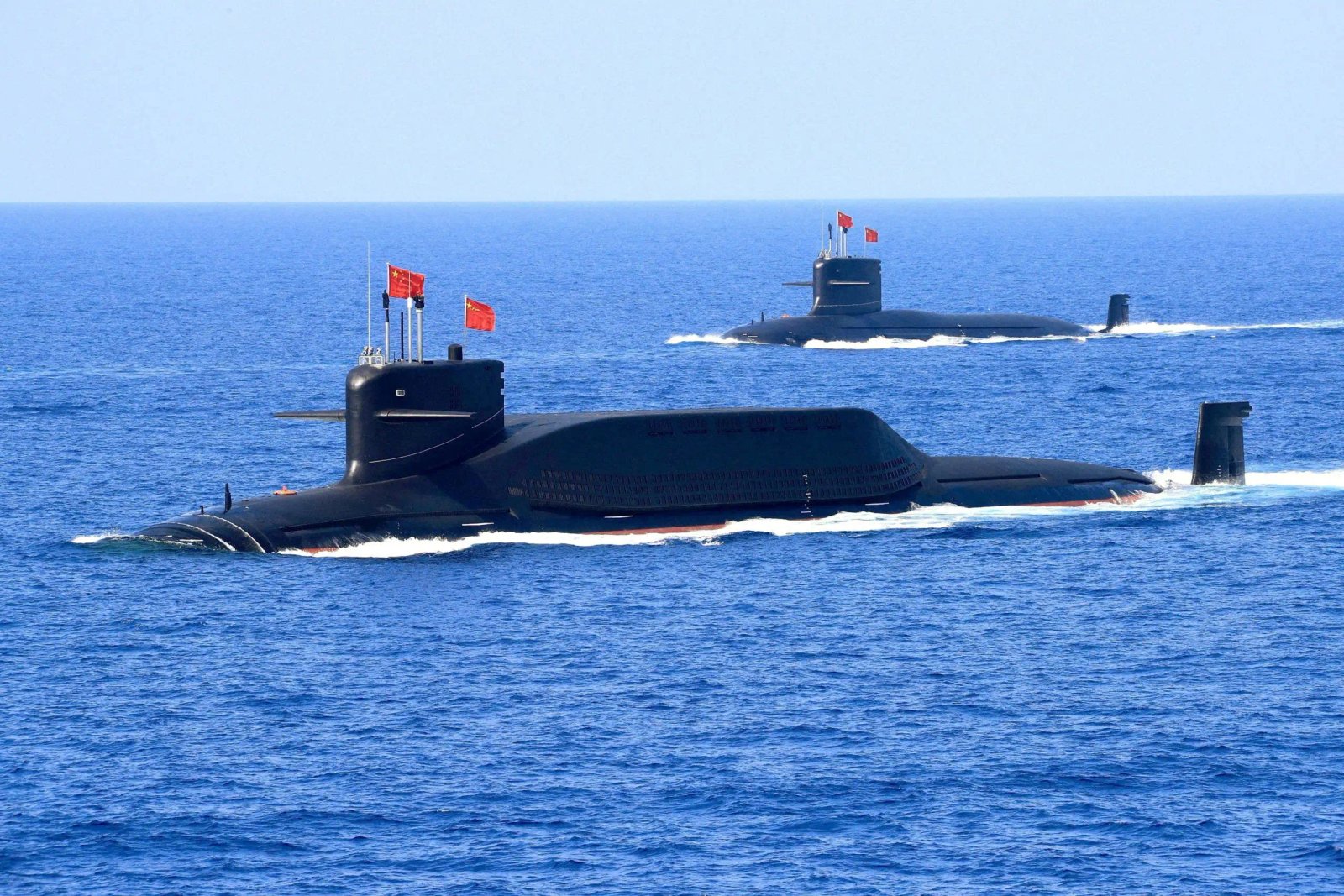
China’s People’s Liberation Army Navy said the missile, carrying a dummy warhead, was fired from a Type 094 Jin-class ballistic missile submarine during what Beijing described as a routine annual training exercise.
The launch highlights one of the Pentagon’s biggest long-term concerns: China’s ability to field a more survivable nuclear force capable of threatening the U.S. and its allies from the sea. Unlike land-based missile launches, a ballistic missile fired from a submerged nuclear submarine demonstrates one of the most survivable elements of a country’s nuclear arsenal because the vessels are significantly harder to detect and destroy before they can launch a retaliatory strike.
The growing capability also means China could eventually threaten the U.S. homeland from a wider range of patrol areas, reducing the need for its submarines to venture into more vulnerable waters.
AIR FORCE REVEALS B-2’S HIDDEN SHIP KILLER CAPABILITY AS CHINA THREAT GROWS
A nuclear-powered Type 094A Jin-class ballistic missile submarine of the Chinese People’s Liberation Army (PLA) Navy is seen during a military display in the South China Sea April 12, 2018. (Reuters/Stringer)
Chinese officials said the launch landed in a designated area of the Pacific Ocean and was conducted in accordance with international law.
«It is a routine arrangement in China’s annual military training program. It is consistent with international law and customary international practice and is not directed at any specific country or target,» Chinese foreign ministry spokesperson Mao Ning said at a news conference Monday.
«The whole process was safe, standard and professional. We hope relevant countries will not read too much into it.»
TRUMP BETS ON FORMER NATO TROUBLEMAKER AS TURKEY’S STRATEGIC VALUE SURGES
The launch came on the eve of NATO’s summit in Ankara, Turkey, where alliance leaders are expected to focus primarily on the war in Ukraine, defense spending and collective security, while also addressing the growing strategic challenge posed by China. In recent years, NATO has expanded its engagement with Indo-Pacific partners including Australia, Japan, New Zealand and South Korea, reflecting concerns that security in Europe and the Pacific is increasingly interconnected.
It was the first such test since 2024, according to Chinese state media, occurring at noon local time Monday.
New Zealand, which had just signed a defense pact with Fiji, claimed the missile landed in the South Pacific Nuclear Free Zone, where testing atomic weapons is prohibited.
China said the missile carried a dummy rather than a nuclear warhead, and New Zealand did not accuse Beijing of violating the Treaty of Rarotonga, which establishes the South Pacific Nuclear Free Zone and prohibits nuclear explosive devices within the region. Instead, officials criticized the launch as inconsistent with the spirit of maintaining the Pacific as a nuclear-free region.
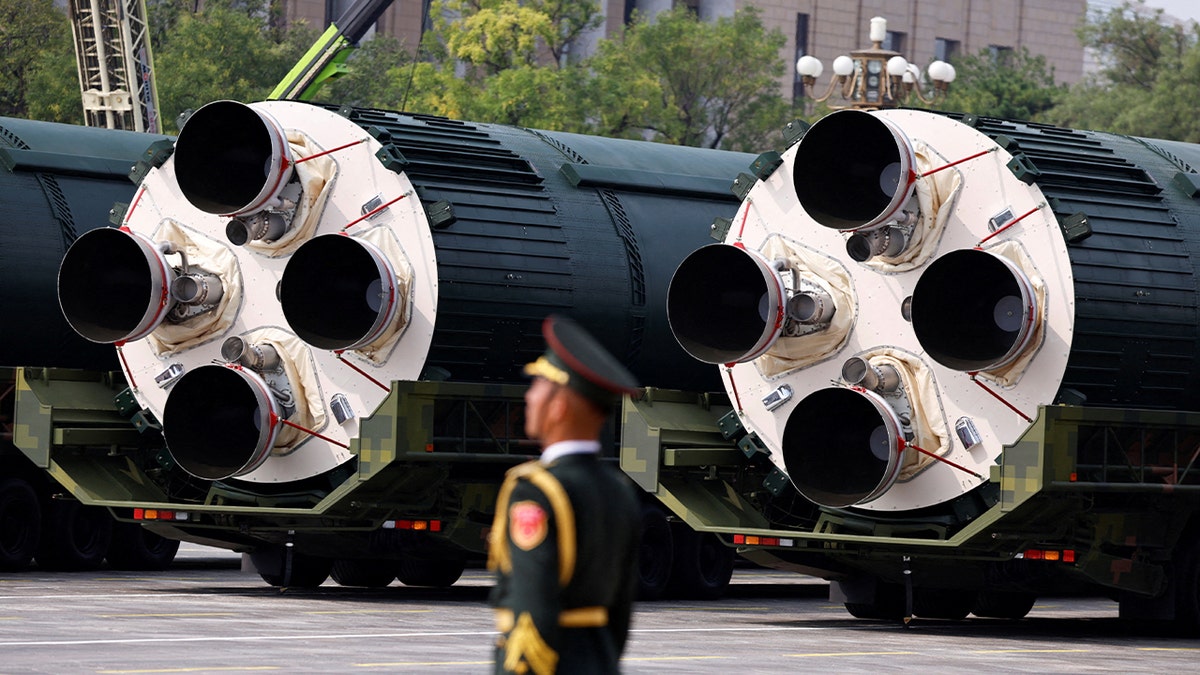
China may be conducting low-yield nuclear tests, a State Department official says. (Tingshu Wang/File Photo/Reuters)
Australia’s foreign minister, Penny Wong, said China had informed Australia ahead of the test but added, «Australia has been clear with China that we regard this as destabilizing to the region.»
China’s rapid military buildup added to the concern, according to Wong, who described it as «lacking in the transparency and reassurance as to intent that the region expect.»
In a joint cabinet statement, Japan raised «serious concern over the intensification of China’s military activities and strongly urged China to reconsider its actions.»
The Pentagon has repeatedly warned that China is rapidly modernizing and expanding its nuclear forces, projecting that Beijing will continue increasing the size, sophistication and survivability of its arsenal through the next decade. China’s military has also expanded naval patrols beyond the first island chain while increasing military pressure on Taiwan and asserting territorial claims in the South China Sea.
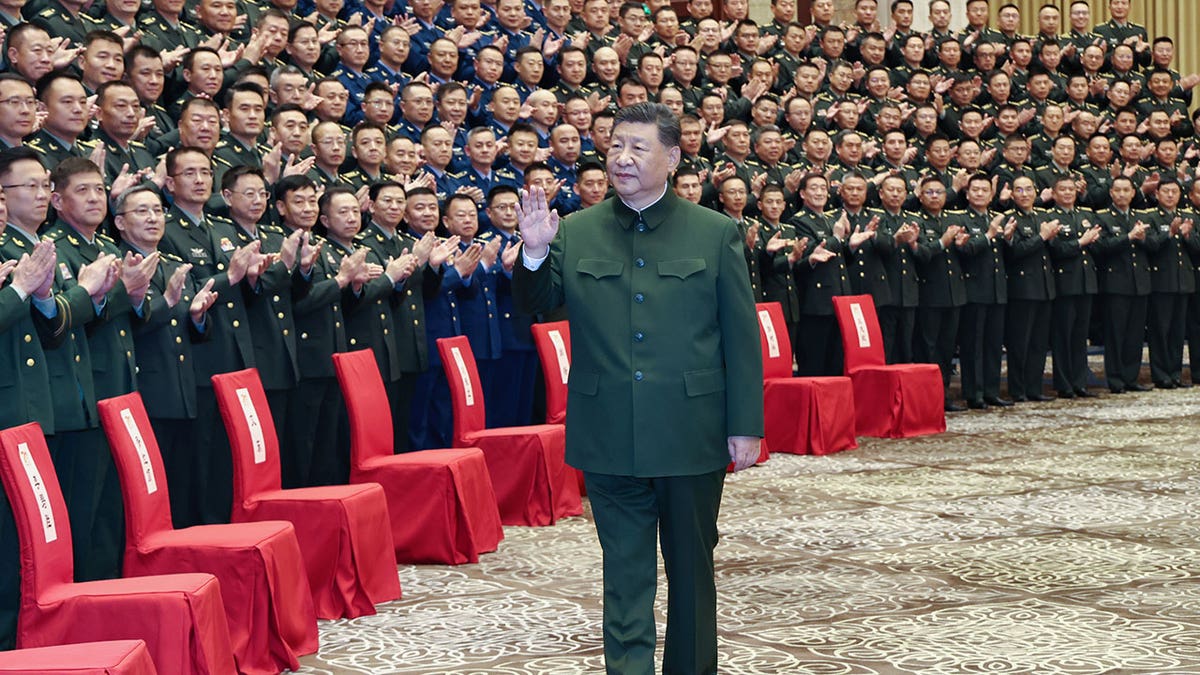
Chinese President Xi Jinping, also general secretary of the Communist Party of China Central Committee and chairman of the Central Military Commission, meets with representatives of military personnel stationed in northwest China’s Xinjiang Uygur Autonomous Region, in Urumqi, the regional capital, Sept. 23, 2025. (Photo by Li Gang/Xinhua via Getty Images)
The Pentagon projects China will field more than 1,000 nuclear warheads by 2030, up from an estimated stockpile in the low 600s through 2024.
Officials say Beijing is expanding all three legs of its nuclear triad — land-based missiles, strategic bombers and nuclear-powered ballistic missile submarines — while improving its ability to survive a first strike and retaliate.
CLICK HERE TO DOWNLOAD THE FOX NEWS APP
At the same time, the People’s Liberation Army Navy is the world’s largest by number of battle force ships, while it has fielded advanced hypersonic weapons, expanded long-range missile forces and invested heavily in artificial intelligence, cyber capabilities and space-based systems that U.S. officials say are designed to challenge American military advantages in the Indo-Pacific.
U.S. defense officials have also warned that China continues to refine the capabilities needed for a potential conflict over Taiwan, including joint operations involving naval, air, missile and amphibious forces.
Annual military exercises around Taiwan have grown larger and more complex, reflecting Beijing’s efforts to increase military pressure while rehearsing operations that could support a blockade or invasion.
The U.S. has maintained a sea-based nuclear deterrent for decades through its fleet of Ohio-class ballistic missile submarines, which routinely conduct operational deterrent patrols and periodic test launches of Trident II D5 ballistic missiles. The Navy is now replacing those submarines with the next-generation Columbia class, which is expected to begin entering service later this decade.
Unlike China, however, the U.S. regularly publicizes scheduled Trident missile tests and has long operated a mature fleet of ballistic missile submarines that defense officials consider the most survivable leg of America’s nuclear triad.
The Pentagon and U.S. Indo-Pacific Command could not immediately be reached for comment.
china, nuclear proliferation, military, nato
INTERNACIONAL
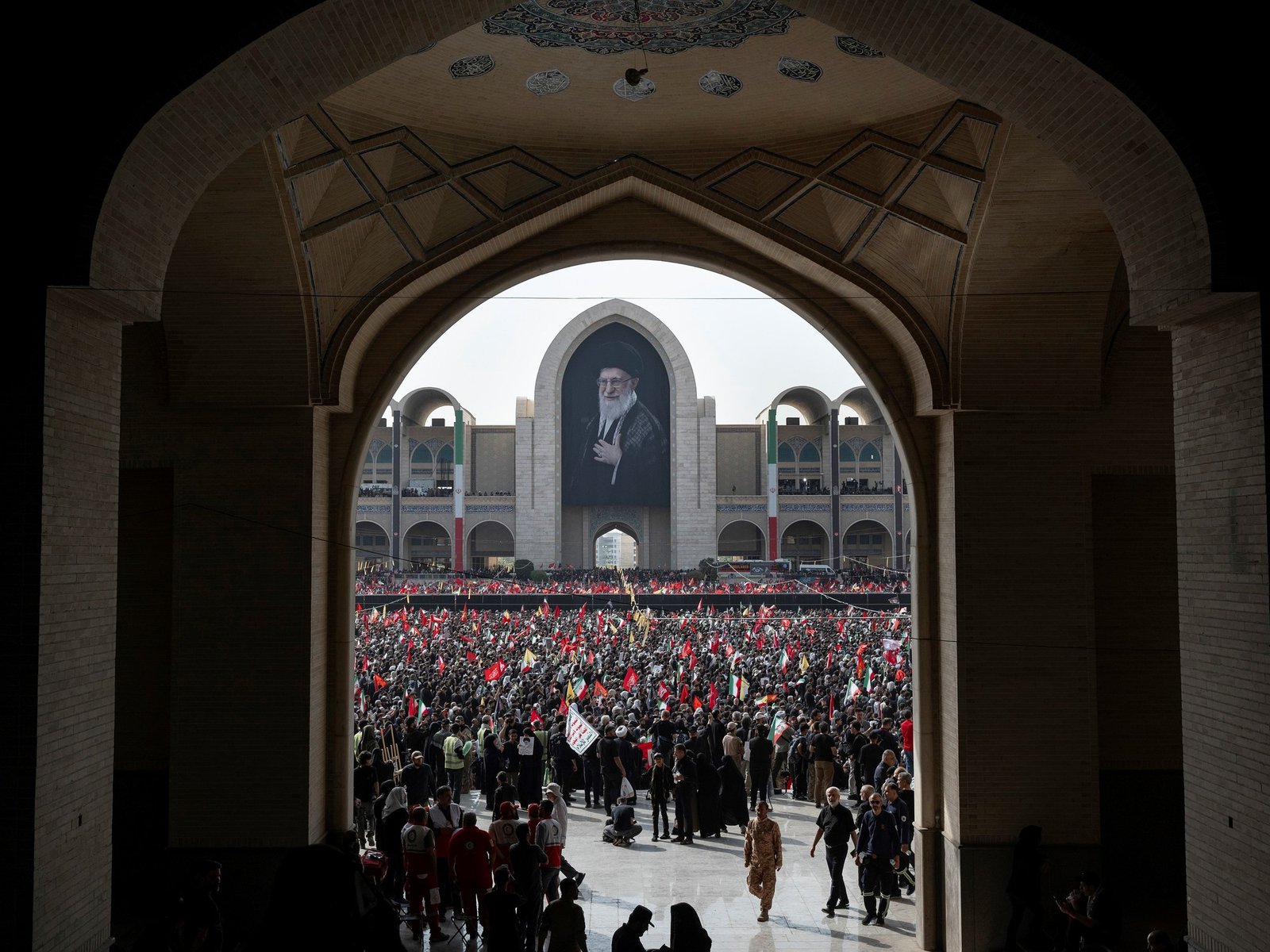
La unidad momentánea en un funeral enmascara las profundas divisiones entre los líderes de Irán

INTERNACIONAL
Blue city gang bangers slapped with multiple charges after massive sex trafficking crackdown

Tom Homan: These politicians are ‘nuts’
ICE arrested Giovana Mercedes Moreno Ochompy, a former Illinois high school teacher and illegal immigrant, in connection with a triple murder involving the Venezuelan Tren de Aragua gang. Chicago police initially released her due to sanctuary city policies, without notifying ICE. Tom Homan, former acting ICE director, criticizes these policies, arguing they hinder federal law enforcement and endanger public safety.
NEWYou can now listen to Fox News articles!
The Department of Homeland Security (DHS) announced that it had carried out 20 federal warrants and 10 arrests last Wednesday in connection with sex trafficking operations in Los Angeles by the Hoover Criminals Gang (HCG), a group known for its human exploitation.
Officials identified 51 victims in connection with the arrests, some of whom were as young as 14.
«[Homeland Security Investigations] remains steadfast in our mission to protect victims and pursue justice against human traffickers,» Special Agent Eddy Wang said in a statement to Fox News Digital.
DOJ SAYS 11 MIGRANTS INDICTED IN MULTI-STATE SEX TRAFFICKING, DRUG, FIREARMS CASE
The 10 suspects arrested as a part of Operation Broken Blade on July 1 (Department of Homeland Security)
The arrests are a part of Operation Broken Blade, an effort to target trafficking in Los Angeles’ Figueroa Corridor, a strip of neighborhoods south of the city, according to the agency. They also highlight the continued threats law enforcement face, even as illegal border crossings have plummeted during the second Trump administration.
Since the end of 2024, border crossings have fallen precipitously, going from over 144,000 encounters in December 2024 to just 13,500 in May — a 90% reduction.
Even so, Customs and Border Protection (CBP) and other federal agencies remain engaged in intercepting more organized smuggling operations that threaten to bring drugs, weapons and people illegally into the country.
In April, for example, CBP announced it had prevented a car carrying a rocket-propelled grenade launcher, 16 AK rifles, 24 rifle magazines, 16 rifle stocks, 20 pistol grips, and other weapon parts from crossing the border.
As a part of those continued efforts, Acting Assistant DHS Secretary of Public Affairs Lauren Bis said that DHS has made disrupting sex trafficking rings a priority.
«Under President Trump and Secretary Mullin, DHS is dismantling human and sex trafficking rings,» Bis told Fox News Digital.
MEXICAN NATIONAL SENTENCED IN BORDER CHILD SMUGGLING CASE INVOLVING THC-LACED CANDY

Caleed Mouton, a suspect, arrives to the Federal Building after his arrest. (Department of Homeland Security)
Bis noted that the suspects arrested last week will also face charges that go well beyond their human exploitation.
«This operation in Los Angeles resulted in the arrest of ten gang members, who now face federal racketeering charges including sex trafficking, money laundering, firearms offenses and narcotics offenses,» Bis said.
The agency described many of the suspects as «career criminals» with histories that include robbery, kidnapping and burglary.
Wednesday’s operation is the second round of arrests made under Broken Blade, an initiative originally launched in August 2025 by Homeland Security Investigations Los Angeles in cooperation with CBP, the Los Angeles Police Department and the California Highway Patrol.
FEDS DISMANTLE ALLEGED GUN TRAFFICKING RING THAT FUNNELED DOZENS OF FIREARMS FROM GEORGIA TO CHICAGO GANGS

Nakahli Miller, a suspect, being prepared for transport after his arrest by a Homeland Security Investigation agent. (Department of Homeland Security)
CLICK HERE TO DOWNLOAD THE FOX NEWS APP
The 10 suspects are expected to stand trial in March 2027, according to DHS.
«The actions taken today by HSI are another decisive blow against those who have exploited the vulnerable people of our community, and they will now face the consequences of those actions,» Wang said.
crime, politics, los angeles, homeland security

Cristiano Ronaldo se despidió de los mundiales y comparó la Eurocopa y el Mundial: «Tienen la misma dimensión»

China launches rare submarine ballistic missile as Pacific allies strengthen defense ties before NATO summit

Derechos humanos: duro reclamo de Alemania a la Argentina por las presiones políticas a la Justicia

El horóscopo de hoy: martes 7 de julio

Por qué hay tantos alfajores nuevos en los kioscos: luces y sombras de un boom de consumo que esconde carencias alimentarias

Una periodista brasileña acusó una campaña armada alrededor de Neymar luego de la eliminación de Brasil en el Mundial

Nuevos CEDEARs de bonos y lo «positivo» de no ser mercado Emergente: definiciones del CEO de BYMA

El Salvador, segundo país más dependiente de importaciones alimentarias, según la Mesa por la Soberanía Alimentaria

El Gobierno eliminó el Ministerio del Interior y Santilli absorberá sus funciones bajo la Jefatura de Gabinete

Racing Club firma a Matías Kranevitter para el próximo semestre del año

 DEPORTE13 horas ago
Portugal vs España: formaciones, hora y dónde ver por tv
- POLITICA3 días ago
La posible implementación de las colectoras en 2027 genera rechazo en la oposición y dudas entre los aliados
- POLITICA2 días ago
Fin al presidente antisistema: Milei ya tiene su “casta” y se aferra al dogma económico