INTERNACIONAL
Experts warn Trump administration any Iran deal must close plutonium pathway to nuclear bombs

NEWYou can now listen to Fox News articles!
Nuclear weapons experts are raising the alarm bells over the pressing need for the Trump administration to codify in any new deal a ban on Iran’s attempts to use plutonium from its facilities to build an atomic bomb.
The administration and non-proliferation experts have largely focused on the Islamic Republic’s atomic weapons facilities that use uranium as the material for building nuclear bombs. Tehran could take advantage of this blind spot and covertly build a plutonium-based nuclear weapon.
Jason Brodsky, policy director at United Against Nuclear Iran (UANI), told Fox News Digital: «I do believe any proposed deal with Iran needs to address the plutonium pathway to nuclear weapons. Israel struck the Arak heavy water reactor twice over the last year — in June 2025 and in March 2026. Intelligence suggested Iran had repeatedly attempted to reconstruct the facility even after the bombing, so any deal with Iran should cover the plutonium pathway.»
TRUMP BLOCKADE SQUEEZING IRAN SO HARD REGIME MAY BE DUMPING OIL INTO GULF, EXPERTS SAY
An illustration showing a list of Iran’s nuclear facilities, such as Arak’s heavy water nuclear reactor and the Natanz enrichment plant. (FDD/Fox News)
Iran’s regime could use plutonium from spent fuel at its nuclear reactor at Bushehr to build an atomic weapons device, according to Henry Sokolski, the executive director of the Nonproliferation Policy Education Center and former deputy for nonproliferation policy in the Department of Defense (1989–1993).
Writing last month on the website of Real Clear Defense, he noted «Washington should make sure that Iran doesn’t remove Bushehr’s spent fuel and strip out the plutonium. This can and should be done without bombing the plant.»
Sokolski wrote the «Pentagon should watch to make sure Iran does not remove any of the spent fuel at Bushehr. It could do this with space surveillance assets or, as it did in 2012, with drones. Second, any ‘peace’ deal President Trump cuts with Tehran should include a requirement that there be near-real-time monitoring of the Bushehr reactor and spent fuel pond, much as the IAEA had in place with Iran’s fuel enrichment activities.»
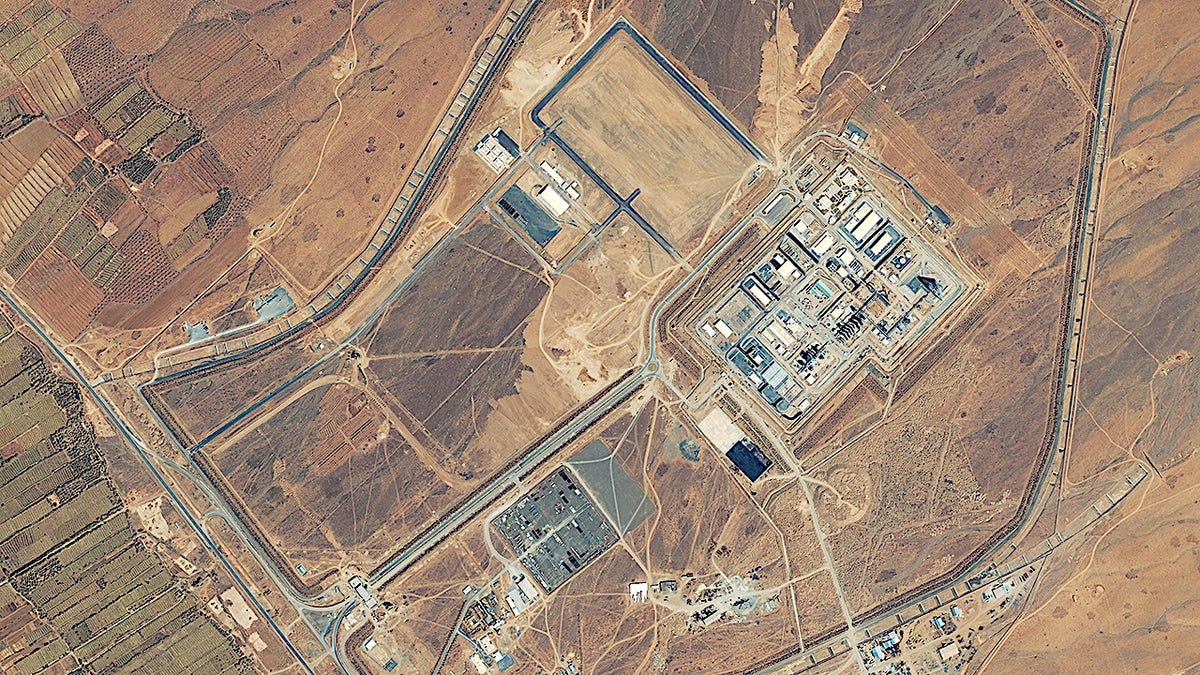
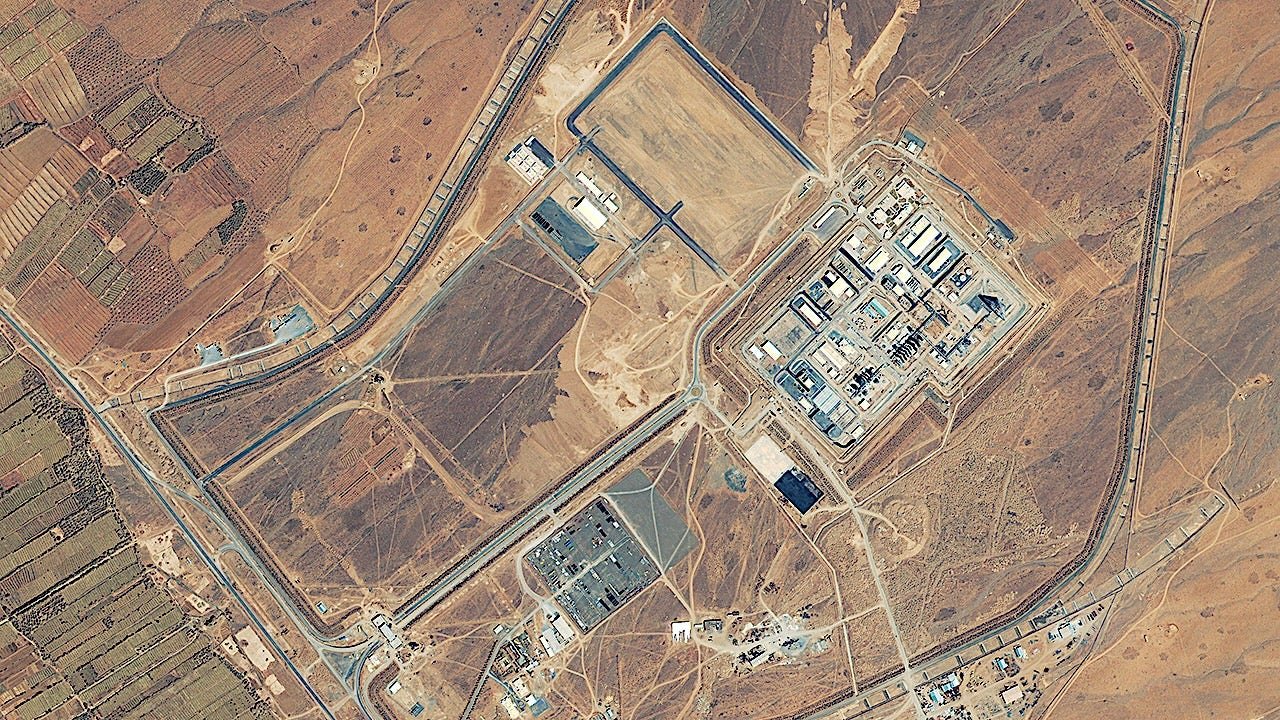
A satellite image the Heavy water plant of Arak, Iran is displayed. According to reports, the existence of this plant came to light in December 2002. Heavy water moderates nuclear fission chain reaction and can produce plutonium for use in a nuclear bomb. (DigitalGlobe via Getty Images)
In another article in the Bulletin of the Atomic Scientists in April, Sokolski argued that Iran has enough plutonium for more than 200 nuclear bombs. He said, «The last time IAEA inspectors visited Bushehr was August 27, 2025. Even when agency inspectors had routine access to the plant, they only visited every 90 days — more than enough time to divert the spent fuel and possibly fashion it into nuclear weapons.»
He added that «President Obama did not insist on such surveillance even though the IAEA asked Iran to permit it. Tehran said no.»
Recent IAEA reports have not addressed the plutonium path to a bomb with any specificity.
TRUMP CLAIMS IRAN ‘STARVING FOR CASH,’ ‘COLLAPSING FINANCIALLY’ AFTER EXTENDING CEASEFIRE
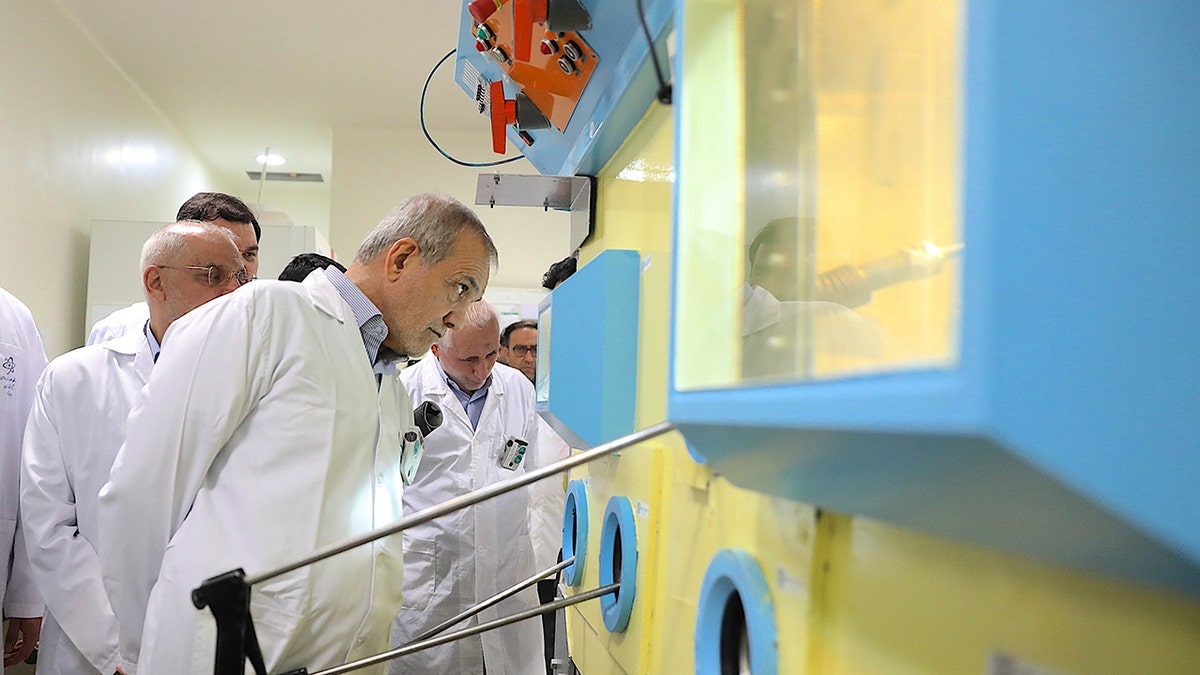
Iranian President Masoud Pezeshkian visits nuclear facilities in Tehran, Iran on Nov. 1, 2025. (Iranian Presidency / Handout/Anadolu via Getty Images)
A State Department spokesperson told Fox News Digital that, «Iran’s nuclear program poses a threat to the United States and the entire world.»
The spokesperson continued, «Iran today stands in breach of its Nuclear Non-Proliferation Treaty obligations by failing to provide full cooperation with the IAEA. Iran’s leadership must engage in serious diplomatic negotiations with the United States to resolve the nuclear issue once and for all.»
David Albright, a physicist and president of the Institute for Science and International Security, told Fox News Digital that he is «Highly skeptical that Iran would use plutonium from Bushehr’s spent fuel to make nuclear weapons.»
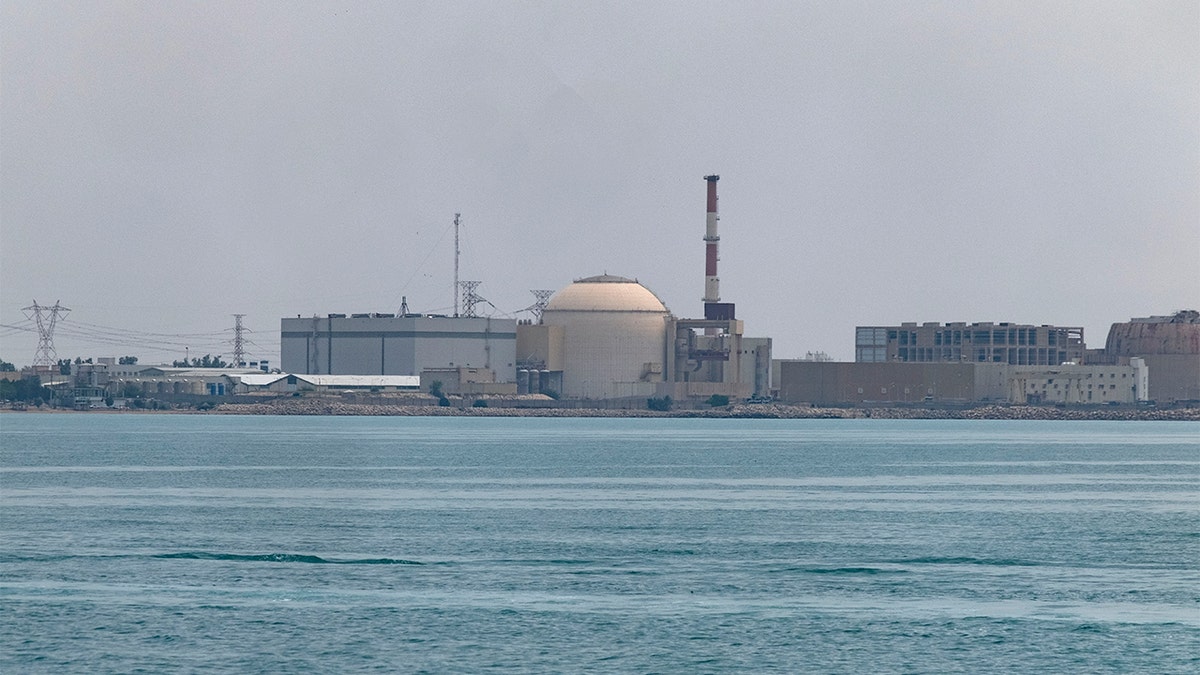
Bushehr nuclear plant in Iran, on April 29, 2024. (Photo by Morteza Nikoubazl/NurPhoto via Getty Images)
The former weapons inspector, Albright, argued that, «One, Iran would need a design it has not developed. There is nothing in the Nuclear Archive on a plutonium-based nuclear weapon. Two, a diversion from Bushehr would be detected and undoubtedly lead Russia to suspend enriched uranium supplies, leading to a shutdown of a multibillion-dollar investment that supplies the area with electricity. Third, almost all the plutonium in the spent fuel is reactor-grade, and it is feasible that none is weapon-grade.»
Albright added that «Reactor-grade plutonium can be used to make a nuclear weapon, but it is tricky to do so if a significant explosive yield is wanted.» He added that Trump’s former National Security Adviser John Bolton «has been raising this issue for decades, and it is a remote possibility. It was rejected first in the Bush administration.»
Concerns persist about Iran’s devious behavior and its aim to build a nuclear weapon at all costs. As a result, there are calls to outlaw Iran’s plutonium reprocessing and impose rigorous surveillance on Iran’s plutonium infrastructure in a future deal with the U.S.
Andrea Stricker, the deputy director of The Foundation for Defense of Democracies (FDD) Nonproliferation and Biodefense Program, told Fox News Digital. «The United States must insist on a permanent and verified ban on plutonium reprocessing in Iran under any deal.»
CLICK HERE TO DOWNLOAD THE FOX NEWS APP
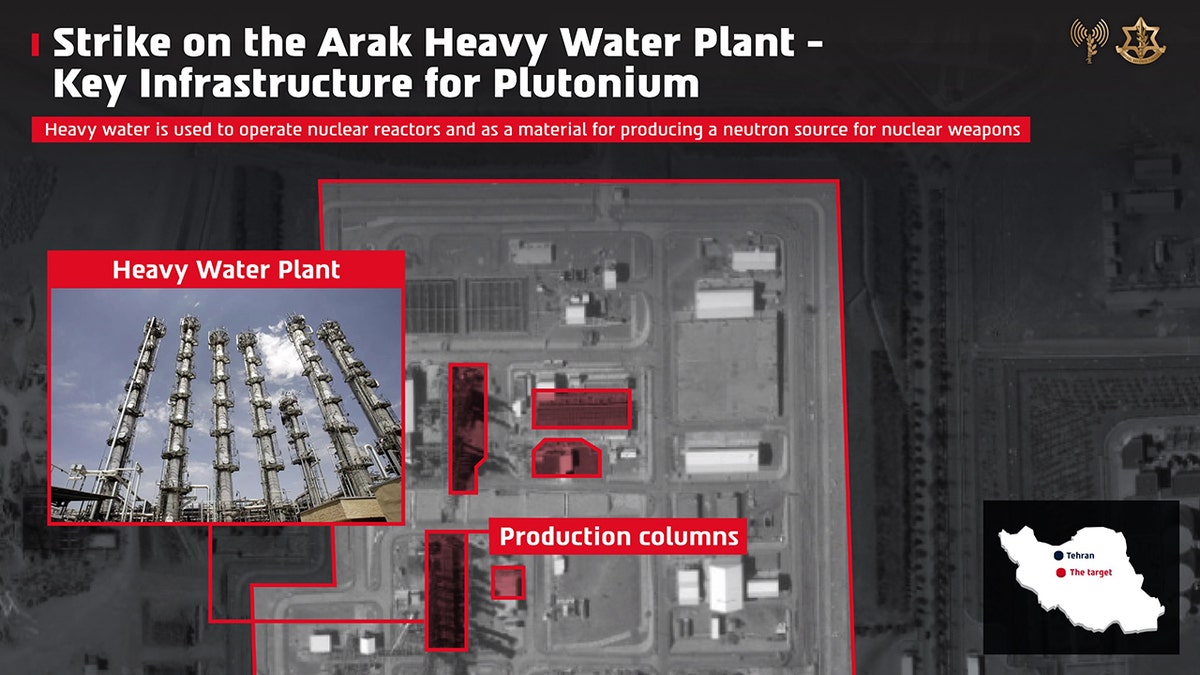
An IDF infographic shows Iran’s Arak heavy water plant, described as a key infrastructure for plutonium production. (IDF)
Stricker noted that Moscow had realized the danger too. «To Russia’s rare credit, it insisted Iran let inspectors back in to safeguard the Bushehr reactor after the June 2025 strikes. Those inspections resumed last August. Plutonium produced at the reactor is not of desirable quality for nuclear weapons, and Iran has not focused on the plutonium route to nuclear weapons since the early 2000s, so it could be difficult for Tehran to work with. They would also need to illicitly acquire and outfit a plutonium reprocessing plant as well as sophisticated equipment to handle and chemically convert the fuel. All of this creates significant obstacles to its use as fuel for nuclear weapons.»
She continued that «The IAEA (International Atomic Energy Agency) could mitigate any proliferation risk at Bushehr by increasing the frequency of inspections to monthly. Russia could also remove the spent fuel that has accumulated at the site.»
war with iran, nuclear proliferation, conflicts, donald trump












INTERNACIONAL
Blue state leaders erupt after Supreme Court’s decision ending TPS protections for Haitians, Syrians

New York governor vows to fight back after TPS rollback
Gov. Kathy Hochul said New York will continue fighting for immigrants after the Supreme Court ruled in favor of the Trump administration Thursday to end Temporary Protected Status for Haitian and Syrian migrants. (Handout/Governor Hochul)
NEWYou can now listen to Fox News articles!
The U.S. Supreme Court ruled in favor of the Trump administration in two key immigration cases on Thursday, drawing strong opposition from blue state Democrats and prompting a prominent House Republican to break ranks over concerns of a looming healthcare «crisis.»
In a 6-3 decision in Mullin v. Doe, the high court ruled that Haitian and Syrian nationals with Temporary Protected Status (TPS) cannot turn to federal courts to postpone the revocation of their legal status while challenging the Trump administration’s policies.
In a separate ruling, the court also held that migrants turned away at the southern border before entering the U.S. are not entitled to apply for asylum.
Democrat leaders in New York and Massachusetts immediately held news conferences to denounce the Supreme Court’s decisions and pledge local resistance.
SUPREME COURT HANDS TRUMP TWO MAJOR IMMIGRATION VICTORIES
New York Gov. Kathy Hochul speaks at a news conference Thursday in Manhattan to show her support for the Haitian and Syrian communities. (Spencer Platt/Getty Images)
In New York, Gov. Kathy Hochul announced the state would push back by designating «sensitive locations» to block ICE agents and banning masks for immigration enforcers.
«This is New York. We fight back. We defend our people,» Hochul said. «For those who think they can come here and just tell us that that’s going to be the different way that it is, you got to get to us first.»
New York City Public Advocate Jumaane Williams delivered some of the harshest rhetoric, accusing the Trump administration of operating with a «White supremacist lens.»
«This is another day in Trump’s America where we have someone in the White House who believes in fascist rules with a White supremacist lens,» Williams said. «He is doing that because his policies are based on treating people like they are not human beings, particularly if they’re Black and Brown.»
TRUMP FOES MELT DOWN THAT SCOTUS IS UNLEASHING ‘RACIAL TERROR’ ON US WITH ICE RAID RULING
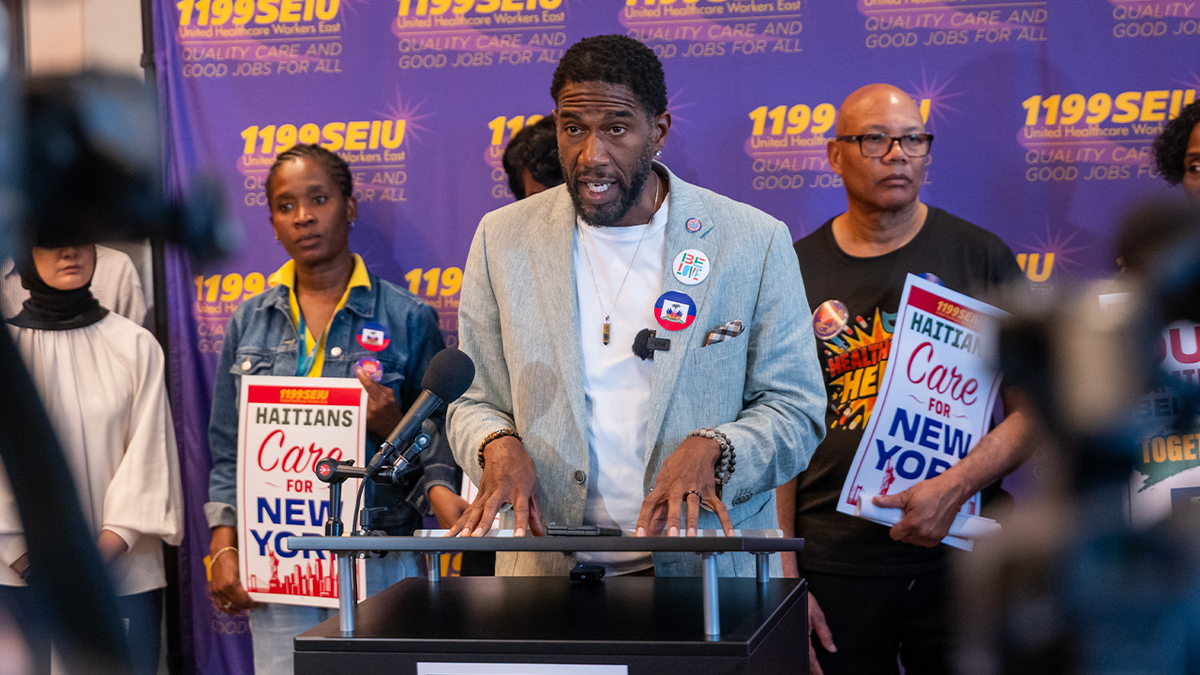
New York City Public Advocate Jumaane Williams speaks at a news conference and rally at a Manhattan union headquarters. (Spencer Platt/Getty Images)
In her dissenting opinion on the ruling, Supreme Court Justice Elena argued there is evidence the Trump administration was motivated by «racial animus» when revoking Haitians’ TPS, citing statements Trump made during the lead-up to the 2024 election, including claims that Haitians were «eating pets in Ohio.»
However, Justice Samuel Alito, who authored both majority opinions for the Supreme Court’s decisions, noted the respondents themselves suggested the administration might simply oppose TPS as a general policy matter rather than targeting a specific group.
Meanwhile, New York Attorney General Letitia James called the ruling a «betrayal of who we are supposed to be as a nation,» and New York City Mayor Zohran Mamdani announced the activation of a free municipal legal hotline to help affected immigrants.
«The people of New York City are going to show up for you as we face down a Supreme Court ruling that just opened the door to fear instability and the threat of deportation for so many,» said Mamdani, whose wife is Syrian-American. «… We don’t let those who are afraid of what makes this city great try to divide us. We reject the politics of fear.»
FEDERAL JUDGE HALTS TRUMP TPS POLICY, ACCUSES DHS OF MAKING MIGRANTS ‘ATONE FOR THEIR RACE’
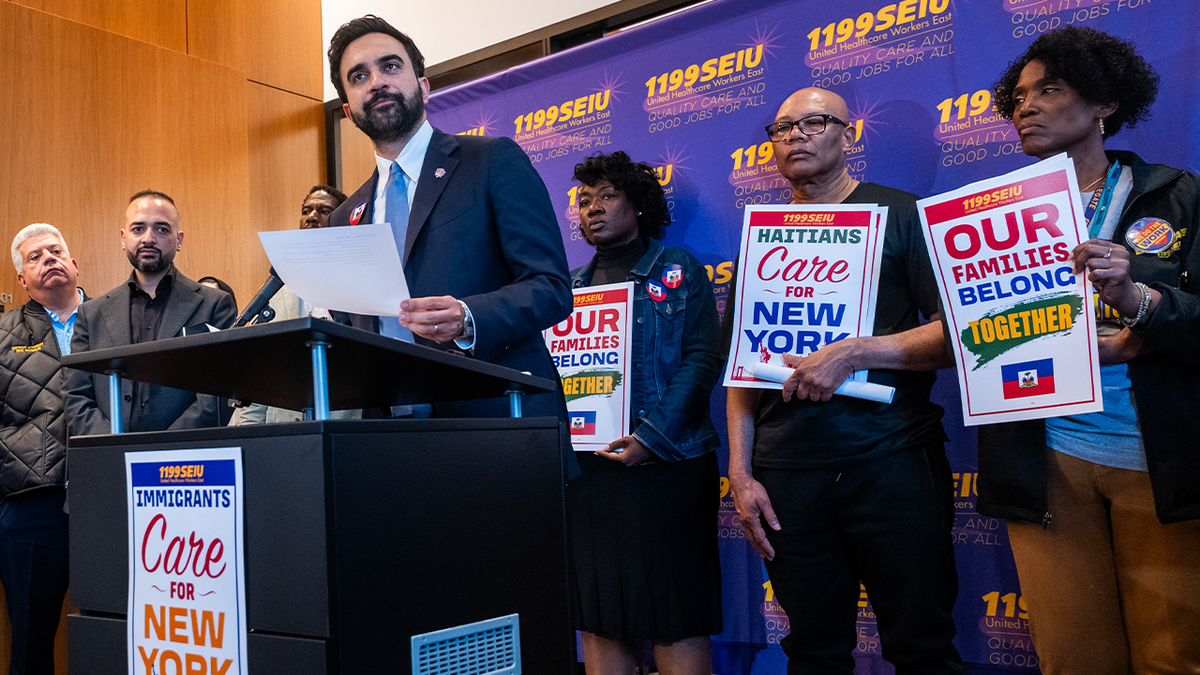
New York City Mayor Mayor Zohran Mamdani speaks at a news conference Thursday in Manhattan. (Spencer Platt/Getty Images)
In Massachusetts, which hosts roughly 45,000 TPS holders, Gov. Maura Healey slammed the decision, arguing it «makes no sense for our families, our economy, our communities, [or] our country.»
A visibly emotional Boston Mayor Michelle Wu addressed migrants directly, telling them, «You belong here.»
The ruling also exposed a rift within the GOP, as Rep. Mike Lawler, R-N.Y., strongly criticized the move to end TPS for Haitians.
While Lawler noted he does not dispute the president’s legal authority to end TPS, he warned that doing so now could trigger a disaster for the U.S. healthcare system, which heavily relies on Haitian workers.
«Of the 350,000+ lawful Haitian TPS holders, roughly 1/3rd work in our healthcare system,» Lawler wrote in an X post. «Immediately shutting off TPS will create a crisis in our hospitals, nursing homes, and in the I/DD community.»
Lawler also pointed to the rampant gang violence in Haiti, citing the State Department’s Level 4 travel advisory, as proof that the situation «continues to warrant an extension» of protections.
DHS FIRES BACK AT ‘ACTIVIST JUDGES’ BLOCKING TEMPORARY PROTECTED STATUS CRACKDOWN
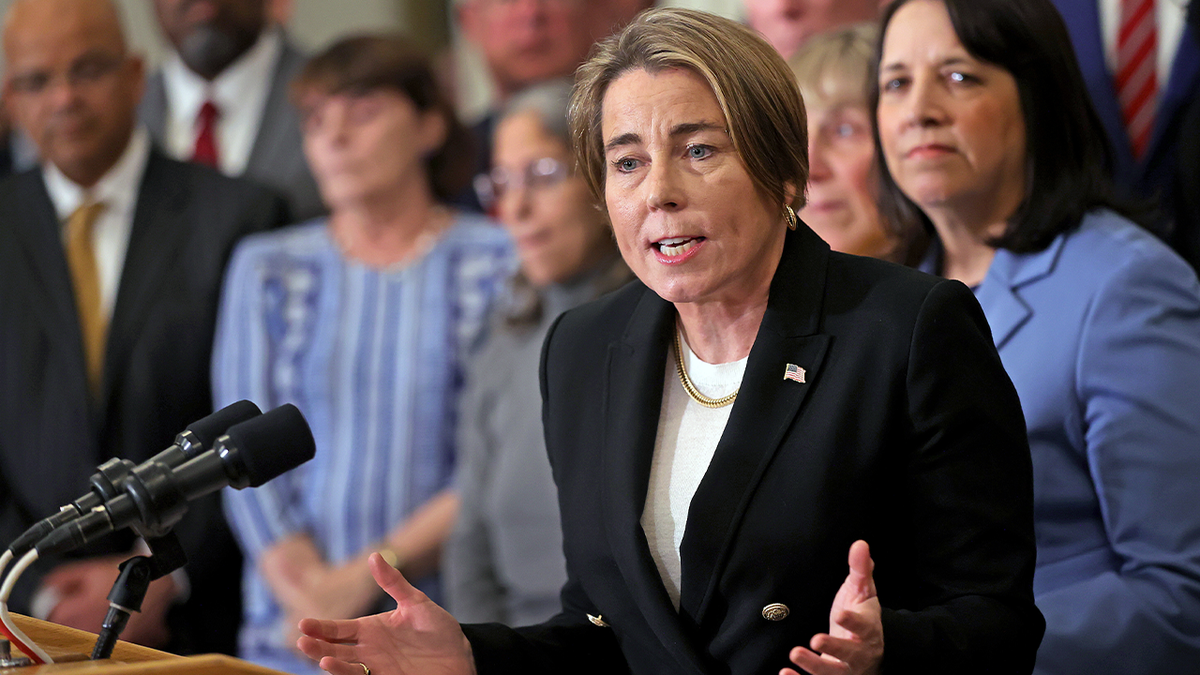
FILE – Massachusetts Governor Maura Healey also hosted a news conference on Thursday, pushing back on the Supreme Court’s decision. (David L. Ryan/The Boston Globe via Getty Images)
He urged the administration to allow an «orderly process» over the next six months for Haitian TPS holders to maintain their work authorizations and called on the Senate to take up his legislation to temporarily extend their status.
Following the decision, the White House and the Department of Homeland Security (DHS) celebrated the rulings as a win for the rule of law.
CLICK HERE TO DOWNLOAD THE FOX NEWS APP
«This ruling is a tremendous win for the Trump administration,» White House spokeswoman Abigail Jackson told Fox News Digital. «Today, the Supreme Court affirmed what President Trump has always maintained: temporary protected status is, by definition, temporary. It was never intended to be a pathway to permanent status or legal residency.»
Similarly, DHS General Counsel James Percival posted on X that «the T in TPS stands for TEMPORARY, yet many of these designations became de facto amnesty.»
«This is a win for the rule of law and common sense,» Percival said.
supreme court, new york, immigration, massachusetts, donald trump, homeland security, politics
INTERNACIONAL
Menores heridos y sin sus padres son trasladados a hospitales de Caracas tras los terremotos que sacudieron Venezuela

Yenderlin Cabarza llegó con fracturas a emergencias desde la zona más golpeada por los devastadores terremotos en Venezuela que dejaron al menos 188 muertos. Su madre no sobrevivió. Tampoco su tío que la protegió con su cuerpo del derrumbe. La adolescente, de 13 años, espera sola por atención médica, como decenas de menores.
Ambulancias irrumpen constantemente en la entrada del Hospital Domingo Luciani, en el este de Caracas, donde personas ansiosas revisaban el jueves largas listas pegadas en las paredes del centro médico para encontrar a sus seres queridos.
Nombres y nombres escritos a mano aparecen en estos listados, entre ellos los de 22 niños y adolescentes de entre 4 a 19 años.
Estos menores heridos fueron rescatados en La Guaira, la localidad costera que sufrió la víspera los embates de dos sismos de 7,2 y 7,5 de magnitud.
Los movimientos telúricos redujeron edificios completos a escombros y el jueves aún causaban zozobra en Venezuela.
Cabarza fue trasladada en una ambulancia desde esta área, que las autoridades calificaron de “zona de desastre”.

“Salió con sus dos bracitos que le bailaban, no lograban rescatarla porque los escombros le caían encima”, cuenta a la AFP Rolando, amigo de la familia que prefiere identificarse solo con su nombre de pila.
“Subió sola en la ambulancia, después subimos nosotros” desde La Guaira hasta este hospital, dice el hombre, que acompañaba al padre de la chica. “Supimos que ella estaba aquí porque avisaron en ese momento que la trasladarían” a este lugar.
El padre de Cabarza entró a emergencias y supo que su hija salió del quirófano tras ser operada de fracturas en ambos brazos. El resto de sus parientes, los que sobrevivieron, aguardaban a las afueras del centro médico.
“Varios de los niños llegan solos porque los traen rápidamente desde el lugar en donde los rescatan”, explica un médico que prefirió el anonimato por no estar autorizado para declarar.
Unos “nos dan sus nombres”, otros llegan “identificados con un tirro (cinta adhesiva) en el brazo”, agrega una doctora, también bajo anonimato.

“La mayoría no tiene familiares, llegan solos y lo que nos refieren los paramédicos es que los sacan de los escombros, los montan en la ambulancia y los traen para acá porque en La Guaira los hospitales están muy ‘full’”, dice.
Las autoridades calculan que hay unos 1.520 heridos y casi dos centenares de desaparecidos por la tragedia.
En la sala de espera del Domingo Luciani aguardan familias y amigos de los heridos del terremoto.
Entre las lesiones más comunes hay traumatismos faciales, torácicos o abdominales, y fracturas en miembros superiores e inferiores.
“Los familiares deben estar en la sala de espera”, grita una trabajadora del hospital por un megáfono. “Deben despejar el área, está prohibido estar aquí”, cerca de la sala de emergencia.

En tanto, la mujer con el megáfono llama cada cierto tiempo a allegados de los internados, que se dicen con “suerte” al saberlos vivos.
Con la esperanza de ubicar a sus familiares, muchos recién llegados fotografían los listados de heridos.
Las imágenes con decenas de nombres se esparcen como pólvora en redes sociales.
“Vengo del hospital Pérez Carreño y ahí tampoco encontré a mi hermana”, lamenta Zoraida Hernández, de 52 años, quien la busca desde el miércoles tras enterarse del colapso de su casa en costera Catia la Mar.
Un camillero le dijo a la AFP que la morgue del hospital está llena.
La fuerza de los dos terremotos fue tal que se sintieron incluso en Colombia, donde sonaron algunas alarmas. Desde entonces se reportaron más de 130 réplicas.
(AFP)
horizontal

NEWYou can now listen to Fox News articles!
The Pentagon’s massive funding request to pay some of the costs of the Iran war is going to be a hard sell for Senate Democrats, and a key issue buried deep in the multibillion-dollar request could divide Republicans.
Congress received the nearly $88 billion package Wednesday afternoon after months of speculation about whether it would ever come, and exactly how much it would cost. The current price tag is drastically lower than earlier estimates, which project the package could reach as high as $200 billion.
But after roughly four months and a tenuous peace deal in place, Democrats appear unwilling to support the funding that would replenish munitions, despite sweeteners that appear geared toward attracting their support.
CLOSED-DOOR OUTBURST TURNS INTO VICTORY FOR TRUMP’S IRAN NEGOTIATIONS
Senate Minority Leader Chuck Schumer, a Democrat from New York, speaks at a news conference following Senate Democrat policy luncheons at the U.S. Capitol in Washington, D.C., on June 23, 2026. (Daniel Heuer/Bloomberg)
«It seems designed to repel Democratic votes,» Sen. Chris Murphy, D-Conn., said. «They’re clearly not trying to pass this.»
Those sweeteners, which include $11 billion in aid for farmers and $1.4 billion to fight the Ebola outbreak in Africa, didn’t sway Murphy, who charged that the farm assistance in particular was a «war cost.»
The package isn’t getting any love from Senate Minority Leader Chuck Schumer, D-N.Y., either, who accused President Donald Trump of «asking taxpayers to clean up his messes.»
«After dragging America into a reckless war, he now wants Congress to hand him tens of billions more to paper over the damage — while families are still paying higher prices,» Schumer said on X. «We should be lowering costs for the American people, not writing another blank check for Trump.»
Sen. Josh Hawley, R-Mo., wasn’t surprised that Senate Democrats appeared ready to bat down the package, which will need at least 60 votes to pass in the Senate, arguing that «they haven’t supported anything this year, or last year.»
IRAN WAR’S PRICE TAG HITS $80B — MORE THAN DOUBLE WHAT CONGRESS WAS TOLD
«It’s literally true. I mean, including stuff that they negotiated,» Hawley said. «FISA, they negotiated, which I didn’t like when they negotiated, but still, you know, they negotiated and said, ‘No,’ they negotiated all the appropriations bills then said, ‘No.’ I mean, so, you know, I’d be shocked if they did support it.»
The bulk of the request is geared toward the Pentagon and includes $67 billion for the War Department, including $21 billion to replenish missile stockpiles depleted during the Iran offensive, known as Operation Epic Fury, $17 billion for military operations, $2.4 billion for drones and $5.1 billion for cybersecurity and autonomy.
Another $12 billion of the War Department funding would go toward classified programs. The request also includes $2 billion for the Coast Guard and $800 million for the National Guard.
The administration is also seeking $672 million for the removal of Iranian nuclear materials, inspections and verification efforts, and other counterproliferation activities.
According to the proposal, the funding would support the removal of Iranian nuclear materials, including uranium hexafluoride (UF6), uranium in various forms and research reactor fuel, including highly enriched uranium.
The proposal would also fund potential U.S. verification activities in Iran, subject to site access, support inspections by the International Atomic Energy Agency, strengthen nuclear-smuggling detection efforts and expand Nuclear Emergency Support Team operations across the Middle East.
The funding comes as U.S. and Iranian negotiators work to translate the recent memorandum of understanding (MOU) into a more detailed agreement governing Iran’s nuclear program and stockpile of enriched uranium.
While the memorandum established downblending as the minimum acceptable method for handling Iran’s enriched uranium, negotiators have not publicly disclosed whether the material would ultimately remain in Iran, be transferred to another country or be destroyed.
TRUMP SEEKS $672M TO STOP IRANIAN NUKES AS NEGOTIATORS WEIGH FATE OF URANIUM STOCKPILE
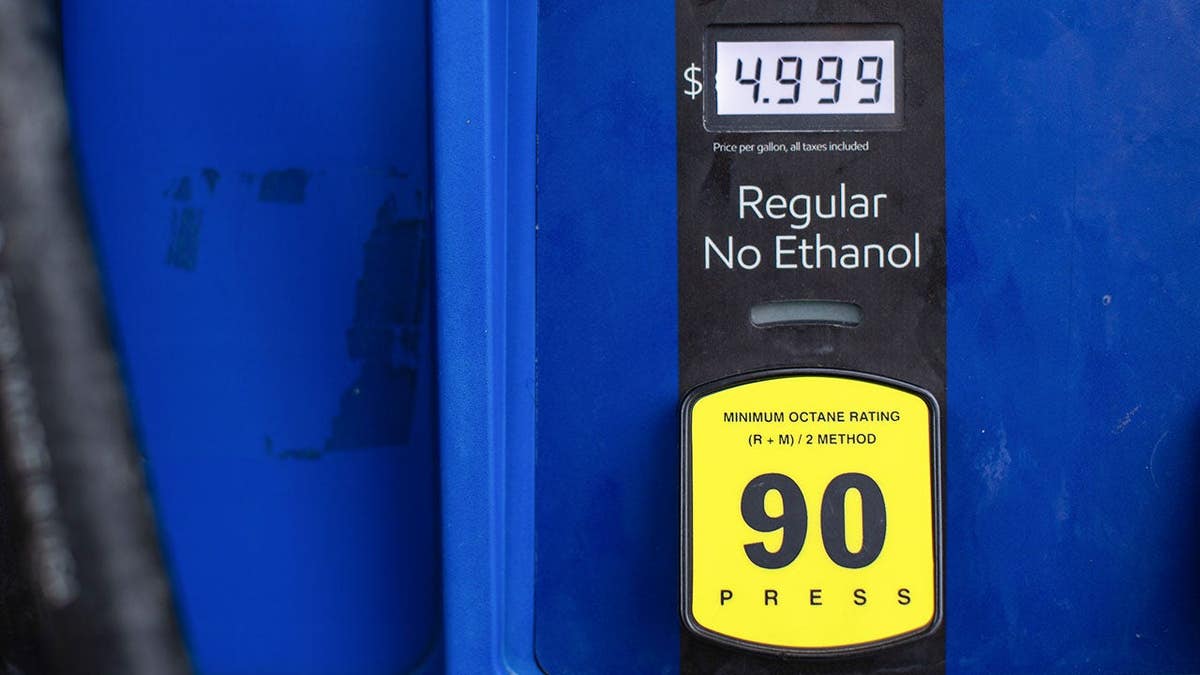
The price of ethanol-free gasoline is shown on a gas pump at an Exxon gas station in Austin on May 5, 2026. The Trump administration will waive higher-ethanol E15 gasoline from U.S. volatility requirements this summer, expanding sales and benefiting corn farmers and biofuels producers. (Kaylee Greenlee/Bloomberg via Getty Images)
While Democrats shake their fists at the supplemental spending package, one provision tucked into the legislation could also give Republicans heartburn.
Among the farm aid provisions is a policy to permanently extend the sale of gasoline with a blend of ethanol, a liquid biofuel made from corn, known as E15.
The E15 issue showed a rare rift in Senate Republican leadership, one that ripples through the Senate GOP based on geography and differing state economies than on a personal leve.
«Promising a year-round E15 mandate is a check the president can’t cash,» a Republican source said.
Senate Majority Leader John Thune, R-S.D., backs it, particularly for the benefits it could give candidates running for election or re-election in states where corn crops are king.
But his second-in-command, Senate Majority Whip John Barrasso, R-Wyo., bucked the House’s year-round E15 bill when it passed last month and has argued that allowing a mandate on the fuel blend would hurt small refiners and undo strides for energy production made in Trump’s flagship legislation, the «big, beautiful bill.»
«America’s small refiners are unsung heroes of affordable American energy. Washington D.C., often overlooks them. Working families depend on them,» Barrasso said on the Senate floor earlier this week. «I represent several small refineries in Wyoming. The refineries employ thousands of people.»
CLICK HERE TO DOWNLOAD THE FOX NEWS APP
«They make gasoline prices more affordable,» he continued. «They strengthen our nation’s energy security. Proposed new mandates on small refineries would harm them and the people who work for them.»
Since the House bill passed, Thune said he has continued to have conversations to find a «path forward» on the issue.
«We’re working with the stakeholder community and our members on both sides to figure out if that’s something we can execute on and get done,» Thune said.
Sen. Mike Rounds, R-S.D., a proponent of the provision, argued that he viewed it as an «incentive,» but acknowledged there was a chance it could be amended out of the broader supplemental package.
«I mean it makes a better deal, and I don’t know why they would want to take it out,» Rounds said.
politics, nuclear proliferation, pentagon, war with iran, senate elections, democrats senate

Blue state leaders erupt after Supreme Court’s decision ending TPS protections for Haitians, Syrians

Confirman la desaparición de seis futbolistas venezolanos tras los terremotos en el país

Ni plazo fijo ni dólar: las mejores alternativas para invertir el aguinaldo

El Gobierno argentino dio detalles sobre la asistencia humanitaria que dará a Venezuela tras los terremotos

La CGT descartó un nuevo paro, pero confirmó que organizará una “gran marcha federal” con gremios y organizaciones sociales

Marley tomó una tajante decisión tras el escándalo de Flor Peña y Nico Occhiato: “Ya está llamando a…”

“El mejor del mundo”: los elogios a Messi y a la selección argentina en el arco político tras el triunfo ante Austria

Violencia, déficit fiscal y crisis sanitaria: los desafíos que enfrentará Abelardo de la Espriella en Colombia

A los 100 años, murió Alan Greenspan, histórico presidente de la Reserva Federal de Estados Unidos

AI-first: los detalles de la estrategia de Inteligencia Artificial del banco Santander

 POLITICA2 días ago
Diputados: con el apoyo de bloques aliados, LLA logró frenar la sesión en la que la oposición buscaba interpelar a Adorni
- CHIMENTOS3 días ago
Wos cerró la Gira Bonaerense ’26 con ocho shows que reunieron a 25 mil personas
- ECONOMIA3 días ago
El desempleo registró una leve baja y alcanzó el 7,8%, pero creció fuerte el trabajo informal