INTERNACIONAL
Trump faces split among retired US commanders over whether to resume Iran strikes

NEWYou can now listen to Fox News articles!
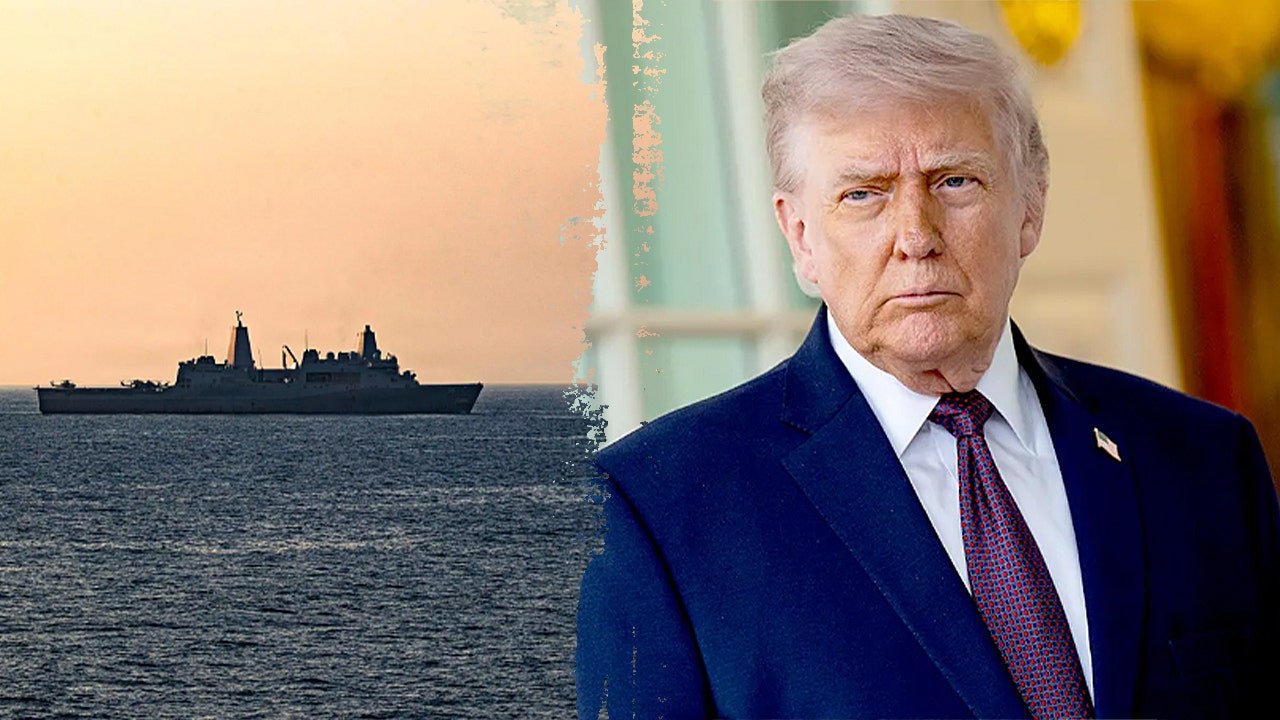
President Donald Trump said the ceasefire with Iran is on «massive life support,» as retired U.S. commanders and national security experts are increasingly split whether Washington should resume military operations against Tehran or avoid what critics warn could become another prolonged Middle East conflict.
«I would say the ceasefire is on massive life support,» Trump told reporters Monday. «Where the doctor walks in and says, ‘Sir, your loved one has approximately a 1% chance of living.’»
Trump also dismissed Iran’s latest response to a proposed agreement as «a piece of garbage,» amid reports the White House is reviewing military options should negotiations collapse.
Retired Lt. Gen. H.R. McMaster, former national security adviser under Trump, said he believes Iran’s leadership is unlikely to make the concessions Trump considers necessary for a deal.
WHITE HOUSE WARNS IRAN AGAINST BALKING AT DEAL: TRUMP READY TO ‘UNLEASH HELL’
President Donald Trump said the ceasefire with Iran is on «massive life support,» as retired U.S. commanders and national security experts are increasingly split whether Washington should resume military operations. (Atta KENARE / AFP via Getty Images)
«I think the Iranian leadership and IRGC are unwilling to make the kind of concessions that President Trump thinks are at the minimum,» McMaster told Fox News Digital, referring to Iran’s hardline Islamic Revolutionary Guard Corps.
«President Trump always wants a deal,» he added. «But he’s not going to sign up for a bad deal.»
The emerging debate now centers on a core question facing Washington: whether additional military pressure could force Iran to abandon its nuclear and missile ambitions, or whether renewed strikes would deepen a regional conflict without producing decisive results.
Retired Vice Adm. Mark Fox, former deputy commander of U.S. Central Command (CENTCOM), said he believes the current ceasefire and diplomatic track are unlikely to force Iran to back down.
«I really cannot envision anything other than a full return to combat operations,» Fox told Fox News Digital. «The only thing that they will respond to, I think ultimately, is force.»
Fox argued the U.S. military remains capable of reopening and securing commercial shipping through the Strait of Hormuz despite ongoing Iranian threats against vessels transiting the waterway.
HORMUZ CHOKE POINT PERSISTS AS IRAN HALTS OIL TRAFFIC DESPITE TRUMP CEASEFIRE

Supporters of renewed military action argue Iran is weaker than it has been in decades and that stopping now risks allowing Tehran to regroup, rebuild its missile arsenal and preserve leverage over one of the world’s most important energy choke points. (AP Photo)
«This is a militarily obtainable objective,» he said, outlining a strategy involving guided missile destroyers, attack helicopters, drones and expanded aerial surveillance to create a protected maritime corridor through the Strait.
Fox acknowledged the U.S. Navy is smaller than it was during the 1980s tanker wars, but argued American forces still possess the capability to secure the chokepoint if Washington commits enough naval assets and persistent monitoring operations.
«It’s not easy,» Fox said. «But the geography is fixed.»
He described a possible strategy that would rely on destroyers, drones and attack aircraft to create what he called an «unblinking eye» over the strait, allowing U.S. forces to identify and neutralize Iranian speedboats, drones and anti-shipping threats before they can strike commercial vessels.
Fox also warned against allowing Iran to preserve leverage over Hormuz while continuing to advance its missile and nuclear programs.
«If not now, when?» he said. «If they had a nuclear weapon, they would use it.»
EXPERTS WARN IRAN’S NUCLEAR DOUBLE-TALK DESIGNED TO BUY TIME, UNDERMINE US PRESSURE
But not everyone agrees that renewed military action would produce a better outcome. (Contributor/Getty Images)
Fox, who also signed onto a recent policy paper by the Jewish Institute for National Security of America, echoed the report’s argument that Iran is using negotiations to buy time while preserving its military capabilities.
The paper was authored by several retired senior U.S. military officials and national security experts, including retired Gen. Chuck Wald, former deputy commander of U.S. European Command and retired Vice Adm. Robert Harward, former deputy commander of CENTCOM, argued the current ceasefire and diplomatic track «cannot reliably compel Iran» to meet U.S. demands and warned Tehran was seeking to «drag out talks, erode U.S. resolve, and use the time to strengthen itself.»
The report called for expanded military operations targeting Iran’s maritime capabilities, missile infrastructure and internal coercive apparatus while avoiding broad attacks on civilian infrastructure that could trigger wider regional escalation.
But not everyone agrees that renewed military action would produce a better outcome.
Retired Lt. Col. Daniel Davis, a senior fellow at Defense Priorities and longtime critic of expanded U.S. military interventions, warned that calls to «finish the job» ignore the realities exposed during the recent fighting.
«To ‘finish the job,’ as they say, is irrational,» Davis told Fox News Digital. «It’s illogical, and it violates any kind of military principle.»
KEITH KELLOGG URGES US TO ‘FINISH THE JOB’ AGAINST IRAN BY SEIZING ISLANDS, STRANGLING ECONOMY

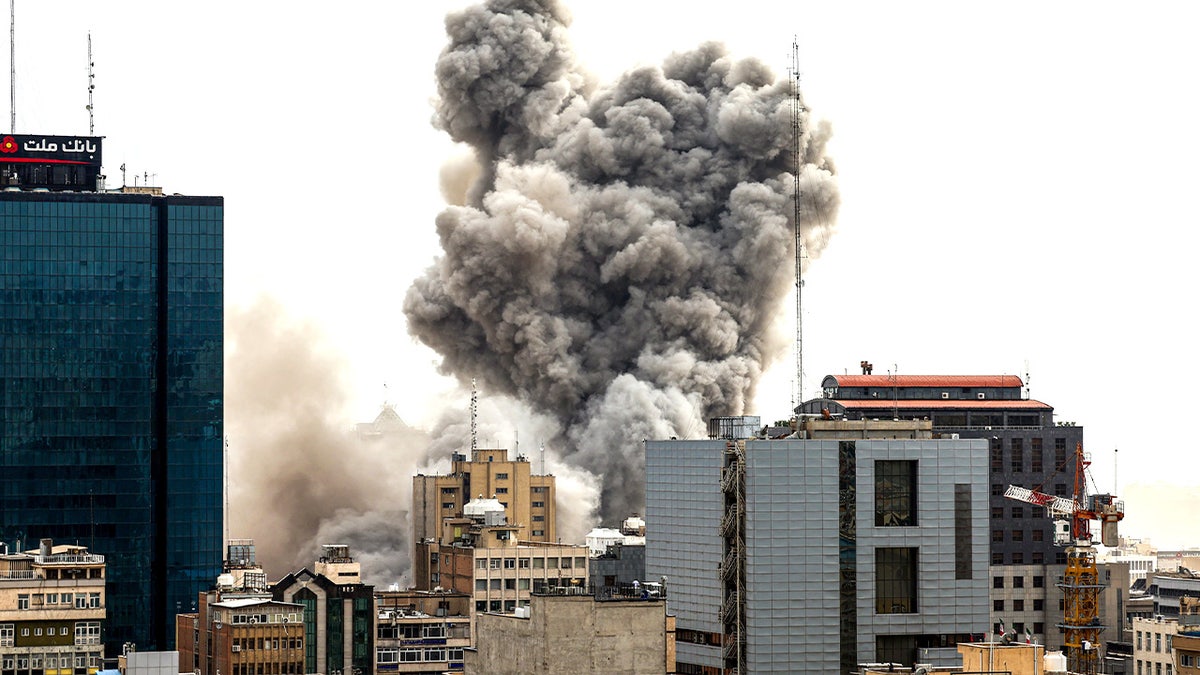
A screengrab from a video released by U.S. Central Command shows smoke and dust rising after an explosion at an unknown location during the operation dubbed Epic Fury, an attack by the United States and Israel on Iran, released Feb. 28, 2026. (CENTCOM/Reuters)
Davis argued that despite thousands of strikes and weeks of fighting, Iran retained significant missile and maritime capabilities.
«We couldn’t knock them out with 14,000 targets hit,» he said. «Why does anybody think that going back another time is going to have a different result?»
He described Iran’s geography, dispersed missile infrastructure and asymmetric naval tactics as creating what he called «a militarily unsolvable problem.»
«The only thing left is a diplomatic outcome,» Davis said.
The disagreement reflects a broader divide emerging in Washington as officials weigh what comes next if negotiations fail.
CLICK HERE TO DOWNLOAD THE FOX NEWS APP
Supporters of renewed military action argue Iran is weaker than it has been in decades and that stopping now risks allowing Tehran to regroup, rebuild its missile arsenal and preserve leverage over one of the world’s most important energy choke points.
Critics counter that even extensive U.S. and Israeli strikes failed to fundamentally break the regime’s control or eliminate its military capabilities, raising the risk that further escalation could drag the United States into another drawn-out regional conflict with uncertain results.
war with iran, defense, middle east, national security, iran












INTERNACIONAL
Orsi regularizó obras y pagó una deuda tributaria tras la polémica por sus casas: “Debo tener más cuidado”
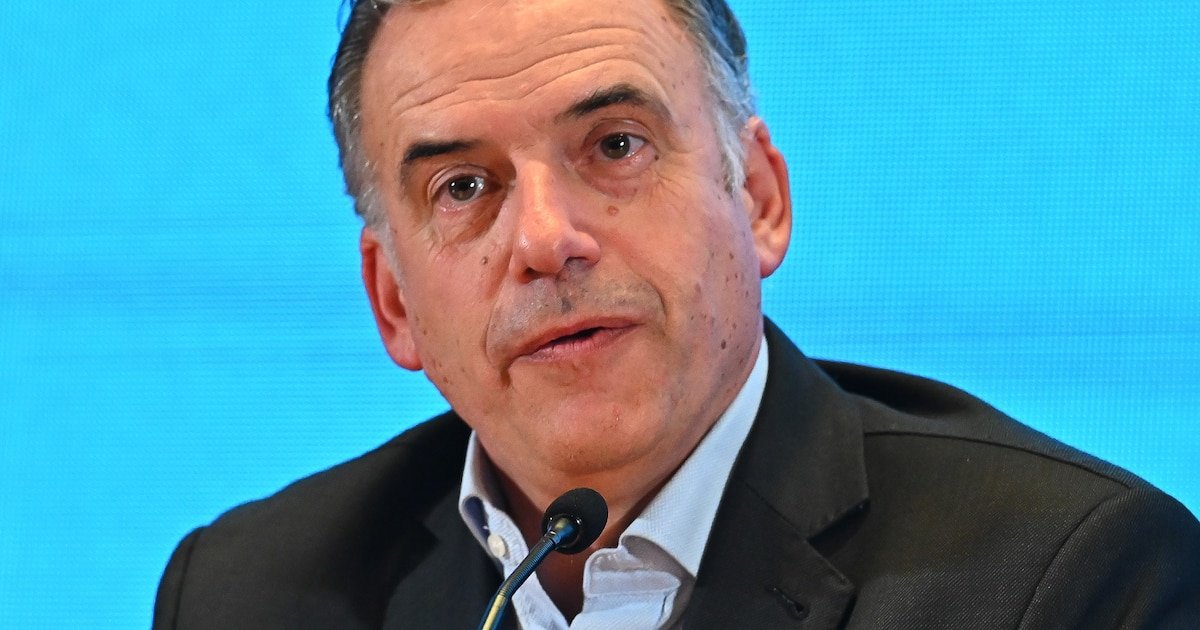
El presidente de Uruguay, Yamandú Orsi, regularizó la situación impositiva y el registro de obras de dos casas familiares en Salinas (Canelones). El mandatario uruguayo había quedado envuelto en una nueva controversia que involucró su patrimonio personal, luego de que el programa radial Informativo Carve informara que tenía una deuda vencida y que no había regularizado algunas construcciones.
“Lo resolvimos, lo resolvimos. Por suerte lo resolvimos”, dijo el presidente Orsi el pasado jueves en una rueda de prensa, al participar de actividades oficiales en el departamento de Colonia.
“Tengo que tener más cuidado, por supuesto”, reconoció ante los periodistas. “Tenés que estar atento. Lo que pasa es que también es un tema de tener claro todo lo que tenés que hacer. Son procesos que a veces son lentos y uno a veces se deja estar”, agregó.
El presidente dijo que este tipo de controversias pueden impactar en la aprobación de su gestión (hoy fuertemente desaprobada por la ciudadanía según las encuestas), aunque señaló que lo más importante es que cumplir con las obligaciones. “Eso está pasando”, se defendió.
“Todos los uruguayos –y fundamentalmente los que tenemos responsabilidades– tenemos que presentarle bastante más atención a estas cosas”, cerró Orsi.

Tras buscar cerrar la controversia por la compra de su camioneta con descuento de USD 25.000, una investigación periodística del programa Informativo Carve concluyó que Orsi tenía una deuda del impuesto de Primaria (que se destina a programas de educación pública) y no había actualizado ante organismos del Estado obras que había realizado en su casa.
El programa radial detalló que una de las casas –adquirida en octubre de 2024– tenía una deuda vencida del Impuesto de Primaria de 5.509 pesos uruguayos (unos USD 137). La segunda propiedad, que está al lado y que pertenece a su esposa Laura Alonsopérez, tuvo obras y mejoras que no figuran actualizadas en la documentación catastral disponible en el país.
Orsi vive junto a su familia en Pine Park, un barrio de la localidad de Salinas, en el departamento de Canelones. En su predio hay dos inmuebles linderos: una vivienda comprada en 2010 y otra casa obtenida en 2024.

La propiedad debía el Impuesto de Primaria de todo el ejercicio de 2025, sumado a la primera cuota de 2026 , multas y recargos. Mientras tanto, la segunda propiedad de la familia Orsi tiene declarados 198 metros cuadrados. Pero, según consignó el programa radial en base a imágenes de Google Earth, entre 2018 y 2019 se realizaron obras en el patio de la vivienda, que podrían corresponder a una piscina, una barbacoa o un área construida.
La actualización de ese valor catastral es la base para configurar el monto de la contribución inmobiliaria, uno de los tributos que los propietarios deben pagar a los gobiernos departamentales en el país (las municipalidades). En este caso, en Canelones.
Según detalló el noticiero Subrayado de Canal 10, el mismo día que se conoció la noticia, Orsi comenzó a encaminar ambas situaciones. El mandatario encomendó a una arquitecta que revisara planos y registros oficiales para registrar las obras que se habían hecho y que no se habían informado. Los trámites se cumplieron en la misma semana. Ahora la casa quedó registrada por su valor efectivo, en base a los metros de construcción que tiene y las obras incorporadas.

Alejandro Sánchez –secretario de Presidencia (jefe de gabinete) y uno de los jerarcas más cercanos a Orsi lo defendió públicamente. Entrevistado en Radio Sarandí, el funcionario señaló: “Ahí hay más responsabilidad de su secretaría, que es la que lleva adelante muchas cosas. Imagínese que el presidente no está mirando y llevando las cuentas personales cuando tiene que dirigir un país”.
democracia y desarrollo en américa latina y el caribe 2026,hombre,interior,pnud,políticos,presentaciones de informes,presidentes uruguayos,retrato

NEWYou can now listen to Fox News articles!
Ukraine’s wartime government is getting another shake-up after Prime Minister Yulia Svyrydenko stepped down Sunday, with President Volodymyr Zelenskyy saying he has offered her a «new, important» role as he reshapes his administration during the ongoing war with Russia.
Svyrydenko announced her resignation in a statement on social media, saying she was «proud to have had the honor of leading the government during one of the most difficult periods in Ukraine’s modern history.» She said she had discussed «next steps» with Zelenskyy, but did not disclose what her next position would be.
«I remain ready to serve the Ukrainian state and carry out every task aimed at strengthening Ukraine’s position, defending our national interests and bringing a just peace closer,» Svyrydenko wrote.
HOUSE REPUBLICAN DON BACON SAYS HE WANTS ‘PARIAH STATE’ RUSSIA BOOTED FROM UN SECURITY COUNCIL
Zelenskyy, who has remained in office under martial law because wartime elections are prohibited, framed the move as part of a broader shift in Ukraine’s governing strategy.
«Ukraine is changing its political strategy,» Zelenskyy wrote in a social media post, adding that he had offered Svyrydenko the chance to lead «a new, important area» in Ukraine’s relations with a key international partner.
Ukrainian Prime Minister Yulia Svyrydenko attends a session of Ukrainian parliament, amid Russia’s attack on Ukraine, in Kyiv, Ukraine July 17, 2025. (REUTERS/Andrii Nesterenko/File Photo)
The Ukrainian president said each major area of foreign policy would be assigned to an experienced official responsible for carrying out agreements reached with foreign leaders and advancing the interests of the Ukrainian people. He also announced planned changes to the country’s top law enforcement leadership, though he did not immediately provide additional details.
18 HOUSE REPUBLICANS DEFY TRUMP TO PASS UKRAINE AID PACKAGE HEADED FOR VETO FIGHT
The reshuffle marks the fourth major reorganization of Zelenskyy’s government since Russia launched its full-scale invasion of Ukraine, reflecting the president’s repeated efforts to inject new momentum into his wartime administration.

Ukraine’s President Volodymyr Zelenskyy and Ukrainian Prime Minister Yulia Svyrydenko visit the Dormition Cathedral of the Kyiv Pechersk Lavra, which was hit during Russian missile and drone strikes, amid Russia’s attack on Ukraine, in Kyiv, Ukraine June 15, 2026. (Ukrainian Presidential Press Service/Handout via REUTERS)
Svyrydenko, who previously served as Ukraine’s economy minister, was appointed prime minister in July 2025 at age 39 after playing a key role in negotiating a minerals agreement between Ukraine and the United States. The deal was widely viewed as a way to strengthen U.S. economic interests in Ukraine while reinforcing Washington’s long-term commitment to the country’s security.
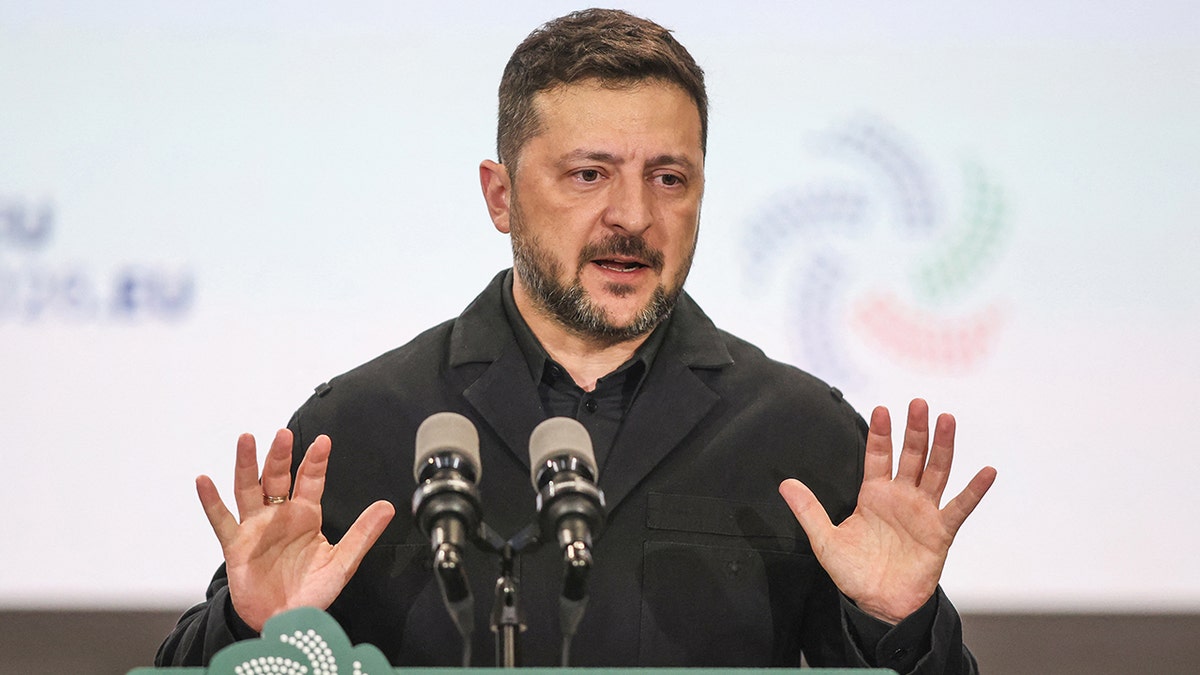
Ukraine’s President Volodymyr Zelensky speaks at a press conference after meetings with the heads of the EU and Ireland, following a formal ceremony to mark the launch of Ireland’s eighth EU presidency, at Dublin Castle in Dublin on July 1, 2026. (Paul Faith / AFP via Getty Images)
CLICK HERE TO DOWNLOAD THE FOX NEWS APP
Following the announcement, Zelenskyy met with several senior officials, including Energy Minister Denys Shmyhal, Interior Minister Ihor Klymenko and Defense Minister Mykhailo Fedorov, signaling that additional changes to his government could be forthcoming.
The Associated Press contributed to this report.
ukraine, volodymyr zelenskyy, world politics, world
INTERNACIONAL
Michigan Dem senator throws support behind candidate to replace him in contentious primary
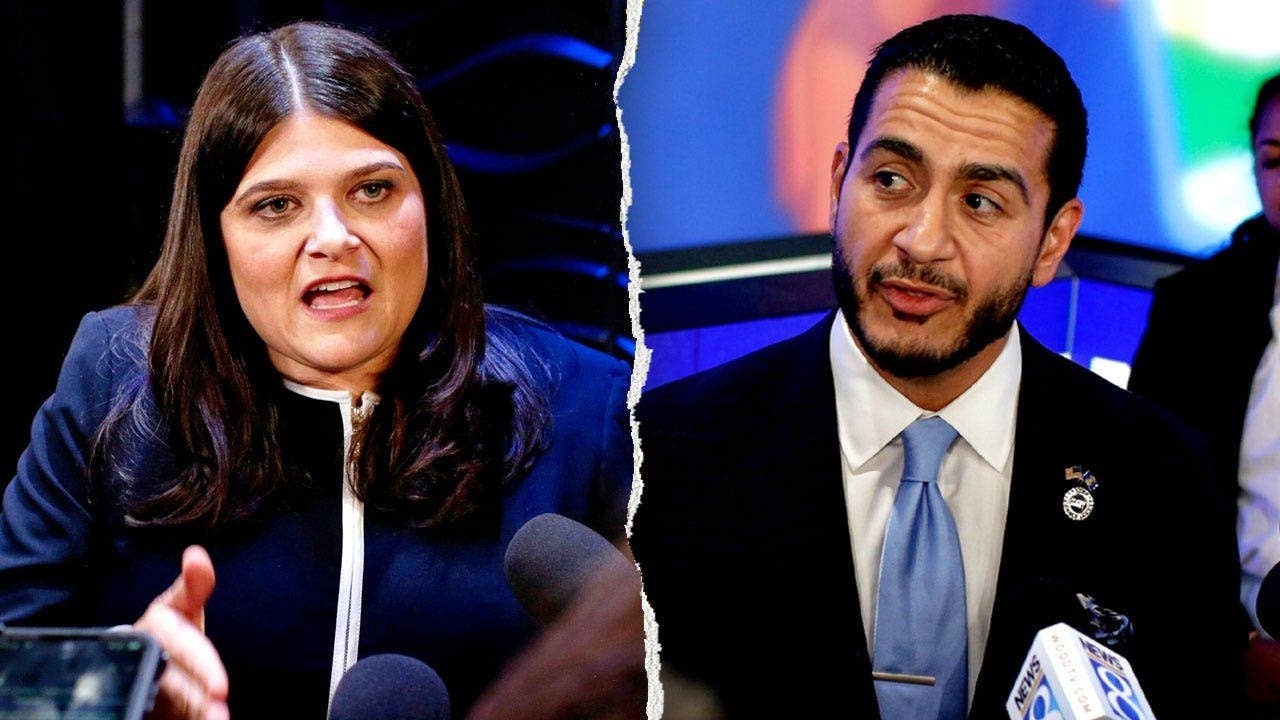
Democratic candidates’ remarks under scrutiny as party attempts to flip red states
The ongoing Graham Platner scandal in Maine jeopardizes Democratic bids for Senate control, making the midterm elections even more precarious. Chief Congressional Correspondent Chad Pergram analyzes several other crucial Senate races featuring controversial candidates, including Abdul El-Sayed in Michigan and Mary Peltola in Alaska, whose rhetoric and past remarks are drawing scrutiny.
NEWYou can now listen to Fox News articles!
Retiring Sen. Gary Peters, D-Mich., has abandoned his neutrality in Michigan’s high-stakes Democratic Senate primary, backing U.S. Rep. Haley Stevens as party leaders rally to stop progressive rival Abdul El-Sayed from winning the nomination.
Peters, who is retiring after two terms in the Senate, announced the endorsement Monday, saying Stevens «will be ready on day one to fight for Michigan.» The move reverses his position from late May, when he told The Associated Press he planned to stay neutral in the Aug. 4 primary.
Democrats are eager to keep the Michigan seat as they try to win back the Senate majority, and many party leaders have lined up behind Stevens, a four-term congresswoman they see as a stronger general election candidate.
DEMOCRATS’ CIVIL WAR HEADS TO MICHIGAN WHERE PROGRESSIVES FACE BIGGEST TEST YET IN HIGH-STAKES SENATE SHOWDOWN
Michigan U.S. Sen. candidate, Rep. Haley Stevens, D-Mich., speaks with media after a debate at WoodTV studios on Tuesday, July 7, 2026, in Grand Rapids, Mich. (AP Photo/Kristen Norman)
Stevens has centered her campaign on manufacturing, jobs and Michigan’s auto industry. El-Sayed, a former Michigan health director who has never held elected office, has run on a more progressive platform that includes Medicare for All and campaign finance reform. He has also made the war in Gaza a central issue in his campaign, highlighting a divide that has surfaced within the Democratic Party.
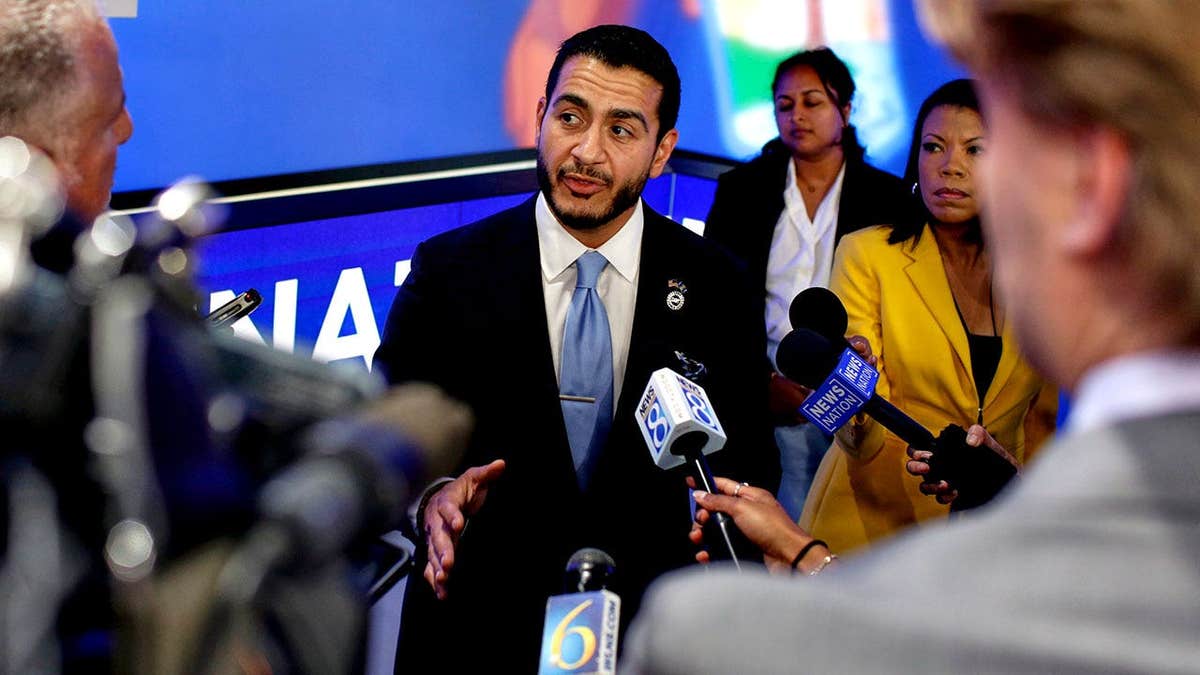
Michigan U.S. Sen candidate, Abdul El-Sayed, speaks with media after a debate at WoodTV studios on Tuesday, July 7, 2026, in Grand Rapids, Mich. (AP Photo/Kristen Norman)
Peters’ endorsement comes weeks after State Sen. Mallory McMorrow ended her campaign, leaving Stevens and El-Sayed as the only major Democratic candidates in the race.
«Senator Peters knows what it takes to win in Michigan, and he knows what Michigan needs from our next U.S. Senator: grit, effectiveness, hard work, and Michigan common sense,» Stevens said in a statement. «I am honored to have his support.»
Peters has won two Senate elections in Michigan and previously chaired the Senate Democrats’ campaign committee during the 2022 and 2024 election cycles.
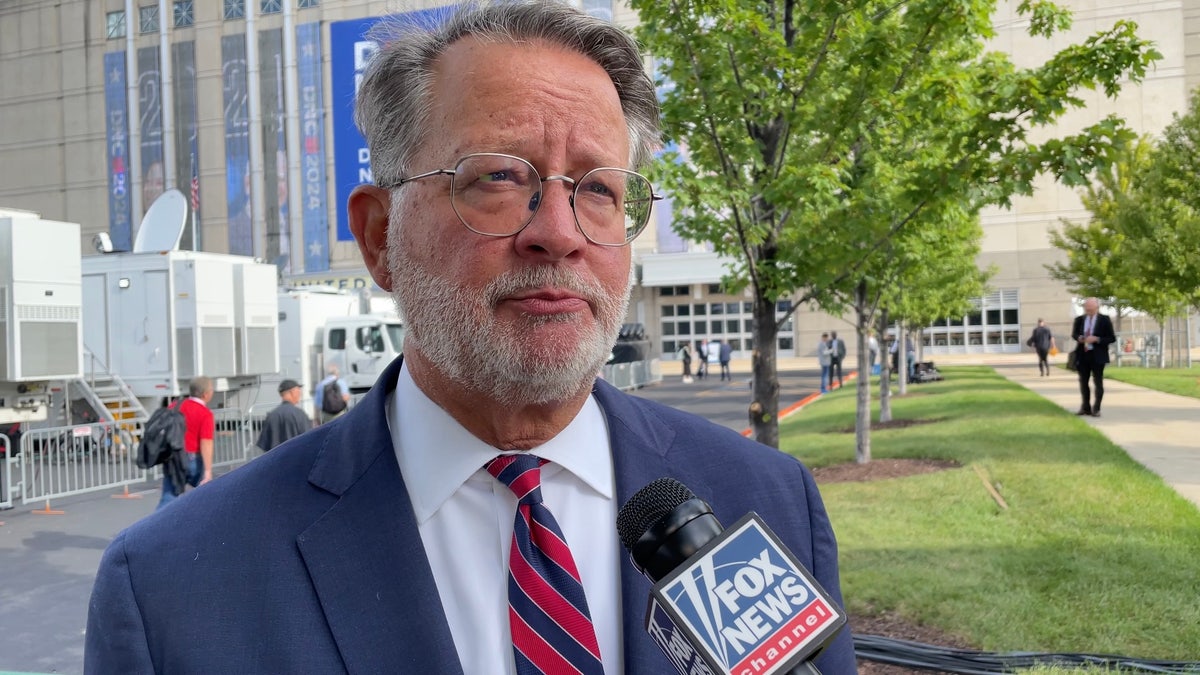
Sen. Gary Peters of Michigan, the chair of the Democratic Senatorial Campaign Committee, is interviewed by Fox News Digital, at the Democratic National Convention in Chicago, on August 19, 2024 (Fox News – Paul Steinhauser)
His endorsement follows similar backing for Stevens from Senate Democratic Leader Chuck Schumer, D-N.Y., Sen. Ruben Gallego, D-Ariz., and Sen. Catherine Cortez Masto, D-Nev. El-Sayed has been endorsed by Sen. Bernie Sanders, I-Vt., and Sen. Chris Van Hollen, D-Md.
The campaign has become increasingly personal in recent weeks.
MICHIGAN SENATE HOPEFUL CALLS AIPAC DONATIONS ‘LEGALIZED BRIBERY,’ REMAINS SILENT ON OTHER DONATIONS
El-Sayed has criticized Stevens over tens of millions of dollars in outside spending supporting her campaign, including money from the American Israel Public Affairs Committee. Stevens has accused El-Sayed of refusing to release his personal financial records. During a July 7 debate, both candidates accused the other of running a negative campaign.
The Democratic nominee will likely face Republican Mike Rogers, a former Michigan congressman who is running unopposed for his party’s nomination. It is expected to be among the nation’s most expensive and closely watched Senate contests in November.
CLICK HERE TO DOWNLOAD THE FOX NEWS APP
Michigan has taken on added importance for Democrats after turmoil erupted in another key Senate race in Maine, where Democratic nominee Graham Platner withdrew following a sexual assault allegation. The unexpected vacancy has complicated the party’s efforts to challenge Republican Sen. Susan Collins, increasing the pressure to avoid setbacks in other battleground states such as Michigan.
The Associated Press contributed to this report.
midterm elections, democrats senate, michigan, elections, politics

Alertan por una maniobra para que una secretaria de un juez K quede al frente de la causa de la mansión atribuida a Toviggino

La Justicia citó a Facundo Leal, el extitular de Arsat y el Orsna que cayó con drogas y millones de dólares

Quiénes se quedan con las esquinas más cotizadas de la Ciudad tras el cierre de sucursales bancarias

Siguen las nubes, pero sube la temperatura: así estará el clima en el AMBA durante esta semana de julio

Orsi regularizó obras y pagó una deuda tributaria tras la polémica por sus casas: “Debo tener más cuidado”

La teoría de un ex futbolista sobre cómo frenar a Messi en la previa de Argentina-Inglaterra: “Pasa mucho tiempo caminando”

“Hablame bien”: el tenso cruce de Lionel Messi con el árbitro en la victoria de Argentina ante Suiza en el Mundial

Pablo Cervi, senador de LLA, defendió la eliminación de las PASO: “Hay que sacarle ese costo a la población”

Hackearon a la AFA y enviaron correos con falsas denuncias sobre el arbitraje ante Egipto

Shutdown en Argentina: la razón detrás de la idea de Milei de avanzar con un «apagón» del Estado

 DEPORTE1 día ago
“Hablame bien”: el tenso cruce de Lionel Messi con el árbitro en la victoria de Argentina ante Suiza en el Mundial
- POLITICA2 días ago
Pablo Cervi, senador de LLA, defendió la eliminación de las PASO: “Hay que sacarle ese costo a la población”
- POLITICA3 días ago
Hackearon a la AFA y enviaron correos con falsas denuncias sobre el arbitraje ante Egipto