INTERNACIONAL
Senate Republican threatens to derail ICE, Border Patrol package over Trump’s billion-dollar request


NEWYou can now listen to Fox News articles!
An internal dispute could derail Republicans’ goal of funding immigration operations for the remainder of President Donald Trump’s presidency.
Sen. Thom Tillis, R-N.C., told his colleagues that he would not support the GOP’s $72 billion reconciliation package if it included $1 billion in funding for Trump’s ballroom.
His defection, along with a handful of other Republicans critical of the funding, could sink the bill.
SENATE REPUBLICANS BALK AT $1B WHITE HOUSE BALLROOM REQUEST: ‘YOU MADE THAT NUMBER UP’
Sen. Thom Tillis, R-N.C., told his colleagues that he would not support the upcoming budget reconciliation package if it included $1 billion for President Donald Trump’s ballroom. (Andrew Harnik/Getty Images; Chip Somodevilla/Getty Images)
And given the GOP’s narrow margin in the upper chamber, Senate Majority Leader John Thune, R-S.D., can’t afford Republicans to break from the party line.
Tillis’ opposition, which was first reported by Axios and confirmed by a source familiar to Fox News Digital, alone isn’t enough to torpedo the package meant to fund Immigration and Customs Enforcement (ICE) and Border Patrol for the next three and a half years.
But others, including Sens. John Curtis, R-Utah, Lisa Murkowski, R-Alaska, Susan Collins, R-Maine, and Rick Scott, R-Fla., aren’t thrilled with the funding.
Republicans were briefed by Secret Service Director Sean Curran last week on the funding, which included $220 million for «White House complex hardening.»
REPUBLICANS SLIP $1 BILLION IN TAXPAYER MONEY FOR TRUMP BALLROOM SECURITY IN ICE, BORDER PATROL PACKAGE
That would fund «above and below ground» security enhancements for Trump’s ballroom, which the administration argued would «afford needed protection for the president, his family, and visitors, along with the below-ground, highest-level security functions,» according to an itemized readout obtained by Fox News Digital.
Those enhancements would include bulletproof glass, drone detection technology, chemical filtration and detection systems and «a host of other national security functions.»
An additional $180 million would go toward a White House screening center for visitors. The remaining $600 million would go toward Secret Service training, enhancing protection for Trump and other officials, and other security measures including countering drones and other aerial incursions.
But a saving grace for Republicans could be the Senate referee’s ruling that funding for the ballroom should get yanked from the package.
In order for budget reconciliation to pause the 60-vote threshold and pass under a simple majority of votes, the package has to comply with the Senate’s strict Byrd Rule. Senate Democrats pushed for the Senate Parliamentarian Elizabeth MacDonough to strip out the funding, and they were successful.
SEVERAL PROVISIONS FAIL TO PASS MUSTER WITH SENATE RULES IN ‘BIG, BEAUTIFUL BILL’

President Trump and first lady Melania Trump join the royal couple for a photo in front of a model of the new presidential ballroom at the White House. (Aaron Chown/AFP via Getty Images)
McDonough ruled over the weekend that, given the complexity and scale of the ballroom project, it would involve the coordination of «many government agencies which span the jurisdiction of many Senate committees. As drafted, the provision inappropriately funds activities outside the jurisdiction of the Judiciary Committee.»
Thune said that Republicans had learned a lot from the parliamentarian’s rulings last year when they were crafting the «big, beautiful bill,» and that the process is a «give-and-take.»
But still, it’s full steam ahead for the GOP to try and advance the package by the end of the week.
CLICK HERE TO DOWNLOAD THE FOX NEWS APP
«I think that if we can get it done, we should get it done,» Thune said. «I’m always somebody who believes, especially around here, you want to strike while the iron’s hot, and I think if we, if we’re ready to go, the committees have acted, and we’re in a good place with parliamentarian, and we’ve got, you know, decent attendance here, then I think we want to try and wrap this up.»
Sen. Jeff Merkley, D-Ore., the top Democrat on the Senate Budget Committee, lauded the ruling, but noted that Republicans would likely try to find a way to work the funding back in.
«We cannot let Republicans waste our national treasure on a mission of chaos and corruption while turning a blind eye to the needs of the American people,» Merkley said.
white house, republicans elections, john thune, senate elections, democrats senate, politics













INTERNACIONAL
Casi seis millones de ucranianos se fueron de su país y la mayoría buscó refugio en países de la Unión Europea
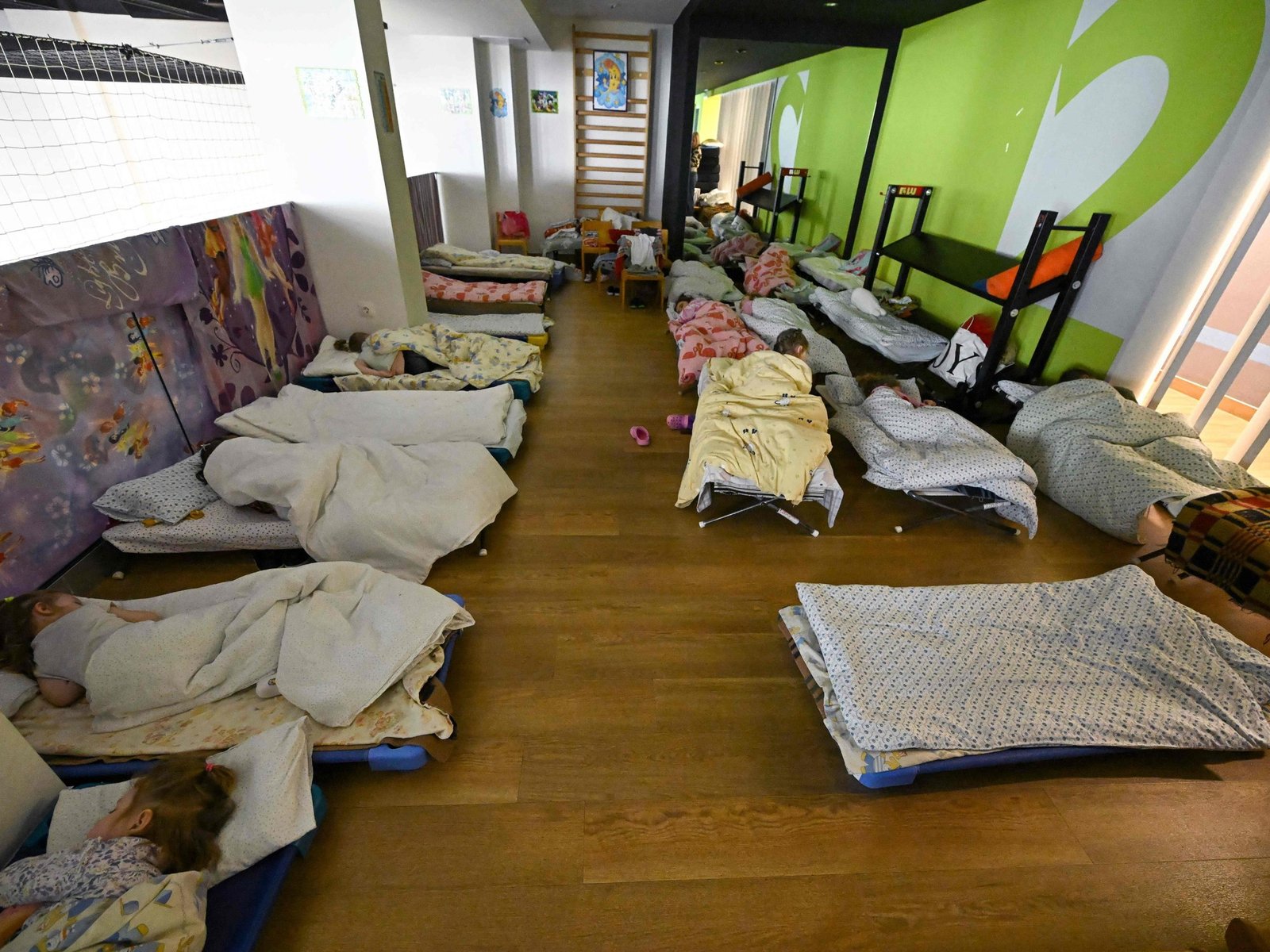
La sangría demográfica ucraniana provocada por la guerra de agresión rusa lanzada en febrero de 2022 no cesa. Los últimos datos del Alto Comisionado de Naciones Unidas para los Refugiados, que concuerdan con los del Ministerio de Economía ucraniano, muestran que ya hay 5.762.000 refugiados fuera del país, de los que 5.213.000 están en Europa. Poco más de medio millón están fuera de la Unión Europea, Reino Unido y Noruega, la mayoría en países como Rusia, Turquía o los del Cáucaso.
Los flujos de refugiados desde Ucrania son menores que en el primer año de la guerra, cuando huyeron unos cuatro millones de personas, la mayoría mujeres y menores de edad. Pero a pesar de la estabilización relativa de la situación militar porque los frentes de batalla apenas se mueven, la cifra de refugiados ha seguido aumentando.
Los datos de este último boletín, que recoge estadísticas hasta el pasado 30 de abril, muestra que en los dos meses anteriores habían salido del país 162.000 personas, la mayoría hacia Europa. Ucrania, que justo antes de la guerra rozaba los 40 millones de habitantes, tiene hoy poco más de 34 millones.
Los ucranianos que huyen y piden refugio en Europa buscan lugares cercanos, como Polonia, Chequia o Alemania, o lugares donde ya había importantes comunidades de migrantes ucranianos, como el Reino Unido o España. Los datos actualizados aseguran que ya hay 1,28 millones de ucranianos refugiados en Alemania, 0,98 millones en Polonia, 0,38 millones en Chequia y 0,26 millones tanto en Reino Unido como en España.
Un estudio del Alto Representante de Naciones Unidas para los Refugiados muestra que la mitad de los refugiados ucranianos actuales salió entre febrero y abril de 2022, es decir, en los primeros dos meses y medio de la guerra. Ese éxodo sumó más de 2,5 millones de personas hacia Europa en menos de tres meses sin que se produjeran problemas más allá de la gestión de los permisos de residencia y trabajo.
La llegada masiva de refugiados en los primeros meses de 2022 hizo que la Unión Europea usara un mecanismo jurídico de acogida, llamado Directiva de Protección Temporal, que ha sido prorrogado varias veces. Se creó en 2001 a raíz de los desplazamientos masivos de refugiados en los Balcanes Occidentales y permite que cualquier ucraniano llegado a Europa tenga de forma casi inmediata acceso a permisos de trabajo y residencia, pueda escolarizar a sus hijos y pueda acceder al servicio sanitario y otros servicios sociales. Es mucho más rápido que un proceso ordinario de petición de asilo.
El 46% de los ucranianos mayores de edad que viven como refugiados en Europa (la inmensa mayoría mujeres) tiene un trabajo en su país de acogida. En Ucrania lo tenía el 51%. El 17% están desempleadas y en Ucrania lo estaba el 5%.
La llegada de esos refugiados constituye, además, un impulso económico para el mercado laboral europeo, con pleno empleo en la práctica en muchos de los Estados miembros y falta de mano de obra, aunque las políticas económicas van por un lado y las políticas migratorias, que parecen obedecer más a las pulsiones que la cabeza, van por otra.
Del informe también se puede extraer que son los territorios ucranianos ocupados por Rusia los que generan más refugiados. Teniendo en cuenta que la mayoría de la población de esas regiones es rusófona de lengua, esto muestra que ni la parte de Ucrania que según la propaganda del Kremlin esperaba ser salvada del poder de Kiev parece estar tranquila viviendo en esos territorios.
Esos datos muestran que las zonas de donde salen más refugiados son Jarkov, Dnipropetrovsk, Jersón y Donetsk, precisamente las provincias que Moscú asegura ahora que son suyas.
Si a los refugiados en el extranjero se suman los desplazados internos, Naciones Unidas calcula que la cifra se incrementaría en 3,7 millones de personas, haciendo así que sean 9,4 millones los ucranianos que han tenido que dejar sus hogares, prácticamente una cuarta parte de la población.
El pasado 15 de julio los gobiernos europeos acordaron prorrogar la protección temporal para los refugiados ucranianos al menos hasta marzo de 2028, pero por primera vez excluyeron a los hombres de entre 23 y 60 años. La norma no es retroactiva, pero Europa ya no dará refugio a hombres que Kiev necesita para la guerra. Sólo podrán acceder a protección en Europa los hombres que hayan cumplido, según las leyes ucranianas, con sus obligaciones militares.
INTERNACIONAL
State of play: Dems battle for shot at crucial Arizona House seat amid GOP’s razor thin majority

Socialist surge rocks Arizona Democratic primary
RNC senior advisor Danielle Alvarez highlights the growing influence of Democratic Socialists in primaries, citing the Arizona House 4 race where incumbent Greg Stanton faces Kai Newkirk. Alvarez criticizes Newkirk’s platform, including abolishing ICE, and points to the DSA’s surging membership as a «disaster» for mainstream Democrats and the nation.
NEWYou can now listen to Fox News articles!
Two Democratic candidates remained locked in a battle as of early Wednesday morning to claim their party’s nomination in Arizona’s 1st Congressional District for a chance to face former NFL kicker Jay Feely.
Former television news anchor Marlene Galán-Woods and former state Rep. Amish Shah, the two frontrunners, fell shy of capturing enough of the vote to win the nomination outright by early Wednesday morning.
The winner of the primary will go on to have a rare opportunity to flip a seat in the Canyon State and, more broadly, potentially decide the balance of power in Washington, D.C. Feely, who received President Donald Trump’s «complete and total endorsement» in the final stretch of the race, won his GOP primary late Tuesday night.
TRUMP-BACKED FIREBRAND WINS ARIZONA GOP GOVERNOR PRIMARY, SETTING UP HIGH-STAKES SHOWDOWN
Republican Rep. David Schweikert has repeatedly fended off well-funded Democratic challengers in Arizona’s competitive 1st Congressional District, winning reelection in 2024 (Stefani Reynolds/Bloomberg/Getty Images)
The seat could very well decide whether Republicans hold on to a slim majority in the House of Representatives or whether Democrats break a Republican governing trifecta come the November midterms.
Although the district has favored Republicans since 2020, incumbent Rep. David Schweikert, R-Ariz., has only narrowly hung on to the seat in the past two cycles, beating out Shah in a 51.9% to 48.1% victory in 2024.
Schweikert announced that he would not pursue reelection last year, announcing that he would instead pursue a gubernatorial bid. Trump-backed Rep. Andy Biggs, R-Ariz., won his primary and was ahead of Schweikert by over 50 points early Wednesday.
VULNERABLE REPUBLICAN WINS GOP PRIMARY IN ARIZONA TOSS-UP DISTRICT DEMS AIM TO FLIP BLUE
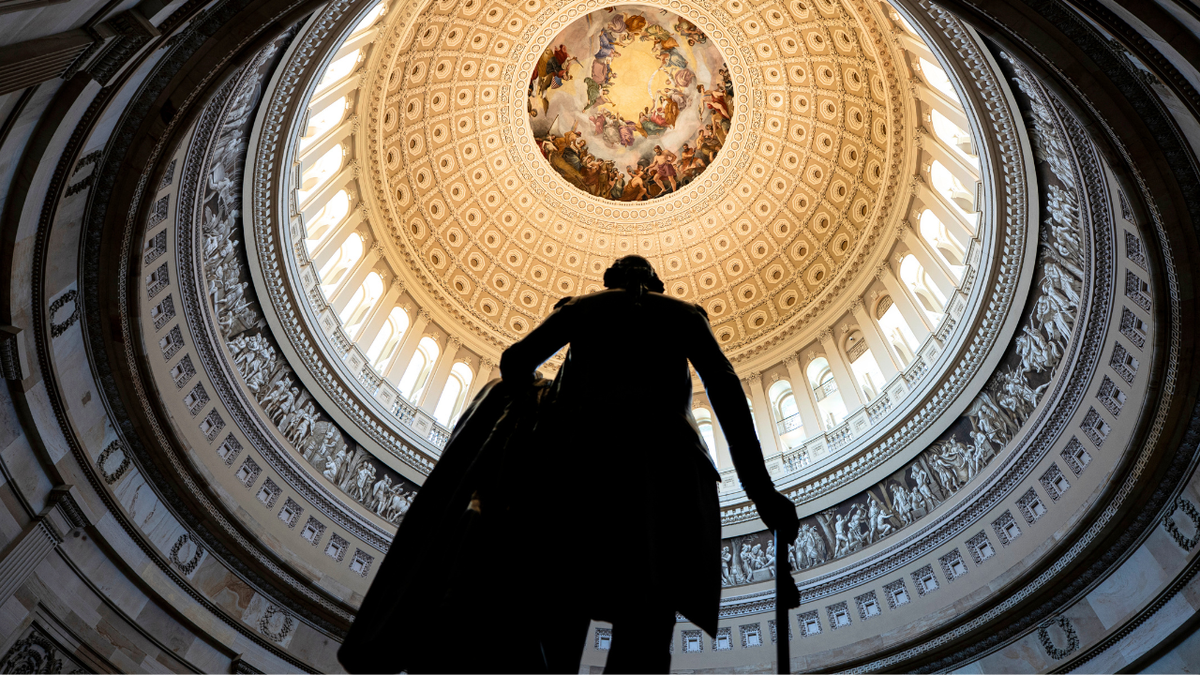
The 2026 midterms will determine control of the House and Senate, shaping President Donald Trump’s legislative agenda during the final two years of his term. (Al Drago/Getty Images)
«I’ve grown to believe Washington is unsavable. I do believe Arizona is savable,» Schweikert told Axios.
This isn’t the first time Amish Shah and Marlene Galán-Woods have competed against each other for their party’s nomination, having clashed in the Democratic 2024 primary for the district.
At that time, Shah narrowly defeated Galán-Woods before advancing to the 2024 general election, where he lost to Republican Rep. David Schweikert, who has represented the Phoenix-area seat since 2013 despite Democrats investing heavily to flip the district blue.
HOUSE DEMOCRATS’ CAMPAIGN ARM DRAWS PROGRESSIVE FURY FOR TRYING TO ‘TIP THE SCALES’ IN KEY HOUSE PRIMARY
He is seeking a second consecutive nomination after arguing he remains the strongest candidate to challenge Feely in the general election. Galán-Woods, meanwhile, is expected to emphasize her background as a longtime Arizona television journalist and her ability to appeal to independent and suburban voters.

Former Arizona state Rep. Amish Shah, an emergency room physician who was the Democratic nominee in the district in 2024, is seeking another chance to flip the seat after narrowly losing to Republican David Schweikert in the general election. (Patrick T. Fallon/AFP/Getty Images)
CLICK HERE TO DOWNLOAD THE FOX NEWS APP
Galán-Woods is making another bid for the nomination with support from several national Democratic organizations, which view Arizona’s 1st District as one of the party’s best pickup opportunities in 2026.
The winner will go on to the general election on Nov. 3.
politics, arizona, democrats elections
INTERNACIONAL
Guerra en Medio Oriente: el petróleo superó los USD 92 por barril y alcanzó su nivel más alto desde junio

El precio del petróleo volvió a superar los USD 92 por barril este miércoles, impulsado por la escalada militar entre Estados Unidos e Irán, mientras los mercados financieros siguieron de cerca la evolución del conflicto en Medio Oriente.
El Brent del Mar del Norte subió alrededor de un 1,2% hasta USD 92,09 por barril, su nivel intradiario más alto desde el 11 de junio, después de que el presidente de Estados Unidos, Donald Trump, advirtiera que Washington “no terminó” con sus ataques contra Irán. En paralelo, el West Texas Intermediate (WTI) avanzó un 1% y cotizó en USD 85,19.
La suba del petróleo respondió a la persistencia de la incertidumbre sobre el suministro energético mundial. El ejército estadounidense informó que completó una undécima noche consecutiva de bombardeos con el objetivo de “degradar aún más la capacidad de Irán para amenazar el transporte marítimo comercial en el estrecho de Ormuz”, una de las principales rutas para las exportaciones mundiales de crudo.
Trump también elevó el tono contra los rebeldes hutíes de Yemen, aliados de Irán. El mandatario afirmó que “se ocupará de” ese grupo si concreta la amenaza de bloquear los puertos sauditas, un escenario que los inversores consideran un riesgo adicional para el comercio internacional de petróleo.
Los analistas advirtieron que una interrupción efectiva de las rutas marítimas podría provocar un nuevo salto de los precios. Jay Hatfield, de Infrastructure Capital Management, sostuvo que “nuestra visión es que estaremos en un rango de entre 80 y 90 dólares, dependiendo del flujo de noticias”. Sin embargo, agregó que “si realmente tenemos un Mar Rojo cerrado, eso representa una amenaza. Todavía no lo vimos. Eso podría llevarnos por encima de los 100 dólares”.

Mientras el mercado energético permaneció atento a las noticias provenientes de Medio Oriente, las bolsas asiáticas registraron una segunda jornada consecutiva de ganancias impulsadas por el sector tecnológico.
Las acciones tecnológicas recuperaron parte del terreno perdido después de varias semanas de volatilidad vinculada a las expectativas sobre la inteligencia artificial. Los inversores buscaron oportunidades tras las ganancias registradas el martes en el índice Nasdaq de Wall Street.
En Tokio, el índice Nikkei 225 avanzó 1,9% hasta los 67.511,13 puntos, mientras que el mercado de Seúl, con fuerte presencia de empresas de semiconductores, saltó 5,4%. En contraste, el índice Hang Seng de Hong Kong retrocedió 0,9%, mientras que la bolsa de Shanghái ganó 0,4%.
Los operadores también aguardaron los balances trimestrales de algunas de las principales compañías tecnológicas de Estados Unidos. Los resultados de Tesla y de Alphabet, la empresa matriz de Google, se conocieron más tarde, mientras que la próxima semana publicarán sus cuentas Microsoft, Meta, Apple y Amazon.
El comportamiento del sector tecnológico reflejó un cambio parcial en el ánimo de los mercados, después de las dudas sobre las valuaciones de las empresas vinculadas con la inteligencia artificial.

En el mercado cambiario, el yen japonés volvió a debilitarse frente al dólar después de caer por debajo de las 163 unidades por dólar, su nivel más bajo desde 1986. Los operadores atribuyeron parte de esa presión al encarecimiento del petróleo, un factor que afecta especialmente a Japón por su elevada dependencia de las importaciones de energía.
Al mismo tiempo, el euro cotizó en USD 1,1407, la libra esterlina se ubicó en USD 1,3386 y la relación entre ambas monedas permaneció prácticamente sin cambios.
(Con información de AFP)
Asia / Pacific,Corporate Events,Energy Markets
Inocencia Fiscal: el Gobierno lanza un nuevo proyecto para que salgan USD 170.000 millones de los colchones de los argentinos

Arrastró media cuadra a un jubilado por resistirse a un robo en San Juan y fue condenado

Así fue el explosivo ingreso de Daniela Celis en Gran Hermano: «Sola, soltera y solicitada»

Quién es Guillermo Toranzos Torino, el nuevo subsecretario que se suma al equipo de Diego Santilli

Casi seis millones de ucranianos se fueron de su país y la mayoría buscó refugio en países de la Unión Europea

Todo lo que pasó en la final del Mundial: de la verdad sobre la arenga de Messi al emotivo discurso tras la derrota

Sin la Copa y sin Messi en el avión, vuelve Tapia y deberá enfrentar tres frentes de tormenta tras la pausa del Mundial

Estados Unidos cambia una regla histórica del jugo de naranja vigente desde 1963 y afecta a toda la industria

Antes de la clasificación, Franco Colapinto afrontará la última práctica libre del GP de Bélgica: hora, TV y todo lo que hay que saber

Es el conductor más querido de la tele y tan argentino como el mate, pero pocos saben que nació en España: ¿a quién alentará en la final?

 POLITICA2 días ago
Sin la Copa y sin Messi en el avión, vuelve Tapia y deberá enfrentar tres frentes de tormenta tras la pausa del Mundial
- POLITICA1 día ago
Le ganan a la inflación: los senadores pasarán a cobrar $12 millones brutos a partir de agosto
- CHIMENTOS1 día ago
Samuel L. Jackson llamó a Argentina “el país más racista del mundo”: la contundente respuesta que le dejó Bárbara Lombardo