INTERNACIONAL
Obama’s baseball outing with Castro reignites fury after Trump DOJ drops hammer on Cuban leader

NEWYou can now listen to Fox News articles!
Former Cuban President Raúl Castro was indicted Wednesday in connection with the 1996 shootdown of two civilian aircraft that killed four people — reviving scrutiny of former President Barack Obama’s highly publicized 2016 trip to Havana.
«President Obama’s approach to Cuba was not merely a policy mistake. It was a diplomatic disaster — naive at best, incompetent at worst, and deeply disrespectful to the dissidents, political prisoners and victims who suffered under the Castro regime,» former Miami mayor Francis Suarez, who is Cuban-American, told Fox News Digital.
«Obama treated normalization as enlightened diplomacy. It handed legitimacy to a brutal dictatorship while asking little in return,» said the Fox News contributor. «The administration reopened relations, relaxed restrictions and gave Havana a public-relations victory, yet the Cuban people remained trapped under the same repressive system and the United States gained no meaningful security concessions.»
The Justice Department on Wednesday unsealed a superseding indictment charging Castro and five co-defendants over the deaths of four U.S. nationals aboard two unarmed civilian aircraft operated by the Miami-based exile group. Cuban-American critics said the charges underscore longstanding objections to Obama’s normalization push, which they argue gave legitimacy to the Castro regime.
US MOVING TO INDICT FORMER CUBAN LEADER RAÚL CASTRO: SOURCE
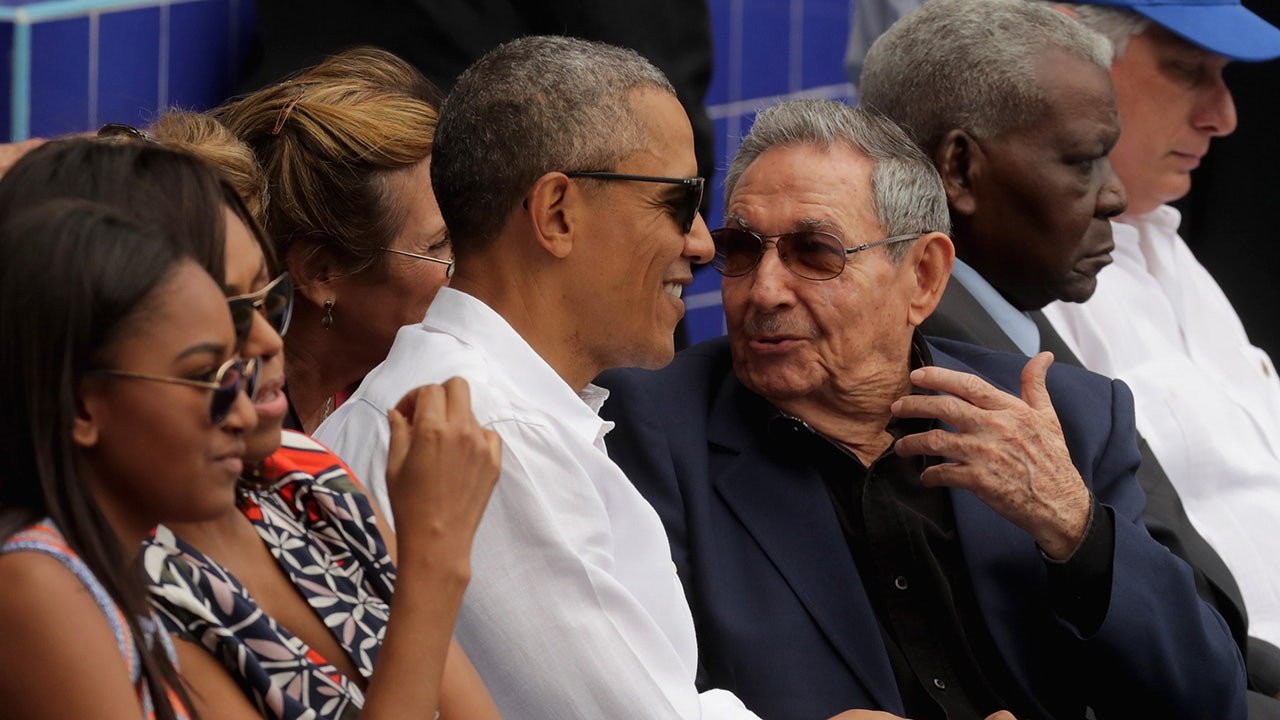
Obama went to Cuba with his family in 2016 for bilateral talks on human rights and economic discussions. (Chip Somodevilla/Getty Images)
Obama traveled to Cuba in 2016 as part of his administration’s push to normalize U.S.-Cuba relations after decades of hostility, arguing that engagement on diplomacy, the economy and human rights would be more effective than isolation. The visit also included Obama and Castro attending a baseball game between the Tampa Bay Rays and the Cuban national team in Havana.
«I have come here to bury the last remnant of the Cold War in the Americas,» Obama said from Havana that year. «I have come here to extend the hand of friendship to the Cuban people.»
Photos of Obama and Castro embracing during the 2016 Havana trip quickly resurfaced online after the indictment, going viral across social media and triggering a wave of criticism from users who blasted the optics of the former president’s relationship with the communist leader.
«While Raoul was harboring American terrorists like Joanne Chesimard and Guillermo Morales. Disgusting,» wrote Fox News contributor Paul Mauro on X.
«Barack Obama in his element with communists and criminals,» wrote General Mike Flynn on X.
OBAMA SETS INTERNET ABLAZE WITH ‘SICK’ REACTION TO THE ‘MOTIVE’ OF WHCD SHOOTER
Republican Texas Sen. Ted Cruz reposted a photo with a cringe emoji.
Castro, 94, is the younger brother of former Cuban leader Fidel Castro. Raul Castro served as Cuba’s president from 2008 to 2018.
Suarez said that Obama’s Cuba policies were not just a human rights failure but a national security failure not understanding the serious threat the regime posed.
DEMOCRATS AND REPUBLICANS CRITICIZE BIDEN ADMIN’S CUBA DETENTE’
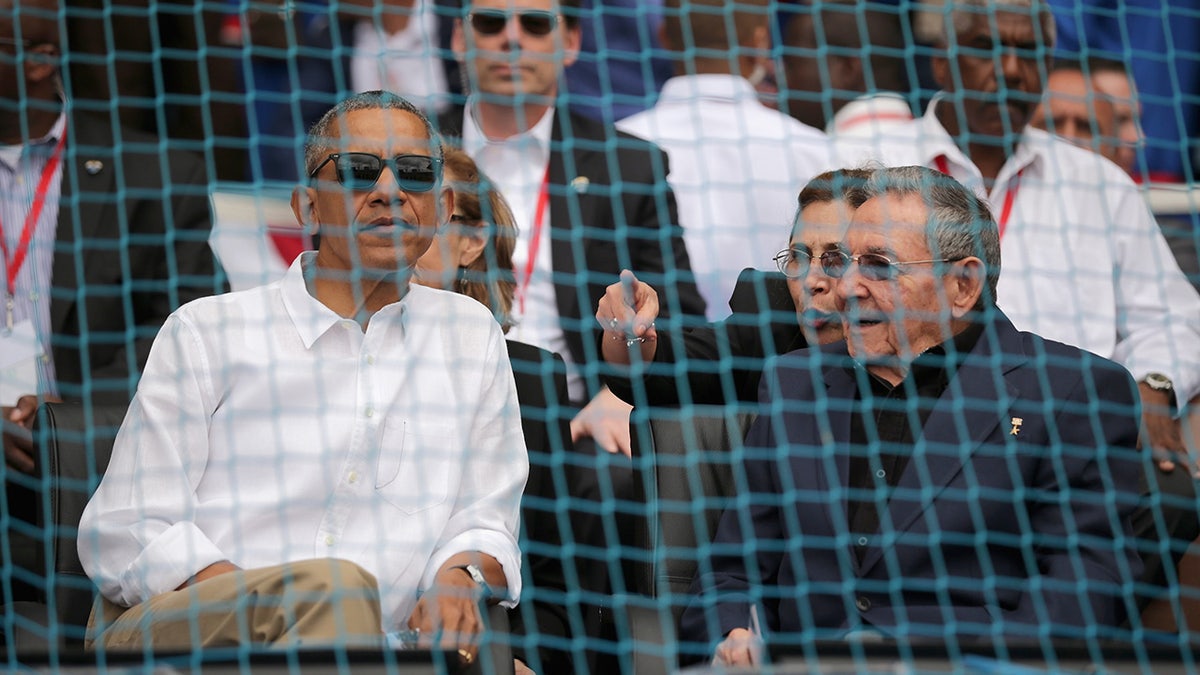
Photos of Obama and Raul Castro at a baseball game in Havana resurface after the DOJ unsealed the Castro indictment. (Chip Somodevilla/Getty Images)
«It did nothing to curtail Cuba’s role as a base for America’s enemies. It did nothing to confront the island’s use as an intelligence and spy platform so close to our shores. It did nothing to reduce the regime’s support for terrorism. It did nothing to confront Cuba’s narco-state behavior or its destabilizing influence throughout the hemisphere,» said Suarez.
RUBIO BLASTS COMMUNIST CUBAN REGIME AS NJ TROOPER’S KILLER REMAINS FREE
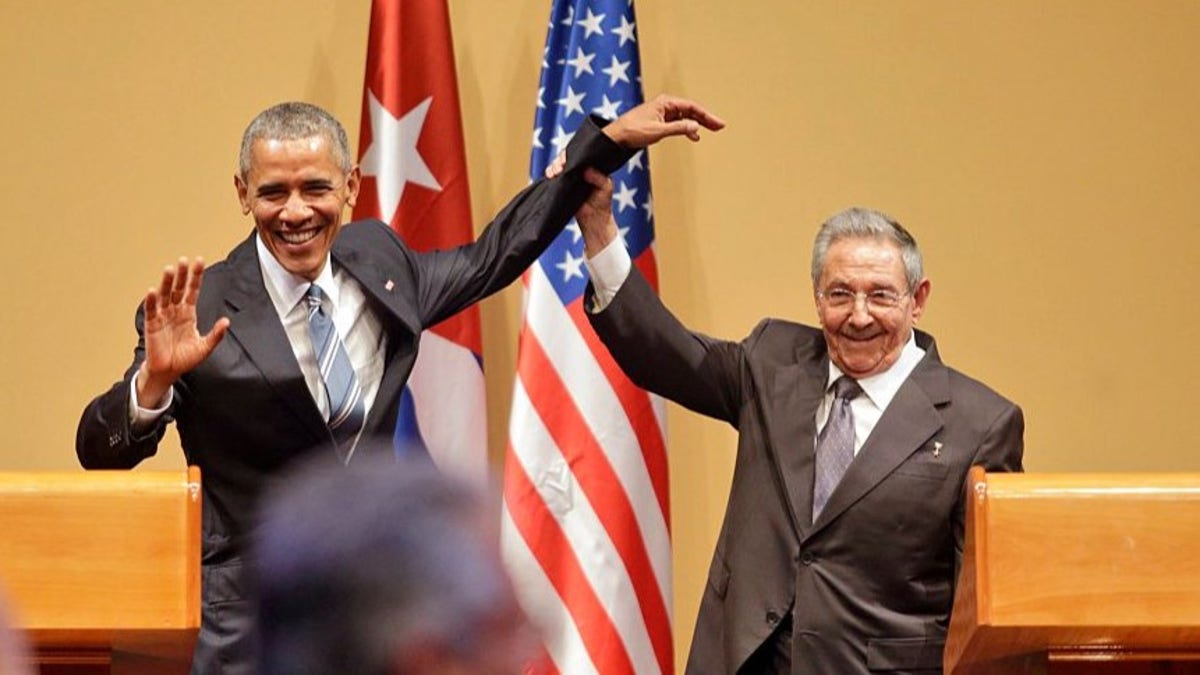
President Barack Obama and Cuban leader Raul Castro stand together during Obama’s visit to Cuba. (Getty Images)
Obama’s trip came two decades after the 1996 incident, which became a major flashpoint in U.S.-Cuba relations, as the Trump administration adopted a more public and hardline approach toward Cuba.
TRUMP DECLARES NATIONAL EMERGENCY OVER CUBA, THREATENS TARIFFS ON NATIONS THAT SUPPLY OIL TO COMMUNIST REGIME
«Raúl Castro and five co-defendants participated in a conspiracy that ended with Cuban military aircraft firing missiles at those planes and killing four Americans,» said acting Attorney General Todd Blanche on Wednesday during the indictment announcement. «Nations and their leaders cannot be permitted to target Americans. Kill them, and not face accountability.»
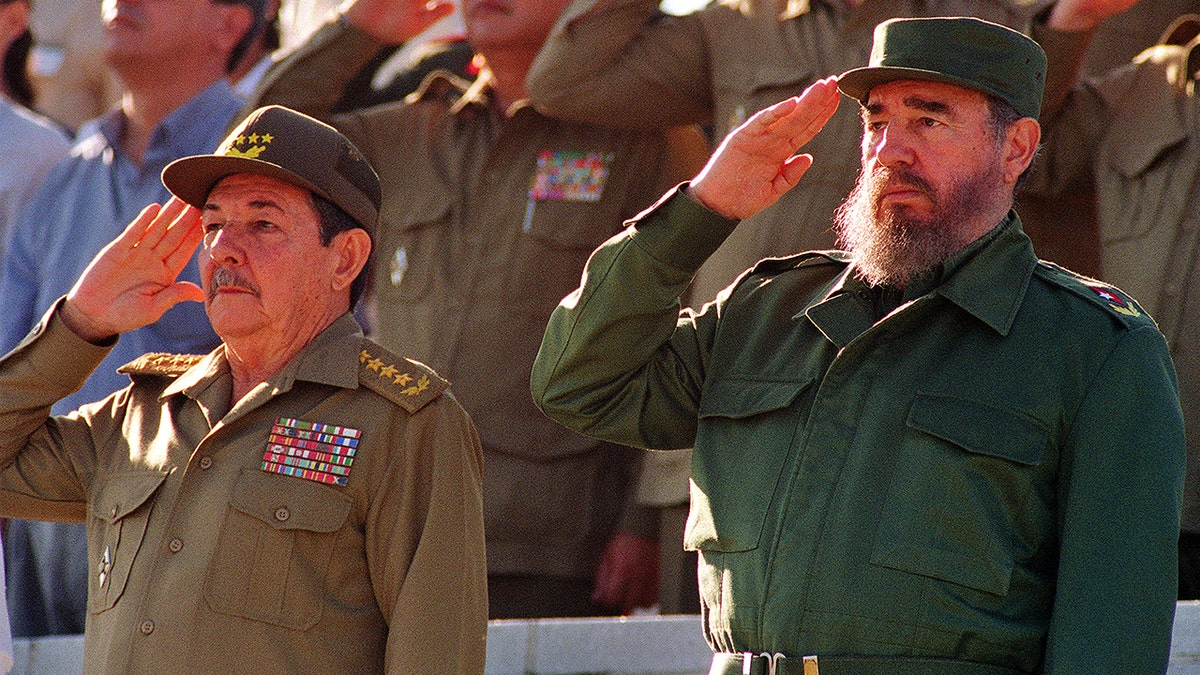
Fidel Castro and his brother Raul Castro attend a parade in Havana, Cuba, on Dec. 2, 1996. (Sven Creutzmann/Mambo Photography/Getty Images)
Following the indictment, Trump said Cuba is «very important.»
«A lot of people have suffered very big, very, very at levels that few people would understand. And I think the Cuban population of Miami, and certainly beyond Miami,» said Trump. «People that came there that were decimated, whose families were ruined, appreciate what the Attorney General just did today, and he’s just doing it now. He’s just watching it. We have Cuba on our mind. Very important.»
Suarez said that for Cuban Americans, Obama cozying up with Castro was disrespectful.
«It is about families torn apart, property confiscated, voices silenced, dissidents beaten, prisoners of conscience abandoned and generations forced to live under fear. To treat the Castro government as a normal partner without first honoring those victims was not diplomacy,» he said.
CLICK HERE TO DOWNLOAD THE FOX NEWS APP
Trump has previously joked the U.S. would be «taking over» Cuba «almost immediately.»
«Cuba’s got problems. We’ll finish one first. I like to finish a job,» he added this month.
Fox News Digital reached out to Obama’s office and the White House for additional comment on the renewed criticisms of the trip.
cuba, michael flynn, barack obama, donald trump, fox news investigates









Trump revives Greenland national security demand at NATO summit
Former Deputy National Security Advisor Victoria Coates analyzes the historic NATO summit in Ankara, Turkey, where alliance defense spending has skyrocketed under new policy framework. Coates details the strategic impact of America’s recent 80-target military response against Iranian forces, unpacks why sovereign control over Greenland remains an absolute national security red line and explains how the administration’s foreign policy helped Ukrainian forces to secure stronger leverage.
NEWYou can now listen to Fox News articles!
China is using control over global seas as a tool of «political coercion,» the U.S. ambassador to the United Kingdom warned, as President Donald Trump is restating his interest in Greenland for that very same reason.
China is seeking to turn ports, ships and supply chains into instruments of geopolitical leverage, U.S. Ambassador to the U.K. Warren Stephens warned in a statement to the International Maritime Organization Council (IMO).
«I spoke about a challenge that we cannot afford to ignore: China’s systematic effort to use maritime power as an instrument of political coercion,» Stephens wrote in a Truth Social post after the speech. «Beijing has pursued an aggressive strategy of acquiring port concessions and infrastructure around the world — not simply for commercial gain, but to extend its strategic reach and weaponize that access against sovereign nations.»
The U.S. is «not a passive observer of maritime affairs,» Stephens told the IMO, calling America a «cornerstone of the global maritime economy.» He said the U.S. Maritime Transportation System supports $5.4 trillion in economic activity each year and nearly 30 million jobs.
SEN TODD YOUNG: THE HIDDEN DANGER CHINA’S SHIPS COULD BRING TO OUR SHORES
China’s designs on global sea power has the U.S. Ambassador to the U.K. Warren Stephens sounding alarms. (Zha Chunming/Xinhua)
The warning comes as Trump continued peacemaking efforts in the Strait of Hormuz and pressing Demark and NATO for U.S. control over Greenland due to Chinese and Russian threats to free navigation in the Arctic.
«Denmark doesn’t spend money to really help Greenland, but it’s an important part for the United States, and it’s surrounded by China ships and Russian ships,» Trump said at the NATO summit in Ankara, Turkey.
For global security, Greenland «should be controlled by the United States, not by Denmark,» Trump added.
«They wouldn’t go along with it,» Trump said of Denmark. «And with all the money we spend to help them with Russia. And we don’t have to spend any money, we could remove all of our soldiers out of Europe because, as you probably noticed, Europe is a very different place than it was 20 years ago. A lot different.»
DENMARK VOWS TO DEFEND GREENLAND AFTER TRUMP REITERATES US SHOULD CONTROL TERRITORY
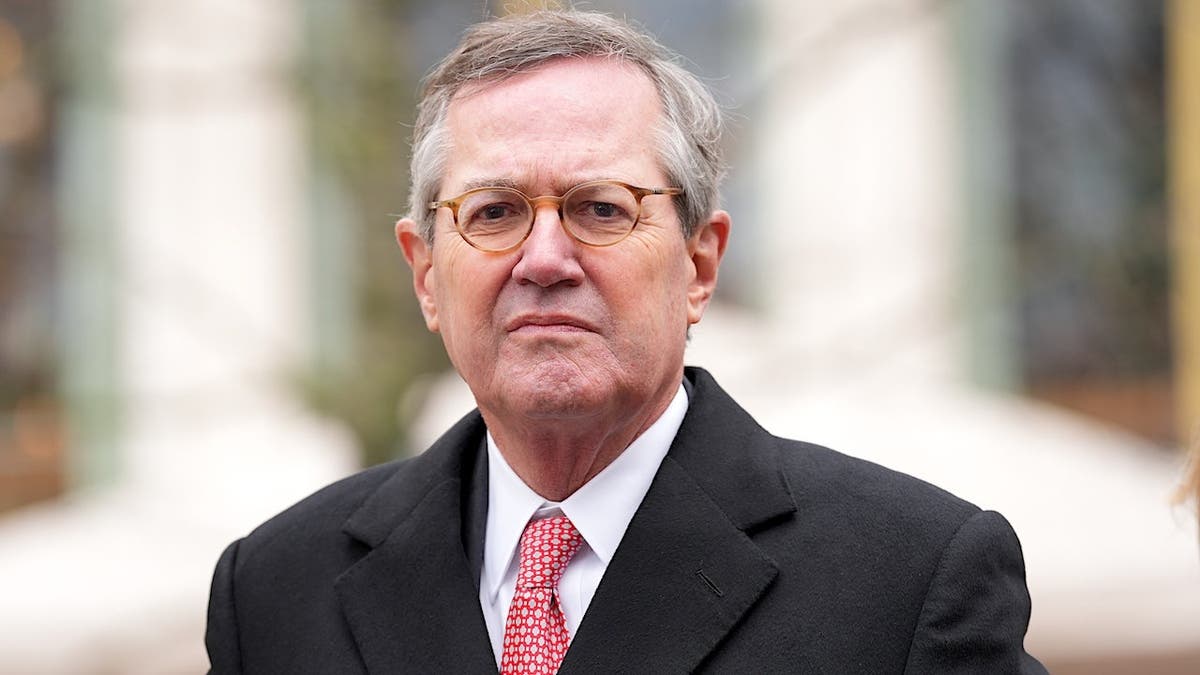
U.S. Ambassador to the U.K. Warren Stephens issued an urgent warning that China is using global dominance over waterways as a political coercion tool. (Lucy North/PA Images via Getty Images)
Greenland’s position between the Arctic and North Atlantic has made it a key piece of U.S. security planning.
«President Trump has made restoring American maritime leadership a national priority,» Stephens said in his IMO remarks warning on China’s broader maritime footprint.
«The evidence is clear and growing,» Stephens said. «China currently builds more than half of the world’s ships. It dominates the production of ship-to-shore cranes and shipping containers.»
Stephens cited Panama as a recent example, pointing to a ruling by Panama’s Supreme Court that found CK Hutchison’s port concessions at the Balboa and Cristóbal terminals unconstitutional. The terminals sit at opposite ends of the Panama Canal, one of the world’s most strategically important trade corridors.
TRUMP MAKES FRESH GREENLAND PLAY AFTER XI TALKS AS CHINA’S ARCTIC AMBITIONS LOOM
Stephens said China’s response to the Panama ruling was «swift and punishing,» accusing Beijing of taking action against Panama-flagged vessels in a move the U.S. characterized as an attempt to undermine Panama’s sovereignty and disrupt global supply chains.
«What happened to Panama is a warning to every nation in this room,» Stephens said.
«When a country allows a foreign power or its proxies to control its ports, it does not simply accept a commercial arrangement,» he added. «It accepts a vulnerability.»
Stephens urged IMO member states to closely scrutinize deals allowing foreign entities, especially state-linked enterprises, to operate critical port infrastructure.
«Transparency, the rule of law, and genuine sovereignty are not obstacles to commerce,» Stephens said. «They are its foundation.»
The ambassador also said the U.S. would press for maritime security, sanctions enforcement, protection of flag state rights, freedom of navigation and updated standards on polar operations, autonomous vessels and cyber risk management.
«The pattern is consistent: China uses its maritime and economic power to coerce, to intimidate, and to punish those who assert their sovereign rights,» Stephens said.
The Chinese government has routinely rejected U.S. accusations that its overseas infrastructure investments are coercive, portraying its port, shipping and Belt and Road projects as commercial partnerships that support global trade and development.
CLICK HERE TO DOWNLOAD THE FOX NEWS APP
Stephens said the U.S. will continue contributing expertise, resources and leadership at the IMO, but warned that the rules-based maritime order cannot be taken for granted.
«A free and open ocean is not guaranteed,» he said. «It must be defended.»
china, national security, greenland, politics, donald trump, state department, foreign policy, foreign affairs
INTERNACIONAL
¿Vacaciones de invierno en Europa? Entrar y salir de la UE puede ser un «vía crucis» para los no europeos
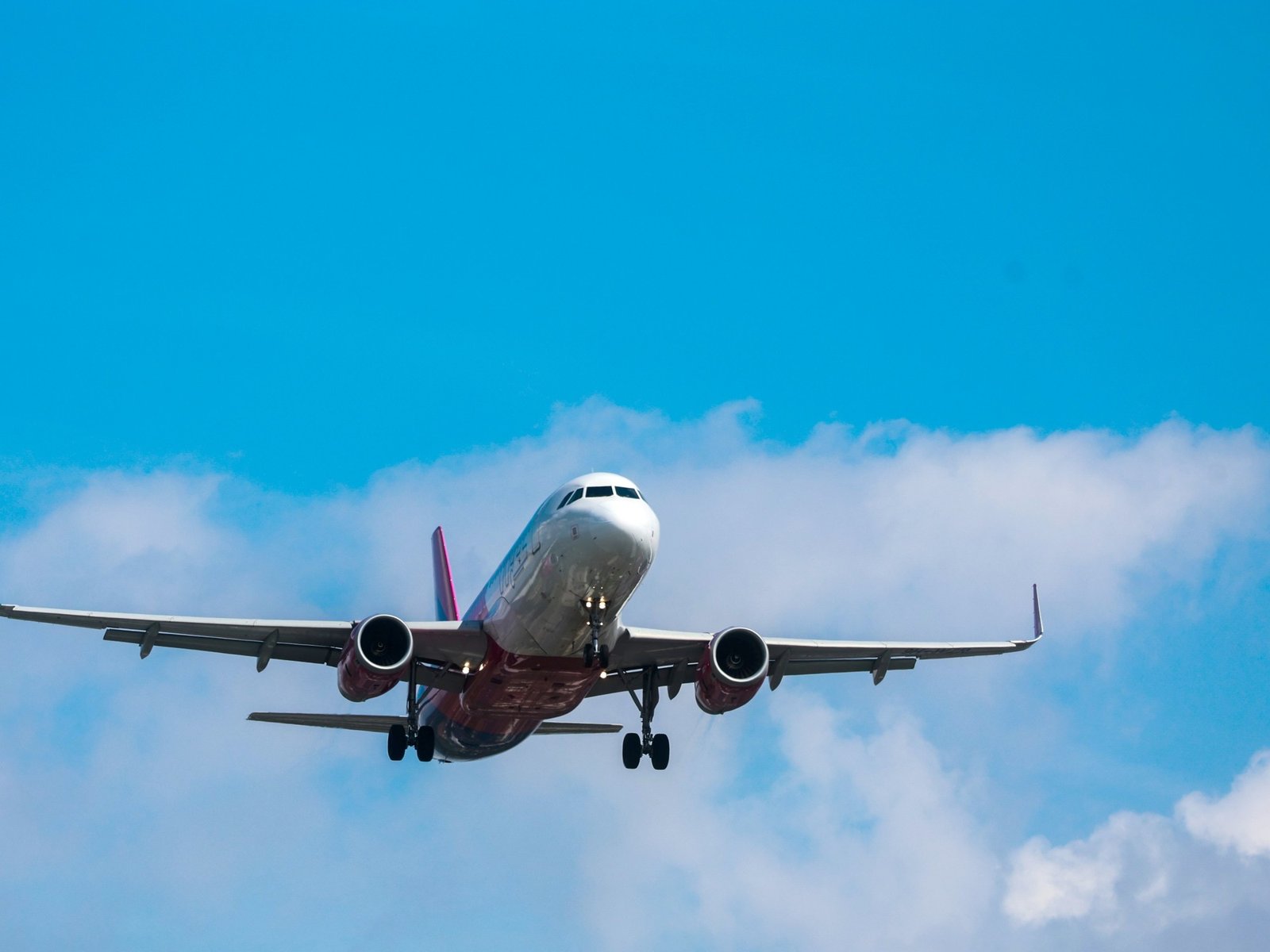
Este verano europeo puede convertirse en una pesadilla para quienes tengan que entrar o salir del espacio Schengen de libre circulación que comparten la mayoría de los 27 países de la Unión Europea.
La entrada en vigor del Sistema Europeo de Entrada y Salida (EES, en sus siglas en inglés), basado en un registro biométrico de los viajeros extra-comunitarios como medida de seguridad pero sobre todo para luchar contra la inmigración irregular, está provocando importantes retrasos en muchos aeropuertos europeos justo cuando empieza la temporada alta de turismo estival.
Quienes durante años entraron con un trámite más o menos rápido, británicos, estadounidenses, canadienses, japoneses, australianos, buena parte de latinoamericanos, entran ahora después de pasar horas en la fila.
Los aeropuertos y las líneas aéreas protestan, pero por ahora la Comisión Europea y los gobiernos nacionales no se mueven y aseguran que ha habido tiempo de sobra para prepararse.
En algunos aeropuertos, los más concurridos de países como España, Portugal, Italia, Grecia y Bélgica, las colas son de horas en la fila de los viajeros que no residen dentro del espacio Schengen. Algunos viajeros han pasado hasta cinco horas esperando por el control. Los aeropuertos más señalados por ahora son Palma de Mallorca, Tenerife Sur, Lisboa, Roma y Bruselas.
El EES es un sistema que sustituye al tradicional sellado manual del pasaporte por un registro digital que guarda la fotografía de la cara, las huellas dactilares y los datos del documento con el que viaje cualquier ciudadano no residente legal en la Unión Europea que vaya a pasar hasta 90 días en el espacio Schengen.
Más allá de 90 días es necesario un permiso de residencia. El sistema busca alimentar una base de datos común para los países participantes.
El problema en los aeropuertos es que el proceso de copiar de forma digital todos los datos es más lento que el antiguo proceso de sellar el pasaporte y la eventual visa para quien la necesitara. Sobre todo si es el primer viaje del pasajero en cuestión y nunca había sido registrado en Europa.
En ese caso se lo debe fotografiar y tomar las huellas dactilares para ser digitalizadas. Si por alguna razón no funciona, hay que pasar a un control manual que ralentiza aún más el proceso.
Las aerolíneas llevan meses advirtiendo a la Comisión Europea que el sistema no estaba preparado para entrar ya en vigor. Alegan que falta personal y que en los quioscos de registro automáticos hay continuamente problemas técnicos.
La Asociación Internacional de Transporte Aéreo (AITA, la gran asociación mundial de aerolíneas) pidió incluso a la Comisión Europea que aplazara la entrada en vigor del nuevo sistema o que permitiera suspender temporalmente los controles cuando las filas de pasajeros son demasiado largas.
El viajero puede completar parte del registro en su celular antes de llegar al control, pero a debe detenerse igual porque necesita hacerse una fotografía y verificar sus huellas dactilares.
La Comisión Europea sigue rechazando la suspensión. El brazo ejecutivo de la Unión Europea asegura que no habrá suspensión generalizada y que el EES es un instrumento esencial para la seguridad europea.
Además, recuerda que ya se registraron más de 100 millones de movimientos fronterizos y se detectaron varias decenas de casos de incumplimiento de las normas de estancia.
La inmensa mayoría son casos de personas que pasaron más de los 90 días de estancia máxima para turistas. La Comisión sí reconoce que en unos 20 pasos fronterizos hay problemas mayores, pero recuerda que el sistema ya permite excepciones específicas en algunos casos.
Además de en los aeropuertos, hay problemas en algunos puertos, como el británico de Dover para registrarse para viajar hacia el continente europeo. Y en el Eurotúnel, el tren que cruza bajo tierra el Canal de la Mancha entre la ciudad francesa de Calais y la inglesa de Folkestone.
Los ciudadanos de la Unión Europea no están sujetos a estos registros, por lo que las filas son sólo para quien no tiene residencia legal en la Unión Europea.
La Comisión Europea pide tiempo. Fuentes comunitarias explican que los problemas se irán solucionando en cuanto los sistemas informáticos se corrijan y el personal en los puestos fronterizos vaya tomando experiencia con el nuevo sistema de control.
Mientras tanto, la recomendación es ir al control fronterizo varias horas antes de lo habitual y chequear la información que publican en sus sitios webs los aeropuertos.
INTERNACIONAL
WATCH: Surfaced videos of Dem Senate candidate backing ‘defund the police’ contradict recent denials
NEWYou can now listen to Fox News articles!
The front-runner in Michigan’s messy Democratic primary has repeatedly said he never called for defunding the police, but unearthed interviews and video from years earlier tell a different story.
Abdul El-Sayed, who is running for the Democratic nomination in Michigan against Rep. Haley Stevens, D-Mich., has been adamant throughout his push for the Senate that he never wanted to strip tax dollars from police departments, going so far as to say he deleted old tweets embracing the ideology.
But in a video for the University of Michigan published five years ago titled, «Systemic Racism as a Public Health Issue,» El-Sayed argued that funding police and their use of force was a facet of systemic racism and constituted a public health issue.
DEMOCRATS’ CIVIL WAR HEADS TO MICHIGAN, WHERE PROGRESSIVES FACE BIGGEST TEST YET IN HIGH-STAKES SENATE SHOWDOWN
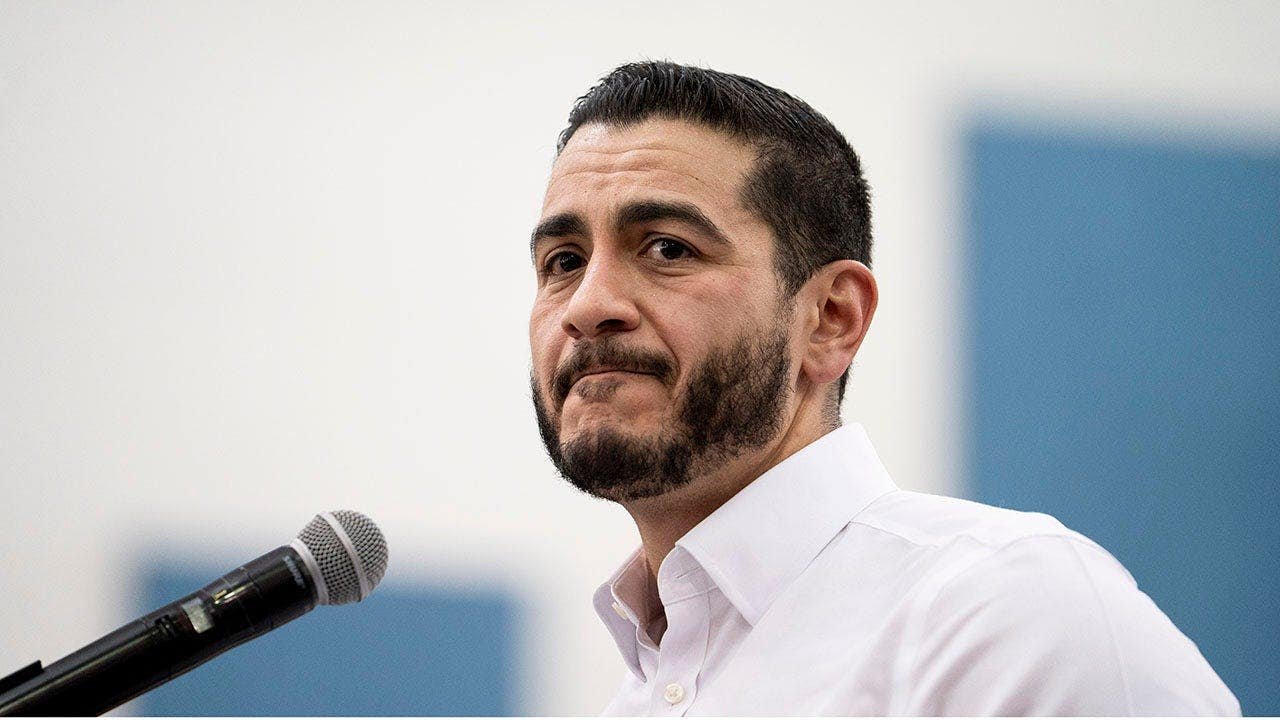
Michigan Senate Democratic candidate Abdul El-Sayed has spent his campaign denying that he wanted to defund the police, but in an unearthed clip, he asked, «Do police really need to use guns?» (Sarah Rice/Getty Images)
«Why are we investing so much in people with guns and less in people with the means of being able to invest in young folks, empower folks through their livelihoods, and empower them to live their best lives?» El-Sayed questioned.
«Do police really need to use guns? Do we need as much of a police force?» he continued. «And so, if we ask ourselves about how we spend money in the public, where that money goes, where it comes from, we need to make a lot better decisions about investing in the things that root out poverty, rather than investing in policing poverty.»
The video follows a report from CNN that found during the height of the «defund the police» movement in 2020, El-Sayed leaned into it.
During an interview with Detroit Public Radio from June 2020, El-Sayed argued that he never directly called to «defund the police,» but he contended that the principles behind the movement were difficult to express online in a tweet.
MICHIGAN SENATE CANDIDATE CONFRONTED REPEATEDLY OVER ISRAEL’S RIGHT TO EXIST, DEFUNDING THE POLICE
«So, you’ll note, I didn’t say ‘defund the police,’ I just described what needed to be done,» El-Sayed said. «And I do think we need to be really focused on describing or explaining rather than sort of hedging on one side or the other behind a hashtag.»
«Defunding the police is disinvesting in the means of incarcerating someone or killing them on the streets and investing more in the means of educating and empowering and engaging communities with the means of being able to take on systemic poverty that we’ve allowed to fester in too many communities.»
El-Sayed tried to pitch his stance as «refunding» the police to ensure taxpayer dollars don’t flow to «buy war materiel to wage war in our streets.»
«What we call that is, to me, less important than what we do on the problems on the ground,» he said at the time.
DEMOCRATIC SENATE CANDIDATE CALLED FOR MASS RELEASE OF CRIMINALS DURING PRISON ABOLITION WEBINAR
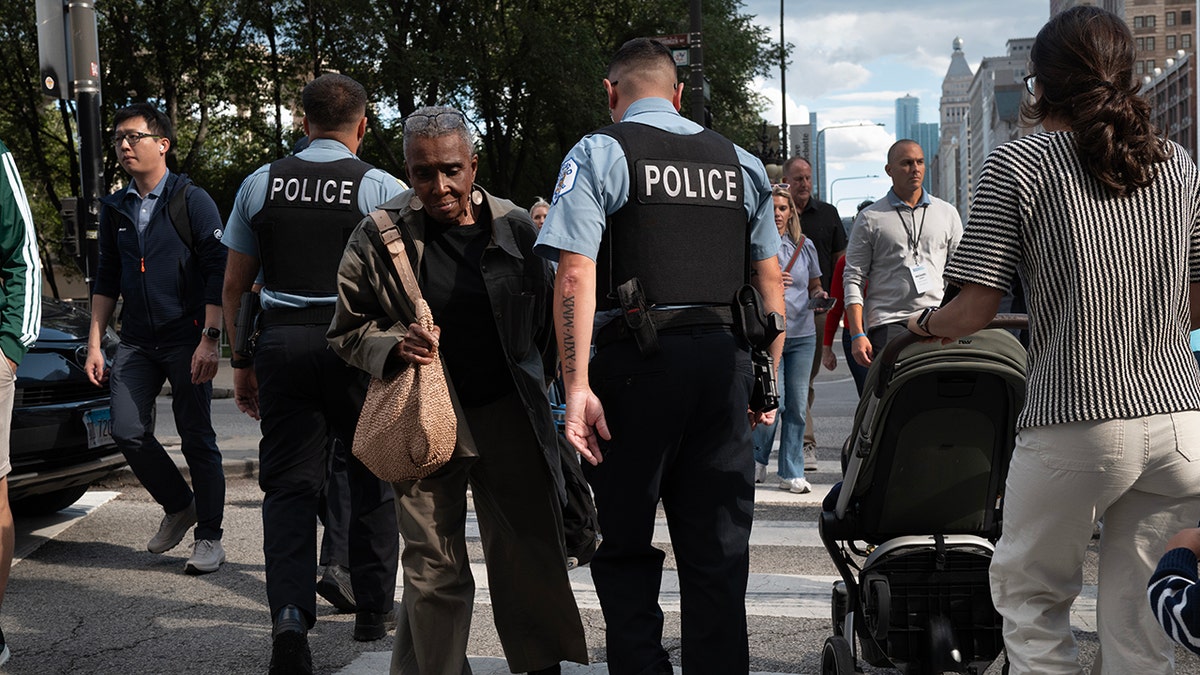
Chicago police officers patrol downtown on Aug. 26, 2025, in Chicago. (Scott Olson/Getty Images)
Roxie Richner, a campaign spokesperson for El-Sayed, said in a statement to Fox News Digital that he worked closely with law enforcement during his time as director of Health, Human, and Veterans Services for Wayne County, Michigan, and that «as hands-on experience always allows, his perspective has become more nuanced.»
«One simple word has never been enough to fully explain the reforms we need for a challenge as complex as our criminal legal system,» she said.
«Just as he did in Wayne County in 2023, Abdul believes we need to improve law enforcement recruitment, retention, and retirement funding so that law enforcement officers come from the communities they serve,» Richner continued. «He also believes we must reject militarized policing, pass the George Floyd Justice in Policing Act, and opt for community violence intervention, behavioral health response, and improvements in public health to reduce violence and protect the lives of communities and law enforcement alike.»
Still, El-Sayed has sought to clean up his position on the matter as he runs ahead in one of the most consequential races of the 2026 midterm cycle.
CLICK HERE TO DOWNLOAD THE FOX NEWS APP
He and Stevens are vying to replace retiring Sen. Gary Peters, D-Mich., for a seat Republicans are hungry to flip.
And more broadly, El-Sayed is part of the progressive wave that is flooding into the Democratic Party, sporting endorsements from progressive heavyweights like Sen. Bernie Sanders, I-Vt., and Rep. Alexandria Ocasio-Cortez, D-N.Y.
The candidate, however, can’t seem to shake off his posts and interviews from years ago despite this support.
Just last week during an interview with CNN’s Kasie Hunt, El-Sayed was pressed on his old posts and shot back that he «deleted all the tweets, because I didn’t want them to be taken out of context like this.»
He chalked up the issue to «clickbait in D.C.»
«I think this debate about 2020 and the ways that tweets are going to play are really nice on CNN if you want to get clicks,» El-Sayed said. «They’re not that effective, and nobody really asks me about them on the streets or in communities in Michigan.»
politics, police and law enforcement, democratic party, midterm elections, george floyd

Reforma laboral: la Justicia rechazó un pedido de la CGT para suspender su aplicación

El mensaje de Villarruel por el 9 de Julio con críticas al Gobierno: “Otro país es posible”

Robots: en qué acciones de empresas invertir para posicionarse en el sector del «futuro»

Boca Juniors enfrenta a Athletico Paranaense en el primer amistoso con público de la era Arruabarrena: hora y TV

El viaje de Eleonora Wexler a España: turismo histórico, paseos por Mérida y teatro clásico

Reservistas militares: qué son, para qué sirven y por qué Argentina lleva casi 40 años sin implementar el sistema previsto por la ley

La producción textil aceleró su caída y la capacidad instalada siguió entre las más bajas de la industria

Portugal vs España: formaciones, hora y dónde ver por tv

Ojo con las multas de tránsito: las más caras llegan a $3.8 millones