INTERNACIONAL
El Octágono: por qué Egipto invirtió USD 10.000 millones en la mayor base militar del mundo en plena crisis económica


Egipto acaba de inaugurar El Octágono, un complejo militar de 92 kilómetros cuadrados —una superficie equivalente a casi la mitad de la Ciudad de Buenos Aires— que demandó más de una década de obras y una inversión estimada en USD 10.000 millones. Se trata, según sus propios impulsores, del mayor centro de defensa del mundo. Pero lo que más llamó la atención de los analistas no fue solo su escala, sino el momento elegido para mostrarlo: en medio de una crisis económica que golpea con fuerza al país.
En Infobae al Mediodía, el analista internacional Andrei Serbin Pont sostuvo que el proyecto excede lo arquitectónico y funciona como una señal política, tanto hacia adentro como hacia el resto de la región.
“Cuando digo megacomplejo, lo digo en serio”, planteó Serbin Pont al describir la magnitud de la obra. El Octágono está formado por ocho edificios principales distribuidos en forma casi circular, más dos estructuras centrales reservadas para la conducción política y estratégica del país. “Los dos centrales son la parte de decisión política. El resto pertenece a los diferentes componentes de las Fuerzas Armadas”, precisó.
El objetivo, según el especialista, fue reunir en un mismo predio la totalidad del mando militar egipcio y erigir así “el centro de defensa más grande del mundo”. No pasó inadvertido, además, que la inauguración se produjera el mismo fin de semana en que Estados Unidos celebraba el 4 de julio, un detalle que Serbin Pont consideró cargado de simbolismo.
El dato que más interpela, sin embargo, es el contexto en el que se decidió mostrar la obra al mundo. Egipto atraviesa un programa de asistencia financiera con el Fondo Monetario Internacional y sufre una merma severa en los ingresos que genera el Canal de Suez, una de sus principales fuentes de divisas.
Desde fines de 2023, los ataques de los rebeldes hutíes contra buques comerciales en el Mar Rojo redujeron en torno al 60% el tránsito por esa vía, golpeando directamente las cuentas públicas egipcias.

La comparación que trazó Serbin Pont fue elocuente: “El equivalente de lo que se ha gastado en este megacomplejo también lo han perdido en esta reducción del tráfico”. Y remató: “Lo inauguran este fin de semana. El timing es impresionante”.
La crisis del Suez no es el único frente abierto para la política exterior egipcia. El otro gran desafío, señaló el analista, es la disputa con Etiopía por el control de las aguas del Nilo.
“El río Nilo abastece más del 85% del agua que requiere Egipto, y Egipto es 93% desierto”, explicó Serbin Pont para dimensionar por qué ese recurso es, en sus palabras, “vital” para la supervivencia del país.

La puesta en marcha de la Gran Presa del Renacimiento Etíope —la mayor central hidroeléctrica de África— profundizó la tensión entre ambos países. Como respuesta, Egipto reforzó su cooperación militar con Somalia, rival regional de Etiopía, a través de acuerdos de defensa y provisión de armamento. “Los egipcios están muy enojados”, resumió el analista, y recordó que esa escalada llevó incluso a que Donald Trump reclamara públicamente una negociación para evitar un conflicto militar entre ambos países.
Serbin Pont también se detuvo en la política de compras militares de Egipto, que opera una flota heterogénea: aviones F-16 estadounidenses, Rafale franceses, MiG rusos y, desde el año pasado, cazas J-10 chinos.
Para el analista, esa combinación responde a una estrategia deliberada de diversificación de proveedores. Cuando Estados Unidos restringió la venta de determinado armamento para los F-16, Egipto no modificó sus planes de modernización: simplemente giró hacia Beijing. “Dijeron: ‘Bueno, bárbaro’. Llamaron a China, compraron fierro chino y listo”, ilustró, en referencia al pragmatismo con el que —a su juicio— El Cairo maneja su agenda de defensa.

Consultado sobre la imagen de Egipto como un país históricamente atravesado por la violencia, Serbin Pont recordó una historia reciente marcada por conflictos regionales, golpes de Estado y episodios de fuerte inestabilidad política.
Para Serbin Pont, todos estos elementos —la crisis del Suez, la pelea por el Nilo, el rearme diversificado— confluyen en la lectura de El Octágono. “Egipto es una suerte de power hub militar en la región», sostuvo. Y cerró con una definición que resume su análisis: “Muy pragmáticos, muy diversificados, complicados con el agua… pero mirá lo que es ese edificio. Es increíble ese complejo”.
—
Infobae te acompaña cada día en YouTube con entrevistas, análisis y la información más destacada, en un formato cercano y dinámico.
• De 7 a 9: Infobae al Amanecer: Nacho Giron, Luciana Rubinska y Belén Escobar.
• De 9 a 12: Infobae a las Nueve: Gonzalo Sánchez, Tatiana Schapiro, Ramón Indart y Cecilia Boufflet.
• De 12 a 15: Infobae al Mediodia: Maru Duffard, Andrei Serbin Pont, Jimena Grandinetti, Fede Mayol y Facundo Kablan.
• De 15 a 18: Infobae a la Tarde: Manu Jove, Maia Jastreblansky y Paula Guardia Bourdin; rotan en la semana Marcos Shaw, Lara López Calvo y Tomás Trapé
• De 18 a 21: Infobae al Regreso: Gonzalo Aziz, Diego Iglesias, Malena de los Ríos y Matías Barbería; rotan en la semana Gustavo Lazzari, Martín Tetaz y Mica Mendelevich
Seguinos en nuestro canal de YouTube @infobae.
el octágono

INTERNACIONAL
FLASHBACK: As America turns 250, here’s how the nation celebrated its biggest birthdays
NEWYou can now listen to Fox News articles!
America’s milestone anniversaries have given generations of Americans an opportunity to reflect on the nation’s history, values and progress.
From the Centennial in 1876 to the Bicentennial in 1976, celebrations have had parades, fireworks, historical reenactments, speeches and other patriotic traditions honoring the Declaration of Independence and the nation’s founding in 1776.
As Americans celebrated the country’s 250th anniversary on July 4, those traditions carried into the semiquincentennial with the Great American State Fair on the National Mall, President Donald Trump’s address marking the occasion, military flyovers, performances by the U.S. Army Band and a Guinness World Record-breaking fireworks display with more than 850,000 fireworks.
Fox News Digital looks back at the nation’s biggest birthday celebrations.
TRUMP SET TO DELIVER ‘HISTORIC’ SPEECH CELEBRATING AMERICA’S 250TH ANNIVERSARY
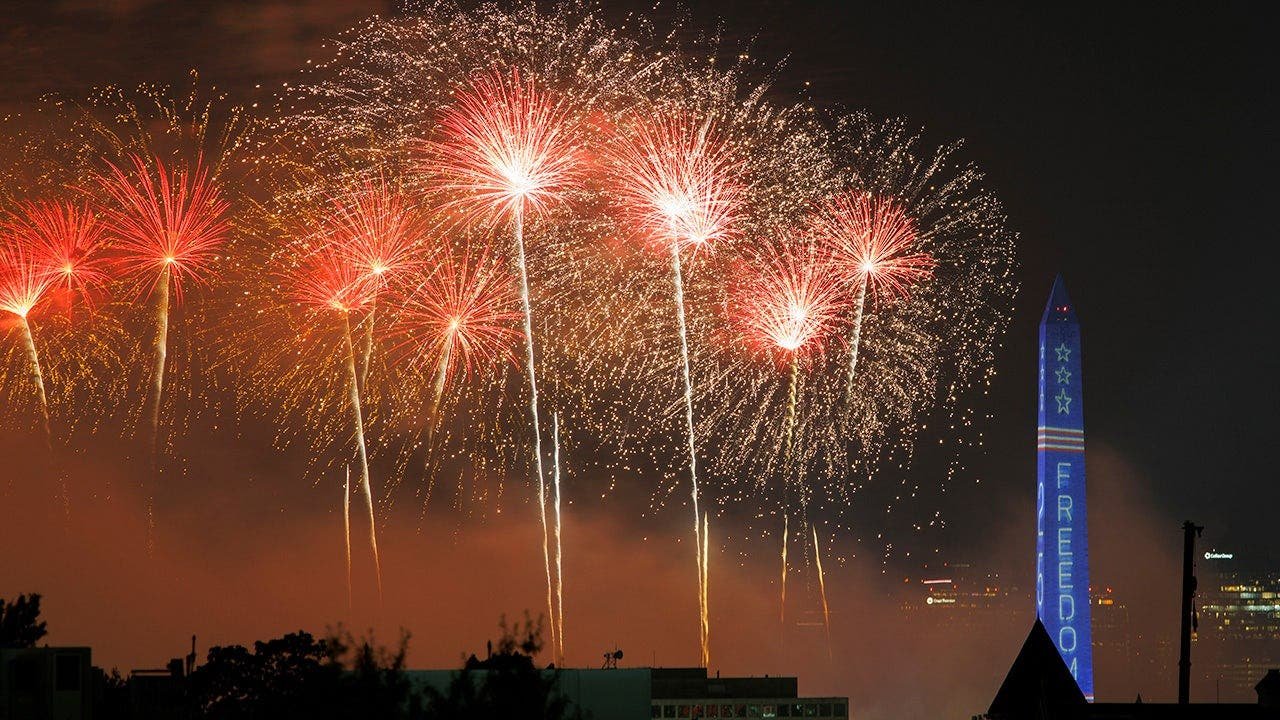
Fireworks from the Freedom 250 Salute to America Independence Day celebration go off after delays due to a thunderstorm on July 5, 2026, in Washington, D.C. (Kevin Carter/Getty Images)
1826: America’s Jubilee (50th Anniversary)
The nation’s first major milestone came in 1826, marking 50 years since the Declaration of Independence was adopted.
Communities across the country organized celebrations and leaders in Washington, D.C., invited former Presidents Thomas Jefferson and John Adams, two of the last surviving signers of the Declaration of Independence, to attend, but both declined due to poor health, according to the National Archives Foundation. However, history took an extraordinary turn when Jefferson and Adams both died on July 4, just hours apart.
Many Americans saw Jefferson and Adams’ deaths as a remarkable coincidence that added to the symbolism of Independence Day. A memorial service honoring Jefferson and Adams was held in Washington, D.C., while dinners, patriotic events and other commemorations helped establish the tradition of celebrating America’s birthday.
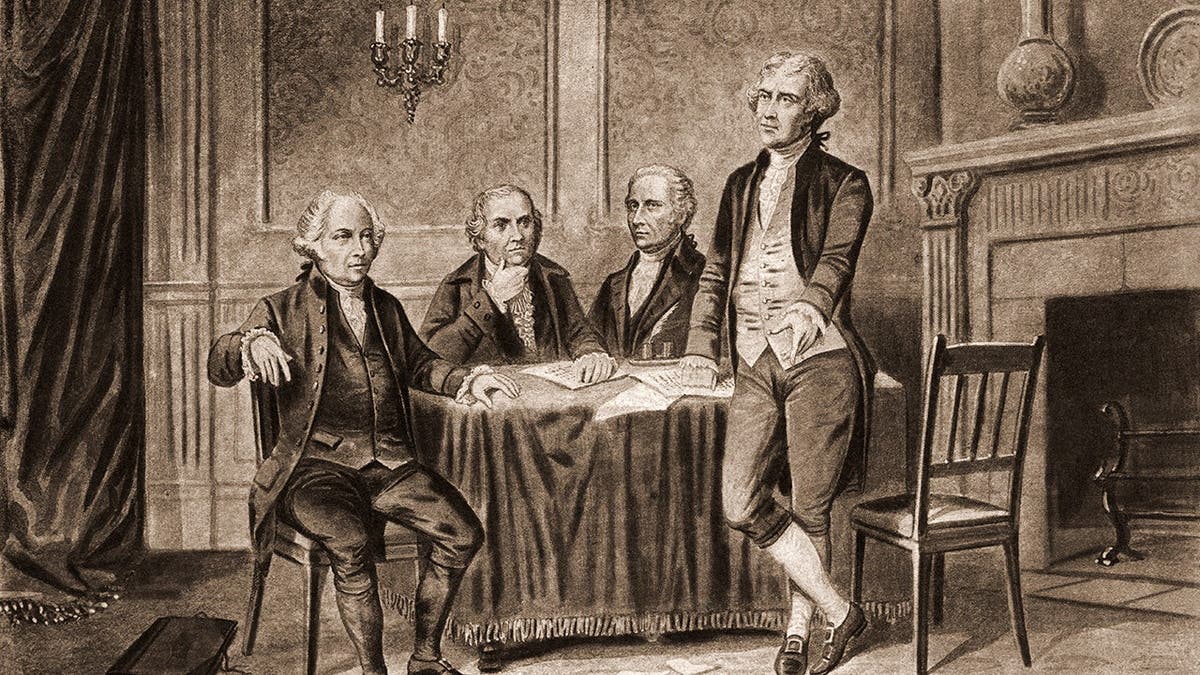
Illustration of four of the Founding Fathers, from left, John Adams (1735-1826), Robert Morris (1734-1806), Alexander Hamilton (1757-1804), and Thomas Jefferson (1743-1826), in 1774. (Stock Montage/Getty Images)
1876: Centennial (100th Anniversary)
The nation celebrated its 100th anniversary in Philadelphia with the 1876 Centennial Exposition, the nation’s first official World’s Fair, which highlighted America’s post-Civil War industrial growth and introduced millions of visitors to groundbreaking new technologies.
The six-month exposition attracted nearly 10 million visitors from around the world to see international arts, cultures and technologies on display, according to the National Archives.
The exposition featured Machinery Hall, where visitors saw new inventions, including Alexander Graham Bell’s first telephone and Thomas Alva Edison’s automatic telegraph. The fair also had a Women’s Pavilion that highlighted the scientific and artistic achievements of women during the suffrage movement.
THE REVOLUTIONARY LANDMARKS WHERE WASHINGTON, ADAMS AND JEFFERSON CHANGED AMERICA
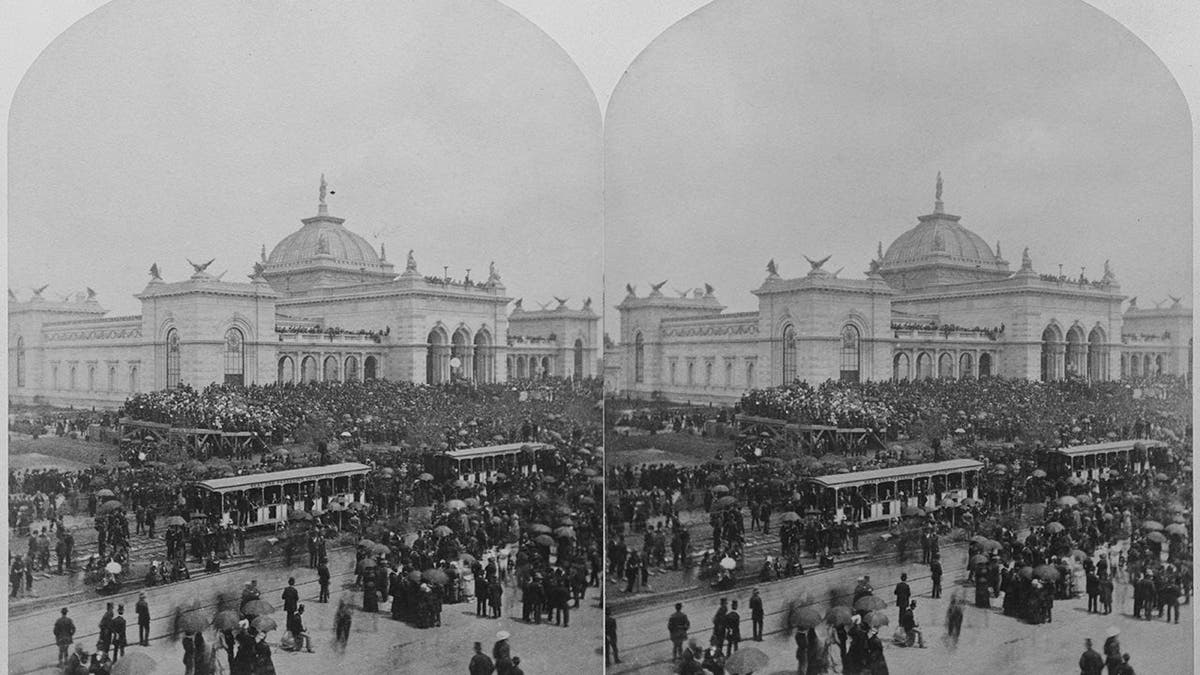
Stereoscopic image showing visitors arriving by tram with the Memorial Hall beyond at the opening of the Centennial International Exhibition, in Philadelphia, 1876. The Centennial Exhibition, which ran from May 20 to Nov. 10, 1876, was the first official World’s Fair to be held in the United States. (Archive Photos/Hulton Archive/Getty Images)
President Ulysses S. Grant approved sending the original Declaration of Independence to Philadelphia for display at the Centennial Exposition, according to the National Archives. Concerns over the document’s deteriorating condition later prompted efforts to preserve the nation’s founding document.
1926: Sesquicentennial (150th Anniversary)
Fifty years later, Philadelphia again hosted a World’s Fair to commemorate the 150th anniversary of the Declaration of Independence.
The 1926 Sesquicentennial International Exposition featured historical recreations and patriotic attractions celebrating the nation’s founding. Organizers built an 80-foot replica of the Liberty Bell illuminated by 26,000 light bulbs that became one of the exposition’s signature attractions, according to The Encyclopedia of Greater Philadelphia.
THE LESSON WE CAN LEARN FROM BICENTENNIAL HISTORY IS TO PARTY LIKE IT’S 1976
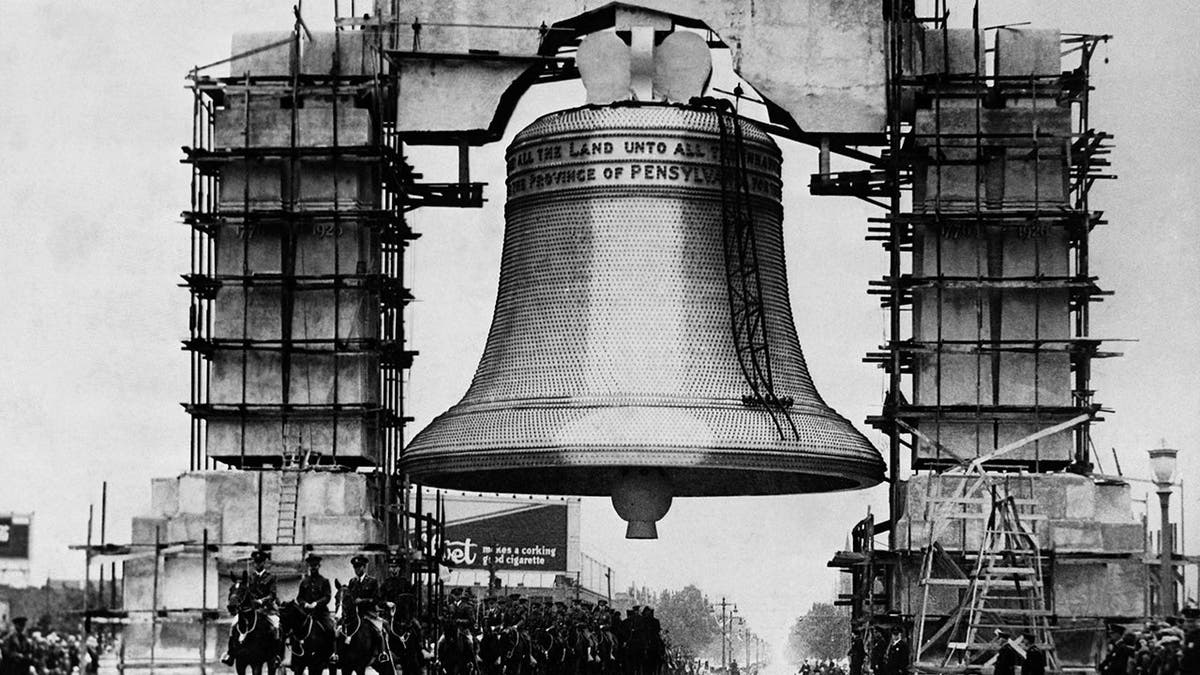
A procession, led by the Troop G Third Cavalry, passes beneath the Liberty Bell, which forms the central feature of a triumphal arch specially constructed for the Sesquicentennial Exposition. The event celebrated the 150th anniversary of the Declaration of Independence. (Hulton-Deutsch/Hulton-Deutsch Collection/Corbis via Getty Images)
Although organizers projected 30 million visitors, fewer than 5 million paid admissions were recorded, and the exposition closed with enormous debts, according to Smithsonian magazine and The Encyclopedia of Greater Philadelphia.
1976: Bicentennial (200th Anniversary)
America’s 200th birthday arrived during a period of recovery following the Vietnam War and the Watergate scandal.
Philadelphia’s bid to host a Bicentennial World’s Fair was canceled in 1972, leaving the city’s Bicentennial commemoration to move forward as national organizers encouraged celebrations across the country, according to the Encyclopedia of Greater Philadelphia.
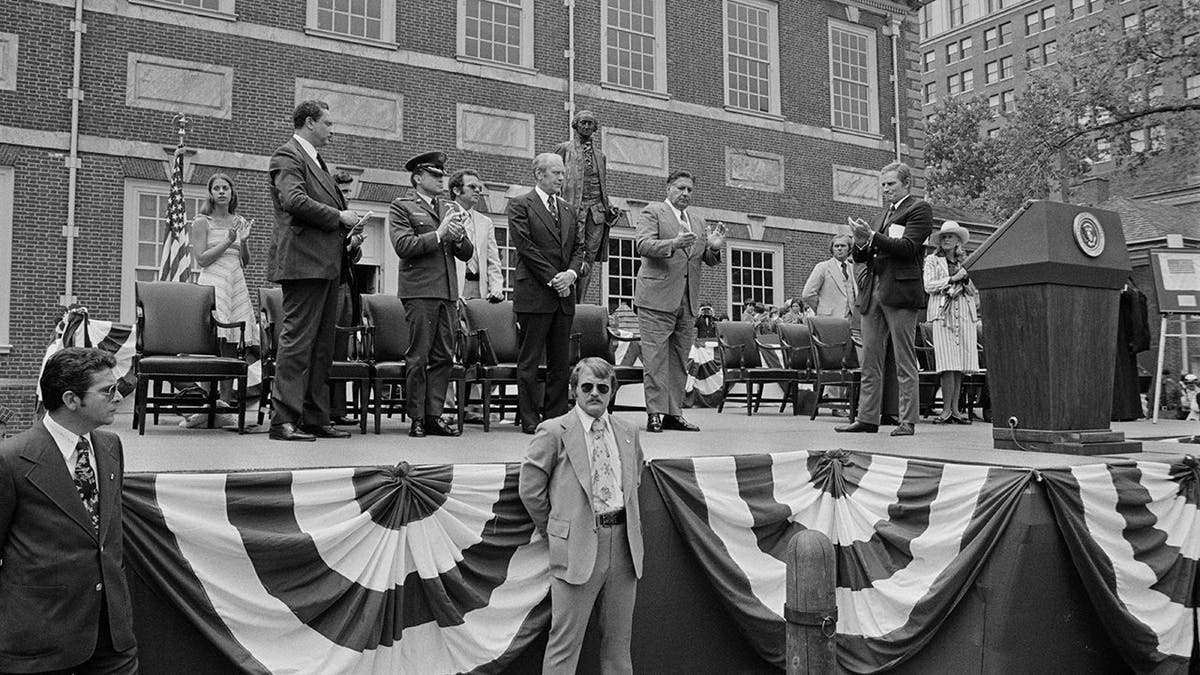
President Gerald Ford and Charlton Heston participate in U.S. bicentennial celebrations in Philadelphia on July 4, 1976. (Henri Bureau/Sygma/Corbis/VCG via Getty Images)
CLICK HERE TO DOWNLOAD THE FOX NEWS APP
About 66,000 recognized events were held across the country, according to the Gerald R. Ford Presidential Library and Museum. Signature celebrations included Operation Sail, which brought more than 200 tall ships to New York Harbor, and the American Freedom Train, which traveled more than 25,000 miles across the country carrying historic artifacts, documents and works of art.
politics, america 250, celebrations, donald trump, washington dc, philadelphia
INTERNACIONAL
Portazo de último momento: Buckingham afirma que el príncipe Harry no se alojará en el palacio
La razón de la cancelación
La batalla del Palacio
Un palacio de 240 habitaciones
En una residencia privada
NEWYou can now listen to Fox News articles!
A popular stretch of California’s Mendocino County coastline is being handed over to an Indigenous peoples group after a Gov. Gavin Newsom-backed state commission approved the transfer of 136 acres of beach and coastal bluffs.
The property, which includes Blues Beach just south of Westport, will be transferred from the California Department of Transportation (Caltrans) to Kai Poma, a nonprofit founded by representatives of the Sherwood Valley Band of Pomo Indians, Round Valley Indian Tribes and Coyote Valley Band of Pomo Indians.
Caltrans gave final regulatory approval to the deal on June 26.
«For the first time in California’s history, land managed by Caltrans and owned by the state was transferred to Kai Poma, a nonprofit established by three local Native American tribes with ancestral ties to the region,» Caltrans District 1 announced in a statement last week. «Once transferred, Kai Poma will own and maintain the 136-acre site and protect sensitive natural resources and Native American cultural resources.»
NEWSOM’S CALIFORNIA RAIL PROJECT NOW EXPECTED TO COST $126B, OFFICIAL ADMITS, WITH STILL NO TRACKS LAID
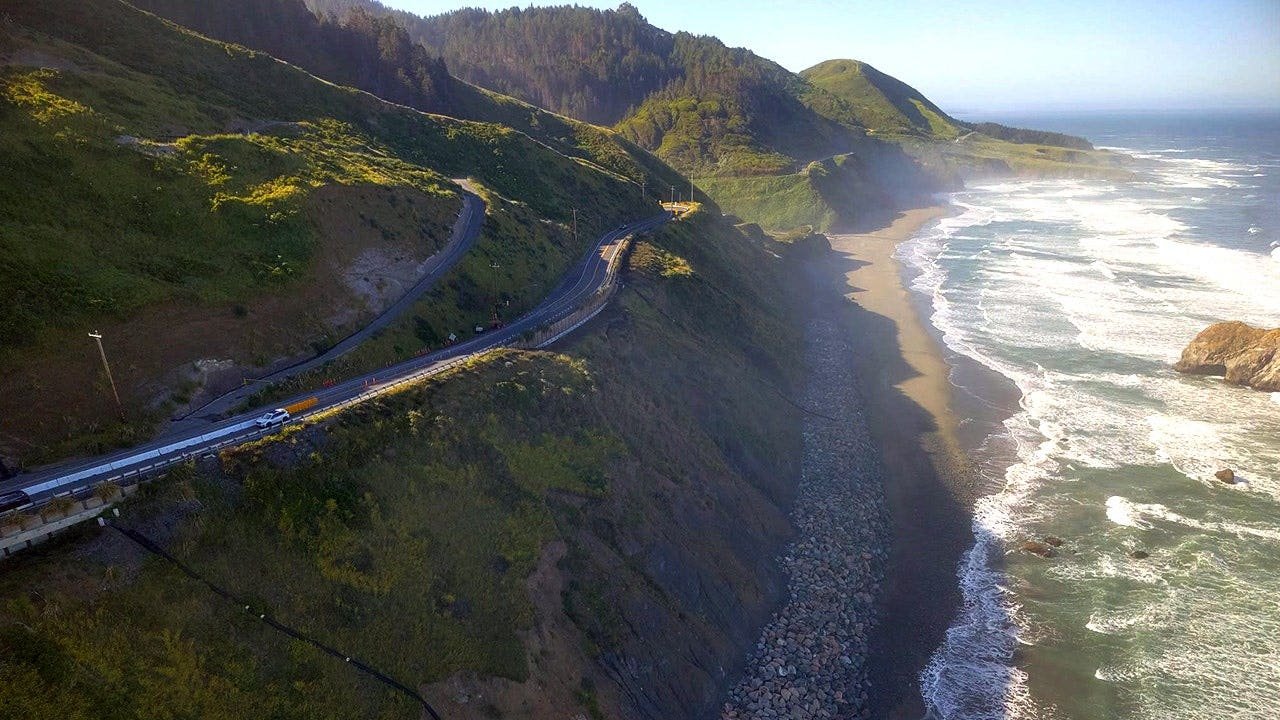
Once transferred, Kai Poma will own and maintain the 136-acre site and protect sensitive natural resources and Native American cultural resources that includes Blues Beach in California. (Caltrans)
The state acquired the windswept shoreline and rocky bluffs in the 1960s as part of plans tied to Highway 1 expansion and the creation of a scenic overlook for motorists, according to the California Coastal Commission.
In recent years, the beach has drawn large summer and holiday crowds, with public access largely unregulated. State planning documents say visitors have camped and partied on the beach, driven through sensitive areas, damaged cultural resources and left trash behind.
NEWSOM TELLS GEORGIA CROWD, ‘I AM LIKE YOU… I’M A 960 SAT GUY’
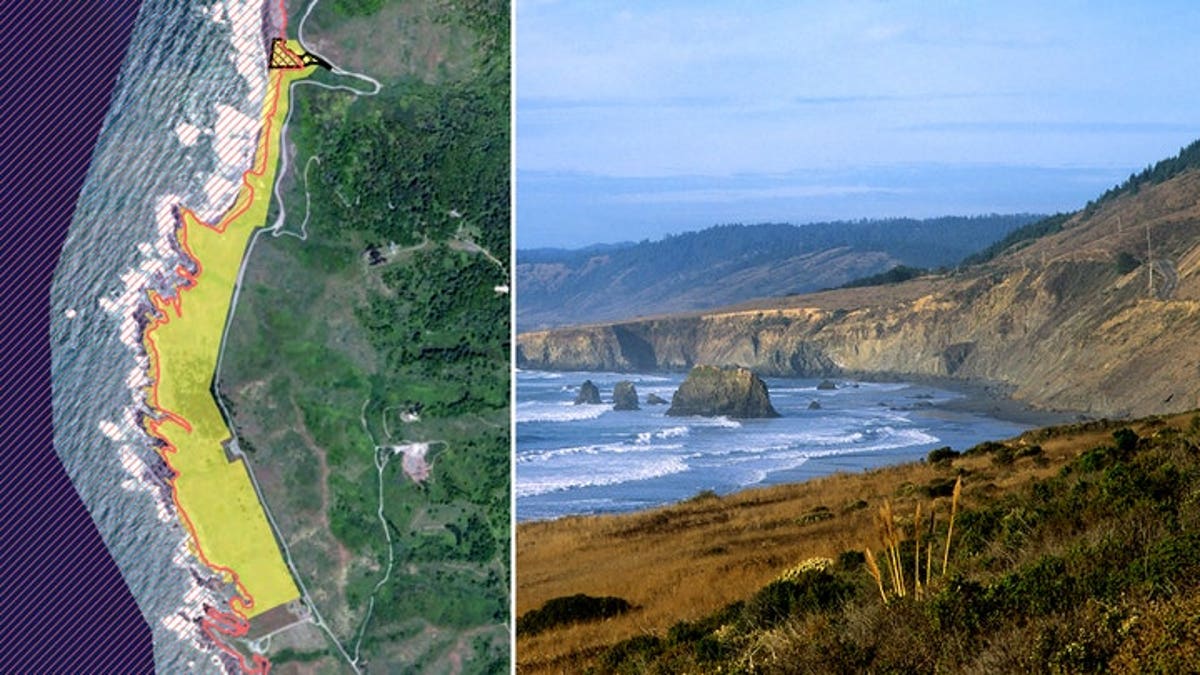
The Blues Beach Project turns over a portion of the Mendocino, California, coast to three tribes. (Wolfgang Kaehler/LightRocket via Getty Images)
Tribal leaders have described the land as culturally and spiritually significant. The coastal waters are used for traditional gathering, including seaweed and abalone, and the shore has hosted youth cultural camps.
Kai Poma is expected to conduct cultural, archaeological and environmental surveys before developing a long-term resource management plan for the land. The nonprofit has also worked with the Coastal Commission on a public access plan that will keep the property open to visitors from sunrise to sunset.
The transfer required years of work and a change in state law. Until 2021, Caltrans did not have authority to transfer state-owned property to tribal governments. That changed when Newsom signed legislation sponsored by state Sen. Mike McGuire, D-Healdsburg, allowing such conveyances.
«With 136 acres now officially transferred into tribal stewardship, one of the most spectacular stretches of the Mendocino Coast will be forever protected,» McGuire said in a statement. «This agreement, the first of its kind in California, gives these three dynamic Native American tribes the rightful opportunity to reclaim sacred lands and cultural traditions on this special piece of earth. And it’s about damn time.»
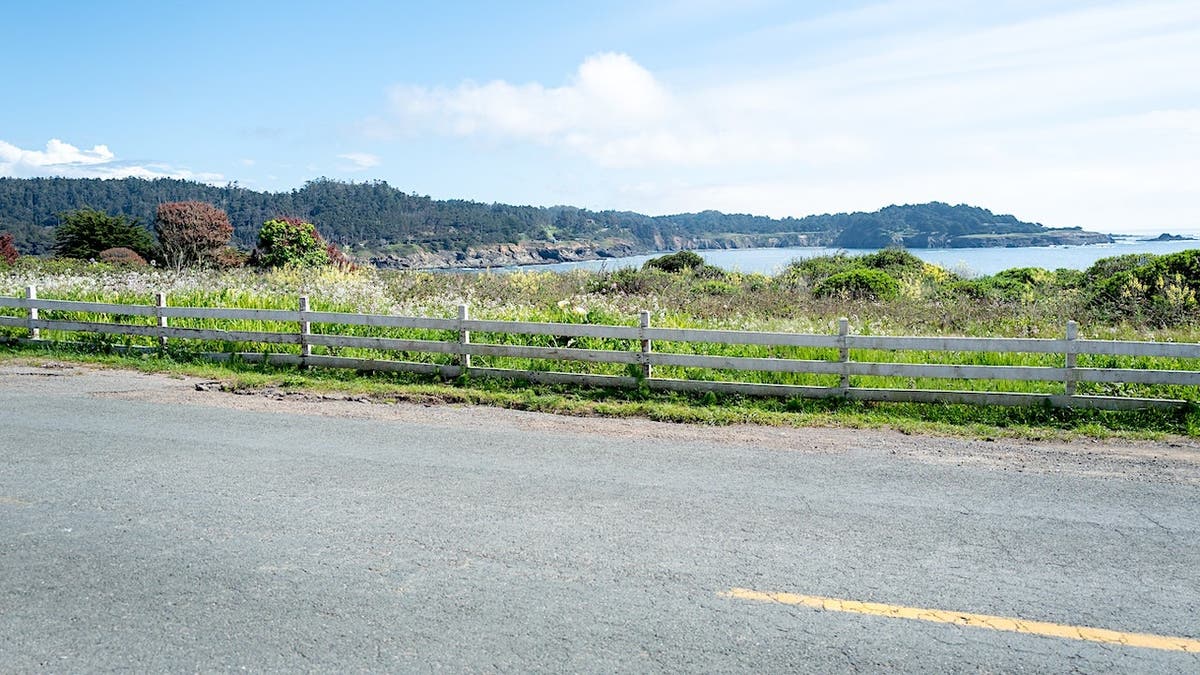
California coastline north of Mendocino will be transferred to a group of Native American tribes after final approval last month. (Smith Collection/Gado)
SMITHSONIAN’S NATIONAL MUSEUM OF AMERICAN HISTORY PROMOTES ‘EXTREME POLITICAL ACTIVISM,’ WH REPORT ALLEGES
The law bars commercial activity on the property and requires continued public access.
Supporters say the transfer will protect one of the region’s most scenic stretches of coast while returning sacred land to the descendants of the people who historically stewarded it.
«This is beyond huge,» Sherwood Valley Band of Pomo Indians Chair J. Carlos Rivera told the Los Angeles Times. «It’s enormous from our tribal perspective that we are basically obtaining the land that our people once lived on before colonization.»
CLICK HERE TO DOWNLOAD THE FOX NEWS APP
With the commission’s approval complete, Caltrans staff are expected to record the deed transferring the property from the state to Kai Poma.
Fox News Digital reached out Newsom, the coastal commission, Round Valley Indian Tribes and Coyote Valley Band of Pomo Indians for comment.
gavin newsom, california, politics, heritage, land

El juez Martín Irurzun tuvo otro fallo adverso en su intento de continuar como camarista federal

Diputados y senadores libertarios viajarán a Tucumán por el 9 de julio para reforzar la foto de unidad del Gobierno

La Confederación Brasileña respaldó a Raphael Claus, el árbitro que expulsó a Folarin Balogun

Histórica marca de artículos de camping entró en concurso: tiene deudas por $7.100 millones

¡Prometió y cumplió! Mauro Icardi presentó las pruebas de la traición que puede arruinar a Yanina Latorre: «Cinco años de relación en Miami»

El Gobierno pidió que “consultores técnicos” revisen un concurso judicial clave para la política

Uno por uno, los gremios que cobrarán aumento de sueldo en julio 2026

Russia unleashes nearly 600 missiles and drones on Kyiv in deadliest strike since May

Six Kurdish fighters killed in IRGC ambush as clashes spread across western Iran

Ex-Obama advisor mocked after questioning Chicago’s response to unconscious man: ‘Own a mirror?’

 ECONOMIA3 días ago
Marcha atrás judicial en la venta de SanCor: la Justicia suspendió el proceso tras el recurso de la empresa Fidulac
- SOCIEDAD3 días ago
Imprudencia, choque y milagro: un camión embistió a un auto estacionado y una beba de un año salió despedida hacia el asfalto
- POLITICA3 días ago
Cambio clave para las elecciones: el Gobierno no descarta una alianza más grande en la Provincia para ganarle al kirchnerismo