INTERNACIONAL
Major appeals court declares New Jersey AR-15 ban unconstitutional in landmark Second Amendment ruling


NEWYou can now listen to Fox News articles!
A federal appeals court on Friday struck down New Jersey’s ban on semiautomatic rifles and magazines capable of holding more than 10 rounds, prompting the National Rifle Association (NRA) to call the decision a «historic victory» in a case the gun-rights organization has litigated since 2018.
In a sweeping en banc ruling, the Philadelphia-based 3rd U.S. Circuit Court of Appeals held that New Jersey’s assault-firearm and large-capacity magazine restrictions violate the Second Amendment.
The court expanded a lower court’s ruling by declaring the state’s so-called «assault-firearm» ban unconstitutional as it applied to the full class of semiautomatic rifles, not just the AR-15, and also struck down New Jersey’s ban on semiautomatic rifles and its restrictions on magazines capable of holding more than 10 rounds.
DOJ SUES DENVER OVER BAN ON ‘ASSAULT WEAPONS’ AS CITY’S DEM MAYOR SAYS IT ‘WILL NOT BE BULLIED’
The 3rd U.S. Circuit Court of Appeals in Philadelphia held that New Jersey’s assault-firearm and large-capacity magazine restrictions violate the Second Amendment. (Getty Images, File)
«This is an NRA case that we’ve been litigating since 2018, so it’s a monumental win,» Justin Davis, managing director of public affairs for the National Rifle Association, told Fox News Digital.
The NRA celebrated the decision in a statement, calling it a major victory for gun owners nationwide.
«Today marks a historic victory for the NRA, the Second Amendment, and law-abiding Americans,» the organization said.
INSIDE TRUMP’S UNPRECEDENTED BATTLE PLAN TO EXPAND SECOND AMENDMENT RIGHTS THROUGH JUSTICE DEPARTMENT

A male buyer signs paperwork beside an AR-15 rifle with a scope in a gun shop, verifying the purchase in compliance with state regulations. (Svetlana Day via Getty Images, File)
«The Third Circuit has struck down these unconstitutional so-called assault weapons bans and magazine bans in New Jersey, affirming what we’ve always known: the right to keep and bear arms, including commonly-owned rifles and standard-capacity magazines, is fundamental and cannot be infringed by politicians who prioritize control over constitutional freedoms.»
«This ruling protects the rights of millions of responsible gun owners in the Garden State and serves as another benchmark in our efforts to dismantle gun control across the country.»
Writing for the majority, U.S. Circuit Judge Arianna Freeman, a Biden appointee, said the Supreme Court’s Second Amendment decisions in District of Columbia v. Heller, New York State Rifle & Pistol Association v. Bruen and subsequent cases require governments to show modern firearm restrictions are consistent with America’s historical tradition of firearm regulation.
Applying that framework, the court concluded New Jersey failed to meet that burden.
LAWYER WHO BEAT HAWAII GUN LAW CALLS STATE’S RELIANCE ON BLACK CODE ‘DISGRACEFUL’

The NRA celebrated the decision in a statement, calling it a major victory for gun owners nationwide.
The majority held that New Jersey’s ban on semiautomatic rifles violates the Second Amendment and reversed the district court’s decision upholding the state’s ban on magazines capable of holding more than 10 rounds.
The opinion said New Jersey enacted its «assault-firearms law» in 1990, following a California elementary school shooting.
According to the court, the governor at the time described the banned firearms as «guns capable of wholesale destruction» that were «designed to wipe out the greatest number of people in the shortest possible time.»
CLICK HERE TO DOWNLOAD THE FOX NEWS APP
The majority concluded that semiautomatic rifles and magazines capable of holding more than 10 rounds are protected by the Second Amendment and that New Jersey failed to demonstrate the restrictions are consistent with America’s historical tradition of firearm regulation.
Several judges dissented, arguing the banned firearms are unusually dangerous military-style weapons that states have long had authority to regulate and that the decision conflicts with every other federal appeals court to uphold similar state restrictions.
second amendment, new jersey, federal courts, law, politics












INTERNACIONAL
Marcel Duchamp abandonó el arte por el ajedrez y ahora el MoMA lo homenajea con una megapartida
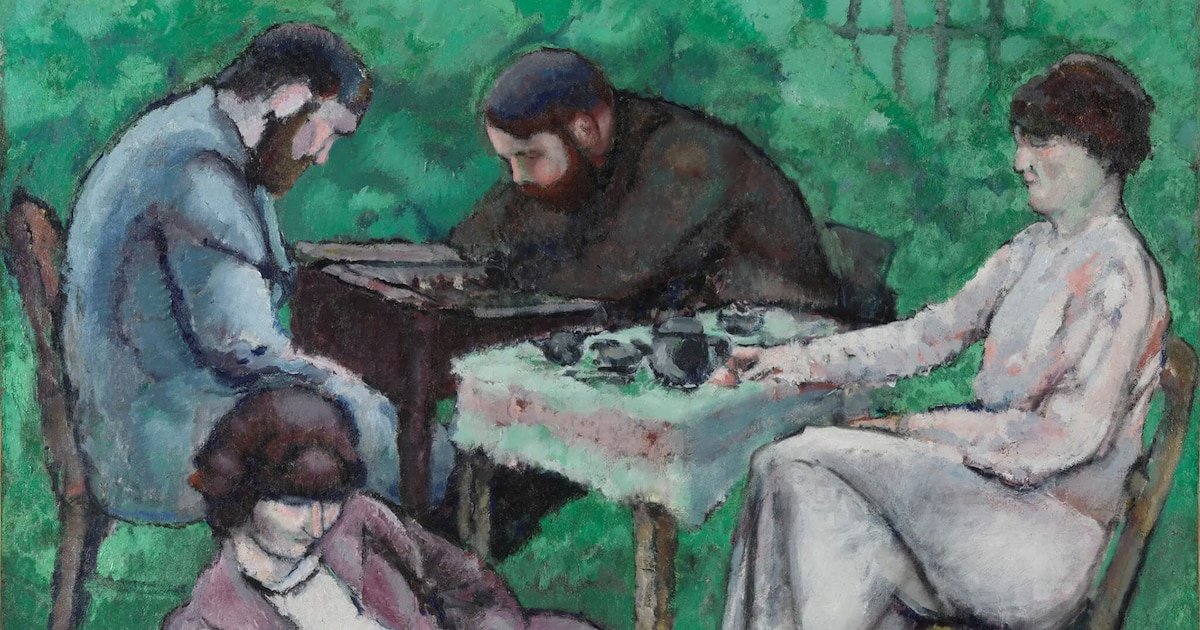
Marcel Duchamp, fundador del movimiento dadaísta, es probablemente el primer artista que mejoró su reputación al anunciar su abandono del arte. Prefería, según él, dedicar su tiempo a jugar al ajedrez. Este francés, afincado en Nueva York, estudiaba asiduamente las jugadas y participaba en torneos profesionales. Su supuesta retirada de la creación artística acabó considerándose un triunfo final en sí mismo.
El martes 28 de julio, en una celebración deportiva del que habría sido el 139.º cumpleaños de Duchamp, el MoMA de Nueva York organizará un evento ajedrecístico en su honor. Los visitantes podrán subir a la sexta planta para ver la extensa retrospectiva de Duchamp, o bien quedarse en el vestíbulo, donde Susan Polgar, una célebre gran maestra nacida en Hungría y residente en Estados Unidos, se enfrentará a unos 50 artistas, historiadores y otros miembros del mundo del arte en una partida simultánea, es decir, una exhibición en la que juega contra todos los participantes, en 50 tableros diferentes, al mismo tiempo.

A decir verdad, sus rivales en el mundo del arte no son precisamente grandes talentos del ajedrez. “Cambiaría toda mi carrera en historia del arte por ser un gran jugador de ajedrez, pero no soy nada bueno”, dijo Francis Naumann, antiguo marchand de arte y destacado estudioso de Duchamp, quien impulsó el evento del MoMA. El objetivo es recrear una partida simultánea que tuvo lugar en el museo en 1974, durante la primera retrospectiva del artista francés.
Duchamp, un hombre delgado y reservado, con el rostro huesudo de un santo y aficionado a los puros cubanos, murió como artista-pensador, que impulsó la pintura y la escultura más allá de la mera artesanía, acercándolas a la filosofía. Aunque inicialmente fue criticado por dibujar un bigote y una perilla en una reproducción de la Mona Lisa y por elevar una pala de nieve comprada en una tienda a la categoría de arte, sentó las bases del movimiento del arte conceptual que despegó en este país en la década de 1960 y lo consagró como su enigmático profeta.
Para él, el ajedrez comenzó como un asunto familiar. La retrospectiva del MoMA se inaugura con una pintura temprana de gran fascinación psicológica, La partida de ajedrez (1910), ambientada en un jardín salpicado de vegetación, que representa a sus dos hermanos mayores, también artistas, en plena partida, sumidos en una profunda concentración. Su cercanía contrasta con la distancia de sus esposas, figuras rígidas que miran en direcciones opuestas, aparentemente absortas en pensamientos ajenos al ajedrez.
Otras mujeres de la familia manifestaron su aburrimiento con el ajedrez de forma más dramática. Man Ray, el dadaísta nacido en Brooklyn, afirmó en sus memorias que la primera esposa de Duchamp, Lydie Sarazin-Levassor —cansada de pasar largas noches sola en un departamento de París mientras su marido salía a jugar al ajedrez con sus amigos— demostró su descontento pegando las piezas del juego al tablero. Si bien esto no lo curó de su adicción, sí precipitó el divorcio de la pareja.

Afortunadamente, el segundo matrimonio de Duchamp, con Alexina (Teeny) Sattler, quien creció en Cincinnati, fue mucho más armonioso. Ayudó que ella fuera una apasionada del ajedrez. En 1959, la pareja se mudó a West 10th Street en Greenwich Village expresamente para vivir frente a su lugar favorito, el Marshall Chess Club, donde jugaban a diario, y guardaron silencio sobre Étant Donnés, la instalación clandestina del tamaño de una habitación que lo absorbió durante años a pesar de su jactancia pública de haber dejado de hacer arte.
“La vida empieza a los 76 con una exposición individual”, escribió Duchamp con optimismo a un amigo en 1963, cuando el Museo de Arte de Pasadena (actualmente Museo Norton Simon) organizó la primera retrospectiva de su obra. En una famosa fotografía tomada en el museo, aparece sentado jugando al ajedrez con una mujer desnuda, cuyo cabello oscuro le cubre el rostro. Se trataba de Eve Babitz, una estudiante de arte de 20 años que más tarde alcanzaría renombre como novelista y autora de memorias en California.
La fotografía de Julian Wasser, reproducida con frecuencia, suele considerarse un icono de la audacia vanguardista. Sin embargo, también puede interpretarse como claramente anticuada. La imagen del genio masculino septuagenario disfrutando de la atención junto a una mujer anónima, desnuda y mucho más joven, puede parecer una traición al espíritu empoderador femenino del ajedrez.
Y, francamente, el ajedrez es un juego protofeminista. (Aclaro que participaré —vestida— en la partida simultánea del MoMA).
Inventado originalmente en la India en el siglo VI, el ajedrez fue rediseñado en la Edad Media para reflejar el poder que ostentaban las reinas en la sociedad feudal y ofrecer un entretenimiento a los nobles que vivían en sus sombríos castillos. De todas las piezas, la reina es la única que puede desplazarse rápidamente por múltiples casillas en todas las direcciones en un solo movimiento. El rey, en cambio, solo puede moverse de una casilla en una, como si sufriera de fascitis plantar.
¿Podemos afirmar que el ajedrez representa una forma de arte? Duchamp, por supuesto, creía que sí. “He llegado a la conclusión de que, si bien no todos los artistas son ajedrecistas, todos los ajedrecistas son artistas”, comentó generosamente en 1952, en un discurso ante la Federación de Ajedrez del Estado de Nueva York.

Por otro lado, muchos intelectuales han descartado el juego como una pérdida de tiempo. Si bien se sabe que Albert Einstein jugaba, declaró públicamente que el ajedrez reprimía el libre pensamiento, “encadenando la mente y el cerebro”.
Algunos de los participantes en la partida simultánea del MoMA comparten una visión igualmente poco romántica del juego. “El ajedrez no es una forma de arte”, afirma Amy Cappellazzo, destacada asesora artística. “Hace por tu cerebro lo que el yoga hace por tu cuerpo. En el arte, debe existir la posibilidad de innovación, y en el ajedrez no existe tal posibilidad. No se pueden cambiar las reglas del juego”.
Es cierto. El ajedrez, al fin y al cabo, es un juego de guerra o estrategia militar ambientado en un minicampo de batalla. En mi opinión, sigue estando reñido con la esencia misma de la creación artística, que exige que los artistas se adentren en su interior e intenten dar vida a nuevas formas, en lugar de aplastar a la competencia.
Los artistas harían bien en ignorar a sus enemigos y centrarse en su propio desarrollo creativo. “El principal enemigo de un artista es el tiempo”, afirmó Marcel Dzama, artista canadiense afincado en Brooklyn, cuyos dibujos y películas neosurrealistas están repletos de imágenes de tableros de ajedrez en blanco y negro, y que participará en la muestra simultánea del MoMA.

Independientemente de si el ajedrez es o no una forma de arte, el diseño de los tableros de ajedrez sin duda lo es. La escultora Carol Bove, cuya vibrante retrospectiva en el Museo Guggenheim se encuentra en sus últimas semanas, ha provisto el vestíbulo del museo con cinco elegantes mesas de ajedrez, cuyos caballos y alfiles han sido transformados en pesadas piezas de acero, cada una una miniescultura minimalista. Se invita a los visitantes a sentarse y jugar, desafiando las habituales normas de no tocar.
El MoMA posee una gran cantidad de juegos de ajedrez diseñados por artistas; sin embargo, si tocas el Juego de Ajedrez de Man Ray, de alrededor de 1926, un emblema del buen gusto en el diseño que ha sido ampliamente replicado, te expulsarán inmediatamente del edificio. Piezas extragrandes en plata y negro —conos, pirámides y otras formas geométricas austeras— se alzan desde un plano horizontal, dotando a un campo de batalla feudal de la energía vertical y los reflejos especulares de una ciudad del siglo XX.
Por cierto, Man Ray describió su nivel de ajedrez como el de un simple “empujador de madera”, según el nuevo libro académico de Larry List, Atracción permanente: Man Ray y el ajedrez.

Sin duda, no se ha escrito lo suficiente sobre otro juego de ajedrez del MoMA, el Ajedrez Blanco de Yoko Ono, de alrededor de 1966, un instrumento brillantemente eficaz diseñado para frustrar a los asesinos y promover una visión del mundo que invita a la paz. La creación de Ono, un tablero completamente blanco con piezas blancas, impide a los jugadores distinguir sus reyes y reinas de los de su oponente, condenando así cualquier intento de vencer al enemigo. (Las versiones posteriores del juego se titulan Juega con confianza).
Hoy, en lugar del dadaísmo, tenemos datos y plataformas de juego como Chess.com, que han impulsado un auge mundial en la popularidad del ajedrez. Una oleada de jugadores más jóvenes llegó en 2020, cuando la serie de Netflix Gambito de dama se convirtió en un éxito. Reemplazó la imagen popular de los nerds del ajedrez con el seductor resplandor de Beth Harmon (Anya Taylor-Joy), una pelirroja de ojos grandes que lucía un peinado al estilo de principios de los años 60 y se quedaba despierta en la cama por las noches, visualizando las jugadas de ajedrez en el techo.

Es cierto que era adicta a los sedantes, un detalle completamente irreal, según Judith Polgar, la gran maestra que preside la partida simultánea del MoMA. En una reciente conversación telefónica, Polgar, de 57 años, la mayor de tres hermanas que comenzaron su vida en Budapest como prodigios del ajedrez, y autora de unas memorias con un título tan significativo como Reina Rebelde, remarcó que no habría podido convertirse en la primera mujer en obtener el título de gran maestra en 1991 si hubiera seguido el ejemplo de Beth Harmon, que consumía pastillas. “Creo firmemente en la importancia de tener un cuerpo sano y una mente sana”, explicó. “Nunca bebí alcohol, excepto para el brindis de fin de año”.
En la próxima partida simultánea del MoMA, Polgar ha accedido amablemente a conceder ventaja de tiempo a sus oponentes. Tendrá mucho menos tiempo que los demás para realizar sus movimientos. Deberá desplazarse de un tablero a otro (y al siguiente, y al siguiente), calculando 50 movimientos en un abrir y cerrar de ojos, mientras que cada uno de sus oponentes utiliza ese tiempo para realizar un solo movimiento.
Al igual que Duchamp, cree que las partidas de ajedrez poseen una belleza feroz. “Cuando uno contempla el techo de la Capilla Sixtina de Miguel Ángel, sabe que es hermoso, y lo mismo ocurre con el ajedrez, solo que se necesita más conocimiento para comprenderlo», dijo. “Hay que saber cómo se mueven las piezas para apreciar la belleza que tenemos delante. Es una belleza oculta”.
Fuente: The New York Times
ajedrez,pintura,El Juego de Ajedrez,figuras,exterior
INTERNACIONAL
Estados Unidos ataca puentes, puertos y centrales eléctricas en Irán, que responde con misiles en una grave escalada de la guerra

Ataques a puentes e “infraestructura eléctrica” en Irán

Bombardeo a un puerto clave
Irán ataca Qatar y Kuwait

La disputa por el estrecho de Ormuz
INTERNACIONAL
Time enough at last: What’s next after the House passes bill to do away with Daylight Saving Time?

US House passes the Sunshine Protection Act
FOX News Chief Congressional Correspondent Chad Pergram discusses the latest updates on the Sunshine Protection Act, which aims to make daylight saving time permanent, removing the need to change clocks twice a year.
NEWYou can now listen to Fox News articles!
There are 86,410 seconds in a day.
1,440 minutes.
The most daylight in Washington, D.C. emerges in June, stretching 14 hours and 57 minutes.
The shortest is near the winter solstice, clocking in at a scant nine hours and 29 minutes.
Sunrise light hits the U.S. Capitol dome. (Bill Clark/CQ-Roll Call, Inc via Getty Images)
Congress can’t change any of that. But it can alter how we perceive it.
Lawmakers routinely fork over to public tax cuts, economic stimulus and the elimination of a cumbersome law or policy.
Awarding something to the voters is part of the Congressional DNA.
So even though time is finite, lawmakers are again trying to give people something: more daylight.
The House of Representatives overwhelmingly approved the Sunshine Protection Act this week, 308-117.
HOUSE PASSES SUNSHINE PROTECTION ACT TO MAKE DAYLIGHT SAVING TIME PERMANENT
No. Our sun wasn’t in jeopardy of going supernova — although it is about halfway through its 10 billion year lifespan. Lawmakers weren’t safeguarding it. But they wanted you to think they were.
The Sunshine Protection Act permanently shifts the U.S. onto Daylight Saving Time. That’s a congressionally contrived temporal statute.
In other words, with adoption of the bill, we will never shift back to Standard Time again.
No more «springing forward» or «falling back.»
We’re on Daylight Saving Time now. And we are here to stay if this becomes law.
«Polling shows that two-thirds of Americans want to unlock the clock. My bill is simply a solution to make Daylight Saving Time permanent,» said Rep. Vern Buchanan (R-Fla.), one of the chief sponsors of the legislation. «Allowing an extra hour of sunlight in the evening gives families more time for outside sports activities and school.»
An extra hour of sunlight? Really?
In other words, it’s really the same amount of light – or lack thereof – at 7 p.m. under Daylight Saving Time that we could experience at 6 p.m. under Standard Time.
But Congress is in the giving business.
«Why are we forcing families, businesses, and communities to adjust their schedules every spring and fall? The twice-yearly clock change is a relic of the past that no longer reflects the way Americans live,» said Rep. Gus Bilirakis (R-Fla.)
Perhaps it’s an idea whose time has come.

Rep. Vern Buchanan, R-Fla., is a lead sponsor of the Sunshine Protection Act, legislation that would end the twice-yearly clock changes. (Graeme Sloan/Bloomberg via Getty Images)
The biannual time change is maddening.
My mother taught second grade at the same elementary school I attended in rural Ohio.
One year, the school custodian got to work early on the Monday morning after the fall time change. He began to reset the clocks in each classroom. He maneuvered from south to north through the building, updating the clocks in the kindergarten. Then onto the first grade. Second grade after that. Third grade. Finally, fourth grade.
But as you traversed the school, each clock ran two to three minutes behind the one the custodian set previously.
We theorized that he looked at his watch, say around 7:10 a.m. – and proceeded to set each clock to 7:10 – regardless of the actual time. By the time you got to fourth grade, the clocks were nearly 20 minutes behind schedule.
As they say, timing is everything.
Only an episode involving my mother and grandmother tops the school’s time warp.
My mother once called my grandmother to remind her the time change would kick in at 2 a.m. on Sunday.
My grandmother was incredulous.
«You mean I have to sit up until two o’clock in the morning to change it?» she asked.
Establishing a year-around time isn’t something worth losing sleep over. Most just hate the exercise.
HOUSE PASSES DAYLIGHT SAVING TIME REFORM AS TRUMP SIGNALS SUPPORT FOR ENDING CLOCK CHANGE
«People in Tennessee wanted it gone. It’s ridiculous. In the fall it starts getting dark around 5:00. Kind of depresses me. Really kind of a doggy downer. So I’m kind of digging the fact that we’re going to fix it,» said Rep. Tim Burchett (R-Tenn.)
Only one member spoke out in opposition when the House debated the time-change bill: Rep. Madeleine Dean (D-Pa.)
Her grievances focused on why Congress was even considering the legislation when it wasn’t trained on bread-and-butter subjects which could be key in the midterms.
«We aren’t voting on bills right now that would reduce the sky-high costs of food, fuel, health care, or addressing the President’s war in Iran. Instead, we’re considering a bill that was deadly and dangerous in the past, in the ‘70s,» said Dean.
Dean is referring to an experiment in 1974. Congress voted in late 1973 to park the nation on Daylight Saving Time for two solid years. This would help combat the OPEC oil embargo and fuel shortages.
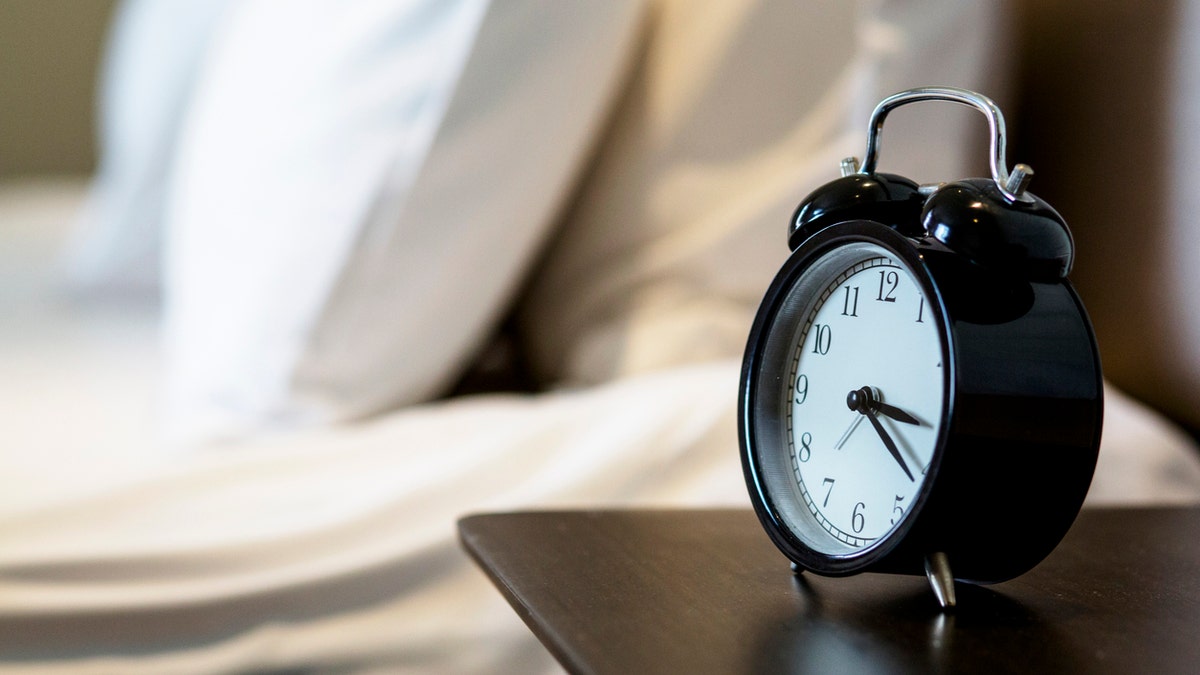
Daylight saving time (DST), or turning the clock by an hour, is ineffective in reducing energy expenditures and lends health consequences, experts say. (iStock)
It was a disaster.
Kids in Washington, DC headed for school around 8:30 a.m. It’s unclear whether the custodian properly adjusted the clocks. But it was «jet black» in DC, according to one news account from the time. Some kids set off for school with flashlights illuminating their paths.
You might not give politics the time of day.
But the time of day infuriated Americans in the mid-1970s.
Seventy-nine percent of those surveyed embraced the year-round time switch in December 1973.
But that number plunged to 42 percent by August 1974.
Future Senate Majority Leader Bob Dole (R-Kan.) offered a measure to torpedo the Daylight Saving Time project. It passed. And by fall, everyone was falling back.
A House panel examining the issue declared that changing the clocks «must be balanced against a majority of the public’s distaste for the observance of Daylight Saving Time.»
In 2022, the Senate unexpectedly approved a year-round Daylight Saving Time bill. But it languished as the House hit the snooze button.
Now the House approved an updated version of the legislation. President Trump called switching the clocks «ridiculous.» Sen. John Kennedy (R-La.) even discussed the issue with him this week.

President Donald Trump has expressed support for ending the twice-yearly clock changes as the Senate considers the Sunshine Protection Act. (SAUL LOEB / AFP via Getty Images)
«He seems to be very enthusiastic about it. I would put it that way. And I think we’re going to move the bill pretty quickly,» said Kennedy. «Some of my colleagues are opposed to it. They’re entitled with their opinion. But I think we’ll have a vote soon.»
If the Senate passes the bill, some people will say it’s about time.
But others, like Madeleine Dean, remember the 1970s.
CLICK HERE TO DOWNLOAD THE FOX NEWS APP
George Santayana declared that «those who cannot remember the past are condemned to repeat it.»
But if you’re running an hour ahead of Daylight Saving Time, perhaps you should switch your clock back and fix it to Standard Time.
donald trump, congress, bills

Pierde impulso un viejo anhelo de Milei para la industria del fútbol

La inflación mayorista se desaceleró a 1,1% en junio y acumuló 33,7% en los últimos doce meses

El horóscopo de hoy: sábado 18 de julio

Los cambios que prepara Lionel Scaloni para enfrentar a España en la del Mundial 2026

Marcel Duchamp abandonó el arte por el ajedrez y ahora el MoMA lo homenajea con una megapartida

Orlando Ferreres explicó cómo el Mundial 2026 puede impactar en las reservas

El machete del arquero inglés en una botella que sorprendió a Messi tras el triunfo: el dardo de un ayudante de Scaloni a Inglaterra

El fuerte cruce público entre Victoria Villarruel y Patricia Bullrich tras los chats filtrados antes de la sesión del Senado

Vaca Muerta promete renta anual del 15% y desata una fiebre inmobiliaria sin precedentes

El Gobierno centralizó en Gustavo Coria la gestión del Fondo de Aportes a las provincias

 DEPORTE2 días ago
El machete del arquero inglés en una botella que sorprendió a Messi tras el triunfo: el dardo de un ayudante de Scaloni a Inglaterra
- POLITICA1 día ago
El fuerte cruce público entre Victoria Villarruel y Patricia Bullrich tras los chats filtrados antes de la sesión del Senado
- POLITICA1 día ago
Adrián Ravier, vocero de Milei: “No coincidimos en el Gobierno con esto de que la gente no llega a fin de mes”