INTERNACIONAL
Nueve huelgas de hambre en cárceles de Cuba, cinco muertes bajo custodia y Kilo 8 señalado: el mes que expone la crisis penitenciaria

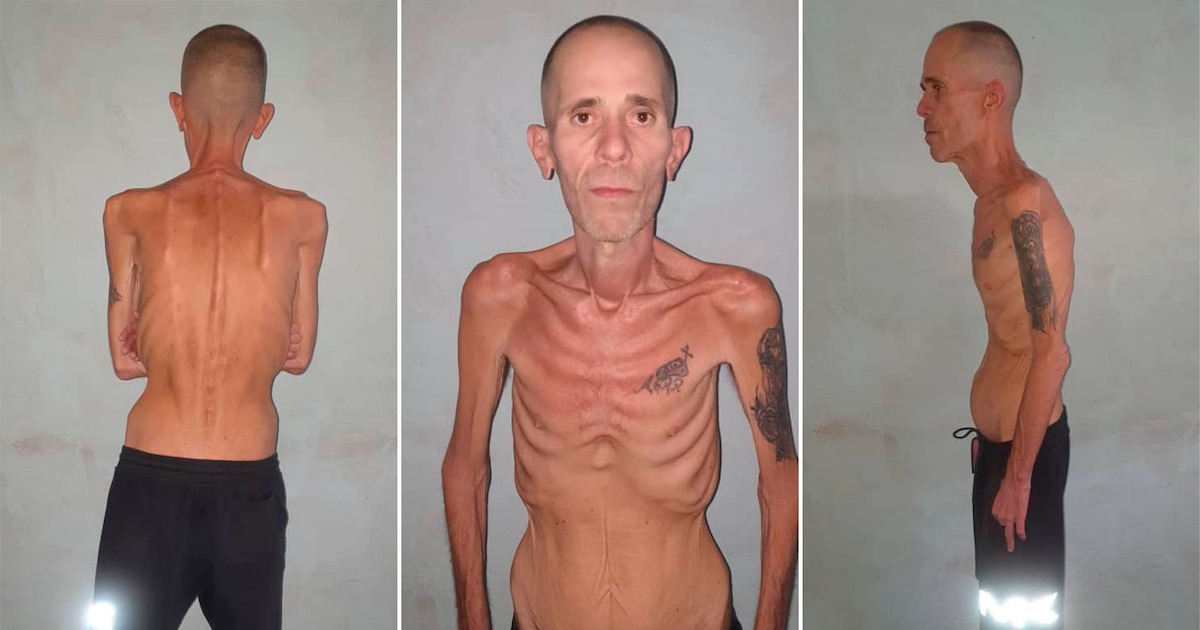
Las cárceles cubanas registraron en agosto de 2026 al menos nueve huelgas de hambre simultáneas y cinco muertes bajo custodia, según el reporte mensual de Cubalex, organización cubana de derechos humanos. Ese mismo mes, la organización identificó a la Prisión Especial Kilo 8, en Camagüey, como el establecimiento con mayor cantidad de hechos represivos del período.
El dato llega en el peor momento del sistema penitenciario cubano: Prisoners Defenders, ONG con sede en Madrid dedicada al monitoreo de presos políticos, contabilizó 1,339 presos políticos en la isla al cierre de agosto, con 463 de ellos afectados por patologías graves vinculadas a la desnutrición y los malos tratos. Es el registro más alto que la organización haya documentado desde las protestas del 11 de julio de 2021.
Kilo 8, epicentro de la represión
Más de la mitad de la población penal de Kilo 8 muestra señales de desnutrición, según Cubalex. El jefe del penal, Leonardo Suárez Reyes, fue señalado como responsable de acciones de intimidación contra quienes denuncian las condiciones internas.
Los presos políticos Ediolvis Marín Mora y Fausto René Ramos acumularon siete incidentes represivos cada uno durante agosto. Marín Mora fue amenazado de muerte por un oficial, enviado a una celda de castigo y trasladado a Kilo 7. Ramos recibió amenazas similares en el mismo penal.
Para la abogada Laritza Diversent, directora ejecutiva de Cubalex, las nueve huelgas simultáneas no son un fenómeno aislado: “Esto es directamente proporcional con la crisis del país: si se agrava el tema del acceso a la alimentación, el agua, servicios básicos, la situación dentro de las prisiones es peor. El sistema de quejas y reclamaciones que ha implementado el Estado no funciona”, dijo a Radio Martí.
Su advertencia fue directa: “A los reclusos lo único que les queda es su propio cuerpo como forma de protesta y llamar la atención. La intención no es la muerte, pero es una forma de presionar”.
La licencia extrapenal llega cuando ya no hay margen
Dos casos recientes ilustran lo que Cubalex describe como una secuencia sistemática: la autorización de libertad provisional llega cuando el estado del recluso ya es irreversible.
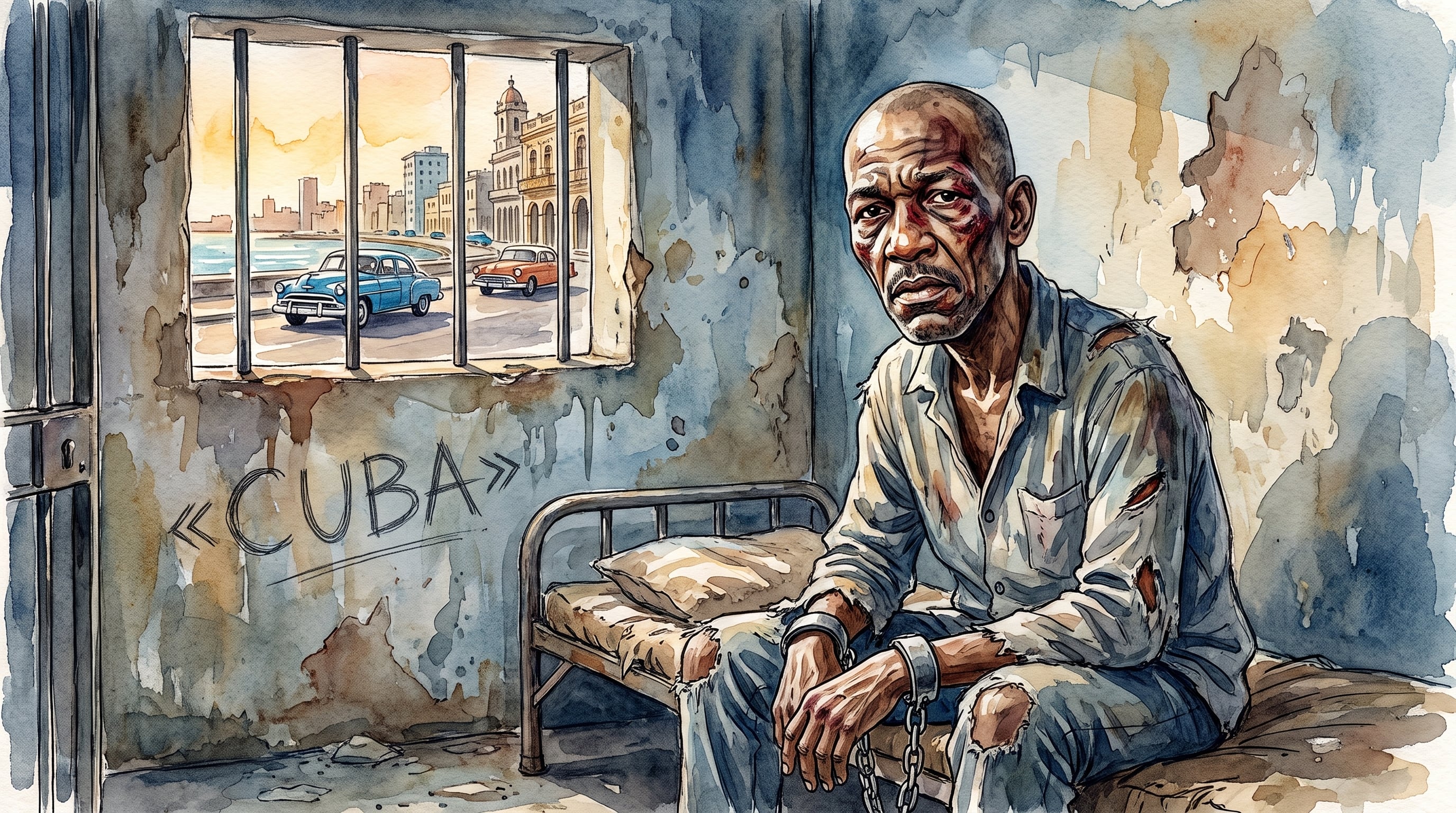
Ermis Bombu Moreira, de 52 años, falleció el 7 de mayo de 2026 en el Hospital General Docente Dr. Agostinho Neto de Guantánamo tras un coma metabólico por inanición. Las autoridades le concedieron la licencia extrapenal días antes del fallecimiento.
Yan Carlos González González murió el 7 de julio de 2025 en el hospital Arnaldo Milián Castro de Santa Clara luego de más de 40 días sin ingerir alimentos.
Cumplía una condena de 20 años por presuntos delitos de sabotaje en Villa Clara. Inició la huelga el 4 de abril de 2025, días después de conocer su sentencia, y como forma de protesta extrema también se cosió la boca y los ojos.
Su tío, Yoel González, describió a Radio Martí la confusión deliberada que rodeó la entrega del documento: “Cuando los médicos sabían que iba a morir, vinieron oficiales y me buscaron a mí para darme la extrapenal. Y como yo no tenía información de cómo estaba él dentro del hospital, como que me alegré porque era su libertad”, relató. Sobre la actitud de las autoridades fue directo: “Se perdió todo el mundo. Cuando me dieron la extrapenal lo dejaron botado”.
La Seguridad del Estado fuerza el abandono de las protestas
Cubalex documentó el caso del preso Alexander Figueroa Gutiérrez: dos funcionarios lo inmovilizaron durante una huelga de hambre, lo ataron a una cama y le introdujeron a la fuerza un pedazo de pan en la boca. Luego le tomaron fotografías para presentar la situación como si hubiera abandonado la protesta voluntariamente. Cuando el episodio trascendió, fue amenazado con una nueva causa penal.
El preso político Danisbel Labrada Morales, también en Kilo 8, inició una huelga el 4 de julio de 2026 tras ser trasladado a una celda de castigo. Tres días después fue encerrado en una celda tapiada: le retiraron la ropa y le negaron el agua potable para obligarlo a comer. Depuso la protesta el 8 de julio.
Entre 2022 y mayo de 2026, al menos ocho reclusos murieron en Cuba tras recurrir a la huelga de hambre, según el Centro de Documentación de Prisiones Cubanas (CDPC) y Cubalex: Fidencio Pérez Diéguez, Andy Reyes Cruz, Roleivis León, Bárbaro Navarrete, Kevin Caraballo, Yan Carlos González González, Maikel Ponte Herrera y Ermis Bombu Moreira.
El médico de Kilo 8: “El criterio médico era secundario”
El médico Pedro Acuña, quien trabajó en la Prisión Especial Kilo 8, confirmó a Radio Martí que durante su etapa en el sistema penitenciario no existía un protocolo médico específico para atender a los reclusos en huelga. La atención se limitaba a controlar los signos vitales y solicitar la intervención de una psicóloga.
Los traslados a un hospital civil solo ocurrían cuando el estado era ya crítico.
Acuña fue enfático sobre la cadena de mando real: “El criterio médico era secundario. Lo que prevalecía era lo que decidieran las autoridades penitenciarias y la Seguridad del Estado”.
Esa práctica contradice los estándares de la Declaración de Malta de la Asociación Médica Mundial (WMA), el Manual de Salud en Prisiones de la Organización Mundial de la Salud (OMS) y los criterios del Comité Internacional de la Cruz Roja (CICR), que coinciden en que las decisiones clínicas deben corresponder exclusivamente al personal sanitario, sin interferencias de la administración penitenciaria.
“Te someten a un brutal sistema de exterminio”
El periodista y expreso político Carlos Michael Morales Rodríguez, detenido tras las protestas del 11 de julio de 2021 y liberado en 2024, describió a Radio Martí la lógica que lo llevó a recurrir varias veces a la huelga durante su encarcelamiento.
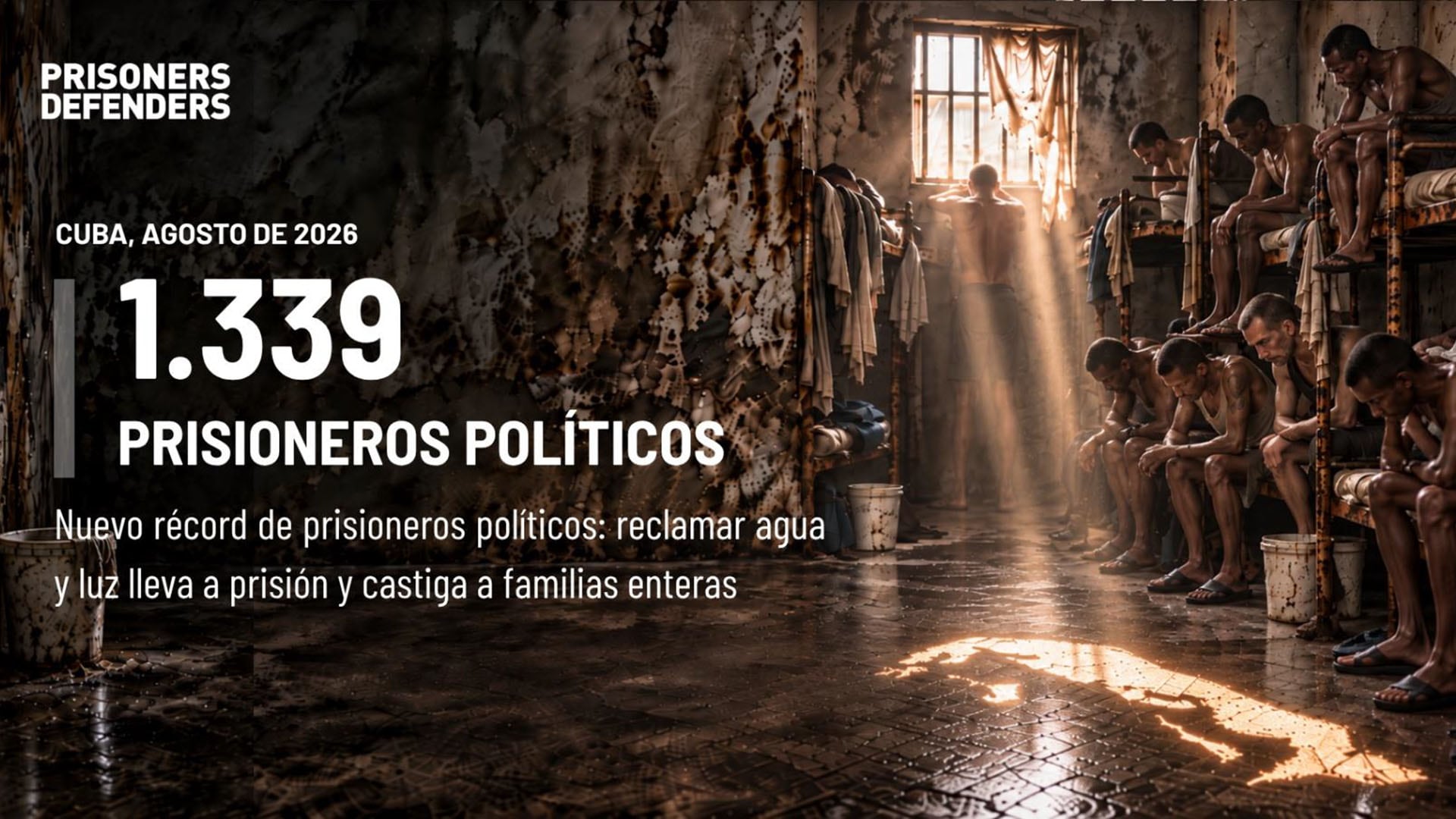
“La situación en Cuba es que no solo te llevan a prisión por hacer uso de tus inalienables derechos humanos, sino que también te someten a un brutal sistema de exterminio y represión una vez encarcelado”, afirmó.
Morales recurrió a la huelga para detener traslados forzados de celda, para exigir atención médica, para poder visitar a su hermana enferma de cáncer y para denunciar dos golpizas en la Prisión Guamajal, en Villa Clara. Su última huelga la inició cuando fue encarcelado nuevamente, apenas 45 días después de salir de prisión, por continuar ejerciendo el periodismo independiente.
Alexander Díaz Rodríguez,preso político,Cuba,derechos humanos,desnutrición,cárceles,activista,denuncia,salud,deterioro













INTERNACIONAL
Lawmakers throw out ‘Trojan horse’ activists they say are engaged in American subversion
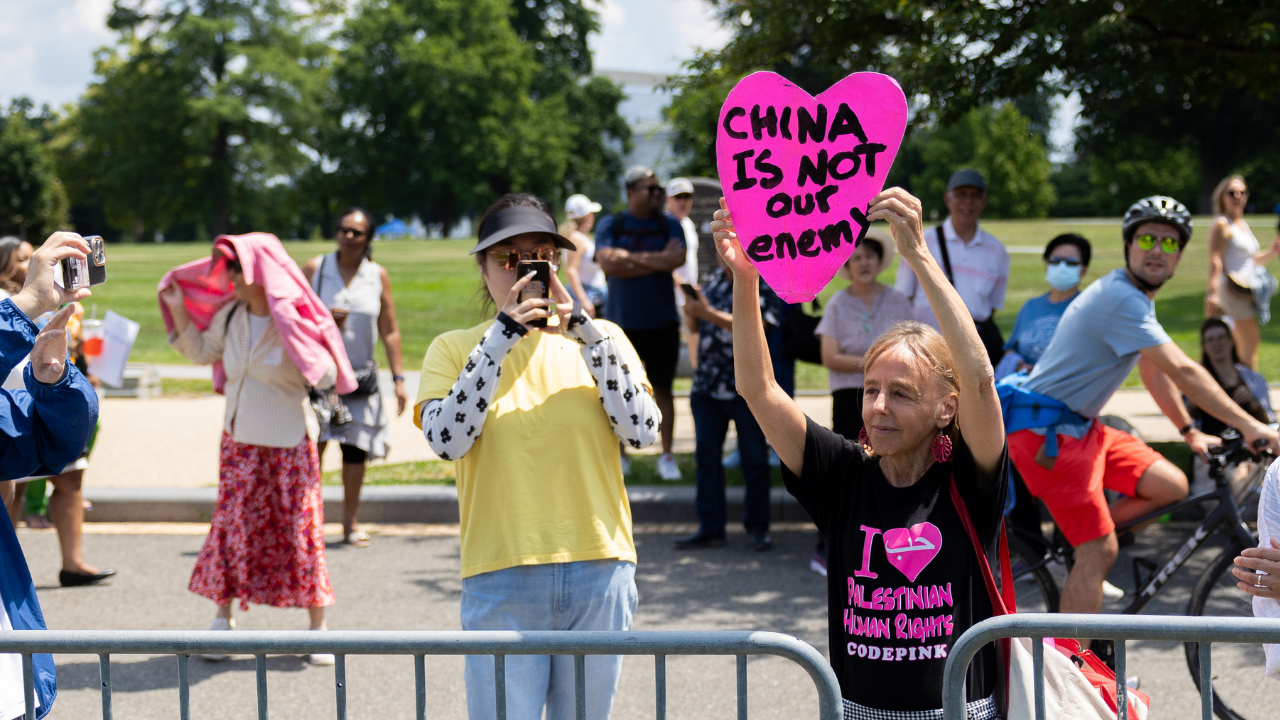
WASHINGTON, D.C. – CodePink co-founder Medea Benjamin and two fellow agitators entered the House Foreign Affairs Committee hearing room 2272 today, wearing camera-ready T-shirts supporting the Islamic Republic of Iran and the Communist Party of Cuba, turning themselves into a live demonstration of the «Trojan horses» for foreign influence that lawmakers had gathered to examine.
At 2:39 p.m., about 30 minutes into the hearing’s start, after Benjamin carefully photographed their T-shirt slogans appearing on the TV screen behind the witnesses, staffers on the House Foreign Affairs Subcommittee on South and Central Asia had had enough, and Capitol Hill police officers escorted Benjamin and her fellow agitators out of the room, as they protested their ejection for staging their trademark CodePink antics.
For lawmakers, CodePink’s camera-conscious performance underscored the central point of the hearing: that protest theater, messaging and social-media content can function as parts of foreign influence operations.
«It’s really about theatrics,» Subcommittee Chairman Bill Huizenga, R-Mich., later told Digital. «They’re using it not to affect policy, but really to enrich themselves because they use that then to go out on social media, to try to whip other people up, to help donations, to help get volunteers, help get some of those other folks, and to really try to go and disrupt our – not just our sense of government and processing government – but society.»
HOUSE PANEL TO PROBE FOREIGN ‘TROJAN HORSES’ AS SINGHAM SCRUTINY WIDENS
The hearing, «Trojan Horses: Covert Foreign Malign Influence Operations in America,» focused on the network of nonprofits, media outlets and activist groups that are promoting the interests of foreign governments and pro-communist ideologues, like Neville Roy Singham, a U.S. tech tycoon who lives in Shanghai, supporting the Chinese Communist Party. According to a Digital investigation, Singham has pumped $278 million into a far-left network of groups that have pushed anti-America, pro-China propaganda, including CodePink, which has received $1.33 million from Singham.
Outside the hearing room, Benjamin refused to answer questions from Digital about the Singham funding, and instead slipped into the hearing room with her fellow activists and positioned themselves behind the witnesses in seats that get maximum TV exposure.
Mike Gonzalez, a senior fellow at the Heritage Foundation, spotted Benjamin immediately and, in a tense back-and-forth with her, said «I’m telling Medea Benjamin that she should try to stop shilling for a communist tyranny.»
Standing on the committee hearing room floor, Benjamin defended herself as «anti-war,» and denied any direction from the Chinese Communist Party.
CUBA BUILT COVERT NETWORK INSIDE AMERICA THROUGH SPIES, ACTIVISTS AND UNIVERSITIES, STATE DEPT ALLEGES
During opening remarks, Huizenga took direct aim at actors he said are tied to U.S. adversaries attempting to influence the American public, including Singham, CodePink and Marxist influencer Hasan Piker.
«We are here today because America’s adversaries – China, Cuba, Iran, and Russia – are conducting covert influence campaigns to shape American thought and society through lies and censorship. These countries have one shared goal: to weaken the United States of America,» Huizenga
«A prominent example of these adversary efforts is Neville Roy Singham, who lives in China and uses his wealth and relationships with the CCP to provide millions of dollars and personnel to extremist groups like CodePink, the People’s Forum, and the Party for Socialism and Liberation to destabilize American society and promote communist ideology,» he continued.
A hub for pro-communist organizing in New York City, People’s Forum has received $22.44 million from Singham.
The first to testify, Gonzalez said a «red-green» alliance of far-left groups working with Islamist organizations channel money through intermediary organizations and donor funds before directing funds toward U.S.-based groups that organize protests and produce political messaging.
Gonzalez pointed to Cuba and China’s influence operations as the basis of a «sustained campaign of subversion against the United States.»
He described BreakThrough News as a media platform that amplifies demonstrations and promotes narratives aligned with Beijing, while arguing that the network’s causes — including Gaza, Cuba, Venezuela, the environment and social justice — provide a constantly changing set of rallying points. BreakThrough BT Media runs BreakThrough News and has received $1.098 million from Singham, according to reporting.
The testimony also focused on Singham’s connections in Shanghai. Gonzalez cited research saying Singham shares premises with Maku Cultural Communication, a Chinese communications firm that promotes a favorable image of China, and was photographed attending a Chinese Communist Party strategic communications workshop in 2023. Gonzalez also pointed to connections between Singham-funded organizations and Chinese state-linked academic and media institutions.
POWER COUPLE OF CHAOS: HOW A TYCOON AND ACTIVIST BUILT A ‘REVOLUTIONARY BASE’ AT THE HOUSE OF SINGHAM
Singham and CodePink have denied that the organization takes direction from the Chinese government. Singham has said he is guided by his own political beliefs, while Benjamin has said CodePink receives no money from the Chinese Communist Party. No criminal charges have been filed against Singham or the organizations in connection with the allegations.
Soon after, Sam Lyman, head of research at the Bitcoin Policy Institute, presented the network as one of three overlapping channels of influence: Chinese state media and online campaigns, nonprofits supported by Singham, and the Party for Socialism and Liberation, a Marxist-Leninist organization that works closely with CodePink, People’s Forum and BreakThrough News. Lyman said Singham-funded groups had echoed Chinese messaging on artificial intelligence, data centers and U.S. technology policy, while the Party for Socialism and Liberation organizers helped mobilize opposition to data-center projects across the country.
In the gallery, CodePink’s Benjamin stared at her phone, scrolling through messages.
Lyman said his research identified 21 campaigns linked to the Party for Socialism and Liberation in 14 states that contributed to data-center moratoriums, a permanent ban and the rejection or cancellation of several projects. He estimated that campaigns in which the Party for Socialism and Liberation played a role had delayed, reduced or blocked proposed AI infrastructure investment across the country. He cautioned, however, that opposition to data centers isn’t entirely manufactured and that many Americans had genuine concerns about electricity costs, environmental effects and local development.
Finally, among the Republican witnesses, Matthew Johnson, senior fellow at the Jamestown Foundation, a think tank, described the Singham network as an intermediary layer that translates themes associated with Beijing — including anti-imperialism, environmental harm, militarization, inequality and opposition to U.S. power — into activist language for American audiences.
HASAN PIKER CALLS HAMAS ‘FAR MORE MODERATE,’ DISMISSES TERROR GROUP’S BRUTAL RULE IN GAZA
His testimony identified the People’s Forum, BreakThrough News, Tricontinental, CodePink and the communist ANSWER Coalition as part of the broader ecosystem. Tricontinental Ltd. is a Massachusetts-based think tank led by a friend of Singham’s, Vijay Prashad, who led a session on the future of Marxism at Singham’s wedding to Evans. Singham provided $16.76 million to Tricontinental.
«Beijing cannot simply command an American university, company, journalist, think tank or activist,» Johnson said. «It must gain access and cultivate relationships within institutions that shape perception, expertise and decision-making.»
Democratic minority lawmakers called Donald Sherman, president of Citizens for Responsibility and Ethics in Washington, to the hearing as their witness. His opening remarks offered a dissenting opinion to the other witnesses, criticizing President Donald Trump for accepting a plane for Air Force One from Qatar and taking aim at Trump’s family’s business dealings with nations abroad.
The phrase «Trojan horse» comes from the ancient Greek story in which soldiers concealed themselves inside a wooden horse presented as a gift to the city of Troy. Once the horse was brought inside the city, the soldiers emerged and opened the gates to the invading army.
FACEBOOK CO-FOUNDER DUSTIN MOSKOVITZ’S ‘EFFECTIVE ALTRUISM’ NETWORK TIED TO AI REGULATION PUSH
In modern foreign influence operations, lawmakers used the «Trojan horse» metaphor to describe seemingly legitimate people, organizations, media outlets, nonprofits or cultural initiatives that can provide hidden access for a foreign power’s interests. The concern is that a foreign government, foreign intelligence service, wealthy foreign actor or proxy may use that structure to gain access to American audiences, political debates, institutions, policymaking or elections.
After the last witness spoke, about 30 minutes into the hearing, Huizenga briefly suspended proceedings while U.S. Capitol Police approached Benjamin and her fellow agitators.
«We do have some folks who have not verbally disrupted the committee as of yet,» Huizenga said. «This has been deemed to be a protest by the clerk because of the nature of the shirts and what is happening.»
The shirts were still visible on the official feed of the hearing behind the witnesses.
Video from inside the hearing room shows a Capitol Police officer approaching Benjamin at her seat and asking her to leave. Benjamin complied but protested.
As the activists huddled outside with Capitol Police officers, ranking member Rep. Sydney Kamlager-Dove, D-Calif., objected to the removal, saying the activists were «exercising their freedom of speech by wearing T-shirts» and «certainly were not being disruptive.»
CHINA EXPERT WARNS BEIJING WANTS AMERICANS — NOT THE CCP — TO SPREAD ITS MESSAGE
Outside, Benjamin kept the performance going, strategically positioning herself beside the bronze committee placard and started filming a video about the political spectacle just staged, her Trader Joe bag beside her feet. Suddenly, she cut filming when she spotted Rep. Randy Fine, R-Fla., exiting the hearing room. Chasing after Fine, a strong opponent of the anti-semitism of the «red-green alliance» and a strong supporter of Israel, Benjamin hurled questions at her, her team filming the chase.
After Fine entered an office, Benjamin returned to her spot outside the Foreign Affairs Committee hearing room, pulled out a comb to straighten her hair and returned to filming her remarks about the day’s hearing. The video complete, Benjamin disappeared down the hall with her fellow CodePink agitators.
Soon after, CodePink published videos of their members disrupting a House Financial Services Committee to heckle Treasury Secretary Scott Bessent. As Digital has reported, Bessent’s Treasury Department has been investigating CodePink and other organizations for possibly violating restrictions on doing business with the Communist Party of Cuba.
Then, just about two hours after being escorted out of the hearing room, at 4:38 p.m., the CodePink team posted a carefully edited 43-second video of Benjamin standing outside the hearing room and chasing Fine, packaging the day’s confrontation into a ready-made social-media clip.
Far-left activists from the Singham network quickly shared the CodePink video.
Digital’s Jesse Watson contributed to this report.
fox news investigates, politics, congress
INTERNACIONAL
Iran’s drone hunt escalates as Tehran targets US spy tech to expose battlefield secrets

NEWYou can now listen to Fox News articles!
Iran is deliberately targeting U.S. naval drones in the Strait of Hormuz to gather intelligence on American surveillance capabilities and learn how to evade U.S. defenses, drone experts warned Tuesday.
Tehran’s strategy is coordinated, they said, and involves exposing critical insights into U.S. Navy theater operations in the world’s most vulnerable maritime choke point even when classified data is uncompromised.
The warning came as tensions escalated in the Gulf region Sept. 14 after the U.S. military destroyed two Iranian small boats amid an attempted seizure by the Islamic Revolutionary Guard Corps (IRGC) of an American unmanned surface vessel (USV) patrolling the area, according to reports.
US MILITARY ATTACKS IRAN IN ‘SELF-DEFENSE STRIKES’ OVER WEEKEND
A cargo ship sails in the Persian Gulf toward the Strait of Hormuz, Wednesday, April 22, 2026. (AP Photo)
Iranian state media initially said the incident was a U.S. strike on civilian fishing vessels while its officials reported search-and-rescue operations off the coast of Kargan and near Larak Island, claiming local fishermen were missing.
U.S. Central Command (CENTCOM) spokesperson Capt. Tim Hawkins confirmed the attempted seizure on Tuesday.
«Iranian small boats recently attempted to take possession of a U.S. unmanned surface vessel, but they were unsuccessful after CENTCOM forcefully responded,» Hawkins said.
«The surface drone remains under U.S. operational control.»
«What’s going on with drones generally in the Strait right now—when we see all these types of intel capture missions that Iran is launching—we need to make no mistake that these are very coordinated, absolutely deliberate drone capture missions,» Cameron Chell, CEO of U.S. drone manufacturer Draganfly, told Fox News Digital.
PENTAGON JUMPS FROM $225M TO $55B ON DRONES AS CHEAP ATTACKS OVERWHELM US DEFENSES
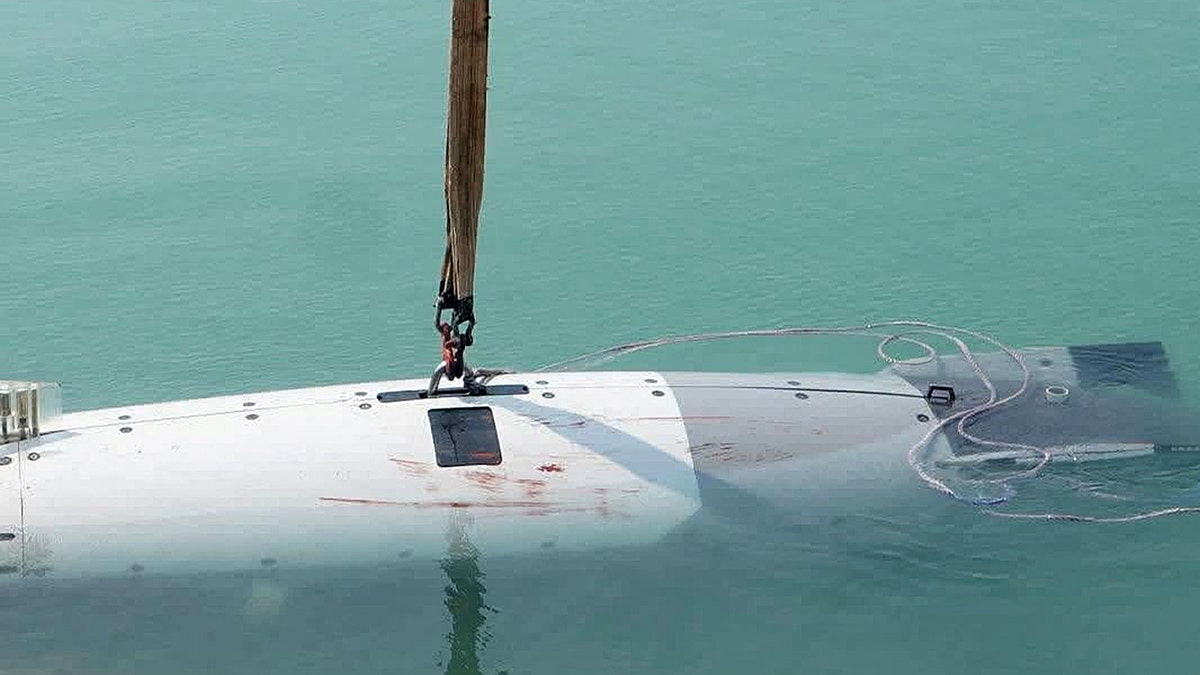
The Sept. 8 incident involved Iran’s capture of a Dive-LD autonomous underwater drone manufactured by defense contractor Anduril. (IRGC/WANA (West Asia News Agency /Handout via REUTERS)
Chell warned that even a brief examination of a captured drone provides Tehran with a quick win by revealing how the U.S. conducts surveillance and how to counter those systems.
«If Iran captures a drone, it could give them an immediate tactical advantage,» Chell said.
«It may not yield specific classified data, but it gives insight into the theater of operations, which at any given moment offers an advantage. I wouldn’t doubt it for a heartbeat that it is escalating.»
«Just getting little tidbits of intel starts to paint a picture, giving them different attack plans, battle plans, and thoughts on what the U.S. might be doing. I would be very surprised if this wasn’t an ongoing effort.»
WHO CONTROLS THE STRAIT OF HORMUZ RIGHT NOW? HERE’S WHAT THE SHIP TRAFFIC ACTUALLY SHOWS
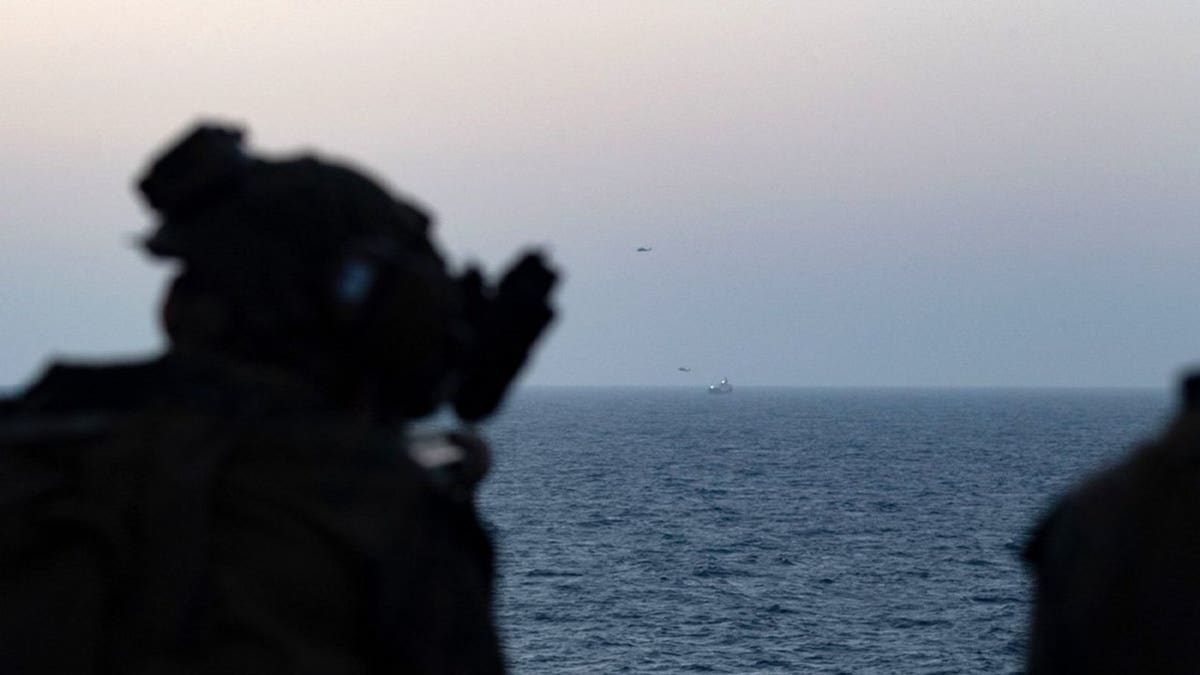
U.S. Marines aboard USS New Orleans (LPD 18) stand watch in the Arabian Sea during naval blockade operations against Iran. As of today, 44 commercial vessels have been directed to turn around or return to port, according to U.S. Central Command. (U.S. Central Command)
Iran’s attempts to capture drones underscore growing security volatility in the Strait of Hormuz, the vital international shipping lane where commercial transit has fallen below historic levels since the war broke out in February.
Chell emphasized that any access to captured hardware over the last six months would allow Iranian forces to evaluate sensitive onboard sensors.
«It really speaks to the bigger picture of how the whole intelligence infrastructure works of, say, the Navy, for example,» Chell said.
«The other important thing is that when they get their hands on these drones—even if they’re only able to spend some time glimpsing at them before they have to evacuate or abort a mission—is they get a real understanding of the types of sensors on them.»
IRAN SAYS ITS SMALL SUBS DEPLOYED TO STRAIT OF HORMUZ AS EXPERT EXPLAINS THREAT: ‘VULNERABLE TO DETECTION’

Two F/A-18 Super Hornets launch from the flight deck of the U.S. Navy Nimitz-class aircraft carrier USS Abraham Lincoln in support of the Operation Epic Fury attack on Iran from an undisclosed location March 3, 2026. (U.S. Navy/Handout via Reuters)
«That gives them a complete picture of how they can launch attacks and evade the type of sensing equipment out there,» Chell continued.
«They can understand how to counter or measure the intelligence being gathered, and potentially use that design offensively in their own equipment.»
The latest escalation also follows a Sept. 8 incident involving Iran’s capture of a Dive-LD autonomous underwater drone manufactured by defense contractor Anduril.
While Anduril CEO Palmer Luckey said the drone was designed to operate in «environments too dangerous for humans where capture is an expected possibility.»
«I can’t get into the details, but it provided significant value for months before capture,» Luckey dded.
IRAN’S DRONE SWARMS CHALLENGE US AIR DEFENSES AS TROOPS IN MIDDLE EAST FACE RISING THREATS
«Unboxing ceremony by our reverse engineers, tomorrow morning!» Iran’s embassy in Hyderabad also wrote on X.
U.S. Navy representatives however, said the recovered drone was an older model that had malfunctioned and gone dead in the water.
«The U.S. being alert to the fact that these are high-value targets dictates where and how they use and protect them,» Chell noted.
«I don’t doubt that the captured underwater drone had sensitive information on it, but that’s not the point. Again, the point is, they want to see the type of equipment and information being gathered, or view logs to see where it has been. This all just puts the U.S. on higher alert.»
Tehran has previously leveraged captured U.S. assets—including an RQ-170 Sentinel stealth drone seized in 2011—to bolster domestic technology and regional propaganda.
Then-President Barack Obama publicly asked Tehran to return the aircraft. Iran later claimed it reverse-engineered the platform to build domestic lookalikes.
In 2022, a U.S. Navy patrol ship and an MH-60S Seahawk helicopter intercepted an Iranian naval vessel attempting to tow a Saildrone surface vessel in the Gulf.
RUSSIA PREPARING HYBRID ATTACKS ON NATO’S EASTERN FLANK, INTELLIGENCE WARNS
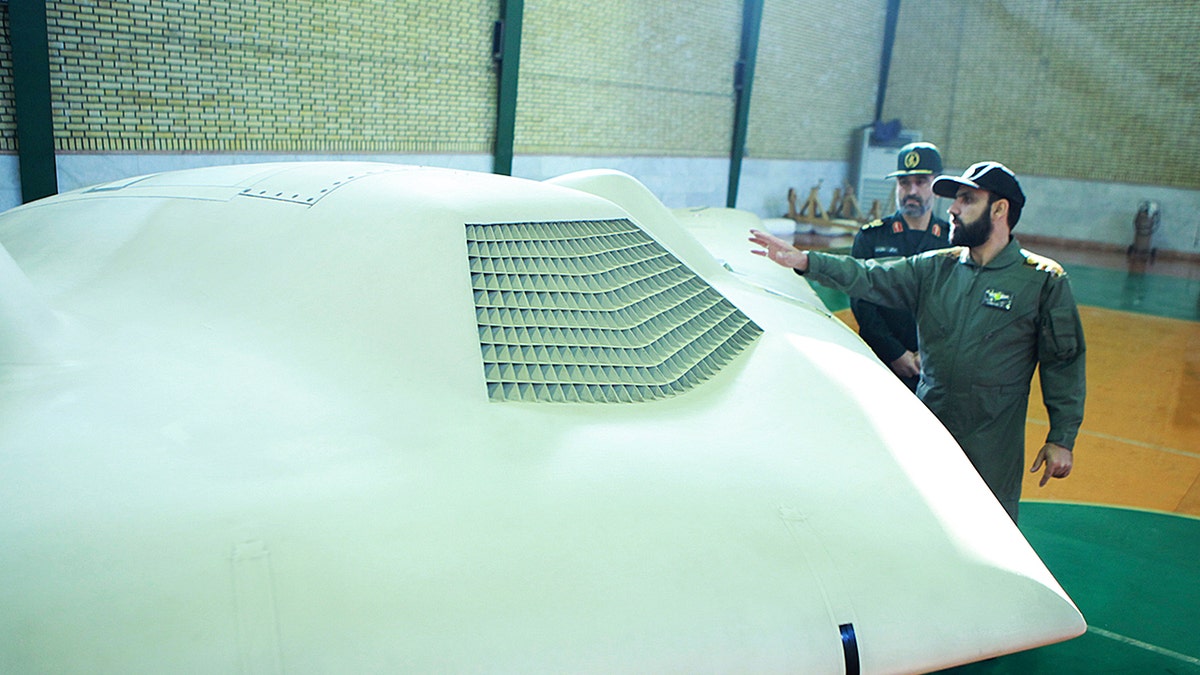
Tehran has previously leveraged captured U.S. assets—including an RQ-170 Sentinel stealth drone seized in 2011—to bolster domestic technology and regional propaganda. (REUTERS/Sepah News.ir/ Handout)
«Iran actually has a history of attempting this in the past, and at times has been successful,» Chell said, noting Washington takes the threat «very, very seriously.»
«In other instances where they’ve gotten sail ship drones, for example, and tried to bring them into Iranian territory—» Chell said, pointing back to the RQ-170 seizure: «a number of Iranian drones look suspiciously like the RQ line.»
«Still, when the U.S. knows a drone has been captured, they adjust their tactics and operational overview accordingly,» Chell, whose firm has been awarded a five-year contract by the Government of Canada to provide low-cost tactical intelligence, surveillance and reconnaissance uncrewed aircraft systems to the Canadian Armed Forces, concluded.
«There is no question that autonomy and unmanned systems are the new standard in warfare,» Chell said.
drones, middle east, us navy, world, foreign policy, national security, military, iran
INTERNACIONAL
La muerte de un adolescente reveló la llegada de una nueva droga mortal a San Francisco
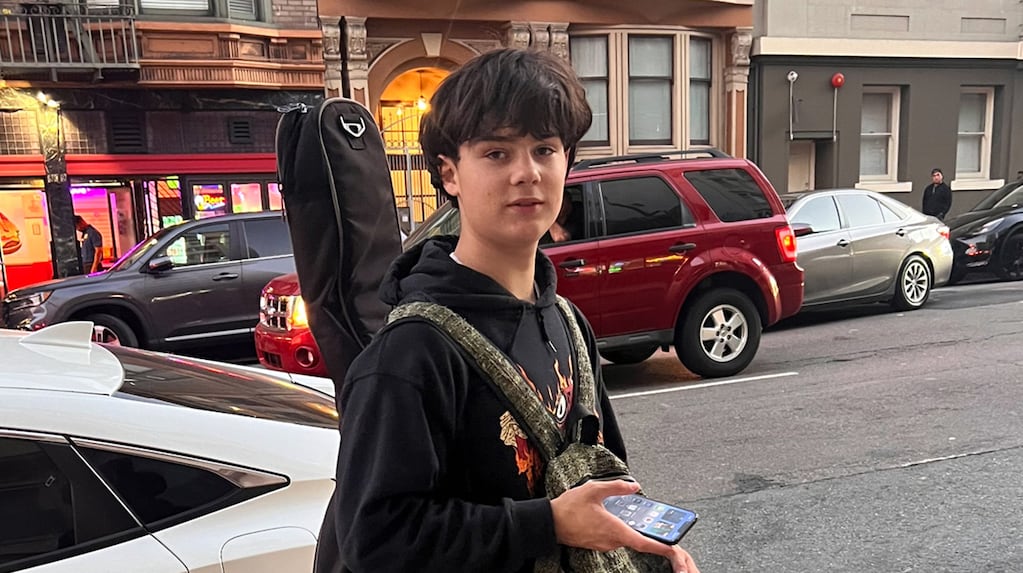
Era una mañana estresante de martes en San Francisco, y Christina Lacourte fue a la habitación de su hijo para despertarlo para la escuela. La puerta estaba cerrada con llave, así que tuvo que abrirla a la fuerza con un gancho de ropa.
Adentro, vio a su hijo en la cama, bajo el letrero de neón que decía “Open” (abierto), del tipo que se usa en las tiendas, que él había pedido para su cumpleaños cuando estaba en sexto grado. Un líquido negro le brotaba de la nariz y la boca, y se acumulaba en sus sábanas.
Corrió a buscar las dos dosis de Narcan que guardaba en un cajón de la cocina exactamente para este momento, el que llevaba tanto tiempo temiendo, pero no lograron reanimarlo. Recuerda que lloraba a mares y gritaba mientras llamaba al 911. Su apartamento, normalmente encantador con toques de rosa, de repente se convirtió en un borrón gris de paramédicos, policías y peritos forenses.
Su hijo salió en una bolsa para cadáveres.
Seguramente, pensó, su hijo había muerto por fentanilo, pero el informe de la autopsia no lo mencionaba. En su lugar, incluía una palabra nueva para ella: “ciclorfina”. Sigue siendo la única vez que ha aparecido en un informe de un forense de San Francisco.
Dante Paul Lacourte tenía 16 años.
Una nueva droga llega a San Francisco
La muerte ocurrió en el apartamento de tres habitaciones de Lacourte, en el próspero vecindario de Lower Nob Hill, el 7 de abril.
Diecisiete días después, los funcionarios de salud de San Francisco ofrecieron una conferencia de prensa para advertir que había surgido un opioide sintético más mortal que el fentanilo, que seguía matando a decenas de personas en la ciudad cada mes.
La ciclorfina es una de una serie de drogas nuevas y mortales que están trastornando el mercado de drogas ilícitas y desconcertando a las ciudades que apenas ahora comienzan a controlar el fentanilo. Estas nuevas drogas pueden ser fabricadas por químicos aficionados en cualquier lugar y son más difíciles de rastrear y sus efectos en el cuerpo humano, más difíciles de revertir.
Los expertos dicen que la ciclorfina es 10 veces más potente que el fentanilo. Las tiras reactivas pueden detectar el fentanilo, pero no la ciclorfina, y puede requerirse administrar numerosas dosis de Narcan para revertir los efectos de la nueva droga, aunque la mayoría de las personas llevan consigo solo una o dos dosis a la vez. Ha aparecido en Europa y en la costa este durante el último par de años, y su presencia se ha extendido como tentáculos.
Dante había aparecido en The New York Times una vez antes, como parte de un proyecto fotográfico que documentaba la primera década del milenio. Ludovic Lacourte, un consultor tecnológico y enólogo que vive en Sausalito, justo al norte de la ciudad en el condado de Marin, había enviado una instantánea de sus gemelos recién nacidos, Dante y Marco, con gorros de punto a juego y arropados bajo una manta de hospital.
droga

Lawmakers throw out ‘Trojan horse’ activists they say are engaged in American subversion

Iran’s drone hunt escalates as Tehran targets US spy tech to expose battlefield secrets

Cómo funcionará la nueva norma de la CNV que frenó un circuito para las pymes que reducía el impuesto al cheque

Mandan a un tribunal oral a revisar si corresponde anular la condena a Guillermo Moreno por la falsificación de datos del INDEC

Germán Martínez: “El principal desafío que tiene el peronismo es la reconstrucción de la confianza”

La muerte de un adolescente reveló la llegada de una nueva droga mortal a San Francisco

Entre arroyos y countries: vecinos intentan salvar el último pulmón rural del conurbano antes de que cambie para siempre

Más allá de la música, el nuevo negocio de Pablito Lescano, el líder de Damas Gratis

Trump habló de una posible guerra por Malvinas y dijo que podría intervenir para resolverla

El polémico video de Tiago PZK con La Joaqui cuando ella aún estaba de novia con Luck Ra que desató un escándalo

 SOCIEDAD2 días ago
Entre arroyos y countries: vecinos intentan salvar el último pulmón rural del conurbano antes de que cambie para siempre
- ECONOMIA2 días ago
Más allá de la música, el nuevo negocio de Pablito Lescano, el líder de Damas Gratis
- POLITICA3 días ago
Trump habló de una posible guerra por Malvinas y dijo que podría intervenir para resolverla