INTERNACIONAL
Inside GOP Senate hopeful’s financial ties to controversial data center boom

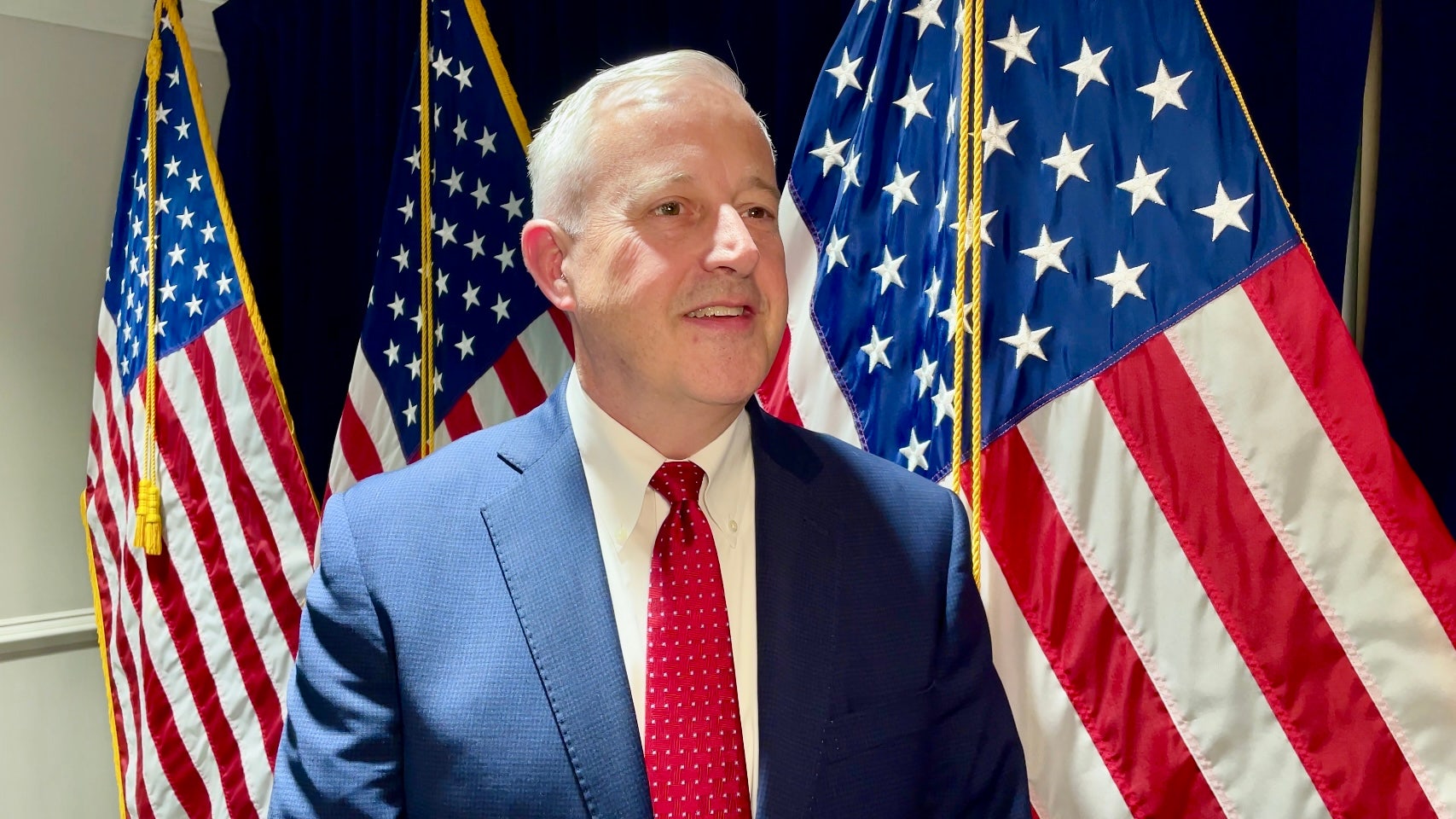
Michael Whatley, the former chair of the Republican National Committee and the Republican nominee for U.S. Senate in North Carolina, holds between $246,000 and $690,000 in energy investments with companies fueling the data center growth in the Tar Heel State, according to his federal reporting.
Those holdings raise questions about whether Whatley stands to benefit from his support of data center expansion, an issue that has drawn national attention over community zoning, energy use and state growth.
Most of his reported holdings are with four companies.
POLL: DEMOCRATIC ENTHUSIASM SHAPES NORTH CAROLINA SENATE RACE
Whatley and his family have holdings between $149,000 and $410,000 in Duke Energy, between $1,000 and $15,000 in Arista Networks, from $80,000 to $200,000 with Dominion Energy, and between $16,000 and $65,000 in GE Vernova.
While most of those, like Duke and Vernova, don’t directly build data centers themselves, they offer services or products used by them. Duke is a major utility provider in North Carolina, and Vernova produces on-site gas turbines used by data center facilities operated by companies like Amazon and Microsoft.
In addition to those investments, Whatley reported $361,000 from CAPCVentures LLC, a D.C. for consulting services in 2025, according to his financial disclosure. That firm lists GE Vernova— a major supplier of turbines and grid equipment used to power data centers — as a client, along with Centrus Energy and the Renewable Fuels Association.
Earlier coverage put his pay from the same shop at about $755,000 between 2022 and 2025.
When asked about his holdings and whether he saw them as a potential conflict of interest, Whatley’s campaign noted that he supports restrictions on stock trading for members of Congress.
«Whatley supports the Stop Insider Trading Act and urges the U.S. Senate to pass the commonsense legislation, and supports commonsense reforms requiring elected officials to place their assets in qualified blind trusts, ensuring they have no control over how those assets are invested,» DJ Griffin, a campaign spokesperson, said in a statement to Digital.
The campaign also said that Whatley would support letting local communities decide for themselves what kinds of data center projects to accept and which ones to rule out.
«Michael Whatley’s standard is simple: data centers pay their own way, families pay nothing and communities decide. That means Big Tech builds or buys every megawatt it needs and covers every dime of the grid upgrades to deliver it, with zero costs shifted onto residential ratepayers. It means no special subsidies and no sweetheart deals cut over the heads of taxpayers,» Griffin continued.
«And it means the people of North Carolina’s counties and towns, not bureaucrats in Raleigh or Washington, decide what gets built in their communities. North Carolina should win the AI economy, and it should win it on terms that protect the families who live here.»
THE DATA CENTER FIGHT COULD DECIDE THE NEXT PRESIDENT AND COST AMERICA THE AI RACE
Whatley’s campaign also turned the spotlight on his Democratic opponent, Roy Cooper, the former governor of North Carolina.
«Roy Cooper is the only candidate in this race who has used the powers of his elected office to recruit data centers to NC and to have them subsidized by NC Taxpayers,» Griffin added, noting that Cooper also has supported restrictions on congressional stock trading.
Notably, the bulk of North Carolina’s tax breaks already existed by the time Cooper became governor in 2017.
The year before, in 2016, the state had implemented statute G.S.105-164.13. Under that provision, lawmakers had expanded data center tax exemptions on sales, servers, storage and networking for companies investing at least $75 million in projects over five years.
The state did, however, approve several major grants to companies like Apple and Corvid Technologies under Cooper’s watch through «Job Development Investment Grants» (JDIGs). Those aimed to further job development in the state, dovetailing with existing development efforts. Among the more high-profile JDIGs, Apple entered into a $845 million grant over a period of 39 years alongside another $112.4 million that would go to an industrial development fund to build out rural infrastructure. The agreement is contingent on Apple creating a certain number of jobs, but the company has yet to meet the JDIG’s projected goals since its implementation.
For his own part, Cooper’s campaign bashed Whatley for, in their view, not being sensitive enough to local resistance to data center expansion.
«Longtime utility company lobbyist Michael Whatley believes people’s concerns about data centers are fake as he continues to shill for his billionaire buddies in the utility industry instead of standing up against rate hikes that are crushing hardworking families,» a spokesperson for the Cooper campaign said in a statement.
Cooper has taken a more critical approach to their expansion, arguing that they are forcing local communities into higher and higher utility bills.
SILICON VALLEY IS LOSING THE DATA CENTER FIGHT, RISKING A REPEAT OF A CLASSIC FAILURE
Like many Democrats on the topic, Cooper has framed his stance in the broader context of championing affordability policies.
«[Cooper] believes local communities must have the final say on new projects coming to their area, which includes local moratoriums, and data centers must pay for all of the energy they use without passing on any of their costs to consumers,» Cooper’s campaign said.
Having cleared their respective primaries, Cooper and Whatley will face off in North Carolina’s general election on Nov. 3.
republicans elections, politics, companies, growth, north carolina, energy












INTERNACIONAL
NATO ally pushes ‘Fort Trump’ US military base as Russian helicopter penetrates airspace

US and Polish pilots stand together on NATO’s front line
Fox News Digital goes inside Poland’s 32nd Tactical Air Base where American and Polish forces operate together as Warsaw prepares for a new era of military firepower. (Flight video courtesy of the 32nd tactical base, Lask, Poland.)
NEWYou can now listen to Fox News articles!
Polish President Karol Nawrocki has revived a proposal to establish a permanent U.S. military base in Poland named «Fort Trump» as Warsaw pushes to strengthen NATO’s eastern flank amid continued Russian incursions into allied airspace.
Nawrocki said that he was confident Warsaw and Washington would reach a deal on the base, which Poland has sought as part of its effort to secure a long-term American troop presence and boost defenses against Russia.
«I hope that when work on the base is completed, President Trump will be able to personally attend the inauguration of ‘Fort Trump,’» Nawrocki said in New York Sept. 22.
POLAND SEEKS ANSWERS AFTER PENTAGON SCRAPS PLANNED US ARMORED BRIGADE ROTATION
Presidential candidate Karol Nawrocki, a conservative historian backed by the right-wing Law and Justice party, greets supporters as he arrives at his headquarters after the presidential election runoff in Warsaw, Poland, Sunday, June 1, 2025. (AP Photo/Czarek Sokolowski)
The proposal dates back to 2018, when Nawrocki’s predecessor, President Andrzej Duda, suggested naming a permanent U.S. military installation in Poland «Fort Trump» as part of an effort to secure a lasting American military presence in the country.
The urgency behind Warsaw’s push this month was underscored within hours of Nawrocki’s remarks in New York, when a Russian Mi-8 military helicopter briefly penetrated Polish airspace from Russia’s Kaliningrad region.
Foreign Minister Radosław Sikorski also mentioned the issue during a briefing with Polish media following his address to the U.N. Security Council in New York on Wednesday.
According to the Polish Army Operational Command, the helicopter entered Polish territory north of the town of Braniewo at 11:08 a.m., reaching a maximum depth of about 300 meters.
The Russian aircraft remained in Polish airspace for 42 seconds before exiting.
Polish radar systems tracked the helicopter throughout the incursion, prompting fighter aircraft to scramble while ground-based air defense units were placed on standby.
Polish military authorities said the brief violation indicated Moscow was once again testing the readiness and response times of NATO air defenses.
The incident adds urgency to Poland’s push for a permanent U.S. military base. Nawrocki acknowledged that specific deadlines have not yet been established because administrative and financial details are unresolved.
«It’s hard for me to give specific dates, but I think this matter has been definitively confirmed, because President Trump is known for keeping his word,» Nawrocki said.
«Infrastructure preparation is progressing. In fact, the appropriate infrastructure is already being selected,» he told Bloomberg.
Nawrocki also called the establishment of the base «only a matter of time» and seemed optimistic that construction could be completed before Trump’s term ends in 2029.
NATO’S EASTERN FLANK RACES TO REARM AS TRUMP PRESSURE EXPOSES WESTERN EUROPE’S DEFENSE GAP

President Donald Trump shakes hands with Polish President Karol Nawrocki, during a meeting in the Oval Office of the White House, Wednesday, Sept. 3, 2025, in Washington. (Evan Vucci/AP Photo)
Deputy Defense Minister Stanisław Wziątek had also mentioned establishing the U.S. base, with the remaining question being the precise location, according to reports.
Wziątek said the installation would likely host between 3,000 and 5,000 U.S. troops.
Poland ultimately hopes to host «around 15,000» American troops, building on the roughly 10,000 U.S. troops currently stationed in the country, largely on a rotational basis.
Polish Prime Minister Donald Tusk warned Sept. 18 that, according to intelligence available to Warsaw, Russia was planning drone and missile strikes against eastern NATO countries that Moscow could present as accidental, The Associated Press reported.
TRUMP PUSHED NATO TO PAY UP. NOW ALLIES MUST TURN PLEDGES INTO POWER
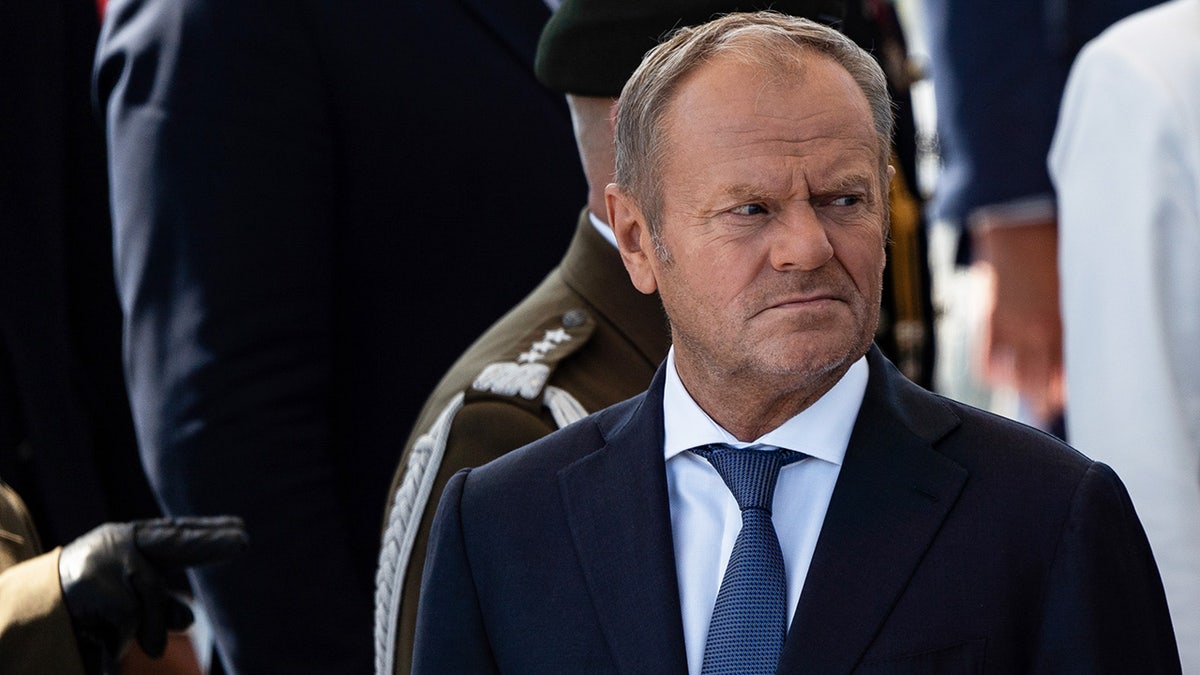
Donald Tusk, Poland’s prime minister, during the Polish Army Parade in Warsaw, Poland, on Friday, Aug. 15, 2025. (Damian Lemanski/Bloomberg via Getty Images)
Russian drones have repeatedly entered NATO airspace and crashed on alliance territory, including in Poland and Romania, while NATO countries have scrambled fighter aircraft in response to Russian aerial activity near their borders over the years.
Trump had also signaled progress in strengthening the U.S.-Polish military relationship, calling the developments on a base a «historic step for our Great US/Polish Alliance» and indicating on Truth Social that further details could be announced.
«Thanks to the bold leadership of my friend, Karol Nawrocki, President of Poland, major progress is being made towards establishing a US Army base in Poland,» Trump said Sept. 17.
world, nato, national security, military, geopolitics, donald trump, foreign policy, defense
INTERNACIONAL
Conmoción en Madrid por el desalojo a una mujer de 87 años con una discapacidad: hubo incidentes entre manifestantes y policías

Una mujer de 87 años fue desalojada este miércoles de la casa de Madrid en la que vivió durante 71 años, en medio de un fuerte operativo policial y una protesta de cientos de personas que intentaron impedir el procedimiento. Maricarmen Abascal residía allí desde 1956 bajo un antiguo contrato de alquiler que había firmado su padre y que, con los años, pasó primero a su madre y después a ella.
El conflicto comenzó cuando la empresa actualmente propietaria del inmueble cuestionó la validez de esa última subrogación y reclamó la restitución de la vivienda.
Después de años de litigio, el Tribunal Supremo español falló en marzo a favor de la empresa y consideró extinguido el contrato. Abascal pagaba 440 euros mensuales y, según medios españoles, le ofrecieron firmar uno nuevo por 1650 euros, una suma que su defensa aseguró que no podía afrontar.
Maricarmen Abascal tiene una discapacidad reconocida, atravesó varias operaciones de cadera y necesita una silla de ruedas para desplazarse. Cerca de las 13, personal sanitario la sacó del departamento en una camilla y la trasladó hasta una ambulancia, mientras los manifestantes permanecían detrás del cordón policial.
El desalojo ocurrió en un edificio de la calle Alcalde Sainz de Baranda, en el barrio de Retiro, y se concretó en el cuarto intento. Desde las primeras horas de la mañana, vecinos y activistas se habían concentrado frente a la propiedad para bloquear el ingreso de la comisión judicial.
Según medios españoles, unas 400 personas participaron de la protesta. La Policía Nacional desplegó agentes antidisturbios y se produjeron incidentes cuando comenzaron a retirar a quienes impedían el acceso. Durante el operativo, los efectivos utilizaron gas pimienta para dispersar a parte de los manifestantes.
Finalmente, poco después de las 11, la comisión judicial consiguió ingresar al edificio. Dos horas más tarde, Abascal fue retirada de la vivienda y asistida por personal del Samur. Las imágenes registradas por Reuters mostraron tanto los enfrentamientos entre policías y manifestantes como el momento en que la mujer fue trasladada.
La mujer vivía en la misma casa desde 1956
Abascal llegó al departamento cuando tenía 17 años. Sus padres habían alquilado la propiedad en 1956 mediante un contrato de renta antigua y ella permaneció allí durante las siguientes siete décadas.
Tras la muerte de su padre, el contrato pasó a su madre y, cuando ella murió en 2005, fue subrogado nuevamente a nombre de Maricarmen. Esa segunda transferencia terminó convirtiéndose en el eje de la disputa judicial.
La actual empresa propietaria del inmueble, Urbagestión Desarrollo e Inversión, sostuvo que la segunda subrogación no era válida y reclamó la restitución de la vivienda. Después de años de litigio, el Tribunal Supremo español falló en marzo a favor de la compañía y consideró extinguido el contrato.
Desalojo
INTERNACIONAL
Congreso fija calendario de audiencias para revisar el presupuesto 2027 de Guatemala y exigirá comprobar el uso de los recursos

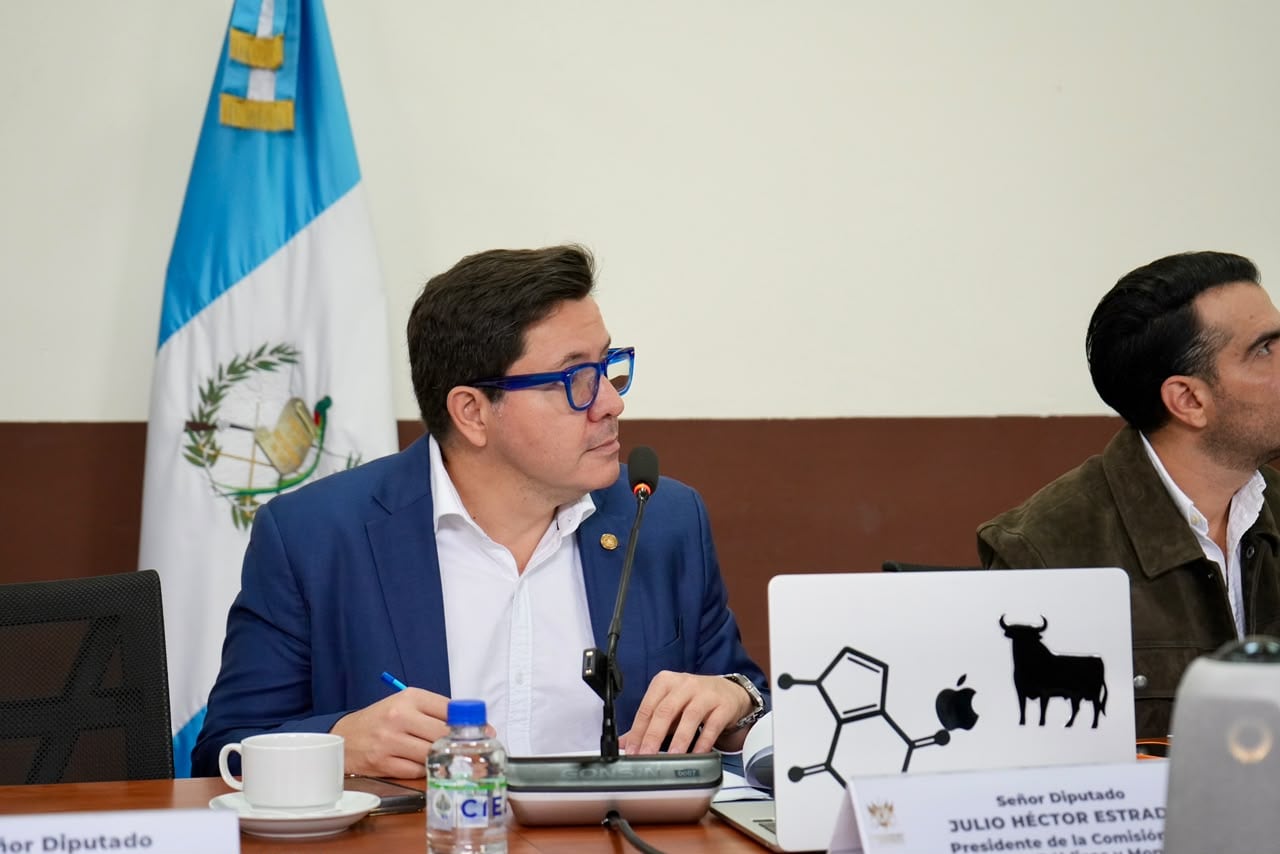
La Comisión de Finanzas Públicas y Moneda del Congreso de Guatemala detectó aumentos de hasta 51.8% en los presupuestos vigentes de los ministerios de Economía, Agricultura, Gobernación y Educación entre 2023 y 2026, y exigirá comprobar el destino y los resultados de esos recursos antes de debatir el proyecto de presupuesto estatal para 2027, en un proceso de audiencias públicas.
El mayor incremento correspondió al Ministerio de Economía, cuya asignación pasó de 422,22 millones de quetzales en 2023 a 640,77 millones en 2026. La variación equivale a 51.8%, de acuerdo con el comparativo presentado durante la sesión ordinaria 16-2026 de la comisión, celebrada el 23 de septiembre.
La revisión forma parte del análisis de la Iniciativa de Ley 6841, que propone el Presupuesto General de Ingresos y Egresos para el ejercicio fiscal 2027. Los diputados contrastan las asignaciones vigentes al cierre del gobierno anterior con las actuales, su nivel de ejecución y los resultados obtenidos.
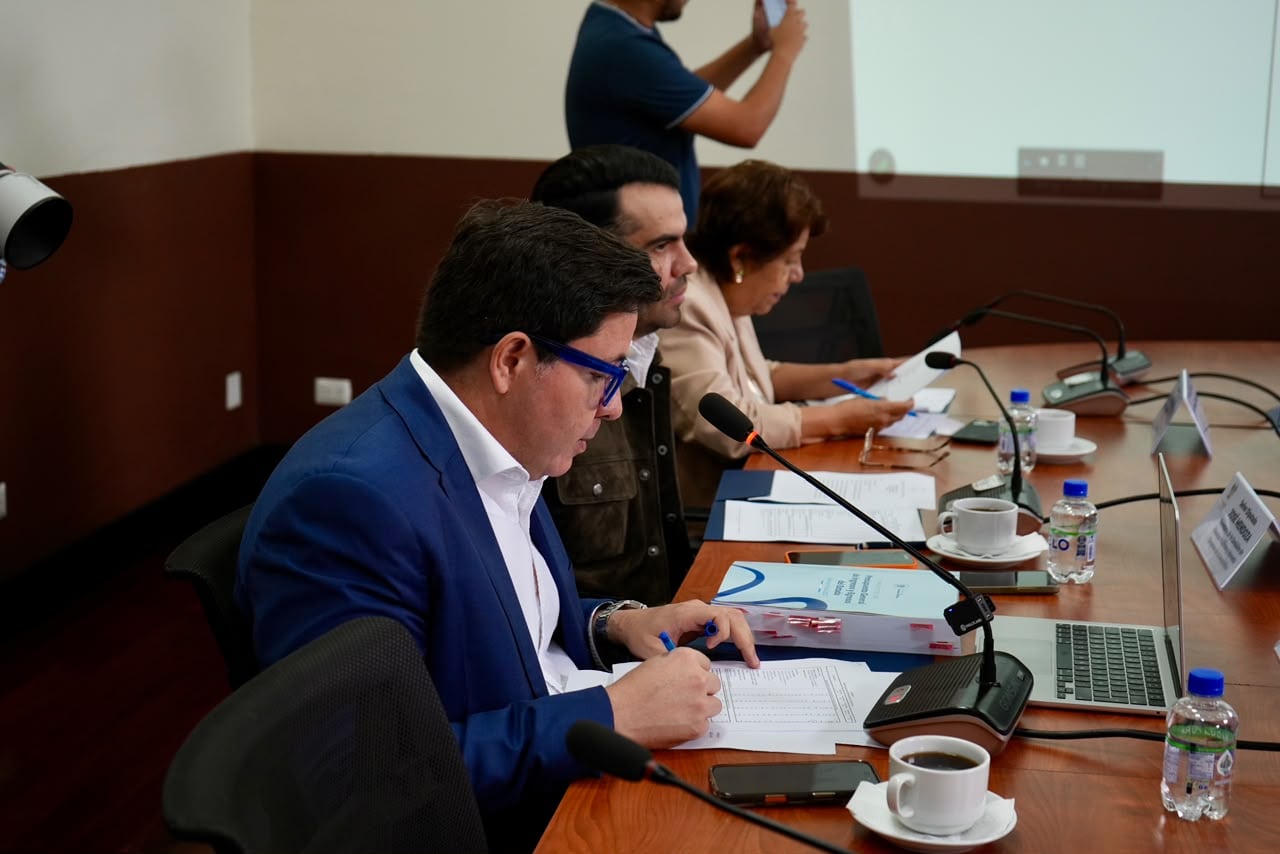
Los cuatro ministerios con mayores aumentos
El Ministerio de Agricultura, Ganadería y Alimentación elevó su presupuesto de 1.477,6 millones de quetzales a 2.072,8 millones, un alza de 40,3%. La comisión pidió identificar a los destinatarios de los bienes y apoyos distribuidos, con el detalle de beneficiarios, destinos y costos por departamento y municipio.
También requirió información sobre el avance de los proyectos de riego financiados por esa cartera. El objetivo es establecer el uso concreto de las partidas antes de considerar nuevas asignaciones.
El Ministerio de Gobernación pasó de 7,008,6 millones de quetzales a 9.753,4 millones, lo que supone una suba de 39,2%. Educación, por su parte, incrementó sus recursos de 21.665,8 millones a 26.616,5 millones de quetzales, un crecimiento de 22,8%.
Las cifras corresponden al presupuesto vigente y no al gasto efectivamente ejecutado. La Comisión de Finanzas Públicas y Moneda verificará en las próximas semanas si los recursos asignados se tradujeron en servicios, proyectos o resultados comprobables.
En el caso de Economía, los legisladores solicitaron el detalle de los servicios cubiertos con el incremento presupuestario. El requerimiento incluye las funciones, contratos y honorarios del personal temporal, además de los productos derivados de los estudios y servicios contratados.
Trece respuestas ante 23 solicitudes de información
La comisión remitió requerimientos a 23 instituciones vinculadas con la ejecución del presupuesto. Hasta el 23 de septiembre, 13 entidades habían enviado la información requerida, aunque solo 11 cumplieron dentro del plazo inicial.
Entre las instituciones que respondieron a tiempo figuran cinco ministerios: Desarrollo Social, Educación, Defensa Nacional, Ambiente y Recursos Naturales, y Energía y Minas. También entregaron información el Instituto Nacional de Bosques, el Banco de Guatemala, el Instituto Nacional de Fomento Municipal, el Instituto de la Defensa Pública Penal, el Instituto Nacional de Ciencias Forenses de Guatemala y el Instituto de la Víctima.
El desglose consignó además que Agricultura y Defensa Nacional remitieron sus datos después del plazo inicialmente establecido. En el caso de Defensa, la entrega se produjo pese a que la cartera había solicitado una prórroga.
Diez instituciones pidieron más tiempo para responder: Finanzas Públicas, Salud Pública y Asistencia Social, Gobernación, Relaciones Exteriores, Economía, Cultura y Deportes, Trabajo y Previsión Social, Comunicaciones, Infraestructura y Vivienda, y la Secretaría de Planificación y Programación de la Presidencia.
La Secretaría de Coordinación Ejecutiva de la Presidencia fue la única entidad cuyo plazo venció sin entregar una respuesta ni solicitar una extensión, según el semáforo de cumplimiento incorporado por la comisión.
Las audiencias públicas sobre el presupuesto de 2027 comenzarán el 6 de octubre y se extenderán hasta el 30 de ese mes, con sesiones presenciales y virtuales. La primera jornada convocará al Ministerio de Finanzas Públicas, al Banco de Guatemala y a la Superintendencia de Administración Tributaria.
El 7 de octubre comparecerán Desarrollo Social, Educación y Salud Pública, mientras que Gobernación, Defensa Nacional y Relaciones Exteriores lo harán el día 8.
El calendario también incluye al Organismo Judicial, el Ministerio Público, la Contraloría General de Cuentas y el Tribunal Supremo Electoral, además de organizaciones no gubernamentales y otras entidades que reciben aportes del Estado, citadas para el 23 y el 30 de octubre.
Julio Héctor Estrada,Congreso de Guatemala,Guatemala

NATO ally pushes ‘Fort Trump’ US military base as Russian helicopter penetrates airspace

Tras hablar en la ONU, Milei defendió su gestión y cuestionó al kirchnerismo: “Pedirles coherencia es demasiado”

La Corte ordenó a Instagram y Facebook identificar a los dueños de cuentas anónimas que hicieron un “escrache digital”

Salarios públicos: el experimento que hizo un economista para mostrar qué perfiles atraen los distintos sueldos

Terminator, Astroboy y Optimus: qué significan las referencias que usó Milei para hablar de Inteligencia Artificial

Conmoción en Madrid por el desalojo a una mujer de 87 años con una discapacidad: hubo incidentes entre manifestantes y policías

Enrique Szewach: “El apretón monetario afecta a la actividad, al salario real y a los márgenes”

Círculo rojo: conversaciones informales por un acuerdo judicial con los gobernadores y el factor Bullrich

Milei camina por la cornisa: entre el desorden político y el ajuste permanente

La DEA advirtió sobre el avance de la mafia albanesa: la Policía uruguaya vigila el ingreso de ciudadanos de los Balcanes

 POLITICA2 días ago
Radiografía del ajuste: Los flancos más criticados de la gestión de Javier Milei entre recortes sociales, crisis previsional y salarios de miseria
- ECONOMIA2 días ago
El mercado ya detectó cuál es el bono estrella para posicionarse de cara a las elecciones
- ECONOMIA2 días ago
Dólar hoy: a cuánto operan todas las cotizaciones minuto a minuto este lunes 21 de septiembre