INTERNACIONAL
GOP holds with Trump on Iran war, but cracks emerge as deadline nears

US naval blockade enters third day as Trump signals new talks
Chief foreign correspondent Trey Yingst and senior White House correspondent Jacqui Heinrich report on the U.S. naval blockade entering its third day in the Strait of Hormuz, halting economic trade into and out of Iran by sea. President Donald Trump believes the conflict is ‘close to over’ and hints at new talks, despite a White House statement denying a formal ceasefire extension.
NEWYou can now listen to Fox News articles!
Republicans aren’t ready to jump ship against President Donald Trump’s Iran war, as evidenced by another failed attempt to handcuff his war powers in the Middle East, but they also aren’t lining up to support a prolonged conflict.
Senate Republicans blocked another war powers resolution from Senate Democrats for a fourth time on Tuesday as Operation Epic Fury entered its 46th day. It comes as a fragile ceasefire between Iran and the U.S. is nearing its end, and talks toward a broader peace agreement remain tenuous.
Democrats initially started their war powers strategy to compel Secretary of State Marco Rubio and War Secretary Pete Hegseth to testify publicly on the administration’s rationale behind the conflict. They argued that Iran posed no imminent threat, making the war unconstitutional without congressional approval under the War Powers Resolution.
ROGUE DEM BUCKS PARTY ON TRUMP WAR POWERS, CALLS IRAN ‘47-YEAR-OLD WAR CRIME’
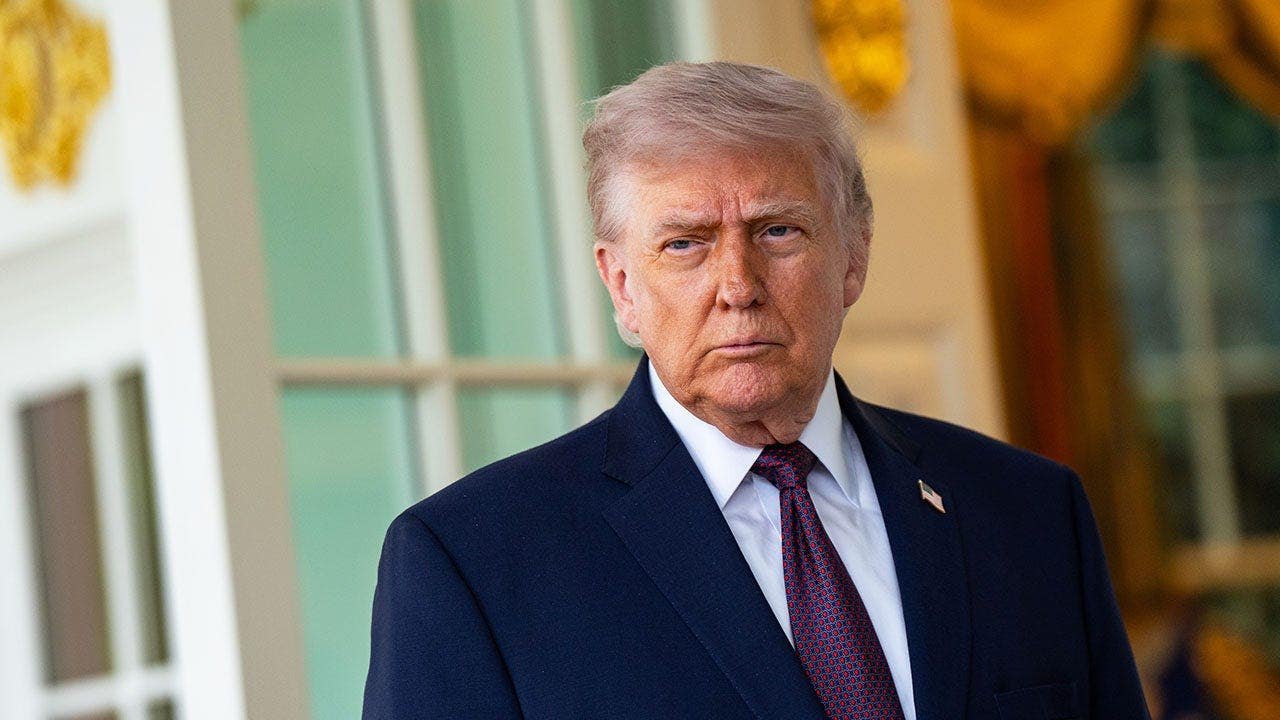
President Donald Trump speaks to members of the media outside the Oval Office of the White House on Monday, April 13, 2026. (Salwan Georges/Bloomberg)
Now, they’ve loaded up six new resolutions to continue that push.
«We’re going to have a debate and a vote every week in the United States Senate until either this war comes to an end or our Republican colleagues decide to do their constitutional duty,» Sen. Chris Murphy, D-Conn., said.
Most Republicans, for now, aren’t breaking with the president. But a 60-day deadline that will require either Congress to weigh in or Trump to cease hostilities is fast approaching, and it’s raising questions among some in the GOP.
Under the War Powers Resolution, Trump has 60 days until Congress is required to weigh in and either authorize or disapprove of the war. If the latter, the administration has 30 days to draw down forces in Iran.
SCHUMER BLASTS TRUMP’S IRAN WAR AS FAILURE, MOVES TO REIN IN HIS WAR POWERS AMID CEASEFIRE

Sen. Lisa Murkowski speaks to members of the media outside the U.S. Capitol in Washington, D.C., on Oct. 3, 2025. (Graeme Sloan/Getty Images)
«The president needs to come to Congress in the absence of some imminent threat to the country or an attack on the country, to seek an authorization,» Sen. Adam Schiff, D-Calif., said. «Otherwise, it’s illegal to make war as he’s doing.»
Sen. Lisa Murkowski, R-Alaska, who has bucked Trump before on Venezuela but toed the party line on Iran, is drafting an Authorization for the Use of Military Force (AUMF) on the war in Iran, describing the effort in an interview with The New York Times as a way to put parameters around Operation Epic Fury.
When asked by Fox News Digital if she was still working on the AUMF, she said, «Uh huh, I’m working on so much.»
Whether Republicans will support the administration and authorize the war remains an open question. Sen. Rand Paul, R-Ky., who has sided with Senate Democrats on each effort to handcuff Trump’s war powers, wouldn’t say how he’d vote on a potential AUMF.
TOP GOP HAWK GRAHAM WARNS IRAN DEAL HAS ‘TROUBLING ASPECTS’ AS CEASEFIRE BEGINS
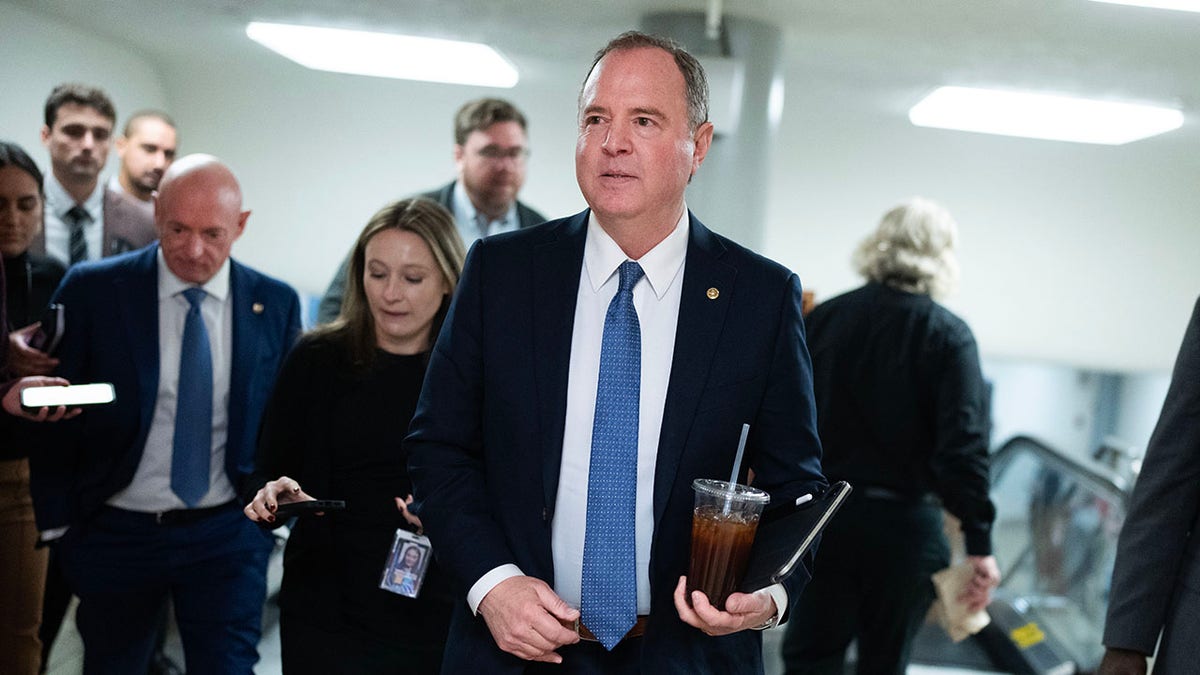
«The president needs to come to Congress in the absence of some imminent threat to the country or an attack on the country, to seek an authorization,» Sen. Adam Schiff said. (Tom Williams/CQ-Roll Call, Inc/Getty Images)
«I’m not for the war in Iran, I think it’s a war of choice but not my choice,» he said.
Others see an AUMF as a potentially useful tool, if successful, for Trump and his efforts in the Middle East.
«I think maybe an AUMF could be an advantage for the president, to say, even Congress is here for the long time, removing the political calculation that maybe the president doesn’t have Congress’ support,» Sen. Thom Tillis, R-N.C., said.
Still, the economic toll at the pump and on goods is making Republicans’ constituents feel the immediate pain of the conflict.
CLICK HERE TO DOWNLOAD THE FOX NEWS APP
Senate Majority Leader John Thune, R-S.D., acknowledged the crunch that the war was having on the cost of fertilizer in his agriculture-heavy state, but he questioned the authority of the War Powers Resolution.
«If you accept the war powers as being constitutional, it would be the threshold under which that law would apply,» Thune said. «But I think, you know, at least right now, the steps that have been taken so far I think have been very effective and successful. But we do, they need a plan out, how to wind this down, how to get an outcome.»
Democrats still argue that the war was illegal to begin with and have no plans of letting up on their war powers push, even as the deadline nears.
«If the president has a plan, he can come to Congress and ask for authorization, and we can have the debate we should have had beforehand,» Sen. Jeff Merkley, D-Ore., said.
politics, war with iran, senate, donald trump












INTERNACIONAL
Russia exposes NATO weapons gap as top commander warns ‘the math is not in favor of the West’
NEWYou can now listen to Fox News articles!
Days after NATO allies committed tens of billions of dollars to new air and missile defenses, the alliance’s top transformation commander warned that the West must fundamentally redesign its weapons and industrial base to withstand attacks at the scale now being demonstrated in Ukraine and the Middle East.
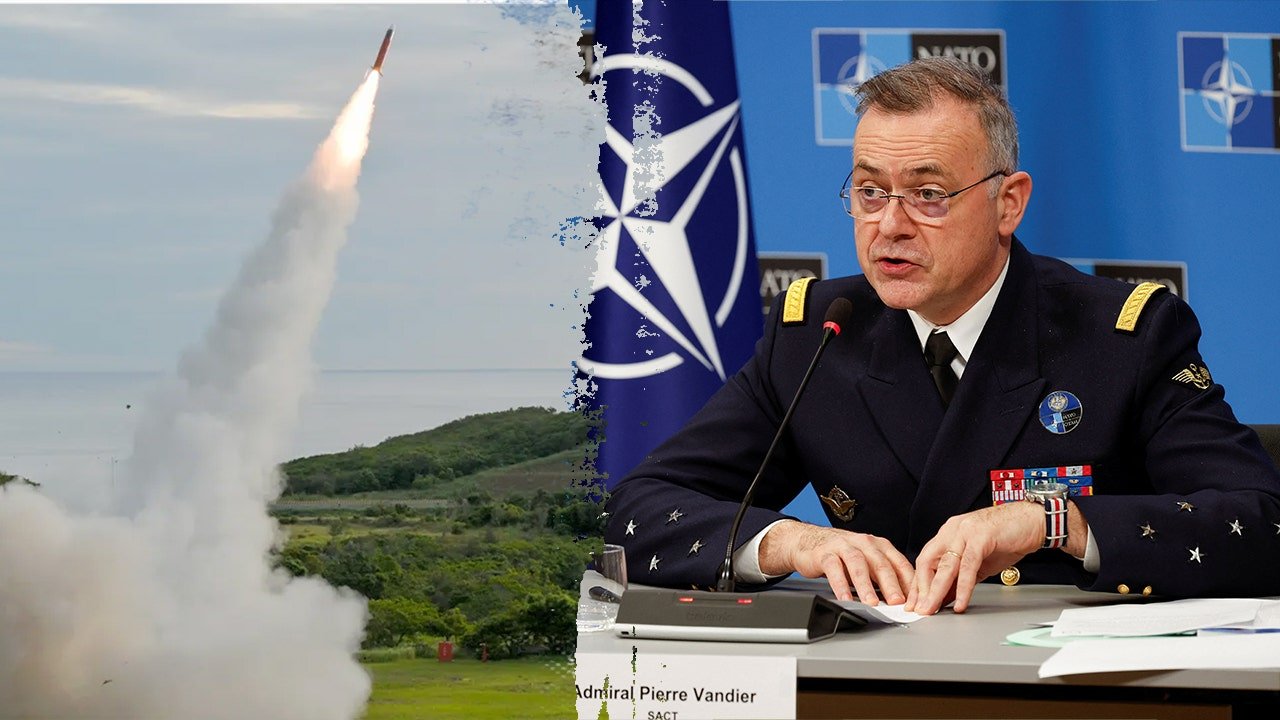
«Today, the math is not in favor of the West,» Adm. Pierre Vandier, NATO’s supreme allied commander for transformation, told Fox News Digital in an exclusive interview following the alliance’s summit in Ankara, Turkey, in early July.
A U.S.-made MIM-104 Patriot surface-to-air missile is launched during a live-fire exercise at the Chiupeng missile base in Pingtung County on Aug. 20, 2024, Adm. Pierre Vandier ( )
The summit produced commitments to acquire 900 Patriot missiles and invest more than $40 billion in counter-drone capabilities throughout five years.
But Vandier argued that simply buying more of the West’s existing weapons will not solve the underlying problem.
TRUMP ENTERS FINAL NATO SUMMIT DAY AS UKRAINE, DEFENSE SPENDING TAKE CENTER STAGE
Russia’s nightly barrages against Ukraine have exposed an air-defense model designed for smaller numbers of incoming threats. The U.S.-Iran conflict has simultaneously intensified demand for the high-end interceptors needed to defeat ballistic missiles, including Patriots and Terminal High Altitude Area Defense (THAAD) that cannot quickly be replaced.
«There is no way to produce 50,000 Patriots a year,» Vandier said. «We don’t have the supply chain, and it’s not worth doing that given the cost of the weapon.»
Instead, Vandier said NATO needs a layered mix of defenses: cheaper weapons that can be mass-produced to counter waves of drones, while preserving advanced interceptors for ballistic missiles and other sophisticated threats.
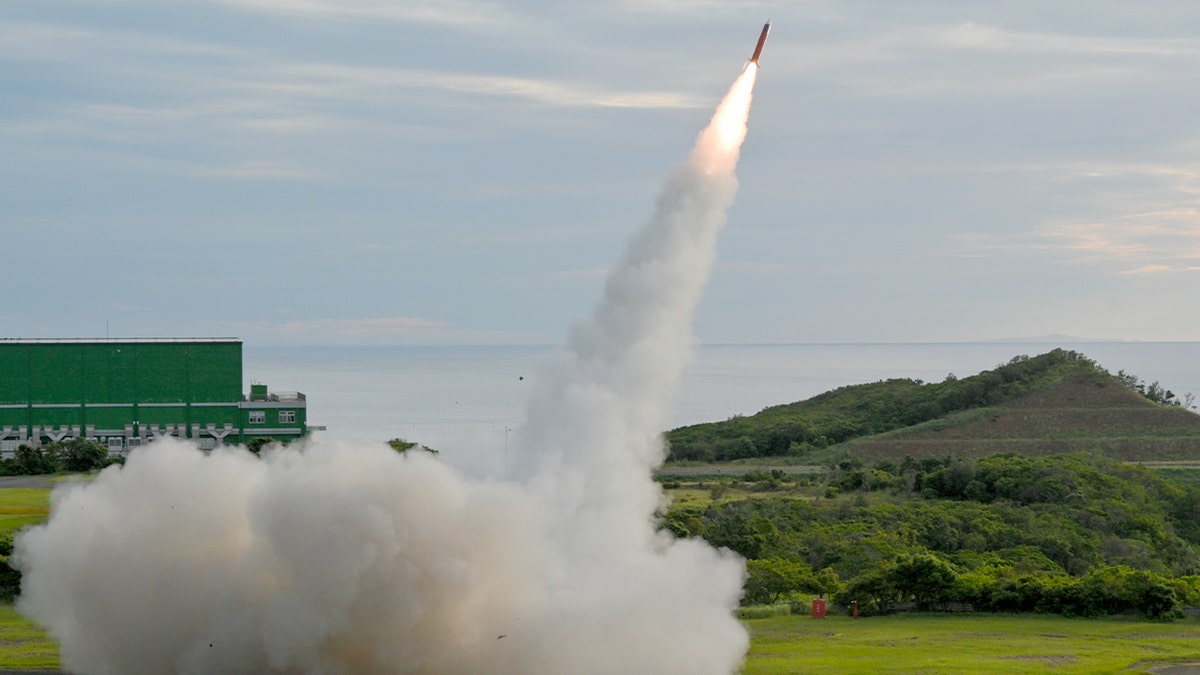
A U.S.-made MIM-104 Patriot surface-to-air missile is launched during a live-fire exercise at the Chiupeng missile base in Pingtung County Aug. 20, 2024. (Sam Yeh/AFP via Getty Images)
THE TWO MOST IMPORTANT AMERICAN WEAPONS SYSTEMS NATO IS EAGER TO HAVE
«You need to have attritable, low-cost, mass-produced weapons to just kill the low-cost weapons that are coming by big waves,» Vandier said. «And then you need still the exquisite, complex weapons to kill the most complex weapons, as ballistic missiles.»
Trump announced at the summit that the United States would grant Ukraine a license to manufacture Patriot interceptors, potentially allowing Kyiv to build more of the weapons it urgently needs to defend against Russian ballistic missiles.
But asked whether the announcement changed his assessment that Patriots alone could not protect Europe throughout the next five years, Vandier pointed to a deeper obstacle: Western weapons were designed around an industrial base that no longer exists.
UKRAINE’S BATTLEFIELD IS TRANSFORMING THE FUTURE OF NATO
«The design needs to change,» Vandier said. «We are at a moment where some stuff will be redesigned under pressure to be mass-produced.»
NATO also is attempting to transform against a threat that is changing in real time. Asked about a recent Russian live-fire exercise on Lake Peipus, between Estonia and Russia, which Estonia’s defense minister assessed was likely practice against Ukrainian-style naval drones, Vandier said Russia has demonstrated an ability to absorb battlefield lessons and adjust «on a weekly basis.»
«War — if you do not adapt, you die,» Vandier said. «All your brain is about how you outmatch, outpace, outrun the enemy. And so Russia is not that bad at that.»
«For NATO now, it’s a question of speed of adaptation,» Vandier said. «It’s a mind game.»
Ukraine’s defense industry, meanwhile, is increasingly setting the pace for the larger Western manufacturers that once supplied most of its weapons, Vandier said. Ukrainian companies have been able to develop, field and modify systems quickly in response to changes on the battlefield.
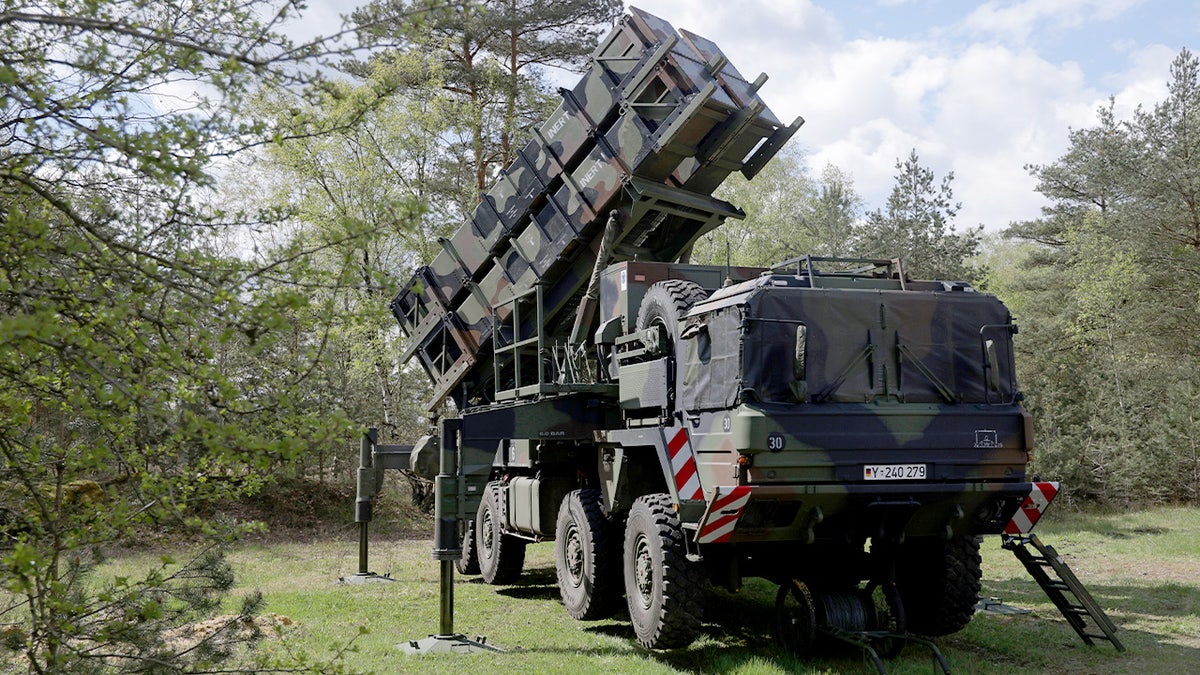
President Donald Trump said the United States would send more Patriot missiles to Ukraine during a meeting with NATO Secretary General Mark Rutte in the Oval Office on July 14, 2025. (Sean Gallup/Getty Images)
«The very agile and fast-evolving industrial base in Ukraine is now giving the pace to the European and Western industry,» Vandier said.
But the technological competition is not confined to drones and air defenses. Vandier warned that the collapse of the Intermediate-Range Nuclear Forces Treaty has reopened a broader race over long-range missiles in Europe, as Russia and NATO allies seek weapons capable of holding targets farther behind enemy lines at risk.
The 1987 treaty prohibited the United States and Russia from possessing ground-launched missiles with ranges between 500 and 5,500 kilometers. The first Trump administration withdrew from the agreement in 2019 after accusing Moscow of violating it, an allegation Russia denied.
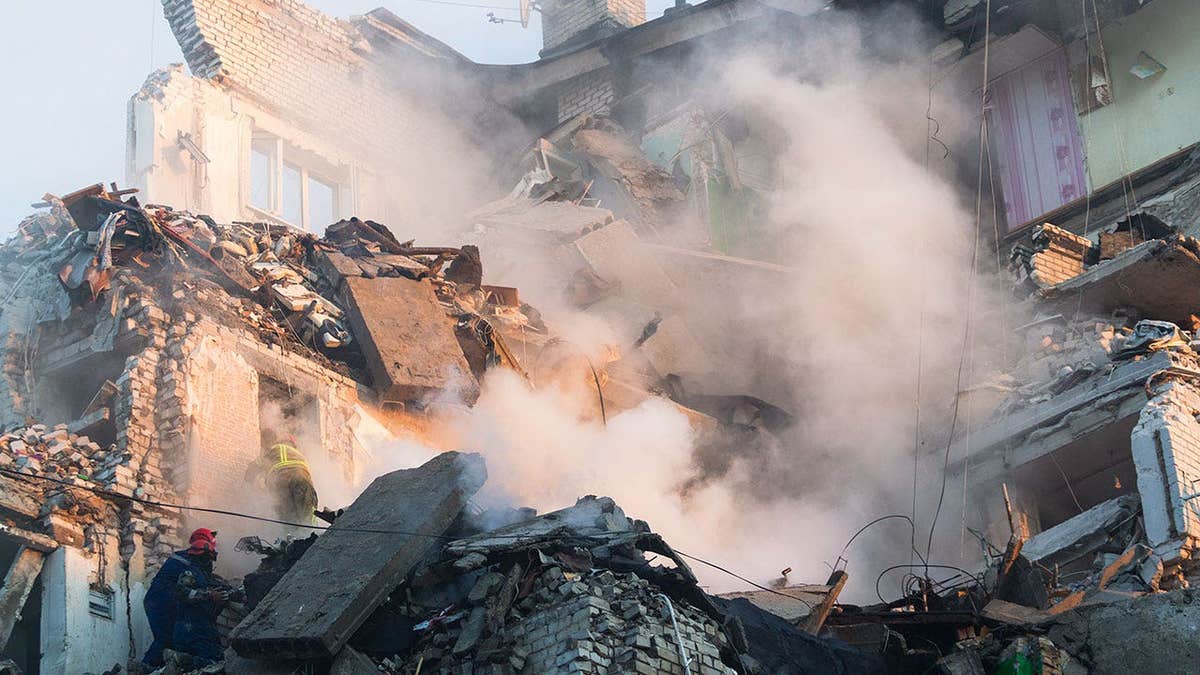
Rescuers conduct search and rescue operations at a multi-storey residential building damaged in a massive Russian missile and drone attack in the Darnytskyi district of Kyiv, Ukraine, on July 2, 2026. Russian forces launched a large-scale attack on the city using strike drones and various types of missiles. Private homes, apartment buildings, an emergency medical substation, and a hotel building were damaged (Kyrylo Chubotin/Ukrinform)
CLICK HERE TO DOWNLOAD THE FOX NEWS APP
Vandier said the disappearance of those limits has produced a period of «complete strategic instability,» with both sides under pressure to develop new capabilities to preserve deterrence.
«The Pandora’s box is open again,» Vandier said, «and we’ll try to close it down one day.»
nato, ukraine, conflicts defense, russia, the european union
INTERNACIONAL
Costa Rica confirmó nueve nidos activos de jabirú y el nacimiento de 19 pichones en 2026
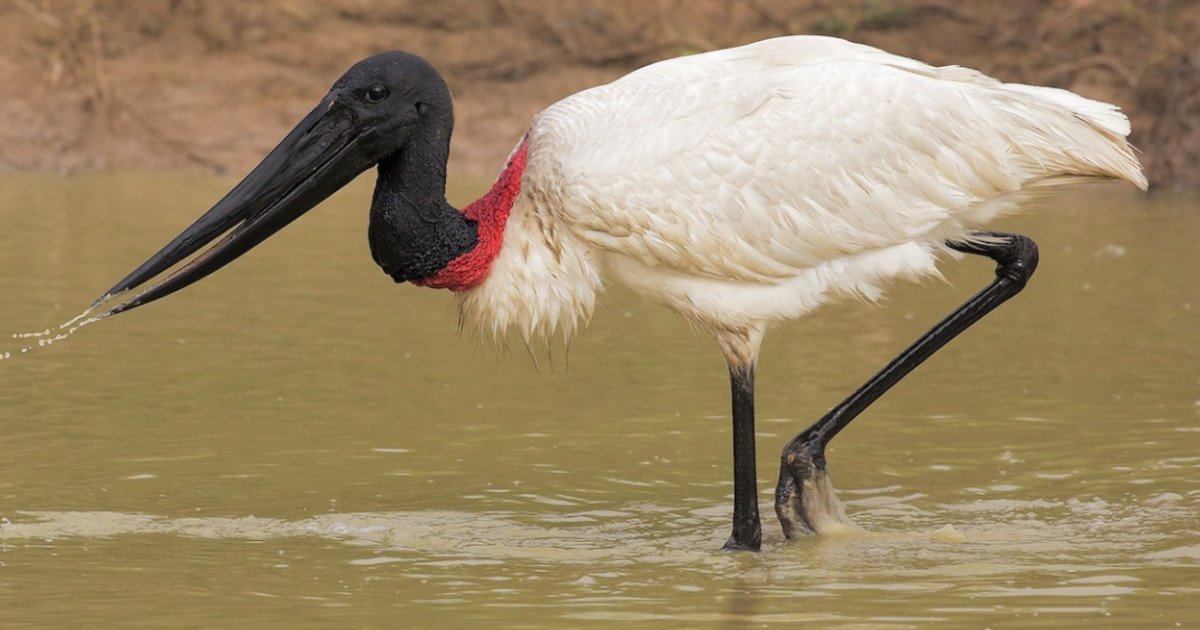
La población del jabirú, considerada una de las aves más emblemáticas y amenazadas de los humedales costarricenses, mostró señales alentadoras durante la temporada reproductiva de 2026. El más reciente monitoreo nacional realizado por la Universidad Estatal a Distancia (UNED) confirmó la existencia de nueve nidos activos y el nacimiento de 19 pichones, datos que permiten evaluar el estado de conservación de la especie y orientar futuras acciones de protección.
El estudio también estimó una población mínima de 148 jabirúes (Jabiru mycteria) durante el periodo reproductivo, cifra obtenida a partir de la revisión de los sitios históricos de anidación y de conteos simultáneos efectuados en las principales zonas donde habita la especie, específicamente en las cuencas de los ríos Tempisque y Frío.
Los resultados forman parte del proyecto de investigación “Ecología y conservación del jabirú en Costa Rica”, iniciativa que la UNED desarrolla desde hace más de tres décadas y que se ha convertido en el seguimiento científico más prolongado sobre esta especie en el país.
De acuerdo con el investigador y profesor de la UNED, Johnny Villarreal Orias, cada temporada reproductiva aporta información clave para conocer el estado de la población y medir el éxito de las parejas reproductoras.
“La presencia de nueve nidos activos y el nacimiento de 19 pichones son indicadores que nos permiten evaluar el éxito reproductivo de la especie y comprender mejor su comportamiento en los humedales costarricenses”, explicó el especialista.

El monitoreo anual combina dos estrategias complementarias. La primera corresponde a la denominada Expedición Jabirú, que consiste en recorrer durante febrero todos los nidos registrados históricamente para verificar cuáles permanecen activos durante la temporada reproductiva.
La segunda metodología se basa en conteos simultáneos realizados el primer sábado de marzo y abril en lagunas y puntos estratégicos de observación ubicados en las cuencas de los ríos Tempisque y Frío.
Según Villarreal, la combinación de ambos métodos permite conocer no solo cuántas parejas lograron reproducirse exitosamente, sino también estimar el tamaño de la población presente en Costa Rica durante cada temporada.
Este seguimiento científico ha permitido construir una base de datos de gran valor para comprender la dinámica poblacional del jabirú, una especie cuya presencia está estrechamente ligada a la salud de los humedales.
Además de la población reproductora, los investigadores identificaron un fenómeno que evidencia la importancia regional de los humedales costarricenses.
Durante el mes de mayo registraron la llegada temporal de cerca de 100 jabirúes no reproductores que utilizaron la Laguna Jicote, en la cuenca del río Tempisque, como sitio de alimentación y descanso durante la época seca.
Las aves permanecieron únicamente algunos días antes de abandonar nuevamente el territorio nacional, comportamiento que, según los especialistas, confirma que Costa Rica funciona como un refugio temporal para ejemplares provenientes de otras regiones.
“La llegada de estos individuos demuestra que los humedales costarricenses tienen un valor ecológico que trasciende nuestras fronteras. No solo albergan a la población reproductora, sino que también funcionan como refugio temporal para jabirúes provenientes de otras regiones”, indicó Villarreal.
Para los investigadores, este movimiento temporal resalta la importancia de mantener en buen estado los ecosistemas acuáticos del norte del país, ya que cumplen un papel fundamental dentro de las rutas utilizadas por la especie.

El proyecto de monitoreo del jabirú supera ya los 30 años de trabajo continuo, convirtiéndose en una referencia para la conservación de esta ave en Costa Rica.
Gracias a este seguimiento, los científicos han determinado que más del 75 % de los nidos se encuentran dentro de propiedades privadas, una realidad que convierte a los propietarios de fincas en actores fundamentales para garantizar la supervivencia de la especie.
La colaboración entre instituciones, comunidades y dueños de terrenos ha permitido proteger árboles utilizados para la anidación y reducir algunas amenazas que enfrentan estas aves.
Sin embargo, los especialistas advierten que todavía existen riesgos importantes para la conservación del jabirú. Entre ellos destacan la pérdida y degradación de humedales, la tala de árboles donde construyen sus nidos, los incendios forestales, el turismo irresponsable en zonas de reproducción y los efectos asociados al cambio climático.
Los investigadores enfatizan que el jabirú funciona como un indicador del estado de salud de los humedales, por lo que proteger sus sitios de reproducción también significa conservar ecosistemas esenciales para cientos de especies de flora y fauna.
Los resultados del monitoreo de 2026 refuerzan la necesidad de mantener programas científicos de largo plazo y fortalecer las acciones de conservación en los humedales costarricenses, considerados uno de los patrimonios naturales más importantes del país. La continuidad de estos esfuerzos permitirá conocer la evolución de la población del jabirú y generar información clave para la toma de decisiones orientadas a proteger una especie emblemática cuya supervivencia depende, en gran medida, de la conservación de los ecosistemas donde habita.
corresponsal:Desde San José, Costa Rica

La pelea con Lula y el verdadero desafío que enfrenta Milei

Tras el escándalo de las renuncias, Italia dio un giro en su proyecto deportivo: el entrenador que retornará a la selección

La Ley de Tierras es constitucional

Cuánto cobrarán los jubilados con 30 años de aporte en agosto 2026 con el aumento y el bono

Las fotos de Julieta Cardinali y su hija Charo Calamaro a pura complicidad en Colombia

En Washington, Netanyahu se enfrenta a un delicado equilibrio

Vocero de Milei dijo que un dólar a $1.800 es «posible» y la City alerta por fin de la paz cambiaria

Polémica por el proyecto que busca desregular los planes de ahorro de autos 0 km: qué podría cambiar

Convivencia pacífica o tensión administrada: el PRO define cómo pararse frente al gobierno de Milei rumbo a 2027

Crisis entre Milei y Lula: la trama política, personal y geopolítica detrás del mayor choque diplomático entre Argentina y Brasil

 POLITICA1 día ago
Crisis entre Milei y Lula: la trama política, personal y geopolítica detrás del mayor choque diplomático entre Argentina y Brasil
- POLITICA3 días ago
Cuentapropismo emocional en lo profundo del conurbano
- SOCIEDAD2 días ago
San Isidro: la ballena que quedó varada en un banco de arena murió pese al operativo de rescate