INTERNACIONAL
Iran turmoil erupts: Ultra-hardliner who mocked Trump poised to take over nuclear talks

Trump cancels Iran peace talks, citing US leverage
President Donald Trump unilaterally canceled a diplomatic trip to Pakistan for Iran peace talks, stating the U.S. holds ‘all the cards’ and Iran’s leaders can call anytime. Correspondent Matt Finn reports on the stalled negotiations, while retired Navy Captain Brent Sadler discusses escalating U.S. military deployments to the Strait of Hormuz and new economic sanctions targeting nearly 40 entities in Iran’s oil network in China.
NEWYou can now listen to Fox News articles!
Further signs of turmoil are emerging in Iran’s U.S. negotiating team as hardliner Mohammad Bagher Ghalibaf looks set to be replaced by a veteran conservative known for rejecting nuclear concessions, according to reports.
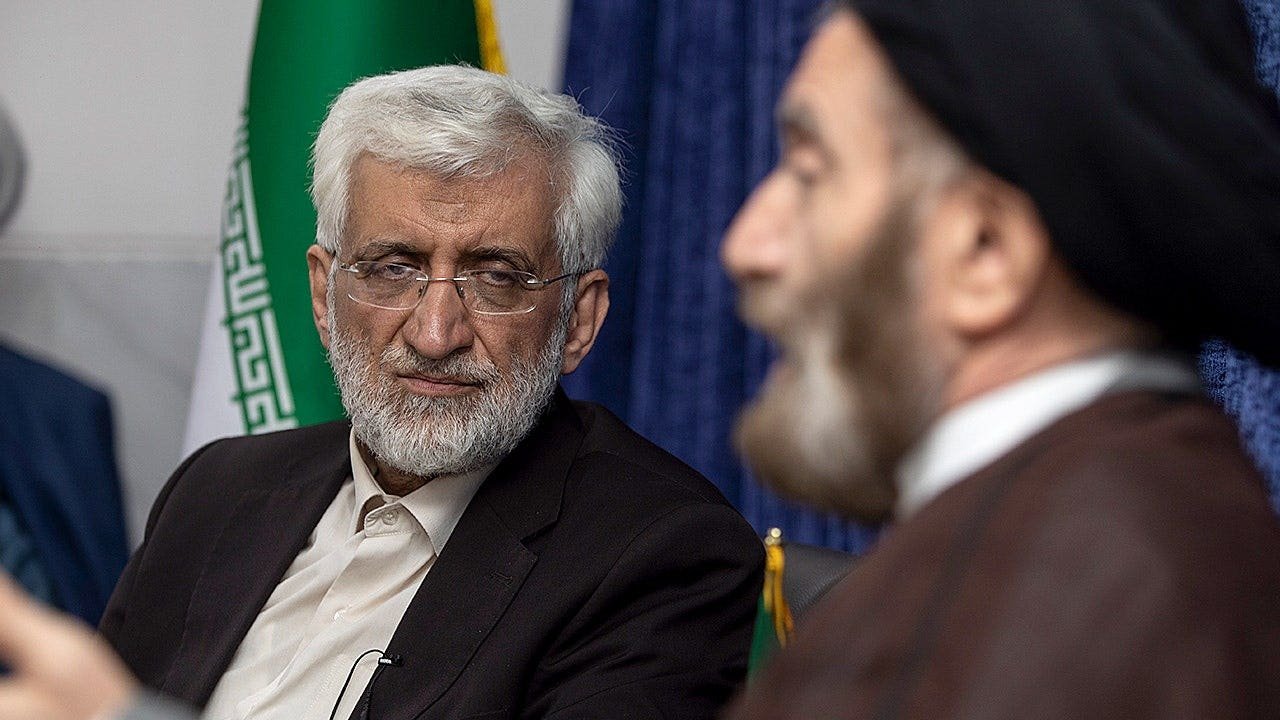
Iran International reported April 24 that Saeed Jalili, 60 — who already leads what has been described as a «shadow government» — is expected to succeed Ghalibaf following his sudden departure amid internal disputes.
Jalili also heads Iran’s ultra-hardline faction known as the Stability Front (Paydari), which is known to be a «bastion of ultraconservatism in Iran,» according to reports.
Ali Safavi, an official with the Iranian opposition coalition, the National Council of Resistance of Iran (NCRI), told Fox News Digital that Jalili «has evolved from a nuclear negotiator to an influential actor within the regime.»
TRUMP’S LATEST HIRES AND FIRES RANKLE IRAN HAWKS AS NEW PRESIDENT SUGGESTS NUCLEAR DEAL
Jalili Saeed is expected to succeed Ghalibaf following his sudden departure amid internal disputes. (Majid Saeedi/Getty Images)
Ghalibaf was reportedly forced to step down after attempting to bring the nuclear issue into talks with Washington, a move that triggered backlash within Iran’s political establishment.
President Donald Trump had called off plans for U.S. envoys to travel to Pakistan for peace talks with Iran on April 25.
The rivalry between Jalili and Ghalibaf is said to span more than a decade and intensified during the 2024 elections, when Jalili refused to step aside, contributing to the victory of President Masoud Pezeshkian.
Safavi said, «The increased visibility of latent divisions stems from recurring nationwide uprisings, deep economic crises and the pressures of war, all of which have intensified internal feuding.
«Far from signaling transformation, these developments reflect accelerating erosion and mounting pressure, deepening fractures and leaving the regime ever weaker and more vulnerable,» he added.
EXILED PRINCE LOOKS TO LEAD IRANIAN PEOPLE IN ENDING ISLAMIC REPUBLIC: ‘OUR BERLIN WALL MOMENT’
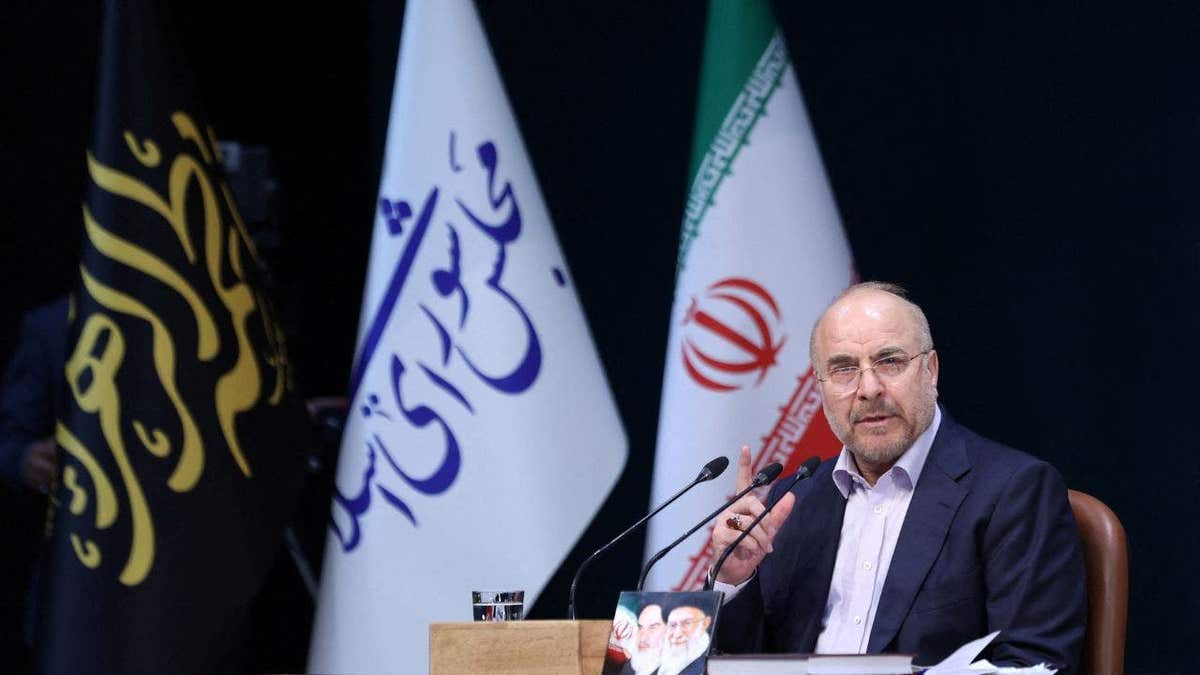
Iranian Parliament Speaker Mohammad Bagher Ghalibaf speaks during a press conference in Tehran, Iran, Nov. 27, 2024. (Majid Asgaripour/WANA (West Asia News Agency) via REUTERS)
Foreign Minister Abbas Araghchi is also seeking a continued leading role in negotiations, highlighting competing centers of influence over Iran’s diplomatic strategy, sources said.
Araghchi is in Islamabad, Pakistan, after returning from a short trip to Muscat, Oman, where he is holding high-level diplomatic talks on the conflict. Reports indicate Araghchi will travel to Moscow.
Jalili’s potential appointment, however, signals a hardening of Iran’s stance, with more emphasis on resistance over compromise.
«Within this regime, there are a number of constants espoused by all factions,» Safavi said before highlighting that these were «repression, the export of terrorism and the pursuit of nuclear weapons.»
«The factions all ultimately move along a common path: the preservation of power. They differ in methods, not in objectives,» Safavi cautioned.
IRANIAN-AMERICANS AND DISSIDENTS RALLIED AGAINST ‘MURDEROUS REGIME AGENTS’ AS IRAN’S PRESIDENT ADDRESSED UNGA
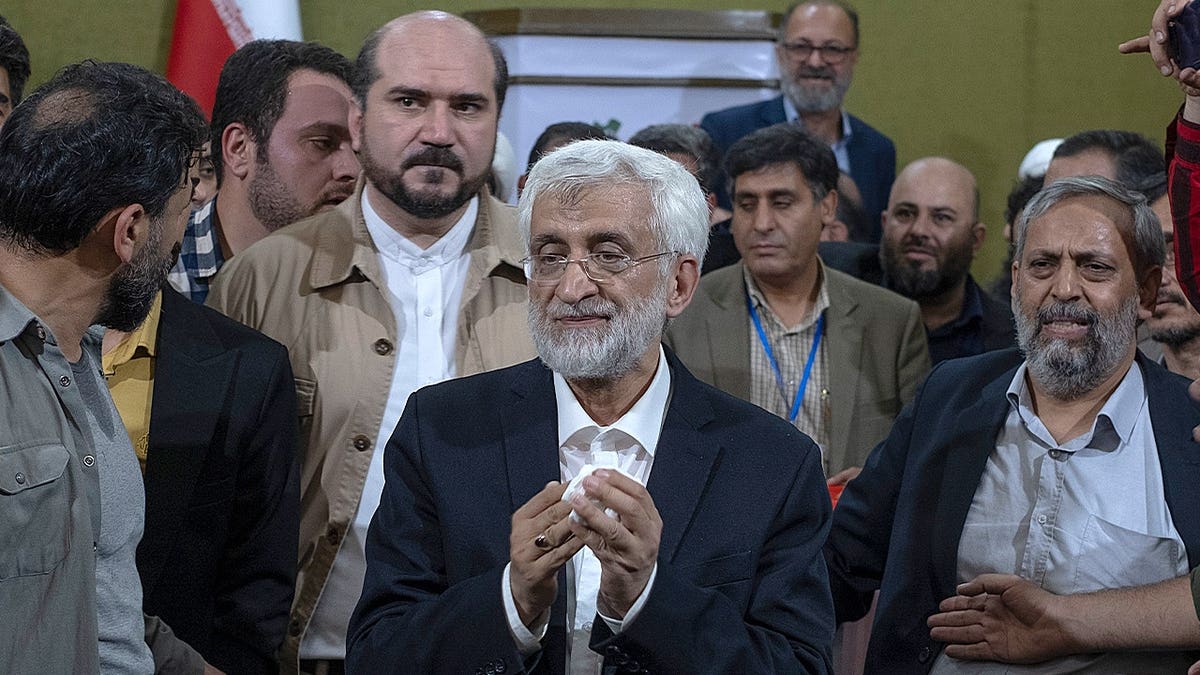
Jalili, meanwhile, served as Iran’s top nuclear negotiator from 2007 to 2013 under President Mahmoud Ahmadinejad and later ran for president three times. (Morteza Nikoubazl/NurPhoto via Getty Images)
Jalili, meanwhile, served as Iran’s top nuclear negotiator from 2007 to 2013 under President Mahmoud Ahmadinejad and later ran for president three times. He also served as secretary of the Supreme National Security Council.
A former member of the Islamic Revolutionary Guard Corps (IRGC), Jalili lost his right leg at 21 during the Iran-Iraq War, earning him the title of «Living Martyr».
The Paydari Front, which he is associated with, opposes engagement with the West — particularly the 2015 nuclear deal — and advocates a doctrine of «active resistance.»
During Hassan Rouhani’s presidency, Jalili also established a «shadow government» to counter the administration’s policies, especially the nuclear deal.
On April 7, he wrote on X: «Yes — ‘infrastructure’ is on the verge of collapse; the infrastructure of domination and the American order. And after that, a better foundation will be built.»
A day earlier, he posted: «‘Shut up’ is not the appropriate response to Trump’s ramblings; let him speak more. Nothing is more effective in laying bare the true nature of the United States than Trump’s outbursts.»
CLICK HERE TO DOWNLOAD THE FOX NEWS APP
«In dealing with this regime,» Safavi said, «we must bear in mind that in the 45 years since the mullahs consolidated their rule in 1981 by crushing all peaceful political life, so-called reformists have governed for nearly half that time — presiding over some of its darkest crimes.»
«These include the 1988 massacre of 30,000 political prisoners, the assassination of dissidents abroad, the chain murders of intellectuals inside Iran and the relentless pursuit of nuclear weapons.»
middle east foreign policy, ali khamenei, nuclear proliferation, foreign policy, iran










INTERNACIONAL
Ahora el alcalde de Nueva York, Zohran Mamdani, dice que no podrá arrestar a Netanyahu cuando vaya a la asamblea de la ONU
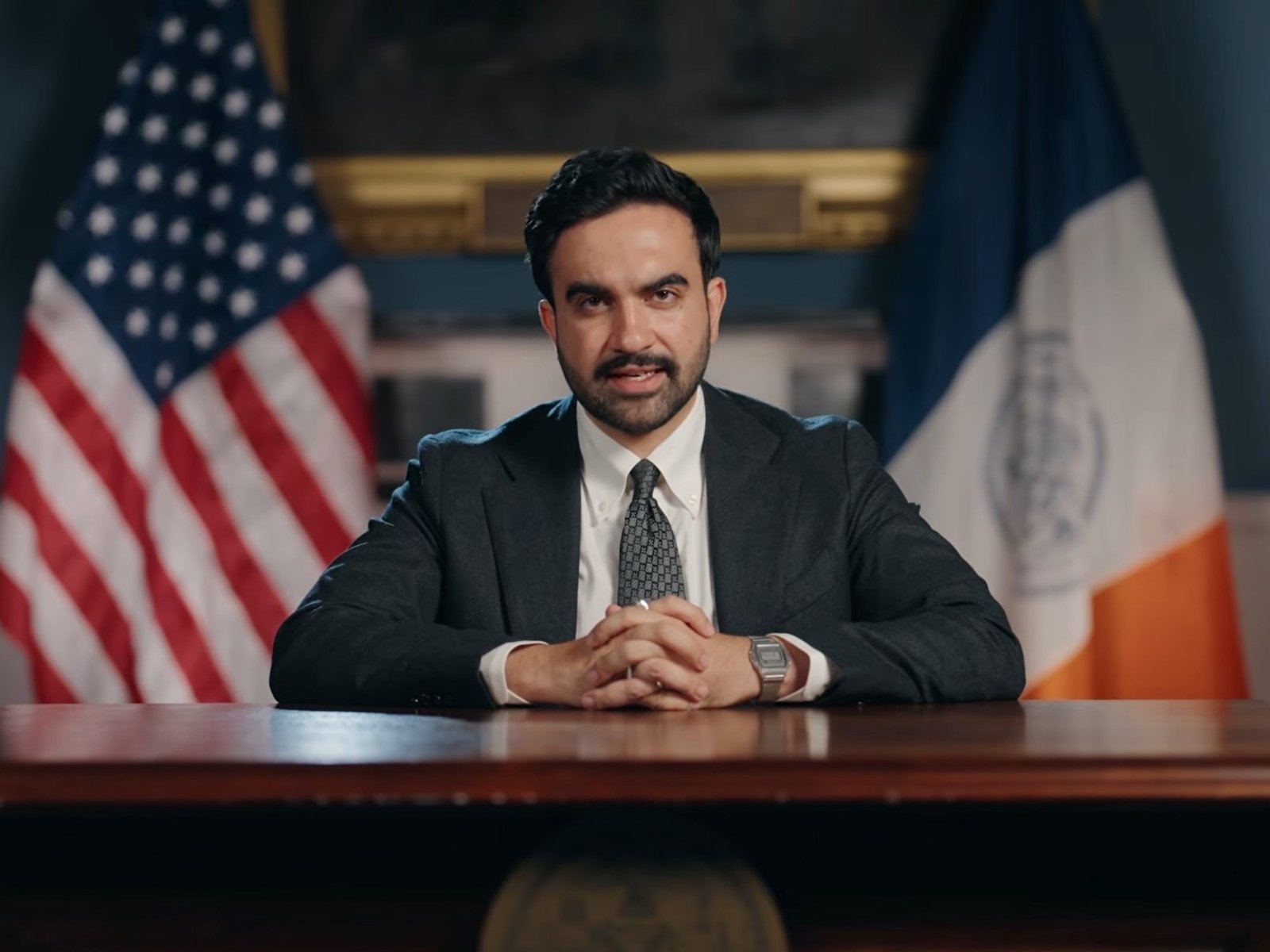
Finalmente, el alcalde de Nueva York, Zohran Mamdani, dijo que la ciudad no podría ejecutar una orden de arresto emitida por la Corte Penal Internacional (CPI) contra el primer ministro israelí Benjamin Netanyahu, pero instó al gobierno federal a hacerlo.
«Mi administración ha analizado todas las vías disponibles en virtud de la legislación aplicable para determinar si la ciudad de Nueva York podría ejecutar la orden de aprehensión de la Corte Penal Internacional en caso de que Benjamin Netanyahu viniera aquí. Es evidente que no contamos con la autoridad legal independiente para hacer cumplir esta orden«, señaló Mamdani, en un video publicado el martes por la noche en sus redes sociales.
En cambio, el alcalde de Nueva York instó al gobierno de Donald Trump a cumplir con la orden, cuando el líder israelí viaje a la ciudad para la Asamblea General de Naciones Unidas, el próximo 8 de septiembre. «El gobierno federal sí tiene (autoridad legal), y los insto a que se unan a la CPI y ejecuten esta orden de aprehensión», afirmó.
Por otra parte, aclaró que «Netanyahu no es bienvenido en la ciudad de Nueva York, ni tampoco ningún otro criminal de guerra que se encuentre prófugo».
Mamdani acusó al líder israelí de ser «el artífice de un horrible genocidio contra el pueblo palestino» y lo responsabilizó por «la muerte de más de 73.000 personas y de la mutilación de decenas de miles de niños».
Además, le endilgó «los ataques contra hospitales neonatales y centros de atención materna, negando a los recién nacidos incluso la oportunidad de vivir», y de «dejar morir de hambre» a «innumerables personas» al «impedir que les llegaran alimentos y ayuda humanitaria». También lo acusó del «asesinato a tiros de cientos de trabajadores humanitarios y periodistas».
«Cualquiera que tenga ojos, corazón y conciencia debería reconocer la devastación que él ha causado y comprender que debe comparecer ante un tribunal», señaló, en tanto agregó: «Estoy de acuerdo con la CPI en que Benjamin Netanyahu debe ser detenido y juzgado por sus crímenes«.
Pero Trump terminó la polémica el lunes al escribir en su cuenta de Truth Social que «Benjamin Netanyahu no será detenido, de ninguna manera, bajo ningún concepto, mientras se encuentre en los Estados Unidos de América».
El presidente estadounidense no sólo se ha negado repetidamente a arrestar a Netanyahu -de hecho, la última visita del israelí a los Estados Unidos fue en febrero-; también ha decretado sanciones contra la CPI, incluyendo a Karim Khan, el ex fiscal de la CPI que ordenó la detención del líder israelí y varios de sus funcionarios.
En 2024, la CPI, con sede en La Haya, acusó a Netanyahu y a varios de sus funcionarios de realizar crímenes de guerra y crímenes de lesa humanidad relacionados con la ofensiva de Israel en Gaza, tras el ataque del 7 de octubre de 2023, perpetrado por Hamás.
La CPI consideró que Netanyahu es «presuntamente responsable de los crímenes de guerra consistentes en el uso del hambre como método de guerra y en dirigir intencionalmente un ataque contra la población civil; y de los crímenes de lesa humanidad consistentes en asesinato, persecución y otros actos inhumanos, desde al menos el 8 de octubre de 2023 hasta, como mínimo, el 20 de mayo de 2024″.
La semana pasada, Mamdani le había dicho al New York Times que él y el departamento legal de la ciudad estaban discutiendo el posible arresto de Netanyahu si viaja a la ciudad de Nueva York para la Asamblea General de la ONU.
«Creo que el primer ministro Netanyahu pertenece a La Haya», le dijo al NYT. «Sea lo que sea que la ley me permita hacer en la ciudad de Nueva York, eso haremos», afirmó en la entrevista.
De hecho, Mamdani basó parte de su campaña para la alcaldía en que trataría de ordenar a la policía de la ciudad que arrestara a Netanyahu en virtud de la orden de la CPI.
La CPI no tiene una fuerza policial propia que ejecute las órdenes de detención y depende, para ello, del compromiso con la ley de los Estados. Países clave como Estados Unidos, China y Rusia no son miembros de la Corte, no reconocen su jurisdicción, ni la respaldan cuando se trata de casos que les afectan a ellos o sus aliados.
Dem, GOP lawmakers trade jabs as midterms approach
Republican strategist Collin Reed and Fox News contributor Richard Fowler weigh in on the escalating midterm election battles as ‘America’s Newsroom’ anchor Bill Hemmer breaks down the power rankings for the House and Senate.
NEWYou can now listen to Fox News articles!
Several findings in the latest Fox News Poll show voters are unhappy and want major change, which bodes well for Democrats in November: President Donald Trump’s job approval remains near a record low, more Democrats are motivated to vote, Republicans join Democrats and independents in rating the economy negatively, and 4 in 10 voters want «dramatic» or «revolutionary» change. Plus, more view the GOP as tied to elites than the Democratic Party.
Voters say Democrats can better handle income inequality (+22 points), healthcare (+21), inflation (+10), the economy (+9), and foreign policy (+7). Republicans hold the advantage on crime (+7 points), while government spending (Democrats +3) and national security (R +2) are more evenly divided. On immigration, the GOP had an 8-point edge in April. Now, Democrats are preferred by one point.
FOX NEWS POLL: AN EARLY LOOK AT THE GEORGIA SENATE RACE
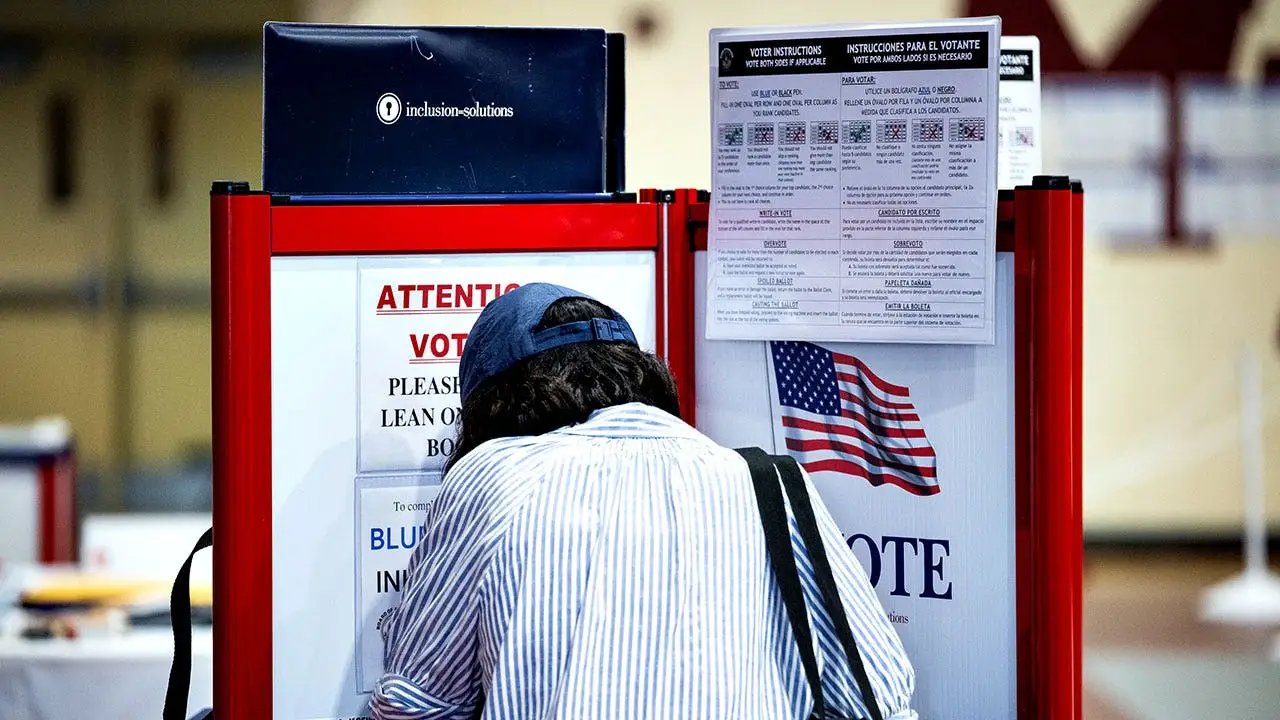
More Democrats (68%) say they are extremely motivated to vote in November than Republicans (57%) by an 11-point margin. By a 25-point spread, more MAGA Republicans (66%) are extremely motivated than non-MAGA Republicans (41%).
FOX NEWS POLL: A CLOSE SENATE CONTEST IS BREWING IN IOWA
If the election were today, 53% of voters would back the Democratic candidate in their House district and 46% the Republican. That 7-point edge is just outside the poll’s margin of error. Democrats were up by 5 points in April. Notably, 53% is the highest percentage either party has received on the generic House ballot in Fox News polling since 1996.
When looking only at counties where the 2024 presidential vote was close — Trump and former Vice President Kamala Harris within 10 points — the Democratic candidate leads by 59-41%.
«Although these data look promising for the Democrats, some of their support is in less-contested districts, padding their national totals without adding House seats,» says Republican pollster Daron Shaw, who conducts Fox News polls with Democrat Chris Anderson. «The best estimates I’ve seen suggest the GOP could retain the House even if the Democrats win the national vote by 2-3 points, but if Democrats win by 6-7 points, they probably take the House.»
The Democratic advantage comes amid weak ratings for Trump and continued economic pessimism. Trump’s job approval stands at 39%, unchanged for the third month in a row and one point above his low of 38% in October 2017. Approval of Trump is a touch lower than former President Barack Obama’s at the same point in his second term (42% in July 2014).
Trump received net-negative ratings for handling immigration (42% approve, 57% disapprove), Iran (34-66%), the economy (33-67%), and inflation (27-73%).
Three-quarters rate the economy negatively, about the same for the past six months.
Another three quarters say inflation has caused them financial hardship, including 34% who say «serious» hardship, up from 26% last year.
Fifty-four percent expect the economy to worsen in the coming year; only Republicans express optimism (71%), while Democrats (75%) and independents (64%) expect it to worsen.
Dissatisfaction extends beyond individual figures to both political parties and the broader economic system.
«Democrats and Republicans have a surprisingly broad array of shared beliefs about politics today,» says Shaw. «Both think elected officials answer to the elites, both think the system is rigged, both want to see new blood in office, both feel betrayed by their party, both disapprove of their members in Congress, and both want a mandatory retirement age for Congress.»
Some 70% say the Republican Party is closely tied to elite interests, while 55% say the same about the Democratic Party. The 15-point gap reflects more Democrats and independents saying the GOP is tied to elites, yet even Republicans are equally likely to describe both parties as close to elites.
There’s disillusionment in both parties. Many Democrats (48%) and Republicans (41%) say they feel betrayed by their party, and for both it is primarily for selling out to special interests.
Perceptions that the political system favors elites are reshaping views of the economy as well. The number who accept income inequality because «that’s how our economy works» has fallen 16 points compared to 2014 (from 62% to 46%), while the share who want government action has more than doubled (from 13% to 30%).
At the same time, an increasing number, 65%, think the country’s system is rigged in favor of the wealthy (up 9 points compared to 2019).
By 2-to-1, voters say it is more important to elect new people than keep those with experience.
Overall, 19% say they want revolutionary change in the nation’s government, while many others want substantial (38%) or dramatic (23%) change.
Almost twice as many Democrats (52%) as Republicans (28%) want dramatic or revolutionary change.
Nearly 7 in 10 voters disapprove of both Democrats and Republicans in Congress.
Some 32% of Republicans disapprove of their party’s lawmakers, while 39% of Democrats disapprove of theirs. More than 8 in 10 independents disapprove of both.
Fully 85% support a mandatory retirement age for members of Congress, up 20 points since 2002.
Of those in favor of setting a cap, 80% think it should be before age 75, with 61% selecting a cutoff between 65 and 74 — a boundary supported by more than half of every generation.
Poll-pourri
Just 50% of voters have a positive view of capitalism, down from a high of 57% in 2019. For socialism, it’s 30% favorable, up from 27% last year but below the 32% who said the same in 2021. The Democratic Socialists of America are viewed positively by 31%.
By an 11-point margin, more Democrats have a favorable opinion of socialism (52%) than capitalism (41%), while by a 50-point margin, more Republicans have a positive view of capitalism (61%) than socialism (11%).
Forty-five percent of voters have a favorable view of Vermont Sen. Bernie Sanders, I-Vt., That makes him more popular than Vice President JD Vance (41% favorable), Trump (38%), and Rep. Alexandria Ocasio-Cortez, D-N.Y., (35%). Each is viewed more unfavorably than favorably. Voters under 30 and those ages 65+ are equally likely to view Sanders positively (48% and 46% respectively). For AOC, more voters 65+ (41%) have a favorable view than young voters (33%), and three times as many of those under 30 say they’ve never heard of her (30% vs. 9%).
Overall, 44% have a favorable view of Israel, down from 58% a decade ago. Positive ratings are lower today among Democrats (by 14 points), Republicans (-12), and independents (-21). Voters ages 65 and over (56%) are twice as likely to view Israel favorably as those under 30 (27%).
Conducted July 17–20, 2026, under the direction of Beacon Research (D) and Shaw & Company Research (R), this Fox News survey includes interviews with a sample of 1,003 registered voters randomly selected from a national voter file. Respondents spoke with live interviewers on landlines (70) and cellphones (681) or completed the survey online after receiving a text (252). Results based on the full sample have a margin of sampling error of ±3 percentage points. The survey includes an oversample of 200 voters aged 18–29, bringing the sample size for that subgroup to 350 (±5). Sampling error for results among subgroups is higher. In addition to sampling errors, question wording and order can influence results. Weights are generally applied to age, race, education, and area variables to ensure the demographics are representative of the registered voter population. Sources for developing weight targets include the most recent American Community Survey, Fox News Voter Analysis, and voter file data.
Fox News’ Victoria Balara contributed to this report.
fox news poll, politics, economy, elections, voting, democratic party, republicans, donald trump
INTERNACIONAL
EE.UU. y Arabia Saudita firmaron un acuerdo nuclear que incluiría el enriquecimiento de uranio: crece la preocupación en Israel
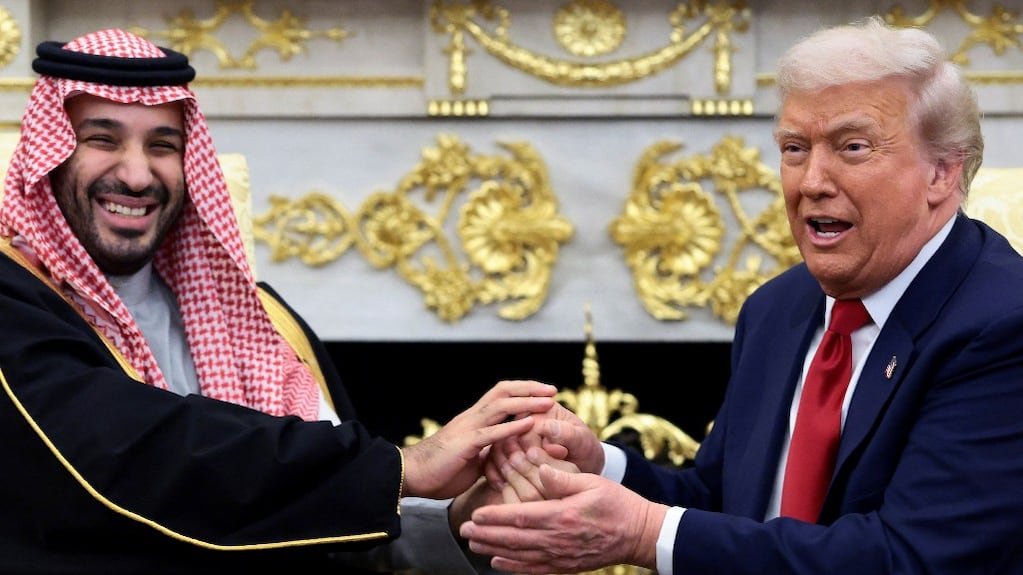
Estados Unidos y Arabia Saudita firmaron este miércoles un acuerdo que permitirá al reino árabe desarrollar un programa nuclear civil y que, según algunos medios, le abriría al reino la puerta al enriquecimiento de uranio.
Este plan desató preocupación en Israel, informó la prensa local.
El acuerdo, que debe ser ratificado por el Congreso estadounidense, se produce en un contexto de tensión con Irán, rival de Arabia Saudita en Oriente Medio, y bajo los esfuerzos de Washington por limitar las capacidades nucleares de Teherán, que niega buscar desarrollar armas nucleares.
El documento, conocido como “Acuerdo 123”, fue firmado por el secretario de Energía de Estados Unidos, Chris Wright, y su homólogo saudita, Abdulaziz bin Salman, según informó en un comunicado el Gobierno estadounidense.
Arabia Saudita no mantiene vínculos diplomáticos con Israel.
“Fines pacíficos”
El comunicado no incluyó el texto íntegro del acuerdo, pero asegura que el programa tiene “fines pacíficos” y que está comprometido con la “no proliferación nuclear”.
Asimismo, indicó que el acuerdo dará a las empresas estadounidenses acceso preferente al sector de la energía nuclear producida en Arabia Saudita.
“Pueden tener la certeza de que estos acuerdos cumplen con los más altos estándares de seguridad y no proliferación nuclear, al tiempo que se apoyan en la mejor tecnología nuclear y en los mejores científicos del mundo, desarrollados aquí mismo en Estados Unidos”, afirmó Wright.
Donald Trump firma un acuerdo nuclear con Arabia Saudita (Foto: REUTERS/Evelyn Hockstein)
Medios como The New York Times adelantaron el acuerdo, que, según esas informaciones, permitiría a Riad el enriquecimiento de uranio, yendo más allá de los pactos nucleares convencionales que Washington ha suscrito con otros aliados, como Emiratos Árabes Unidos.
Desde que se filtraron los detalles el martes por la noche, algunos legisladores demócratas criticaron el acuerdo y pidieron que el Congreso lo rechace, aunque los republicanos tienen mayoría en ambas cámaras.
Leé también: Mientras aumenta el precio del petróleo, Trump amenaza con destruir puentes y centrales eléctricas de Irán
Desde que regresó al poder en 2025, el presidente de Estados Unidos, Donald Trump, impulsó un acercamiento a Arabia Saudita y al príncipe heredero, Mohamed bin Salman, pese a que este fue acusado por la inteligencia estadounidense de estar detrás del asesinato en 2018 del periodista Jamal Khashoggi de The Washington Post.
Enriquecimiento de uranio
Una cláusula del pacto, que tendría una duración de 30 años, prevé que empresas estadounidenses construyan una instalación de enriquecimiento de uranio en Arabia Saudita si un estudio conjunto determina que está justificado, informó The Wall Street Journal.
Pero algunos legisladores estadounidenses de ambos partidos y funcionarios israelíes expresaron su oposición a un proyecto atómico civil para Arabia Saudita, por temor a que pueda convertirse eventualmente en un programa para desarrollar armas nucleares. El presidente estadounidense, Donald Trump (REUTERS/Evelyn Hockstein)
El reino sunnita es uno de los principales aliados de Washington en Oriente Medio y ha sido afectado por ataques iraníes en respuesta a la ofensiva estadounidense contra Irán. Además, los rebeldes hutíes de Yemen han anunciado un bloqueo marítimo en el mar Rojo contra buques saudíes.
Arabia Saudita y los hutíes intercambiaron ataques la semana pasada por primera vez en años, lo que puso en peligro una tregua de 2022. Los rebeldes, en gran medida, se mantuvieron al margen desde que Israel y Estados Unidos atacaron a Irán a finales de febrero.
El asunto es de larga data. Arabia Saudita ha defendido durante mucho tiempo su derecho a desarrollar un programa nuclear civil.
En los últimos años, Washington ha tratado de integrar cualquier acuerdo relativo a la cuestión nuclear en una estrategia más amplia que incluiría la normalización de las relaciones de Arabia Saudita con Israel, junto con la firma de un pacto de defensa con Estados Unidos.
Washington firmó un acuerdo nuclear en 2009 con el vecino Emiratos Árabes Unidos, aunque este país no enriquece su propio uranio.
(Con información de EFE y AFP)
Donald Trump, arabia saudita

María Becerra ondeó la bandera argentina en su regreso a España: la reacción del público en medio de su show

La consultora líder en pronósticos de EE.UU. le puso precio al dólar en Argentina para fin de año

Un intendente bonaerense reveló que lleva más de 300 días sin consumir cocaína y contó cómo atraviesa su adicción

Fuerte mensaje de Juanfer Quintero en River: “Con Coudet no hablo desde que me fui, no soy prioridad para él”

Inusual mensaje de Karina Milei: “El gobierno nacional se preocupa por todas las provincias”

Ahora el alcalde de Nueva York, Zohran Mamdani, dice que no podrá arrestar a Netanyahu cuando vaya a la asamblea de la ONU

Sin la Copa y sin Messi en el avión, vuelve Tapia y deberá enfrentar tres frentes de tormenta tras la pausa del Mundial

Escándalo Mundial: Las presiones secretas, la amenaza de la FIFA por Malvinas y la verdad detrás del partido contra España

Samuel L. Jackson llamó a Argentina “el país más racista del mundo”: la contundente respuesta que le dejó Bárbara Lombardo

Le ganan a la inflación: los senadores pasarán a cobrar $12 millones brutos a partir de agosto

 POLITICA2 días ago
Sin la Copa y sin Messi en el avión, vuelve Tapia y deberá enfrentar tres frentes de tormenta tras la pausa del Mundial
- DEPORTE22 horas ago
Escándalo Mundial: Las presiones secretas, la amenaza de la FIFA por Malvinas y la verdad detrás del partido contra España
- CHIMENTOS2 días ago
Samuel L. Jackson llamó a Argentina “el país más racista del mundo”: la contundente respuesta que le dejó Bárbara Lombardo