INTERNACIONAL
La guerra con Irán vació reservas críticas de misiles de EE.UU. y obligó al Pentágono a recalcular su estrategia

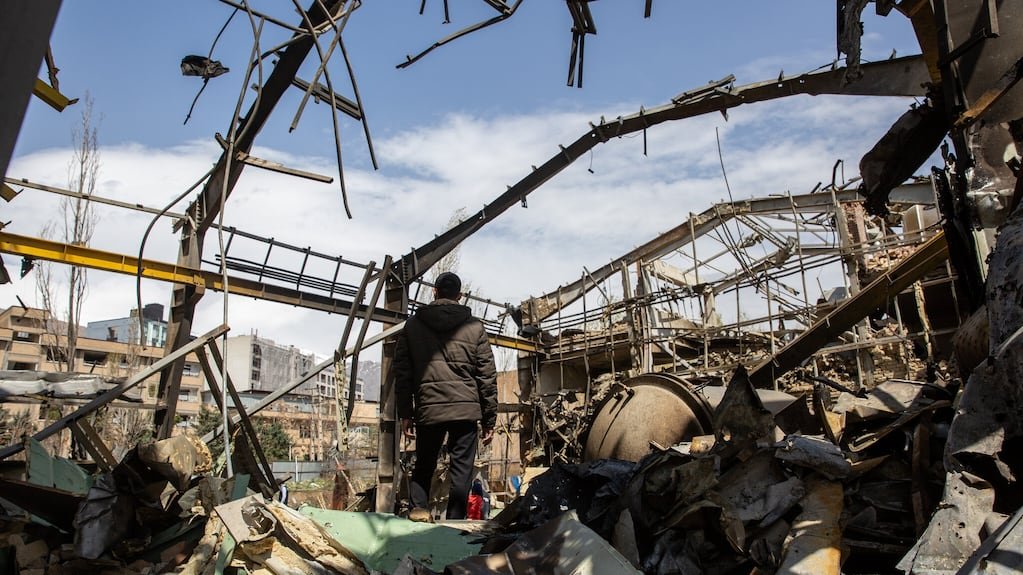
El Pentágono utilizó más de 1200 misiles interceptores Patriot en la guerra, a más de 4 millones de dólares cada uno, y más de 1000 misiles terrestres Precision Strike y ATACMS, lo que dejó los inventarios en niveles preocupantemente bajos, según estimaciones internas del Departamento de Defensa y funcionarios del Congreso.
La guerra en Irán ha agotado significativamente gran parte del suministro mundial de municiones del ejército estadounidense, y ha obligado al Pentágono a enviar apresuradamente bombas, misiles y otros equipos a Medio Oriente desde los comandos en Asia y Europa. Según funcionarios del gobierno de Donald Trump y del Congreso, estas reducciones han dejado a dichos comandos regionales menos preparados para enfrentarse a posibles adversarios como Rusia y China, y han obligado a Estados Unidos a buscar maneras de aumentar la producción para paliar la escasez.
El conflicto también ha puesto de relieve la excesiva dependencia del Pentágono de misiles y municiones excesivamente caros, en especial los interceptores de defensa aérea, así como la preocupación por si la industria de defensa puede desarrollar armas más baratas, especialmente drones de ataque, mucho más rápidamente.
El Departamento de Defensa no ha revelado cuántas municiones utilizó en 38 días de guerra antes de que entrara en vigor un alto al fuego hace dos semanas. El Pentágono dice que alcanzó más de 13.000 objetivos, pero los funcionarios afirman que esa cifra oculta el gran número de bombas y misiles que utilizó porque los aviones de guerra, los aviones de ataque y la artillería suelen atacar objetivos grandes varias veces.
Los funcionarios de la Casa Blanca se han negado a calcular el costo del conflicto hasta ahora, pero dos grupos independientes afirman que el gasto es asombroso: entre 28.000 y 35.000 millones de dólares, o algo menos de 1000 millones de dólares al día.
Solo en los dos primeros días, según han informado funcionarios de defensa a los legisladores, el ejército utilizó 5600 millones de dólares en municiones.
Para restablecer el arsenal mundial estadounidense a su tamaño anterior, Estados Unidos tendrá que tomar decisiones difíciles sobre dónde mantener su fuerza militar mientras tanto. “Con los ritmos de producción actuales, reconstituir lo que hemos gastado podría llevar años”, dijo esta semana el senador por Rhode Island Jack Reed, el principal demócrata del Comité de Servicios Armados.
“Estados Unidos tiene muchas municiones con inventarios adecuados, pero algunas municiones críticas de ataque terrestre y de defensa antimisiles escaseaban antes de la guerra y escasean aún más ahora”, dijo Mark F. Cancian, coronel retirado del Cuerpo de Marines y asesor principal del Centro de Estudios Estratégicos e Internacionales (CSIS, por su sigla en inglés), el cual publicó recientemente un estudio en el que se estimaba el estado de las municiones clave.
Karoline Leavitt, secretaria de prensa de la Casa Blanca, dijo en un comunicado que “toda la premisa de esta historia es falsa”. Y añadió: “Los Estados Unidos de América cuentan con el ejército más poderoso del mundo, totalmente cargado con armas y municiones más que suficientes, en arsenales aquí en el país y en todo el mundo, para defender eficazmente la patria y llevar a cabo cualquier operación militar dirigida por el comandante en jefe”.
Sean Parnell, portavoz jefe del Pentágono, declinó hacer comentarios sobre “cualquier necesidad específica del escenario de operaciones o detallar nuestras capacidades globales de recursos”, citando la seguridad operativa.
Algunos republicanos, entre ellos el senador por Kentucky Mitch McConnell, presidente del subcomité que financia el Pentágono, han presionado durante varios gobiernos para que se aumente el gasto en la producción de municiones. El secretario de Defensa, Pete Hegseth, ha hecho de ese objetivo una de sus principales prioridades durante su mandato.
Leé también: Irán considera que Donald Trump cedió primero al extender el alto al fuego
Lo que hace las cosas más peligrosas para el Pentágono, según los funcionarios, es que el Departamento de Defensa está esperando a que el Congreso apruebe financiación adicional antes de poder pagar a los fabricantes de armas para reponer el suministro estadounidense agotado. En enero, el gobierno anunció que había conseguido acuerdos de siete años con los principales contratistas de defensa, entre ellos Lockheed Martin, para aumentar la capacidad de producción de sistemas de defensa como los interceptores de misiles.
El acuerdo preveía cuadruplicar la producción de municiones guiadas de precisión y de interceptores de misiles THAAD. Los fabricantes de defensa, por su parte, acordaron financiar ampliaciones de las fábricas a cambio de pedidos garantizados a largo plazo.
Pero los funcionarios dijeron que no se había producido ningún movimiento para realmente iniciar la producción ampliada, porque el Pentágono luchaba por encontrar la financiación.
Mientras tanto, el ejército utiliza sus suministros de armas existentes a un ritmo vertiginoso para satisfacer las necesidades inmediatas del Comando Central en la guerra de Irán. Ciertos niveles de munición se están reduciendo más rápidamente que otros.
El Pentágono, por ejemplo, ha destinado la mayor parte de su inventario de misiles de crucero sigilosos y de largo alcance a la lucha contra Irán. Estos misiles, llamados Joint Air-to-Surface Standoff Missile-Extended Range (misil aire a superficie de largo alcance extendido), o JASSM-ER, se lanzan desde aviones caza y bombarderos y tienen un alcance de más de 960 kilómetros. Están diseñados para penetrar en objetivos difíciles fuera del alcance de las defensas aéreas enemigas.
Desde que comenzó la guerra, el ejército ha utilizado unos 1100 misiles JASSM-ER, que cuestan aproximadamente 1,1 millones de dólares cada uno, por lo que quedan unos 1500 en los inventarios militares, según estimaciones internas del Pentágono, un funcionario militar estadounidense y un funcionario del Congreso que hablaron bajo condición de anonimato para discutir evaluaciones confidenciales del combate.
Los Tomahawks, que cuestan unos 3,6 millones de dólares cada uno, son misiles de crucero de largo alcance que se han utilizado ampliamente en la lucha bélica estadounidense desde la primera guerra del Golfo Pérsico en 1991. Siguen siendo una munición clave para posibles guerras futuras, incluida una en Asia. Lanzamiento de un misil de ataque terrestre Tomahawk (TLAM) desde el crucero lanzamisiles USS Cape St. George. (Foto de archivo: REUTERS/Marina de los EE.UU.)
“Aunque existen municiones suficientes para librar esta guerra, el elevado gasto de Tomahawks y otros misiles en la Operación Furia Épica crea riesgos para Estados Unidos en otros escenarios, en particular en el Pacífico occidental”, concluía un estudio del CSIS, que calculaba que las reservas restantes de Tomahawks rondaban los 3000 misiles.
Los misiles interceptores Patriot pueden costar casi 4 millones de dólares cada uno. Estados Unidos fabricó unos 600 en todo 2025. Hasta ahora se han utilizado en la guerra más de 1200, según estimaciones internas del Pentágono y funcionarios del Congreso.
En conjunto, el costo de la guerra hasta ahora oscila entre 25.000 y 35.000 millones de dólares, según un estudio de este mes del American Enterprise Institute elaborado por Elaine McCusker, alta funcionaria del Pentágono durante el primer gobierno de Trump. Cancian, del CSIS, dijo en un correo electrónico que él y sus analistas situaban el costo del conflicto hasta ahora en unos 28.000 millones de dólares.
El ejército también está incurriendo en costos inesperados por aviones dañados o destruidos. En la operación del Equipo 6 de los SEAL de la Marina para rescatar a un oficial de las Fuerzas Aéreas derribado en Irán, los militares tuvieron que destruir dos aviones de carga MC-130 y al menos tres helicópteros MH-6 que estos llevaban dentro, después de que el tren de aterrizaje delantero de los aviones se atascara en la arena húmeda de una pista de aterrizaje improvisada. Cancian estimó el costo total de los aviones perdidos en unos 275 millones de dólares. Tres aviones de reemplazo pusieron finalmente a salvo al aviador y a los comandos, pero el Pentágono no quería que la tecnología sensible de los aviones cayera en manos iraníes.
Todos los mandos militares regionales sienten la presión de la disminución de las reservas de municiones.
En Europa, la guerra ha provocado el agotamiento de sistemas de armamento fundamentales para defender el flanco oriental de la OTAN de la agresión rusa, según información del Pentágono revisada por The New York Times.
Un problema calificado de grave fue la pérdida de drones de vigilancia y ataque. Las exigencias de la guerra de Irán también han reducido los ejercicios y el entrenamiento. Según los oficiales militares, esto perjudica la capacidad de montar operaciones ofensivas en Europa, así como la disuasión de posibles ataques rusos.
Al preguntarle por las deficiencias, el general Alexus G. Grynkewich, jefe del Comando Europeo de Estados Unidos, dijo en un comunicado: “Nuestros combatientes están orgullosos del apoyo que hemos prestado al USCENTCOM (Comando Central) en apoyo de las históricas operaciones del presidente Trump contra Irán”.
Pero el mayor impacto se ha producido en los soldados de Asia.
Leé también: Trump anunció que EE.UU. atacó y tomó el control de un barco iraní que intentaba cruzar el Golfo de Omán
Antes de que comenzara la guerra con Irán, los mandos militares estadounidenses redirigieron el grupo de ataque del portaviones USS Abraham Lincoln del mar de China Meridional a Medio Oriente. Desde entonces, se han enviado a Medio Oriente desde el Pacífico dos Unidades Expedicionarias de Marines, cada una con unos 2200 infantes de marina. El Pentágono también ha trasladado sofisticadas defensas aéreas desde Asia para reforzar la protección contra los drones y cohetes iraníes.
Las armas redirigidas incluyen misiles Patriot e interceptores del sistema THAAD de Corea del Sur, el único aliado asiático que alberga el avanzado sistema de defensa antimisiles, desplegado por el Pentágono para contrarrestar la creciente amenaza de misiles de Corea del Norte. Ahora, por primera vez, los interceptores del sistema se trasladan a otro lugar, según funcionarios estadounidenses.
La preparación de Estados Unidos en el Pacífico se vio afectada anteriormente por el despliegue por parte del Pentágono de buques de guerra y aviones en Medio Oriente tras el inicio de la guerra entre Israel y Gaza en octubre de 2023 y después de que las fuerzas de la milicia hutíes en Yemen empezaran a atacar buques en el Mar Rojo para apoyar a los palestinos, según los funcionarios.
La campaña de bombardeos de un mes de duración contra los hutíes el año pasado –una operación que el Pentágono denominó Rough Rider– fue mucho mayor de lo que el gobierno de Trump reveló inicialmente en su momento. El Pentágono gastó unos 200 millones de dólares en municiones solo en las tres primeras semanas, dijeron funcionarios estadounidenses. Los costos de la operación global superaron con creces los 1000 millones de dólares si se tienen en cuenta los gastos operativos y de personal, añadieron los funcionarios.
Los barcos y aviones estadounidenses, así como los militares que trabajan en ellos, están siendo sometidos a lo que los militares denominan un alto ritmo operativo. Incluso el mantenimiento básico de los equipos se convierte en un problema en esas duras condiciones.
Una portavoz del almirante Samuel J. Paparo Jr., jefe del Comando Indo-Pacífico del ejército, declinó hacer comentarios sobre las armas desviadas de Asia a Medio Oriente.
El almirante Paparo eludió en gran medida la cuestión de la escasez de arsenales durante una comparecencia ante el Senado el martes, y solo reconoció que “el arsenal tiene límites finitos”.
*Por Eric Schmitt, corresponsal de seguridad nacional para el Times. Ha informado sobre asuntos militares estadounidenses y antiterrorismo durante más de tres décadas.
Jonathan Swan es corresponsal del Times en la Casa Blanca y cubre el gobierno de Donald Trump. Puedes contactarlo de manera segura en Signal: @jonathan.941
Michael Schwirtz y Adam Goldman colaboraron con reportería desde Londres. John Ismay, Helene Cooper y Maggie Haberman colaboraron con reportería desde Washington.
The New York Times, Irán, Estados Unidos












INTERNACIONAL
Crece la ola de incendios en Europa: las llamas se extienden a Grecia, Portugal, Inglaterra y Turquía

Francia y España atraviesan este jueves una tregua frente a algunos de los peores incendios forestales de la historia reciente, pero las llamas se propagan en otros países de Europa, como Grecia, Portugal, Inglaterra y Turquía.
El presidente del Gobierno español, Pedro Sánchez, levantó el estado de emergencia decretado la semana pasada por un incendio forestal que amenazaba zonas cercanas a Madrid, después de que las autoridades anunciaran que ya no quedaban “focos activos”.
Más de 60.000 personas habían sido evacuadas en el peor momento de los incendios, pero la mayoría ya ha podido regresar a sus hogares.
Al menos cien viviendas quedaron destruidas solo en la región de Madrid, según una evaluación inicial, pero se espera que esa cifra aumente, dijo la presidenta regional Isabel Díaz Ayuso. En la colindante provincia de Ávila, el fuego también está estabilizado.
Unas 50.000 hectáreas quemadas en España
El incendio -el más grande en España desde que comenzaron los registros en 1961- quemó unas 50.000 hectáreas y estuvo a punto de fusionarse con el de Madrid.
Pero España enfrenta esta semana una nueva ola de calor y las autoridades advierten que el riesgo sigue siendo “muy alto”. Bomberos utilizan quemas controladas para detener un incendio que sigue expandiéndose cerca de Cebreros, Ávila, España, el martes 28 de julio de 2026. (AP Foto/Manu Fernández)
De hecho, un nuevo incendio en el oeste del país, cerca de Portugal, obligó a evacuar el jueves a más de 600 personas.
Primer día “optimista” en Francia
En la vecina Francia, el jueves fue el primer día “un poco optimista” desde que se originó la semana pasada un megaincendio que destruyó cerca de 240 viviendas en el suroeste del país.
“Es el primer día un poco optimista, ya que tenemos la impresión de que estamos volviendo al camino de una vida normal y de que las cosas empiezan a mejorar claramente”, dijo a la prensa la prefecta del departamento de Gironda, Sophie Brocas.
Leé también: Nueva reacción de Lula tras los insultos de Milei: “Ustedes vieron la payasada que hizo aquí”
Tras una ligera lluvia matutina, el servicio regional de bomberos también se mostró “razonablemente optimista”, ya que el fuego no se extendió más allá de las 42.000 hectáreas desde el fin de semana, si bien se mantienen “seis focos activos”.
El peor incendio forestal en Francia desde 1949 obligó a evacuar a más de 220.000 personas de esta región turística cercana a la ciudad de Burdeos, en plena temporada alta de verano.
Actualmente, más de la mitad de los evacuados pudieron regresar a sus hogares, entre ellos 84.000 que fueron autorizados este jueves.
“Es el inicio del fin del fuego, pero es el comienzo de la crisis”, advirtió Nina Rosazza, administradora de una metalúrgica en Andernos-les-Bains, quien acudió como voluntaria a la zona en el bosque devastado de Lanton.
“Turísticamente, ecológicamente, visualmente, es una catástrofe a largo plazo”, resume.
Aunque no hubo pérdidas humanas, los rescatistas viven con la “obsesión” de encontrar animales muertos, mientras gatos, gallinas, perros y conejos deambulan por las localidades evacuadas.
Incendios más pequeños afectaban a otras partes del sur de Francia, incluido uno declarado la noche del miércoles en Brignoles, que obligó a George Clooney y su familia a abandonar su propiedad.
“Días difíciles” en Grecia
Aunque la atención actual se centra en Europa occidental, la Unión Europea advirtió que las condiciones propicias para incendios se extenderán hacia el centro del continente en los próximos días.
En la isla griega de Creta, 8000 personas fueron evacuadas la noche del miércoles ante los incendios declarados durante la jornada y avivados por fuertes vientos cambiantes, que causaron la muerte de dos bomberos.
Un tercero falleció combatiendo las llamas cerca del puerto de Gitión, en el Peloponeso, mientras el primer ministro griego advirtió que se avecinan “días difíciles”.
En la vecina Turquía, los bomberos intentaban extinguir al menos 115 fuegos activos, especialmente en las provincias de Antalya y Mugla, en la turística Riviera Turca, y en la costa de los Dardanelos (oeste).
No obstante, las autoridades indicaron que 110 estaban completamente bajo control.También en Portugal, cerca de 800 bomberos combatían un incendio forestal en la localidad norteña de Valpaços, que causó cinco heridos, según el servicio de protección civil.
También Inglaterra fue afectada por incendios.
Los bomberos luchan este jueves “en condiciones difíciles” contra un incendio en Suffolk, en el este del país, que arrasó un centenar de hectáreas y obligó a algunos habitantes y turistas a evacuar.
El fuego, que se propaga en una zona costera al sur del municipio de Dunwich, se declaró el miércoles y fue catalogado como “incidente grave” por las autoridades.
“El incendio se extiende por unas 100 hectáreas, por lo que 18 vehículos de bomberos y medios de refuerzo están en el lugar”, indicó el jueves el consejo local de Suffolk.
(Con información de AFP)
Europa, Incendios
INTERNACIONAL
White House blasts Spanish government as thousands of migrants surge from Morocco, emergency request denied

NEWYou can now listen to Fox News articles!
The White House bashed Spain’s left-wing government after the border between Spain’s North African enclave of Ceuta and Morocco collapsed Thursday.
«President Trump has long warned Europe what would happen if they continue to implement far-left, globalist policies – including enabling mass migration. Spain and other countries who have adopted this destructive philosophy should immediately reverse course or risk their own demise,» White House principal deputy press secretary Anna Kelly told Fox News in a statement.
Ceuta’s president formally requested a national emergency declaration Thursday after more than 2,000 migrants crossed the border from Morocco in the past 10 days, as videos showed chaotic scenes of migrants pouring into the Spanish territory.
Video shows hordes of apparently military-aged men smiling and posing for cameras, some carrying swimming flippers, and sprinting through the streets as authorities struggle to corral the unruly masses.
TRUMP CRITICIZES SPAIN AMID IRAN, NATO RIFT AS PM SANCHEZ FACES QUESTIONS OVER POLITICAL MOTIVES
Migrants run and cheer as they cross on foot into the North African enclave of Ceuta from Morocco, after swimming over from the Moroccan side and overwhelming police at the city’s breakwater, according to Spain’s Guardia Civil, in Ceuta, Spain, July 30, 2026. (FARO TV via Reuters)
Other footage shows crowds of migrants emerging from the sea, climbing up onto Ceuta’s rocky shores and working their way around border fences.
Ceuta President Juan Jesús Vivas formally requested that Spanish Prime Minister Pedro Sánchez declare a national emergency to help respond to the border crisis, Spanish media outlets reported. Madrid, however, denied the request.
DEM REP SETH MOULTON SAYS PARTY HAS NO IMMIGRATION PLAN, IS ONLY ‘OPPOSITION TO TRUMP’
«The declaration of a national emergency is part of the state civil protection regulations, which do not consider migratory flows as a risk to the National Civil Protection System, nor do they establish special plans, basic guidelines, or specific civil protection instruments for their management. Therefore, it is not possible to activate this mechanism, as requested by the president of the Government of Ceuta, Juan Jesús Vivas,» Spain’s Ministry of the Interior said in a statement, according to Spanish outlet El Pais.
Ceuta’s government, in their request for a national emergency declaration, noted that immigration from Moroco is always a problem for the Spanish enclave, but claimed the last 10 days represented a peak «of particular intensity.» That peak has seen more than 2,000 migrants cross the border in the past 10 days, Ceuta officials said, according to El Pais.
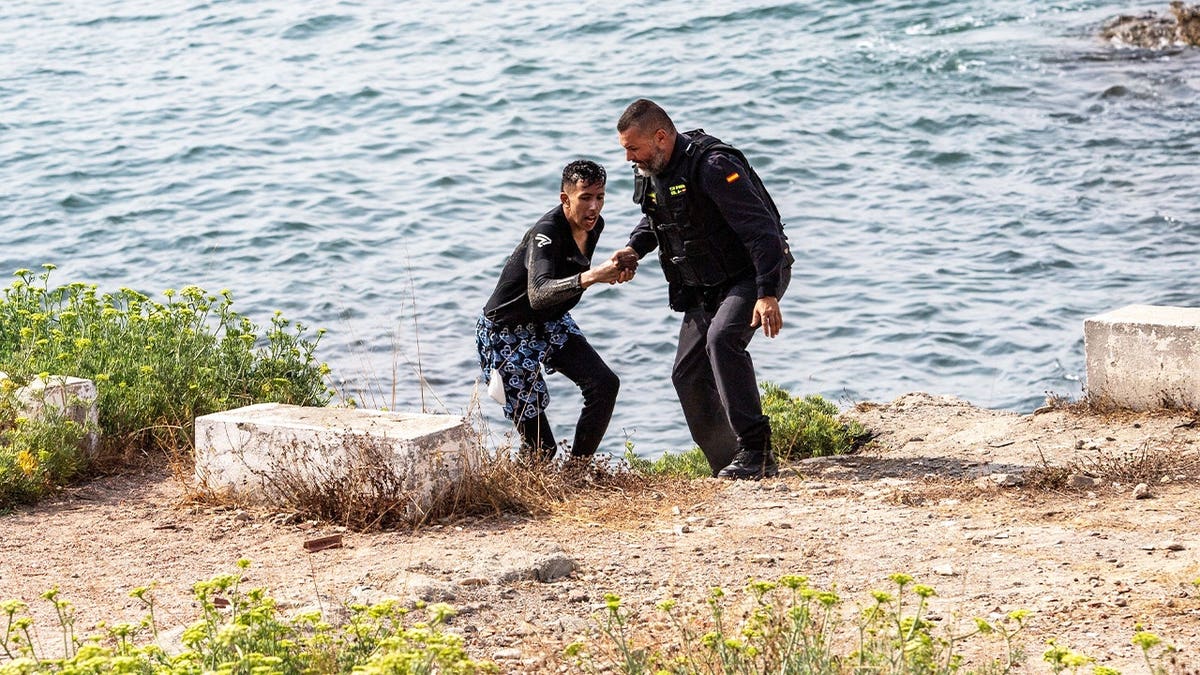
Spanish and Moroccan maritime patrols, supported by Spain’s Maritime Rescue service, conduct rescue operations off the southern coast of Ceuta after a sharp increase in migrant arrivals to the Spanish enclave in North Africa. (Antonio Sempere / JNA Press/Sipa USA)
«The Government of Spain is fully committed to providing an immediate response to the situation in Ceuta. We are mobilizing all necessary resources, working with Moroccan and international authorities, and preparing the necessary measures to restore normalcy as soon as possible,» Sánchez wrote in a Thursday post on X.
BIDEN ADMINISTRATION FORCED A FALSE CHOICE ON AMERICANS ABOUT IMMIGRATION
Sánchez has faced considerable backlash from his country’s conservatives for his policies on immigration, with many arguing that Spain’s policy of guaranteeing social services to minors who illegally enter the country incentivizes mass migration.
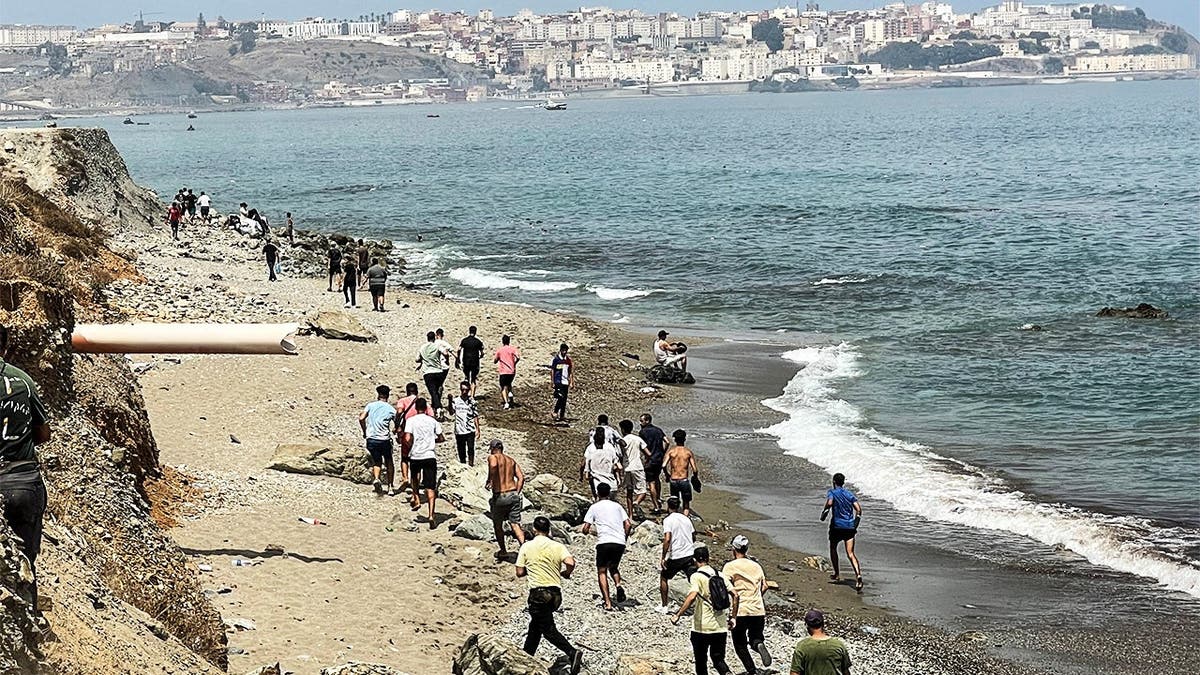
Migrants cross on foot into the North African enclave of Ceuta from Morocco by attempting to swim, according to Spain’s Guardia Civil, near the border with Ceuta, in Fnideq, Morocco, July 30, 2026, in this still image obtained by Reuters (Reuters)
«When they cross the border as minors, you cannot send them back to Morocco,» Javier Negre, a conservative Spanish journalist and owner of La Derecha Diario and UHN Plus, told Fox News Digital.
«The Spanish state has to take care of them and pay money to NGOs to care for these minors until they turn 18,» he continued.
«It’s proof that Europe and Spain are on the verge of becoming a failed continent because of the future policies and promotion of this illegal invasion under Pedro Sánchez,» Negre criticized.
Sánchez, for his part, has claimed that accepting migrants is necessary to keep Spain’s economy alive, arguing the country’s low birth rates necessitate accepting immigrants.
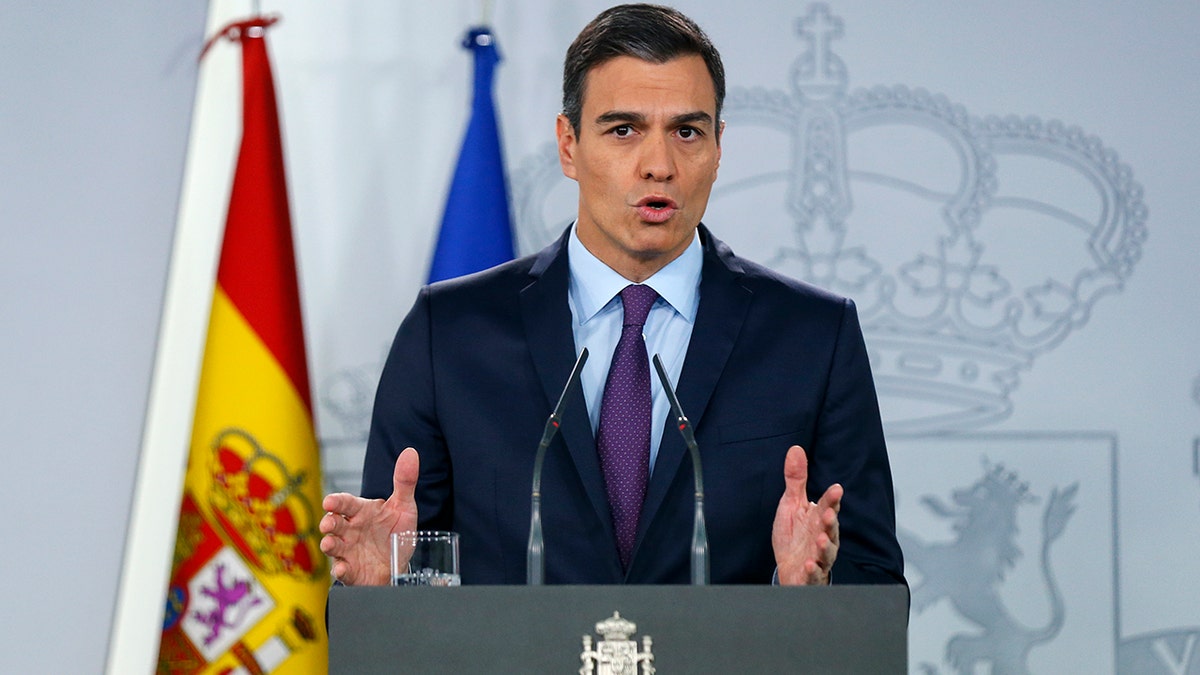
Spain’s Prime Minister Pedro Sanchez delivers a statement at the Moncloa Palace in Madrid, Spain. (AP Photo/Andrea Comas)
«The West needs people. Currently, few of its countries have a rising population growth rate. Unless they embrace migration, they will experience a sharp demographic decline that will prevent them from keeping their economies and public services afloat. Their gross domestic product will stagnate. Their public healthcare and pension systems will suffer. Neither AI nor robots will be able to prevent this outcome… The only option to avoid decline is to integrate migrants in the most orderly and effective way possible,» Sánchez wrote in a February op-ed in The New York Times.
CLICK HERE TO DOWNLOAD THE FOX NEWS APP
Fox News Digital contacted the offices of Sánchez and Vivas for further comment.
Fox News’ Patrick Ward contributed to this report.
illegal immigrants, border security, spain, world, europe, africa

NEWYou can now listen to Fox News articles!
Florida Attorney General James Uthmeier said he will be opening up an investigation into former National Institutes of Allergy and Infectious Diseases (NIAID) Dr. Anthony Fauci following Fauci’s explosive decision to invoke his Fifth Amendment right and not answer any questions during a congressional hearing Wednesday.
«Fauci’s lack of candor to Congress is unbelievable. My office is launching an investigation into Dr. Fauci. It’s past time we get the truth of what happened during COVID,» Uthmeier wrote in a Wednesday post on X.
Uthmeier further expanded on his decision in an exclusive statement to Fox News Digital.
FAUCI PLEADS FIFTH WITH ‘ZERO LEGAL JUSTIFICATION’ AS CRITICS ERUPT AND DEMAND CONTEMPT CHARGES
James Uthmeier spoke at the National Conservative Convention on Sept. 3, 2025, in Washington, D.C. (Dominic Gwinn/Middle East Images/AFP via Getty Images)
«In light of recent reports exposed by Senator Rand Paul, we will investigate any and all potential violations of Florida law involving Anthony Fauci,» Uthmeier told Fox News Digital.
«Our inquiry will focus on what Fauci knew, when he knew it, and how he misled the American people. We will examine the physical and monetary harms to Floridians that may have resulted from his deceptions and determine whether his conduct exposes him to liability under state law,» Uthmeier’s statement concluded.
Uthmeier cited revelations published by Senate Homeland Security and Governmental Affairs Committee Chairman Sen. Rand Paul, R-Ky., which revealed internal notes Fauci wrote on government computers during his time at NIAID.
FAUCI’S NEWLY RELEASED COVID DIARIES REVEAL BIZARRE FIXATION ON FAME AS PANDEMIC DEATHS MOUNTED
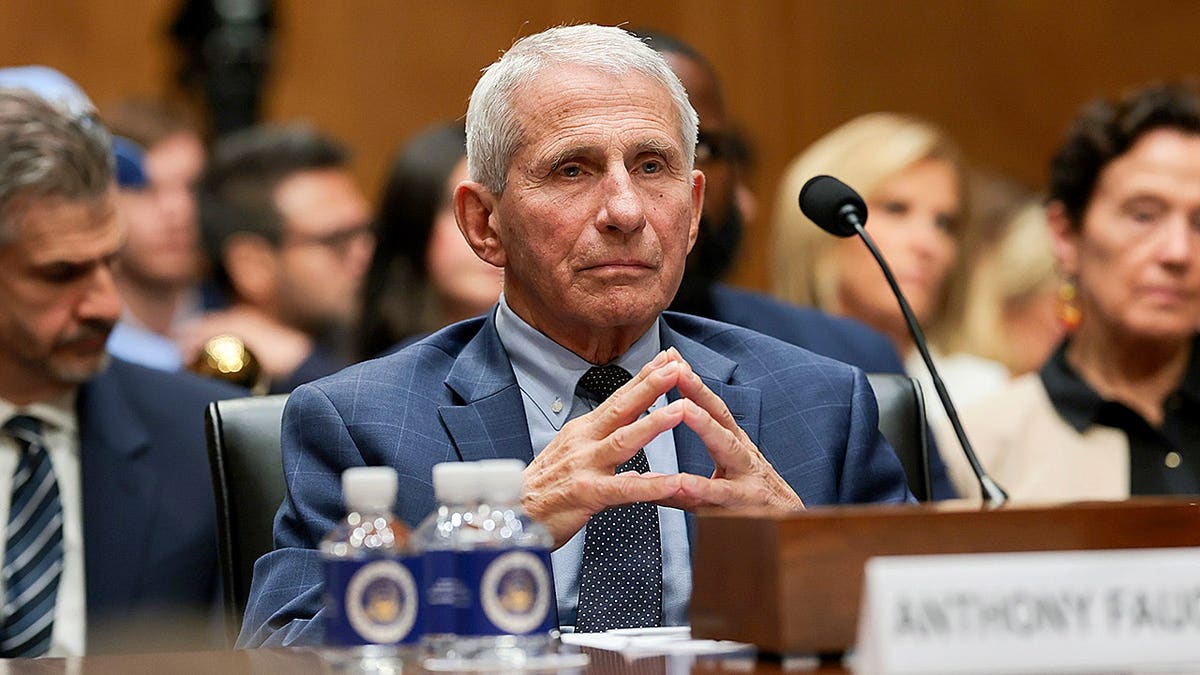
Former NIH Director Anthony Fauci listens during a Senate Homeland Security and Governmental Affairs Committee hearing on July 29, 2026, in Washington, D.C. Fauci declined to answer questions, asserting his Fifth Amendment right. (Anna Moneymaker/Getty Images)
The internal notes, which Paul and others have taken to referring to as Fauci’s «diary,» suggest Fauci appeared to publicly overstate the death rate from COVID-19 compared to what he wrote privately.
«[Former CDC Director] Tom Frieden called me this AM and we discussed various aspects of the outbreak,» Fauci wrote on Feb. 8, 2020.
«He and I are on the same page in thinking tht [sic] this is acting like a bad influenza in its transmissibility and that the denominator is much greater than 34,867 (above) making the case fatality rate (CFR) more like 0.2-0.3 % rather than 2.0%,» Fauci’s entry concluded.
However, a month later, in congressional testimony to the House Oversight Committee on March 11, 2020, Fauci pegged the mortality rate at 1%.
«I think if you count all the cases of minimally symptomatic or asymptomatic infection, that probably brings the mortality rate down to somewhere around one percent, which means it is 10 times more lethal than the seasonal flu,» he testified.

Anthony Fauci declined to testify in a Senate committee hearing on his role in the US response to COVID-19, invoking his Fifth Amendment rights. (Left (Alex WROBLEWSKI / AFP via Getty Images), Right (Al Drago/Bloomberg via Getty Images))
When called to testify on the revelations before the Senate Homeland Security and Governmental Affairs Committee on Wednesday, Fauci exercised his Fifth Amendment right and refused to answer legislators’ questions 111 times.
Uthmeier is not the only Republican to take aim at the former COVID czar Fauci in light of the revelations.
Sen. Ted Cruz, R-Texas, said Wednesday that Fauci should be held in congressional contempt for refusing to answer questions despite receiving a presidential pardon.
CLICK HERE TO DOWNLOAD THE FOX NEWS APP
«I think Anthony Fauci has had contempt for Congress and contempt for the American people for decades,» he said. «His diary shows that he deliberately lied to the American people over and over and over again,» Cruz said.
Paul, for his part, said his committee will vote on whether to hold Fauci in contempt next week.
investigations, anthony fauci, politics, florida, trending news

Elijah Wood, Frodo en El Señor de los Anillos: "Trabajar con Tim Schafer fue literalmente un sueño hecho realidad"

Rosalía en Buenos Aires: vuelo privado, suite presidencial, hermetismo y pocos fans en la puerta

Crece la ola de incendios en Europa: las llamas se extienden a Grecia, Portugal, Inglaterra y Turquía

White House blasts Spanish government as thousands of migrants surge from Morocco, emergency request denied

La oposición rechazó el DNU migratorio de Milei y buscará frenarlo en el Congreso y la Justicia

Lionel Messi se reincorporó a los entrenamientos con Inter Miami ¿Cuándo volverá a jugar?

Crisis entre Milei y Lula: la trama política, personal y geopolítica detrás del mayor choque diplomático entre Argentina y Brasil

La pelea con Lula y el verdadero desafío que enfrenta Milei

San Isidro: la ballena que quedó varada en un banco de arena murió pese al operativo de rescate

Cómo manejar en el hielo y la nieve: técnicas y precauciones para usar el auto en la montaña en vacaciones de invierno

 POLITICA2 días ago
La pelea con Lula y el verdadero desafío que enfrenta Milei
- ECONOMIA2 días ago
Cómo manejar en el hielo y la nieve: técnicas y precauciones para usar el auto en la montaña en vacaciones de invierno
- ECONOMIA2 días ago
El BCRA cortó la racha de compra y en el mercado vuelan rumores de maniobras para frenar al dólar