INTERNACIONAL
Mojtaba Khamenei touts new anti-US alliance as Gulf backchannels seep into Tehran: analyst

NEWYou can now listen to Fox News articles!
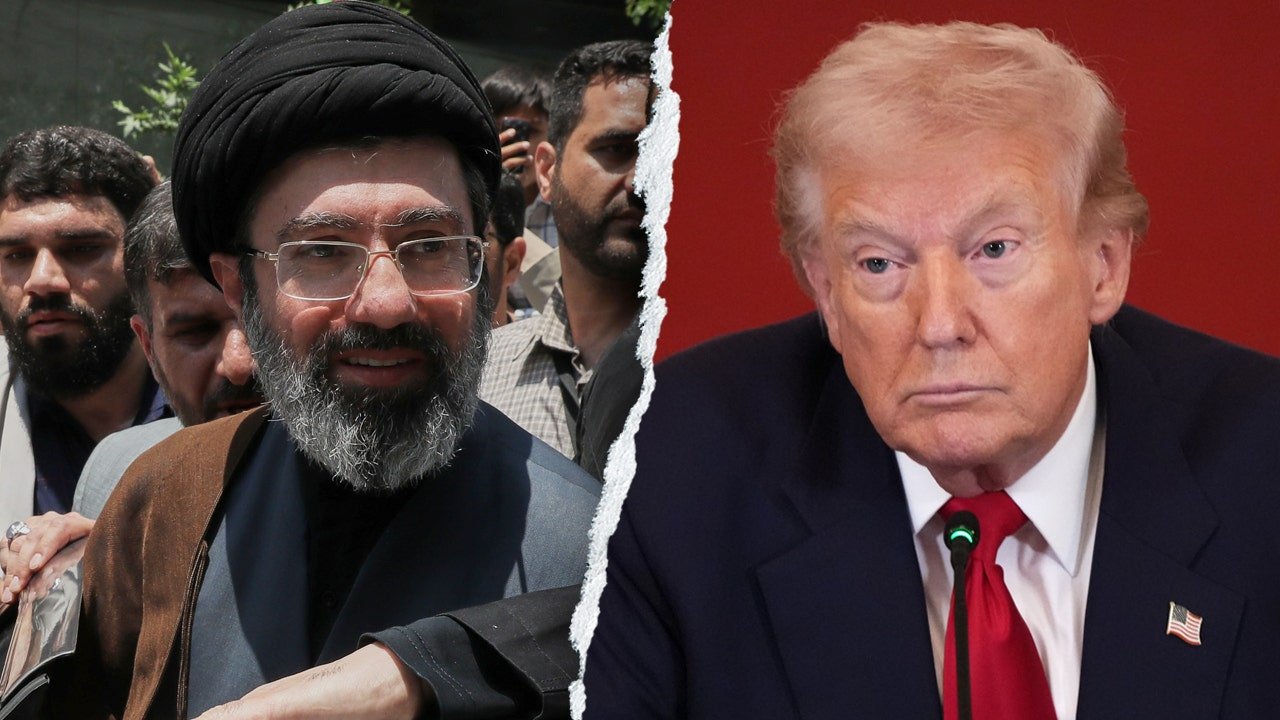
Iran’s supreme leader has launched a sweeping counteroffensive against President Donald Trump, attempting to rally Middle Eastern nations into an anti-American alliance, an analyst warned Sunday.
The aggressive maneuvering came hours after Trump pitched an expansion of the Abraham Accords, as an analyst said Tehran is seeking to position itself as the region’s «new sheriff» while forcing Gulf states with backchannels to Iran to choose between Washington’s security umbrella and a «New Islamic Civilization.»
On Sunday, negotiations between Iran and the United States appeared to be ongoing, with Trump not yet signing off on a potential peace agreement.
Trump recently held a phone call with leaders from Saudi Arabia, the United Arab Emirates, Qatar, Turkey, Pakistan, Egypt, Jordan and Bahrain to discuss expanding the 2020 Abraham Accords, followed by a May 25 post on Truth Social.
IRAN’S KHAMENEI LAUNCHES BLISTERING ATTACK ON TRUMP AFTER MIDDLE EAST VISIT
Israeli Prime Minister Benjamin Netanyahu, President Donald Trump, Bahrain Foreign Minister Abdullatif bin Rashid Al Zayani, and UAE Foreign Minister Sheikh Abdullah bin Zayed bin Sultan Al Nahyan stand during the Abraham Accords signing ceremony on the South Lawn of the White House in Washington, D.C., on Sept. 15, 2020. (Yuri Gripas/Abaca/Bloomberg)
Mojtaba Khamenei issued a direct counter-response on X on May 26, issuing a call for a «New Islamic Civilization» aimed at those same regional capitals.
«I, with sincerity and purity of intention, invite all Islamic countries and governments to friendship and cooperation in goodness, so that by working together we may take steps toward the advancement of the Islamic Ummah and the resolution of the Islamic world’s problems,» Khamenei posted.
Highlighting «the nations of the region» and «common interests that will shape the new order and the future architecture of the region and the world,» he spoke of «the Islamic Ummah and the #New_Islamic_Civilization.»
«The United States will no longer have a safe haven for its mischief and for establishing military bases in West Asia,» he also warned.
«Mojtaba Khamenei’s statement is that the Muslim world should consolidate under Iran’s leadership — the ‘Ummah,’ the ‘new Islamic civilization’ — against the American-led order,» Dr. Omar Mohammed told Fox News Digital.
«That is the theme, and it runs straight into the Accords narrative. This is a bid to build an alliance against the Abraham Accords,» said Mohammed, director of the Antisemitism Research Initiative Program on Extremism at George Washington University.
TOP ISRAELI MILITARY OFFICIAL REVEALS OPERATION AGAINST IRAN INVOLVED ‘STRATEGIC AND OPERATIONAL DECEPTION’
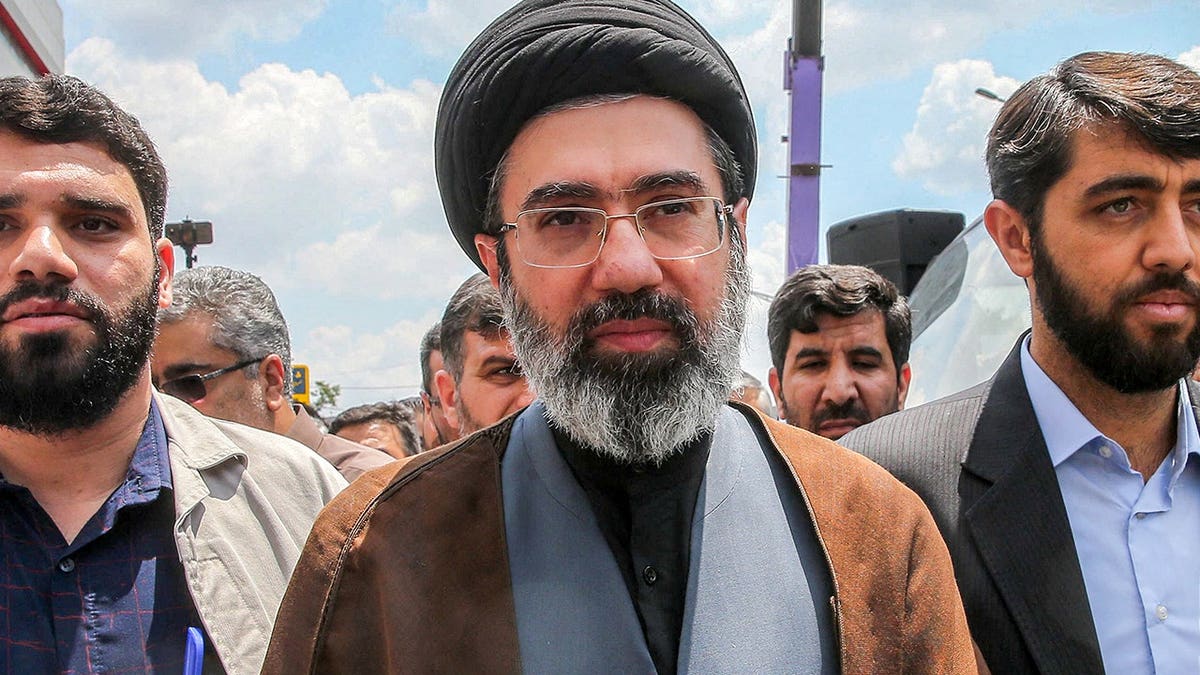
In this picture obtained from Iran’s ISNA news agency, Mojtaba Khamenei (C), son of Iran’s supreme leader Ayatollah Ali Khamenei, walks along a street in Tehran on May 31, 2019. (Hamid FOROUTAN / ISNA / AFP via Getty Images)
«In his statement, he also frames American bases on Muslim soil as an occupation to be expelled while wrapping it in religious language that casts the regime as God’s instrument.»
The counterterrorism expert noted that while the «Ummah» doctrine itself is not new — having been used by Mojtaba’s father for years — the timing and targeted nature of the pitch represent a major escalation.
«This came into the Ummah with Iran, not into normalization with Israel under Washington,» Mohammed explained. «Same audience, opposite frame, 24 hours apart, and a bid to assemble that alliance.»
«The statement was published in full and carried by Iranian state media. It also tracks with his first statement as leader on March 12, when he demanded that U.S. bases in the region close.»
«This was not a stray post,» the expert warned. «While the doctrine is old, aiming it at these regions the day after Trump’s pitch is what is new.»
The posturing comes as Khamenei establishes his footing on the world stage, though his hidden nature complicates traditional diplomacy.
IRAN’S ‘STUNNING STRATEGIC MISCALCULATION’ COULD ACCELERATE GULF TIES TO ISRAEL, EX-CENTCOM DIRECTOR PREDICTS
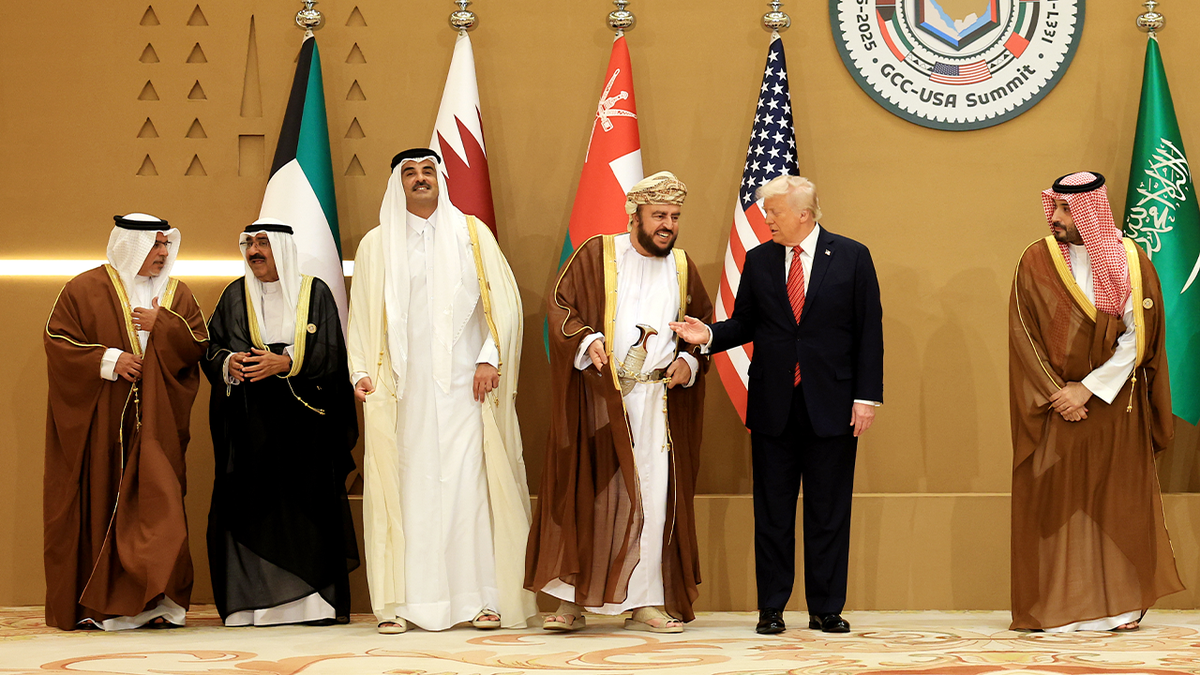
President Donald Trump and Saudi Crown Prince Mohammed bin Salman pose for photos with leaders during the Gulf Cooperation Council Leaders’ Summit at The Ritz-Carlton in Riyadh, Saudi Arabia, on May 14, 2025. (Win McNamee/Getty Images)
«Tehran is selling itself to the region as the new sheriff of the neighborhood,» Mohammed warned.
«The Saudis, Qataris and Omanis have channels into the Iranian state, but you can’t open a back channel to a man no one can locate. This has all been running through Pezeshkian and Araghchi.»
Despite Iran’s sudden rhetoric of «friendship,» regional reality is defined by months of Iranian aggression against its neighbors.
Tehran’s forces have actively fired upon Bahrain, Qatar, the UAE and Kuwait.
Mohammed added that Tehran wants to peel Gulf states away from Washington, while its threats remain aimed at both the United States and the countries that host American forces.
«Iran spent this war firing on them — it hit Bahrain, Qatar, the UAE and Kuwait, the same capitals it’s now inviting to brotherhood, and the UAE alone reported intercepting close to 2,000 drones and hundreds of ballistic missiles since Feb. 28,» Mohammed said.
«These are the states that host our forces: the Fifth Fleet in Bahrain, Al Dhafra in the UAE and Al Udeid in Qatar. You don’t take three months of Iranian fire and then sign onto its alliance.»
CLICK HERE TO DOWNLOAD THE FOX NEWS APP
Ultimately, Gulf capitals remain deeply skeptical of Tehran, Mohammed said, but they are equally watchful of American resolve.
«What actually worries the Gulf isn’t Mojtaba’s invitation — it’s the deal Washington might sign,» Mohammed noted, «one that hands Iran its money back with its missiles intact and reads as rewarding the regime that just attacked them.»
mojtaba khamenei, middle east, donald trump, alliances, iran

INTERNACIONAL
Trump administration probe could upend widely used transgender youth treatment guidelines

NEWYou can now listen to Fox News articles!
The organization widely regarded as the leading authority on transgender medical treatment is facing allegations from the Federal Trade Commission that it built influential treatment guidelines for minors on evidence its own leaders privately acknowledged was limited and uncertain.
The complaint, filed in a Texas federal court by the Federal Trade Commission and the attorneys general of Alaska, Iowa, Nebraska and Texas, accuses World Professional Association for Transgender Health (WPATH) of developing and promoting guidance that healthcare providers relied upon when recommending puberty blockers, cross-sex hormones and sex-change procedures for minors.
The case could determine whether the medical guidance that shaped transgender treatment for thousands of children was built on solid evidence or agenda-driven speculation.
FTC Chairman Andrew Ferguson said the lawsuit is a consumer-protection case focused on whether families were properly informed about the risks and benefits of these treatments.
The FTC sued the World Professional Association for Transgender Health, alleging the organization misled parents and doctors about transgender medical treatments for minors. (Getty Images)
WASHINGTON POST ADMITS SCIENCE BEHIND PUBERTY BLOCKERS AND HORMONES FOR MINORS NOT CLEAR
«Children, but especially their parents, must have complete and truthful information when making decisions to purchase medical services,» Ferguson said in a statement. «For decades, the FTC has taken action against entities that make deceptive and unsubstantiated health-related claims.»
At the center of the lawsuit are allegations that WPATH publicly described its Standards of Care as evidence-based and rooted in expert consensus while some of the organization’s own leaders privately acknowledged limitations in the available evidence.
The complaint cites a 2023 strategy memo from Standards of Care 8th edition lead author Dr. Eli Coleman stating that «all of us are painfully aware that there are many gaps in research to back up our recommendations.»

People hold signs during a joint meeting of the Florida Board of Medicine and the Florida Board of Osteopathic Medicine to establish new guidelines limiting gender-affirming care in Florida on Nov. 4, 2022. (Ricardo Ramirez Buxeda/Orlando Sentinel/Tribune News Service)
ESSAY EXPOSES CRUMBLING MEDICAL CONSENSUS ON YOUTH GENDER SURGERY
It also references comments from Dr. Amy Tishelman, lead author of the organization’s chapter on children, who acknowledged in an NPR interview that there was no established «research basis» for determining the best assessments or treatments for «transgender youth.»
Federal regulators further allege WPATH removed age minimums from its 2022 Standards of Care for procedures including breast removal surgeries without scientific justification. According to the complaint, internal discussions revealed some WPATH leaders struggled to identify evidence-based reasons supporting the change.
Kurt Miceli, chief medical officer for Do No Harm, a medical ethics advocacy organization, said the allegations raise serious questions about how the organization’s guidelines were developed.
PLASTIC SURGEON CITES ‘EMOTIONAL BLACKMAIL,’ POOR EVIDENCE IN WARNING AGAINST YOUTH GENDER SURGERIES
«The conflicts of interest that are within the standards of care are significant, and again, not brought to light, and this is part of that deception, and the concern that WPATH has sort of stated that the science is there behind pediatric medical transition when it is not.»
Federal regulators allege that many of the clinicians and surgeons who helped draft WPATH’s guidelines had financial and professional interests tied to the treatments being recommended.
«What WPATH did was stack the deck with folks who had a financial invested interest in promoting pediatric medical transition, and subsequently you get guidelines that push hormones, puberty blockers, and surgeries,» Miceli said.
GENDER DYSPHORIA TREATMENTS POSE ‘SIGNIFICANT RISKS’ TO KIDS AND TEENS, HHS REPORT REVEALS
The lawsuit argues WPATH’s influence extends far beyond its membership. Its Standards of Care have been widely cited throughout medicine and have helped shape treatment protocols, insurance coverage decisions and professional guidance across the United States.
WPATH is a co-sponsoring organization of the Endocrine Society’s widely used clinical practice guideline on gender dysphoria and gender incongruence. The American Academy of Child and Adolescent Psychiatry describes WPATH and Endocrine Society guidance as the two most widely known clinical guidelines used by providers caring for youth with gender dysphoria.
Among the most serious allegations are claims that WPATH promoted pediatric transition procedures as «lifesaving» despite insufficient evidence that such interventions reduce suicide risk.
PROGRESSIVES TRAPPED IN ‘MISINFORMATION BUBBLE’ ABOUT TRANSGENDER YOUTH TREATMENTS, ATLANTIC WRITER ADMITS
The complaint cites instances in which parents were allegedly asked whether they would «rather have a live daughter or a dead son» when considering treatment options for their children.
«When WPATH says that these are life-saving interventions, and then we hear physicians tell parents, ‘Would you rather have a dead son or a living daughter?’, and we hear that line repeated, which again is not supported by evidence by any means whatsoever,» Miceli said.
«The benefits that WPATH is claiming are there actually aren’t,» Miceli told Fox News Digital. «In fact, the benefits are a very low certainty.»
CHLOE COLE REVEALS INTENSE PRESSURE TO TRANSITION AS A MINOR, PARENTS WERE TOLD SHE’D ‘PROBABLY DIE’

Graham Linehan poses with a placard reading «There’s no such thing as a transgender child» outside Westminster Magistrates Court in London on Sept. 4, 2025. (Dan Kitwood/Getty Images)
The complaint alleges that some minors who underwent medical transition experienced lasting complications, including chronic pain, sexual dysfunction, urinary incontinence, fertility concerns, nerve damage and ongoing psychological distress.
WPATH rejected the allegations Wednesday, calling the lawsuit politically motivated and legally flawed.
«This is the second time this year the Trump Administration has abused the authority of its agencies to interfere with Americans’ rights to seek and obtain the healthcare that should be decided between a patient and their physician,» the organization said in a statement.
PRISHA MOSLEY: DOCTORS TOOK MY BODY APART FOR GENDER ‘CARE.’ NOW THEY ADMIT IT WAS WRONG
«For more than 50 years, WPATH has been committed to developing guidelines informed by established scientific standards, expert consensus, and patient centered values.»
Miceli said the lawsuit should prompt a broader review by medical organizations that have relied on WPATH’s guidance.
CLICK HERE TO DOWNLOAD THE FOX NEWS APP
«We need the American Medical Association, the Endocrine Society, the American Academy of Pediatrics, the American Psychiatric Association—the list goes on—we need them to look at the evidence as well, and they need to do that immediately,» he said.
«The standards of care is terribly flawed, and again it has done considerable harm as a result,» Miceli continued.
health care, surgery, childrens health, medical research, parents
INTERNACIONAL
La noche en que una función de ópera en Berlín puso al mundo al borde de la guerra nuclear

La ópera tiene amantes y detractores. Los amantes son, como todos, apasionados. Los detractores esgrimen alguna tontería como la que afirma que es un género anticuado y vetusto, que lo es. También la guerra es anticuada y vetusta y sigue allí. Ahora, que un tipo esté dispuesto a desatar una guerra, probablemente atómica, porque le gusta la ópera, esa sí que es una tontería grande como una catedral.
Sin embargo, hace 65 años, a partir del domingo 22 de octubre de 1961, estuvimos a punto de ir a la guerra nuclear porque a Allen Lightner, el más alto cargo civil de la misión diplomática de Estados Unidos en la Alemania dividida y en el Berlín dividido, se le ocurrió ir junto a su esposa a escuchar ópera al sector Este de la ciudad. Eso era un desafío para las fuerzas de ocupación soviéticas que frenaron a Lightner, a su mujer y al auto del diplomático ni bien sus ruedas pisaron el sector ruso.
Cinco días después, el viernes 27, treinta tanques de Estados Unidos se enfrentaron con treinta tanques soviéticos a poco más de 30 metros de distancia, cara a cara, cañón a cañón, a ver quién pestañeaba primero. El mundo se paralizó, estuvimos así de ir a la guerra, tuvo que intervenir un espía ruso para calmar las aguas y el fantasma de la guerra huyó, se agazapó en espera de otra oportunidad.
También es posible que, además de gustarle la ópera, Lightner fuese un provocador. Lo era. La historia es una muestra, quién sabe si simpática, del ardiente mundo de lo que se llamó Guerra Fría. Todo sucedió a dos meses de instalado el Muro de Berlín que, en principio, fue de alambres de púas y bolsas de arena. Muro, lo que se dice muro de cemento y piedra, se construyó después. En aquella ciudad dividida, los berlineses del Este tuvieron prohibido pasar al Oeste y los del Oeste ni pensaban en pasar al Este. Quienes lo hacían necesitaban un permiso oficial y presentar sus documentos a la policía de la RDA, la República Democrática Alemana, dominada por la URSS a cargo de Nikita Khruschev. Convoyes militares estadounidenses y patrullas de la policía oriental en la frontera del muro. (Foto: National Archives and Records Administration)
Khruschev quería Berlín para la URSS porque vigente estaba la idea que afirmaba que quien dominara Berlín dominaría Europa. Y había pensado en otorgar cierta independencia, figurada y figurativa, a la RDA que presidía entonces Walter Ulbricht, un comunista alemán que en 1933 había huido de los nazis y había ido a parar a los brazos de oso del dictador José Stalin. Por orden de Khruschev, Ulbricht había dispuesto que el muro en formación y crecimiento, alambres y arena, estuviese bajo vigilancia de la policía militarizada de la RDA, conocida como Volkspolizei y mucho más conocida como “vopos”, uniformados todos de un verde demasiado similar al de la destruida Whermacht de Adolf Hitler, y con unos cascos en forma de pequeña palangana. Eran los “vopos” los que pedían papeles a los occidentales que querían pasar al sector Este.
Pasar hacia el lado comunista no era para todos. Estaba reservado solo para militares o civiles empleados por las fuerzas aliadas, empleados de las embajadas, extranjeros, trabajadores permanentes de la República Federal Alemana, la occidental y funcionarios de la RDA. Para los aliados, aceptar la autoridad de los “vopos” para pedir papeles o cualquier otra cosa, implicaba el reconocimiento de cierta soberanía del sector oriental de Berlín, y eso era inaceptable: solo hablaban con autoridades o tropas soviéticas.
En ese ambiente volátil, a Lightner se le ocurrió aquel domingo ir a la ópera de Berlín para ver y escuchar a una compañía de teatro lírico experimental checoslovaca. Poner en peligro la paz del mundo por apostar a una compañía experimental checa es tener un par de narices de acero. Pero el tipo estaba empeñado en pasar un domingo musical. Le pidió a su mujer, Dorothy, que lo acompañara, treparon ambos al Volkswagen familiar y encararon para el estratégico Checkpoint Charlie que fue desmantelado y demolido el 22 de junio de 1990, después de la caída del Muro, y hoy es un museo; pero en esa época, y por casi tres décadas, fue uno de los puntos clave de la Guerra Fría.
El Muro había dejado apenas tres pasos abiertos a lo largo de todo Berlín y con los debidos controles fronterizos, se trataba de una ciudad dividida en dos en un país también dividido en dos. Los aliados les dieron el nombre del alfabeto fonético militar que es casi universal. Al primero de los pasos lo llamaron Checkpoint Alfa: estaba en la autopista que conectaba a Berlín con la zona del Rhur. Al segundo lo llamaron Checkpoint Bravo, se alzaba en la autopista Dreilinden, que también conectaba la zona del Rhur, pero por el Este. El tercero, el Checkpoint Charlie, se instaló en la Friedrichstrasse, la avenida más céntrica y comercial de Berlín de antes de la guerra, ahora también dividida en dos.
Lightner puso su Volkswagen en marcha en la puerta de su residencia del distrito de Dahlem, una mansión que le había sido confiscada a un jerarca nazi, con plena conciencia de lo que iba a suceder: su vida no corría peligro; su noche de ópera, sí. Cuando dejó atrás el Checkpoint Charlie y Berlín Oeste y entró en Berlín Este, los “vopos” le salieron al paso, interceptaron el auto y le pidieron papeles, documentos, autorizaciones; Lightner se negó: solo se identificaría ante oficiales soviéticos. Los policías le dijeron que era domingo y que no iban a hallar disponible a ninguna autoridad rusa: o mostraba los papeles o regresaba. Lightner dijo que de ninguna manera, que tenía entradas para la ópera y que tenía decidido pasar.
La discusión siguió durante 45 minutos, hubo gritos, amenazas y desafíos. Los “vopos” tenían orden de disparar a cualquiera que quisiera entrar al Este sin papeles, como si se tratara de alguien que pretendía huir a Berlín Oeste, pero sabían que matar a un diplomático estadounidense podía desencadenar una guerra. Desde el teléfono de su auto, un adelanto técnico de la época, Lightner llamó al general Lucius Clay y le contó en qué lío estaba metido.

Un auto diplomático de los Estados Unidos rodeado de soldados americanos cruza hacia Berlín Oeste. (Foto: National Archives and Records Administration)
Clay era un héroe para los alemanes: había sido segundo del general Dwight Eisenhower durante la guerra y había enfrentado con éxito el bloqueo de Berlín ordenado por Stalin en 1948. Se había retirado en 1949, pero el presidente John Kennedy le pidió que regresara a Berlín como su enviado especial. Clay estaba en desacuerdo con la política apaciguadora de Estados Unidos frente al Muro, así que aquel domingo dijo a Lightner que siguiera adelante con su osada excursión hacia el peligro.
Leé también: El día que Reagan desafió a la URSS frente al Muro de Berlín y la frase que anticipó el derrumbe del comunismo
Por su parte, Lightner no era solo un amante de la ópera. Como joven diplomático enviado a la Unión Soviética a fines de 1930, había huido con todos los documentos de la embajada estadounidense en Moscú cuando los nazis invadieron la URSS en 1941. Era un anticomunista fervoroso, que fue a parar a Londres para compartir con los británicos los refugios subterráneos durante los bombardeos alemanes. Su decisión de ir a la ópera formaba parte de un plan pergeñado y autorizado por Clay para saber hasta dónde se podía torcer el brazo a los soviéticos en Berlín.

Soldado estadounidense monitoreando los tanques soviéticos. (Foto: National Archives and Records Administration)
En pleno tira y afloje con la policía militarizada alemana, y cuando caía la tarde otoñal, uno de los “vopos” le advirtió al empecinado Lightner: “Va a tener que quedarse aquí toda la noche, hasta mañana, cuando aparezca algún oficial soviético, si es que aparece alguno”. Y Lightner, que a esta altura ya había olvidado a la compañía experimental checa de lírica, dijo: “Lo siento, voy a usar mi derecho como miembro de los aliados a entrar en cualquier sector de Berlín”. Apretó el acelerador, el Volkswagen pegó un salto, casi embiste a dos policías y fue a detenerse cerca de uno de los bloques de cemento colocados en forma escalonada, que impedían el paso veloz de cualquier vehículo. Los alemanes, armados hasta las cejas, volvieron a frenar el auto mientras desde el sector Oeste dos jeeps cargados con soldados del Grupo de Batalla 2, armados con fusiles M14 y bayoneta calada, todos a órdenes de Clay, estacionaron detrás del auto de Lightner y lo rodearon para protegerlo. Fue la primera vez desde el final de la Segunda Guerra Mundial que tropas estadounidenses entraron en territorio soviético.
Uno de los soldados americanos invitó a Dorothy Lightner a bajar del auto y a regresar con uno de ellos al Checkpoint Charlie. La mujer no quiso. “Órdenes del general Clay –le dijo el soldado– Nuestras órdenes dicen que su presencia no es necesaria aquí”. La mujer volvió al Oeste y Lightner, con siete soldados que custodiaban su auto, entró con suma lentitud unos 150 metros en Berlín Este, sin que los “vopos” atinaran a hacer algo. El Volkswagen después giró en U y regresó a Berlín Oeste, solo para volver a ingresar al Este y repetir el paseíto, siempre con los soldados de Clay dispuestos a disparar. Frente al Checkpoint Charlie se alistaron un par de tanques americanos y unos bulldozers dispuestos a arrasar en parte aquel precario muro de alambre de púas y arena si era necesario. No fue necesario.
Así fue como terminó todo. O casi todo. Faltaba lo mejor. En Washington algunas almas temblaban. Kennedy, que vivió toda su presidencia con el temor de un conflicto nuclear desatado por error o por tontería, que había seguido el incidente minuto a minuto, para usar un lenguaje de hoy, y que además conocía al tozudo Lightner, preguntó: “¿Qué es lo que está haciendo ese tipo?” Dean Rusk, su secretario de Estado, le contó el motivo del incidente y quiso calmarlo: “Es una cuestión de los vopos. No hay soviéticos metidos en esto”. Y Kennedy: “Decíle a ese tipo que no lo mandamos a Berlín para que vaya a la ópera”.

Los tanques americanos y soviéticos enfrentados en Check Point Charly en octubre de 1961. (Foto: National Archives and Records Administration)
Después, el presidente se dio un baño de realidad: habló con el general Clay para enterarse de qué era lo que pasaba. El militar le reveló que él mismo había dado las órdenes esa agitada noche; dijo a Kennedy que si los soldados del Oeste retrocedían, Estados Unidos perdería toda su credibilidad en Alemania. Era más o menos lo que Kennedy le había dicho a Khruschev cuatro meses antes, durante su encuentro en Viena, el día en que ambos se amenazaron con la guerra. Así que Kennedy debió elegir entre dos alternativas: o abdicaba de su estrategia política, o confiaba en el general Clay. Confió en Clay.
El miércoles 25 de octubre, otro auto, identificado ahora con la patente de las tropas de ocupación y con diplomáticos estadounidenses en su interior, ingresó a Berlín Este. Aquí, justo es decirlo, Lightner ya no tenía nada que ver. Y la ópera checa menos. El jueguito del domingo anterior volvió a repetirse con una variante: ni bien los “vopos” pararon el auto de los diplomáticos, Clay ordenó que diez tanques marcharan hacia la Friedrichstrasse con sus cañones apuntando a las fuerzas policiales del Este. Tres jeeps, cada uno con cuatro soldados con fusiles y bayonetas caladas, atravesaron el puesto fronterizo, se formaron frente al coche de los diplomáticos y se adentraron en Berlín Este. Esta vez sí había oficiales soviéticos junto a la policía militarizada alemana. Pero solo miraron.
El viernes 27, otro auto con civiles estadounidenses a bordo fue detenido por los vopos y volvieron las discusiones; los americanos, apoyados por diez tanques desde el otro lado, pedían a un oficial soviético para identificarse y los policías alemanes se negaban a convocar a uno. No fue un oficial soviético el que apareció en el escenario en el que se jugaba la paz del mundo: fueron diez tanques rusos T-54 con sus cañones apuntando a los tanques americanos.

El enfrentamiento de tanques en el Checkpoint Charlie en Berlín. (Foto: National Archives and Records Administration)
El jueguito había terminado. Entre las dos fuerzas de blindados había menos de treinta metros de distancia: eso era lo que separaba a la paz del primer enfrentamiento de la era nuclear entre soviéticos y americanos. Era un espectáculo que seguían, como en un partido de fútbol, las cámaras de los corresponsales de medio mundo. Desde Washington, y por teléfono, Kennedy y parte de su gabinete seguían en vivo aquel duelo entre matones de barrio. Kennedy y Clay volvieron a hablar. Los documentos oficiales recogieron el diálogo:
Kennedy: -¿Cómo andan las cosas por allí, general?
Clay: -Fantástico, señor presidente. Estamos iguales: diez tanques de cada lado. No, espere: los rusos han traído ahora veinte tanques más. Ahora son treinta. Eso prueba que tienen información exacta sobre nuestras tropas. Es el número de tanques que nosotros tenemos en Berlín. Así que vamos a traer nuestros restantes tanques también.
Kennedy: -¿Está nervioso, general?
Clay: -¿Nervioso? Aquí no hay nadie nervioso, señor. Si hay alguien nervioso probablemente sea alguien en Washington.
Kennedy: -Bueno, general: aquí hay un montón de gente nerviosa. Yo no soy uno de ellos.
¡El mundo entero estaba nervioso! Y Clay también. En algún momento pensó: “Dios mío, un subteniente soviético puede desatar la tercera guerra mundial…” La guerra dependía de una interpretación semántica, de un imbécil inquieto o con vocación de héroe, de un yerro o de un mal cálculo. Era raro que hubiera disparos, pero podía suceder. Ahora que ambas potencias se habían mojado las orejas, restaba solucionar el drama más agudo del conflicto: cómo retroceder con cierta dignidad. Kennedy y Khruschev dialogaban sin hablarse. El hermano del presidente, Robert Kennedy, que era fiscal general, algo así como ministro de Justicia, mantenía entonces una estrecha relación con Georgi Bolshakov, un ruso acreditado en la Casa Blanca como editor periodístico de una revista de novedades de la Unión Soviética. De periodista, nada: era un espía. Los Kennedy habían decidido llevar adelante un diálogo con Khruschev por encima de la CIA y de la KGB, del Departamento de Estado a cargo de Rusk y de la cancillería soviética a cargo de Andrei Gromyko y por encima de los jefes militares de los dos bandos. Era peligroso, pero así jugaban.
El mensaje de Kennedy a Khruschev, vía Bolshakov, propuso, palabras más o menos, que si la URSS retiraba sus tanques dentro de las veinticuatro horas, “los nuestros harán lo mismo media hora después”. En la mañana del 28 de octubre, los tanques soviéticos se retiraron. Primero, Khruschev tuvo que convencer al mariscal Iván Koniev, su viejo amigo y héroe de guerra de la URSS. Lo hizo con un argumento sencillo y realista: “Iván, creéme, nada de esto vale una guerra”. El mariscal hizo lo que le ordenaban, pero ubicó sus tanques detrás de los edificios de la Friedrichstrasse, fuera de la vista de los aliados, y con sus motores en marcha. Los tanques americanos hicieron lo mismo y el incidente se dio por terminado. Para evitar peligrosas repeticiones, el gobierno de Ulbricht decretó de inmediato que los únicos en no ser identificados por los vopos serían de ahora en más, el personal aliado que viajara a Berlín Este de uniforme. John Kennedy y Nikita Khrushchev reunidos. (Foto: Google)
El Muro de Berlín cayó en 1989, dos años antes del fin del comunismo en la URSS. Al año siguiente, el Checkpoint Charlie fue desmantelado y demolido. Ulbricht, el obrero comunista que se hizo político y presidió la República Federal Alemana, fue desalojado del poder en 1971 por Erich Honecker. Murió en agosto de 1973, a los ochenta años, cerca de Berlín.
Leé también: Mississippi en llamas: la historia de los activistas por el voto negro que fueron asesinados por el KKK
Lucius Clay, el general que defendió Berlín, siguió en funciones en Alemania hasta el asesinato de Kennedy en 1963. Murió en Massachusetts, en abril de 1978, una semana antes de cumplir 80 años. Está enterrado en el cementerio de la Academia Militar de West Point. En su tumba hay una placa de piedra que donaron los berlineses. Dice: “Demos gracias al preservador de nuestra libertad”.
Allan Lightner, el hombre al que le gustaba la ópera, siguió en funciones en Berlín. Participó de unas cuantas operaciones secretas de la Guerra Fría, entre ellas, el intercambio del piloto americano Francis Gary Powers por el espía soviético Rudolf Abel, que Steven Spielberg hizo famoso en la película “Puente de espías”, protagonizada por Tom Hanks. Luego fue embajador en Libia entre 1963 y 1965 y profesor de la Escuela Nacional de Guerra de Estados Unidos entre 1967 y 1970. Murió en septiembre de 1990, a los ochenta y dos años.
Sumario, Segunda Guerra Mundial, Berlín, Alemania nazi
INTERNACIONAL
JD Vance arrives in Switzerland to join Kushner and Witkoff for new round of Iran negotiations

NEWYou can now listen to Fox News articles!
Vice President JD Vance landed in Switzerland early Sunday to help launch a new round of negotiations with Iran, as the Trump administration pushes for a lasting agreement following a recently signed ceasefire.
Vance arrived shortly before 6 a.m. local time and is expected to join White House envoys Steve Witkoff and Jared Kushner, President Donald Trump’s son-in-law, for the talks.
Swiss officials confirmed Saturday that the Iranian delegation had arrived and was traveling to Bürgenstock, where the discussions are expected to take place.
The talks were initially scheduled for Friday, but Switzerland’s foreign ministry announced that planned negotiations involving the U.S., Iran, Qatar and Pakistan had been postponed.
ISRAEL–HEZBOLLAH CEASEFIRE BECOMES FIRST TEST OF TRUMP IRAN FRAMEWORK AFTER TALKS DELAY
Vice President JD Vance speaks to reporters at Joint Base Andrews, Maryland, on Saturday, June 20, 2026, en route to Switzerland. (Elizabeth Frantz/Pool Photo via AP)
Iranian Foreign Minister Abbas Araghchi is also expected to participate in the talks, according to Axios.
The negotiations come days after Trump signed a memorandum of understanding (MOU) with Iran following the G7 summit at the Palace of Versailles. The agreement established a 60-day ceasefire and outlined a framework for broader negotiations between the two countries aimed at ending the conflict.
In a Truth Social post Saturday, Trump warned that the United States could impose tolls in the Strait of Hormuz if negotiations fail to produce a lasting agreement before the ceasefire expires.
TRUMP’S IRAN CEASEFIRE ROCKED WITHIN HOURS AMID REPORTED MISSILE, DRONE ATTACKS

Vice President JD Vance speaks during a news conference after meeting with representatives from Pakistan and Iran in Islamabad, Pakistan, on April 12, 2026. (Jacquelyn Martin/AP)
Before departing from Joint Base Andrews in Maryland, Vance said a successful trip would involve establishing the framework for future negotiations.
«I think number one, just getting things set up in the right way and getting the actual structure of the negotiations in place,» he said.
«The way that we’re going to do this, we’re going to have a principal level of political leadership at the top,» he continued. «And then obviously the technical team is going to stay on the ground.»
JD VANCE REVEALS DETAILS OF US-IRAN DEAL, ADDRESSES WHETHER TAXPAYER MONEY WILL GO TO TEHRAN

Vice President JD Vance speaks during a news conference after meeting with representatives from Pakistan and Iran in Islamabad, Pakistan, on April 12, 2026. Jared Kushner and Steve Witkoff listen during the event. (Jacquelyn Martin/Pool/Getty Images)
Vance said he expected to remain in Switzerland for a day or two.
The vice president also previewed some of the issues expected to be discussed during the negotiations.
«I think we’re hopefully making progress on the nuclear issue, make progress on the Lebanon ceasefire issue,» he said.
VANCE TOUTS DESTRUCTION OF IRANIAN NUCLEAR PROGRAM AS TRUMP ANNOUNCES ISRAEL-IRAN CEASEFIRE

Vice President JD Vance disembarks Air Force Two at Joint Base Andrews, Maryland, after attending talks on Iran in Islamabad on April 12, 2026. (Jacquelyn Martin/Reuters)
«Those are the two big things that I think we’re going to be focused on,» he continued. «I’m sure the Iranians are going to have issues they’d like to discuss as well.»
Vance said conditions in Lebanon had improved despite renewed clashes between Israel and Hezbollah.
«Despite the headlines, things are actually getting better there,» he said, while acknowledging that sporadic violence remains a challenge in the region.
NOT BLUFFING: STEPHEN MILLER SAYS TRUMP IS DIRECTLY INVOLVED, ‘HOLDS ALL THE CARDS’ IN IRAN NEGOTIATIONS

Vice President JD Vance arrived in Switzerland on Sunday for a new round of negotiations with Iran aimed at securing a long-term agreement. (Daniel Heuer/Bloomberg via Getty Images)
The vice president said the goal is to prevent further escalation and preserve the ceasefire.
«The big problem is that somebody will shoot and then somebody will respond,» Vance said. «You’ve just got to stop the shooting for long enough to get the ceasefire to hold.»
CLICK HERE TO DOWNLOAD THE FOX NEWS APP
Pakistan also announced that Prime Minister Shehbaz Sharif and Army Chief Field Marshal Syed Asim Munir would participate in technical-level discussions in Switzerland.
Fox News Digital’s Brittany Miller contributed to this report.
treaties, white house, iran, foreign affairs, jd vance
POLITICA2 días agoEl lapidario posteo de Javier Milei contra Florencia Peña por la fake news sobre la muerte del papá de Messi
POLITICA14 horas agoDifundieron videos en los que Jésica Cirio aparece junto a miles de dólares
POLITICA3 días agoRamiro Marra le pidió a Milei la renuncia de Adorni en una carta abierta