INTERNACIONAL
‘Not on our watch’: Global law enforcement leaders unite in Poland against hate


March of the Living takes place at Auschwitz
Law enforcement leaders joined the 2026 International March of the Living at Auschwitz-Birkenau on Tuesday. The global delegation marched alongside thousands to honor Holocaust victims and vow to combat modern hate. (Video: Amelie Botbol.)
NEWYou can now listen to Fox News articles!
AUSCHWITZ: Some 130 police leaders from across the globe converged on Kraków, Poland this week for a first-of-its-kind initiative amid rampant antisemitism.
The event is aligned with the March of the Living, which brings thousands of participants to Germany and Poland each year to provide a first-hand look at the Nazi death camps and to teach the lessons of the Holocaust through engagement with survivors.
Paul Goldenberg, a law enforcement veteran of 37-years, deputy director of the Rutgers Miller Center on Policing and Community Resilience, which organized the initiative alongside the University of Virginia’s Center for Public Safety and Justice, spoke of the importance of the trip.
«Being here is a testament to who these officers are and to the oath they have taken to protect all communities, regardless of identity,» he told Fox News Digital. «It is a commitment not only to ourselves, but to the people we serve. These are very challenging times, and the police, in all their forms, can play a significant role in sustaining democratic values.
UK COUNTERTERRORISM POLICE PROBE ANTISEMITIC ARSON ATTACK AS IRAN-LINKED GROUP CLAIMS RESPONSIBILITY
Members of the International Police delegation tour Auschwitz on April 12, 2026. (Yossi Zeliger)
«This initiative is about learning, professional development and remembrance. It is also about reminding ourselves who we are, why we hold these positions and what we must do to ensure people are kept safe — no matter who they are or where they are,» he said.
The three-day program included a walking tour of Kazimierz, the Jewish Quarter in Kraków, a guided tour of Auschwitz on Monday; a press conference and testimonies by a Holocaust survivor and survivors of antisemitic shootings, culminating on Tuesday’s participation in the March of the Living and a tour of Auschwitz-Birkenau.
Goldenberg said the Holocaust was unique in that it was a state-directed campaign in which police forces played a role, and that a central lesson is how the Nazis’ dehumanization of Jews and other targeted groups enabled the system to function. He added that the goal of the initiative is for participants to return to their departments with a deeper understanding that will help them better train officers, support victims of hate crimes and appreciate the importance and critical nature of their responsibilities.
He pointed to the urgency of the situation, noting that armed military units are now guarding synagogues in Western countries and that both the United States and Canada have deployed specialized police forces to protect Jewish institutions.
NETANYAHU SOUNDS ALARM ON ANTISEMITISM AT HOLOCAUST REMEMBRANCE DAY GATHERING
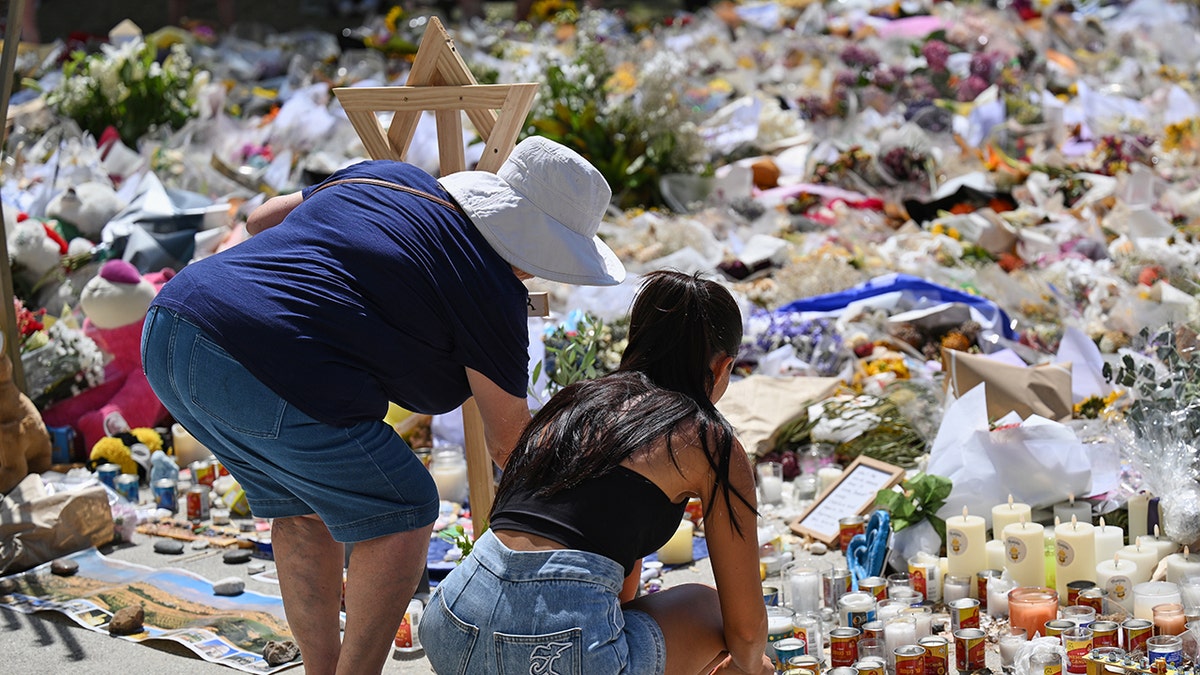
People add to a floral tribute outside Bondi Pavilion at Bondi Beach in Sydney, Thursday, Dec. 18, 2025. (AP Photo/Steve Markham)
«What is striking is that these are not foreign entities — they are integral parts of the societies in which they exist. A synagogue in Belgium is Belgian. A synagogue in London belongs to London. A synagogue in New York City is part of the fabric of that city,» he told Fox News Digital.
«From a policing perspective, what is deeply concerning is the erosion of safety and security for vulnerable communities. It is a deeply alarming scenario — one that, in some respects, echoes patterns seen in the 1930s,» he added.
The theme of this year’s March is combating antisemitism, which has surged to unprecedented levels since the Hamas-led Oct. 7, 2023, massacre in Israel.
SIGN UP FOR ANTISEMITISM EXPOSED NEWSLETTER
Abbie Talmoud, director for Jewish Community Affairs at the Embassy of Israel to the United States, survived a terror attack outside the Capital Jewish Museum in Washington, D.C., in May 2025, in which two Israeli embassy staff members, Yaron Lischinsky and Sarah Lynn Milgrim, were killed.
Speaking to Fox News Digital in Auschwitz, Talmoud said that amid rising antisemitism, feeling safe in the United States «is really difficult» and would require «systematic change,» adding that she has stopped attending some events where she does not feel adequate security precautions are in place.

Members of a global law enforcement delegation attended the March of the Living in Auschwitz on April 13, 2026. (J.V. Katz)
«There needs to be an understanding that the way we don’t allow racism for other races and ethnicities, we can’t allow antisemitism. It needs to come from the top — the school system, parents, governments,» Talmoud said.
Catherine Szkop, director of public affairs at the Embassy of Israel to the United States, who focuses on interfaith relations and engagement, carpooled with Talmoud, Lischinsky and Milgrim to the event that evening and also survived.
«I have a family history tied to the Holocaust. In the Book of Names, I looked up ‘Szkop’ and saw a page taller than me filled with that name, along with dates and locations of those who were murdered. I realized my own name could have appeared there, with ‘murdered in Washington, D.C.’ written next to it,» she told Fox News Digital at Auschwitz.
Szkop said she has never been this vigilant or fearful of potential attacks.
RABBI ATTACKED ON NYC STREET ON INTERNATIONAL HOLOCAUST REMEMBRANCE DAY
«I wear headphones less; it makes me more aware of my surroundings. It’s a mix of fear and wanting some peace of mind after what happened. I don’t let it stop me from living, but it’s made me a little more afraid,» she said.
Jeanne Hengemuhle, superintendent of the New Jersey State Police, told Fox News Digital in Kraków that her agency, which includes 3,500 sworn members and 1,500 civilian staff, works closely with community leaders across the state to address hate-related concerns before they escalate into crises, emphasizing that early engagement, information-sharing and collaboration are key to preventing issues before they arise.
«We are law enforcement, but we are also part of the communities we serve, and we must recognize that role as the first line of defense,» she said.
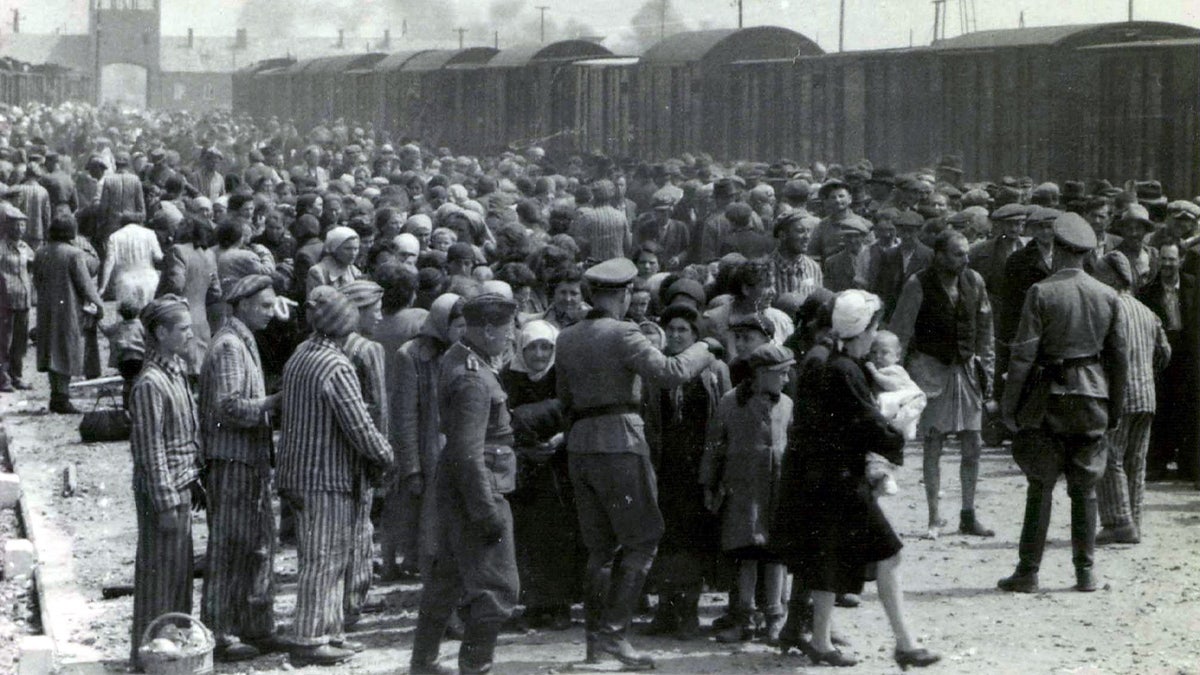
A photo taken 27 May 1944 in Oswiecim, showing Nazis selecting prisoners on the platform at the entrance of the Auschwitz-Birkenau extermination camp. (Photo by -/Yad Vashem Archives/AFP via Getty Images)
Hengemuhle said that, as human beings, there is a responsibility to do everything possible to combat hate, which requires understanding and educating one another, as well as drawing on different policing and professional backgrounds.
«This is my first year, and I am very humbled to have been invited to take part in the march and learn more. To me, it is about coming together and learning from what happened in the past so we do not allow it to happen again in the future,» she said.
«The Holocaust did not happen overnight,» she continued. «There were small, incremental changes that ultimately led to what took place. I think it is important that, by coming together and having these discussions, we ask whether we are seeing the kinds of early indicators that could lead us down a dangerous path — and how we intervene before it goes too far.»
JEWISH SUMMER CAMPS RAMPING UP SECURITY MEASURES AMID RISING ANTISEMITISM — AND PARENTS ARE FOOTING THE BILL
To this end, senior police officials and associations from Europe and North America signed a landmark memorandum of understanding (MOU) in Berlin earlier this month, formally launching a new transnational initiative titled «Not on Our Watch – The Democratic Policing Initiative.»
The agreement brings together the German Police Union (GdP), the European Federation of Police Unions (EU.Pol), the International Association of Chiefs of Police (IACP), the National Sheriffs’ Association (NSA), the International Association of Campus Law Enforcement Administrators (IACLEA), the Small & Rural Law Enforcement Executives Association (SRLEEA) and the International Police Delegation, in collaboration with leading academic institutions.
The MOU formalizes a shared commitment among participating organizations to strengthen early threat detection and intelligence-sharing across borders, including establishing coordinated operational responses to emerging extremist threats, among other things.

An anti-Israel protester’s high-vis jacket during a march against the Jewish state by the Sydney Harbor Bridge in Australia. Aug. 2025. (Ayush Kumar/SOPA Images/LightRocket via Getty Images)
Jim Skinner, sheriff of Collin County, Texas, and incoming vice president of the National Sheriffs’ Association, told Fox News Digital in Kraków that as a law enforcement leader, his responsibility is to serve everyone equally, noting that while there is significant partisanship and political division in the United States, law enforcement must serve and protect all communities equally.
«We all have an obligation to dig deep and make sure hate doesn’t happen on our watch, and to recognize that we have a fundamental responsibility to think critically about how to keep our communities safe,» he said.
Skinner noted that North Texas is home to a large and vibrant Jewish community, which he said he is fortunate to serve. He added that he traveled to Israel shortly after the Oct. 7 attack with two other sheriffs and visited Kibbutz Be’eri, an experience he said he will never forget.

A participant wrapped into a flag of Israel stands at the main gate with the lettering «Arbeit macht frei» (Work sets you free) at the start of the annual March of The Living to commemorate the victims of the Holocaust during World War II, at the memorial site of the former Auschwitz-Birkenau Nazi death camp in Oswiecim, Poland, on April 14, 2026. (Wojtek Radwanski/AFP via Getty Images)
CLICK HERE TO DOWNLOAD THE FOX NEWS APP
«I came away with important, practical lessons for my organization, but also with a deeper understanding of a world filled with hate. It reinforced for me that the authority entrusted to me by the people who elected me must be used wisely in how I approach my job each day — to ensure that something like that does not happen to the citizens where I live, and that if it ever did, we would have a proper and effective response,» he said.
«I think about the march,» he continued, «it honors Holocaust victims and serves as a reminder of the consequences of hate and the importance of standing against violence and intolerance. That’s the message I want everyone I have influence over to understand.»
anti semitism, holocaust, police and law enforcement, hamas, faith










INTERNACIONAL
Un reporte rutinario destapó la red que manipuló el sistema tributario panameño por más de $40 millones

Lo que comenzó como una revisión rutinaria para mejorar un reporte interno de recaudación terminó destapando uno de los mayores casos de presunta manipulación del sistema tributario panameño.
Un informe técnico elaborado por la Dirección General de Ingresos (DGI) revela que fueron una serie de inconsistencias, omisiones y patrones repetitivos los que llevaron a descubrir una estructura que, según las investigaciones, habría generado un perjuicio superior a $40 millones mediante el sistema E-Tax 2.0.
El documento, que sirvió de base para la investigación penal conocida como Operación Pandora, permite reconstruir las nueve principales señales de alerta que despertaron las sospechas de los auditores y que posteriormente dieron paso a allanamientos, órdenes de captura y procesos judiciales contra funcionarios y particulares.
La primera señal surgió casi por accidente. Mientras la Sección de Agentes de Retención desarrollaba un nuevo reporte para comparar las declaraciones del formulario 4331 con los pagos efectivamente recibidos por la DGI, detectó que BAC International Bank aparecía con importantes retenciones registradas en el sistema, pero sin el correspondiente respaldo de pago en efectivo.

En cambio, el sistema mostraba documentos de ajustes que habían sido aplicados como si se tratara de pagos válidos.
La segunda alerta apareció cuando los auditores solicitaron oficialmente el listado completo de esos ajustes. El informe explica que dos movimientos nunca fueron incluidos en la documentación entregada inicialmente por el área de Cuenta Corriente, pese a que existían dentro del sistema. Esa omisión llevó a revisar directamente las bases de datos de E-Tax 2.0.
La tercera señal fue el propio volumen de operaciones. La auditoría identificó 61 ajustes por un valor superior a $42.471 millones, aunque cuatro de ellos correspondían a resoluciones legítimas previamente aprobadas por la DGI. Al excluir esas operaciones, permanecían decenas de movimientos sin justificación suficiente para iniciar la investigación.
La cuarta evidencia surgió al reconstruir la trazabilidad completa de cada trámite. Los investigadores imprimieron cada expediente, identificaron quién creó las solicitudes, quién las aprobó, qué funcionarios intervinieron, las fechas, los mensajes internos y los documentos asociados. El resultado fueron 17 expedientes físicos con aproximadamente 5.000 folios de evidencia documental.
La quinta señal fue quizás una de las más llamativas. Muchos de los ajustes se sustentaban en transacciones realizadas hacía cinco, diez y hasta más de quince años, cuyas operaciones originales ya habían concluido exitosamente y cuyos pagos figuraban correctamente registrados.

Sin embargo, años después fueron anulados o modificados para liberar créditos tributarios nuevamente utilizables. Los auditores calificaron como inusual que solicitudes de anulación se presentaran después de tanto tiempo sin existir nuevos elementos que las justificaran.
La sexta modalidad consistía en anular declaraciones tributarias utilizando una resolución que únicamente permite hacerlo cuando fueron presentadas “sin corresponder”.
Sin embargo, al revisar expedientes de compraventas de acciones, fincas y otros activos, los auditores comprobaron mediante escrituras públicas, registros oficiales e incluso información publicada por las propias empresas que las operaciones sí habían ocurrido, por lo que no existía fundamento aparente para anularlas.
La séptima señal fue la utilización de créditos provenientes de pagos no aplicados para beneficiar a otros contribuyentes. Según el informe, una vez liberadas las boletas mediante anulaciones o ajustes, esos montos eran trasladados posteriormente hacia terceros mediante solicitudes de corrección y cesión, cambiando completamente al beneficiario original del pago.

La octava alerta estuvo relacionada con la alteración del código tributario 202 (ITBMS) y otros movimientos realizados mediante solicitudes de corrección dentro del módulo BPM-GTR. La auditoría concluye que el sistema permitía modificar el destino final de pagos previamente registrados utilizando distintos tipos de ajustes administrativos.
Finalmente, la novena señal fue la existencia de ajustes sin respaldo documental suficiente. En algunos expedientes los auditores encontraron operaciones millonarias que carecían de memorandos, resoluciones u otra documentación que justificara los cambios realizados dentro del sistema, mientras otros ajustes solo estaban respaldados por un memorando específico cuya validez también fue sometida a revisión.
Más allá del sofisticado manejo informático, el propio informe deja ver que fueron los errores administrativos y la repetición de patrones los que terminaron exponiendo el mecanismo.
La investigación comenzó porque un reporte interno no coincidía con otro; luego aparecieron documentos omitidos, operaciones antiguas reactivadas, expedientes sin sustento y anulaciones sobre transacciones cuya existencia pudo verificarse mediante registros públicos, escrituras notariales e incluso publicaciones corporativas disponibles en internet.

Con esa evidencia, la DGI remitió el expediente al Ministerio Público, dando origen a la Operación Pandora, que actualmente investiga una presunta organización integrada por funcionarios y particulares dedicada a manipular E-Tax 2.0 para obtener beneficios económicos ilícitos.
La investigación alcanza a una estructura integrada por abogados, funcionarios en ejercicio y exfuncionarios de la Dirección General de Ingresos (DGI), quienes presuntamente aprovecharon sus conocimientos sobre los procedimientos internos y los accesos al sistema E-Tax 2.0 para ejecutar ajustes tributarios irregulares.
De acuerdo con las pesquisas del Ministerio Público, el expediente involucra al menos a 19 personas y, hasta el momento, ya registra dos acuerdos de pena homologados y otros dos en proceso, mientras continúan las investigaciones para determinar el grado de participación y las responsabilidades individuales de cada uno de los implicados.
Operación Pandora,DGI,documentos,investigación,expedientes,carpetas
INTERNACIONAL
Federal appeals court rejects Trump bid to enforce mail ballot order ahead of midterm elections
Federal judge blocks Trump’s voter verification database
Fox News host Laura Ingraham and Ohio Congressman Jim Jordan discuss a federal judge’s decision blocking President Donald Trump’s voter verification database. Jordan criticizes the ruling, arguing it impedes election integrity by allowing non-citizens on voter rolls and goes against common sense. The segment highlights ongoing concerns about election security and judicial activism, particularly regarding voter ID laws.
NEWYou can now listen to Fox News articles!
A federal appeals court on Saturday refused to let the Trump administration enforce key parts of President Donald Trump’s executive order tightening mail-in voting rules in 23 Democratic-led states, a setback that could send the administration to the U.S. Supreme Court ahead of this year’s midterm elections.
In a 2-1 decision, the 1st U.S. Circuit Court of Appeals denied the Department of Justice’s (DOJ) request to pause a June ruling blocking several provisions of Trump’s March executive order while the administration appeals.
The DOJ previously told the court it could seek emergency relief from the Supreme Court if it did not prevail.
The administration argued the lawsuit was premature because federal agencies had not finalized the policies needed to implement the executive order. But the appeals court found the plaintiff states were already facing looming election deadlines and had begun preparing for potential changes.
OBAMA-APPOINTED JUDGE BLOCKS TRUMP’S ELECTION ORDER AS SAVE AMERICA ACT FIGHT INTENSIFIES
A federal appeals court has refused to let the Trump administration enforce key parts of President Donald Trump’s executive order tightening mail-in voting rules in 23 Democratic-led states. (Chris Kleponis/CNP/Bloomberg via Getty Image, File)
«As the district court reasoned, the (executive order) lays out a clear set of rapidly approaching deadlines by which states must coordinate with federal officials and comply with new voting procedures,» the majority wrote. «The Plaintiff States have no practical choice but to respond to the (order) now.»
Trump signed Executive Order 14399 in March as part of his election integrity agenda.
The order directs the Department of Homeland Security (DHS) to compile lists of confirmed U.S. citizens eligible to vote and provide them to states, instructs the U.S. Postal Service (USPS) to establish new standards for mail-in ballots and directs the Justice Department to prioritize investigations into state and local election officials who issue federal ballots to people deemed ineligible to vote.
‘ROGUE’ OBAMA JUDGE’S SMACKDOWN OF TRUMP ELECTION RULES PROVOKES OMINOUS WARNING FROM WHITE HOUSE DEPUTY
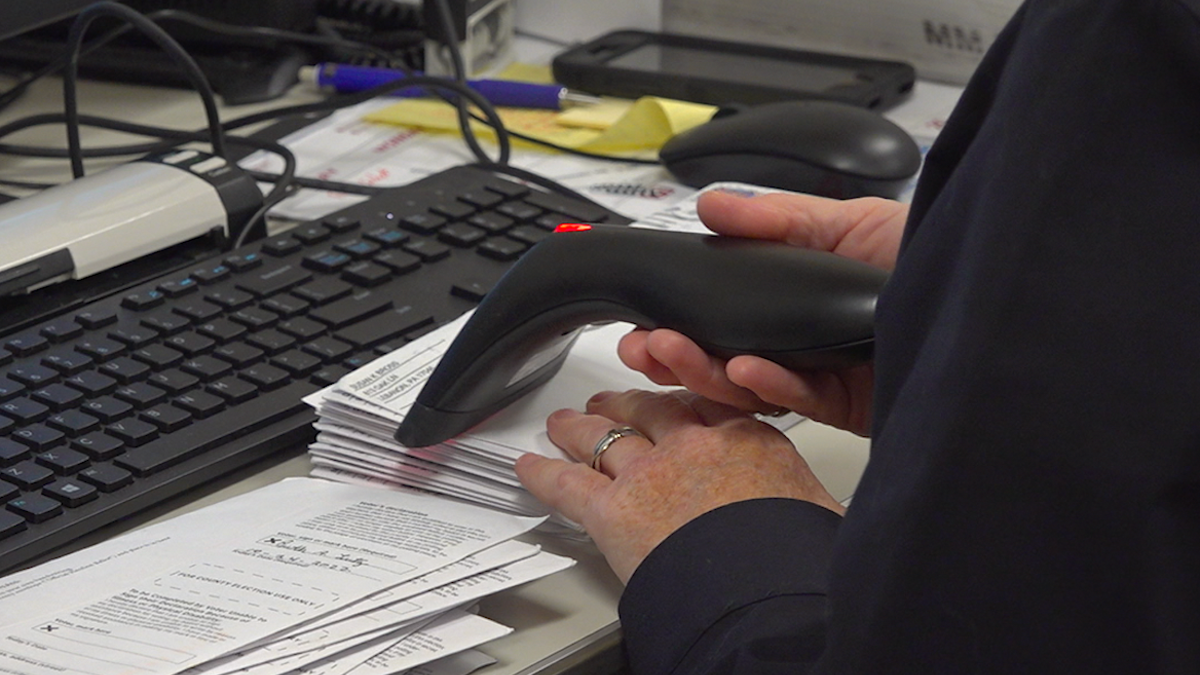
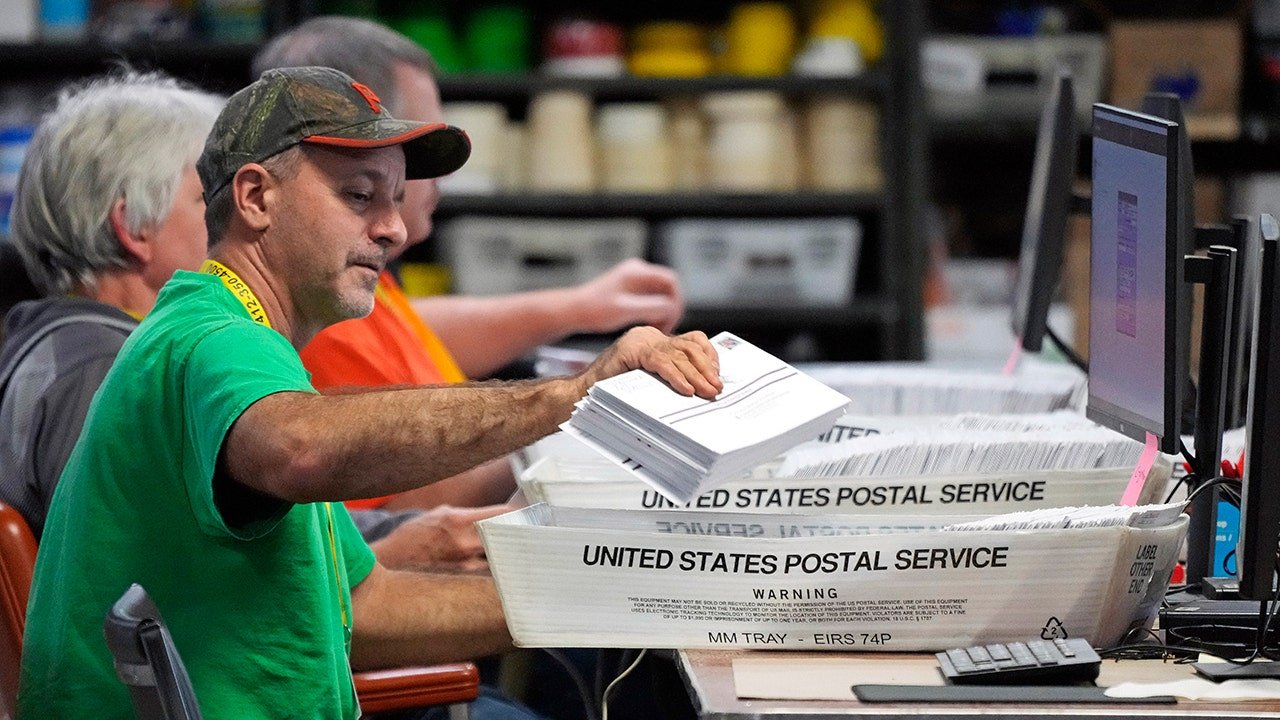
An elections office employee scans mail-in ballots in Pennsylvania. (Fox News, File)
The lawsuit was brought by 23 states, and the District of Columbia, led by California, Massachusetts, Nevada and Washington. The states argue the Constitution gives them primary responsibility for administering federal elections and that the president exceeded his authority by directing federal agencies to impose new voting requirements.
U.S. District Judge Indira Talwani agreed in June, ruling that several provisions of the executive order likely exceeded the president’s authority and blocking federal agencies from implementing them in the plaintiff states through the Nov. 3 federal elections.
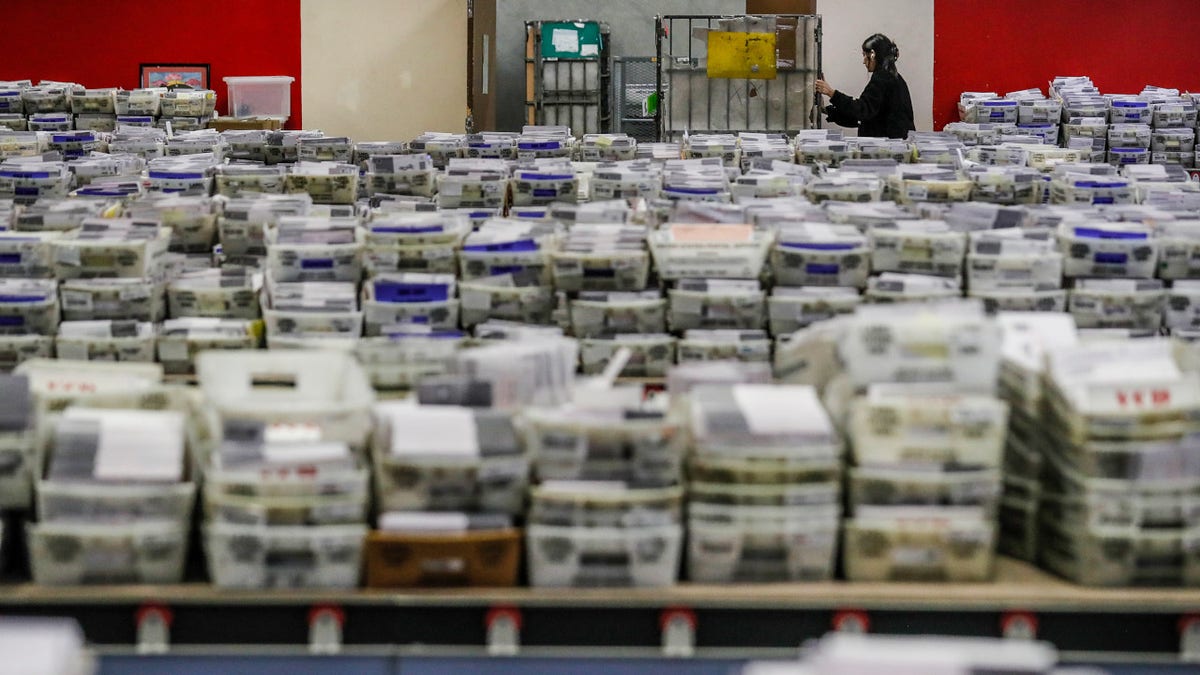
Ballots are received, sorted and verified at the Los Angeles County ballot processing facility in Industry, Calif. (Robert Gauthier/Los Angeles Times)
Saturday’s ruling does not resolve the underlying legal challenge, but leaves Talwani’s injunction in place while the appeal proceeds.
CLICK HERE TO DOWNLOAD THE FOX NEWS APP
The White House and the Justice Department did not immediately respond to Fox News Digital’s requests for comment.
voting, federal courts, donald trump, elections disputes, democratic party, midterm elections, politics
INTERNACIONAL
Brasil negó las visas a funcionarios de Estados Unidos que planeaban ir a cuestionar el sistema de voto electrónico

El gobierno de Donald Trump tenía previsto enviar a Brasilia a dos altos funcionarios del Departamento de Estado con el objetivo de cuestionar la confiabilidad del sistema de voto electrónico brasileño, cuando se lanzó de lleno la campaña para las elecciones presidenciales del 4 de octubre. Pero el Ejecutivo de Luiz Inácio Lula da Silva les negó las visas y no podrán entrar al país.
La cancillería de Brasil negó las solicitudes de visado presentadas por los diplomáticos Riley M. Barnes, secretario adjunto, y Samuel Samson, subsecretario adjunto del Departamento de Estado de los Estados Unidos, informó el sitio de noticias G1, de la red Globo, este sábado.
En un artículo publicado por The Washington Post, se mencionó a ambos como responsables de una estrategia para cuestionar la integridad y la fiabilidad del sistema electoral brasileño.
El viaje estaba programado para unas semanas antes de las elecciones presidenciales del país, previstas para el 4 de octubre. Según la información obtenida por G1, el gobierno brasileño fue informado de la naturaleza «inusual» de la misión de los dos funcionarios y decidió denegarles las visas.
Según fuentes diplomáticas, Brasil tiene la tradición de recibir observadores internacionales durante las elecciones, pero se considera que los estadounidenses no eran observadores; de hecho, tenían «otro papel».
Según The Washington Post, los funcionarios estadounidenses tenían previsto reunirse con referentes críticos del sistema de urnas electrónicas y recopilar información para elaborar un informe destinado a poner en duda la fiabilidad del mecanismo de votación utilizado en Brasil. Justamente, el candidato opositor Flávio Bolsonaro, hijo del ex presidente de ultraderecha Jair Bolsonaro, es uno de los críticos del sistema de urnas electrónicas, igual que su padre.
La solicitud de los funcionarios del Departamento de Estado fue presentada poco después de que el senador y candidato presidencial Flávio Bolsonaro afirmara sin presentar pruebas que las urnas electrónicas brasileñas fueron fabricadas por la empresa venezolana Smartmatic, durante una reunión con representantes de cerca de 40 países celebrada esta semana en Brasilia.
El Tribunal Superior Electoral (TSE) desmintió esa afirmación y aseguró que esa empresa nunca suministró urnas electrónicas ni programas utilizados en el sistema electoral brasileño.
La reunión se produjo bajo la sombra del antecedente sentado por el padre del senador cuatro años atrás.
El 18 de julio de 2022, el entonces presidente Jair Bolsonaro -hoy preso por golpismo- utilizó la residencia oficial del Palacio de la Alvorada y los medios de comunicación del Estado para convocar a decenas de embajadores extranjeros. En esa cita, Bolsonaro atacó la seguridad del voto electrónico y sembró sospechas de fraude.
Aquel episodio tuvo severas consecuencias judiciales: en junio de 2023, el TSE condenó a Jair Bolsonaro por abuso de poder político y uso indebido de los medios públicos, y lo declaró inelegible hasta 2030.
El gobierno de Lula da Silva considera la iniciativa como un intento de interferencia en el proceso electoral y aseguró que actuará para impedir cualquier efecto sobre los comicios. Dos altos diplomáticos brasileños calificaron la misión como «completamente incompatible con la democracia brasileña» y afirmaron que el Ejecutivo protegerá la integridad del proceso.
El Departamento de Estado confirmó el viaje de los funcionarios, pero evitó responder sobre el objetivo de la misión o sobre eventuales cuestionamientos a la integridad del sistema electoral brasileño.
La iniciativa se produce en un contexto de creciente tensión entre Washington y Brasilia, marcado por los recientes aranceles impuestos por Estados Unidos a productos brasileños y por el proceso judicial contra el expresidente Jair Bolsonaro por el presunto intento de impedir la asunción de Lula tras las elecciones de 2022.
La campaña electoral en Brasil está dominada por la polarización, las disputas sobre la transparencia del proceso electoral y las investigaciones judiciales que mantienen inhabilitado políticamente a Jair Bolsonaro, mientras el sistema de voto electrónico continúa siendo respaldado por el TSE y por observadores internacionales, que hasta ahora no han detectado evidencias de fraude en los comicios.

Las exportaciones agroindustriales alcanzaron casi USD 27.000 millones en el primer semestre

El debut de Nicolás Otamendi en River: un grave error, un cabezazo con el que casi empata y la frase al árbitro tras el final

Cuentapropismo emocional en lo profundo del conurbano

La drástica decisión que tomó José María Muscari a un mes de la muerte de Ernestina País: «Siento que algo terminó»

Un reporte rutinario destapó la red que manipuló el sistema tributario panameño por más de $40 millones

De cuánto será la AUH de ANSES en agosto 2026

Jorge Berredo, general retirado de las FFAA, asumió como Secretario de Seguridad en San Isidro

Sin la anestesia mundialista, aflora la crisis del conurbano y Milei necesita reconectar con lo popular
Marc Stanley destacó el potencial de Vaca Muerta para “estabilizar la economía” y evitó hablar de política interna

Senado: Bullrich y Sturzenegger cierran filas para tratar de avanzar con la extranjerización de tierras

 POLITICA3 días ago
Jorge Berredo, general retirado de las FFAA, asumió como Secretario de Seguridad en San Isidro
- POLITICA3 días ago
Sin la anestesia mundialista, aflora la crisis del conurbano y Milei necesita reconectar con lo popular
- POLITICA2 días ago
Marc Stanley destacó el potencial de Vaca Muerta para “estabilizar la economía” y evitó hablar de política interna