
INTERNACIONAL
Trump envoy to Turkey doubles down after backlash, pushes ‘peace through strength’ policy

NEWYou can now listen to Fox News articles!
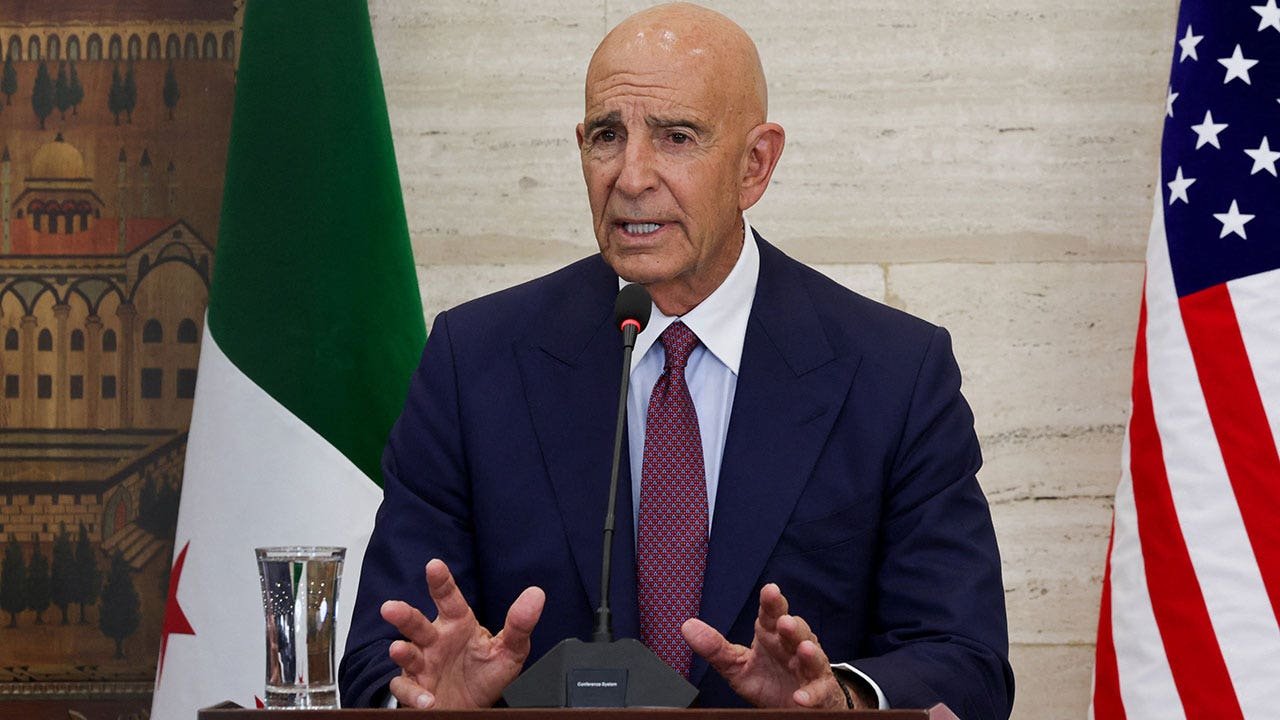
EXCLUSIVE: U.S. Ambassador Tom Barrack is pushing back after backlash over remarks seen as equating Israel with Hezbollah, insisting his comments reflect «realism» and not a change in U.S. policy.
Barrack appeared to equate America’s closest ally in the Middle East with a U.S.-designated terrorist organization, suggested Turkey should soon regain access to the F-35 program despite its purchase of Russia’s S-400 system, and argued that only «powerful leadership regimes» have succeeded in the region.
In exclusive written answers to Fox News Digital’s questions, Barrack rejected accusations that he was softening the administration’s stance toward Hezbollah or Iran, and argued that President Donald Trump’s «peace through strength» approach requires a more pragmatic reading of the Middle East.
WALTZ HAILS ‘NIGHT-AND-DAY’ MIDDLE EAST SHIFT AS TRUMP’S GAZA PLAN RESHAPES REGION
U.S. Ambassador Tom Barrack is pushing back after backlash over remarks seen as equating Israel with Hezbollah. (Hussein Malla/AP)
Fox News Digital: During your remarks at the Antalya Diplomacy Forum Friday, you described the Israel–Hezbollah ceasefire as a «time out» and said that «everybody has been equally untrustworthy.» How do you reconcile that characterization with the U.S. designation of Hezbollah as a terrorist organization?
Does your statement that the goal is «not killing Hezbollah» reflect any shift from the previous «maximum pressure» approach toward a strategy of containment or political inclusion?
U.S. Ambassador to Turkey and Special Envoy for Syria Tom Barrack: Let me be very clear about my remarks at the Antalya Diplomacy Forum on April 17.
When I described the Israel–Hezbollah ceasefire as a ‘time out’ and said that ‘everybody has been equally untrustworthy,’ I was simply stating the obvious reality on the ground. This is realism, not criticism of any side.
The November 2024 ceasefire and the recent April 2026 ceasefire have repeatedly proven fragile because all parties — Israel, Hezbollah and their backers — have tested the limits in the past. Historical patterns of violations, rearmament and proxy escalation confirm that mutual mistrust is the core challenge.
That mutual mistrust is exactly why this administration brokered the ceasefire in the first place: to stop the senseless killing, create breathing room and build a monitored, enforceable path forward that strengthens Lebanese sovereignty and Israeli security.
This characterization in no way softens our ironclad position: Hezbollah is a designated terrorist organization responsible for the deaths of Americans and countless acts of destabilization.
We have never trusted them. We acknowledge that within Lebanon itself, the Hezbollah political party is differentiated from Hezbollah the terrorist group, which holds parliamentary seats within the Lebanese government. Political trust in that regard will have to be earned.
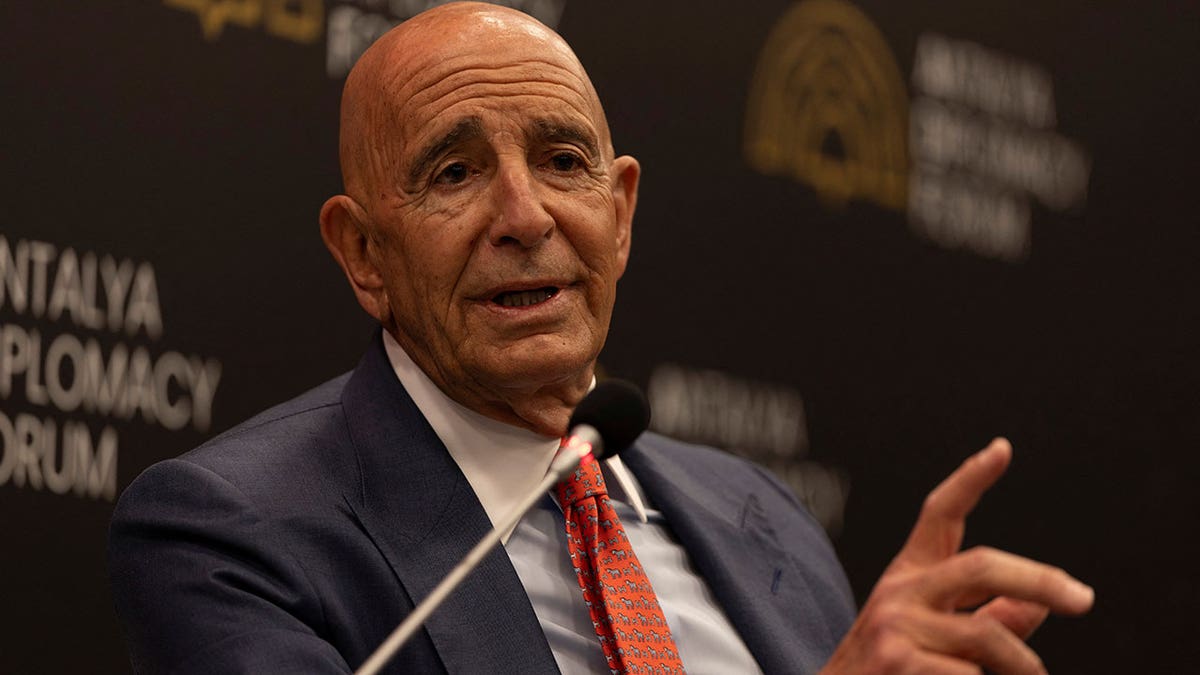
U.S. Special Envoy for Syria and Ambassador to Turkey Tom Barrack speaks during a session at Antalya Diplomacy Forum in Antalya, Turkey, April 17, 2026. (Umit Bektas/Reuters)
My point was straightforward: durable peace requires confronting that mistrust head-on, not pretending it does not exist. This approach fully supports President Trump’s policy of maximum pressure on Iran and its proxies while delivering real results: positioning us to degrade Hezbollah’s terrorist capabilities through a combination of enforcement, Lebanese state authority and the renewal of an economy that can provide a new era of hope to Lebanese communities in both the north and south.
On the goal not being ‘killing Hezbollah,’ I stand by every word. After decades in the region, you cannot eliminate an embedded militia solely by kinetic means when a sovereign state like Iran continues to arm and fund it. Pure ‘mowing the lawn’ has never worked. To the contrary, it often fuels recruitment and prolongs conflict.
Our objective has always been to degrade Hezbollah’s terrorist infrastructure to the point where diplomacy and a sovereign Lebanese government can take over under Lebanon’s confessional system, reflecting Christian, Sunni and Shiite interests. This is not a shift toward containment or political inclusion of a terrorist group. It is the same ‘maximum pressure plus smart diplomacy’ playbook this administration has used successfully against ISIS and other threats.
We continue to back Israel’s right to defend itself decisively, as Secretary Rubio explicitly affirmed in the current ceasefire terms, while also pushing for an end to the idiocy of endless war. Stopping the bleeding first, then enforcing the win. That is exactly what President Trump and Secretary Rubio achieved with this ceasefire.
No policy changes whatsoever. Just clear, effective execution.
TRUMP’S GAMBLE IN NORMALIZING RELATIONS WITH SYRIA IN THE FACE OF IRAN: ‘HIGH-RISK, HIGH-REWARD’
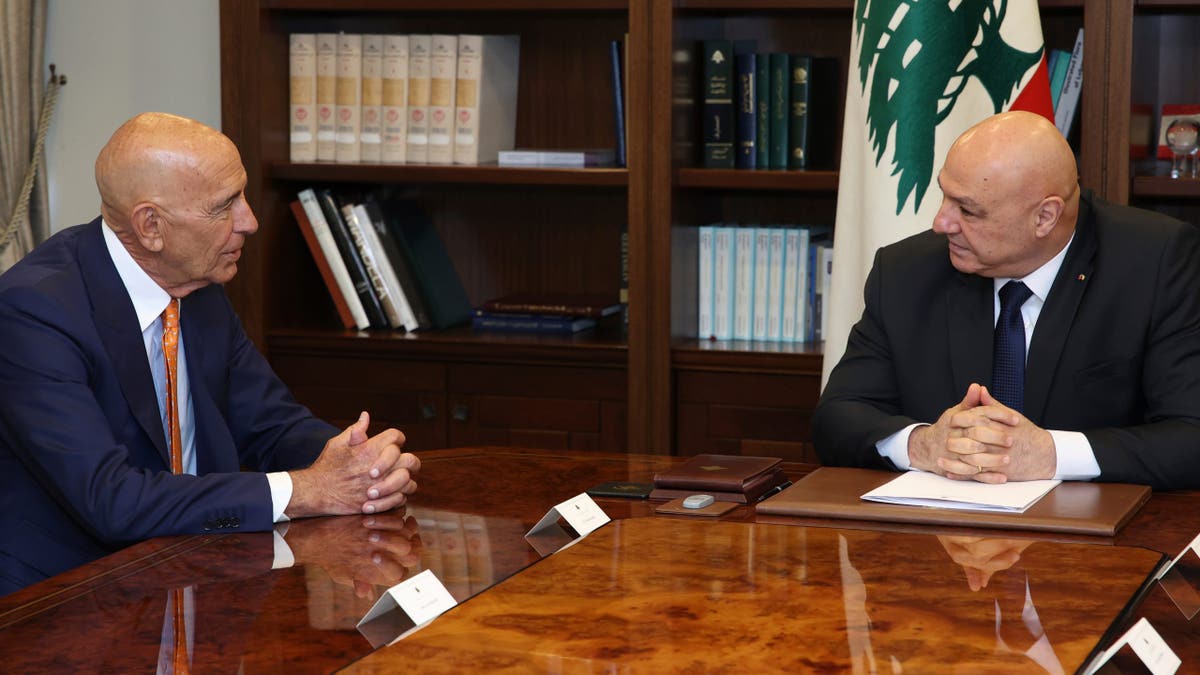
Tom Barrack, U.S. ambassador to Turkey and special envoy to Syria, meets Lebanese President Joseph Aoun in Baabda, east of Beirut, on July 7, 2025. (Lebanese Presidency Press Office/AP)
Fox News Digital: You described the dispute over Turkey’s participation in the F-35 program as «insane» and suggested the Russian S-400 issue could be resolved within months.
What specific safeguards regarding possession and operability are under consideration to satisfy Section 1245 of the National Defense Authorization Act and address concerns that the Russian S-400 system could compromise sensitive F-35 technology? How do you respond to members of Congress who have threatened to oppose F-16 upgrades or any future F-35 transfer to Turkey until your comments regarding Hezbollah and Israel are clarified?
(For example, Sen. Rick Scott, R-Fla., who responded directly to Barrack’s April 2026 remarks by saying Turkey would not receive either F-35s or F-16s. Scott wrote that Turkey «funds Hamas and the Muslim Brotherhood, hates Israel, and loves Russia and Iran,» adding: «Good luck buying F-35s, F-16s, and other American-made defense platforms.)
Barrack: Calling the prolonged impasse «insane» is blunt common sense. It highlights exactly why the administration is right to pursue a resolution: NATO unity against Russia and China is a core U.S. national security interest.
Turkey remains a vital ally, hosting critical U.S. assets, contributing to NATO missions and countering shared threats. Sanctions and exclusion from the F-35 program, triggered by the S-400 purchase, have strained ties unnecessarily while Russia benefits from the wedge.
The S-400 issue can and should be resolved within months through surgical diplomacy from Secretary Rubio, grounded in the strong personal relationship between President Trump and President Recep Tayyip Erdoğan.
Let me be explicit: any resolution will fully satisfy Section 1245 of the NDAA. That means verifiable cessation of possession and operability of the Russian S-400 system, with formal certifications from the secretaries of Defense and State confirming there is no risk of compromise to sensitive F-35 technology.
There will be no shortcuts on American security standards. What I am signaling is that real breakthroughs are imminent: restoring Turkey’s role in the F-35 ecosystem, strengthening NATO interoperability, boosting U.S. industry and denying Russia leverage.
This is classic Trump deal-making: enforce the law, protect our technology and rebuild alliances that advance American strength.
In every one of these statements, I am speaking directly in support of this administration’s foreign policy. We believe in peace through strength, candid assessment of realities and delivering results that protect U.S. interests without dragging America into endless conflicts.
These comments reflect that approach: maximum leverage against terrorists, pragmatic engagement with key partners like Turkey and a clear-eyed path to greater stability in a volatile region.»
Another point of contention was Barrack’s repeated argument that strong centralized rule, rather than Western-style democracy, has been the most successful model in the Middle East. Reiterating comments he had made previously, Barrack said at the Antalya Diplomacy Forum on April 17: «The only thing that’s worked, the only thing, are these powerful leadership regimes: either benevolent monarchies, the kind of monarchical republic.
IRAN’S COLLAPSE OR SURVIVAL HINGES ON ONE CHOICE INSIDE THE REVOLUTIONARY GUARD
Turkey was removed from the American F-35 program in 2019 after purchasing Russia’s S-400 air defense system, which U.S. officials warned could allow Moscow to gather intelligence on the stealth fighter.
Under Section 1245 of the National Defense Authorization Act, Turkey cannot rejoin the program unless the president certifies to Congress that Ankara no longer possesses or operates the S-400 and that the system poses no risk to the F-35.
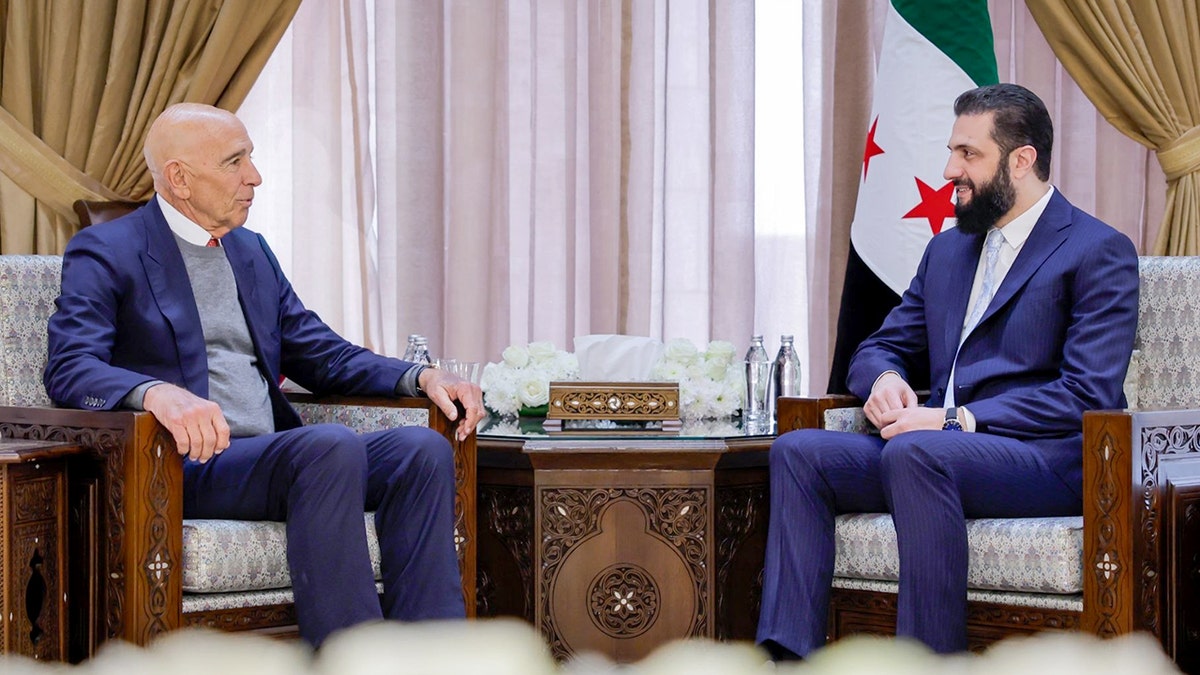
Syrian President Ahmed Sharaa met with U.S. Special Envoy for Syria Thomas Barrack at the People’s Palace in Damascus on Jan. 18, 2026. (Syrian Presidency/Handout/Anadolu)
Fox News Digital: You said that «powerful leadership regimes» are the only structures that have worked in the Middle East.
Does that statement reflect a broader shift away from longstanding U.S. support for democratic governance and human rights in the region?
Barrack: When I said that ‘powerful leadership regimes,’ whether benevolent monarchies or the kind of monarchical republics seen elsewhere in the region, are the only structures that have actually worked in the Middle East, I was speaking from decades of hard-earned observation, not ideology.
Look at the track record. Countries that tried to adopt Western-style democracy quickly after the Arab Spring largely failed, often descending into chaos, civil war or new forms of authoritarianism.
Meanwhile, stable, results-oriented leadership in places like the Gulf monarchies has delivered security, economic growth, modernization and real improvements in people’s lives.
Israel, which one can rightly point to as a vibrant democracy in the region, stands as a notable outlier that has thrived under extremely strong, bold leadership capable of delivering security and prosperity under extraordinary challenges, even as some critics describe it as a «flawed democracy.»
Turkey, operating as a presidential republic with regular multiparty elections, also demonstrates how strong, centralized leadership under President Recep Tayyip Erdoğan has delivered stability, economic dynamism and assertive regional influence, though critics have described it as a hybrid regime with strong authoritarian tendencies.
This is not a change in U.S. policy away from supporting democratic governance and human rights. It is a realistic assessment of what produces stability so that human rights and prosperity can take root.
CLICK HERE TO DOWNLOAD THE FOX NEWS APP
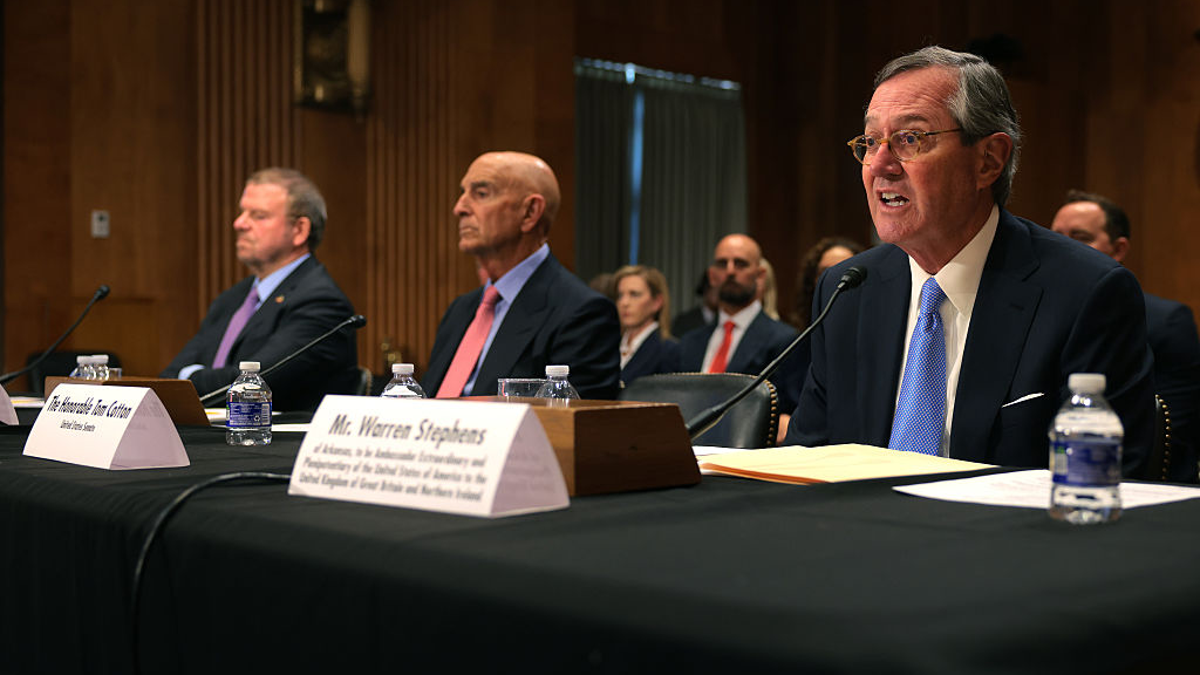
Warren Stephens, Tom Barrack, and Tilman Fertitta sit for their confirmation hearings. (Getty Images)
President Trump’s approach has always been peace through strength: deal with the world as it is, not as we wish it to be. We support effective governance that prevents chaos, counters terrorism and creates conditions for long-term progress.
That includes backing strong, accountable leaders who deliver for their people, whether in monarchies that have modernized successfully or in evolving systems that prioritize security and opportunity over imported models that have repeatedly collapsed.
lebanon, turkey, middle east foreign policy, war with iran, terrorism, national security, israel









Copa Airlines continúa expandiendo su red de destinos en América Latina con la incorporación de Porlamar, en la Isla de Margarita, Venezuela, y una reorganización de las operaciones de su Hub de las Américas, en el Aeropuerto Internacional de Tocumen, que permitirá ofrecer más opciones de conexión a partir de 2027.
La nueva ruta entre Ciudad de Panamá y Porlamar comenzará a operar el 26 de noviembre de 2026 con tres frecuencias semanales, los martes, jueves y domingos.
El vuelo CM651 despegará desde el Aeropuerto Internacional de Tocumen a las 9:50 a.m. y aterrizará en el Aeropuerto Internacional General en Jefe Santiago Mariño a la 1:36 p.m. El servicio de regreso, identificado como CM652, partirá de Porlamar a las 2:46 p.m. y llegará a Panamá a las 4:30 p.m., según informó la compañía.
La incorporación de Porlamar permitirá a los viajeros conectar con Isla de Margarita, ubicada en el estado venezolano de Nueva Esparta, una región con cerca de 500,000 habitantes cuya economía depende en gran medida del turismo y el comercio.

La isla es conocida por destinos como Playa El Agua, Playa Parguito, Playa El Yaque, además del Castillo de San Carlos de Borromeo y la Basílica de Nuestra Señora del Valle.
Desde ese punto también es posible acceder a las islas de Coche y Cubagua, donde se encuentran las ruinas de Nueva Cádiz, considerado uno de los primeros asentamientos españoles establecidos en Sudamérica.
La expansión no se limita a la incorporación de nuevos destinos. De acuerdo con información publicada por el portal especializado Informe Aéreo, Copa Airlines reorganizará a partir de marzo de 2027 la operación de su Hub de las Américas, ampliando de seis a ocho las franjas horarias de conexión en Tocumen.
El objetivo es distribuir de forma más eficiente los vuelos durante la jornada, incrementar las posibilidades de conexión y ofrecer una mayor variedad de itinerarios para los pasajeros que utilizan a Panamá como punto de enlace entre Norteamérica, Centroamérica, Sudamérica y el Caribe.
La reorganización permitirá conexiones más competitivas hacia ciudades como Buenos Aires, Mendoza, Córdoba, Salta, Rosario y Tucumán, además de mejorar las alternativas de viaje entre México, Estados Unidos, Canadá y el sur del continente.

Voceros de la empresa indicaron que la redistribución de los horarios busca ofrecer una experiencia de viaje más flexible y adaptarse al crecimiento sostenido de la demanda en la región. La compañía también prevé ampliar la disponibilidad de su Dreams Business Class en más rutas.
El crecimiento de la red también comienza a reflejarse en mercados específicos. El Gobierno de Mendoza, a través del Ente Mendoza Turismo (Emetur), informó que Copa Airlines incrementará desde octubre de 2026 sus operaciones entre esa provincia argentina y Ciudad de Panamá, pasando de siete a nueve vuelos semanales, un aumento del 28 % en la capacidad.
Las autoridades locales consideran que la medida facilitará la llegada de visitantes desde más de 80 destinos del continente y fortalecerá tanto la actividad turística como los viajes de negocios y la realización de congresos y eventos internacionales.
La presidenta del Emetur, Gabriela Testa, sostuvo que cada nueva frecuencia internacional representa una oportunidad para atraer más visitantes y mejorar la competitividad del destino, mientras que Lorena Gasser, gerente de Ventas Interior de Argentina de Copa Airlines, señaló que Mendoza es una plaza estratégica dentro de la red de la compañía y que el aumento de frecuencias responde tanto al desempeño del mercado como al interés de seguir impulsando el turismo y el comercio en esa región.

Estas decisiones coinciden con el proceso de expansión que atraviesa la aerolínea panameña. Actualmente Copa Airlines opera 113 aeronaves y prevé cerrar 2026 con una flota de 121 aviones. Además, recientemente anunció una inversión superior a los 10 mil millones de dólares para adquirir 60 Boeing 737 MAX adicionales.
Sumadas a las 40 aeronaves previamente encargadas, la empresa proyecta incorporar más de 100 aviones durante los próximos ocho años y superar las 200 aeronaves en servicio para 2034, una capacidad con la que busca sostener el crecimiento de su red y fortalecer el papel de Panamá como uno de los principales centros de conexiones aéreas del continente.
Business,International Relations,Tourism,Travel,Corporate Events,Diplomacy / Foreign Policy,South America / Central America,Tourism / Travel
NEWYou can now listen to Fox News articles!
Iran’s rival political factions are increasingly invoking the authority of Supreme Leader Mojtaba Khamenei to attack their opponents and protect their own positions, even as questions persist over whether he is actively governing the country, according to an Iran expert.
The internal struggle surfaced in two reports published by Iran International concerning Iranian President Masoud Pezeshkian’s relationship with the new supreme leader.
In the first report, senior cleric Mohammad-Bagher Kharrazi, a relative of the Khamenei family by marriage, claimed Pezeshkian had repeatedly threatened to resign and was warned that his next resignation would be accepted.
IRAN EXPERT BRANDS ISLAMIC CENTER OF ENGLAND IRAN’S ‘UK OFFICE,’ URGES IMMEDIATE CLOSURE
Iranian President Masoud Pezeshkian speaks with Fox News Channel’s Martha MacCallum during an interview on Sept. 25, 2025, in New York City. (John Lamparski/Getty Images)
«If he resigns one more time, I will approve it,» Kharrazi quoted Khamenei as saying.
Pezeshkian’s office strongly denied the account. Mehdi Tabatabaei, the president’s deputy for communications and information, called the allegation «baseless and an outright lie,» while another presidential advisor said Kharrazi had no contact with the supreme leader and was known for telling «strange stories.»
Hours later, Iran International published a second report alleging Pezeshkian had met Mojtaba Khamenei only once, inside a vehicle with tinted windows at an undisclosed location in Tehran.
According to the outlet’s unnamed sources, the encounter lasted several minutes, the two men could not see each other and Pezeshkian was not permitted to shake Khamenei’s hand. The report alleged that the president later questioned whether the voice he heard had actually belonged to the supreme leader.
IRAN’S GOOD COP, BAD COP GAME IMPLODES AS EXPERTS WARN REGIME VIEWS US AS ‘EVIL’
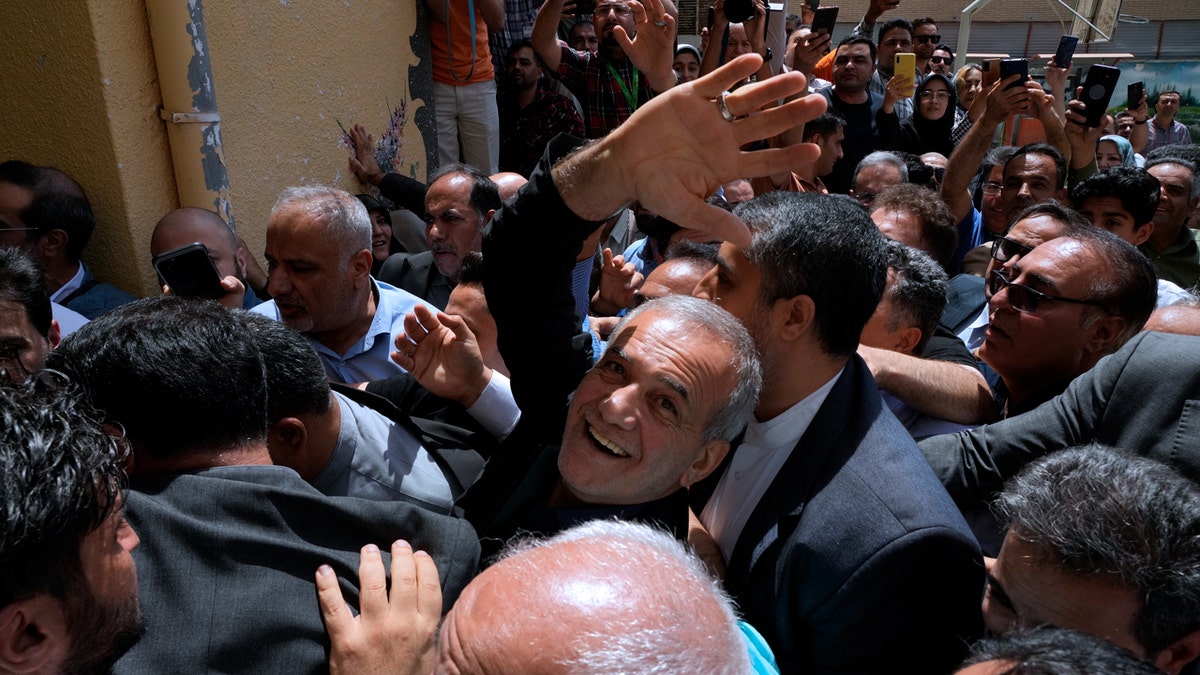
Masoud Pezeshkian, then a presidential candidate, waves as he arrives to vote at a polling station in Shahr-e-Qods near Tehran, Iran, on July 5, 2024. (AP Photo/Vahid Salemi)
The claims have not been independently verified. Pezeshkian previously described a substantially different encounter, saying publicly that he had spent approximately two and a half hours with Khamenei in a cordial atmosphere.
Kasra Aarabi, director of IRGC research at United Against Nuclear Iran, said the competing claims surrounding Pezeshkian and Mojtaba Khamenei reflected a deeper struggle inside what he described as an «Islamist oligarchic mafia system.»
Under Ali Khamenei, Aarabi said, the supreme leader functioned as the system’s «godfather,» arbitrating among rival Islamist factions and guaranteeing their access to power and money. His removal created a vacuum that Mojtaba Khamenei’s appointment was intended to fill, but the new supreme leader’s prolonged public absence has left rival factions uncertain about who is actually in charge.
«The very essence of this mafia system is built on a godfather,» Aarabi said. «If the godfather is absent, whether because he is severely incapacitated or nonexistent, that vacuum… re-emerges between the various Islamist oligarchic clans.»
Aarabi said those factions are not primarily divided by ideology.
«They’re not competing over ideology,» he said. «They’re competing over raw power and economic interests.»
In that environment, Aarabi said, Mojtaba Khamenei’s name has become a political instrument that competing factions can invoke to legitimize themselves, constrain their rivals or justify decisions whose true source remains unclear.
WHO IS AHMAD VAHIDI? IRAN’S NEW IRGC CHIEF TIED TO GLOBAL ATTACKS AND ‘DEATH TO AMERICA’ IDEOLOGY
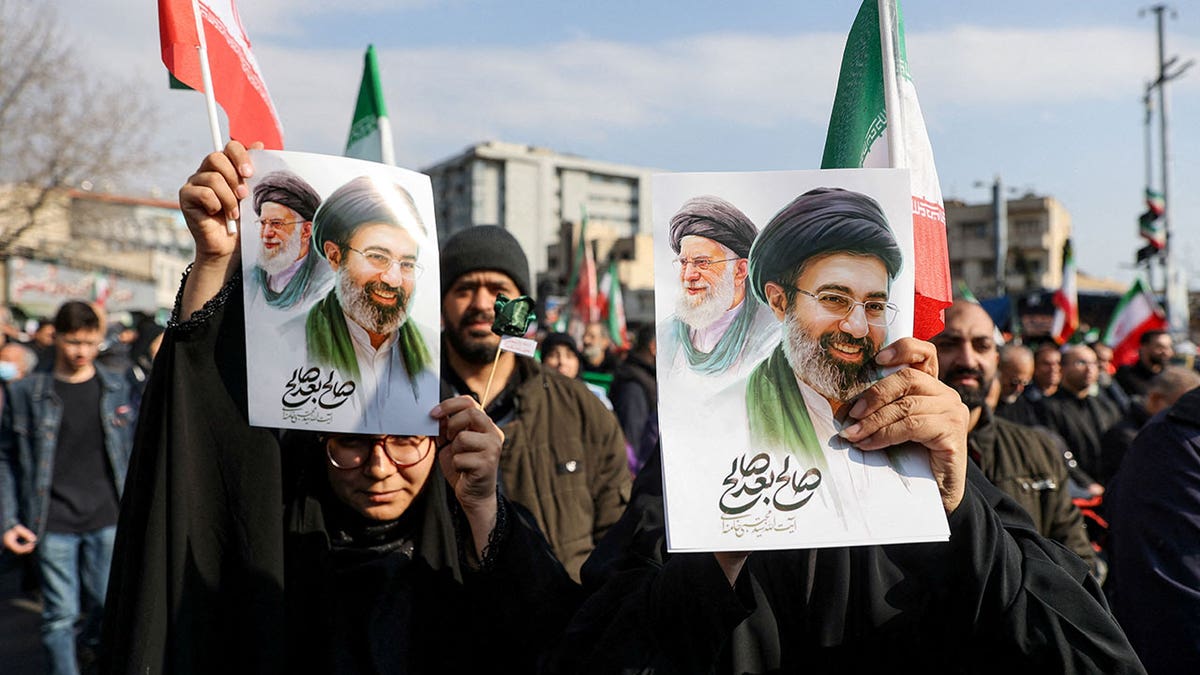
People hold placards with an image of Iran’s new supreme leader, Mojtaba Khamenei, and the late Ayatollah Ali Khamenei, during a rally in Tehran, Iran, March 9, 2026. (Majid Asgaripour/WANA (West Asia News Agency) Via Reuters)
«Mojtaba’s name is the glue that’s holding the system together right now,» Aarabi said. «Each of these clans invokes his name to justify its existence, legitimize its position, and consolidate its place within this fragile system.»
Exiled Iranian journalist Mehdi Ghadimi described the resignation claims as part of a recurring political strategy used by reformist administrations.
«This is a familiar cycle,» Ghadimi said. «Whenever they feel that their usefulness to the supreme leader has come to an end, they start circulating these resignation rumors in an effort to build public sympathy and improve their image before being pushed aside.»
Ghadimi said similar rumors surrounded former presidents Mohammad Khatami and Hassan Rouhani during the final years of their administrations. He argued that reformist-aligned media channels often continue circulating resignation claims even after a president’s office formally denies them, allowing officials later to portray themselves as having challenged the supreme leader.
On Mojtaba Khamenei’s status, Ghadimi went further than Aarabi, saying he did not believe there was «a functioning person by that name who is capable of thinking, making decisions or speaking.»
«Either he is dead, or he is being kept alive in an extremely unstable and severely deteriorated condition,» Ghadimi said.
Aarabi said the two reports illustrate that dynamic. A cleric opposed to or unaligned with Pezeshkian invoked Mojtaba Khamenei’s authority to weaken the president by claiming his next resignation would be accepted, while figures around Pezeshkian pushed back with an account portraying the president as having met directly with the supreme leader.
Mojtaba Khamenei has not appeared in any publicly released video or audio recording since succeeding his father, according to Iran International. Iranian officials have offered conflicting accounts about how often senior government figures have met him.
Aarabi cautioned that using Khamenei’s name as a source of authority will become increasingly difficult if his public absence continues.
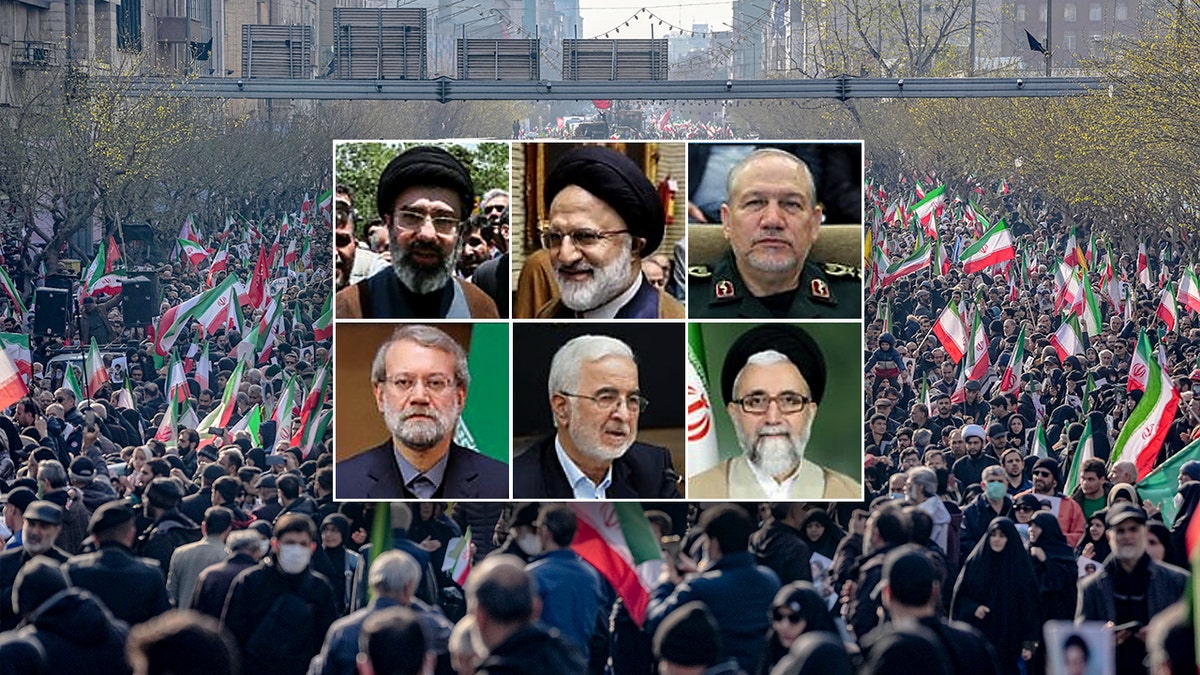
A composite image shows several Iranian leaders named in the State Department’s Rewards for Justice program offering up to $10 million for information on key figures tied to Iran’s Islamic Revolutionary Guard Corps (IRGC), including Mojtaba Khamenei, top left. (State Department/Rewards for Justice; Khoshiran/Middle East Images/AFP via Getty Images)
«There’s only so many times you can use someone’s name without any proof of life that they actually exist,» Aarabi said. «The longer Mojtaba is absent, the more questions develop over whether he is alive or able. And as soon as that doubt increases, you will see this infighting increase.»
war with iran, iran, mojtaba khamenei, ali khamenei, world
NEWYou can now listen to Fox News articles!
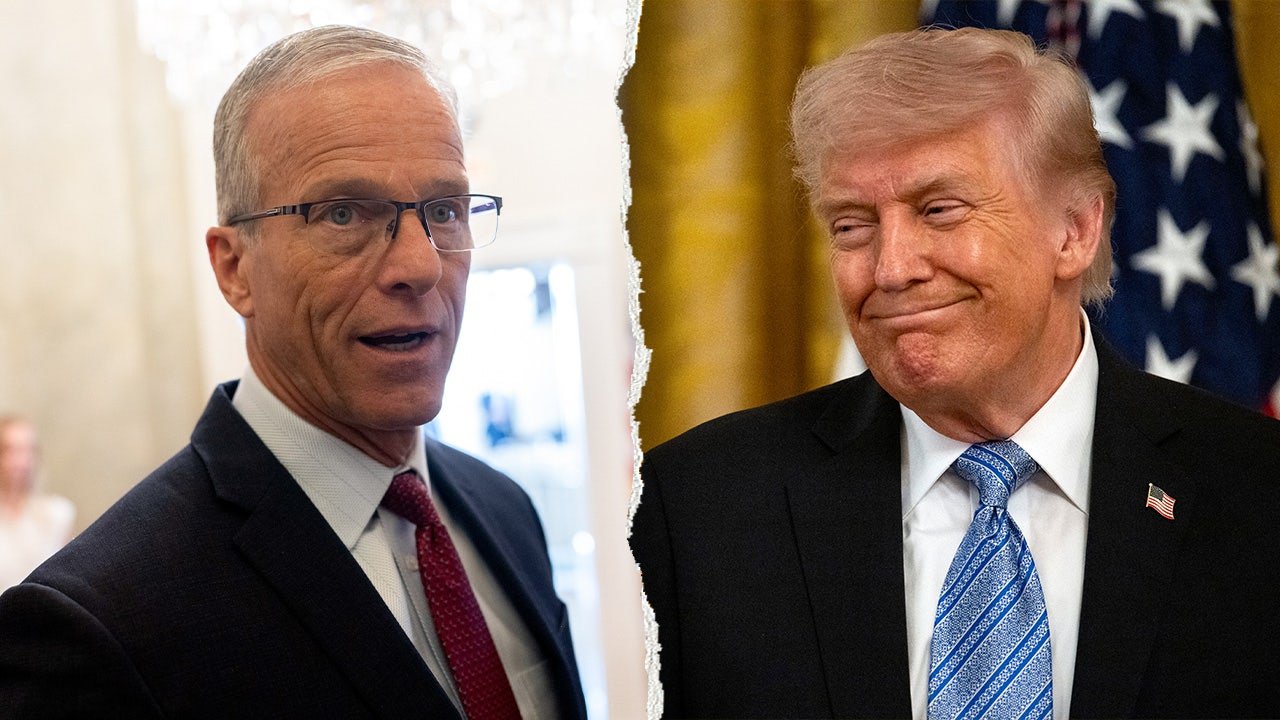
FIRST ON FOX: The reports of President Donald Trump and Senate Majority Leader John Thune’s dead working relationship have been greatly exaggerated, the South Dakota Republican leader told Fox News Digital.
«I’ve heard from him twice this morning already. He called me over the weekend, and so there, you know, we talk, I don’t bother him, I’m not calling him every day,» Thune said in an interview.
Last week, Trump said, «We’re going to find out,» whether Thune was the man for the job to lead Senate Republicans, casting doubt on a critical relationship between him and the Senate’s top Republican.
TRUMP QUESTIONS THUNE’S LEADERSHIP AS SAVE AMERICA ACT STALLS
Reports of Senate Majority Leader John Thune and President Donald Trump’s relationship deteriorating are greatly exaggerated, Thune told Fox News Digital. In fact, they have spoken several times over the last few days since Trump’s «we’ll see» comment about his future as Republican leader. (Aaron Schwartz/Bloomberg via Getty Images 😉
The tension stems from the SAVE America Act floundering in the Senate, and Trump’s desire to see the election integrity package passed by any means necessary.
Thune doesn’t see Trump’s comment as a personal slight, however. Both he and the president «want to get to the same place. We have, sometimes, disagreements about how best to get there.»
«Most of mine are constrained by what’s achievable in an institution like the Senate that has procedural roadblocks to do almost anything,» Thune said.
«We have those candid conversations, but I’m not worried about that relationship,» he continued. «I know he’s going to push as hard as he can. That’s his business model, is to just keep pushing, pushing, pushing to get people to go as far as they can go.»
SENATE FACES ‘COME-TO-JESUS’ MOMENT ON TRUMP’S ELECTION PRIORITY UNDER GOP’S NEW PLAN
There is a voracious appetite among Trump, Senate Republicans and their base to see the SAVE America Act passed. One that Thune hears every day, either online or within his own conference.
It’s dominated the oxygen inside the Capitol and beyond its walls, and the pressure comes as the Senate is sprinting to finish work on key items, like preventing a government shutdown and confirming dozens of Trump’s nominees.
«There are good days and bad days,» Thune said. «And around here, probably lately more bad days than good days, but you know you just kind of, like I said, keep your head down, do the work.»
But passing the SAVE America Act is the most elusive item for Republicans, given the current make up of the Senate.
While there are a cohort of Republicans who are voting against it, Thune made the point that every single Senate Democrat has shut it down each of the five times that it’s been brought to the floor in a variety of configurations.
And Thune is one of the Republicans that wants the bill passed — he’s an original co-sponsor of the SAVE Act, the precursor to the current version of the SAVE America Act. The avenue of cutting Democrats out of the equation and ramming through aspects of the bill through budget reconciliation exists, which Thune is interested in pursuing.
But then comes the problem of generating 50 votes to support that, and keeping those votes together to shut down «crazy democratic amendments.»
GOP RIFT GROWS AS THUNE HITS BRAKES ON TRUMP’S ELECTION BILL TO AVERT SHUTDOWN
Thune’s job helming the Senate majority is to do the math on what can be accomplished in an institution that’s «designed» to be difficult. And the votes still aren’t adding up.
«I keep asking the question, am I the only one in this town that can count to 50? Because it seems like these questions recur and there are a lot of people out there who haven’t seemed to internalize the fact that there aren’t Democrats that are going to flip and vote for this,» Thune said.
«And there aren’t 50 Republicans that are going to vote to nuke the filibuster. Those are two facts that are indisputable and unchangeable.»
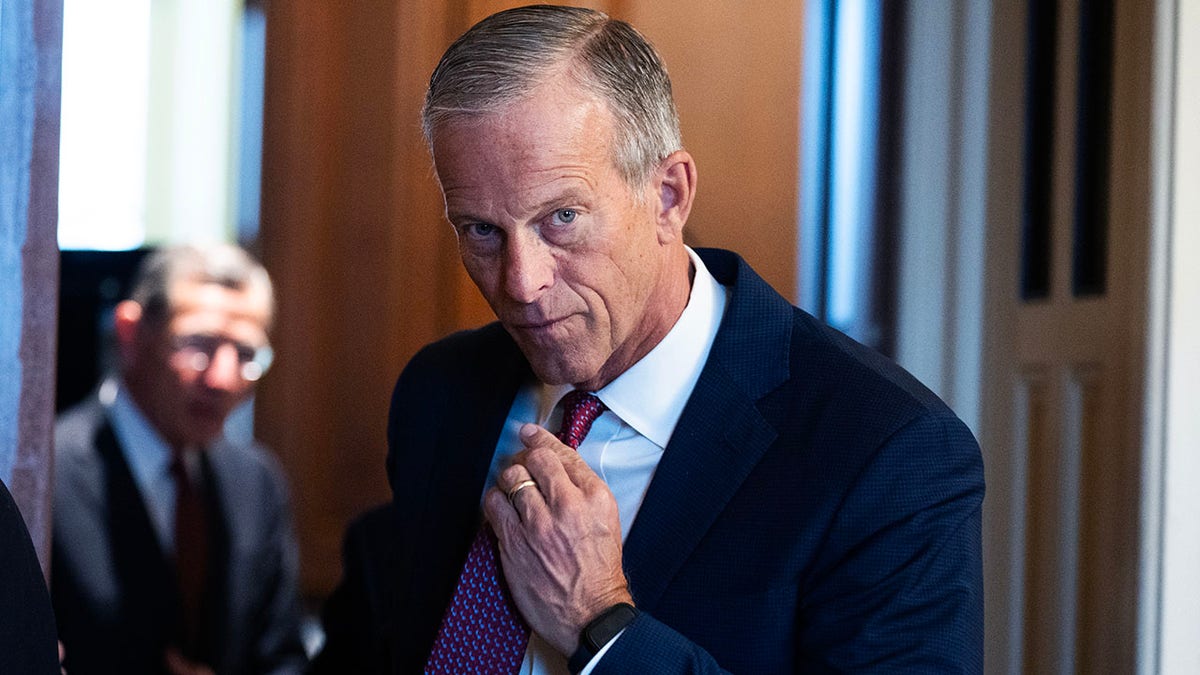
Senate Majority Leader John Thune, R-S.D., argued that Democrats were continuing their push to keep DHS closed because it was «politically advantageous.» (Tom Williams/CQ-Roll Call, Inc via Getty Images)
Thune’s position is, by extension, an embodiment of the Senate in many ways.
Unlike the House, legislation and agendas can’t be rammed through without a bipartisan agreement to blast through the filibuster. And senators’ concerns and desires encompass an entire state, not just a sliver of a state’s population.
Through several interviews with Fox News Digital, he’s instilled that part of his job is to listen and take consensus on what does and doesn’t work, deliberating on the best path for a deliverable outcome.
«This place was supposed to be difficult, so that no dictator could master it, and I think that’s kind of the role of the Senate in our system and our democracy,» Thune said.
«It’s important to keep that in perspective, but it’s frustrating as heck when you’re somebody who likes to get things done, likes to get results, and you’ve got procedural roadblocks holding things up as we try to wind down and get some things done,» he continued.
politics, john thune, donald trump, senate, republicans elections

Desde el streaming oficialista Carajo, el abogado Alejandro Sarubbi Benítez propuso “esterilizar” a los bonaerenses o tirarles napalm

Paro portuario: el Gobierno alcanzó un acuerdo para destrabar el conflicto que genera pérdidas millonarias

Copa Airlines abrirá una nueva ruta entre Panamá y la Isla de Margarita en Venezuela

La familia del joven asesinado por su novia en Chaco pedirá que la fiscal del caso sea apartada: “Está a favor de ella”

Los argentinos que buscan meterse en la fase de liga de la Champions

Iran’s unseen supreme leader becomes weapon in escalating power struggle, experts say

“Vamos a acelerar con todo”: el objetivo del Gobierno por las reformas y la agenda electoral de cara al 2027

Reelecciones indefinidas: el oficialismo bonaerense niega que busque ampliar la Legislatura como parte de una reforma política para beneficiar a los intendentes

Javier Milei cruzó a Victoria Villarruel y elevó la tensión: “Es una opositora, replica los argumentos kirchneristas”

¡Chau Luck Ra! La salida de soltera de La Joaqui, muy bien acompañada, a días de su separación
-
 POLITICA2 días ago
“Vamos a acelerar con todo”: el objetivo del Gobierno por las reformas y la agenda electoral de cara al 2027
-
 POLITICA2 días ago
Reelecciones indefinidas: el oficialismo bonaerense niega que busque ampliar la Legislatura como parte de una reforma política para beneficiar a los intendentes
-
 POLITICA23 horas ago
Javier Milei cruzó a Victoria Villarruel y elevó la tensión: “Es una opositora, replica los argumentos kirchneristas”