INTERNACIONAL
Trump vows to ‘get to the bottom’ of Fed’s multibillion-dollar building renovation after probe shift

NEWYou can now listen to Fox News articles!
A day after U.S. Attorney for the District of Columbia Jeanine Pirro announced she had directed her office to close its investigation into the Federal Reserve over a building project, President Donald Trump said he wants to know what happened.
«Well, I want to find out,» the president told reporters before boarding Air Force One at Palm Beach International Airport in Florida on Saturday, after a journalist asked if he agreed with Pirro’s decision.
«You know, it’s not dropped,» he continued. «They’re looking into the whole thing about the crisis. What I want, with the IG, what I want to look at is how can a building that I could have done for $25 million cost $4 billion? That’s a big thing.»
Trump also mentioned Federal Reserve Chair Jerome Powell, saying, «he was in charge.»
TRUMP ADMIN URGES RESTORING BALLROOM CONSTRUCTION IN EMERGENCY MOTION: ‘TIME IS OF THE ESSENCE’
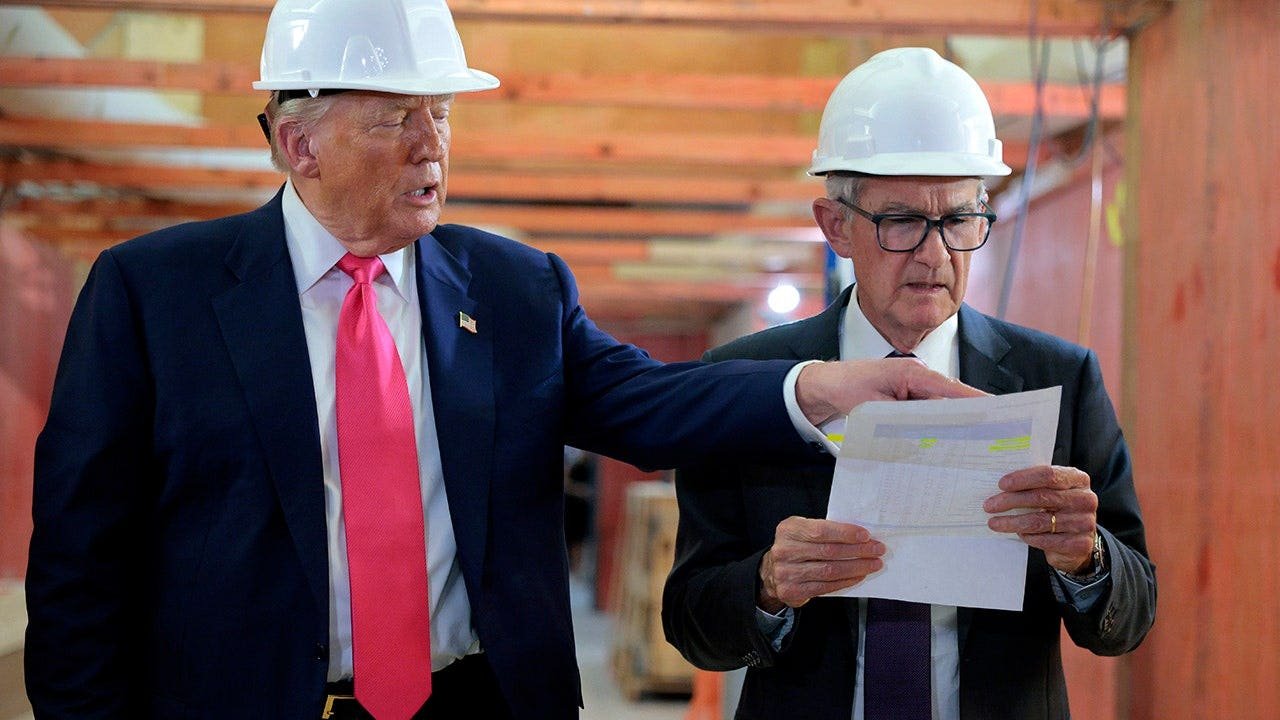
President Donald Trump and Federal Reserve Chair Jerome Powell tour the Federal Reserve’s $2.5 billion headquarters renovation project in Washington, D.C., in July. (Chip Somodevilla/Getty Images)
«So we’ll get to the bottom of it,» he added. «Yeah, I think Jeanine is fantastic. And she worked with other people on that. I tell you, I want to find out, I have an obligation to find that — this was done during Biden, but I have an obligation to find out how does it — I would have done that building for $25 million and had money left over. And it would have been open a long time ago.»
The Fed had an approved budget of $2.46 billion for the renovations, but went over budget because of things like more asbestos than expected and costs going up during the course of the renovation, the Fed says on its website.
Pirro said Friday the Fed’s inspector general, Michael Horowitz, would take over the investigation, moving it from the hands of federal prosecutors into those of a longtime government watchdog.
TRUMP ADMINISTRATION’S FEDERAL RESERVE HQ PROBE ESCALATES WITH UNANNOUNCED SITE VISIT BY PROSECUTORS
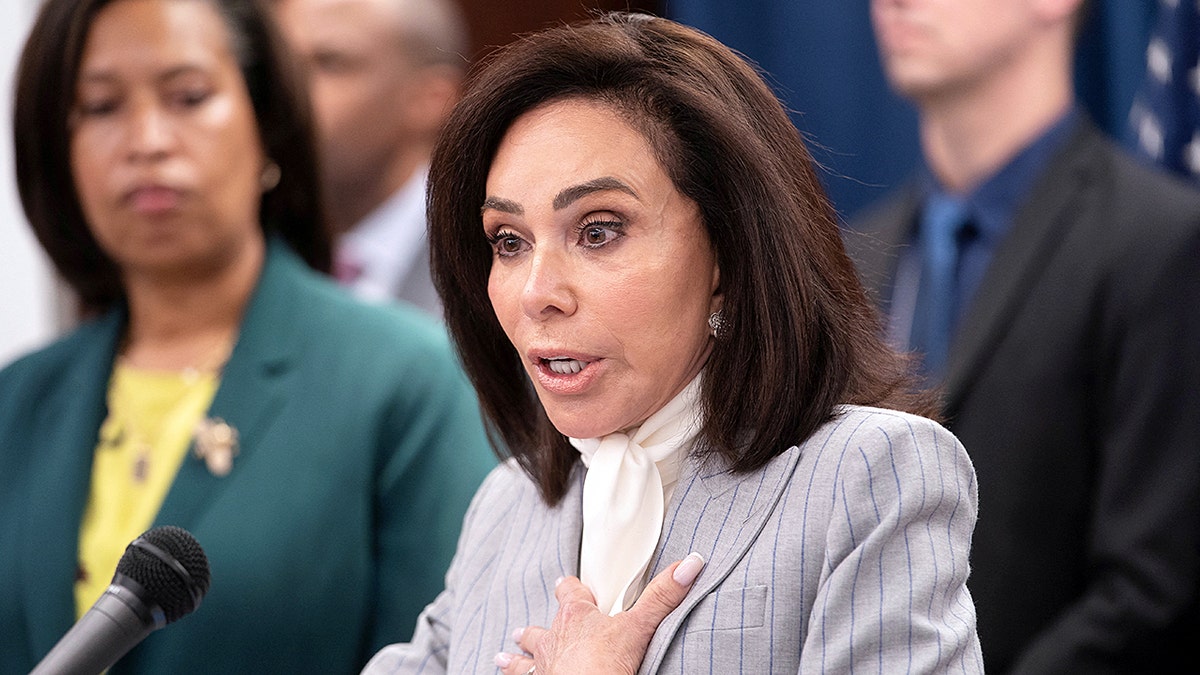
U.S. Attorney Jeanine Pirro announced her office was closing the investigation into the Federal Reserve on Friday. (Nathan Howard/Reuters)
Powell was under investigation over statements he made to Congress related to the management of the renovation costs.
Powell revealed in a video announcement in January that the Department of Justice had opened an investigation into the Fed, calling it an unprecedented attempt to use «intimidation» to force him to lower interest rates.
In the lead-up to the investigation, Trump and Powell’s relationship had grown increasingly rocky, as Trump became frustrated over interest rates and began targeting Powell, whom he nominated in 2017. Trump called Powell a «fool» and demanded in March that he drop rates «immediately.»
Sen. Thom Tillis, R-N.C., who has a background in finance and sits on the Senate Banking Committee, had vowed to block Kevin Warsh’s confirmation because of the DOJ’s investigation, after Trump nominated Warsh to replace Powell, whose term was set to expire on May 15.
Tillis had claimed the DOJ’s investigation was political and would improperly interfere with markets, and he accused Pirro of seeking «brownie points» with Trump by opening it. «It’s not cute,» Tillis said during a television interview in February.
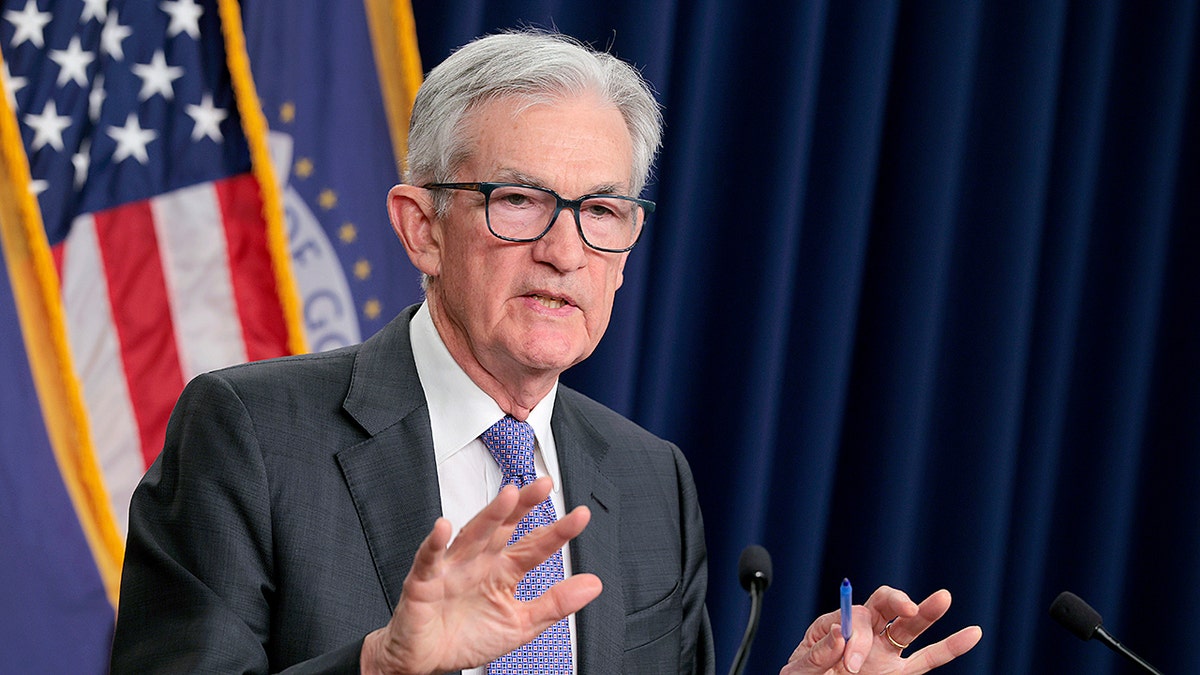
Federal Reserve Chair Jerome Powell in January claimed the investigation was political. (Chip Somodevilla/Getty Images)
During his confirmation hearing this week, Tillis told Warsh, who previously served on the Fed’s Board of Governors, that he had «extraordinary credentials» but that he could not vote to advance his nomination in the Senate until the DOJ ended its investigation.
Horowitz, who will now investigate the Fed building renovation costs, has drawn a mix of praise and criticism from Republicans while serving as DOJ inspector general for more than a decade. He was one of the few high-profile inspectors general spared during Trump’s historic cull of government watchdogs last year and has found allyship in key figures like House Judiciary Committee Chairman Jim Jordan, R-Ohio.
Pirro closing the investigation could pave the way for Warsh’s nomination.
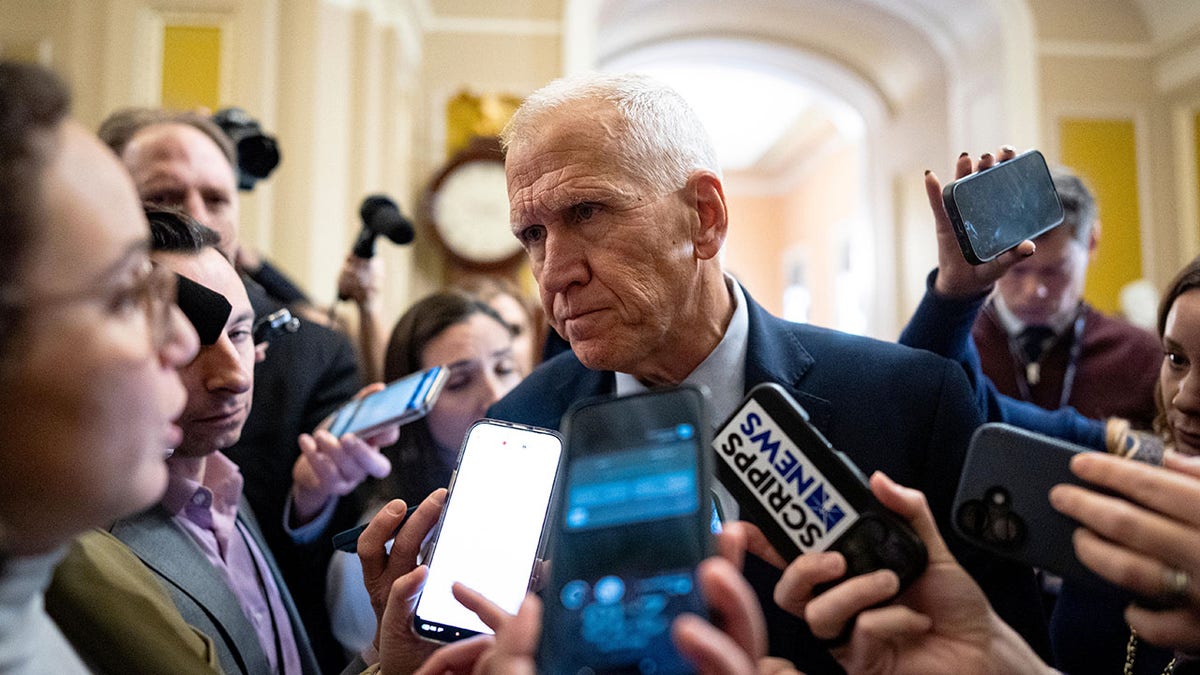
Sen. Thom Tillis, R-N.C., says he couldn’t vote to advance Kevin Warsh’s nomination to head the Federal Reserve in the Senate until the DOJ ended its investigation. (Al Drago/Bloomberg)
Trump said he wanted to see the investigation through «for the country.»
«It’s much tougher, much more expensive to build a hotel than an office,» the president said, mentioning his Trump International Hotel in Washington, D.C., that he sold in 2022 and was renamed the Waldorf Astoria.
CLICK HERE TO DOWNLOAD THE FOX NEWS APP
He continued, «I want to find out how can a building of that size cost for whatever it’s going to be. Nobody knows, by the way, what it’s going to be. Kevin is going to be fantastic. Kevin Warsh, he may never get to be in that building.»
Trump told reporters that his nomination should now going smoothly, «but whether it is or not, somebody has to find out why that building that should have cost $25 million is costing billions of dollars. And you know why they have to find it out? For other buildings, because that’s not the only one. I think that’s the most egregious example.»
Fox News’ Ashley Oliver and Alex Nitzberg contributed to this report.
donald trump, federal reserve, costs, investigations, politics











NEWYou can now listen to Fox News articles!
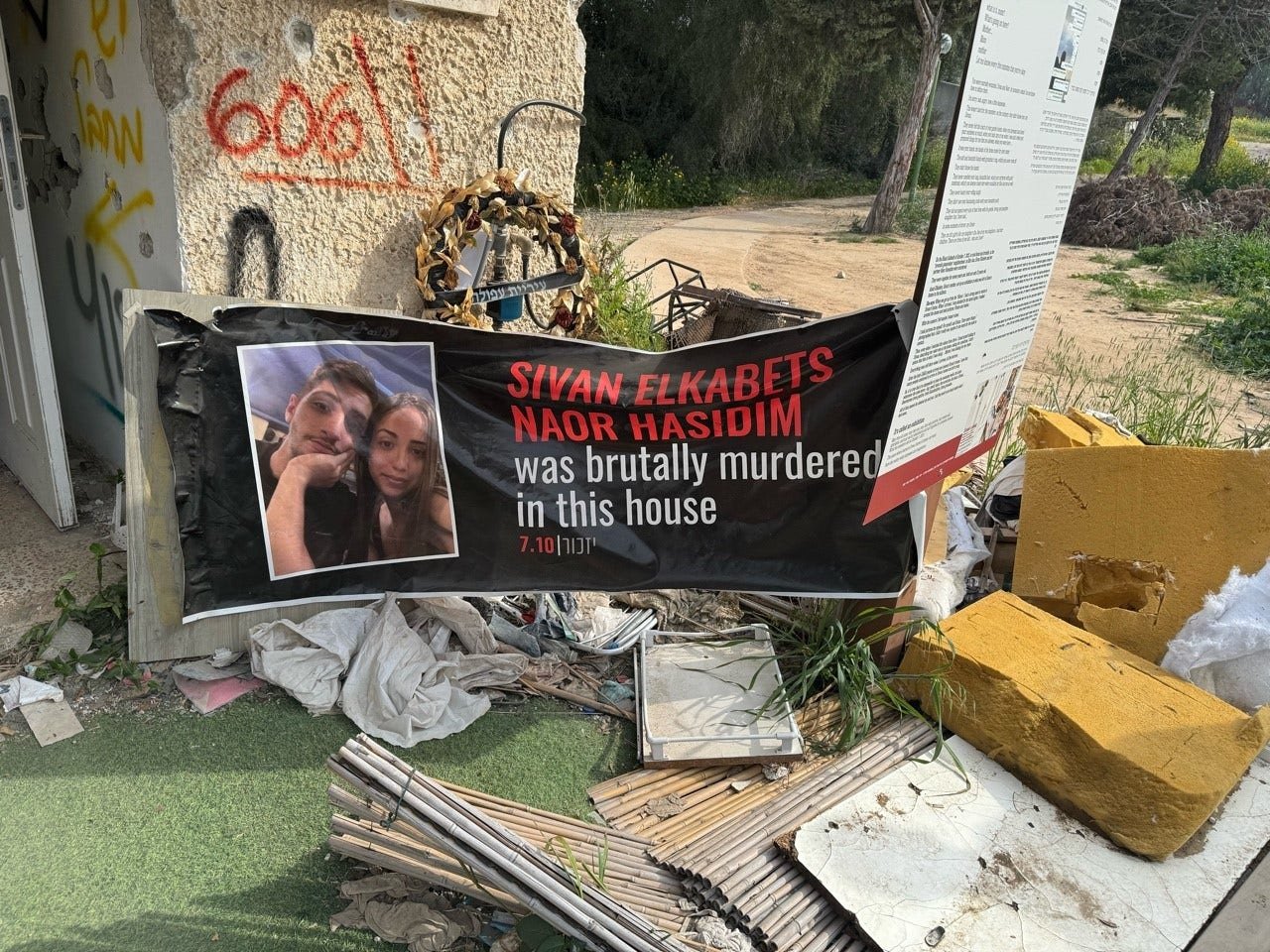
The «Return to October» exhibition offers an immersive reconstruction of the Hamas-led Oct. 7, 2023, massacre, combining video with declassified Israel Defense Forces intelligence and planning materials recovered in the Gaza Strip that reveal how the Palestinian terrorist group planned and carried out its cross-border assault.
The 600-square-meter exhibition, assembled by the Israel Intelligence Heritage & Commemoration Center (IICC), a nonprofit dedicated to commemorating fallen members of Israel’s intelligence community.
The exhibition features vehicles used in the attack, a film on the abduction of Israeli hostages, a mock Hamas tunnel, and excerpts from the Israel Defense Forces’ 47-minute compilation of raw footage from the assault.
INSIDE ISRAEL’S MISSION TO TRAIN CIVILIANS TO STOP THE NEXT OCT 7-LIKE TERROR ATTACK
A Hamas kidnapping kit from the Oct. 7 attack containing handcuffs, electric shock devices and syringes intended to inject hostages who resisted was displayed at the ‘Return to October’ exhibition in Israel. (Amelie Botbol for Fox News Digital)
«The main conclusion of this exhibition is that Hamas prepared this terror invasion over a long period in a highly organized and professional manner. It gathered extensive intelligence over many years, and visitors can see examples of that intelligence-gathering effort throughout the exhibition,» Yossi Kuperwasser, head of the Institute for the Research of the Methodology of Intelligence at the Israel Intelligence Heritage & Commemoration Center, told Fox News Digital.
Kuperwasser said the exhibition’s most significant feature is its collection of documents seized by the IDF in Gaza that Hamas sought to keep hidden. Among them are materials indicating that Hezbollah chose not to fully join the Oct. 7 attack out of concern that Israel would respond with a major offensive. The documents also shed light on the relationship between Hamas and Iran, including the extent of Tehran’s involvement.
«The most important lesson is that Israel’s enemies are constantly planning large-scale terrorist attacks. They seek to wipe us off the map, and if you become complacent and assume they are not preparing such attacks, you are mistaken,» he said.
ISRAEL’S MILITARY ELIMINATES HAMAS TERRORIST WHO HELPED ABDUCT AMERICAN-ISRAELI HOSTAGE, 3 OTHERS

Anti-Israel and antisemitic Hamas incitement material was displayed at the ‘Return to October’ exhibition in Israel. (Amelie Botbol for Fox News Digital)
The exhibition’s first room features a map marking 114 points where terrorists breached the border into Israel on Oct. 7. Red circles identify the communities that were attacked, while a dotted red line traces where the attackers were ultimately stopped. According to the exhibition, about 4,300 Hamas, Palestinian Islamic Jihad and other terrorist operatives entered Israel at the start of the assault, followed by another 1,500 to 1,700 Gazans described as «uninvolved civilians.»
Displayed in the room are Egyptian, North Korean, Russian, Chinese and Iranian-made weapons, alongside arms supplied to Hamas by Hezbollah.
The tour guide Eyal, whose last name could not be disclosed, displayed a kidnapping kit containing handcuffs, electric shock devices and syringes intended to sedate hostages, alongside what he described as a «spiritual kit» containing a miniature Quran and a fatwa, or religious ruling, calling for the killing of Israelis.
TRUMP ADMINISTRATION PROBES UNRWA OVER ALLEGED EMPLOYMENT OF 1,500 TERRORISTS
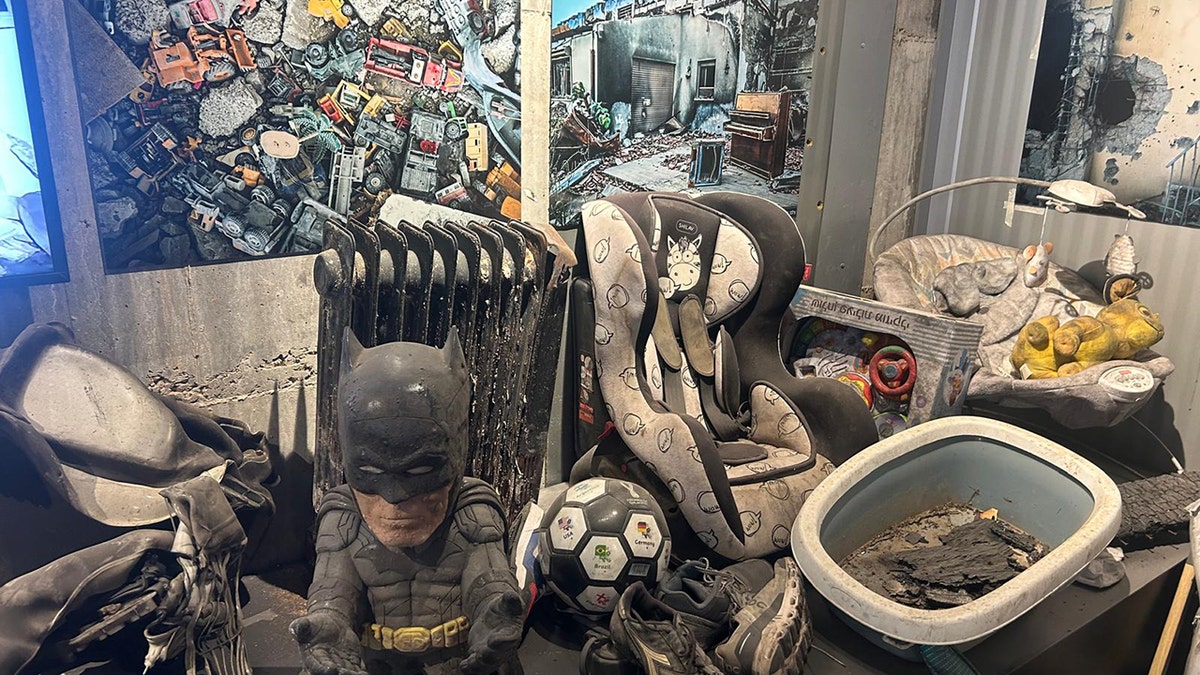
Personal belongings recovered from Israeli homes burned by Hamas terrorists during the Oct. 7, 2023, attack are displayed at the ‘Return to October’ exhibition in Israel. (Amelie Botbol for Fox News Digital)
Another display features military gear belonging to former Hamas leader Yahya Sinwar, as well as a handwritten document recovered by the IDF from the European Hospital in Gaza.
«Here, he instructs Hamas terrorists to attack the Zionists, burn villages, kill and kidnap people, humiliate soldiers, and document everything using GoPro cameras for social media,» Eyal said.
The document also states that Sinwar hoped Iran, the Houthis, Hezbollah, Arabs in Judea and Samaria, and Arab citizens of Israel would join the assault.
Also on display are aerial photographs that Hamas used to map Kibbutz Be’eri, identifying individual homes, the armory and the security chief’s residence; an operational plan dated Oct. 6 that was shared only with Hamas commanders to prevent leaks; and a booklet translating Arabic phrases into Hebrew.
The exhibition also highlights Hamas education and incitement. Shelves display books recovered from Gaza, including copies of Mein Kampf found in schools, while photographs show children posing with weapons after attending Hamas summer camps.
«It begins in childhood,» Eyal told Fox News Digital.
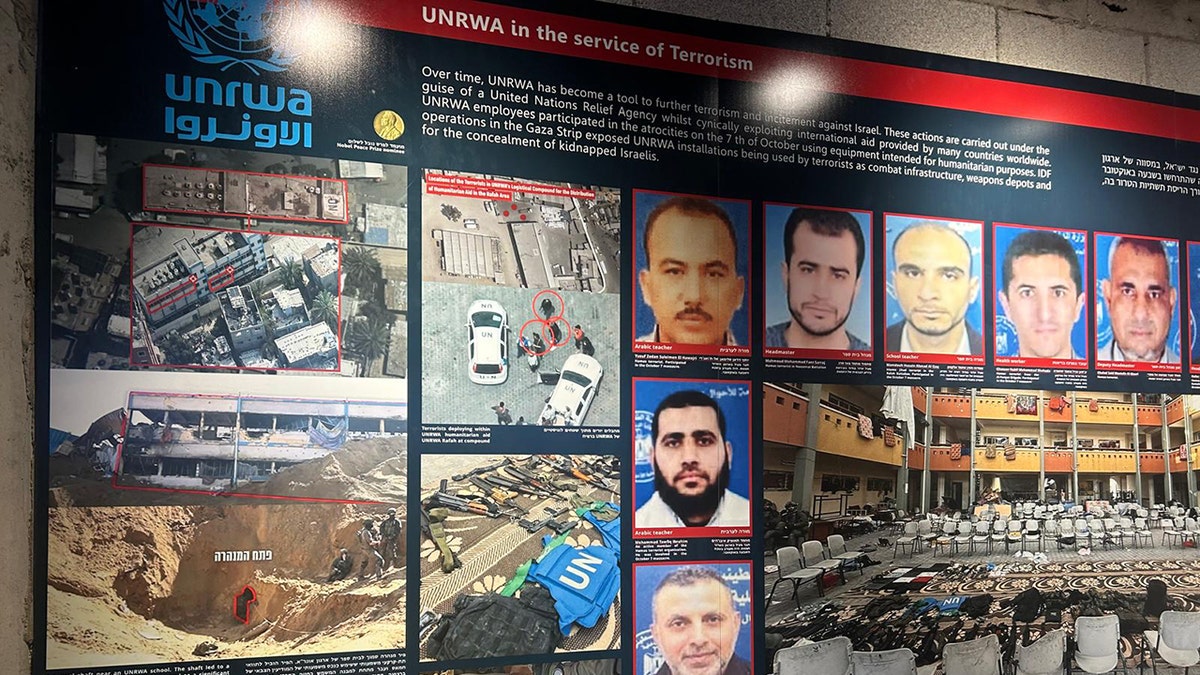
Displays featuring what organizers say are UNRWA facilities and personnel involved in terrorist activities were shown at the ‘Return to October’ exhibition in Israel. (Amelie Botbol for Fox News Digital)
Another room focuses on Hamas’s exploitation of journalists and UNRWA for terrorist purposes, featuring displays that organizers say show 60% of reporters killed in Gaza were Hamas members or affiliated with the organization, a photograph of a UNRWA school allegedly used as a combat headquarters, and a map of Israel labeling towns and cities with Arabic names.
A garage-like room displays a white Toyota pickup truck and motorcycles used in the terror assault.
«We found that 153 pickup trucks and 350 motorcycles entered Israel that day. Many of these Toyotas were imported into Gaza through Ashdod Port in Israel,» Eyal said.
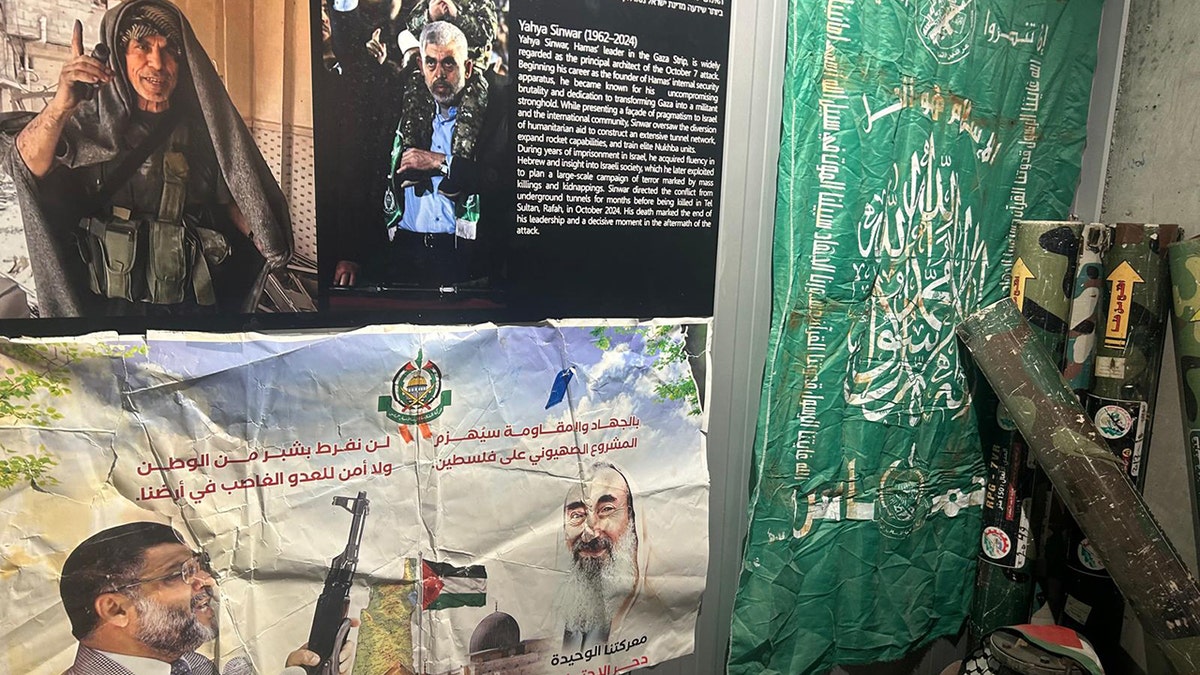
Military equipment displayed at the exhibition that organizers say belonged to former Hamas leader Yahya Sinwar was shown at the ‘Return to October’ exhibition in Israel. (Amelie Botbol for Fox News Digital.)
Another room shows excerpts from the IDF’s 47-minute compilation of raw footage from the attacks. Many journalists chose not to watch because of the graphic content, while some who remained in the room left in tears.
Toward the end, a corridor displays the names and photographs, in alphabetical order, of the 1,224 people killed during the attacks, including soldiers, police officers, civilians, Jews, Arabs, Christians, and Druze.
CLICK HERE TO DOWNLOAD THE FOX NEWS APP
«When we fail in our mission, this is the situation we arrive at,» Eyal said.
The final room features footage of Israeli hostages reuniting with their families and concludes with an optimistic painting depicting a flourishing southern Israel.
anti semitism, iran, war with iran, terrorism, israel
INTERNACIONAL
El FBI captura a uno de sus fugitivos más buscados por un fraude de USD 547 millones contra Medicare
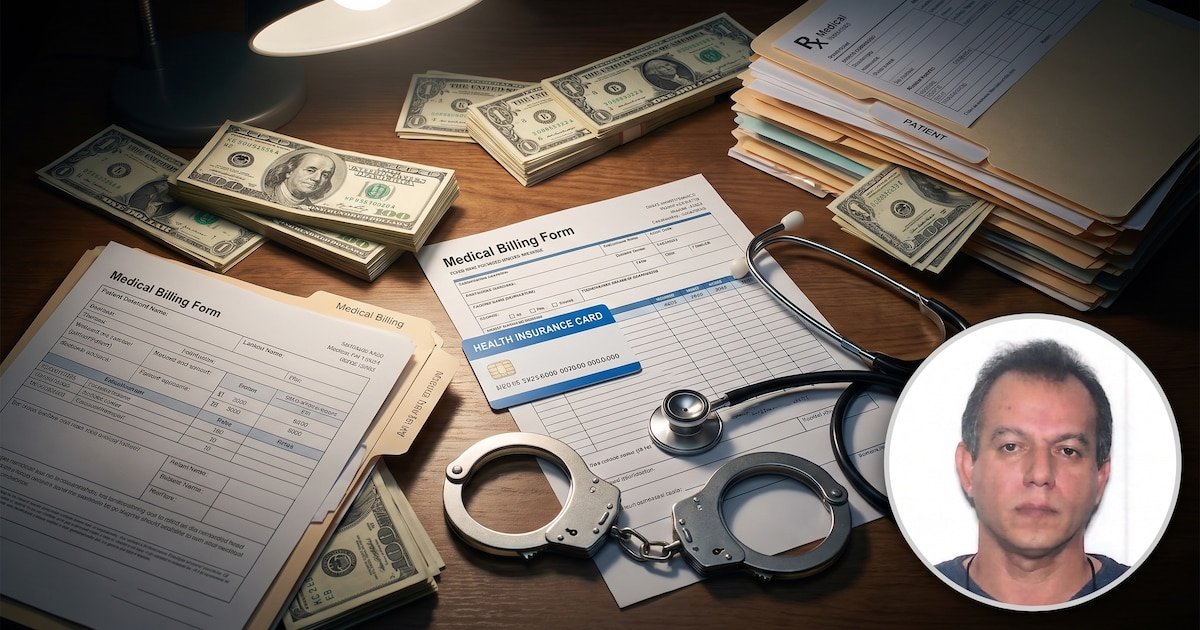
Las autoridades federales de Estados Unidos confirmaron la captura de Khalid Ahmed Satary, presunto responsable de un fraude al sistema de salud que ocasionó pérdidas superiores a 547 millones de dólares. El operativo, realizado el 20 de julio de 2026, implicó la cooperación de agencias estadounidenses y socios internacionales, y afecta directamente a beneficiarios del programa Medicare.
De acuerdo con el Departamento de Justicia de Estados Unidos (DOJ) y el Buró Federal de Investigaciones (FBI), Satary, de 54 años, fue localizado en Medio Oriente y extraditado a Estados Unidos, donde compareció ante la Corte del Distrito Este de Virginia. Las autoridades federales señalaron que Satary habría estructurado una red de laboratorios de diagnóstico para facturar pruebas genéticas innecesarias, perjudicando los fondos federales destinados a la atención sanitaria de adultos mayores.
Según el DOJ, la investigación formal inició en 2019 tras la detección de un esquema de facturación irregular en el Distrito Este de Luisiana. El FBI explicó que la red, bajo el liderazgo de Satary, utilizó telemarketing, captación de pacientes y pagos de sobornos a médicos y reclutadores con el objetivo de presentar servicios no justificados ante Medicare.
Khalid Ahmed Satary es un empresario de 54 años, identificado por el FBI como el principal organizador de un fraude sanitario que operó entre 2016 y 2019 en distintos estados de Estados Unidos. Satary figuraba desde 2019 en la lista de los más buscados del FBI, acusado de conspiración para cometer fraude al sistema de salud, fraude electrónico, lavado de dinero y pago de sobornos.
La búsqueda internacional se activó en noviembre de 2022, cuando Satary violó las condiciones de su libertad bajo fianza y abandonó Estados Unidos utilizando documentos falsos. El FBI informó que el acusado mantuvo vínculos con ciudades como Houston, Atlanta y Delray Beach, además de registrar movimientos en Dubái, Jordania y la región de Israel/Palestina.
El DOJ precisó que Satary utilizaba identidades falsas y documentos apócrifos para eludir la acción judicial. Tras una colaboración con autoridades de Medio Oriente, fue detenido el 20 de julio de 2026 y trasladado a Virginia, donde enfrenta cargos federales. El FBI resaltó que la captura de Satary constituye el tercer arresto relevante dentro de su iniciativa “Most Wanted Fraudsters” en las últimas semanas.

El Departamento de Justicia explicó que Satary gestionaba laboratorios de diagnóstico clínico en varias regiones de Estados Unidos, empleando empresas fachada y estructuras complejas para ocultar la titularidad real de los activos. La red facturó pruebas genéticas de alto costo —reembolsadas entre 10.000 y 20.000 dólares por muestra— a través de campañas de telemarketing y acuerdos con médicos y reclutadores.
Según el FBI, la modalidad consistía en captar a miles de beneficiarios de Medicare, principalmente adultos mayores, que accedían a pruebas genéticas sin necesidad médica. El DOJ reportó que el fraude ocasionó un gasto indebido de más de 547 millones de dólares a Medicare.
Las investigaciones oficiales revelaron que Satary y sus colaboradores pagaron millones en comisiones y sobornos a intermediarios, médicos y empresas de telemedicina, asegurando así la captación de pacientes y la facturación de servicios no autorizados.
El proceso judicial contra Khalid Ahmed Satary incluye cargos de conspiración para cometer fraude al sistema de salud, fraude electrónico, lavado de dinero, y pago y recepción de sobornos, según el DOJ. El acusado fue formalmente imputado en septiembre de 2019 por el Distrito Este de Luisiana y, tras su detención en 2026, enfrenta juicio en el Distrito Este de Virginia.
El Departamento de Justicia detalló que Satary podría recibir hasta 20 años de prisión por los delitos de mayor gravedad, además de sanciones adicionales por los cargos asociados a fraude sanitario y corrupción. Las autoridades federales embargaron cuentas bancarias y bienes inmuebles vinculados al acusado, como medida para recuperar activos y proteger los recursos públicos.
En un comunicado oficial, el director del FBI, Kash Patel, declaró: “La captura de Khalid Ahmed Satary y su traslado a Estados Unidos es el tercer arresto de la lista de ‘Most Wanted Fraudsters’ en las últimas semanas, resultado del trabajo coordinado entre agencias nacionales e internacionales”.

El fraude atribuido a Satary y su red representa uno de los casos más graves en la historia reciente de Medicare, el principal programa federal de cobertura sanitaria para personas mayores y grupos vulnerables en Estados Unidos. El DOJ estimó que miles de beneficiarios fueron afectados por la facturación de pruebas genéticas innecesarias.
Las autoridades federales informaron que la operación permitió congelar 16 cuentas bancarias y embargar propiedades, con el objetivo de recuperar parte de los fondos desviados. El FBI subrayó que la protección de los recursos públicos y la supervisión de los servicios sanitarios son prioridades institucionales.
El DOJ recomendó a los beneficiarios de Medicare revisar sus expedientes médicos y reportar cualquier irregularidad a los canales oficiales de denuncia. Asimismo, el FBI destacó la importancia de la colaboración ciudadana en la detección de fraudes y la vigilancia sobre empresas proveedoras de servicios médicos.
¿Qué medidas están tomando el Departamento de Justicia y el FBI para combatir el fraude sanitario?
El Departamento de Justicia y el FBI han intensificado las estrategias para detectar, investigar y sancionar delitos financieros en el sector salud. Según los comunicados institucionales, la colaboración internacional, el uso de tecnología avanzada y la coordinación con agencias extranjeras han sido fundamentales para localizar y capturar a fugitivos acusados de fraude.
El fiscal general adjunto del DOJ, Colin M. McDonald, afirmó: “No existe refugio para quienes buscan explotar a los estadounidenses vulnerables o los programas esenciales de salud de nuestra nación”. El FBI en Miami reiteró que la investigación sobre la red de Satary sigue abierta y que se buscan posibles cómplices y activos adicionales.
Las autoridades federales indicaron que la experiencia del caso Satary servirá para reforzar los mecanismos de control y prevención de fraudes en el sistema de salud, así como para fortalecer la transparencia y la rendición de cuentas de las entidades que operan con fondos públicos.

El DOJ y el FBI aconsejan a los usuarios de Medicare estar atentos a cualquier comunicación sospechosa, oferta de pruebas médicas sin indicación clara o cambios no autorizados en sus expedientes. Las autoridades recomiendan verificar la procedencia de los servicios y denunciar cualquier práctica irregular a través de los canales oficiales del programa.
Los organismos federales subrayan que la colaboración ciudadana es fundamental en la lucha contra el fraude sanitario. La información obtenida a través de denuncias contribuye a identificar patrones y a prevenir la repetición de esquemas similares en el futuro.
El proceso judicial contra Khalid Ahmed Satary continuará en el Distrito Este de Virginia, donde enfrenta múltiples cargos federales. El FBI y el DOJ manifestaron que la investigación permanece abierta y que se evaluarán nuevas acciones para identificar a otros responsables y recuperar activos asociados al fraude.
Las autoridades destacaron que la experiencia de este caso permitirá fortalecer los controles en la facturación de servicios médicos y mejorar la supervisión sobre entidades que reciben fondos federales. Se espera que el caso siente precedentes para futuras investigaciones y refuerce la confianza en las instituciones que protegen el sistema de salud de Estados Unidos.
fraude sanitario,expedientes médicos,billetes dólares,esposas,seguro salud,investigación
INTERNACIONAL
New report uncovers education groups’ DEI push to shape how artificial intelligence is used in classrooms

Randi Weingarten launches into wild political rant at teachers union convention
‘Fox & Friends Weekend’ hosts and Kayleigh McEnany criticize the American Federation of Teachers (AFT) for politicizing education. They highlight the union’s focus on politics during its convention rather than addressing declining national report card scores in reading and math. McEnany praises states like Mississippi and Alabama for innovative, student-focused educational approaches, contrasting them with the AFT’s alleged political agenda.
NEWYou can now listen to Fox News articles!
FIRST ON FOX: The nation’s top teacher unions and education groups are allegedly embedding diversity, equity and inclusion principles into AI guidance for classrooms as schools increasingly adopt the technology, according to a sweeping report.
The report by Defending Education, an education watchdog, examines AI guidance, model policies and training materials from the National Education Association (NEA), American Federation of Teachers (AFT) and other education groups, arguing they promote AI policies in the classroom centered on «equity» and «algorithmic bias.»
«Teachers unions and associations like the NEA and AFT at this point are nothing more than left-wing political operations funneling millions of dollars into promoting divisive DEI and gender ideologies in classrooms,» Defending Education Investigative Reporter Casey Ryan told Fox News Digital.
Ryan said the education groups are seeking «to use AI as their next frontier to reach school children in an effort to promote their worldview onto America’s next generation,» adding that they want to shape AI before it becomes widely used in classrooms.
FAR-LEFT ACTIVIST CONFERENCE AT TEACHERS UNION HQ RAISES CLASSROOM CONCERNS
A new report alleges major teacher unions and education groups are promoting diversity, equity and inclusion principles in guidance for how artificial intelligence is used in K-12 classrooms. (iStock)
«We cannot allow that to happen,» he said. «It is imperative that concerned parents and families speak up now to ensure that the integration of AI into our schools benefits all students, rather than serve as another tool to enforce a problematic agenda.»
According to the report, «algorithmic bias» is the belief that AI reflects the views of its creators, often «white or Asian men,» prompting education groups to promote «equity» in AI used in classrooms to «ensure that students receive politicized answers and receive a politicized education.»
«The integration of AI into education is not a matter of if but when,» the report said.
Researchers found the American Federation of Teachers (AFT), which represents more than 1.8 million members, launched the National Academy for AI Instruction, a $23 million initiative with Microsoft, OpenAI and Anthropic that the report said is designed to establish AI «guardrails» for educators.
AI CHATBOTS TAKE HEAT OVER LEFT-WING BIAS: ‘NO LONGER BE CONSIDERED NEUTRAL’
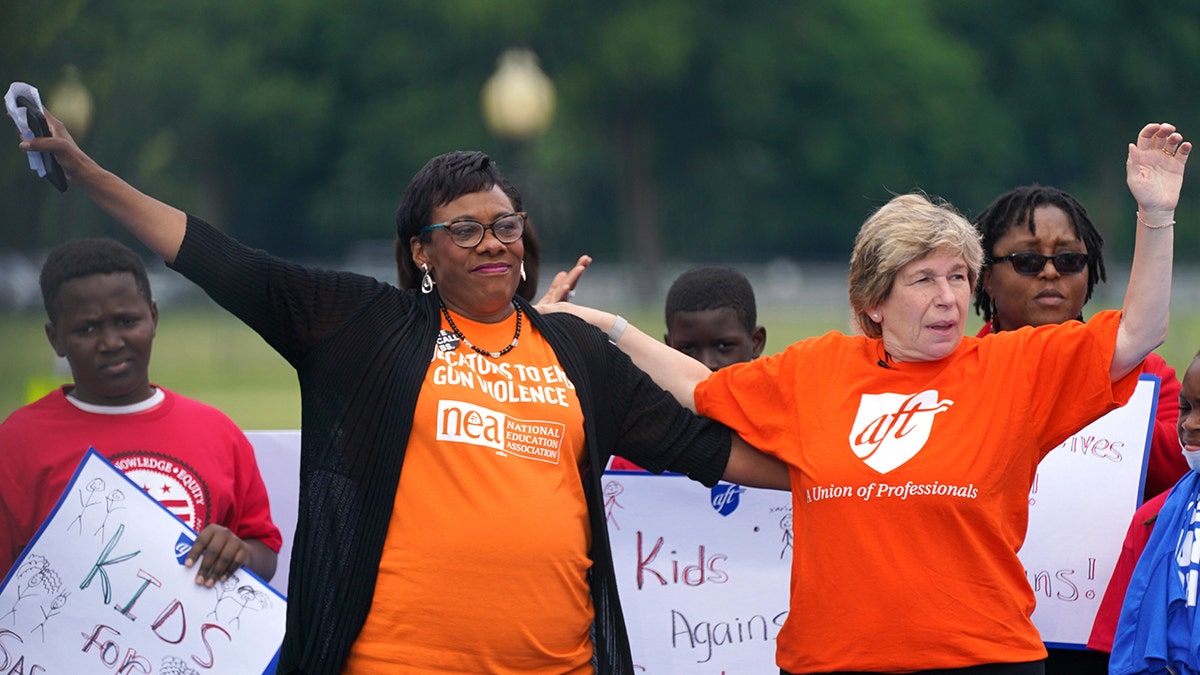
Presidents of the nation’s two largest teachers unions pictured above, Becky Pringle (LEFT) of the National Education Association (NEA), and Randi Weingarten (RIGHT) of the American Federation of Teachers (AFT). (Leigh Vogel/Getty Images for March For Our Lives)
«These are three of the largest corporations building AI that are used on a global scale and are the AI programs already used by many school districts,» the report said.
According to the report, a 2025 AFT resolution warned that AI «has the potential to help personalize instruction, reduce administrative burden and make learning more engaging, but without proper guardrails it can perpetuate bias, invade privacy, and undermine educational equity, job security and the professional judgment of educators.»
«This program is imbued with the idea from AFT’s resolution that ‘bias’ and ‘equity’ are issues within AI in schools,» the report said.
Researchers examined the NEA’s AI in Education Hub, which the union says is «grounded in equity, ethics, and educator voice,» along with a model policy requiring AI vendors to meet standards for «transparency, equity, and ethical decision-making» and undergo audits for «algorithmic bias.»
STUDY FINDS MORE AI PRAISE FOR BLACK STUDENTS, SOFTER TREATMENT OF FEMALES
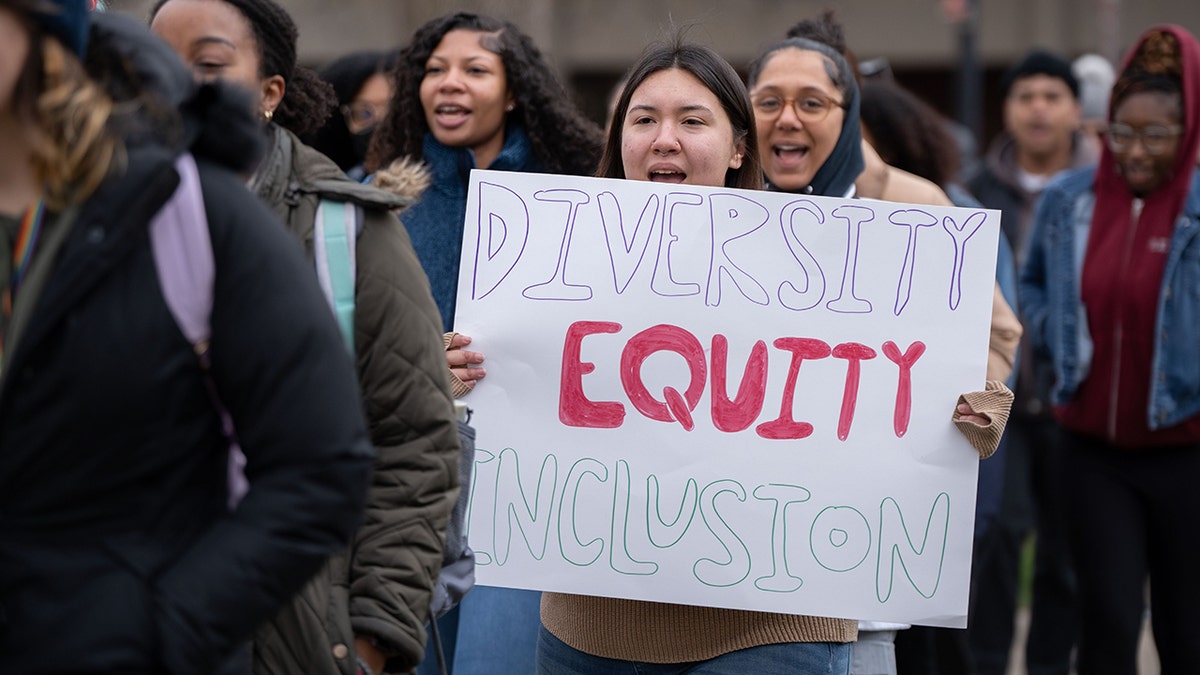
University of Louisville students held a rally in support of diversity, equity, and inclusion (DEI) on their campus in March 2024. (Clare Grant/Courier Journal / USA TODAY NETWORK / USA TODAY NETWORK via Imagn Images)
The report highlights the California Teachers Association’s (CTA) role in developing state AI guidance for K-12 schools that recommends educators «approach AI with an equity lens» while addressing concerns about «equity, bias, and access,» and describes AI education as a way to address «systemic bias.»
The report also cites articles published by the American Association of School Administrators discussing AI’s ties to «white males» and the «New Jim Code.»
The National Association of Elementary School Principals (NAESP) published an article encouraging schools to ask AI vendors how they address «algorithmic biases,» while the National Association of Secondary School Principals (NASSP) said AI tools should «advance and do not undermine equity,» according to the report.
CLICK HERE TO DOWNLOAD THE FOX NEWS APP
«The goal of these organizations is to embed DEI into AI tools to ensure that students receive politicized answers and receive a politicized education in the nation’s classrooms,» the report said.
Fox News Digital reached out to the AFT, NEA, CTA, AASA, NAESP and NASSP for comment.
education, teachers, dei, artificial intelligence newsletter, politics

Dólar hoy en vivo: a cuánto se negocian todas las cotizaciones minuto a minuto este miércoles 22 de julio

El embajador argentino en España rechazó la existencia de una supuesta campaña antiargentina: “Somos dos países hermanos”

“Ya es la cuarta vez que salís”: el gesto de Scaloni con los vecinos de Pujato que se congregaron en la puerta de la casa de sus padres

Israel’s new exhibit exposes years of Hamas terrorist planning before Oct 7 massacre

El FBI captura a uno de sus fugitivos más buscados por un fraude de USD 547 millones contra Medicare

Javier Milei y sus medidas, EN VIVO: el Gobierno presenta hoy los cambios en el proyecto de Inocencia Fiscal

Sin la Copa y sin Messi en el avión, vuelve Tapia y deberá enfrentar tres frentes de tormenta tras la pausa del Mundial

Estados Unidos cambia una regla histórica del jugo de naranja vigente desde 1963 y afecta a toda la industria

Le ganan a la inflación: los senadores pasarán a cobrar $12 millones brutos a partir de agosto

Samuel L. Jackson llamó a Argentina “el país más racista del mundo”: la contundente respuesta que le dejó Bárbara Lombardo

 POLITICA2 días ago
Sin la Copa y sin Messi en el avión, vuelve Tapia y deberá enfrentar tres frentes de tormenta tras la pausa del Mundial
- POLITICA2 días ago
Le ganan a la inflación: los senadores pasarán a cobrar $12 millones brutos a partir de agosto
- CHIMENTOS2 días ago
Samuel L. Jackson llamó a Argentina “el país más racista del mundo”: la contundente respuesta que le dejó Bárbara Lombardo