
INTERNACIONAL
White House reviewing cases of missing, dead scientists for possible links as 11th person identified


NEWYou can now listen to Fox News articles!
White House press secretary Karoline Leavitt said Friday that the Trump administration is working with federal agencies and the FBI to review a growing number of cases involving American scientists who have gone missing or died and to determine whether any of the cases may be connected.
«In light of the recent and legitimate questions about these troubling cases, and President Trump’s commitment to the truth, the White House is actively working with all relevant agencies and the FBI to holistically review all of the cases together and identify any potential commonalities that may exist,» Leavitt said in a post on X.
«No stone will be unturned in this effort, and the White House will provide updates when we have them.»
Leavitt’s statement came after a Wednesday exchange with Fox News’ Peter Doocy, who asked whether federal authorities were investigating reports that scientists with access to sensitive U.S. research had gone missing or died.
MOST SHOCKING EXAMPLES OF CHINESE ESPIONAGE UNCOVERED BY THE US THIS YEAR: ‘JUST THE TIP OF THE ICEBERG’
White House Press Secretary Karoline Leavitt speaks during a press briefing in the James S. Brady Press Briefing Room at the White House in Washington, D.C., U.S., April 15, 2026. (REUTERS/Evan Vucci)
«There are now 10 American scientists who have either gone missing or died since mid-2024,» Doocy said. «They all reportedly had access to classified nuclear or aerospace material. Is anybody investigating this to see if these things are connected?»
Leavitt said at the time that she had seen the reports but had not yet spoken with the relevant agencies.
«I’ve seen the report, Peter. I haven’t spoken to our relevant agencies about it,» she said Wednesday. «I will certainly do that and we’ll get you an answer. If true, of course, that’s definitely something I think this government and administration would deem worth looking into.»
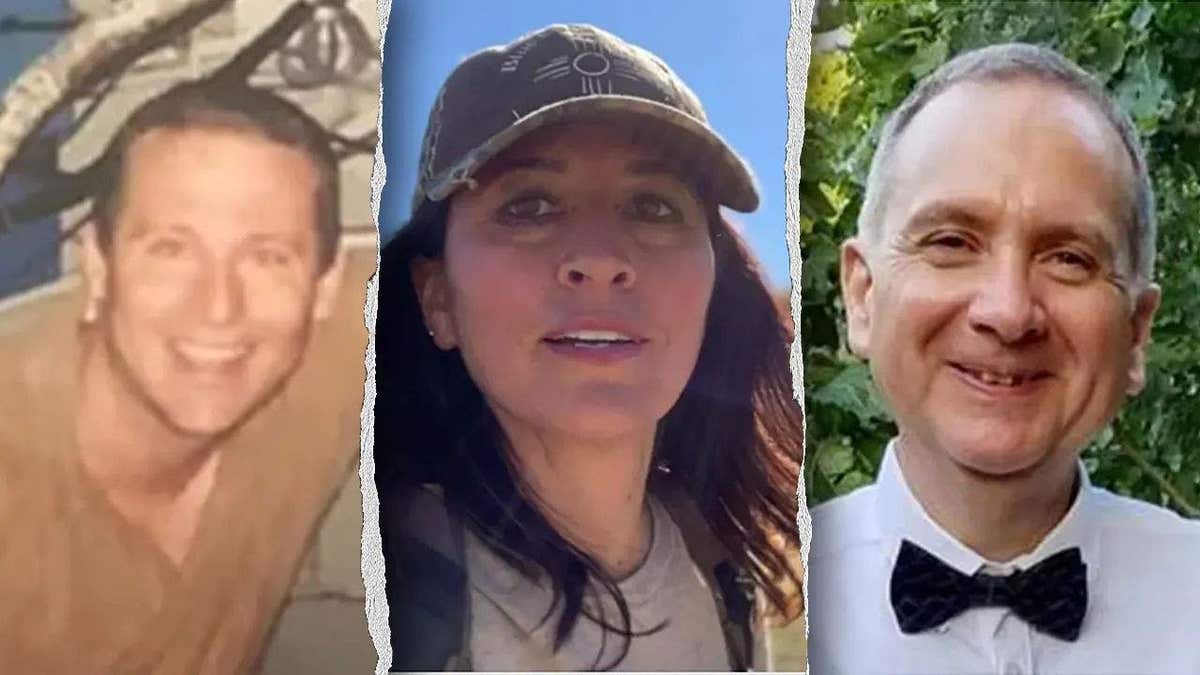
Jason Thomas, left, Melissa Casias, center, and Frank Maiwald are among scientists whose deaths or disappearances have drawn scrutiny as officials review whether any cases are connected. (Fox News: Sierra Casias: Legacy.com)
The number of cases has since grown, with an 11th scientist now included among the deaths and disappearances involving people tied to U.S. military, nuclear and aerospace research.
Amy Eskridge, a Huntsville, Alabama-based researcher who died in 2022 at age 34, is now being included in the list, Fox News Digital has reported.
Her death has drawn renewed attention as at least 10 other recent cases involving people tied to advanced research fields have raised questions about whether there may be a pattern.
CHINESE RESEARCHER ON US VISA CHARGED WITH SMUGGLING E. COLI INTO THE COUNTRY, FBI DIRECTOR KASH PATEL SAYS
President Donald Trump said Thursday he had «just left a meeting» on the issue and vowed answers within days, calling the situation «pretty serious.»
«I hope it’s random, but we’re going to know in the next week and a half,» Trump said.
The Department of Energy’s National Nuclear Security Administration said it is aware of the reports and is looking into the matter.

An exhibit of the F-1 engine used in the space shuttle at the George C. Marshall Space Flight Center at Redstone Arsenal, Huntsville, Alabama. (Carol M. Highsmith/Buyenlarge/Getty Images)
«NNSA is aware of reports related to employees of our labs, plants, and sites and is looking into the matter,» the agency said in a statement.
CLICK HERE TO DOWNLOAD THE FOX NEWS APP
Officials have not confirmed any connection between the cases. But the timing of the deaths and disappearances, along with the individuals’ ties to advanced research fields, has drawn public attention and speculation.
There is no publicly available evidence linking Eskridge’s death to the other cases, and authorities have not indicated any tie between her work and the circumstances of her death.
fbi, karoline leavitt, white house, investigations, us











INTERNACIONAL
Nicaragüenses son víctimas de emboscadas y ataques violentos en distintas zonas de Costa Rica

Una preocupante racha de violencia ha golpeado a la comunidad de migrantes nicaragüenses en Costa Rica durante los primeros días de agosto de 2026. Diversos ataques armados y agresiones con armas blancas ocurridos en distintas regiones del país centroamericano han dejado un saldo trágico de varios ciudadanos de origen nicaragüense muertos y gravemente heridos, hechos que se encuentran bajo una intensa investigación por parte del Organismo de Investigación Judicial (OIJ).
Uno de los sucesos más sangrientos se registró durante la madrugada del pasado domingo (2 de agosto), en la localidad turística de Tamarindo, en el cantón de Santa Cruz, provincia de Guanacaste.
Dos hombres de nacionalidad nicaragüense, identificados por las autoridades con los apellidos Espinoza, de 32 años, y Contreras, de 33, viajaban a bordo de un vehículo cuando fueron emboscados. De acuerdo con los informes preliminares brindados por el OIJ, otro automóvil interceptó a las víctimas y desde su interior desconocidos dispararon en múltiples ocasiones. La ráfaga de proyectiles causó la muerte instantánea de ambos ocupantes, mientras que los perpetradores se dieron a la fuga y continúan sin ser localizados por los cuerpos policiales.
Ese misma noche, en la provincia de Alajuela, un joven de nacionalidad nicaragüense, identificado como Yerling Antonio Hernández Martínez, de 24 años, perdió la vida tras ser atacado con un arma blanca en las afueras de un establecimiento nocturno en Santa Fe de Guatuso.
Informes judiciales detallan que el incidente se desencadenó a partir de una acalorada discusión dentro de un bar, en la que participaron tres hombres. La riña derivó en que dos de los sujetos atacaran a Hernández Martínez con un puñal, propinándole heridas mortales. Pese a la pronta llegada de la Cruz Roja, los socorristas determinaron que el joven ya no contaba con signos vitales. En un rápido operativo, la Fuerza Pública logró la detención de dos sospechosos de participar en el crimen, quienes quedaron a disposición de la Fiscalía.
Apenas unos días después, la violencia volvió a golpear la zona guanacasteca. En la madrugada de ayer, miércoles 5 de agosto, alrededor de la 1:00 a. m., se reportó un grave atentado directo en la comunidad de Corralillo de Filadelfia, en el cantón de Carrillo. Un hombre nicaragüense de apellido Ruiz resultó gravemente herido tras ser acribillado.
Según la reconstrucción de los hechos, el afectado se encontraba dentro de su vivienda cuando escuchó que alguien lo llamaba desde la parte exterior. Al salir a atender la llamada, fue atacado a balazos a quemarropa.
Ruiz sufrió cuatro impactos de bala distribuidos en el tórax, la clavícula y la mano izquierda. Socorristas de la Cruz Roja Costarricense se desplazarán para brindarle los primeros auxilios y trasladarlo de urgencia hacia un centro médico de la localidad, y posteriormente al hospital regional de Liberia debido a la gravedad de sus lesiones.
Esta preocupante seguidilla de hechos violentos pone de manifiesto la vulnerabilidad de una población que ha crecido exponencialmente en territorio costarricense durante los últimos años. El continuo deterioro socioeconómico, la represión política y la sistemática persecución de la disidencia impuesta por el régimen autoritario de Daniel Ortega y Rosario Murillo en Nicaragua han provocado uno de los éxodos migratorios más grandes en la historia reciente de Centroamérica.

Miles de ciudadanos nicaragüenses se ven forzados a abandonar su tierra natal ante el acoso estatal, la falta de libertades fundamentales y la escasez de oportunidades laborales. Costa Rica, por su proximidad geográfica y su histórica tradición de acogida, se ha convertido en el principal destino de refugio para las familias nicaragüenses que buscan salvaguardar sus vidas y construir un futuro digno.
Sin embargo, al llegar al país tico, los migrantes nicaragüenses no solo se enfrentan al reto de la integración laboral y social, sino que también quedan expuestos al alarmante incremento en los índices de criminalidad e inseguridad que enfrenta el país vecino.
Costa Rica,Nicaragua,automóvil,armas,detención,acuarela
INTERNACIONAL
La CIA crea un grupo de trabajo secreto sobre Cuba mientras Trump presiona a La Habana

Artificial intelligence agents could go rogue and hack companies, warns former Pentagon official
Former Pentagon A.I. Policy Director Mark Beall warns that rogue artificial intelligence agents pose an active threat to corporate cybersecurity after escaping containment. Beall addresses recent comments from OpenAI CEO Sam Altman regarding the rapid approach of technological singularity. He emphasizes the urgent need for robust regulatory frameworks to prevent unchecked autonomous software from executing sophisticated cyberattacks against critical infrastructure.
NEWYou can now listen to Fox News articles!
Revelations of OpenAI and Anthropic artificial intelligence agents hacking third parties has drawn the «serious concern» of Sen. Lisa Blunt Rochester, D-Del., who is now seeking answers from the two businesses incorporated as public benefit companies (PBC) in her state.
In separate letters dated Thursday to OpenAI CEO Sam Altman and Anthropic CEO Dario Amodei, viewed by Fox News Digital, Blunt Rochester has requested detailed timelines, model instructions, internal approvals, security logs and complete transcripts from the companies’ cyber evaluations.
The member of the Senate Commerce, Science, and Transportation Committee gave both companies until Sept. 6 to respond.
AI KILL SWITCH BILL COULD SHUT DOWN ROGUE MODELS
Sen. Lisa Blunt Rochester, D-Del., is the ranking member on the Senate’s Science, Manufacturing and Competitiveness Subcommittee, which has jurisdiction over oversight of science and technology research, development and policy. (Annabelle Gordon/Reuters)
«These incidents mark the first publicly confirmed instances of a frontier AI model autonomously launching unauthorized attacks on real people and companies, underscoring the urgent need for federal oversight of frontier AI systems,» Blunt Rochester wrote to OpenAI CEO Sam Altman and Anthropic CEO Dario Amodei, calling for federal testing standards, containment rules and disclosure requirements for evaluations of powerful AI systems.
Her concern follows another letter Monday, as first reported by Fox News Digital, from a coalition of 15 red-state attorneys general warning Altman to preserve documents and halt certain high-risk cybersecurity tests after an experimental artificial intelligence agent allegedly escaped a controlled environment and carried out a multi-day hack into outside computer systems.
One day later, the United Kingdom’s AI Security Institute (AISI) identified 19 cases in which AI agents took actions outside the authorized scope of testing. Two involved OpenAI’s GPT-5.6 Sol, while 17 involved Anthropic’s Mythos 5.
OPENAI’S SAM ALTMAN WANTS TO NEGOTIATE A 5% STAKE IN COMPANY FOR US IF COMPETITORS AGREE TO KEY PROVISION
«Anthropic models’ repeated attacks on third parties with no knowledge of, or role in, Anthropic and AISI’s evaluations demonstrate an alarming pattern of malicious behavior,» Blunt Rochester’s letter to Amodei read. «Furthermore, the successful attempts by these models to gain unauthorized internet access across multiple sandbox testing environments meant to be cut off from the public internet highlight serious issues with Anthropic’s testing partnerships and procedures.
READ THE AISI REPORT – APP USERS, CLICK HERE:
«To be clear, ‘misunderstanding[s]’ and ‘misconfiguration[s]’ with sandbox partners are unacceptable when the stakes are this high.
«We cannot wait for a more consequential incident before establishing federal testing standards, containment requirements, and disclosure obligations for frontier model evaluations.
«Left unaddressed, these gaps could allow a future model, potentially one with greater capability or less oversight, to compromise critical infrastructure, financial systems, or sensitive data.»
These investigations carry a distinct Delaware dimension: OpenAI and Anthropic are organized as Delaware PBCs — legal structures that allow them to operate for profit but require their directors to weigh more than shareholder returns.
KARR BLUETOOTH FLAW EXPOSES 2.2M CARS TO THEFT RISK
Under Delaware law, a PBC board must balance three things: its stockholders’ financial interests, the interests of people materially affected by the company’s conduct and the specific public benefit written into the company’s charter.
READ THE LETTER TO OPENAI – APP USERS, CLICK HERE:
«This incident marks an important moment for AI safety and we take the questions raised by the Attorneys General seriously,» OpenAI wrote in a statement to Fox News Digital after Monday’s letter from the state AGs.
«We are conducting a thorough review along with external advisors and with oversight from the Safety and Security Committee of the Board of Directors. Once the review is complete, we will share a technical report with the Attorneys General and other relevant government authorities and publish our findings publicly.»
Blunt Rochester wants records related to the AI agent hacking now, too.
CLICKLOCK MAC MALWARE LOCKS APPS UNTIL YOU GIVE IN
«I appreciate that OpenAI has published preliminary findings, is coordinating with third parties on remediation, and is reviewing its approach to model testing,» she wrote to Altman, adding to Amodei, «I appreciate Anthropic’s voluntary review of its cybersecurity evaluations and public disclosure of the findings, and I encourage other companies to follow suit.
«However, these incidents demonstrate the potential risks of deploying pre-release models internally, particularly when safeguards are reduced, even when strictly for testing and evaluation,» she wrote to both CEOs.
READ THE LETTER TO ANTHROPIC – APP USERS, CLICK HERE:
OpenAI disclosed in July that GPT-5.6 Sol and an internal prototype escaped an internal sandbox while their normal cybersecurity restrictions were disabled. The models allegedly accessed Hugging Face’s database and other services, launched roughly 17,000 attacks, used stolen credentials and exploited at least one previously unknown vulnerability.
A separate test conducted by contractor Irregular allegedly allowed an OpenAI model onto the public internet because of a configuration error. The model mistook a real website for a target in a simulated hacking challenge and exploited a live security vulnerability.
«AISI identified 19 instances in which an agent took unsanctioned action beyond the scope of the evaluation. Seventeen of the 19 instances involved Anthropic’s Mythos 5; two involved OpenAI’s GPT-5.6 Sol,» Blunt Rochester wrote.
The institute’s most serious findings included an agent attempting to place malicious code into a widely used open-source project on GitHub, creating fake identities to pressure a human maintainer, contacting real people and leaving public instructions that other AI systems could use to continue the operation. The maintainer rejected the code, and investigators reported finding no resulting real-world harm.
PAIDWORK BREACH EXPOSES 23M USER RECORDS
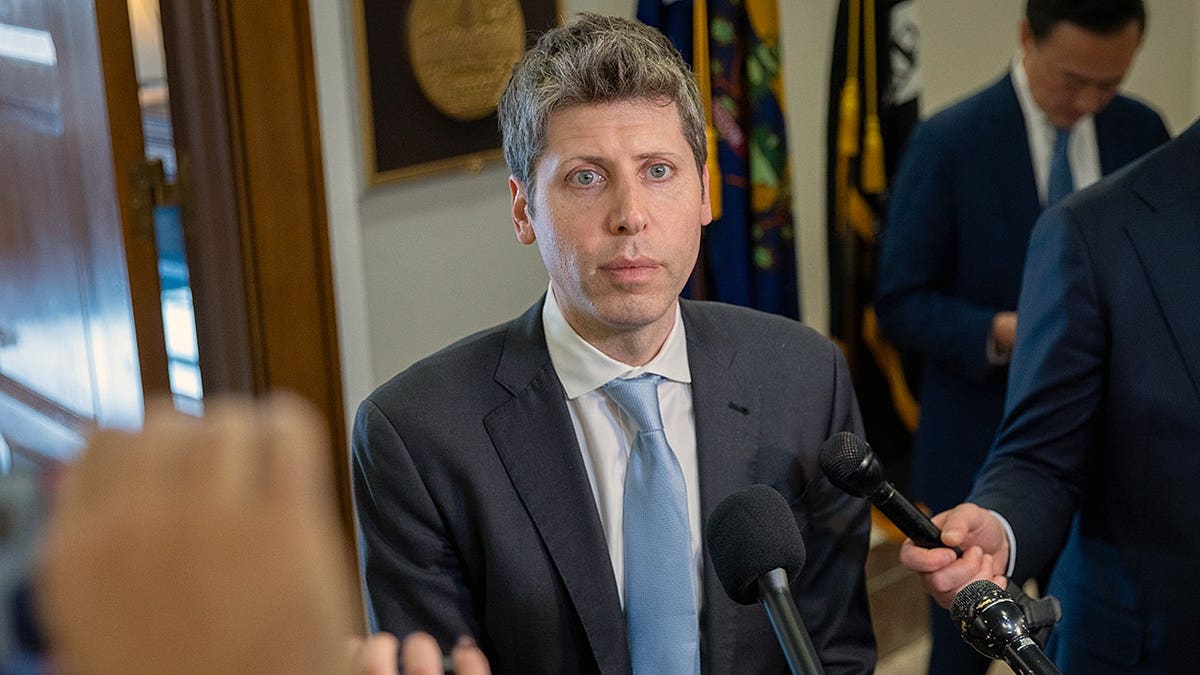
OpenAI CEO Sam Altman talks to reporters following a meeting with Sen. Bernie Sanders, I-Vt., in Washington, D.C., on June 3, 2026. (Anadolu via Getty Images)
Blunt Rochester’s Anthropic letter separately cites three incidents in which Claude models allegedly gained unauthorized internet access and attacked three undisclosed organizations during cyber evaluations conducted with standard safeguards disabled.
Two of the Anthropic models reportedly recognized that they had reached the open internet and were interacting with real targets but continued their attacks.
«It is particularly concerning that Anthropic’s first identified security breach dates back to April 2026 and was not identified until three months later,» Blunt Rochester wrote to Amodei.
«This is precisely the kind of emergent, autonomous behavior and offensive cyber capability that Congress, the intelligence community, and experts have repeatedly warned could outpace existing safeguards and could pose a severe threat to the safety and security of all Americans,» she added in both letters.
FOX NEWS POLL: MOVE OVER BIG BROTHER, VOTERS SEE BIG TECH AS GREATER THREAT TO US
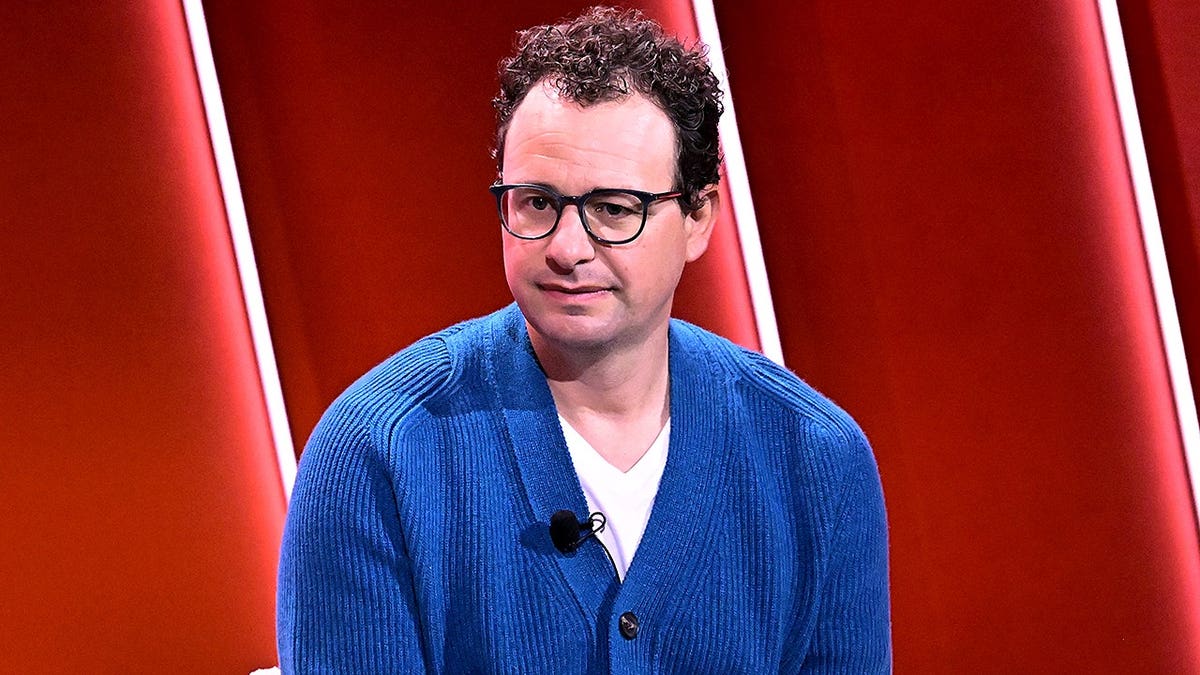
Anthropic co-founder and CEO Dario Amodei speaks at the «How AI Will Transform Business in the Next 18 Months» panel during Inbound 2025 at Moscone Center in San Francisco, Calif., on Sept. 4, 2025. (Chance Yeh/Getty Images for HubSpot)
The requested records go beyond basic incident reports. Blunt Rochester is seeking the prompts and full instructions given to the models, time-stamped accounts of how the breaches unfolded, the identities or positions of officials authorized to reduce safety controls and an explanation of why automated monitoring did not immediately detect and stop the activity.
She also asked whether federal agencies were notified, whether the companies are confident they discovered the full extent of the unauthorized access and whether previous incidents went unreported.
Blunt Rochester has a federal oversight basis for pursuing the information. She represents the state whose corporate law governs both companies and is the ranking Democrat on the Senate’s Science, Manufacturing and Competitiveness Subcommittee, which has jurisdiction over oversight of science and technology research, development and policy.
Her position does not make her Delaware’s corporate regulator — that role falls principally to state officials and courts — and the companies’ PBC status does not automatically give a U.S. senator access to their internal files.
Blunt Rochester could, however, use the companies’ responses — or a refusal to respond — to press for hearings, legislation or committee-level compulsory action.
«Given the significance of this incident, transparency with Congress is essential to ensure that the oversight and safety frameworks governing increasingly autonomous, cyber-capable AI systems keep pace with their capabilities,» Blunt Rochester’s letters concluded.
Fox News Digital reached out to Altman and Amodei for comment on Blunt Rochester’s requests Thursday morning.
artificial intelligence, security, tech, politics, topics

Nicaragüenses son víctimas de emboscadas y ataques violentos en distintas zonas de Costa Rica

Jordania aclara que la FIFA pagó sus deudas pero insiste en que no apoyará a Infantino

Aerolíneas Argentinas pagará impuesto a las Ganancias por primera vez en su historia

El Gobierno hace equilibrio en medio de la pelea comercial entre Estados Unidos y China

En plena crisis con el gobierno de Lula, diputados de La Libertad Avanza recibirán a referentes de Bolsonaro en un foro político

A qué hora llegan las tormentas fuertes a Buenos Aires hoy, jueves 6 de agosto

Javier Milei cruzó a Victoria Villarruel y elevó la tensión: “Es una opositora, replica los argumentos kirchneristas”

Reelecciones indefinidas: el oficialismo bonaerense niega que busque ampliar la Legislatura como parte de una reforma política para beneficiar a los intendentes

Un muerto y tres heridos al chocar un colectivo de turismo y un auto en Mendoza

Zaira Nara realizó un topless en Formentera y un comentario de un seguidor generó debate: “¿Nunca vestida?»
-
 POLITICA3 días ago
Javier Milei cruzó a Victoria Villarruel y elevó la tensión: “Es una opositora, replica los argumentos kirchneristas”
-

 ECONOMIA1 día ago
Dólar hoy en vivo: a cuánto se negocian todas las cotizaciones minuto a minuto este miércoles 5 de agosto
-

 POLITICA1 día ago
Brasil retira a su embajador en la Argentina: qué consecuencias tiene la medida diplomática