INTERNACIONAL
Spanberger’s ‘unconstitutional’ push to redefine presidential elections makes voters ‘NULL AND VOID’: critics


NEWYou can now listen to Fox News articles!
One of the Democratic Party’s rising star governors, Abigail Spanberger of Virginia, is being slammed for signing a bill to award the state’s presidential electoral votes to the winner of the national popular vote.
The bill signed by Spanberger adds Virginia to the National Popular Vote Compact, an interstate agreement between states to award the entirety of their electoral votes to the winner of the national popular vote. Virginia Republicans railed against the bill, arguing it makes the state’s votes «NULL AND VOID.»
This comes as Spanberger, who was recently selected to deliver the Democrats’ response to President Donald Trump’s State of the Union, has seen her approval ratings plummet. Critics have accused her of abandoning her centrist campaign message to advance far-left policies.
Criticisms of Spanberger erupted anew after news broke that Spanberger had approved the bill. The Virginia Republican Party posted on X that «fake Moderate Spanberger just signed a bill to render Virginians’ vote for president NULL AND VOID!»
SOROS-BACKED GROUP AMONG LIBERAL ORGS PUMPING EYE-POPPING CASH INTO VIRGINIA GERRYMANDERING EFFORT
A 4th grader works on an election-themed art project at Heather Hills Elementary School in Bowie, Md., on Oct. 22, 2024. (Tom Williams/CQ-Roll Call, Inc. via Getty Images)
The GOP said that under the bill, «all of Virginia’s Electoral College votes will go to the winner of the national popular vote — no matter who wins the popular vote in our Commonwealth.»
The party called the move «an unconstitutional assault on our democracy.»
However, Spanberger won praise from groups that oppose the Electoral College. Stand Up America, a progressive voting rights organization, hailed the move, with Executive Director Christina Harvey calling it «an important step forward for representative democracy.»
«Virginia has set another powerful example for other states of how to stand up for representative democracy even as they come under increasing pressure from the Trump administration,» said Harvey, adding, «The presidency should be won by the candidate who receives the most votes nationwide—not just the right combination of battleground states.»
She said, «this brings us one step closer to a system where Americans’ votes for President and Vice President count equally, no matter where they live.»
The National Popular Vote Interstate Compact operates on a conditional trigger that keeps the law dormant until it can guarantee a victory for the national popular vote winner. While member states pass the legislation individually, the compact only activates when the total electoral weight of all participating states reaches a majority of the Electoral College, at least 270 electoral votes.
With Virginia officially joining, the compact currently sits at 222 electoral votes, meaning it remains 48 votes short of the threshold.
SPANBERGER DENIES ‘DEAL’ WITH SWING-DISTRICT DEMOCRAT AS GERRYMANDERING CLAIMS ABOUND STATEWIDE

The Virginia State Capitol during the inauguration ceremony of Virginia Gov. Abigail Spanberger in Richmond on Jan. 17. State Democratic lawmakers have introduced more than 50 new tax or tax increases to the legislature for things like dog walking, deliveries and dry cleaning. (Kendall Warner/The Virginian-Pilot)
Until that 270-vote mark is met, the law has no effect, and member states continue to award their electors based on their own internal state results.
National Popular Vote, the organization advancing the compact, also celebrated Virginia being added, saying in a statement that the compact «will guarantee the Presidency to the candidate who receives the most popular votes in all 50 states and the District of Columbia.»
Patrick Rosenstiel, a spokesperson for National Popular Vote, told Fox News Digital he is «grateful» to Spanberger and the Virginia Legislature, saying «their support builds critical momentum for our movement to give 63 percent of American voters what they want, a national popular vote for President.»
«With Virginia’s 13 electoral votes, the National Popular Vote Compact is 48 electoral votes short of reaching the 270 required to activate it,» Rosenstiel noted, adding, «We’ll continue our state-by-state work until the candidate who wins the most popular votes is elected president and every voter is treated equally in every presidential election.»
The group noted that similar bills have been introduced in Wisconsin, Arizona, Michigan, Pennsylvania and Nevada.
Under the National Popular Vote Interstate Compact, no voter will have their vote cancelled out at the state-level because their choice differed from plurality sentiment in their state. Instead, every voter’s vote will be added directly—without distortion—into the national count for the candidate of their choice. This will ensure that every Virginia voter is relevant in presidential elections moving forward.
Spanberger has also recently been accused by former Virginia Gov. Glenn Youngkin of «illegal and unconstitutional» gerrymandering amid her push to redraw Virginia’s congressional maps.
Virginians will vote April 21 on Spanberger’s redistricting referendum, a move that Youngkin said would give Democrats 10 of the state’s 11 congressional seats.
Spanberger signed hundreds of bills passed by the majority-Democratic legislature on Monday. She also vetoed a few bills relating to unregulated skill-gaming machines and a proposed Fairfax County casino and sent back dozens with proposed amendments.
VIRGINIA DEM ADMITS REDISTRICTING PUSH AIMS TO ‘STOP TRUMP’, NOT ABOUT ‘FAIRNESS’

Virginia Gov. Abigail Spanberger responds to President Donald Trump’s, unseen, State of the Union. (Steve Helber/Reuters)
CLICK HERE TO DOWNLOAD THE FOX NEWS APP
Among the bills that Spanberger signaled support for with proposed amendments was a slate of new restrictions on gun ownership, including a ban on «assault weapons,» as well as restricting law enforcement from assisting with immigration enforcement.
Fox News Digital reached out to Spanberger’s office for comment.
democrats elections, abigail spanberger, governors, virginia, the electoral college













INTERNACIONAL
“Cuando Borges empezó a escribir ficción, decían que era poco serio”, dice la especialista que lo conoce a fondo
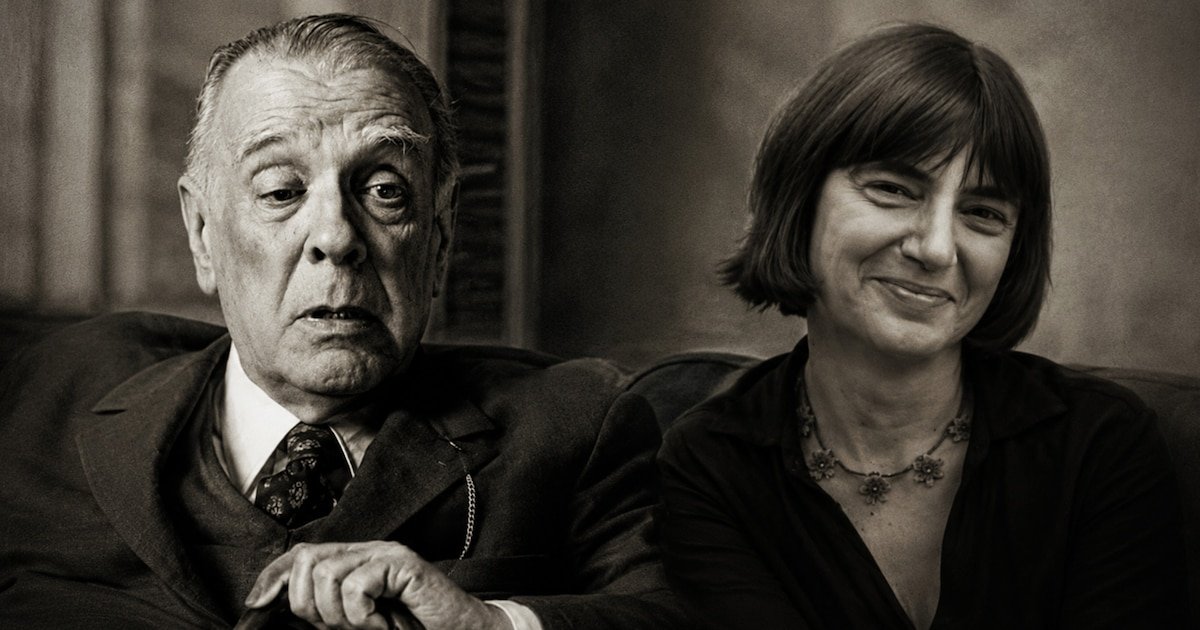
(Desde Ginebra) Algo de justicia, algo de justicia estética, hay en esto: la placa que recuerda que Jorge Luis Borges vivió en Ginebra no está en una calle principal -aunque se ve desde ella- sino en un callejón, la Ruelle du Sautier. Algo de justicia hay, también, en que esa placa no indique exactamente el lugar del departamento donde pasó sus últimos días sino que señale hacia otro lado: “En Gran Vía 28 vivió el escritor Jorge Luis Borges”, dice la placa. Y uno gira un poco la cabeza y ve ese edificio que el autor apenas habitó unos días y del que salió hace 40 años para morir. No es fácil atrapar a Borges, ni siquiera ahora, ni siquiera aquí.
Un poco de eso, de sus significados, de cómo cambió su figura, de cómo su obra se amplió después de su muerte, hablará con Infobae Annick Louis, la crítica literaria que nació en la Argentina, que trabaja en la universidad Marie et Louis Pasteur, en Francia, y que será una de las oradoras esta tarde, cuando termine el homenaje en el cementerio donde está enterrado el escritor y arranque otro, en la librería Rousseau, muy cerca de la placa desplazada y del departamento real.
Mientras por las calles de una Ginebra que tapió sus vidrieras por miedo a los destrozos transite una marcha contra el G7 -que se reúne en una ciudad cercana-, Louis hablará de un “Borges universal”. Pero acá, en la charla con Infobae, señalará que fue un escritor atento a la situación política y cómo eso se ve en sus textos, dirá que a muchos no les gustaba lo que hacía cuando empezó a escribir “esas ficciones que amamos”, mostrará que fue antifascista pero que apoyó dictaduras, pensará cómo y por qué su figura y su obra crecieron aun más después de muerto. Y pensará si hay un Borges mejor y uno peor.

—A veces da la sensación de que Borges creció en estos 40 años.
—Estoy totalmente de acuerdo. Para mí, hay dos fenómenos: cuando Borges vivía su presencia, sobre todo en Argentina, era muy mediática y muy polémica en general, porque siempre tenía salidas o comentarios que iban un poco contra lo que la gente pensaba. Entonces, era como más polémico, aunque era ya muy conocido y una figura muy popular en Buenos Aires. La gente lo reconocía; ahí tengo un artículo de diario donde un taxista cuenta que no le quiso cobrar el viaje, porque “¿cómo le voy a cobrar a Borges?» Efectivamente, cuando murió y se acabó esa presencia física y polémica en los medios, se volvió más canónico y menos discutido.
—¿Y el otro fenómeno?
—Y el otro fenómeno es que, cuando muere, empieza todo un movimiento de recuperación de sus escritos que habían sido publicados en diarios y revistas, pero no en libro necesariamente, además de los libros que él no había querido volver a publicar. Así, la obra se expandió. Creció la figura, en el sentido que se volvió más homogénea. Se olvidaron un poco las diferentes etapas de su carrera, las más discutidas, sobre todo el apoyo a las dictaduras. Y se volvió más universal y más universalmente aceptado, incluso en Argentina, porque fuera de Argentina no era muy polémico, era reconocido de manera más monumental, digamos. Pero en Argentina hasta el final era bastante polémico. Como dice Graciela Montaldo: siguió escribiendo su obra después de muerto. Porque se empezaron a recuperar todos los escritos que no habían sido publicados y la figura se volvió menos polémica y más universalmente. Y creció la obra porque tenemos más textos.
— Claro, aunque los textos centrales siguen siendo los mismos.
—Totalmente, sí. Lo que hizo la fama internacional de Borges son las ficciones. Y en realidad, en esa masa de escritos que él no había publicado, no hay realmente muchos relatos inéditos. Hay muchos ensayos, hay notas, pero relatos inéditos no.
—Pero Borges también es un ensayista. Aunque lo haga en forma de ficción, como en “Pierre Menard, autor del Quijote”
—Es una obra muy teórica desde el punto de vista de lo que postula sobre la literatura. Fuera de Argentina y de Latinoamérica, por ejemplo en Francia, se lee más como ensayos o como postulación teórica.

—En “Pierre Menard” el protagonista escribe el Quijote letra por letra aunque en el siglo XX y eso, en la lectura, lo vuelve otra obra. El punto es que para hacer un planteo teórico se mete con una obra tan central como el Quijote: es audaz.
—Tenía ese buen ojo para atacar los mitos de la literatura de la época. No por nada Pierre Menard es un autor francés, en una época en que la cultura francesa era más hegemónica, más admirada por todos sus amigos, compatriotas y colegas. Entonces, no se le ocurrió ponerle un nombre chino o inglés al personaje. Elige los “monumentos” -él los llama así- de la época y tratar de cuestionarlos a veces a través de la ficción. Y no hay que olvidar una cosa que últimamente ha vuelto a ser reivindicada, que es el humor- Es muy gracioso Borges y a veces no es fácil decir por qué es tan cómico, pero es muy cómico.
—¿En qué cosas ves que Borges es cómico, por ejemplo?
—Bueno, los textos son muy irónicos. En el mismo Pierre Menard o en La lotería en Babilonia. En los ensayos, por lo menos hasta la época del peronismo, es decir, hasta los años 50, practica una especie de ironía. A veces leés la frase y podés tomártela en sentido literal y decís: “Ah, le está rindiendo homenaje a a este escritor”. Por ejemplo, Martínez Estrada. Y también la podés leer como una ironía y decir: “Lo está destrozando”. Muchas veces la gente se lo toma en serio y dice: “Habla bien de Martínez Estrada”. No, no habla bien de Martínez Estrada, en realidad habla mal de Martínez Estrada.
—Pero indirectamente.
—Lo hacía de una manera que, supongo, también tenía que ver con evitar confrontaciones muy directas en el ambiente, porque hay que pensar que en todos los años 30, 40, el mundo intelectual y literario argentino era muy pequeño. Él no tiene todavía una salida internacional. Y, en realidad, los cuentos son muy irónicos y tienen mucho humor. La lotería en Babilonia, por ejemplo. Es muy difícil saber por qué es tan gracioso, pero es realmente muy gracioso. Éste es uno de los aspectos que en las traducciones fue más borrado. Por ejemplo, en las primeras traducciones francesas no queda nada de ese humor ni de esa ironía.

—¿Ha cambiado en estos años la lectura que hacemos de Borges? ¿Hace veinte años hubiéramos dicho otras cosas?
—Sí, yo diría que en dos aspectos sobre todo. Bueno, el humor, como decíamos, pero lo más importante es que la recuperación de todos esos textos lo que puso en evidencia es la relación muy fuerte que él tenía con todo lo argentino, que era un aspecto muy ignorado. Se lo acusó muchas veces de ser un escritor inglés, de ser un apátrida, de darle la espalda a la cultura argentina, en particular por su antiperonismo. Y, entonces, lo que se recuperó fue un Borges más vinculado a lo nacional, metido en las pequeñas disputas internas, en las pequeñas batallas del medio intelectual, pero también un poco en lo social. En los ensayos y en las notas se ve muy claramente cómo alude a lo contextual. Es decir que ahora existe esa idea de que es un escritor universal, pero muy vinculado también a lo nacional.
—Algo que no se pensaba antes.
—Su imagen, su fama se construyó sobre la idea opuesta, sobre la idea de que él era un escritor latinoamericano, pero en el cual no había rastros del contexto latinoamericano.
—Hablaste de dos aspectos. ¿Cuál es el segundo?
—El otro aspecto es que en los años 60 y 70 la literatura de Borges era considerada como literatura de imaginación. Y la literatura de imaginación se veía como una literatura de evasión, es decir, como una literatura que no hablaba de la realidad contemporánea. Y hoy la crítica piensa que la literatura de imaginación también dice algo sobre lo real. Eso también llevó a recuperar otras zonas y otros aspectos de la obra de Borges que habían sido dejados de lado por la crítica y también por los lectores, que hoy cuando descubren a Borges lo ven de otro modo.
—¿En qué textos habla de lo real?
—Por ejemplo, en los textos que escribe durante la Segunda Guerra Mundial. Hay solo dos cuentos que hablan directamente de la Segunda Guerra Mundial, que son El milagro secreto y Deutsche Requiem. Pero en Tlön Uqbar Orbis Tertius, todo el texto tiene que ver con las teorías del complot, que están en la época muy en boga y de las sociedades secretas y que por supuesto tienen que ver con el nazismo y cómo el nazismo veía la cultura. Y todo el texto plantea esa cuestión de que hay dos grupos, un “nosotros” y un “ellos”, y esto son también tiene que ver con el nazismo; nosotros los arios, los otros, los que hay que matar, son los no arios, los judíos, etcétera. Esta es la idea de Borges: trabajar con estructuras de época y no con lo referencial directamente. Hay cosas que se pudden ver también en El tema del traidor y del héroe o en La forma de la espada. Que están escritos durante la Segunda Guerra Mundial. Y bueno, cuando uno ve el contexto, una de las temáticas más frecuentadas por el cine hollywoodense, por ejemplo, pero también la literatura, era justamente esta idea del héroe, qué es un héroe, qué es un traidor. Él retrabaja esas ideas y en El tema del traidor y del héroe elige Irlanda. E el corazón de los aliados ve la parte más oscura. Es decir, la capacidad para no plantear el mundo en términos así como blanco y negro.
—Hay que poder verlo…
—Sí, hay un gesto voluntario de no hablar directamente de lo referencial. Es algo que él rechaza muy claramente, eso de no decir directamente “yo soy antinazi”, sino bueno, trabajar las estructuras que están como detrás de la apariencia de lo que nosotros vemos como organización política. Y trabaja mucho también sobre la cuestión, pero eso ya desde el comienzo de los 30, de la politización del nacionalismo, eso de que sentir que la casa de uno es la mejor o que uno quiera más a su país es natural, pero politizar esto y volverlo un arma contra otros es una cuestión que también aparece en varios de los textos.
—Vos tenés un libro sobre esto, “Borges ante el fascismo”…
— Sí, trabajé los ensayos de la época y las ficciones. La muerte y la brújula también es un texto muy interesante porque lo que plantea ahí es toda la cuestión del enigma y el desciframiento del enigma y quién está detrás de la creación de un enigma. O El jardín de senderos que se bifurcan. En la época es un texto fundamental, porque ahí está justamente esa idea de qué es una nación, qué es el sentimiento del nacionalismo. Y ahí aparece la cuestión de la raza también, porque el personaje dice eso de que quiere mostrarle al Kaiser alemán que alguien de su raza puede salvar al mundo. Y es una época en que él trabaja mucho con el cine más hollywoodense, más popular. Está lleno de películas en la época sobre espías, sobre la Primera Guerra Mundial, ese tipo de estructura sobre alguien que traiciona. Y también trabaja con lo que vemos todos en Casablanca: la conversión narrativa, es decir, el hecho que seguimos a un héroe que al principio no está convencido de ser antifascista y se va convirtiendo al antifascismo.
—Nosotros también hicimos un esfuerzo de recuperación un poco de un Borges antidictadura. Tomamos su fimra en una solicitada de las Madres de Plaza de Mayo, o su asistencia al Juicio a las Juntas… Como si hubiera que “salvarlo” de sus posiciones anteriores.
— Sí, yo personalmente creo que no hay que salvarlo. Uno puede decir es cierto que es el antiperonismo irracional, brutal y hasta vulgar que tiene por momentos lo que lo lleva a eso, lo cual no justifica nada. No hay en él un verdadero análisis de lo que está pasando en la Argentina en ese momento, lamentablemente. Solo un antiperonismo visceral. Pero en el primer momento apoya la dictadura y creo que a eso hay que reconocerlo, no hay que negarlo. Apoya la dictadura y las dictaduras, porque está ese episodio en que va a ver a Pinochet. Luego va cambiando de opinión. Y, efectivamente, está esa solicitada del año 1980 con las Madres. Lo hemos discutido con otros especialistas también: en el año 80 hay varias personas que apoyaban la dictadura que se dan vuelta, y eso es antes de que Pérez Esquivel reciba el Premio Nobel. Lo que Borges cuenta es que una señora que conocía, de clase alta, le viene a hablar de su hijo desaparecido y él le cree. Y efectivamente a partir de ahí hay varias manifestaciones suyas, hay incluso demandas por el destino de los desaparecidos. A partir del 80 se declara contra la “justicia clandestina”, él lo llama así en ese momento. No dice simplemente “me equivoqué” sino que también analiza lo que pasó, lo que dijo. Es un momento bastante lindo en el final de su vida en que hay una especie de armonía entre la sociedad argentina y él. Va al juicio contra los miembros de la Junta Militar, hace declaraciones varias veces. Pero mucha gente se acuerda de lo anterior. Y su posición respecto de Malvinas sigue causando muchos problemas.

—¿Por su anglofilia?
— Sí, pero él ataca bastante la irracionalidad generalizada de la sociedad argentina en ese momento. También es muy gracioso porque tuvo una salida que no salió publicada porque fue censurada. Dijo que había que darle Malvinas a Bolivia porque así Bolivia hubiera tenido una salida al mar. Yo me acuerdo de eso pero cuando lo empecé a buscar en los diarios no encontraba el artículo y revisé todos los diarios de época y entonces empecé a interrogar gente que se podía acordar y me dijeron: “¡Pero claro que lo dijo! Lo interesante es que él analiza qué es lo que da derechos sobre un territorio.
—Cuando se vuelve internacional ¿se hace un recorte distinto de la obra?
—Sí. En 1951 se publica Ficciones en Francia, en Gallimard, y tiene cierta repercusión y ahí empieza un poco más la difusión internacional. En 1961 le dan el Premio Formentor junto con Samuel Beckett. Ahí hay una especie de lanzamiento. Pero cuando Gallimard empieza, en los 50, a publicar los libros, empiezan a leerlo los intelectuales, como Foucault. Y la internacionalización total es a partir de los años 60. Por ejemplo, la poesía tarda mucho en ser difundida y publicada y no tiene el mismo éxito. O sea, el corazón del éxito de Borges es justamente lo que no fue lo más exitoso en su momento en Argentina, pero en lo internacional son las Ficciones y El Aleph. En Francia, el responsable de la edición de Borges es Roger Caillois y él, de hecho, inventa otro Borges. Toma algunos de los tópicos de Borges que le interesan, que son esencialmente los laberintos, los tigres, los espejos, y reúne textos que tienen que ver con eso y crea un volumen que se llama Laberintos en francés y que no existe en español. Ese es el volumen de textos de Borges que internacionalmente lo lanza a la fama, y por eso queda tan asociado a ciertos tópicos. Y no se ven todos los otros aspectos de la obra; por eso El Aleph se traduce muy tarde en Francia, porque Laberintos lo suplanta y es otro Borges totalmente.
—¿Y en Argentina?
—En Argentina la historia es mucho más compleja, porque el Borges de los años 20 con la poesía no es un éxito de ventas, pero es muy reconocido. Borges en ese momento encarna una forma poética vanguardista, pero no extremadamente vanguardista; de hecho, la época más extrema vanguardista de Borges no la recupera en libros, la deja en las revistas en las que publica al comienzo de los 20. Y se crea cierta fama de un poeta que logró de algún modo presentar una identidad nacional en los 20. Y ahí tiene un reconocimiento bastante importante de sus pares y en general en el ambiente literario. Encarna una forma de identidad nacional su poesía, que tiene que ver con Buenos Aires.
— De la época de lo que Beatriz Sarlo llama “criollismo urbano de vanguardia”.
— Sí, yo no sé si es el criollismo, para mí no es el mejor término, pero es lo que Sarlo llama el criollismo. Es compleja la situación en la época, de hecho, porque es muy distinto si uno trabaja con las ediciones originales o con las ediciones más corregidas. Y el otro lado es que ya en los años 20 la sociedad argentina, los intelectuales argentinos, están fascinados por la erudición de Borges. Habla varios idiomas, conoce autores y ahí hay ese fenómeno muy interesante que es que supuestamente encarna las vanguardias, pero en realidad escribe textos sobre el Siglo de Oro también, sobre literatura clásica, sobre poesía latina. O sea, está al mismo tiempo en la renovación formal y en la tradición en ese momento. Y esto dura como hasta el comienzo de los 30, cuando se lanza en la ficción. Y cuando se lanza a la ficción, a nadie le gusta su literatura. O sea, los años 40 para Borges son muy duros, porque está escribiendo esos cuentos que nosotros amamos tanto y que son maravillosos, más o menos en 1933 con Historia Universal de la Infamia, después sigue con Historia de la Eternidad. Y esos textos no le gustan a la gente, no les gustan a sus colegas. Yo siempre digo que en esa época tiene tres lectores: José Bianco, Silvina Ocampo y Adolfo Bioy Casares. Y cuando uno va a las cartas y a las discusiones más íntimas, lo que ve es que la opinión generalizada era que lo que estaba escribiendo era poco serio y justamente lo veían como poco serio por ese humor. El acercamiento a Almotásim también es un texto muy gracioso, tiene salidas humorísticas y mucha ironía. Y hay varias cartas de Victoria Ocampo y de otros intelectuales de época que dicen: “Cuando se decida a escribir en serio va a ser un gran escritor”, porque todo esto les parece como juegos intelectuales sin valor. Y el año más duro para él es 1942, donde se presenta para el Premio Nacional de Literatura. Y no solo no se lo dan, sino que además la justificación es que su literatura son juegos retóricos e intelectuales sin ningún contenido ni interés filosófico ni ideológico. Ahí sale la revista Sur a defenderlo, pero lo defienden como poeta y no como narrador. Entonces, defienden a alguien de su clan, pero no defienden sus ficciones. Con la ficción de Borges hay un fenómeno de ilegibilidad. O sea, era ilegible ese modo de ficción durante un tiempo.
—Él se adelanta a sus lectores.
—Suele ocurrir, pero igual tuvo mucha suerte, porque todavía estaba vivo cuando alcanzó la fama internacional y era relativamente joven. Porque después lo que pasa es que por su antiperonismo, cuando viene el golpe de Estado en 1955, se lo promueve al estatuto de escritor nacional y quienes lo promueven son gente como Victoria Ocampo, gente a la que no le gustan sus ficciones en ese momento. Y ahí es todo como muy paradójico. Es muy político, en el sentido también que su carrera está muy marcada por la política, por el peronismo, antiperonismo, nazismo, antinazismo. Algo que empieza con la Guerra Civil Española, sigue con el nazismo y el fascismo, luego el peronismo. Su carrera, en el fondo, depende mucho de la política.
—¿Hay un Borges mejor y otro peor o es todo impecable e infalible?
— Bueno, a mí me parece todo muy bueno en estilos distintos. Hay que tener en cuenta que son géneros; el homenaje es una cosa, la reseña es otra cosa, el ensayo es otra cosa. Lo único que me parece realmente de baja calidad es algunos de sus primeros poemas, que no están en los volúmenes, sino que están en las revistas.
—¿Por ejemplo?
—Himno al mar, ese tipo de poemas del comienzo que están en la revista Ultra, algunos otros en la revista Grecia. Di una vez una conferencia en Alemania sobre las primeras poesías de Borges, que no están en los volúmenes, y la gente miraba atónita diciendo: “Eso no puede ser de Borges”. Pero es verdad, era muy joven, tenía diecinueve años. Hay poemas que están bien, pero hay poemas que, para mí, no son de gran calidad. Él ahí cultiva una estética ultraísta a la española que realmente no funciona. Después él dice: “Bueno, nosotros nos concentramos todos en la metáfora”. Y es verdad que había esa idea en ese grupo que renovar la poesía era crear metáforas insólitas. Y a veces son insólitas, pero no es que sean muy estéticas.
En un número de la revista Crisis de 1973, María Esther Giglio le preguntaba a Borges por qué en sus cuentos tenía tan pocas mujeres. “Les he escrito cientos de poemas”, respondía él, en parte aceptando la crítica, en parte tratando de cambiar de tema. No son tantas, pero tampoco son tan pocas: la viuda Ching, la Lujanera, Emma Zunz, Beatriz Viterbo, la mujer de Pedro Salvadores, Juliana Burgos, algunas más. Casi todas comparten un destino de sangre y muerte; son vehículos de pasiones bajas: la infamia, el rencor, la venganza, las minucias del sexo. En aquella entrevista, él vinculaba lo femenino con la debilidad y la deshonra.
Las mujeres de su vida, sin embargo, fueron fuertes, resueltas, atrevidas. En esa contradicción se jugaban sus relaciones. Tímido y enamoradizo, tuvo muchos amores. Si propusiéramos una biografía a partir las mujeres que amó, comprobaríamos pronto que, desde la adolescencia, con las primeras amigas en Ginebra, y hasta el día de su muerte, hubo pocos momentos en los que no estaba en un noviazgo —real o fantaseado—. “Yo creo que he estado enamorado siempre a lo largo de mi vida, desde que tengo memoria”, le dijo a Osvaldo Ferrari en 1985.

Las hermanas Lange, Emma Risso Platero, Estela Canto, Cecilia Ingenieros, Genoveva Felisca, Susana Bombal, Elvira de Alvear, Esther Zemborain, Elsa Astete, Wally Zener, María Esther Vázquez, María Kodama: la serie parece infinita.
Borges aceptaba con estoicismo los reveses del destino —la ceguera, el primero—, pero vivía la soledad como una carga, como un infierno: necesitaba una mujer a su lado. Y cuando sus sentimientos por ella se acababan o ella lo dejaba, rápidamente encontraba una sustituta. “La vida amorosa de Borges”, escribió Norman Thomas di Giovanni, “fue siempre un asunto cerebral”. Y Estela Canto: “El amor de Borges era romántico, exaltado, tenía una especie de pureza infantil. Al parecer, se entregaba completamente, suplicando no ser rechazado, convirtiendo a la mujer en un ídolo inalcanzable, al cual no se atrevía a aspirar. No era sentimental, sino lírico”.
El saber popular ubicó a Norah Lange y a Estela Canto como los grandes amores —trágicos— de Borges. A cuarenta años de su muerte, es difícil, si no imposible, dar una dimensión real de esas relaciones. Sobre todo, porque se las agigantaba como una forma de menoscabar a María Kodama. Kodama era demasiado polémica, era la Yoko Ono de Borges y Bioy. Norah y Estela no solo eran más accesibles, sino que tenían algo aún más valioso: de las dos se podía contar historias escandalosas de alcohol, rivalidades literarias, sexo. Las dos participaban en ese deporte al que los argentinos nos entregamos con un placer maledicente, el chisme.

Kodama fue el pararrayos que le permitió a Borges una posteridad pacífica. A medida que la distancia aplacaba las disputas políticas en las que él había estado atrapado, era ella quien quedaba en medio de los conflictos. “Todo el periodismo me odia”, le dijo una vez a Pola Oloixarac, “pero la gente sabe que yo defiendo lo que Borges quería que yo defendiera. Por eso no les contesto a los periodistas, que me maltratan y me dicen que yo hago las cosas por dinero, cuando no es así. Es un voto de confianza de Borges que jamás voy a traicionar”. Actuó según lo que ella creía que era necesario para proteger la obra y la memoria de Borges. Fue inflexible, fue arbitraria, fue brutal, fue excesiva, fue cruel.
En 2017, Kodama presentó su libro Relatos en la librería El Ateneo Grand Splendid y la escritora Alina Diaconú dijo que Borges la llamaba “mi samurái”. Como si se moviera con ese código de honor, arrasó con todo lo que podía poner en duda el futuro del fantasma: borró dedicatorias, canceló contratos, renegoció ediciones, quitó derechos, hizo juicios y denuncias, tuvo polémicas públicas con muchísima gente. Hizo que Alfaguara retirara la tirada completa de El hacedor (de Borges) remake, de Agustín Fernández Mallo, y en un hecho muy desgraciado llevó a juicio por plagio a Pablo Katchadjian, que había intervenido el cuento El aleph con un experimento típico de la vanguardia en el que expresaba un saber profundo de la obra de Borges.

Quizá la primera víctima de Kodama —la primera víctima de Borges— haya sido ella misma. Con el terror de no cumplir su misión, parecía que buscaba ser eterna. “Quizá viva 120 años, quizá nunca me muera”, me dijo una vez. Lo sobrevivió treinta y siete años. En todo ese tiempo organizó conferencias, homenajes, encuentros en universidades, bienales, charlas con académicos. No dejó de hablar de él, de pensar en él, de escribir sobre él. Nunca —al menos públicamente— se le conoció otra pareja. Consagró su vida a mantener la vigencia de Borges.
“Está vivo gracias al trabajo que yo hago”, decía, “esa es mi obra”.
En el final de su vida, nadie atendió y cuidó a Borges como ella. Nadie lo escuchó —sus ideas, sus deseos, sus temores— como ella. Él hablaba para ella, recitaba para ella, escribía para ella. Siempre medido en las dedicatorias, a Kodama le dedicó cuatro libros: Historia de la noche, La cifra, Atlas —que hicieron juntos: él, el texto; ella, las fotos— y Los conjurados.
La dedicatoria de La cifra es quizás la más bella que se haya escrito jamás: “Como todos los actos del universo, la dedicatoria de un libro es un acto mágico. También cabría definirla como el modo más grato y más sensible de pronunciar un nombre. Yo pronuncio ahora su nombre, María Kodama. Cuántas mañanas, cuántos mares, cuántos jardines del Oriente y del Occidente, cuánto Virgilio”.
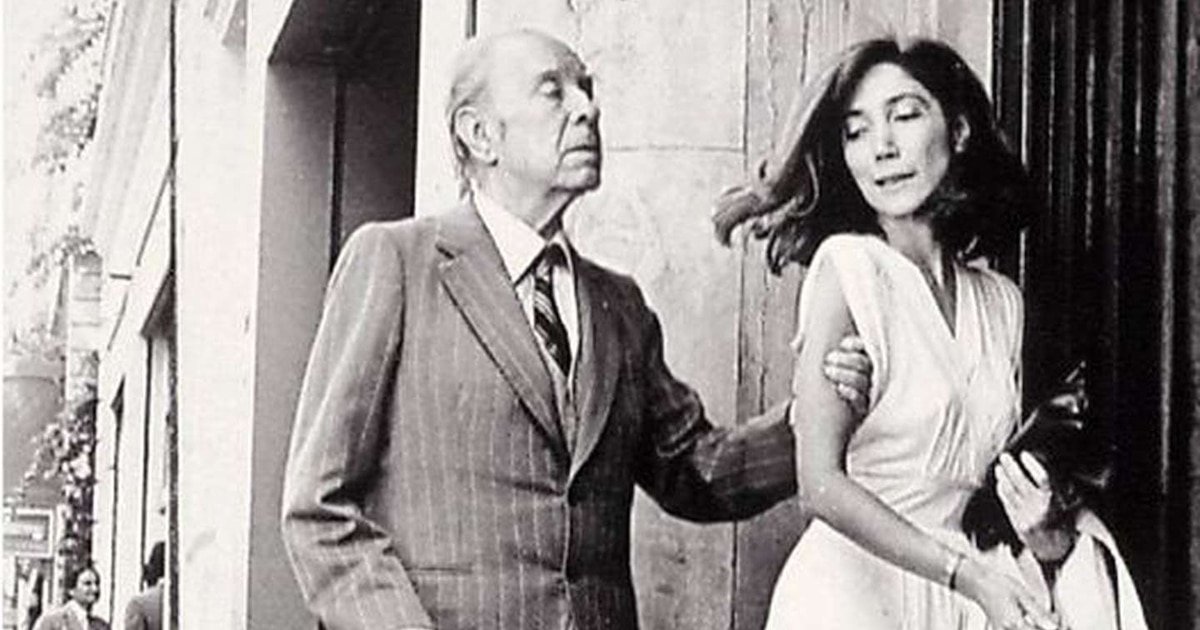
“Cuando caminaban juntos, es decir, casi siempre que Borges caminaba, era él el que la llevaba del brazo”, escribió Juan Martini en el blog de Eterna Cadencia, “y era visible que el gesto de Borges, antes que el de un ciego, era el gesto de un compadrito: el gesto firme y orgulloso del hombre que no solo está con la mujer que quiere estar, sino que dice: Esta mujer es mía”.
Se sacaron cientos de fotos, pero hay una icónica que muestra claramente aquello que decía Martini.
Borges y Kodama salieron a caminar y ahora vuelven a Maipú 994, la casa de él. Ella no vivía ahí; tampoco, según Fanny, la empleada doméstica, tenía la llave. La foto es en la puerta del edificio. María tiene un vestido blanco liviano sin mangas que le cae hasta por debajo de las rodillas. Siempre —o casi siempre— iba de blanco. Tiene una cartera negra, como negros también son los zapatos de taco alto, parecidos a los que se usan para bailar tango. El pelo largo hasta los hombros vuela hacia atrás. Está girando la cabeza hacia él, como si le quisiera advertir algo. Tal vez quiere recordarle el escalón de mármol de la entrada. Borges va un paso atrás. Tiene un traje gris a rayas que le queda un poco ajustado, una camisa clara —blanca o celeste—, una corbata también a rayas. Tiene el mentón hacia arriba, un gesto característico que le da un aire malevo. Agarra el bastón con la mano izquierda y con la derecha la agarra a María. La agarra con fuerza. Le clava los dedos. Si no fueran Borges y Kodama, uno podría creer que él la atrae hacia sí para besarla o pegarle. La foto es perfecta. Una historia en sí misma.
Lawmakers continue dispute over FISA
Chief Congressional Correspondent Chad Pergram reports from Capitol Hill on the ongoing debate surrounding the extension of the FISA surveillance tool.
NEWYou can now listen to Fox News articles!
One of the government’s most powerful surveillance tools will go dark this weekend, and lawmakers aren’t sure what that means for the nation’s intelligence-gathering authorities.
Democrats rejected attempts in the House and Senate to extend Section 702 of the Foreign Intelligence Surveillance Act (FISA) in an act of defiance against President Donald Trump, who tapped Housing chief Bill Pulte to temporarily oversee the nation’s intelligence services.
But there are differing trains of thought on the ramifications of failing to renew the program. Some lawmakers argued that an extension was not necessary given that FISA courts had authorized continued intelligence gathering until March 2027.
SPY PROGRAM CREDITED WITH STOPPING TAYLOR SWIFT TERROR PLOT BARRELS TOWARD EXPIRATION
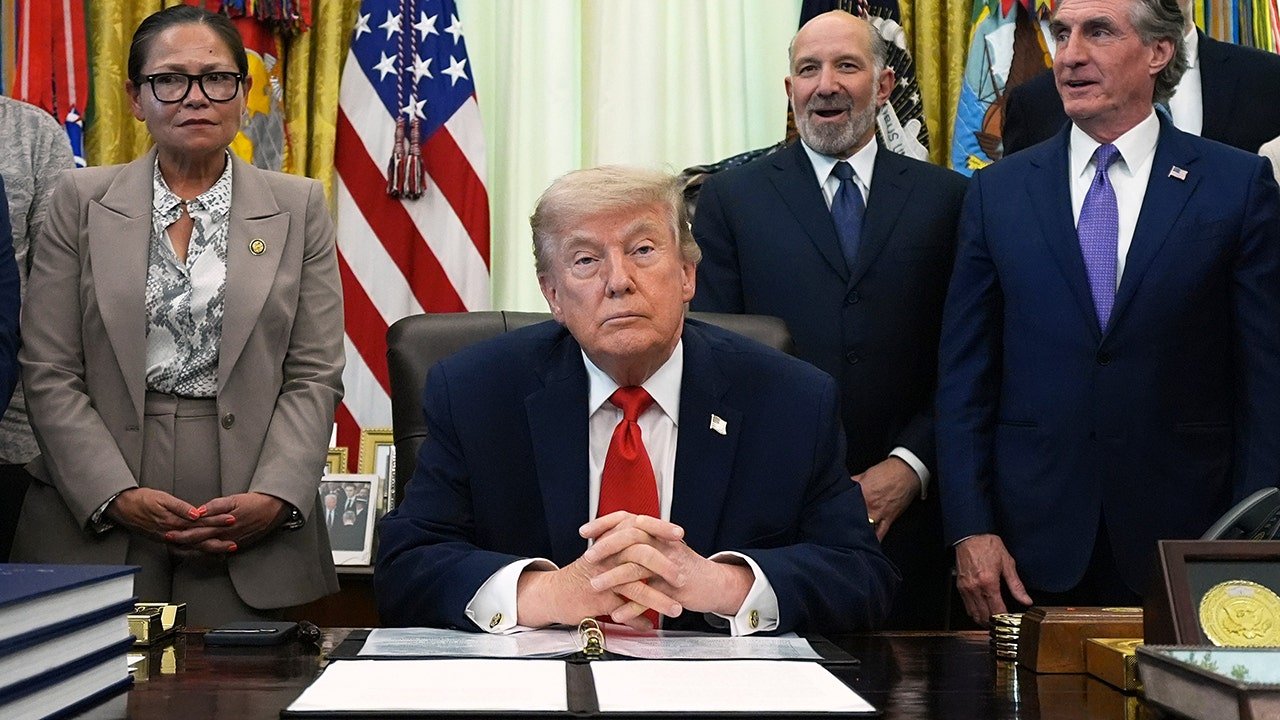
President Donald Trump signs a proclamation about the fishing industry as Del. Kimberlyn King-Hinds, Commerce Secretary Howard Lutnick and Interior Secretary Doug Burgum listen in the Oval Office of the White House in Washington on June 11, 2026. (Jacquelyn Martin/AP)
Others say that it opens up the possibility for telecommunications and major tech companies like Google to decline handing over information without explicit direction from Congress.
«We don’t know the answer to that,» Sen. Mark Warner, D-Va., the top Democrat on the Senate Intelligence Committee, said. «But it is, obviously, a high-risk proposition.»
Boiled down, the Section 702 program allows the U.S. government to collect intelligence on foreigners abroad who are using U.S. communication systems, and it serves as a major part of Trump’s daily intelligence briefing.
But it also sweeps up communications from Americans who are talking to foreign suspects — a key issue that threatened reauthorization among privacy hawks in both parties well before Pulte’s appointment.
CONSERVATIVE FISA REVOLT POSES FRESH TEST FOR SPEAKER JOHNSON
«That is a gray area, and it’s one of the things that we’re going to have to work through,» House Minority Leader Hakeem Jeffries, D-N.Y., told Fox News when asked whether providers would still continue to share information with the government if the program was not authorized.
«What is clear is that we are going to have to address the issue of extending surveillance authority legislatively. And the problem is that the Trump administration has decided to toss this hand grenade into the middle of sensitive negotiations,» he added, referring to Pulte.
Sen. John Kennedy, R-La., contended that there were already thousands of FISA certifications approved, it’s just that new certifications wouldn’t be allowed until the program was reauthorized.
«It’s not like that will be the end of our ability to surveil foreign terrorists,» Kennedy said.
The standoff is not expected to end soon. Trump’s decision to nominate former Securities and Exchange Commission Chairman Jay Clayton to serve as the permanent director of national intelligence also failed to soften Democrats’ opposition.
Many lawmakers remain unwilling to back a renewal of the program while Pulte continues serving in the acting role.
THE TOP 3 FACTORS HEIGHTENING THE RISK OF TERROR ATTACKS ON THE HOMELAND
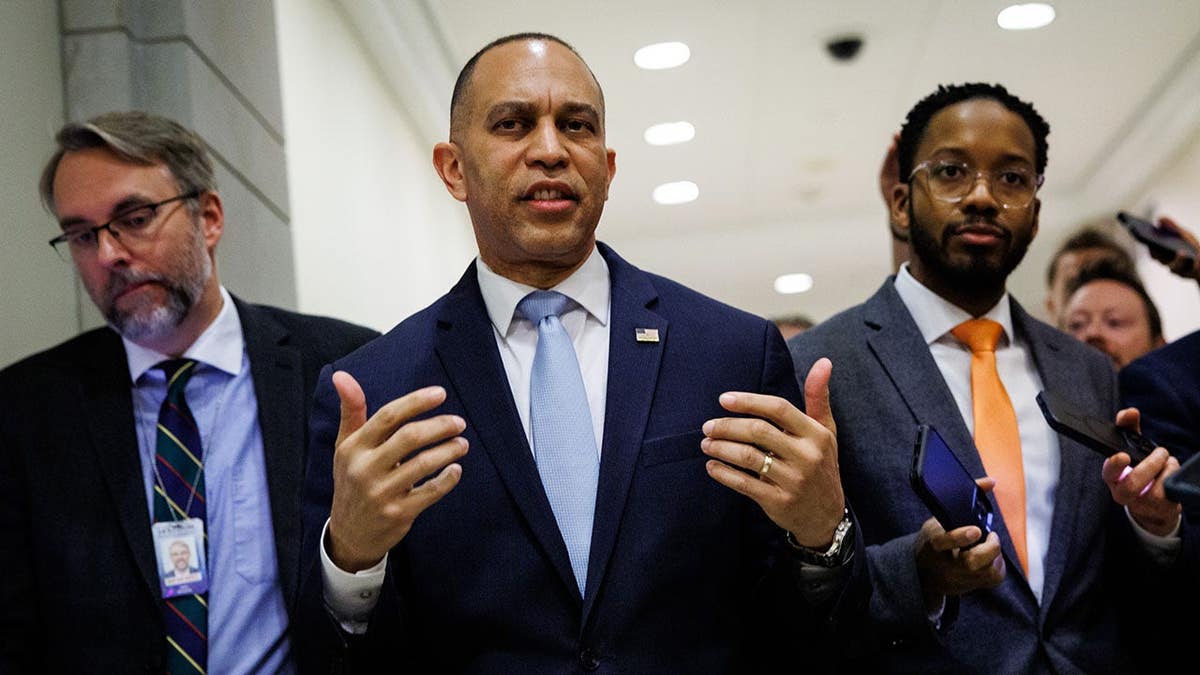
House Minority Leader Hakeem Jeffries, D-N.Y., speaks with reporters as he walks to his office after a press conference at the U.S. Capitol in Washington, D.C., on March 27, 2026. (Samuel Corum/Getty Images)
«Nobody disputes that FISA has been used to stop terrorist attacks on our homeland here,» House Majority Leader Steve Scalise, R-La., told Fox News Thursday. «And why would anybody vote to end that tool is beside me.»
Meanwhile, the House is scheduled to begin a week-long recess next week, meaning that even if there is a resolution in the Senate in the coming week, the program will likely remain dark until they return.
The program’s expiration marks the first extended lapse since it was enacted in 2008. The Trump administration has argued that the surveillance authority is a critical national security tool, crediting it with helping foil a mass-casualty terror plot targeting a 2024 Taylor Swift concert in Austria and combat North Korean hackers, among other successes.
The uncharted territory comes amid a heightened threat environment as the war with Iran continues and large-scale events, such as the World Cup and America 250 celebrations, are beginning to ramp up.
Senate Intelligence Committee Chair Tom Cotton, R-Ark., argued on the Senate floor in his bid to extend the program that there was a bipartisan bill waiting to be passed, but in the meantime, lawmakers should pause the partisan animosity and support an extension.
CLICK HERE TO DOWNLOAD THE FOX NEWS APP
«If we don’t extend it for at least a few weeks while we continue to try to work on our differences, the consequences could be severe,» Cotton said. «The consequences, to be frank, could be fatal.»
Still, Democrats counter that had Trump not appointed Pulte, or at least waited until the reauthorization was completed, Congress would not be in the current logjam.
«I cannot stress enough to you that none of this, none of this needed to happen,» Warner said.
politics, national security, congress, republicans, privacy, democrats senate, donald trump

Jorge Marrale, el fútbol, Malvinas y un papel que lo conecta con sus grandes pasiones: “El que ama, resiste”

La batalla contra el contrabando reaviva la disputa entre empresas y plataformas como Mercado Libre: qué hace el Gobierno

Visitó 23 provincias, donó 15 mil platos de comida y busca que la bandera de su misión solidaria llegue a la Selección en el Mundial

Los aliados presionan a Bullrich por Ficha Limpia en el Senado y se le suma otro problema sin resolución

Un incendio en la cárcel de Gorriti dejó en grave estado a uno de los responsables del femicidio de Iara Rueda

Preso del tironeo interno, Milei implosiona con la crisis de Adorni

“Me parece una vergüenza”: la dura crítica de Victoria Villarruel a la declaración jurada de Manuel Adorni

La advertencia del economista más escuchado por Milei: «Si Argentina tiene éxito, va a ser cara»

Se viralizó un tuit en el que Adorni contaba que en 2018 le habían cortado la luz por falta de pago

Manuel Adorni y su esposa decidieron acogerse al régimen de “inocencia fiscal” aunque aseguran que no declararán dólares

 POLITICA2 días ago
Se viralizó un tuit en el que Adorni contaba que en 2018 le habían cortado la luz por falta de pago
- POLITICA1 día ago
Diputados de la Coalición Cívica denunciaron penalmente a Manuel Adorni por presuntas irregularidades en sus declaraciones juradas
- ECONOMIA1 día ago
Jan De Nul defendió el proceso de licitación de la Hidrovía con una carta a las principales entidades vinculadas a la vía navegable