INTERNACIONAL
Donald Trump aseguró que Israel demostró ser un “gran aliado” de EEUU y elogió su lealtad en medio de la tregua con Irán

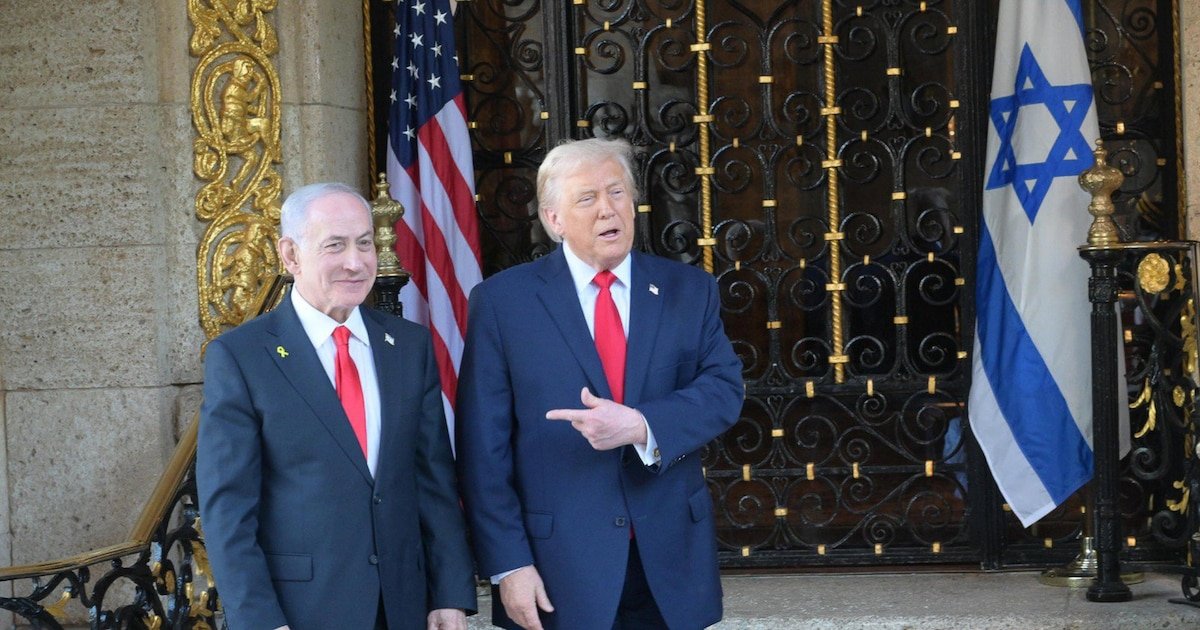
El presidente de Estados Unidos, Donald Trump, calificó a Israel como un “gran aliado” en medio del alto al fuego con el régimen iraní que caducará el próximo miércoles en caso de Washington y Teherán no avancen con sus negociaciones para la paz en Medio Oriente.
“Guste o no Israel, han demostrado ser un gran aliado de los Estados Unidos de América”, afirmó. “Son valientes, audaces, leales e inteligentes y, a diferencia de otros que han mostrado su verdadera naturaleza en momentos de conflicto y estrés”, criticó el mandatario estadounidense, quien informó días atrás sobre la tregua entre Israel y Líbano.
A través de un comentario en la red Truth Social enalteció la labor de su aliado en la ofensiva iniciada el pasado 28 de febrero contra el régimen iraní: «¡Israel lucha con ahínco y sabe cómo ganar!“.
La declaración surge poco después de que la ex vicepresidenta estadounidense Kamala Harris acusara al primer ministro Benjamin Netanyahu de involucrar a Estados Unidos en una guerra no deseada con Irán.

El inquilino de la Casa Blanca afirmó el viernes que su país prohibió a Israel llevar a cabo bombardeos en Líbano tras el acuerdo de alto el fuego. “Israel ya no bombardeará el Líbano. ¡Estados Unidos le ha prohibido hacerlo. Ya basta!”, expresó en su red social, un día después de anunciar una tregua de 10 días.
En cuanto al diálogo entre Estados Unidos e Irán, Trump advirtió el sábado al régimen persa que no utilice el estrecho de Ormuz como herramienta de “chantaje” contra Washington, tras el anuncio iraní de un nuevo cierre de este estratégico canal marítimo. “Estamos hablando con ellos. Querían cerrar el estrecho otra vez, ya saben, como han venido haciendo durante años, y no pueden chantajearnos”, afirmó durante un acto en la Casa Blanca.
El mandatario señaló que “muchos de los barcos están dirigiéndose hacia Texas” y Luisiana, en referencia a la llegada de petroleros a las costas estadounidenses, aunque no ofreció detalles adicionales.
Trump describió las conversaciones actuales con Irán como “muy positivas” y aseguró que “todo está resultando muy bien”. “Se pusieron un poco listos, tal como han venido haciendo durante 47 años (…). Ya veremos, pero tendremos información al final del día. Estamos hablando con ellos y, como saben, estamos adoptando una postura firme”, añadió.

El presidente estadounidense sostuvo que Irán “ya no tiene Armada, no tiene Fuerza Aérea, no tiene líderes” y calificó la situación en el país persa como “un cambio de régimen forzado”.
A primera hora del sábado, Teherán había informado que restableció un “control estricto” sobre el estrecho de Ormuz, luego de anunciar su reapertura, en respuesta al bloqueo impuesto por Estados Unidos a los puertos iraníes.
Por su parte, el presidente del Parlamento de Irán, Mohammad Bagher Ghalibaf, afirmó que las negociaciones de paz con Estados Unidos “han registrado avances”, aunque un acuerdo final aún está “lejos” de alcanzarse. En una entrevista televisiva, Ghalibaf señaló que “aún estamos lejos de cerrar el debate”, tras participar la semana pasada en las conversaciones celebradas en Islamabad.
El líder parlamentario indicó que, aunque se han logrado avances, “permanecen numerosas divergencias y ciertos puntos fundamentales siguen pendientes”. Además, subrayó que durante el encuentro en Islamabad, la delegación iraní dejó claro que “no tenemos absolutamente ninguna confianza en Estados Unidos”.
Ghalibaf consideró que Washington debe “tomar la decisión de ganarse la confianza del pueblo iraní” y abandonar “el unilateralismo y el espíritu de imposición en su enfoque del diálogo”.

En medio de las negociaciones, Irán advirtió que atacará directamente cualquier barco que intente cruzar el estrecho de Ormuz. “Advertimos que ningún barco, sea del tipo que sea, debe abandonar su fondeadero en el golfo Pérsico y el mar de Omán. Cualquier intento de acercarse al estrecho de Ormuz se considerará cooperación con el enemigo, y el buque infractor será considerado objetivo”, señala un comunicado difundido en la página oficial de la Guardia Revolucionaria, Sepah News.
El control de esta vía marítima, por donde transita cerca del 20% del transporte mundial de hidrocarburos, es crucial para la seguridad internacional y el abastecimiento energético. La escalada de tensiones refleja la presión militar de Estados Unidos y la falta de avances en las negociaciones, lo que incrementa la incertidumbre global.
20,2025,2025122951trumpnetanyahu.jpg,20251229_zip_i99_009.jpg,a,abraham,accords,agreement,america,ballistic,beach,benjamin,bilateral,board,ceasefire,club,committee,conflict,cooperation,december,defense,diplomacy,disarmament,donald,east,edge,editorial,f-35,florida,force,gaza,hamas,hammer,hezbollah,ii,international,iran,isf,israel,israeli,lago,leaders,lebanon,likud,lion,mar,mar-a-lago,meeting,middle,midnight,military,minister,missile,netanyahu,news,nuclear,of,official,operation,palestinian,palm,party,peace,phase,plan,pm,point,policy,politics,potus,president,press,prime,process,program,proliferation,qme,qualitative,reconstruction,relations,republican,rising,sale,security,stabilization,states,summit,syria,technocratic,the,trump,united,us,usa,visit,world,zhandout







INTERNACIONAL
Iran hardliner behind US deal warns Tehran won’t honor agreement if Trump fails to deliver
NEWYou can now listen to Fox News articles!
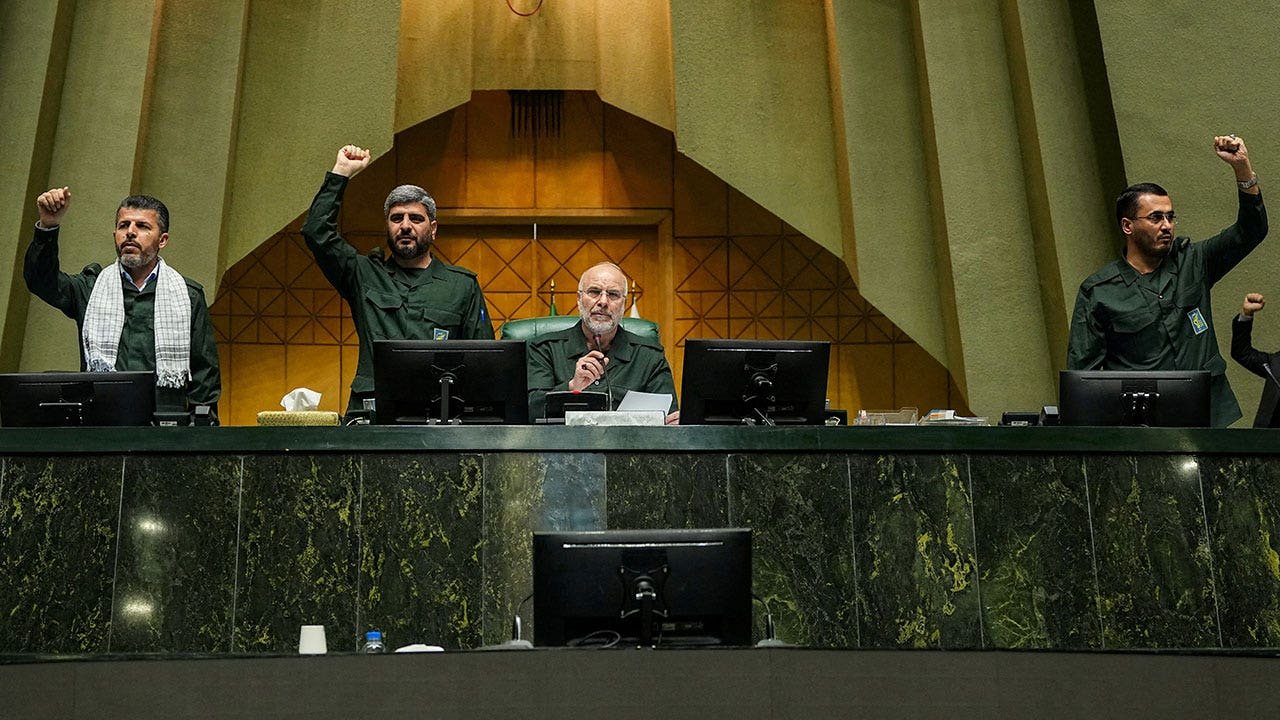
Iran’s hardline parliament speaker and key negotiator Mohammad Bagher Ghalibaf warned that Tehran would not honor its commitments under a newly signed memorandum with the U.S. if Washington fails to uphold its side of the deal, according to the media arm of Iran’s Islamic Revolutionary Guard Corps.
«If the United States does not honor its commitments, there is no way Iran will honor its own commitments,» Ghalibaf said, according to the outlet.
Ghalibaf’s warning was echoed Thursday by Islamic Revolutionary Guard Corps Quds Force commander Esmail Qaani, who threatened the U.S. in remarks translated by MEMRI TV, saying, «Americans should know their place and avoid confronting the Muslims.»
Qaani added that «Trump is trembling» and warned that the U.S. «should fear not only Hormuz and Bab al-Mandeb, but many other locations as well.»
MEET IRAN’S HARDLINE SPEAKER WHO THREATENED TO BURN US FORCES — REPORTEDLY TEHRAN’S POINT MAN FOR TALKS
The warnings came after President Donald Trump and Iranian President Masoud Pezeshkian Wednesday digitally signed a copy of the memorandum aimed at ending the war and resuming the flow of traffic through the Strait of Hormuz.
Iran’s hardline parliament speaker and key negotiator Mohammad Bagher Ghalibaf warned that Tehran would not honor its commitments under a newly signed memorandum with the U.S. if Washington fails to uphold its side of the deal. (Majid Asgaripour/WANA)
The memorandum gives Iran major economic relief while leaving some of the most difficult nuclear questions for a final agreement to be negotiated throughout the next 60 days. Under the 14-point plan read by a senior U.S. official, Washington agreed to begin lifting its naval blockade, work with regional partners on a $300 billion reconstruction and development plan for Iran, and terminate U.S., U.N. and other sanctions on an agreed schedule as part of a final deal.
The memorandum also says all licenses, waivers and permissions needed for related financial transactions would be granted by the United States.
In return, Iran reaffirmed that it «shall not procure or develop nuclear weapons,» and the two sides agreed to resolve the fate of Iran’s stockpiled enriched material under a future mechanism, with the minimum method being on-site down-blending under International Atomic Energy Agency supervision.
The agreement defers many of the hardest questions — including how to wind down Iran’s nuclear program — until the 60-day negotiation period for a final deal.
But the Iranian figure at the center of the deal is not a diplomat known for moderation.
Ghalibaf, a former Islamic Revolutionary Guard Corps commander and longtime regime insider, has threatened American forces, vowed Trump would «pay the price» and built his career through loyalty to Iran’s security establishment.
The new warning underscored what experts say is the central risk of the agreement: Washington may be entering a deal with officials who can enforce Iran’s commitments, but who have shown little sign of changing the regime’s long-term posture toward the U.S., Israel or the region.
Ghalibaf, 64, is a product of Iran’s security establishment. He rose through the ranks of the Islamic Revolutionary Guard Corps during the Iran-Iraq War, eventually becoming commander of the Islamic Revolutionary Guard Corps air force.
He later served as Iran’s national police chief, overseeing internal security forces responsible for suppressing protests, including the 1999 student uprising, alongside Qassem Soleimani.
After transitioning into politics, Ghalibaf attempted to run for president multiple times but failed. He instead built his career through loyalty to the system, serving as Tehran’s mayor for more than a decade before becoming speaker of parliament in 2020.
FAMILIES OF IRAN’S ELITE LIVE LAVISHLY ABROAD WHILE ORDINARY CITIZENS SUFFER AT HOME
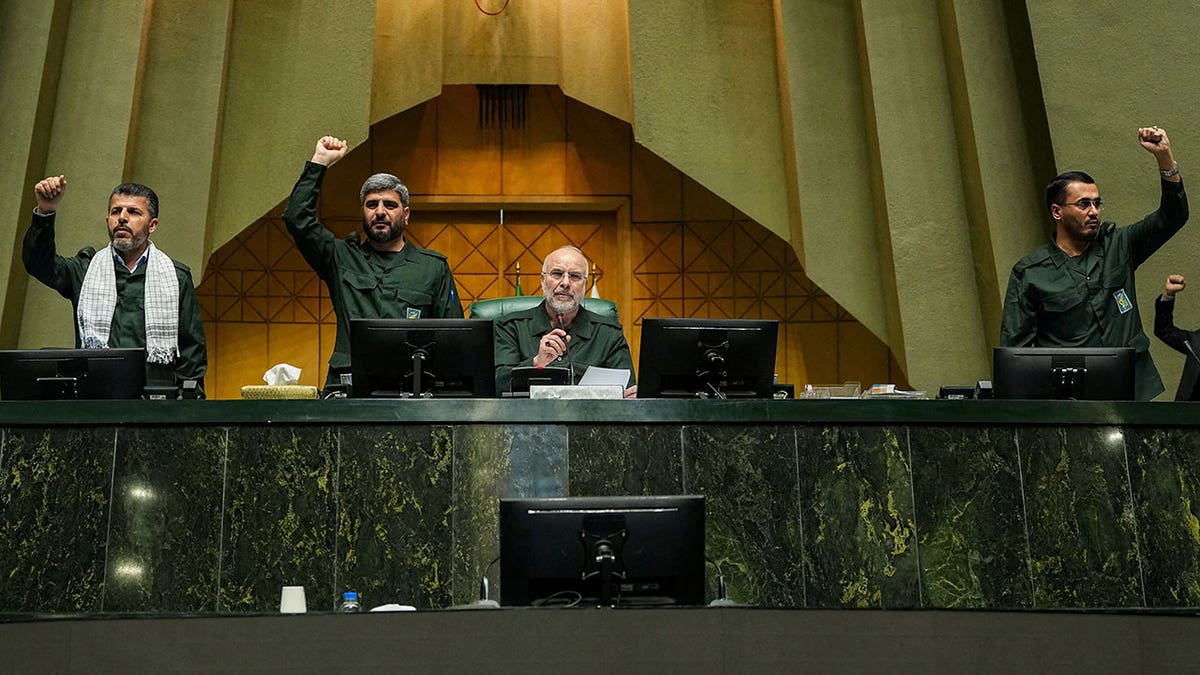
Iranian Parliament Speaker Mohammad-Bagher Ghalibaf looks on as parliament members wearing military uniforms chant in support of the IRGC in Tehran, Iran, on Feb. 1, 2026. (Hamed Malekpour/Islamic consultative assembly news agency/WANA (West Asia News Agency)/Handout via Reuters)
«Ghalibaf doesn’t have an independent line. His strength is that he is a ‘yes man,’» Beni Sabti, an Iran expert at the Institute for National Security Studies, previously told Fox News Digital. «If he is told to shake hands with Special Envoy Steve Witkoff, he will do it. If he is told to escalate, he will. It is not about moderation, it is about who gives the orders.»
«His name has also been linked to multiple corruption allegations, including misuse of oil revenues and sanctions evasion networks involving his family. His sons have reportedly been involved and are under sanctions,» Sabti said, adding, «There have also been public scandals involving family members traveling abroad and making luxury purchases, including widely circulated images of them arriving with numerous high-end Gucci suitcases.»
Behnam Ben Taleblu, a senior fellow at the Foundation for Defense of Democracies, said the image of Ghalibaf at a signing ceremony with a senior U.S. official would be a propaganda victory for the regime.
«There was a time when the Islamic Republic would have been terrified to be seen signing such a thing,» Ben Taleblu told Fox News Digital. «Post-war, this is a sign of the regime’s opportunism, and no one identifies that opportunism better than someone like Ghalibaf, who comes from the IRGC, who is a corrupt politician and is a wheeler and dealer.»
But Taleblu warned that Washington should not confuse Ghalibaf’s opportunism with moderation.
«The mirage is the myth of Iranian military moderation and the myth that, with time, this regime will integrate and put aside all the things that have kept it on the sidelines for so long,» he said. «Transforming Iran via a deal — that is a huge lift.»
Ghalibaf’s wartime statements reflect the hardline posture inside Iran’s leadership. In remarks aired on Iranian television on Jan. 12 and translated by MEMRI, he warned that U.S. forces would face catastrophic consequences if they confronted Iran.
«Come, so you can see what catastrophe befalls American bases, ships and forces,» he said, adding that American troops would be «burned by the fire of Iran’s defenders.»
TRUMP ADMINISTRATION UNVEILS SWEEPING TERMS OF PROPOSED IRAN AGREEMENT
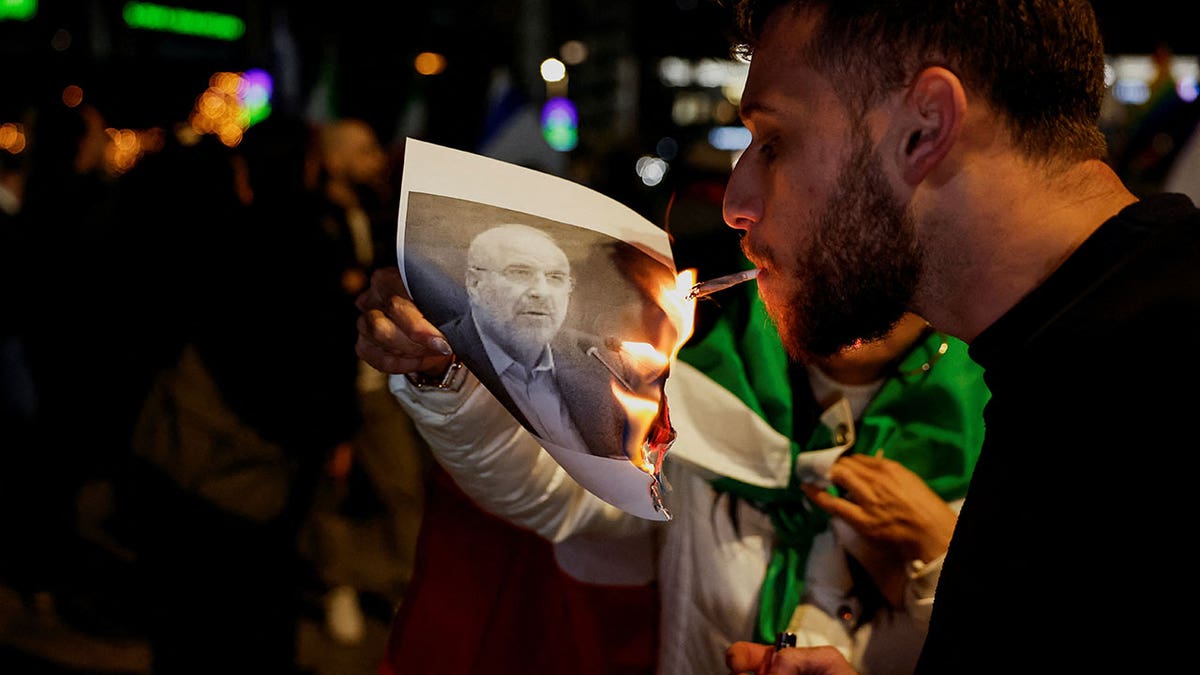
A man lights a cigarette with fire from a burning picture of Iranian Parliament Speaker Mohammad Bagher Ghalibaf as Israelis rally in support of nationwide protests in Iran in Holon, Israel, on Jan. 14, 2026. (Ammar Awad/Reuters)
More recently, he warned that «the blood of American soldiers is the personal responsibility of Trump,» and vowed Iran would «settle accounts with the Americans and Israelis,» adding that «Trump and Netanyahu crossed our red lines and will pay the price.»
John Hannah, a senior fellow at the Jewish Institute for National Security of America and a former national security adviser to Vice President Dick Cheney, said Ghalibaf’s expected role reflects the reality of who holds power inside Iran.
«If you’re going to sign an agreement with Iran, those are the forces in charge and calling the shots, presumably with the approval of the new Supreme Leader,» Hannah told Fox News Digital. «If the U.S. harbors hope that Iran will ever implement any of their obligations under the MOU, these are the people — odious as they are — capable of making it happen.»
But Hannah said the central question is whether Iran’s leadership sees compliance as useful, or whether the agreement is simply a tactical pause.
«The big question is whether they see it in their interest to do so, or are they only buying time, rebuilding their power and preparing for the next round of conflict,» he said.
Ben Taleblu was even more blunt, warning that even a seemingly favorable agreement would not change the nature of the regime.
«Even if you’ve got the perfect deal, with this kind of regime, with this kind of mentality, they will escalate,» he said. «I thought we would have learned by now what the regime did after the JCPOA. It built a vast missile arsenal. It literally built an empire of terror proxies that took Israel years of blood, effort and money to dismantle, backed by American support.»
CLICK HERE TO DOWNLOAD THE FOX NEWS APP
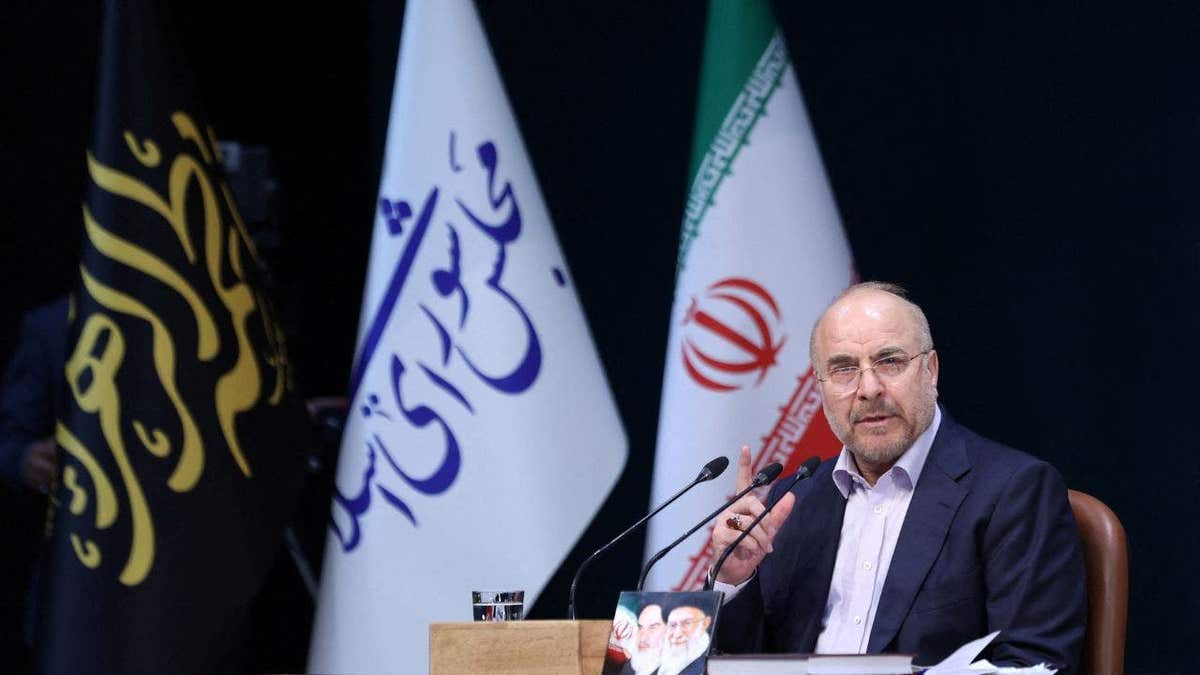
Iranian Parliament Speaker Mohammad Bagher Ghalibaf speaks during a press conference in Tehran, Iran, Nov. 27, 2024. (Majid Asgaripour/WANA (West Asia News Agency) via REUTERS)
«If we engage in pay-to-play with these guys,» he added, «I’m sorry to sound the alarm bell like this — but something tells me this is bad either way.»
Fox News Digital reached out to the White House for comment.
war with iran, iran, sanctions, benjamin netanyahu, treaties
INTERNACIONAL
Un líder criminal fue asesinado al llegar a Ecuador y el ataque en el aeropuerto de Guayaquil abre preguntas sobre los controles de seguridad
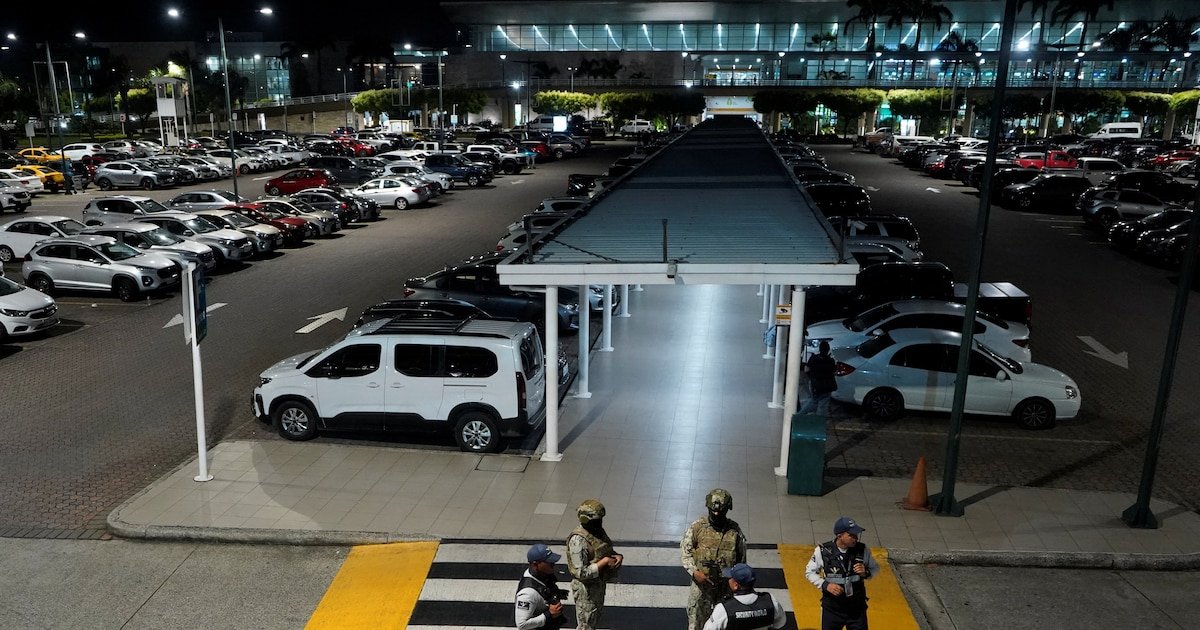
Dos adolescentes fueron los perpetradores. Esperaban a la víctima, un cabecilla criminal, con flores y peluches.
El asesinato de un hombre identificado por el Gobierno ecuatoriano como cabecilla de una organización criminal provocó conmoción en Guayaquil y abrió una serie de interrogantes sobre los controles de seguridad en uno de los principales puntos de ingreso al país. La tarde del 17 de junio, un ataque armado registrado en los exteriores del aeropuerto internacional José Joaquín de Olmedo dejó un fallecido y una persona herida, en un hecho que ocurrió frente a pasajeros, familiares y trabajadores que se encontraban en la terminal aérea.
Minutos después del atentado, el ministro del Interior, John Reimberg, confirmó que la víctima mortal era Carlos Alberto Suástegui Villanueva, de 39 años, a quien las autoridades identifican como cabecilla del grupo criminal Los Águilas, una estructura que opera principalmente en el cantón El Triunfo, en la provincia del Guayas. El funcionario aseguró además que se trataba de un objetivo criminal priorizado dentro de las investigaciones que mantiene el Estado contra organizaciones vinculadas a delitos violentos.
De acuerdo con la información preliminar proporcionada por la Policía Nacional, Suástegui acababa de arribar a Guayaquil cuando fue interceptado por varios sujetos armados en el área exterior de llegadas internacionales. Los atacantes abrieron fuego en repetidas ocasiones y huyeron del lugar. El hombre murió como consecuencia de las heridas, mientras que una mujer que lo acompañaba resultó lesionada y recibió atención médica.
La balacera generó momentos de pánico entre las personas que se encontraban en el aeropuerto. Videos grabados por testigos mostraron a pasajeros buscando refugio y a personal de seguridad acordonando la zona mientras llegaban agentes policiales y equipos de emergencia. Aunque el acceso al área donde ocurrió el crimen fue restringido durante varias horas para permitir el levantamiento de indicios, la concesionaria de la terminal informó que las operaciones aéreas continuaron con normalidad.
Poco después del ataque, las autoridades anunciaron la aprehensión de dos adolescentes, de 15 y 16 años, en el sector del parqueadero del aeropuerto. Según el Ministerio del Interior, ambos son investigados por su presunta participación en el atentado. La Policía indicó que las primeras diligencias permitieron ubicar a los sospechosos cuando intentaban abandonar el lugar.
La identificación de la víctima dio paso a un intenso debate público. Diversos usuarios en redes sociales, analistas de seguridad y actores políticos cuestionaron cómo una persona señalada por el propio Gobierno como líder de una organización criminal pudo transitar por el sistema migratorio y llegar hasta la zona pública de la terminal sin que se produjera una intervención de las autoridades.
La seguridad del aeropuerto logró detenerlos dentro del parqueadero del terminal
Hasta el momento, el Ministerio del Interior y la Policía Nacional no han informado si Suástegui mantenía una orden de captura vigente al momento de su ingreso al país o si existía alguna alerta migratoria activa en su contra. Tampoco se ha precisado si era objeto de seguimiento por parte de organismos de inteligencia. La ausencia de esa información alimentó preguntas sobre la coordinación entre las instituciones encargadas del control fronterizo y los organismos de seguridad.
Otro de los aspectos que ha concentrado la atención es la aparente precisión con la que actuaron los atacantes. El hecho de que el crimen se produjera poco después de la llegada de la víctima llevó a que surgieran especulaciones sobre un posible seguimiento previo o sobre el conocimiento anticipado de su itinerario. Sin embargo, las autoridades no han presentado evidencias que respalden esas hipótesis y señalaron que la investigación continúa en curso.
Las dudas también alcanzan a los mecanismos de seguridad en el aeropuerto. Aunque el ataque ocurrió en una zona de acceso público y no dentro de las áreas restringidas de embarque o desembarque, el caso volvió a poner bajo escrutinio los protocolos de protección en infraestructuras consideradas estratégicas. Desde el inicio del conflicto armado interno declarado por el Gobierno en 2024, los aeropuertos del país han operado bajo medidas reforzadas de vigilancia debido a la expansión de la violencia vinculada al crimen organizado.
Crime,Law Enforcement,Crime,South America / Central America
Details revealed about the US-Iran memorandum of understanding
The U.S. and Iran signed a memorandum of understanding, outlining a 60-day period for Iran to comply with nuclear program disposal in exchange for sanctions relief and access to frozen funds. President Donald Trump warned of military action if Iran misbehaves, while Fox News correspondent Trey Yingst and Middle East Forum strategist Jim Hanson analyze the deal’s performance-based conditions and the regime’s economic and military future.
NEWYou can now listen to Fox News articles!
The Trump administration’s new framework with Iran grants Tehran immediate oil sanctions waivers while postponing the most consequential nuclear questions for future negotiations, a gamble officials acknowledge carries risks because they expect Iran may not comply.
«We come in with the full expectation that they will lie and they will cheat,» one senior U.S. official said on a call with reporters Wednesday, arguing that any final agreement would require a verification and enforcement mechanism capable of detecting violations.
The agreement, which establishes a 60-day negotiating period, rests on a bet that Iran can be deterred from violating its commitments through monitoring and enforcement. Administration officials say any sanctions waivers can be clawed back if Iran fails to comply, while critics argue the U.S. is giving up leverage before the toughest nuclear issues have been resolved.
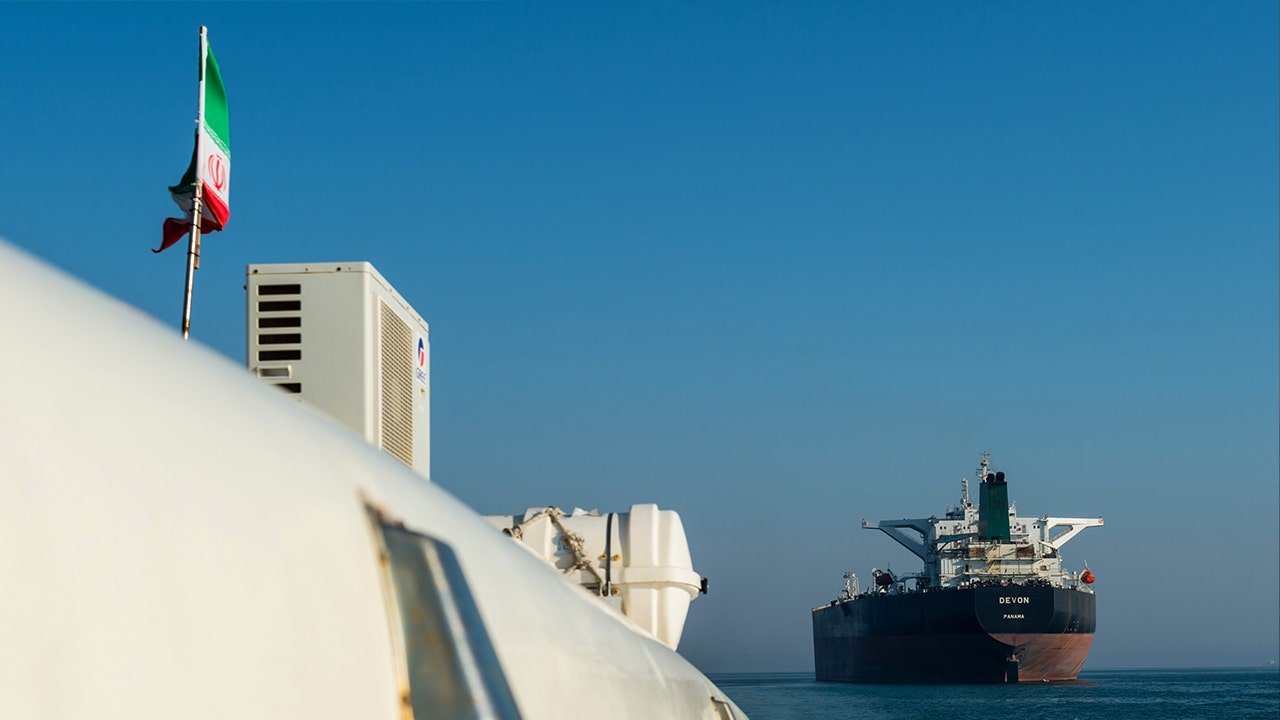
The Trump administration’s new framework with Iran grants Tehran immediate oil sanctions waivers . (Ali Mohammadi/Bloomberg via Getty Images)
TRUMP ADMINISTRATION UNVEILS SWEEPING TERMS OF PROPOSED IRAN AGREEMENT
The memorandum of understanding, unveiled by administration officials on a call with reporters Wednesday, says the Treasury Department will immediately issue waivers allowing Iran to export crude oil, petroleum products and derivatives, as well as access associated banking, insurance and transportation services.
But the agreement does not immediately require Iran to dismantle its nuclear program, surrender its enriched uranium stockpile or end enrichment. Instead, the deal says the U.S. and Iran will negotiate the «disposition» of Iran’s enriched uranium stockpile, with down-blending on site under International Atomic Energy Agency supervision identified as the minimum methodology.
Administration officials defended that language as an early nuclear concession, saying the U.S. continues to push for more.
«Of course that’s a flaw and we will push for more than that. But the fact that they’re conceding to that is a major, major win for the United States of America,» one senior U.S. official said on the call. «They’re saying we will destroy the enriched stockpile, and this is how we’re going to do it at a minimum.»
Down-blending would reduce the enrichment level of the material, but would not remove it from Iran.
Trump has defended the framework as necessary to avoid a prolonged conflict, closed shipping lanes and a market shock.
«If we didn’t do this deal, we could have dropped more bombs for another three weeks, two weeks, four weeks, two years,» Trump said Wednesday at the G7 summit in Évian, France. «You would never have the Hormuz Strait open … Your market would have, instead of going up, would go down at levels that nobody ever saw before, maybe except for 1929.»
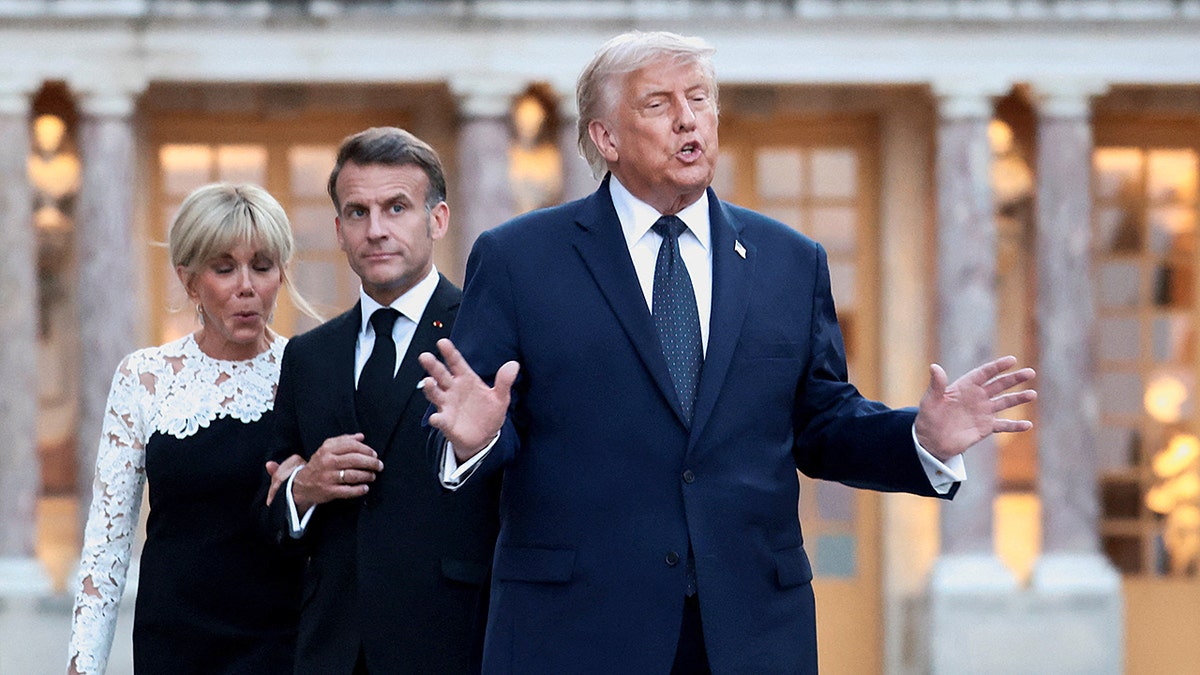
Trump has defended the framework as necessary to avoid a prolonged conflict, closed shipping lanes and a market shock. (Evelyn Hockstein/Reuters)
TRUMP DEFENDS WAR DEAL IN MARATHON PRESSER, USING SEMANTICS ON WHY IRAN IS GETTING $300 BILLION
«I did not want to see economic catastrophe,» Trump added.
The framework drew support from Sen. Lindsey Graham, R-S.C., a prominent Iran hawk who said after speaking with special envoy Steve Witkoff that he thought the 60-day agreement would be «beneficial.»
«Whether or not the United States can reach an acceptable, verifiable deal with Iran regarding its nuclear program and other issues is yet to be determined, but I see little downside to trying,» Graham said.
Others criticized the deal for offering sanctions relief before Iran had agreed to anything concrete on the nuclear front.
«How do you expect Iran to agree to anything in the future, let alone within 60 days, when you’ve given up all your leverage?» Blaise Misztal, vice president for policy at the Jewish Institute for National Security of America, told Fox News Digital.
Broader sanctions relief, a withdrawal of U.S. forces and a $300 billion reconstruction fund are also contemplated as part of a final deal if both sides can reach one within 60 days.
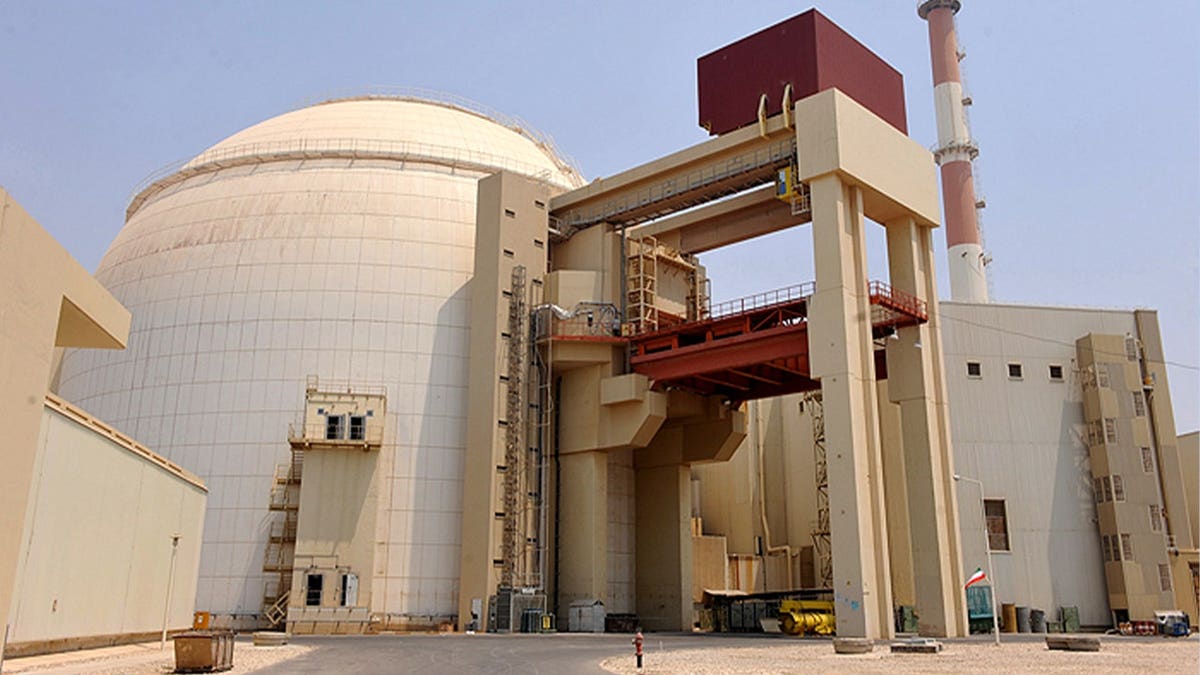
Others criticized the deal for offering sanctions relief before Iran had agreed to anything concrete on the nuclear front. (Photo by IIPA via Getty Images)
Those who opposed the war now argue that the memorandum is the best deal the U.S. can get after the conflict and blockade.
«The U.S. bargaining position was hurt by the war, not helped by it,» Rosemary Kelanic, director of the Middle East program at Defense Priorities, told Fox News Digital.
Kelanic said Trump is now «buying off Iran to return to something approaching the pre-war status quo» by offering immediate sanctions waivers and unfreezing assets tied to the reopening of the Strait of Hormuz.
She argued that the immediate waivers are the price Trump has to pay to convince Iran he is serious about diplomacy after launching strikes during negotiations.
«This is like earnest money, right?» Kelanic said. «It’s like upfront cash that shows that he really means it. It’s a costly signal that Trump essentially forced himself to have to make by breaking off negotiations and bombing Iran in the middle of them.»
Iran has framed the memorandum as a test of whether Washington is prepared to act first, rather than simply offer assurances.
«Unfortunately, it must be acknowledged that Iran’s deep mistrust of the United States stems from a long history of wrongdoing by American leaders,» Iran foreign ministry spokesman Esmaeil Baqaei said Monday in a press briefing. «The United States still has a long way to go before it can earn the trust of the Iranian people.»
The memorandum leaves the key nuclear mechanics to be worked out during the 60-day period, as well as key issues like ballistic missile production and proxy funding.
«What we have in this deal already suggests that if there is a deal in 60 days on the nuclear issue, that deal is going to be weaker than the JCPOA,» Misztal said, referring to the Obama-era nuclear deal known as the Joint Comprehensive Plan of Action.
Under the JCPOA, Iran was required to sharply reduce its uranium stockpile, including by removing excess material from the country. Misztal said the new agreement’s minimum standard of down-blending on site suggests Iranian uranium may remain inside Iran.
«That means first of all, no uranium is leaving Iran, which happened under the JCPOA,» he said.
The agreement also guarantees toll-free commercial transit through the Strait of Hormuz for 60 days while Iran, Oman and Gulf states discuss a longer-term framework for administration and maritime services in the waterway.
Behnam Taleblu, senior director at the Foundation for Defense of Democracies, warned that the provision raises concerns that Iran could gain a role in regulating a critical international waterway after demonstrating its ability to disrupt global shipping.
«I mean, not just charge a toll, but regulate the crucial international waterway,» Taleblu said. «There can be no doubt over the fact that the Strait of Hormuz needs to be open and open to all, not just whomever Iran and Iran plus its friends can pressure others into.»
«If there is no guarantee of freedom of navigation, the Islamic Republic is going to salami slice the resolve of the Gulf countries and basically try to throw its weight around in this strait again,» he added.
The agreement also calls for the U.S. and regional partners to develop a reconstruction and economic development plan for Iran worth at least $300 billion. U.S. officials have stressed that the provision does not require American taxpayer money, but critics said any funding stream could free up regime resources for other priorities.
CLICK HERE TO DOWNLOAD THE FOX NEWS APP
«It doesn’t matter if it’s Chinese money or American money or [United Arab Emirates] money,» Taleblu said. «The more they have access, the less they have to compete over resources and more they can fund what they want to fund.»
If negotiations collapse during the 60 days, Trump has left resuming military pressure back on the table. «If we think that they’re just dragging us along and kind of bulls**ting us, then we’ll be very quick to pull the plug,» a senior administration official said.
war with iran, sanctions, administration, iran, nuclear proliferation

La respuesta de Milei a Yuval Harari por cuestionar su iniciativa para crear empresas no humanas con IA

Empleo en energía: Vaca Muerta abre nuevos puestos pero faltan técnicos

Iran hardliner behind US deal warns Tehran won’t honor agreement if Trump fails to deliver

Yanina Latorre confirmó que Nico Occhiato echó a Flor Peña de Luzu tras su error imperdonable con el papá de Messi: «Desvinculada»

Emotivo video en el estadio Azteca: aficionados colombianos abrazaron a niño de Uzbekistán que lloraba tras la derrota en el Mundial 2026

El Gobierno le otorgó un aumento trimestral a los empleados estatales que volvió a dividir a los sindicatos

Patricia Bullrich: “El Presidente considera que Adorni dio una explicación razonable”

El Gobierno envía señales de que Adorni tiene las horas contadas para evitar que sesione el Senado

La secuencia del golazo de Messi para Argentina ante Argelia en el debut en el Mundial 2026 y los récords que rompió

Gaspi, reconocido streamer argentino, falleció en un accidente aéreo en Brasil

 POLITICA19 horas ago
Patricia Bullrich: “El Presidente considera que Adorni dio una explicación razonable”
- POLITICA1 día ago
El Gobierno envía señales de que Adorni tiene las horas contadas para evitar que sesione el Senado
- DEPORTE2 días ago
La secuencia del golazo de Messi para Argentina ante Argelia en el debut en el Mundial 2026 y los récords que rompió