INTERNACIONAL
La increíble historia de la joya de Georges Méliès hallada en el baúl de un granero de EE.UU.

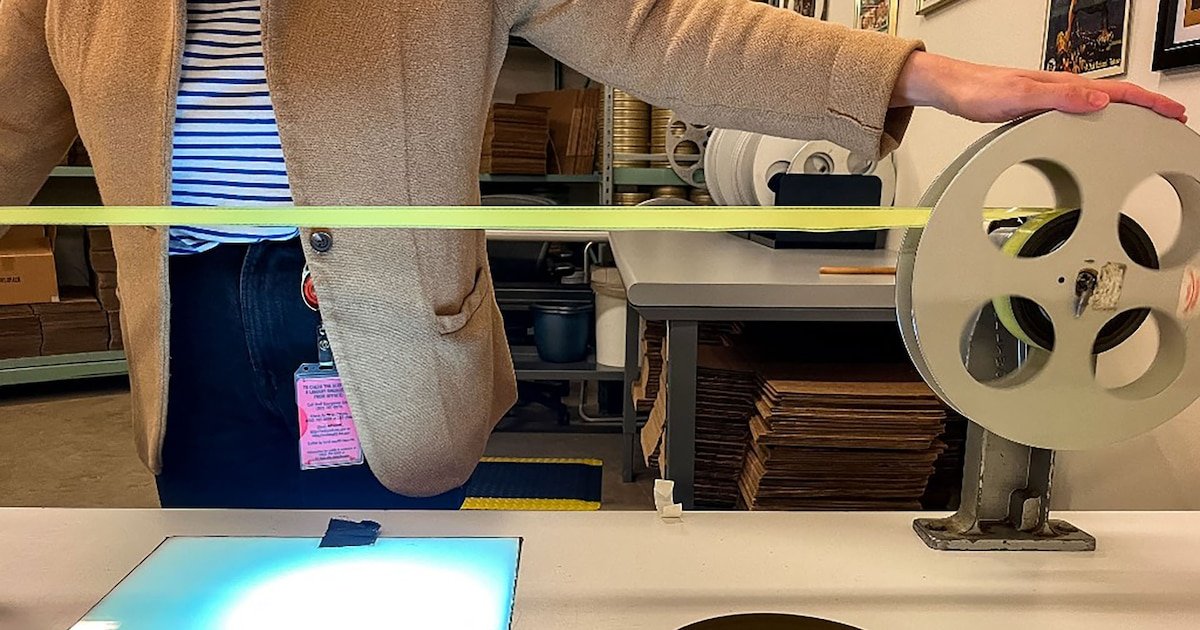
El baúl de madera golpeado había estado en la familia durante un siglo, trasladado del desván al granero y luego al garaje mientras pasaba de generación en generación. Nadie sabía que en su interior se ocultaba un tesoro cinematográfico.
Eso cambió cuando la curiosidad de Bill McFarland, un profesor de secundaria jubilado, pudo más que él.
Durante los últimos 20 años, McFarland, de 76 años, custodió el baúl, que originalmente perteneció a su bisabuelo, quien proyectaba películas mudas para audiencias en zonas rurales de Pensilvania a comienzos del siglo XX.
“Era solo un baúl lleno de películas que parecía demasiado valioso para tirar. Pero no tenía idea de qué eran ni cómo verlas”, contó McFarland.
Intentó donarlas a museos e incluso venderlas en una tienda de antigüedades, pero el dueño le pidió que se las llevara cuando supo que los rollos de película de nitrato antiguos eran altamente combustibles y podían explotar.
El verano pasado, McFarland condujo desde su casa en el norte de Michigan hasta el Centro Nacional de Conservación Audiovisual de la Biblioteca del Congreso en Culpeper, Virginia.
Allí recibió una grata sorpresa.
Empalmado en medio de uno de los 10 rollos, apareció un cortometraje perdido de Georges Méliès, pionero del cine francés, el primero en experimentar con narrativas ficticias y efectos especiales en los albores del cine.
La película de 45 segundos, Gugusse y el Autómata, se rodó en 1897, apenas dos años después de que los hermanos Lumière organizaran la primera proyección pública de una película en París.

Méliès, un hombre de teatro e ilusionista, asistió a esa proyección y se inspiró para crear sus propios filmes. Es conocido por Viaje a la Luna (1902) y la icónica imagen del cohete impactando en el ojo del hombre en la Luna.
Una década más tarde, su cine cayó en desuso cuando la industria se trasladó de Europa a Estados Unidos.
Méliès terminó vendiendo juguetes en la estación Gare Montparnasse de París, historia dramatizada en la película Hugo de Martin Scorsese (2011). Su legado, no obstante, perduró.
“Fue uno de los primeros cineastas”, dijo George Willeman, responsable de la bóveda de películas de nitrato de la biblioteca, quien considera que el rollo recuperado es probablemente una copia de tercera generación del original de Méliès. “Y uno de los primeros en experimentar la piratería cinematográfica”.

Con el tiempo, la piratería resultó ser una salvación para los historiadores del cine, ya que permitió que la obra de Méliès llegara hasta la actualidad.
Se sabe que destruyó cientos de sus negativos, que se fundieron y parte del material se usó para fabricar botas de soldados durante la Primera Guerra Mundial.
Aunque Gugusse y el Autómata figuraba en la filmografía de Méliès, nadie la había visto hasta que McFarland la entregó a la biblioteca en su sedán Toyota en septiembre pasado.
El cortometraje muestra a un mago, interpretado por Méliès, que acciona un autómata que crece de tamaño y lo golpea en la cabeza con un palo. El mago responde golpeando al autómata con un mazo hasta que desaparece, encadenando cortes de plano sorprendentemente ágiles para la época.
“Estos cortes de un solo cuadro son muy precisos para una película tan antigua, y los gags no pasan de moda”, explicó Jason Evans Groth, curador de la sección de imagen en movimiento de la biblioteca, quien relató la llegada de McFarland con los rollos en el baúl de su auto.
El hallazgo llevó a McFarland a interesarse por la vida de su bisabuelo, William DeLyle Frisbee.
Nacido en 1860 en el noroeste rural de Pensilvania, Frisbee era un hombre robusto, de bigote poblado y múltiples oficios.

Cultivaba papas, criaba abejas, producía jarabe de arce y daba clases tres meses al año. En su tiempo libre recorría Pensilvania y estados vecinos en carro tirado por caballos con lo que llamaba su “exhibición”: un fonógrafo Edison, un proyector de diapositivas de linterna mágica y, más tarde, películas.
Sus diarios de bolsillo narran esos viajes. “Di la exhibición en Garland, ingresos de 5 dólares, público rudo”, escribe en una entrada sobre una comunidad del noroeste de Pensilvania.
“Solo puedo imaginarme la escena un sábado por la noche, tal vez con algo de alcohol”, reflexionó McFarland. “¿Habría clientes decepcionados o simplemente revoltosos? ¿O estaban emocionados por ver esas imágenes?”
Un siglo después, los archivistas de la Biblioteca del Congreso también se emocionaron.

Preocupado, McFarland vio cómo los especialistas trasladaban los valiosos rollos a una bóveda refrigerada, donde ya se almacenan decenas de miles de películas de la edad dorada de Hollywood, diseñada especialmente para evitar incendios provocados por el nitrato.
“Finalmente comprendí que había estado… transportando una bomba de tiempo”, dijo McFarland.
Los especialistas de la biblioteca dedicaron una semana a restaurar la película cuadro por cuadro y digitalizarla. El rollo estaba encogido por el paso del tiempo y desgastado, pero en un estado notable para algo guardado durante años en desvanes expuestos al sol.
Ahora es una pieza de la historia del cine, disponible en el sitio web de la biblioteca.
Fuente: AFP
Georges Melies,cine,proyector,linterna mágica,historia,colección,vintage,antigüedad,hombre,descubrimiento












INTERNACIONAL
Gabbard spotlights Fauci, COVID-origin questions in final act as intelligence chief amid succession fight
NEWYou can now listen to Fox News articles!
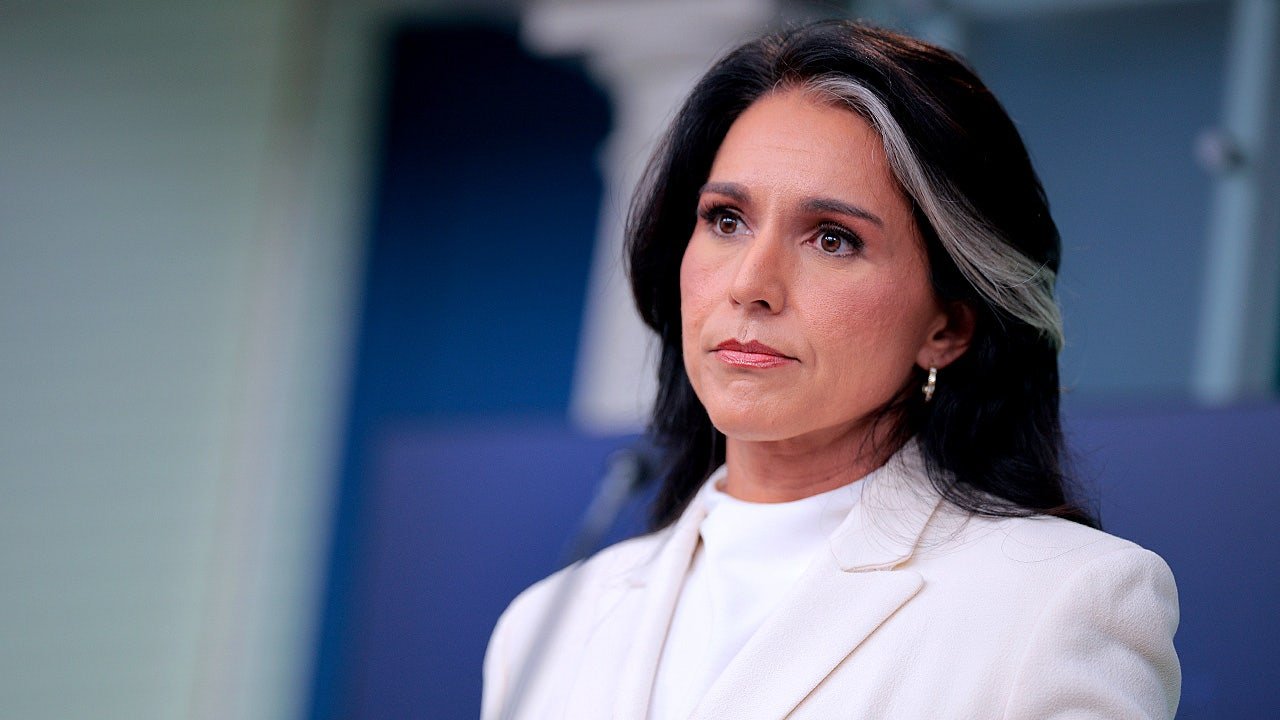
Just before leaving office amid a contentious battle over who will succeed her, Director of National Intelligence Tulsi Gabbard used one of her final acts atop the U.S. intelligence community to spotlight Dr. Anthony Fauci’s role in discussions surrounding the government’s COVID-19 origins review.
While much of the material is familiar, Gabbard’s release underscores her effort to make questions surrounding Fauci, COVID origins and federal support for virus research part of her closing legacy atop the intelligence community.
As Gabbard fired her final broadside, Bill Pulte, who has received bipartisan criticism over his lack of intelligence experience, is set to take the reins at the Office of the Director of National Intelligence while Trump’s permanent nominee remains stalled.
Jay Clayton, an attorney and former SEC chairman whom Trump nominated to permanently lead ODNI, has seen his confirmation process delayed after the president said he was holding up the nomination to pressure Congress to pass a voter identification measure.
Director of National Intelligence Tulsi Gabbard testifies during a Senate Intelligence Committee hearing on worldwide threats at the Hart Senate Office Building in Washington, D.C., on March 18, 2026. (Win McNamee/Getty Images)
WHY TRUMP PICKED BILL PULTE TO LEAD US INTELLIGENCE AS CRITICS QUESTION HIS QUALIFICATIONS
Pulte is a construction businessman and housing official who served as director of the Federal Housing Finance Agency. His tenure at the housing agency has drawn controversy over allegations that he used FHFA authority to target Trump’s political opponents, an allegation amplifying concerns among key senators that he may attempt to weaponize the intelligence community at the behest of the president during his interim tenure.
«We don’t need a weaponized DNI, we need professionals there,» Senate Majority Leader Sen. John Thune said of Pulte. Other powerful congressional Republicans, such as Sens. Cornyn, Cassidy, Murkowski, Collins and Tillis, have also voiced opposition to or concern over Pulte taking over ODNI.
Senate Democrats share many of the same concerns as their GOP colleagues.
Sens. Elizabeth Warren, Dick Durbin, Sheldon Whitehouse, Richard Blumenthal, Gary Peters, Adam Schiff, Mark Warner and Ron Wyden have all expressed concerns that Pulte would weaponize America’s intelligence apparatus against Trump’s enemies. Similar to many Republicans, they’ve criticized him for a lack of intelligence experience as well.
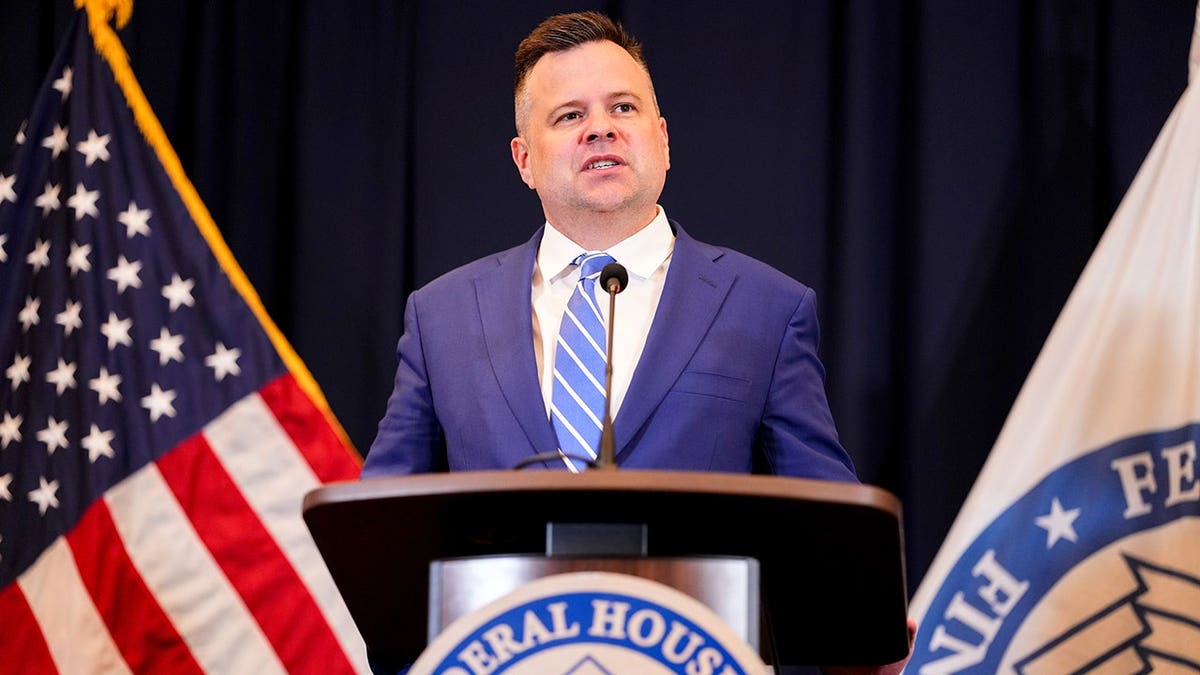
William Pulte, director of the Federal Housing Finance Agency (FHFA), during a news conference at the Federal Housing Finance Association (FHFA) headquarters in Washington, D.C., on Wednesday, April 22, 2026. (Eric Lee/Bloomberg via Getty Images)
TRUMP DNI PICK BRACES FOR SENATE GRILLING AS TEMPORARY STAND-IN FUELS DEM PRESSURE
Political observers believe that Clayton would face far less opposition from the Senate over his confirmation. However, the upper chamber has so far proven unwilling to move on the president’s voter identification legislation, complicating his advancement and setting the stage for a showdown between the White House and Congress.
While lawmakers and the president go back and forth over the fate of ODNI, Gabbard has sought to spotlight the Fauci documents on her way out.
The documents she released Thursday night include some information that was already known to the public as well as others that do not appear to have been publicly reported.
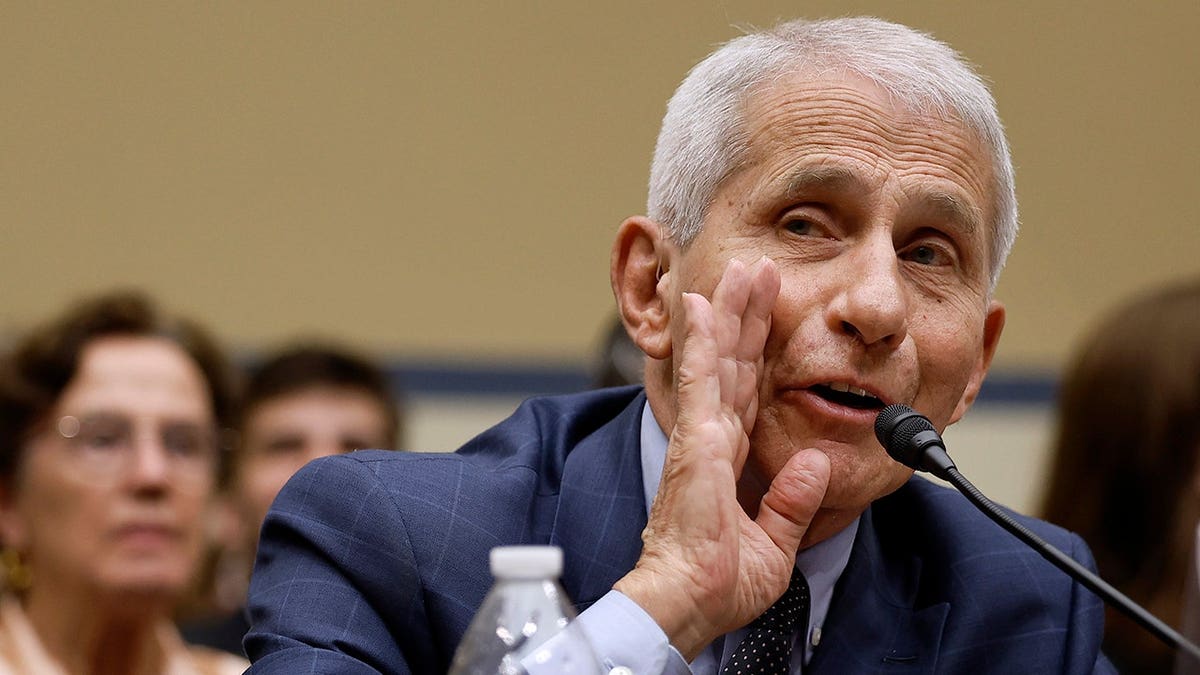
Dr. Anthony Fauci testifies before the House Oversight and Accountability Committee Select Subcommittee on the Coronavirus Pandemic at the Rayburn House Office Building in Washington, D.C., on June 3, 2024. (Chip Somodevilla/Getty Images)
ANTHONY FAUCI MAY BE DEPOSED AS GOP INTENSIFIES COVID INVESTIGATIONS IN NEW CONGRESS
Gabbard’s release contains newly declassified documents that show intelligence officials considered but ultimately rejected Fauci as an outside reviewer of their COVID-19 origins assessment, warning he would be seen as having a conflict of interest.
In a different exchange, intelligence officials tasked with analyzing the origins of the COVID-19 pandemic debated whether to take Fauci’s recommendations on who to interview for their study.
«For those who don’t know me, I’m the [REDACTED] and, as such, leading the [intelligence community’s] 90-day POTUS COVID origin study,» one official wrote in an email. «Per below, Dr Fauci recommended that the IC reach out to the below individuals who were coauthors of the attached paper as part of the study.»
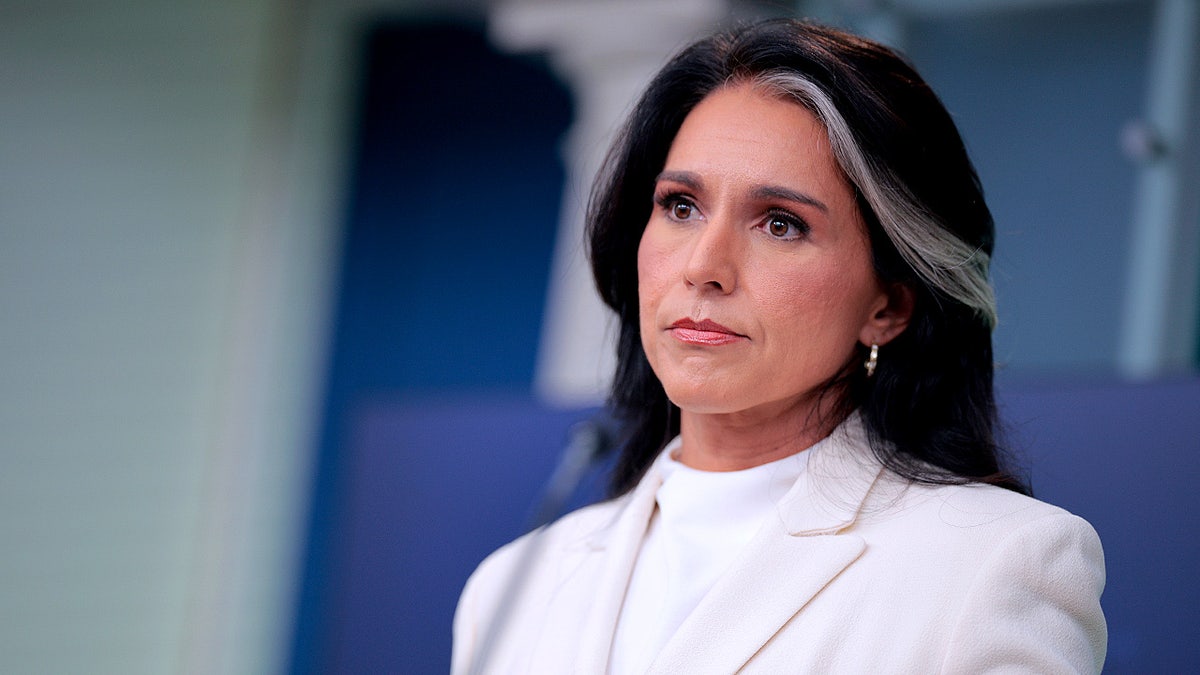
Director of National Intelligence Tulsi Gabbard speaks to reporters in the Brady Press Briefing Room at the White House on July 23. (Chip Somodevilla/Getty Images)
TOP 4 EXPLOSIVE MOMENTS FROM CIA WHISTLEBLOWER’S TESTIMONY ON ALLEGED COVID-19 LAB LEAK COVER-UP
Another official questioned whether it was prudent for the intelligence community to take the advice of a «policymaker» like Fauci when conducting internal affairs, «particularly given the various strong views on the subject and statements regarding their own conclusions.»
An intelligence official responded by arguing that Fauci should not be considered a policymaker in this context, but rather an important subject-matter expert.
«In this particular case, given Dr Fauci’s background we absolutely would like to follow-up on his outreach suggestions,» they wrote. «In this case he’s not a policymaker….he’s a SME with a wealth of knowledge about current and historical research who probably knows better than most who the real Coronavirus experts are.»
A CIA whistleblower previously claimed that Fauci exerted undue influence over the intelligence community’s assessment of COVID-19’s origins, claims that Gabbard now seeks to amplify with her release.
During the COVID-19 era, conservatives alleged that Fauci and other public health officials downplayed or helped steer scrutiny away from the lab-leak theory despite American financial links to coronavirus research in Wuhan, where the disease originated. Gabbard has framed her trove of documents as a look into how the intelligence community incorporated information from people like Fauci while investigating the virus’ origins.
CLICK HERE TO DOWNLOAD THE FOX NEWS APP
«Fauci worked with politicized career leadership in the Intelligence Community (IC) to suppress the truth about his actions, the virus’ lab-leak origins, and his role in directing U.S. funding for this dangerous research that caused immeasurable harm and countless lost lives,» ODNI’s press release accompanying the documents asserts. «These documents expose Fauci’s direct role in influencing and manipulating IC assessments on COVID-19, and how Fauci lied to Congress in 2024, when under oath he denied knowledge of or participation in discussions with intelligence officials about viral research.»
Gabbard left her role at ODNI to care for her husband, who has a rare form of cancer, Fox News Digital first reported.
anthony fauci, cia, appointments, tulsi gabbard, coronavirus
INTERNACIONAL
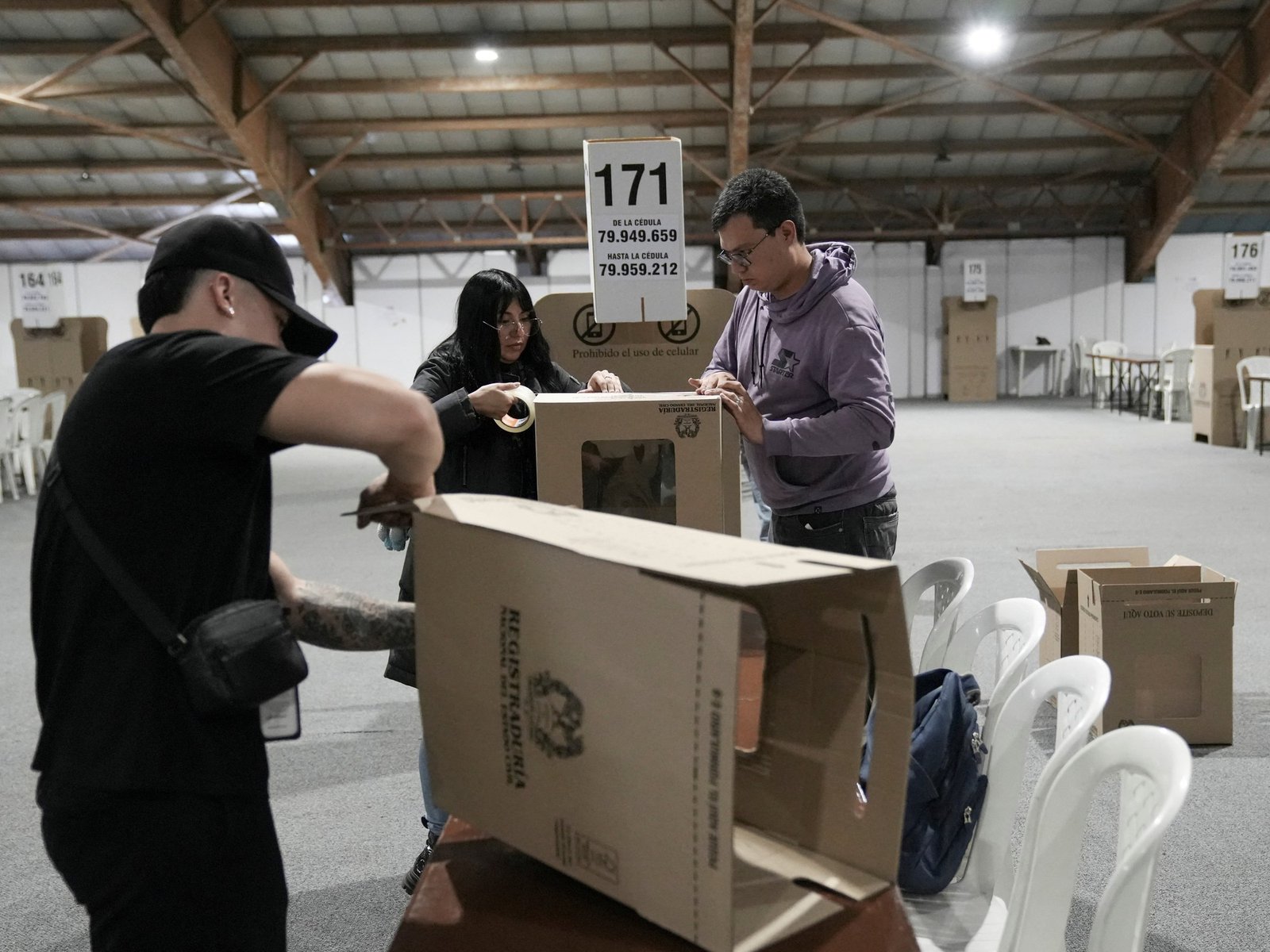
Balotaje en Colombia: más de 120.000 policías custodiarán la elección en un clima de tensión y amenazas

NEWYou can now listen to Fox News articles!
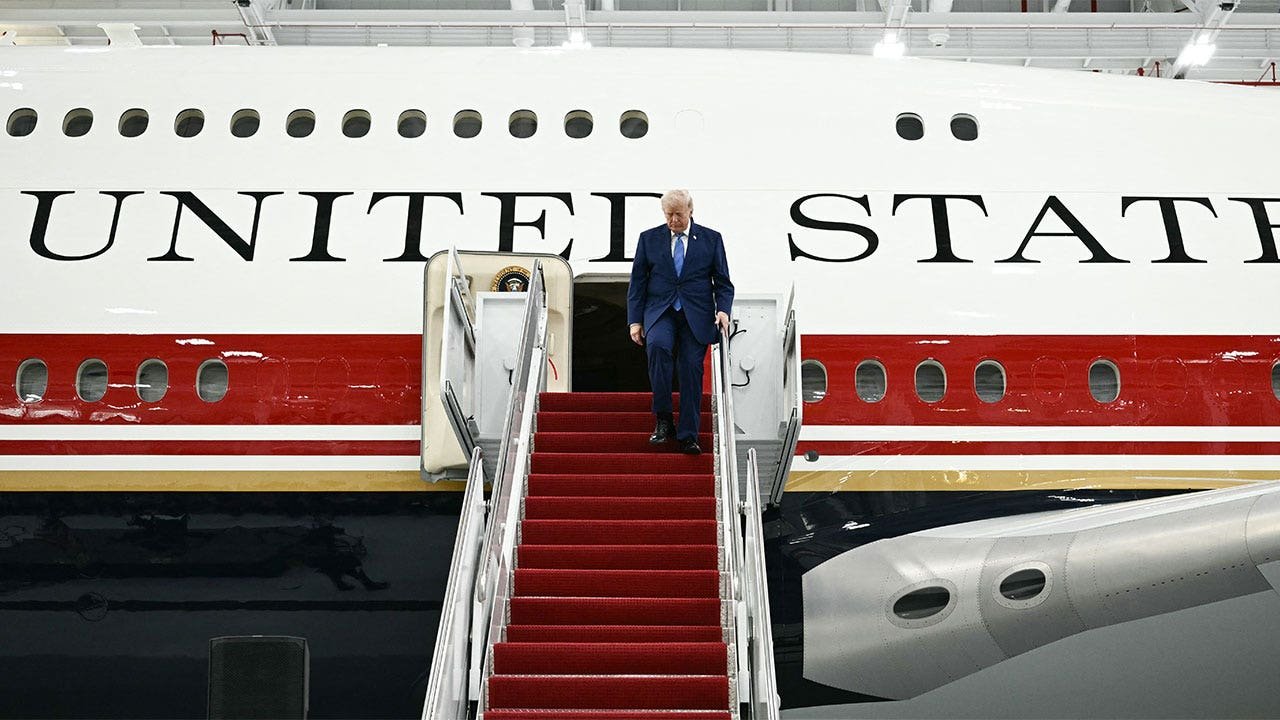
President Donald Trump on Friday unveiled a newly refurbished presidential aircraft at Joint Base Andrews, touting its size, luxury and updated red, white and blue paint scheme as the Air Force prepares the jet for service.
The Boeing 747-8i, donated by the government of Qatar and modified for presidential use, is expected to serve as an interim Air Force One while Boeing continues work on two delayed VC-25B replacement aircraft.
Standing alongside Air Force leaders and service members, Trump said the aircraft’s most noticeable feature is its size.
«The biggest difference is the difference in size. It’s like virtually double the size,» Trump said.
AIR FORCE ONE SCRAPS ICONIC KENNEDY-ERA PAINT SCHEME FOR TRUMP-APPROVED RED, WHITE, BLUE DESIGN
Reporters were later given a brief tour of the aircraft, which featured wood-paneled interiors, gold-toned fixtures and tan-and-gold seating throughout. Spacious cabins, large television screens and polished metallic finishes gave the jet an upscale feel.
Near the front of the aircraft, reporters viewed a private suite with lounge-style seating before passing a conference room featuring a large table, a painting of the Washington Monument overlooking the Reflecting Pool and a decorative bookcase surrounding a television screen.
The aircraft’s press cabin spans the width of the rear section of the jet and includes 24 seats arranged across three sections. Each seat is equipped with its own entertainment screen, and the cabin appeared significantly larger than the press area aboard the current Air Force One fleet.
The Air Force said the aircraft will soon begin commissioning flights, a final phase of testing before entering operational service.
WHATEVER HAPPENED TO: THE QATAR AIR FORCE ONE JET
US President Donald Trump steps out of the new Air Force One, gifted to him by Qatar, in a hangar at Joint Base Andrews in Maryland on June 19, 2026. (Brendan SMIALOWSKI / AFP)
«The safety and security of the commander in chief is our highest priority,» Air Force Secretary Troy Meink said. «From the beginning, we meticulously evaluated every requirement to accelerate delivery while maintaining the high standards expected of the presidential mission.»
Trump said he sought the aircraft after becoming frustrated with delays to Boeing’s Air Force One replacement program and growing comparisons between the aging U.S. presidential fleet and newer aircraft operated by foreign governments.
«I asked the Emir if we could use the brand new 747,» Trump said, noting the aircraft had relatively few flight hours and describing the current presidential fleet as aging.
«Our country has to be represented properly,» he added.
AIR FORCE ONE GLITCH REVIVES REPLACEMENT PUSH AS WHITE HOUSE SAYS IT ‘PROVES TRUMP WAS RIGHT AGAIN’
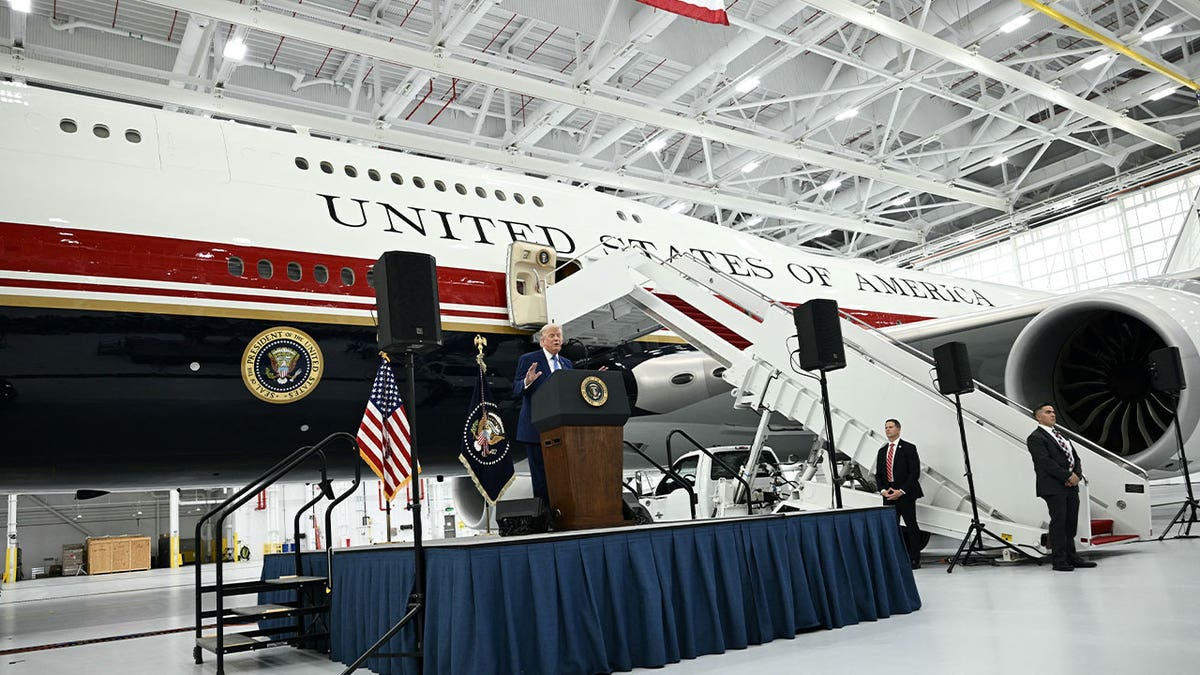
Donald Trump speaks in front of the new Air Force One, gifted to him by by Qatar, in a hangar at Joint Base Andrews in Maryland on June 19, 2026. White House officials bade farewell on June 18, 2026, to one of the two jets that have been used to transport US presidents for more than 30 years. (Brendan SMIALOWSKI / AFP)
The aircraft features Trump’s preferred red, white and dark blue color scheme, replacing the light blue-and-white design that has defined presidential aircraft since the Kennedy administration. Earlier this year, the Air Force confirmed the updated paint scheme would become the standard across the presidential and executive airlift fleet, including the VC-25B aircraft currently under development.
Trump also praised the aircraft’s interior craftsmanship and described it as «considered the world’s most luxurious plane.»
Trump said the aircraft could also play a prominent role in next year’s America 250 celebration, predicting it would lead a July 4 flyover over Washington featuring fighter jets and other military aircraft. The president called it «a flyover like no flyover» and said the display could include F-22s, F-35s and other aircraft from across the U.S. military.
The Pentagon accepted the Qatari aircraft last year and has spent recent months preparing it for presidential service. Officials have said the timeline moved more quickly than the broader Air Force One replacement effort because the aircraft’s interior required fewer modifications than the VC-25B program.
CLICK HERE TO DOWNLOAD THE FOX NEWS APP
Trump also praised the more than 250 personnel who worked around the clock to prepare the aircraft for service, saying the jet was transformed into what he called a «flying White House» in roughly 10 months.
The jet is expected to bridge the gap until Boeing delivers two next-generation Air Force One aircraft, which are not expected to be completed for roughly two more years.
Fox News Digital’s Andre Tinoco contributed to this report.
donald trump, travel, air force

La planificación de la selección argentina para el partido contra Austria: viaje relámpago y la despedida de un jugador

“Si tenemos que ir en cana, iremos”: la advertencia de un jefe de la CGT que preanuncia la dura batalla que promueven contra Milei

Gabbard spotlights Fauci, COVID-origin questions in final act as intelligence chief amid succession fight

Este es el sueldo promedio que exige un argentino para entrar a trabajar

Los cambios que haría Lionel Scaloni para el duelo ante Austria

El explosivo mensaje oculto en el posteo de Juana Viale tras su ruptura con Yago Lange

Patricia Bullrich: “El Presidente considera que Adorni dio una explicación razonable”

El Gobierno envía señales de que Adorni tiene las horas contadas para evitar que sesione el Senado

La secuencia del golazo de Messi para Argentina ante Argelia en el debut en el Mundial 2026 y los récords que rompió

GOP Gov DeWine urges Ohio to abolish the death penalty, says it is no longer a deterrent

 POLITICA2 días ago
Patricia Bullrich: “El Presidente considera que Adorni dio una explicación razonable”
- POLITICA3 días ago
El Gobierno envía señales de que Adorni tiene las horas contadas para evitar que sesione el Senado
- INTERNACIONAL3 días ago
GOP Gov DeWine urges Ohio to abolish the death penalty, says it is no longer a deterrent