INTERNACIONAL
Could Narges Mohammadi unite Iran’s opposition? Husband says imprisoned Nobel laureate still fighting

Where’s the Opposition in Iran to Oust Regime?
David Asman and Jonathan Schanzer analyze the ongoing US military campaign in Iran, Operation Epic Fury, where CENTCOM reports over 10,000 targets struck. They discuss the decimation of Iranian regime leadership and the surprising reluctance of European allies to fully support President Trump’s aggressive strategy, citing past diplomatic disputes and potential economic pressure. The segment also explores the challenges of an internal opposition movement amid severe human rights abuses.
NEWYou can now listen to Fox News articles!
EXCLUSIVE: As Iran’s opposition struggles to find a unifying figure amid war, repression and near-total internet blackouts, the husband of jailed Nobel Peace Prize laureate and Iranian human rights activist Narges Mohammadi says his wife remains physically battered but politically unbroken, even as she sits in prison after what he describes as a brutal arrest and beating.
«Narges is a human rights activist and an advocate for civil society,» her husband, Taghi Rahmani, told Fox News Digital in an exclusive interview from Europe in exile. «In mobilizing society, and in organizing and shaping civil institutions, she is an active and courageous woman.»
At a moment when Iran’s ruling establishment is reeling from the aftermath of U.S. and Israeli strikes, a fragile ceasefire, economic collapse and intensified crackdowns, Mohammadi’s name is emerging in a new light: Not only as a global symbol of resistance, but potentially as one of the few opposition figures whose legitimacy comes from suffering inside the system rather than exile, dynasty or factional politics.
INSIDE TEHRAN AFTER STRIKES: IRANIAN WOMAN DESCRIBES FEAR, CHECKPOINTS AND PEOPLE USED AS ‘HUMAN SHIELDS’
Mohammadi, awarded the 2023 Nobel Peace Prize while imprisoned, has spent decades as one of Iran’s most prominent women’s rights and human rights activists.
Trained as an engineer and later a journalist, she served as vice president of the Defenders of Human Rights Center, founded by fellow Nobel laureate Shirin Ebadi and became internationally known for campaigning against compulsory hijab laws, solitary confinement, prisoner abuse and the death penalty.
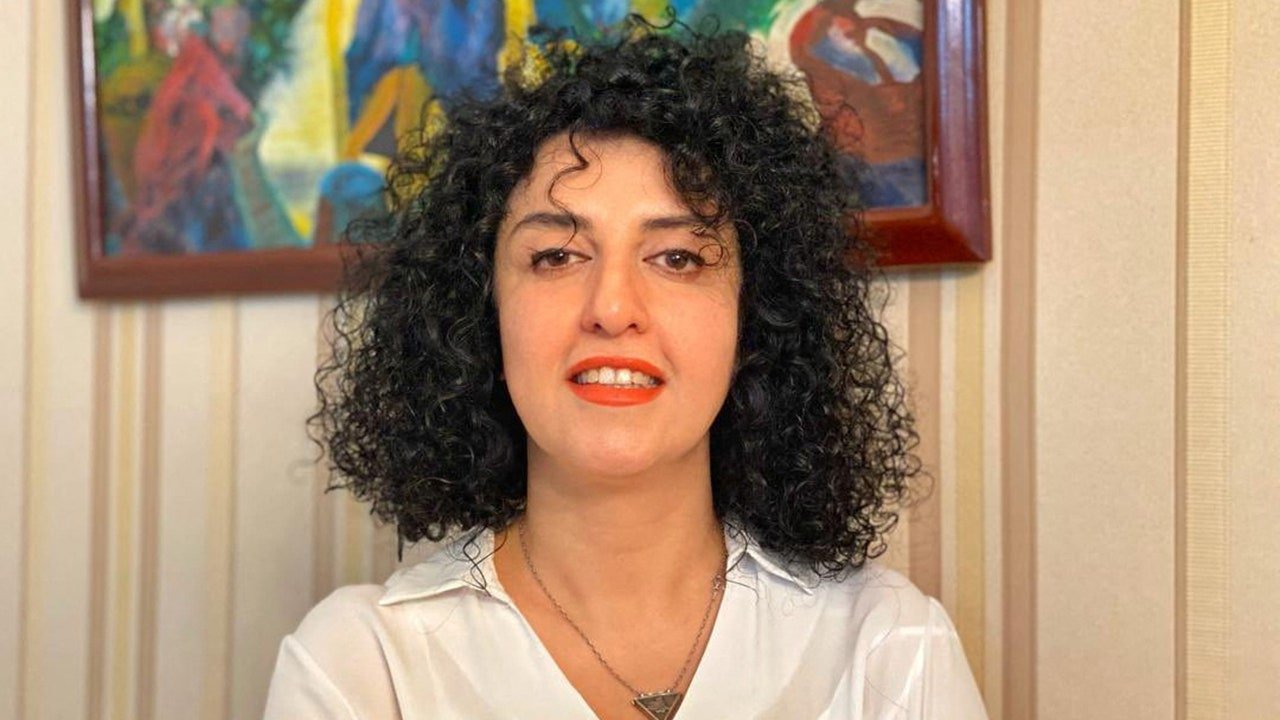
Narges Mohammadi, Iranian human rights activist and vice president of the Defenders of Human Rights Center, poses for a portrait in an undated photo. (Reuters)
Now, according to her husband, her condition has worsened dramatically.
«Narges is currently detained in Zanjan prison,» he said. «She was arrested in Mashhad during the month of Dey (around January) and was severely beaten. During her arrest, she received numerous blows, resulting in severe injuries to her chest, head, body and lungs.»
Rahmani said prison medical authorities determined she should be transferred for treatment under her own physician’s supervision in Iran, but that Iran’s Ministry of Intelligence is refusing the transfer and insisting she remain in Zanjan.
«Spiritually and mentally, Narges remains steadfast,» he said. «She believes the Islamic Republic is not desirable for the Iranian people, and advocates for a system based on freedom, human rights and open relations with the world. Physically, however, she has sustained severe trauma and urgently requires medical attention.»
Rahmani said the last time he spoke with his wife was the night before she left for Mashhad, Iran, where she was later arrested.
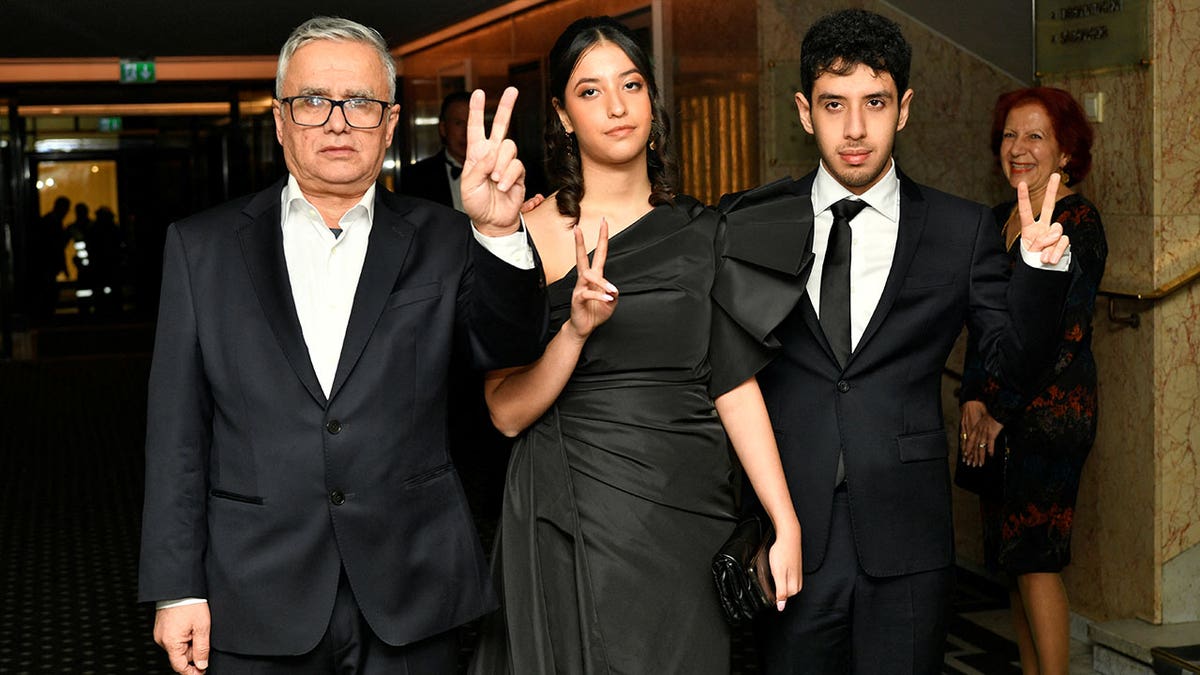
The Nobel banquet at the Grand Hotel in Oslo on Sunday, in connection with the awarding of the Nobel Peace Prize 2023. Peace Prize winner Narges Mohammadi is imprisoned in Iran and is therefore represented by her children Ali and Kiana Rahmani and her spouse Taghi Rahmani, in Oslo, Norway Dec. 10, 2023. (NTB/Rodrigo Freitas via Reuters)
His account offers a rare inside look into the life of one of Iran’s most internationally recognized dissidents at a moment when questions over who could realistically lead opposition to the regime are intensifying.
«We hear a great deal about the Iranian opposition, yet media in the free world often lack a precise definition and a full understanding of what the Iranian opposition actually is,» Iranian anti-regime activist Maryam Shariatmadari told Fox News Digital.
Shariatmadari, one of the most recognizable faces of Iran’s «Girls of Revolution Street» movement, a wave of anti-regime protests that began in 2017 when Iranian women publicly removed their hijabs and stood in defiance of the country’s mandatory veiling laws, was sentenced to prison in 2018 after publicly removing her hijab in protest.
WHAT’S NEXT FOR IRAN’S TERROR ARMY, THE IRGC, AFTER DEVASTATING MILITARY SETBACKS?
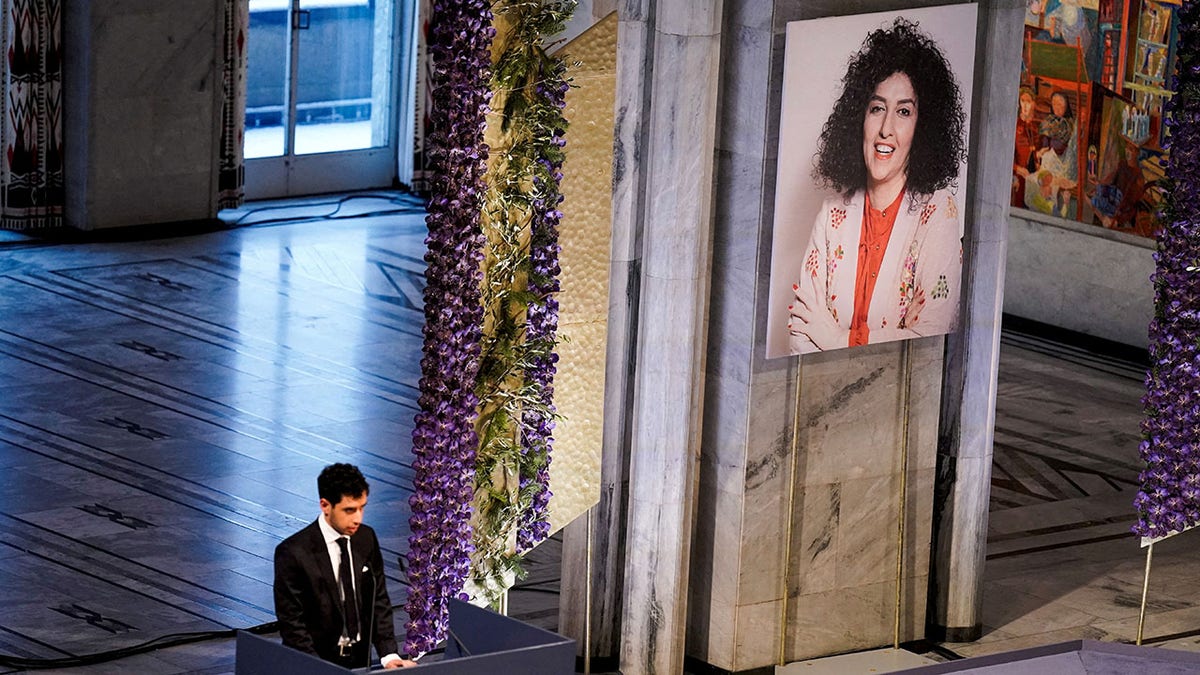
Ali Rahmani, son of imprisoned Iranian human rights activist Narges Mohammadi, speaks after receiving the Nobel Peace Prize 2023 on her behalf at Oslo City Hall in Norway. (Fredrik Varfjell/NTB)
According to Shariatmadari, one camp consists of Iranians who view the 1979 Islamic Revolution itself as the foundational national disaster, believing Iran’s trajectory was derailed when the Shah fell. The second includes former revolutionaries, reformists, communist factions and groups such as the Mujahedin-e Khalq (MEK), many of whom emerged from or once supported the revolutionary system before later opposing it.
«The first group considers the 1979 revolution a disaster and seeks a return to Iran’s previous path,» she said, while the second includes «those who participated in the revolution but later became opposition figures after being excluded from power.»
That distinction, she argues, helps explain why Reza Pahlavi, the exiled son of Iran’s last shah, remains uniquely recognizable among many anti-regime Iranians despite spending decades outside the country.
Lisa Daftari, foreign policy analyst and editor-in-chief of The Foreign Desk news platform, told Fox News Digital, «Inside Iran, Pahlavi remains one of the only opposition figures with broad name recognition, and his message clearly resonated during the January protests, which is why his name still carries weight for many Iranians both inside the country and in the diaspora.»
Pahlavi himself sharpened that message Friday after a series of European appearances, accusing both European politicians and journalists of ignoring the scale of Iranian suffering.
«I spent the past several weeks traveling across Europe, speaking to members of parliaments, governments, and the press,» Pahlavi said in a video statement on his official X account. «My visit had one objective: to give a voice to the millions of Iranians held hostage by the Islamic Republic … But I can now say with confidence that silencing, that censorship is not just happening at the hands of the regime in Iran, but by the international and particularly the European media.»
EXILED IRANIAN CROWN PRINCE REVEALS 6-STEP PLAN TO EXERT PRESSURE ON TEHRAN’S REGIME

Iran’s Reza Pahlavi, exiled son of Shah Reza Pahlavi, is protected by security after he was attacked with a red fluid, following a news conference in Berlin, Germany, April 23, 2026. (Markus Schreiber/The Associated Press )
He went on to condemn what he described as European indifference to the mass killing of protesters and political executions, saying that across two press conferences in Stockholm and Berlin attended by more than 150 journalists, «not a single one» asked about the tens of thousands he says were killed during January’s crackdown or the political prisoners facing execution.
«Whether or not Europe stands with us … I will fight for my people and my country,» Pahlavi said. «We will fight until Iran is free.»
Still, even some supporters acknowledge why the administration has hesitated to openly embrace him as a transitional figure.
Daftari warned that overt Western backing could backfire by making him appear externally imposed rather than domestically legitimized.
«The Trump administration’s decision not to more openly embrace him as a transitional figure likely reflects several factors: a deep wariness of making regime change the explicit end goal or appearing to engineer it after Iraq and Afghanistan, concern that overt U.S. backing could put an even bigger target on his back and a strategy that is currently focused less on anointing a successor and more on degrading the regime’s capacity to threaten its own people, the region and the United States,» she said.
If Pahlavi represents dynastic memory and explicit regime-change politics, Mohammadi represents something profoundly different.
AS AIRSTRIKES RAIN DOWN ON THE IRANIAN REGIME, CAN A FRACTURED OPPOSITION UNITE TO LEAD IF IT FALLS?
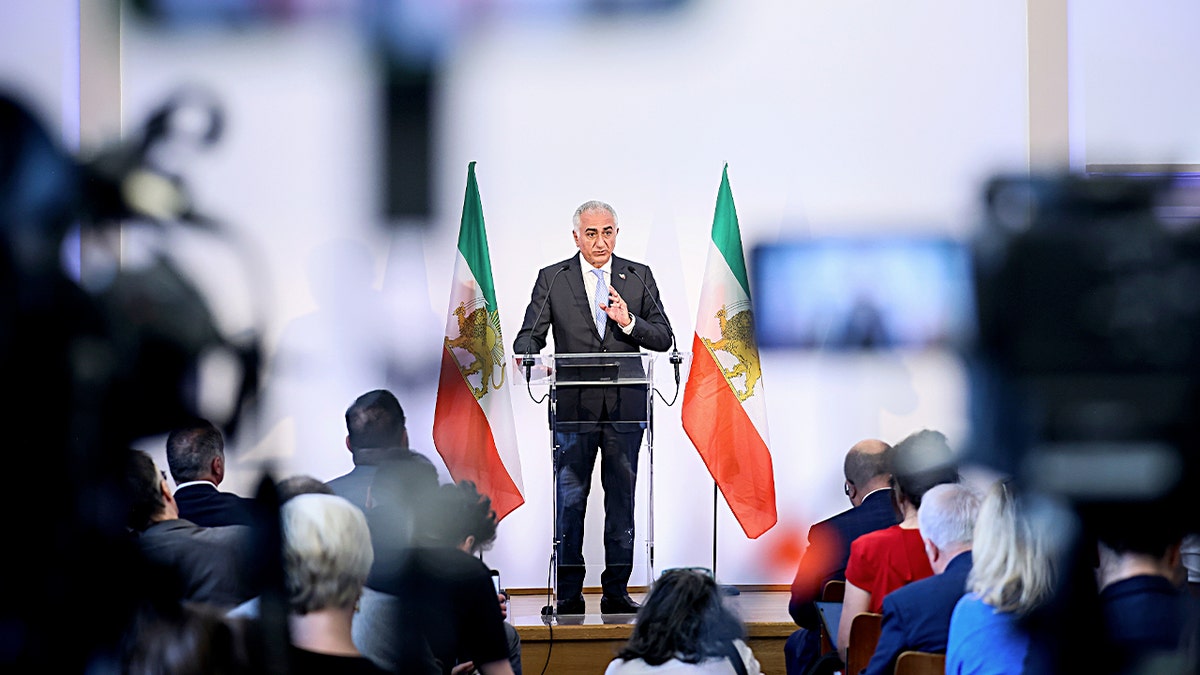
Reza Pahlavi, son of Iran’s former Shah Mohammad Reza Pahlavi, speaks during a press conference in Paris June 23, 2025. (Thomas Padilla/AP)
Mohammadi’s place within that landscape is distinct due to her unique kind of legitimacy at a time when many Iranians are searching not only for opposition to the regime, but for a figure who embodies endurance under it.
For now, however, Rahmani warns that Iran’s domestic conditions may make any mass uprising extraordinarily difficult.
«As you know, war serves as an excuse to suppress domestic forces within a country,» he said. «This war has now increased the intensity of the regime’s actions against the opposition.»
He argued that despite internal divisions, the Islamic Revolutionary Guard Corps has effectively consolidated power, militarized the streets and severely weakened civil society.
«The Islamic Republic has practically taken control of the streets during wartime and has severely weakened Iran’s civil society, which is the guarantor of democracy. In our opinion, this war, under these conditions, is not to the benefit of Iran, nor to the benefit of the Iranian people.»
CLICK HERE TO DOWNLOAD THE FOX NEWS APP

A picture of Nobel Peace Prize winner Narges Mohammadi on the wall of the Grand Hotel in central Oslo before the Nobel banquet, in connection with the awarding of the Nobel Peace Prize 2023, in Oslo, Norway, Dec. 10, 2023. (NTB/Javad Parsa via Reuters)
That may be the defining challenge for Iran’s opposition today: not simply finding a leader, but surviving long enough under extraordinary repression for one to emerge.
Whether Mohammadi can become that figure remains uncertain. But from prison, her husband says, she has not stopped believing Iran’s future can be different.
The Iranian mission to the United Nations did not respond to a request for comment in time for publication.
war with iran, ali khamenei, persecutions, human rights, iran









INTERNACIONAL
Federal judge blocks blue state’s law prohibiting ICE agents from wearing masks on the job
DOJ sues Virginia over anti-ICE policies as key anti-terror tool nears expiration
The Department of Justice launched a lawsuit against Virginia concerning new anti-ICE policies, including a controversial mask ban for federal agents. Acting AG Todd Blanche argues these laws jeopardize federal officers. Concurrently, a major anti-terrorism tool, FISA, faces expiration tonight due to congressional inaction, raising national security concerns. Shannon Bream and Jim Jordan analyze the political stalemate and potential consequences.
NEWYou can now listen to Fox News articles!
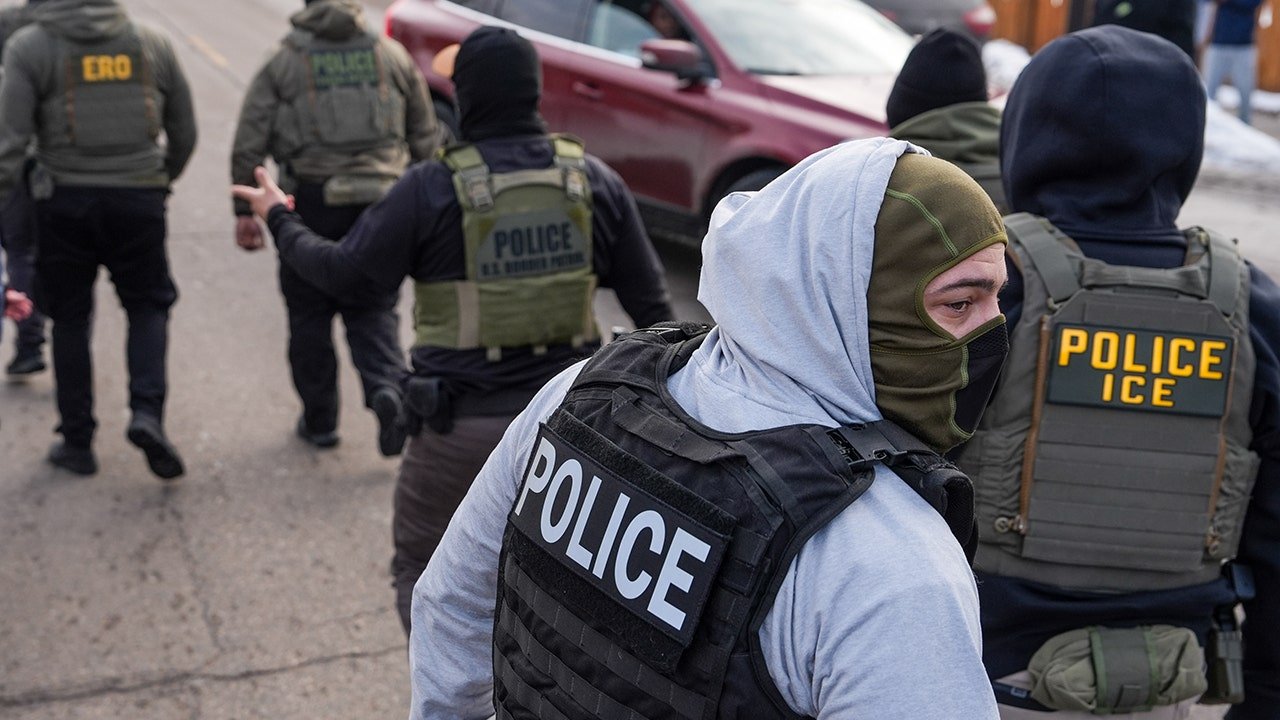
A federal judge on Tuesday blocked Virginia from enforcing a new law that would prohibit federal agents — U.S. Immigration and Customs Enforcement (ICE) and Border Patrol — from wearing masks while carrying out enforcement operations, siding with the Trump administration in a dispute over federal authority.
Senior U.S. District Judge Robert E. Payne granted the Department of Justice’s (DOJ) request for a preliminary injunction, preventing the law from taking effect Wednesday while the legal challenge proceeds. The injunction will remain in place while the case is litigated.
Payne found the federal government is likely to succeed on the merits because Virginia’s law attempts to regulate how federal officers enforce immigration laws, violating the Constitution’s Supremacy Clause.
MINNESOTA SENATE VOTES TO BAN ICE FROM WEARING MASKS, ALLOW RESIDENTS TO SUE FOR CONSTITUTIONAL VIOLATIONS
Masked federal agents are confronted by anti-ICE agitators. (Getty Images, File)
The judge also found the government demonstrated it would likely suffer irreparable harm because enforcing the law could expose federal employees to «real risk of physical harm» while carrying out immigration enforcement duties.
The ruling stems from a lawsuit the DOJ filed last week challenging two laws signed by Democrat Virginia Gov. Abigail Spanberger.
The DOJ argued the measures would subject masked federal agents to criminal penalties and threaten agreements between federal immigration authorities and local law enforcement.
DOJ ESCALATES BLUE-STATE ICE STANDOFF AFTER STATES REFUSE KEY FEDERAL REQUEST
«Law enforcement officers risk their lives every day to keep Americans safe, and they do not deserve to be doxed or harassed simply for carrying out their duties,» Acting Attorney General Todd Blanche said when the lawsuit was filed.
«Virginia’s anti-law enforcement policies regulate the federal government and are designed to create risk for our agents,» he added. «These laws cannot stand.»
The lawsuit argued Virginia was attempting to dictate how federal officers carry out law enforcement operations by restricting when they may wear face coverings, requiring them to display identifying information and placing conditions on cooperation agreements between local agencies and ICE.
MINNESOTA SENATE VOTES TO BAN ICE FROM WEARING MASKS, ALLOW RESIDENTS TO SUE FOR CONSTITUTIONAL VIOLATIONS
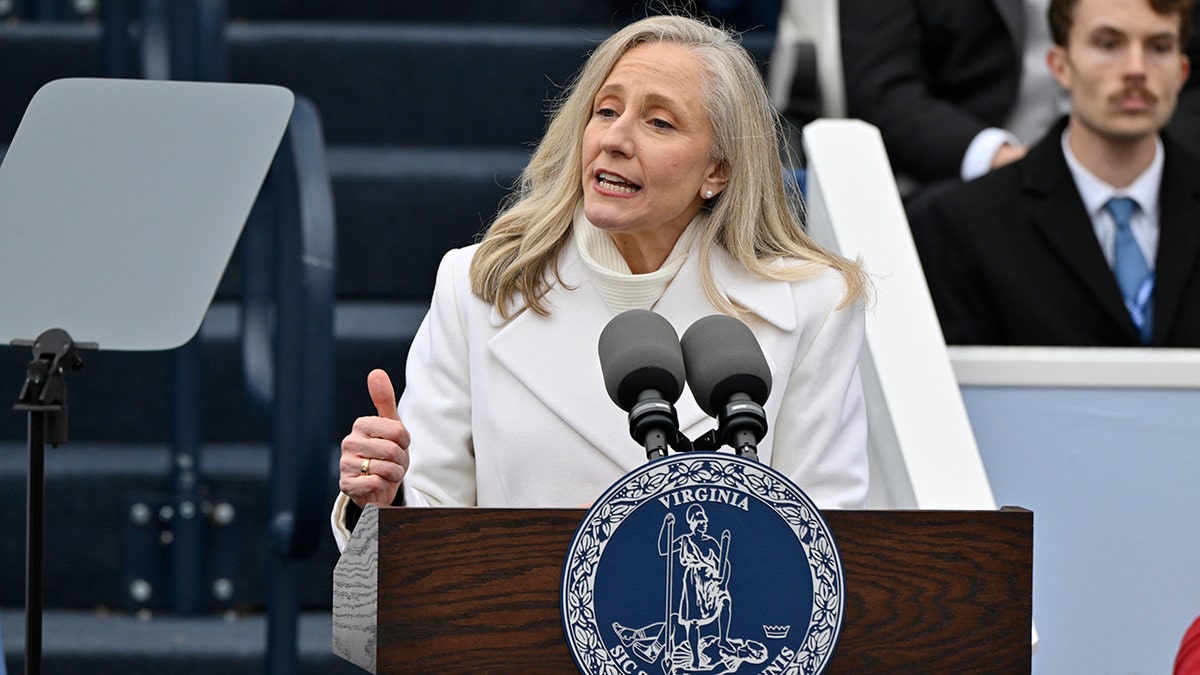
Virginia Gov. Abigail Spanberger has ended agreements between state law enforcement agencies and federal immigration authorities. (Marvin Joseph/The Washington Post via Getty Images, File)
According to the DOJ, federal officers who violated Virginia’s mask and identification law could have faced a Class 1 misdemeanor punishable by up to 12 months in jail, a fine of up to $2,500, or both.
The lawsuit names Virginia Attorney General Jay Jones and Fairfax County Commonwealth’s Attorney Steve Descano as defendants.
Payne’s order applies only to Virginia’s mask and identity law. The judge noted the Justice Department’s separate challenge to another provision governing immigration enforcement agreements will proceed on a different briefing schedule, with a hearing scheduled for Aug. 3.
CLICK HERE TO DOWNLOAD THE FOX NEWS APP
Spanberger, Jones and Descano have all taken steps to counter the Trump administration’s ICE agenda in Virginia.
In February, Spanberger rescinded an executive order issued by former Virginia Gov. Glenn Youngkin directing state law enforcement agencies to cooperate with federal immigration authorities.
Fox News Digital has reached out to Spanberger’s office for comment on the development.
Fox News Digital’s Ashley J. DiMella contributed to this report.
virginia, judiciary, justice department, federal courts, politics
INTERNACIONAL
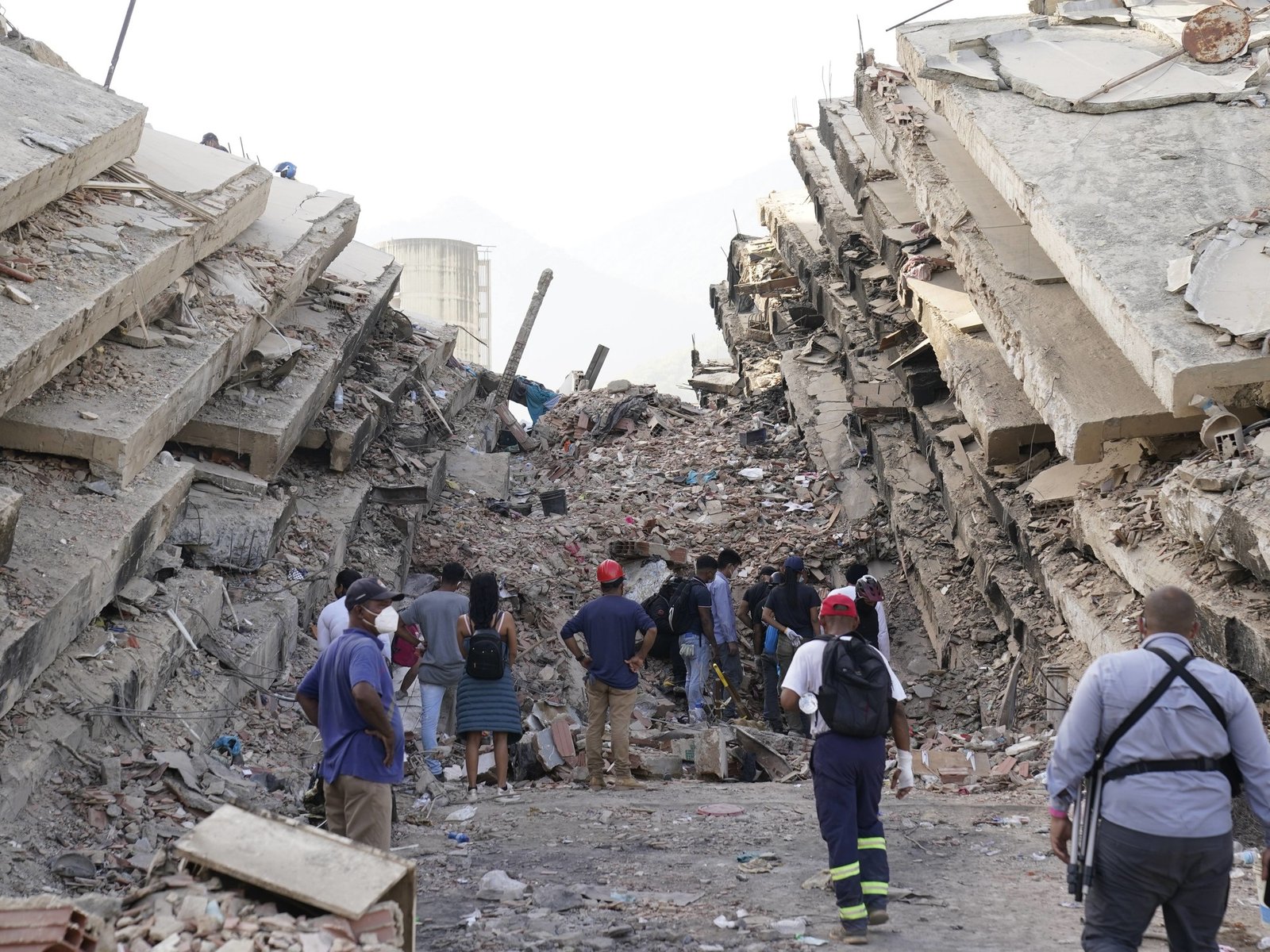
Dolor, angustia y furia en Venezuela: el régimen mantiene el cerco militar en La Guaira y complica la búsqueda de desaparecidos bajo los escombros


INTERNACIONAL
Thousands of police deployed across South Africa as deadly anti-immigration protests spread to multiple cities
NEWYou can now listen to Fox News articles!
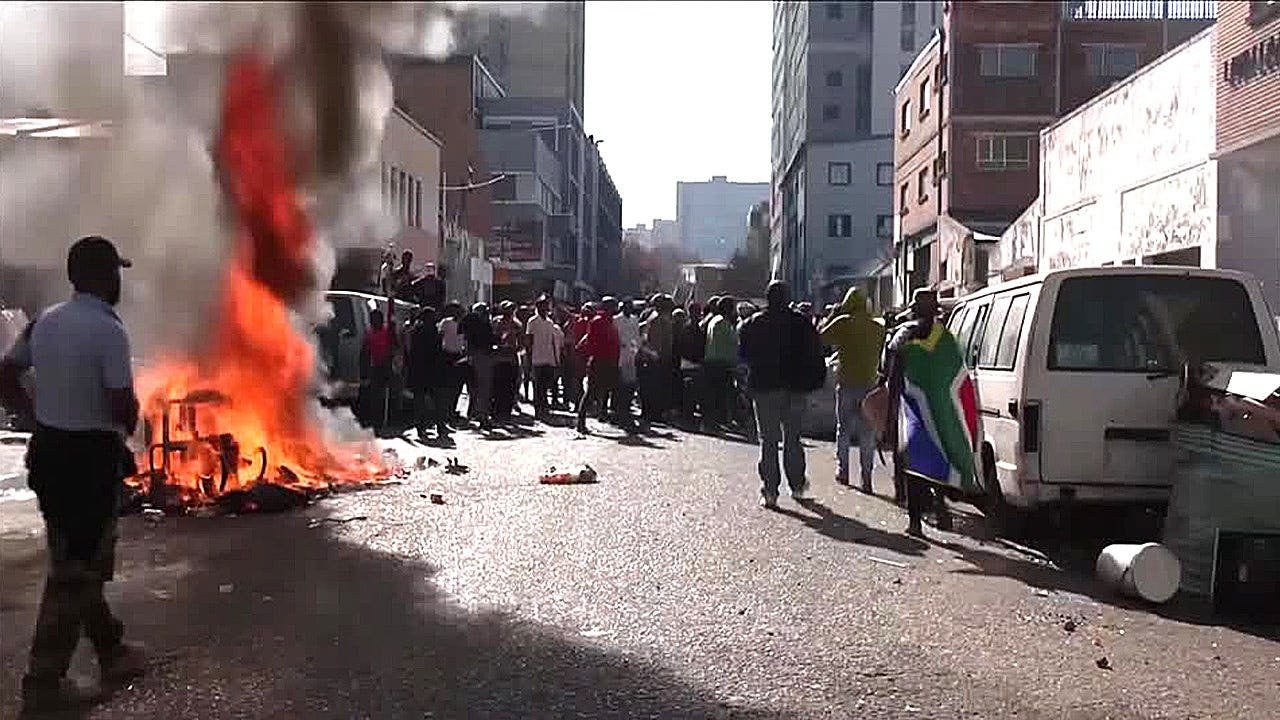
Thousands of police officers were deployed across South Africa after large-scale protests against illegal immigration erupted Tuesday, with destructive clashes spreading across multiple cities.
The unrest, involving thousands of protesters, broke out ahead of a June 30 deadline set by some organizers demanding the departure of all illegal migrants, according to Reuters.
The marches reportedly drew thousands of mostly poor or unemployed South Africans, who say foreign migrants have taken jobs by accepting lower wages while also fueling higher crime rates.
At least four people have been killed as violence and looting spread across the country, Reuters reported.
STATE DEPARTMENT REPORT CONDEMNS SOUTH AFRICA OVER ‘EXTRAJUDICIAL KILLINGS’ IN ANNUAL HUMAN RIGHTS REPORT
Anti-immigrant marchers walk through the streets of Johannesburg on the day of an unofficial deadline set by anti-immigrant groups for all illlegal migrants to leave, in Johannesburg, South Africa, June 30, 2026. (REUTERS/Oupa Nkosi)
The clashes mark the largest migration-related protests since anti-migrant violence erupted in South Africa in 2008.
While thousands of foreign nationals from other African countries had already fled ahead of Tuesday’s so-called deadline, tensions have remained high, Reuters said.
Multiple businesses and properties were vandalized in several areas, according to reports.
In anticipation of further attacks, many shops reportedly closed, with foreign workers staying home.
Landlords in Durban and Johannesburg also evicted foreign tenants illegally to avoid further trouble, witnesses alleged.
Reuters added that 100 Congolese nationals were reported sleeping on the streets of Durban.
SOUTH AFRICA’S HIGH VIOLENCE AND LAND DEBATES CLASH WITH WESTERN MEDIA VIEWS
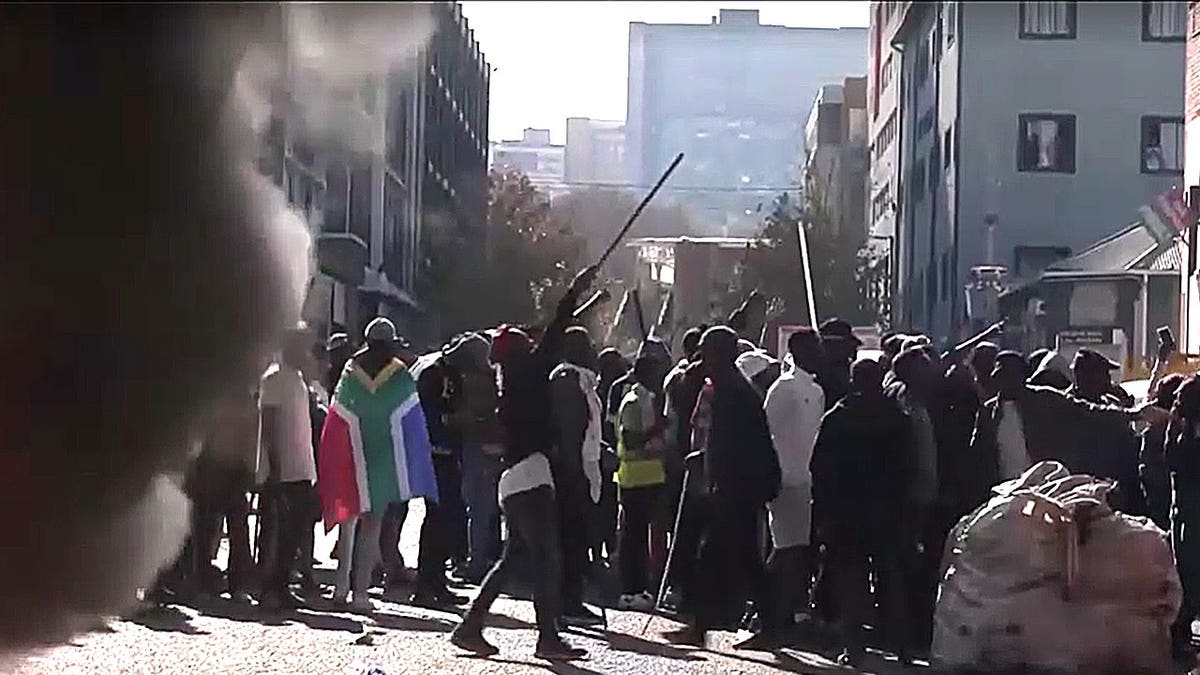
Protesters stand with wooden sticks near a fire burning in the street in Johannesburg, South Africa, on June 30, 2026. (Reuters)
While many marches were considered peaceful, police reported that they arrested several looters and fired rubber bullets to disperse crowds.
National broadcaster SABC added that protesters looted shacks belonging to foreign nationals in the Soweto township.
In Thembisa, a suburb of Johannesburg, rioters reportedly threw stones at police and suspected migrants, with witnesses saying sporadic gunfire was heard.
STATE DEPT SAYS G20 BOYCOTT TIED TO SOUTH AFRICA’S ‘GOVERNMENT-SPONSORED DISCRIMINATION’ AGAINST AFRIKANERS
Police deployed tactical vehicles and fired shots in Benoni, east of Johannesburg, after being confronted by a group of roughly 500 protesters, Daily Maverick reported.
Thousands of police officers have been deployed nationwide, while the military was placed on standby, a defense spokesperson said in a statement.
«To those who intend to break the law tomorrow, our message is simple: do not test the resolve of the State,» Lt. Gen. Tebello Mosikili said.
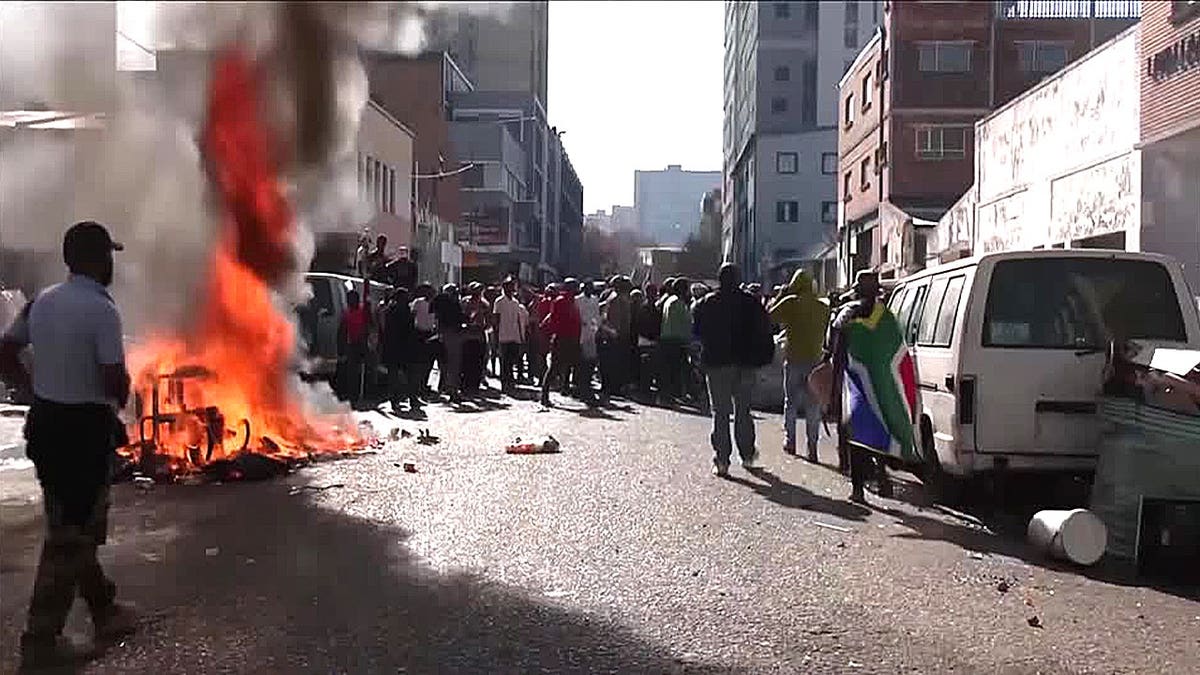
Protesters start a fire in the streets of Johannesburg, South Africa, on June 30, 2026. (Reuters)
The «March and March» group, one of the more prominent organizations behind the unrest, addressed the violence, saying it cannot be held responsible for spontaneous incidents breaking out during the demonstrations.
«Unfortunately, we can’t be in every single community telling them … how to behave,» Jacinta Ngobese, leader of the March and March group, told Reuters two weeks ago.
Ngobese said the group plans to hold weekly marches until its demands are met, despite the government rejecting the deadline and saying only authorities can enforce immigration laws.
«For the next six months, we are asking for our national resources to be used to take the illegal immigrants out of this country. From building to building — they must go,» Ngobese said, according to ZimLive.
CLICK HERE TO DOWNLOAD THE FOX NEWS APP
Despite South Africa’s high unemployment rate, the country remains Africa’s largest economy and continues to draw migrants.
The immigrant population stands at about 3 million, or roughly 4% of the total, according to StatsSA.
Reuters contributed to this report.
south africa, world protests, police and law enforcement, illegal immigrants, africa

Importaciones de alimentos y medicamentos pagarán menos impuestos hasta fin de año

Inglaterra vs Congo: formaciones, hora y dónde ver por tv

La charla de Coscu con Tinelli en Infobae Mundial: la pelea entre la televisión y el streaming, el cambio de época y el valor de la comunidad

“Se alejaba de nosotros, estaba nerviosa”: qué dijeron los padres de Loan sobre la actitud de Laudelina el día de la desaparición

Del abrazo entre Milei, Adorni y Santilli al saludo de Karina Milei con Patricia Bullrich: la trastienda de la jura del nuevo jefe de Gabinete

Las palabras de Analía Maiorana tras la asunción de Santilli como jefe de Gabinete

El punto de quiebre que sentó la suerte de Manuel Adorni y los preparativos que hace el Gobierno ante su inminente salida

La bomba de Nico Occhiato tras el escándalo de Florencia Peña con Messi: “Lo más groso que pudimos haber logrado”

Cómo ganar $20 millones con Mercado Pago: el paso a paso para quienes cobran ANSES

Una escena estremecedora: el dato más doloroso de los minutos posteriores a la muerte de Ernestina Pais

 POLITICA2 días ago
Exigen que Adorni renuncie a su cargo en el directorio de YPF
- POLITICA2 días ago
Tras haber dejado su cargo de jefe de Gabinete, Manuel Adorni también renunciará como director de YPF
- CHIMENTOS3 días ago
Dolor infinito: encontraron muertos a la esposa y los hijos del futbolista argentino Lucas Trejo entre las ruinas del terremoto en Venezuela