INTERNACIONAL
California leaders mum on $1B high-speed rail detour aimed at preserving disgraced labor leader’s memorial


NEWYou can now listen to Fox News articles!
California taxpayers may be on the hook for a roughly $1 billion detour project as part of the state’s new high-speed rail construction meant to prevent disruption of a monument honoring the disgraced labor leader Cesar Chavez.
Despite tearing down and vacating memorials for Chavez, top California lawmakers did not immediately respond when asked if taxpayers in their state should still be on the hook for a roughly billion-dollar detour project meant to prevent the state’s new high-speed rail from coming near the monument nestled in the mountains. The detour, according to 2020 estimates from the California High Speed Rail Authority, would cost taxpayers close to $1 billion when accounting for inflation.
California leaders, universities and beyond immediately began stripping honors they had bestowed on the late labor leader after news of him sexually abusing and grooming minors and adults, including one girl who was as young as 13 at the time of the abuse and another who became pregnant twice following their encounters.
CALIFORNIA TO CHANGE CESAR CHAVEZ DAY TO FARMWORKERS DAY AFTER SEXUAL ABUSE SCANDAL
Cesar Chavez, head of the United Farm Workers, makes a point in a press conference in Sacramento. (Getty Images)
The Chavez-founded labor union, United Farm Workers, called the allegations «profoundly shocking» and decided earlier this year to cancel its upcoming annual celebrations honoring him. Meanwhile, the César Chavez Foundation opted to do the same, describing the allegations as «disturbing» and noting they were «deeply shocked and saddened.»
The Chavez Foundation, according to the San Francisco Chronicle, successfully lobbied for the roughly $1 billion detour known as the «Refined César E. Chávez National Monument Design Option,» which moved the high-speed rail track roughly three-quarters of a mile from the Chavez monument’s boundary. The monument, part of the National Park Service, is a sprawling 187 acres and includes Chavez’s and his wife’s burial spots. It is also reportedly the location where Chavez founded his labor movement.
The monument already sits along a key transportation corridor with a single track looping around the site that carries dozens of freight trains a day. According to the San Francisco Chronicle, the train creates a constant rumble for those walking around the site.
DEMS FACE RECKONING AFTER PUTTING DECEASED LABOR LEADER ON PEDESTAL AS SEXUAL ABUSE ALLEGATIONS EMERGE

Then-President Barack Obama and Cesar Chavez’s late wife walk from Chavez’s grave site during a tour of a memorial garden at the Chavez National Monument October 8, 2012, in Keene, California. (BRENDAN SMIALOWSKI/AFP/Getty Images)
«I have been to the monument,» Adriana Rizzo, a member of Californians for Electric Rail, told the San Francisco Chronicle. She noted it «is right next to a freight corridor» leading her to question «why this quieter, less-polluting train would have to be invisible.»
«This is a billion dollars we don’t have. There are a lot of other things we need. If there is a better route, we’re always open,» California High Speed Rail Authority board director, Ernest Camacho, said, according to the San Francisco Chronicle. Martha Escutia, another board director, reportedly said she is «always willing to reopen current commitments to ensure we get the best savings for taxpayers.»
Estimates for the high-speed rail project have been north of $200 billion, but the rail authority has challenged those estimates, telling CBS47 and KSEE24 the estimate is closer to $125 billion.

A rendering shows a high-speed rail train as it enters a station during an informational open house by the California High Speed Rail Authority at the Hilton DoubleTree in downtown Fresno, California, on Wednesday, May 1, 2024. (Craig Kohlruss/The Fresno Bee/Tribune News Service via Getty Images)
CLICK HERE TO DOWNLOAD THE FOX NEWS APP
Fox News Digital reached out to top California leaders, including Gov. Gavin Newsom’s office, to inquire whether there should even be a debate over whether to get rid of the detour plans, particularly when many of them have taken actions to strip honors and memorials to the disgraced labor leader. However, none of them replied in time for publication.
california, taxes, transportation, politics, gavin newsom










INTERNACIONAL
Details of Todd Blanche’s behind-the-scenes meeting with Angel Mom revealed after Capitol Hill testimony
NEWYou can now listen to Fox News articles!
EXCLUSIVE: An Illinois Angel Mom whose daughter died after a tragic encounter with an illegal alien last year revealed to Fox News Digital details of a conversation she had with President Donald Trump’s attorney general nominee that convinced her he’s the man for the job.
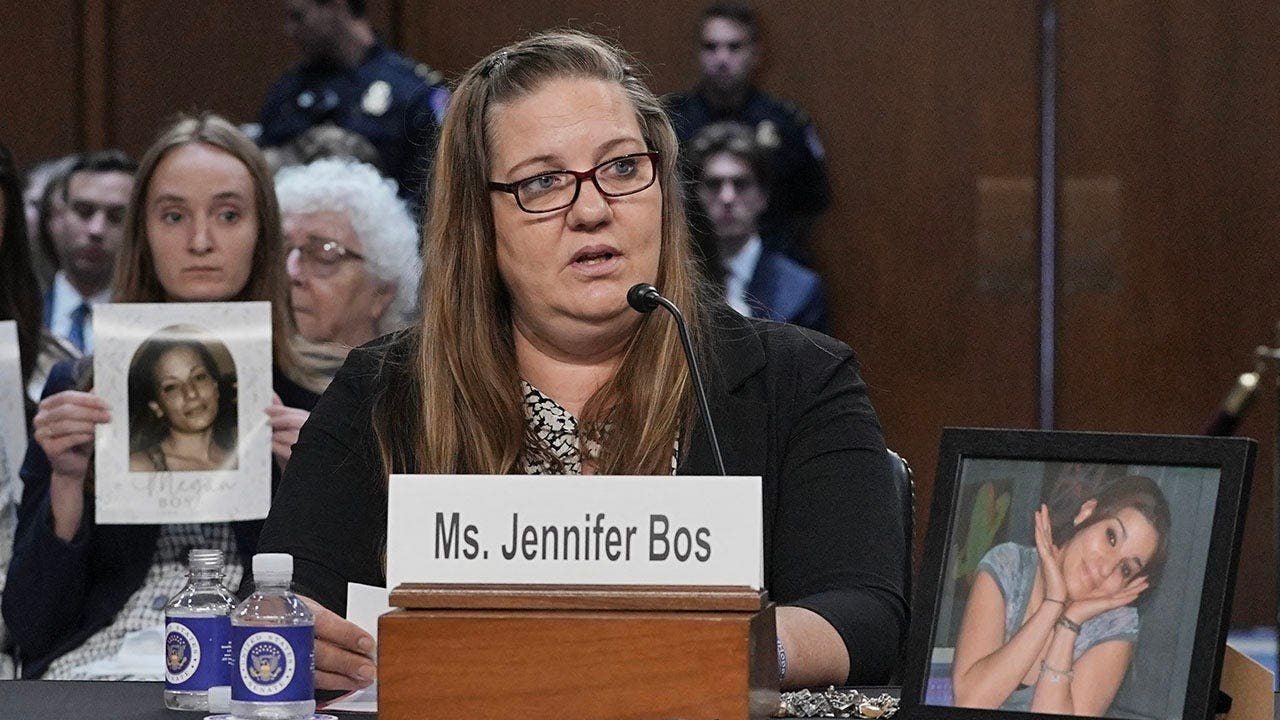
«I immediately felt so pulled towards him,» Jennifer Bos said, speaking about Acting Attorney General Todd Blanche. «You get a certain energy from people, and he is just the kindest… He listened to my story very intently, and you could just see his mind ticking like, ‘what are we going to do about this?’»
Bos’ daughter, Megan Bos, was just 37 when she was found dead in April 2026, stuffed in a garbage can and soaked in bleach, 51 days after she disappeared. An illegal alien from Mexico, Luis Mendoza-Gonzalez, was charged with several felonies in relation to Megan’s death after her body was found on his property.
Jennifer Bos, mother of Megan Bos, speaks during the second day of acting Attorney General Todd Blanche’s Senate Judiciary Committee confirmation hearing on Capitol Hill in Washington, D.C., on July 16, 2026. President Donald Trump’s pick to be the next attorney general is his former personal defense lawyer Todd Blanche. (Ken Cedeno/AFP via Getty Images)
HUNDREDS OF JAILED ILLEGAL ALIENS RELEASED BACK ONTO BLUE-STATE STREETS DESPITE ICE DETAINERS, RECORDS SHOW
Mendoza-Gonzalez is accused of abuse of a corpse, two counts of concealing the death of a person and obstructing justice. He claims Megan overdosed, and insists he had nothing to do with her death.
Due to Illinois’ sanctuary policies, Mendoza-Gonzalez walked free after an initial hearing, infuriating Jennifer. He was tracked down and re-arrested by U.S. Immigration and Customs Enforcement (ICE) in Indiana in July 2026, just days after Jennifer shared her tragic story with Trump when they crossed paths at an anti-fentanyl bill signing.
Jennifer and her husband are now raising Megan’s daughter, who was five years old when her mother died.
EXCLUSIVE: DHS HONORS ANGEL FAMILIES DURING NATIONAL CRIME VICTIMS WEEK, CALLS CRIMES ‘COMPLETELY PREVENTABLE’
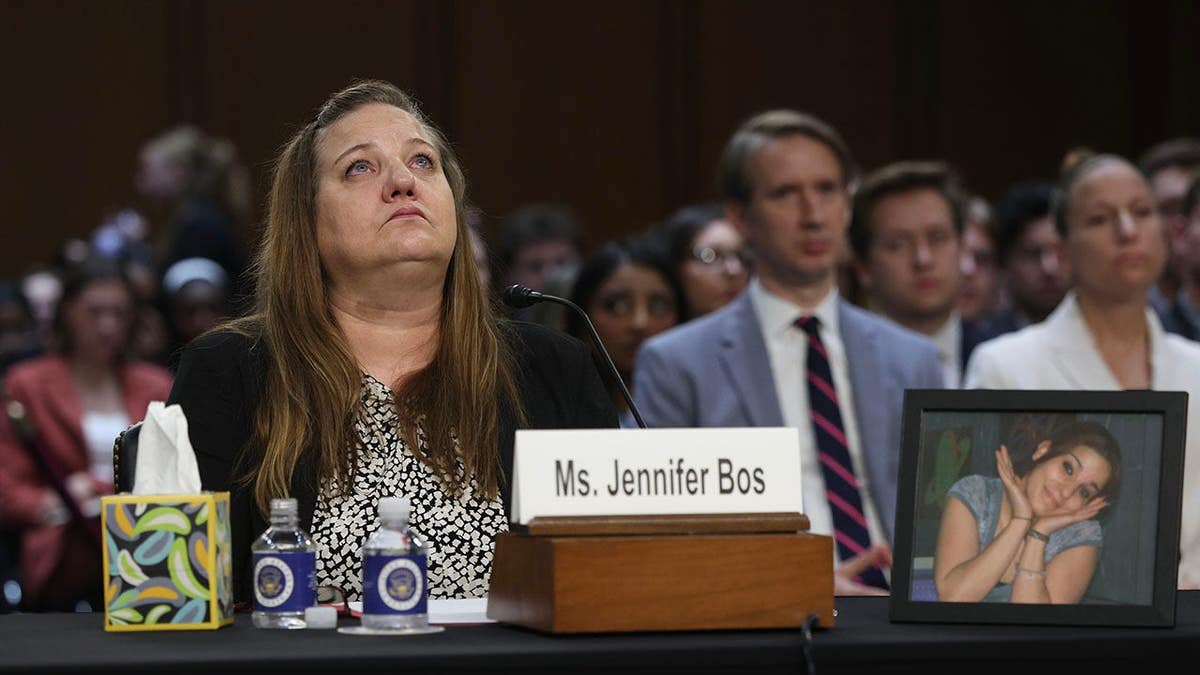
Jennifer Bos, mother of Megan Bos, speaks on Capitol Hill during Todd Blanche’s confirmation hearing for U.S. attorney general on July 16, 2026, in Washington, D.C. During Blanche’s tenure as acting attorney general, the Justice Department has been under scrutiny for pushing President Trump’s $1.8 billion «anti-weaponization» fund and its handling of the Epstein files. (Win McNamee/Getty Images)
Though, as Jennifer noted, there is nothing Blanche can do to help her family specifically, since her daughter has already tragically died, she is confident the attorney general nominee understands the plight of Angel Families everywhere.
«We’re trying to make a difference for people who haven’t been touched by this kind of tragedy, who haven’t been touched be the violence that can be from an illegal immigrant,» Jennifer said.
She said she thinks Blanche, placed as acting attorney general after Pam Bondi’s ouster, is «being true to the job he’s supposed to do.»
«I trust that he’s doing the right thing for the right reasons,» she continued.
Jennifer testified before the Senate Judiciary Committee just 24 hours after Democrats on the committee attempted to shred Blanche’s credibility, and paint him as a personal yes-man for Trump.
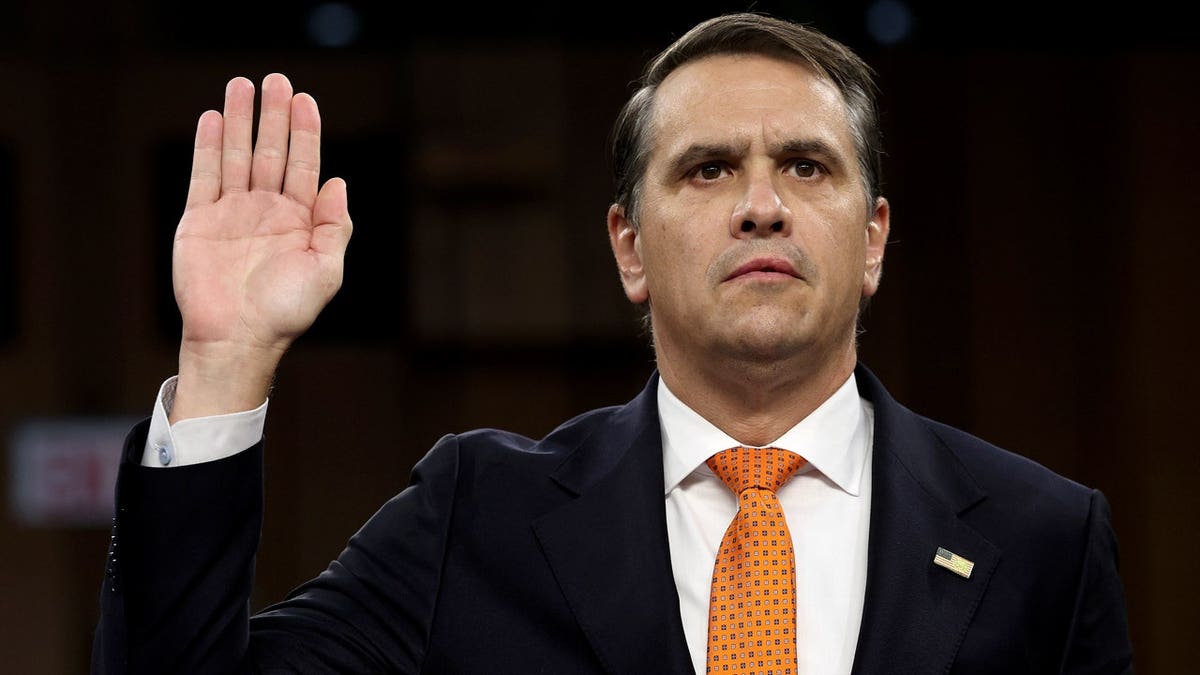
Acting Attorney General Todd Blanche gets sworn in at his confirmation hearing in front of the Senate Judiciary Committee on Capitol Hill. (Win McNamee/Getty Images)
She told Fox News Digital those same Democrats have completely ignored families whose lives have been forever altered by the death of a relative at the hands of an illegal alien, including hers. She didn’t speak to any Democrats on the panel before her Thursday testimony.
TODD BLANCHE EARNS ATTORNEY GENERAL BID ENDORSEMENT FROM LAW ENFORCEMENT ALLIANCE AHEAD OF CONFIRMATION
«You know, before President Trump came into office, Angel Families were inconvenient truths,» she said. «They didn’t want to acknowledge the damage that was being done by having open borders and by having people here illegally, that they couldn’t track, they couldn’t identify.»
She described Republicans and independents as «welcoming,» and said they’re always open to meetings and helping Angel Families tell their stories.
Jennifer came face-to-face with her own senator, Dick Durbin, D-Ill., who is the Ranking Member of the Judiciary Committee, during Thursday’s hearing.

Senator Dick Durbin, a Democrat from Illinois and chairman of the Senate Judiciary Committee, during a hearing in Washington, D.C., US, on Tuesday, July 12, 2022. The hearing is titled «A Post-Roe America: The Legal Consequences of the Dobbs Decision.» (Photographer: Ting Shen/Bloomberg via Getty Images)
«I was very frustrated listening to my own senator when he addressed me directly, giving his apologies, because all I could think of was, you know, I’ve been out in the public, I’m everywhere, I have been for the last year and a half, yet never once has he said anything to me, reached out to me or anything of the like,» said Jennifer.
She said the issue of illegal alien crime is «very nonpartisan,» noting that it can happen to anyone regardless of political ideology and expressing disappointment that both sides of the political aisle can’t come together to solve the problem.
Jennifer did say that Durbin approached her to chat after the hearing, and that she is hopeful the pair can collaborate on solutions in the future.

U.S. President Donald Trump holds up a proclamation dedicating February 22nd as Angel Family Day during a remembrance ceremony held in the East Room at the White House February 23, 2026, in Washington, DC. The term «Angel Families» is used to describe people who have lost a relative to a crime committed by an undocumented immigrant. (Win McNamee / Getty Images)
During the hearing, Jennifer said Blanche is listening to Angel Families, and that they’re «being taken seriously.»
CLICK HERE TO DOWNLOAD THE FOX NEWS APP
«I’m asking the committee not to wait until another mother is sitting where I am, confirmed Todd Blanche,» she said. «He is a leader who will uphold the law, honor victims, confront dangerous criminal organizations, and fight to give other American families the safety and lasting protection that came too late for mine.»
«I couldn’t save my daughter. But Todd Blanche as attorney general, he might save yours because next time, it could be your child. It could be your family. It could be you.»
illegal immigrants, politics, todd blanche, attorney general, senate
INTERNACIONAL
La ola de calor elevó la mortalidad en Europa: se reportaron al menos 12.000 muertes adicionales en junio

Una decena de países europeos registró en conjunto al menos 12.000 muertes adicionales durante la ola de calor de junio, según una recopilación de datos oficiales realizada por la agencia de noticias AFP. Se trata de un balance preliminar que podría aumentar a medida que se completen las estadísticas.
Entre el 22 y el 28 de junio, período en el que la ola de calor alcanzó su punto máximo en varios países, institutos nacionales de Alemania, Francia, Bélgica, España, Países Bajos, Suiza y Luxemburgo registraron cerca de 10.000 muertes por encima de lo esperado.
A esta recopilación de datos oficiales realizada por AFP se suman 2.200 muertes relacionadas con la ola de calor en Inglaterra y Gales, según estimaciones publicadas por el servicio meteorológico británico, la Met Office, que abarcan un período ligeramente más amplio, del 18 al 28 de junio.
Los datos preliminares de la plataforma europea de monitoreo de la sobremortalidad EuroMOMO también indican un aumento significativo durante esa última semana de junio, con 14.260 muertes por encima de lo esperado.
Este modelo estadístico se basa en los datos oficiales de 24 países que representan a cerca de 400 millones de habitantes.
Una persona se refresca en una fuente en el Trocadero, cerca de la Torre Eiffel, durante la ola de calor en París el 24 de junio de 2026. (Foto: AP)
“El verano aún no ha terminado”, advirtió este jueves el director regional de la OMS para Europa, Hans Henri Kluge. “Contamos con las herramientas para evitar estas muertes”.
Actualmente, “demasiados gobiernos siguen considerando el calor como un fenómeno meteorológico en lugar de una emergencia de salud pública”, agregó en un comunicado.
“Dramático”
Hasta el momento, esta semana de junio es la que registra un mayor exceso de mortalidad desde que comenzaron estos registros armonizados de EuroMOMO en 2020.
De todas las semanas del verano boreal de los últimos siete años, esta “semana 26” de 2026 solo es superada por otra en julio de 2022 durante la pandemia de covid-19.
“Hasta donde sabemos, no hay otras causas para esta mortalidad excesiva más que el calor, y esto es bastante dramático”, explicó a la AFP Lasse Vestergaard, epidemiólogo del centro de investigación danés Statens Serum Institut y coordinador de EuroMOMO.
El experto califica esta tendencia como “muy inusual”, pero pide cautela en la interpretación de las cifras más recientes. EuroMOMO considera que son necesarias cuatro semanas para consolidar las estimaciones. El balance preliminar de fallecidos puede aumentar a medida que se completen las estadísticas. (Foto: AP Photo/Christophe Ena)
Las olas de calor de junio habrían sido casi imposibles sin el cambio climático, de acuerdo con el grupo de científicos World Weather Attribution.
Miles de muertos en Alemania
Los métodos utilizados para contabilizar el exceso de mortalidad por el calor suelen diferir entre países.
En el caso de España, el sistema de vigilancia de la mortalidad del Centro Nacional de Epidemiología utilizado por el Ministerio de Sanidad atribuyó 610 muertes al calor entre el 22 y el 28 de junio, de las cuales casi dos tercios correspondieron a personas mayores de 85 años.
Alemania registró 5.780 muertes adicionales durante la semana 26 del año en comparación con el promedio de los tres años anteriores, según cálculos basados en las cifras de la Oficina Federal de Estadística (Destatis).
En comparación con las dos semanas anteriores, Destatis contabilizó 7.100 muertes adicionales.
Leé también: Un fuerte temporal asociado al fenómeno El Niño dejó a medio millón de personas sin luz en Chile
En Francia, se registraron más de 2.000 muertes adicionales esa misma semana en comparación con la anterior, según la Agencia Nacional de Salud Pública.
En Bélgica, el instituto científico público Sciensano registró 750 muertes en exceso solo entre el 27 y el 28 de junio, de un total de 1.747 entre el 18 de junio y el 1 de julio, una cifra récord durante una ola de calor en el siglo XXI.
Un análisis de AFP de los datos del Instituto Neerlandés de Salud Pública y Medio Ambiente (RIVM) muestra casi 600 muertes por encima de lo esperado en los Países Bajos entre el 22 y el 28 de junio, y unas 220 en Suiza durante el mismo período, según las cifras de la Oficina Federal de Estadística.
Varios países de Europa Central y del Este, también afectados por la ola de calor de junio, entre ellos Eslovaquia y Hungría, aún no han publicado datos preliminares.
Europa, ola de calor
INTERNACIONAL
Key Trump agency puts top universities in crosshairs over alleged race-based dorm programs

NEWYou can now listen to Fox News articles!
The Trump administration is opening civil-rights investigations into the University of Connecticut and the University of Minnesota after receiving complaints alleging the schools are operating dorm programs that may be steering students into campus housing services based on race.
The complaints, filed by the Equal Protection Project and obtained by Fox News Digital, accuse UConn of operating three allegedly discriminatory housing programs — ScHOLA²RS House, BSOUL House and La Comunidad Intelectual — promoted toward Black male, Black female and Hispanic students. A separate complaint against the University of Minnesota Twin Cities names four programs — Huntley House, Charlotte’s Home, CASA SOL and Tsev Hmoob — that allegedly are promoted toward Black male, Black female, Hispanic and Hmong American students.
According to the Department of Housing and Urban Development (HUD), the programs potentially violate the Fair Housing Act, Title VI of the Civil Rights Act of 1964 and constitutional equal-protection guarantees by steering students toward or away from dormitory housing programs – which also include student support services – based on race, color or national origin, even when the universities say the programs are «open to all.»
UNEARTHED RECORDS REVEAL DEM MAYOR SOUGHT TAX HIKE TO FUND DEI ROLE AHEAD OF KEY HOUSE RACE
Department of Housing and Urban Development (HUD) Secretary Scott Turner said his agency will move to an English-only model following President Donald Trump’s executive order designating English as the official language of the United States. (GETTY IMAGES/FOX NEWS)
«Unlawful discrimination cannot be allowed to poison American communities or separate members of our next generation —especially in college and university housing,» Secretary Scott Turner said in a statement to Fox News Digital. «Every student has the right to learn and live in an educational environment free from illegal and divisive DEI. Unlike the Biden Administration, the Trump Administration does not play favorites. Every American deserves the law’s protection, and any institution of higher education that engages in unlawful housing discrimination will be held accountable.»
Both universities denied engaging in discriminatory housing practices.
A University of Minnesota spokesperson told Fox News Digital the school wasn’t aware of the probe from HUD’s Office of Fair Housing and Equal Opportunity, but argued the school’s programs are compliant with «federal regulations, guidelines and anti-discrimination laws.» HUD confirmed to Fox News Digital it sent notice of the investigation to the university ahead of publication.
«The University’s Living Learning Communities are open to all students, regardless of race or ethnicity, which is clearly stated on our website,» the spokesperson said. «The University is diligent in its compliance with federal regulations, guidelines and anti-discrimination laws.»
HUD LAUNCHES CIVIL RIGHTS INVESTIGATION INTO BOSTON’S DEI HOUSING POLICIES OVER ALLEGED RACIAL DISCRIMINATION
However, the Equal Protection Project’s complaint cited by HUD appeared to anticipate UMN’s defense, arguing that the school’s «open to all» disclaimer does not resolve the alleged problem because the university still «expressly defines and markets» the residential communities around race or ethnicity.
«Such perfunctory non-discrimination language does not cure the racial steering violation,» the complaint says.

The Washington Ave. bridge on the campus of the University of Minnesota in Minneapolis, Minnesota on April 2, 2022. (Photo by Kirby Lee/Getty Images)
The complaint points to UMN materials describing Huntley House as a community «designed for Black men,» Charlotte’s House as «designed for Black women,» CASA SOL as «designed for Latinx students» and Tsev Hmoob as «designed for Hmong American students,» all of which provide housing and programmatic benefits including peer mentoring, academic support, community events and shared residential space for selected students.
The complaint also alleges UMN added its «open to all» language to at least three of the programs sometime after March 17, 2026, based on internet archive history, and argues that the late-added disclaimer does not cure the alleged violation. Instead, the complaint says, the added language suggests the university was aware its race-based descriptions and opens them to legal liability.
MED SCHOOL DEANS COME UP EMPTY IN TENSE HEARING WHEN ASKED POINT BLANK IF MEN CAN HAVE BABIES: ‘RIDICULOUS’
Meanwhile, UConn also denied discriminating in campus housing.
«UConn does not discriminate on the basis of race, gender, or any other aspect of identity, including in our on-campus housing,» a university spokesperson told Fox News Digital.
«UConn is home to nearly 20 different interdisciplinary living and learning communities within on-campus housing, all of which are organized around students who may have similar interests, backgrounds, or academic pursuits, including the three that were specifically named,» the spokesperson continued. «However, these communities are open to all students and no student is denied access to these communities based on their identity.»
But the Equal Protection Project complaint cited by HUD in conjunction with its new probe argues that UConn’s housing programs, which also offer student support services, may still amount to unlawful racial steering even if students outside the named groups are not formally barred.
UConn’s housing descriptions for ScHOLA²RS House, BSOUL House and La Comunidad Intelectual, the complaint alleged, have been promoted in a manner that could signal to other students that the housing programs are not intended for them. The complaint points specifically to the schools’ promotional materials and social media posts, arguing the housing the programs’ titles, descriptions and imagery are likely to steer non-Black or non-Hispanic students away from applying, regardless of whether UConn intended to discriminate.

The University of Connecticut, Hartford campus on April 1, 2026. (Ryan Caron King/Connecticut Public via Getty Images)
CLICK HERE TO DOWNLOAD THE FOX NEWS APP
«This information steers individuals (‘ordinary readers’) towards and away from dormitory housing based on these preferences in violation of the FHA,» the complaint against UConn states, adding that the allegation holds «even if UConn in fact has no discriminatory intent.»
The complaint highlights how UConn’s learning communities allow students to live together while participating in shared academic courses, mentoring and co-curricular programming, and says the named programs also promote support including academic and social or emotional support, research opportunities, professional development, seminar courses, events and shared community space.
«When parents entrust their children to universities, they expect these institutions to cultivate independent thinkers who will engage with life’s permanent questions, pursue truth, beauty, and goodness, and carry forward the great intellectual, moral, and cultural inheritance of Western civilization,» Assistant Secretary for Fair Housing and Equal Opportunity Craig Trainor told Fox News Digital.
«Too often, however, these young Americans arrive on campus only to be steered toward racially segregated housing arrangements that divide students, create unequal experiences, and betray the core principles of a classical liberal education,» he concluded. «We will fully investigate the allegations against the University of Connecticut and the University of Minnesota to determine if they are, in fact, violating the Fair Housing Act and Title VI of the Civil Rights Act of 1964.»
dei, college, housing, individual rights, investigations, politics, executive

Milei defendió la propiedad privada, criticó el populismo y se cruzó con un espectador

Details of Todd Blanche’s behind-the-scenes meeting with Angel Mom revealed after Capitol Hill testimony

El Senado aprobó el pliego del juez que falló a favor de la reforma laboral en la causa que inició la CGT

El inconveniente que sufrió la selección argentina y demoró su viaje a Nueva York para la final del Mundial

Procesaron a Jorge Capitanich por fraude y abuso de autoridad por la entrega de tierras a familiares de una funcionaria

Jimena Barón reveló la historia del particular amuleto que usa en cada partido de Argentina en el Mundial

El álbum de las vacaciones soñadas de Darío Barassi con su familia: “Ibiza, nos vas enamorando”

El petróleo sube más de 3% tras la reanudación de los ataques de EEUU contra Irán y la amenaza de cierre del estrecho de Ormuz

Operativo Reelección 2027: Los 8 Cambios Urgentes que Javier Milei Debe Implementar para Asegurar su Continuidad

Mitch McConnell breaks silence on mystery hospitalization after Graham’s death

 DEPORTE16 horas ago
El machete del arquero inglés en una botella que sorprendió a Messi tras el triunfo: el dardo de un ayudante de Scaloni a Inglaterra
- CHIMENTOS3 días ago
Yanina Latorre opinó sobre el partido de Argentina versus Inglaterra: “No tiene nada que ver con la guerra de Malvinas”
- ECONOMIA3 días ago
Bunge es nuevo líder de exportaciones agrícolas argentinas