INTERNACIONAL
En medio de la guerra, el presidente de la federación de fútbol iraní pelea para que su selección vaya al Mundial

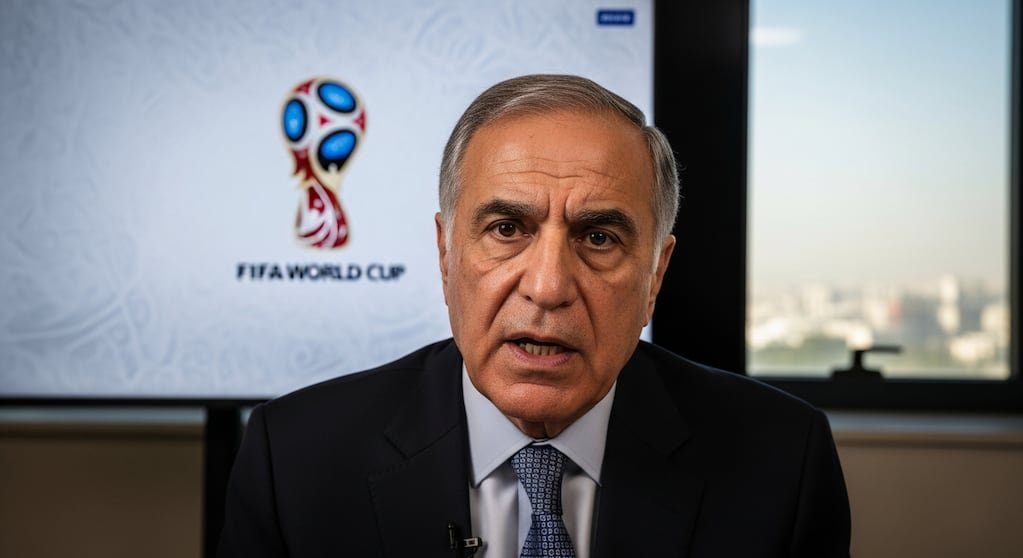
Los preparativos de Irán para la próxima Copa Mundial en Norteamérica se han desarrollado con el telón de fondo de la guerra, palabras beligerantes y continuas dudas de que la selección nacional reciba los visados a tiempo.
El malestar ya ha dado lugar a cumbres entre funcionarios iraníes y los máximos dirigentes del organismo rector del fútbol. En el centro de todo esto ha estado Mehdi Taj, quien durante muchos años ha sido presidente de la federación de fútbol de Irán.
En una inusual entrevista, Taj, antiguo comandante del Cuerpo de la Guardia Revolucionaria Islámica, dejó pocas dudas sobre a quién culpa de las complicaciones.
Mientras la selección nacional de Irán se preparaba para viajar a México en lugar de a Estados Unidos, un cambio de última hora que se produjo en medio de las continuas tensiones, Taj dijo que la decisión se había tomado con la FIFA para reducir al mínimo el tiempo del equipo en Estados Unidos, a quien culpa de toda la incertidumbre sobre la participación de Irán en la Copa Mundial.
Hablando por videollamada, Taj señaló que Irán había sido el tercer equipo en clasificarse para la que será la mayor Copa Mundial de la historia –que ocurrirá a lo largo de Estados Unidos, Canadá y México y en la que competirán 48 selecciones–, pero la primera en la que un anfitrión está en guerra con una de las naciones competidoras.
Esos preparativos, dijo, se han visto afectados de forma que han perjudicado a su equipo. Recientemente, la selección de fútbol de Irán cambió bruscamente su base para la Copa Mundial de Estados Unidos a Tijuana, tras las conversaciones mantenidas con la FIFA en Turquía, donde el equipo ha estado entrenando durante gran parte del mes pasado.
En declaraciones desde Teherán el martes, Taj expresó su profunda decepción por el hecho de que aún no se hubieran aprobado las solicitudes de visado para la selección, que está previsto que juegue tres partidos en la costa oeste estadounidense.
El equipo se ha estado preparando en un campamento en el suroeste de Turquía. La Copa Mundial comienza el 11 de junio, y el primer partido de Irán está previsto cuatro días después contra Nueva Zelanda en Los Ángeles. Irán tenía previsto concentrarse en Tucson, Arizona, antes de que la FIFA, el organismo que rige el fútbol mundial, anunciara que el equipo se instalaría en Tijuana, México, cerca de la frontera con Estados Unidos.
La presencia de Irán en el torneo en medio de su actual conflicto con Estados Unidos es una de las mayores crisis en los casi 100 años de historia de la Copa Mundial.
Leé también: La FIFA dio a conocer las listas de jugadores de las 48 selecciones del Mundial: los datos más curiosos
Una nación anfitriona, afirmó Taj, no debería tener autoridad para interrumpir los preparativos de los equipos clasificados. Desde que comenzó la guerra a finales de febrero, tanto funcionarios iraníes como estadounidenses, incluido el presidente Donald Trump e incluso Taj, han sembrado la incertidumbre con afirmaciones cambiantes.
Taj dijo que el asesinato del líder supremo de Irán al comienzo de la guerra y el bombardeo de una escuela en el que murieron más de cien niños habían creado una “nube de ambigüedad” sobre la participación de Irán. Pero dijo que, desde entonces, las autoridades iraníes habían mantenido conversaciones fructíferas con los dirigentes de la FIFA, incluido su presidente, Gianni Infantino, para sentar las bases de la participación del equipo.
Infantino, quien mantiene una relación cercana con Trump, viajó a Turquía en marzo para mostrar su apoyo al equipo iraní, y el mes pasado, el principal administrador de la FIFA, Mattias Grafström, también se reunió con funcionarios iraníes.
“Solo estamos en contacto con la FIFA, no con Estados Unidos, y no sabemos qué piensan”, dijo Taj.
Taj ha tenido dificultades para viajar en los últimos meses. Fue uno de los funcionarios a los que se negaron credenciales para el sorteo del torneo celebrado en Washington en diciembre. El mes pasado, las autoridades canadienses revocaron sus documentos cuando se dirigía a Vancouver vía Toronto para asistir a la reunión anual de la FIFA. Taj dijo que, tras varias horas de conversaciones con funcionarios canadienses, regresó a su país en señal de protesta con el resto de la delegación iraní.
Taj fue formalmente comandante del Cuerpo de la Guardia Revolucionaria Islámica, grupo que Estados Unidos y Canadá han designado entidad terrorista.
Dijo que él ya no tenía ninguna relación con el grupo, pero sostuvo que este contaba con un amplio apoyo en Irán para defender el país. En Canadá, dijo, él y otros miembros de la delegación iraní “pasaron el tiempo defendiendo el país” bajo el interrogatorio de funcionarios de fronteras en Toronto.
El presidente de Estados Unidos, Donald Trump, junto al presidente de la FIFA, Gianni Infantino, en la Oficina Oval de la Casa Blanca este 7 de marzo de 2025. (Foto: Jim Watson/AP, archivo)
El secretario de Estado Marco Rubio dijo en una reciente comparecencia en la Casa Blanca junto a Trump que no se permitiría la entrada en Estados Unidos de entrenadores y otros funcionarios vinculados a la Guardia Revolucionaria.
Varios jugadores de la lista de Irán, incluido su capitán, han cumplido el servicio militar obligatorio con el grupo, dijo Taj.
Los problemas con los visados antes del Mundial llevaron a los iraníes, dijo Taj, a “sospechar que era posible que Estados Unidos nos creara algunos problemas graves”.
El lunes, el equipo publicó su lista oficial en un video en las redes sociales, y tiene un partido más de preparación, contra Mali, antes de su partida prevista al campamento base de México. Sardar Azmoun, un jugador estrella que suscitó críticas por una publicación en las redes sociales después de la guerra y que algunos funcionarios tacharon de desleal, se quedó fuera de la lista.
Taj habló positivamente del cambio de última hora, afirmando que Tijuana ofrecía mejores condiciones que Tucson porque estaba más cerca de Los Ángeles, donde se jugarán dos de los partidos de Irán, y tiene mejor clima y conexiones de transporte más fáciles.
Fue menos comunicativo sobre cómo se produjo el cambio. La presidenta de México, Claudia Sheinbaum, dijo que la FIFA le había pedido ayuda a su país porque “Estados Unidos no quiere que la selección iraní se quede a pernoctar en Estados Unidos”.
Taj dijo que desconocía que Estados Unidos hubiera hecho tal petición. “Llegamos a la conclusión mutua con la FIFA de que queremos que nuestra presencia en Estados Unidos sea la mínima posible”, dijo.
Para la FIFA, la crisis requiere de cuidadosas maniobras: satisfacer a un país anfitrión expectante, tranquilizar a un equipo cualificado y mantener la neutralidad política. Esa neutralidad ya ha sido cuestionada debido a la cálida relación de Infantino con Trump.
Taj dijo que, según los principios de “Fair Play” (juego limpio) de la FIFA, todas las naciones clasificadas deben recibir el mismo trato y que proteger a ese principio de las interferencias políticas era responsabilidad de la FIFA, no de Irán.
La FIFA no respondió a la solicitud de comentarios.
Cuando se le preguntó si confiaba en que se celebraría el partido inaugural, Taj no ofreció garantías.
“Tendrías que preguntarle a la FIFA”, dijo.
*Por Tariq Panja
The New York Times, Irán, Mundial 2026













INTERNACIONAL
Russia exposes NATO weapons gap as top commander warns ‘the math is not in favor of the West’
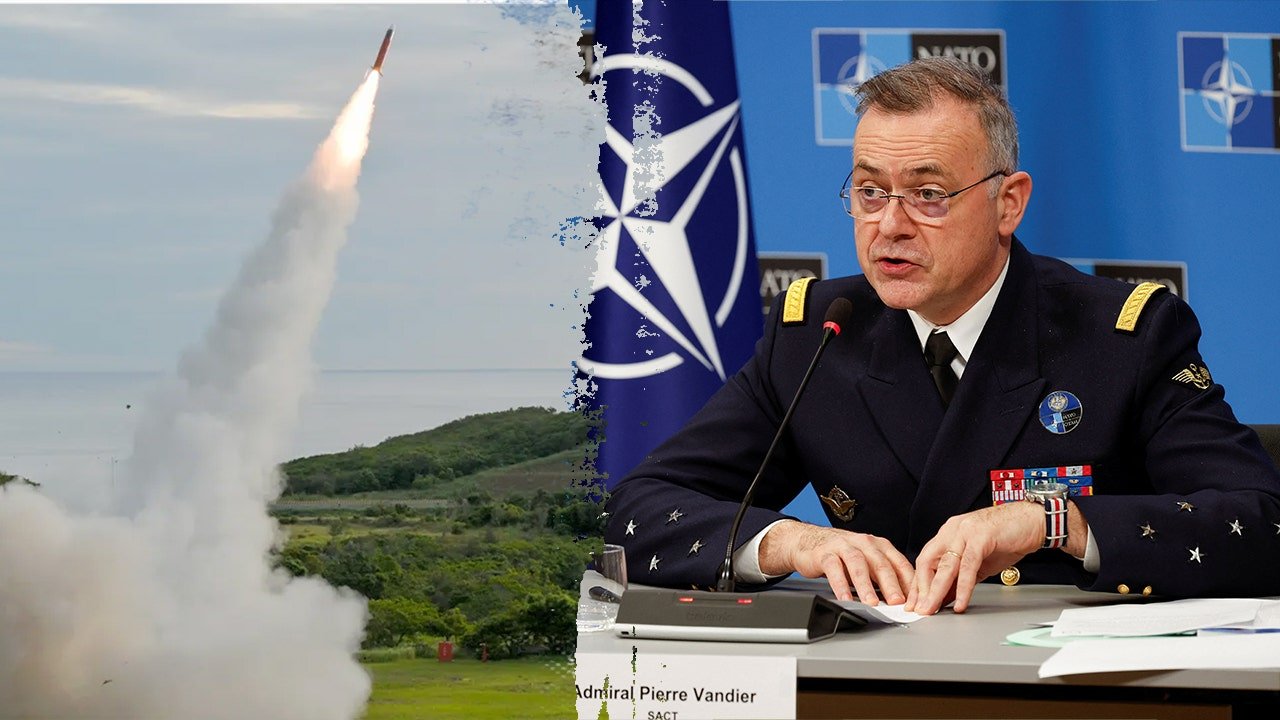
NEWYou can now listen to Fox News articles!
Days after NATO allies committed tens of billions of dollars to new air and missile defenses, the alliance’s top transformation commander warned that the West must fundamentally redesign its weapons and industrial base to withstand attacks at the scale now being demonstrated in Ukraine and the Middle East.
«Today, the math is not in favor of the West,» Adm. Pierre Vandier, NATO’s supreme allied commander for transformation, told Fox News Digital in an exclusive interview following the alliance’s summit in Ankara, Turkey, in early July.
A U.S.-made MIM-104 Patriot surface-to-air missile is launched during a live-fire exercise at the Chiupeng missile base in Pingtung County on Aug. 20, 2024, Adm. Pierre Vandier ( )
The summit produced commitments to acquire 900 Patriot missiles and invest more than $40 billion in counter-drone capabilities throughout five years.
But Vandier argued that simply buying more of the West’s existing weapons will not solve the underlying problem.
TRUMP ENTERS FINAL NATO SUMMIT DAY AS UKRAINE, DEFENSE SPENDING TAKE CENTER STAGE
Russia’s nightly barrages against Ukraine have exposed an air-defense model designed for smaller numbers of incoming threats. The U.S.-Iran conflict has simultaneously intensified demand for the high-end interceptors needed to defeat ballistic missiles, including Patriots and Terminal High Altitude Area Defense (THAAD) that cannot quickly be replaced.
«There is no way to produce 50,000 Patriots a year,» Vandier said. «We don’t have the supply chain, and it’s not worth doing that given the cost of the weapon.»
Instead, Vandier said NATO needs a layered mix of defenses: cheaper weapons that can be mass-produced to counter waves of drones, while preserving advanced interceptors for ballistic missiles and other sophisticated threats.
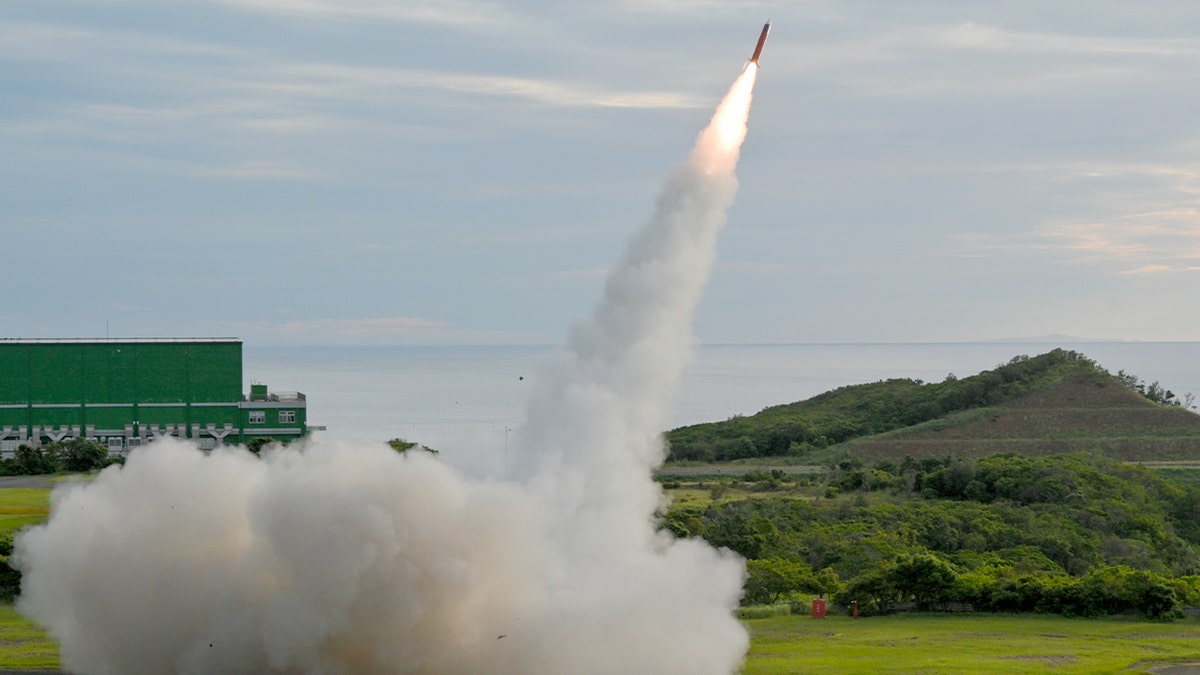
A U.S.-made MIM-104 Patriot surface-to-air missile is launched during a live-fire exercise at the Chiupeng missile base in Pingtung County Aug. 20, 2024. (Sam Yeh/AFP via Getty Images)
THE TWO MOST IMPORTANT AMERICAN WEAPONS SYSTEMS NATO IS EAGER TO HAVE
«You need to have attritable, low-cost, mass-produced weapons to just kill the low-cost weapons that are coming by big waves,» Vandier said. «And then you need still the exquisite, complex weapons to kill the most complex weapons, as ballistic missiles.»
Trump announced at the summit that the United States would grant Ukraine a license to manufacture Patriot interceptors, potentially allowing Kyiv to build more of the weapons it urgently needs to defend against Russian ballistic missiles.
But asked whether the announcement changed his assessment that Patriots alone could not protect Europe throughout the next five years, Vandier pointed to a deeper obstacle: Western weapons were designed around an industrial base that no longer exists.
UKRAINE’S BATTLEFIELD IS TRANSFORMING THE FUTURE OF NATO
«The design needs to change,» Vandier said. «We are at a moment where some stuff will be redesigned under pressure to be mass-produced.»
NATO also is attempting to transform against a threat that is changing in real time. Asked about a recent Russian live-fire exercise on Lake Peipus, between Estonia and Russia, which Estonia’s defense minister assessed was likely practice against Ukrainian-style naval drones, Vandier said Russia has demonstrated an ability to absorb battlefield lessons and adjust «on a weekly basis.»
«War — if you do not adapt, you die,» Vandier said. «All your brain is about how you outmatch, outpace, outrun the enemy. And so Russia is not that bad at that.»
«For NATO now, it’s a question of speed of adaptation,» Vandier said. «It’s a mind game.»
Ukraine’s defense industry, meanwhile, is increasingly setting the pace for the larger Western manufacturers that once supplied most of its weapons, Vandier said. Ukrainian companies have been able to develop, field and modify systems quickly in response to changes on the battlefield.
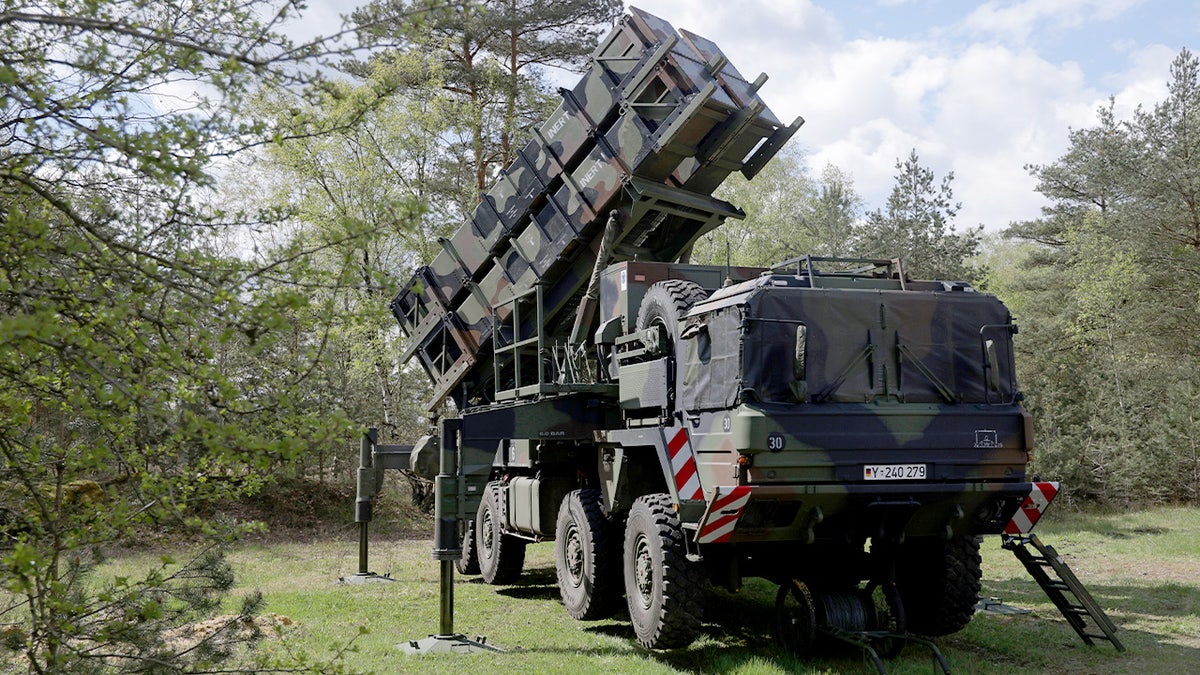
President Donald Trump said the United States would send more Patriot missiles to Ukraine during a meeting with NATO Secretary General Mark Rutte in the Oval Office on July 14, 2025. (Sean Gallup/Getty Images)
«The very agile and fast-evolving industrial base in Ukraine is now giving the pace to the European and Western industry,» Vandier said.
But the technological competition is not confined to drones and air defenses. Vandier warned that the collapse of the Intermediate-Range Nuclear Forces Treaty has reopened a broader race over long-range missiles in Europe, as Russia and NATO allies seek weapons capable of holding targets farther behind enemy lines at risk.
The 1987 treaty prohibited the United States and Russia from possessing ground-launched missiles with ranges between 500 and 5,500 kilometers. The first Trump administration withdrew from the agreement in 2019 after accusing Moscow of violating it, an allegation Russia denied.
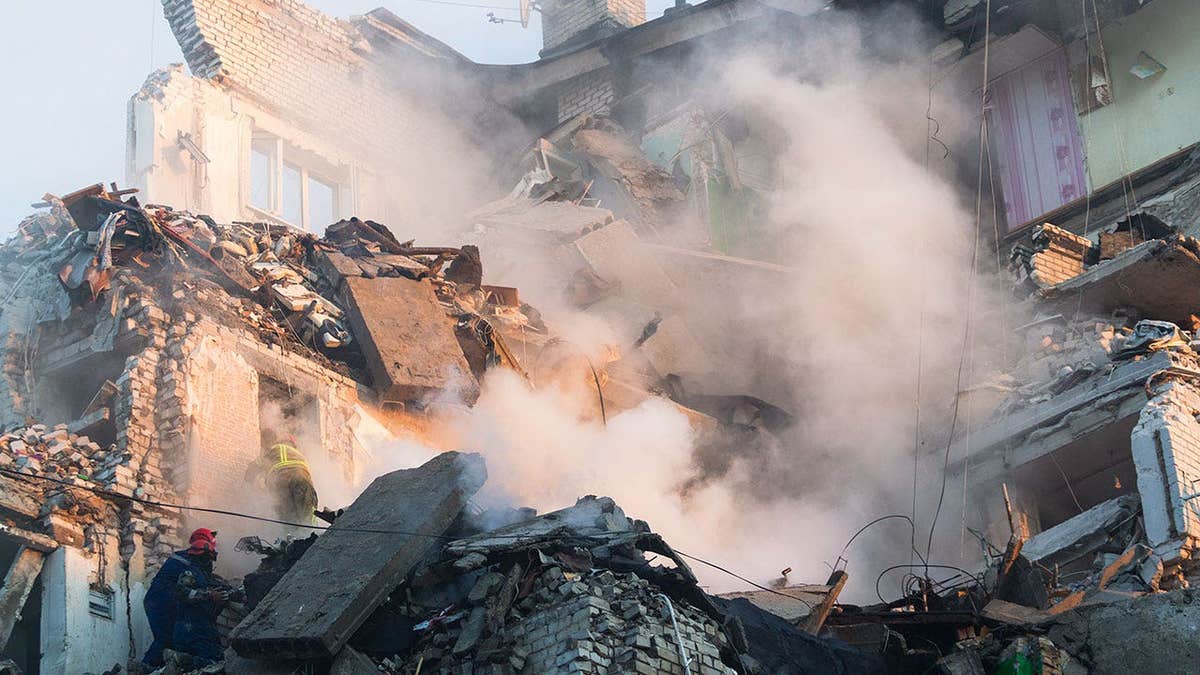
Rescuers conduct search and rescue operations at a multi-storey residential building damaged in a massive Russian missile and drone attack in the Darnytskyi district of Kyiv, Ukraine, on July 2, 2026. Russian forces launched a large-scale attack on the city using strike drones and various types of missiles. Private homes, apartment buildings, an emergency medical substation, and a hotel building were damaged (Kyrylo Chubotin/Ukrinform)
CLICK HERE TO DOWNLOAD THE FOX NEWS APP
Vandier said the disappearance of those limits has produced a period of «complete strategic instability,» with both sides under pressure to develop new capabilities to preserve deterrence.
«The Pandora’s box is open again,» Vandier said, «and we’ll try to close it down one day.»
nato, ukraine, conflicts defense, russia, the european union
INTERNACIONAL
Costa Rica confirmó nueve nidos activos de jabirú y el nacimiento de 19 pichones en 2026
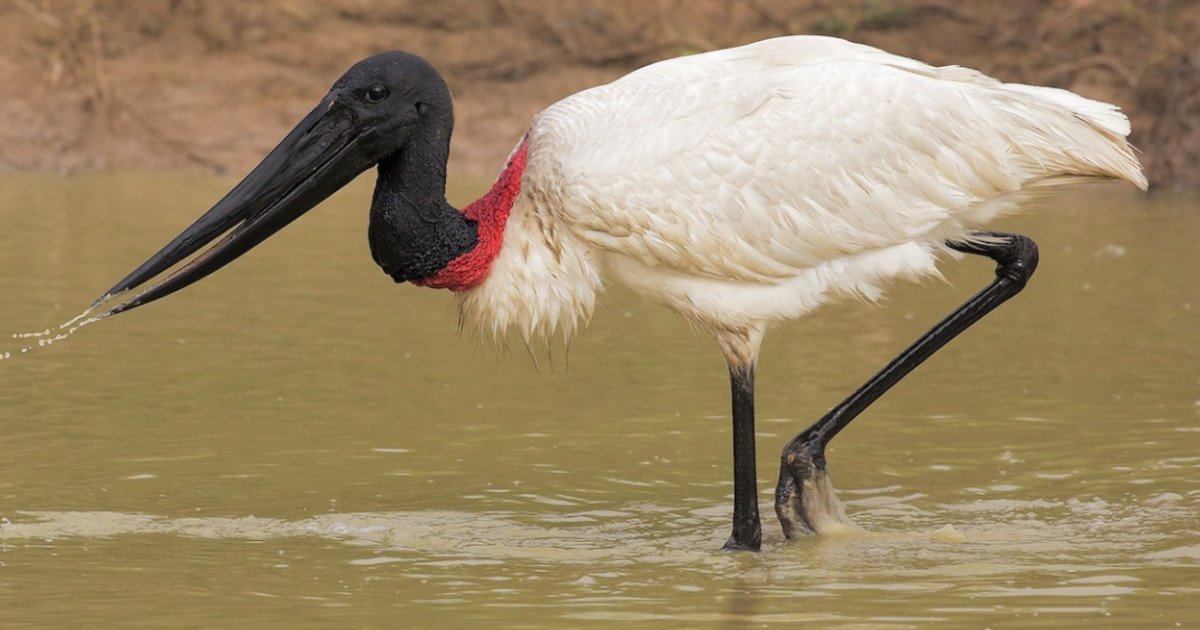
La población del jabirú, considerada una de las aves más emblemáticas y amenazadas de los humedales costarricenses, mostró señales alentadoras durante la temporada reproductiva de 2026. El más reciente monitoreo nacional realizado por la Universidad Estatal a Distancia (UNED) confirmó la existencia de nueve nidos activos y el nacimiento de 19 pichones, datos que permiten evaluar el estado de conservación de la especie y orientar futuras acciones de protección.
El estudio también estimó una población mínima de 148 jabirúes (Jabiru mycteria) durante el periodo reproductivo, cifra obtenida a partir de la revisión de los sitios históricos de anidación y de conteos simultáneos efectuados en las principales zonas donde habita la especie, específicamente en las cuencas de los ríos Tempisque y Frío.
Los resultados forman parte del proyecto de investigación “Ecología y conservación del jabirú en Costa Rica”, iniciativa que la UNED desarrolla desde hace más de tres décadas y que se ha convertido en el seguimiento científico más prolongado sobre esta especie en el país.
De acuerdo con el investigador y profesor de la UNED, Johnny Villarreal Orias, cada temporada reproductiva aporta información clave para conocer el estado de la población y medir el éxito de las parejas reproductoras.
“La presencia de nueve nidos activos y el nacimiento de 19 pichones son indicadores que nos permiten evaluar el éxito reproductivo de la especie y comprender mejor su comportamiento en los humedales costarricenses”, explicó el especialista.

El monitoreo anual combina dos estrategias complementarias. La primera corresponde a la denominada Expedición Jabirú, que consiste en recorrer durante febrero todos los nidos registrados históricamente para verificar cuáles permanecen activos durante la temporada reproductiva.
La segunda metodología se basa en conteos simultáneos realizados el primer sábado de marzo y abril en lagunas y puntos estratégicos de observación ubicados en las cuencas de los ríos Tempisque y Frío.
Según Villarreal, la combinación de ambos métodos permite conocer no solo cuántas parejas lograron reproducirse exitosamente, sino también estimar el tamaño de la población presente en Costa Rica durante cada temporada.
Este seguimiento científico ha permitido construir una base de datos de gran valor para comprender la dinámica poblacional del jabirú, una especie cuya presencia está estrechamente ligada a la salud de los humedales.
Además de la población reproductora, los investigadores identificaron un fenómeno que evidencia la importancia regional de los humedales costarricenses.
Durante el mes de mayo registraron la llegada temporal de cerca de 100 jabirúes no reproductores que utilizaron la Laguna Jicote, en la cuenca del río Tempisque, como sitio de alimentación y descanso durante la época seca.
Las aves permanecieron únicamente algunos días antes de abandonar nuevamente el territorio nacional, comportamiento que, según los especialistas, confirma que Costa Rica funciona como un refugio temporal para ejemplares provenientes de otras regiones.
“La llegada de estos individuos demuestra que los humedales costarricenses tienen un valor ecológico que trasciende nuestras fronteras. No solo albergan a la población reproductora, sino que también funcionan como refugio temporal para jabirúes provenientes de otras regiones”, indicó Villarreal.
Para los investigadores, este movimiento temporal resalta la importancia de mantener en buen estado los ecosistemas acuáticos del norte del país, ya que cumplen un papel fundamental dentro de las rutas utilizadas por la especie.

El proyecto de monitoreo del jabirú supera ya los 30 años de trabajo continuo, convirtiéndose en una referencia para la conservación de esta ave en Costa Rica.
Gracias a este seguimiento, los científicos han determinado que más del 75 % de los nidos se encuentran dentro de propiedades privadas, una realidad que convierte a los propietarios de fincas en actores fundamentales para garantizar la supervivencia de la especie.
La colaboración entre instituciones, comunidades y dueños de terrenos ha permitido proteger árboles utilizados para la anidación y reducir algunas amenazas que enfrentan estas aves.
Sin embargo, los especialistas advierten que todavía existen riesgos importantes para la conservación del jabirú. Entre ellos destacan la pérdida y degradación de humedales, la tala de árboles donde construyen sus nidos, los incendios forestales, el turismo irresponsable en zonas de reproducción y los efectos asociados al cambio climático.
Los investigadores enfatizan que el jabirú funciona como un indicador del estado de salud de los humedales, por lo que proteger sus sitios de reproducción también significa conservar ecosistemas esenciales para cientos de especies de flora y fauna.
Los resultados del monitoreo de 2026 refuerzan la necesidad de mantener programas científicos de largo plazo y fortalecer las acciones de conservación en los humedales costarricenses, considerados uno de los patrimonios naturales más importantes del país. La continuidad de estos esfuerzos permitirá conocer la evolución de la población del jabirú y generar información clave para la toma de decisiones orientadas a proteger una especie emblemática cuya supervivencia depende, en gran medida, de la conservación de los ecosistemas donde habita.
corresponsal:Desde San José, Costa Rica

En Washington, Netanyahu se enfrenta a un delicado equilibrio

El presidente Javier Milei explicará por cadena nacional la reforma de la Carta Orgánica del Banco Central

Canales para ver el Estudiantes vs. Independiente por el Torneo Clausura

Sin reconciliarse, los Rodríguez Saá buscan volver a competir para gobernar San Luis

Russia exposes NATO weapons gap as top commander warns ‘the math is not in favor of the West’

El miedo a la luz mala: por qué cada evolución tecnológica empieza con un susto

Vocero de Milei dijo que un dólar a $1.800 es «posible» y la City alerta por fin de la paz cambiaria

Polémica por el proyecto que busca desregular los planes de ahorro de autos 0 km: qué podría cambiar

Convivencia pacífica o tensión administrada: el PRO define cómo pararse frente al gobierno de Milei rumbo a 2027

Crisis entre Milei y Lula: la trama política, personal y geopolítica detrás del mayor choque diplomático entre Argentina y Brasil

 POLITICA1 día ago
Crisis entre Milei y Lula: la trama política, personal y geopolítica detrás del mayor choque diplomático entre Argentina y Brasil
- POLITICA3 días ago
Cuentapropismo emocional en lo profundo del conurbano
- SOCIEDAD2 días ago
San Isidro: la ballena que quedó varada en un banco de arena murió pese al operativo de rescate