INTERNACIONAL
Israel fortifies border with Jordan as Iran seeks new terror path

NEWYou can now listen to Fox News articles!
JORDAN VALLEY: After Hamas’ terrorist invasion of Israel’s southern border on Oct. 7, 2023, the Jewish state created the 96th army division to thwart new security threats along its border with Jordan.
The Israel Defense Forces (IDF) granted Fox News Digital exclusive access to military bases that are on the frontlines in the fight against Iran’s regime, terrorism, narcotics and weapons smuggling, as well as illegal entry of Palestinians seeking work in Israel.
While the «Jordanian border is a peace border,» an Israeli military official told Fox News Digital, «There is a strategic competition over Jordan. The other side [Iran’s regime] understands it is a peaceful border and a strategic advantage for any of our enemies who want to be there.» Jordan and Israel reached a peace agreement in 1994.
JORDAN REMAINS ‘LAST HOLDOUT’ AS IRAN LOOKS TO CREATE NEW ‘TERROR FRONT’ ON ISRAELI BORDER
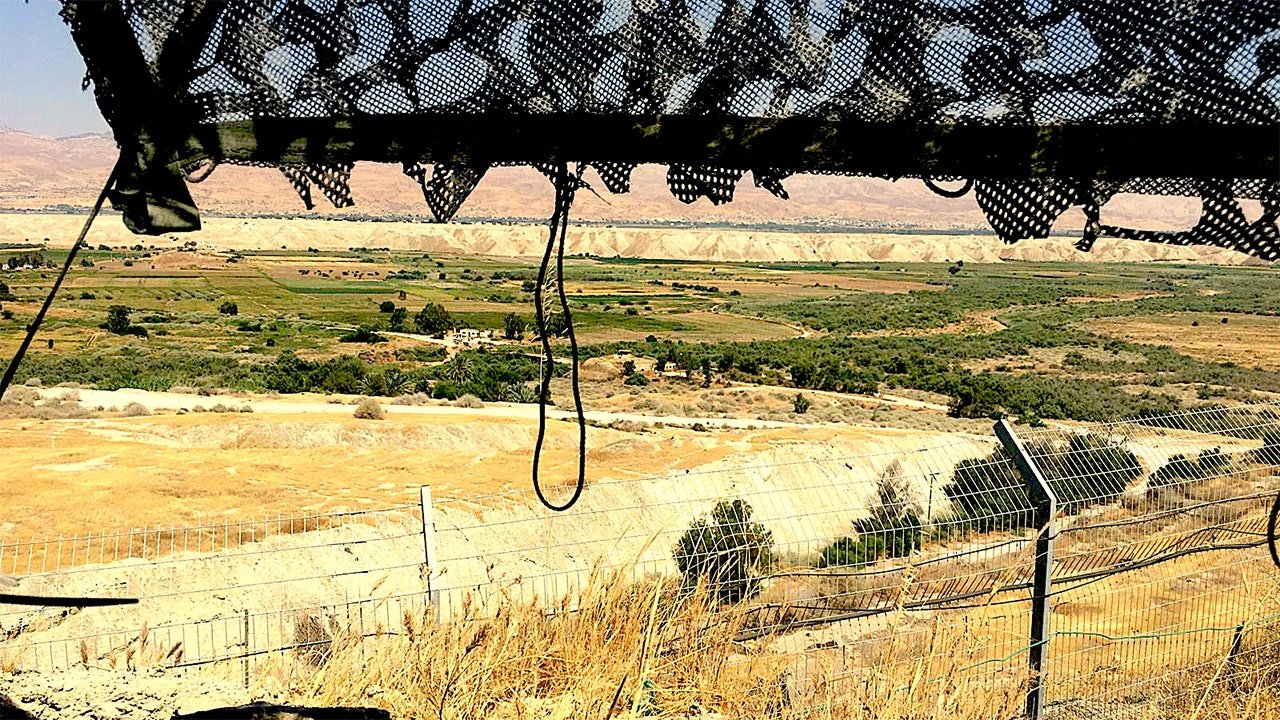
View from an IDF military watchtower overlooking Jordan. (Benjamin Weinthal for Fox News Digital)
The longevity of Mideast peace is at stake in the oppressive heat of the biblically rich history of the Jordan Valley, where Joshua led the Jews into Israel.
The Jordan Valley frequently appears in Scripture. John the Baptist led his ministry and baptisms, including Jesus’, in the Valley. «Tourists come to explore it [Jordan Valley region],» said the military official. As a result of the origins of Christianity and Judaism, the Jordan Valley has been labeled the «Original Bible Belt.»
During Israel’s seven-front war against Iran and its allies, Fox News Digital reported that the regime and Hamas sought to destabilize Jordan, according to Mideast experts.
US ALLY JORDAN ROCKED BY PRO-HAMAS, MUSLIM BROTHERHOOD PROTESTS OVER GAZA WAR
In 2024, Jordan experienced protests in support of the Hamas terrorist organization.
After Hamas slaughtered over 1,200 people on 10/7, including more than 40 Americans, the IDF is reactivating 45 military bases spread out between Israel and Jordan. The IDF said the bases were built after the 1967 Six-Day War and their operation was» discontinued in the late 1990s. IDF Division 96 oversees the sprawling bases filled with bunkers in the Jordan Valley.
A military official told Fox News Digital that «Since the beginning of the year, Division 96 has thwarted more than 20 smuggling attempts involving weapons and narcotics.»
According to the military official, «All walks of life come here [Jordan Valley]. The army’s job is to make sure that everybody can live here in peace.» Division 96 covers 250 air miles and approximately 242.3 miles of territory, said the military official. The IDF created Division 96 a little more than a year ago.
The military official said that a critical piece of its multilayered defense is to build a new wall. «The army took everything we learned from 10/7 and revamped the wall.» The military official added the construction of the wall helps to explain why Palestinians are seeking to illegally enter Israel for employment: «They see the wall and realize that their time is now up to come in.»
ISRAEL DEFENSE CHIEF WARNS STRIKES ON IRAN COULD RESUME SOON, SIGNALS CAMPAIGN NOT OVER
He stressed there are legal entry points into Israel from the Jordanian side.
The multipronged new Israeli border system in the Jordan Valley is demarcated by three layers. The first layer is a military outpost, like the facility Fox News Digital toured. Named «European Goldfinch,» it is situated across from the defunct historical Adam Bridge, where two Jordanian military outposts are within eyesight.
The second layer of defense is the construction of a wall. And the third line of defense is the military bases that lodges Division 96. The IDF official said that the army also increased the number of reserve soldiers.
The Israeli army built another five battalions of soldiers who were never engaged in service or finished their service and wish to return to duty. The reservists «understood the point of history we are in» and their «love for Israel,» said the Israeli military official.
During Israel’s war with Iran, the clerical regime’s forces fired missiles into the Jordan Valley. The bunkers located in the outposts served as a refuge from Iran’s rockets.
CLICK HERE TO DOWNLOAD THE FOX NEWS APP
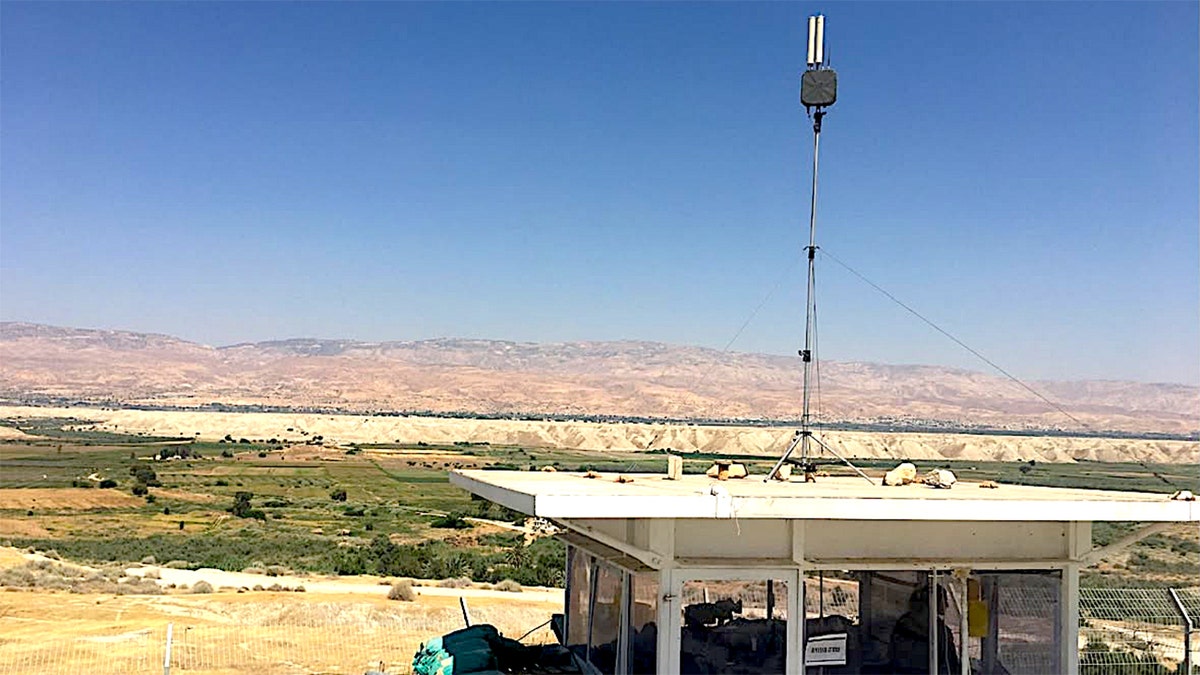
First line of defense. An IDF military outpost sits on the Israeli side of Jordanian border. (Benjamin Weinthal for Fox News Digital)
The military bases inspected by Fox News Digital are located in Area C in the disputed West Bank territory, referred to by many Israelis by the region’s biblical names as Judea and Samaria. Nearly 500,000 Israelis and around 300,000 Palestinians live in Area C, which makes up 60% of the total area of Judea and Samaria. The Oslo Accords, which were signed between Israel and the Palestine Liberation Organization (PLO) in 1993, stipulated military and civilian control over Area C was absorbed by the IDF.
The miltiary official said that «We have the same agenda as Jordan: To keep the border peaceful.»
israel, hamas, war with iran, terrorism, middle east








INTERNACIONAL
Who is Turkey’s Erdoğan? How NATO’s most unpredictable leader keeps reinventing himself
NEWYou can now listen to Fox News articles!
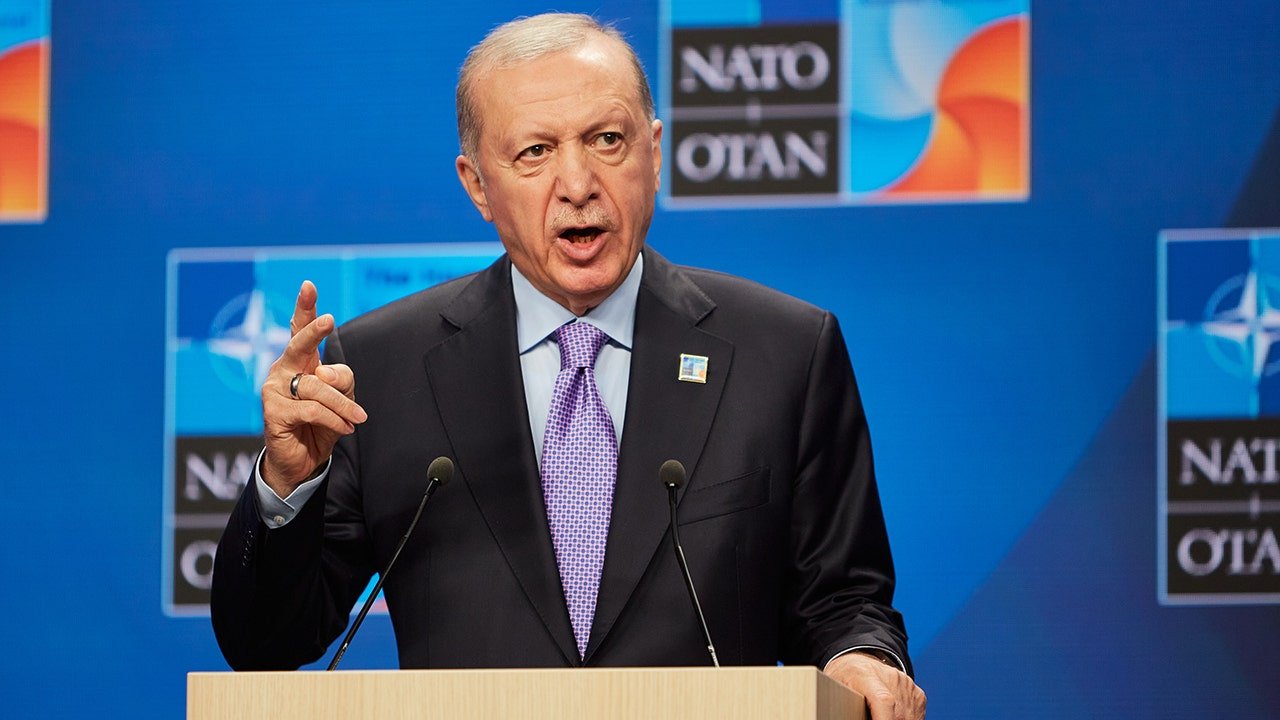
As President Donald Trump heads to Ankara, Turkey, for the upcoming NATO summit, Turkish President Recep Tayyip Erdoğan is again at the center of alliance politics.
Trump has praised Erdoğan as «a friend» and «a respected leader,» underscoring a relationship that could shape defense talks between Washington and Turkey, including Turkey’s long-running effort to restore deeper military cooperation.
The moment highlights the remarkable position Erdoğan occupies today: Once regarded as one of NATO’s most troublesome allies after taking delivery of the Russian S-400 missile defense system in 2019, Turkey has become increasingly difficult for the alliance to sideline as the war in Ukraine drags on, instability grips the Middle East and the Black Sea grows more strategic.
For many, however, Erdoğan remains an enigma. Rather than being driven by a fixed worldview, experts argue, Erdoğan repeatedly has reinvented himself politically, adopting whichever ideology best serves his overriding objective: remaining in power.
TURKEY DETAINS OVER 200 SUSPECTS, INCLUDING ALLEGED ISIS MILITANTS, IN SWEEPING RAID AHEAD OF NATO SUMMIT
As President Donald Trump heads to Ankara, Turkey, for the upcoming NATO summit, Turkish President Recep Tayyip Erdoğan is again at the center of alliance politics. (Pierre Crom/Getty Images)
Erdoğan has ruled Turkey for more than two decades, evolving from an Istanbul mayor with Islamist roots into a pro-European reformer, then a nationalist strongman, and now a pivotal NATO power broker courted by Trump.
To supporters, he restored Turkey’s global stature. To critics, he hollowed out its democracy while jailing rivals, journalists and activists. But Erdoğan’s most defining trait, experts say, may be less ideology than survival.
Is he an Islamist? A nationalist? A Western ally? A Russian partner? An authoritarian?
Perhaps the most important thing to understand about Erdoğan is that he has been all of those things — at different moments, according to Gönül Tol, founding director of the Middle East Institute’s Turkey Program and author of «Erdoğan’s War: A Strongman’s Struggle at Home and in Syria.»
«He’s not an ideological man,» Tol told Fox News Digital. «He’s very pragmatic, first and foremost a populist.»
SIX KURDISH FIGHTERS KILLED IN IRGC AMBUSH AS CLASHES SPREAD ACROSS WESTERN IRAN
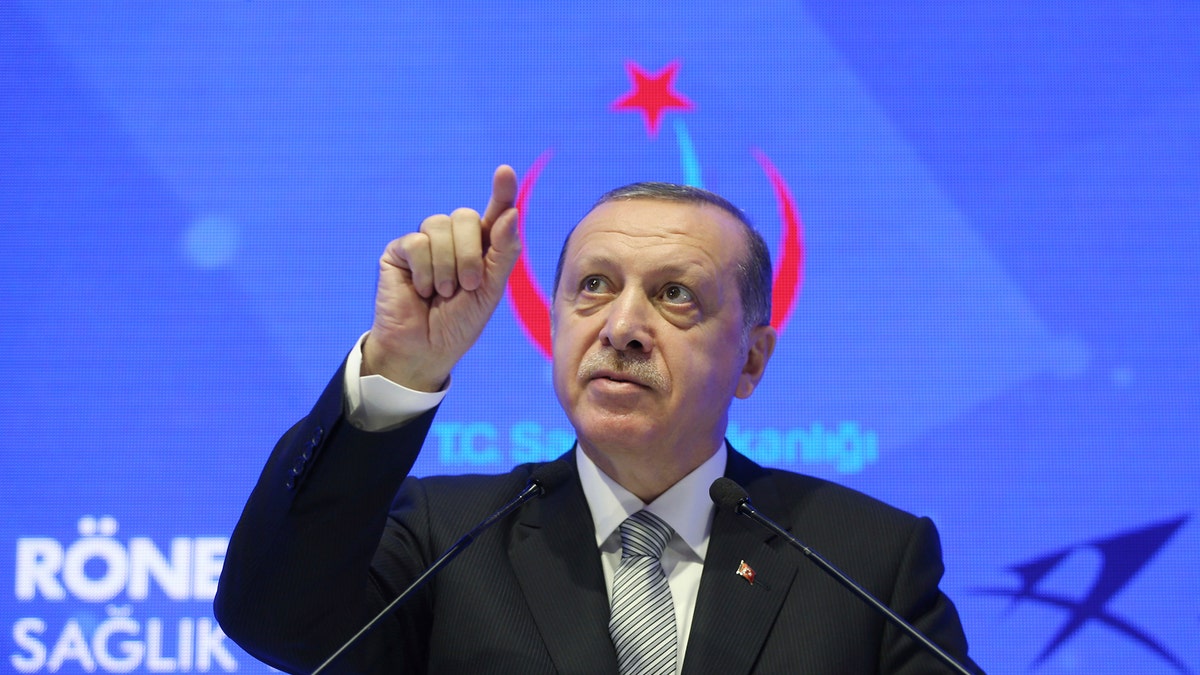
Turkish President Recep Tayyip Erdoğan remains an enigma for many. (AP)
The Conservative Democrat
Erdoğan’s roots lie in Turkey’s Islamist political movement. Educated at an Imam Hatip religious school, he entered politics through National Outlook, a right-wing Islamist movement founded by Necmettin Erbakan, and eventually became mayor of Istanbul as a member of Erbakan’s Welfare Party.
But after founding the AKP, or Justice and Development Party, in 2001, Erdoğan abandoned the Islamist label, presenting himself instead as a «conservative democrat» committed to economic reform and closer ties with Europe — a shift that experts say marked the first of several political reinventions.
When Erdoğan and his Justice and Development Party first swept to power in 2002, Turkey was seeking membership in the European Union, military influence over politics was shrinking, and Erdoğan promised democratic reforms, economic modernization and closer ties with the West.
Many liberals and centrists initially supported him.
«He often said, ‘I’m not an Islamist anymore. I’m a conservative democrat,’» Tol said. «And that brand really served him well.»
Those early years transformed both Turkey’s economy and Erdoğan’s popularity.
TRUMP BETS ON FORMER NATO TROUBLEMAKER AS TURKEY’S STRATEGIC VALUE SURGES
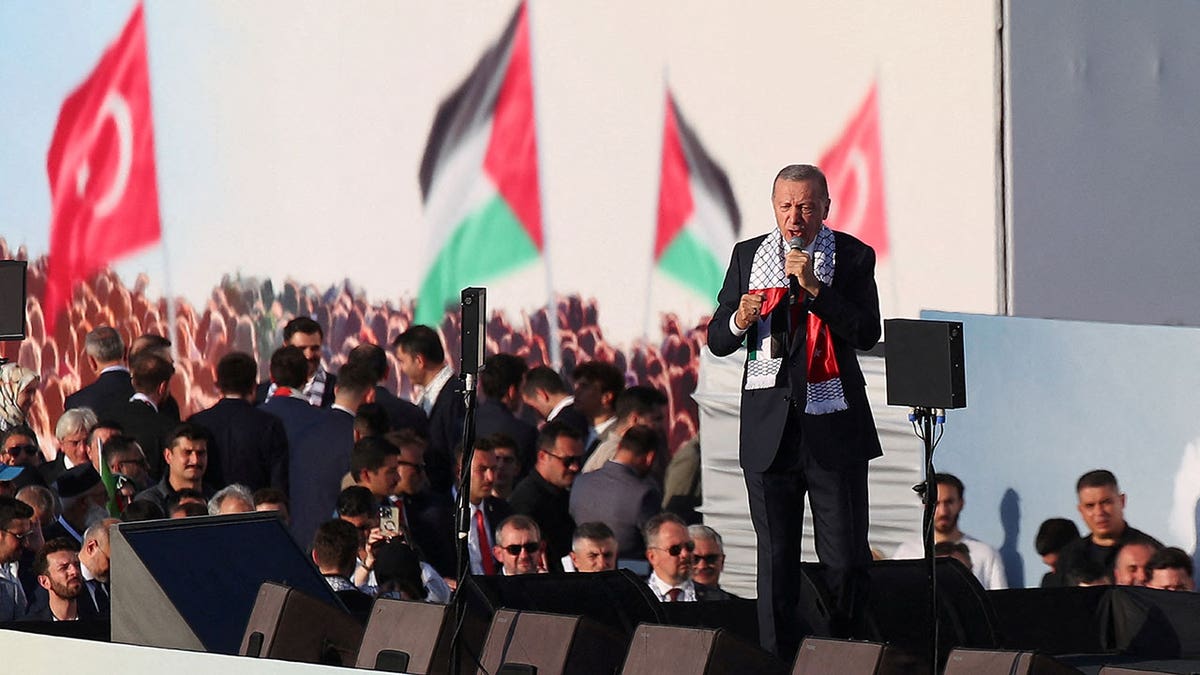
Many liberals and centrists initially supported Turkish President Tayyip Erdoğan. (Dilara Senkaya/Reuters)
The Islamist
After consolidating power, Erdoğan began another political transformation.
Following the Arab Spring in 2011, he increasingly portrayed himself as a champion of political Islam, backing Islamist movements across the Middle East while presenting himself domestically as the defender of Turkey’s conservative religious majority.
«He wanted to inject more Islam into public life, into education,» Tol said. «He was using this more Islamist narrative… the goal was always to acquire more power.»
That anti-Western turn went beyond rhetoric.
In 2016, Erdoğan accused the U.S.-led coalition of supporting terrorist groups in Syria, including ISIS and Kurdish militias that Turkey considers terrorist organizations— an allegation the State Department dismissed as «ludicrous,» according to Reuters.
His increasingly vocal support for Hamas and sharp criticism of Israel became defining features of his foreign policy.
«The perpetrators of the massacre and the destruction taking place in Gaza are those providing unlimited support for Israel,» Erdoğan said in 2023, adding that Israel’s attacks and those backing them amounted to «murder and mental illness,» according to Reuters.
Tol cautions against viewing those positions alone as evidence that Erdoğan remains primarily motivated by Islamism.
«Anti-Israel sentiment cuts across ideological lines in Turkey,» she said, arguing that Erdoğan’s foreign policy has consistently reflected political calculation more than religious doctrine.
TRUMP’S TURKEY ARMS SALE PROPOSAL SPARKS CONGRESSIONAL QUESTIONS BEFORE NATO SUMMIT
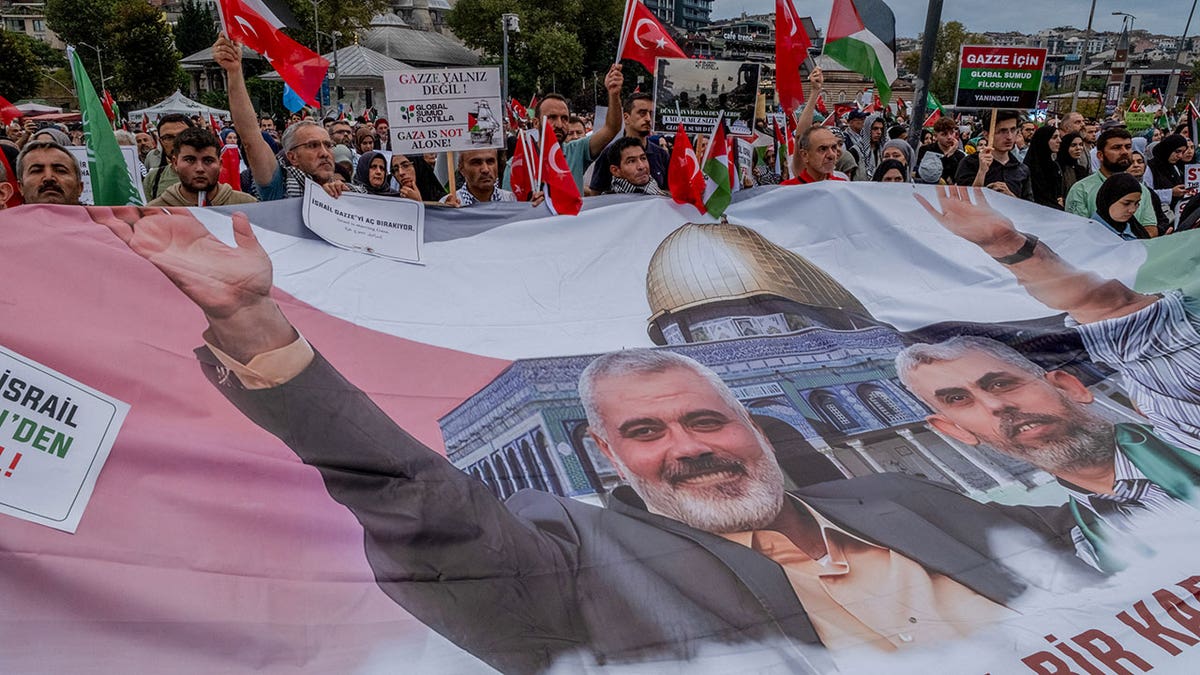
Protesters carry a banner with pictures of the slain Hamas leaders Ismail Haniyeh and Yahya Sinwar. (Murat Kocabas/SOPA Images/LightRocket via Getty Images)
The nationalist strongman
As Turkey’s economy slowed and regional ambitions faltered, Erdoğan pivoted once again.
He embraced Turkish nationalism, built alliances with hardline nationalist parties and cultivated the image of an indispensable strongman capable of restoring Turkey’s historical influence.
Supporters credit him with transforming Turkey into a regional power.
«He does have genuine support,» Tol said, estimating his support at roughly 35%.
Some supporters depend on government assistance and patronage networks built under his rule. Others believe Erdoğan restored dignity to conservative religious Turks who long felt marginalized by the country’s secular establishment.
Still others view his increasingly assertive foreign policy as proof Turkey has reclaimed its place on the world stage.
«They think, ‘We have become a world-class nation,’» Tol said. «‘Everyone is praising our president. Turkey is a big player.’»
While Erdoğan continues to command a loyal political base, critics say the price has been Turkey’s democratic institutions.
Authorities increasingly have used courts and criminal investigations to sideline political opponents, including Istanbul Mayor Ekrem İmamoğlu, whose arrest earlier in 2026 triggered nationwide demonstrations, according to Human Rights Watch.
The organization says the government has intensified efforts to weaken Turkey’s main opposition party despite its strong performance in the 2024 municipal elections.
TRUMP’S PERSONAL FEUDS WITH ALLIES FROM ITALY TO ISRAEL REVEAL HOW PERSONALITY DRIVES HIS FOREIGN POLICY
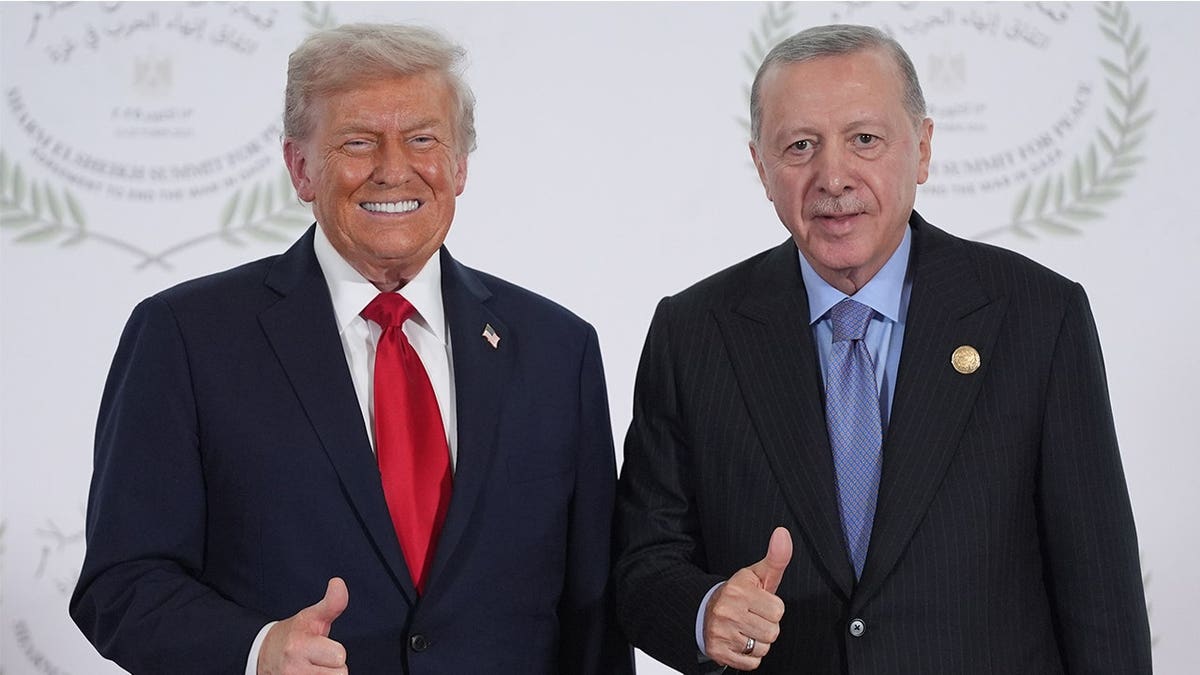
President Donald Trump greets Turkey’s President Recep Tayyip Erdogan during a summit to support ending the war in Gaza, Oct. 13, 2025, in Sharm El Sheikh, Egypt. (Evan Vucci AP Photo/ Pool)
The NATO dealmaker
Today, Erdoğan finds himself in another political transformation.
After years of anti-Western rhetoric and disputes with Washington, Turkey has worked to repair relations with the United States and Europe.
That rhetoric was once central to Erdoğan’s posture.
He accused the U.S.-led coalition in Syria of supporting terrorist groups, blasted Washington’s sanctions over Turkey’s purchase of the Russian S-400 missile defense system, calling them a «hostile attack» on Turkey’s sovereign rights and defense industry, and repeatedly accused Western governments of enabling Israel’s war in Gaza.
The shift comes as Turkey’s strategic importance has grown dramatically.
The S-400 purchase remains at the center of one of the biggest unresolved disputes between Washington and Ankara. After Turkey took delivery of the Russian system in 2019, the U.S. expelled Turkey from the F-35 fighter jet program and later imposed sanctions on Turkey’s defense procurement agency.
Former U.S. Ambassador to Turkey James Jeffrey recently told Fox News Digital that restoring Turkey to the F-35 program remains far more complicated than other defense deals because operating the Russian-made S-400 alongside America’s most advanced stealth fighter could expose sensitive U.S. technology.
«The F-35 is a different issue,» Jeffrey said, arguing that the problem is technical, not merely political.
Turkey controls the Bosporus and Dardanelles, fields NATO’s second-largest military and plays a critical role in the Black Sea following Russia’s invasion of Ukraine.
Jeffrey said that Turkey has been «essential to Ukraine staying in the fight,» pointing to Turkey’s enforcement of the Montreux Convention, a 1936 treaty that gives Turkey control over naval passage through the Bosporus and Dardanelles straits, its early delivery of Bayraktar drones to Ukraine, and its role as a mediator between Kyiv and Moscow.
«You can’t contain Russia in the Black Sea without Turkey,» Jeffrey said.
For Tol, however, Erdoğan’s latest embrace of NATO is simply another example of his political flexibility.
«There was a time when he was very anti-Western, very critical of NATO, very critical of the United States,» she said.
«And now look at him.»
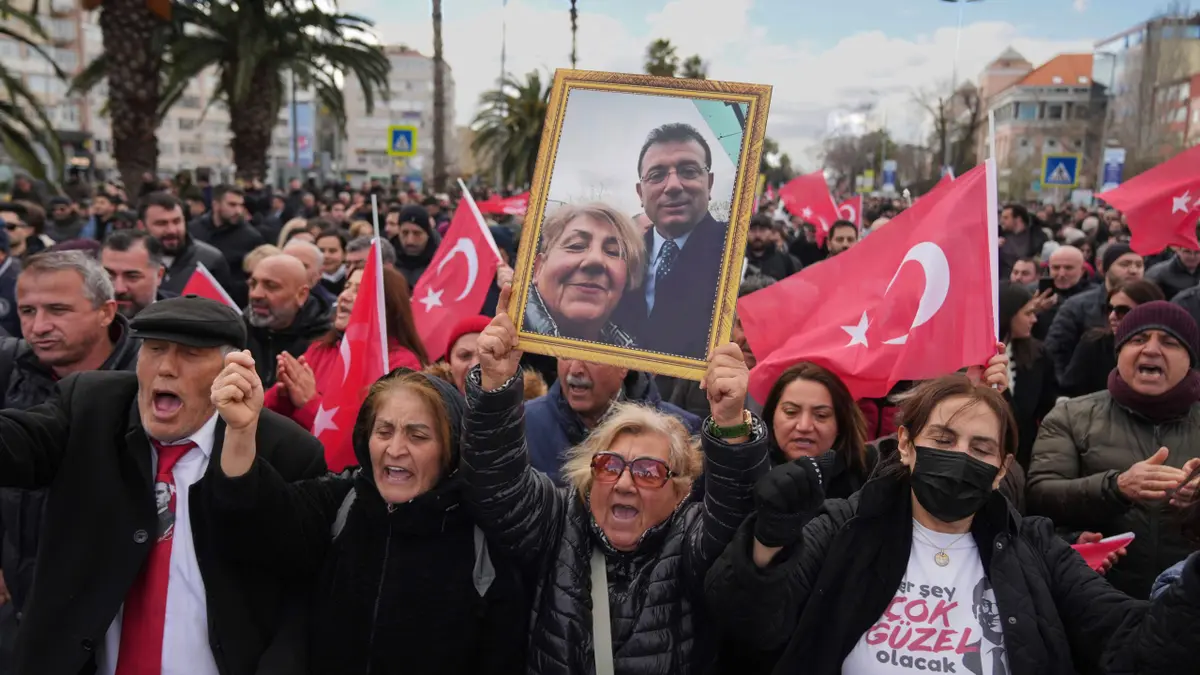
People chant slogans as they protest the arrest of Mayor Ekrem Imamoglu in Istanbul, Turkey, March 19, 2025. (Francisco Seco/The Associated Press )
Growing criticism
Human Rights Watch argues Erdoğan has used Turkey’s growing importance to NATO as political cover while expanding pressure on journalists, activists and opposition figures.
Freedom House says Erdoğan has become «increasingly authoritarian» over the past decade, consolidating power through constitutional changes and the imprisonment of political opponents, independent journalists and civil society figures.
Turkey’s prisons held more than 420,000 inmates — far exceeding their official capacity of roughly 304,000, according to a June 2026 report citing Turkish Justice Ministry figures.
NATO allies have grown quieter on Turkey’s rights record as Ankara’s strategic value has risen, Reuters reported ahead of the summit, with former U.S. Ambassador David Satterfield saying it remains important for the West to speak publicly about the «degradation of democratic institutions in Turkey.»
Tol believes Erdoğan’s domestic agenda can be understood through a single principle.
CLICK HERE TO DOWNLOAD THE FOX NEWS APP
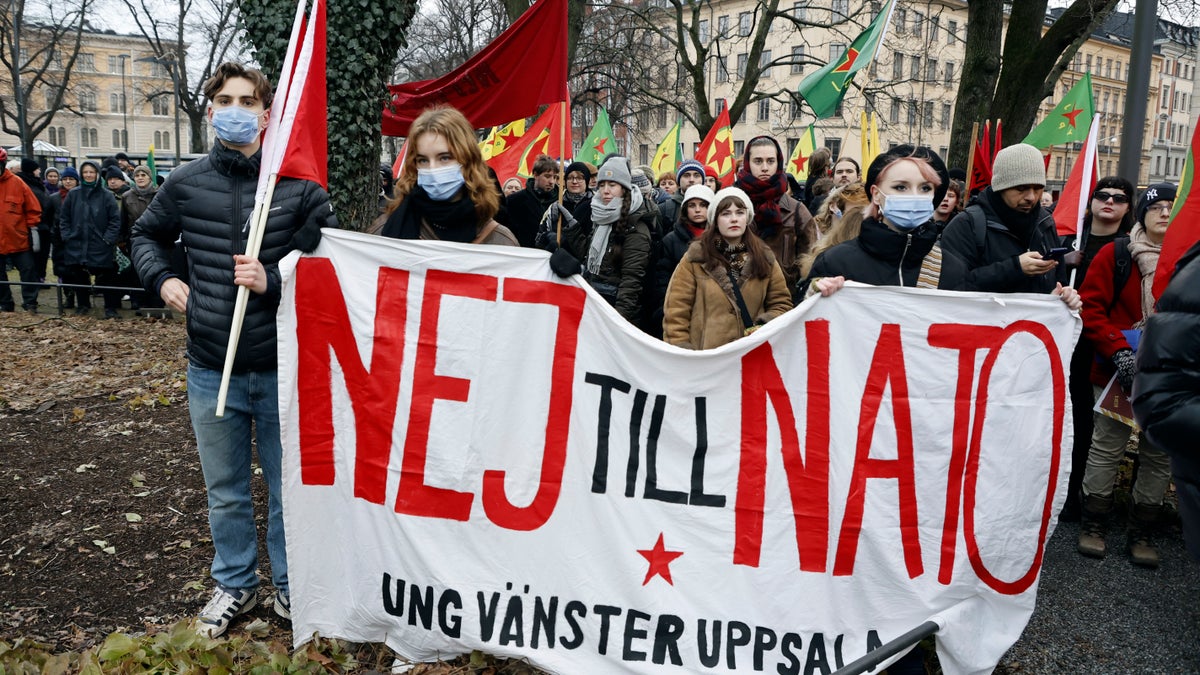
People take part in a demonstration against Turkish President Recep Tayyip Erdogan and Sweden’s NATO bid arranged by The Kurdish Democratic Society Center in Sweden, in Stockholm, Jan. 21. 2023. (Christine Olsson/TT via AP)
«Everything is designed to keep him in power,» she said. «Beyond that, I don’t see a binding ideology that brings together all his policies.»
As Trump heads to Turkey, that may be the key to understanding one of NATO’s most consequential — and unpredictable — leaders.
Fox News Digital reached out to the Turkish government for comment.
Fox News Digital’s Morgan Phillips and Reuters contributed to this report.
turkey, nato, donald trump
INTERNACIONAL
Guatemala: Sala deja sin efecto órdenes de captura en contra del exjefe la CICIG y otros fiscales anticorrupción
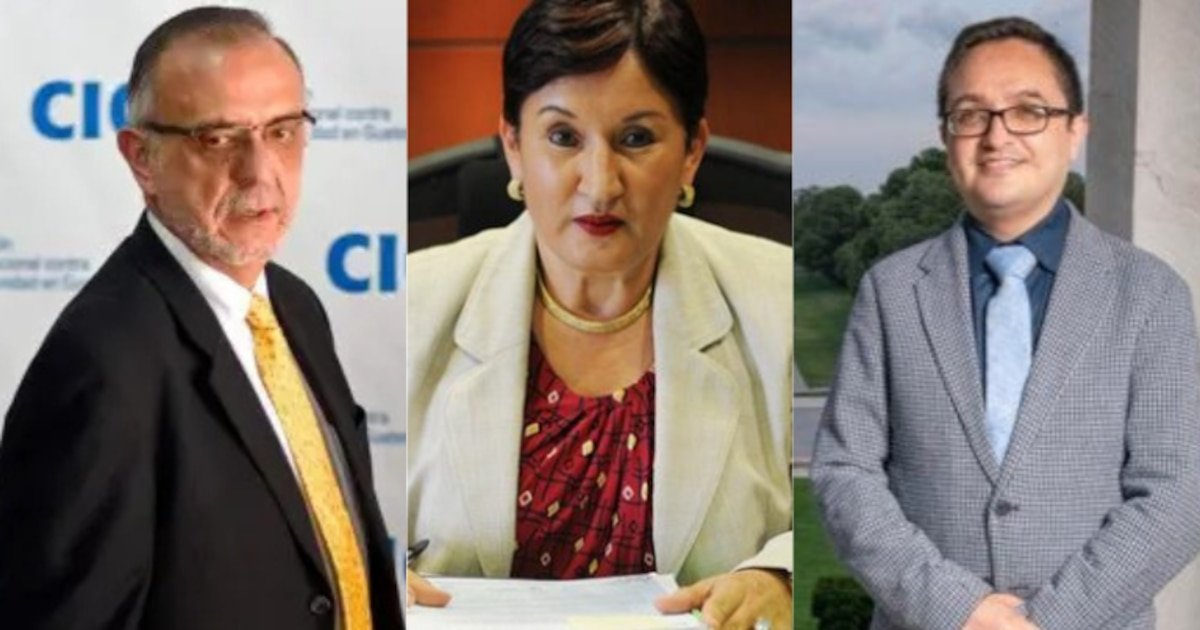
La Sala Tercera de Apelaciones del Ramo Penal ordenó dejar sin efecto las órdenes de captura giradas en contra de exfiscales del Ministerio Público (MP) dirigido por Thelma Aldana, así como de la extinta Comisión Internacional contra la Impunidad (CICIG).
Las órdenes de aprehensión fueron solicitadas durante la administración de Consuelo Porras, en el MP. En su momento el exjefe de la Fiscalía Especial contra la Impunidad (FECI), Rafael Curruchiche, argumentó supuestos acuerdos fraudulentos, eliminación de archivos y supuestas negociaciones corruptas relacionados con el caso Odebrecht.
Las medidas de coerción ya habían sido revocadas desde abril por la Cámara de Amparo y Antejuicio de la Corte Suprema de Justicia, sin embargo, fue hasta este 1 de julio cuando la Sala Tercera Apelaciones ordenó el cumplimiento de la resolución.
“En virtud, de lo ordenado por la Cámara de Amparo y Antejuicio de la Corte Suprema de Justicia, en resolución de fecha nueve de abril de dos mil veintiséis, esta Sala procede a resolver en el sentido que se deja sin efecto la resolución de fecha treinta de mayo de dos mil veinticinco dictada por esta Sala, en la que tal como se argumenta en los párrafos que anteceden se ordenó decretarse la rebeldía y en consecuencia se dictó órdenes de aprehensión”, detalla la resolución a la que Infobae tuvo acceso.

Esta resolución deja sin efecto las órdenes de aprehensión giradas en contra del excomisionado colombiano de la CICIG, Iván Velásquez, actual embajador de su país en el Vaticano; así como las impulsadas contra Luz Adriana Camargo, actual fiscal general de Colombia.
En el caso de Velásquez, la Cámara recordó que “el Comisionado de la CICIG gozaba de inmunidad”, siempre que sus acciones estuvieran dentro de las funciones para las cuales fue designado, precepto que no se violó durante su ejercicio en Guatemala.

También se cancelan las órdenes de captura de la exfiscal general guatemalteca Thelma Aldana; de la exsecretaria del MP, Mayra Veliz Pérez; del exjefe de la FECI, Juan Francisco Sandoval; y de exmandatarios de la CICIG como Luis David Gaitán Arana, así como de otros fiscales que laboraban en la fiscalía contra la impunidad.
La resolución favorece a directivos de la empresa Odebrecht y a los empresarios guatemaltecos David Fernando Font Verdugo, Jorge Luis Font Verdugo, Álvaro Stein Barillas y Juan Pablo Carrasco de Groote, expresidente de la Cámara de Comercio Guatemalteco-Americana (AmChamn), luego de que la Cámara afirmara que la Sala se “extralimitó en el uso de sus facultades legales al emitir órdenes de captura sin tener competencia legal”.
Luego de conocer la revocatoria, Juan Francisco Sandoval, quien se encuentra en el exilio, dijo a Infobae: “Esta resolución confirma lo que hemos sostenido desde el inicio: las órdenes de aprehensión fueron emitidas por un órgano que carecía de competencia para hacerlo. La propia Cámara de Amparo estableció que la Sala Tercera se extralimitó en sus funciones… ahora se dejan sin efecto esas órdenes y se restituyen nuestros derechos”.

Agregó: “Esperamos que este sea un paso hacia el restablecimiento del Estado de derecho y el respeto irrestricto al debido proceso, frente a la utilización arbitraria del sistema penal para perseguir a quienes combatimos la corrupción”.
Este caso surgió por los acuerdos de colaboración eficaz del caso Odebrecht que se gestionaron por Velásquez y Camargo en 2017. La FECI, dirigida por Rafael Curruchiche, sostiene que esos acuerdos permitieron impunidad a exdirectivos de Odebrecht.
En su momento, Curruchiche afirmó que sus investigaciones revelaron un supuesto patrón sistemático de actuación ilegal por parte de exfuncionarios de la CICIG, de la FECI y de exautoridades del MP, afirmando que se habían convertido en actores clave de un esquema perverso de extorsión, encubrimiento y manipulación judicial”.
“Estos exfuncionarios archivaron, eliminaron o incluso negociaron expedientes vinculados a figuras clave del caso Odebrecht. No lo hicieron por falta de pruebas, sino como parte de negociaciones ilícitas en las que exigían dinero o favores políticos a cambio de impunidad”, afirmó el exjefe de la FECI, quien recientemente dejó el MP, pero que aún se mantiene en listas de actores corruptos y antidemocráticos de países como Estados Unidos, la Unión Europea, Canadá y el Reino Unido.

Mientras que especialistas en derecho penal han criticado las resoluciones de la Sala Tercera de Apelaciones, por considerar que existen irregularidades en sus resoluciones y que muchas de estas estaban alineadas a los intereses del gobiernos vinculados con la corrupción y la impunidad.
La CICIG marcó un antes y un después en la historia judicial de América Latina. Concebida originalmente en 2006 para desmantelar los Cuerpos Ilegales de Seguridad y Aparatos Clandestinos de Seguridad (CIACS), la Comisión mutó bajo el liderazgo de sus distintos comisionados hacia un combate frontal contra la gran corrupción, la captura del Estado guatemalteco y el financiamiento electoral ilícito.
Durante sus 12 años de mandato (2007–2019), el experimento respaldado por Naciones Unidas demostró que era posible procesar judicialmente a las élites tradicionalmente intocables. Sin embargo, su agresividad procesal provocó una feroz contraofensiva política que terminó por asfixiarla.
Uno de los comisionados emblemáticos fue Iván Velásquez, quien lideró investigaciones que llevaron a la condena de 16 años de prisión contra el expresidente Otto Pérez Molina y la exvicepresidenta Roxana Baldetti por su participación en la estructura criminal conocida como La Línea.
guatemala,cicig,órdenes de captura,corrupción
Russia’s shadow fleet launches drone campaign across Europe
Jennifer Griffin reports on Russia’s shadow fleet launching a drone campaign across Europe to surveil military sites and test NATO’s air defenses. The International Institute for Strategic Studies report reveals 144 suspected drones near sensitive sites in Germany, France, and the UK.
NEWYou can now listen to Fox News articles!
As NATO allies prepare to meet in Turkey, at the top of their agenda will be drone warfare and Russia’s testing of the NATO alliance.
Using its shadow fleet of old sanction-busting ships, Russia appears to have launched drones at European military bases and airports to test the reaction time of NATO allies and their air defenses, according to a new report published by the International Institute of Strategic Studies, or IISS.
Between August 2024 and February 2026, 144 suspected drones were recorded near sensitive military and nuclear sites in Germany, France, Belgium, the Netherlands, the UK, and Denmark, and over American air bases in the UK in November 2024.
UKRAINE’S BATTLEFIELD IS TRANSFORMING THE FUTURE OF NATO
French navy diverts suspected russian shadow fleet tanker to Marseille-Fos port. (Manon Cruz/Reuters)
«There’s no doubt in my mind that the Russians are using the shadow fleet vessels as a platform to get different types of drones in closer to various European countries,» said Ret. Lt. Gen. Ben Hodges, who served as the commanding general of US Army Europe until 2018.
In Germany there were more than 1,000 suspicious drone sightings in 2025, over German defense companies and military bases where Ukrainian soldiers were training in Germany.
«Whoever is doing it is testing the reaction of the authorities, is testing how the public will respond, will they panic, will they blame their politicians and the authorities,» asked Elisabeth Braw of the Atlantic Council. «Also they are testing perhaps to see how we as European countries or how European countries might react in a real crisis there.»
This spate of unmanned aerial vehicles occurred in air space over a dozen NATO states and Ireland, the report states, «forcing repeated closures of major commercial aviation hubs, disrupting military operations and penetrating the perimeters of some of Europe’s most sensitive defence installations.»
In 2025 mystery drones targeted military bases in the Netherlands and Belgium where the US is thought to base its B61-12 nuclear gravity bombs and France’s ballistic-missile submarine base at Île Longue.
«It’s a combination of espionage,» Hodges said. «But also psychologically to create a lot of anxiety in populations to scare them so that they would put pressure on their governments not to support Ukraine.»
RUSSIAN GENERALS’ ASSASSINATIONS EXPOSE GROWING RIFT INSIDE PUTIN’S SECURITY APPARATUS
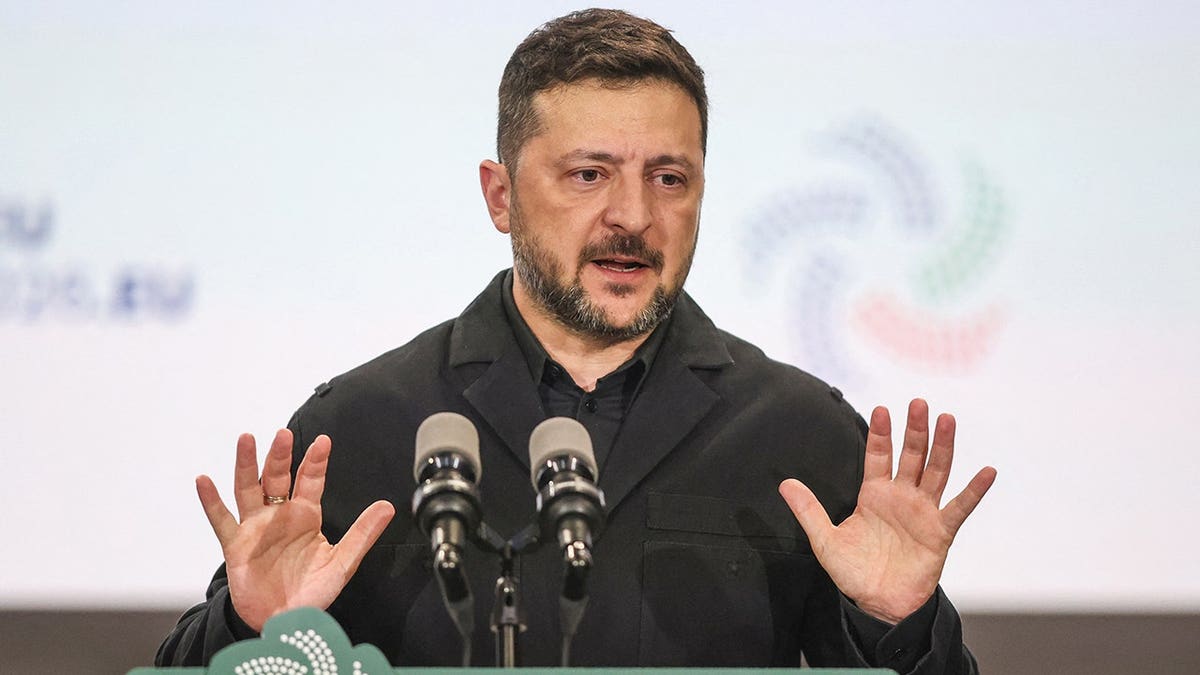
Ukraine’s President Volodymyr Zelensky speaks at a press conference after meetings with the heads of the EU and Ireland, following a formal ceremony to mark the launch of Ireland’s eighth EU presidency, at Dublin Castle in Dublin on July 1, 2026. (Paul Faith / AFP via Getty Images)
The Russian drone campaign appears designed to probe the response times and decision-making thresholds of allied air defense and civil-military command structures.
It also seeks to identify vulnerabilities in critical infrastructure, including dual-use civilian facilities, military logistics hubs supporting Ukraine, and sites associated with the Alliance’s nuclear deterrence.
Additionally, the campaign aims to impose economic and psychological costs on European societies by disrupting civilian aviation, undermining public confidence in airspace security, and fostering distrust and panic. Finally, it appears intended to normalize low-level airspace violations that remain below the threshold likely to trigger a direct Allied military response.
Those sightings peaked in late 2025, and forced the temporary closure of several European airports, including in Germany, Spain and Denmark.
Sweden is the only European country to accuse Moscow directly after a drone launched at sea from a Russian spy ship flew near a French aircraft carrier.
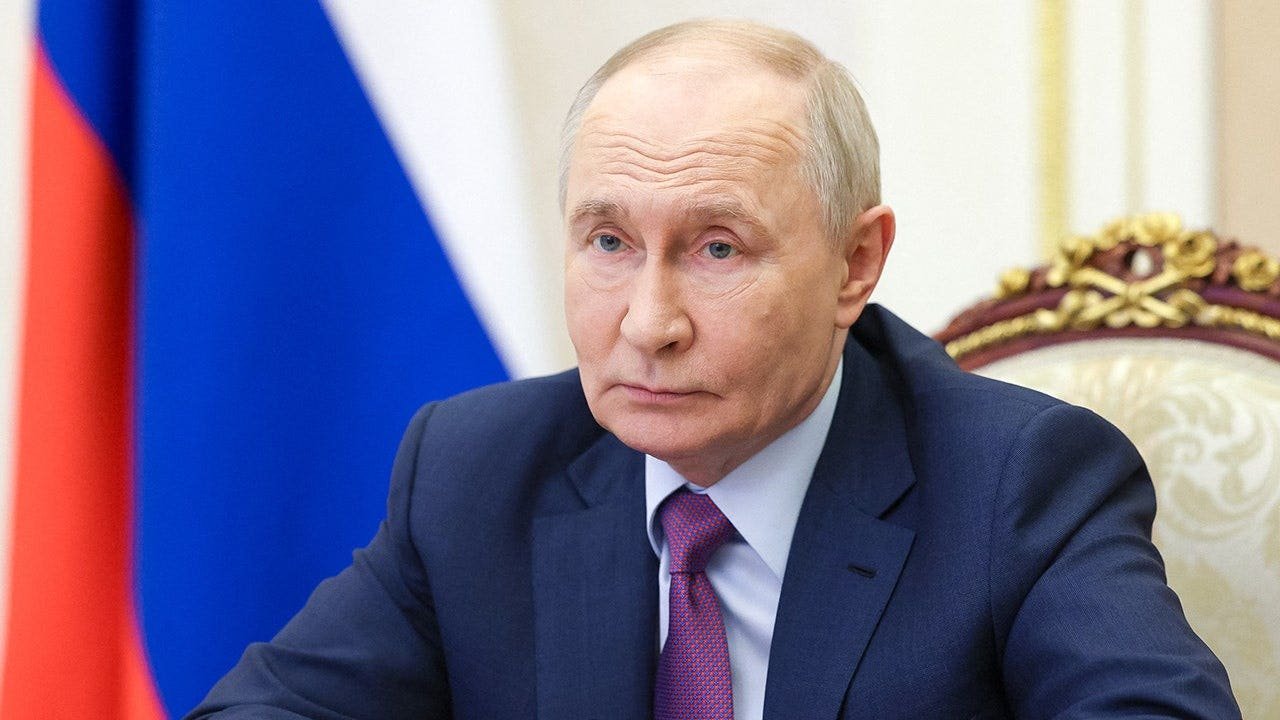
Russian President Vladimir Putin has denied accusations of Russian sabotage and surveillance across Europe.
«What’s the point of all this,» Putin asked of reporters recently. «Name even one proven fact.»
AMERICA’S POWER GRID, FOOD SUPPLY AND MORE ARE UNDER THREAT FROM DRONES
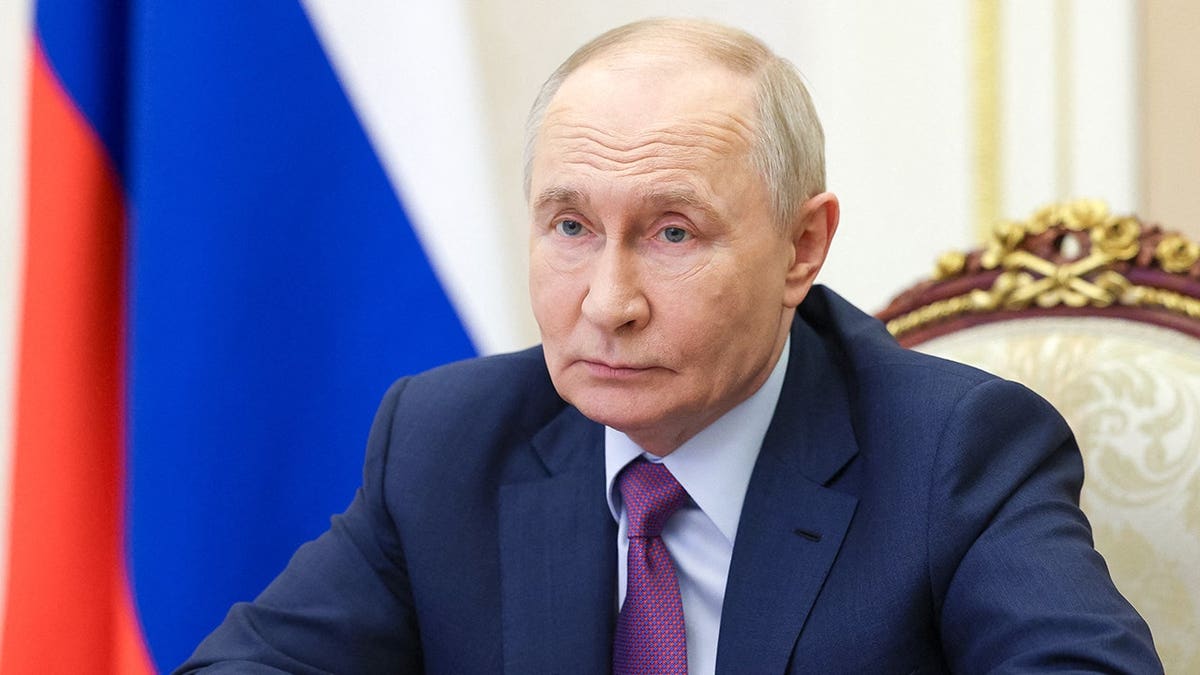
Russian President Vladimir Putin has denied accusations of Russian sabotage and surveillance across Europe. (Vyacheslav PROKOFYEV / POOL / AFP via Getty Images)
But IISS tracked the locations of Russia’s shadow fleet of ships used to evade sanctions and linked them to recent high-profile drone incidents, concluding that Russia could use the ships as a platform to launch the drones while creating deniability. Drones often don’t trigger radar.
On Jan. 3, 2025, a Russian shadow fleet vessel, the Arctica, sailed along the Danish coast, while 20 drones flew over the port of Koege, Denmark, before disappearing at sea.
On Sept. 22, drone sightings led to the closure of Copenhagen Airport. The IISS found several shadow ships were in the area at the time, including the Arctica and the Boracay.
And its not just in Europe. Dozens of unexplained drone sightings also have taken place in the U.S . in the past several years.
In December 2023 at Virginia’s Joint Base Langley-Eustis unauthorized aircraft appeared in the skies above the base for 17 days straight, evading military tracking and forcing the Pentagon to bring in specialized assets — including a NASA WB-57 high-altitude jet — to investigate.
In March drones flew near Barksdale Air Force Base in Louisiana, home of the B- 52 H Stratofortress bomber, where drones came in a pattern to suggest they were attempting to avoid the operator or operators being located. Lights on the drones suggested the operators may be testing security responses at the base.
CLICK HERE TO DOWNLOAD THE FOX NEWS APP
Panicked sightings of drones near critical infrastructure along the East Coast of the United States in late 2024 led to the Trump administration ordering the declassification of these investigations shortly after the inauguration to ease public concern, concluding the drones were mostly those of hobbyists and that there was no evidence of a foreign threat related to the majority of reported sightings.
The IISS says these are no hobbyists threatening NATO allies in Europe, with the most likely culprit launching the drones from shadow vessels at sea.
nato, politics, drones, russia, europe

Un juez acusado de usar expresiones antisemitas en las redes apeló a un fallo que favoreció a Milei para defenderse

Cambios en el Gobierno: renunció Guido Giana, el segundo de Mario Lugones en el Ministerio de Salud

Who is Turkey’s Erdoğan? How NATO’s most unpredictable leader keeps reinventing himself

Las marcas importadas alcanzaron el 14% del mercado de autos 0km en junio

Guatemala: Sala deja sin efecto órdenes de captura en contra del exjefe la CICIG y otros fiscales anticorrupción

Colombia vs Suiza: formaciones, hora y dónde ver por tv

Russia unleashes nearly 600 missiles and drones on Kyiv in deadliest strike since May

“Me gustaría que el Gobierno vaya a un proceso de transición y renovación”: el llamado de De la Torre ante el retroceso productivo en la provincia

Nuevos CEDEARs de bonos y lo «positivo» de no ser mercado Emergente: definiciones del CEO de BYMA

El riesgo país tocó el nivel más bajo en 8 años y la City ya eligió los mejores bonos para invertir

 ECONOMIA3 días ago
Marcha atrás judicial en la venta de SanCor: la Justicia suspendió el proceso tras el recurso de la empresa Fidulac
- POLITICA3 días ago
Javier Milei felicitó a Keiko Fujimori y anunció una nueva etapa en la relación bilateral con Perú
- SOCIEDAD3 días ago
Sólo necesitó 25 minutos para financiarse y ya ha alcanzado el 634% de su objetivo. Así es el metroidvania que está arrasando en Kickstarter