
INTERNACIONAL
Democrats win Virginia redistricting fight, threatening Republican House majority

NEWYou can now listen to Fox News articles!
Democrats scored a major victory Tuesday when Virginia voters narrowly passed a congressional redistricting referendum that could give the party a significant boost in the battle for the U.S. House of Representatives majority in this year’s midterm elections, The Associated Press reported at 8:49 p.m. ET.
The ballot measure gives the Democrat-controlled Virginia legislature — rather than the state’s current nonpartisan commission — temporary redistricting power through the 2030 election. It could result in a 10-1 advantage for Democrats in Virginia’s congressional delegation, up from their current 6-5 edge.
The referendum, which follows President Donald Trump’s push for rare but not unheard-of mid-decade redistricting in Republican-led states, would give the Democrats four additional left-leaning U.S. House seats ahead of the midterms as the party tries to win back control of the chamber from the GOP, which currently holds a razor-thin majority.
Democratic Gov. Abigail Spanberger, who in many ways became the face of her party’s push to pass the ballot initiative, said in a statement that «Virginia voters have spoken, and tonight they approved a temporary measure to push back against a President who claims he is ‘entitled’ to more Republican seats in Congress.»
«Virginians watched other states go along with those demands without voter input — and we refused to let that stand. We responded the right way: at the ballot box,» the governor said.
DEMOCRACY ’26: STAY UP TO DATE WITH THE FOX NEWS ELECTION HUB
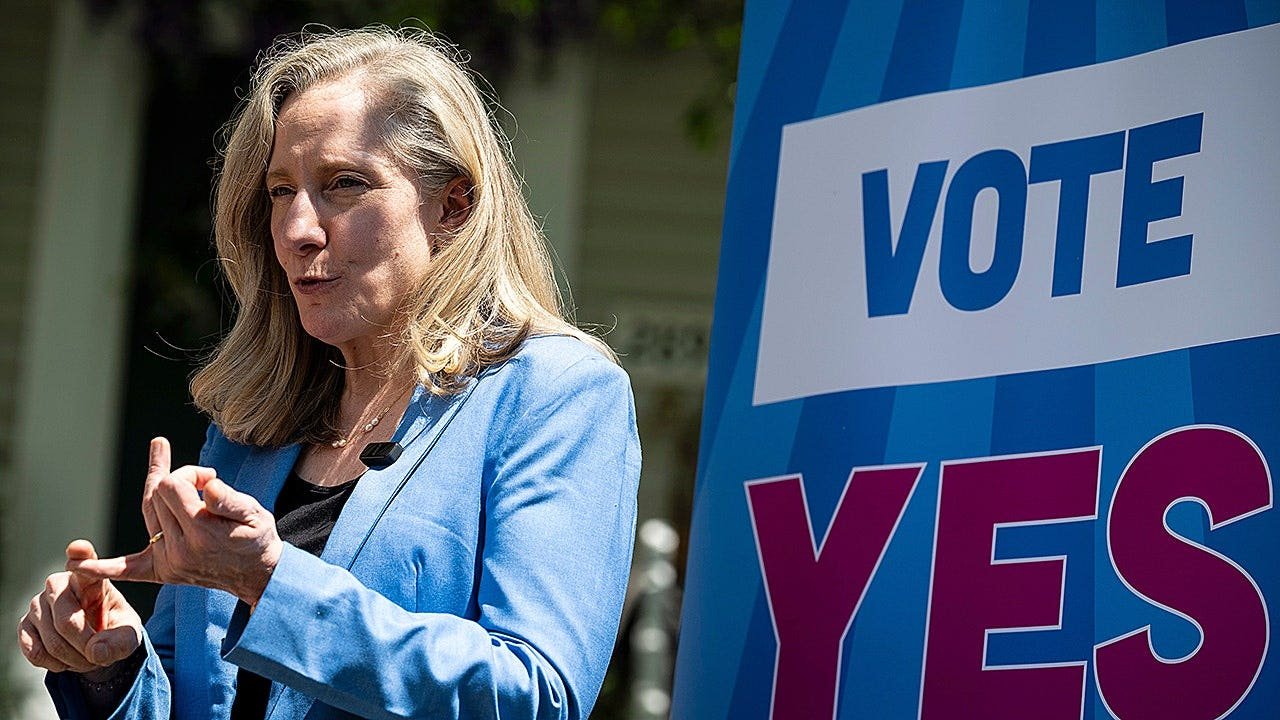
Virginia Gov. Abigail Spanberger speaks during a Virginians For Fair Elections canvassing event in Woodbridge, Va., on April 18, 2026. (Graeme Sloan/Bloomberg via Getty Images)
And Democratic National Committee Chair Ken Martin emphasized that «Virginians refused to let Trump play games with Americans’ right to fair representation.»
But Rep. Richard Hudson of North Carolina, the chair of the National Republican Congressional Committee, said that «Virginia Democrats can’t redraw reality. This close margin reinforces that Virginia is a purple state that shouldn’t be represented by a severe partisan gerrymander. That’s exactly why the courts, who have already ruled twice to block this egregious power grab, should uphold Virginia law.»
And Hudson predicted, «Even under this map, Republicans will hold our majority based on our record cleaning up Democrats’ mess and a historic war chest to litigate the Democrats’ failures.»
Republican Party of Virginia Chairman Jeff Ryer said in a statement, «I know we are disappointed by tonight’s result. Evidently, a sufficient number of Virginians trusted the blatantly dishonest language the Democrats placed on the ballot to make our Commonwealth the most severely gerrymandered state in the nation.»
The standalone spring referendum capped months of political crossfire and court battles, sky-high early voting turnout and tons of national attention and money poured into the ballot box showdown.
Even though a majority of voters gave the ballot initiative a thumbs-up, it still faces legal challenges.
The Supreme Court of Virginia allowed the referendum to move forward after a lower court struck it down. But legal challenges to the referendum, filed in part by the Republican National Committee, the NRCC and the state GOP, remain unresolved and are still before Virginia’s highest court.
Republicans had railed against the Democrat-backed referendum.
«It’s the most partisan map in America,» former Republican Gov. Glenn Youngkin told supporters at his final campaign stop in northern Virginia on the eve of the election.
Pointing to the Democrats pushing new maps, Youngkin charged, «What they are doing is immoral.»
Teaming up with Youngkin to crisscross the state in leading the GOP opposition to the ballot initiative was former Virginia Attorney General Jason Miyares, who told the crowd the Democrats’ map is one that «you draw when you’re drunk with power.»
BATTLE FOR THE HOUSE RUNS THROUGH VIRGINIA AS COURT OKS HIGH-STAKES REDISTRICTING VOTE
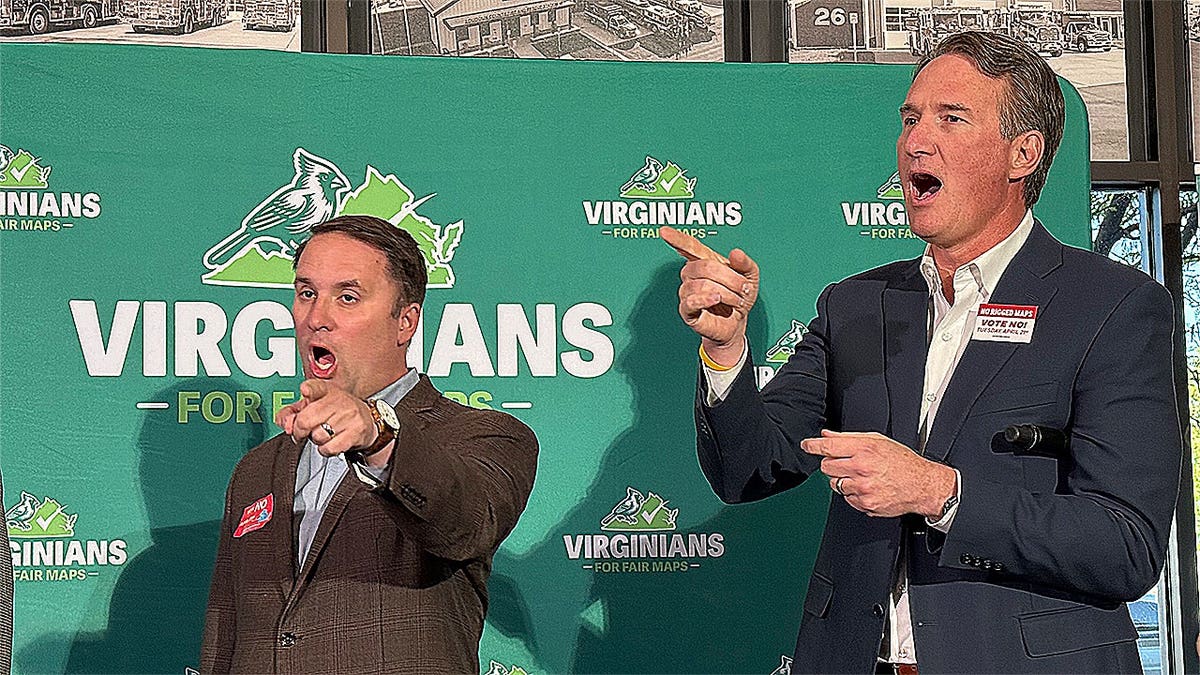
Former Virginia Gov. Glenn Youngkin, right, and former state Attorney General Jason Miyares lead a chant of «no» as they lead Republican efforts to defeat a Democrat-backed congressional redistricting referendum April 20, 2026, in Leesburg, Va. (Paul Steinhauser/Fox News)
Speaking with Fox News Digital ahead of their final election eve rally, Miyares charged that «Democrats want to take away the voices of millions of Virginians and gerrymander the state.»
Youngkin, pointing to the duo’s relentless campaigning in recent weeks, said, «What we’re hearing over and over and over again is Virginians want fair maps. And what the yes vote represents are unfair maps.»
And the two Republicans reiterated their charge that the referendum was an «unconstitutional power grab» by Spanberger and the Democrats who control the state legislature.
As Youngkin and Miyares spoke in Leesburg, Trump took to the airwaves on a popular Virginia-based conservative talk show and later teamed up with House Speaker Mike Johnson, R-La., to urge voters to defeat the referendum.
Pointing to congressional Democrats, Trump warned that «if they get these additional seats, they’re going to be making changes at the federal level.»
SPANBERGER FACES ‘BAIT AND SWITCH’ BACKLASH AHEAD OF CRUCIAL ELECTION
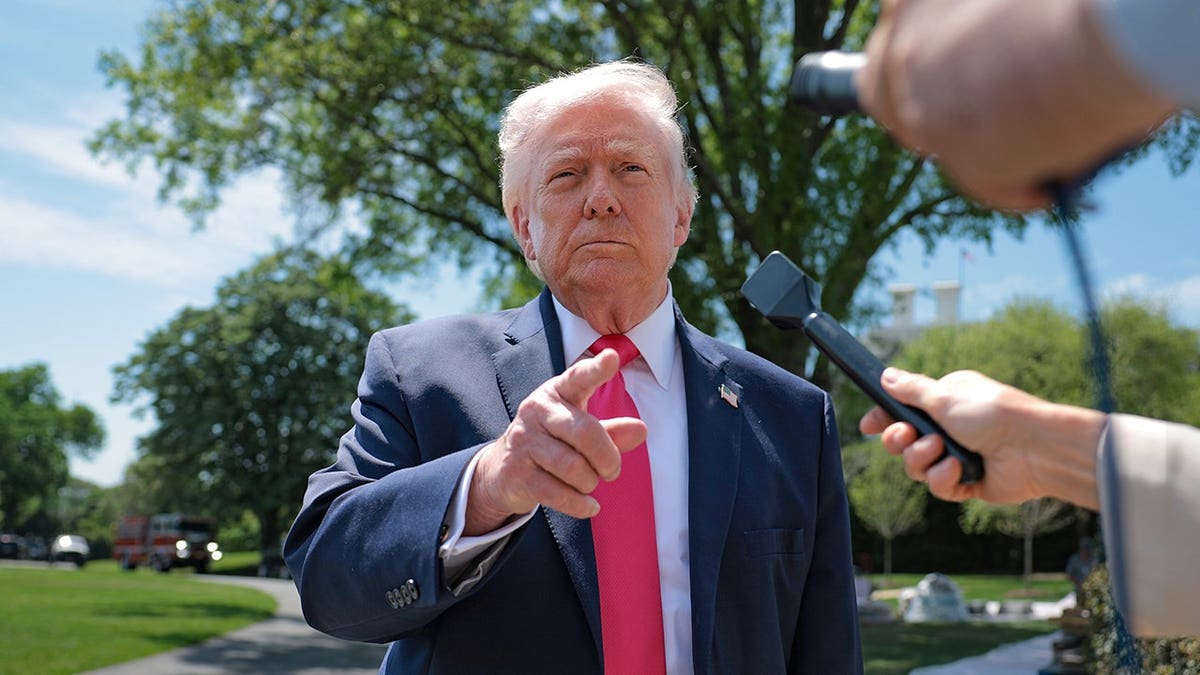
President Donald Trump headlined a tele town hall on the eve of Virginia’s congressional redistricting referendum urging voters to cast a ballot against the initiative. (Anna Moneymaker/Getty Images)
Democrats countered that the redrawing of the maps was a necessary step to balance partisan gerrymandering already implemented by Republicans in other states at Trump’s urging.
«By voting yes, you have the chance to do something important — not just for the commonwealth, but for our entire country,» former President Barack Obama said in a video released Friday on the eve of the final day of early voting. «By voting yes, you can push back against the Republicans trying to give themselves an unfair advantage in the midterms.
«By voting yes, you can take a temporary step to level the playing field. And we’re counting on you.»
The video by Obama was the former president’s latest effort for the referendum. He had previously appeared in ads released by Virginians for Fair Elections, the Democrat-aligned group working to pass the ballot initiative.
OBAMA GOES ALL IN ON HIGH-STAKES REFERENDUM THAT MAY IMPACT MIDTERM ELECTIONS
But Virginians for Fair Maps, the leading Republican-aligned group opposing redistricting, used past comments by Obama against political gerrymandering in its ads opposing the referendum.
«Because of things like political gerrymandering, our parties have moved further and further apart, and it’s harder and harder to find common ground,» the former president said in an old clip showcased in the spot.
Republicans pointed to comments from Democratic Sen. Tim Kaine, a former Virginia governor and former chair of the Democratic National Committee, who acknowledged over the weekend in a «Fox News Sunday» interview that the new maps don’t represent Virginia’s partisan breakdown.
«Ninety percent of Virginians are not Democrats, that’s true,» Kaine said.
But Kaine added that «about 100% of Virginians want election results to be respected.»
SOROS-BACKED GROUP AMONG LIBERAL ORGS PUMPING EYE-POPPING CASH INTO VIRGINIA GERRYMANDERING EFFORT
And Republicans took aim at Spanberger, who won November’s gubernatorial election by over 15 points as Democrats also captured the lieutenant governor and attorney general offices.
«Abigail Spanberger told everybody last summer that she had no interest in redistricting, and then the first bill she signs is a bill to enable the gerrymandering of the Commonwealth of Virginia. Virginians don’t like this and that’s why independents and a lot of Democrats are voting no too,» Youngkin told Fox News Digital.
Minutes later, Youngkin told the crowd that Spanberger is «trying to disenfranchise millions, millions of Virginians.»
Republicans trained their redistricting firepower on Spanberger since a poll two weeks ago by The Washington Post indicated that the new governor’s approval rating was barely above water, with the highest unfavorable rating for a new Virginia governor in two decades.
«She’s an unpopular governor with an unpopular agenda, and she lied to the voters,» Miyares charged.
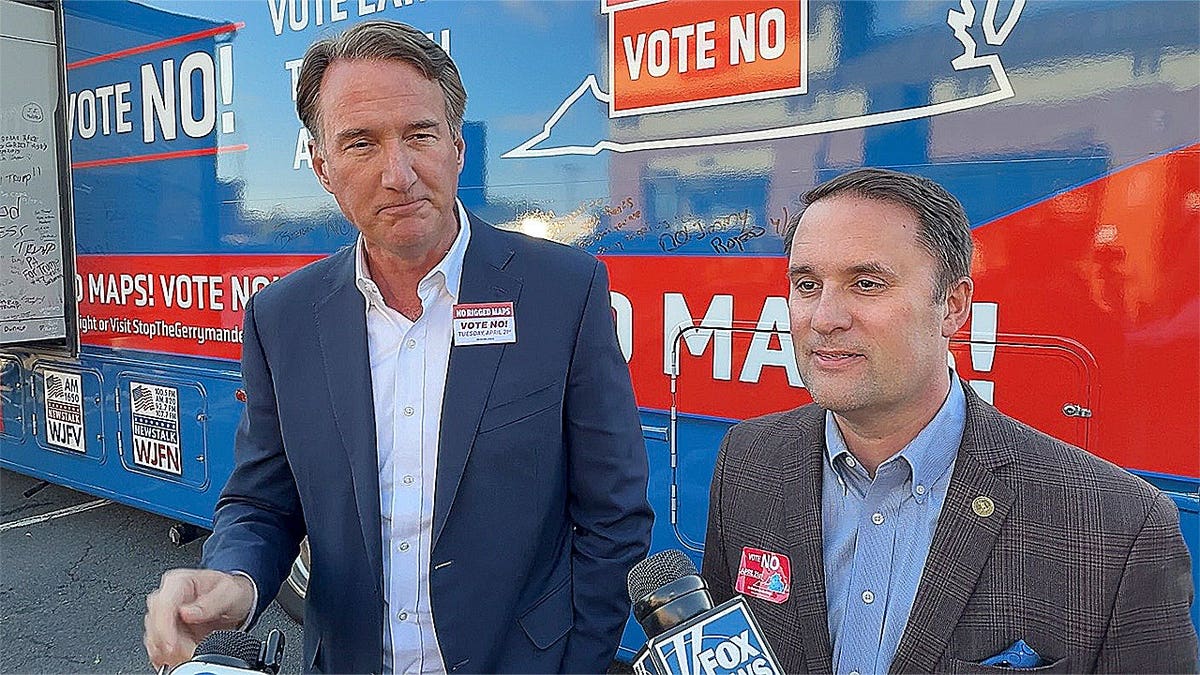
Former Virginia Gov. Glenn Youngkin, left, and former state Attorney General Jason Miyares, speak with Fox News Digital on the eve of Virginia’s congressional redistricting referendum in Leesburg, Va., April 20, 2026 (Paul Steinhauser/Fox News)
And Miyares and other top Republicans accused Spanberger of pulling a «bait and switch.»
Spanberger, in an ad in support of the referendum, said she was backing the measure because «it’s directly in response to what other states decide to do and a president who says he’s quote entitled to more Republican seats before this year’s midterms. Our approach is different. It’s temporary. It preserves Virginia’s fair redistricting process into the future.»
Supporters of redistricting dramatically outraised and outspent groups opposed to the referendum, with Virginians for Fair Elections outraising Virginians for Fair Maps by a roughly three-to-one margin. Much of the funding raised by both sides came from so-called «dark money» from nonprofit public policy groups known as 501(c)(4) organizations that are not required to disclose their donors.
Despite the Democrats’ funding advantage, recent polling suggested support for the ballot initiative was only slightly ahead of opposition amid a surge in early voting, which ended on Saturday.
«They have outspent us three to one. They’ve raised over $70 million. And yet this is a close vote,» Youngkin said.
Pointing to the ads in support of the referendum, Youngkin said Virginians «aren’t believing the mistruths. They aren’t believing the lies on TV. They’re actually doing the work themselves and understanding that a no vote is for fair maps and a yes vote is for the most gerrymandered maps in America.»
And Miyares emphasized that Democrats «outspent us, but we have the truth.»
Virginia is the latest battleground in the high-stakes fight between Trump and the GOP and Democrats over congressional redistricting.
Aiming to prevent what happened during his first term in the White House when Democrats reclaimed the House majority in the 2018 midterms, Trump last spring first floated the idea of rare, but not unheard of, mid-decade congressional redistricting.
The mission was simple: redraw congressional district maps in red states to pad the GOP’s fragile House majority to keep control of the chamber in the midterms, when the party in power traditionally faces political headwinds and loses seats.
When asked by reporters last summer about his plan to add Republican-leaning House seats across the country, the president said, «Texas will be the biggest one. And that’ll be five.»
Republican Gov. Greg Abbott of Texas called a special session of the GOP-dominated state legislature to pass the new map.
But Democratic state lawmakers, who broke quorum for two weeks as they fled Texas in a bid to delay the passage of the redistricting bill, energized Democrats across the country.
Among those leading the fight against Trump’s redistricting was Democratic Gov. Gavin Newsom of California.
DEMOCRACY ’26: STAY UP TO DATE WITH THE FOX NEWS ELECTION HUB

California Gov. Gavin Newsom speaks during an election night news conference at a California Democratic Party office in Sacramento Nov. 4, 2025. (Godofredo A. Vásquez/AP Photo)
California voters in November overwhelmingly passed Proposition 50, a ballot initiative that temporarily sidetracked the left-leaning state’s nonpartisan redistricting commission and returned the power to draw the congressional maps to the Democratic-dominated legislature.
That is expected to result in five more Democratic-leaning congressional districts in California, which aimed to counter the move by Texas to redraw their maps.
The fight quickly spread beyond Texas and California.
Republican-controlled Missouri and Ohio and swing state North Carolina, where the GOP dominates the legislature, have drawn new maps as part of the president’s push.
In blows to Republicans, a Utah district judge late last year rejected a congressional district map drawn by the state’s GOP-dominated legislature and instead approved an alternate that will create a Democratic-leaning district ahead of the midterms.
Republicans in Indiana’s Senate in December defied Trump, shooting down a redistricting bill that had passed the state House. The showdown in the Indiana statehouse grabbed plenty of national attention.
Florida is next up.
Two-term Republican Gov. Ron DeSantis and state lawmakers in the GOP-dominated legislature are hoping to pick up an additional three to five right-leaning seats through a redistricting push during a special legislative session that kicks off April 28.

Florida Gov. Ron DeSantis speaks during a news conference in Fort Lauderdale, Fla., July 22, 2025. (Amy Beth Bennett/South Florida Sun Sentinel/Tribune News Service)
Hovering over the redistricting wars is the Supreme Court, which is expected to rule in Louisiana v. Callais, a crucial case that may lead to the overturning of a key provision in the Voting Rights Act.
CLICK HERE TO DOWNLOAD THE FOX NEWS APP
If the ruling goes the way of the conservatives on the high court, it could lead to the redrawing of a slew of majority-minority districts across the county, which would greatly favor Republicans.
But it is very much up in the air when the court will rule and what it will actually decide.
midterm elections, virginia, republicans elections, democrats, house of representatives, democrats elections, donald trump









INTERNACIONAL
Trump v. Smithsonian: A timeline of how the White House fight over ‘woke’ history unfolded
NEWYou can now listen to Fox News articles!
President Donald Trump’s effort to root out what his administration calls «woke» ideology at the Smithsonian has grown into one of the most extensive White House reviews of the institution in decades.
The Smithsonian oversees 21 museums, the National Zoo and nearly 157 million objects and specimens while receiving more than $1 billion annually in federal funding outside of private-side dollars.
The administration’s campaign has placed the taxpayer-supported institution at the center of a broader debate over patriotism, historical interpretation and the role of federally funded cultural institutions amid a growing divide over how people view and retell America’s story.
GOP LAWMAKER DEMANDS ANSWERS AFTER SMITHSONIAN CHIEF URGED MOVING BEYOND ‘AMERICA FIRST MENTALITY’
President Donald Trump has made reshaping the Smithsonian a priority of his broader campaign to eliminate what his administration calls «woke» ideology from federally supported institutions. (Bloomberg via Getty Images)
Over the past 16 months, the administration has examined museum exhibits, educational programming, internal records and leadership statements, issued multiple document requests, interviewed curators and conducted on-site museum walkthroughs.
The effort culminated in a 162-page White House report recommending sweeping reforms and announcing new executive actions aimed at implementing those recommendations.
Here’s a timeline of the major developments.
March 27, 2025: Trump launches effort to root out ‘woke’ ideology at the Smithsonian
Trump signed an executive order titled «Restoring Truth and Sanity to American History» two months into his second term. The order argues that federal cultural institutions, including the Smithsonian, have promoted «divisive» ideological narratives.
The executive action directs the Trump administration to restore what it describes as a more patriotic presentation of American history. And it tasks the White House Domestic Policy Council and Vice President JD Vance, in his role as a Smithsonian Regent, with reviewing Smithsonian exhibits and programs.
Spring–Summer 2025: White House launches Smithsonian investigation
Following Trump’s executive order, the White House Domestic Policy Council kicked-off an investigation of the Smithsonian, focusing primarily on the National Museum of American History.
Officials reviewed exhibits, educational materials, strategic plans, leadership speeches, museum programming and public statements. During that review, the council documented examples they argue prioritize divisive ideological narratives over a so-called patriotic telling of American history.
Aug. 12, 2025: White House formally puts Smithsonian on notice
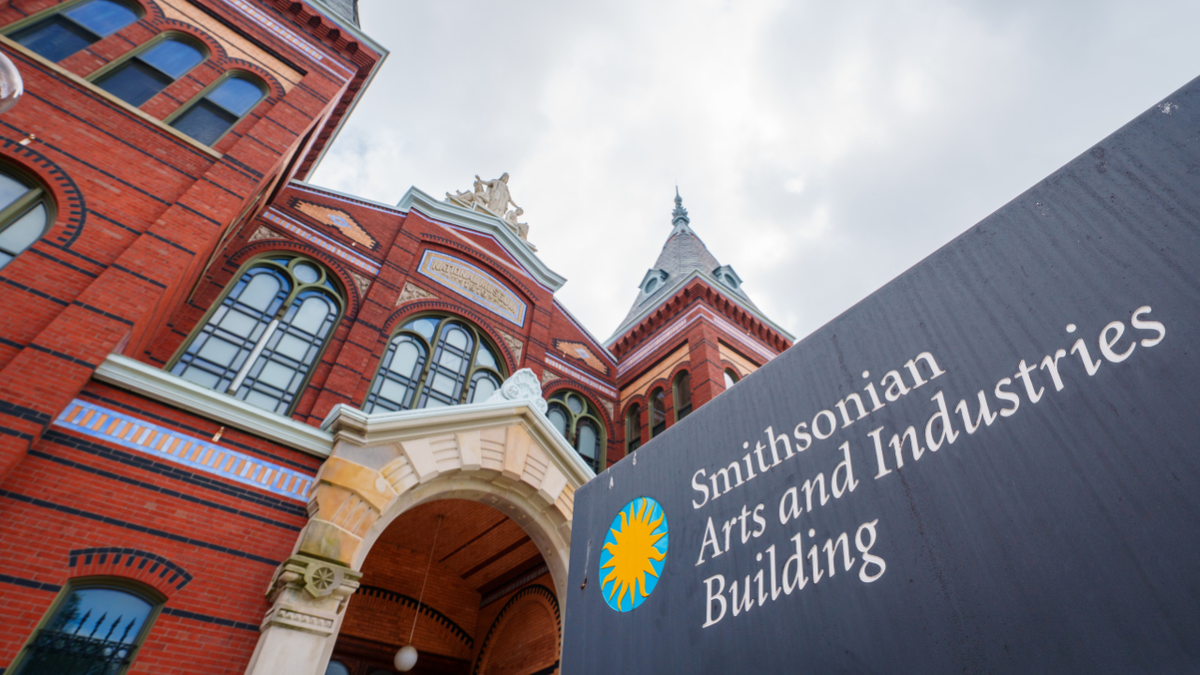
The Smithsonian, the nation’s largest museum and research complex, is at the center of a White House campaign to overhaul its presentation of American history. (J. David Ake/Getty Images)
White House officials sent Smithsonian Secretary Lonnie Bunch a letter formally launching the review ordered by Trump.
The letter directs the institution to turn over exhibition plans, educational materials, internal policies and other records while outlining a review of eight Smithsonian museums to ensure exhibits «celebrate American exceptionalism» and remove what the administration calls divisive narratives.
It also sets deadlines for document production, curator interviews and on-site reviews, with museums instructed to begin revising public-facing content within 120 days.
Late 2025: White House says Smithsonian isn’t adequately celebrating America’s founding

The Trump administration has repeatedly pressed Smithsonian Secretary Lonnie Bunch for records and changes as part of its review of the institution. (Al Drago/The Washington Post/Getty Images)
The White House criticizes the museum for holding no special Independence Day programming in 2025 despite being open on July 4, discontinuing its traditional Flag Day ceremonies, and planning 250th anniversary exhibits and events.
According to the administration, those 250 installations emphasize flaws of the United States while giving insufficient attention to the Founders, the Declaration of Independence and the American Revolution.
Dec. 18, 2025: White House says Smithsonian isn’t cooperating with its review
The White House tells Smithsonian Secretary Bunch in a letter that the institution has failed to provide most of the records requested during its review.
Among other things, the review requested exhibition plans, curatorial documents and governance materials be turned over.
At this time, the administration gives the Smithsonian until Jan. 13, 2026, to produce the requested records. It also reminds the institution that federal funding must be used in a manner consistent with Trump’s «Restoring Truth and Sanity to American History» executive order.
Early 2026: White House conducts on-site Smithsonian investigation
For Trump, the battle over the Smithsonian is part of a broader push to restore what he calls a more patriotic telling of American history across federally funded cultural institutions. (Kevin Dietsch/Getty Images)
White House investigators complete on-site walkthroughs of Smithsonian museums. During the visits, they reviewed exhibits, educational materials, digital content and internal planning documents as well as interviewed museum staff as part of the administration’s review.
SMITHSONIAN’S NATIONAL MUSEUM OF AMERICAN HISTORY PROMOTES ‘EXTREME POLITICAL ACTIVISM,’ WH REPORT ALLEGES
Investigators found during those visits exhibits that they argue emphasized restorative history, decolonization, immigration activism, DEI initiatives and social justice. Meanwhile, it claimed that the institution was downplaying America’s Founders, the nation’s achievements and patriotic themes.
The report ultimately concludes the Smithsonian project has undergone a significant shift away from its original mission, arguing exhibits increasingly emphasize social justice activism and ideological narratives rather than focus on America’s founding principles and national achievements.
May 14, 2026: White House says Smithsonian’s flagship America 250 exhibit misses the mark
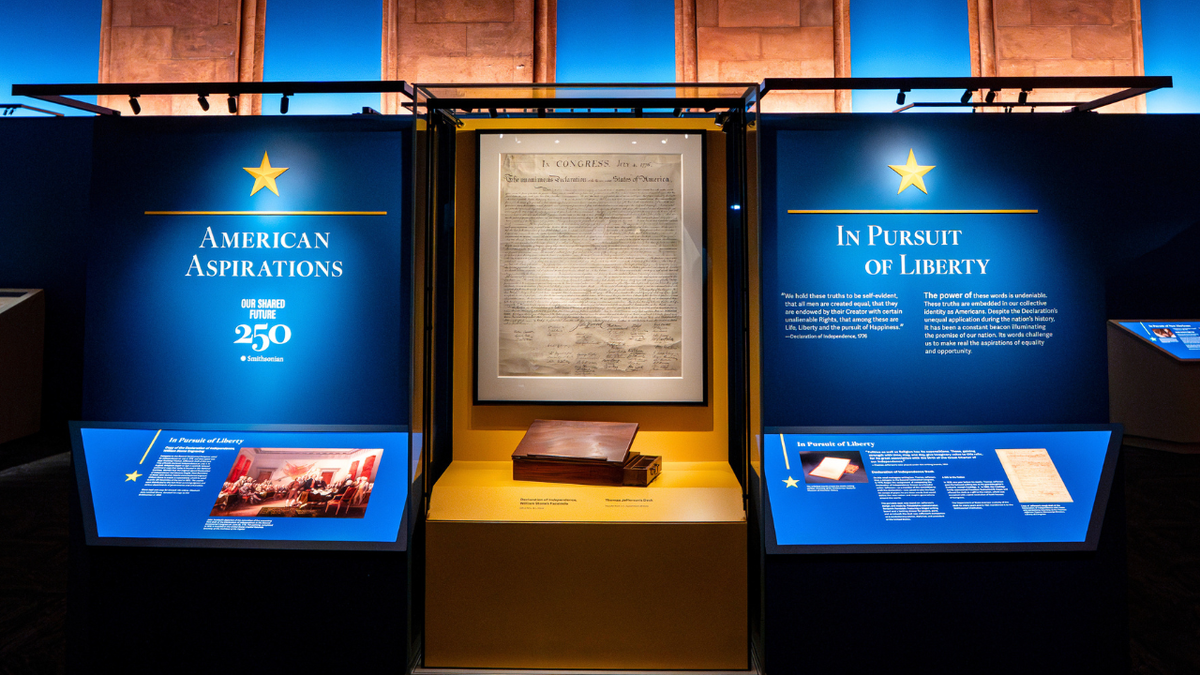
The White House argued the Smithsonian’s flagship America 250 exhibit did not adequately celebrate the nation’s Founders or the American Revolution. (Al Drago/The Washington Post/Getty Images)
The museum debuts its signature exhibition commemorating America’s 250th anniversary, featuring 250 objects from its collection, including Thomas Jefferson’s writing desk, George Washington’s uniform and the Star-Spangled Banner.
The White House said just two months before the country’s 250th celebration that the exhibition repackages existing displays rather than creating a new founding-era exhibit. It also criticized the installation for failing to meaningfully celebrate America’s Founders, the Declaration of Independence or the American Revolution during the nation’s 250th birthday.
The Trump administration also said the exhibit’s promotional materials and programming downplayed patriotic themes and national symbols.
July 2026: White House delivers verdict on Smithsonian review
The White House Domestic Policy Council releases its 162-page «Saving America’s Story» report, concluding that the National Museum of American History has undergone «ideological capture.»
The report recommends removing what it describes as political activism from museum exhibits and restoring displays that emphasize America’s founding principles, national achievements and patriotic history. It says the findings stem from the Smithsonian review ordered by Trump’s March 2025 executive order.
The expansive report included images of exhibits, images of exhibits and placards, as well as curators and leaders of the museum.
It spent much of the report focusing on how the museum classified and portrayed illegal migration in its exhibits.
July 24, 2026: Trump orders federal agencies to carry out Smithsonian reforms
Hours after the report’s release, Trump signs the «Restoring Trust in the Smithsonian Institution» executive order, directing the Interior Department, Office of Management and Budget (OMB), General Services Administrator (GSA) and the White House Domestic Policy Council to use available authorities to encourage the Smithsonian to address the report’s findings.
TRUMP ORDERS SIGNS OUTSIDE SMITHSONIAN MUSEUM AMID ROW OVER ITS DEPICTION OF AMERICAN HISTORY
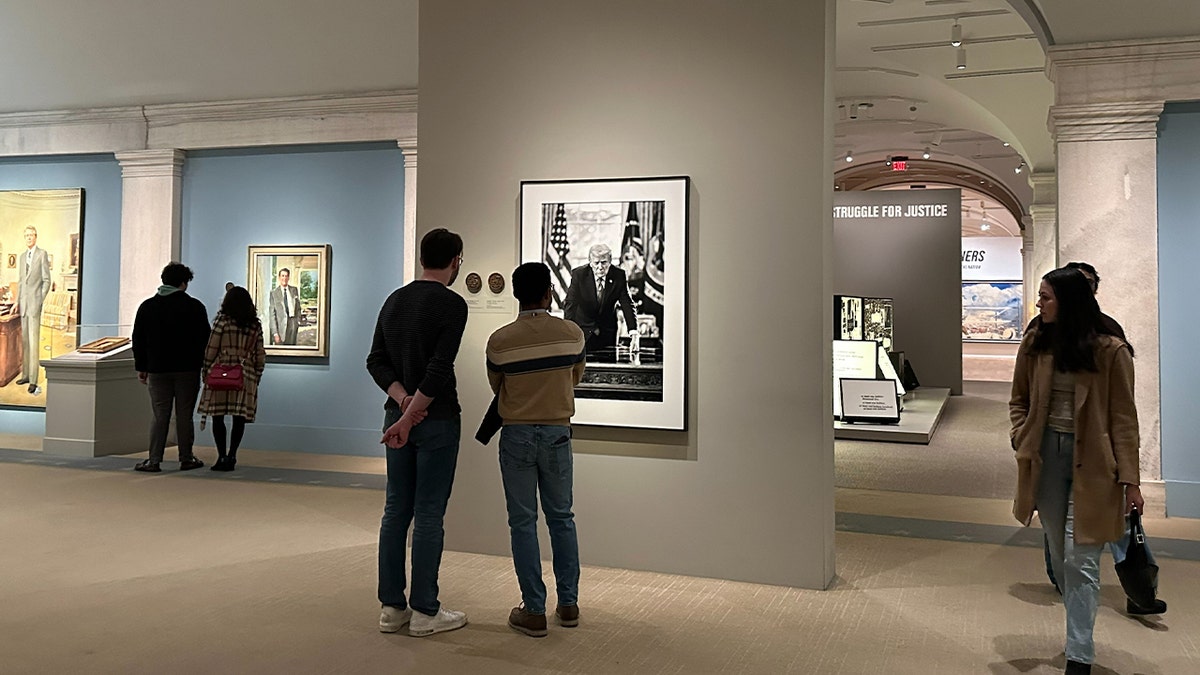
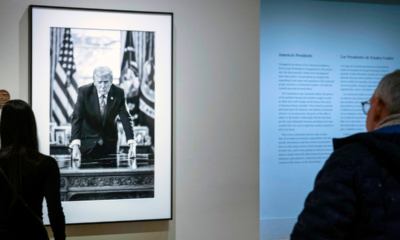
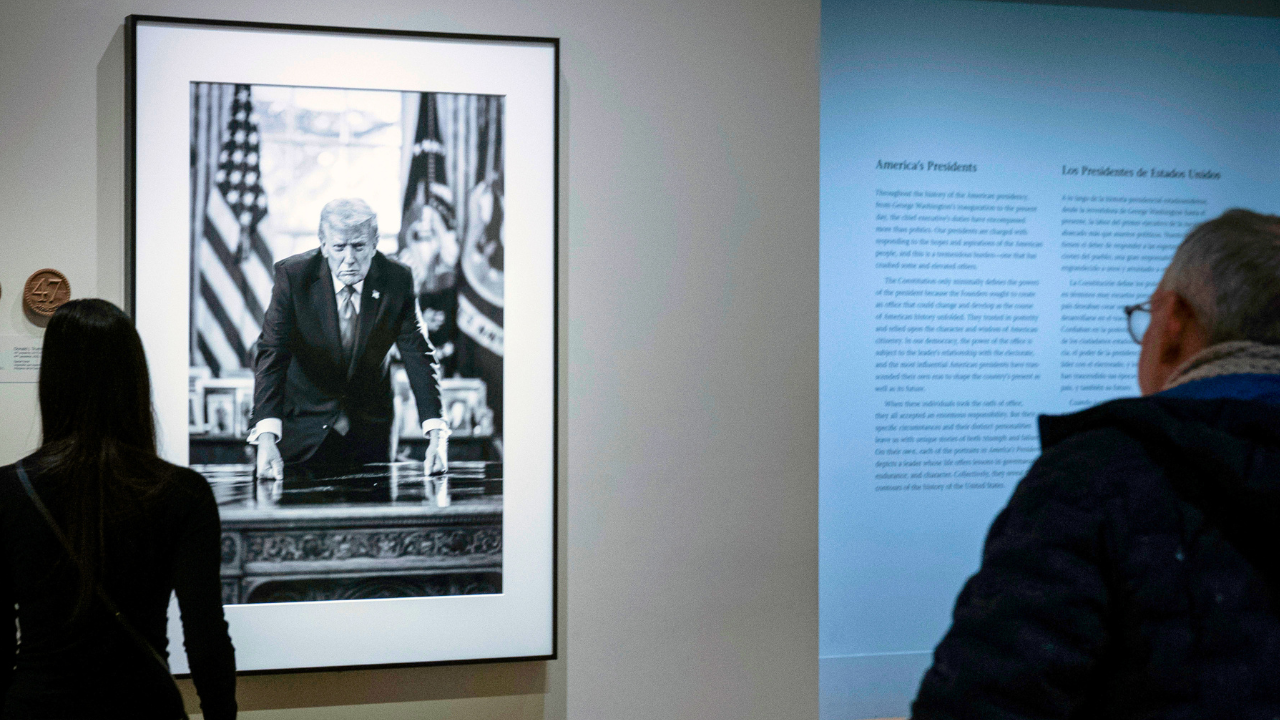
A photograph of President Donald Trump and a short plaque next to it are on display at the Smithsonian’s National Portrait Gallery’s «American Presidents» exhibit on Sunday, Jan. 11, 2026 in Washington. (AP Photo/Anna Johnson)
Trump’s order also instructs the National Park Service (NPS) to install temporary signs outside the National Museum of American History directing visitors to the report and describing the administration’s concerns with the museum’s presentation of American history.
The administration says its effort is intended to restore a more patriotic presentation of American history at the Smithsonian. The institution, meanwhile, has long said its mission is to preserve and present the nation’s history through scholarship, research and public education, setting the stage for continued debate over how America’s story should be told.
The Smithsonian did not immediately respond to Fox News Digital’s request for comment.
politics, white house, donald trump, executive policy, woke, museums exhibits, smithsonian
INTERNACIONAL
Tartessos, la civilización de España que selló sus templos antes de desaparecer sin dejar rastro
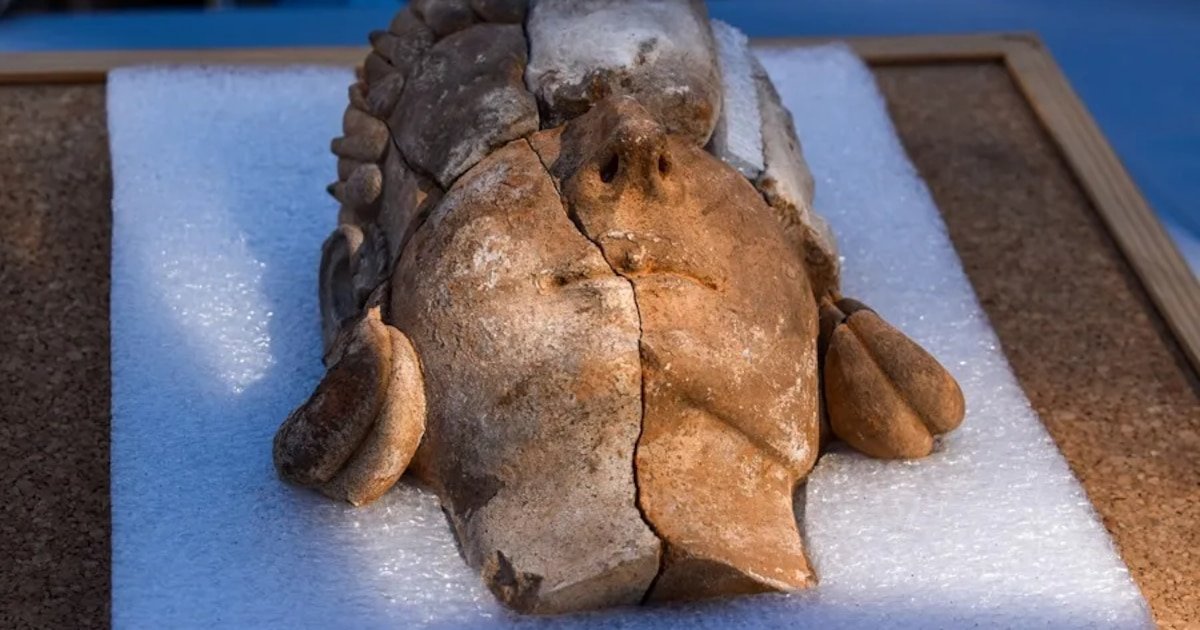
El valle del Guadiana, en la árida llanura del suroeste de España, guarda bajo su suelo un secreto que nunca se logró borrar. Templos sellados, joyas de oro y cenizas de rituales sin explicación: lo que hoy parece tierra fue, hace más de 2.500 años, el corazón de Tartessos, una civilización que comerció con medio Mediterráneo y dejó su huella en la costa atlántica y en la ciencia.
Los historiadores griegos y romanos la conocían, o creían conocerla. Heródoto, geógrafo, escribió sobre una ciudad portuaria más allá de las Columnas de Hércules, ese límite del mundo conocido que hoy se conoce como estrecho de Gibraltar. El Antiguo Testamento menciona un lugar llamado Tarsis, desde donde las naves del rey Salomón regresaban cargadas de oro, plata y marfil.
Cada fuente describía a Tartessos de forma distinta: un río, un puerto, un reino, una isla, pero nadie coincidía.
Sin embargo, las excavaciones del último siglo fueron sumando piezas a un rompecabezas enorme y generando respuestas a historiadores. Pero recién en las últimas décadas la tecnología permitió empezar a ver la imagen completa de un mundo que fue protagonista del mercado miles de años atrás.

Tartessos floreció entre los siglos IX y V a. C. en el sur de la península ibérica, y surgió de la fusión entre poblaciones indígenas y colonizadores fenicios y griegos. No fue una cultura aislada: su ubicación geográfica, próxima al estrecho de Gibraltar, la convirtió en un punto de conexión e intercambio entre el Atlántico y el Mediterráneo, dos mundos que hasta entonces habían operado con escaso contacto directo.
Su base económica descansaba en los metales. El subsuelo del sur peninsular era extraordinariamente rico en oro, plata, cobre y estaño, y los tartesios lo explotaron con una organización que impresionó a los viajeros de la Antigüedad. Según recoge History National Geographic, Eforo, historiador del siglo IV a. C., los describió como “un mercado muy próspero, regado por un río que lleva gran cantidad de estaño, oro y cobre».

El rey Argantonio se convirtió en la figura por antonomasia de la civilización. De acuerdo con History National Geographic, las fuentes antiguas lo presentan como un gobernante longevo y opulento, símbolo de la abundancia que caracterizó a esta sociedad durante su apogeo. Su figura condensó, con el tiempo, todo el aura de prosperidad que rodeaba al mundo tartesio.
Además del comercio y la metalurgia, registraron el primer sistema de escritura conocido de la península ibérica. La escritura tartésica, que data de alrededor del siglo VIII a. C., deriva del alfabeto fenicio y presenta una particularidad: es palindrómica, puede leerse de derecha a izquierda o de izquierda a derecha. Según informó la BBC, los sonidos exactos que representan sus símbolos aún están bajo estudio.
Una estela con inscripciones de este sistema se conserva en el Museo Arqueológico de Badajoz, dentro de la Alcazaba.

La relación con los fenicios es uno de los debates más activos en la arqueología actual. La postura tradicional sostuvo durante décadas que ambas culturas, pese a la cercanía geográfica, se mantuvieron sustancialmente separadas. Pero investigaciones más recientes plantean que entre ellas se produjo una fusión cultural tan profunda que en muchos yacimientos resulta difícil distinguir qué elementos son de cada uno.
Lo que sí permanece fuera de discusión es la extensión geográfica de la civilización. Los primeros hallazgos apuntaban al valle del Guadalquivir, en Andalucía, como el núcleo tartesio. Pero descubrimientos posteriores en el valle del Guadiana, más al oeste, ampliaron ese mapa considerablemente.
Hasta la fecha, según relevó la BBC, se han identificado más de 20 yacimientos tartesios en toda España, que incluyen sitios en las provincias de Huelva, Sevilla, Córdoba, Badajoz e incluso en Portugal.
La desaparición hacia el siglo V a. C. continúa siendo uno de los enigmas sin resolver de la arqueología ibérica. La civilización no se apagó de forma gradual: los registros materiales indican una ruptura abrupta, sin señales claras de una transición hacia otra cultura o una retirada ordenada.

Una de las teorías con mayor respaldo reciente apunta a un desastre natural. Según informó el investigador científico del Instituto de Arqueología de Mérida, Sebastián Celestino Pérez, “parece que pudo haber habido un terremoto a mediados del siglo VI antes de Cristo, seguido de un tsunami que podría haber afectado a los principales puertos”, reveló en diálogo con la BBC.

Pero los factores económicos y políticos también pesan en el análisis. De acuerdo con History National Geographic, Eduardo Ferrer-Albelda, catedrático de arqueología de la Universidad de Sevilla, señaló que la riqueza metálica era tanto su mayor fortaleza como su punto más vulnerable.
“También se documenta una crisis minera, pero la violencia debió desempeñar un papel importante”, afirmó. El investigador también planteó que “la connivencia entre las aristocracias fenicia e indígena podría haber terminado abruptamente, de modo que cabe suponer un movimiento entre las poblaciones de la zona tartésica”.
Lo que sí documentan con precisión los yacimientos es el ritual con el que los tartesios cerraron sus espacios sagrados antes de abandonarlos. Según relevó la BBC, en todos los sitios excavados se repitió el mismo patrón: los habitantes vaciaban los recipientes y ánforas, quemaban el edificio y lo sellaban con arcilla, dejando en su interior herramientas de hierro, joyas de oro y restos de animales sacrificados.
Ana Belén Gallardo Delgado, historiadora y guía del yacimiento de La Mata, resumió esa conducta para la BBC: “Lo que más me sorprende es la peculiar costumbre de destruir sus viviendas; en todos los yacimientos encontrados se ha seguido el mismo comportamiento“.
Tartessos,bronce,orfebrería,colgante,figura alada,aves acuáticas
INTERNACIONAL
La increíble historia de los trillizos que fueron separados al nacer para un experimento científico y descubrieron la verdad 19 años después
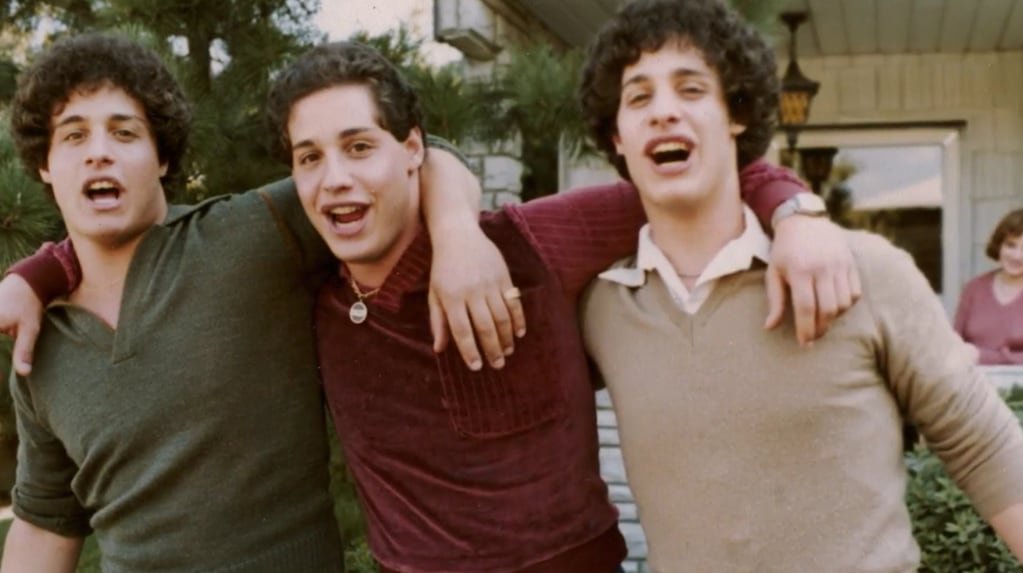
Durante casi dos décadas, Edward Galland, David Kellman y Robert Shafran vivieron sin saber que eran hermanos. Nacieron el mismo día, compartían el ADN y, sin embargo, fueron entregados en adopción a tres familias diferentes que jamás fueron informadas de la existencia de los otros chicos.
El reencuentro ocurrió por una serie de casualidades que convirtió la historia en algo increíble. Rápidamente, los tres hicieron furor en Estados Unidos, protagonizaron programas de televisión, abrieron un restaurante y se convirtieron en celebridades.
Sin embargo, detrás de aquella historia que parecía sacada de una novela de ficción había un secreto oscuro: los habían separado a propósito para formar parte de un experimento científico que nunca fue informado a sus familias.
Décadas después, el caso cobró relevancia gracias al documental Three Identical Strangers, dirigido por Tim Wardle, que reconstruyó una de las historias más impactantes sobre adopciones y ética científica.
Tres idénticos desconocidos
Los tres hermanos nacieron el 12 de julio de 1961 en Nueva York. Su madre biológica era una adolescente soltera que decidió darlos en adopción. Lo que ni ella ni las familias adoptivas sabían era que los bebés serían separados intencionalmente.
Cada uno fue enviado a un hogar distinto a través de la agencia de adopciones Louise Wise Services. La decisión no fue aleatoria, ya que según se supo muchos años después, los responsables del estudio buscaban que crecieran en familias con diferentes niveles socioeconómicos y distintos estilos de crianza para observar cuánto influían la genética y el ambiente en el desarrollo de una persona.
Uno de los hermanos fue criado en una familia trabajadora, otro en un hogar de clase media y el tercero en un entorno con una posición económica más acomodada. Todos crecieron creyendo que eran hijos únicos.
Los trillizos que fueron separados al nacer por un experimento científico. (Foto: Three Identical Strangers)
La historia de los trillizos dio un giro en 1980, cuando Robert Shafran llegó a estudiar en el Sullivan County Community College, ubicado en Nueva York.
Desde el primer momento ocurrió algo que le pareció raro: alumnos que nunca había visto lo saludaban y lo llamaban “Eddy”. Algunos incluso mantenían una breve conversación con él convencidos de que era otra persona.
Por otra parte, un compañero conocía a Edward Galland, un chico que había estudiado allí el año anterior y que era idéntico al recién llegado. Cuando ambos se encontraron cara a cara quedaron completamente sorprendidos: tenían las mismas facciones, la misma voz y la misma fecha de nacimiento.
La posibilidad de que fueran hermanos adoptados apareció enseguida. Poco después confirmaron que eran gemelos idénticos separados al nacer.
La similitud física entre los hermanos era innegable. (Foto: CNN)

Pocos días después de que los medios publicaran la historia del sorprendente reencuentro, David Kellman vio una foto de los dos jóvenes en el diario local y no pudo creer lo que veía: ellos eran iguales a él.
Fue así que David logró contactarlos por teléfono y organizó un encuentro. Cuando los tres estuvieron juntos comprobaron que no eran gemelos, sino trillizos.
De un fenómeno mediático a una verdad inesperada
El reencuentro de los trillizos causó un impacto inmediato en Estados Unidos. En cuestión de semanas, Robert Shafran, David Kellman y Eddy Galland pasaron de ser tres jóvenes desconocidos a ser protagonistas de programas de televisión, entrevistas y portadas de revistas y diarios.
Su parecido físico era increíble, pero lo que más llamaba la atención era la cantidad de rasgos que compartían a pesar de haber crecido por separado: fumaban la misma marca de cigarrillos, tenían gustos similares para la comida, practicaban lucha libre e incluso utilizaban expresiones y gestos casi idénticos.
Después de que se diera a conocer el caso, los trillizos se volvieron famosos en Estados Unidos. (Foto: BBC)

Las imágenes de los tres vestidos iguales y respondiendo preguntas al mismo tiempo dieron la vuelta al país. Por eso, aprovechando la enorme repercusión, decidieron mudarse juntos a Nueva York y abrieron un restaurante en el barrio del SoHo llamado Triplets, que rápidamente se convirtió en furor entre turistas y curiosos que querían conocer a los hermanos.
Sin embargo, mientras disfrutaban de esa inesperada fama, todavía desconocían el motivo por el que habían sido separados al nacer. La respuesta llegaría años después y transformaría para siempre la manera en que entendían su propia historia.
Un experimento oculto
En la década de los 90, investigaciones periodísticas dieron a conocer la existencia de un estudio secreto encabezado por el psiquiatra infantil Peter Neubauer, que había desarrollado junto a la agencia de adopciones Louise Wise Services.
El objetivo del proyecto era averiguar cuánto influye la herencia genética y cuánto pesa el entorno social en la formación de la personalidad.

Peter Neubauer, el psiquiatra infantil que estuvo a cargo del experimento científico que involucró a los hermanos trillizos. (Foto: Daily Mail)
Durante la infancia de los chicos, investigadores visitaban con frecuencia las casas donde estaban alojados con la excusa de realizar controles de rutina sobre la adaptación. En esas reuniones hacían preguntas, filmaban a los menores, evaluaban su comportamiento y registraban su desarrollo.
Años después, los propios trillizos aseguraron que jamás fueron informados de la existencia del estudio y que crecieron sin saber que dos hermanos idénticos vivían a pocos kilómetros de distancia.
“Nos trataban como sujetos de estudio, pero nosotros éramos víctimas. Hay una gran diferencia”, dijo Robert Shafran en una entrevista en el documental Three Identical Strangers. En otra oportunidad resumió ese sentimiento con una frase que se volvió emblemática: “Nos trataron como ratas de laboratorio”.
La muerte de Eddy Galland
La verdad sobre haber sido parte de un experimento científico afectó en gran parte a los tres hermanos, que atravesaron distintos problemas de salud mental.
Sin embargo, fue Eddy Galland quien se llevó la peor parte, ya que fue diagnosticado con trastorno bipolar y estuvo internado en instituciones psiquiátricas. Finalmente, se quitó la vida el 31 de marzo de 1995 cuando tenía 33 años.
Uno de los hermanos, Eddy Galland, se quitó la vida a la edad de 33 años. (Foto: Three Identical Strangers)

Este trágico hecho marcó un punto de quiebre para la familia y afectó profundamente a David y Robert. Si bien nunca se pudo establecer una relación directa entre el experimento y el suicidio de Galland, ambos sostuvieron que la separación al nacer y todo lo que descubrieron después tuvo un fuerte impacto emocional en sus vidas.
Peter Neubauer murió en 2008 sin publicar los resultados completos de su investigación. Antes de morir, dejó el archivo del estudio depositado en la Universidad de Yale, donde permanecerá bajo reserva hasta 2065.
Estados Unidos, trillizos, experimento

Javier Milei redobló la apuesta: “Lula es un ladrón, es corrupto, y lo liberaron por una falla en el procedimiento”

Un patrullero embistió a una moto en Palermo tras una persecución: hay un detenido y un joven herido

Trump v. Smithsonian: A timeline of how the White House fight over ‘woke’ history unfolded

Cinzia habló por primera vez del terrible accidente en Gran Hermano: “Me duele, estoy…”

La probable formación de San Lorenzo para visitar a Central Córdoba

Paro docente: el Gobierno va a controlar las escuelas, pero ya se prepara para un conflicto con los sindicatos

“Vamos a acelerar con todo”: el objetivo del Gobierno por las reformas y la agenda electoral de cara al 2027

Reelecciones indefinidas: el oficialismo bonaerense niega que busque ampliar la Legislatura como parte de una reforma política para beneficiar a los intendentes

“Casta”, “parásito” y “sea democrático”: fuerte respuesta de Victoria Villarruel a Diego Santilli

Dem senator swipes credit for bill he opposed amid heated reelection bid: ‘Disturbing pattern’
-
 POLITICA1 día ago
“Vamos a acelerar con todo”: el objetivo del Gobierno por las reformas y la agenda electoral de cara al 2027
-
 POLITICA13 horas ago
Reelecciones indefinidas: el oficialismo bonaerense niega que busque ampliar la Legislatura como parte de una reforma política para beneficiar a los intendentes
-
 POLITICA2 días ago
“Casta”, “parásito” y “sea democrático”: fuerte respuesta de Victoria Villarruel a Diego Santilli