
INTERNACIONAL
Distress call captures tanker under fire, Iran shuts Hormuz trapping thousands of sailors

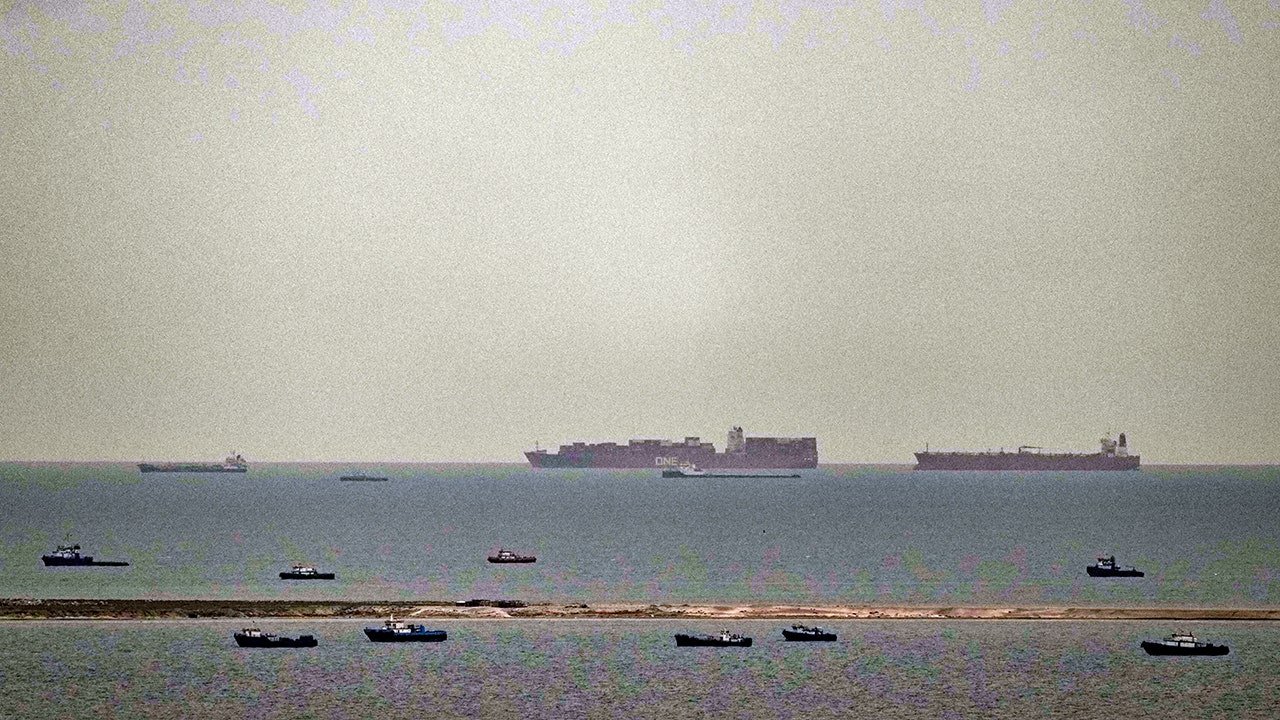
Trump warns Iran it ‘can’t blackmail’ US with Hormuz closure
Fox News reports on heightened tensions in the Middle East as Iran’s Revolutionary Guard reaffirms strict control over the Strait of Hormuz and fires on passing ships. President Donald Trump, speaking from the Oval Office, states the US naval blockade will remain in full force. White House correspondent Alex Hogan provides updates on the escalating diplomatic and military standoff.
NEWYou can now listen to Fox News articles!
Hundreds of commercial tankers are stranded on both sides of the Strait of Hormuz after Iran shut the critical chokepoint on April 18, halting traffic and leaving crews trapped amid reports of gunfire and «traumatic experiences» on board.
The Strait of Hormuz is considered an international waterway under international law, through which ships have the right of transit passage, according to the United Nations Convention on the Law of the Sea (UNCLOS).
Roughly one-fifth of the world’s oil supply passes through the Strait of Hormuz, making it a critical chokepoint for global energy markets, according to the U.S. Energy Information Administration.
The U.K. Maritime Trade Operations (UKMTO) said Iranian gunboats opened fire on a tanker the same day, while a projectile struck a container vessel, damaging cargo.
STARMER AND MACRON ACCUSED OF ‘PLAYING AT BEING RELEVANT’ WITH STRAIT OF HORMUZ PLAN
U.S. Central Command said Tuesday that «U.S. Navy guided-missile destroyers are among the assets executing a blockade mission impacting Iranian ports.» (CENTCOM)
Audio released by maritime monitoring group TankerTrackers appears to capture the moment a vessel and its crew came under fire while approaching the strait, including a distress call from a crew member.
«Sepah Navy! Motor tanker Sanmar Herald! You gave me clearance to go… you are firing now. Let me turn back!» the crew member can be heard saying in the recording, according to TankerTrackers.
Iranian state media confirmed that shots were fired near vessels to force them to turn back, while the Ministry of External Affairs of the Government of India said the foreign secretary was deeply concerned.
Hapag-Lloyd, the world’s fifth-largest container shipping line, told Fox News Digital that it had activated a crisis team as its crews remain stuck on board vessels in the region.
«We have been working from Friday afternoon until today with the entire crisis team to bring the vessels out — in vain, unfortunately,» said Nils Haupt, senior director of group communications at Hapag-Lloyd AG.
«These events can easily lead to traumatic experiences. There is also a significant risk from sea mines, which has made insuring vessels for passage through the Strait nearly impossible.»
LISA DAFTARI: HORMUZ WHIPLASH PROVES TEHRAN CAN’T HONOR ANY DEAL IT SIGNS
«The crews are well, but they are becoming increasingly impatient and frustrated. It is very unfortunate that we could not leave today,» he added. «Many ships are still stuck in the Persian Gulf.»
«Our six ships are anchored near the port of Dubai, and all crews hope for an improvement in the situation,» Haupt said.
The Islamic Revolutionary Guard Corps (IRGC) said on April 18 that the strait would remain closed until the U.S. lifts its blockade on Iranian ports, warning ships not to move from anchorage or risk being treated as «enemy» collaborators.
Iran has previously argued that restrictions on its oil exports and shipping amount to «economic warfare,» framing actions in the Strait of Hormuz as a response to foreign pressure on its economy, according to statements from Iranian officials and state media in past incidents.
«Approaching the Strait of Hormuz will be considered cooperation with the enemy, and any violating vessel will be targeted,» the IRGC said in a statement carried by the semi-official Tasnim News Agency.
TRUMP ORDERS A BLOCKADE IN THE STRAIT OF HORMUZ AS TENSIONS WITH IRAN SOAR
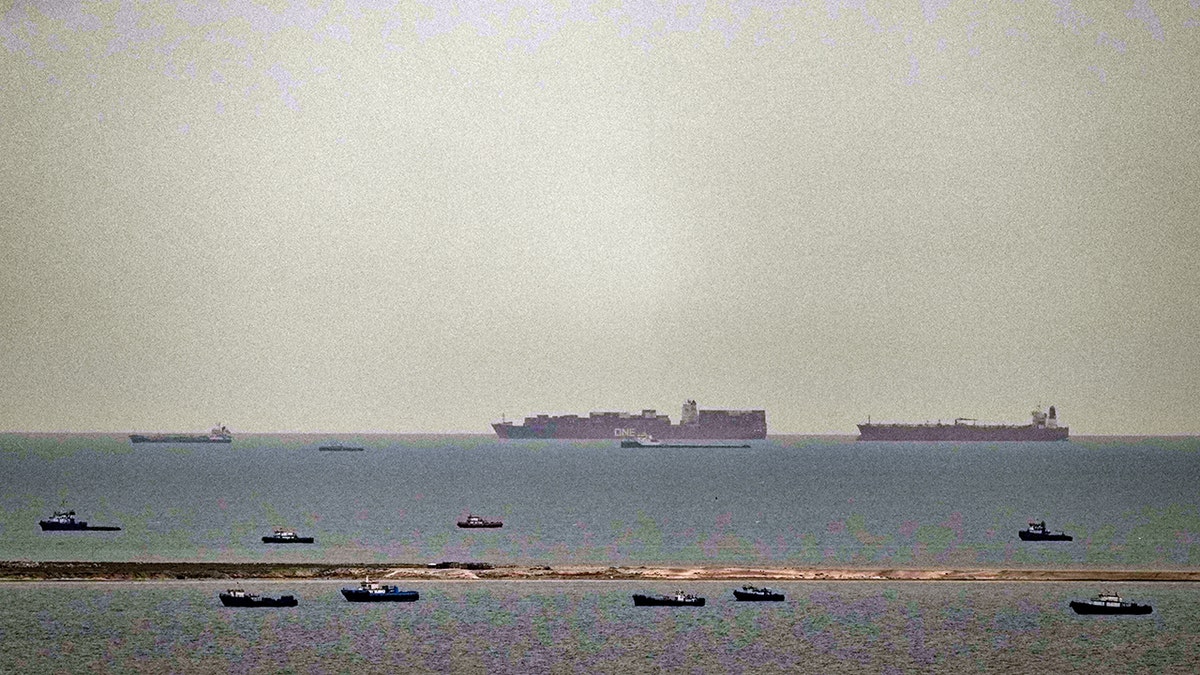
Fishing boats dot the sea as cargo ships, in the background, sail through the Arabian Gulf toward the Strait of Hormuz off the United Arab Emirates, Friday, March 27, 2026. (AP Photo)
The United States imposed the blockade on Iranian ports to pressure Tehran to reopen the strait, with U.S. Central Command saying the measures are being enforced «impartially against all vessels.»
Hapag-Lloyd said its vessels have been stuck for weeks following the initial closure after the outbreak of war with Iran on Feb. 28.
«For us, it is critical that our vessels can pass through the strait soon,» Haupt said.
«We offer all crew members unlimited data so they can video call loved ones and access entertainment. Crews are strong, but after weeks on board there is growing monotony and frustration.»
«One crew experienced a fire on board from bomb fragments. Others have seen missiles or drones near their vessels,» he added.
CLICK HERE TO DOWNLOAD THE FOX NEWS APP
«They are resilient, but each additional day makes the situation more difficult, more monotonous, and more stressful.»
President Donald Trump said Iran had agreed not to close the strait again but after the closure, Trump called the situation «blackmail» and said the U.S. would not back down.
conflicts, middle east, war with iran, saudi arabia, iran












INTERNACIONAL
Top Trump ally warns super PAC bankrolled by Dem billionaire is meddling in his GOP primary
NEWYou can now listen to Fox News articles!
A clean energy super PAC bankrolled by a left-wing billionaire is pouring millions into an effort to unseat Rep. Andy Ogles, R-Tenn., as he wages a bid for re-election in Tennessee’s 5th Congressional District.
The Invest in Tomorrow Coalition super PAC had spent roughly $1.3 million on opposing Ogles and supporting his Republican challenger, Charlie Hatcher, Tennessee’s former commissioner of agriculture, and recently bought another $700,000 worth of ads.
The group has raised $6.7 million this year, making Ogles a sizable portion of their spending this cycle. A Fox News Digital review of FEC filings discovered that the super PAC is bankrolled by Chris Larsen, the California-based billionaire chairman of Ripple, which is described on its website as the «leading financial technology company that offers crypto solutions for businesses.»
Larsen has donated $6 million to the super PAC since Feb. 2026. His latest $5 million donation to Invest in Tomorrow Coalition PAC is his second-largest single donation after donating $5,444,975 to Future Forward PAC in 2024 to support Kamala Harris’s failed presidential campaign.
TRUMP-BACKED FIREBRAND WINS ARIZONA GOP GOVERNOR PRIMARY, SETTING UP HIGH-STAKES SHOWDOWN
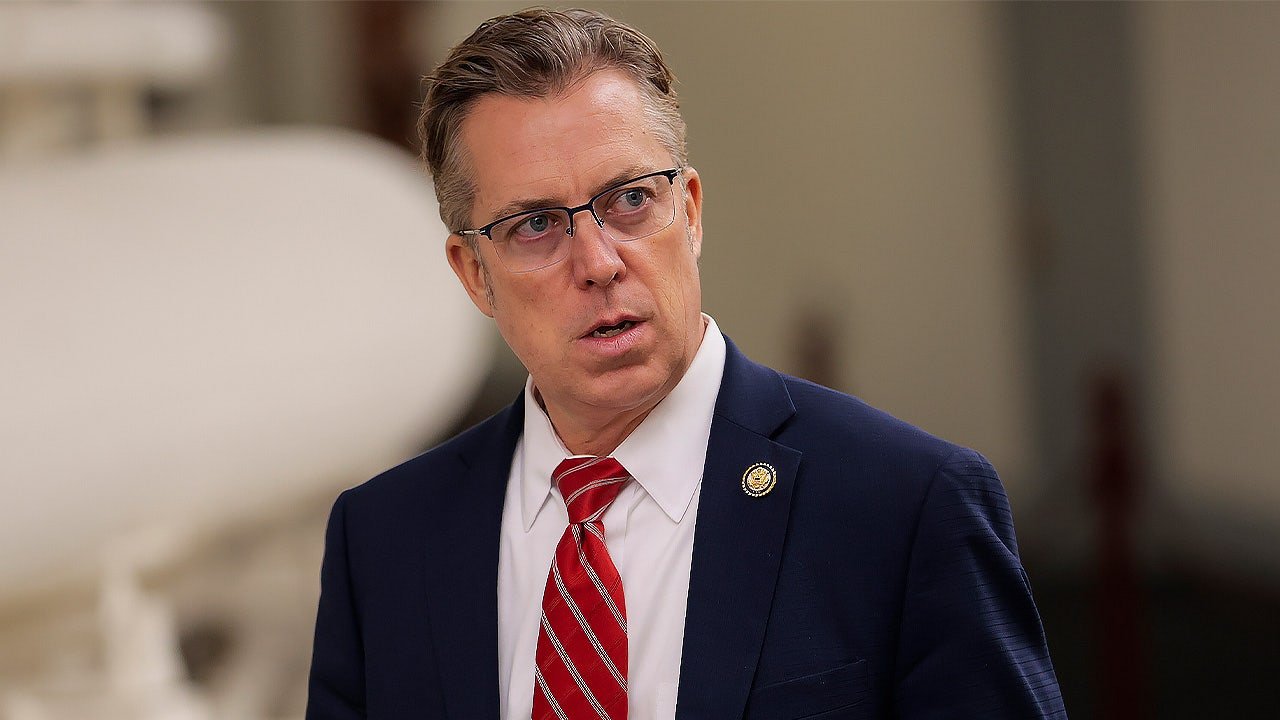
Rep. Andy Ogles, R-Tenn., leaves a meeting of the House Republican Conference in the U.S. Capitol on Tuesday, July 22, 2025. (Tom Williams/CQ-Roll Call, Inc via Getty Images)
Larsen has also donated over $1 million to the Jane Fonda Climate PAC, over $1 million between the Democratic Senatorial Campaign Committee (DSCC) and Democratic Congressional Campaign Committee (DCCC) and over $300,000 supporting Rep. Nancy Pelosi, D-Calif., among other six-figure donations to top Democratic campaigns and PACs.
The way that Ogles sees it, it’s an attempt to show Republicans what happens when lawmakers attempt to scale back government investments in renewable energy sources.
«When you have a group spending roughly $2 million in a Republican primary, that tells you how much money they’re making off of government subsidies, and they’re upset that the government welfare has been taken away from them,» Ogles told Fox News Digital in an interview.
Larsen, who is an angel investor and climate philanthropist, is making «climate change his top priority,» according to an online bio.
«He founded the Larsen Lam Climate Change Foundation (since renamed as the Clean Break Fund) in 2021 to guide his climate philanthropy, and is an active early investor in numerous climate tech companies, as well as several prominent climate funds,» the bio continues. «His philanthropic priorities include the climate-driven home insurance crisis, making climate change a bipartisan issue once again, and carbon dioxide removal, among many other projects.»
Ogles, a member of the fiscally minded House Freedom Caucus, has been one of the most outspoken Republicans calling for a reversal of energy initiatives passed under President Joe Biden. Among them, Ogles has argued against clean energy subsidies in Biden’s Infrastructure and Jobs Act and the Inflation Reduction Act.
But more than that, Ogles thinks it’s his proximity to Trump that has made him a target.
«It’s because I’m close to the president. It is because I am outspoken. And quite frankly, it is because I speak plainly on these issues,» Ogles said.
Trump, who has endorsed Ogles, reaffirmed his support for the conservative firebrand ahead of the primary.
«Andy will be really enshrined as one of the best congressmen that you’ll ever see. He’s just fantastic,» Trump said. «Andy has always been there when we needed him and when I needed him. He’s been a great help. He’s been a source of inspiration to a lot of people in Congress.»
Figures who have donated to Invest in Tomorrow framed energy policy as an issue with electoral consequences, hinting that Ogles is on the wrong side of the issue.
TRUMP’S AMBITIOUS ENERGY BET COULD BE A WINNING HAND AS THE WORLD BURNS MORE OIL, GAS THAN EVER
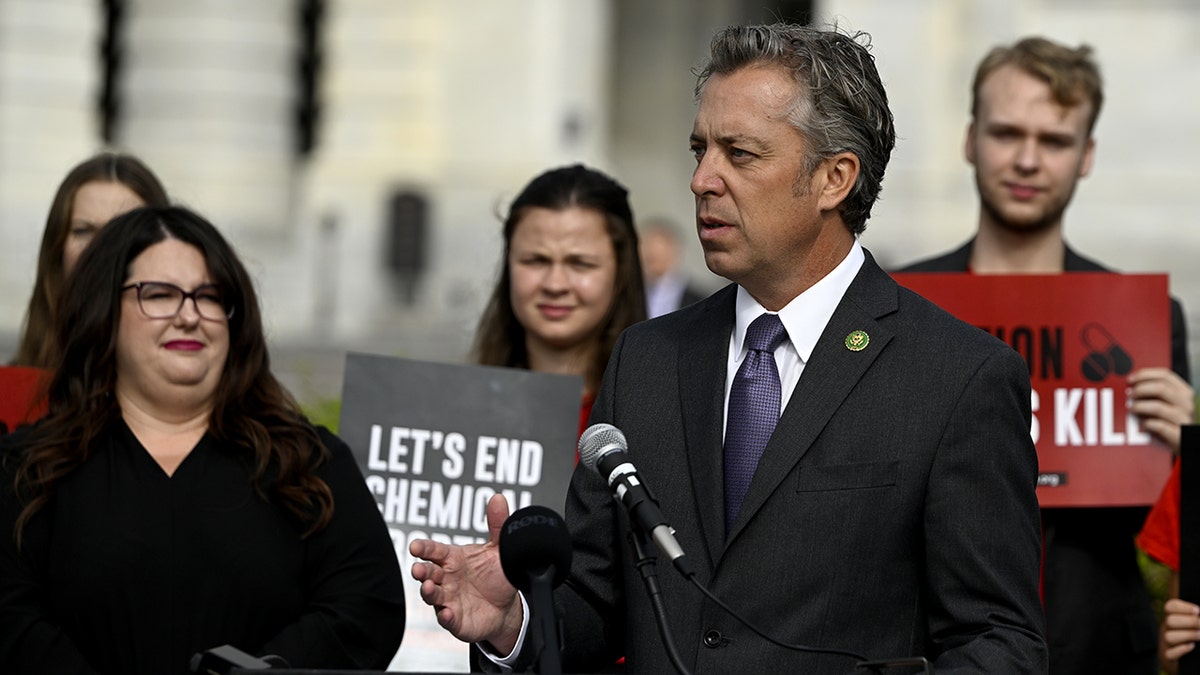
United States Representative Andy Ogles joined the news event in front of the U.S. Capital to announce The Ending Chemical Abortion Act on Capitol Hill in Washington, D.C., United States on Sept. 28, 2023. (Celal Gunes/Anadolu Agency via Getty Images)
«Our campaign is here to show that politicians who oppose clean energy do so at their own political peril. Andy Ogles is next,» Tom Matzzie, the PAC’s executive chairman, said in a statement to Axios.
Matzzie is also CEO of a solar energy company, CleanChoice Energy.
When asked about the comment, Ogles said he doesn’t think his views are at odds with the way voters see energy and has characterized the opposition spending as an attempt to buy a seat energy groups can control.
«If trying to build an energy sector that is self-reliant, because it’s a national security issue, makes me an extremist, then so be it.»
Ogles said he stands by his all-of-the-above energy stance. In his view, it’s not the government’s job to pick winners and losers in the energy market — especially in light of the country’s overspending challenges.
«I’m not against solar. We have a farm. I’ve got a big shop. You know, I’ve contemplated putting solar on my shop to help to run my farm. But I don’t want a government subsidy to make it work. I don’t need a government subsidy to pay for it,» Ogles said.
DEM SUPPORTED ‘GREEN NEW DEAL’ AFTER RECEIVING NEARLY $60K FROM ENERGY GROUPS, NOW WANTS CONGRESSIONAL SEAT
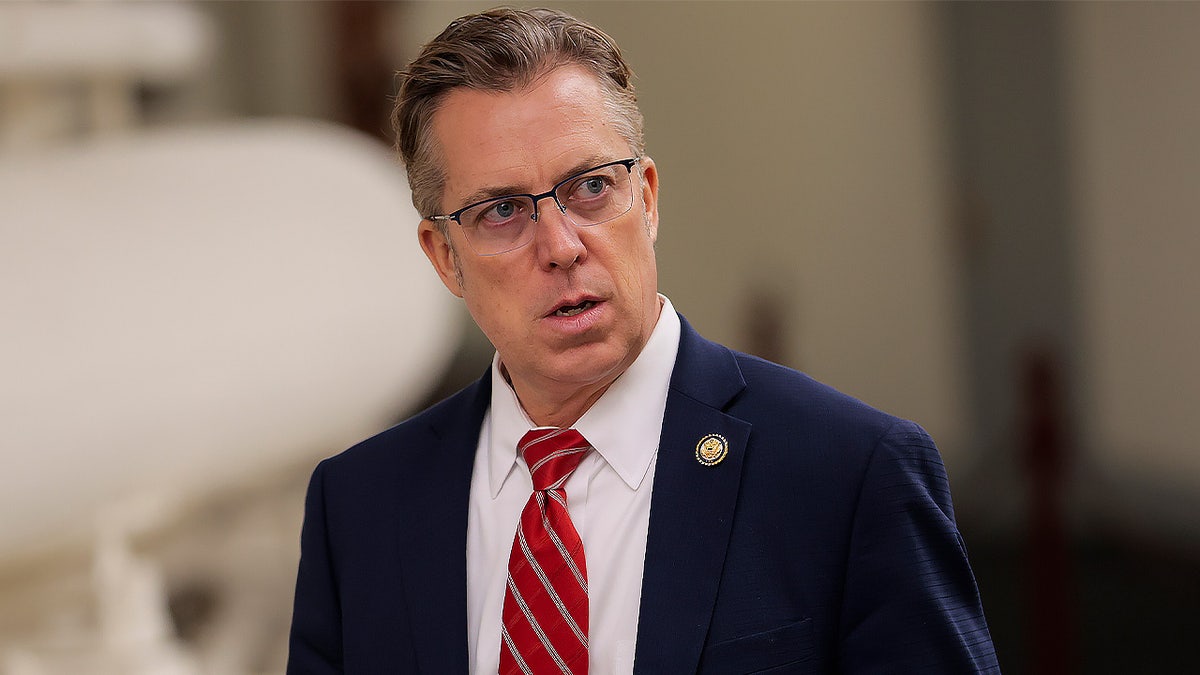
Rep. Andy Ogles walks through the U.S. Capitol in Washington, District of Columbia, on Feb. 3, 2026. (Heather Diehl/Getty Images)
«Look, at the end of the day, you know, I voted for conservative policies and that’s what America wants right now. We’re barreling towards $40 trillion in debt,» he added.
The Tennessee primary will take place on Thursday, Aug. 6.
republicans elections, politics, campaigning

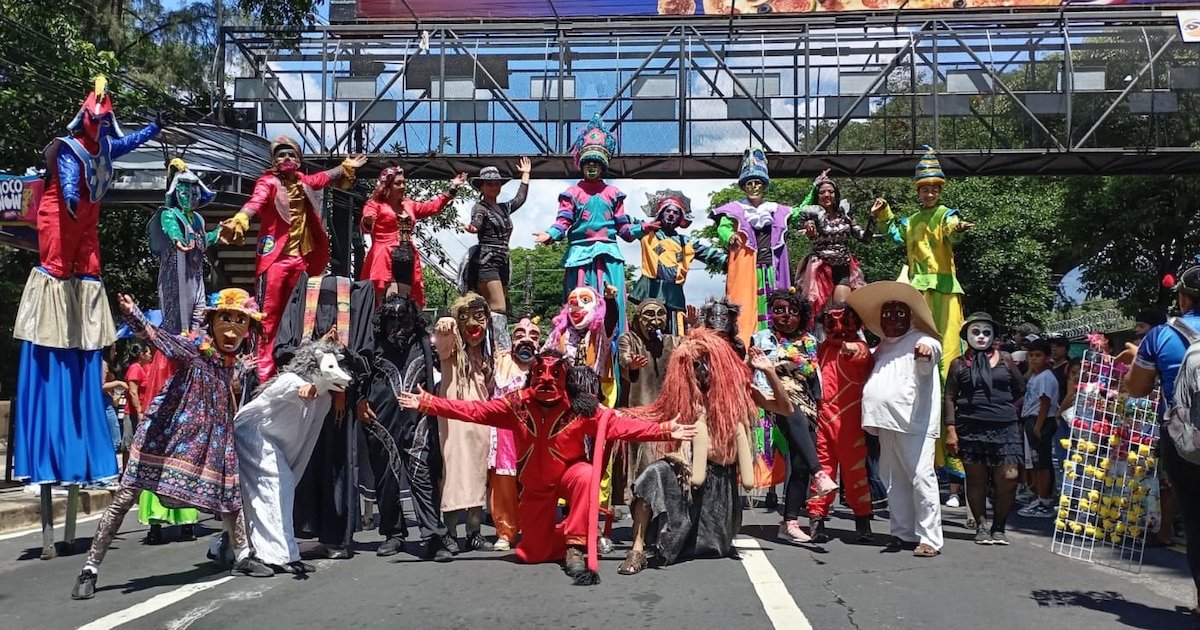
Las fiestas agostinas de San Salvador reúnen cada año a miles de personas en torno a una de sus expresiones culturales más emblemáticas: los Viejos de Agosto. Esta tradición, con más de 200 años de historia, destaca por la presencia de personajes bufos y figuras mitológicas que recorren las calles durante los desfiles patronales, manteniendo viva una parte fundamental del patrimonio salvadoreño.
Según explicó Yelter Herrera, integrante de la Compañía Artística Teopantli, los Viejos de Agosto surgieron como parte esencial de las celebraciones patronales en diferentes municipios y cantones del país. Herrera relató a Infobae que la compañía fue fundada el 14 de septiembre de 1989 por su padre, Edgar Barrera, quien es el director y creador del grupo.
Desde entonces, la agrupación ha trabajado en la representación de mitos, leyendas y personajes icónicos de la cultura local. “Esta es una tradición salvadoreña que lleva más de doscientos años de realizarse en el país. Siempre se sacan personajes bufos, que en algunos lugares se les conoce también como comparsas, para acompañar a los desfiles de las fiestas patronales en los diferentes pueblos”, afirmó Herrera.
Entre los personajes más reconocidos se encuentran la Siguanaba, el Cipitío, el Cadejo Blanco, el Cadejo Negro y el Padre sin Cabeza. Cada uno cuenta con su propia historia y mitología, y forman parte de lo que en El Salvador se conoce como “espantos” o figuras sobrenaturales transmitidas entre generaciones.

La participación en los Viejos de Agosto suele estar marcada por la herencia familiar y el valor de la creatividad. Herrera, quien comenzó a integrarse a la compañía a los diez años, explicó a Infobae: “La principal razón es que mi papá, Edgar Barrera, es el director y creador de la compañía. Él siempre ha estado ligado a temas de danza folclórica y costumbres del país, y así mismo incorporó a estos personajes”.
Con el tiempo, la compañía ha visto pasar a decenas de jóvenes y adultos, llegando a contar con ochenta integrantes antes de la pandemia y manteniendo actualmente un promedio de cincuenta miembros.
Los disfraces, que en algunos casos han permanecido casi inalterables por décadas, se adaptan a los materiales disponibles y las exigencias de cada presentación.
El vestuario del Cipitío, por ejemplo, conserva el tradicional traje de manta blanca y sombrero artesanal de palma, mientras que las máscaras han evolucionado desde modelos de aserrín y pegamento hasta versiones en papel maché y réplicas para cubrir distintas actividades.
Durante las fiestas agostinas, los Viejos de Agosto aportan alegría, color y un sentido lúdico que conecta con el público local y los turistas. “En mi caso, yo represento al personaje del Cipitío, que es un personaje gordito, utiliza un sombrero y regularmente se le aparece a las señoritas en los ríos y quebradas. Es la imagen de un niño que nunca creció”, detalló Herrera.
El contacto con la audiencia, especialmente con los niños, es un aspecto clave: “Lo que hago personalmente muchas veces es darle la mano a los niños antes de interactuar con ellos, para que entiendan que no deben de tenerme miedo, sino que es parte de la diversión”, agregó.

La tradición también ha cruzado fronteras. Las máscaras de los Viejos de Agosto han sido exhibidas en Suiza hace aproximadamente veinte años, y la compañía participó en el Desfile de las Rosas en Pasadena, Estados Unidos, en 2020. “Ser el primer grupo de este tipo que se presenta en el desfile más importante de bandas de paz del mundo es una marca que tenemos gracias a Dios”, señaló Herrera.
El grupo ha recorrido los catorce departamentos de El Salvador, y en su historia ha visitado la isla de Meanguera del Golfo, además de presentarse en países vecinos como Guatemala y Nicaragua.
El elenco de los Viejos de Agosto incluye figuras como el Diablo Rojo, el Diablo Negro, la Siguanaba, el Cipitío, el Historiante, el Padre sin Cabeza, el Monje, el Cadejo Blanco, el Cadejo Negro, la Embarazada, el Sacerdote, el Árbitro y el Enfermero, entre otros. La incorporación de algunos personajes responde a contextos actuales, enriqueciendo la propuesta artística del grupo.
El valor de esta manifestación cultural se refleja en el compromiso de transmitirla a las nuevas generaciones. “Siempre es importante que un pueblo, un país, conserve estas cosas, porque son situaciones autóctonas que nos definen y nos diferencian con otros países de la región”, subrayó Herrera.
Las actividades no solo permiten conocer el territorio, sino que también representan una oportunidad para que niños y jóvenes se involucren y valoren su identidad cultural.
Como mensaje final, Herrera invitó a los jóvenes a integrarse: “Siempre las puertas están abiertas para todos estos jóvenes, chicos y señoritas que le guste la cultura salvadoreña. Es una forma sana y cultural de lograr sobrellevar, y que, pues respeten la cultura salvadoreña, que conozcan de ella y la sigan difundiendo por el paso de las generaciones”.
corresponsal:Desde San Salvador, El Salvador

El Gobierno concederá más cambios para que el Senado apruebe la ley de extranjerización de tierras

Después de haberse quedado afuera del Mundial por su rotura de cruzados, Panichelli reapareció y habló de su lesión

El escenario electoral hacia 2027: mayoría a favor de un cambio y preocupación por la situación económica

Nuevo ataque de Milei a Carlos Pagni, columnista de LA NACION: “No acertó nada”

En Luzu se burlaron feo de una bailarina de Pasión de Sábado y Nico Occhiato quedó en el centro del escándalo

“¿Alguien les puso una pistola en la cabeza?”: que dijo Milei sobre quienes tomaron créditos y están en mora

“Vamos a acelerar con todo”: el objetivo del Gobierno por las reformas y la agenda electoral de cara al 2027

Reelecciones indefinidas: el oficialismo bonaerense niega que busque ampliar la Legislatura como parte de una reforma política para beneficiar a los intendentes

“Casta”, “parásito” y “sea democrático”: fuerte respuesta de Victoria Villarruel a Diego Santilli

Dem senator swipes credit for bill he opposed amid heated reelection bid: ‘Disturbing pattern’
-
 POLITICA1 día ago
“Vamos a acelerar con todo”: el objetivo del Gobierno por las reformas y la agenda electoral de cara al 2027
-
 POLITICA16 horas ago
Reelecciones indefinidas: el oficialismo bonaerense niega que busque ampliar la Legislatura como parte de una reforma política para beneficiar a los intendentes
-
 POLITICA3 días ago
“Casta”, “parásito” y “sea democrático”: fuerte respuesta de Victoria Villarruel a Diego Santilli