INTERNACIONAL
Más de 1,5 millones de peregrinos llegan a Arabia Saudita para la peregrinación a La Meca





INTERNACIONAL
Obama center opens after years-long saga as locals warn ‘monstrosity’ could price them out
Obama Presidential Center slammed as ‘architectural abomination’
‘Fox & Friends Weekend’ co-hosts express strong disapproval of the Obama Presidential Center’s design and execution. They label the Chicago-based project an ‘architectural abomination’ and the ‘ugliest monstrosity’ seen, highlighting local residents’ initial opposition.
NEWYou can now listen to Fox News articles!
The Obama Presidential Center is opening to the public on Friday morning following an expensive and controversy-laden construction history.
Former President Barack Obama’s presidential center was initially estimated to cost $350 million; however, after a slate of setbacks and delays, the price of the project has more than doubled to a staggering $850 million. As construction was ongoing in Chicago, the center faced an array of controversies, including opposition from locals, anger over the use of tax dollars to support surrounding infrastructure, critiques of the building’s design, alleged failure to pay contractors and even a lawsuit alleging racial discrimination.
Unlike a traditional presidential library, the Obama Presidential Center is designed as a broader civic campus, with a museum, public plaza, forum, Chicago Public Library branch, recreation space, gardens and community programming.
«It’s a monstrosity. It’s over budget, it’s taking way too long to finish and it’s going to drive up prices and bring headaches and problems for everyone who lives here,» one Chicago resident who grew up in the area near the campus’ location told the Daily Mail. «It feels like a washing away of the neighborhood and culture that used to be here.»
CHICAGO RESIDENTS CALL OBAMA PRESIDENTIAL CENTER A ‘MONSTROSITY,’ FEAR THEY’LL BE DISPLACED: REPORT
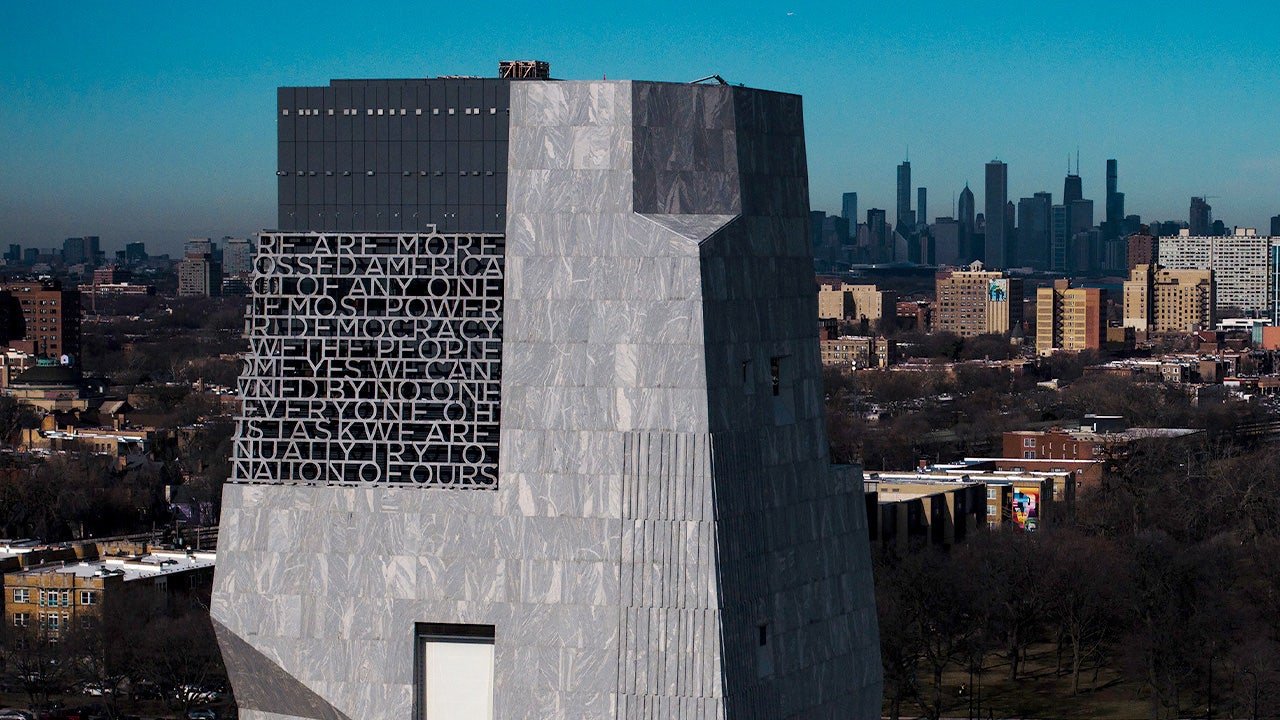
The Obama Presidential Center in Jackson Park on Chicago’s South Side will open this week. (Fox Flight Team)
One of the most prominent lines of criticism levied against the new presidential center was that its construction materially harmed those it was seeking to serve.
Beyond its museum exhibits and planned displays of presidential records and artifacts, the Obama Presidential Center features prominent exhibits on slavery, racism, the civil rights movement and African American history. Additionally, the Obama Foundation wanted the center to be a boon for the local community, billing it as an «economic engine for South Side residents.»
To accomplish this, the center prioritized locals for contracting and staffing while also promising to provide workforce development services to surrounding communities.
These moves, however, were not enough to assuage the concerns of some residents that the racial justice-infused center would ultimately displace many predominantly Black American locals by increasing the value of nearby lots, thereby raising rents and driving up property taxes.
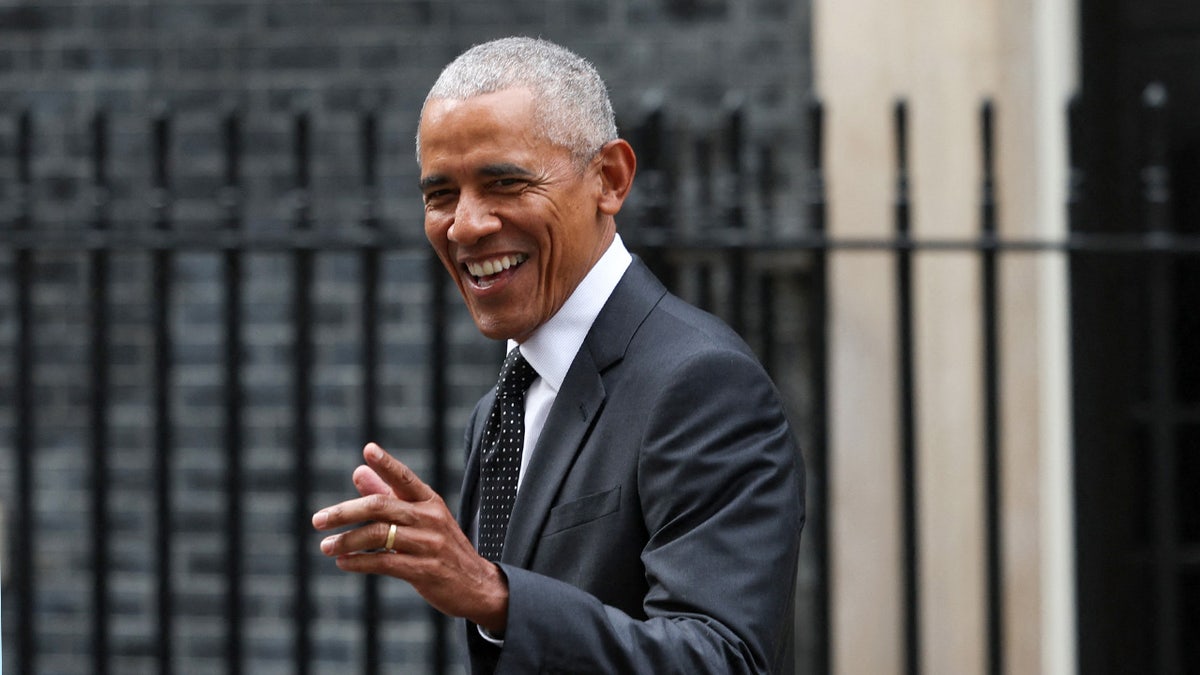
Former President Barack Obama reacts as he leaves 10 Downing Street in London following a meeting with Britain’s Prime Minister Rishi Sunak on March 18, 2024. (Adrian Dennis/Getty Images)
OBAMA’S LEGACY PROJECT OFFERS LITTLE HOPE FOR CHICAGO’S SOUTH SIDE RESIDENTS
«What we got was a lease saying you have to pay $2,450 a month to stay in your home,» a lifelong resident of a neighborhood near the center told the Chicago Sun-Times, recounting how his rent had gone up after construction began. «My home that they had let fall into disrepair, my home that they had decided wasn’t worth caring for. So we had to move … our beautiful Black beach neighborhood was no longer ours to enjoy.»
Numerous residents have shared similar stories with the press, prompting Chicago to set aside $6 million to develop affordable housing in the area and providing residents with property tax relief.
Further complicating the Obama Presidential Center’s mission of racial justice was a lawsuit filed by a local subcontractor against one of the firms managing its construction in early 2025.
OBAMA LIBRARY, BEGUN WITH LOFTY DEI GOALS, NOW PLAGUED BY $40M RACIALLY CHARGED SUIT, BALLOONING COSTS

Former President Barack Obama and former first lady Michelle Obama join Illinois Gov. J.B. Pritzker at the groundbreaking ceremony for the Obama Presidential Center in Chicago on Sept. 28, 2021. (Scott Olson/Getty Images)
One African American-owned concrete and rebar company working on the project alleged that the company overseeing structural engineering and design on the Obama Presidential Center unfairly singled out black-owned firms for errors.
The lawsuit alleged that those in charge of the presidential library’s construction «directly undermined the Obama Foundation’s DEI (diversity, equity and inclusion) goals and commitments and mission to bring transformative change to the construction industry and local community,» a claim that was strongly denied by management.
Management argued that many of the subcontractors were «questionably qualified» and that they regularly underperformed or displayed inexperience, factors that contributed to the presidential library’s ballooning costs. The Obama Foundation emphasized hiring black-owned businesses when seeking out subcontractors for its center.
PROTESTERS RAGED, CRITICS MOCKED — NOW OBAMA SAYS HIS LIBRARY’S ACTUALLY OPENING

An Obama Foundation banner is displayed at the Obama Presidential Center construction site in Jackson Park, Chicago, Illinois, on Oct. 18, 2022.
In yet another snag, many subcontractors who worked on the center are claiming that they have yet to be paid for their work on the Obama Presidential Center.
A Fox News Digital investigation previously identified multiple firms that say they haven’t received payments, with outstanding invoices ranging from hundreds of thousands of dollars to tens of millions.
«I haven’t had eight hours or six hours sleep in over a year,» one African American subcontractor told Fox News Digital. «I’m cooked emotionally. I feel like an aluminum can that’s been thrown in front of a steamroller. We’re crushed. And I have to fight for my company and for my people.»
When pressed by Fox News Digital, the Obama Foundation passed the blame onto Lakeside Alliance, its primary contractor, stating that it was responsible for handling payments to subcontractors. Lakeside Alliance, meanwhile, said projects of this size are complex matters and that it is working to resolve all loose ends.
«That’s a bad signal to put out the fact that seven to eight to maybe 10 of our contractors in our community are going to be eliminated from doing business because of the debt that they incurred on this particular project,» Omar Shareef, the president of the African American Contractors Association, previously told Fox News Digital. «If they would have known it was a Trojan horse or a Pandora’s box, I don’t know if they would have raced as much as they did to be a part of it.»
Fox News Digital could not independently verify claims that firms had been forced to shutter due to their work on the Obama Presidential Center.
OBAMA CENTER TAKES HEAT AS CRITICS CRY FOUL OVER ID RULES FOR FREE ENTRY — WHILE DEMS BLAST VOTER ID LAWS
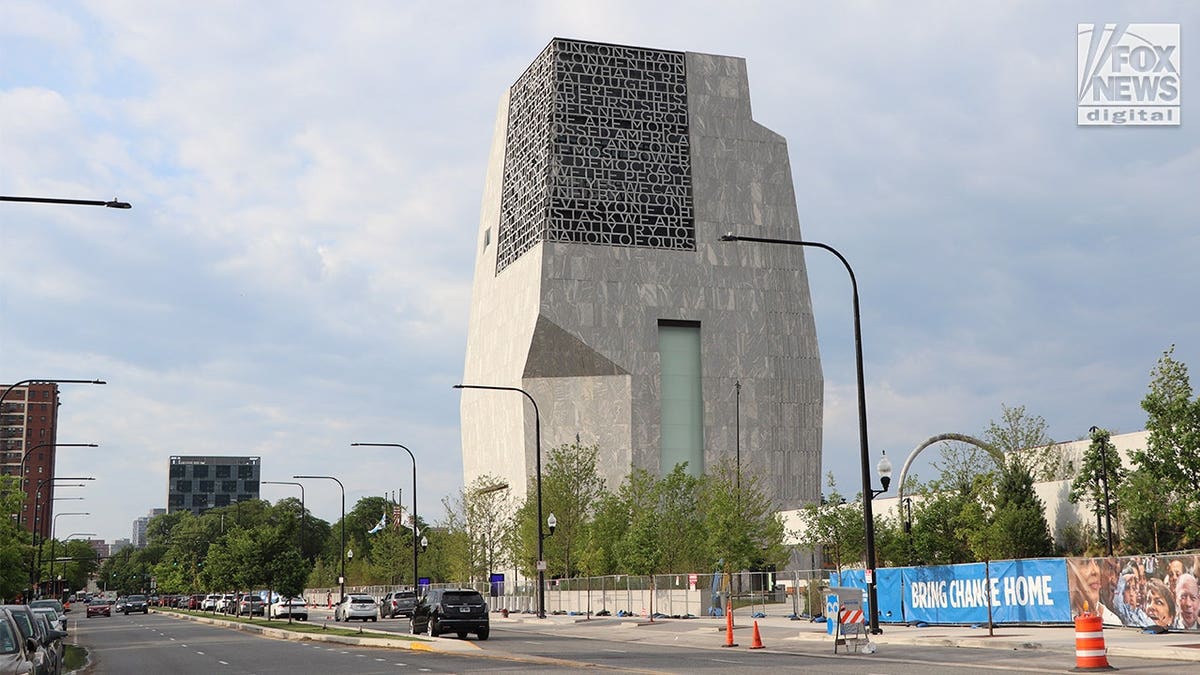
A view of the Obama Presidential Center from a nearby roadway in Chicago. (Michael Dorgan/Fox News Digital)
While most of the Obama Presidential Center’s rocky history was privately funded, taxpayers were on the hook for the infrastructure surrounding it.
Illinois has so far spent over $120 million on infrastructure improvements in South Chicago to accommodate the presidential center, with the total public cost estimated to reach around $200 million.
Even with roughly $1 billion spent on its construction and design, the appearance of the Obama Presidential Center has proven controversial, drawing comparisons to everything from a maximum security prison to a garbage can.
OBAMA DRAGGED FOR ‘HEADACHE’-INDUCING PRESIDENTIAL CENTER UPDATE THAT HAS VISITORS SQUINTING
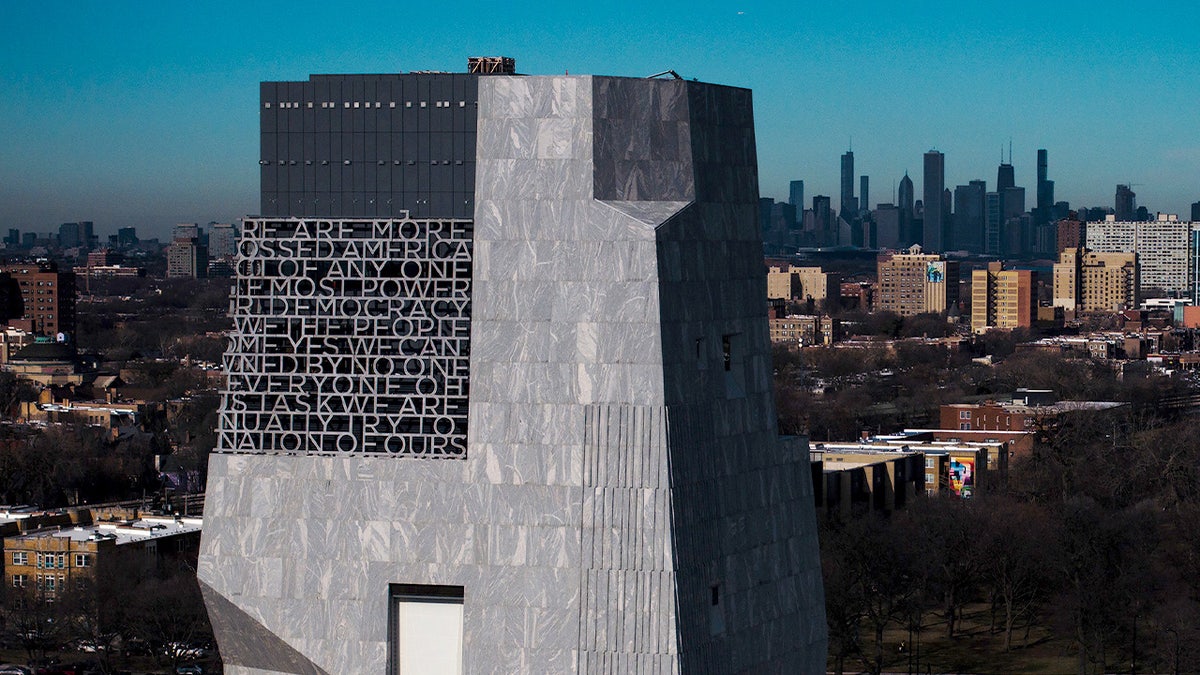
Work continues on the Obama Presidential Center in Chicago on Jan. 13, 2026, featuring former President Obama’s speech marking the 50th anniversary of «Bloody Sunday» inscribed on the building’s side. (E. Jason Wambsgans/Chicago Tribune/Tribune News Service via Getty Images)
«The building has an ominous presence, its mostly windowless heft recalling a menacing sci-fi headquarters,» The Guardian’s architecture critic wrote of the structure.
One person dubbed it the «Obamalisk.»
Some, however, have pushed back on these critiques.
CLICK HERE TO DOWNLOAD THE FOX NEWS APP
«Today’s punchline may become tomorrow’s civic treasure,» Justin Kaufmann, writing for Axios Chicago, said. He pointed to the center’s blending of modern architecture with the design language of classic civic buildings.
The Obama Presidential Center did not respond to a request for comment when reached by Fox News Digital on Thursday.
chicago, barack obama, housing, taxes, illinois


INTERNACIONAL
Drogaba a su esposa y la obligaba a tener sexo con desconocidos: así cayó el hombre que ganó casi 100 mil euros

Alrededor de 280 hombres en poco más de dos años pasaron por su casa. Llegaban de la mano de su marido: Thomas Runsten, un sueco de 61 años. Él era quien incitaba a la mujer a tener sexo con los desconocidos. La manipulaba psicológicamente, la emborrachaba y la drogaba para que la mujer se acostara con hombres que pagaban al marido para hacerlo. La mujer casi no recordaba los encuentros pese a que eran muy frecuentes. Mientras tanto, Runsten se beneficiaba cobrando los servicios sexuales. Ganó decenas de miles de dólares.
Runsten había instalado en la casa 11 cámaras para grabar los encuentros. No se sabe si con el fin de estimularse él a posteriori, de hacer más dinero comercializándolos por la web o para extorsionar a los clientes que conseguía y llevaba a su casa.
Runsten fue juzgado esta semana en Suecia y condenado a 4 años y cinco meses de prisión.
El hombre, con pasado militar, era parte de los Hells Angels, la banda de motoqueros que se distinguen por sus camparas de cuero negro, sus Harley Davidson y, en el pasado, por su violencia feroz.
La pareja se conoció en 2021. Al poco tiempo vivían juntos. Se mudaron a Lunde, un pequeño pueblo sueco de poco más 7000 habitantes. A fines de 2025, la mujer abandonó el hogar sin más que lo puesto y se presentó ante la policía para denunciar a su marido.
La mujer contó los hechos ante un azorado policía. Dijo que era obligada a prostituirse y que cuando intentó oponerse fue golpeada y amenazada; aseguró que el marido le gritaba que le cortaría los dedos o que le tiraría nafta mientras dormía y la prendería fuego. En ese momento no solo quería dejar el comercio sexual que era obligada a practicar, sino que temía por su vida y la de sus mascotas. Thomas junto a su esposa. (Foto: Instagram / @rolfthomasreinhold)
El Caso Pelicot
Aunque tiene evidentes puntos de contacto con el Caso Pelicot, que conmocionó a Francia y al mundo, también existen diferencias entre ellos más allá de lo dispuesto en la sentencia.
Gisele Pelicot fue drogada por su marido durante casi una década. Ella no tenía conciencia de que era violada por desconocidos mientras su marido grababa los encuentros. Dominique Pelicot fue condenado a 20 años de prisión. Su esposa recién supo de las violaciones cuando la policía francesa lo detuvo en un supermercado tratando de filmar debajo de las polleras de las clientas. Al allanar la casa encontraron la evidencia de los abusos sufridos por Gisele.
Una de las grandes diferencias de esta causa sueca con el caso Pelicot fue la calificación que dieron los jueces a estos actos. No lo consideraron violación (aunque en uno de los casos presentados dijeron que hubo tentativa de violación). Esto provocó la mayor polémica en el caso Runsten. La ley sueca es restrictiva en cuanto a este tipo de delitos sexuales y deben probarse fehacientemente. Los magistrados dejaron claro que el marido traspasó los límites impuestos por la mujer, los límites habituales de la relación, pero que ello no implicaba que hubiera incurrido en violación porque entendieron que no podían hablar de “falta de voluntad, de consentimiento de la mujer porque no quedó fehacientemente acreditado”.
Lo que dieron por probado fue el sometimiento por parte del marido para que la mujer aceptara prostituirse. La condena fue por proxenetismo, amenazas varias, un intento de violación y lesiones.
Durante el juicio, la defensa intentó probar que había consentimiento, que se trataba de un “juego” dentro de la pareja. Con ese fin aportó mensajes de WhatsApp. Runsten enviaba a la mujer capturas con las conversaciones con los clientes en los que se fijaban la fecha, el horario, el tipo de servicio que se pretendía y el importe que se pagaría. Cuando la policía registró la casa encontraron juguetes sexuales y una «habitación sexual». (Foto: Expressen)
En otras conversaciones, Runsten le pregunta a la esposa, poco antes de que alguno de los hombres llegara a su casa, si estaba excitada. Con ese aporte, la defensa de Rusten alegó que todo se trataba de un juego interno en la pareja. Que el hombre disfrutaba del cuckold, de ocupar el rol de marido engañado y sometido, que presenciaba los actos sexuales de su esposa con otros hombres.
Runsten en su declaración ante el tribunal fue más lejos. Afirmó que fue la mujer la que insistió en abrir la pareja y en “jugar a la prostitución”. Que en una ocasión luego de tener sexo le preguntó cuál era su fantasía oculta, su fetiche, y ella respondió tener sexo con otros hombres mientras él observaba. Luego agregó que ella quería ser como Julia Roberts en Mujer Bonita, una prostituta de lujo.
El acusado dijo que la ocasión que dio inicio a la práctica fue que él enfermó de cáncer y perdió la capacidad para tener erecciones. Siempre según los dichos del hombre, ella le dijo que si no podía tener relaciones con él, tendría que conseguirle otros hombres: “Te dejo o me acuesto con otros”.
Los jueces rechazaron estos argumentos porque también encontraron en el teléfono del acusado mensajes de unos meses anteriores a que empezara la sumisión de la mujer dónde Runsten le proponía este tipo de juegos y fantasías, y ella no accedía de ninguna manera (“No entiendo tu obsesión por verme con otros”, le escribe ella). Hasta que comenzó a horadar su voluntad con las amenazas, la bebida y las drogas. La sentencia agrega que de fantasía no tuvo nada, ya que había nombres, fechas, citas concretas, sexo real, sometimiento y el pago de una tarifa que cobraba el marido. Todo muy real. Las violaciones habrían ocurrido en el interior de un motor home que tenía Tomas Runsten. (Foto: Expressen)
Sin embargo, con el aporte de estos chats Runsten logró evitar la condena por violación aunque se autoincriminó como proxeneta porque toda la operatoria quedó registrada ahí. Lo que los mensajes no dicen (al menos los que aportó él) es que para que la esposa accediera, él la forzaba a través de su preeminencia psicológica dentro de la relación y emborrachándola y drogándola.
Runsten la obligaba a tomar drogas para enfrentar los encargos sexuales. También la hacía tomar alcohol y en muchas ocasiones ejercía violencia física sobre la mujer para que tuviera sexo con desconocidos. Los peritos psiquiátricos probaron que la dependencia también era psicológica y que el hombre mantenía un marcado dominio sobre los actos y las decisiones de ella. Para los jueces, Runsten generó la adicción a las drogas de su esposa. Fue quien la inició, la motivó, le suministró las drogas y aprovechó el efecto que producían en ella.
Respecto al proxenetismo, las pruebas estaban por todos lados. Runsten publicaba avisos en sitios de Internet ofreciendo a la mujer, respondía los mensajes, concertaba las citas, recibía a los clientes, les cobraba y presenciaba los encuentros. No caben dudas de que él dirigía la operatoria. En esos intercambios telefónicos entre la pareja también quedaron varias amenazas de muerte: “Te voy a ahorcar”, “Te voy a prender fuego”, “Yo consigo los clientes, tu trabajo es callar y tener sexo con ellos: si no vas a terminar mal”. Los abusos hacía su pareja perduraron por tres años. (Foto: Instagram / @rolfthomasreinhold)
En el allanamiento al hogar encontraron drogas -las mismas que ella decía que le suministraba-, dinero en efectivo, un excel con los pagos hechos por decenas de clientes y miles de filmaciones sexuales que tenían a la mujer como protagonista. En ese operativo descubrieron que Runsten también emitía a través de una plataforma de streaming para adultos los encuentros sexuales de su mujer con los clientes.
Los investigadores calculan que el hombre en ese par de años recaudó casi 100.000 euros como proxeneta.
Leé también: ¿Michael Jackson fue un abusador?: Neverland, el día que la policía lo desnudó y las pruebas del juicio
La sentencia tuvo también su costado económico. Le impuso al acusado el pago de una indemnización por los daños ocasionados a la mujer y otra por una causa diferente: el haber obtenido ganancias derivadas de un ilícito, es decir, de la explotación sexual de su esposa.
Aunque al inicio de la investigación, los involucrados eran 120, sólo el 10% de los hombres que participaron fueron juzgados. Además de Runsten, 28 clientes fueron encontrados culpables de facilitar la prostitución y recibieron condenas leves. Dos deben purgar un mes de prisión, otros se someterán a un régimen de libertad vigilada y el resto deberá abonar una multa no muy significativa económicamente. Varios de ellos, al aparecer su nombre en el expediente, tuvieron severos problemas familiares y laborales. El director de la escuela más grande del pueblo debió renunciar a su puesto.
Sumario, Suecia, abuso, Violencia de género

La sorpresa que apunta Bielsa para el segundo partido de Uruguay en el Mundial 2026: “Un jugador lleno de condiciones”

El nuevo plazo de Manuel Adorni y los motivos detrás de la resistencia de Javier Milei

El hábito de pocos minutos que puede ayudarte a dormir mejor sin cambiar tu rutina

ANSES: quiénes cobran hoy viernes 19 de junio de 2026

Obama center opens after years-long saga as locals warn ‘monstrosity’ could price them out

Panorama Internacional: Al final, Irán no era como Venezuela

Patricia Bullrich: “El Presidente considera que Adorni dio una explicación razonable”

El Gobierno envía señales de que Adorni tiene las horas contadas para evitar que sesione el Senado

La secuencia del golazo de Messi para Argentina ante Argelia en el debut en el Mundial 2026 y los récords que rompió

El Gobierno modificará por decreto el sistema de selección de jueces de la Corte Suprema de Justicia

 POLITICA1 día ago
Patricia Bullrich: “El Presidente considera que Adorni dio una explicación razonable”
- POLITICA2 días ago
El Gobierno envía señales de que Adorni tiene las horas contadas para evitar que sesione el Senado
- DEPORTE2 días ago
La secuencia del golazo de Messi para Argentina ante Argelia en el debut en el Mundial 2026 y los récords que rompió