INTERNACIONAL
Un niño de un año fue asesinado en Uruguay por disparos que iban a su padre: gobierno expresó indignación


Un bebé de un año y medio fue asesinado en un ataque en el barrio Colón de Montevideo. El pequeño quedó en medio de un enfrentamiento a tiros que, según la información primaria, iba dirigido a su padre.
Familiares del bebé lo llevaron a un centro de salud en el mismo barrio, sobre la avenida montevideana Garzón, informó el noticiero Telemundo de Canal 12. Llegaron con el pequeño herido y los médicos le confirmaron minutos después el fallecimiento. El ataque ocurrió en la intersección de las calles Albéniz y Pasaje J, en el noroeste de la capital uruguaya.
En la noche de este lunes los policías intentaban esclarecer la situación.
El padre del bebé llegó en un auto rojo hasta el lugar. Él era el objetivo del ataque. En el parabrisas del auto quedaron al menos siete disparos de bala. La Policía Científica tenía previsto periciar el vehículo en la noche de este lunes.
¿Qué fue lo que pasó en el ataque? El bebé fue una víctima colateral de un enfrentamiento. Según este noticiero, los tiros fueron dirigidos hacia su padre y ya se habían registrado algunos incidentes previos de disparos contra su familia. Esto sucedió días atrás.

El vehículo no fue indicado a la Policía sino que fue ubicado en el análisis que hicieron los investigadores.
El noticiero Telenoche de Canal 4 informó que el padre tenía 24 años, recibió tres disparos y está estable. Los vecinos expresaron a este medio que escucharon cinco disparos y luego gritos. El niño y el padre se trasladaban en el auto y les dispararon desde una moto, de acuerdo a la información primaria.
En la madrugada, el ministro del Interior, Carlos Negro, se expresó en la red social X. “Movilizado por una profunda indignación, que jamás será impotencia, sepan que ninguno de nosotros va a detenerse hasta dar con los responsables del homicidio de un niño de apenas un año. Así se lo transmití a nuestro equipo de investigadores y a toda la Policía Nacional.Sin contemplación para los culpables, vamos a seguir trabajando con más firmeza que nunca para frenar las manifestaciones de violencia que genera el crimen organizado”, escribió.

Este caso ocurre el mismo día en el que el Sistema de Protección a la Infancia y a la Adolescencia contra la Violencia (Sipiav) presentó su informó de 2025. En el año se detectaron 2.536 casos nuevos de violencia contra menores y las autoridades señalan que tiene que haber un cambio cultural.
El sistema abordó en total 9.138 episodios de violencia.
Según los datos difundidos por la Presidencia uruguaya, un 55% de los casos fueron padecidos por mujeres y un 45% por varones. Una de cada cinco víctimas se encuentra en edades comprendidas entre 0 y 5 años. En el tramo, de 6 a 12 años, se registró el 38% de las situaciones y en el de 13 a 17 años, el 34%. El informe señala que el sistema atendió a más de siete niños víctimas de violencia grave por día.
El tipo de violencia con mayor cantidad de registros es el maltrato emocional (38%), seguido por negligencia (24%), violencias sexuales (18%) y maltrato físico (15%). El 76% de las situaciones de violencias sexuales corresponden a niñas y adolescentes mujeres y el 51% de estas situaciones se concentra en personas de 13 a 17 años.

“El gran desafío es cómo podemos hacer cambios culturales que modifiquen las formas de relacionamiento en la sociedad, que tiene que ver con el abuso de poder”, definió la coordinadora del Sipiav, María Elena Mizrahi.
Los hospitales públicos de Uruguay recibieron entre el 1° de enero de 2024 y el 31 de octubre de 2025 a 98 menores de 18 años heridos de bala. Estos casos han aumentado con el paso del tiempo y muchas situaciones se deben a que ellos han sido “escudo de los narcotraficantes”. Los profesionales advierten que este tipo de episodios cambia para siempre la vida de los niños y adolescentes. El drama que se vive en los hospitales públicos por este tipo de situaciones no es nuevo. El hospital pediátrico Pereira Rossell de Uruguay se ha tenido que adaptar en los últimos años a atender niños que llegan baleados.
2026,20260326,camilo dos santos ayala presidencia de uruguay,montevideo,presidencia,uruguay













INTERNACIONAL
En un audaz ataque con cientos de drones, Ucrania golpeó dos enormes locales de venta on line en Rusia: al menos 8 muertos y decenas de heridos

Moscú denuncia un «atentado terrorista»

El «Amazon» ruso
«Respuesta simétrica», según Volodimir Zelenski
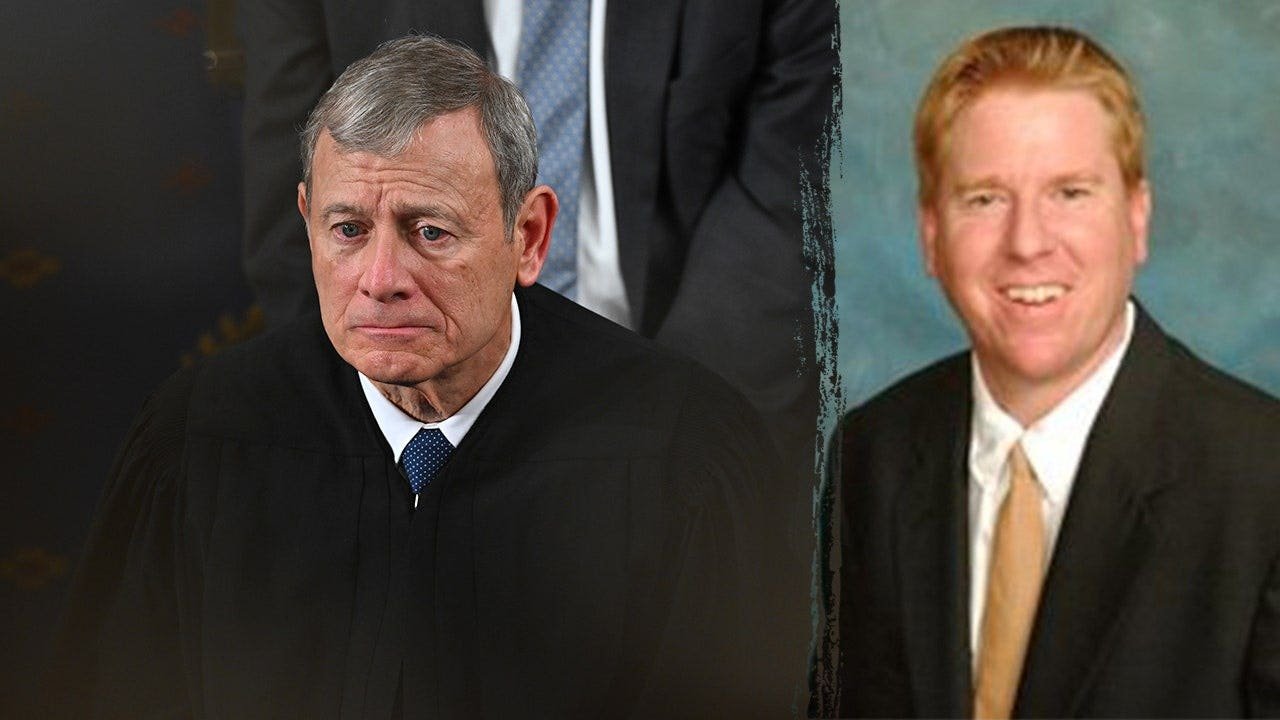
The high court’s very big year
Paul Gigot and John Yoo break down the Supreme Court’s consequential term, which ended with major decisions on birthright citizenship and executive power. Yoo argues the court’s conservative majority is focused on containing the administrative state and restoring constitutional originalism, including the Bill of Rights and federalism, despite criticism from the left.
NEWYou can now listen to Fox News articles!
A Hawaii Supreme Court justice used a ruling overturning a decades-old criminal conviction to deliver a blistering rebuke of Chief Justice John Roberts’ Supreme Court, accusing the nation’s highest court of weakening constitutional rights, damaging democracy and advancing a political agenda.
Justice Todd Eddins authored the 91-page majority opinion Wednesday in State v. Granillo , a case involving a man convicted in 1990 of kidnapping and sexually assaulting a woman on Maui. The court ordered a new trial after concluding that hair and fiber evidence presented by an FBI expert relied on forensic science that has since been discredited.
But in roughly eight pages of the opinion, Eddins argued Hawaii’s courts should not look to the Roberts Court when interpreting the state constitution, using the case to deliver an unusually sharp critique of the nation’s highest court.
LAWYER WHO BEAT HAWAII GUN LAW CALLS STATE’S RELIANCE ON BLACK CODE ‘DISGRACEFUL’
«When six justices walk away from those they are supposed to protect, state constitutions hold the line,» Eddins wrote, referring to the court’s six conservative justices. «That is not defiance. That is the design.»
Eddins argued that Hawaii’s Constitution provides stronger protections than the federal Constitution as currently interpreted by the U.S. Supreme Court, and said the Court has abandoned landmark civil rights principles.
Hawaii Supreme Court Justice issued a scathing review of the Supreme Court’s most recent rulings, arguing that the High Court has weakened constitutional protections for citizens. (Graeme Sloan/Bloomberg via Getty Images/ Ballotpedia)
«The Court that now defines federal due process does not honor the work of 1954,» Eddins wrote. «It revives the work of 1857. The work of 1896.»
Eddins was referring to Brown v. Board of Education, ruled in 1954, which ended racial segregation in public schools, as well as Dred Scott v. Sandford, the infamous 1857 decision denying citizenship to Black Americans and Plessy v. Ferguson, the 1896 ruling that upheld racial segregation.
Eddins argued that the Roberts Court no longer reflects the constitutional principles established in Brown v. Board of Education, but instead, he argued the Court’s originalist approach relies on the same type of constitutional interpretation in the discredited Dred Scott and Plessy decisions.
«Today’s hubristic originalists use the same method to control modern life,» Eddins wrote.
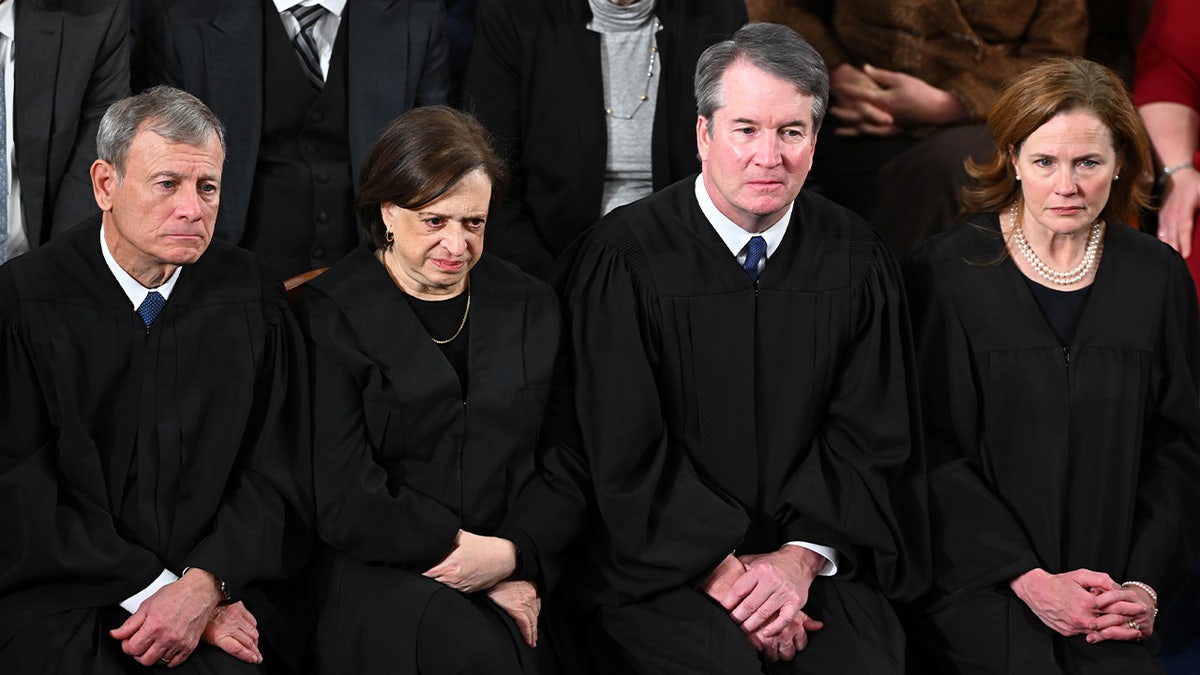
John Roberts, chief justice of the US Supreme Court, from left, Elena Kagan, associate justice of the US Supreme Court, Brett Kavanaugh, associate justice of the US Supreme Court, and Amy Coney Barrett, associate justice of the US Supreme Court, during a State of the Union address in the House Chamber of the US Capitol in Washington, DC, US, on Tuesday, Feb. 24, 2026. (Graeme Sloan/Bloomberg via Getty Images)
SUPREME COURT STRIKES DOWN LIMIT ON PARTY CAMPAIGN SPENDING IN COORDINATION WITH CANDIDATES
«The Court overrides what Congress passed,» Eddins continued. «It overrides what the people chose. All to serve its own ends. What this Court has done to constitutional rights, democratic institutions, and the rule of law explains why Hawaiʻi’s Constitution takes no instruction from it.»
Throughout the opinion, Eddins pointed to many of the Roberts Court’s most consequential decisions as evidence that constitutional protections have been weakened, including Dobbs v. Jackson Women’s Health Organization, which overturned the federal constitutional right to abortion; Citizens United v. FEC on campaign finance; Rucho v. Common Cause on partisan gerrymandering; Trump v. United States on presidential immunity; and New York State Rifle & Pistol Association v. Bruen, which expanded Second Amendment protections.
Eddins accused the Roberts Court of adopting a «colorblind» approach to the Equal Protection Clause that, in his view, ignores the amendment’s original purpose of protecting formerly enslaved Black Americans.
«The Roberts Court sees only white,» he wrote. «It refuses to acknowledge who the Equal Protection Clause was written to protect.»
He also suggested that recent Supreme Court decisions have repeatedly expanded the power of government officials and wealthy interests while reducing protections for individual rights.
«A court that systematically dismantles democratic safeguards, steamrolls constitutional liberties, and tramples human dignity does not chart the course for the Hawaiʻi Constitution,» he wrote.
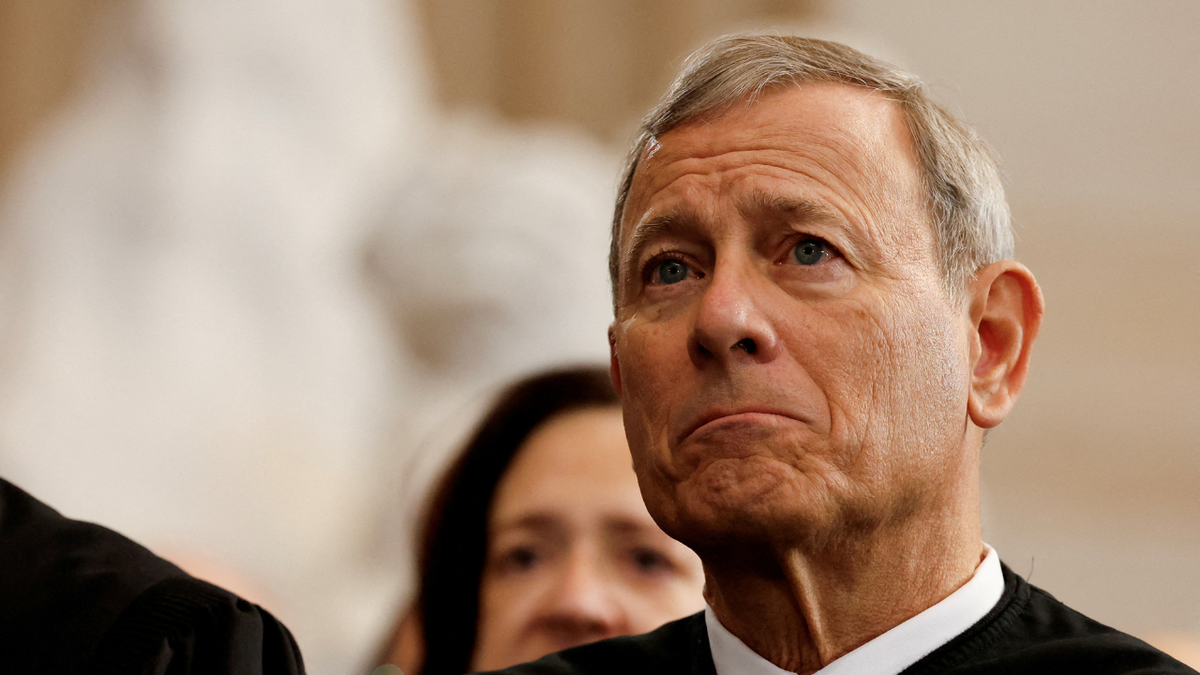
U.S. Supreme Court Chief Justice John Roberts attends inauguration ceremonies in the Rotunda of the U.S. Capitol on January 20, 2025 in Washington, DC. Chip Somodevilla/Pool via REUTERS/File Photo (Reuters)
THOMAS LEAVES NOTHING LEFT UNSAID ON RACIAL GERRYMANDERING DECISION: ‘GO FURTHER’
The opinion quickly drew criticism from legal observers, who said it was highly unusual for a state supreme court opinion to devote so much space to criticizing the U.S. Supreme Court.
«The Court issues an unhinged attack on the legitimacy of the Supreme Court,» Iowa Solicitor General Eric Wessan wrote on X. «I haven’t ever seen something like this. And it’s not good.»
George Washington University law professor Jonathan Turley similarly described the opinion as «devoid of judicial restraint and decorum.»
«The Hawaii Supreme Court just issued a truly shocking opinion that unleashed a torrent of rage and recrimination against the majority of the United States Supreme Court, including suggesting that they are de facto racists,» Turley wrote on X.
CLICK HERE TO DOWNLOAD THE FOX NEWS APP
The opinion comes just weeks after the U.S. Supreme Court handed Hawaii a major loss in Wolford v. Lopez, striking down the state’s so-called «vampire rule.» In a 6-3 decision, the court ruled Hawaii could not require gun owners to get a property owner’s permission before carrying a firearm into businesses and other private property open to the public.
Eddins has served on the Hawaii Supreme Court since 2020 after being appointed by then-Democratic Gov. David Ige.
hawaii, judiciary, supreme court, opinion, law
INTERNACIONAL
Diputado oficialista solicita investigar uso de los recursos en universidades públicas de Costa Rica
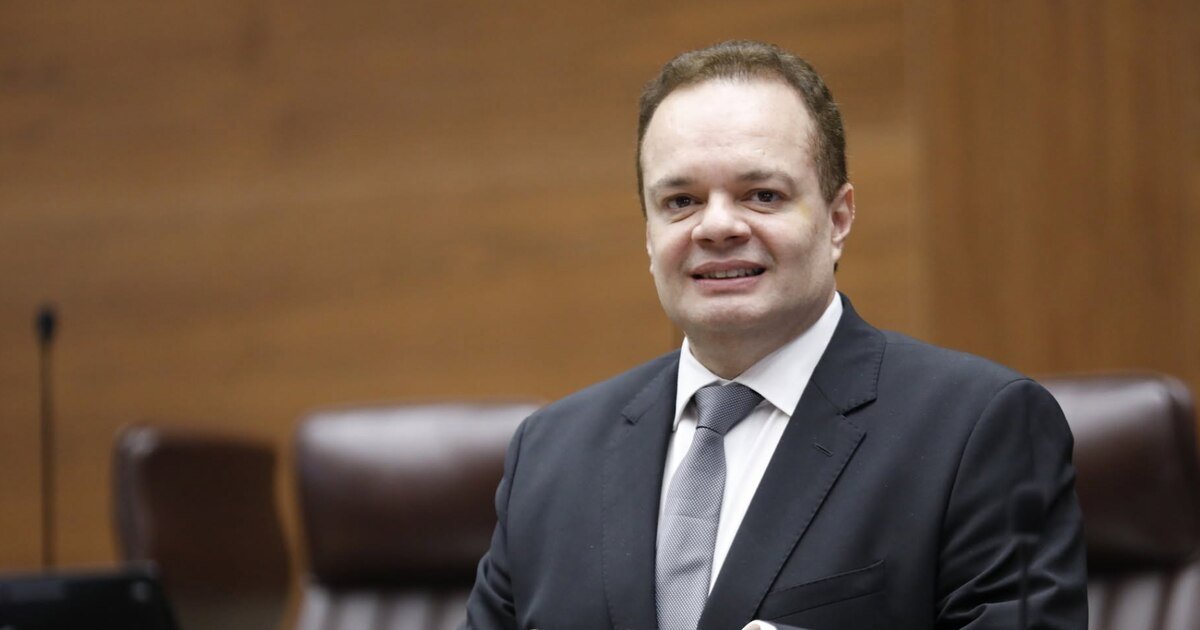
La posibilidad de que la Asamblea Legislativa investigue el uso de los recursos del Fondo Especial para la Educación Superior (FEES) abrió un nuevo capítulo en el debate sobre el financiamiento de las universidades públicas. El presidente de la Comisión de Control de Ingreso y Gasto Público, Gonzalo Ramírez Zamora, presentó una moción para que ese órgano legislativo analice durante un plazo de hasta dos años la administración de los fondos que reciben las cinco casas de enseñanza superior estatales, con especial énfasis en los recursos provenientes del FEES.
La iniciativa fue respaldada por los diputados del Partido Pueblo Soberano (PPSO), Kathia Calvo Cruz y Stephan Brunner Neibig, y podría ser discutida en una de las próximas sesiones de la comisión. Según el legislador, la investigación busca responder a las dudas que surgieron tras la publicación de diversos reportajes sobre gastos realizados por autoridades universitarias en alimentación, restaurantes y actividades de representación financiadas con recursos públicos.
Al presentar la moción, Ramírez sostuvo que el objetivo no es cuestionar la importancia de la educación superior pública, sino garantizar que el dinero aportado por los contribuyentes sea utilizado de manera eficiente y transparente. “Los recursos públicos no pueden ser usados como una piñata y menos en nuestras universidades”, afirmó el congresista, quien insistió en que la ciudadanía tiene derecho a conocer cómo se administran los fondos destinados al sistema universitario estatal.
De aprobarse la propuesta, la investigación abarcaría aspectos como la composición del gasto administrativo y del gasto sustantivo de cada universidad, la ejecución de los recursos provenientes del FEES, los mecanismos de control interno para autorizar y supervisar el uso de los fondos públicos, así como la razonabilidad y necesidad de gastos relacionados con representación, alimentación, actividades protocolarias, viáticos, viajes oficiales, cooperación internacional y capacitaciones.

Además, la comisión pretende determinar si la normativa interna que regula este tipo de gastos resulta suficiente para garantizar el cumplimiento de principios como la legalidad, la eficiencia, la economía, la austeridad, la transparencia y la rendición de cuentas. El objetivo final sería establecer si existe la necesidad de impulsar reformas legales, reglamentarias o administrativas que fortalezcan el uso responsable de los recursos públicos destinados a la educación superior.
Como parte del proceso, la moción contempla convocar a comparecer a las cinco personas rectoras de las universidades estatales, así como a representantes de las auditorías internas, direcciones financieras y a la contralora general de la República, Marta Acosta Zúñiga, con el fin de conocer de primera mano los mecanismos de fiscalización y administración de los recursos.
Tras conocerse la iniciativa, el Consejo Nacional de Rectores (Conare) reaccionó mediante un comunicado en el que manifestó su respeto por las competencias constitucionales de la Asamblea Legislativa y por el ejercicio del control político. No obstante, recordó que dicho control debe desarrollarse respetando plenamente la autonomía universitaria consagrada en la Constitución Política.
El presidente de Conare y rector de la Universidad Nacional (UNA), Jorge Herrera Murillo, aseguró que las universidades públicas mantienen un compromiso permanente con la legalidad, la transparencia, la eficiencia en el uso de los recursos públicos y la rendición de cuentas. Asimismo, destacó que las instituciones son objeto de fiscalización constante por parte de la Contraloría General de la República y de sus respectivas auditorías internas.

En su pronunciamiento, el Consejo de Rectores también hizo un llamado para que el debate sobre el FEES se desarrolle con base en evidencia técnica y no únicamente en percepciones. Según Conare, el ordenamiento jurídico costarricense ya contempla mecanismos robustos de control y supervisión sobre la ejecución de los recursos públicos administrados por las universidades.
La discusión ocurre en un contexto en el que el financiamiento de la educación superior se encuentra bajo revisión por parte del Gobierno. La administración de la presidenta Laura Fernández ha reiterado que la disciplina fiscal será uno de los pilares de su gestión, por lo que ha advertido que los incrementos al FEES dependerán de una eventual redistribución de los recursos hacia carreras con mayor demanda en el mercado laboral.
corresponsal:Desde San José, Costa Rica

Con un polémico final, Los Pumas cayeron 31-24 ante Inglaterra por el Nations Championship

En un audaz ataque con cientos de drones, Ucrania golpeó dos enormes locales de venta on line en Rusia: al menos 8 muertos y decenas de heridos

AYSA en venta: la privatización más grande y con un puñado de conocidos en la pelea por el agua de 14 millones de argentinos

Independiente disputó dos partidos amistosos frente a Gimnasia y Esgrima de La Plata

¿Qué pasa con los plazos fijos?: en julio vuelven a subir las colocaciones, según datos del Banco Central

Cómo funcionarán los servicios de transporte público en el AMBA durante la final del Mundial entre Argentina y España

El machete del arquero inglés en una botella que sorprendió a Messi tras el triunfo: el dardo de un ayudante de Scaloni a Inglaterra

El fuerte cruce público entre Victoria Villarruel y Patricia Bullrich tras los chats filtrados antes de la sesión del Senado

Adrián Ravier, vocero de Milei: “No coincidimos en el Gobierno con esto de que la gente no llega a fin de mes”

🇦🇷La Victoria Legendaria – El llanto interminable de Lautaro Martínez tras el pase a la final del Mundial: “Soñé que iba a hacer este gol”

 DEPORTE3 días ago
El machete del arquero inglés en una botella que sorprendió a Messi tras el triunfo: el dardo de un ayudante de Scaloni a Inglaterra
- POLITICA2 días ago
El fuerte cruce público entre Victoria Villarruel y Patricia Bullrich tras los chats filtrados antes de la sesión del Senado
- POLITICA2 días ago
Adrián Ravier, vocero de Milei: “No coincidimos en el Gobierno con esto de que la gente no llega a fin de mes”